Franklin Public Schools School Budget Drivers Salary Health Insurance  Transportation Special Education
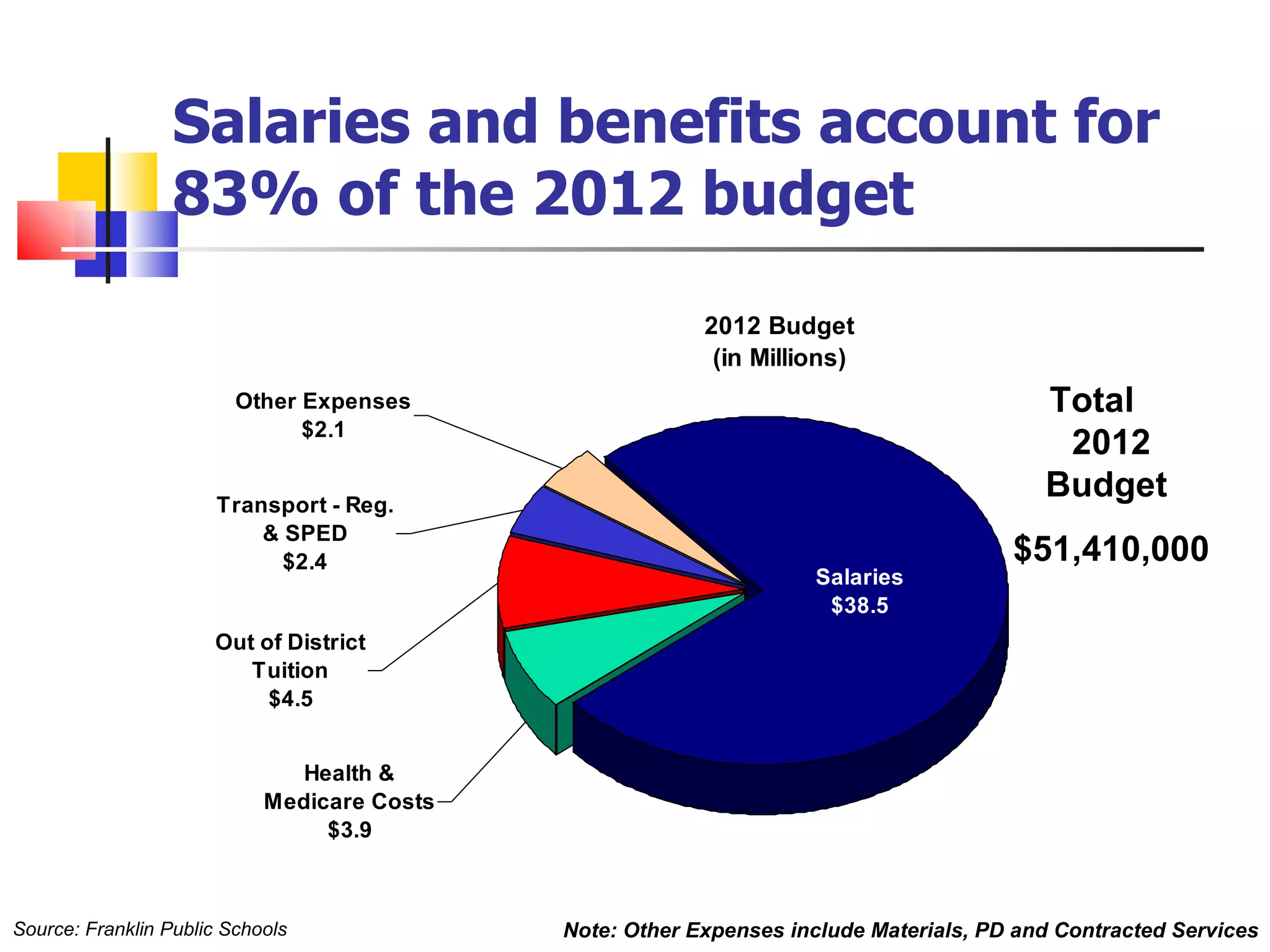
Salaries and benefits account for 83% of the 2012 budget Source: Franklin Public Schools Note: Other Expenses include Materials, PD and Contracted Services Total  2012 Budget  $51,410,000
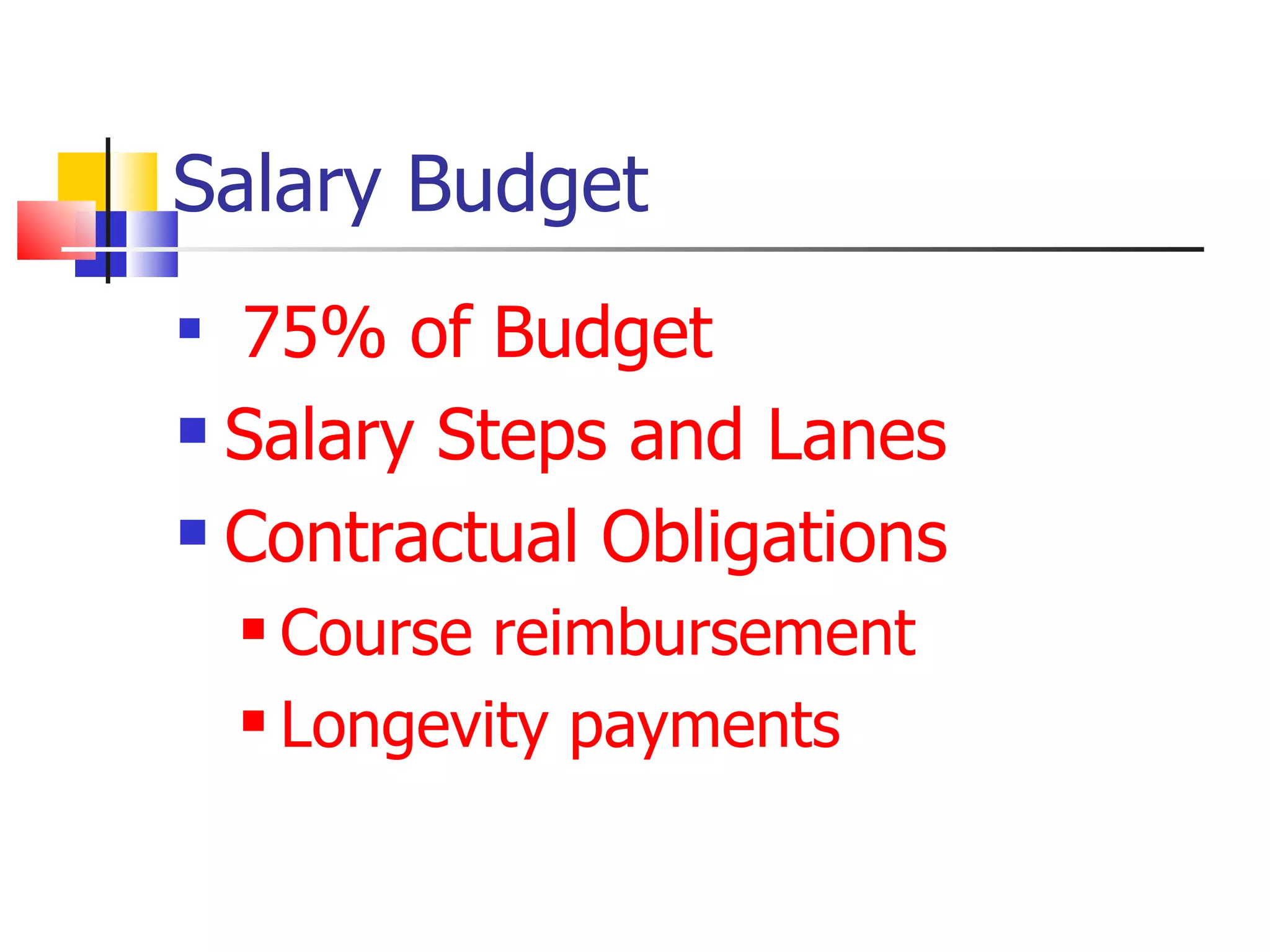
Salary Budget 75% of Budget  Salary Steps and Lanes Contractual Obligations Course reimbursement Longevity payments
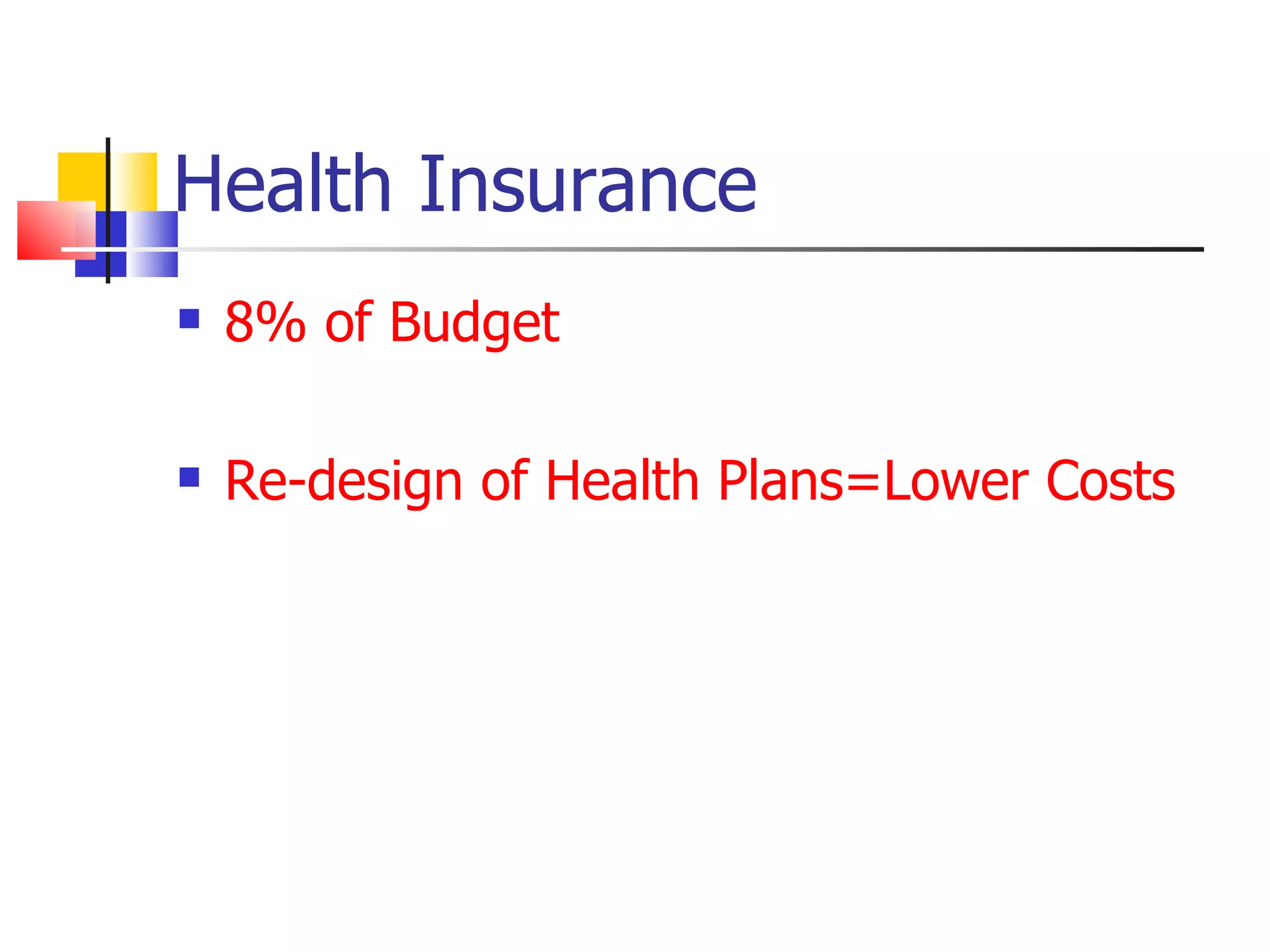
Health Insurance 8% of Budget Re-design of Health Plans=Lower Costs
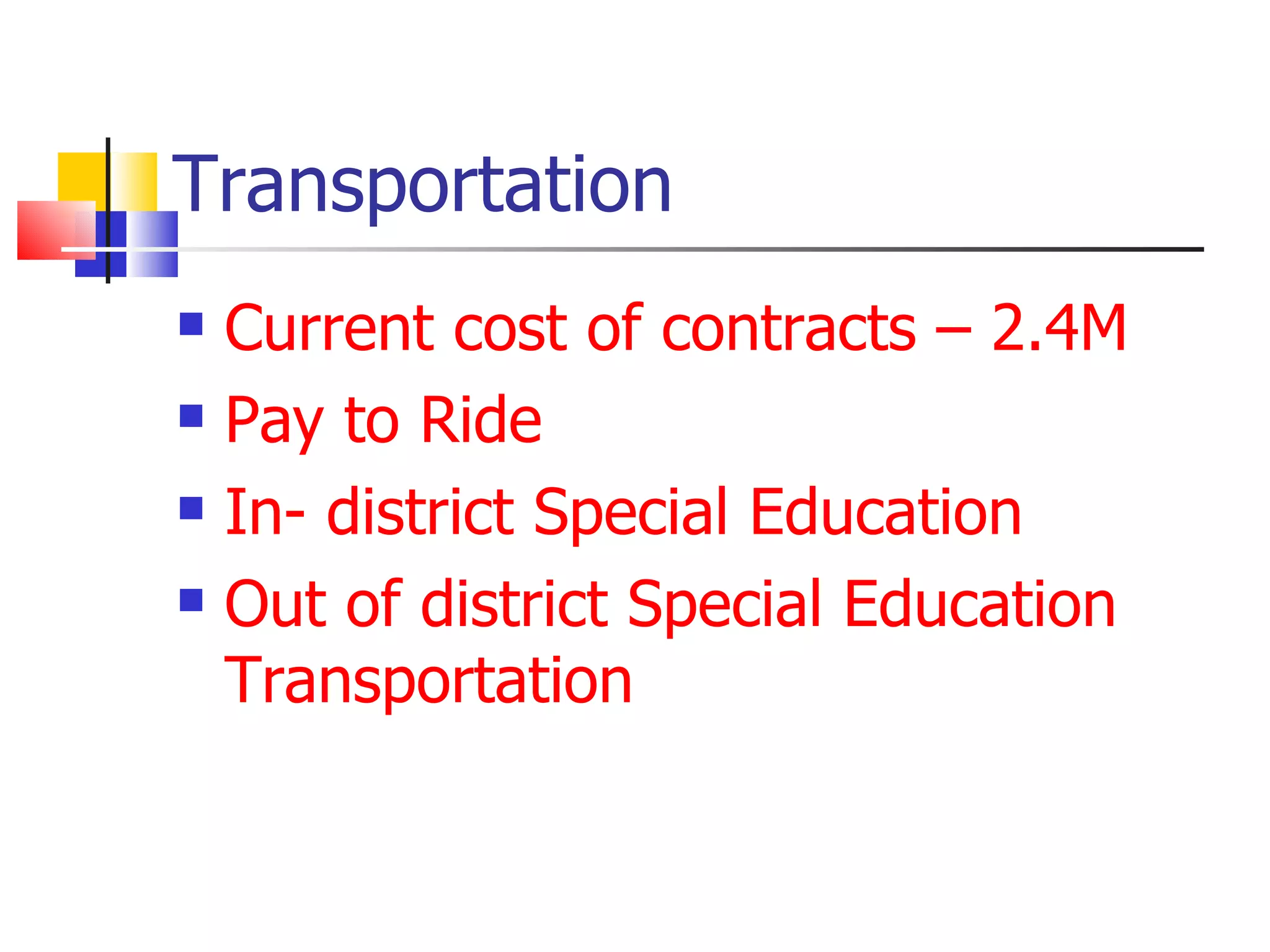
Transportation Current cost of contracts – 2.4M Pay to Ride In- district Special Education Out of district Special Education Transportation
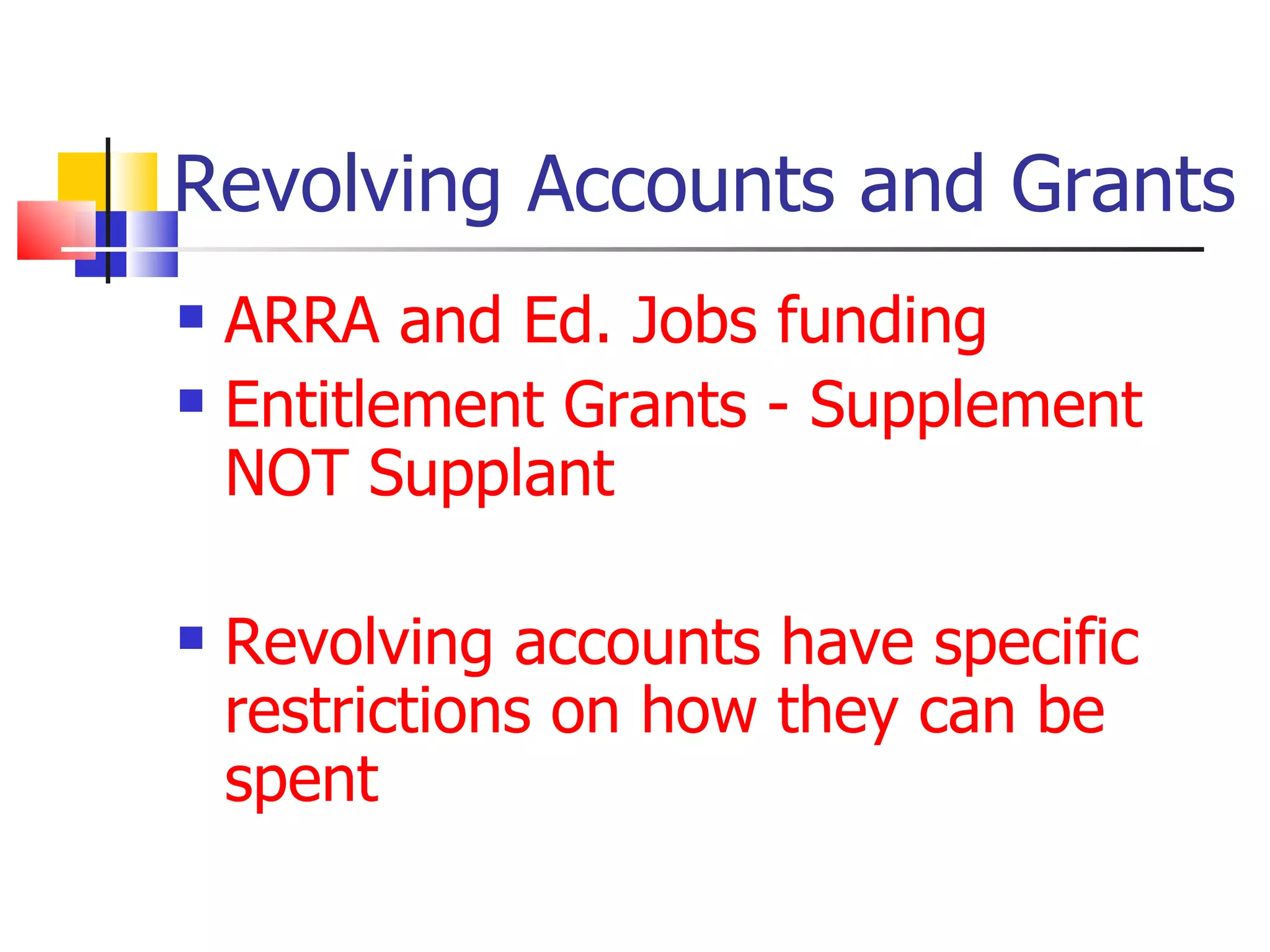
Revolving Accounts and Grants ARRA and Ed. Jobs funding Entitlement Grants - Supplement NOT Supplant Revolving accounts have specific restrictions on how they can be spent
    Special Education   Franklin Public Schools
Laws and Regulations Federal Law Federal Regulations State Regulations
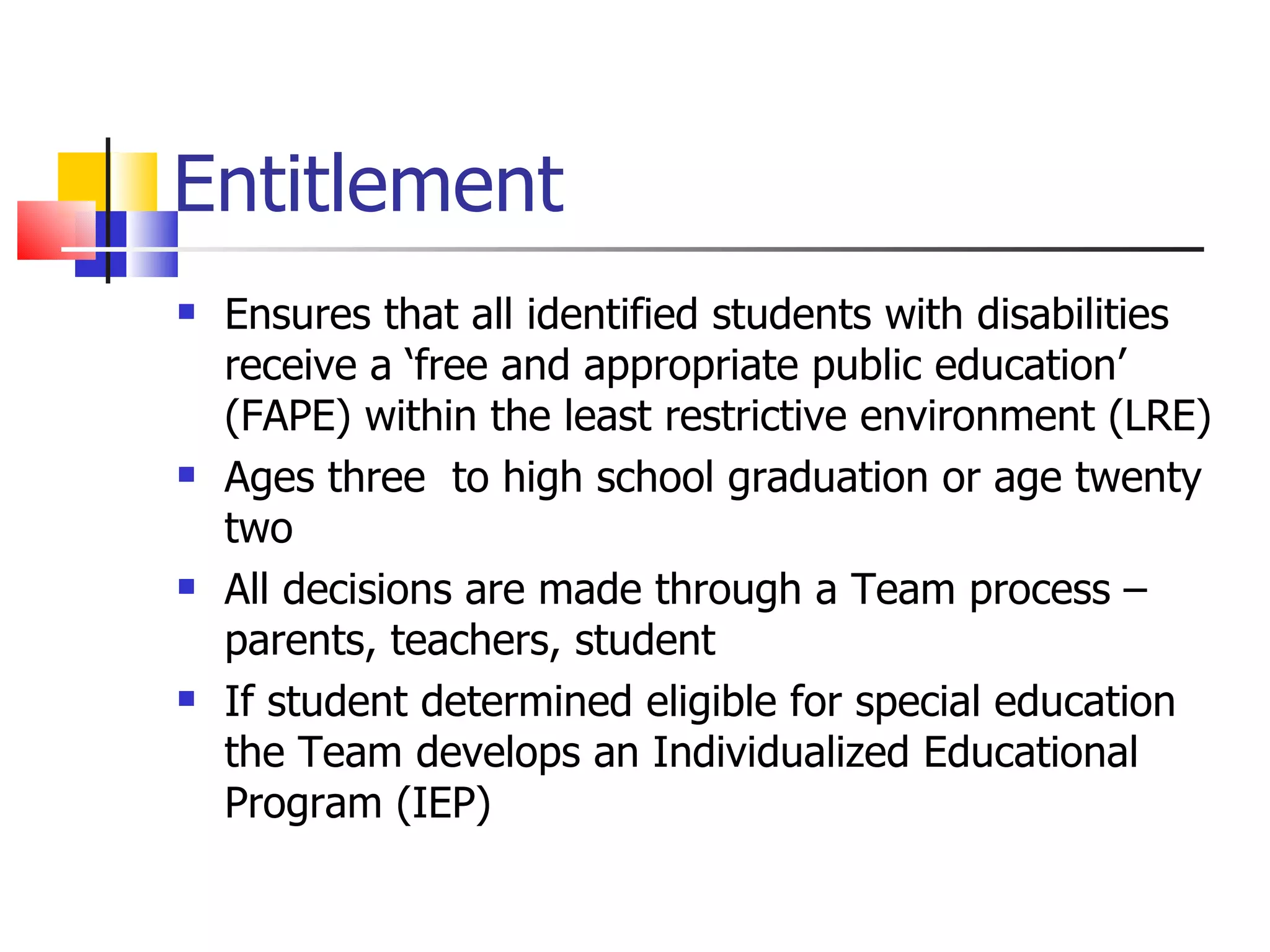
Entitlement Ensures that all identified students with disabilities receive a ‘free and appropriate public education’ (FAPE) within the least restrictive environment (LRE) Ages three  to high school graduation or age twenty two All decisions are made through a Team process – parents, teachers, student If student determined eligible for special education the Team develops an Individualized Educational Program (IEP)
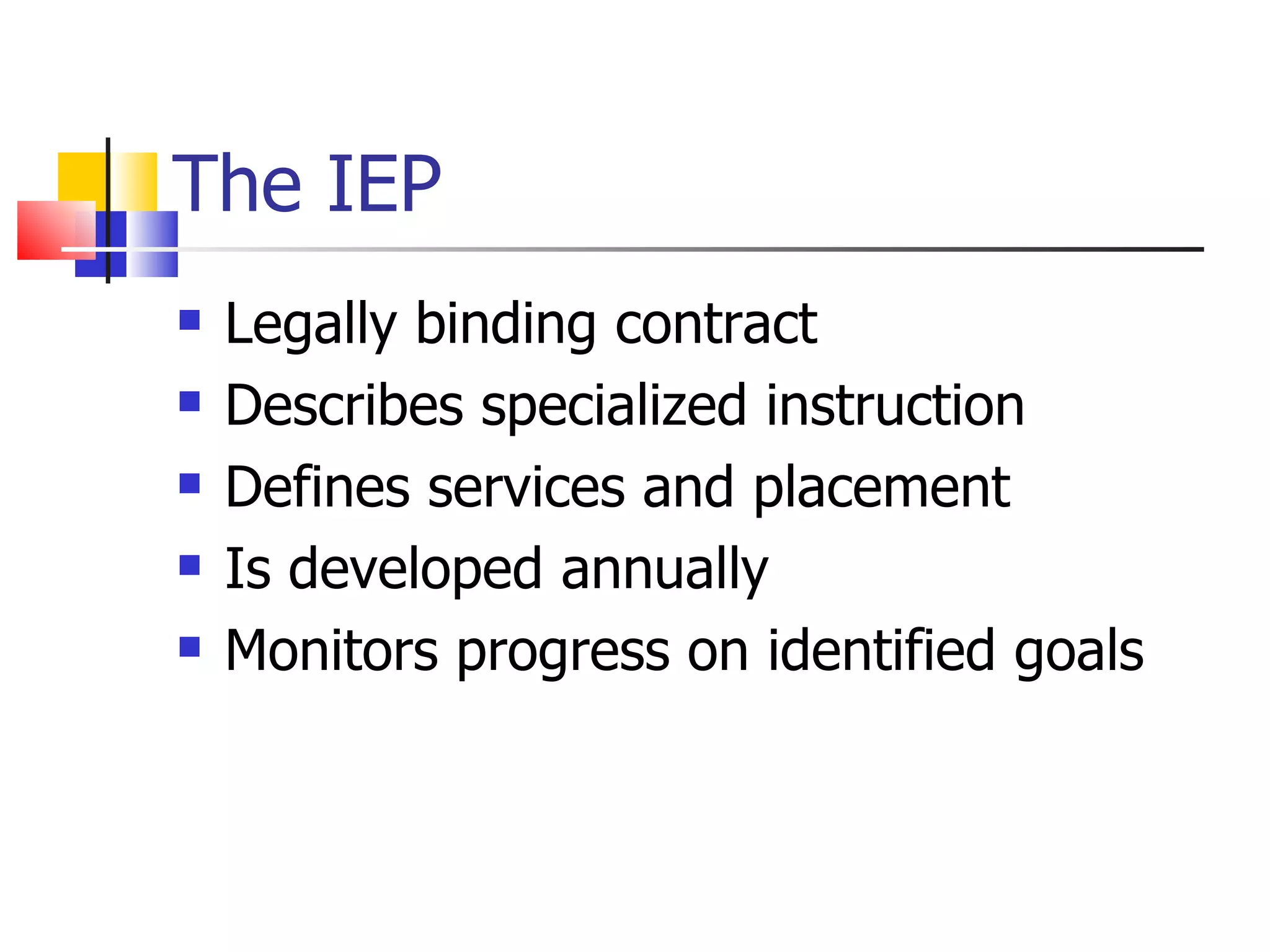
The IEP Legally binding contract Describes specialized instruction Defines services and placement Is developed annually Monitors progress on identified goals
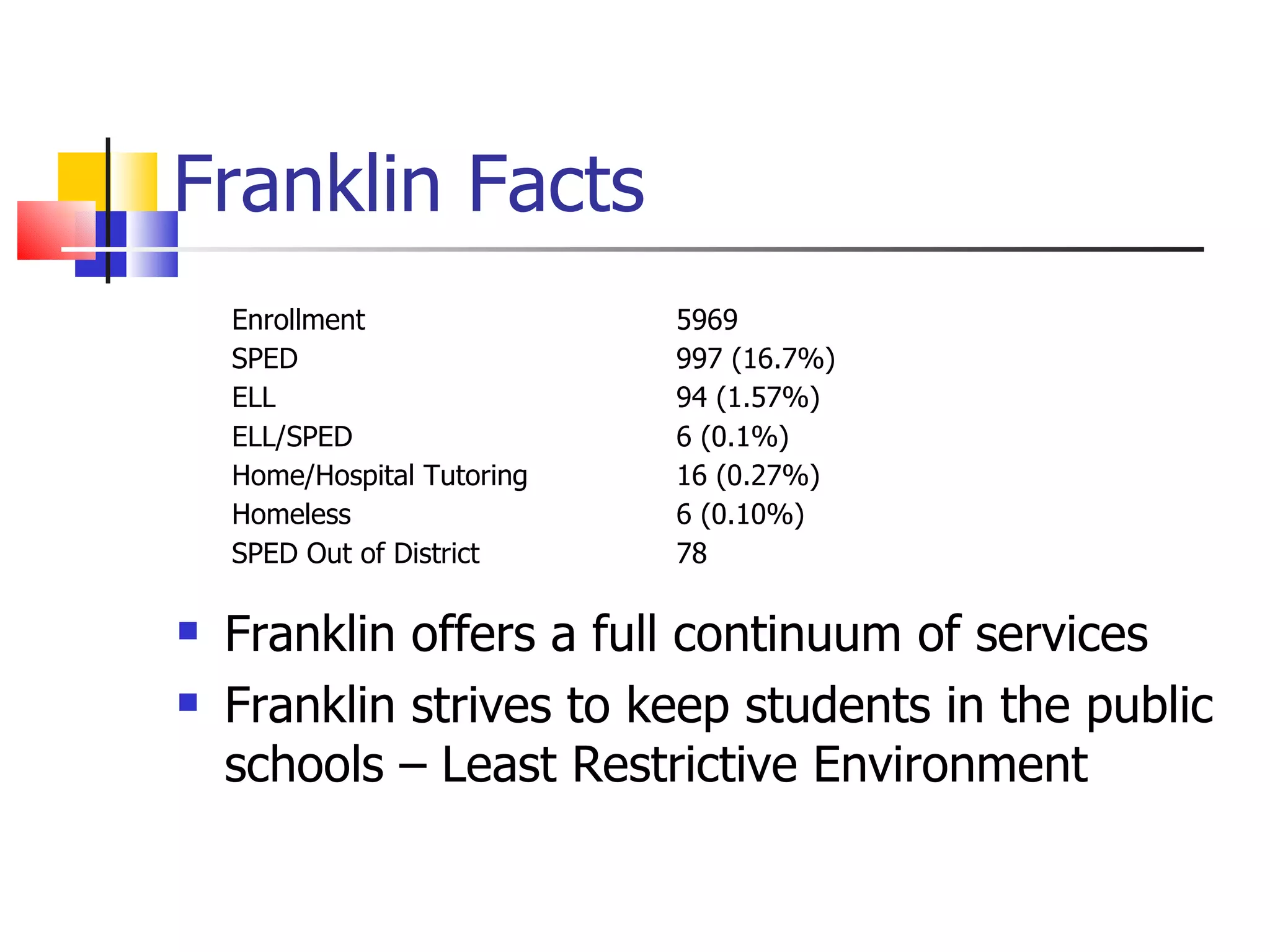
Franklin Facts Franklin offers a full continuum of services Franklin strives to keep students in the public schools – Least Restrictive Environment Enrollment 5969 SPED 997 (16.7%) ELL 94 (1.57%) ELL/SPED 6 (0.1%) Home/Hospital Tutoring 16 (0.27%) Homeless 6 (0.10%) SPED Out of District 78
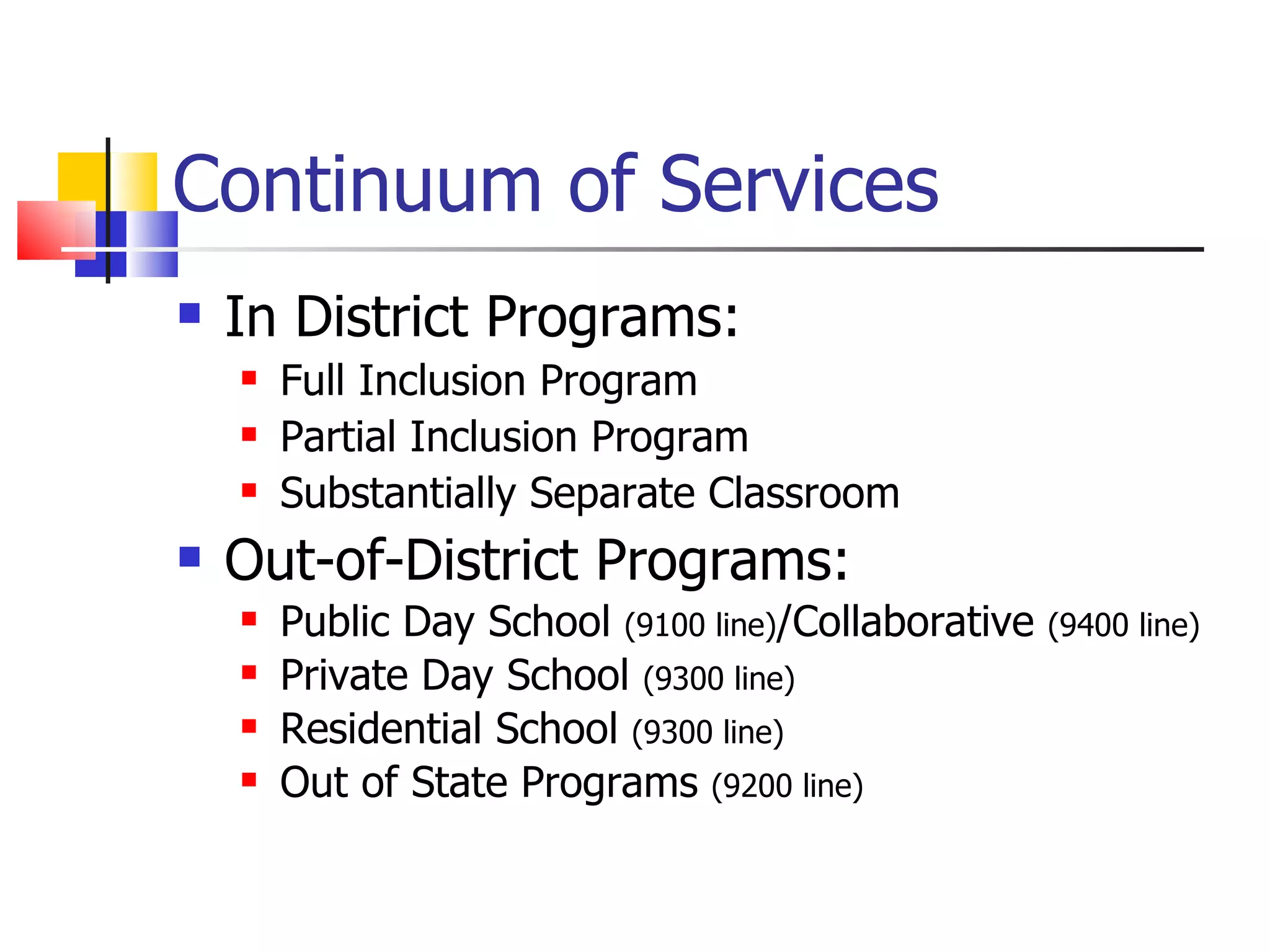
Continuum of Services  In District Programs: Full Inclusion Program Partial Inclusion Program Substantially Separate Classroom Out-of-District Programs: Public Day School  (9100 line) /Collaborative  (9400 line) Private Day School  (9300 line) Residential School  (9300 line) Out of State Programs  (9200 line)
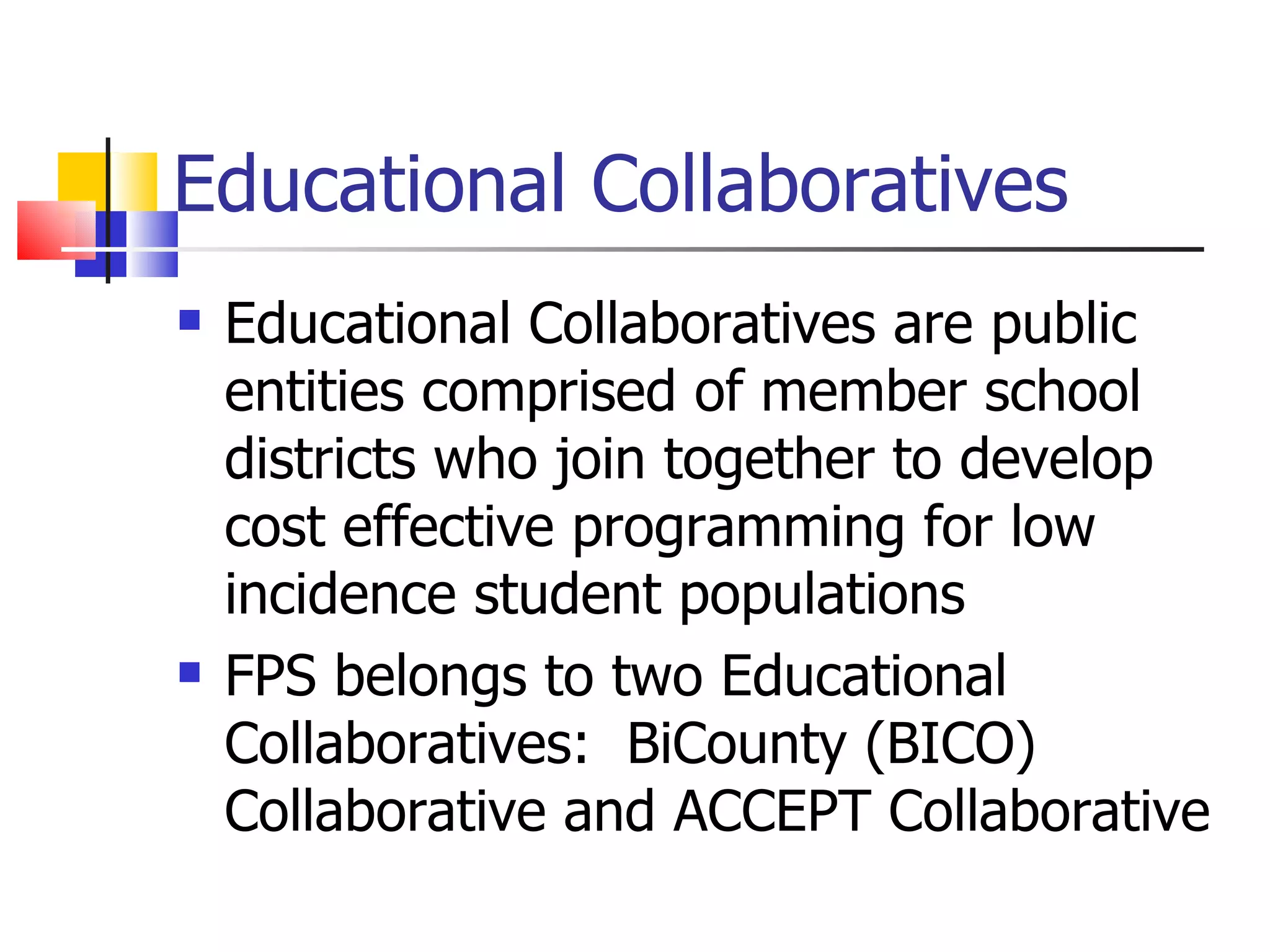
Educational Collaboratives Educational Collaboratives are public entities comprised of member school districts who join together to develop cost effective programming for low incidence student populations FPS belongs to two Educational Collaboratives:  BiCounty (BICO) Collaborative and ACCEPT Collaborative
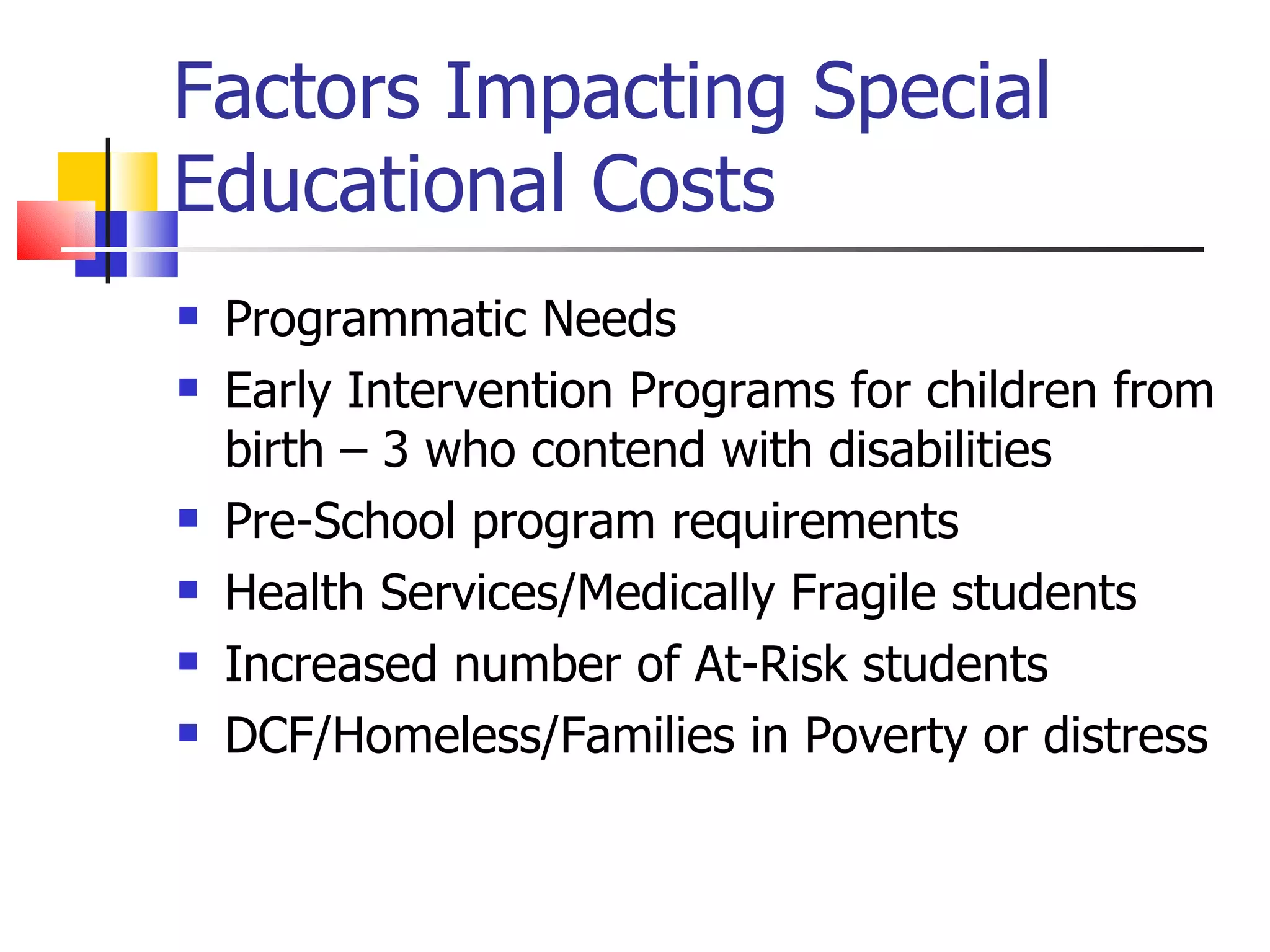
Factors Impacting Special Educational Costs Programmatic Needs Early Intervention Programs for children from birth – 3 who contend with disabilities Pre-School program requirements Health Services/Medically Fragile students Increased number of At-Risk students DCF/Homeless/Families in Poverty or distress
Largest Cost Drivers Special Education faculty: teachers, specialists, therapists Out of District Tuitions range from $24,000 - $247,000 Transportation costs range from $5,000 - $67,000
Transportation Costs Costs are sole responsibility of the district Costs are  not  reimbursable under Circuit Breaker Transportation costs may exceed tuition costs for some students Transportation for Homeless students is a district responsibility Remedy  –  DESE should allow us to include costs in circuit breaker calculation.
Transportation Services Under the Law, school districts are mandated to provide transportation to students with disabilities in the same manner as it would for all students If the child is placed away from the local school, transportation must be provided If due to a disability the child requires special transportation in order to participate in services, the school must provide it
Unpredictable Costs Students moving  into  the district from out of state Students moving  into  the district prior to April 1 but after the development of the budget Students requiring additional services in order to remain in the least restrictive environment Students who need emergency placements Unilateral placements Influence from State Agencies (DCF, DMH, DDS)
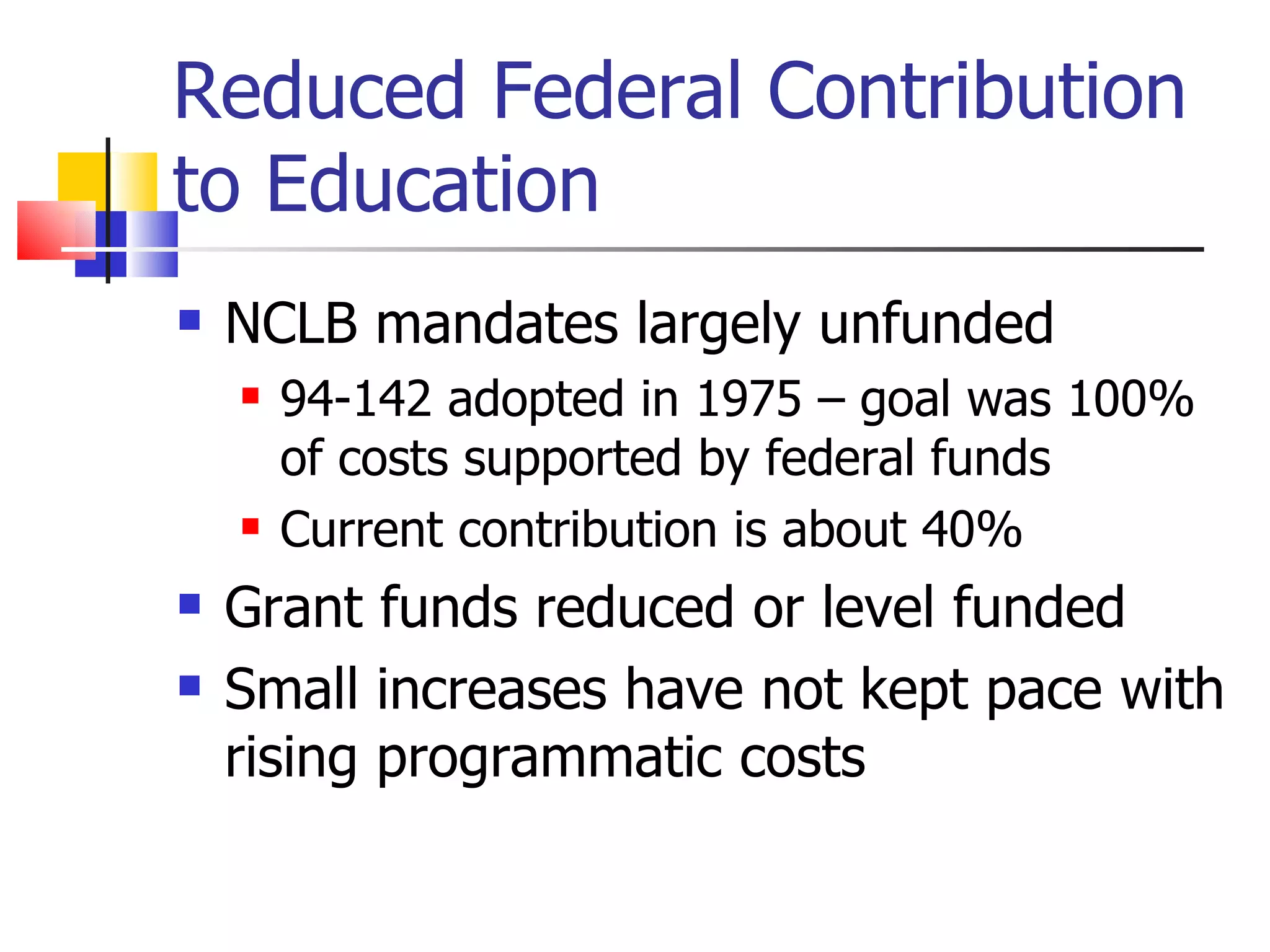
Reduced Federal Contribution to Education  NCLB mandates largely unfunded 94-142 adopted in 1975 – goal was 100% of costs supported by federal funds Current contribution is about 40% Grant funds reduced or level funded Small increases have not kept pace with rising programmatic costs
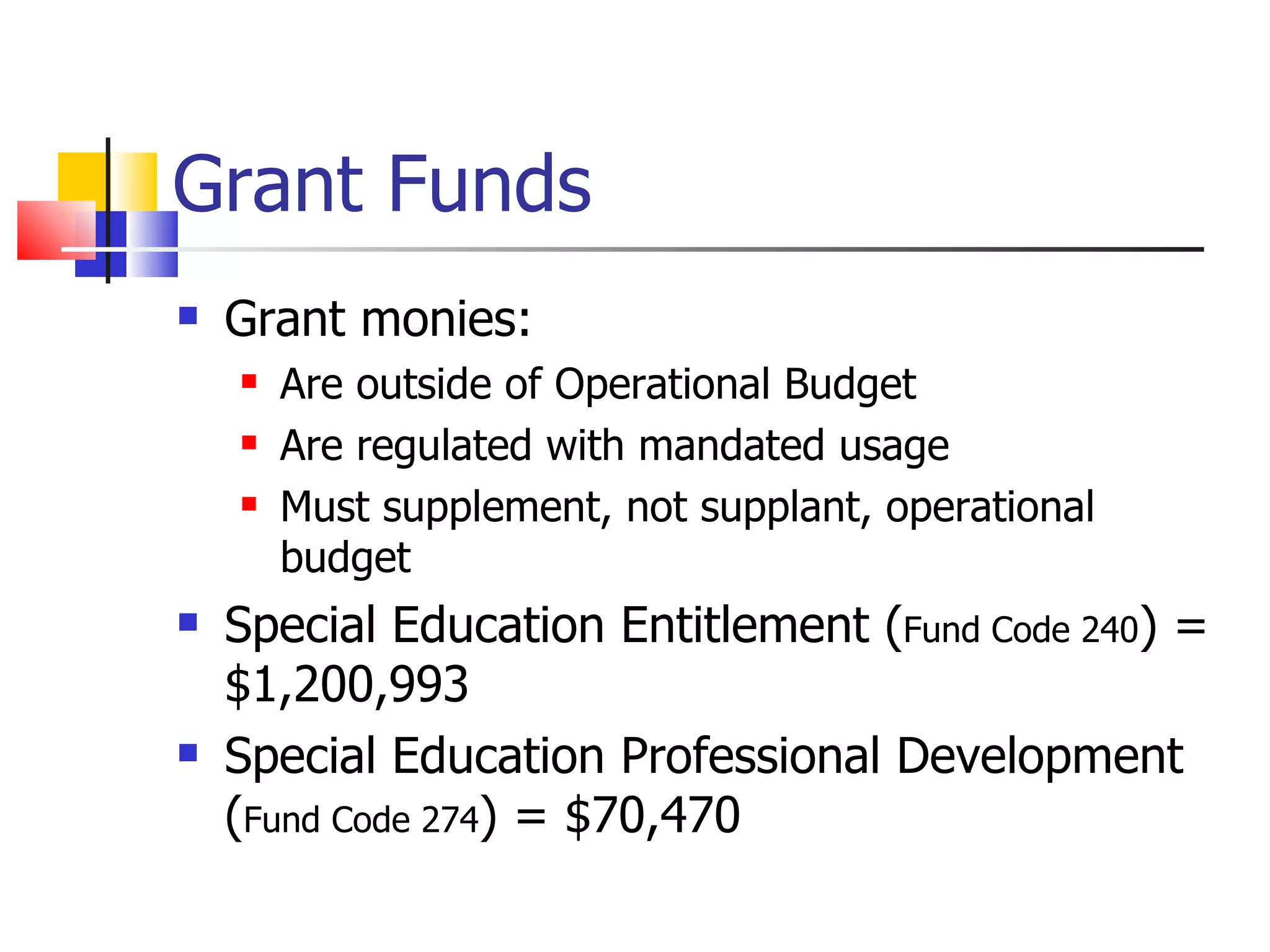
Grant Funds Grant monies: Are outside of Operational Budget Are regulated with mandated usage Must supplement, not supplant, operational budget Special Education Entitlement ( Fund Code 240 ) = $1,200,993 Special Education Professional Development ( Fund Code 274 ) = $70,470
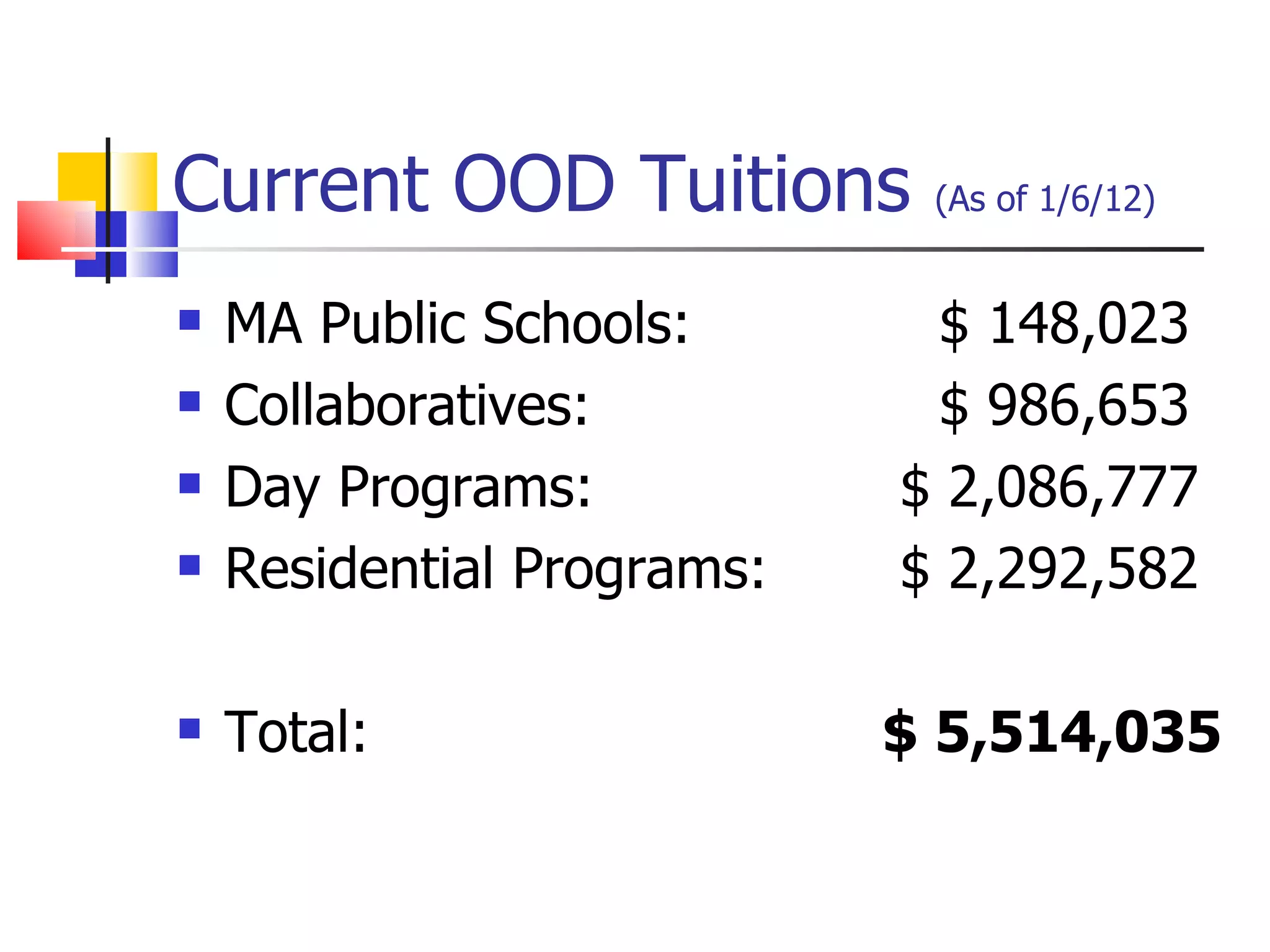
Current OOD Tuitions  (As of 1/6/12) MA Public Schools: $ 148,023 Collaboratives: $ 986,653 Day Programs:   $ 2,086,777 Residential Programs:   $ 2,292,582 Total:   $ 5,514,035
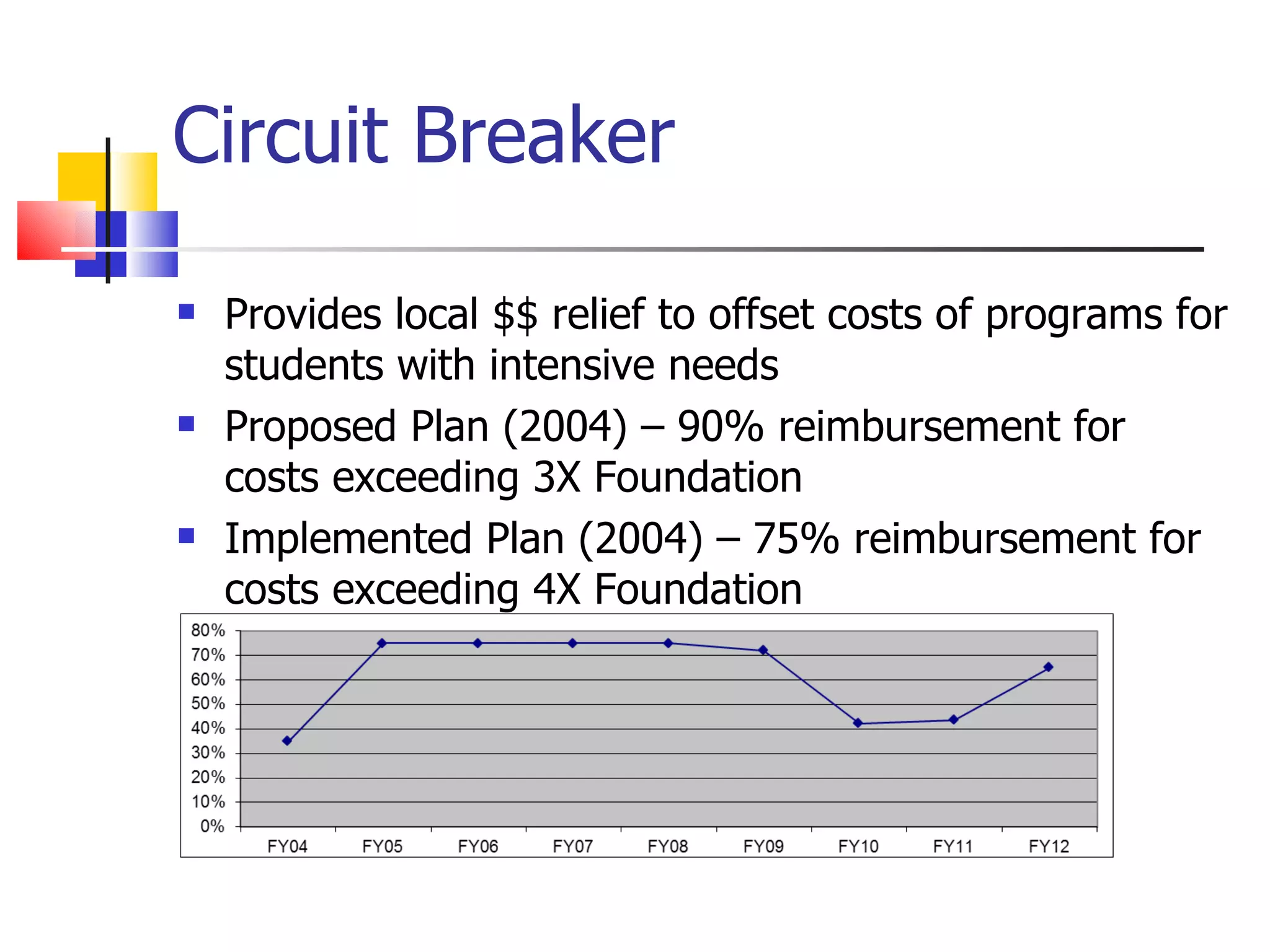
Circuit Breaker Provides local $$ relief to offset costs of programs for students with intensive needs Proposed Plan (2004) – 90% reimbursement for costs exceeding 3X Foundation Implemented Plan (2004) – 75% reimbursement for costs exceeding 4X Foundation
Other Cost Drivers Contractual Services  Psychological Services Adapted Equipment/Assistive Technology Independent Educational Evaluations Legal cases/hearings Emergency Evaluation and Placement needs
The moral of the story … Special Education spending is a moving target based on many variables
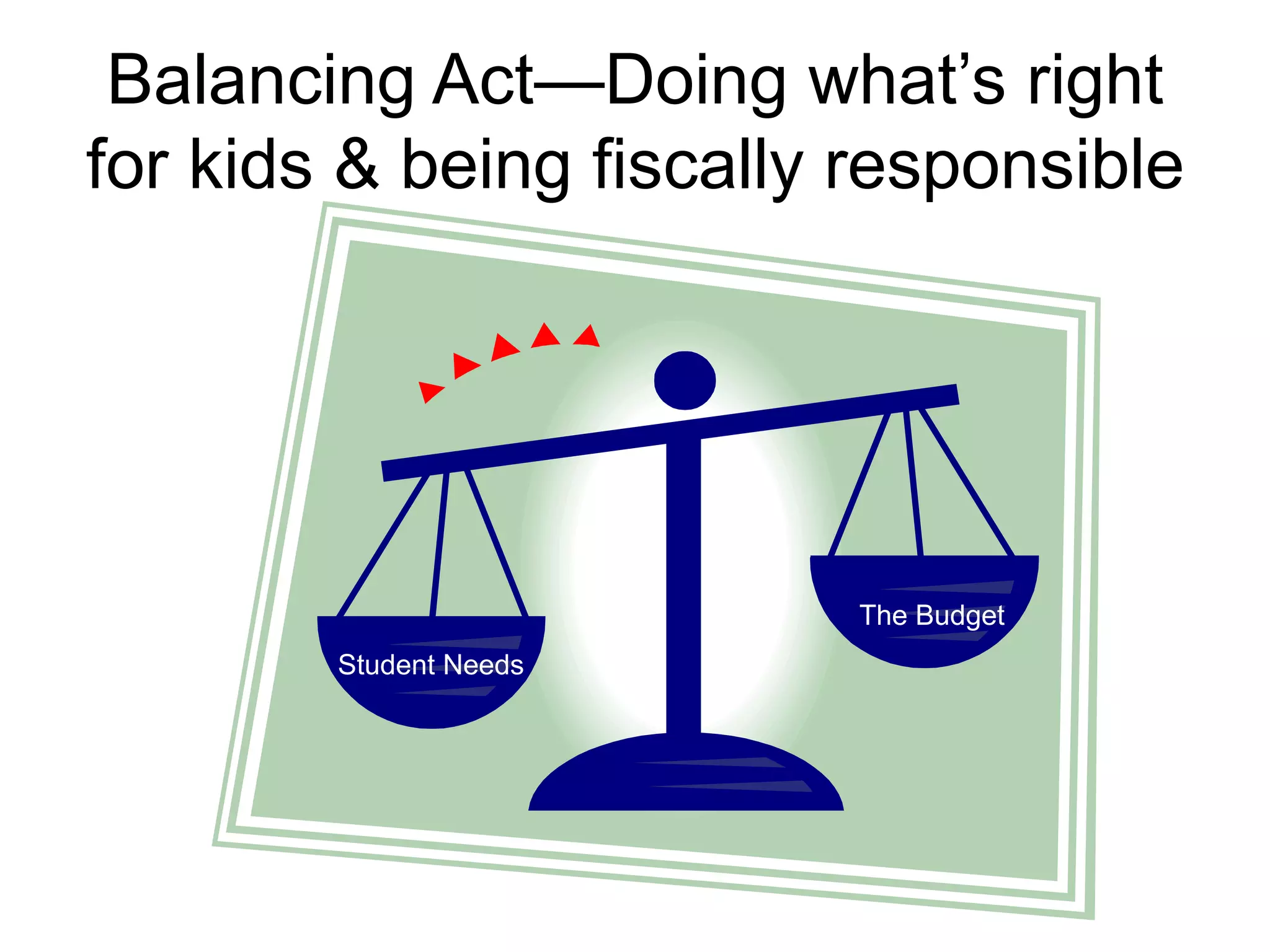
Balancing Act—Doing what’s right for kids & being fiscally responsible Student Needs The Budget

FPS_Budget_workshop_20120111

  • 1.
    Franklin Public SchoolsSchool Budget Drivers Salary Health Insurance Transportation Special Education
  • 2.
    Salaries and benefitsaccount for 83% of the 2012 budget Source: Franklin Public Schools Note: Other Expenses include Materials, PD and Contracted Services Total 2012 Budget $51,410,000
  • 3.
    Salary Budget 75%of Budget Salary Steps and Lanes Contractual Obligations Course reimbursement Longevity payments
  • 4.
    Health Insurance 8%of Budget Re-design of Health Plans=Lower Costs
  • 5.
    Transportation Current costof contracts – 2.4M Pay to Ride In- district Special Education Out of district Special Education Transportation
  • 6.
    Revolving Accounts andGrants ARRA and Ed. Jobs funding Entitlement Grants - Supplement NOT Supplant Revolving accounts have specific restrictions on how they can be spent
  • 7.
    Special Education Franklin Public Schools
  • 8.
    Laws and RegulationsFederal Law Federal Regulations State Regulations
  • 9.
    Entitlement Ensures thatall identified students with disabilities receive a ‘free and appropriate public education’ (FAPE) within the least restrictive environment (LRE) Ages three to high school graduation or age twenty two All decisions are made through a Team process – parents, teachers, student If student determined eligible for special education the Team develops an Individualized Educational Program (IEP)
  • 10.
    The IEP Legallybinding contract Describes specialized instruction Defines services and placement Is developed annually Monitors progress on identified goals
  • 11.
    Franklin Facts Franklinoffers a full continuum of services Franklin strives to keep students in the public schools – Least Restrictive Environment Enrollment 5969 SPED 997 (16.7%) ELL 94 (1.57%) ELL/SPED 6 (0.1%) Home/Hospital Tutoring 16 (0.27%) Homeless 6 (0.10%) SPED Out of District 78
  • 12.
    Continuum of Services In District Programs: Full Inclusion Program Partial Inclusion Program Substantially Separate Classroom Out-of-District Programs: Public Day School (9100 line) /Collaborative (9400 line) Private Day School (9300 line) Residential School (9300 line) Out of State Programs (9200 line)
  • 13.
    Educational Collaboratives EducationalCollaboratives are public entities comprised of member school districts who join together to develop cost effective programming for low incidence student populations FPS belongs to two Educational Collaboratives: BiCounty (BICO) Collaborative and ACCEPT Collaborative
  • 14.
    Factors Impacting SpecialEducational Costs Programmatic Needs Early Intervention Programs for children from birth – 3 who contend with disabilities Pre-School program requirements Health Services/Medically Fragile students Increased number of At-Risk students DCF/Homeless/Families in Poverty or distress
  • 15.
    Largest Cost DriversSpecial Education faculty: teachers, specialists, therapists Out of District Tuitions range from $24,000 - $247,000 Transportation costs range from $5,000 - $67,000
  • 16.
    Transportation Costs Costsare sole responsibility of the district Costs are not reimbursable under Circuit Breaker Transportation costs may exceed tuition costs for some students Transportation for Homeless students is a district responsibility Remedy – DESE should allow us to include costs in circuit breaker calculation.
  • 17.
    Transportation Services Underthe Law, school districts are mandated to provide transportation to students with disabilities in the same manner as it would for all students If the child is placed away from the local school, transportation must be provided If due to a disability the child requires special transportation in order to participate in services, the school must provide it
  • 18.
    Unpredictable Costs Studentsmoving into the district from out of state Students moving into the district prior to April 1 but after the development of the budget Students requiring additional services in order to remain in the least restrictive environment Students who need emergency placements Unilateral placements Influence from State Agencies (DCF, DMH, DDS)
  • 19.
    Reduced Federal Contributionto Education NCLB mandates largely unfunded 94-142 adopted in 1975 – goal was 100% of costs supported by federal funds Current contribution is about 40% Grant funds reduced or level funded Small increases have not kept pace with rising programmatic costs
  • 20.
    Grant Funds Grantmonies: Are outside of Operational Budget Are regulated with mandated usage Must supplement, not supplant, operational budget Special Education Entitlement ( Fund Code 240 ) = $1,200,993 Special Education Professional Development ( Fund Code 274 ) = $70,470
  • 21.
    Current OOD Tuitions (As of 1/6/12) MA Public Schools: $ 148,023 Collaboratives: $ 986,653 Day Programs: $ 2,086,777 Residential Programs: $ 2,292,582 Total: $ 5,514,035
  • 22.
    Circuit Breaker Provideslocal $$ relief to offset costs of programs for students with intensive needs Proposed Plan (2004) – 90% reimbursement for costs exceeding 3X Foundation Implemented Plan (2004) – 75% reimbursement for costs exceeding 4X Foundation
  • 23.
    Other Cost DriversContractual Services Psychological Services Adapted Equipment/Assistive Technology Independent Educational Evaluations Legal cases/hearings Emergency Evaluation and Placement needs
  • 24.
    The moral ofthe story … Special Education spending is a moving target based on many variables
  • 25.
    Balancing Act—Doing what’sright for kids & being fiscally responsible Student Needs The Budget