







eLearning sucks A discussion stimulus for teachers, marketers & communicators everywhere.
lectures are an inefficient way to teach
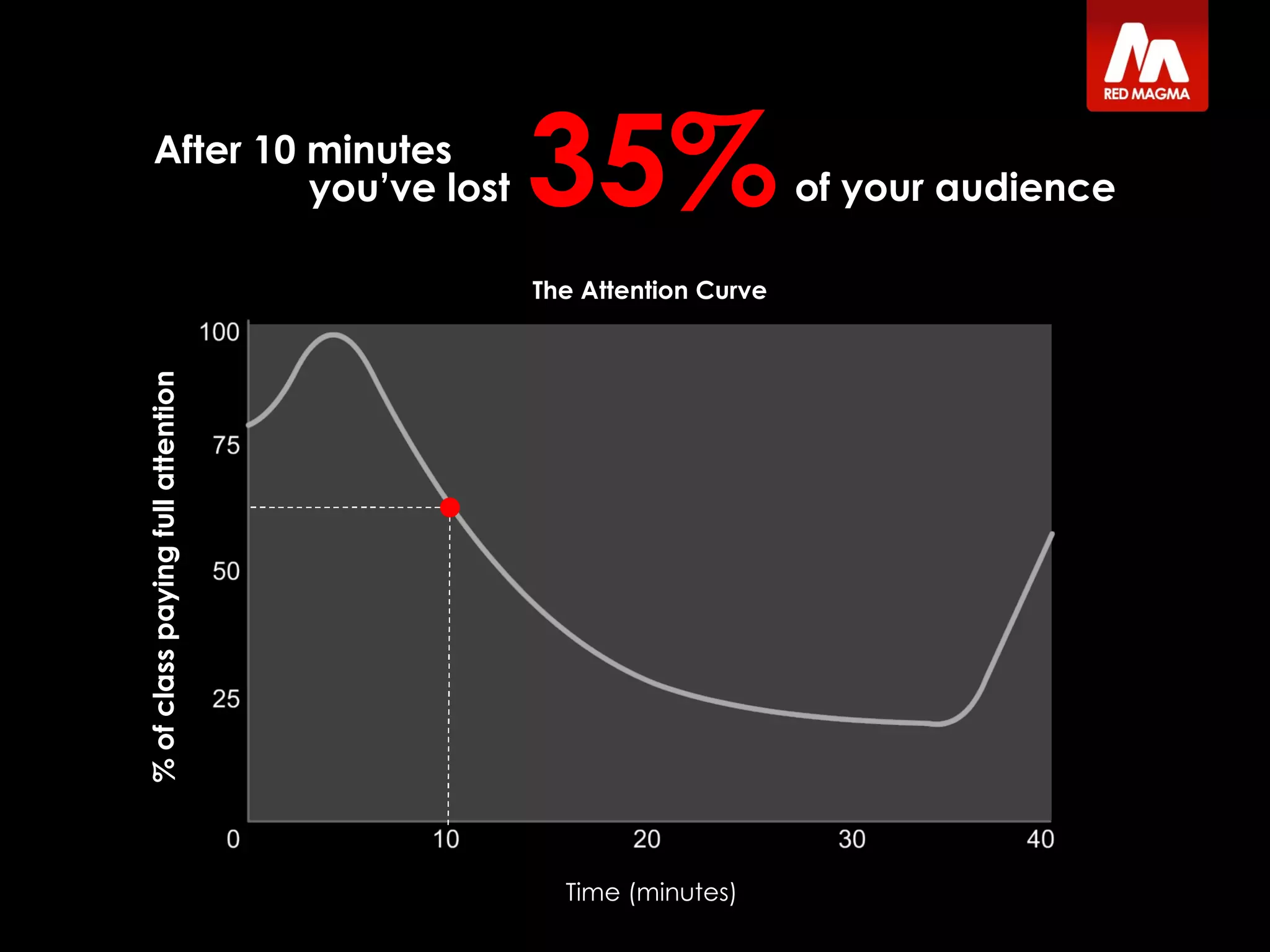
% of class paying full attention Time (minutes) The Attention Curve After 10 minutes 35% of your audience you’ve lost Mills, H.R. (1977)  Techniques of Technical Training , 3rd Ed. Macmillan, London
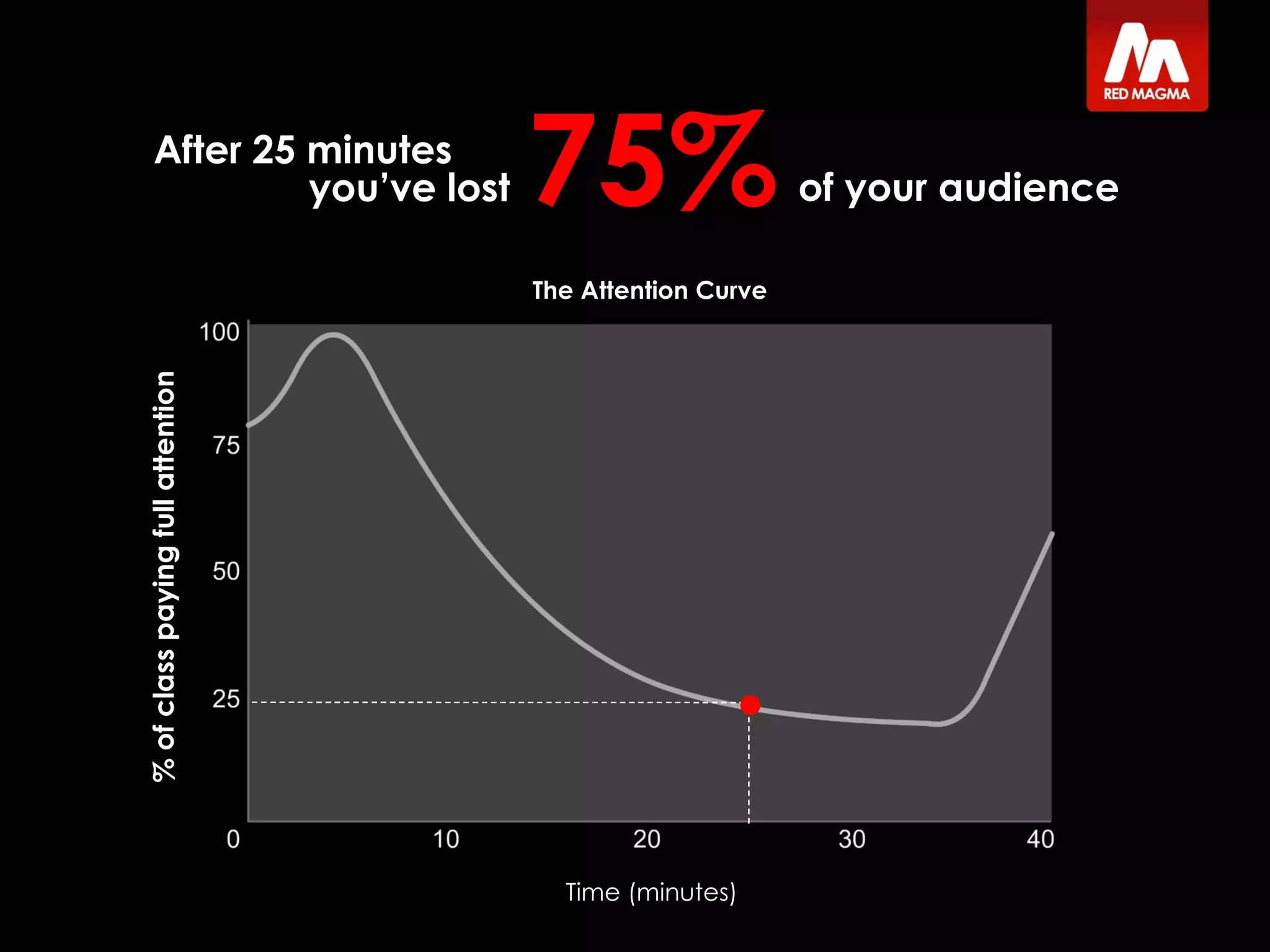
% of class paying full attention Time (minutes) The Attention Curve After 25 minutes 75% of your audience you’ve lost Mills, H.R. (1977)  Techniques of Technical Training , 3rd Ed. Macmillan, London
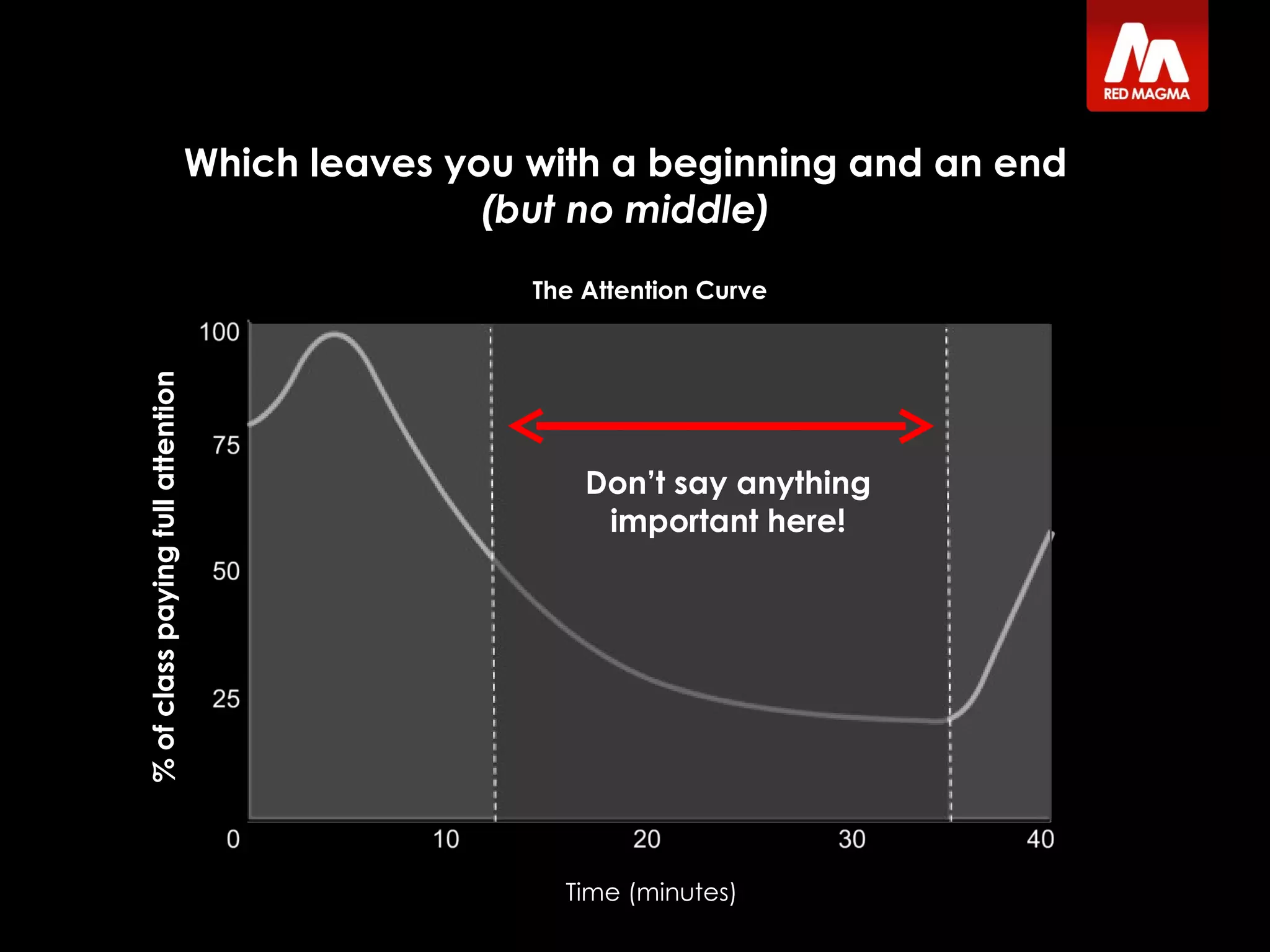
% of class paying full attention Time (minutes) The Attention Curve Which leaves you with a beginning and an end (but no middle) Don’t say anything important here! Mills, H.R. (1977)  Techniques of Technical Training , 3rd Ed. Macmillan, London
You end up saying everything 3 times © World Economic Forum (www.weforum.org) swiss-image.ch Remy Steinegger Creative Commons Attribution ShareAlike 2.0 http://commons.wikimedia.org/wiki/File:Tony_Blair_WEF_2008_cropped.jpg EDUCATION EDUCATION EDUCATION “ ”
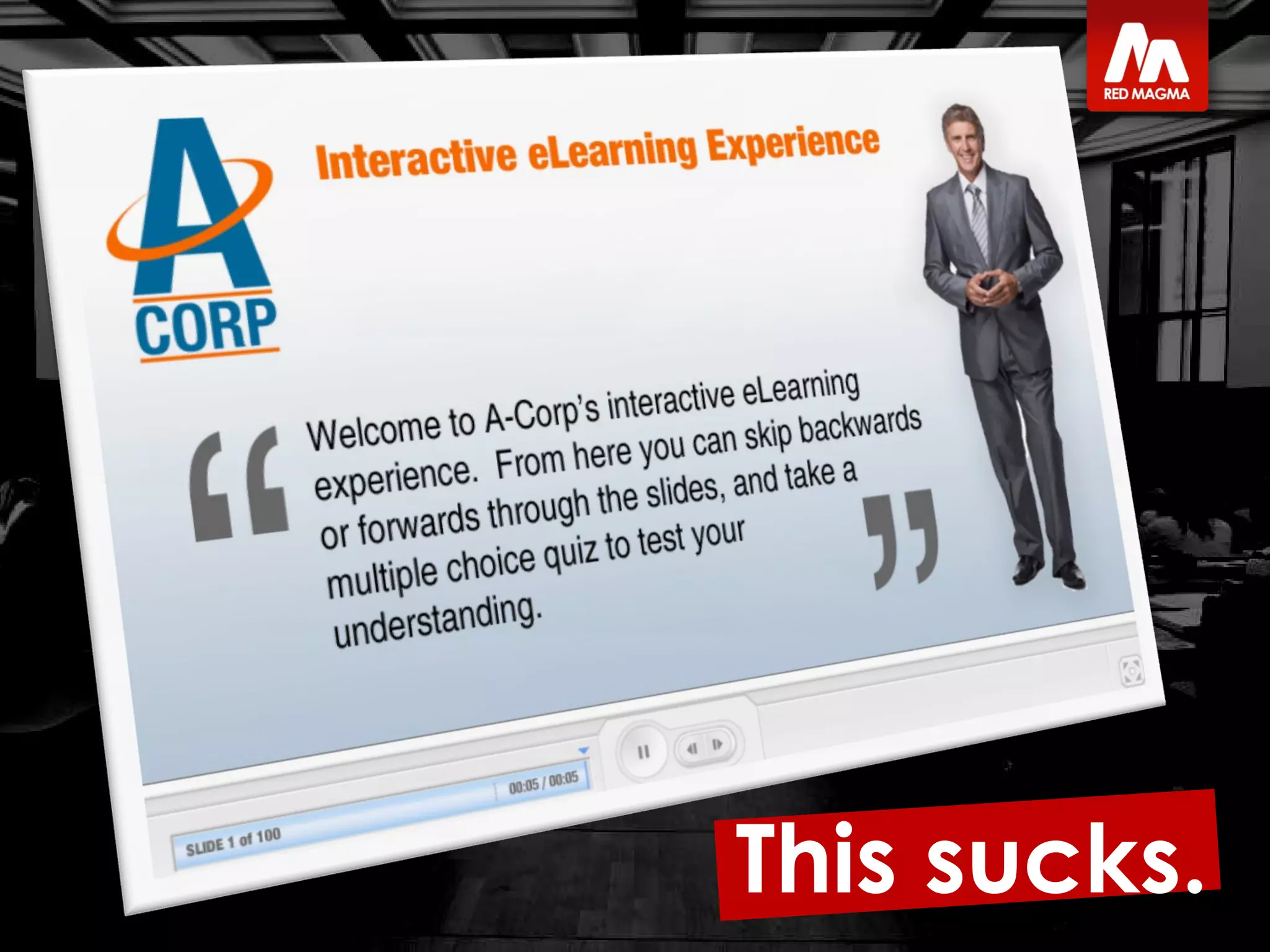
Most eLearning is also like a lecture
This sucks.
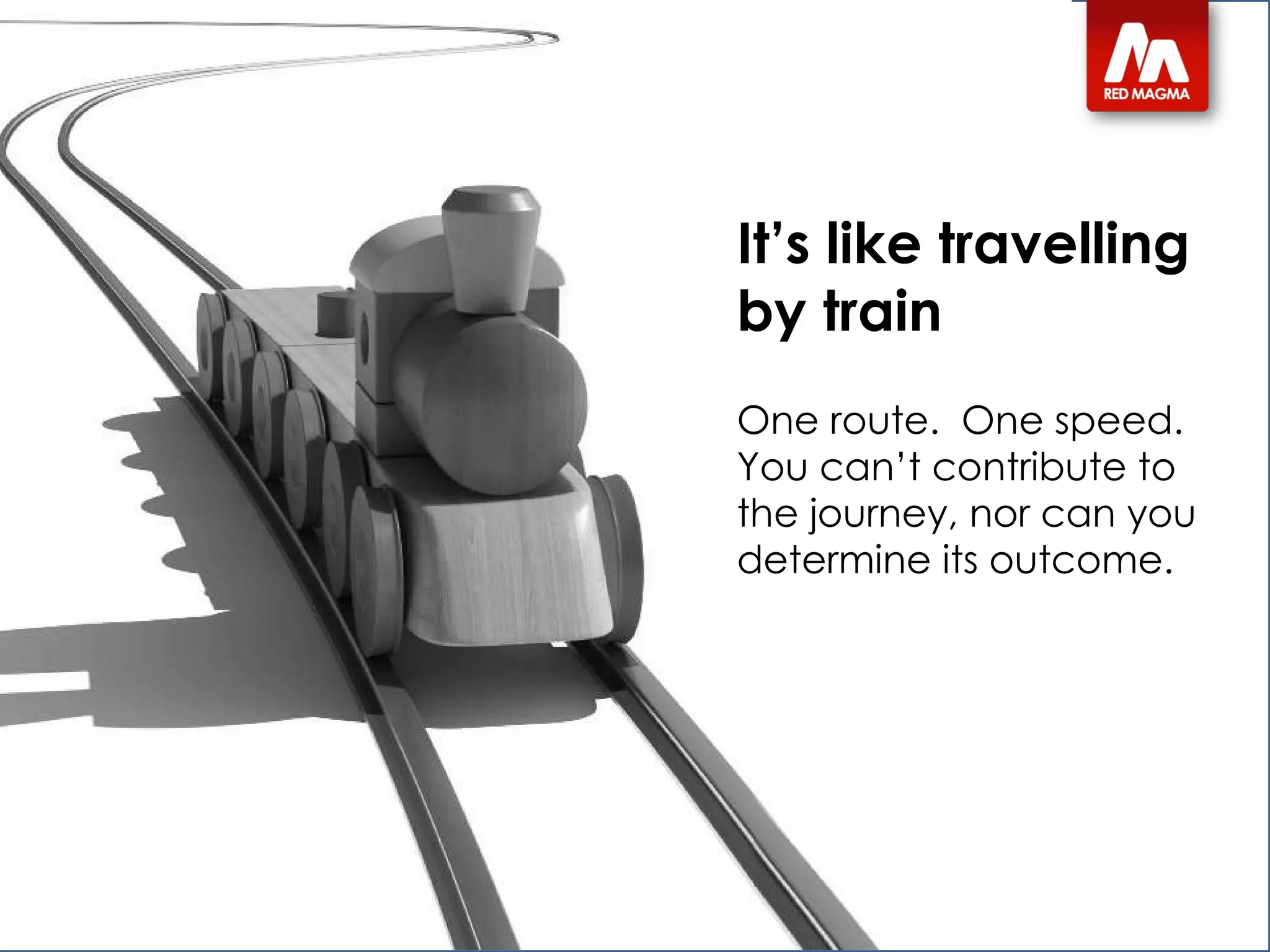
It’s like travelling by train One route.  One speed.  You can’t contribute to the journey, nor can you determine its outcome.
Using the web is not like travelling by train
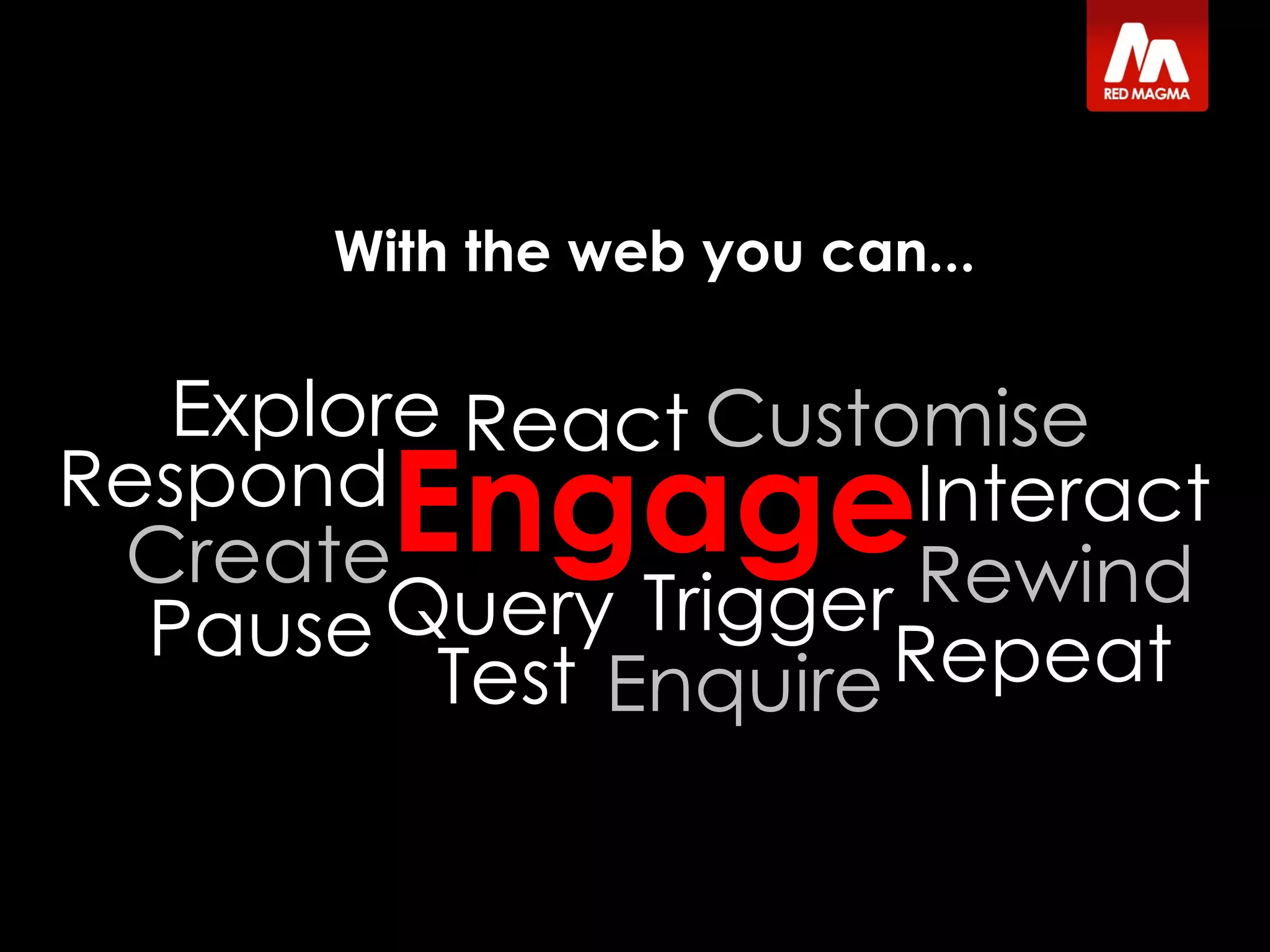
Explore With the web you can... Trigger Enquire Respond React Engage Create Query Interact Rewind Pause Repeat Test Customise
Thanks to the Web, creating interactive learning content is becoming faster and cheaper.
The web-savvy generation now expect a higher level of engagement
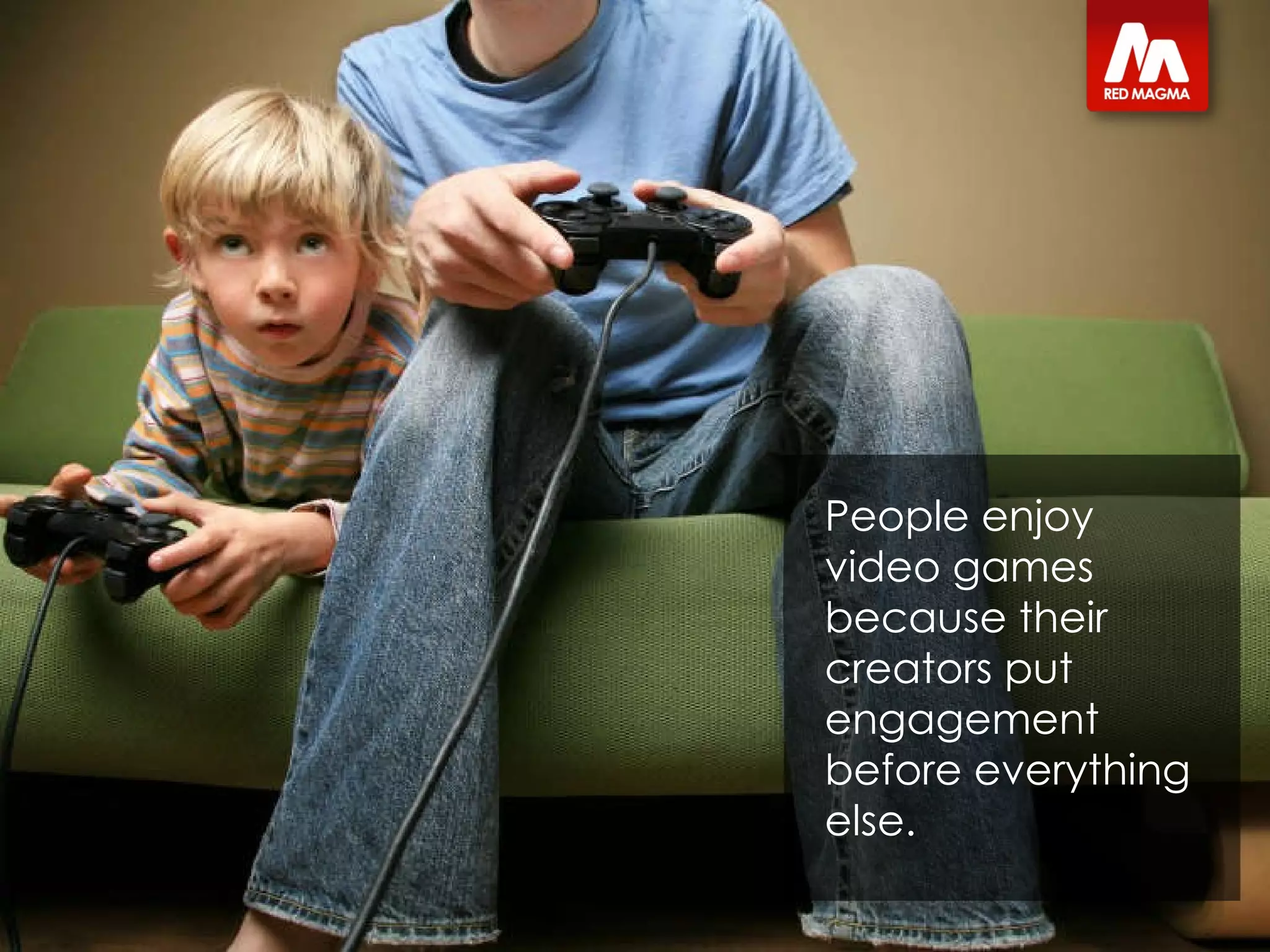
People enjoy video games because their creators put engagement  before everything else.
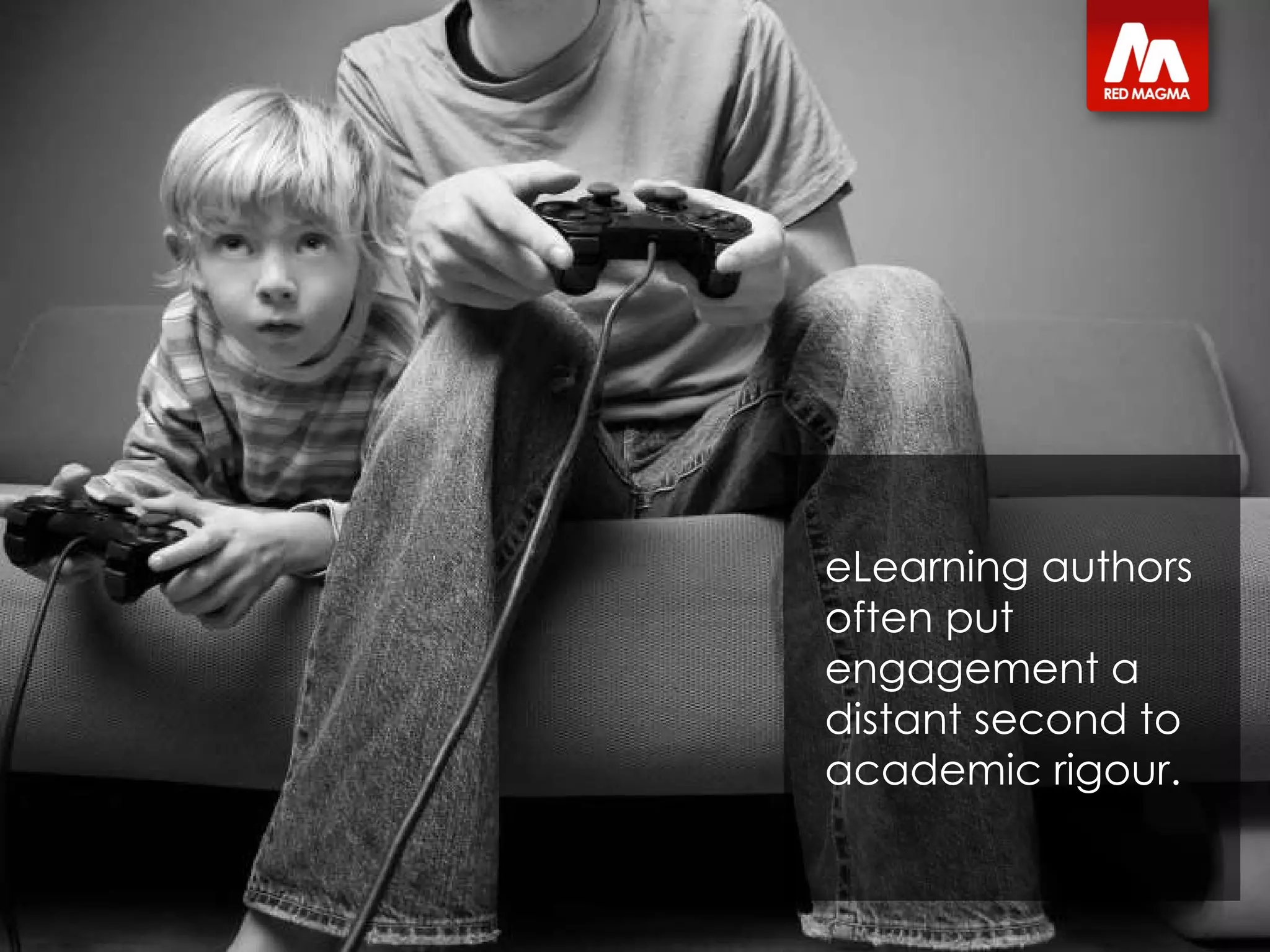
eLearning authors often put engagement a distant second to academic rigour.
The principles of game design are significant But the very word  game  is misleading.  It’s synonymous with extra-curricular, solitary activity.  This is a misconception   we need to overcome.
 of 40 Just like a game eLearning can provide a  controlled environment  for  experimentation, safe failure  and experiential learning.
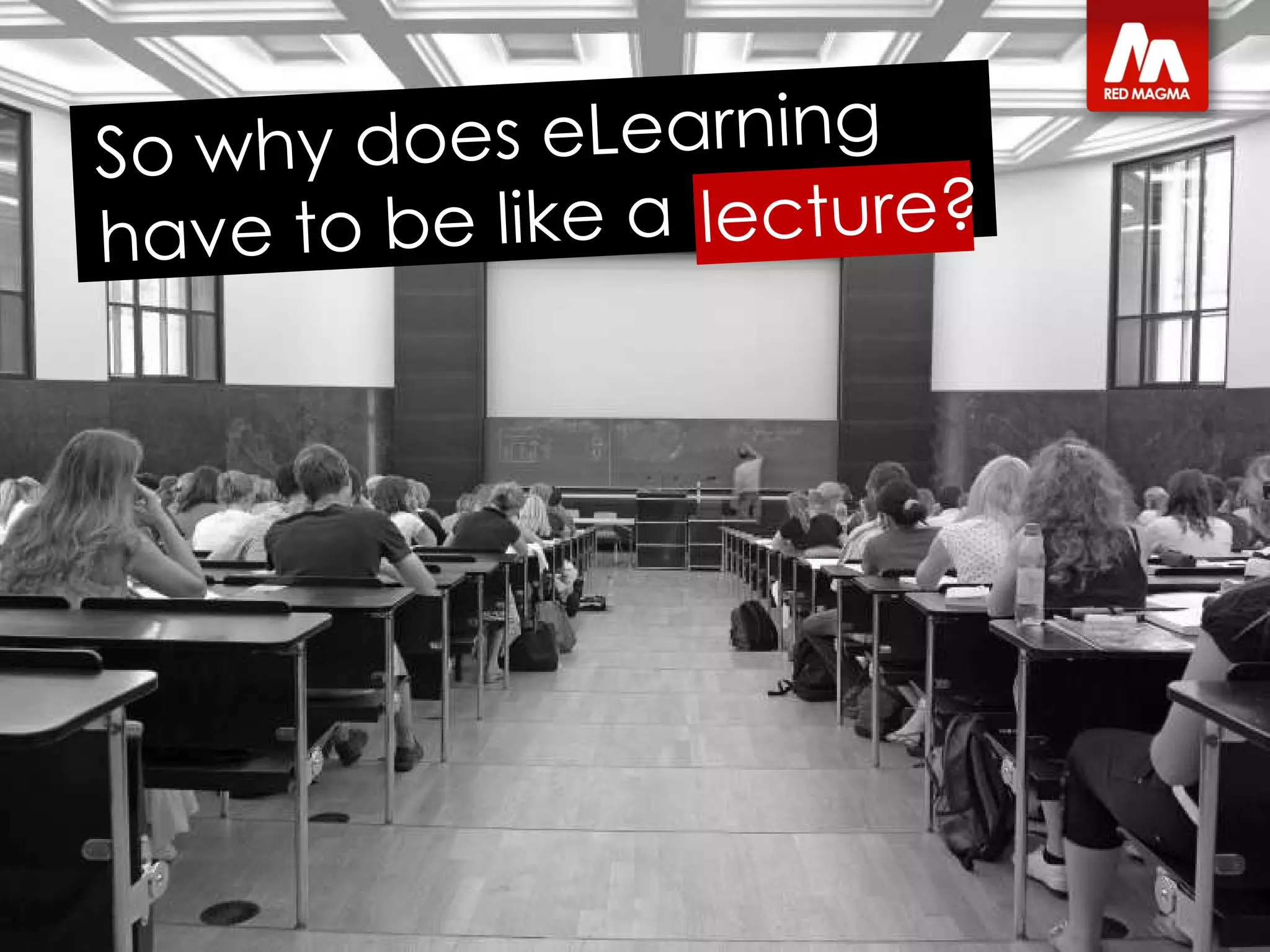
lecture? So why does eLearning have to be like a
In  life  we learn from  experience
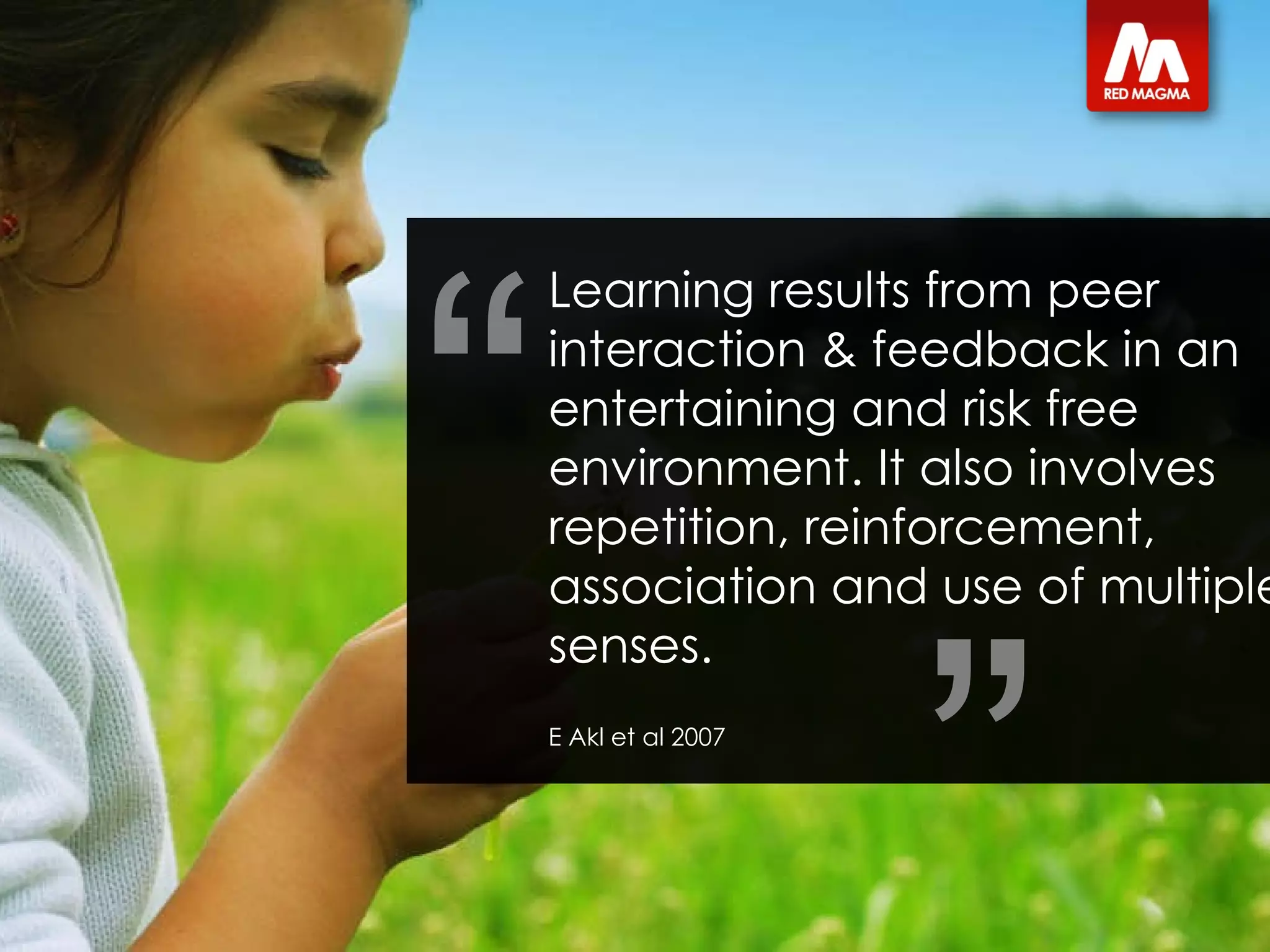
Learning results from peer interaction & feedback in an entertaining and risk free environment. It also involves repetition, reinforcement, association and use of multiple senses. E Akl et al 2007 “ ”
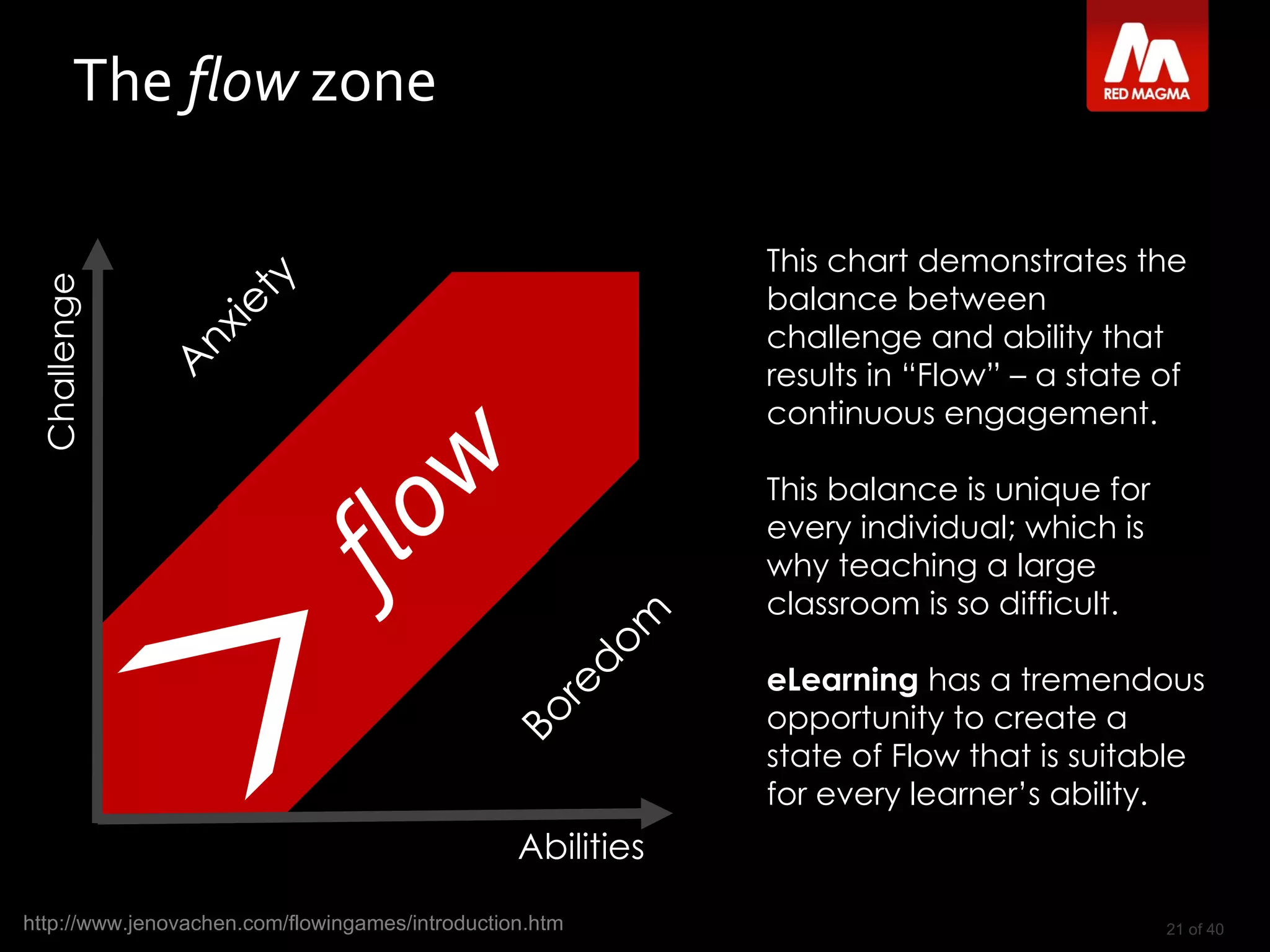
Abilities Challenge Anxiety Boredom flow Csíkszentmihályi, Mihály (1990).  Flow: The Psychology of Optimal Experience . New York: Harper and Row.  ISBN 0-06-092043-2 Holt, R. Examining  Video Game Immersion as a Flow State , B.A. Thesis Dept of Psychology, Brock University, St. Catharines, Ontario, Canada, 2000 The  flow  zone This chart demonstrates the balance between challenge and ability that results in “Flow” – a state of continuous engagement. This balance is unique for every individual; which is why teaching a large classroom is so difficult. eLearning  has a tremendous opportunity to create a state of Flow that is suitable for every learner’s ability.  of 40
Often we have critical lessons to communicate...
Lessons which protect our safety and health...
our environment...
...lessons which protect our future.
these lessons merit serious attention when it comes to online learning
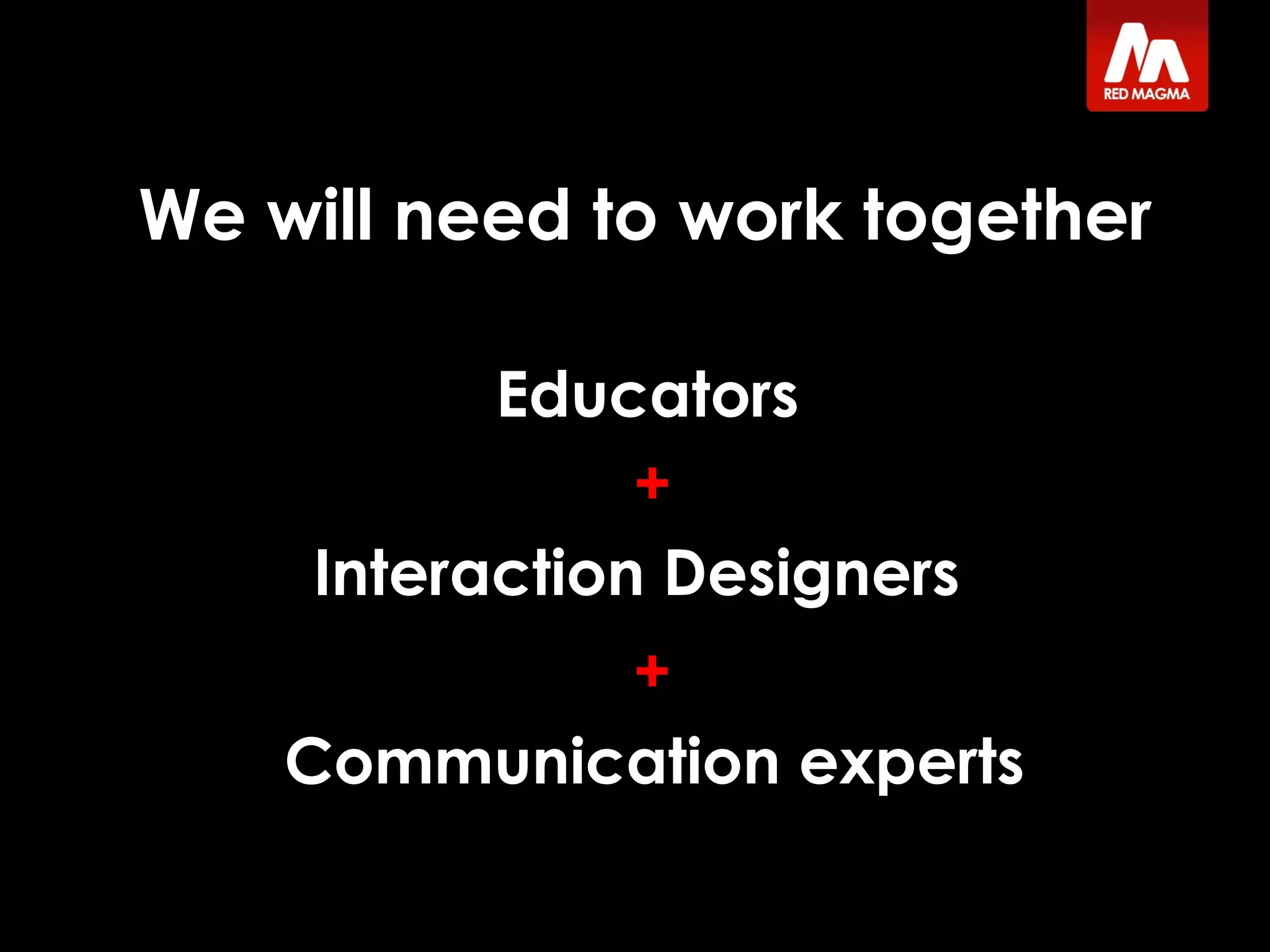
We will need to work together Interaction Designers Educators Communication experts + +
lets make it happen :) @seismograph slideshare follow us on twitter more presentations on (links open in a new window)

eLearning Sucks

  • 1.
    eLearning sucks Adiscussion stimulus for teachers, marketers & communicators everywhere.
  • 2.
    lectures are aninefficient way to teach
  • 3.
    % of classpaying full attention Time (minutes) The Attention Curve After 10 minutes 35% of your audience you’ve lost Mills, H.R. (1977)  Techniques of Technical Training , 3rd Ed. Macmillan, London
  • 4.
    % of classpaying full attention Time (minutes) The Attention Curve After 25 minutes 75% of your audience you’ve lost Mills, H.R. (1977)  Techniques of Technical Training , 3rd Ed. Macmillan, London
  • 5.
    % of classpaying full attention Time (minutes) The Attention Curve Which leaves you with a beginning and an end (but no middle) Don’t say anything important here! Mills, H.R. (1977)  Techniques of Technical Training , 3rd Ed. Macmillan, London
  • 6.
    You end upsaying everything 3 times © World Economic Forum (www.weforum.org) swiss-image.ch Remy Steinegger Creative Commons Attribution ShareAlike 2.0 http://commons.wikimedia.org/wiki/File:Tony_Blair_WEF_2008_cropped.jpg EDUCATION EDUCATION EDUCATION “ ”
  • 7.
    Most eLearning isalso like a lecture
  • 8.
  • 9.
    It’s like travellingby train One route. One speed. You can’t contribute to the journey, nor can you determine its outcome.
  • 10.
    Using the webis not like travelling by train
  • 11.
    Explore With theweb you can... Trigger Enquire Respond React Engage Create Query Interact Rewind Pause Repeat Test Customise
  • 12.
    Thanks to theWeb, creating interactive learning content is becoming faster and cheaper.
  • 13.
    The web-savvy generationnow expect a higher level of engagement
  • 14.
    People enjoy videogames because their creators put engagement before everything else.
  • 15.
    eLearning authors oftenput engagement a distant second to academic rigour.
  • 16.
    The principles ofgame design are significant But the very word game is misleading. It’s synonymous with extra-curricular, solitary activity. This is a misconception we need to overcome.
  • 17.
    of 40Just like a game eLearning can provide a controlled environment for experimentation, safe failure and experiential learning.
  • 18.
    lecture? So whydoes eLearning have to be like a
  • 19.
    In life we learn from experience
  • 20.
    Learning results frompeer interaction & feedback in an entertaining and risk free environment. It also involves repetition, reinforcement, association and use of multiple senses. E Akl et al 2007 “ ”
  • 21.
    Abilities Challenge AnxietyBoredom flow Csíkszentmihályi, Mihály (1990). Flow: The Psychology of Optimal Experience . New York: Harper and Row. ISBN 0-06-092043-2 Holt, R. Examining Video Game Immersion as a Flow State , B.A. Thesis Dept of Psychology, Brock University, St. Catharines, Ontario, Canada, 2000 The flow zone This chart demonstrates the balance between challenge and ability that results in “Flow” – a state of continuous engagement. This balance is unique for every individual; which is why teaching a large classroom is so difficult. eLearning has a tremendous opportunity to create a state of Flow that is suitable for every learner’s ability. of 40
  • 22.
    Often we havecritical lessons to communicate...
  • 23.
    Lessons which protectour safety and health...
  • 24.
  • 25.
  • 26.
    these lessons meritserious attention when it comes to online learning
  • 27.
    We will needto work together Interaction Designers Educators Communication experts + +
  • 28.
    lets make ithappen :) @seismograph slideshare follow us on twitter more presentations on (links open in a new window)