Downloaded 564 times

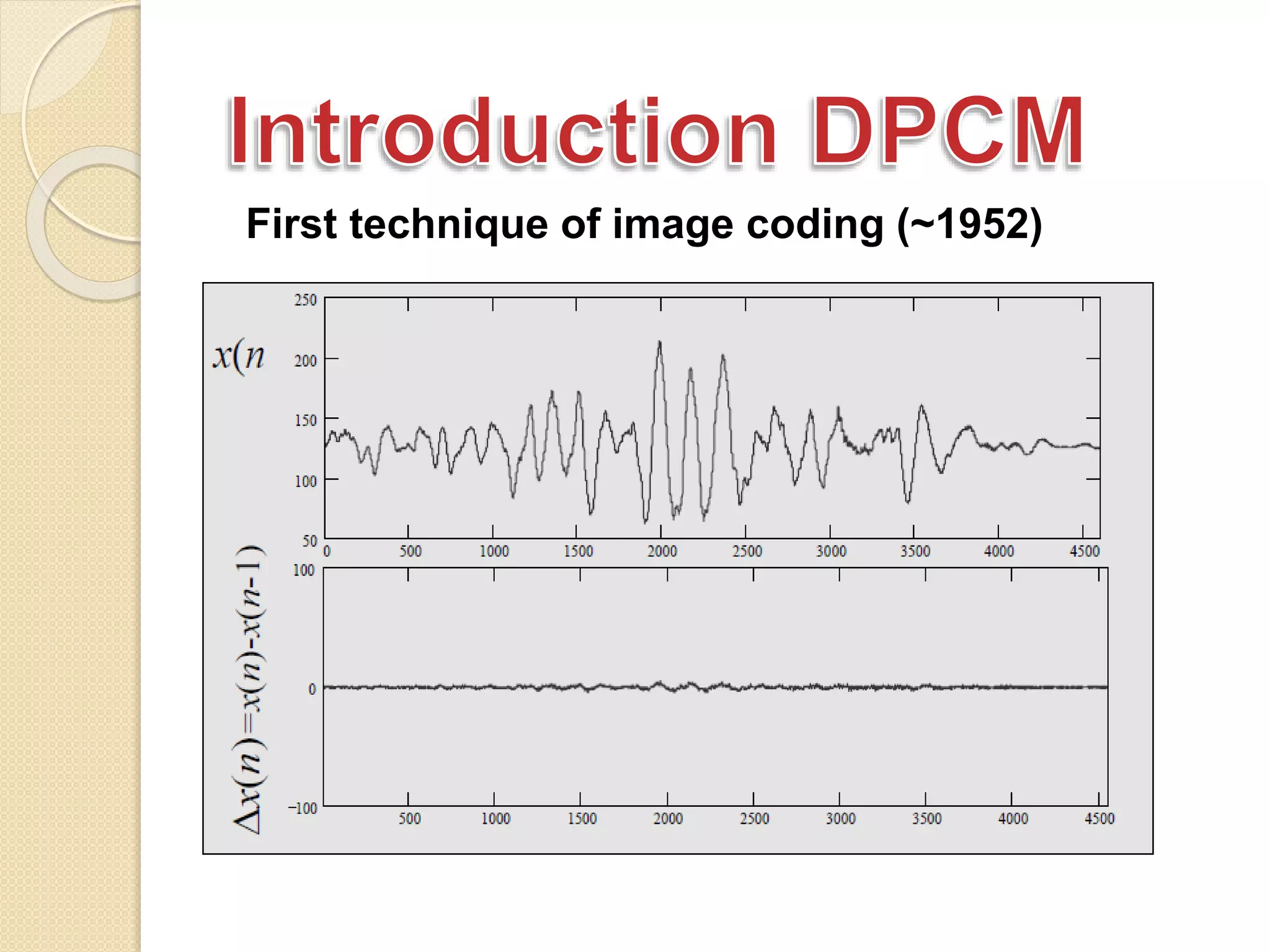
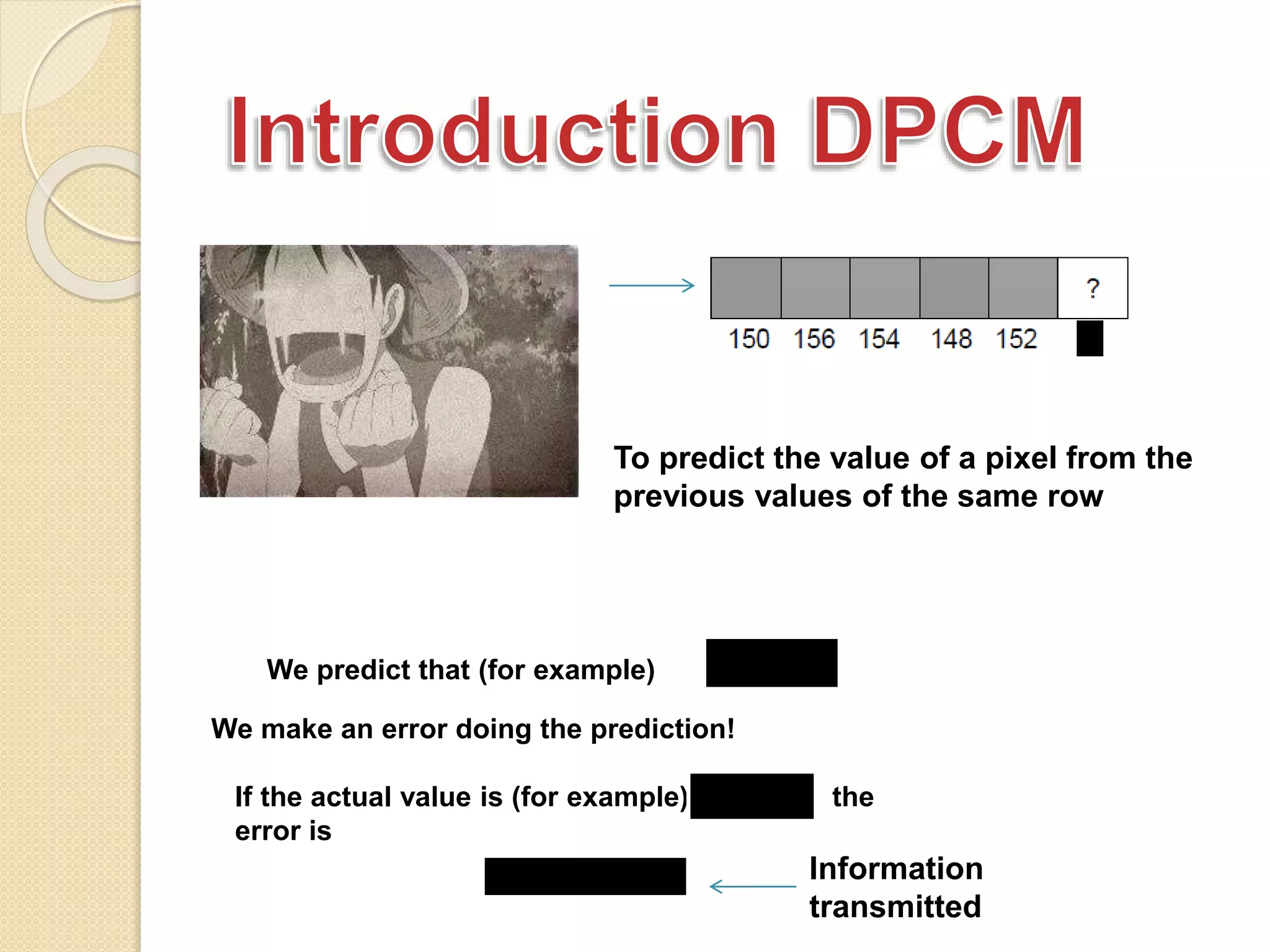
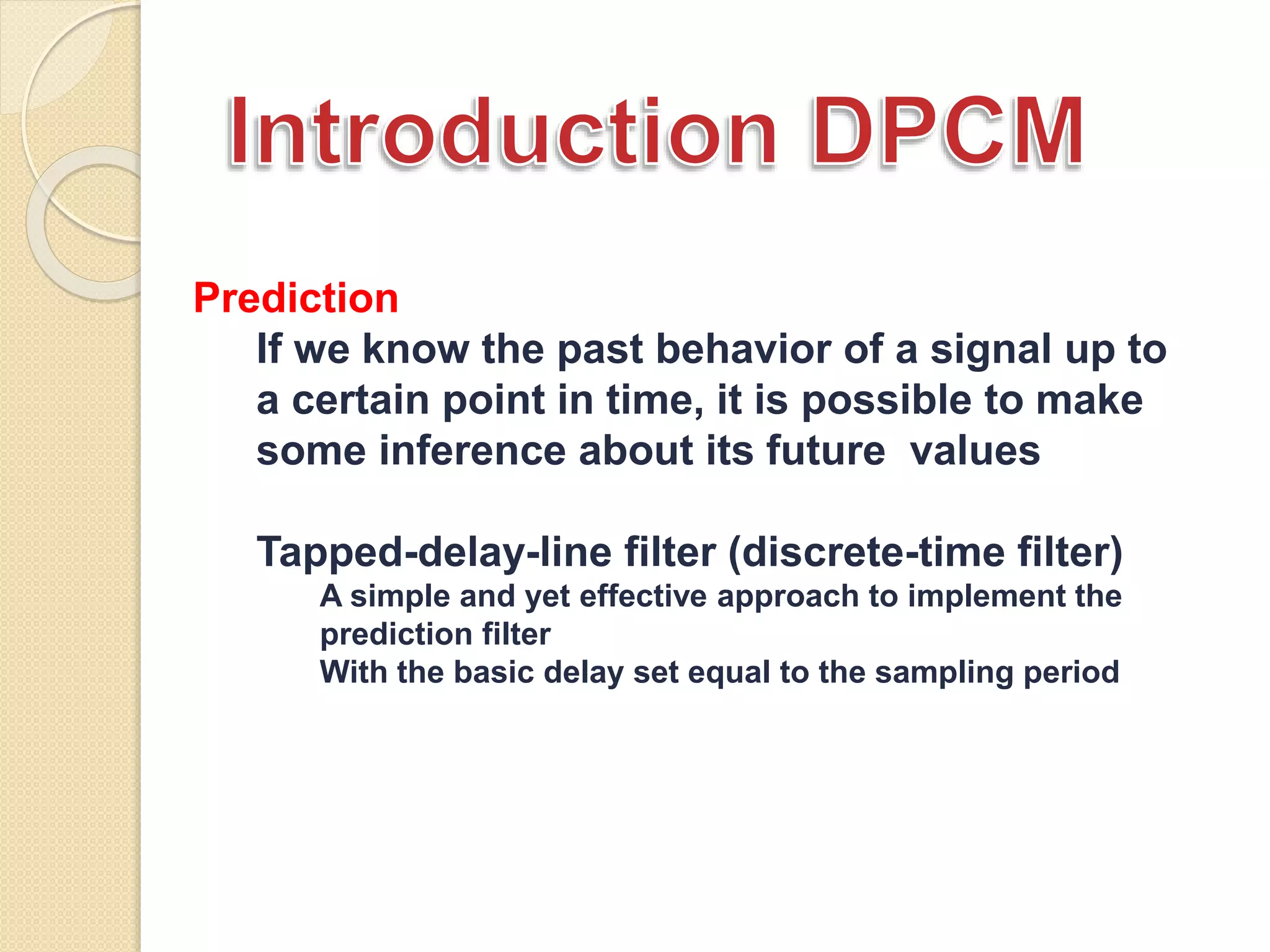
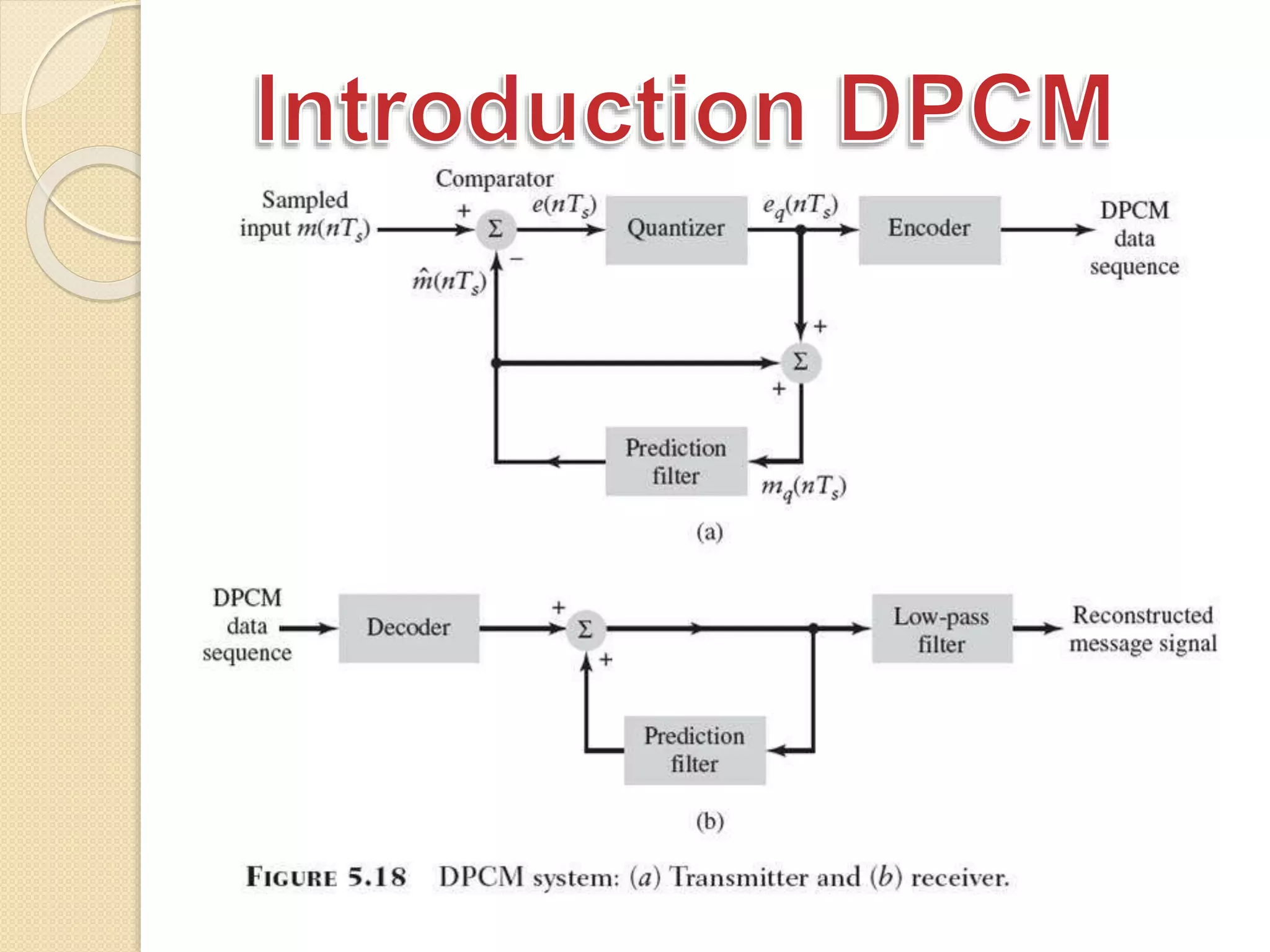
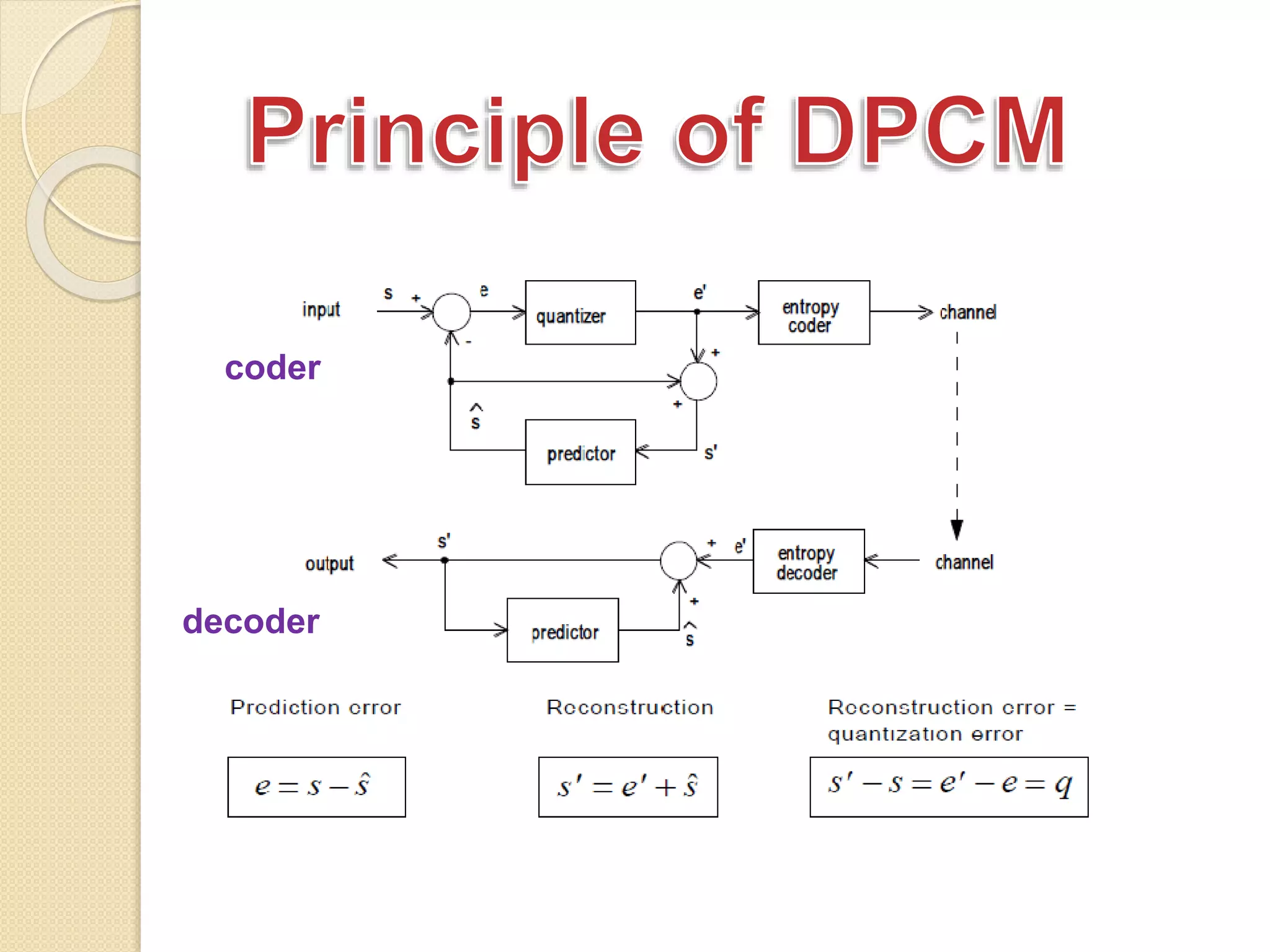
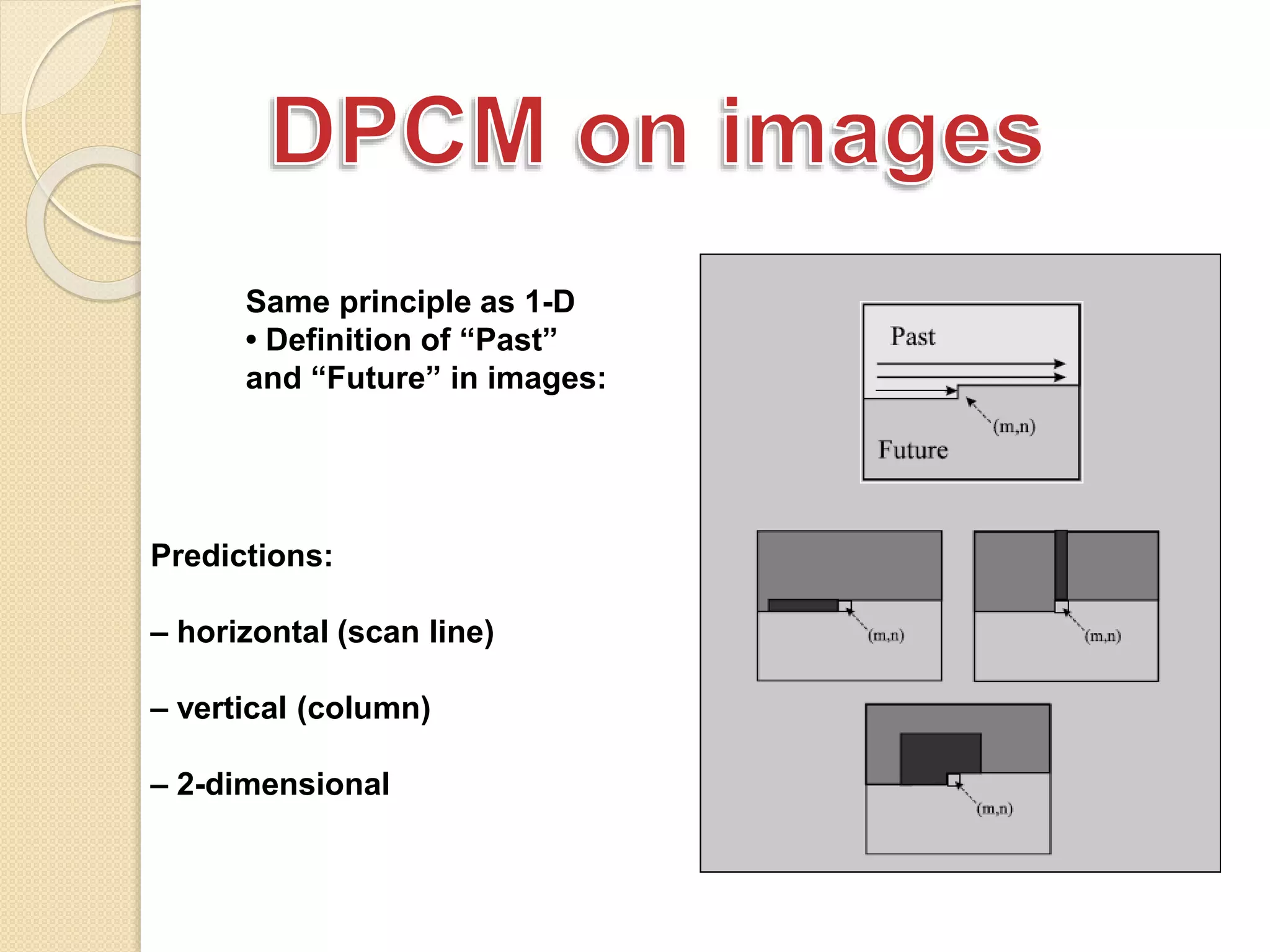
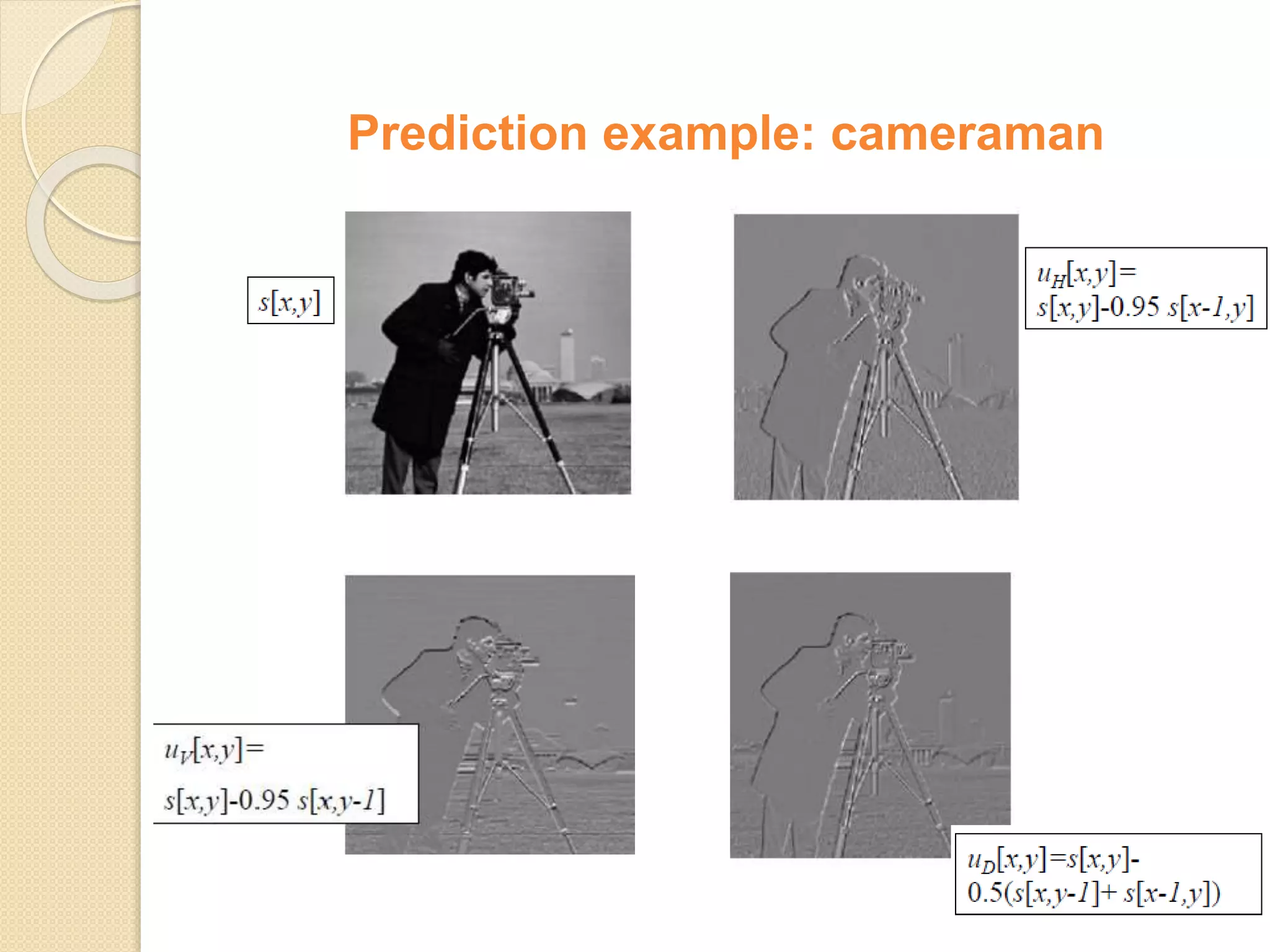


This document discusses techniques for image coding and compression, including predicting pixel values from neighboring pixels, encoding differences between actual and predicted values (DPCM), and adapting the mapping of bits to differences over time (ADPCM). DPCM removes redundancy by transmitting only differences between samples, which are normally small. ADPCM varies this mapping dynamically so more bits can be used for rapid changes and fewer for slow changes. Overall the document focuses on prediction-based approaches to reduce image data by exploiting spatial and temporal correlations between pixels.
Discusses analyzing differences between samples rather than samples, and techniques like image coding and prediction.
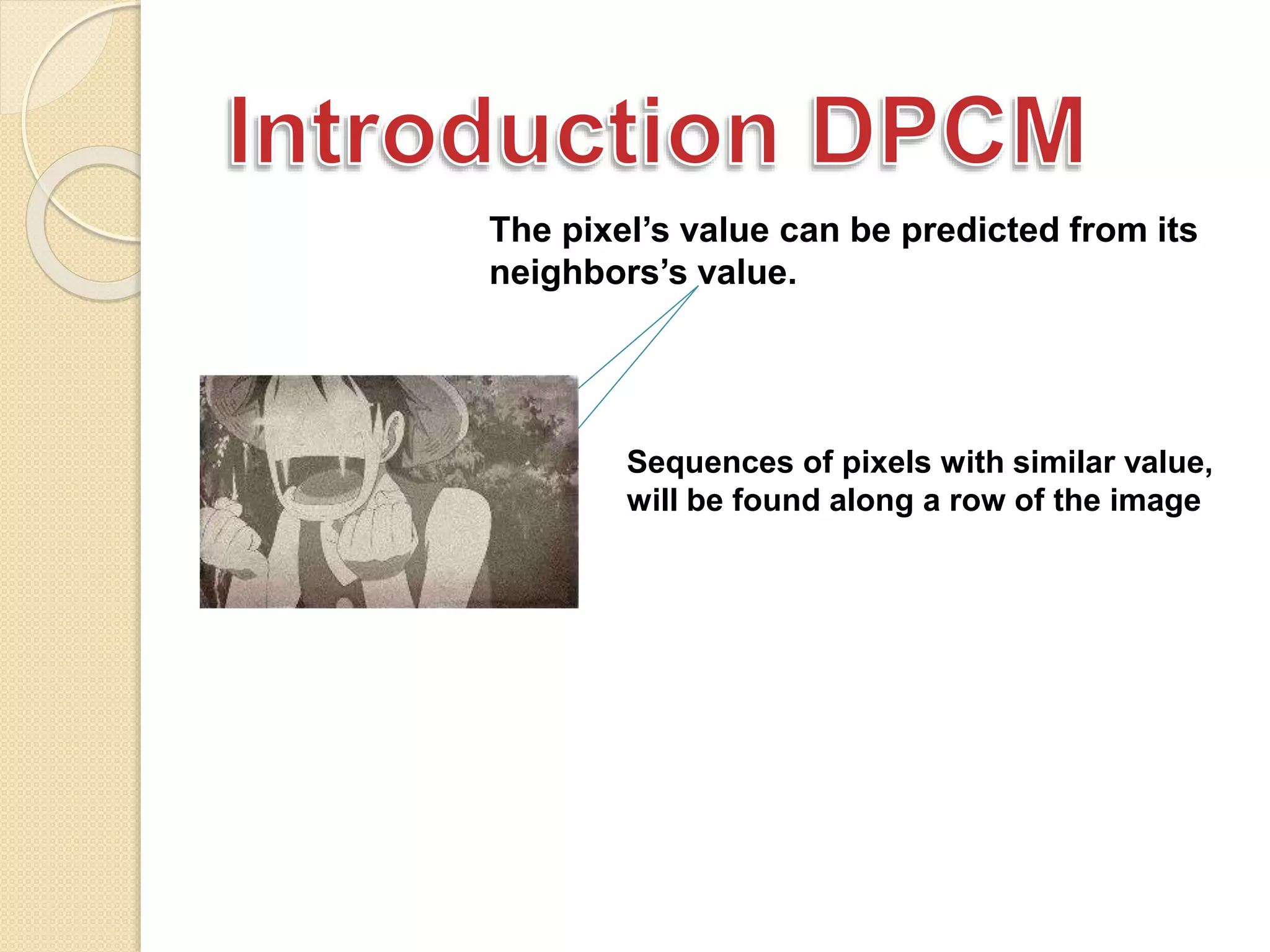
Explores predicting pixel values based on neighbors, and different dimensions of prediction in images.
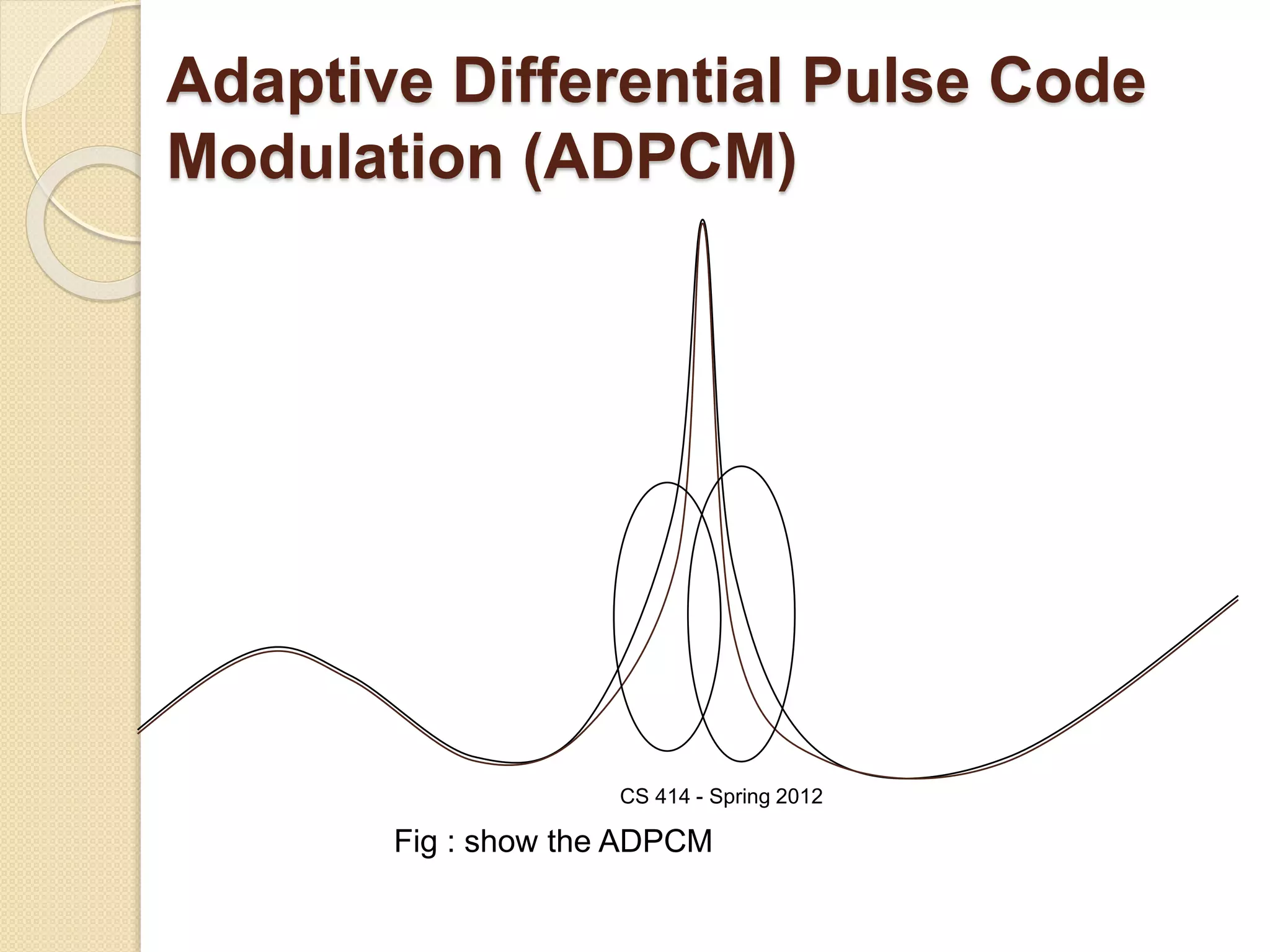
Introduces ADPCM, explaining its adaptive mapping of bits to differences and how it enhances DPCM efficiency.


