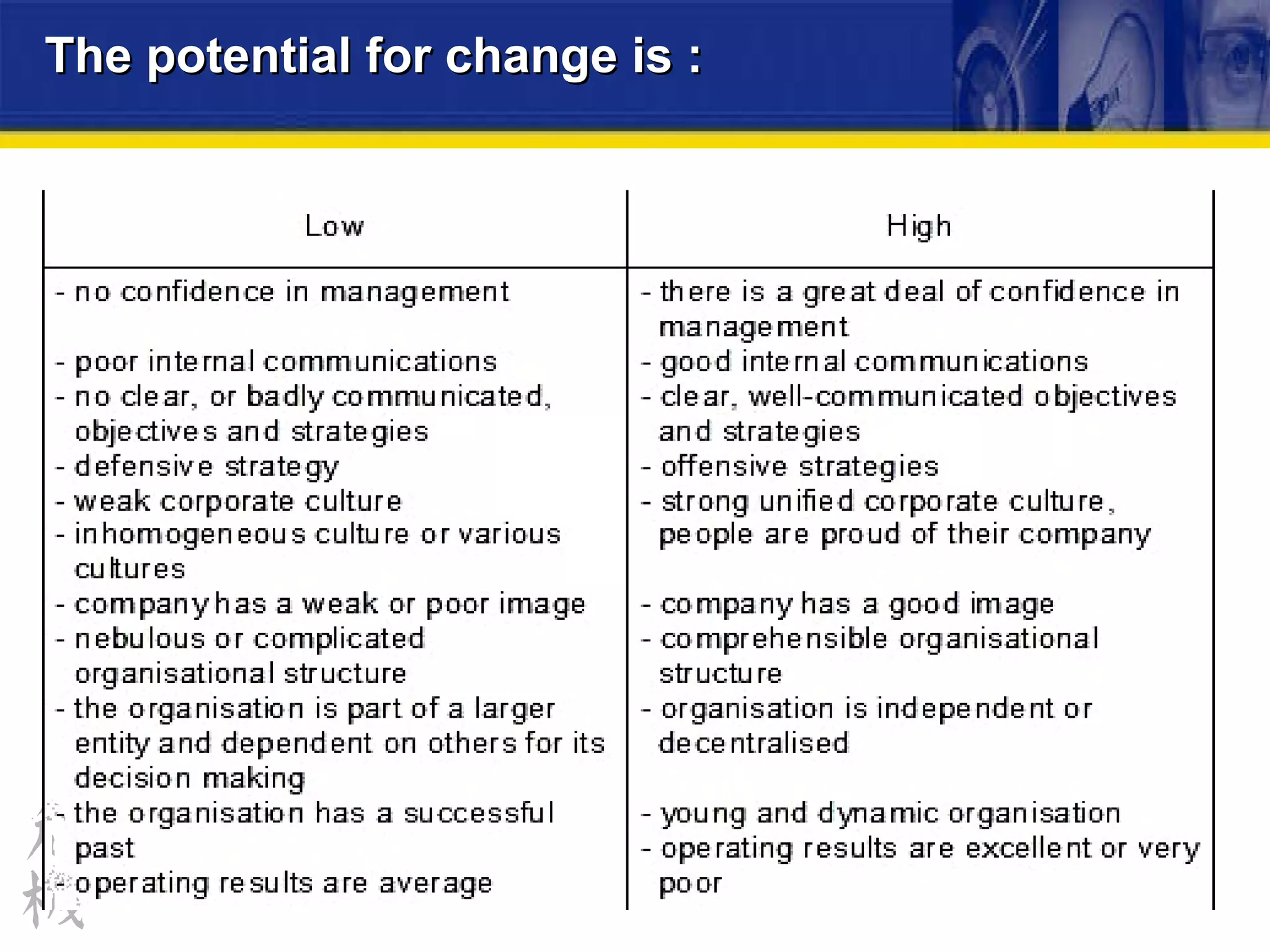
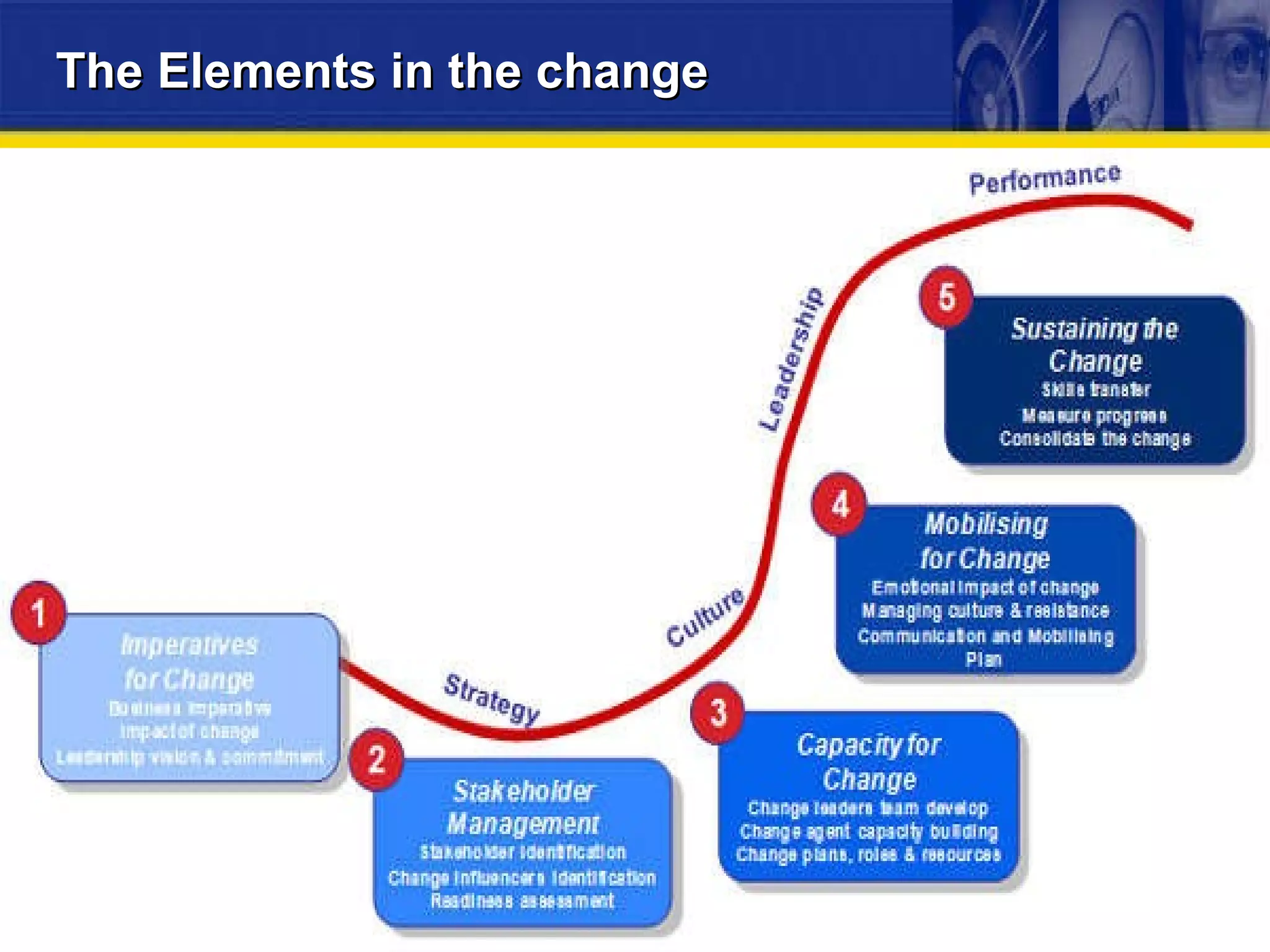
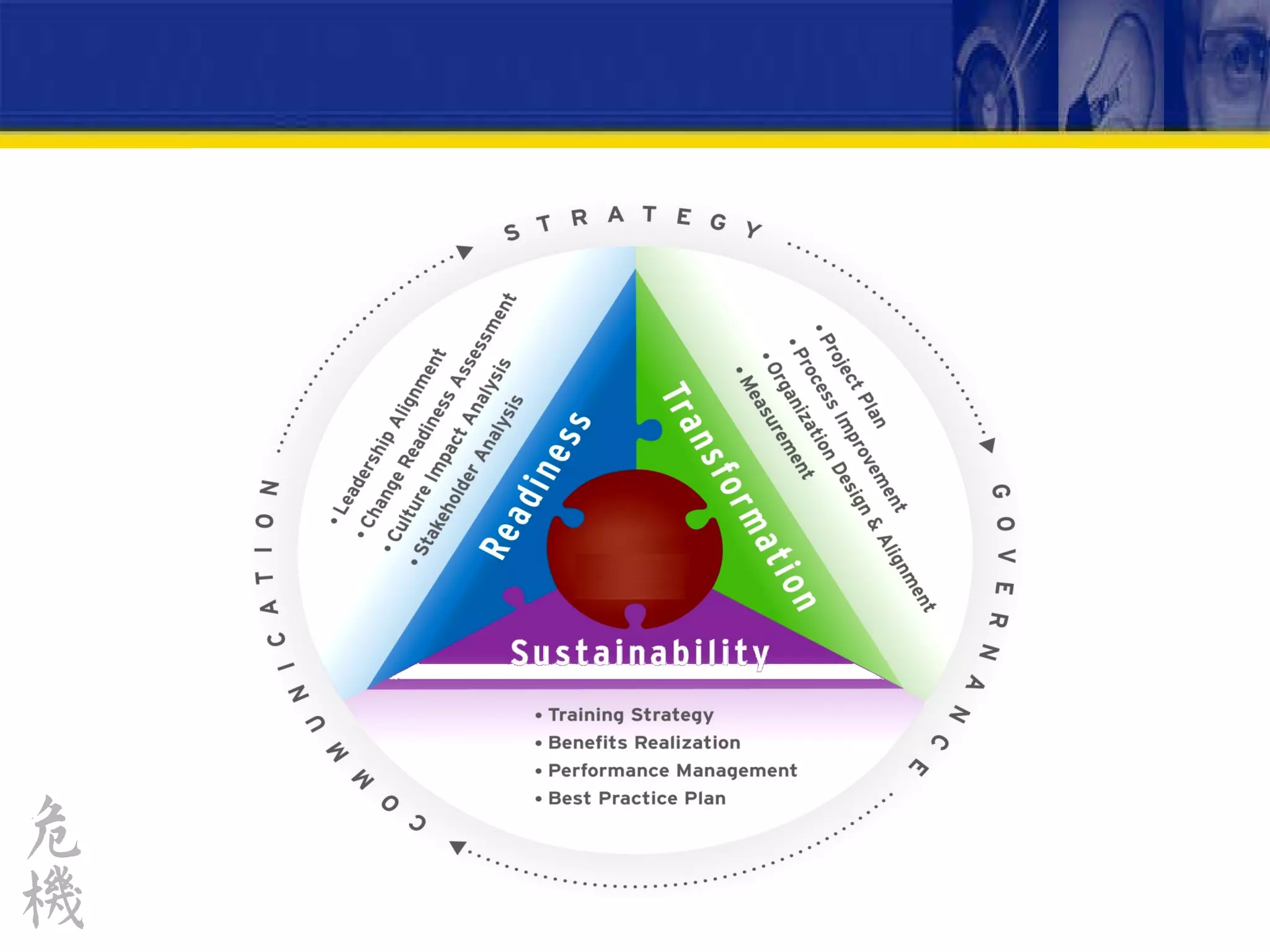
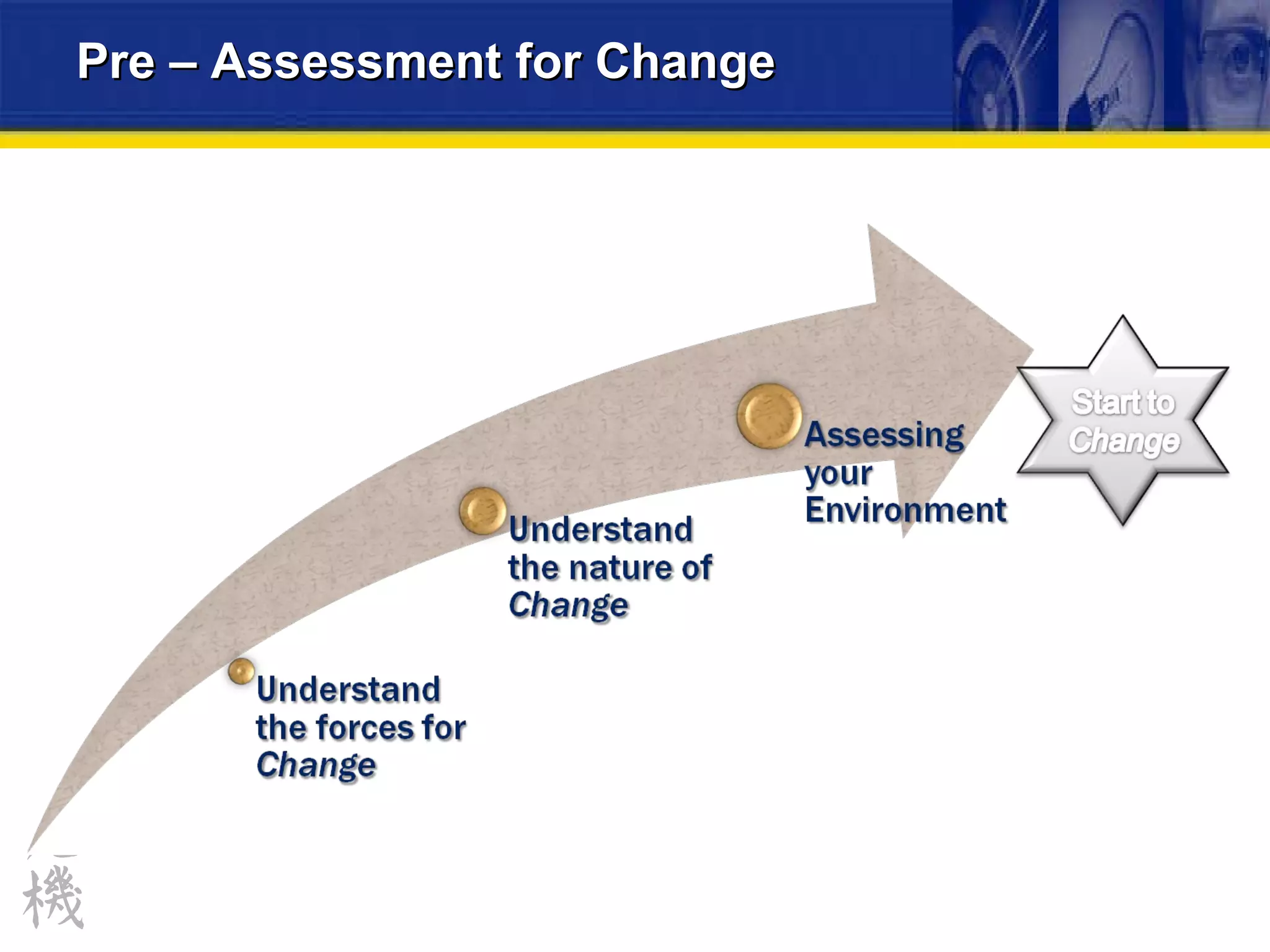
The document discusses change management and how to effectively manage change within an organization. It covers common reactions to change like resistance and doubt. It also discusses the importance of leadership involvement, communication, and training to help transition people through change. Key aspects of change management include defining the current and future states, identifying stakeholders, creating a vision and roadmap, addressing resistance, and monitoring progress.
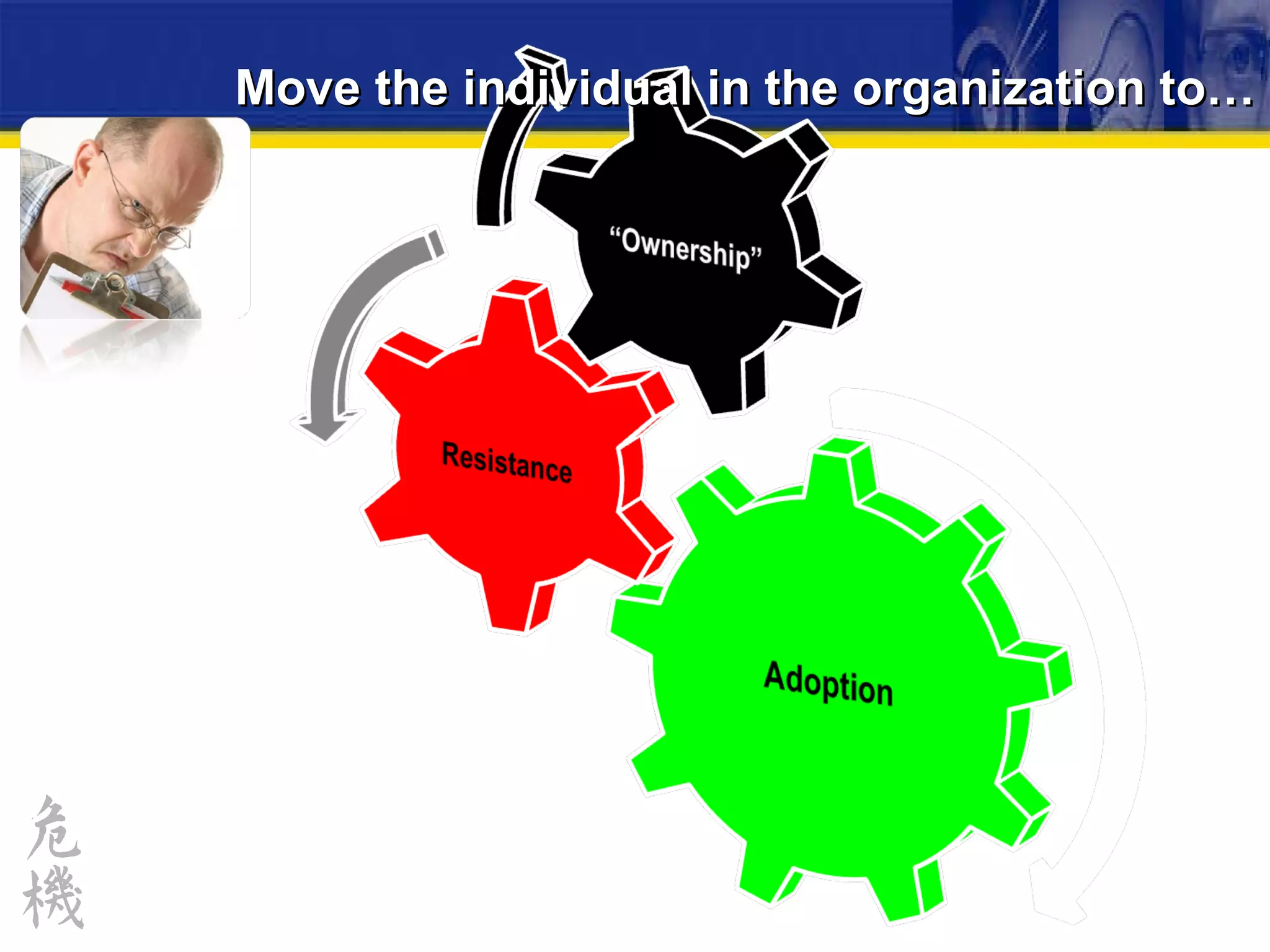
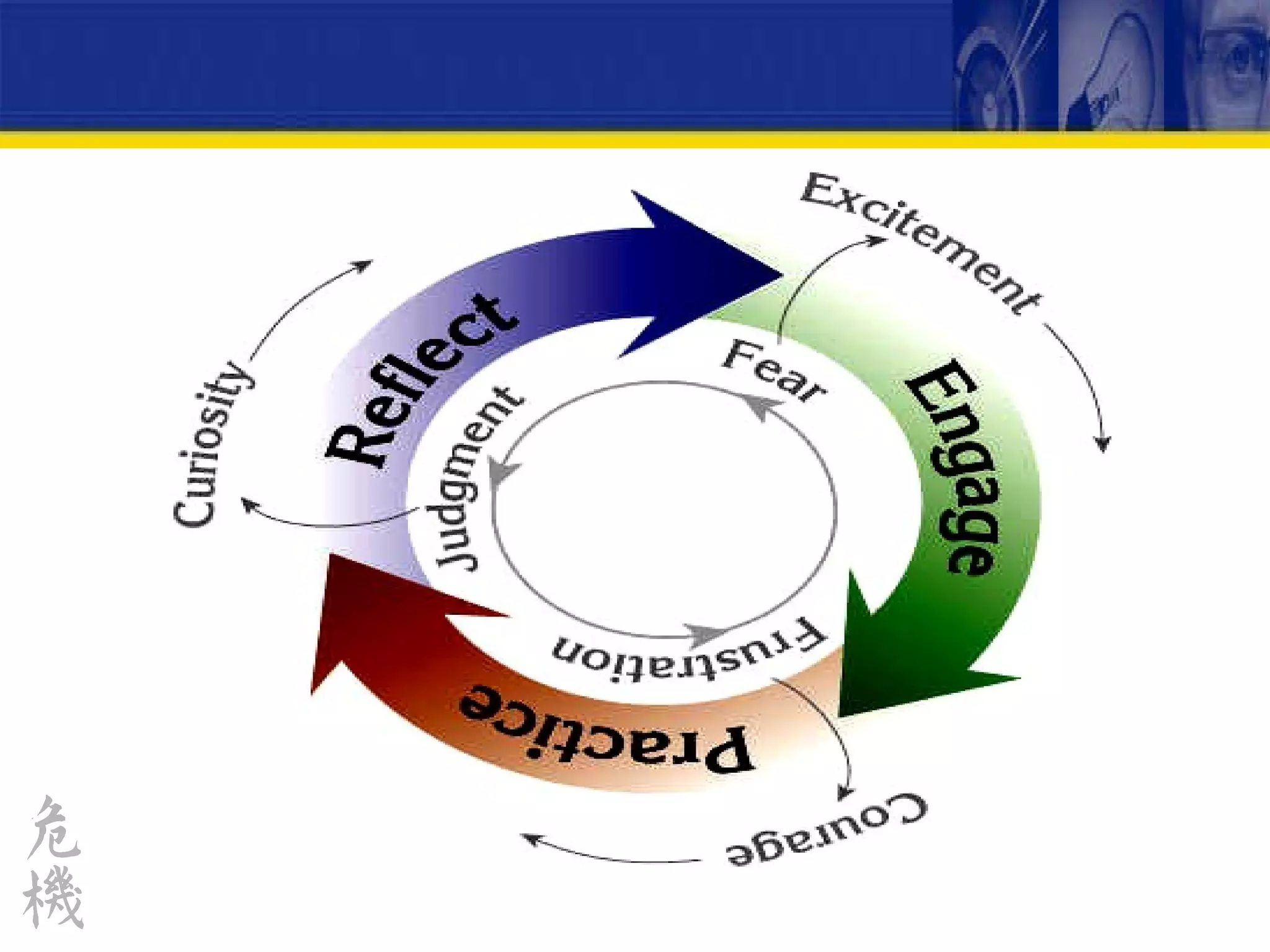
When you sayC hange, they say: “ This is a waste of time.” “ Why change if it was working just fine before?” “ If it ain't broke, don't fix it.” “ They never tell us what’s going on!” “ How soon will this happen?” “ How will this impact me?” “ Will I receive new training?” “ What’s in it for me.” “ I doubt they are really serious about this.” Natural reaction to change: R esist Awareness of need to change: critical ingredient and must come first
5.
“ Nothing ispermanent, but change” (Heraclitus 535–475 BCE, pre-Socratic philosopher) “ It is not the strongest of the species that survives, nor the most intelligent, but the one most responsive to change” (Charles Darwin 1809-1882, English biologist and father of the evolution theory) “ Change is good - you go first” (Kenneth F Murphy 1955-, former SVP HR of Altria Group and writer) Change
6.
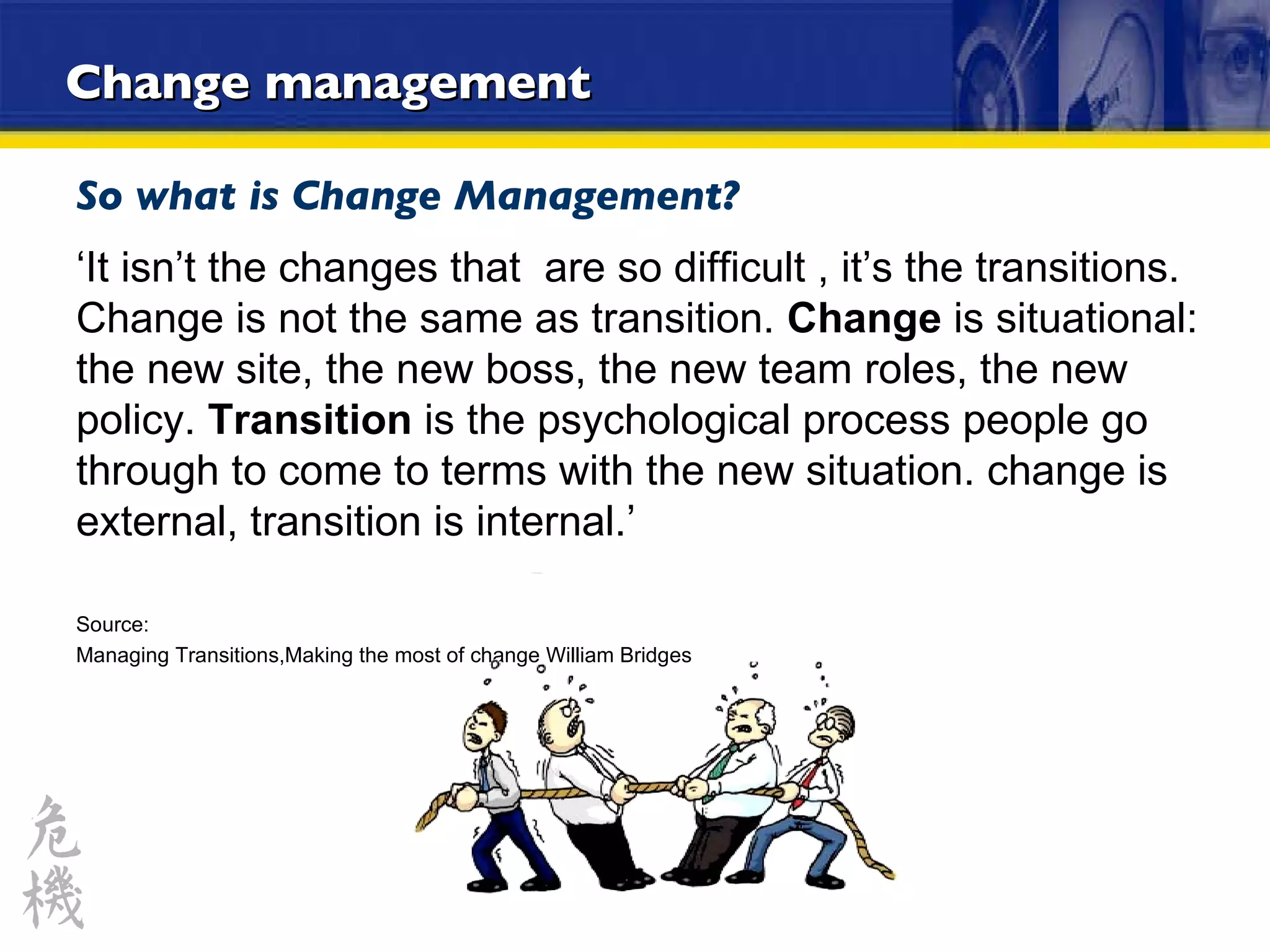
Change management Sowhat is Change Management? ‘ It isn’t the changes that are so difficult , it’s the transitions. Change is not the same as transition. Change is situational: the new site, the new boss, the new team roles, the new policy. Transition is the psychological process people go through to come to terms with the new situation. change is external, transition is internal.’ Source: Managing Transitions,Making the most of change William Bridges
7.
What is ChangeManagement? From Wikipedia .org Organizational change management is the process of developing a planned approach to change in an organization. Typically the objective is to maximize the collective benefits for all people involved in the change and minimize the risk of failure of implementing the change. The discipline of change management deals primarily with the human aspect of change, and is therefore related to pure and industrial psychology.
8.
Intrinsic Change changein marital status health family relocation career or job personal development social activities purchase something Extrinsic Changes health financial environmental governmental natural disasters technological organizational revolutionary Different types of Change
9.
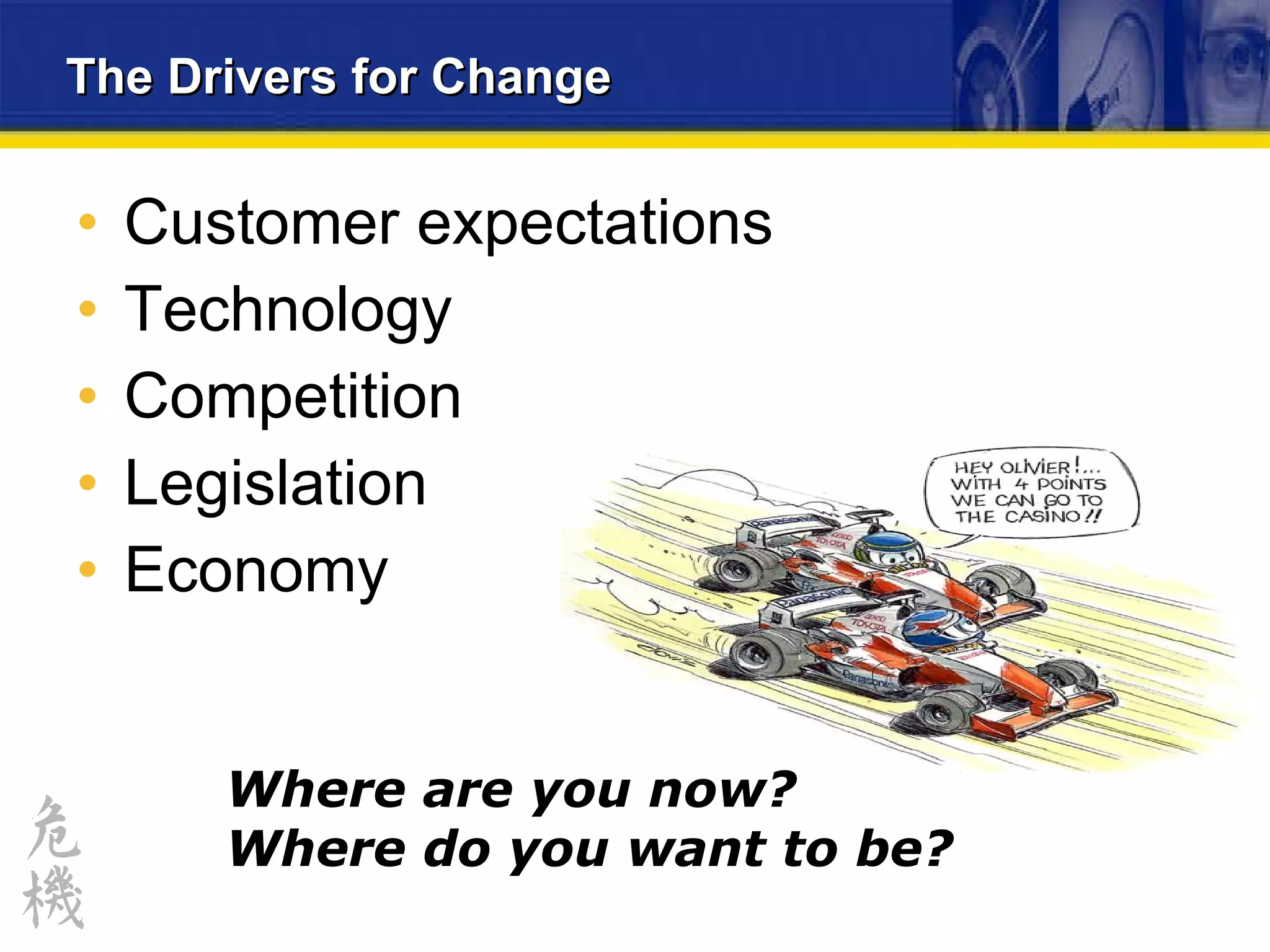
The Drivers forChange Customer expectations Technology Competition Legislation Economy Where are you now? Where do you want to be?
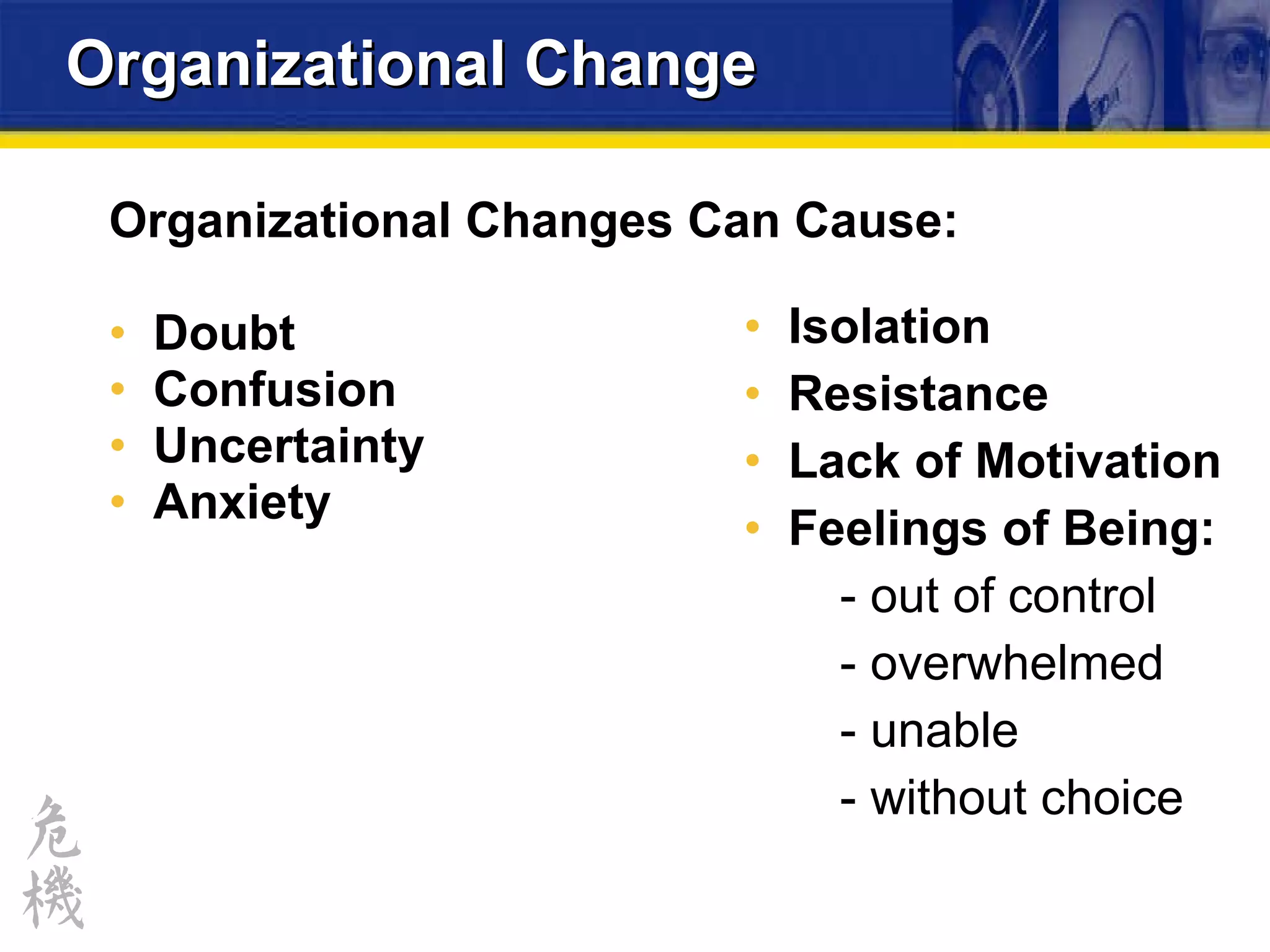
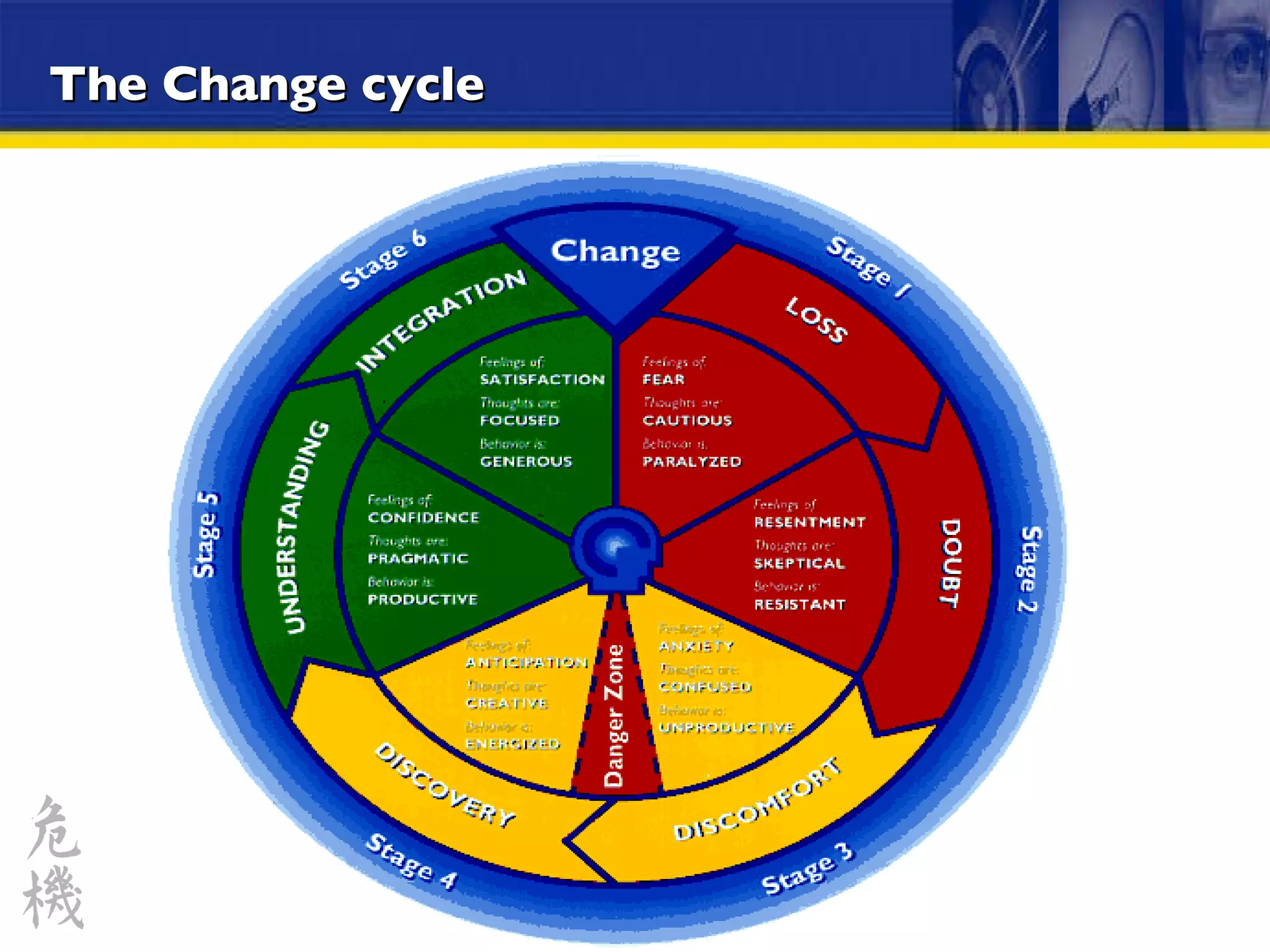
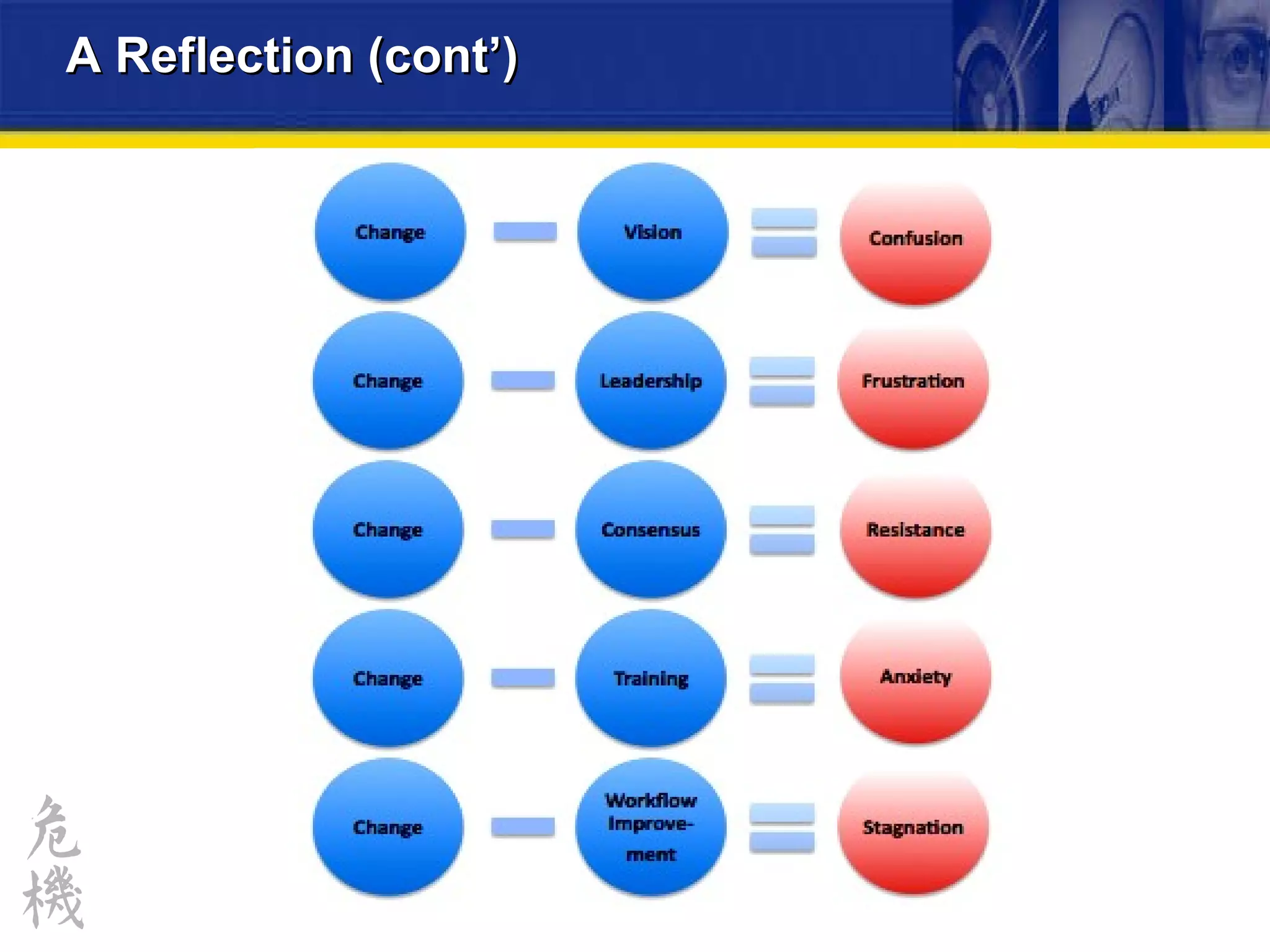
Organizational Change OrganizationalChanges Can Cause: Doubt Confusion Uncertainty Anxiety Isolation Resistance Lack of Motivation Feelings of Being: - out of control - overwhelmed - unable - without choice
12.
One big companywas hiring new staff, the question of the written exam is:
13.
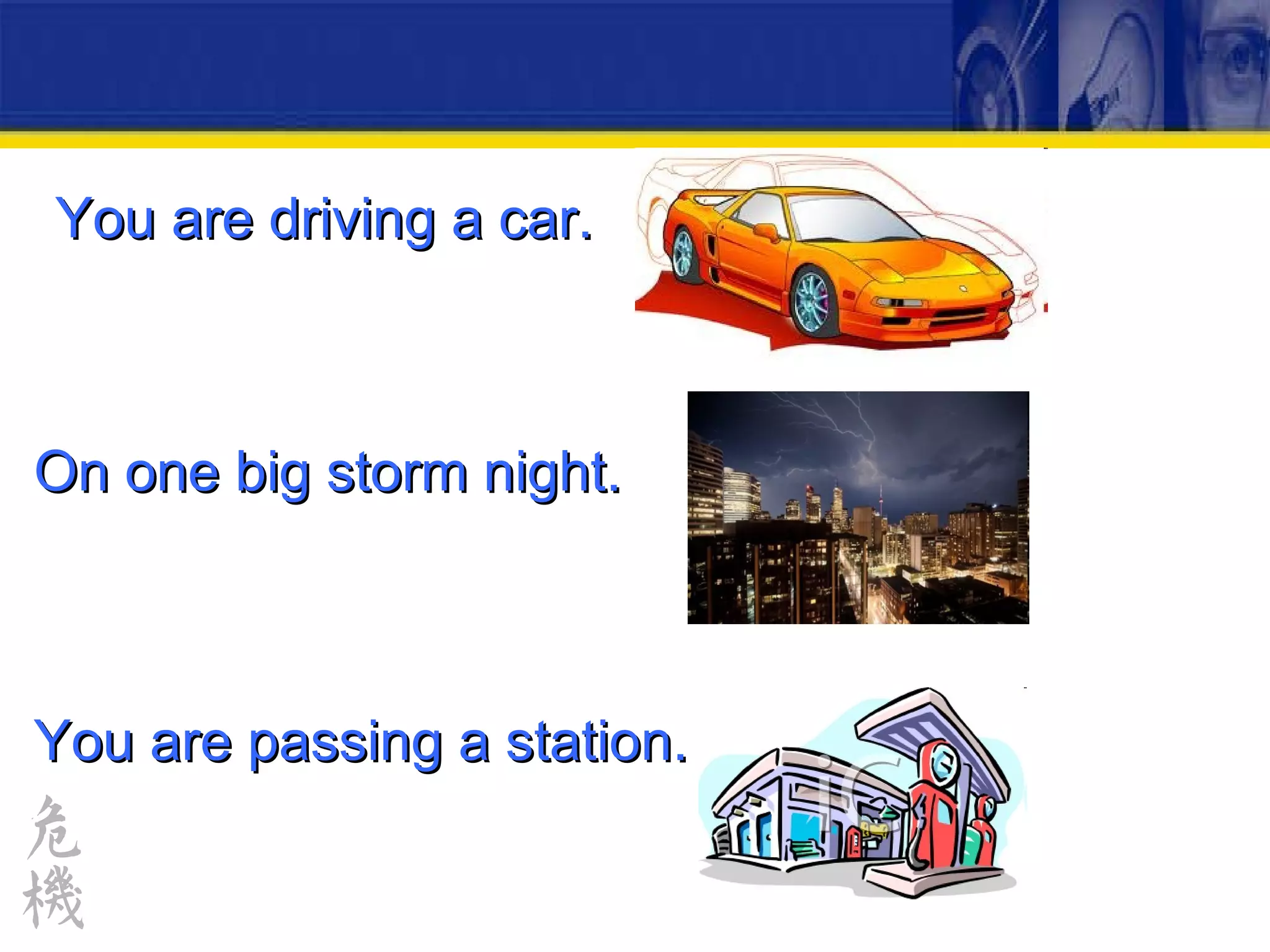
You are drivinga car. On one big storm night. You are passing a station.
14.
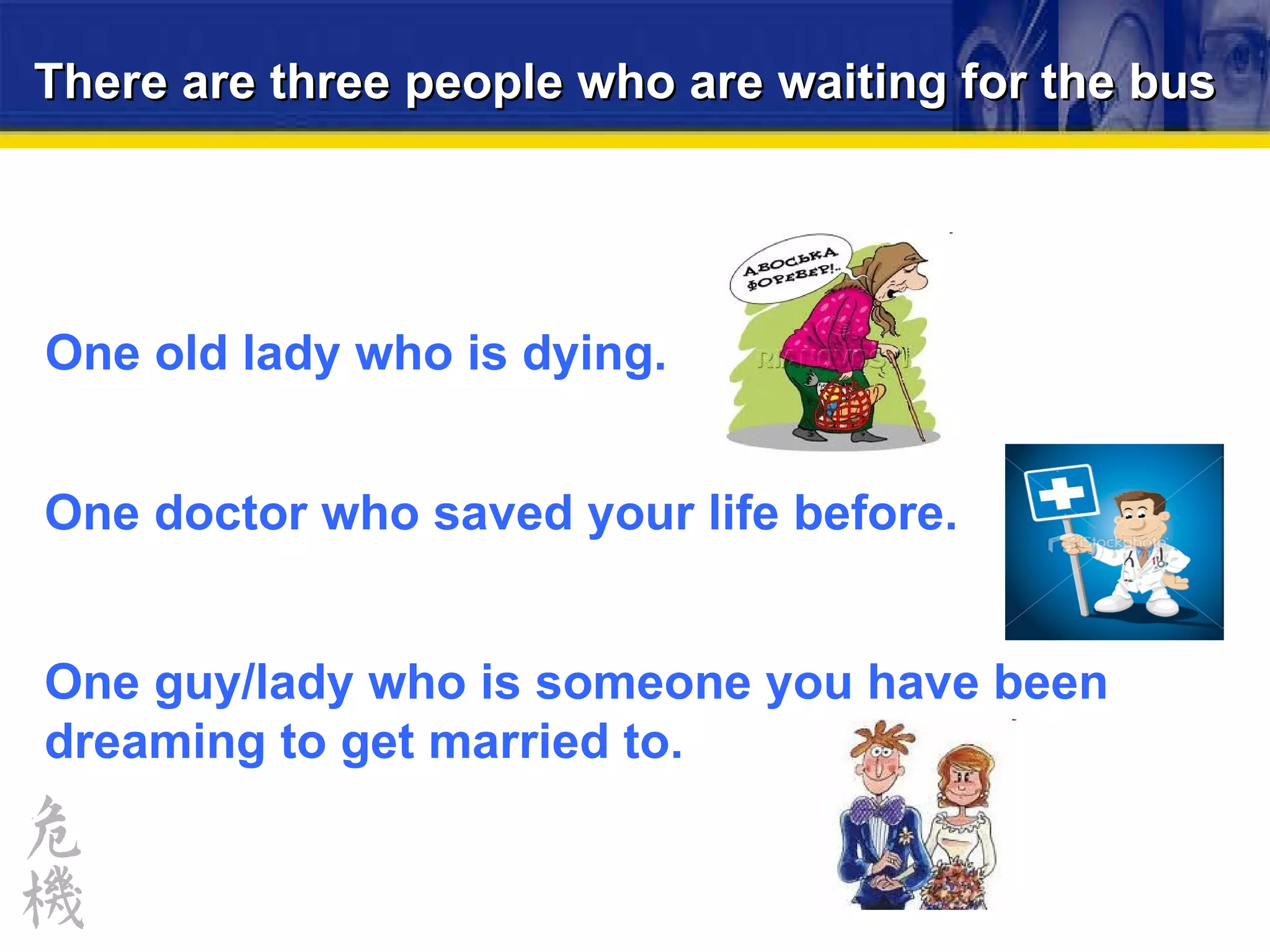
There are threepeople who are waiting for the bus One doctor who saved your life before. One guy/lady who is someone you have been dreaming to get married to. One old lady who is dying.
15.
You can onlytake one passenger, which one you will choose? Please explain your reason.
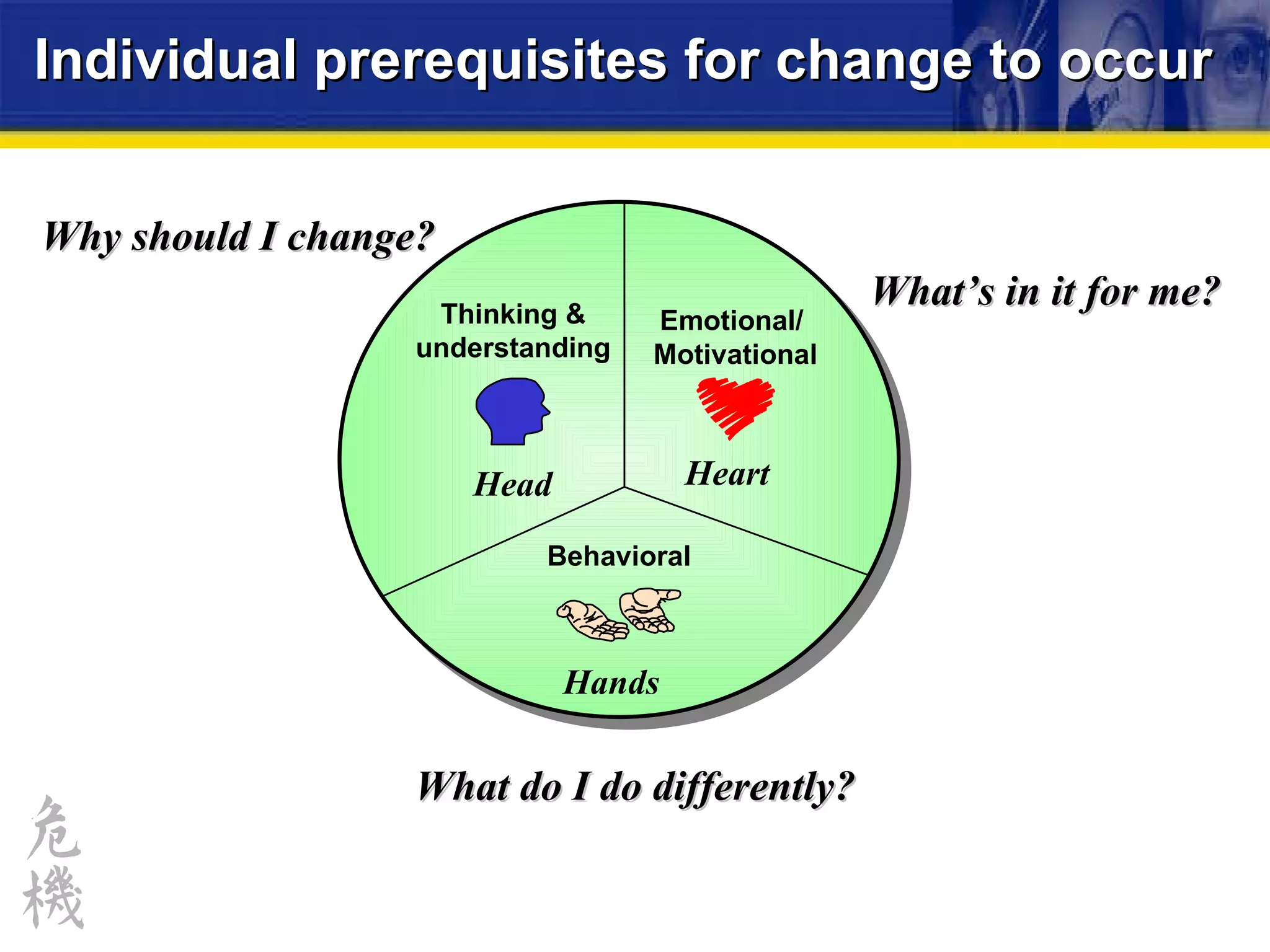
Individual prerequisites forchange to occur Thinking & understanding Head Why should I change? Emotional/ Motivational Heart What’s in it for me? Behavioral Hands What do I do differently?
22.
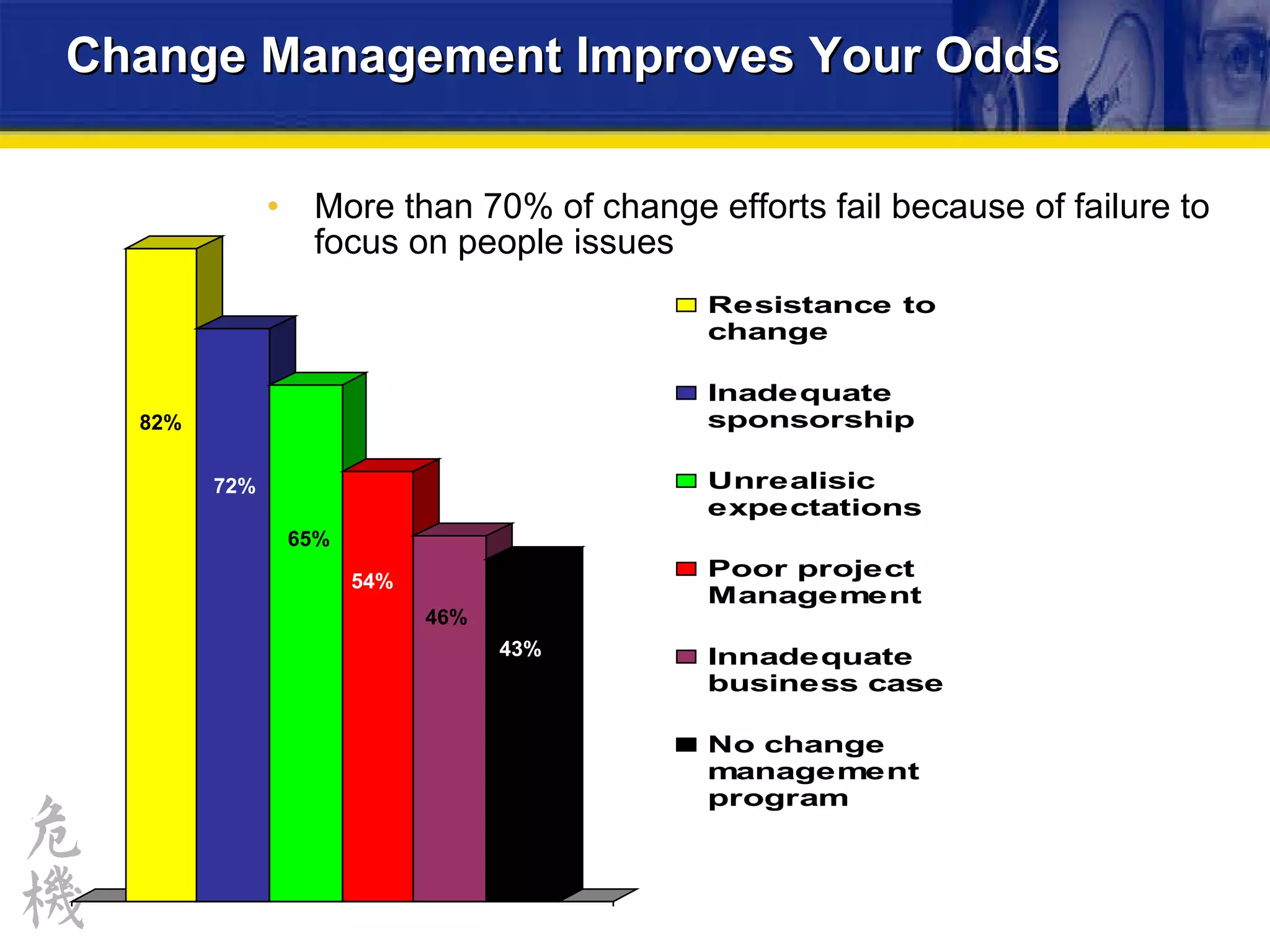
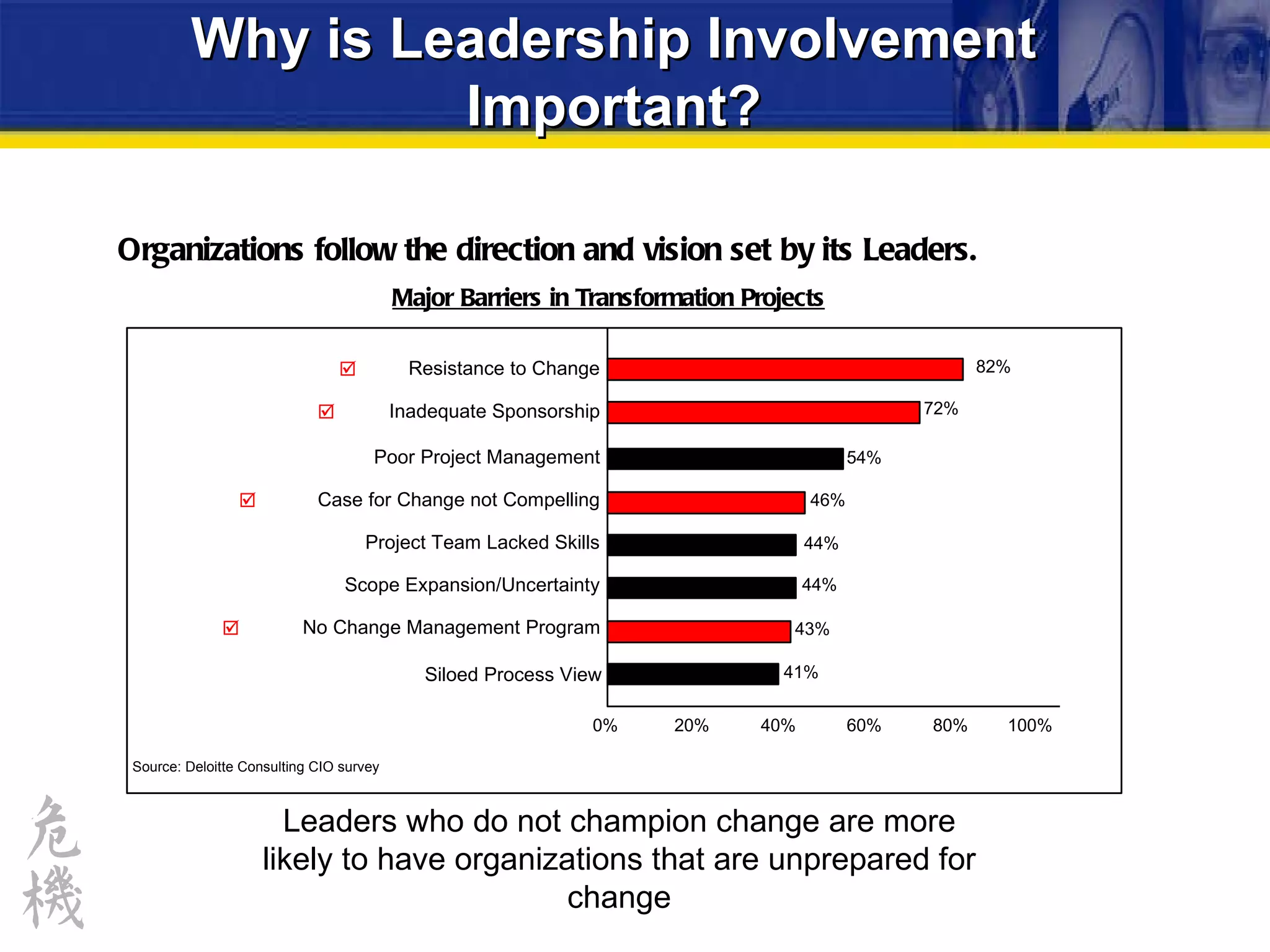
Why is LeadershipInvolvement Important? Leaders who do not champion change are more likely to have organizations that are unprepared for change Organizations follow the direction and vision set by its Leaders. Resistance to Change Inadequate Sponsorship Poor Project Management Case for Change not Compelling Project Team Lacked Skills Scope Expansion/Uncertainty No Change Management Program Siloed Process View 82% 72% 54% 46% 44% 44% 43% 41% 0% 20% 40% 60% 80% 100% Source: Deloitte Consulting CIO survey Major Barriers in Transformation Projects
23.
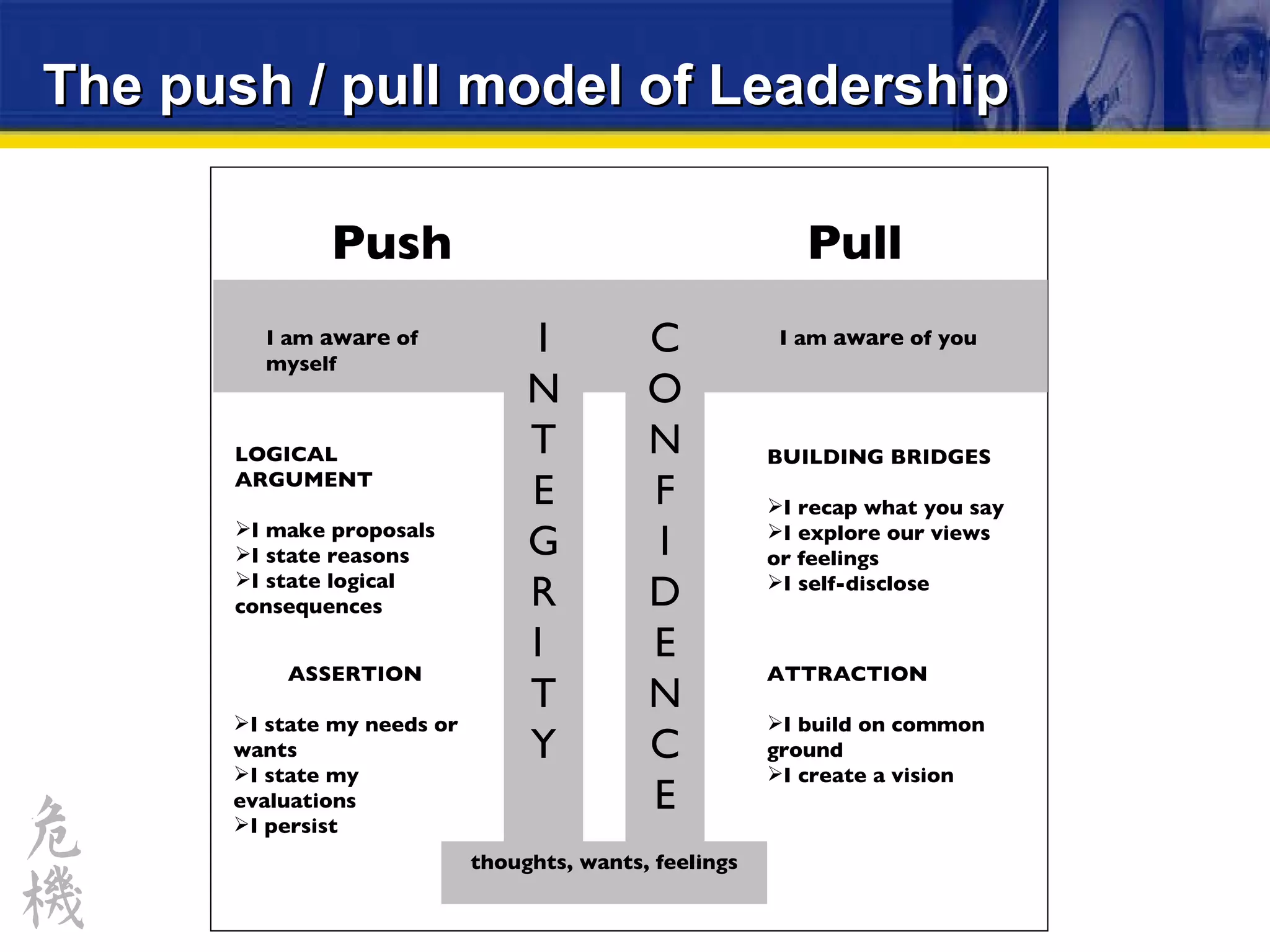
The push /pull model of Leadership Push Pull I am aware of myself I am aware of you I NT E GR I T Y CON F I D ENC E thoughts, wants, feelings LOGICAL ARGUMENT I make proposals I state reasons I state logical consequences ASSERTION I state my needs or wants I state my evaluations I persist BUILDING BRIDGES I recap what you say I explore our views or feelings I self-disclose ATTRACTION I build on common ground I create a vision
24.
Leading your teamCommunicate Help Others See the Need for Change Getting your team to wake up to the need for change involves giving them the knowledge they will need when called on to make important changes in the way they work. Reward Implement the Change Now that the change has been designed, this period involves getting up to speed and realizing the possibilities of the new way. It is about learning and finding strategies to sustain the new ways. Facilitate Create Directions for Change In this phase the team is ready to work with the leader to design and create a new path. It involves creating a vision and a road map for the change, learning, considering many possibilities and developing new skills individually and as a team. This is the high-energy, exciting period of change. Listen Enroll People in the Change This phase involves getting your team ready to accept and become active in the process of change. It involves getting over resistance and getting ready to learn new skills and ways of working.
25.
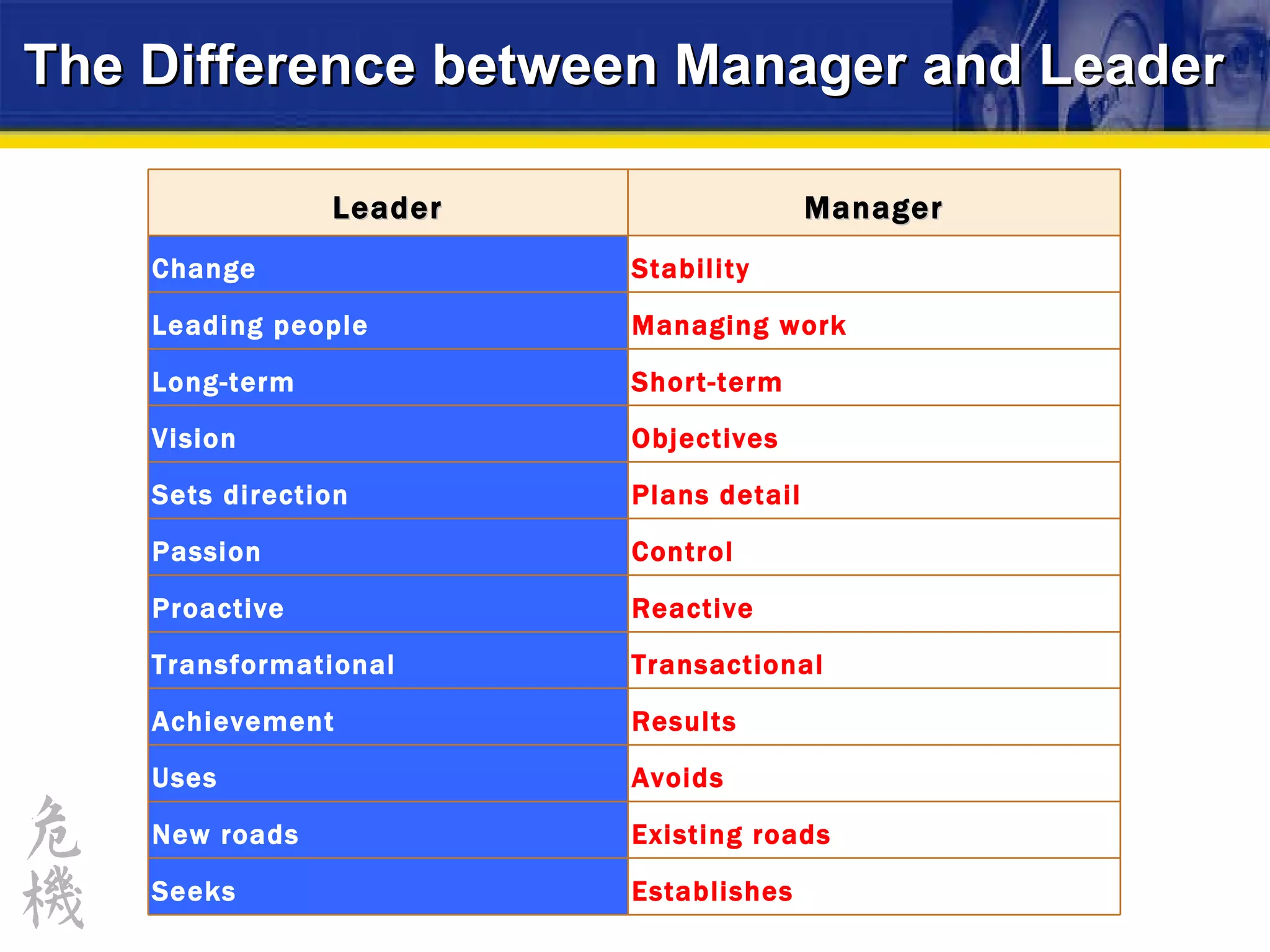
The Difference betweenManager and Leader Leader Manager Change Stability Leading people Managing work Long-term Short-term Vision Objectives Sets direction Plans detail Passion Control Proactive Reactive Transformational Transactional Achievement Results Uses Avoids New roads Existing roads Seeks Establishes
26.
27.
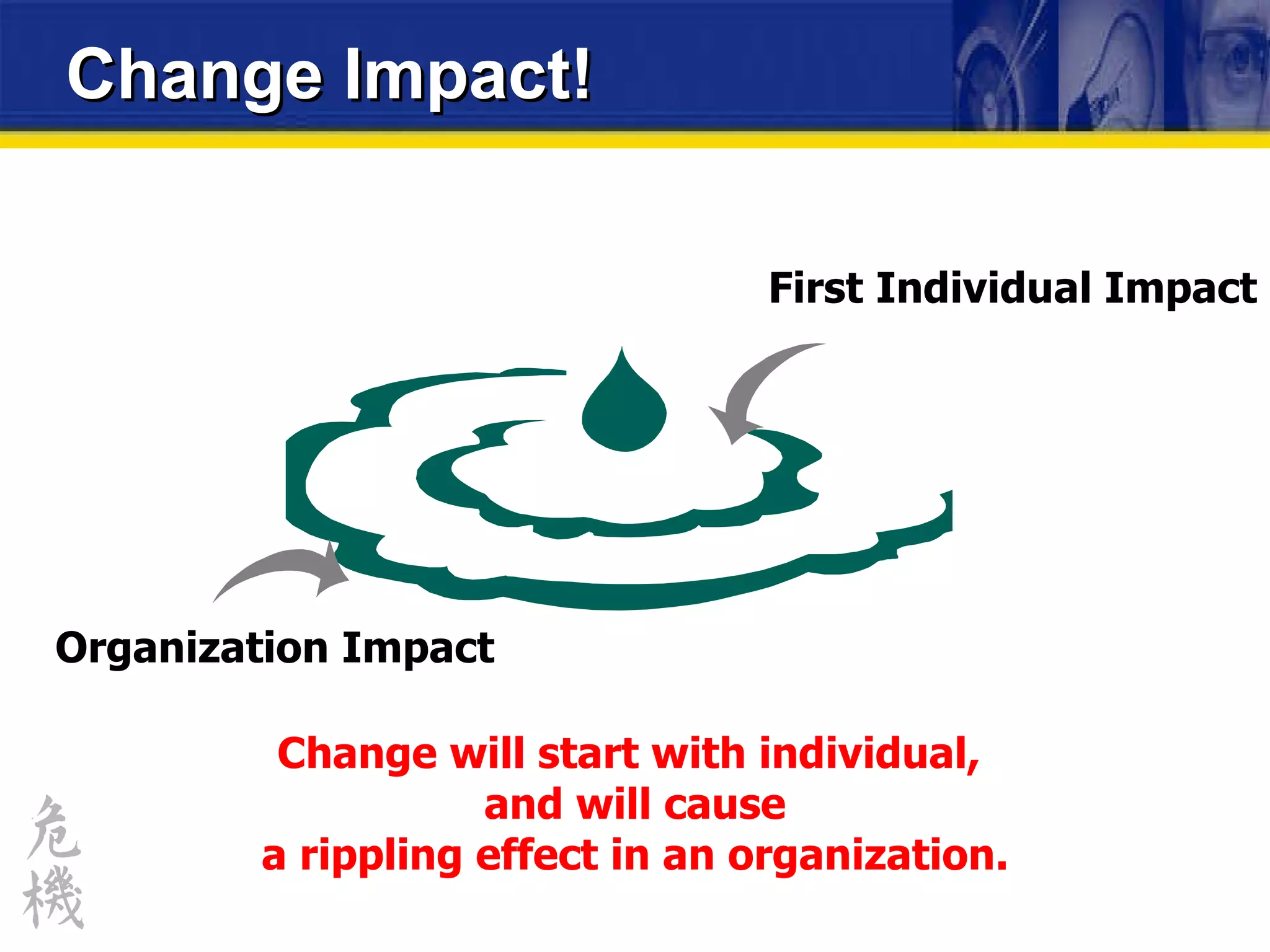
Change Impact! FirstIndividual Impact Organization Impact Change will start with individual, and will cause a rippling effect in an organization.
28.
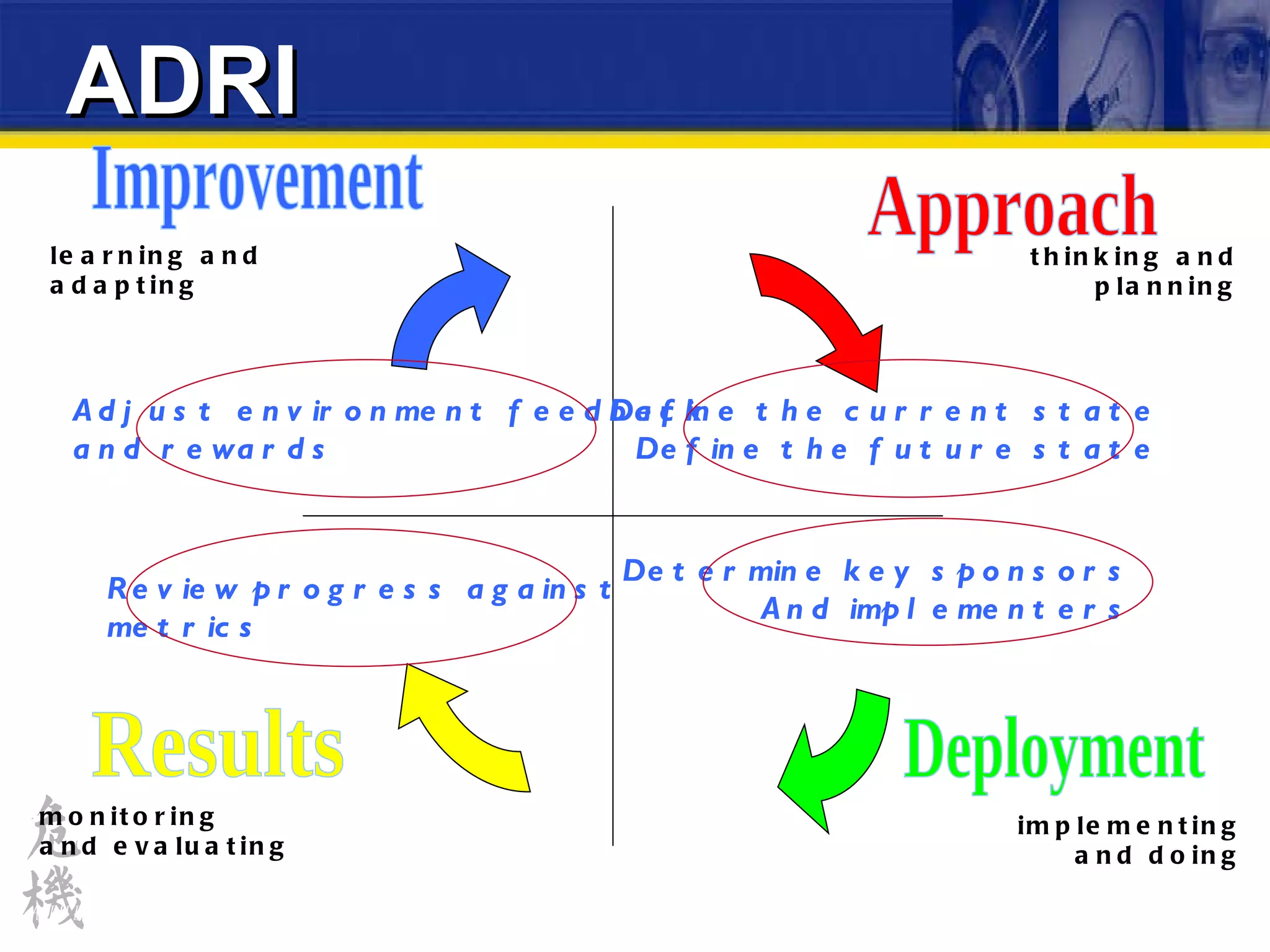
ADRI Approach DeploymentResults Improvement learning and adapting monitoring and evaluating implementing and doing thinking and planning Define the current state Define the future state Determine key sponsors And implementers Adjust environment feedback and rewards Review progress against metrics IATUL June 04
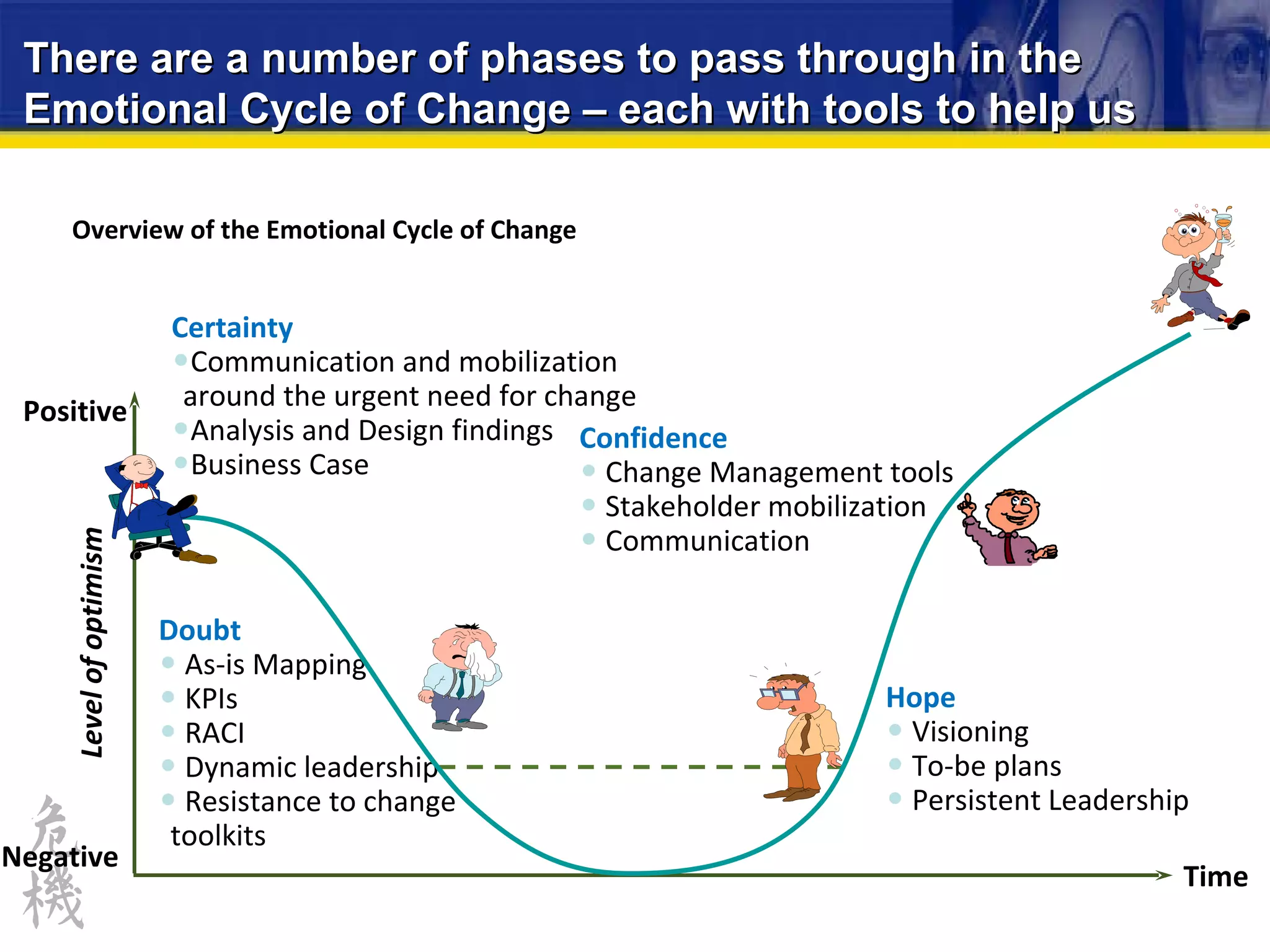
There are anumber of phases to pass through in the Emotional Cycle of Change – each with tools to help us Time Certainty Communication and mobilization around the urgent need for change Analysis and Design findings Business Case Negative Positive Level of optimism Hope Visioning To-be plans Persistent Leadership Doubt As-is Mapping KPIs RACI Dynamic leadership Resistance to change toolkits Confidence Change Management tools Stakeholder mobilization Communication Overview of the Emotional Cycle of Change
33.
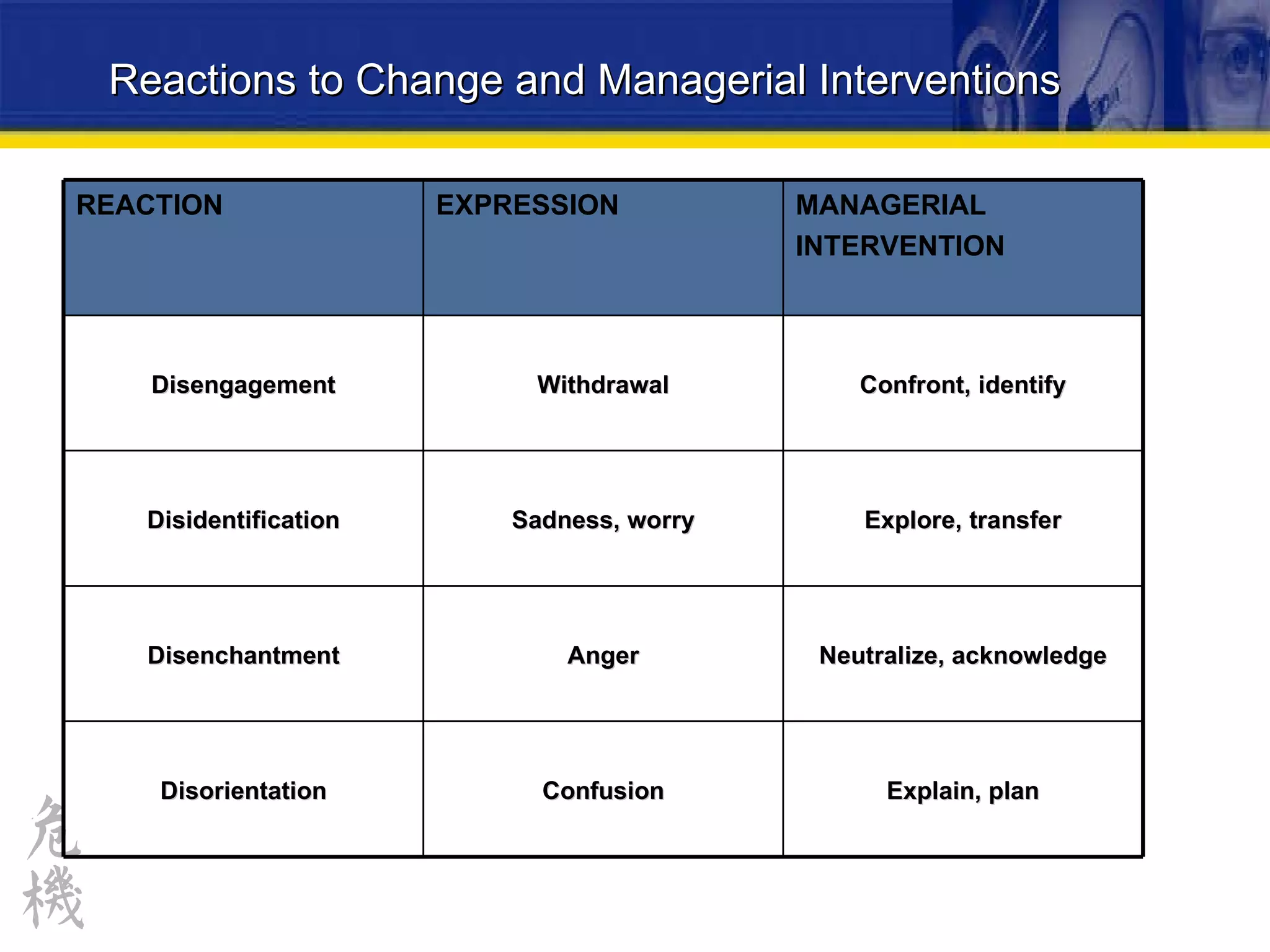
Reactions to Changeand Managerial Interventions REACTION EXPRESSION MANAGERIAL INTERVENTION Disengagement Withdrawal Confront, identify Disidentification Sadness, worry Explore, transfer Disenchantment Anger Neutralize, acknowledge Disorientation Confusion Explain, plan
34.
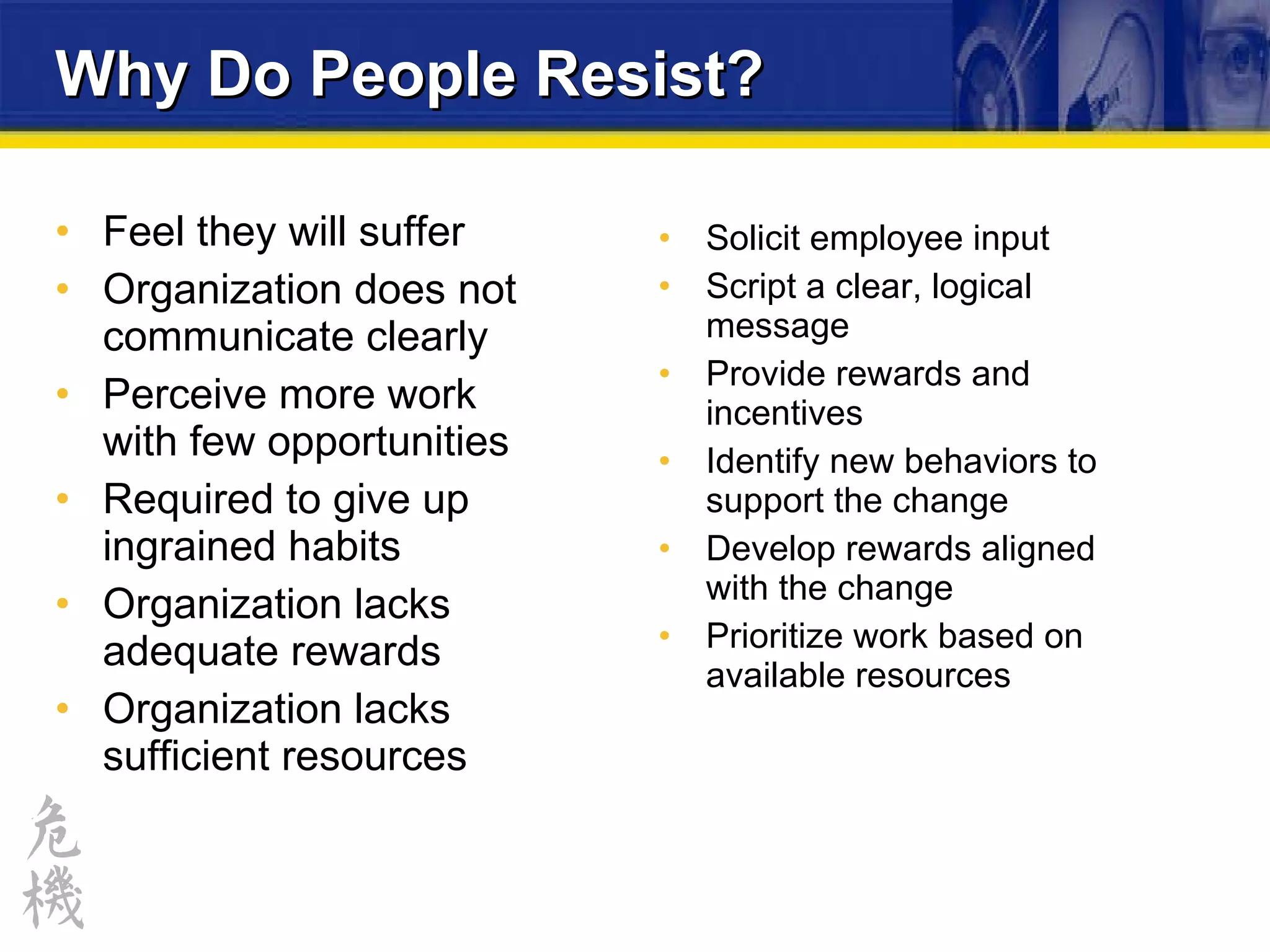
Why Do PeopleResist? Feel they will suffer Organization does not communicate clearly Perceive more work with few opportunities Required to give up ingrained habits Organization lacks adequate rewards Organization lacks sufficient resources Solicit employee input Script a clear, logical message Provide rewards and incentives Identify new behaviors to support the change Develop rewards aligned with the change Prioritize work based on available resources
35.
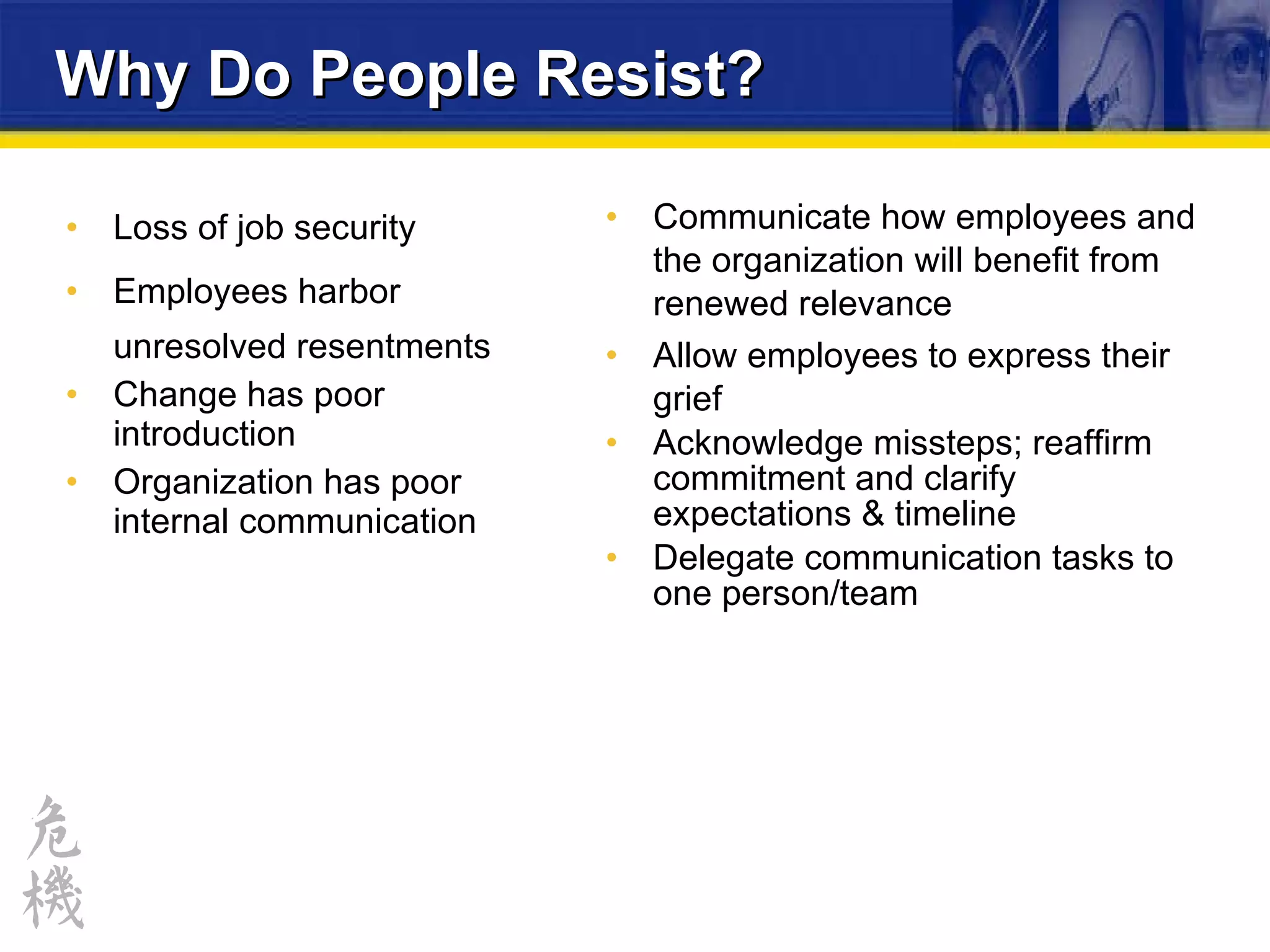
Why Do PeopleResist? Loss of job security Employees harbor unresolved resentments Change has poor introduction Organization has poor internal communication Communicate how employees and the organization will benefit from renewed relevance Allow employees to express their grief Acknowledge missteps; reaffirm commitment and clarify expectations & timeline Delegate communication tasks to one person/team
36.
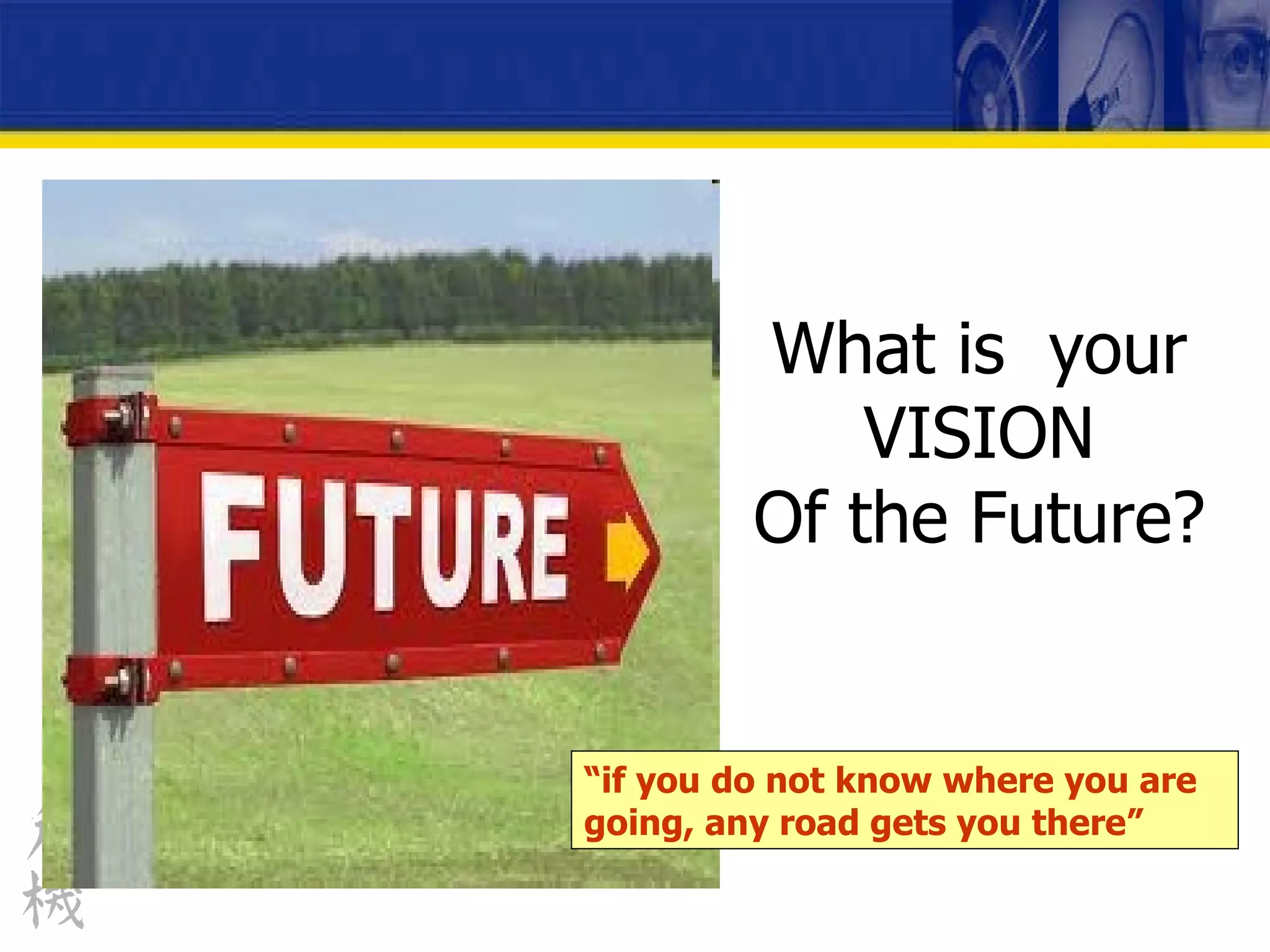
What is your VISION Of the Future? “ if you do not know where you are going, any road gets you there”
37.
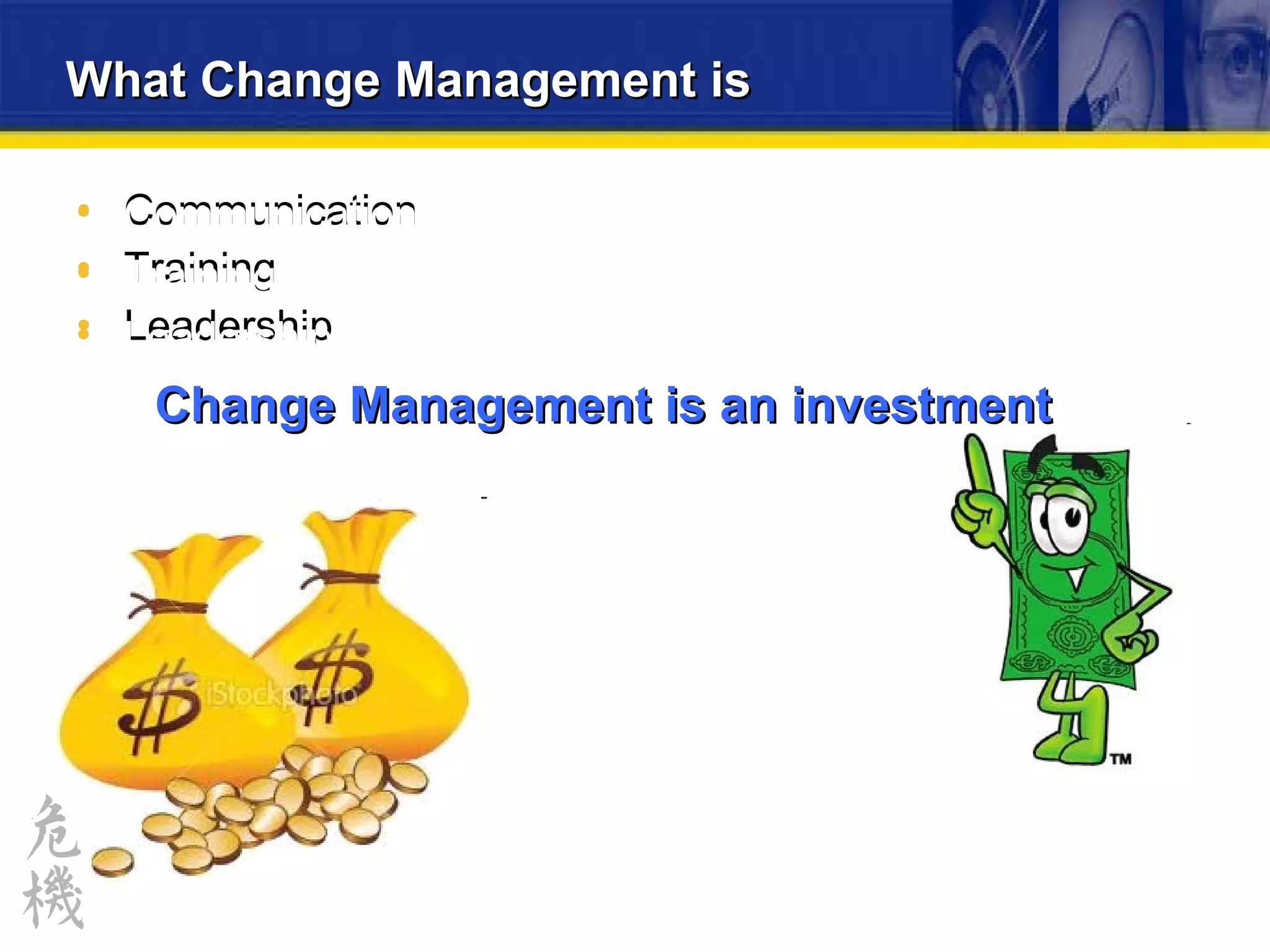
What Change Managementis Communication Training Leadership Communication Training Leadership Change Management is an investment
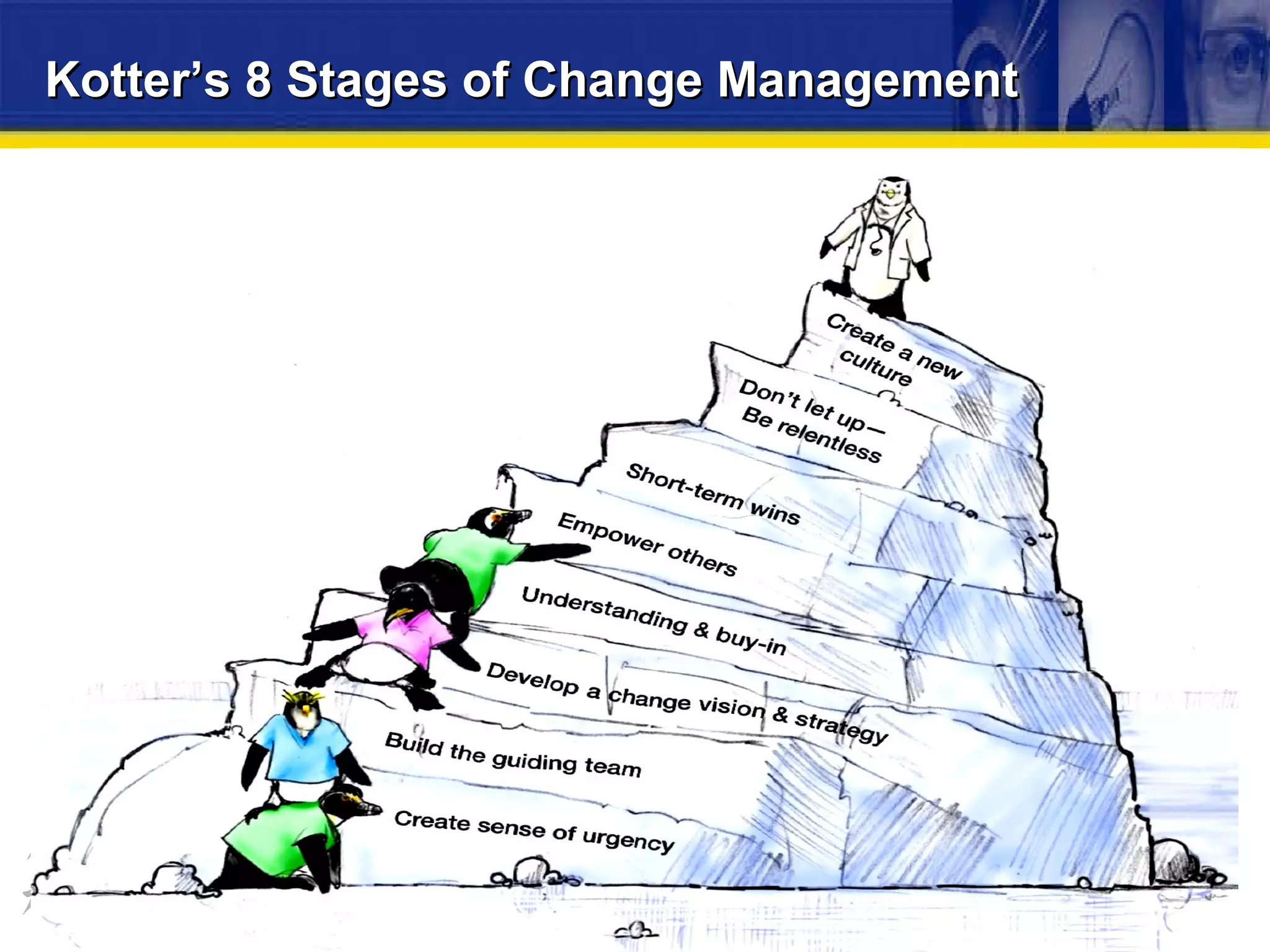
Kotter’s 8 Stagesof Change Management Increase Urgency Build the Guiding Team Get the Vision Right Communicate for Buy-In Empower Action Create Short Term Wins Don’t Let Up Make Changes Stick
40.
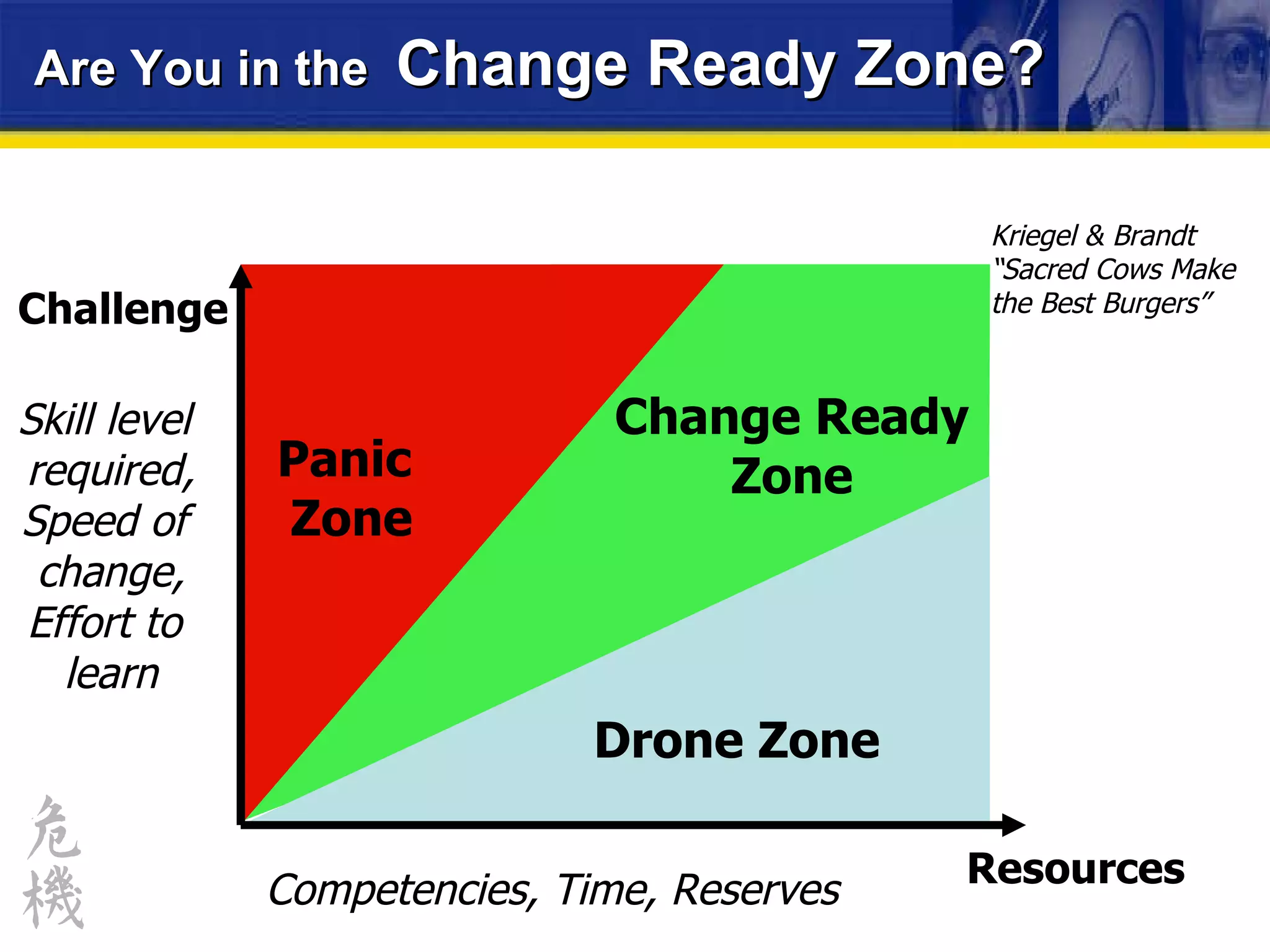
Are You inthe Change Ready Zone? Kriegel & Brandt “ Sacred Cows Make the Best Burgers” Drone Zone Challenge Resources Competencies, Time, Reserves Change Ready Zone Panic Zone Skill level required, Speed of change, Effort to learn
41.
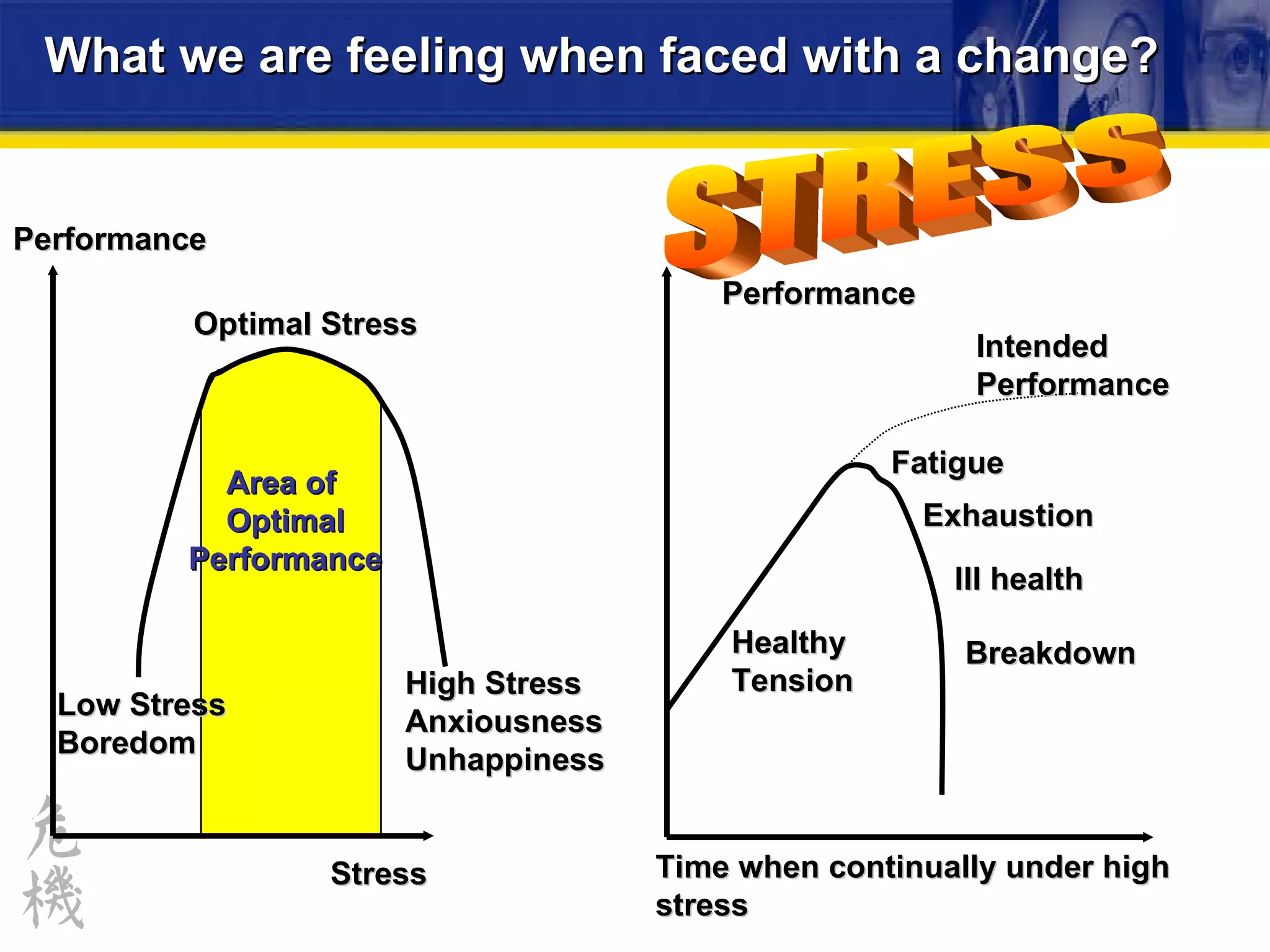
What we arefeeling when faced with a change? STRESS Performance Stress Optimal Stress Area of Optimal Performance High Stress Anxiousness Unhappiness Low Stress Boredom Time when continually under high stress Performance Intended Performance Healthy Tension Fatigue Exhaustion Ill health Breakdown
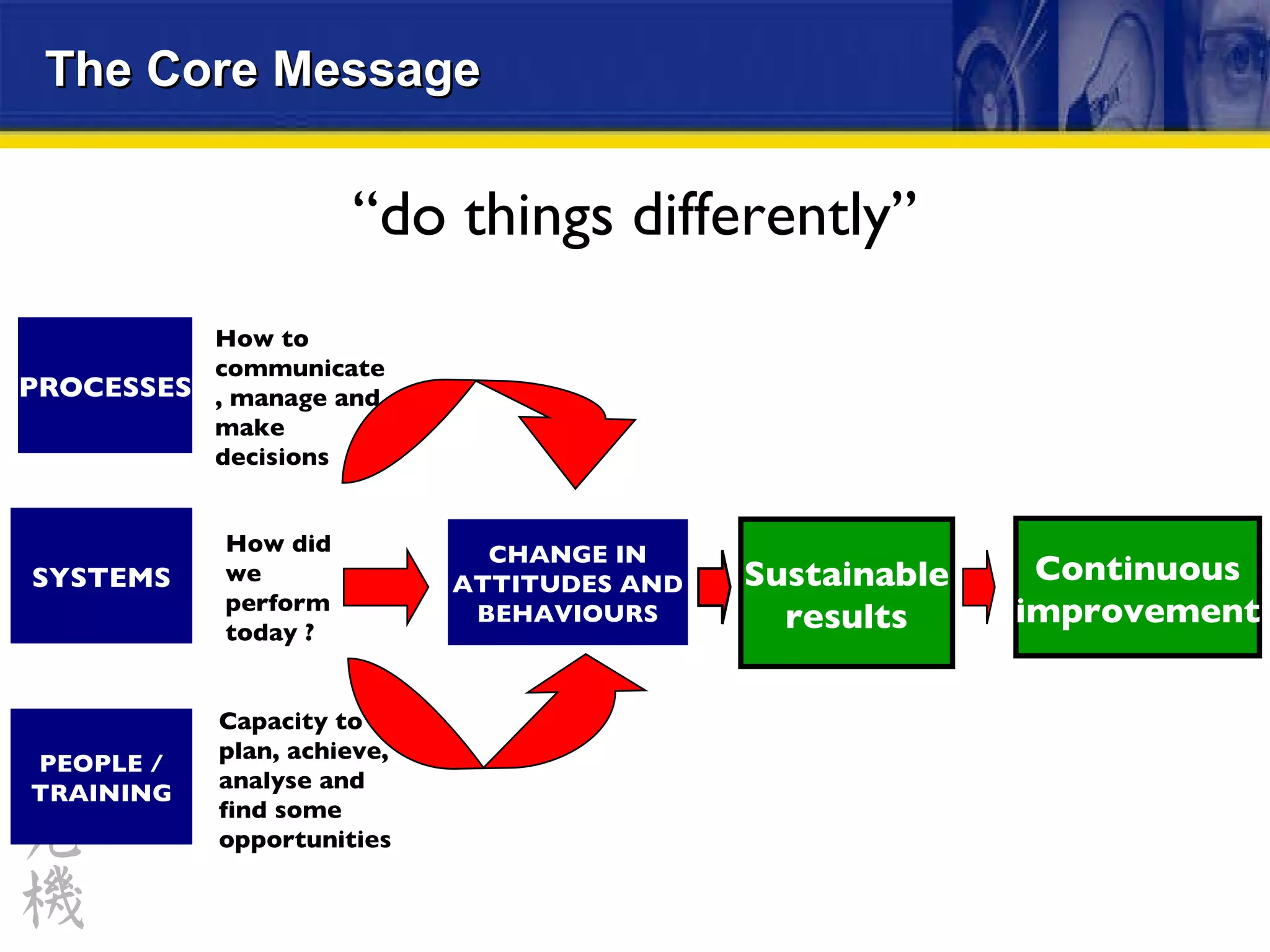
The Core MessagePROCESSES SYSTEMS PEOPLE / TRAINING CHANGE IN ATTITUDES AND BEHAVIOURS Sustainable results How to communicate, manage and make decisions How did we perform today ? Capacity to plan, achieve, analyse and find some opportunities ‘‘ do things differently’’ Continuous improvement
45.
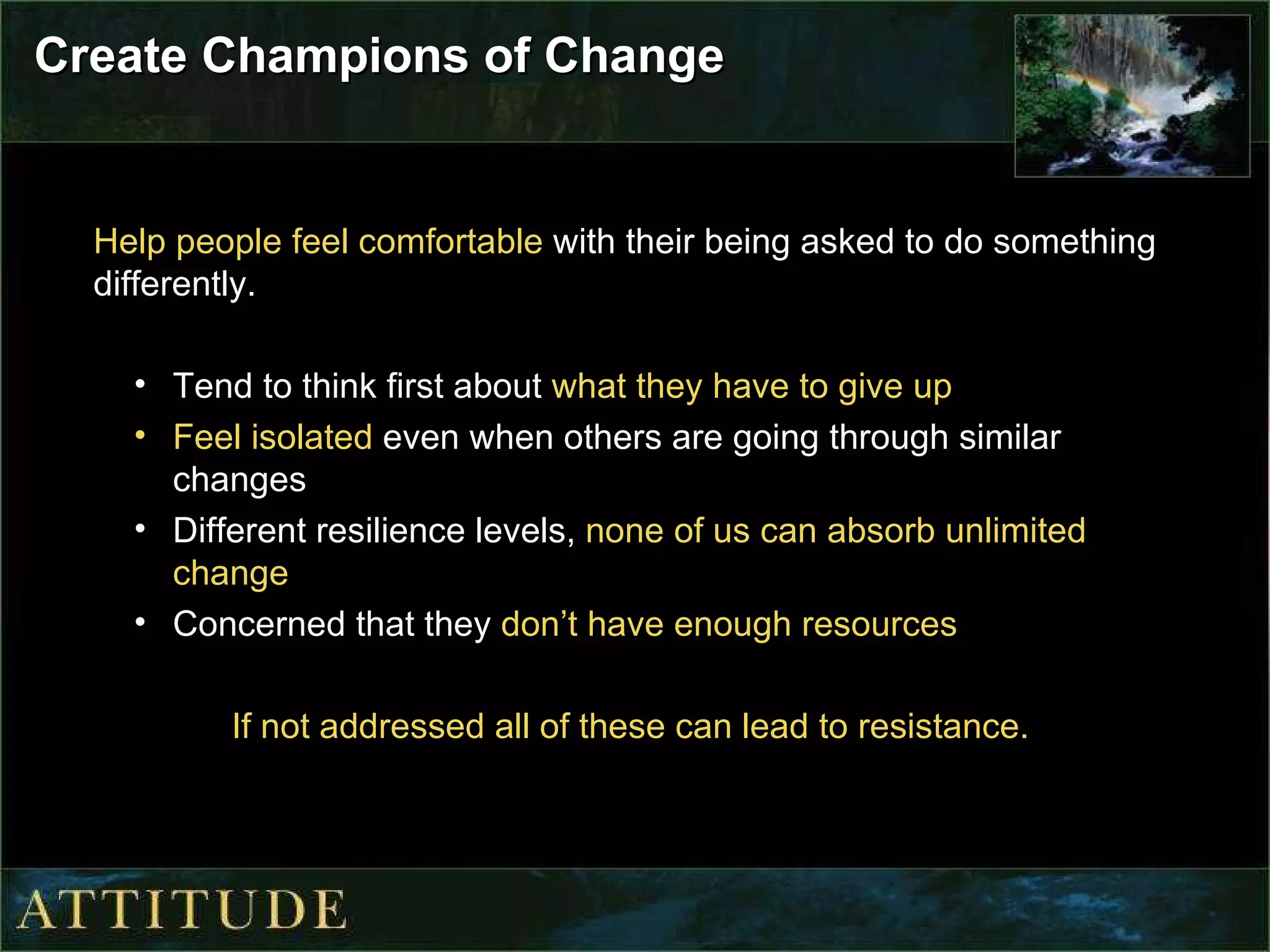
Create Champions ofChange Help people feel comfortable with their being asked to do something differently. Tend to think first about what they have to give up Feel isolated even when others are going through similar changes Different resilience levels, none of us can absorb unlimited change Concerned that they don’t have enough resources If not addressed all of these can lead to resistance.
#22 What are the psychological aspects of change? Areas for focus in helping people change. There are other questions that characterize these arenas. These are for example.
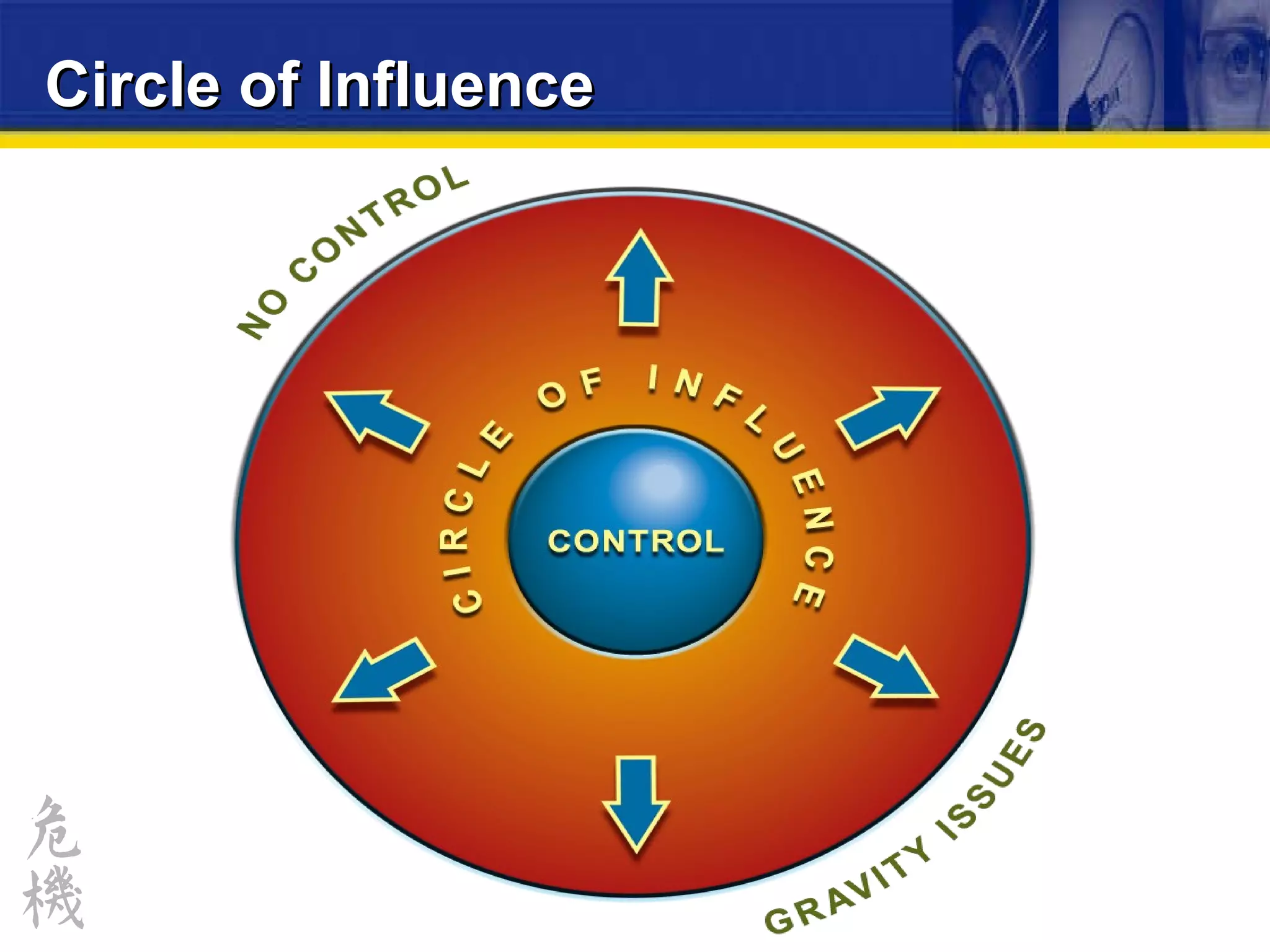
#44 This is another helpful resource. It is the Circle of Influence and it helps remind us that there are things we can control (blue center) things we can influence (orange circle here) and things beyond our influence and control (gravity issues) examples - things we control: own attitude, own behavior, what we say - things we influence: relationships with others, quality of our work - things beyond our control: gravity, the current war, the economy ACTIVITY – go to page 18 of the workbook and take a few minutes to record your ideas in the 3 areas, then take a few minutes to discuss this with a partner. We will ask for comments from the full group after that. Facilitator record participants ideas on a flipchart for each of the 3 areas and reinforce ideas as appropriate to help them empower themselves and control and influence they things they can impact. Conclusion: Spending our energy on the things we can control and influence increases our effectiveness and impact. Spending energy on things we can influence may also expand the size of our circle of influence.