Introduction
to
Communicable diseases
Dr.Rajkumar Patil
Professor, Community Medicine, MGMCRI 1
Learning objectives
At the end of the class student should be able to:
• Define communicable disease
• Describe the basic differences between
communicable and non-communicable diseases
• Enumerate the modes of transmission of
communicable disease
2
Definitions
• Infection
• Contamination and Pollution
• Infestation
• Communicable disease
• Infectious disease
• Contagious disease
3
INFECTION
• “The entry and development or multiplication
of an infectious agent in the body of man or animals”
• An infection does not always cause illness.
• Levels:
a. Colonization(e.g.- S. aureus in skin & normal
nasopharynx)
b. Subclinical or inapparent infection (e.g.- polio)
c. Latent infection (e.g.- virus of herpes simplex)
d. Manifest or clinical infection.
4
CONTAMINATION AND POLLUTION
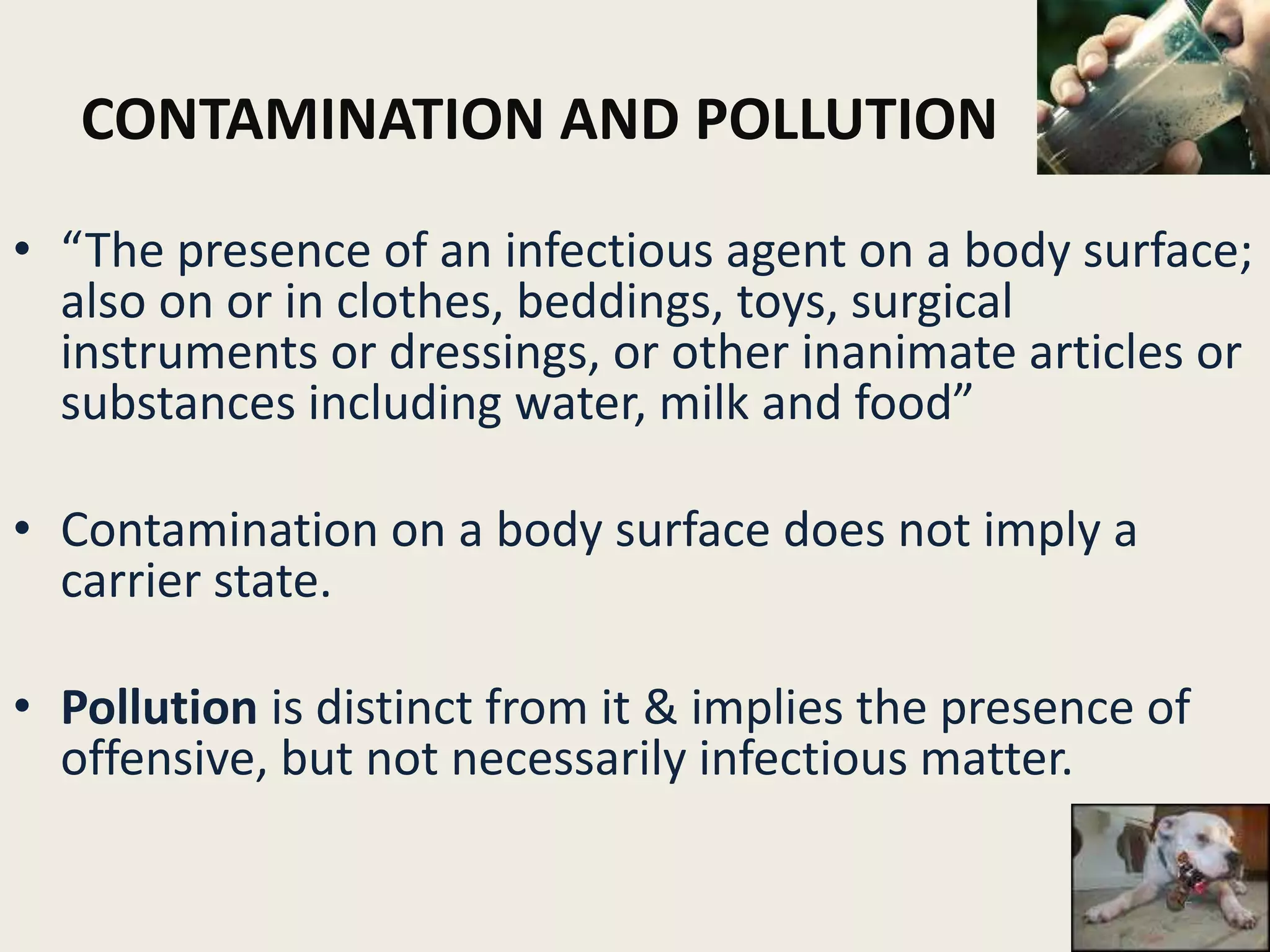
• “The presence of an infectious agent on a body surface;
also on or in clothes, beddings, toys, surgical
instruments or dressings, or other inanimate articles or
substances including water, milk and food”
• Contamination on a body surface does not imply a
carrier state.
• Pollution is distinct from it & implies the presence of
offensive, but not necessarily infectious matter.
5
INFESTATION
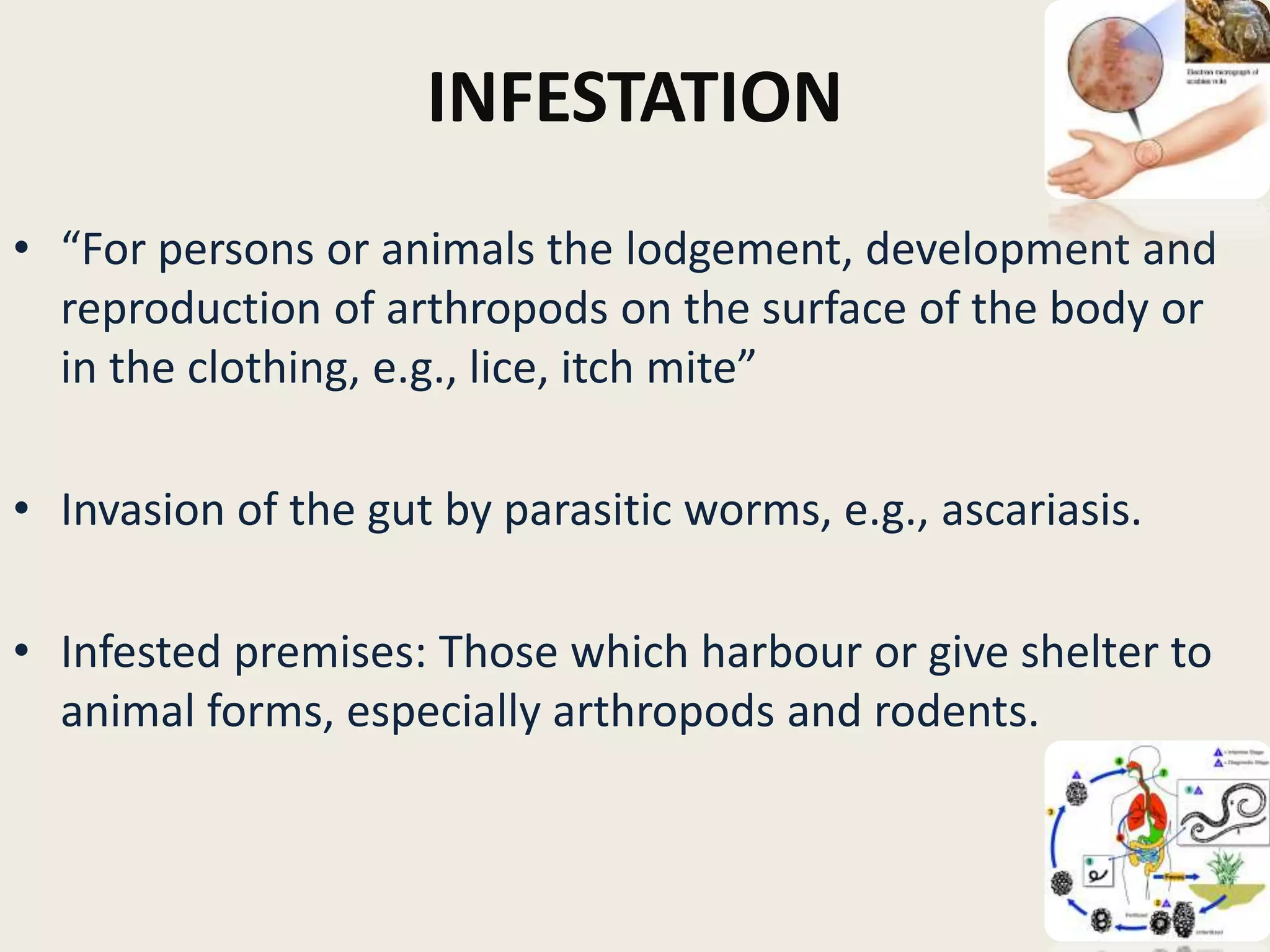
• “For persons or animals the lodgement, development and
reproduction of arthropods on the surface of the body or
in the clothing, e.g., lice, itch mite”
• Invasion of the gut by parasitic worms, e.g., ascariasis.
• Infested premises: Those which harbour or give shelter to
animal forms, especially arthropods and rodents.
6
INFECTIOUS DISEASE
“A clinically manifest disease of man or animals
resulting from an infection”
7
COMMUNICABLE DISEASE
“An illness due to a specific infectious agent or
its toxic products capable of being directly or
indirectly transmitted from man to man, animal to
animal, or from the environment (through air, dust,
soil, water, food, etc.) to man or animal”.
8
Communicable diseases
• Respiratory Infections
• Intestinal Infections
• Arthropod borne infections
• Zoonotic diseases(Rabies,Leptospirosis,JE etc.)
• Surface infections(Trachoma,Leporsy,STD etc.)
• Hospital acquired infection
9
What are the basic differences
between Communicable and
Non-communicable diseases?
10
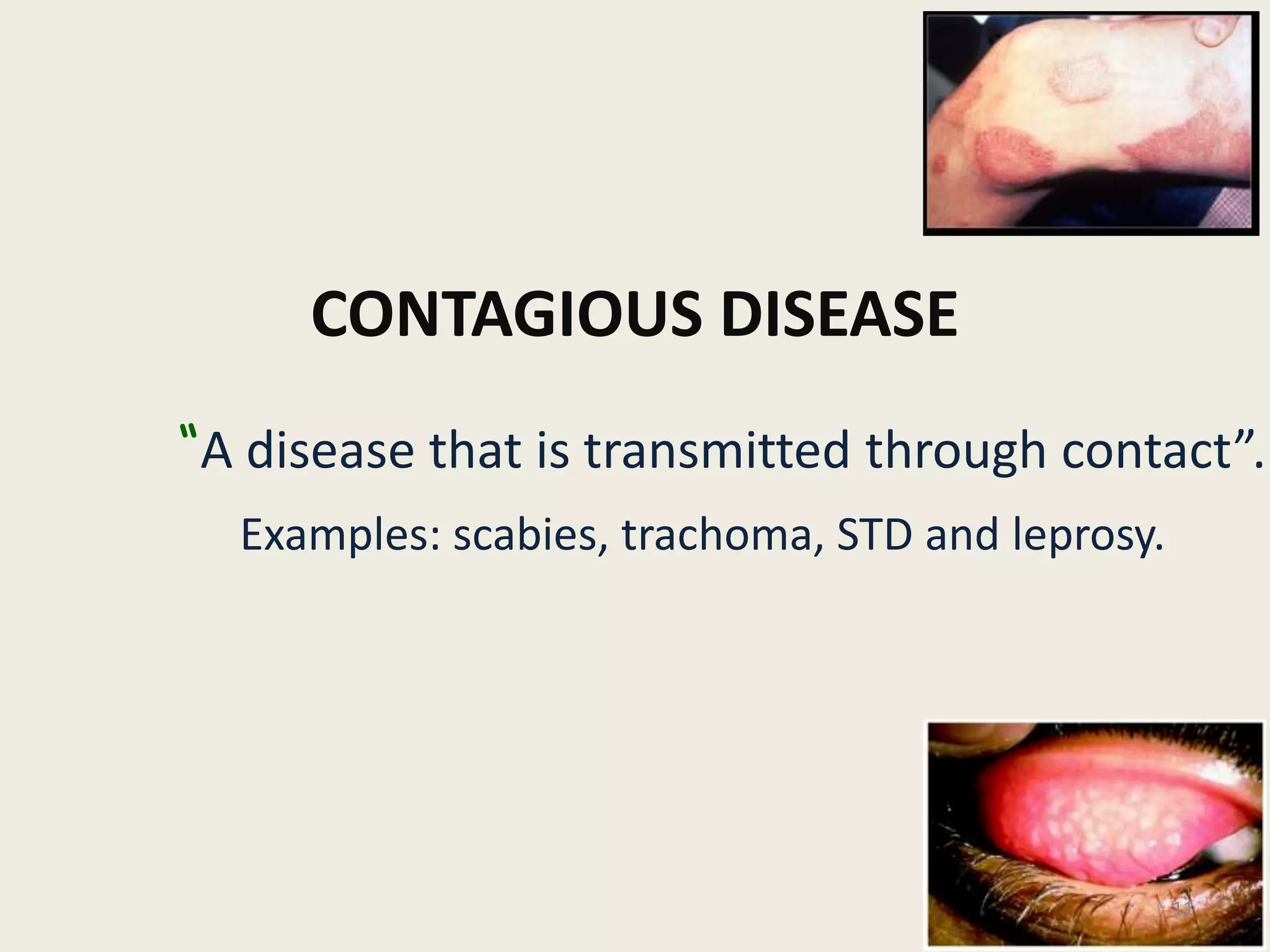
CONTAGIOUS DISEASE
“A disease that is transmitted through contact”.
Examples: scabies, trachoma, STD and leprosy.
11
MODES OF
DISEASE TRANSMISSION
12
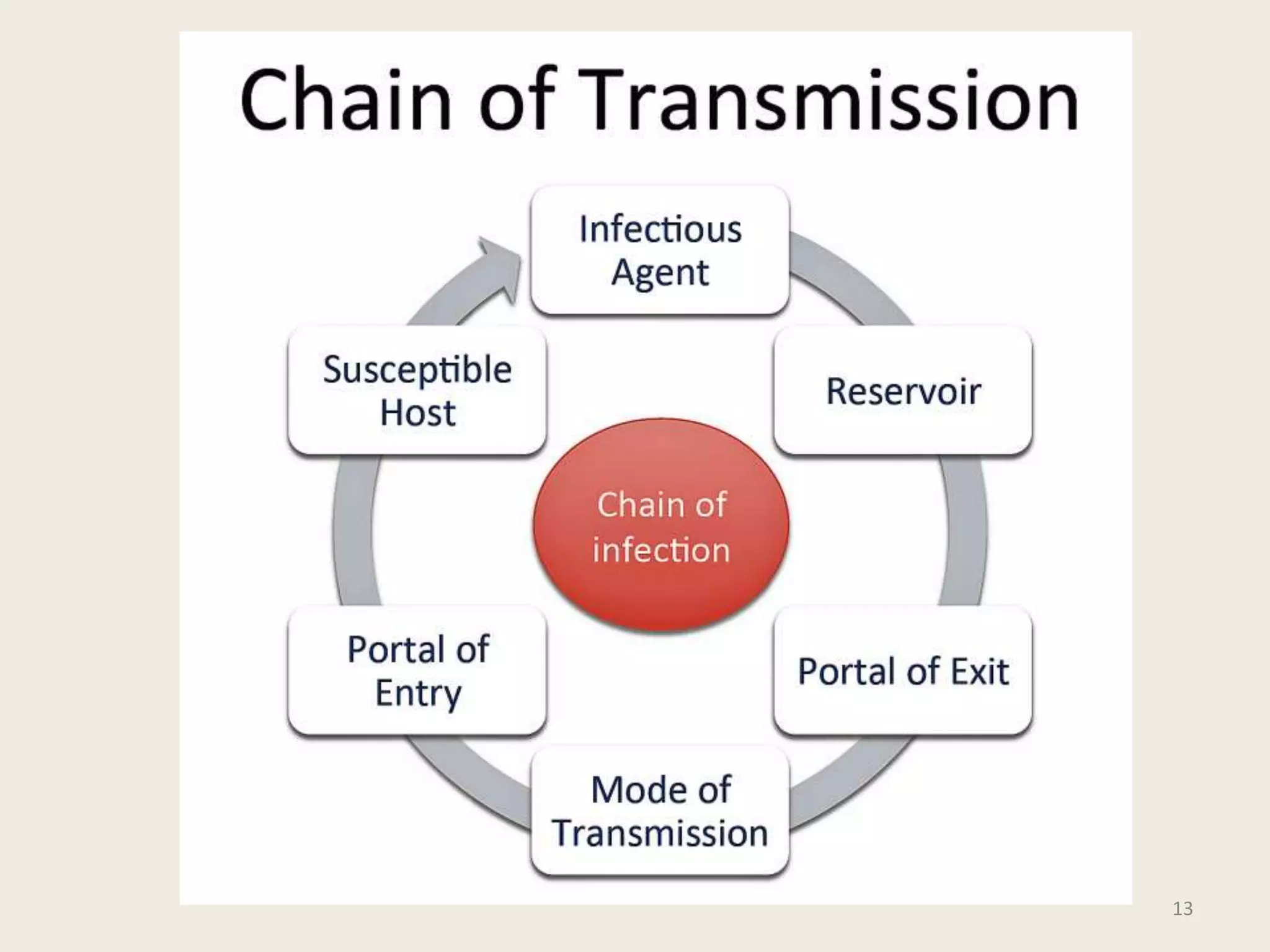
13
A) DIRECT TRANSMISSION
• Direct contact
• Droplet infection
• Contact with soil
• Inoculation-skin or mucosa
• Transplacental (vertical)
B) INDIRECT TRANSMISSION
• Vehicle-borne
• Vector-borne
a. Mechanical b. Biological
• Air-borne
 Droplet nuclei
 Dust
• Fomite -borne
• Unclean hands & fingers
14
DIRECT TRANSMISSION
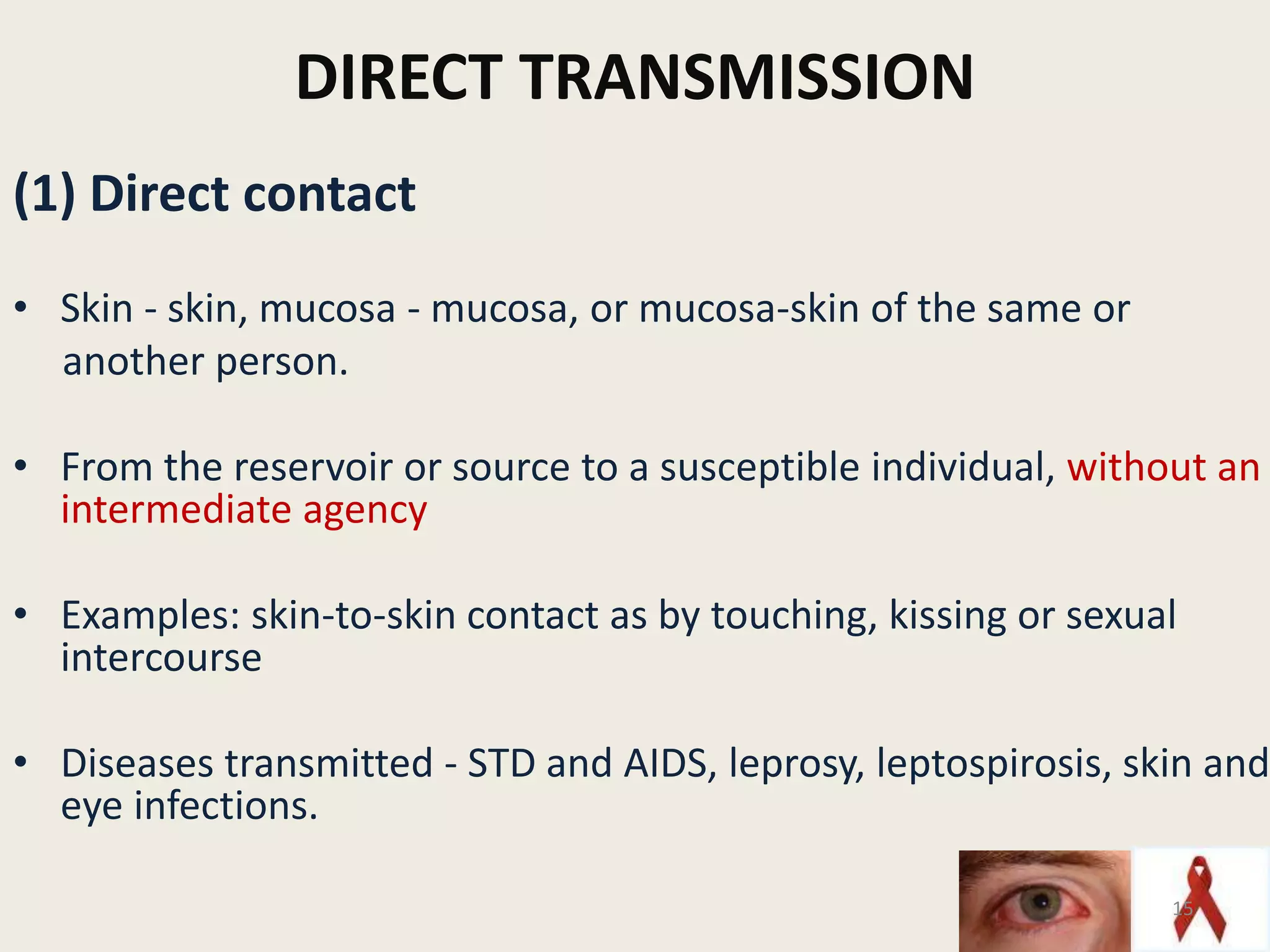
(1) Direct contact
• Skin - skin, mucosa - mucosa, or mucosa-skin of the same or
another person.
• From the reservoir or source to a susceptible individual, without an
intermediate agency
• Examples: skin-to-skin contact as by touching, kissing or sexual
intercourse
• Diseases transmitted - STD and AIDS, leprosy, leptospirosis, skin and
eye infections.
15
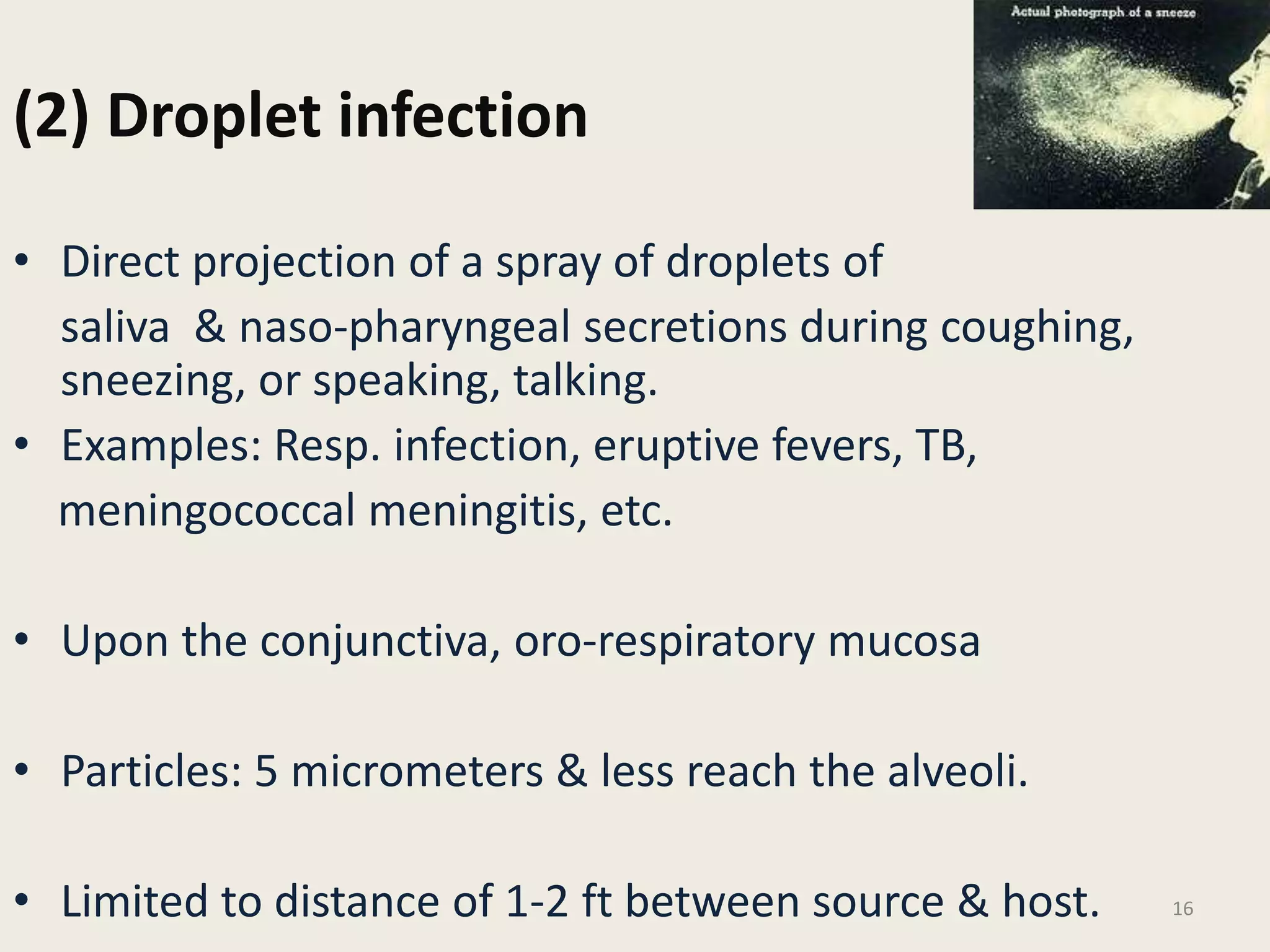
(2) Droplet infection
• Direct projection of a spray of droplets of
saliva & naso-pharyngeal secretions during coughing,
sneezing, or speaking, talking.
• Examples: Resp. infection, eruptive fevers, TB,
meningococcal meningitis, etc.
• Upon the conjunctiva, oro-respiratory mucosa
• Particles: 5 micrometers & less reach the alveoli.
• Limited to distance of 1-2 ft between source & host. 16
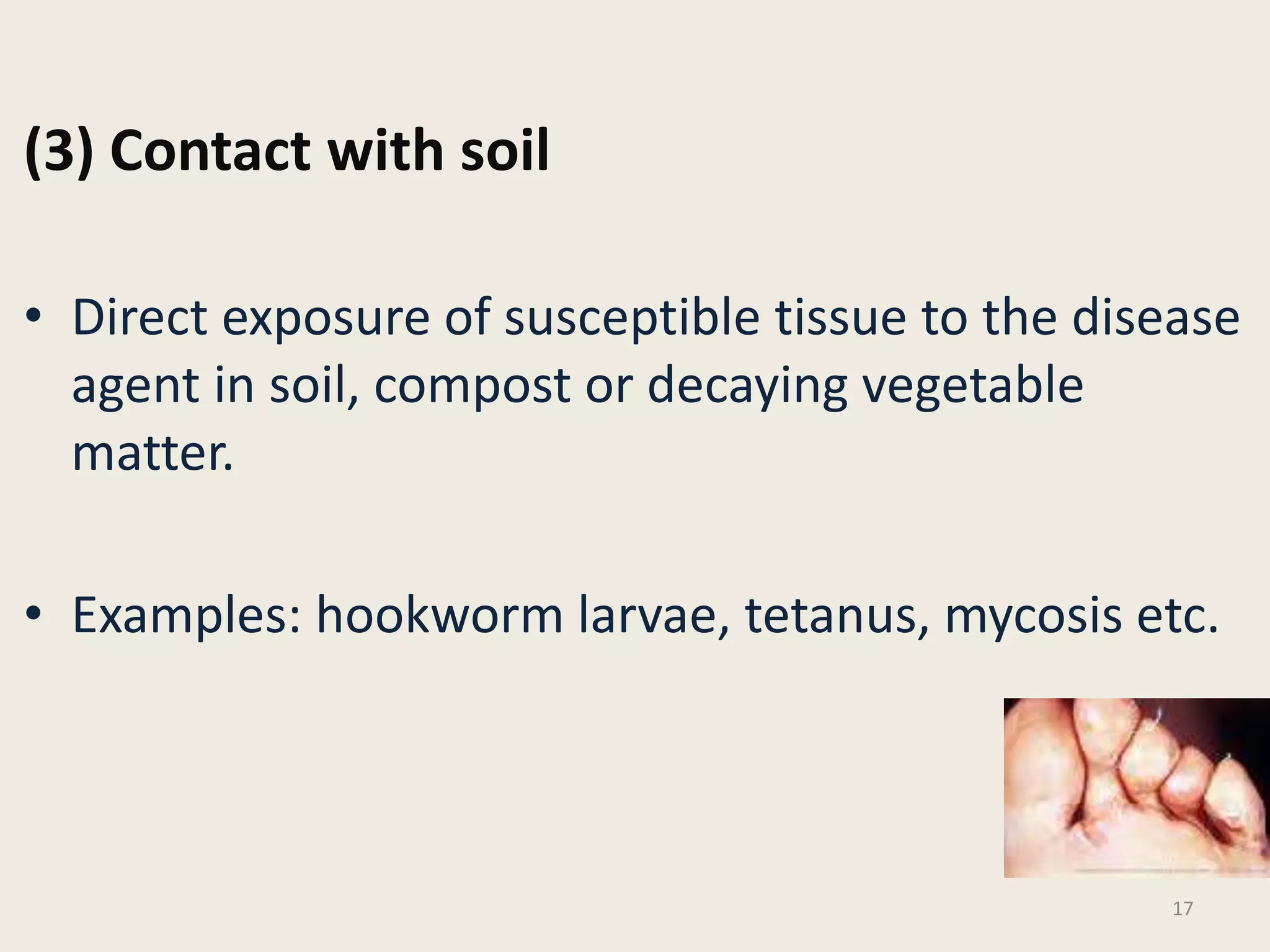
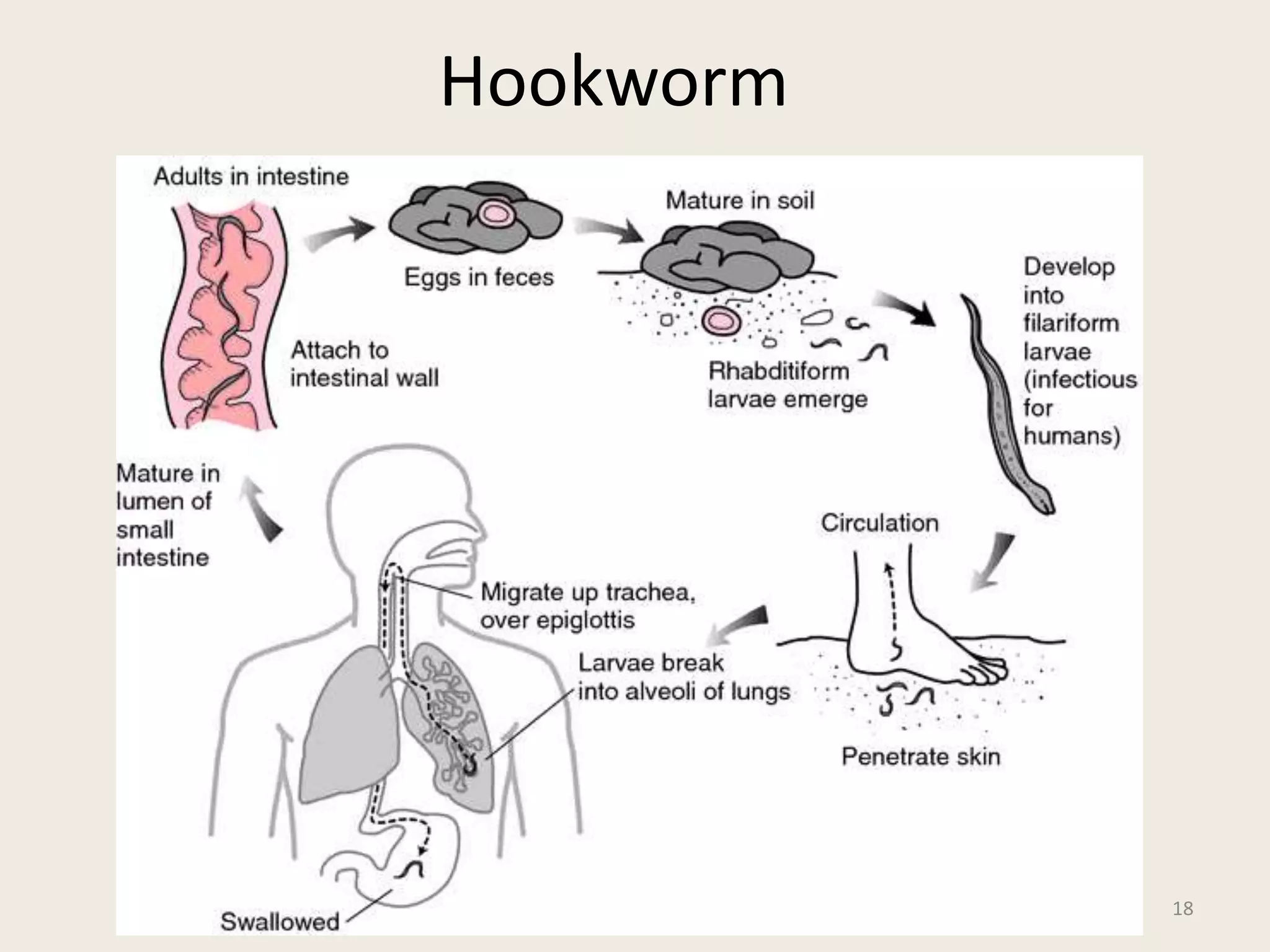
(3) Contact with soil
• Direct exposure of susceptible tissue to the disease
agent in soil, compost or decaying vegetable
matter.
• Examples: hookworm larvae, tetanus, mycosis etc.
17
Hookworm
18
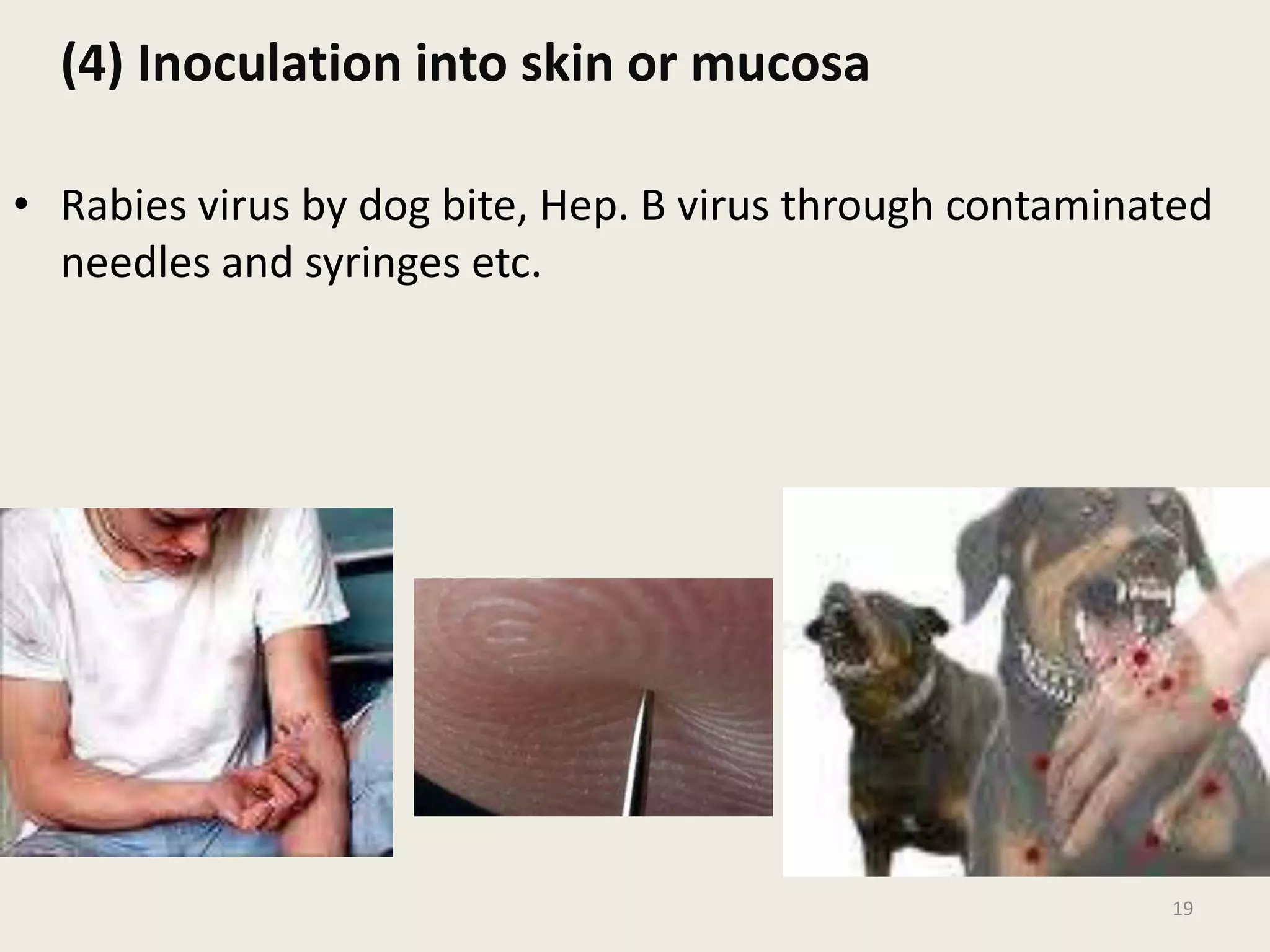
(4) Inoculation into skin or mucosa
• Rabies virus by dog bite, Hep. B virus through contaminated
needles and syringes etc.
19
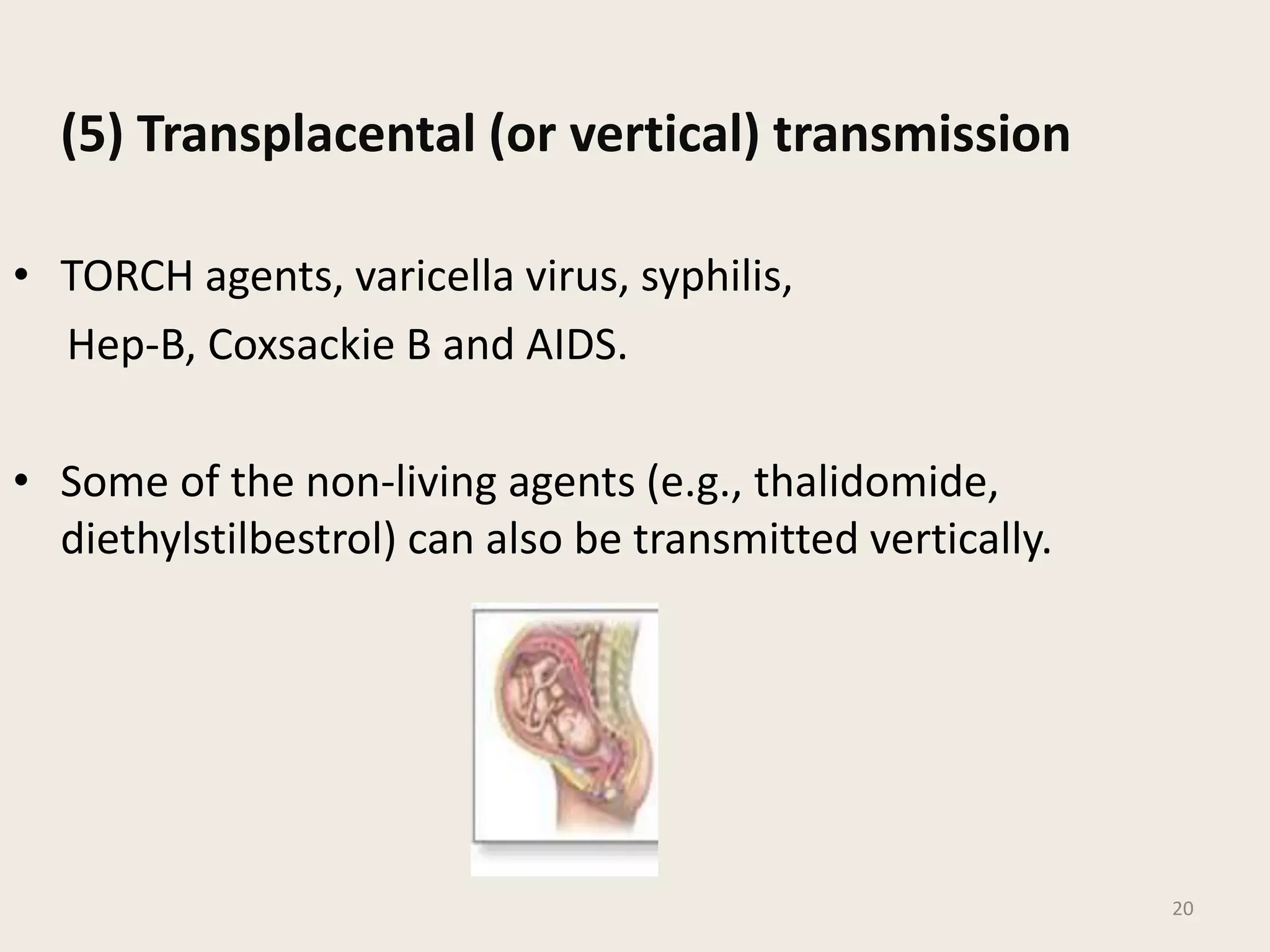
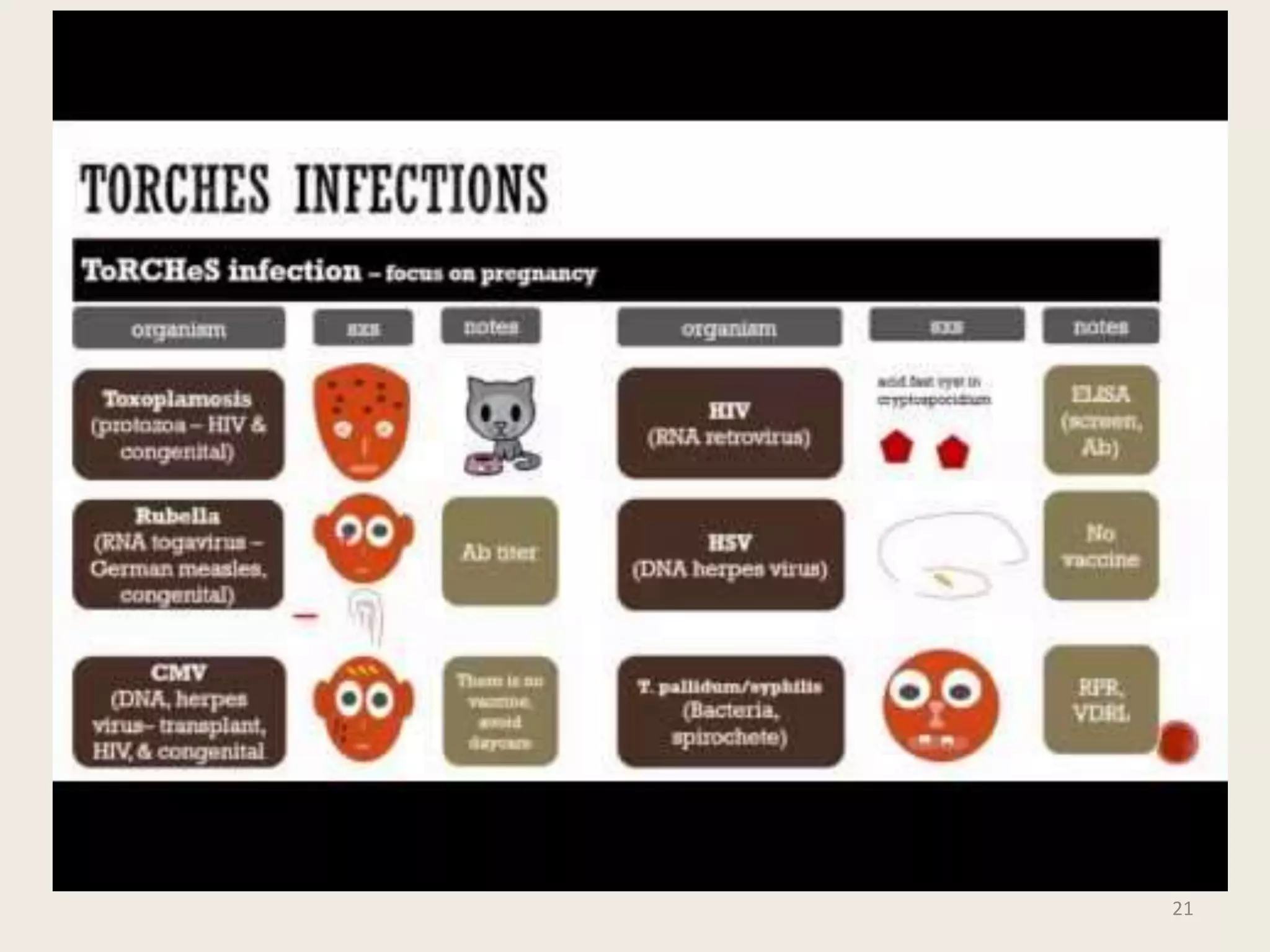
(5) Transplacental (or vertical) transmission
• TORCH agents, varicella virus, syphilis,
Hep-B, Coxsackie B and AIDS.
• Some of the non-living agents (e.g., thalidomide,
diethylstilbestrol) can also be transmitted vertically.
20
21
Indirect transmission
• Traditional 5 F's - "flies, fingers, fomites, food
and fluid".
• Infectious agent survives outside retaining its
basic properties of pathogenesis & virulence.
22
•Infectivity (ability to infect)- (number infected / number susceptible) x 100
•Pathogenicity (ability to cause disease)-(number with clinical disease /
number infected) x 100
•Virulence (ability to cause death) -(number of deaths / number with
disease) x 100
All are dependent on host factors
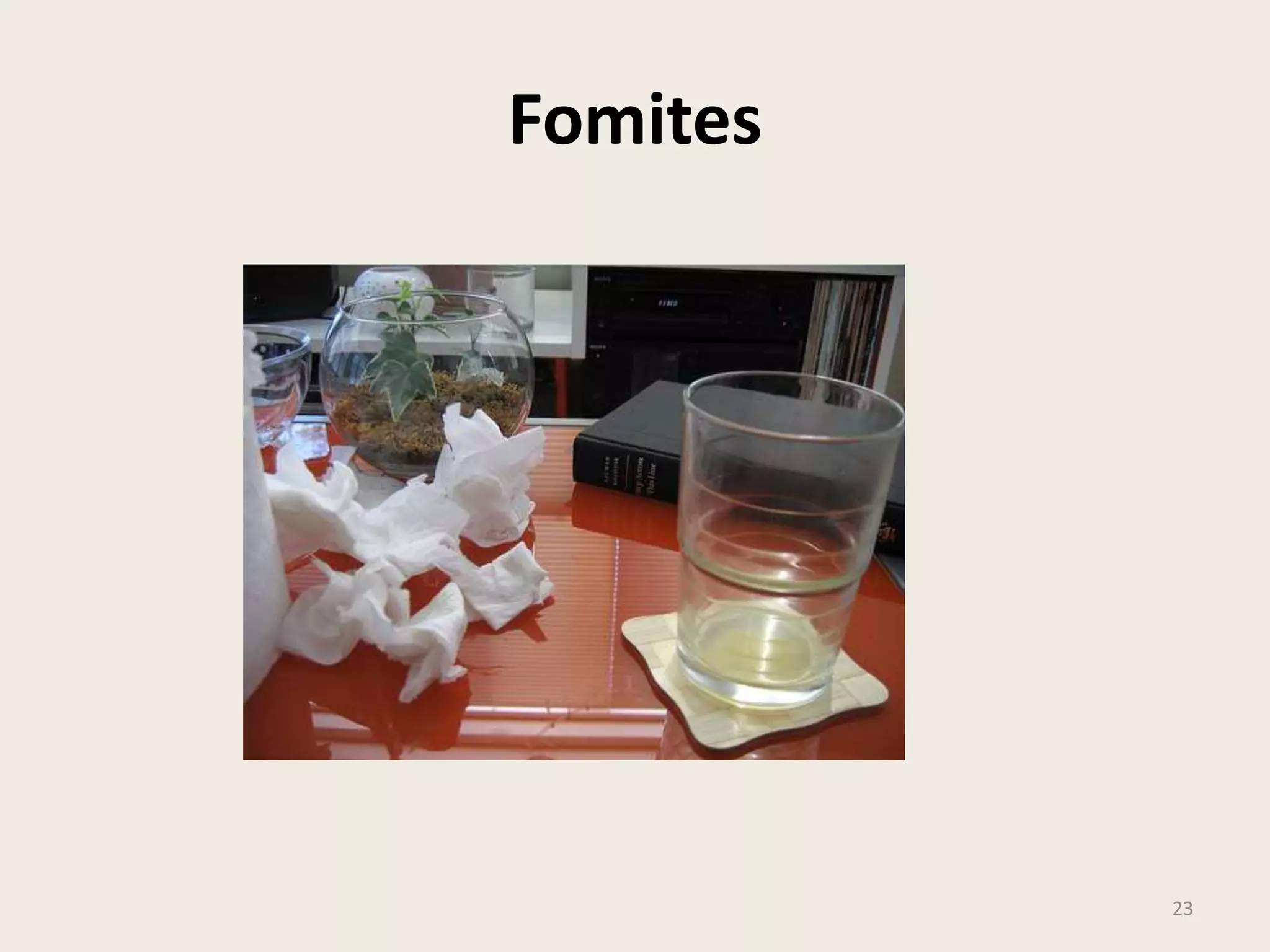
Fomites
23
24
Vehicle-borne
• water,
• food,
• raw vegetables and fruits,
• milk,
• ice,
• blood
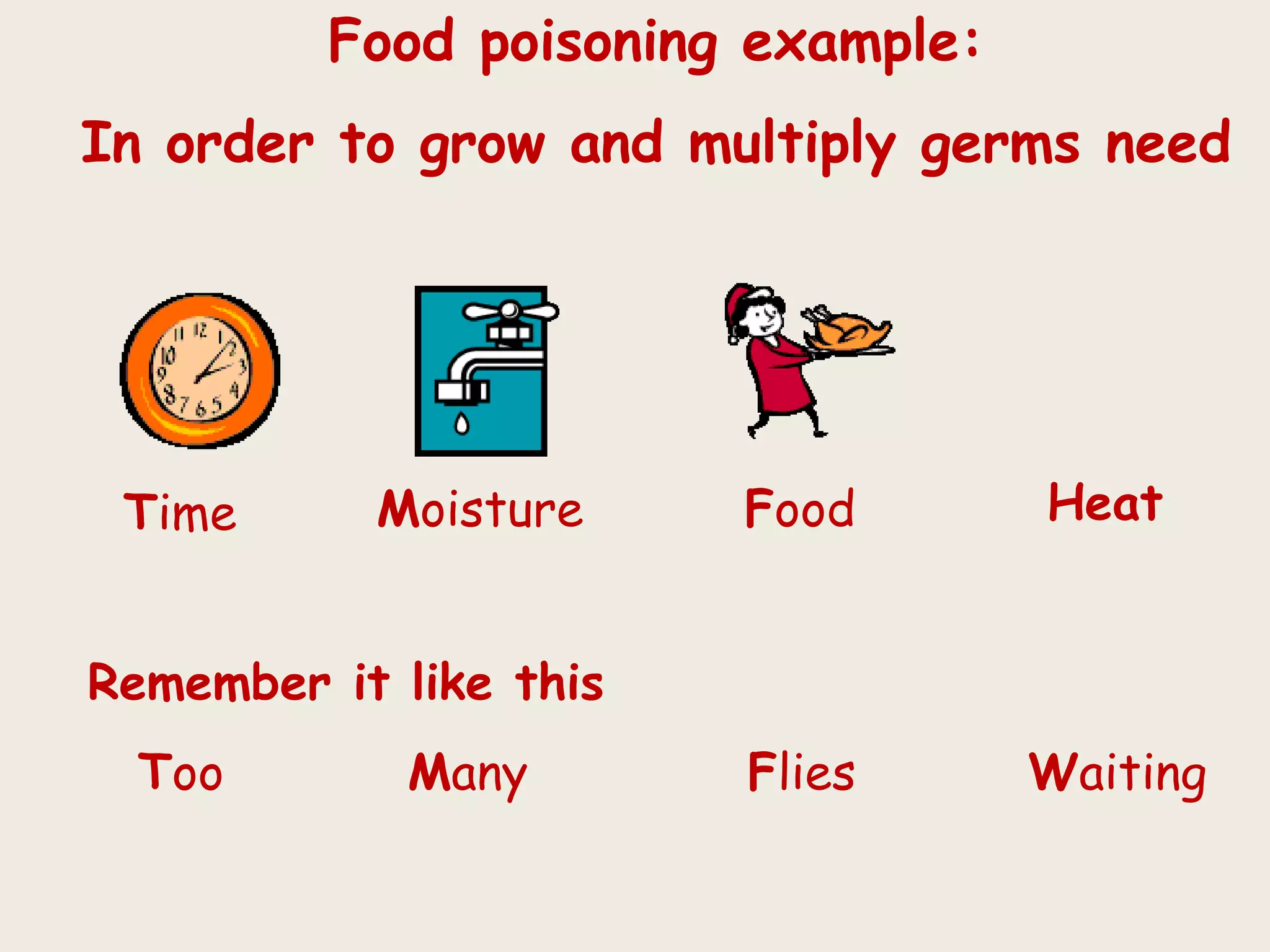
Food poisoning example:
In order to grow and multiply germs need
HeatFoodMoistureTime
Remember it like this
Too Many Flies Waiting
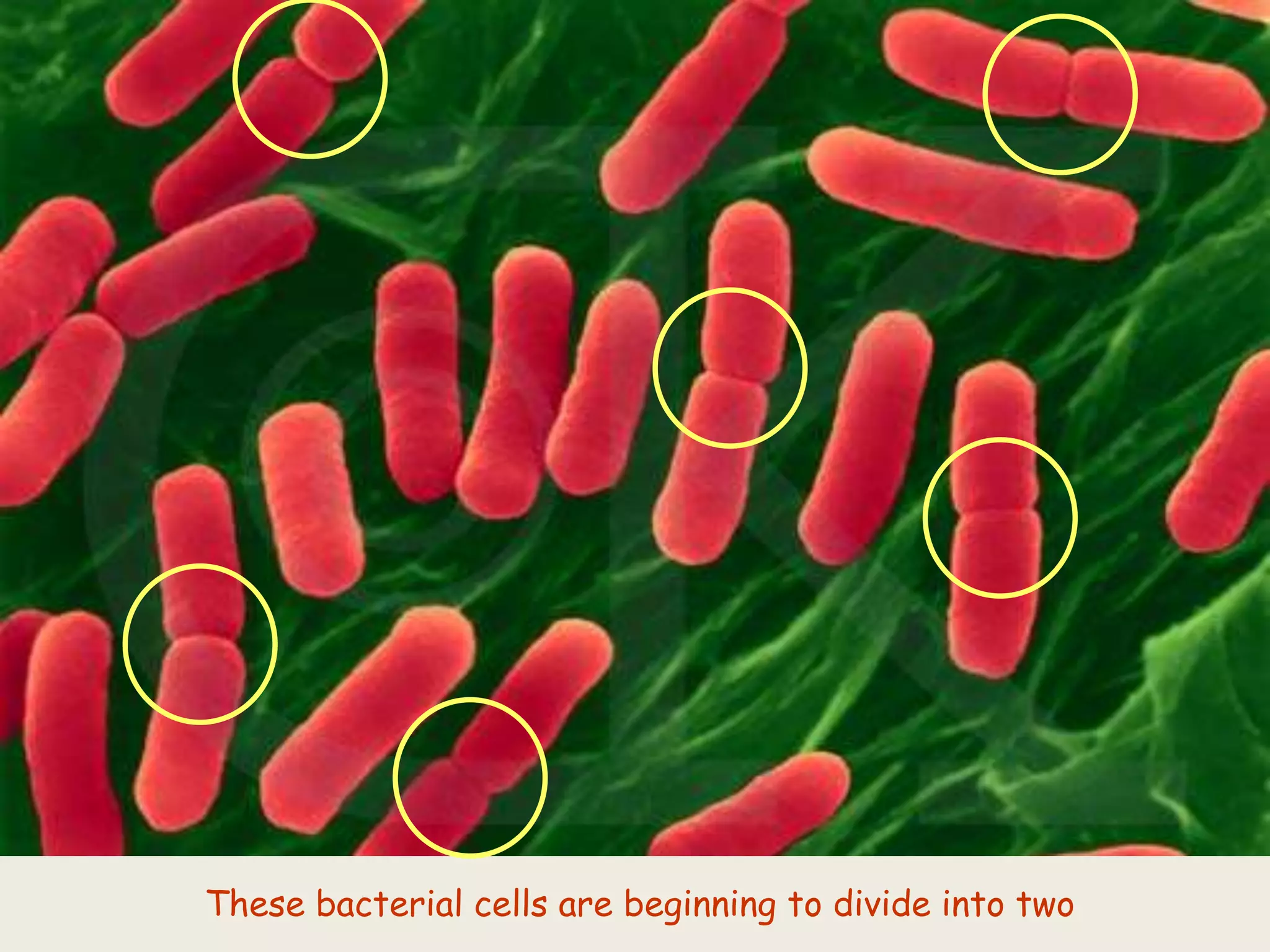
These bacterial cells are beginning to divide into two
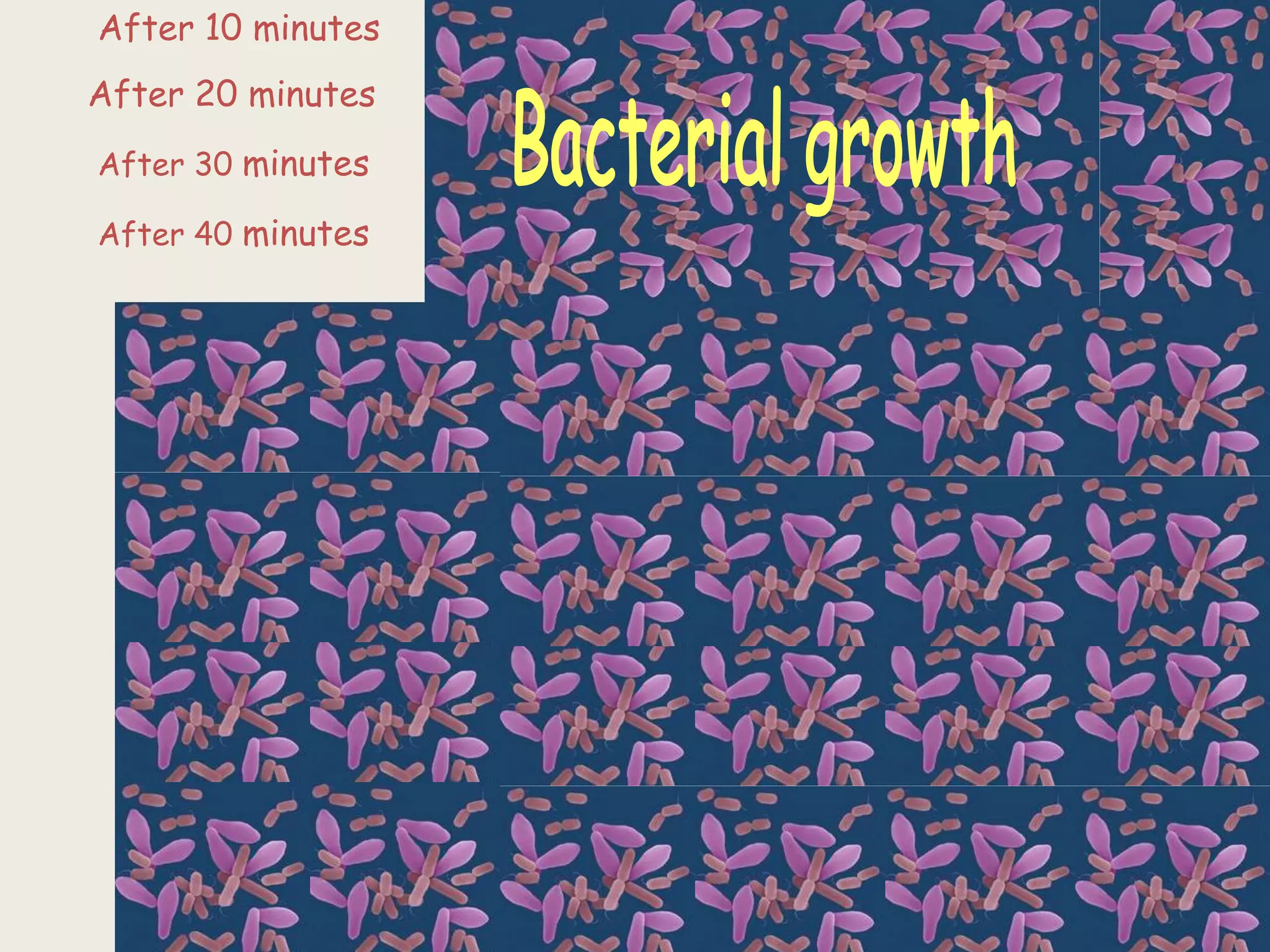
After 10 minutes
After 20 minutes
After 30 minutes
After 40 minutes
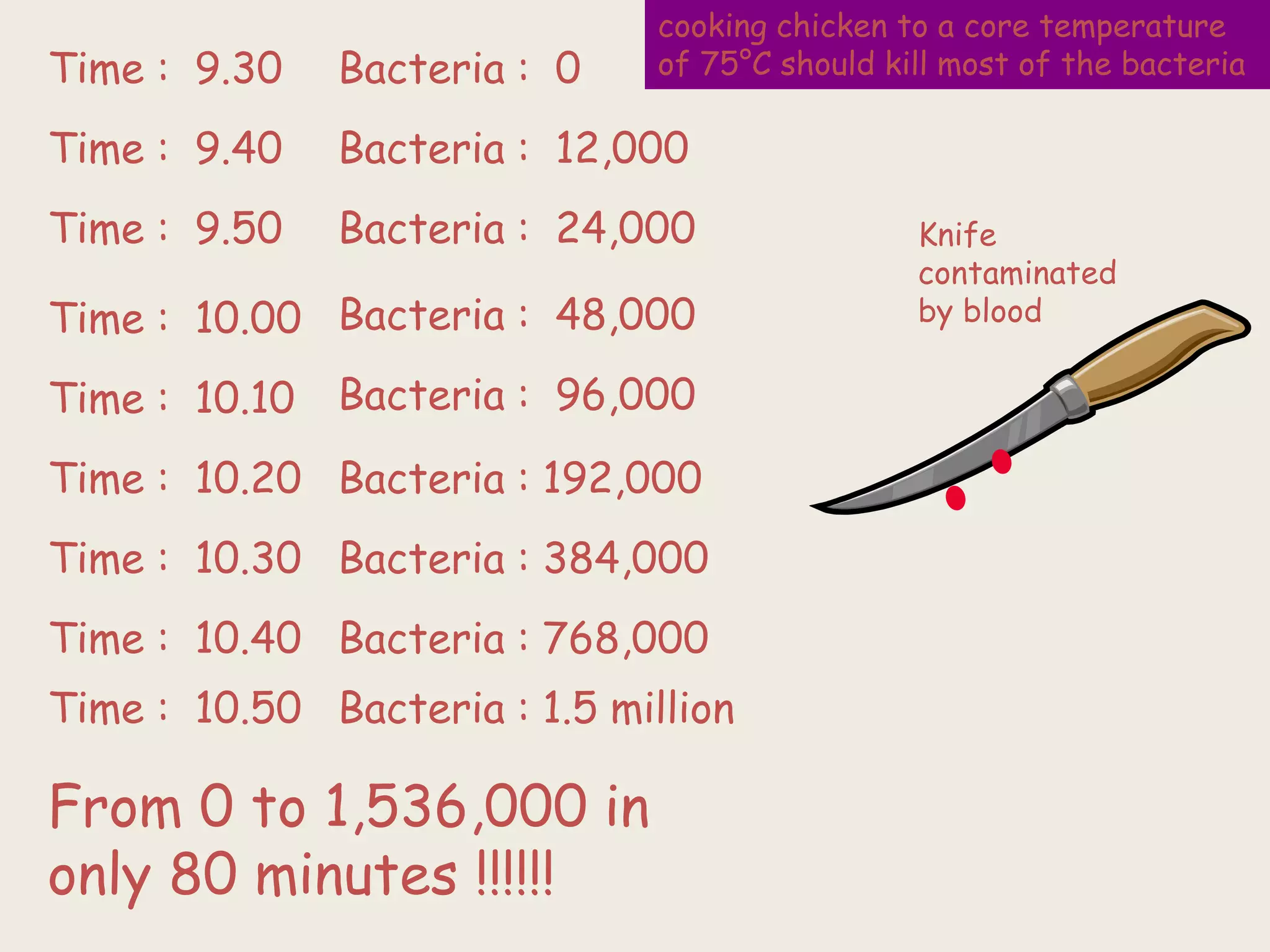
Time : 9.30 Bacteria : 0
Time : 9.40
Time : 9.50
Time : 10.00
Bacteria : 12,000
Bacteria : 24,000
Bacteria : 48,000
Time : 10.10
Time : 10.20
Time : 10.30
Time : 10.40
Time : 10.50
Bacteria : 96,000
Bacteria : 192,000
Bacteria : 384,000
Bacteria : 768,000
Bacteria : 1.5 million
From 0 to 1,536,000 in
only 80 minutes !!!!!!
Knife
contaminated
by blood
cooking chicken to a core temperature
of 75°C should kill most of the bacteria
Epidemiological features of vehicle transmission
• Heavy dose of contamination – explosive outbreak
e.g., cholera & Hep-A epidemics
• When sec. cases occur, primary may be obscured
• Distance travelled may be great, e.g., food poisoning
• Its not always possible to isolate the infectious agent in the
vehicle, e.g., typhoid bacilli in contaminated water
• When the vehicle is controlled or withdrawn, the epidemic
subsides, e.g., epidemics of cholera
• The common source of infection is often traceable
29
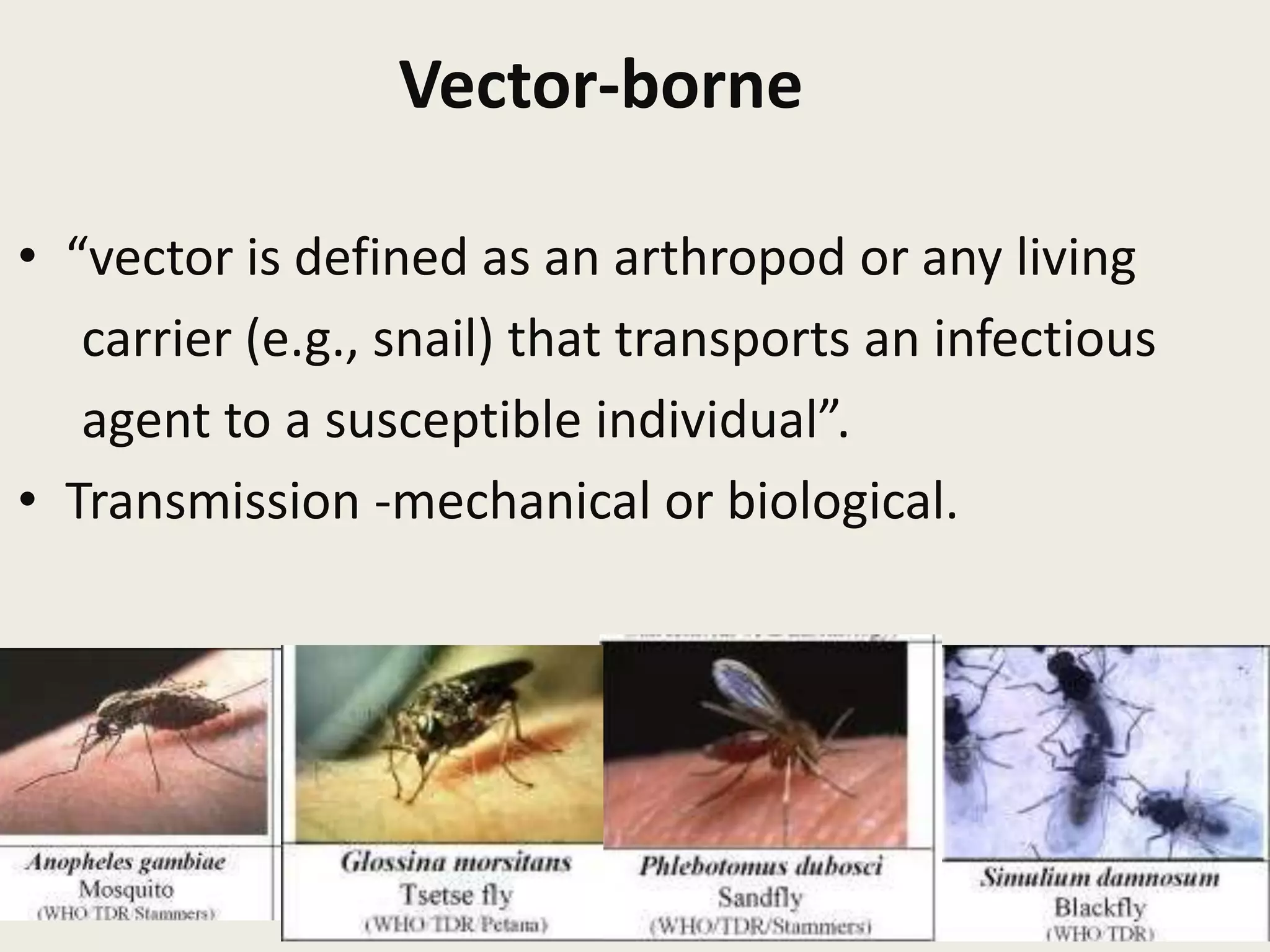
Vector-borne
• “vector is defined as an arthropod or any living
carrier (e.g., snail) that transports an infectious
agent to a susceptible individual”.
• Transmission -mechanical or biological.
30
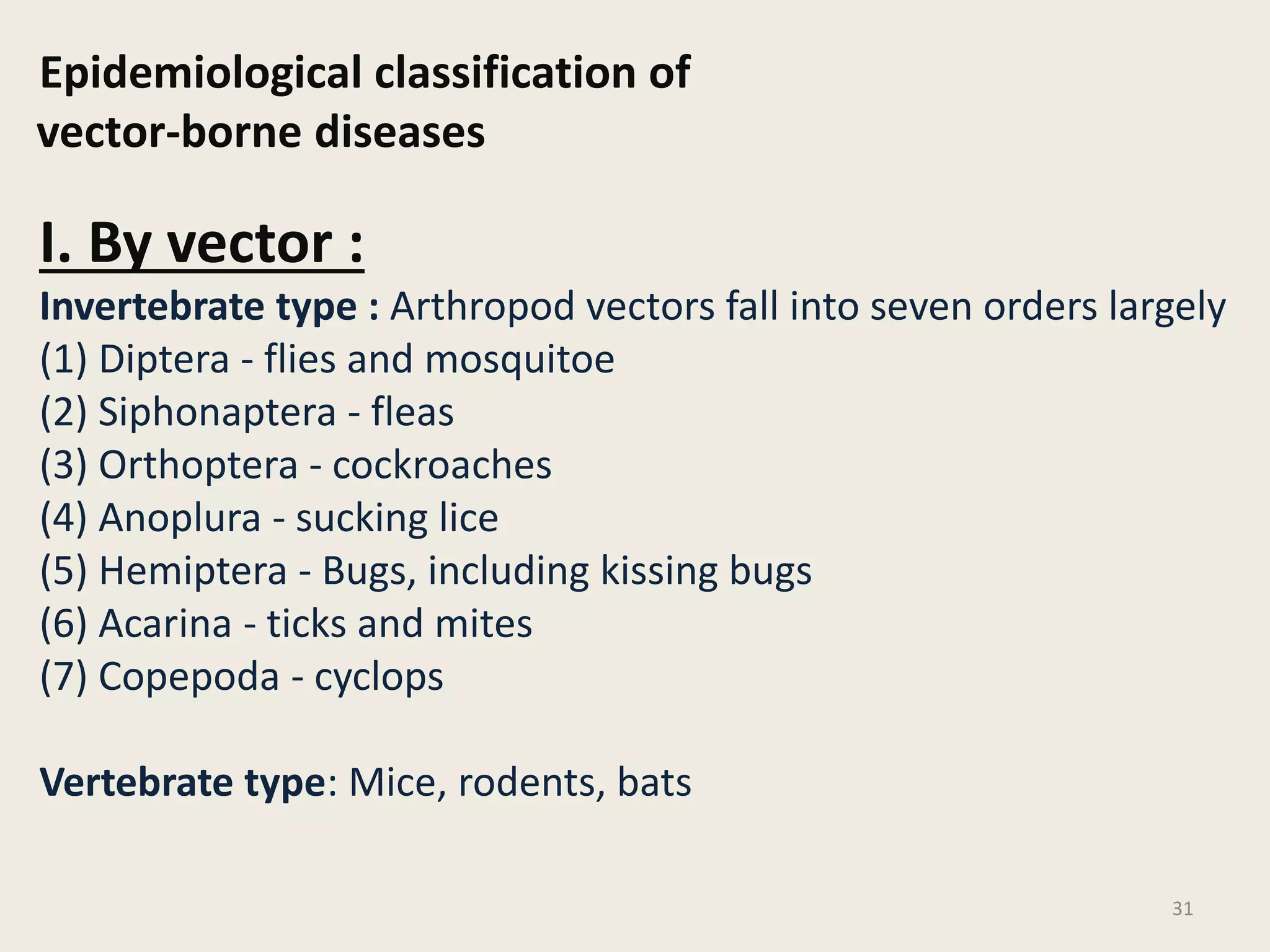
Epidemiological classification of
vector-borne diseases
I. By vector :
Invertebrate type : Arthropod vectors fall into seven orders largely
(1) Diptera - flies and mosquitoe
(2) Siphonaptera - fleas
(3) Orthoptera - cockroaches
(4) Anoplura - sucking lice
(5) Hemiptera - Bugs, including kissing bugs
(6) Acarina - ticks and mites
(7) Copepoda - cyclops
Vertebrate type: Mice, rodents, bats
31
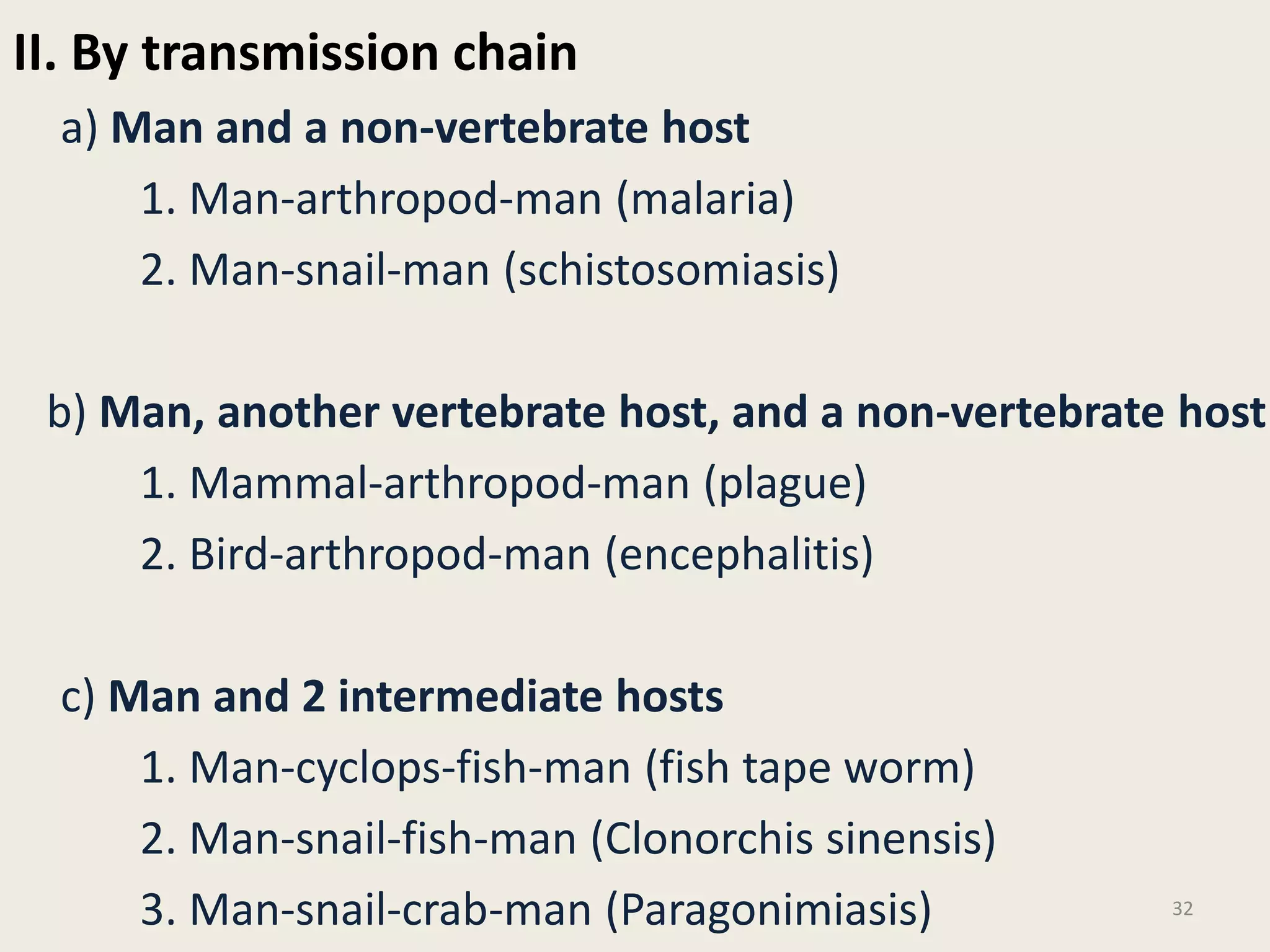
II. By transmission chain
a) Man and a non-vertebrate host
1. Man-arthropod-man (malaria)
2. Man-snail-man (schistosomiasis)
b) Man, another vertebrate host, and a non-vertebrate host
1. Mammal-arthropod-man (plague)
2. Bird-arthropod-man (encephalitis)
c) Man and 2 intermediate hosts
1. Man-cyclops-fish-man (fish tape worm)
2. Man-snail-fish-man (Clonorchis sinensis)
3. Man-snail-crab-man (Paragonimiasis) 32
III. By methods in which vectors transmit
agent:
• Biting
• Regurgitation
• Scratching
33
34
IV. By methods in which vectors are involved in the
transmission and propagation of parasites:
(a) Mechanical transmission :
Crawling or flying arthropod through soiling of its feet or
proboscis; or by passage of organisms through its GIT and
passively excreted.
There is no development or multiplication of the infectious
agent on or within the vector.
(b) Biological transmission:
The infectious agent undergoing replication or development
or both in vector and requires an incubation period before
vector can transmit.
Three types:
(i) Propagative: The agent merely multiplies in vector, but no
change in form, e.g., plague bacilli in rat fleas
(ii) Cyclo-propagative : The agent changes in form and
number, e.g., malaria parasites in mosquito
(iii) Cyclo-developmental : The disease agent undergoes only
development but no multiplication, e.g., microfilaria in
mosquito.
35
Airborne transmission
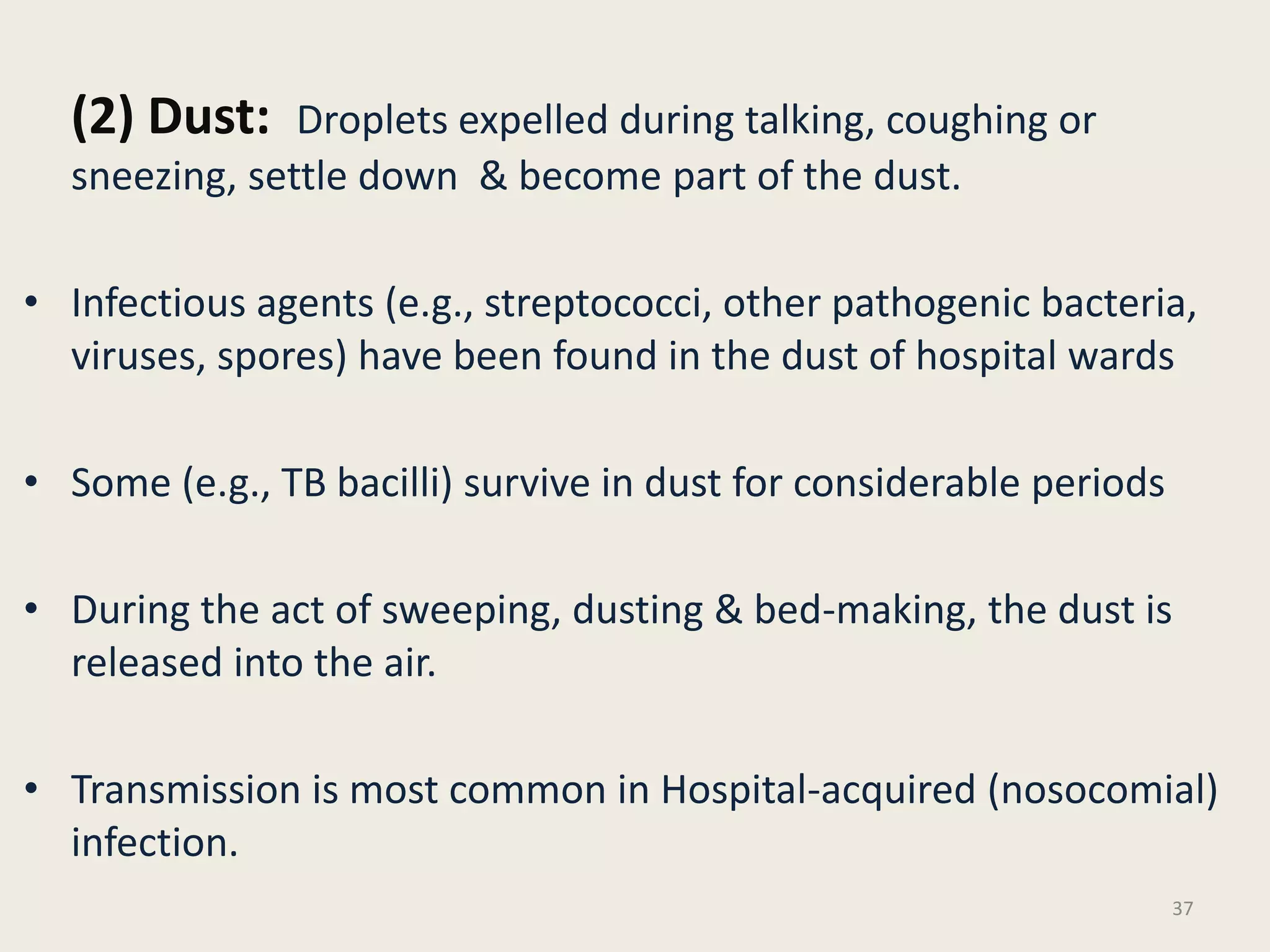
(1) Droplet nuclei
• Tiny particles (1-10 mic) represent dried residue of
droplets. Formed by droplets coughed or sneezed into
the air.
• Diseases spread : TB, influenza, chickenpox, measles, Q
fever, Resp. infections.
• Spread of toxic air pollutants including "smog" results in
air pollution epidemics.
36
(2) Dust: Droplets expelled during talking, coughing or
sneezing, settle down & become part of the dust.
• Infectious agents (e.g., streptococci, other pathogenic bacteria,
viruses, spores) have been found in the dust of hospital wards
• Some (e.g., TB bacilli) survive in dust for considerable periods
• During the act of sweeping, dusting & bed-making, the dust is
released into the air.
• Transmission is most common in Hospital-acquired (nosocomial)
infection.
37
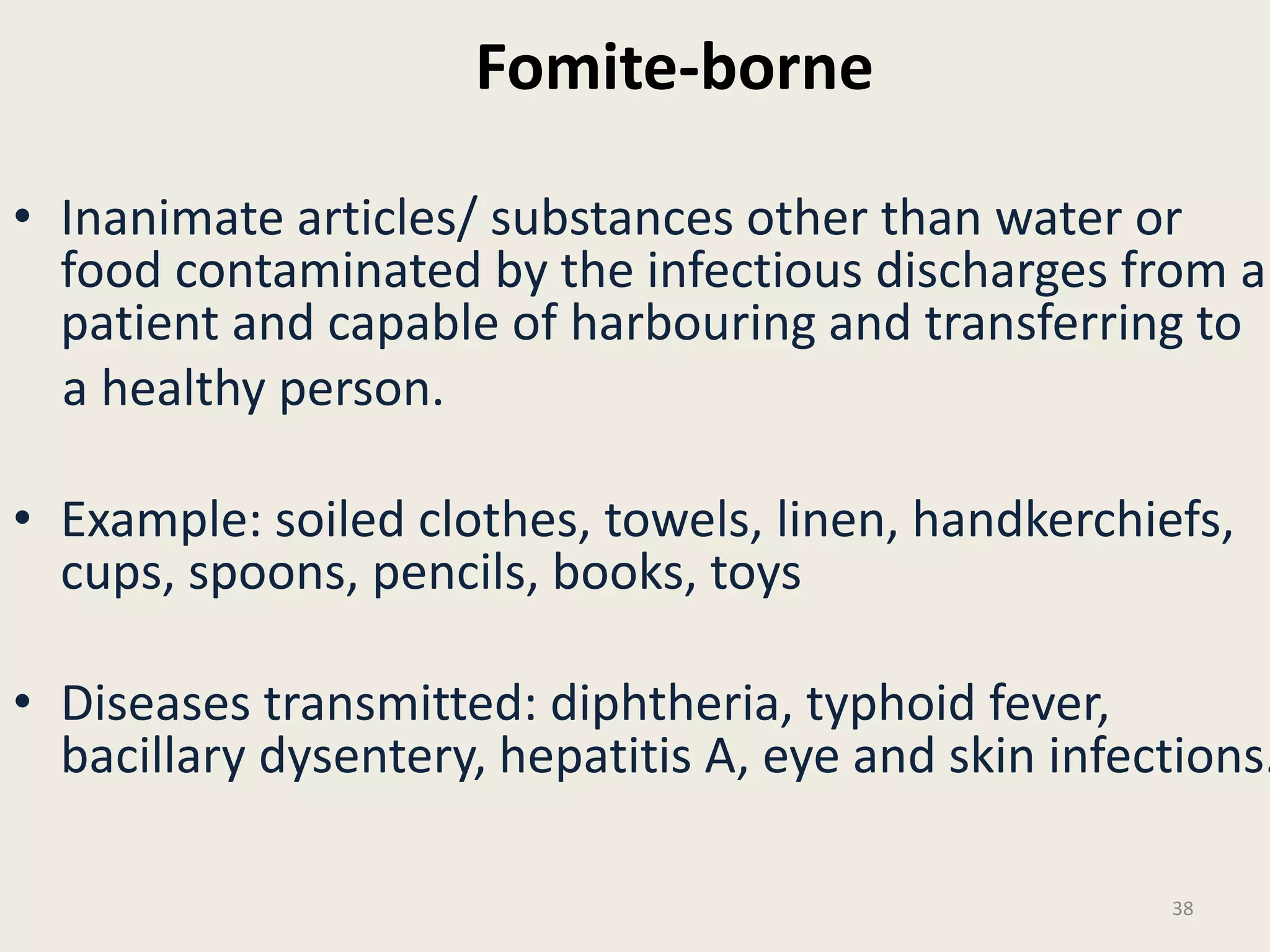
Fomite-borne
• Inanimate articles/ substances other than water or
food contaminated by the infectious discharges from a
patient and capable of harbouring and transferring to
a healthy person.
• Example: soiled clothes, towels, linen, handkerchiefs,
cups, spoons, pencils, books, toys
• Diseases transmitted: diphtheria, typhoid fever,
bacillary dysentery, hepatitis A, eye and skin infections.
38
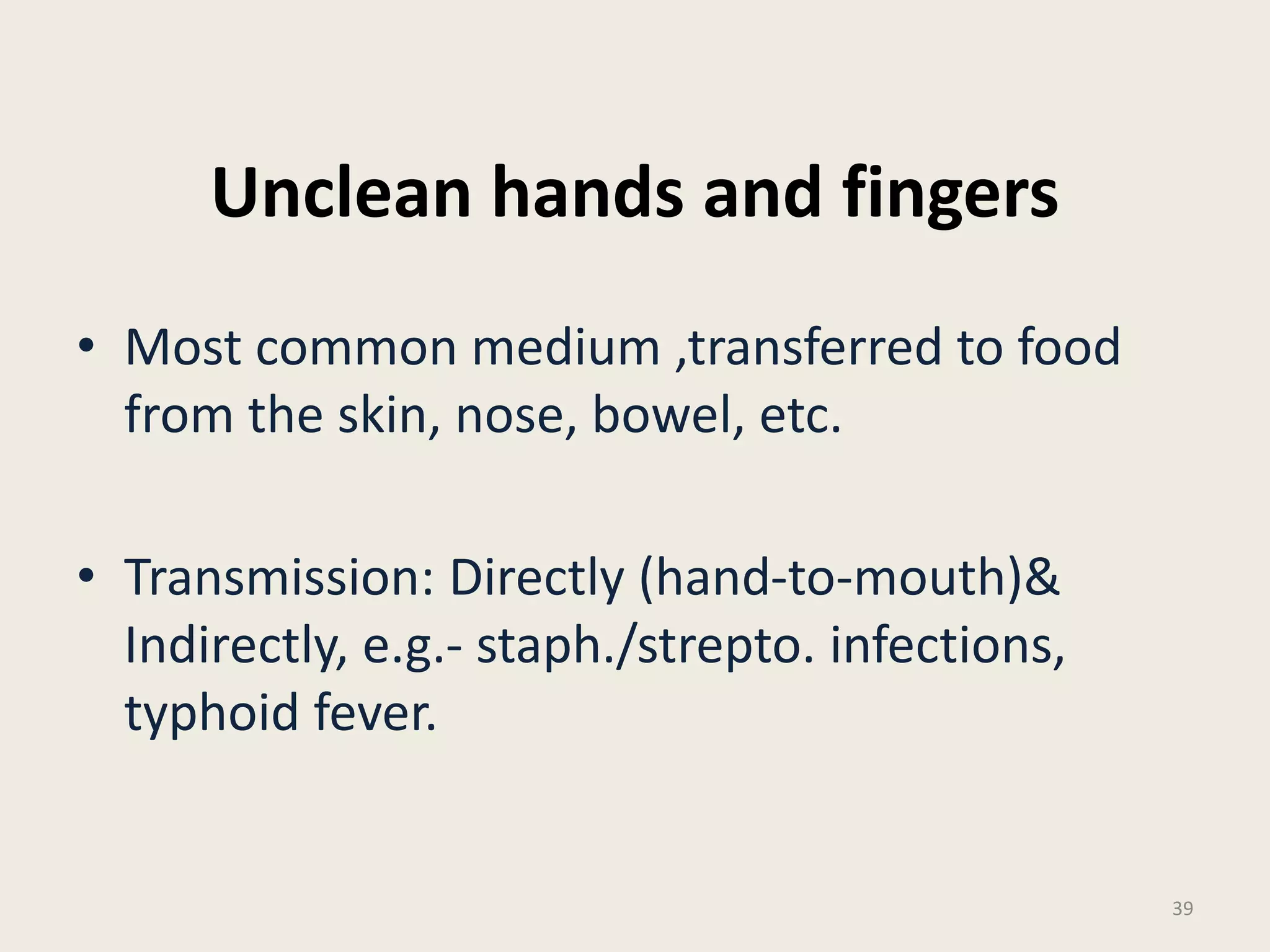
Unclean hands and fingers
• Most common medium ,transferred to food
from the skin, nose, bowel, etc.
• Transmission: Directly (hand-to-mouth)&
Indirectly, e.g.- staph./strepto. infections,
typhoid fever.
39
40

Intro communi diseases lec

  • 1.
  • 2.
    Learning objectives At theend of the class student should be able to: • Define communicable disease • Describe the basic differences between communicable and non-communicable diseases • Enumerate the modes of transmission of communicable disease 2
  • 3.
    Definitions • Infection • Contaminationand Pollution • Infestation • Communicable disease • Infectious disease • Contagious disease 3
  • 4.
    INFECTION • “The entryand development or multiplication of an infectious agent in the body of man or animals” • An infection does not always cause illness. • Levels: a. Colonization(e.g.- S. aureus in skin & normal nasopharynx) b. Subclinical or inapparent infection (e.g.- polio) c. Latent infection (e.g.- virus of herpes simplex) d. Manifest or clinical infection. 4
  • 5.
    CONTAMINATION AND POLLUTION •“The presence of an infectious agent on a body surface; also on or in clothes, beddings, toys, surgical instruments or dressings, or other inanimate articles or substances including water, milk and food” • Contamination on a body surface does not imply a carrier state. • Pollution is distinct from it & implies the presence of offensive, but not necessarily infectious matter. 5
  • 6.
    INFESTATION • “For personsor animals the lodgement, development and reproduction of arthropods on the surface of the body or in the clothing, e.g., lice, itch mite” • Invasion of the gut by parasitic worms, e.g., ascariasis. • Infested premises: Those which harbour or give shelter to animal forms, especially arthropods and rodents. 6
  • 7.
    INFECTIOUS DISEASE “A clinicallymanifest disease of man or animals resulting from an infection” 7
  • 8.
    COMMUNICABLE DISEASE “An illnessdue to a specific infectious agent or its toxic products capable of being directly or indirectly transmitted from man to man, animal to animal, or from the environment (through air, dust, soil, water, food, etc.) to man or animal”. 8
  • 9.
    Communicable diseases • RespiratoryInfections • Intestinal Infections • Arthropod borne infections • Zoonotic diseases(Rabies,Leptospirosis,JE etc.) • Surface infections(Trachoma,Leporsy,STD etc.) • Hospital acquired infection 9
  • 10.
    What are thebasic differences between Communicable and Non-communicable diseases? 10
  • 11.
    CONTAGIOUS DISEASE “A diseasethat is transmitted through contact”. Examples: scabies, trachoma, STD and leprosy. 11
  • 12.
  • 13.
  • 14.
    A) DIRECT TRANSMISSION •Direct contact • Droplet infection • Contact with soil • Inoculation-skin or mucosa • Transplacental (vertical) B) INDIRECT TRANSMISSION • Vehicle-borne • Vector-borne a. Mechanical b. Biological • Air-borne  Droplet nuclei  Dust • Fomite -borne • Unclean hands & fingers 14
  • 15.
    DIRECT TRANSMISSION (1) Directcontact • Skin - skin, mucosa - mucosa, or mucosa-skin of the same or another person. • From the reservoir or source to a susceptible individual, without an intermediate agency • Examples: skin-to-skin contact as by touching, kissing or sexual intercourse • Diseases transmitted - STD and AIDS, leprosy, leptospirosis, skin and eye infections. 15
  • 16.
    (2) Droplet infection •Direct projection of a spray of droplets of saliva & naso-pharyngeal secretions during coughing, sneezing, or speaking, talking. • Examples: Resp. infection, eruptive fevers, TB, meningococcal meningitis, etc. • Upon the conjunctiva, oro-respiratory mucosa • Particles: 5 micrometers & less reach the alveoli. • Limited to distance of 1-2 ft between source & host. 16
  • 17.
    (3) Contact withsoil • Direct exposure of susceptible tissue to the disease agent in soil, compost or decaying vegetable matter. • Examples: hookworm larvae, tetanus, mycosis etc. 17
  • 18.
  • 19.
    (4) Inoculation intoskin or mucosa • Rabies virus by dog bite, Hep. B virus through contaminated needles and syringes etc. 19
  • 20.
    (5) Transplacental (orvertical) transmission • TORCH agents, varicella virus, syphilis, Hep-B, Coxsackie B and AIDS. • Some of the non-living agents (e.g., thalidomide, diethylstilbestrol) can also be transmitted vertically. 20
  • 21.
  • 22.
    Indirect transmission • Traditional5 F's - "flies, fingers, fomites, food and fluid". • Infectious agent survives outside retaining its basic properties of pathogenesis & virulence. 22 •Infectivity (ability to infect)- (number infected / number susceptible) x 100 •Pathogenicity (ability to cause disease)-(number with clinical disease / number infected) x 100 •Virulence (ability to cause death) -(number of deaths / number with disease) x 100 All are dependent on host factors
  • 23.
  • 24.
    24 Vehicle-borne • water, • food, •raw vegetables and fruits, • milk, • ice, • blood
  • 25.
    Food poisoning example: Inorder to grow and multiply germs need HeatFoodMoistureTime Remember it like this Too Many Flies Waiting
  • 26.
    These bacterial cellsare beginning to divide into two
  • 27.
    After 10 minutes After20 minutes After 30 minutes After 40 minutes
  • 28.
    Time : 9.30Bacteria : 0 Time : 9.40 Time : 9.50 Time : 10.00 Bacteria : 12,000 Bacteria : 24,000 Bacteria : 48,000 Time : 10.10 Time : 10.20 Time : 10.30 Time : 10.40 Time : 10.50 Bacteria : 96,000 Bacteria : 192,000 Bacteria : 384,000 Bacteria : 768,000 Bacteria : 1.5 million From 0 to 1,536,000 in only 80 minutes !!!!!! Knife contaminated by blood cooking chicken to a core temperature of 75°C should kill most of the bacteria
  • 29.
    Epidemiological features ofvehicle transmission • Heavy dose of contamination – explosive outbreak e.g., cholera & Hep-A epidemics • When sec. cases occur, primary may be obscured • Distance travelled may be great, e.g., food poisoning • Its not always possible to isolate the infectious agent in the vehicle, e.g., typhoid bacilli in contaminated water • When the vehicle is controlled or withdrawn, the epidemic subsides, e.g., epidemics of cholera • The common source of infection is often traceable 29
  • 30.
    Vector-borne • “vector isdefined as an arthropod or any living carrier (e.g., snail) that transports an infectious agent to a susceptible individual”. • Transmission -mechanical or biological. 30
  • 31.
    Epidemiological classification of vector-bornediseases I. By vector : Invertebrate type : Arthropod vectors fall into seven orders largely (1) Diptera - flies and mosquitoe (2) Siphonaptera - fleas (3) Orthoptera - cockroaches (4) Anoplura - sucking lice (5) Hemiptera - Bugs, including kissing bugs (6) Acarina - ticks and mites (7) Copepoda - cyclops Vertebrate type: Mice, rodents, bats 31
  • 32.
    II. By transmissionchain a) Man and a non-vertebrate host 1. Man-arthropod-man (malaria) 2. Man-snail-man (schistosomiasis) b) Man, another vertebrate host, and a non-vertebrate host 1. Mammal-arthropod-man (plague) 2. Bird-arthropod-man (encephalitis) c) Man and 2 intermediate hosts 1. Man-cyclops-fish-man (fish tape worm) 2. Man-snail-fish-man (Clonorchis sinensis) 3. Man-snail-crab-man (Paragonimiasis) 32
  • 33.
    III. By methodsin which vectors transmit agent: • Biting • Regurgitation • Scratching 33
  • 34.
    34 IV. By methodsin which vectors are involved in the transmission and propagation of parasites: (a) Mechanical transmission : Crawling or flying arthropod through soiling of its feet or proboscis; or by passage of organisms through its GIT and passively excreted. There is no development or multiplication of the infectious agent on or within the vector.
  • 35.
    (b) Biological transmission: Theinfectious agent undergoing replication or development or both in vector and requires an incubation period before vector can transmit. Three types: (i) Propagative: The agent merely multiplies in vector, but no change in form, e.g., plague bacilli in rat fleas (ii) Cyclo-propagative : The agent changes in form and number, e.g., malaria parasites in mosquito (iii) Cyclo-developmental : The disease agent undergoes only development but no multiplication, e.g., microfilaria in mosquito. 35
  • 36.
    Airborne transmission (1) Dropletnuclei • Tiny particles (1-10 mic) represent dried residue of droplets. Formed by droplets coughed or sneezed into the air. • Diseases spread : TB, influenza, chickenpox, measles, Q fever, Resp. infections. • Spread of toxic air pollutants including "smog" results in air pollution epidemics. 36
  • 37.
    (2) Dust: Dropletsexpelled during talking, coughing or sneezing, settle down & become part of the dust. • Infectious agents (e.g., streptococci, other pathogenic bacteria, viruses, spores) have been found in the dust of hospital wards • Some (e.g., TB bacilli) survive in dust for considerable periods • During the act of sweeping, dusting & bed-making, the dust is released into the air. • Transmission is most common in Hospital-acquired (nosocomial) infection. 37
  • 38.
    Fomite-borne • Inanimate articles/substances other than water or food contaminated by the infectious discharges from a patient and capable of harbouring and transferring to a healthy person. • Example: soiled clothes, towels, linen, handkerchiefs, cups, spoons, pencils, books, toys • Diseases transmitted: diphtheria, typhoid fever, bacillary dysentery, hepatitis A, eye and skin infections. 38
  • 39.
    Unclean hands andfingers • Most common medium ,transferred to food from the skin, nose, bowel, etc. • Transmission: Directly (hand-to-mouth)& Indirectly, e.g.- staph./strepto. infections, typhoid fever. 39
  • 40.