OAuth 2
Arpit Suthar
Software Consultant
Knoldus software LLP
Agenda
● Introduction to OAuth2
● Problems before OAuth2
● Definations
● Flow of OAuth2
● Problems with OAuth 1.0
● Problems with Oauth2
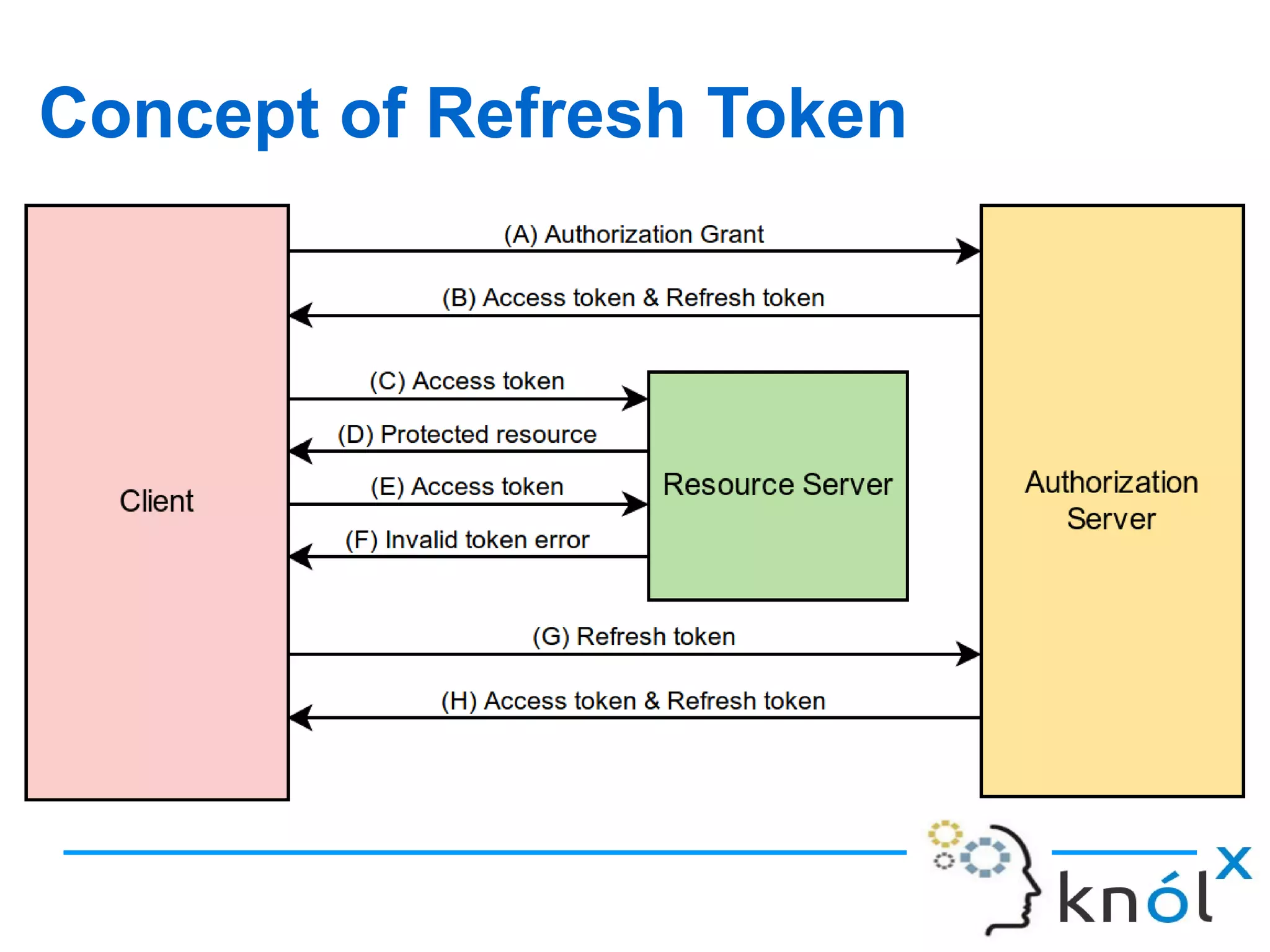
● Concept of Refresh Token
● Code and Demo
Introduction of OAuth2
“The OAuth 2.0 authorization framework enables a third-party
application to obtain limited access to an HTTP service, either on
behalf of a resource owner by orchestrating an approval interaction
between the resource owner and the HTTP service, or by allowing
the third-party application to obtain access on its own behalf.”
Problems before OAuth2
●
Apps store the user’s password
●
Apps get complete access to a user’s account
●
Users can’t revoke access to an app except by changing their
password
●
Compromised apps expose the user’s password
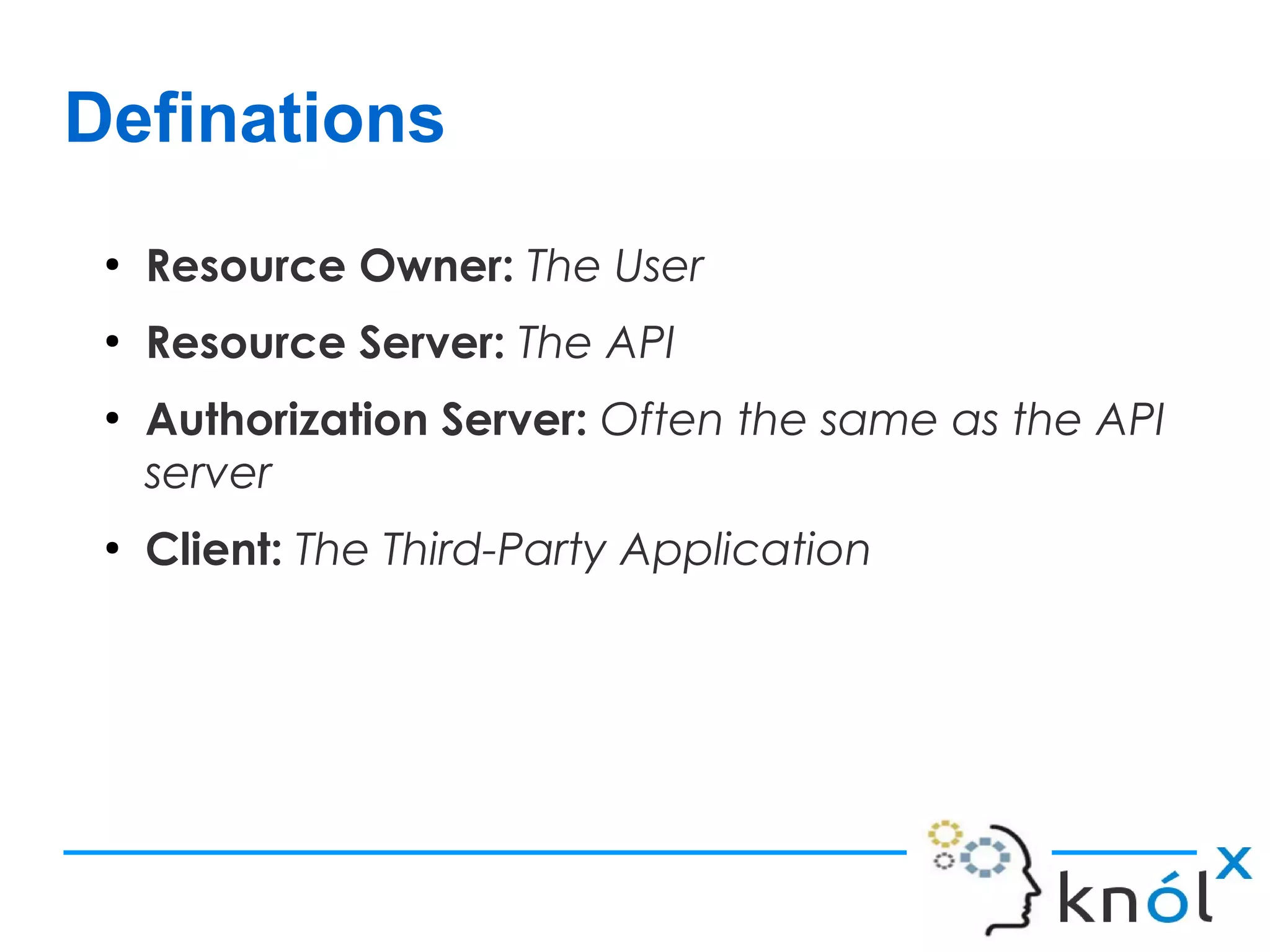
Definations
●
Resource Owner: The User
●
Resource Server: The API
●
Authorization Server: Often the same as the API
server
●
Client: The Third-Party Application
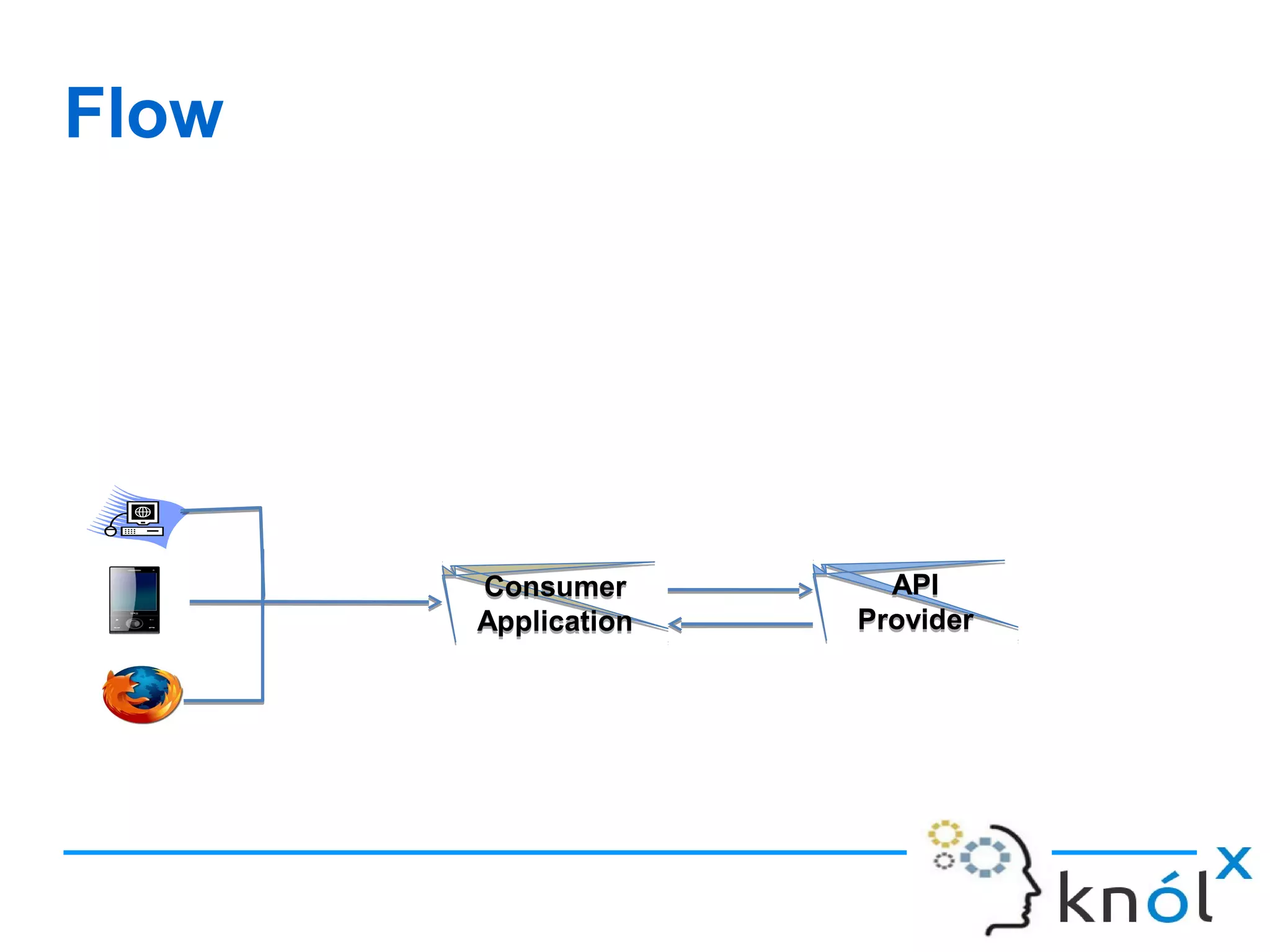
Flow
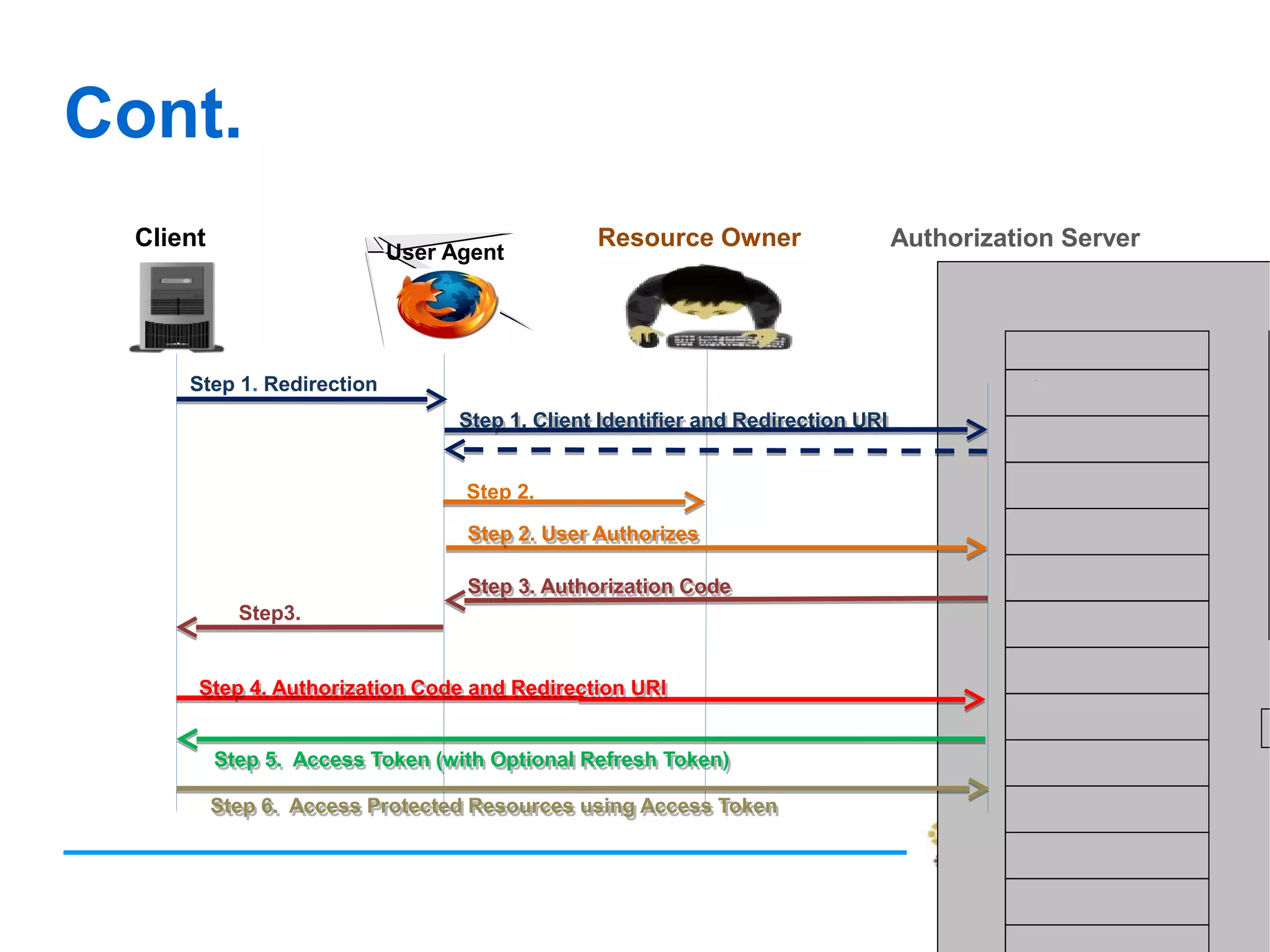
Cont.
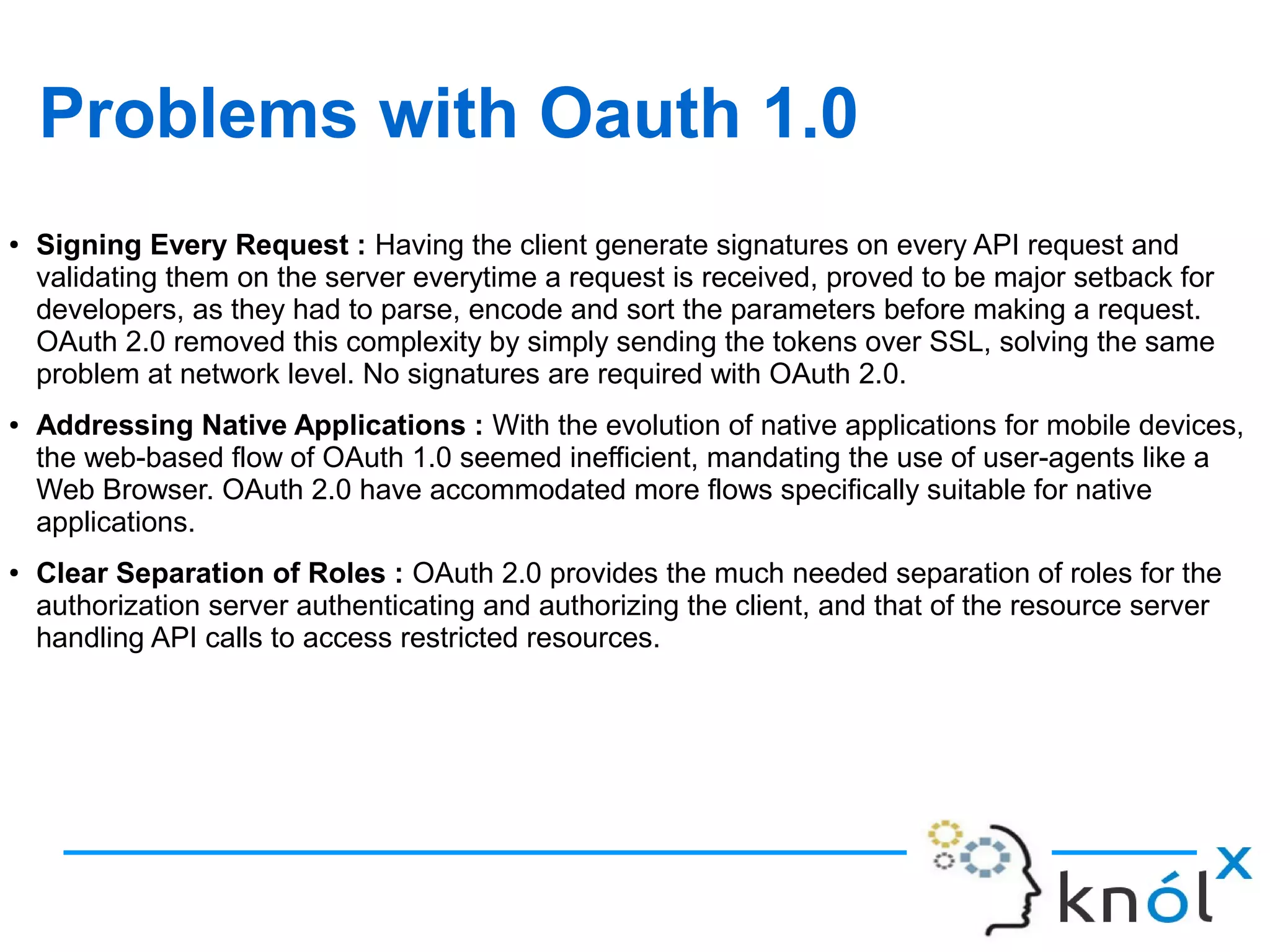
● Signing Every Request : Having the client generate signatures on every API request and
validating them on the server everytime a request is received, proved to be major setback for
developers, as they had to parse, encode and sort the parameters before making a request.
OAuth 2.0 removed this complexity by simply sending the tokens over SSL, solving the same
problem at network level. No signatures are required with OAuth 2.0.
● Addressing Native Applications : With the evolution of native applications for mobile devices,
the web-based flow of OAuth 1.0 seemed inefficient, mandating the use of user-agents like a
Web Browser. OAuth 2.0 have accommodated more flows specifically suitable for native
applications.
● Clear Separation of Roles : OAuth 2.0 provides the much needed separation of roles for the
authorization server authenticating and authorizing the client, and that of the resource server
handling API calls to access restricted resources.
Problems with Oauth 1.0
● Interoperability: Adding too many extension points in the spec resulted in implementations that
are not compatible with each other, what that means is that you cannot hope to write a generic
piece of code which uses Endpoint Discovery to know about the endpoints provided by the
different implementations and interact with them, rather you would have to write separate pieces
of code for Facebook, Google, Salesforce and so on.
● Short Lived Tokens: The spec does not mandate the lifetime and scope of the issued tokens.
The implementation is free to have a token live forever. Although most of the implementations
provide us with short-lived access tokens and a refresh token, which can be used to get a fresh
access token.
● Security: The spec just "recommends" the use of SSL/TLS while sending the tokens in plaintext
over the wire. Although, every major implementation has made it a requirement to have secure
authorization endpoints as well require that the client must have a secure redirection URL,
otherwise it will be way too easy for an attacker to eavesdrop on the communication and
decipher the tokens.
Problems with Oauth2
Concept of Refresh Token
Questions & Answers.getOrElse(“u'll get it tomorrow”)
Thank You

OAuth2 - Introduction

  • 1.
    OAuth 2 Arpit Suthar SoftwareConsultant Knoldus software LLP
  • 2.
    Agenda ● Introduction toOAuth2 ● Problems before OAuth2 ● Definations ● Flow of OAuth2 ● Problems with OAuth 1.0 ● Problems with Oauth2 ● Concept of Refresh Token ● Code and Demo
  • 3.
    Introduction of OAuth2 “TheOAuth 2.0 authorization framework enables a third-party application to obtain limited access to an HTTP service, either on behalf of a resource owner by orchestrating an approval interaction between the resource owner and the HTTP service, or by allowing the third-party application to obtain access on its own behalf.”
  • 4.
    Problems before OAuth2 ● Appsstore the user’s password ● Apps get complete access to a user’s account ● Users can’t revoke access to an app except by changing their password ● Compromised apps expose the user’s password
  • 5.
    Definations ● Resource Owner: TheUser ● Resource Server: The API ● Authorization Server: Often the same as the API server ● Client: The Third-Party Application
  • 6.
  • 7.
  • 8.
    ● Signing EveryRequest : Having the client generate signatures on every API request and validating them on the server everytime a request is received, proved to be major setback for developers, as they had to parse, encode and sort the parameters before making a request. OAuth 2.0 removed this complexity by simply sending the tokens over SSL, solving the same problem at network level. No signatures are required with OAuth 2.0. ● Addressing Native Applications : With the evolution of native applications for mobile devices, the web-based flow of OAuth 1.0 seemed inefficient, mandating the use of user-agents like a Web Browser. OAuth 2.0 have accommodated more flows specifically suitable for native applications. ● Clear Separation of Roles : OAuth 2.0 provides the much needed separation of roles for the authorization server authenticating and authorizing the client, and that of the resource server handling API calls to access restricted resources. Problems with Oauth 1.0
  • 9.
    ● Interoperability: Addingtoo many extension points in the spec resulted in implementations that are not compatible with each other, what that means is that you cannot hope to write a generic piece of code which uses Endpoint Discovery to know about the endpoints provided by the different implementations and interact with them, rather you would have to write separate pieces of code for Facebook, Google, Salesforce and so on. ● Short Lived Tokens: The spec does not mandate the lifetime and scope of the issued tokens. The implementation is free to have a token live forever. Although most of the implementations provide us with short-lived access tokens and a refresh token, which can be used to get a fresh access token. ● Security: The spec just "recommends" the use of SSL/TLS while sending the tokens in plaintext over the wire. Although, every major implementation has made it a requirement to have secure authorization endpoints as well require that the client must have a secure redirection URL, otherwise it will be way too easy for an attacker to eavesdrop on the communication and decipher the tokens. Problems with Oauth2
  • 10.
  • 11.
  • 12.