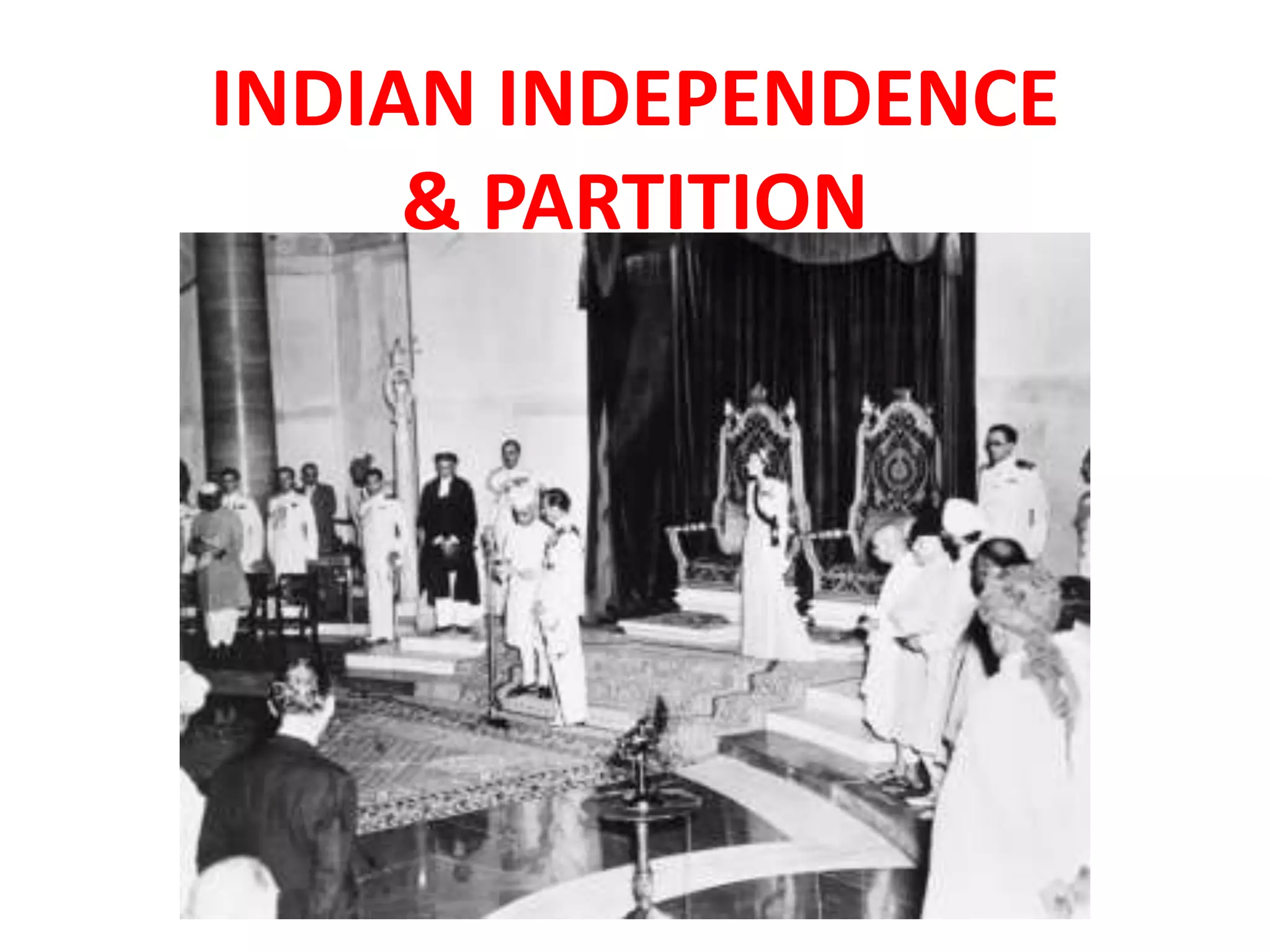
INDIAN INDEPENDENCE
     & PARTITION
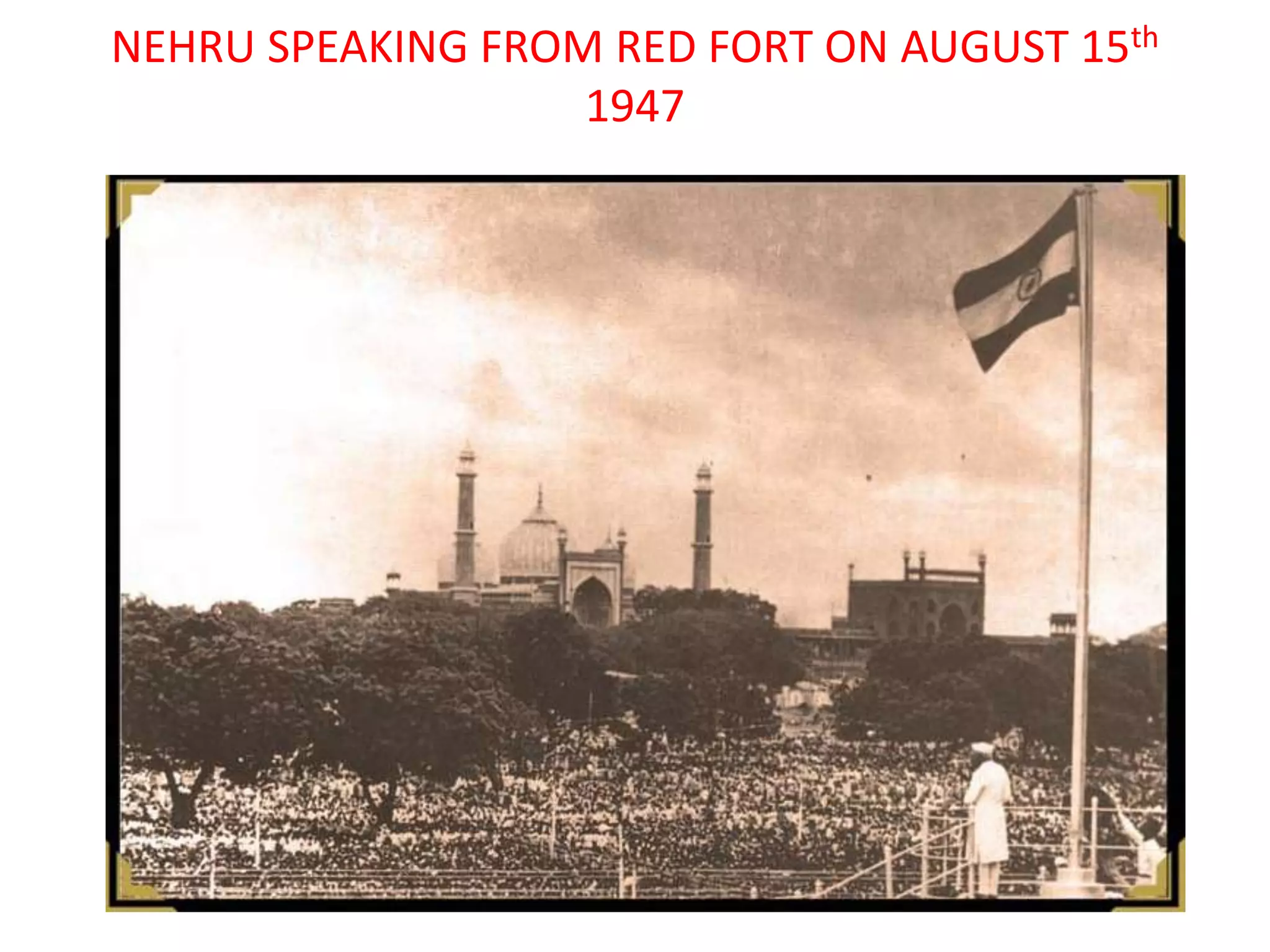
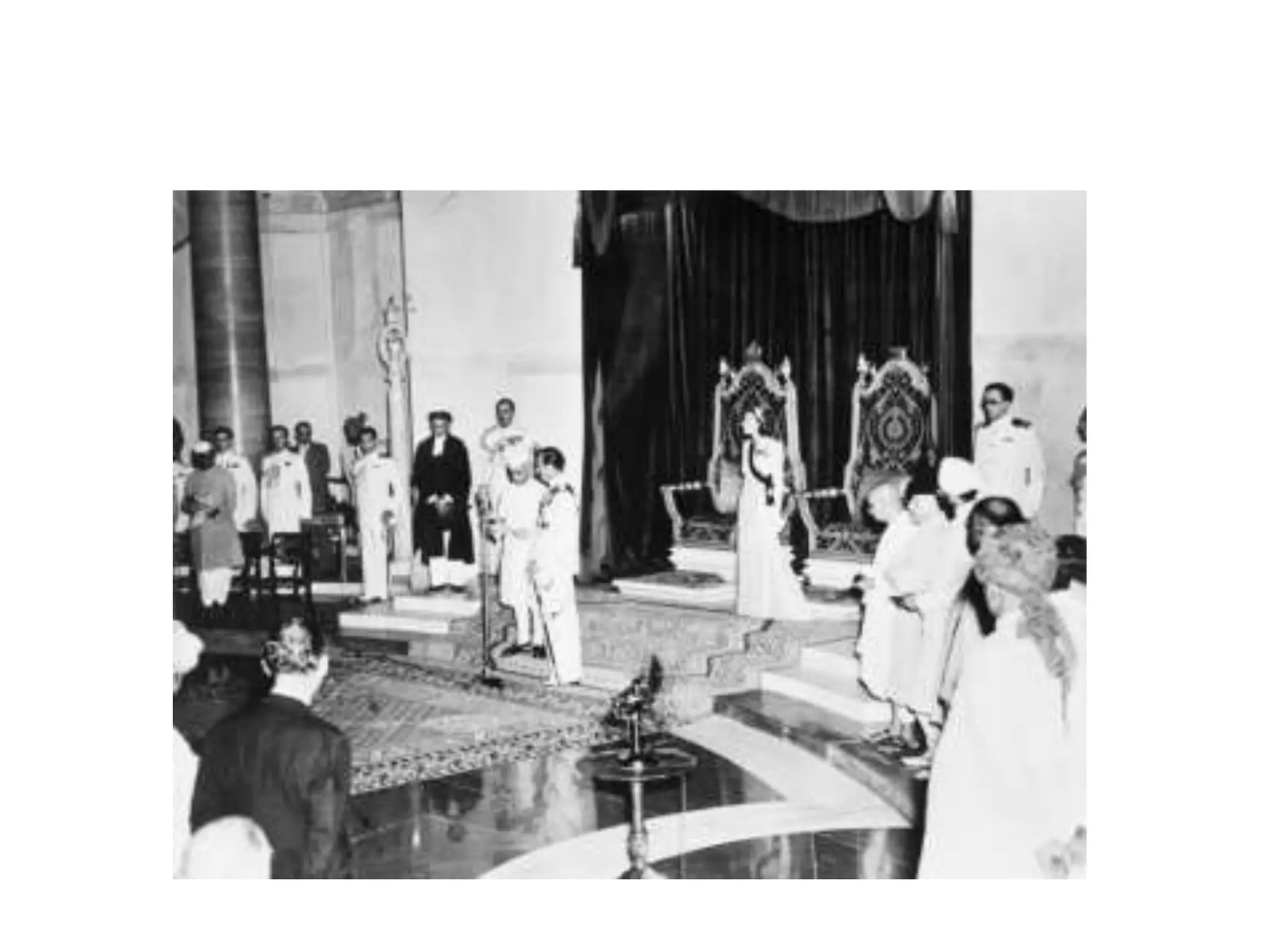
NEHRU SPEAKING FROM RED FORT ON AUGUST 15th
                   1947


            15 August 1947
Three Challenges
• The first and the immediate challenge was to
  shape a nation that was united , yet
  accommodative of the diversity in our society.
• The second challenge was to establish
  democracy
• The third challenge was to ensure the
  development and well-being of the entire
  society and not only of some sections.
TWO NATION THEORY
• India consisted of not one but two ‘people’
  ,Hindus and Muslims.
• ‘India’ would be divided into two countries,
  ‘India’ and ‘Pakistan’. Such a division was not only
  very painful, but also very difficult to decide and
  to implement
• It was decided to follow the principle of religious
  majorities . This basically means that areas where
  the Muslims were in majority would make up the
  territory of Pakistan. The rest was to stay with
  India.
Partition: displacement and
                 rehabilitation
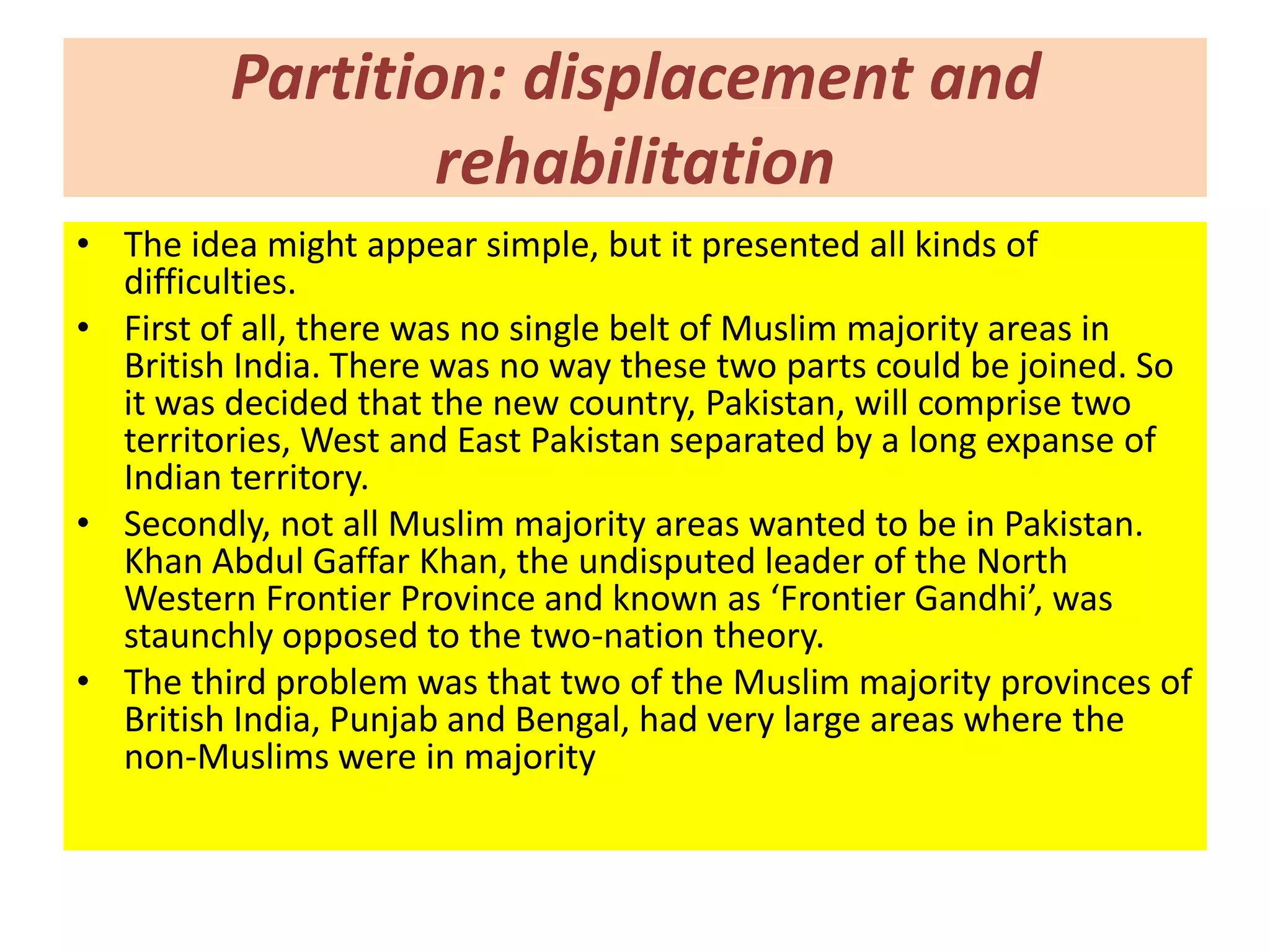
• The idea might appear simple, but it presented all kinds of
  difficulties.
• First of all, there was no single belt of Muslim majority areas in
  British India. There was no way these two parts could be joined. So
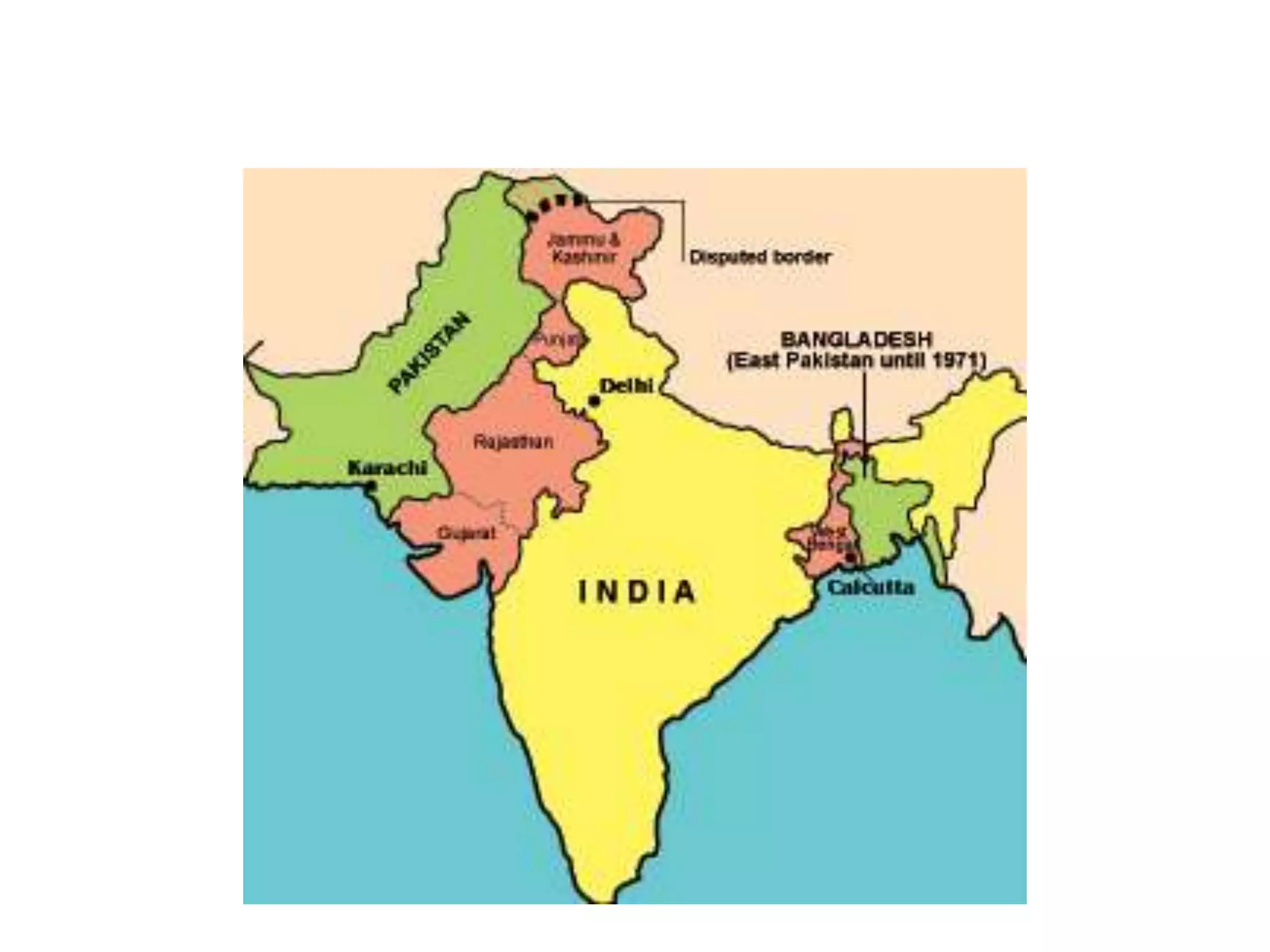
  it was decided that the new country, Pakistan, will comprise two
  territories, West and East Pakistan separated by a long expanse of
  Indian territory.
• Secondly, not all Muslim majority areas wanted to be in Pakistan.
  Khan Abdul Gaffar Khan, the undisputed leader of the North
  Western Frontier Province and known as ‘Frontier Gandhi’, was
  staunchly opposed to the two-nation theory.
• The third problem was that two of the Muslim majority provinces of
  British India, Punjab and Bengal, had very large areas where the
  non-Muslims were in majority
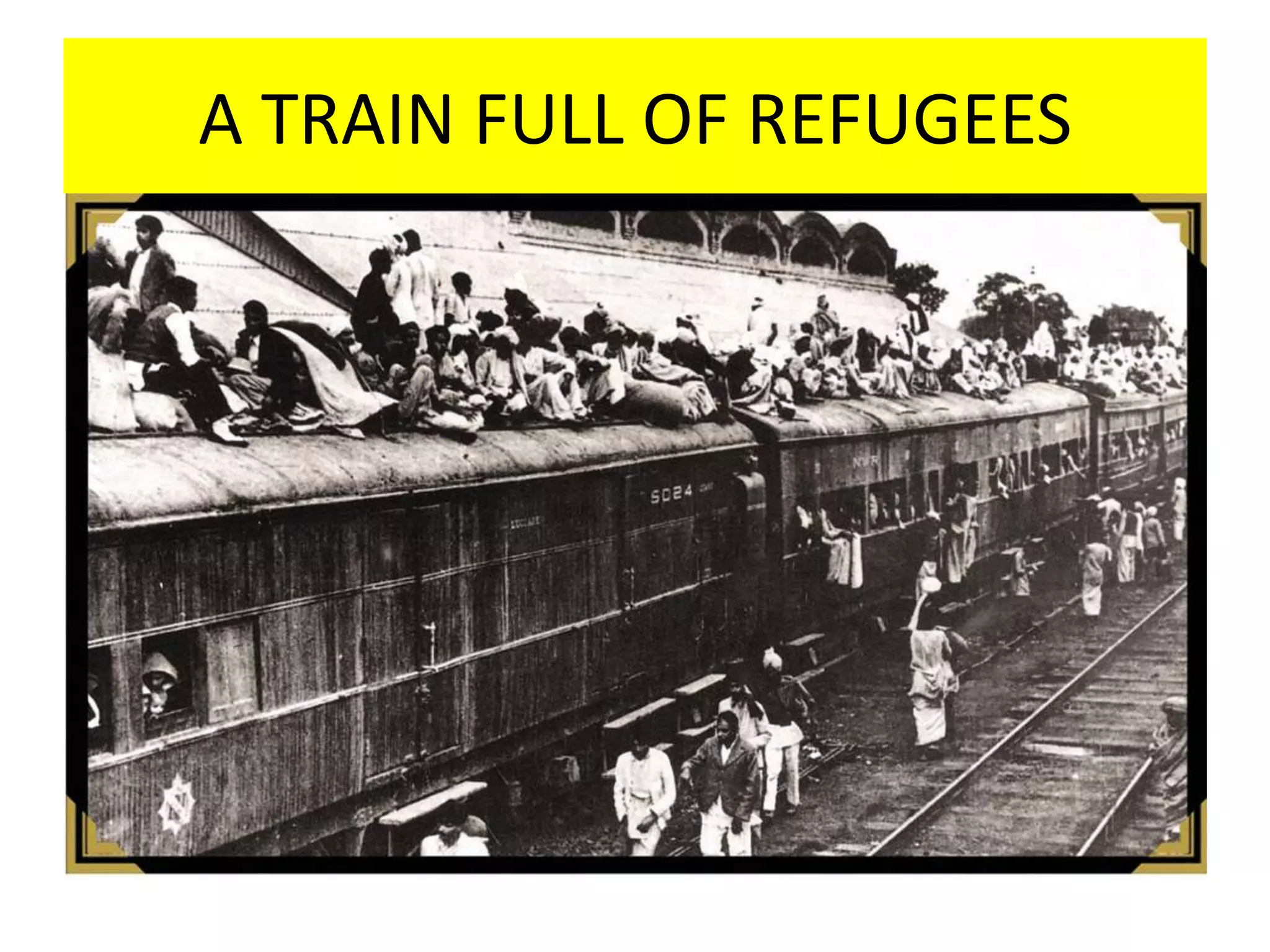
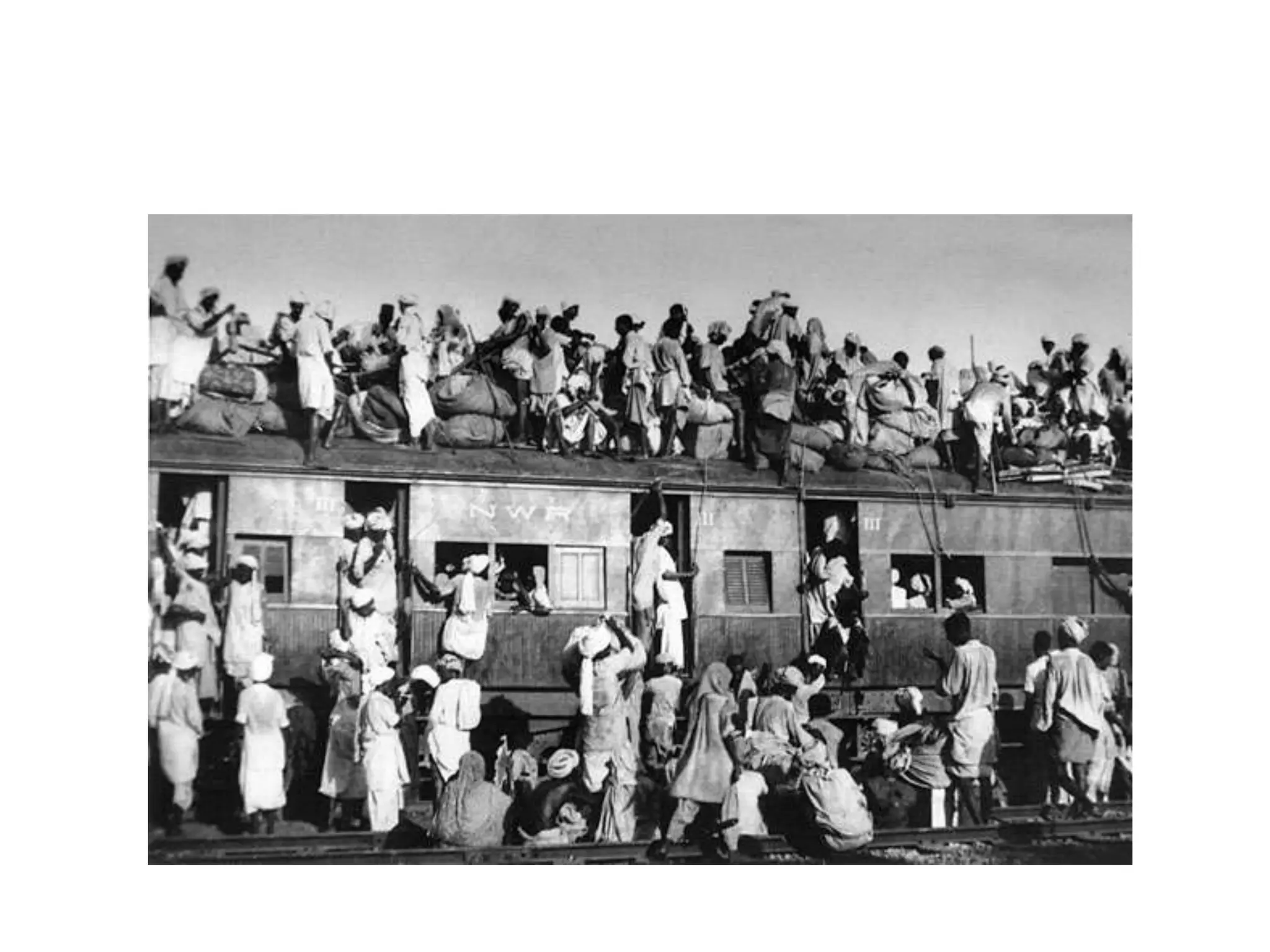
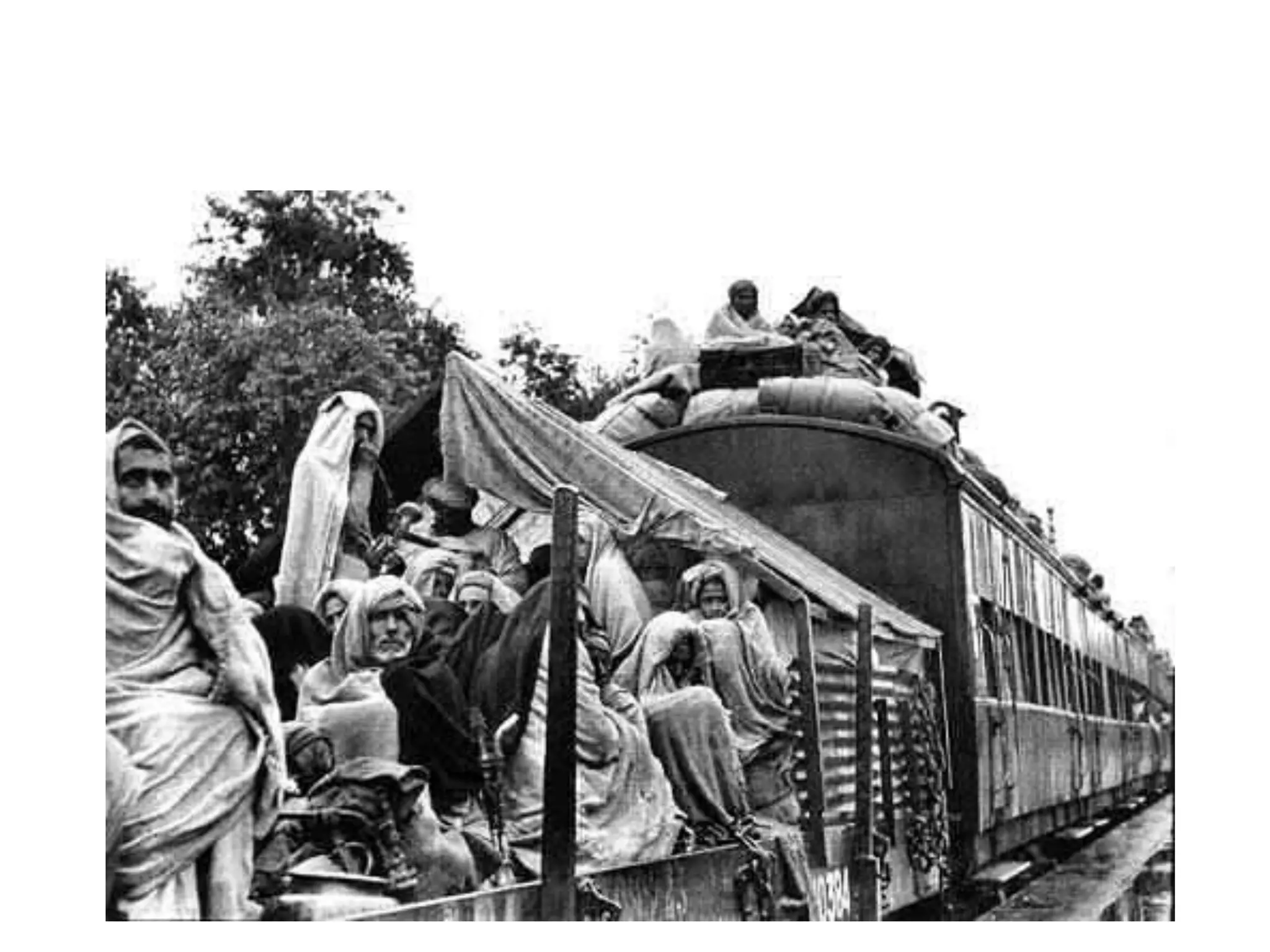
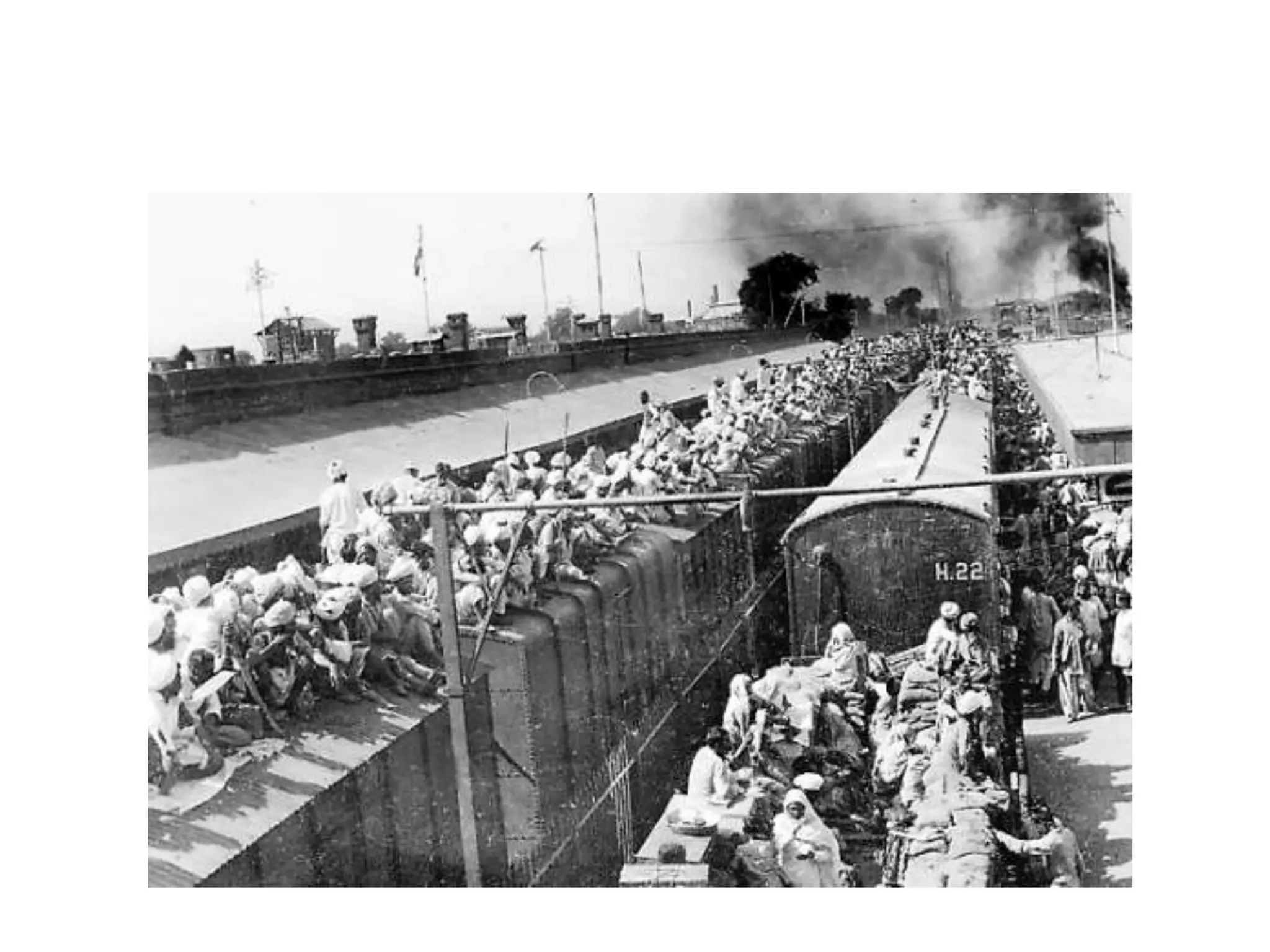
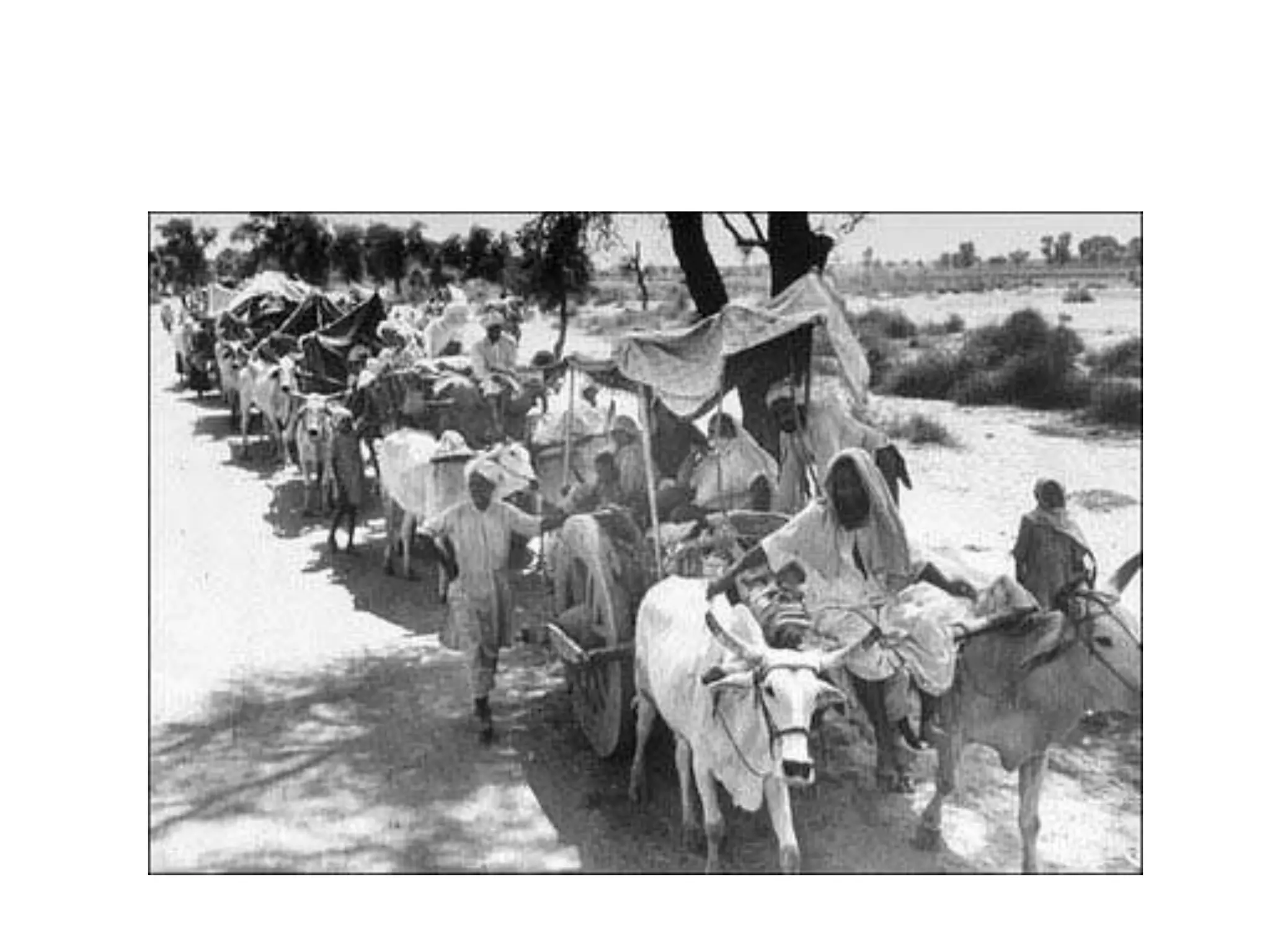
A TRAIN FULL OF REFUGEES
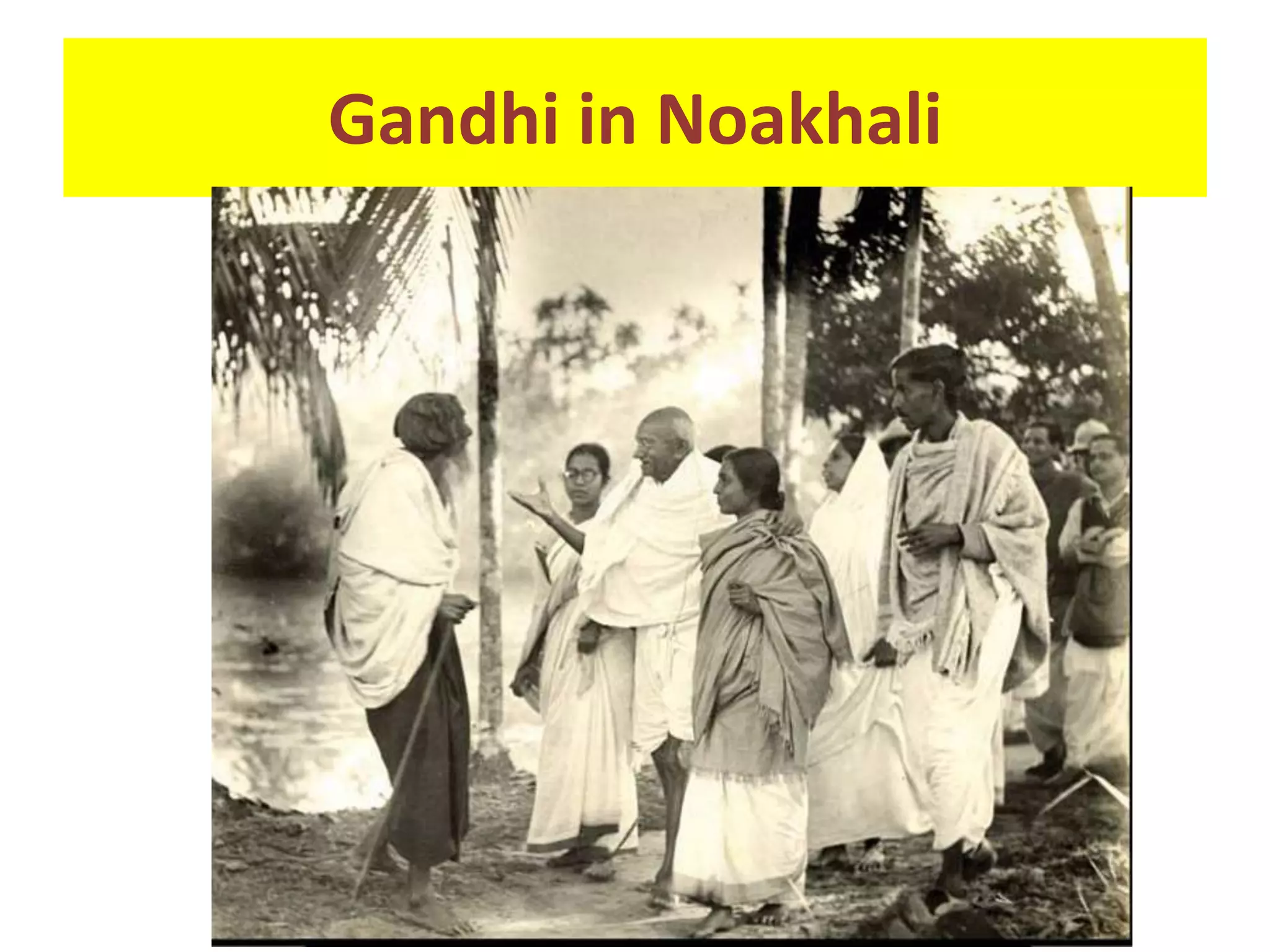
Gandhi in Noakhali
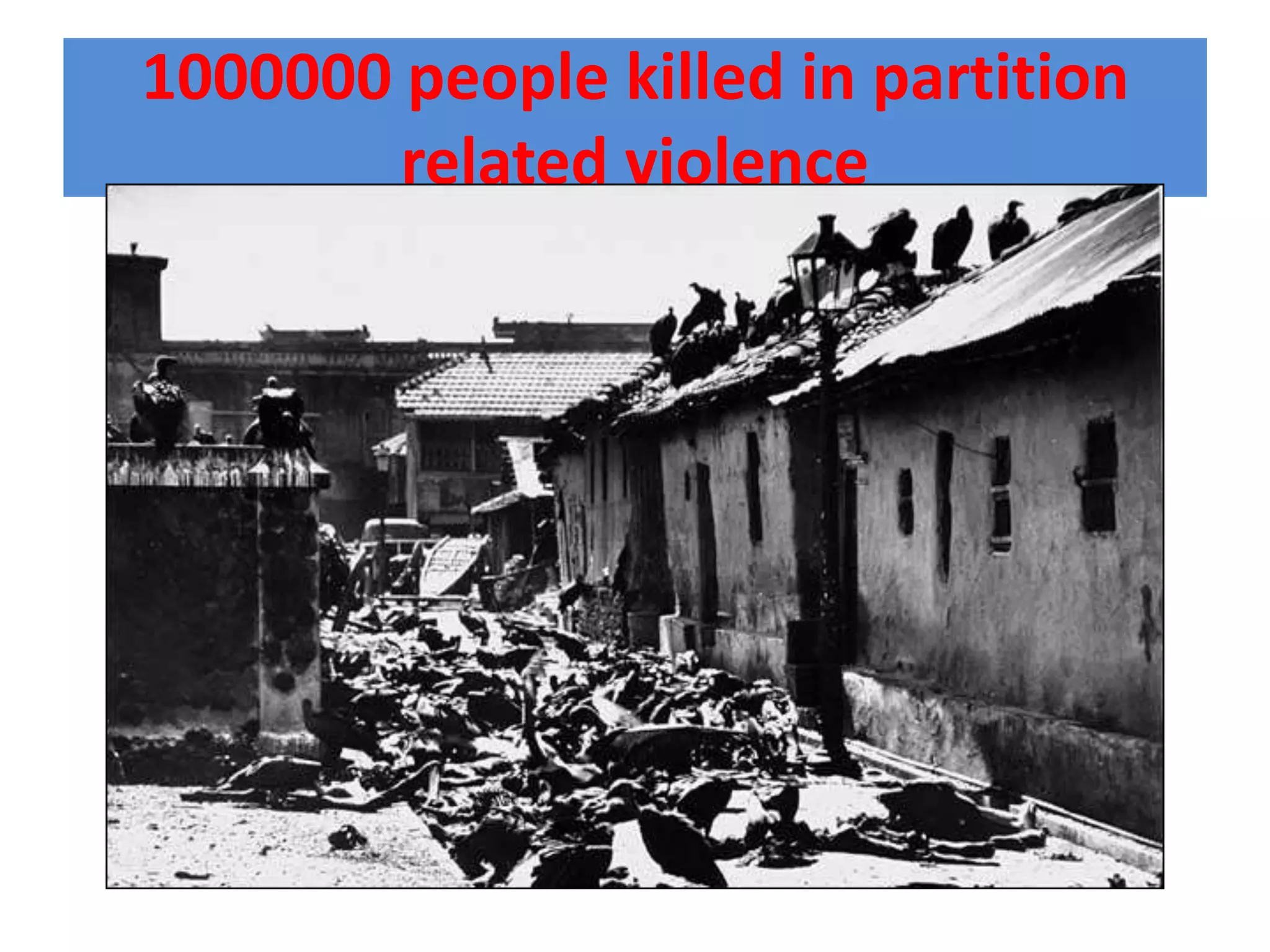
1000000 people killed in partition
        related violence
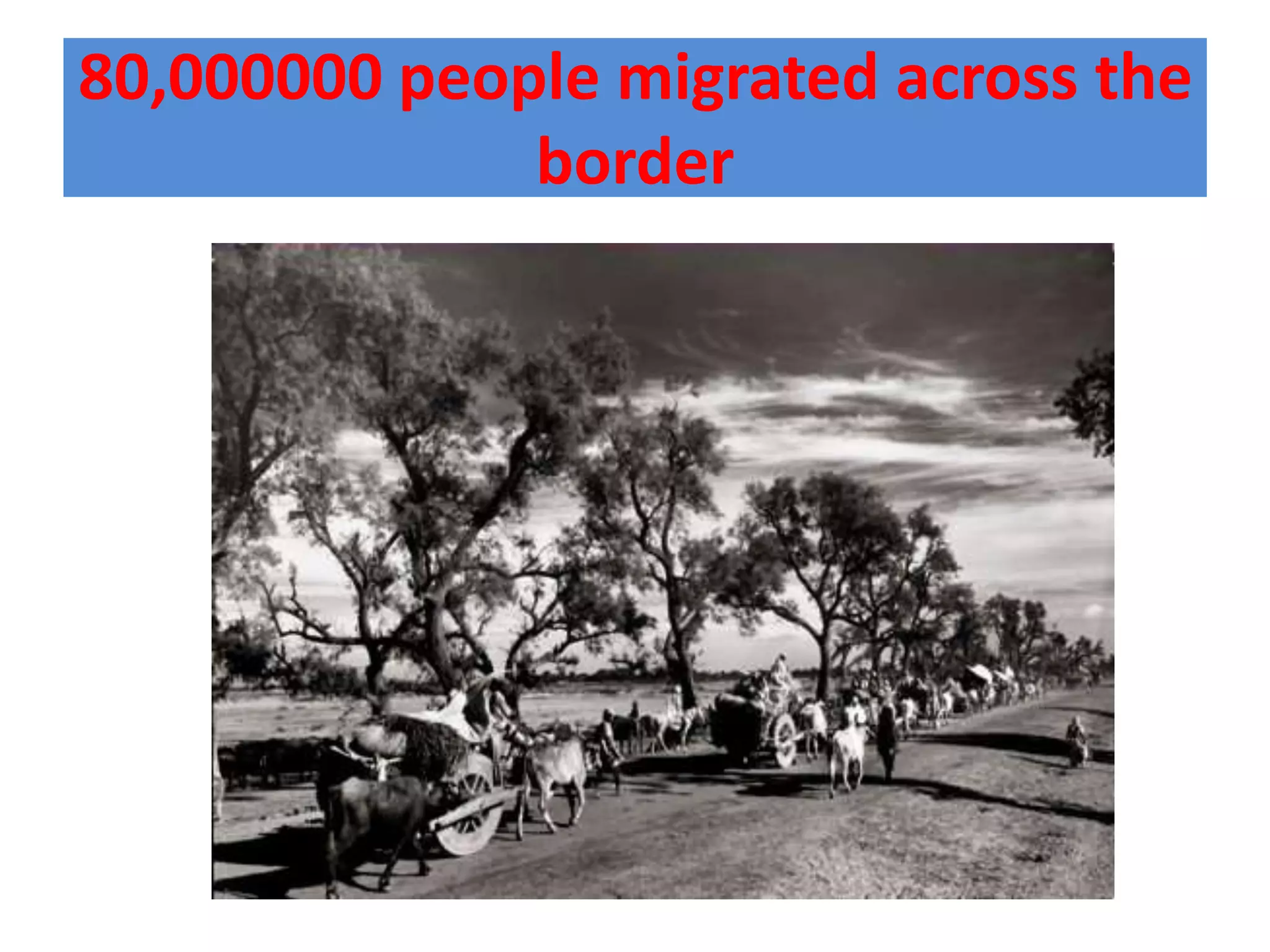
80,000000 people migrated across the
              border
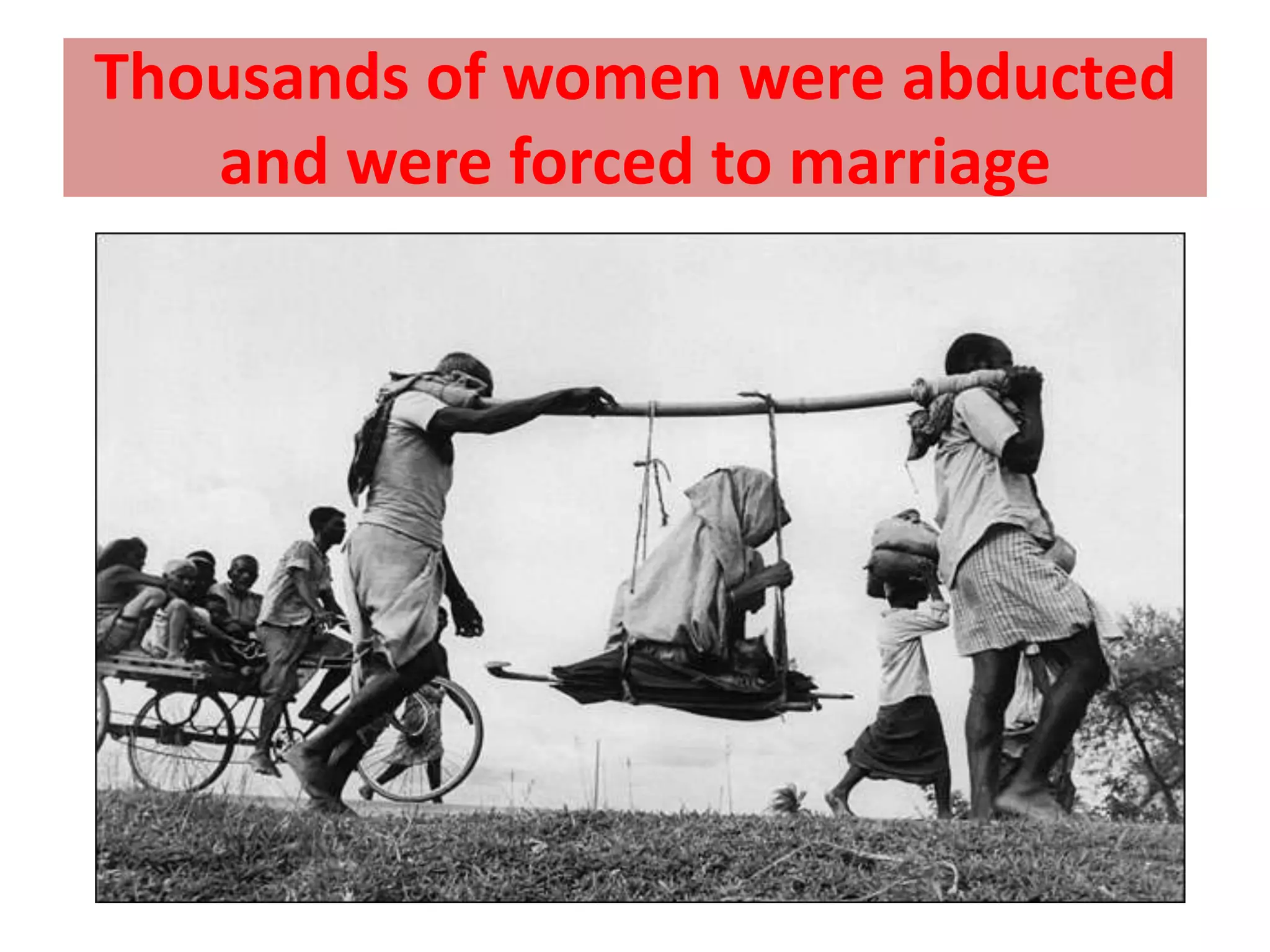
Thousands of women were abducted
   and were forced to marriage
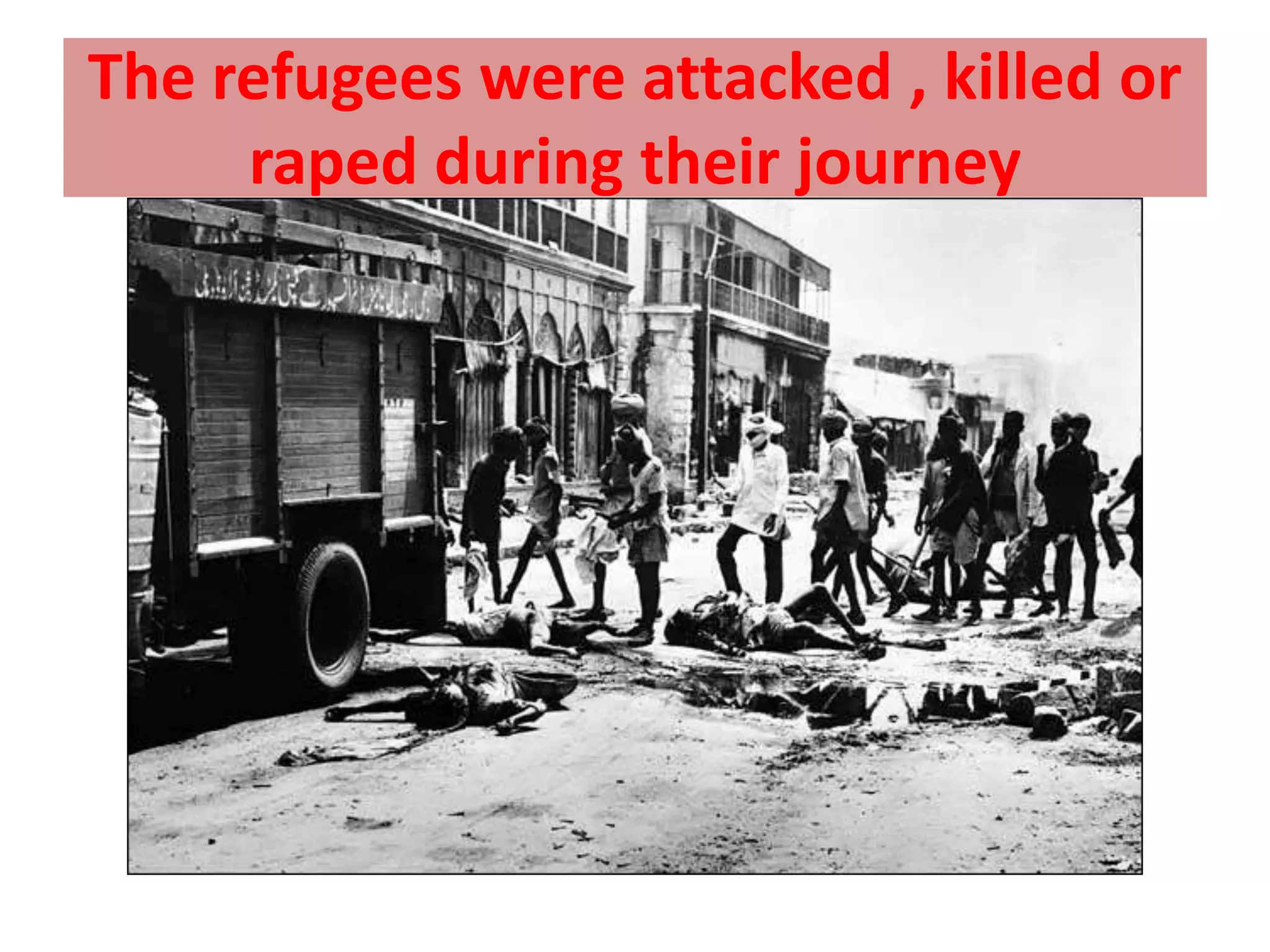
The refugees were attacked , killed or
     raped during their journey
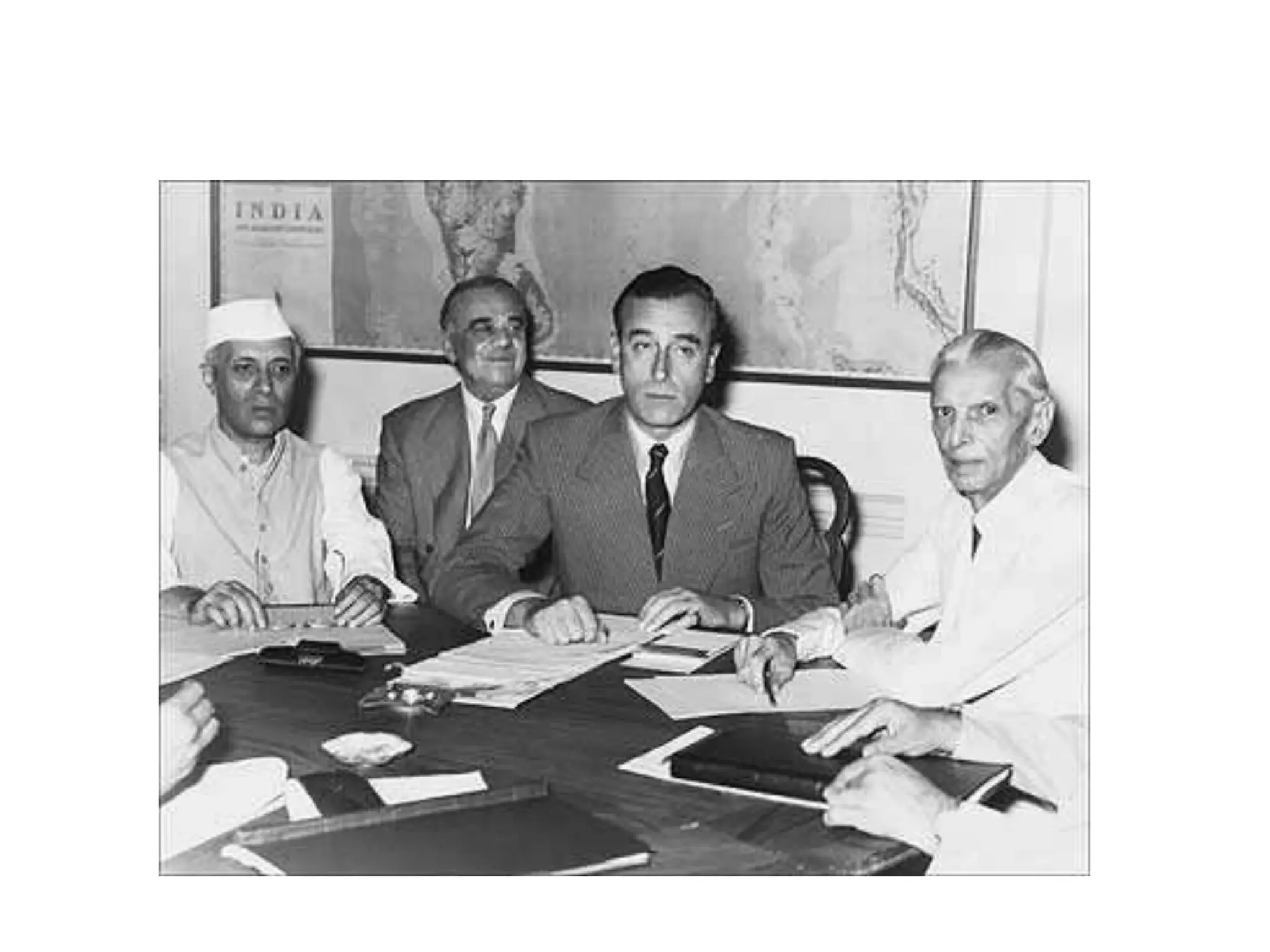
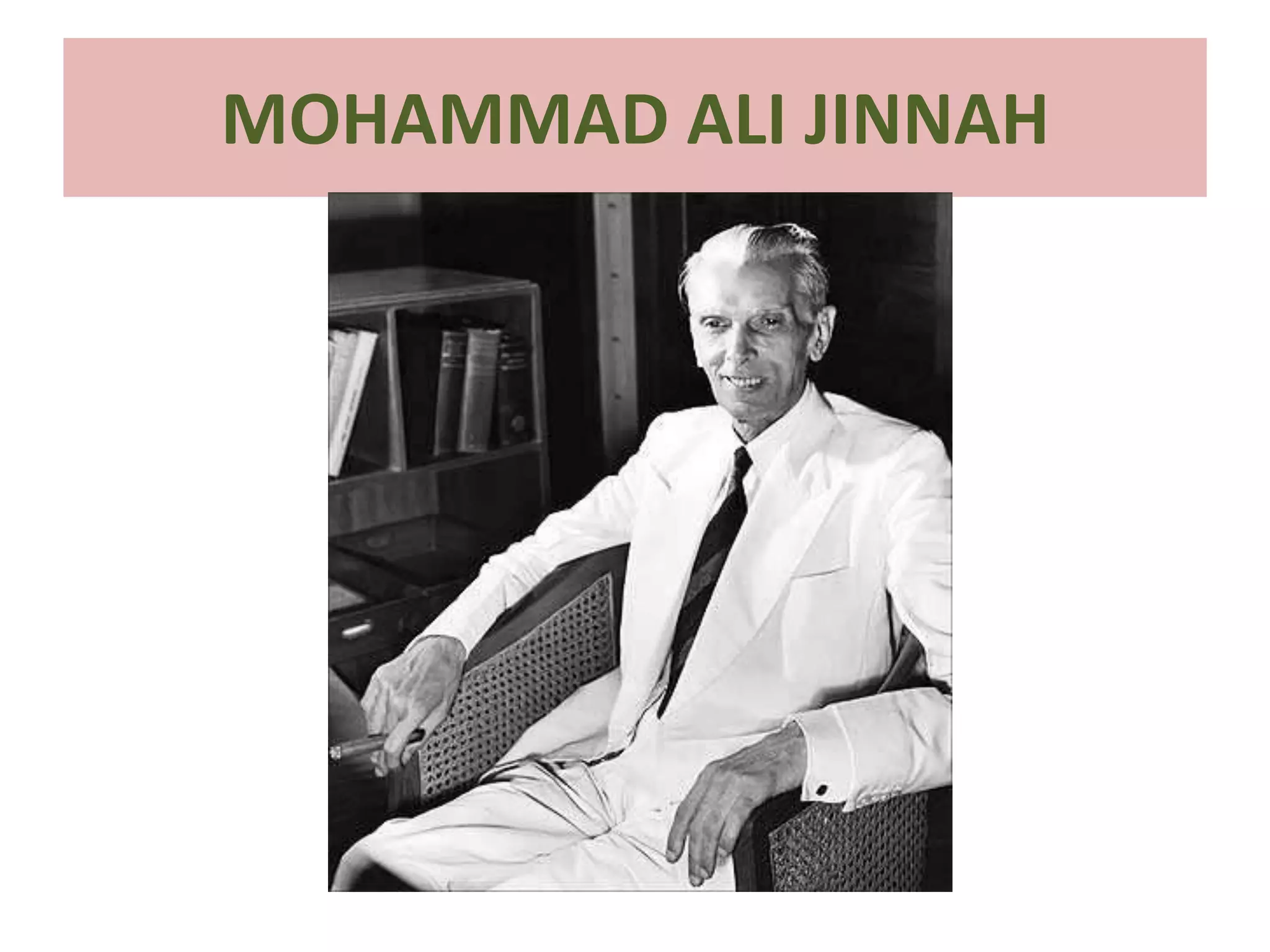
MOHAMMAD ALI JINNAH
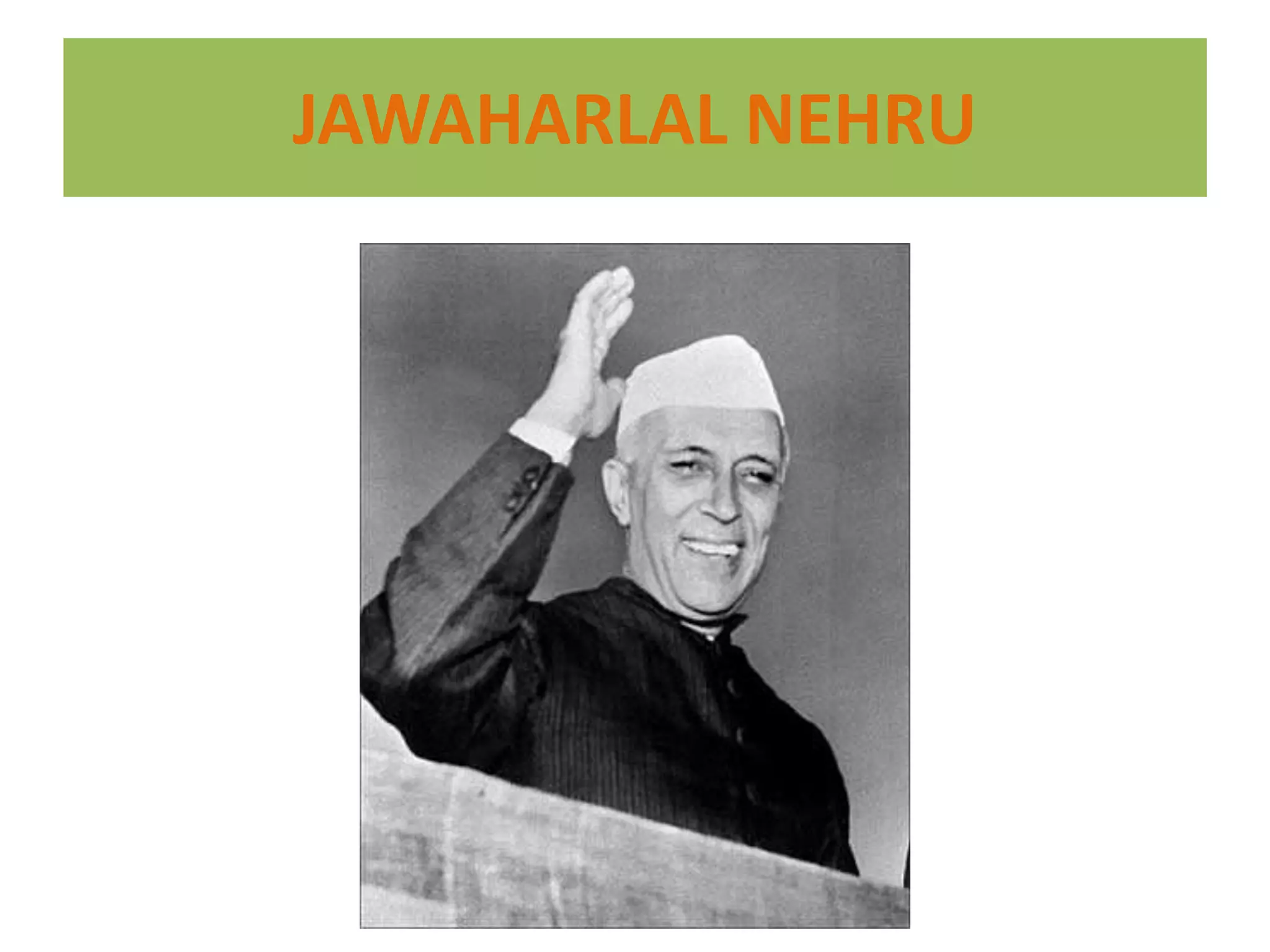
JAWAHARLAL NEHRU
THE END
• THE POWER POINT PRESENTATION
  BASED ON N.C.E.R.T TEXT BOOK
• DESIGNED BY JOSE FRANCIS ISAAC

Indian independence & partition

  • 1.
  • 2.
    NEHRU SPEAKING FROMRED FORT ON AUGUST 15th 1947 15 August 1947
  • 3.
    Three Challenges • Thefirst and the immediate challenge was to shape a nation that was united , yet accommodative of the diversity in our society. • The second challenge was to establish democracy • The third challenge was to ensure the development and well-being of the entire society and not only of some sections.
  • 4.
    TWO NATION THEORY •India consisted of not one but two ‘people’ ,Hindus and Muslims. • ‘India’ would be divided into two countries, ‘India’ and ‘Pakistan’. Such a division was not only very painful, but also very difficult to decide and to implement • It was decided to follow the principle of religious majorities . This basically means that areas where the Muslims were in majority would make up the territory of Pakistan. The rest was to stay with India.
  • 6.
    Partition: displacement and rehabilitation • The idea might appear simple, but it presented all kinds of difficulties. • First of all, there was no single belt of Muslim majority areas in British India. There was no way these two parts could be joined. So it was decided that the new country, Pakistan, will comprise two territories, West and East Pakistan separated by a long expanse of Indian territory. • Secondly, not all Muslim majority areas wanted to be in Pakistan. Khan Abdul Gaffar Khan, the undisputed leader of the North Western Frontier Province and known as ‘Frontier Gandhi’, was staunchly opposed to the two-nation theory. • The third problem was that two of the Muslim majority provinces of British India, Punjab and Bengal, had very large areas where the non-Muslims were in majority
  • 7.
    A TRAIN FULLOF REFUGEES
  • 8.
  • 9.
    1000000 people killedin partition related violence
  • 10.
    80,000000 people migratedacross the border
  • 13.
    Thousands of womenwere abducted and were forced to marriage
  • 14.
    The refugees wereattacked , killed or raped during their journey
  • 18.
  • 19.
  • 21.
    THE END • THEPOWER POINT PRESENTATION BASED ON N.C.E.R.T TEXT BOOK • DESIGNED BY JOSE FRANCIS ISAAC