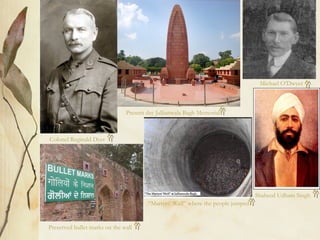
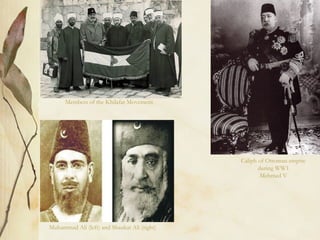
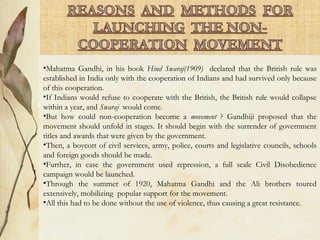
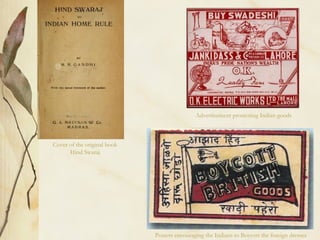
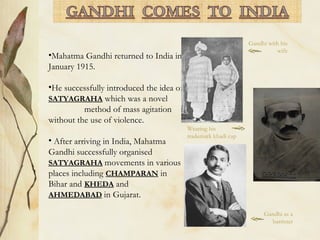
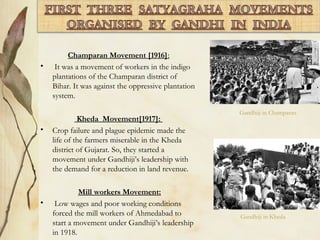
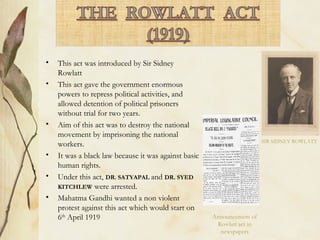
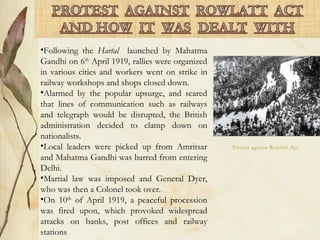
The document discusses the emergence of the non-cooperation movement led by Mahatma Gandhi as a significant part of India's struggle against British colonial rule, following a series of events exacerbated by World War I, such as economic hardship and forced military recruitment. Gandhi's arrival in India marked the beginning of mass mobilization for freedom, culminating in protests against oppressive laws like the Rowlatt Act and the Jallianwala Bagh massacre, which intensified national sentiment. The movement rallied supporters from various backgrounds, promoting unity among Hindus and Muslims while facing challenges from both internal divisions and the colonial government's repression.


 Most read
 Most read