Planning and developing library activities, events or programsMatt CornellPrograms LibrarianMonash Public Library Service
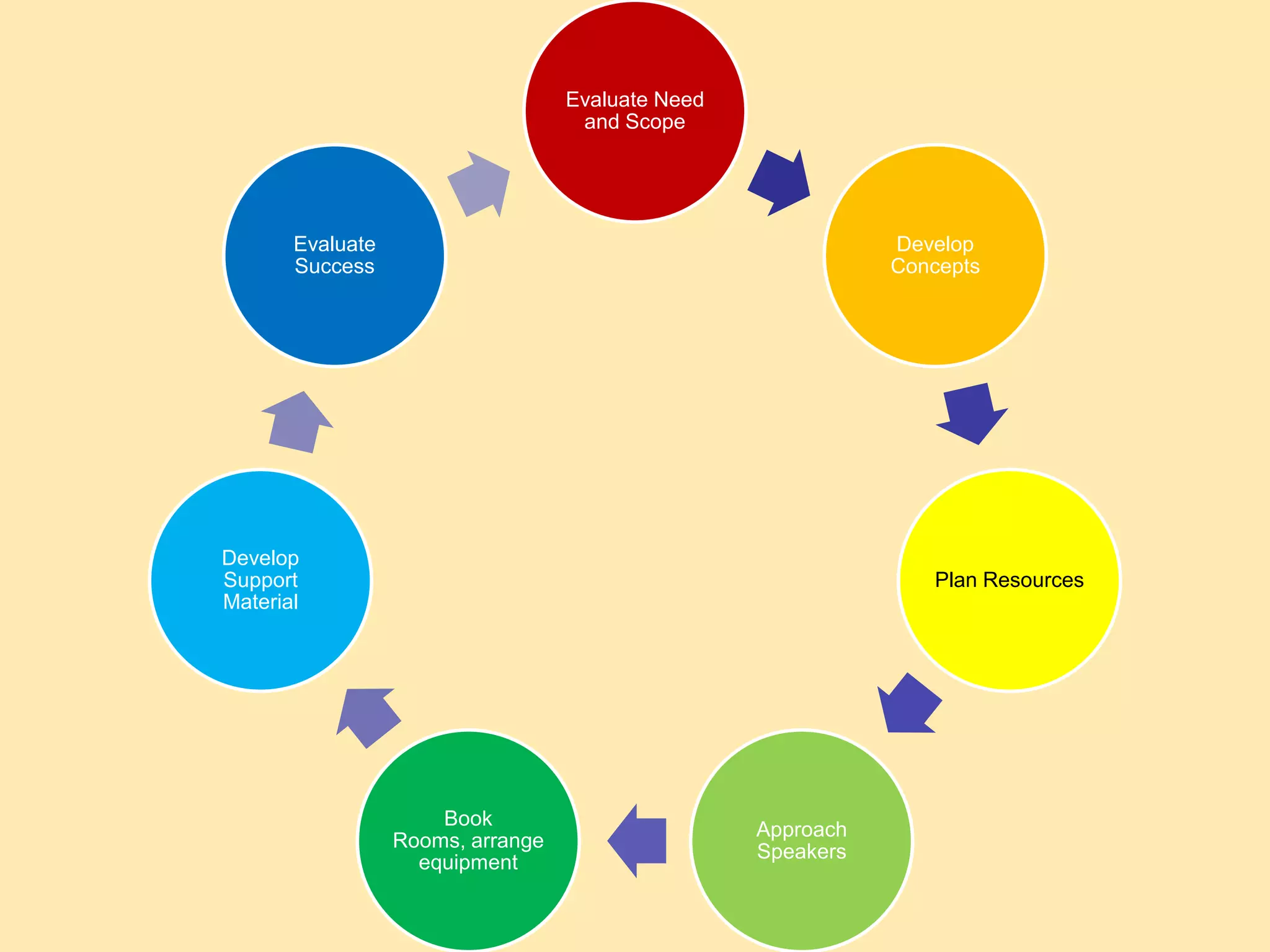
Topics coveredEstablishing the need and scope of programsDeveloping concepts for programsPlanning resource requirementsDeveloping support materialEvaluating programs
Establishing the need and scope of programsDefine activities, events and programsWhat do you want to get out of the program?Where do the ideas come from?Identify significant themes, weeks, holidaysForward planning
Let’s assume that …Activity – a single/one-off session which runs independently of other programs. As an independent session there is little planning involved and few people to approach early on, however they become more involved closer to the day as equipment and arrangements vary from session to session.Event – multiple sessions within a set timeframe.  Often tied to themes, seasons, special interest topics.  Planning can be quite involved.   (e.g. Literature Festivals, Body in the Library, Spring Gardening)Program – an ongoing series of sessions (e.g. Storytimes, Knitting Groups, Conversation Circles).  Require intense planning, however little ongoing input as plans and equipment needs already identified and arranged.
Establishing the need and scope of programsDefine activities, events and programsWhat do you want to get out of the program?Where do the ideas come from?Identify significant themes, weeks, holidaysForward planning
What do you want to get out of the program?Increase awareness of the library service, and promotion of library resources and servicesContribute to communitywellbeing and involvementDevelop a love of literature and improve literacy skillsIdentify and attract target groups
Establishing the need and scope of programsDefine activities, events and programsWhat do you want to get out of the program?Where do the ideas come from?Identify significant themes, weeks, holidaysForward planning
Where do the ideas come from?As part of strategic planning (council or library specific)Relevant stakeholders:- Councillors			- library staff- Community groups		- library patronsFeedback and community consultationStatistics (target groups)
Establishing the need and scope of programsDefine activities, events and programsWhat do you want to get out of the program?Where do the ideas come from?Identify significant themes, weeks, holidaysForward planning
Identify the significance of the programAnnual events (eg. Literature Festival)Regular programs (eg. Storytimes)Anniversaries / Days (eg. ANZAC, International Migrants Day)Special weeks (eg. NAIDOC, Family History Week)Holidays (eg. Christmas, Easter)Themes (eg. Spring Gardening, Job Skills)
Establishing the need and scope of programsDefine activities, events and programsWhat do you want to get out of the program?Where do the ideas come from?Identify significant themes, weeks, holidaysForward planning
Forward planningHow early do you need to start planning?  This will depend on:What the program isHow many sessions you plan to runPopularity of potential speakersFrequency of promotional materialMonthly, Quarterly, WeeklyTarget group availabilityAfter work, after school, weekends, school holidays
Developing concepts for programsThemes, tie-ins and partnershipsAge groups or community groups you want to targetHave desired outcomes in mind when developing concepts How do you develop concepts?
How do you develop concepts …See what others have done in previous yearsSee what other libraries are doingJoin a committee or special interest group to share ideasEstablish planning meetingsBrain storming
Planning resource requirementsFirst and foremost … the BudgetHow much do you have?Do you need to ask for more?Special grantsSponsorshipCost of speakersFactors to consider: speakers fee, travel costs, booking fees (agent or publisher)Will the event be catered?Will you be offering door prizes or giveaways?
Planning resource requirementsAgree on dates and times of planned sessionsLocations and room bookingsSpeakers requirementsEquipment needsBook sales and publishersRosteringStaff required to present the speakerAdditional staff to cover the desk (and costs involved)Arranging for equipment transfersPreparing the opening and closing speechesThank you gift for speakers
Example: Monash Wordfest &          Short Story CompetitionAn annual event running over a three month period … generally with 18 sessions involved.
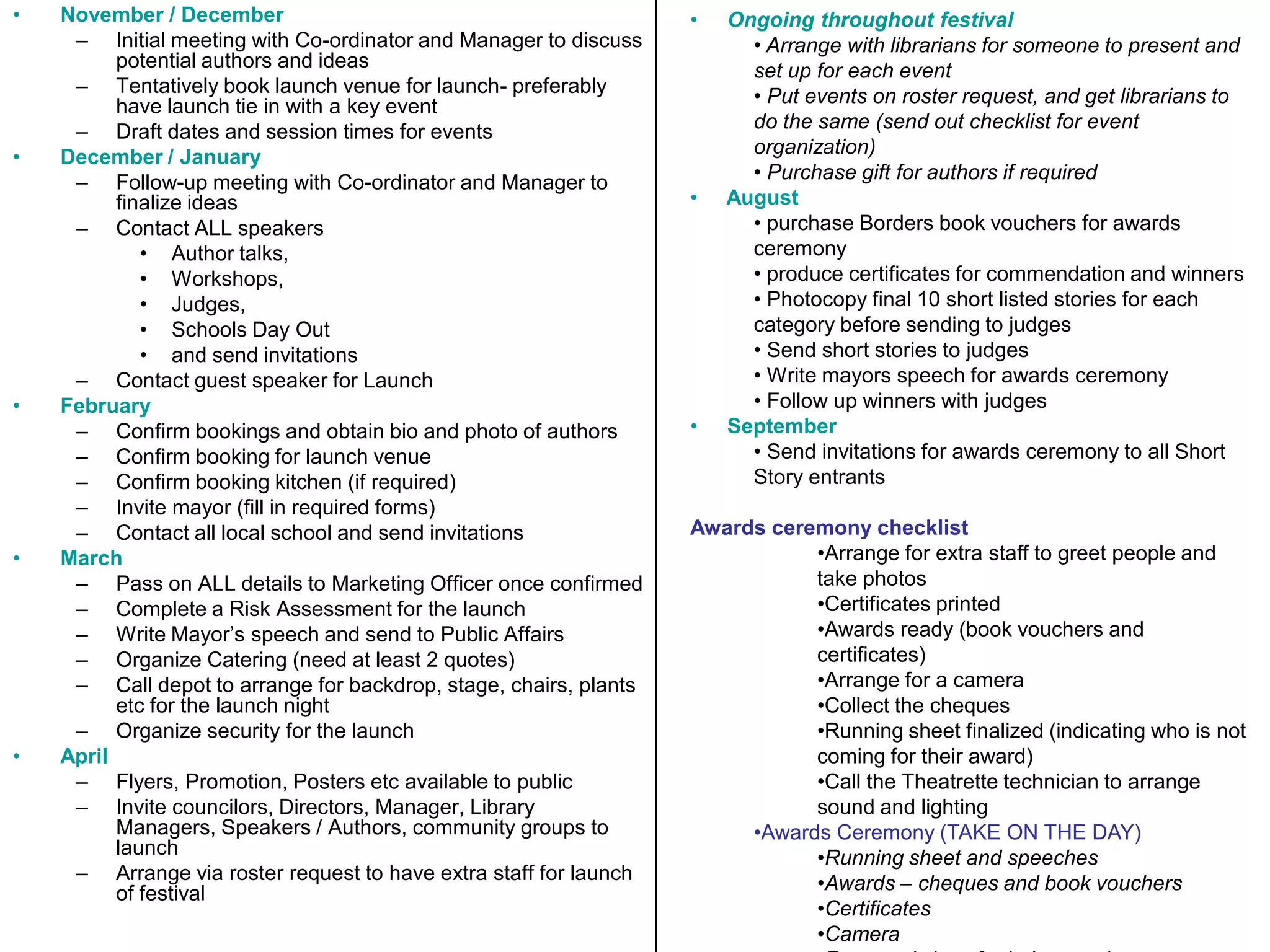
November / DecemberInitial meeting with Co-ordinator and Manager to discuss potential authors and ideasTentatively book launch venue for launch- preferably have launch tie in with a key eventDraft dates and session times for events December / JanuaryFollow-up meeting with Co-ordinator and Manager to finalize ideasContact ALL speakersAuthor talks, Workshops,  Judges,   Schools Day Outand send invitationsContact guest speaker for LaunchFebruaryConfirm bookings and obtain bio and photo of authorsConfirm booking for launch venue Confirm booking kitchen (if required)Invite mayor (fill in required forms)Contact all local school and send invitationsMarchPass on ALL details to Marketing Officer once confirmedComplete a Risk Assessment for the launchWrite Mayor’s speech and send to Public AffairsOrganize Catering (need at least 2 quotes) Call depot to arrange for backdrop, stage, chairs, plants etc for the launch nightOrganize security for the launchAprilFlyers, Promotion, Posters etc available to publicInvite councilors, Directors, Manager, Library Managers, Speakers / Authors, community groups to launchArrange via roster request to have extra staff for launch of festival     Ongoing throughout festival
 Arrange with librarians for someone to present and set up for each event
 Put events on roster request, and get librarians to do the same (send out checklist for event organization)
 Purchase gift for authors if required
     August
 purchase Borders book vouchers for awards ceremony
 produce certificates for commendation and winners
 Photocopy final 10 short listed stories for each category before sending to judges

Planning and developing library activities, events or programs

  • 1.
    Planning and developinglibrary activities, events or programsMatt CornellPrograms LibrarianMonash Public Library Service
  • 2.
    Topics coveredEstablishing theneed and scope of programsDeveloping concepts for programsPlanning resource requirementsDeveloping support materialEvaluating programs
  • 3.
    Establishing the needand scope of programsDefine activities, events and programsWhat do you want to get out of the program?Where do the ideas come from?Identify significant themes, weeks, holidaysForward planning
  • 4.
    Establishing the needand scope of programsDefine activities, events and programsWhat do you want to get out of the program?Where do the ideas come from?Identify significant themes, weeks, holidaysForward planning
  • 5.
    Let’s assume that…Activity – a single/one-off session which runs independently of other programs. As an independent session there is little planning involved and few people to approach early on, however they become more involved closer to the day as equipment and arrangements vary from session to session.Event – multiple sessions within a set timeframe. Often tied to themes, seasons, special interest topics. Planning can be quite involved. (e.g. Literature Festivals, Body in the Library, Spring Gardening)Program – an ongoing series of sessions (e.g. Storytimes, Knitting Groups, Conversation Circles). Require intense planning, however little ongoing input as plans and equipment needs already identified and arranged.
  • 6.
    Establishing the needand scope of programsDefine activities, events and programsWhat do you want to get out of the program?Where do the ideas come from?Identify significant themes, weeks, holidaysForward planning
  • 7.
    What do youwant to get out of the program?Increase awareness of the library service, and promotion of library resources and servicesContribute to communitywellbeing and involvementDevelop a love of literature and improve literacy skillsIdentify and attract target groups
  • 8.
    Establishing the needand scope of programsDefine activities, events and programsWhat do you want to get out of the program?Where do the ideas come from?Identify significant themes, weeks, holidaysForward planning
  • 9.
    Where do theideas come from?As part of strategic planning (council or library specific)Relevant stakeholders:- Councillors - library staff- Community groups - library patronsFeedback and community consultationStatistics (target groups)
  • 10.
    Establishing the needand scope of programsDefine activities, events and programsWhat do you want to get out of the program?Where do the ideas come from?Identify significant themes, weeks, holidaysForward planning
  • 11.
    Identify the significanceof the programAnnual events (eg. Literature Festival)Regular programs (eg. Storytimes)Anniversaries / Days (eg. ANZAC, International Migrants Day)Special weeks (eg. NAIDOC, Family History Week)Holidays (eg. Christmas, Easter)Themes (eg. Spring Gardening, Job Skills)
  • 12.
    Establishing the needand scope of programsDefine activities, events and programsWhat do you want to get out of the program?Where do the ideas come from?Identify significant themes, weeks, holidaysForward planning
  • 13.
    Forward planningHow earlydo you need to start planning? This will depend on:What the program isHow many sessions you plan to runPopularity of potential speakersFrequency of promotional materialMonthly, Quarterly, WeeklyTarget group availabilityAfter work, after school, weekends, school holidays
  • 14.
    Developing concepts forprogramsThemes, tie-ins and partnershipsAge groups or community groups you want to targetHave desired outcomes in mind when developing concepts How do you develop concepts?
  • 15.
    How do youdevelop concepts …See what others have done in previous yearsSee what other libraries are doingJoin a committee or special interest group to share ideasEstablish planning meetingsBrain storming
  • 16.
    Planning resource requirementsFirstand foremost … the BudgetHow much do you have?Do you need to ask for more?Special grantsSponsorshipCost of speakersFactors to consider: speakers fee, travel costs, booking fees (agent or publisher)Will the event be catered?Will you be offering door prizes or giveaways?
  • 17.
    Planning resource requirementsAgreeon dates and times of planned sessionsLocations and room bookingsSpeakers requirementsEquipment needsBook sales and publishersRosteringStaff required to present the speakerAdditional staff to cover the desk (and costs involved)Arranging for equipment transfersPreparing the opening and closing speechesThank you gift for speakers
  • 18.
    Example: Monash Wordfest& Short Story CompetitionAn annual event running over a three month period … generally with 18 sessions involved.
  • 19.
    November / DecemberInitialmeeting with Co-ordinator and Manager to discuss potential authors and ideasTentatively book launch venue for launch- preferably have launch tie in with a key eventDraft dates and session times for events December / JanuaryFollow-up meeting with Co-ordinator and Manager to finalize ideasContact ALL speakersAuthor talks, Workshops, Judges, Schools Day Outand send invitationsContact guest speaker for LaunchFebruaryConfirm bookings and obtain bio and photo of authorsConfirm booking for launch venue Confirm booking kitchen (if required)Invite mayor (fill in required forms)Contact all local school and send invitationsMarchPass on ALL details to Marketing Officer once confirmedComplete a Risk Assessment for the launchWrite Mayor’s speech and send to Public AffairsOrganize Catering (need at least 2 quotes) Call depot to arrange for backdrop, stage, chairs, plants etc for the launch nightOrganize security for the launchAprilFlyers, Promotion, Posters etc available to publicInvite councilors, Directors, Manager, Library Managers, Speakers / Authors, community groups to launchArrange via roster request to have extra staff for launch of festival Ongoing throughout festival
  • 20.
    Arrange withlibrarians for someone to present and set up for each event
  • 21.
    Put eventson roster request, and get librarians to do the same (send out checklist for event organization)
  • 22.
    Purchase giftfor authors if required
  • 23.
    August
  • 24.
    purchase Bordersbook vouchers for awards ceremony
  • 25.
    produce certificatesfor commendation and winners
  • 26.
    Photocopy final10 short listed stories for each category before sending to judges
  • 27.
    Send shortstories to judges
  • 28.
    Write mayorsspeech for awards ceremony
  • 29.
    Follow upwinners with judges
  • 30.
    September
  • 31.
    Send invitationsfor awards ceremony to all Short Story entrantsAwards ceremony checklistArrange for extra staff to greet people and take photos
  • 32.
  • 33.
    Awards ready (bookvouchers and certificates)
  • 34.
  • 35.
  • 36.
    Running sheet finalized(indicating who is not coming for their award)
  • 37.
    Call the Theatrettetechnician to arrange sound and lighting
  • 38.
  • 39.
  • 40.
    Awards – chequesand book vouchers
  • 41.
  • 42.
  • 43.
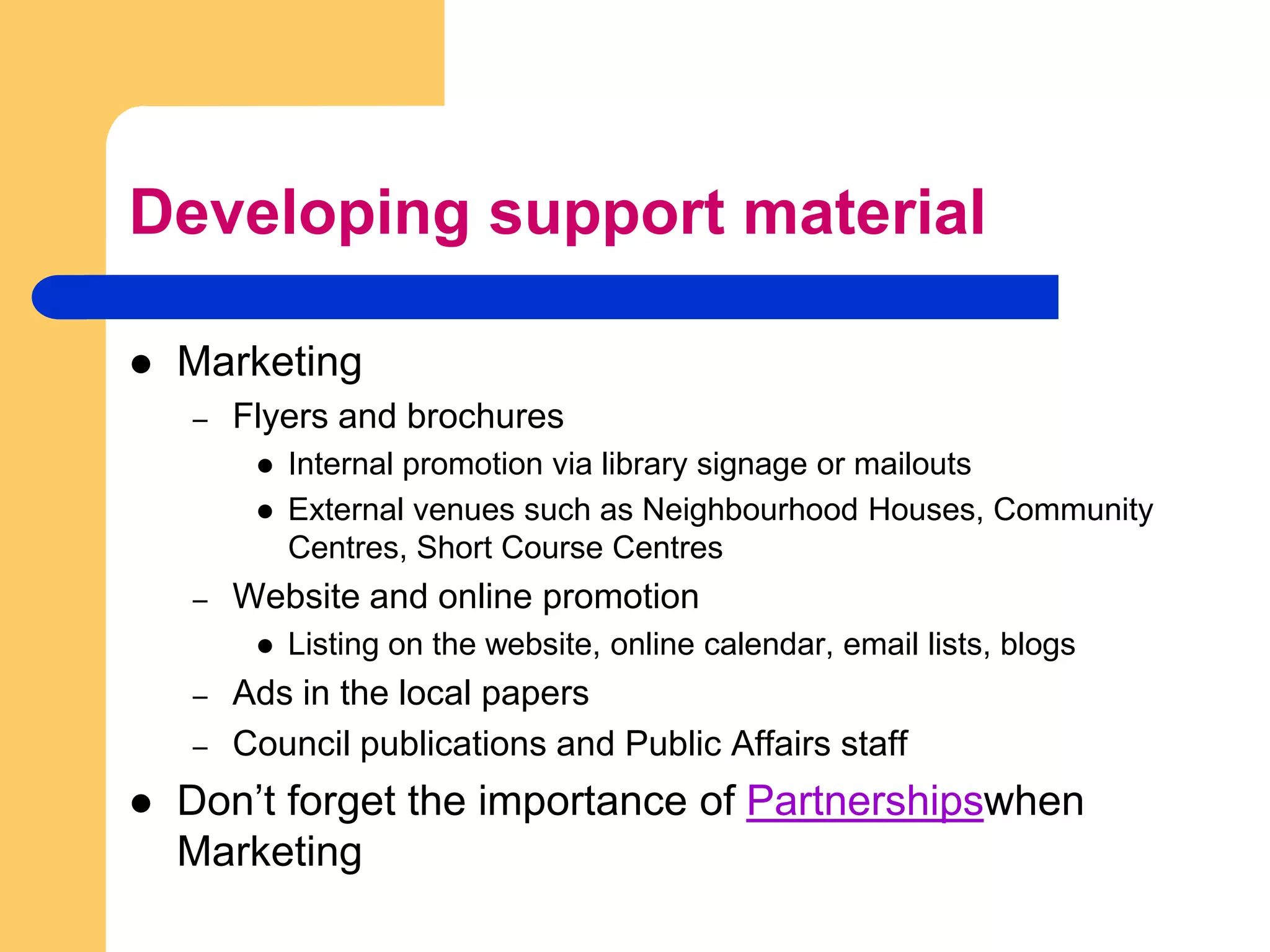
    Reserved signs forjudges and mayorDeveloping support materialMarketing (see next slide)Booklists and displaysStaff and team assistanceDonations from local organizationsEg. Free seedlings, Show bags and promotional material from the speakersbrochures, pens, stress balls not for profit vs. commercial
  • 44.
    Developing support materialMarketingFlyersand brochuresInternal promotion via library signage or mailoutsExternal venues such as Neighbourhood Houses, Community Centres, Short Course CentresWebsite and online promotionListing on the website, online calendar, email lists, blogsAds in the local papersCouncil publications and Public Affairs staffDon’t forget the importance of Partnershipswhen Marketing
  • 45.
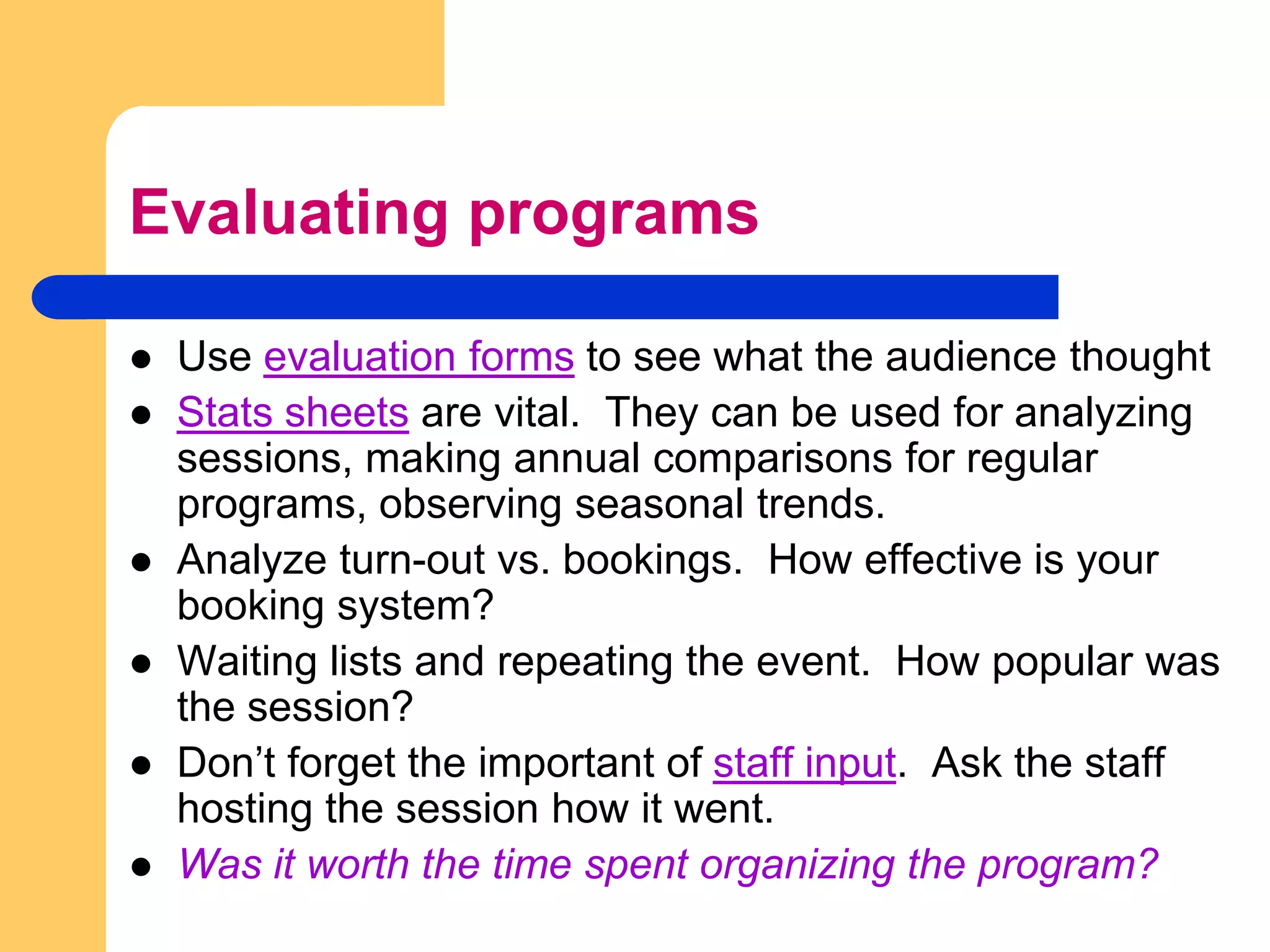
    Evaluating programsUse evaluationforms to see what the audience thoughtStats sheets are vital. They can be used for analyzing sessions, making annual comparisons for regular programs, observing seasonal trends.Analyze turn-out vs. bookings. How effective is your booking system?Waiting lists and repeating the event. How popular was the session?Don’t forget the important of staff input. Ask the staff hosting the session how it went.Was it worth the time spent organizing the program?
  • 47.
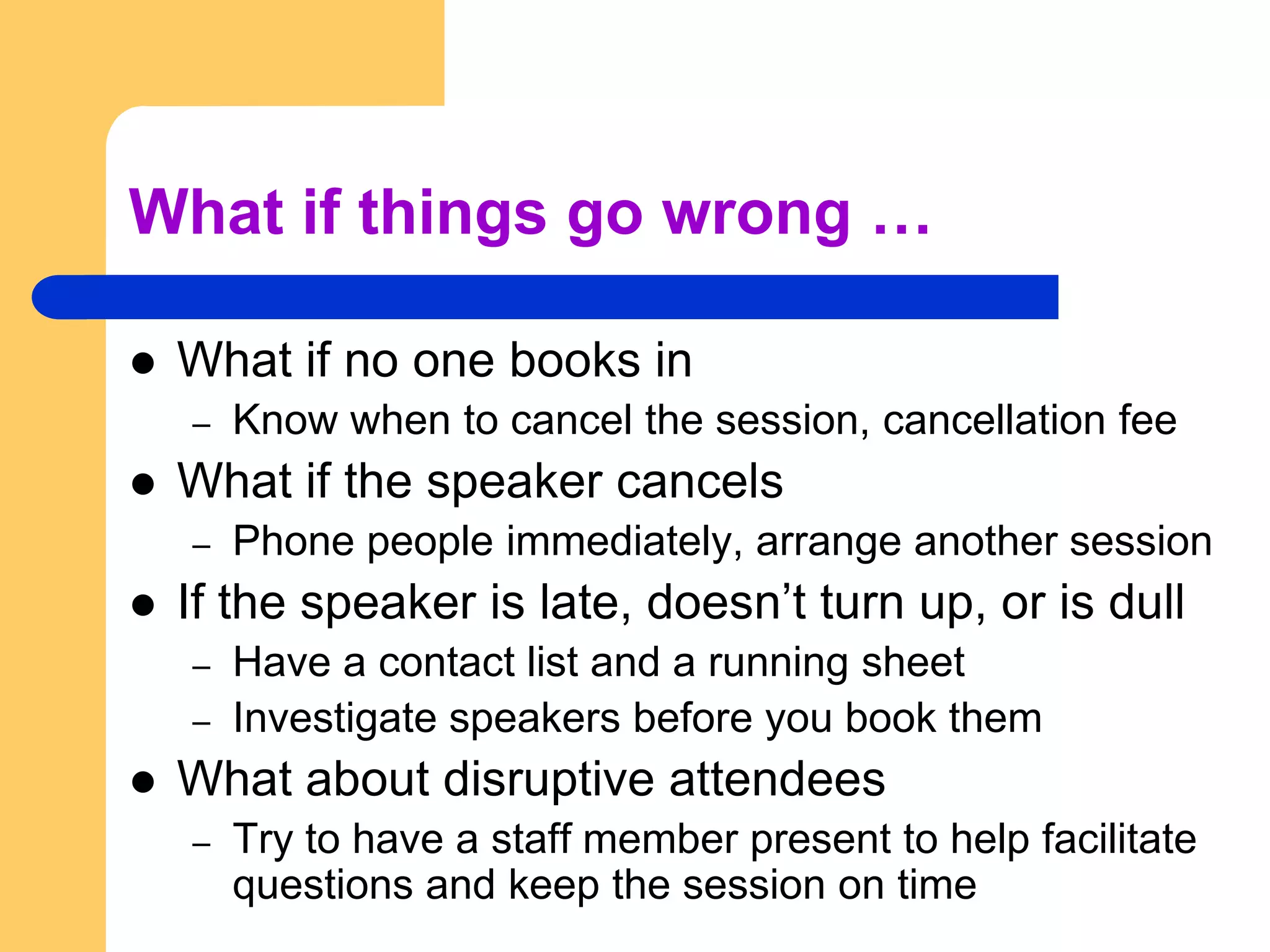
    What if thingsgo wrong …What if no one books inKnow when to cancel the session, cancellation feeWhat if the speaker cancelsPhone people immediately, arrange another sessionIf the speaker is late, doesn’t turn up, or is dullHave a contact list and a running sheetInvestigate speakers before you book themWhat about disruptive attendeesTry to have a staff member present to help facilitate questions and keep the session on time
  • 48.
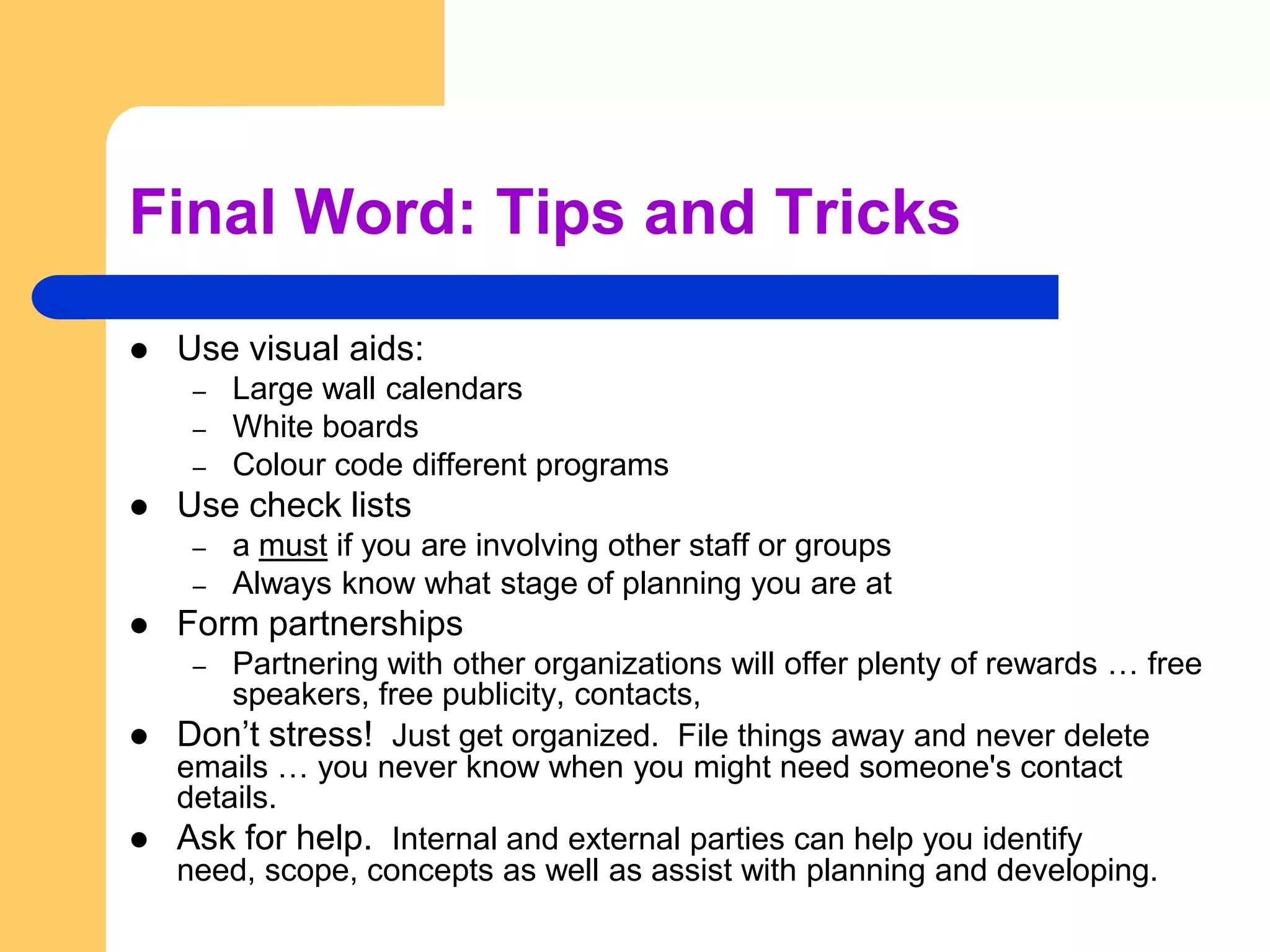
    Final Word: Tipsand TricksUse visual aids:Large wall calendarsWhite boardsColour code different programsUse check listsa must if you are involving other staff or groupsAlways know what stage of planning you are atForm partnershipsPartnering with other organizations will offer plenty of rewards … free speakers, free publicity, contacts, Don’t stress! Just get organized. File things away and never delete emails … you never know when you might need someone's contact details.Ask for help. Internal and external parties can help you identify need, scope, concepts as well as assist with planning and developing.
  • 49.