Ecosystems
What is Ecology?Ecology is the study of relationships between living things and between living things and their environment.
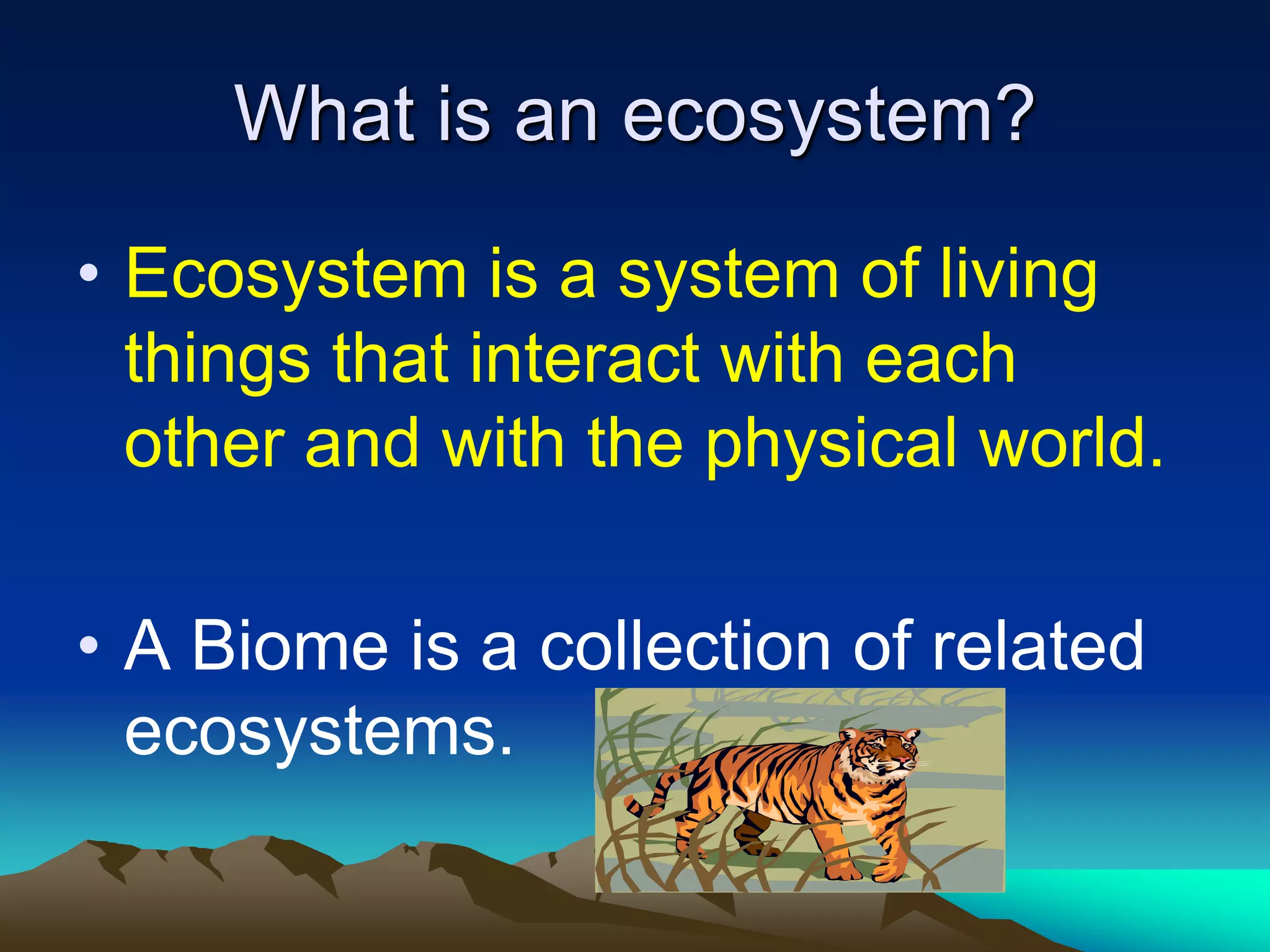
What is an ecosystem?Ecosystem is a system of living things that interact with each other and with the physical world.A Biome is a collection of related ecosystems.
Main Ecosystems:DesertRainforestOceanTaigaTundraChaparralGrasslandTemperate Forrest
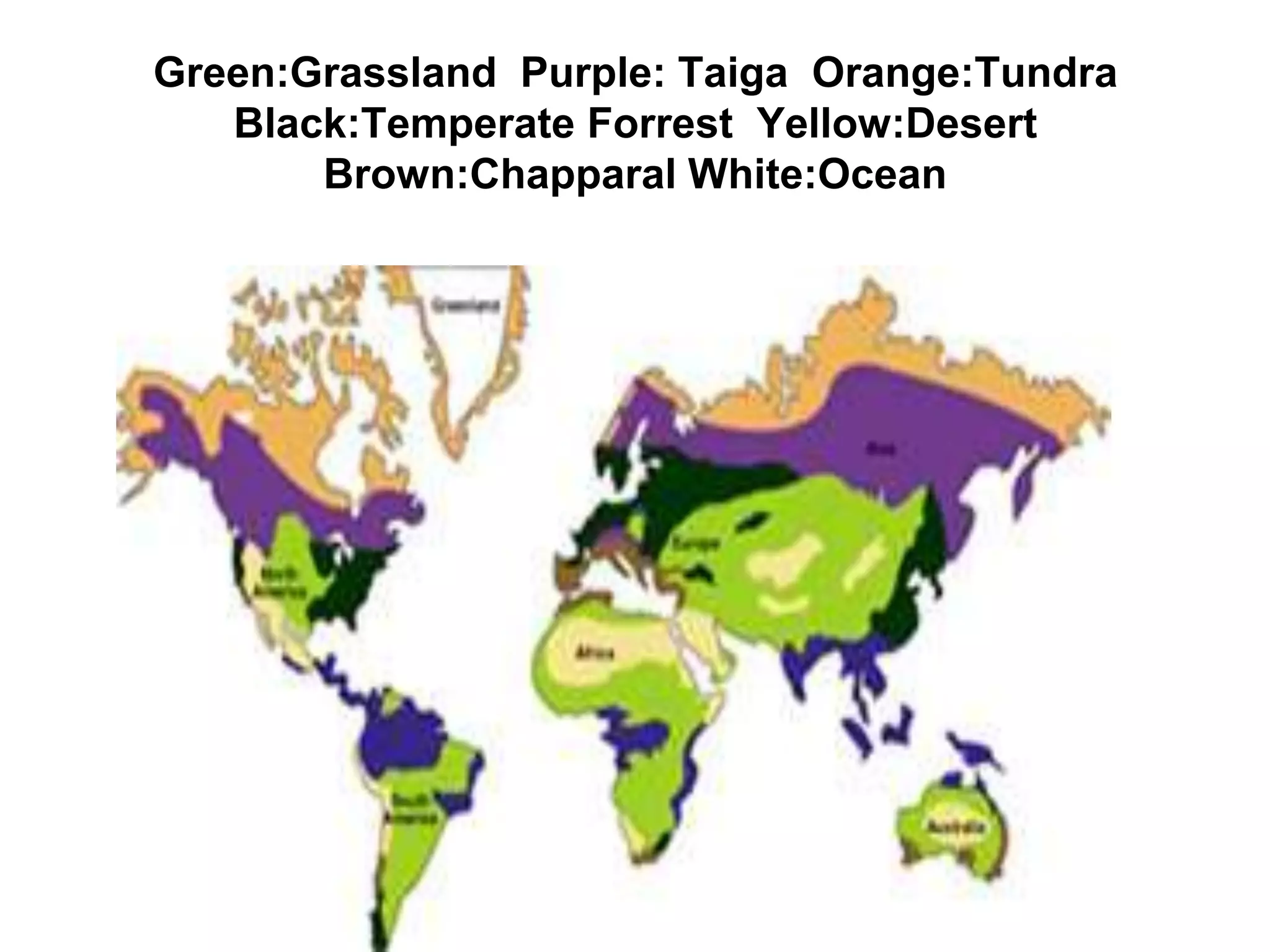
Green:Grassland  Purple: Taiga  Orange:Tundra  Black:Temperate Forrest  Yellow:Desert  Brown:Chapparal White:Ocean
However……..An ecosystem can be as large as the Sahara Desert, or as small as a puddle!!!Ecosystems are more than just the organisms they contain. Geography,weather,climate and geologic factors also influence the interactions within an ecosystem.
Abiotic FactorsAre nonliving physical factors of an environment. Abiotoic Factors include amount of water and oxygen, temperature, amount of sunlight and water pressure.
YOU TRY!!!List three more examples of Abiotic Factors:
Biotic FactorsAre the living, physical factors of an environment.Examples of Biotic Factors are parasitism,disease and predation.
BalanceEcosystems will fail if they do not remain in balance. No community can carry more organisms than its food, water and shelter can accommodate.
How do they stay balanced?To succeed in an ecosystem, plants and animals have special structures and behaviors called adaptations.Ex) Chameleon         Polar Bear    Can you think of more examples of adaptation?
This powerpoint was kindly donated to www.worldofteaching.comhttp://www.worldofteaching.com is home to over a thousand powerpoints submitted by teachers. This is a completely free site and requires no registration. Please visit and I hope it will help in your teaching.

Ecosystems

  • 1.
  • 2.
    What is Ecology?Ecologyis the study of relationships between living things and between living things and their environment.
  • 3.
    What is anecosystem?Ecosystem is a system of living things that interact with each other and with the physical world.A Biome is a collection of related ecosystems.
  • 4.
  • 5.
    Green:Grassland Purple:Taiga Orange:Tundra Black:Temperate Forrest Yellow:Desert Brown:Chapparal White:Ocean
  • 6.
    However……..An ecosystem canbe as large as the Sahara Desert, or as small as a puddle!!!Ecosystems are more than just the organisms they contain. Geography,weather,climate and geologic factors also influence the interactions within an ecosystem.
  • 7.
    Abiotic FactorsAre nonlivingphysical factors of an environment. Abiotoic Factors include amount of water and oxygen, temperature, amount of sunlight and water pressure.
  • 8.
    YOU TRY!!!List threemore examples of Abiotic Factors:
  • 9.
    Biotic FactorsAre theliving, physical factors of an environment.Examples of Biotic Factors are parasitism,disease and predation.
  • 10.
    BalanceEcosystems will failif they do not remain in balance. No community can carry more organisms than its food, water and shelter can accommodate.
  • 11.
    How do theystay balanced?To succeed in an ecosystem, plants and animals have special structures and behaviors called adaptations.Ex) Chameleon Polar Bear Can you think of more examples of adaptation?
  • 12.
    This powerpoint waskindly donated to www.worldofteaching.comhttp://www.worldofteaching.com is home to over a thousand powerpoints submitted by teachers. This is a completely free site and requires no registration. Please visit and I hope it will help in your teaching.
  • 13.
    This powerpoint waskindly donated to www.worldofteaching.comhttp://www.worldofteaching.com is home to over a thousand powerpoints submitted by teachers. This is a completely free site and requires no registration. Please visit and I hope it will help in your teaching.