Crescentic GN
This pattern of injury can be seen in three groups of diseases: 1. Anti-glomerular basement membrane (anti-GBM) disease, mediated by circulating anti-GBM antibodies; if associated with pulmonary capillaritis, it is reffered to as Goodpasture's syndrome. 2. Pauci-immune GN, most commonly triggered or mediated by anti-neutrophil cytoplasm antibodies (ANCA). Renal-limited forms are usually associated with p-ANCA. May present as pulmonary-renal syndrome (Wegener's granulomatosis), which is usually associated with c-ANCA. 3. Immune complex-mediated crescentic glomerulonephritides are usually associated with infections (postinfectious GN) or systemic diseases (lupus nephritis, class IV). Aggressive forms of IgA nephropathy/HSP-syndrome can also present with this form of glomerular injury.
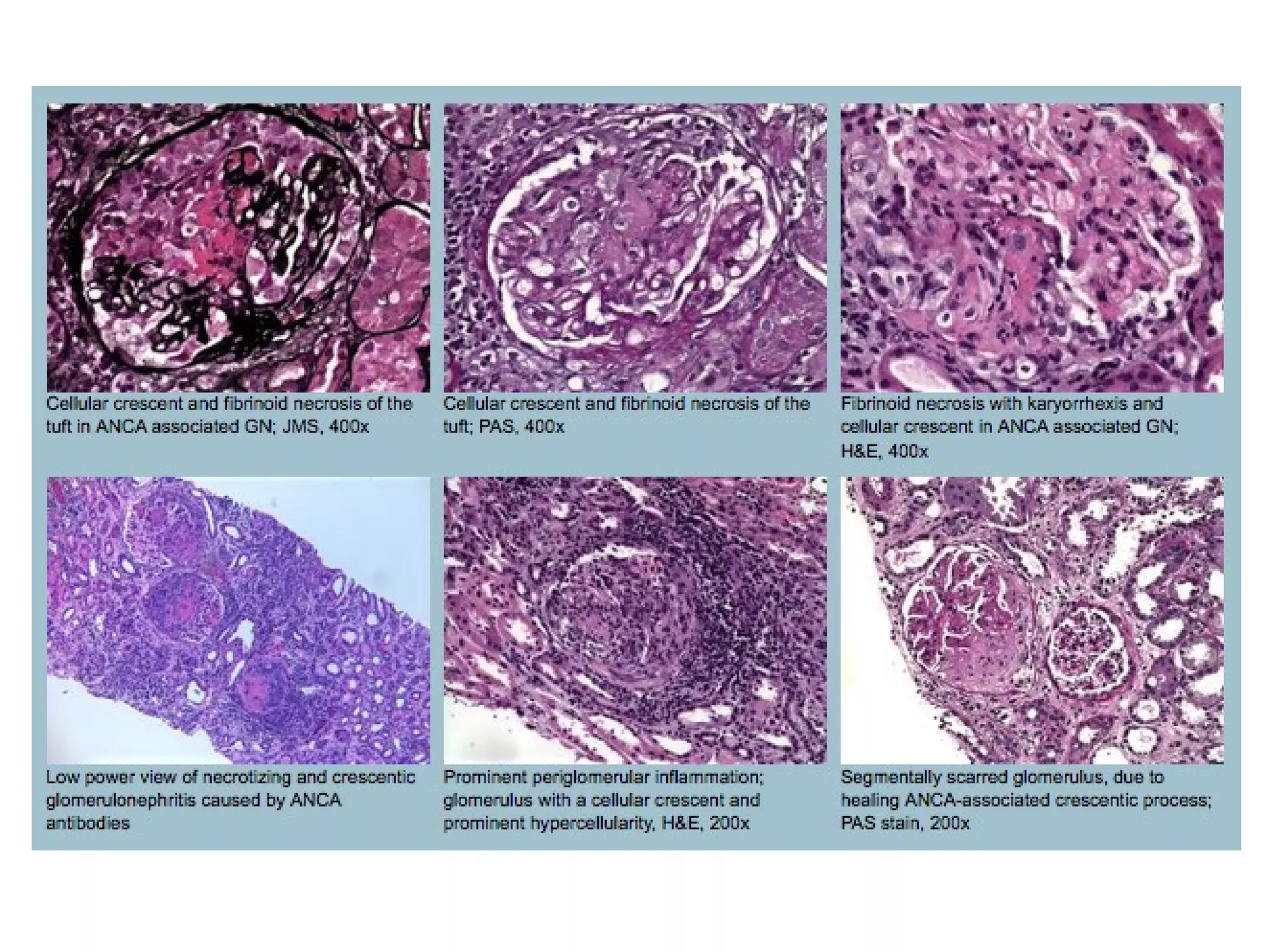
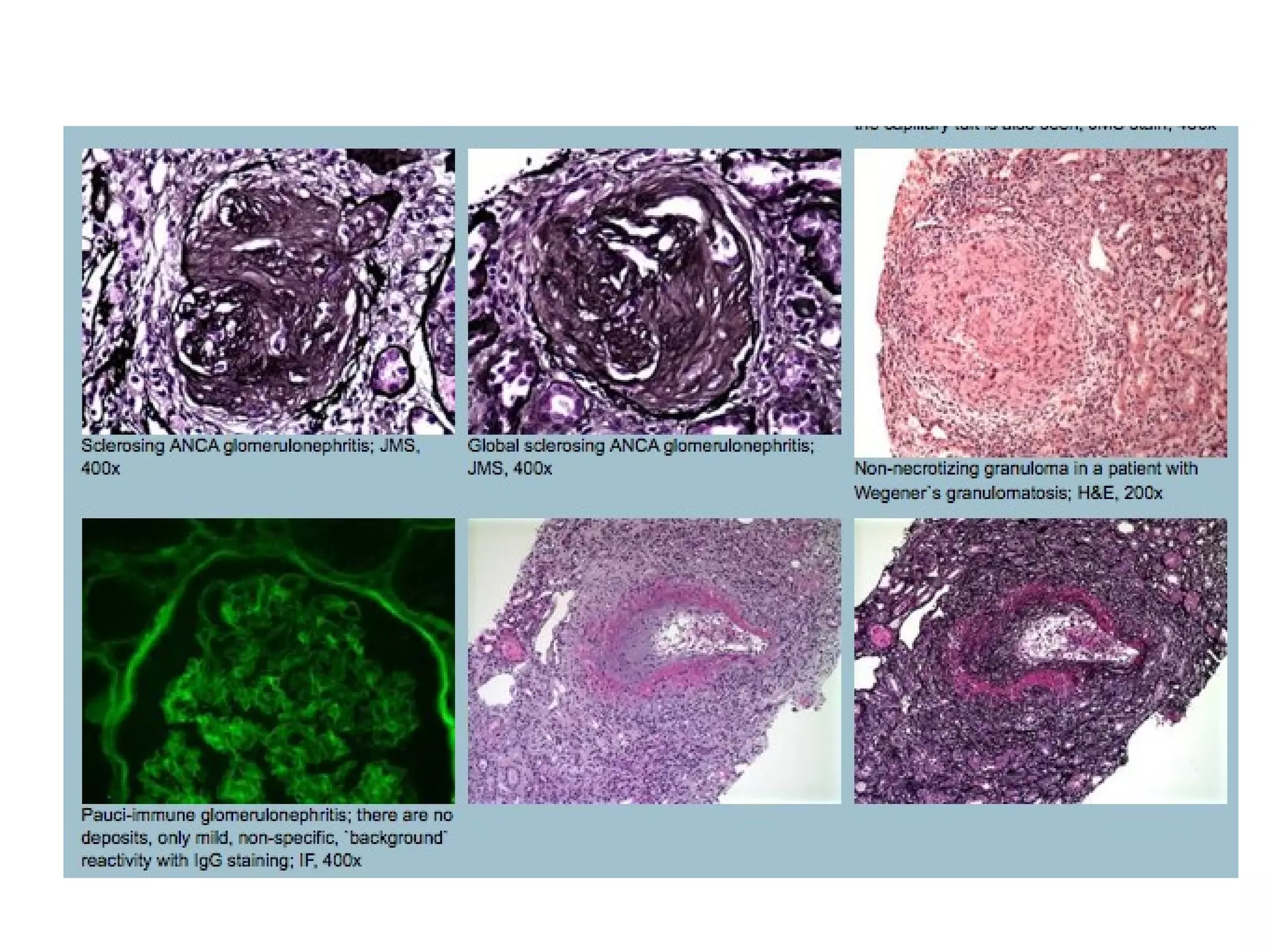
Pauci-immune GN Histopathology:  Early lesion is focal fibrinoid necrosis within the tuft; rupture of the GBM causes plasma spillage in the Bowman’s space, with accumulation of fibrin and capillary thrombosis As the disease progresses, crescents occur, with involvement of more than 50% of glomeruli in most cases Not uncommon to see crescents of various stages (cellular, fibrocellular, or fibrous) at the same time Uninvolved segments and tufts appear unremarkable Can be superimposed on other glomerular diseases, such as IgA nephropathy, lupus nephritis, and others Immunofluorescence:  There is no significant deposition of immunoglobulins or complement. Fibrin deposition may be demonstrated in injured segments of glomerular tufts and within the crescents.
Electron microscopy:  Visceral epithelial cells: In the glomeruli with crescents, there are numerous cells within the Bowman’s space, mostly epithelial cells and macrophages, with extracellular fibrin and sometimes necrotic debris. Visceral epithelial cells show various degrees of damage and effacement of foot processes Glomerular basement membranes: Segmental irregularities and wrinkling, with areas of disrupted continuity. Electron-dense deposits are typically not present, however, their presence does not exclude a concomitant ANCA-associated disease Glomerular endothelial cells: Usually show non-specific degenerative changes and do not contain tubuloreticular structures Mesangium: Normal cell elements and an extracellular matrix without electron-dense deposits
 
 
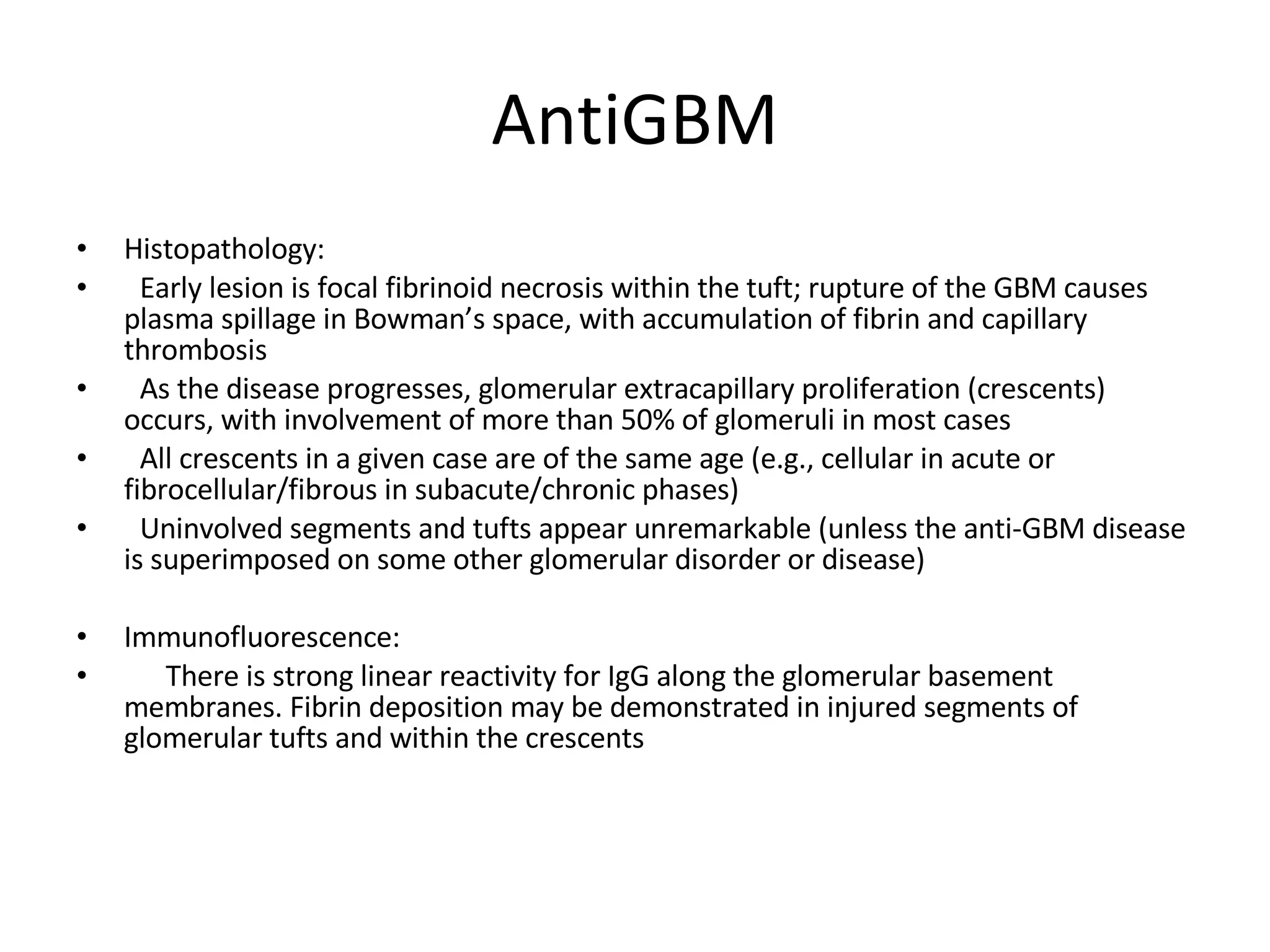
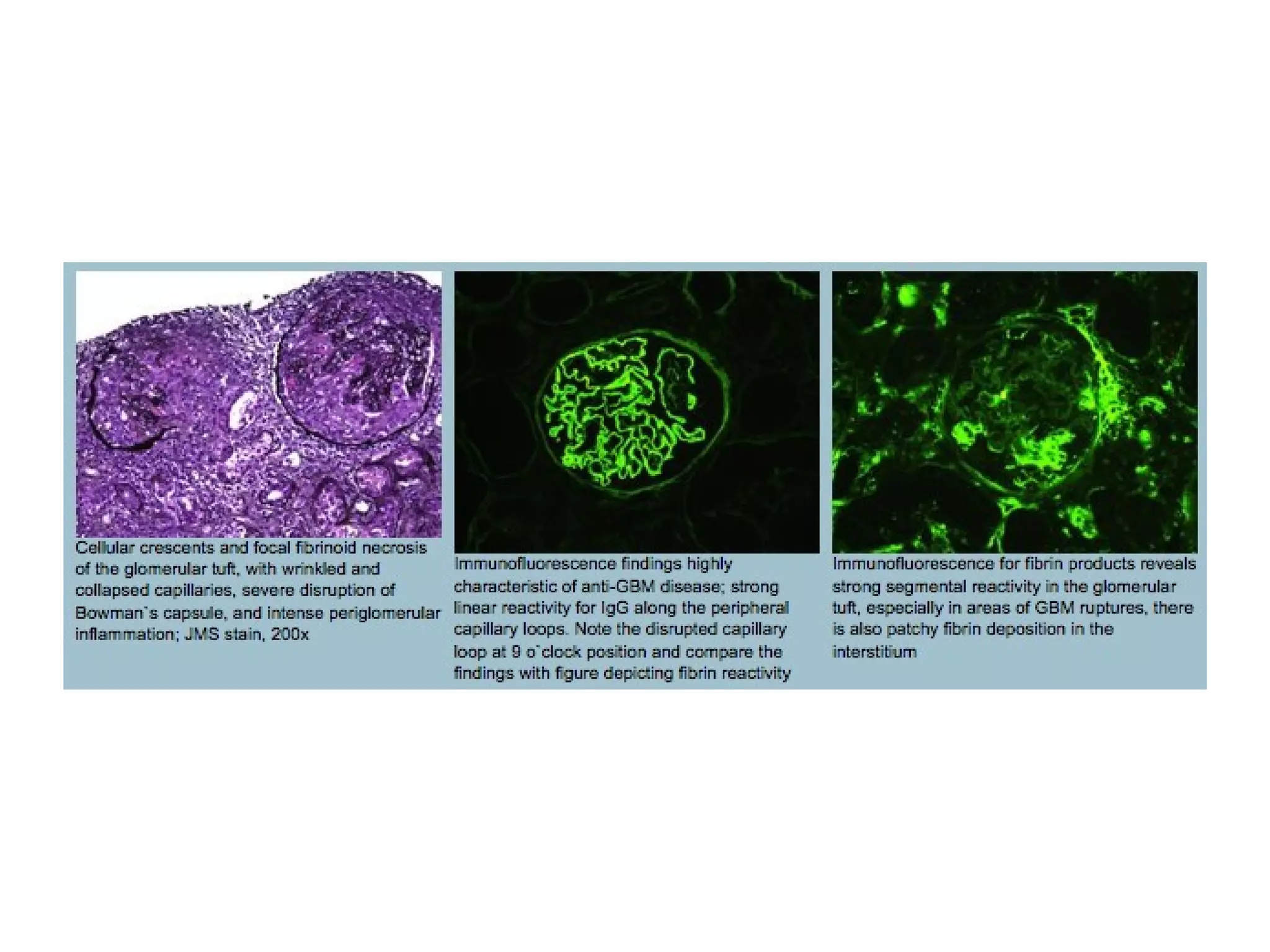
AntiGBM Histopathology:  Early lesion is focal fibrinoid necrosis within the tuft; rupture of the GBM causes plasma spillage in Bowman’s space, with accumulation of fibrin and capillary thrombosis As the disease progresses, glomerular extracapillary proliferation (crescents) occurs, with involvement of more than 50% of glomeruli in most cases All crescents in a given case are of the same age (e.g., cellular in acute or fibrocellular/fibrous in subacute/chronic phases) Uninvolved segments and tufts appear unremarkable (unless the anti-GBM disease is superimposed on some other glomerular disorder or disease) Immunofluorescence:  There is strong linear reactivity for IgG along the glomerular basement membranes. Fibrin deposition may be demonstrated in injured segments of glomerular tufts and within the crescents
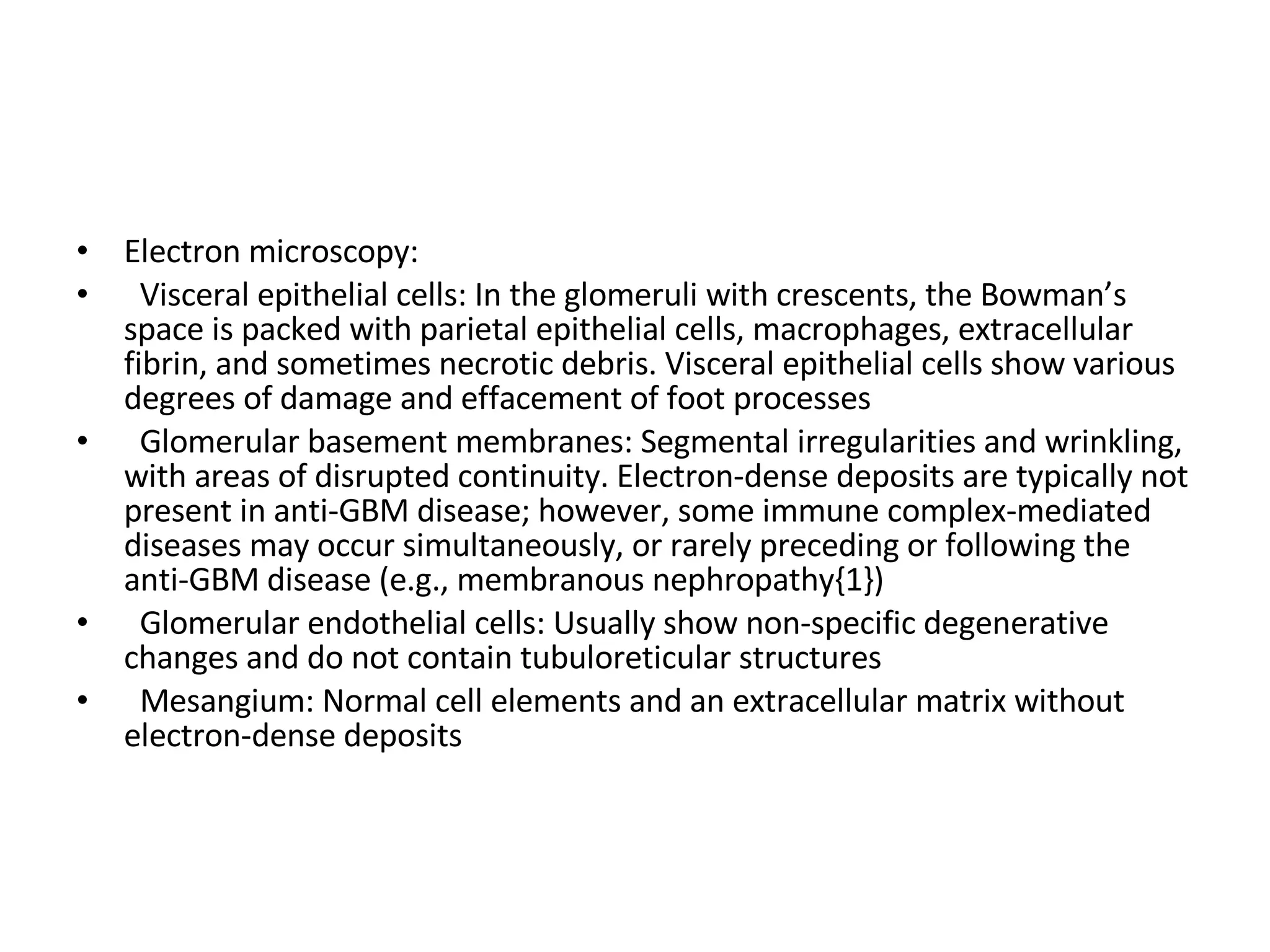
Electron microscopy:  Visceral epithelial cells: In the glomeruli with crescents, the Bowman’s space is packed with parietal epithelial cells, macrophages, extracellular fibrin, and sometimes necrotic debris. Visceral epithelial cells show various degrees of damage and effacement of foot processes Glomerular basement membranes: Segmental irregularities and wrinkling, with areas of disrupted continuity. Electron-dense deposits are typically not present in anti-GBM disease; however, some immune complex-mediated diseases may occur simultaneously, or rarely preceding or following the anti-GBM disease (e.g., membranous nephropathy{1}) Glomerular endothelial cells: Usually show non-specific degenerative changes and do not contain tubuloreticular structures Mesangium: Normal cell elements and an extracellular matrix without electron-dense deposits
 
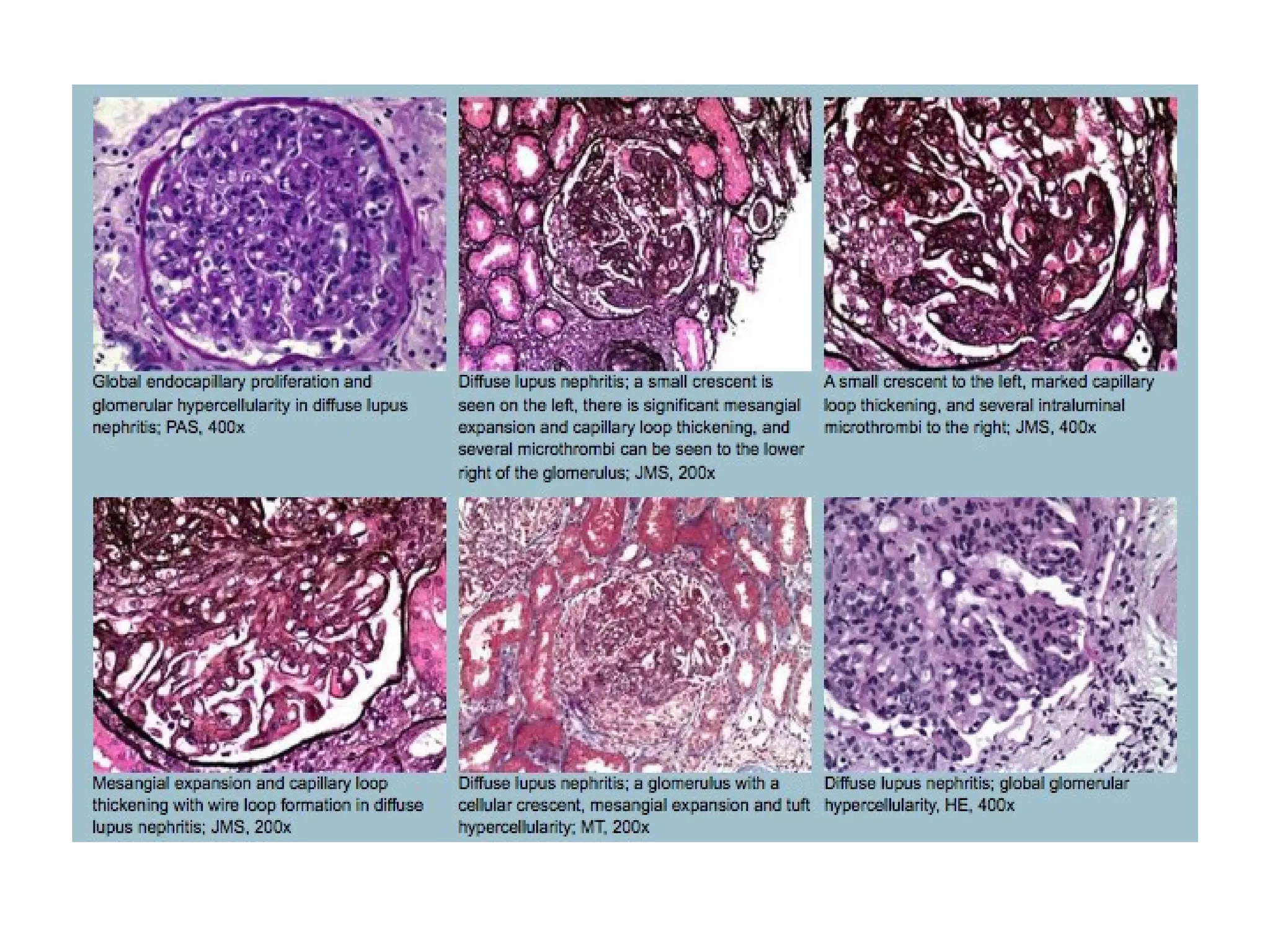
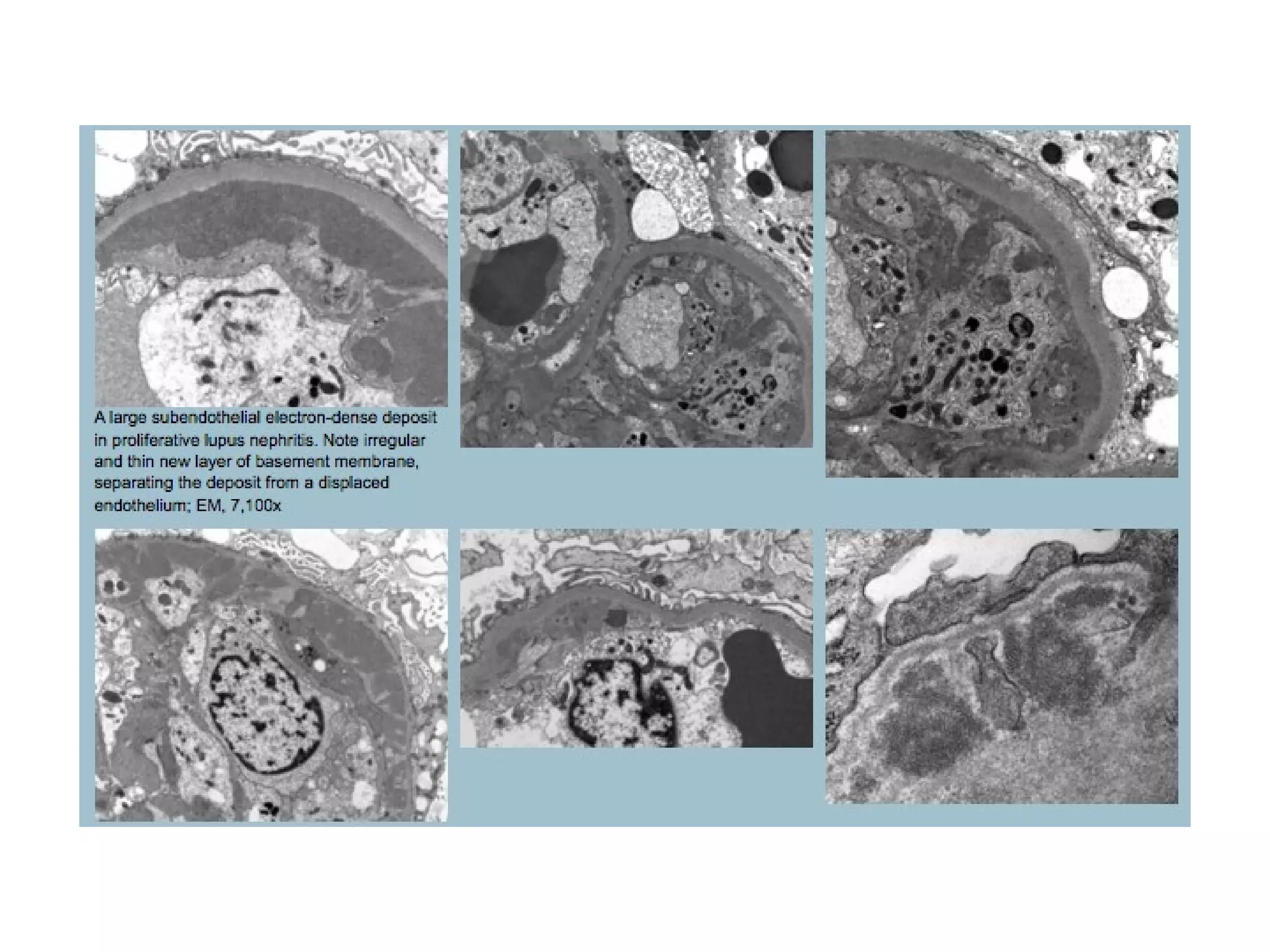
Lupus Nephritis Class IV Histopathology:  Light microscopic examination reveals segmental or global endocapillary proliferative changes. The mesangium is variably expanded and hypercellular The peripheral capillary loops are irregular in thickness, sometimes showing 'wire loops' and intraluminal 'microthrombi' (hyaline thrombi) Leukocyte infiltration, focal necrosis, hematoxilin bodies, and cellular crescents can all be seen In some cases, membranoproliferative pattern of injury may be dominant in glomeruli (class IV) The tubulointerstitium may show active interstitial nephritis Immunofluorescence:  There is 'full house' reactivity (reactivity for IgG, IgM, and IgA), with granular deposits in the mesangium.
Electron microscopy:  Visceral epithelial cells: Show different degrees of injury and degenerative changes, with focal, but sometimes extensive, effacement of foot processes. Subepithelial deposits can be seen in many cases Glomerular basement membranes: May be irregular in thickness, with the presence of intramembranous, subepithelial, and/or subendothelial deposits. Subendothelial deposits can be rather large and may demonstrate substructural organization ('fingerprint'-like pattern) Glomerular endothelial cells: May contain tubuloreticular structures Mesangium: Expanded by increase in cellular elements and extracellular matrix, with sometimes large and confluent fine granular, electron-dense deposits
 
 
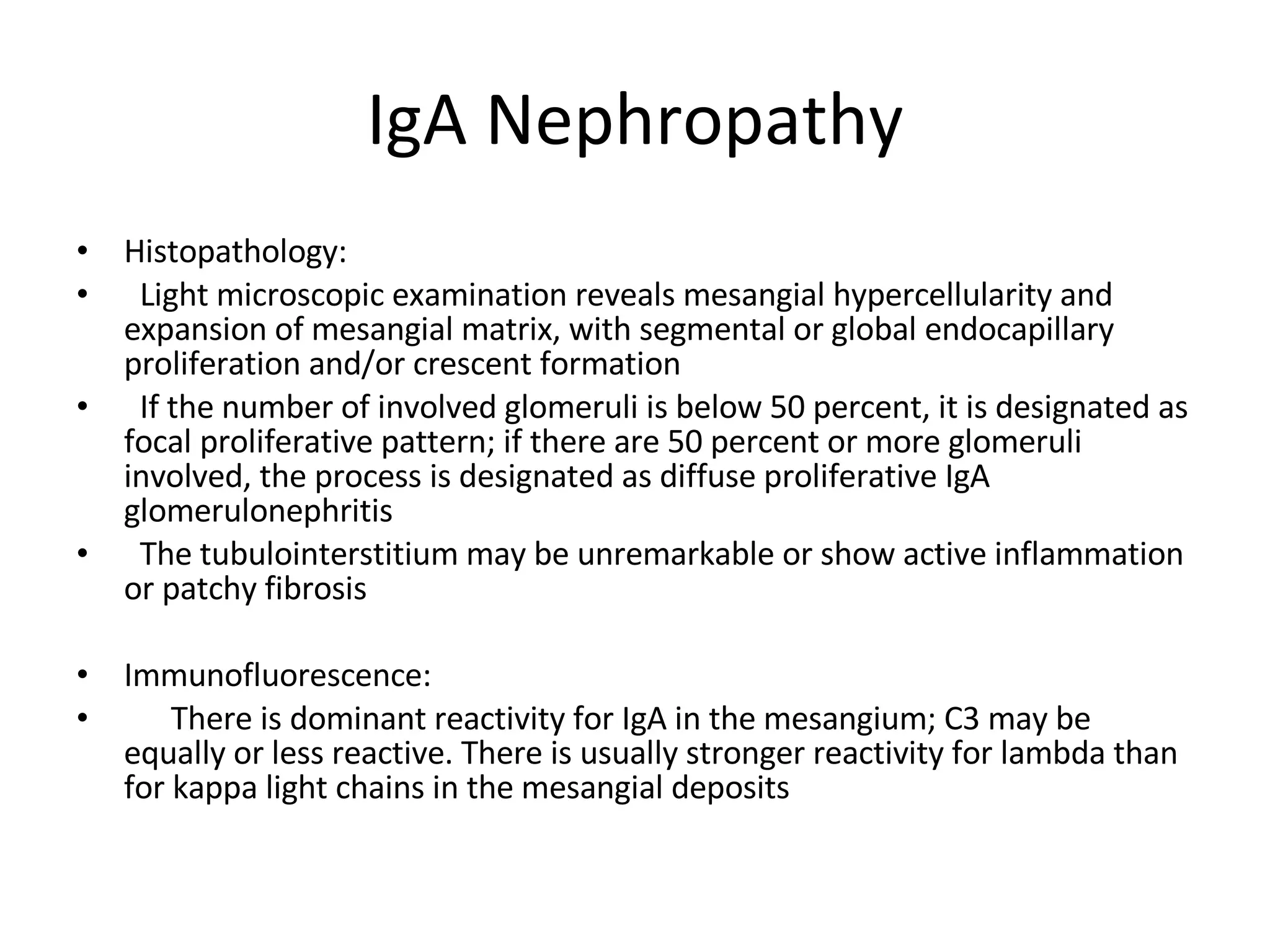
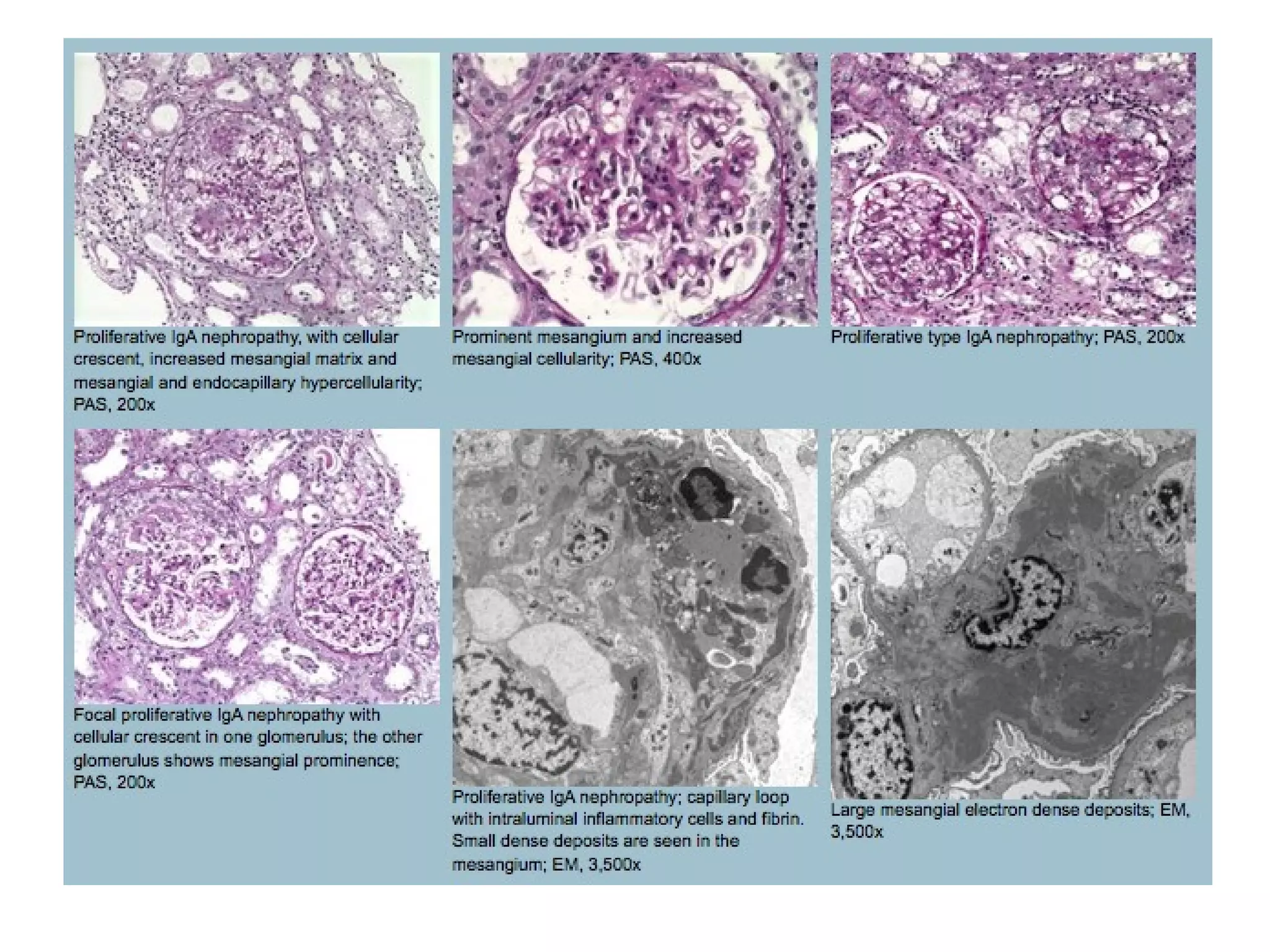
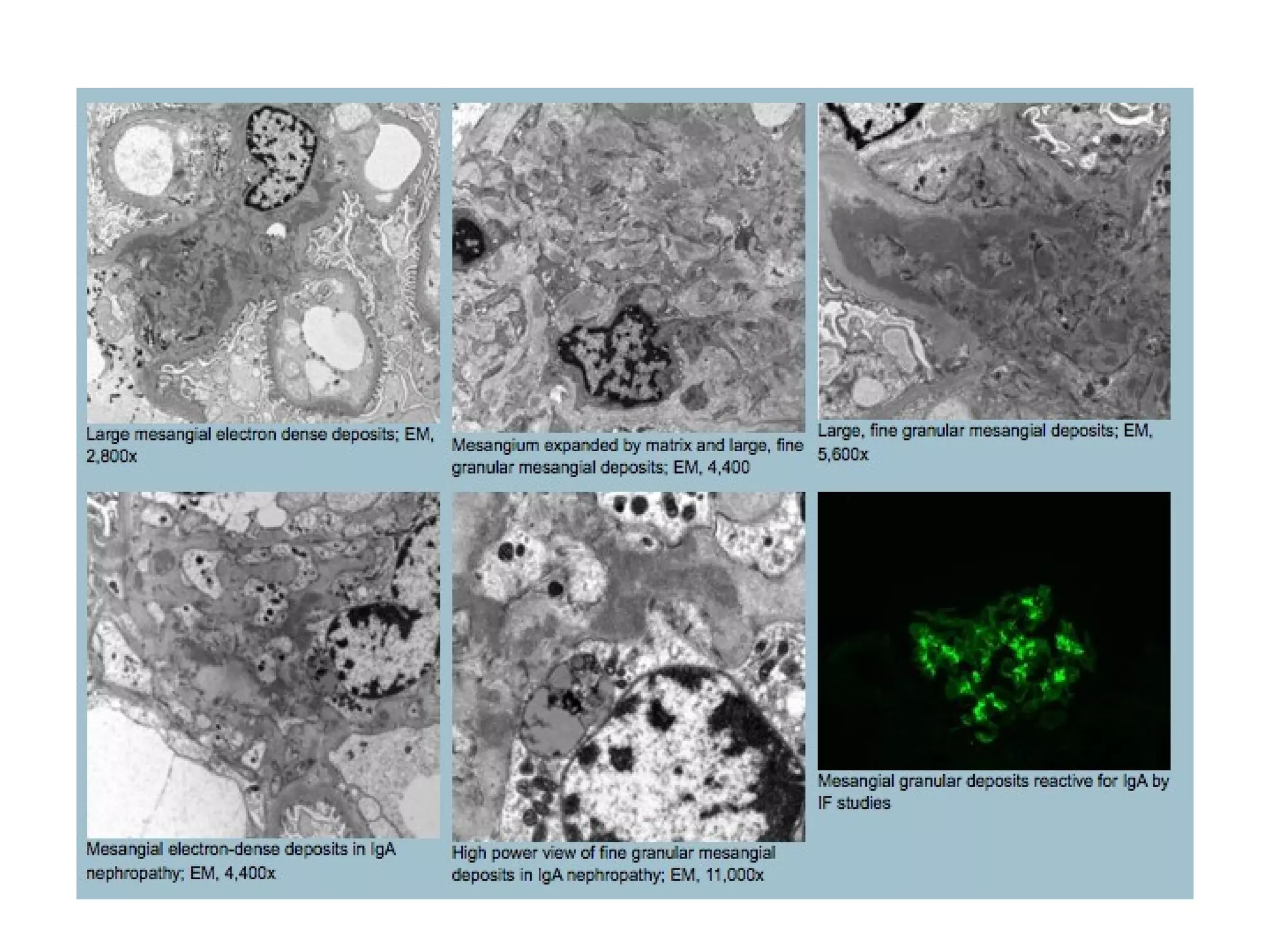
IgA Nephropathy Histopathology:  Light microscopic examination reveals mesangial hypercellularity and expansion of mesangial matrix, with segmental or global endocapillary proliferation and/or crescent formation If the number of involved glomeruli is below 50 percent, it is designated as focal proliferative pattern; if there are 50 percent or more glomeruli involved, the process is designated as diffuse proliferative IgA glomerulonephritis The tubulointerstitium may be unremarkable or show active inflammation or patchy fibrosis Immunofluorescence:  There is dominant reactivity for IgA in the mesangium; C3 may be equally or less reactive. There is usually stronger reactivity for lambda than for kappa light chains in the mesangial deposits
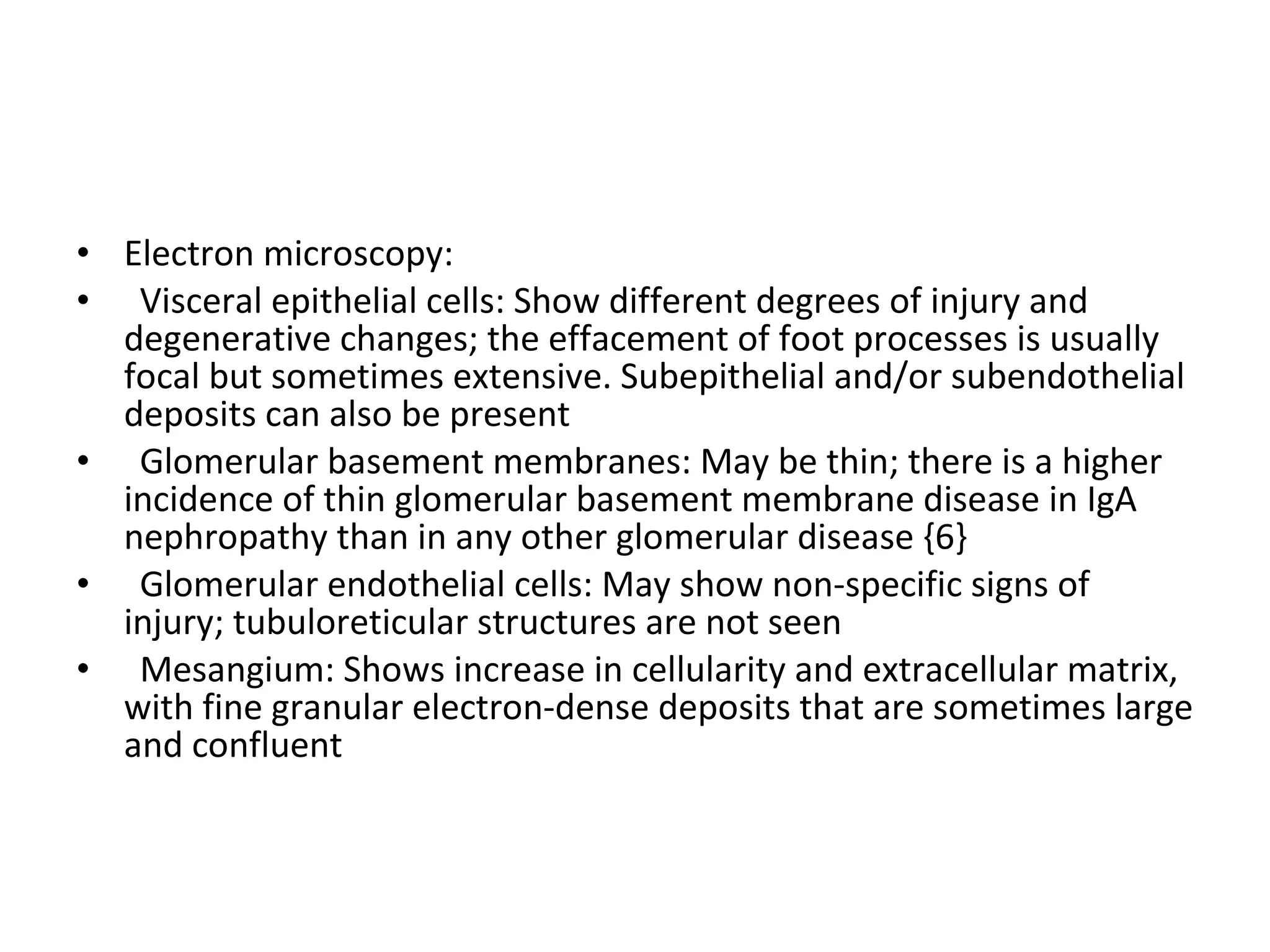
Electron microscopy:  Visceral epithelial cells: Show different degrees of injury and degenerative changes; the effacement of foot processes is usually focal but sometimes extensive. Subepithelial and/or subendothelial deposits can also be present Glomerular basement membranes: May be thin; there is a higher incidence of thin glomerular basement membrane disease in IgA nephropathy than in any other glomerular disease {6} Glomerular endothelial cells: May show non-specific signs of injury; tubuloreticular structures are not seen Mesangium: Shows increase in cellularity and extracellular matrix, with fine granular electron-dense deposits that are sometimes large and confluent
 
 
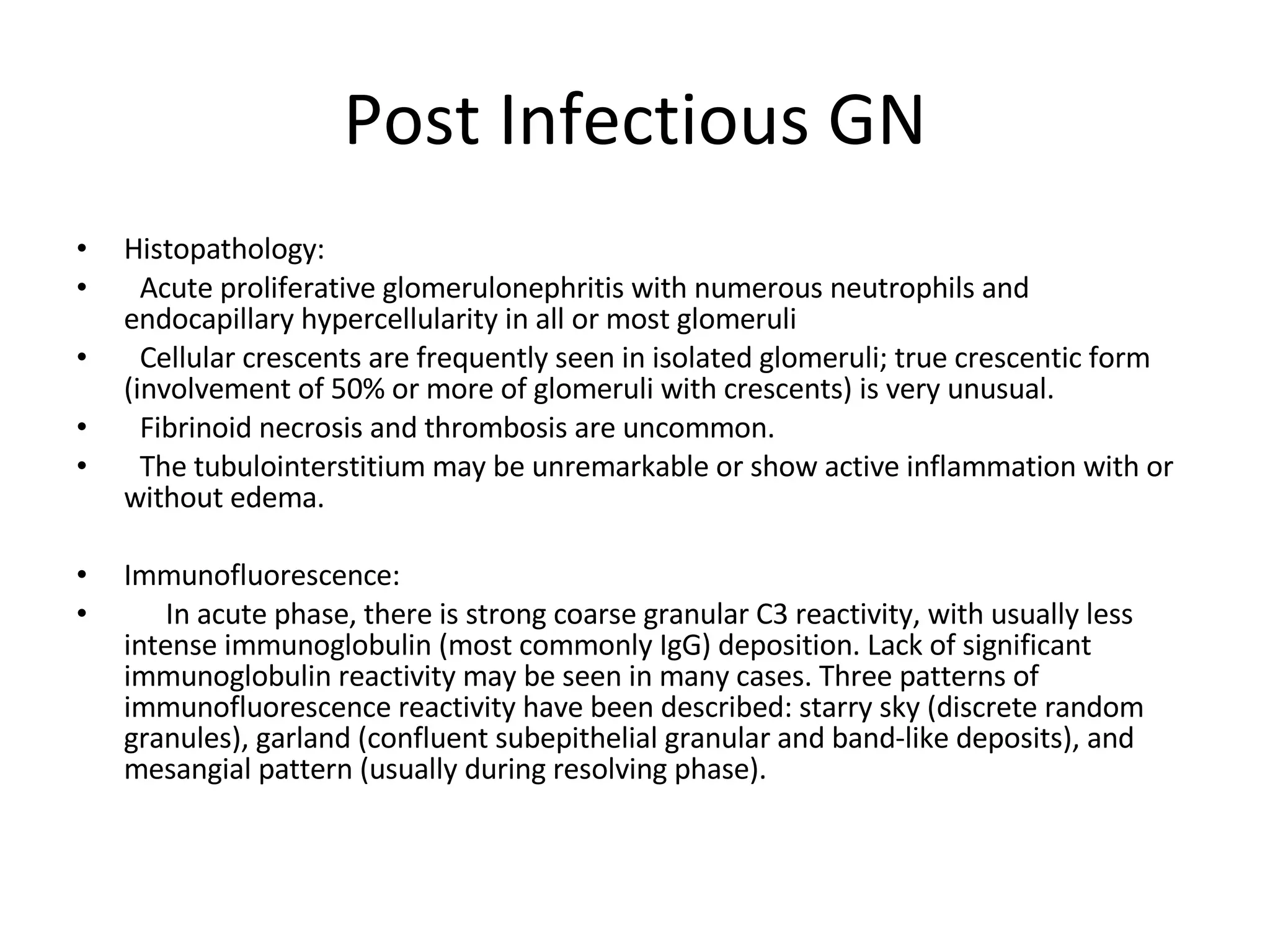
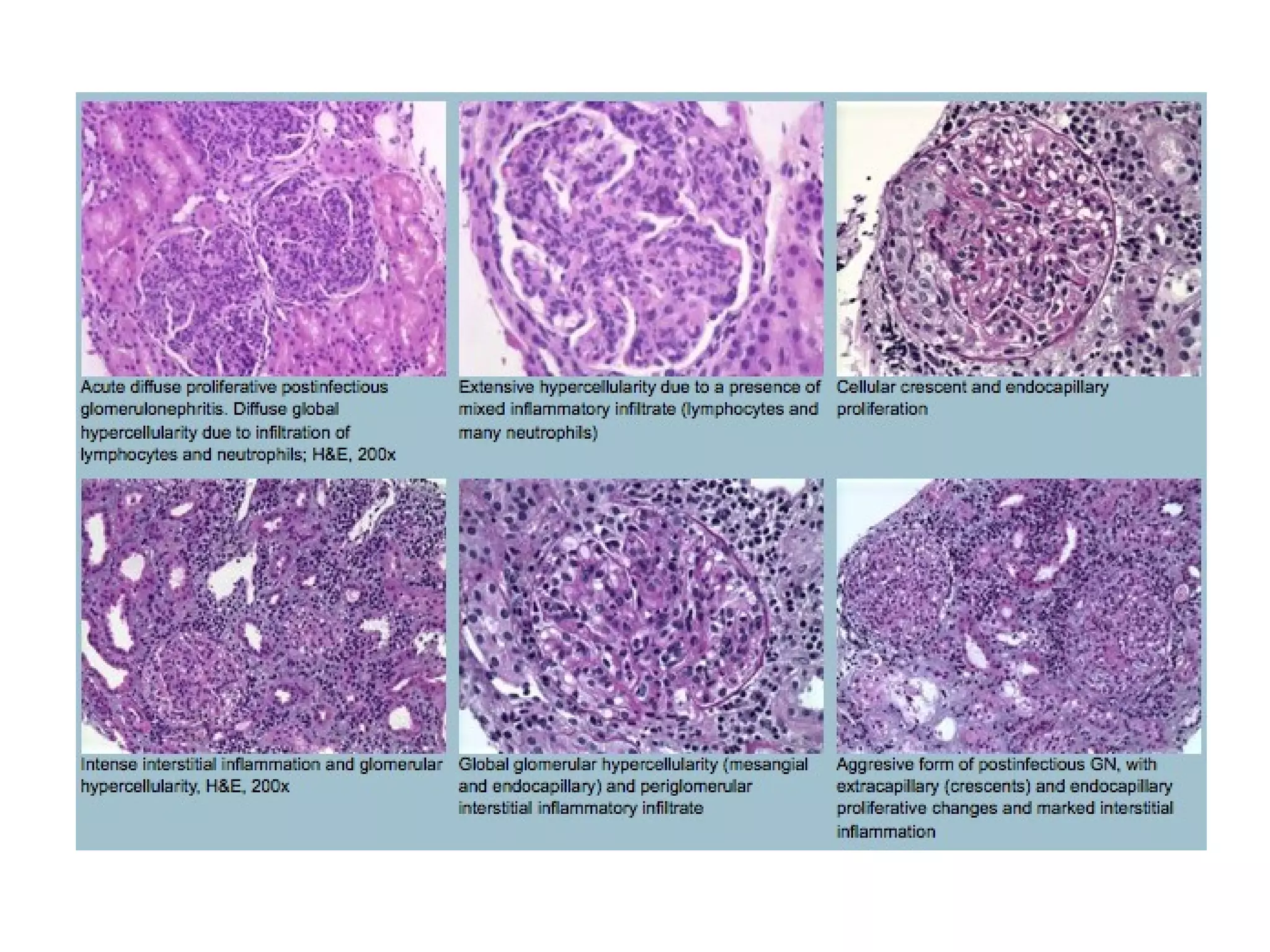
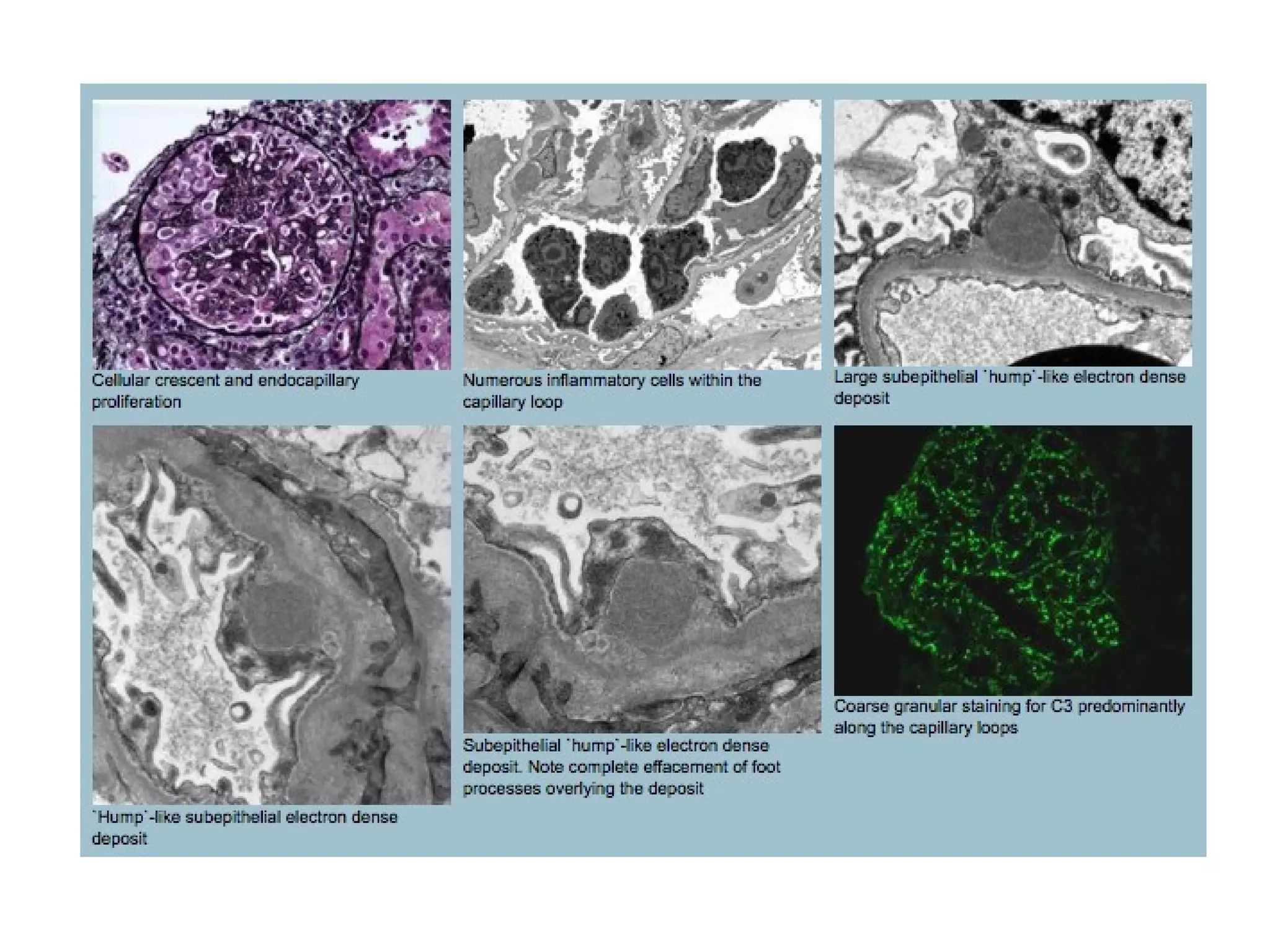
Post Infectious GN Histopathology:  Acute proliferative glomerulonephritis with numerous neutrophils and endocapillary hypercellularity in all or most glomeruli Cellular crescents are frequently seen in isolated glomeruli; true crescentic form (involvement of 50% or more of glomeruli with crescents) is very unusual. Fibrinoid necrosis and thrombosis are uncommon. The tubulointerstitium may be unremarkable or show active inflammation with or without edema. Immunofluorescence:  In acute phase, there is strong coarse granular C3 reactivity, with usually less intense immunoglobulin (most commonly IgG) deposition. Lack of significant immunoglobulin reactivity may be seen in many cases. Three patterns of immunofluorescence reactivity have been described: starry sky (discrete random granules), garland (confluent subepithelial granular and band-like deposits), and mesangial pattern (usually during resolving phase).
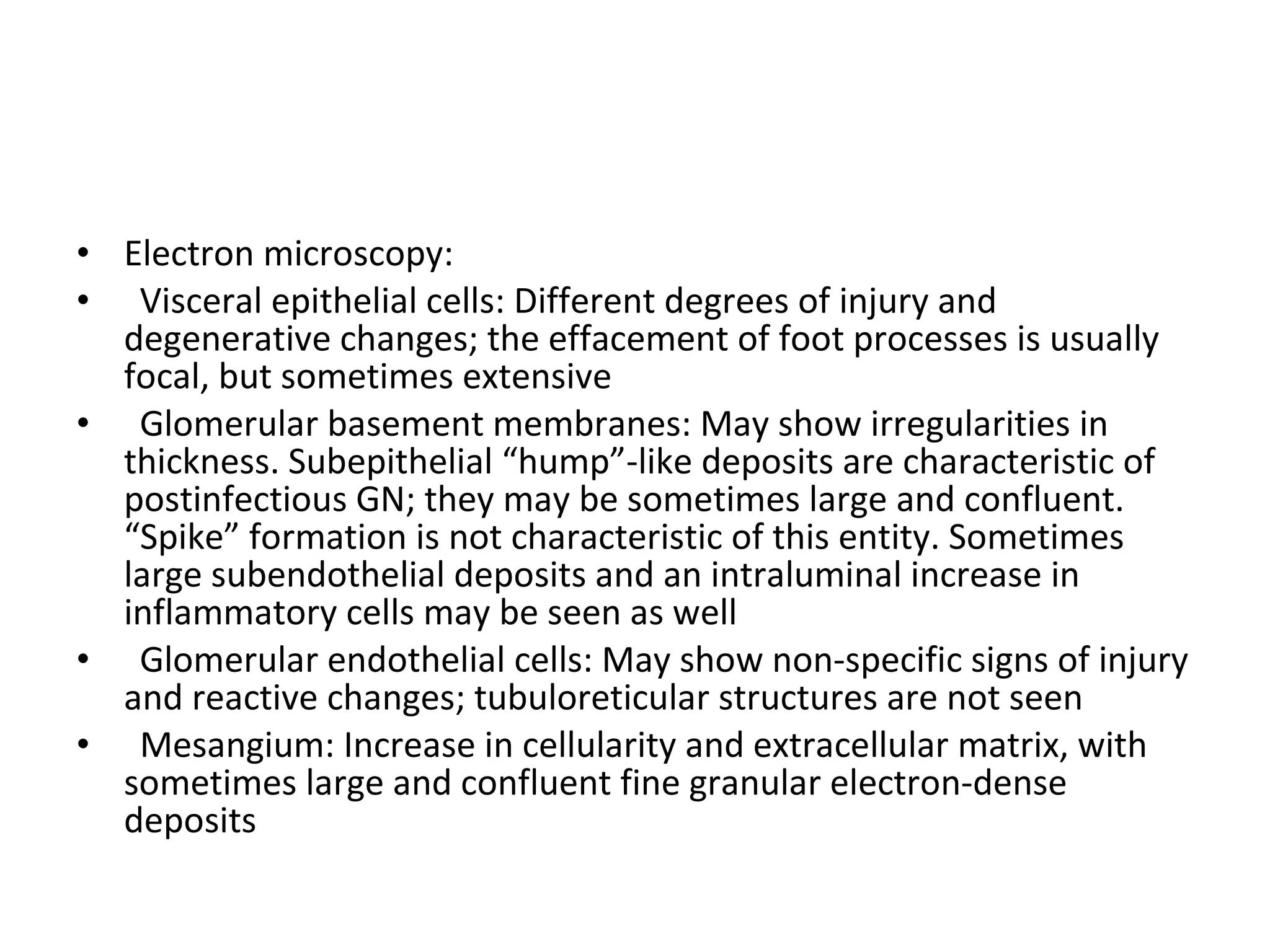
Electron microscopy:  Visceral epithelial cells: Different degrees of injury and degenerative changes; the effacement of foot processes is usually focal, but sometimes extensive Glomerular basement membranes: May show irregularities in thickness. Subepithelial “hump”-like deposits are characteristic of postinfectious GN; they may be sometimes large and confluent. “Spike” formation is not characteristic of this entity. Sometimes large subendothelial deposits and an intraluminal increase in inflammatory cells may be seen as well Glomerular endothelial cells: May show non-specific signs of injury and reactive changes; tubuloreticular structures are not seen Mesangium: Increase in cellularity and extracellular matrix, with sometimes large and confluent fine granular electron-dense deposits


Crescentic GN

  • 1.
  • 2.
    This pattern ofinjury can be seen in three groups of diseases: 1. Anti-glomerular basement membrane (anti-GBM) disease, mediated by circulating anti-GBM antibodies; if associated with pulmonary capillaritis, it is reffered to as Goodpasture's syndrome. 2. Pauci-immune GN, most commonly triggered or mediated by anti-neutrophil cytoplasm antibodies (ANCA). Renal-limited forms are usually associated with p-ANCA. May present as pulmonary-renal syndrome (Wegener's granulomatosis), which is usually associated with c-ANCA. 3. Immune complex-mediated crescentic glomerulonephritides are usually associated with infections (postinfectious GN) or systemic diseases (lupus nephritis, class IV). Aggressive forms of IgA nephropathy/HSP-syndrome can also present with this form of glomerular injury.
  • 3.
    Pauci-immune GN Histopathology: Early lesion is focal fibrinoid necrosis within the tuft; rupture of the GBM causes plasma spillage in the Bowman’s space, with accumulation of fibrin and capillary thrombosis As the disease progresses, crescents occur, with involvement of more than 50% of glomeruli in most cases Not uncommon to see crescents of various stages (cellular, fibrocellular, or fibrous) at the same time Uninvolved segments and tufts appear unremarkable Can be superimposed on other glomerular diseases, such as IgA nephropathy, lupus nephritis, and others Immunofluorescence: There is no significant deposition of immunoglobulins or complement. Fibrin deposition may be demonstrated in injured segments of glomerular tufts and within the crescents.
  • 4.
    Electron microscopy: Visceral epithelial cells: In the glomeruli with crescents, there are numerous cells within the Bowman’s space, mostly epithelial cells and macrophages, with extracellular fibrin and sometimes necrotic debris. Visceral epithelial cells show various degrees of damage and effacement of foot processes Glomerular basement membranes: Segmental irregularities and wrinkling, with areas of disrupted continuity. Electron-dense deposits are typically not present, however, their presence does not exclude a concomitant ANCA-associated disease Glomerular endothelial cells: Usually show non-specific degenerative changes and do not contain tubuloreticular structures Mesangium: Normal cell elements and an extracellular matrix without electron-dense deposits
  • 5.
  • 6.
  • 7.
    AntiGBM Histopathology: Early lesion is focal fibrinoid necrosis within the tuft; rupture of the GBM causes plasma spillage in Bowman’s space, with accumulation of fibrin and capillary thrombosis As the disease progresses, glomerular extracapillary proliferation (crescents) occurs, with involvement of more than 50% of glomeruli in most cases All crescents in a given case are of the same age (e.g., cellular in acute or fibrocellular/fibrous in subacute/chronic phases) Uninvolved segments and tufts appear unremarkable (unless the anti-GBM disease is superimposed on some other glomerular disorder or disease) Immunofluorescence: There is strong linear reactivity for IgG along the glomerular basement membranes. Fibrin deposition may be demonstrated in injured segments of glomerular tufts and within the crescents
  • 8.
    Electron microscopy: Visceral epithelial cells: In the glomeruli with crescents, the Bowman’s space is packed with parietal epithelial cells, macrophages, extracellular fibrin, and sometimes necrotic debris. Visceral epithelial cells show various degrees of damage and effacement of foot processes Glomerular basement membranes: Segmental irregularities and wrinkling, with areas of disrupted continuity. Electron-dense deposits are typically not present in anti-GBM disease; however, some immune complex-mediated diseases may occur simultaneously, or rarely preceding or following the anti-GBM disease (e.g., membranous nephropathy{1}) Glomerular endothelial cells: Usually show non-specific degenerative changes and do not contain tubuloreticular structures Mesangium: Normal cell elements and an extracellular matrix without electron-dense deposits
  • 9.
  • 10.
    Lupus Nephritis ClassIV Histopathology: Light microscopic examination reveals segmental or global endocapillary proliferative changes. The mesangium is variably expanded and hypercellular The peripheral capillary loops are irregular in thickness, sometimes showing 'wire loops' and intraluminal 'microthrombi' (hyaline thrombi) Leukocyte infiltration, focal necrosis, hematoxilin bodies, and cellular crescents can all be seen In some cases, membranoproliferative pattern of injury may be dominant in glomeruli (class IV) The tubulointerstitium may show active interstitial nephritis Immunofluorescence: There is 'full house' reactivity (reactivity for IgG, IgM, and IgA), with granular deposits in the mesangium.
  • 11.
    Electron microscopy: Visceral epithelial cells: Show different degrees of injury and degenerative changes, with focal, but sometimes extensive, effacement of foot processes. Subepithelial deposits can be seen in many cases Glomerular basement membranes: May be irregular in thickness, with the presence of intramembranous, subepithelial, and/or subendothelial deposits. Subendothelial deposits can be rather large and may demonstrate substructural organization ('fingerprint'-like pattern) Glomerular endothelial cells: May contain tubuloreticular structures Mesangium: Expanded by increase in cellular elements and extracellular matrix, with sometimes large and confluent fine granular, electron-dense deposits
  • 12.
  • 13.
  • 14.
    IgA Nephropathy Histopathology: Light microscopic examination reveals mesangial hypercellularity and expansion of mesangial matrix, with segmental or global endocapillary proliferation and/or crescent formation If the number of involved glomeruli is below 50 percent, it is designated as focal proliferative pattern; if there are 50 percent or more glomeruli involved, the process is designated as diffuse proliferative IgA glomerulonephritis The tubulointerstitium may be unremarkable or show active inflammation or patchy fibrosis Immunofluorescence: There is dominant reactivity for IgA in the mesangium; C3 may be equally or less reactive. There is usually stronger reactivity for lambda than for kappa light chains in the mesangial deposits
  • 15.
    Electron microscopy: Visceral epithelial cells: Show different degrees of injury and degenerative changes; the effacement of foot processes is usually focal but sometimes extensive. Subepithelial and/or subendothelial deposits can also be present Glomerular basement membranes: May be thin; there is a higher incidence of thin glomerular basement membrane disease in IgA nephropathy than in any other glomerular disease {6} Glomerular endothelial cells: May show non-specific signs of injury; tubuloreticular structures are not seen Mesangium: Shows increase in cellularity and extracellular matrix, with fine granular electron-dense deposits that are sometimes large and confluent
  • 16.
  • 17.
  • 18.
    Post Infectious GNHistopathology: Acute proliferative glomerulonephritis with numerous neutrophils and endocapillary hypercellularity in all or most glomeruli Cellular crescents are frequently seen in isolated glomeruli; true crescentic form (involvement of 50% or more of glomeruli with crescents) is very unusual. Fibrinoid necrosis and thrombosis are uncommon. The tubulointerstitium may be unremarkable or show active inflammation with or without edema. Immunofluorescence: In acute phase, there is strong coarse granular C3 reactivity, with usually less intense immunoglobulin (most commonly IgG) deposition. Lack of significant immunoglobulin reactivity may be seen in many cases. Three patterns of immunofluorescence reactivity have been described: starry sky (discrete random granules), garland (confluent subepithelial granular and band-like deposits), and mesangial pattern (usually during resolving phase).
  • 19.
    Electron microscopy: Visceral epithelial cells: Different degrees of injury and degenerative changes; the effacement of foot processes is usually focal, but sometimes extensive Glomerular basement membranes: May show irregularities in thickness. Subepithelial “hump”-like deposits are characteristic of postinfectious GN; they may be sometimes large and confluent. “Spike” formation is not characteristic of this entity. Sometimes large subendothelial deposits and an intraluminal increase in inflammatory cells may be seen as well Glomerular endothelial cells: May show non-specific signs of injury and reactive changes; tubuloreticular structures are not seen Mesangium: Increase in cellularity and extracellular matrix, with sometimes large and confluent fine granular electron-dense deposits
  • 20.
  • 21.