SEMINAR
ON
PULSATILE DRUG DELIVERY SYSTEMS
Presented by:
CHIRANJIBI ADHIKARI
I M. Pharm (Pharmaceutics)
Mallige college of pharmacy
CONTENTS
Introduction
Necessity of Pulsatile Drug Delivery
Advantages
Limitations
Methods for Pulsatile Drug Delivery
Introduction:
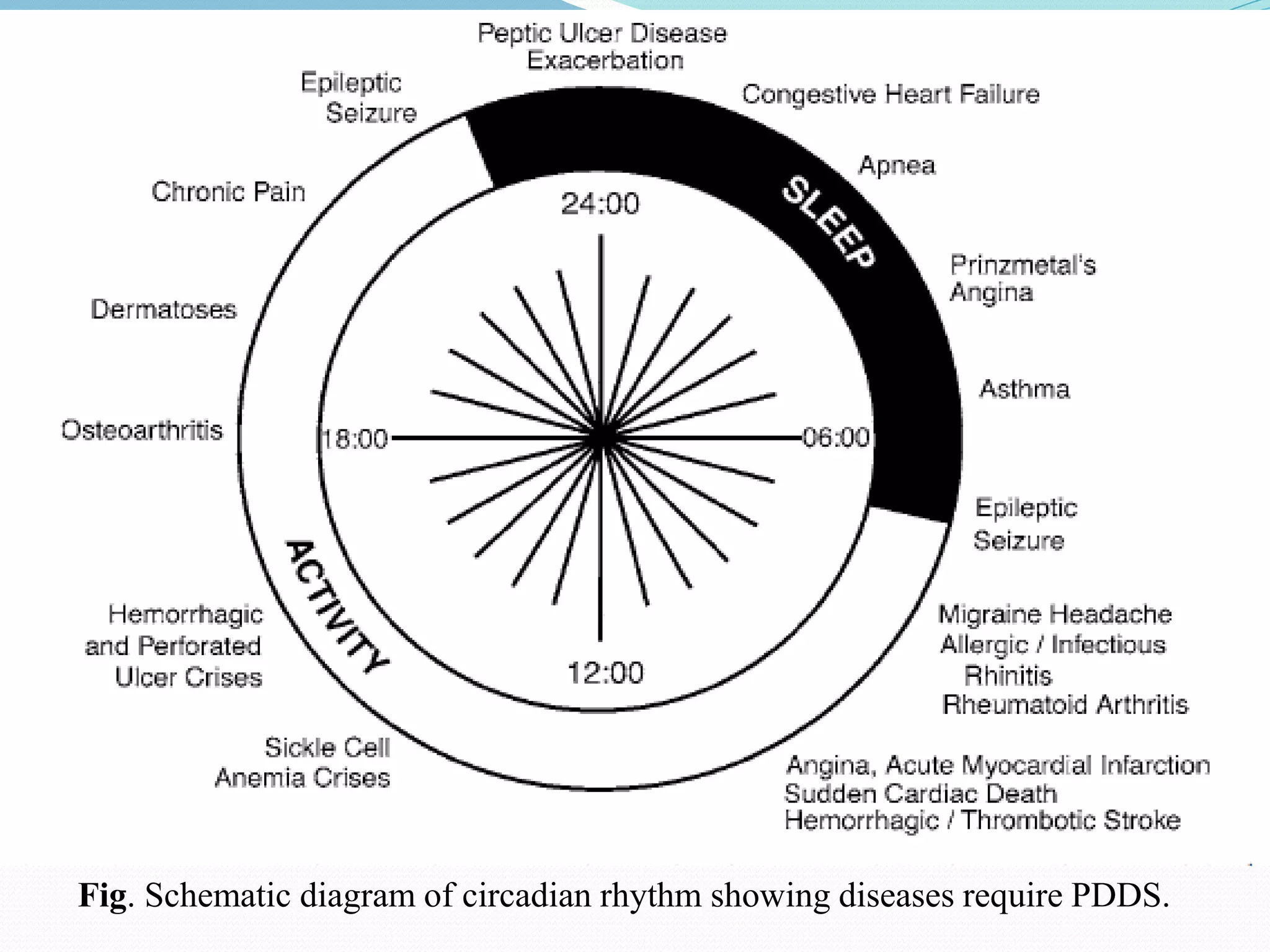
Pulsatile drug delivery systems are developed to deliver drug according to
circadian behavior of diseases. This means that these systems will deliver
drug at time when disease displays its most morbid and mortal state within a
circadian cycle (24 hrs.).
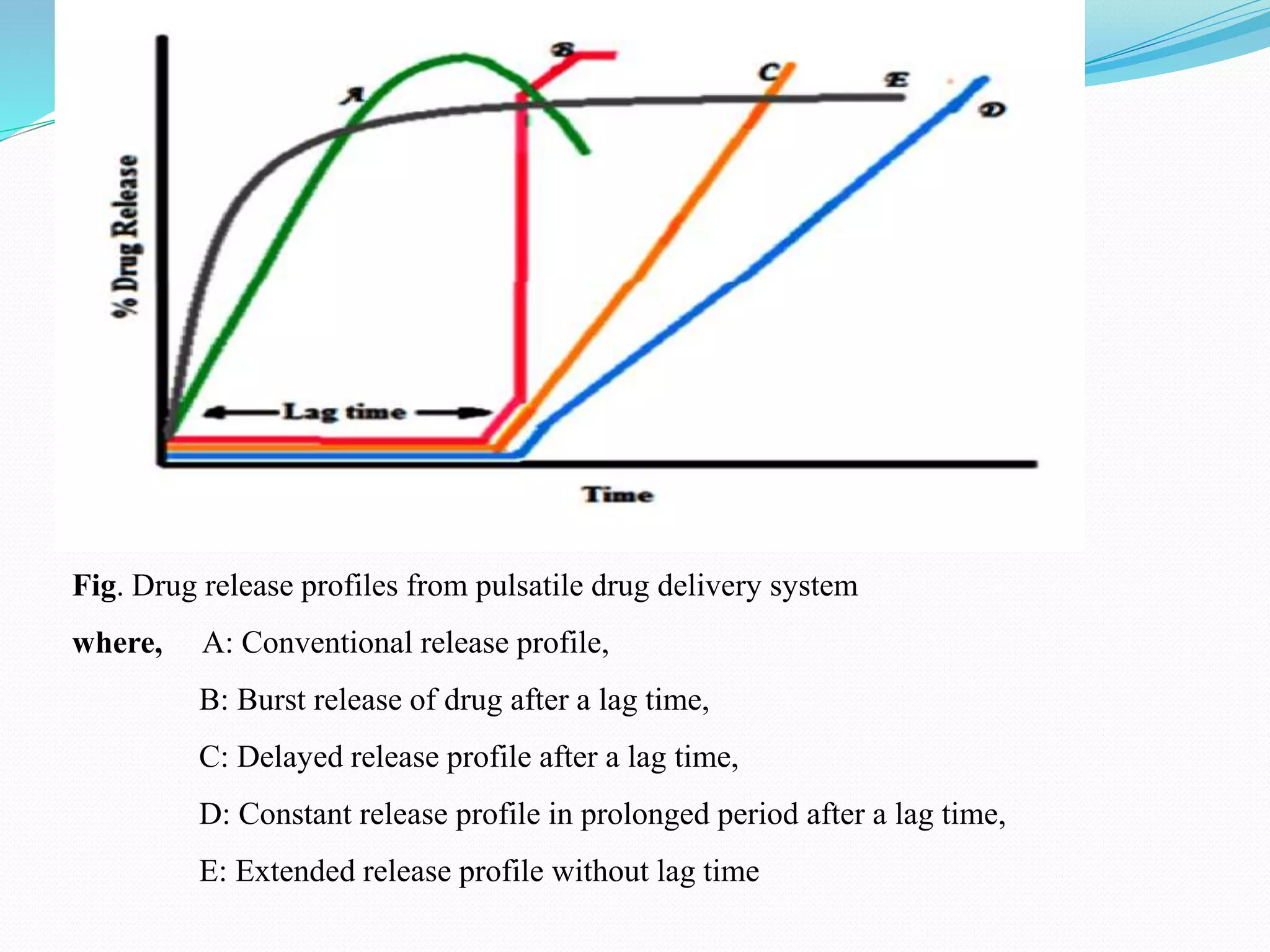
The product follow a sigmoidal drug release profile characterized by a time
period of no release (lag time) followed by a rapid and complete drug
release. Thus drug can be delivered at right time, in right amount and at right
site of action by use of such approach.
Fig. Drug release profiles from pulsatile drug delivery system
where, A: Conventional release profile,
B: Burst release of drug after a lag time,
C: Delayed release profile after a lag time,
D: Constant release profile in prolonged period after a lag time,
E: Extended release profile without lag time
The principle basis for the use of pulsatile release is for the
drugs where a constant drug release, i.e., a zero-order release is
not desired.
Recent studies have revealed that diseases have predictable cyclic
rhythms and that the timing of medication regimens can improve
outcome in selected chronic conditions.
The potential benefits of chronotherapeutics have been
investigated and established for number of diseases like asthma,
arthritis, cancer, diabetes, epilepsy, hypertension, ulcer,
hypercholesterolemia etc.
lion
Fig. Schematic diagram of circadian rhythm showing diseases require PDDS.
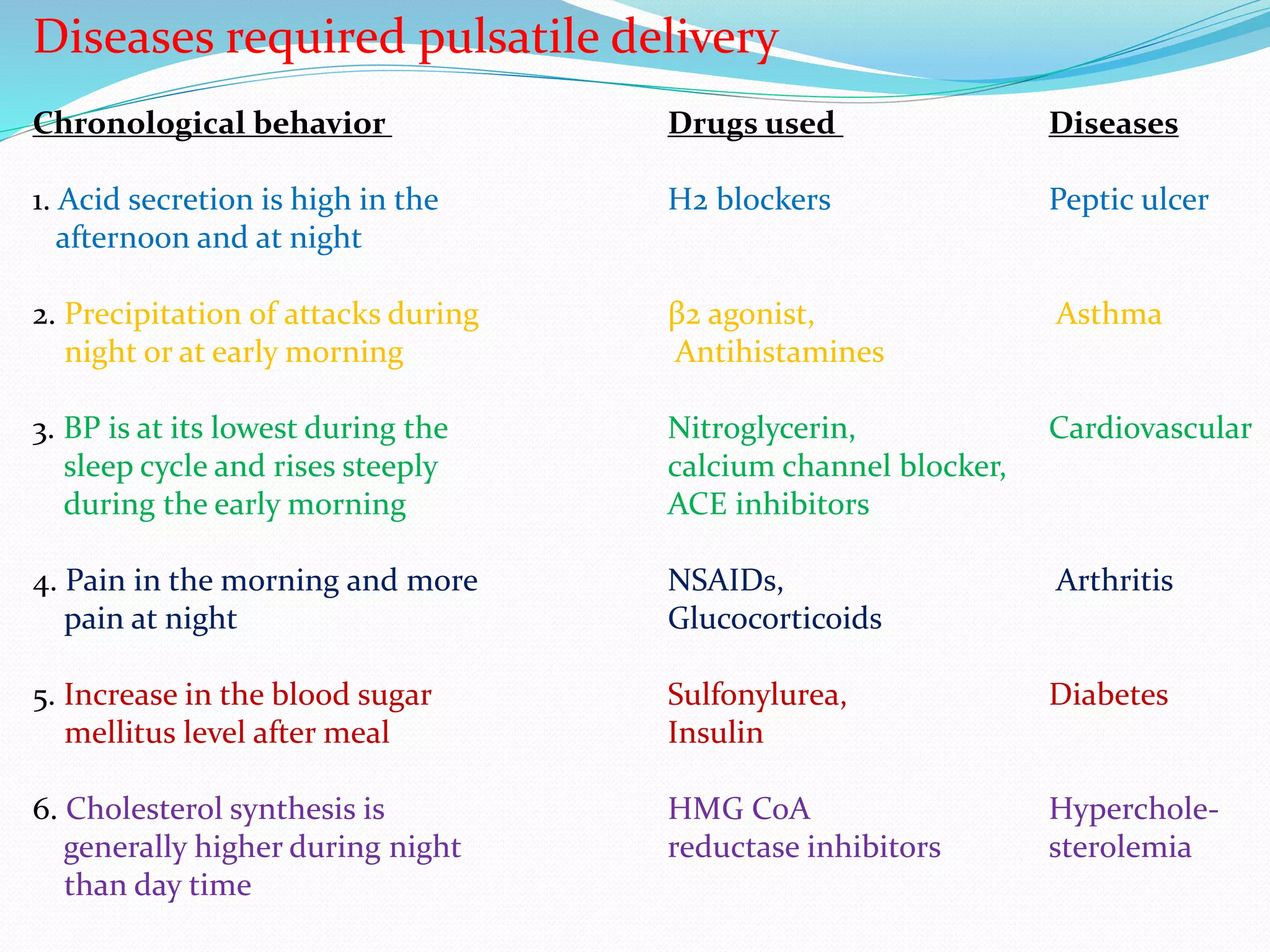
Diseases required pulsatile delivery
Chronological behavior Drugs used Diseases
1. Acid secretion is high in the H2 blockers Peptic ulcer
afternoon and at night
2. Precipitation of attacks during β2 agonist, Asthma
night or at early morning Antihistamines
3. BP is at its lowest during the Nitroglycerin, Cardiovascular
sleep cycle and rises steeply calcium channel blocker,
during the early morning ACE inhibitors
4. Pain in the morning and more NSAIDs, Arthritis
pain at night Glucocorticoids
5. Increase in the blood sugar Sulfonylurea, Diabetes
mellitus level after meal Insulin
6. Cholesterol synthesis is HMG CoA Hyperchole-
generally higher during night reductase inhibitors sterolemia
than day time
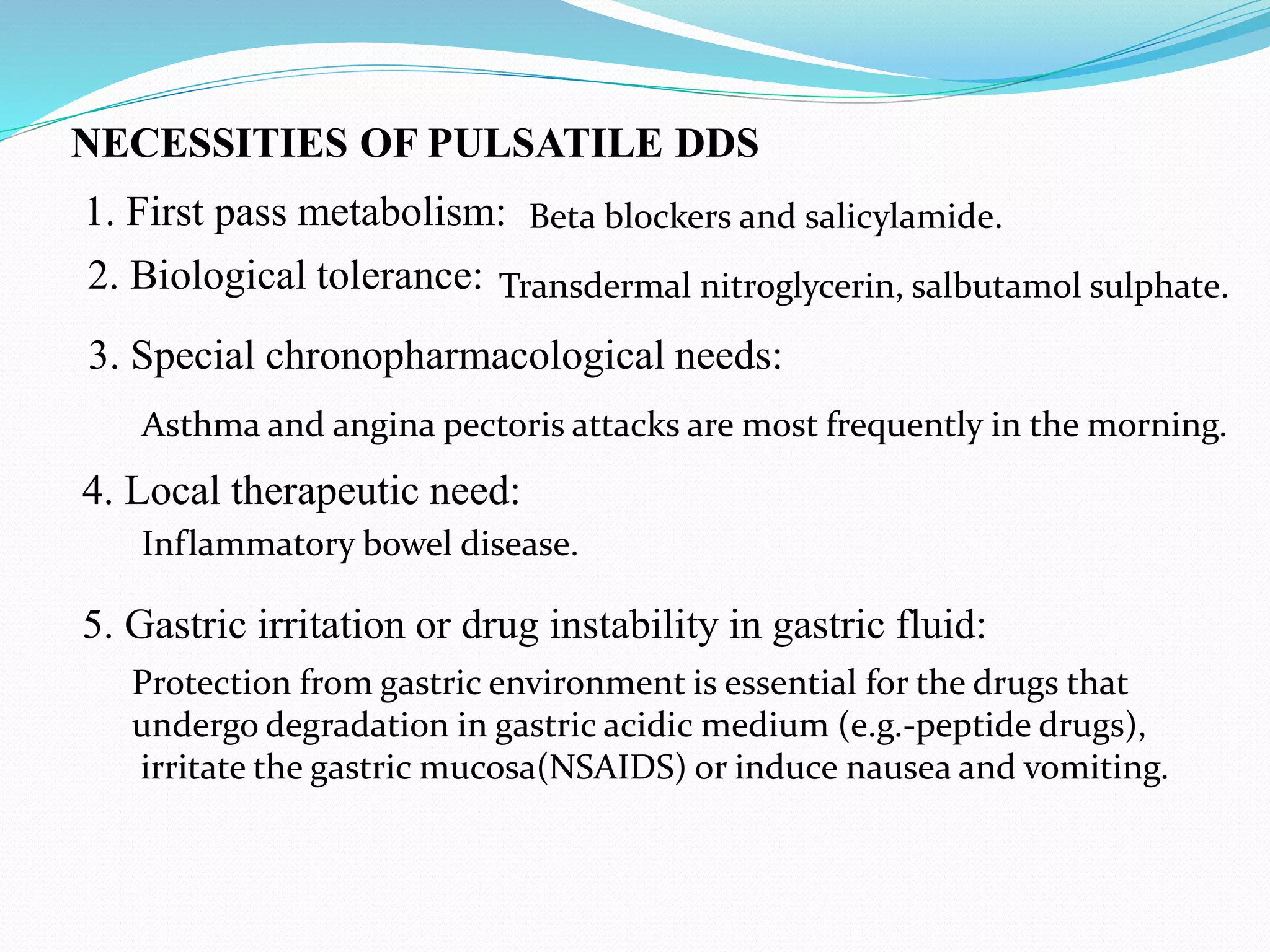
NECESSITIES OF PULSATILE DDS
1. First pass metabolism:
3. Special chronopharmacological needs:
2. Biological tolerance:
4. Local therapeutic need:
5. Gastric irritation or drug instability in gastric fluid:
Transdermal nitroglycerin, salbutamol sulphate.
Beta blockers and salicylamide.
Asthma and angina pectoris attacks are most frequently in the morning.
Inflammatory bowel disease.
Protection from gastric environment is essential for the drugs that
undergo degradation in gastric acidic medium (e.g.-peptide drugs),
irritate the gastric mucosa(NSAIDS) or induce nausea and vomiting.
ADVANTAGES OF PULSATILE DRUG DELIVERY SYSTEM
i. Increases absorption and bioavailability than conventional
immediate release or sustained release drug.
ii. Site targeting allows delivery of poorly bioavailable drugs that
would get destroyed in GI tract environment.
e.g., peptide and protein molecules.
iii. Reduces dose of drug without decrease in therapeutic effects.
iv. No risk of dose dumping and side effects.
v. Less inter- and intra-subject variability.
v. Pulse release allows multiple dosing in a single dosage form.
vi. The system can be utilized for many solid dosage forms like
granules, microspheres, microparticles, tablets, capsules, and
pellets.
vii. Limited risk of local irritation.
viii.Improve stability.
LIMITATIONS OF PDDS:
i. Multiple manufacturing steps and large number of process variables.
ii. Homogeneity of the coated barrier is mandatory to assure the
predictability of the lag time.
iii. Rupture time cannot be always adequately manipulated as it depends on
the physicochemical properties of the polymer.
iv. Higher cost of production.
v. Raw material is not easily available.
v. Dosage form design requires highly skilled/ trained professionals.
vi. Technologies employed and the equipments used are complicated.
METHODS OF PULSATILE DDS
I. Single unit (e.g., tablet or capsule) systems
II. Multiple unit (e.g., pellets, beads) systems.
I. Single-unit systems
 Capsular Systems
 Pulsatile delivery by Osmosis
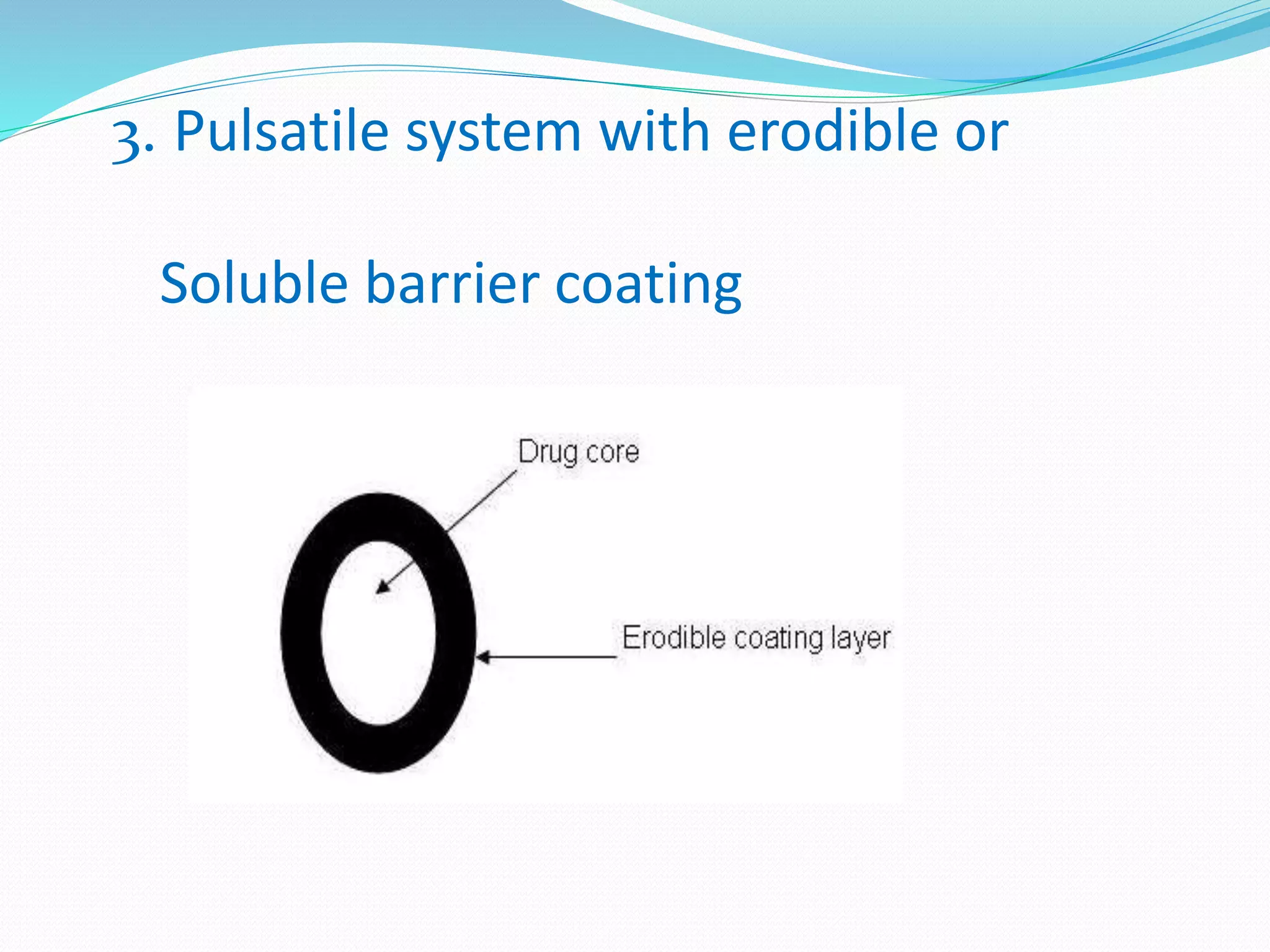
 Pulsatile system with erodible or Soluble barrier coating
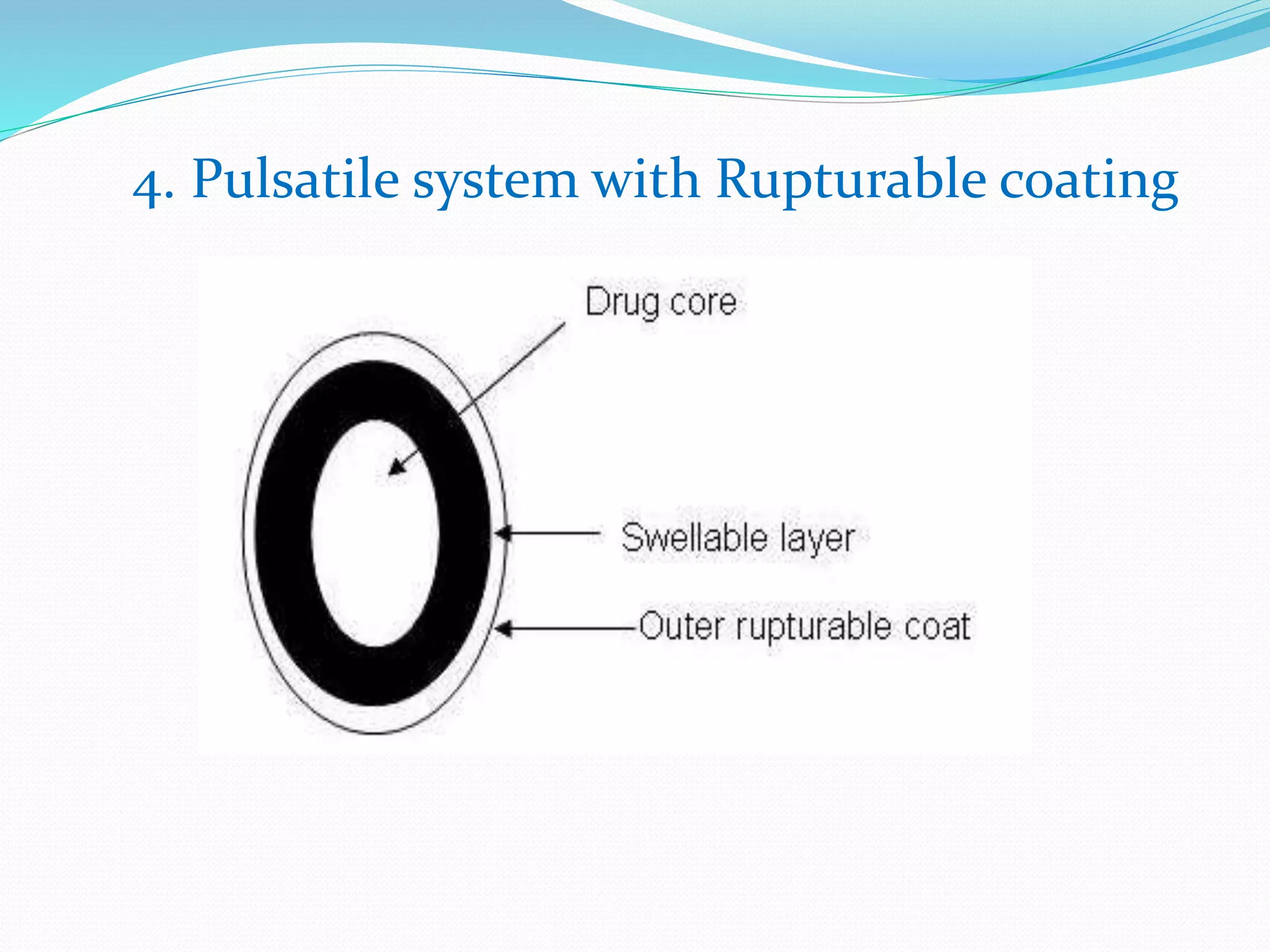
 Pulsatile system with Rupturable coating
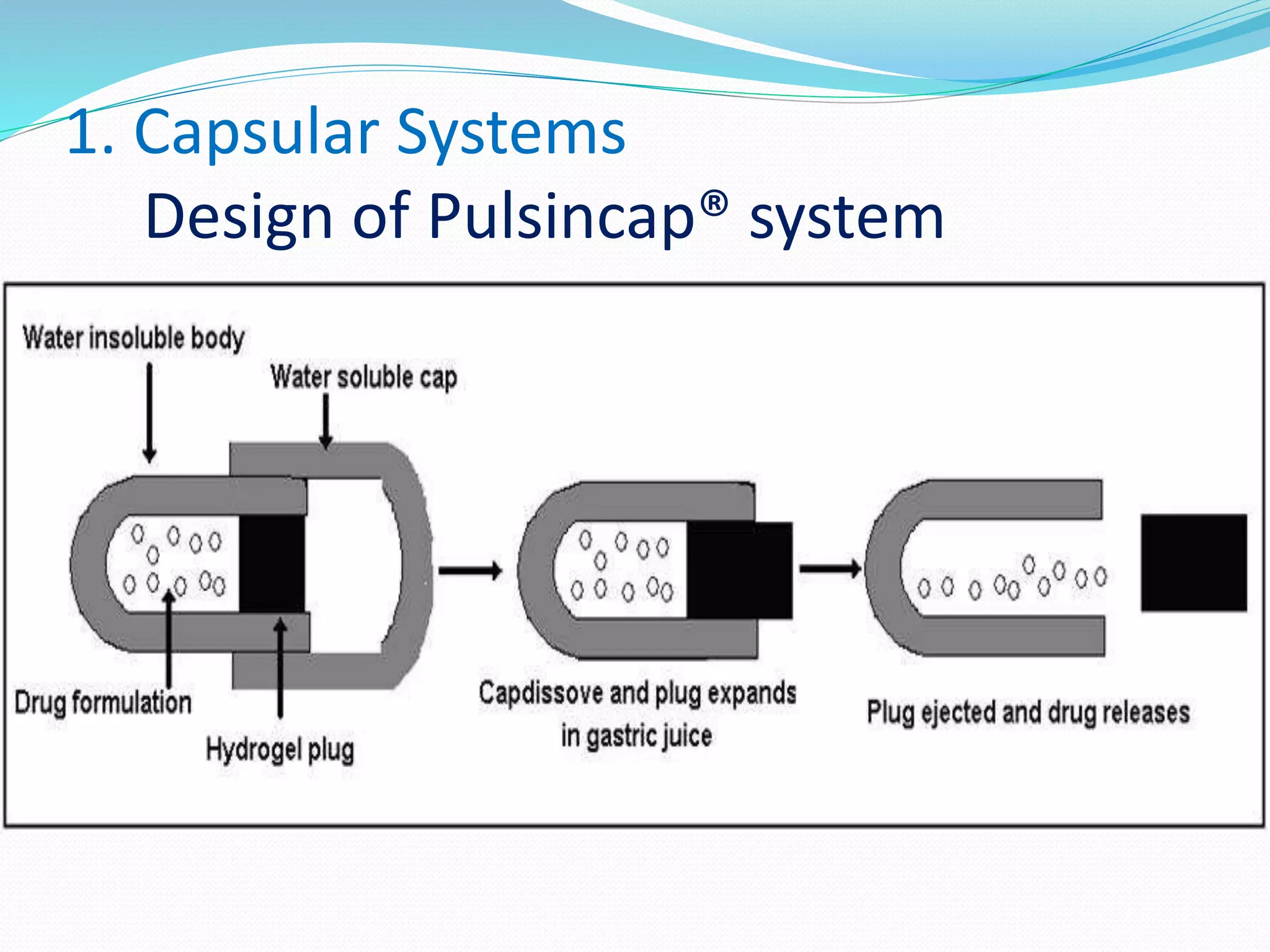
1. Capsular Systems
Design of Pulsincap® system
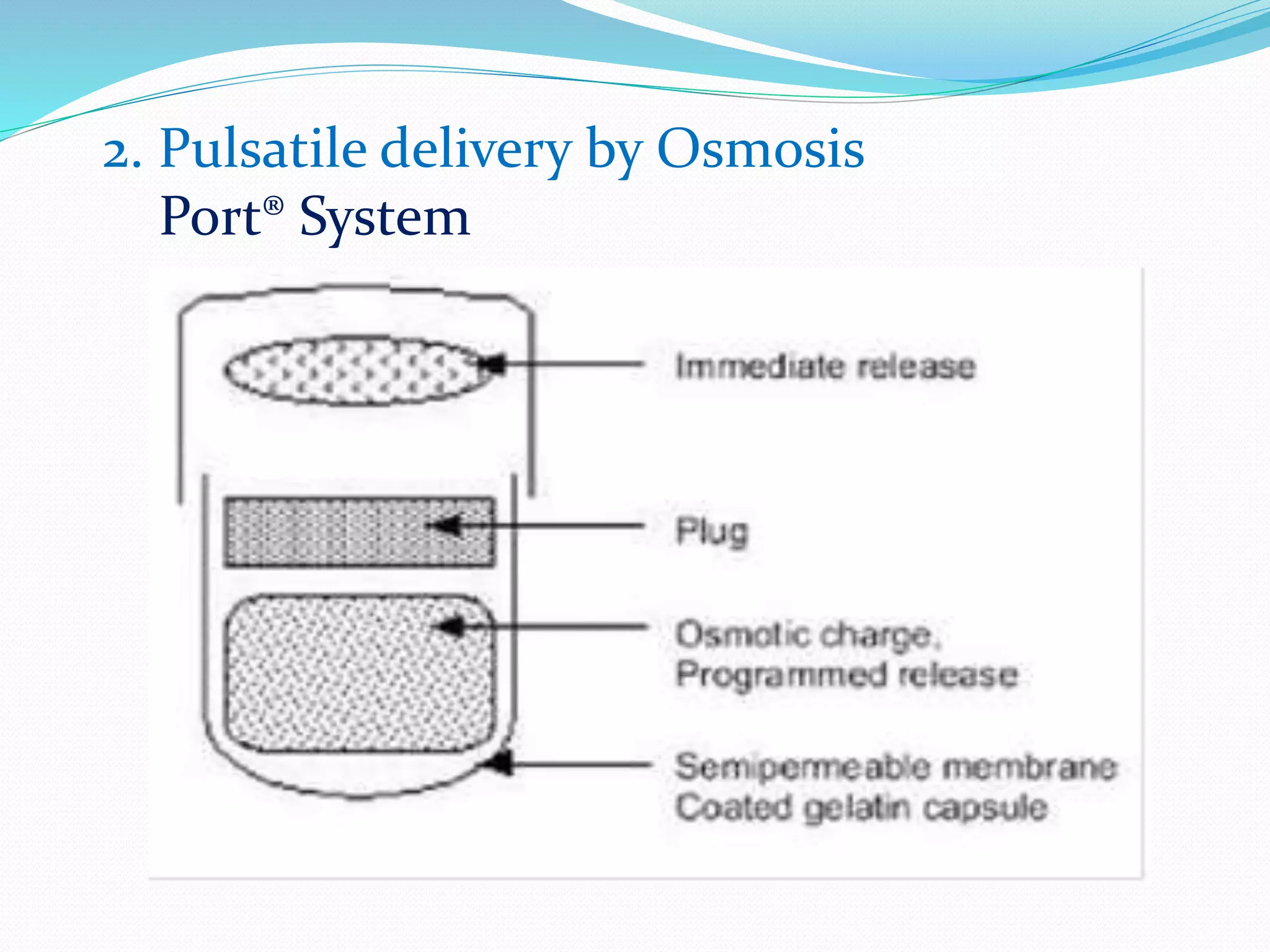
2. Pulsatile delivery by Osmosis
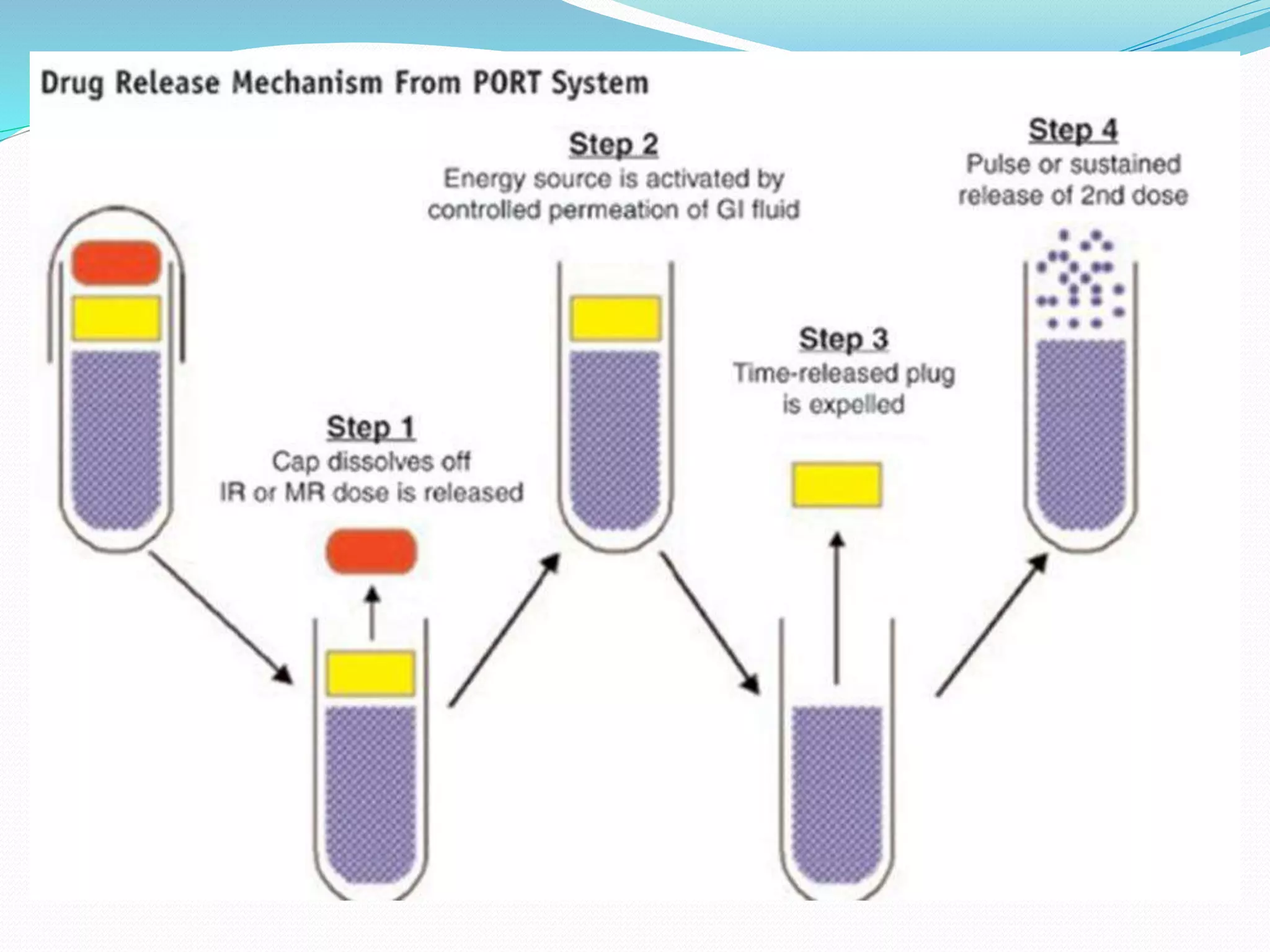
Port® System
3. Pulsatile system with erodible or
Soluble barrier coating
4. Pulsatile system with Rupturable coating
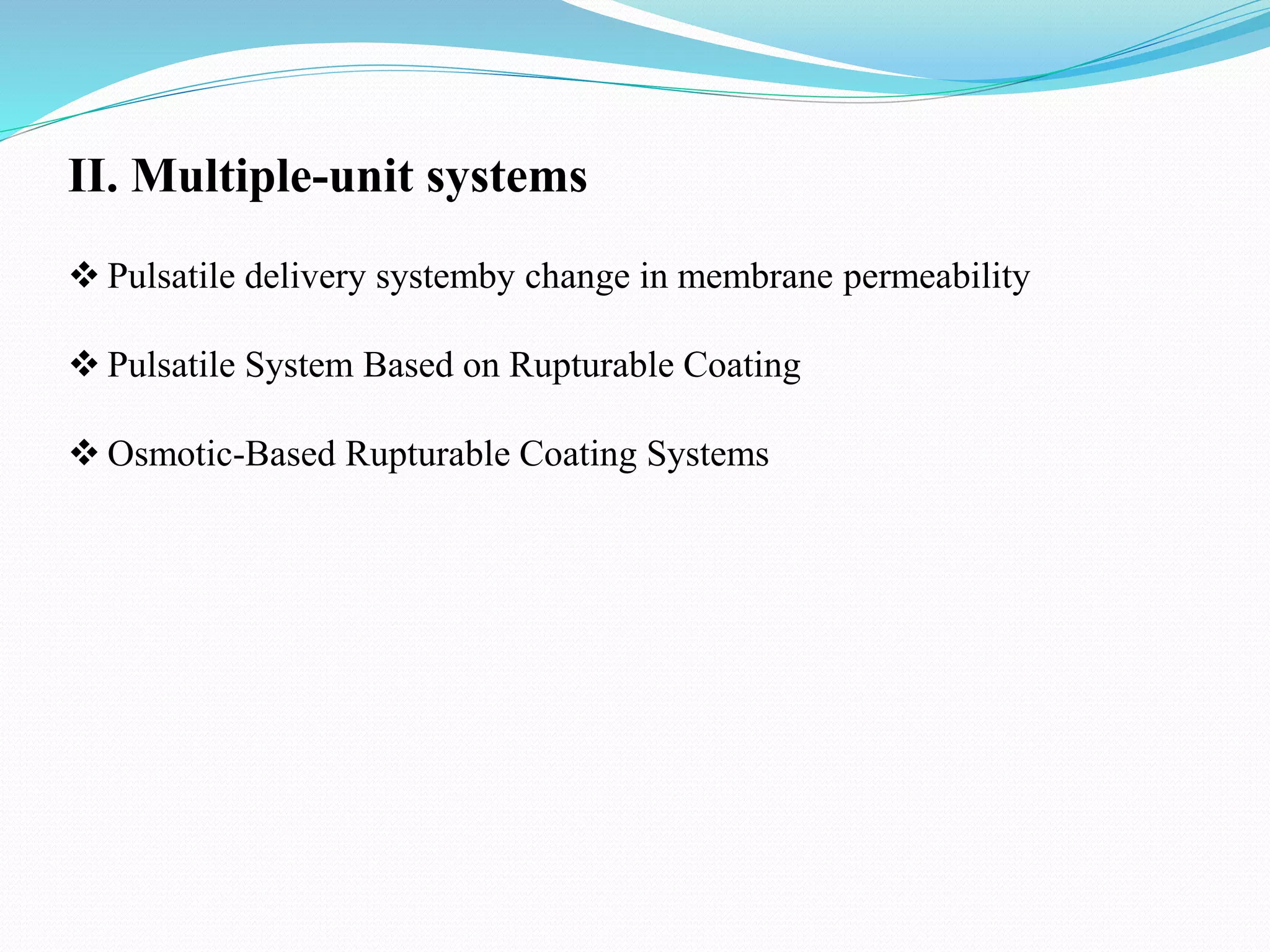
II. Multiple-unit systems
 Pulsatile delivery systemby change in membrane permeability
 Pulsatile System Based on Rupturable Coating
 Osmotic-Based Rupturable Coating Systems
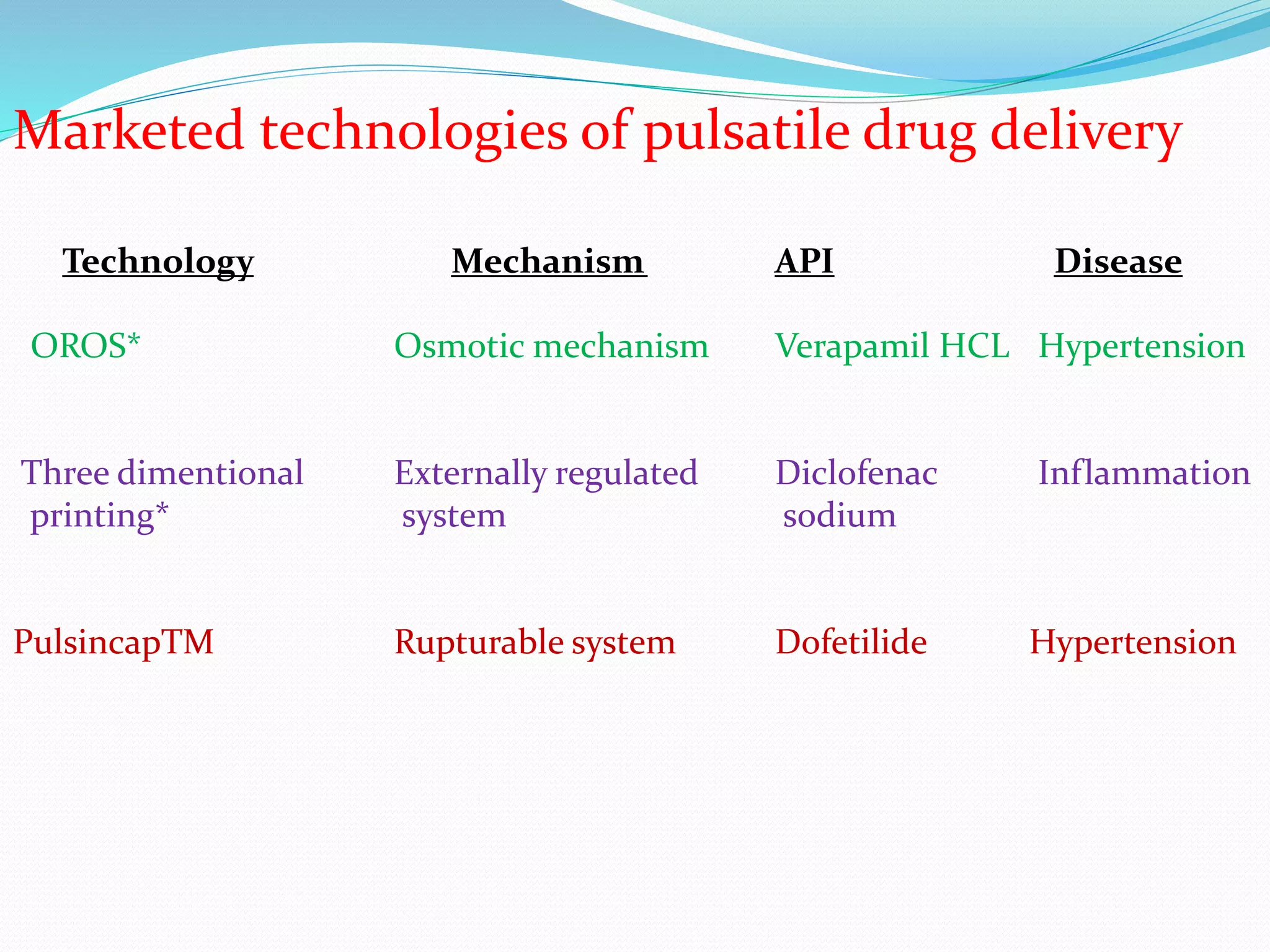
Marketed technologies of pulsatile drug delivery
Technology Mechanism API Disease
OROS* Osmotic mechanism Verapamil HCL Hypertension
Three dimentional Externally regulated Diclofenac Inflammation
printing* system sodium
PulsincapTM Rupturable system Dofetilide Hypertension
Pulsatile system gaining a lot of interest as it is increasing patient
compliance by means of providing time- and site specific drug
delivery system.
PDDS can provide increased therapeutic benefits to the patients,
holds good promises of benefit to the patients suffering from chronic
problems like arthritis, asthma, hypertension etc.
The potential therapeutic benefits of pulsatile drug delivery systems
should ensure that the current high level of interest in this area would
stretch well into future and ensures the betterment of quality life.
Conclusion:
Thank you

Pulsatile drug delivery systems presentation

  • 1.
    SEMINAR ON PULSATILE DRUG DELIVERYSYSTEMS Presented by: CHIRANJIBI ADHIKARI I M. Pharm (Pharmaceutics) Mallige college of pharmacy
  • 2.
    CONTENTS Introduction Necessity of PulsatileDrug Delivery Advantages Limitations Methods for Pulsatile Drug Delivery
  • 3.
    Introduction: Pulsatile drug deliverysystems are developed to deliver drug according to circadian behavior of diseases. This means that these systems will deliver drug at time when disease displays its most morbid and mortal state within a circadian cycle (24 hrs.). The product follow a sigmoidal drug release profile characterized by a time period of no release (lag time) followed by a rapid and complete drug release. Thus drug can be delivered at right time, in right amount and at right site of action by use of such approach.
  • 4.
    Fig. Drug releaseprofiles from pulsatile drug delivery system where, A: Conventional release profile, B: Burst release of drug after a lag time, C: Delayed release profile after a lag time, D: Constant release profile in prolonged period after a lag time, E: Extended release profile without lag time
  • 5.
    The principle basisfor the use of pulsatile release is for the drugs where a constant drug release, i.e., a zero-order release is not desired. Recent studies have revealed that diseases have predictable cyclic rhythms and that the timing of medication regimens can improve outcome in selected chronic conditions. The potential benefits of chronotherapeutics have been investigated and established for number of diseases like asthma, arthritis, cancer, diabetes, epilepsy, hypertension, ulcer, hypercholesterolemia etc.
  • 6.
    lion Fig. Schematic diagramof circadian rhythm showing diseases require PDDS.
  • 7.
    Diseases required pulsatiledelivery Chronological behavior Drugs used Diseases 1. Acid secretion is high in the H2 blockers Peptic ulcer afternoon and at night 2. Precipitation of attacks during β2 agonist, Asthma night or at early morning Antihistamines 3. BP is at its lowest during the Nitroglycerin, Cardiovascular sleep cycle and rises steeply calcium channel blocker, during the early morning ACE inhibitors 4. Pain in the morning and more NSAIDs, Arthritis pain at night Glucocorticoids 5. Increase in the blood sugar Sulfonylurea, Diabetes mellitus level after meal Insulin 6. Cholesterol synthesis is HMG CoA Hyperchole- generally higher during night reductase inhibitors sterolemia than day time
  • 8.
    NECESSITIES OF PULSATILEDDS 1. First pass metabolism: 3. Special chronopharmacological needs: 2. Biological tolerance: 4. Local therapeutic need: 5. Gastric irritation or drug instability in gastric fluid: Transdermal nitroglycerin, salbutamol sulphate. Beta blockers and salicylamide. Asthma and angina pectoris attacks are most frequently in the morning. Inflammatory bowel disease. Protection from gastric environment is essential for the drugs that undergo degradation in gastric acidic medium (e.g.-peptide drugs), irritate the gastric mucosa(NSAIDS) or induce nausea and vomiting.
  • 9.
    ADVANTAGES OF PULSATILEDRUG DELIVERY SYSTEM i. Increases absorption and bioavailability than conventional immediate release or sustained release drug. ii. Site targeting allows delivery of poorly bioavailable drugs that would get destroyed in GI tract environment. e.g., peptide and protein molecules. iii. Reduces dose of drug without decrease in therapeutic effects. iv. No risk of dose dumping and side effects. v. Less inter- and intra-subject variability.
  • 10.
    v. Pulse releaseallows multiple dosing in a single dosage form. vi. The system can be utilized for many solid dosage forms like granules, microspheres, microparticles, tablets, capsules, and pellets. vii. Limited risk of local irritation. viii.Improve stability.
  • 11.
    LIMITATIONS OF PDDS: i.Multiple manufacturing steps and large number of process variables. ii. Homogeneity of the coated barrier is mandatory to assure the predictability of the lag time. iii. Rupture time cannot be always adequately manipulated as it depends on the physicochemical properties of the polymer. iv. Higher cost of production. v. Raw material is not easily available. v. Dosage form design requires highly skilled/ trained professionals. vi. Technologies employed and the equipments used are complicated.
  • 12.
    METHODS OF PULSATILEDDS I. Single unit (e.g., tablet or capsule) systems II. Multiple unit (e.g., pellets, beads) systems. I. Single-unit systems  Capsular Systems  Pulsatile delivery by Osmosis  Pulsatile system with erodible or Soluble barrier coating  Pulsatile system with Rupturable coating
  • 13.
    1. Capsular Systems Designof Pulsincap® system
  • 14.
    2. Pulsatile deliveryby Osmosis Port® System
  • 16.
    3. Pulsatile systemwith erodible or Soluble barrier coating
  • 17.
    4. Pulsatile systemwith Rupturable coating
  • 18.
    II. Multiple-unit systems Pulsatile delivery systemby change in membrane permeability  Pulsatile System Based on Rupturable Coating  Osmotic-Based Rupturable Coating Systems
  • 19.
    Marketed technologies ofpulsatile drug delivery Technology Mechanism API Disease OROS* Osmotic mechanism Verapamil HCL Hypertension Three dimentional Externally regulated Diclofenac Inflammation printing* system sodium PulsincapTM Rupturable system Dofetilide Hypertension
  • 20.
    Pulsatile system gaininga lot of interest as it is increasing patient compliance by means of providing time- and site specific drug delivery system. PDDS can provide increased therapeutic benefits to the patients, holds good promises of benefit to the patients suffering from chronic problems like arthritis, asthma, hypertension etc. The potential therapeutic benefits of pulsatile drug delivery systems should ensure that the current high level of interest in this area would stretch well into future and ensures the betterment of quality life. Conclusion:
  • 21.

Editor's Notes

  • #4 Chronobiology is the study of biological rhythms and their mechanisms. Circadian rhythms are self-sustaining, endogenous oscillations. “Circa” means about and “dies” means day.