
Location as Invisible Interface: The UX/UI of ambient applications Amber CaseAugmented Reality Event • May 2011case@geoloqi.com • http://geoloqi.com • @caseorganicSlides available atslideshare.net/caseorganic
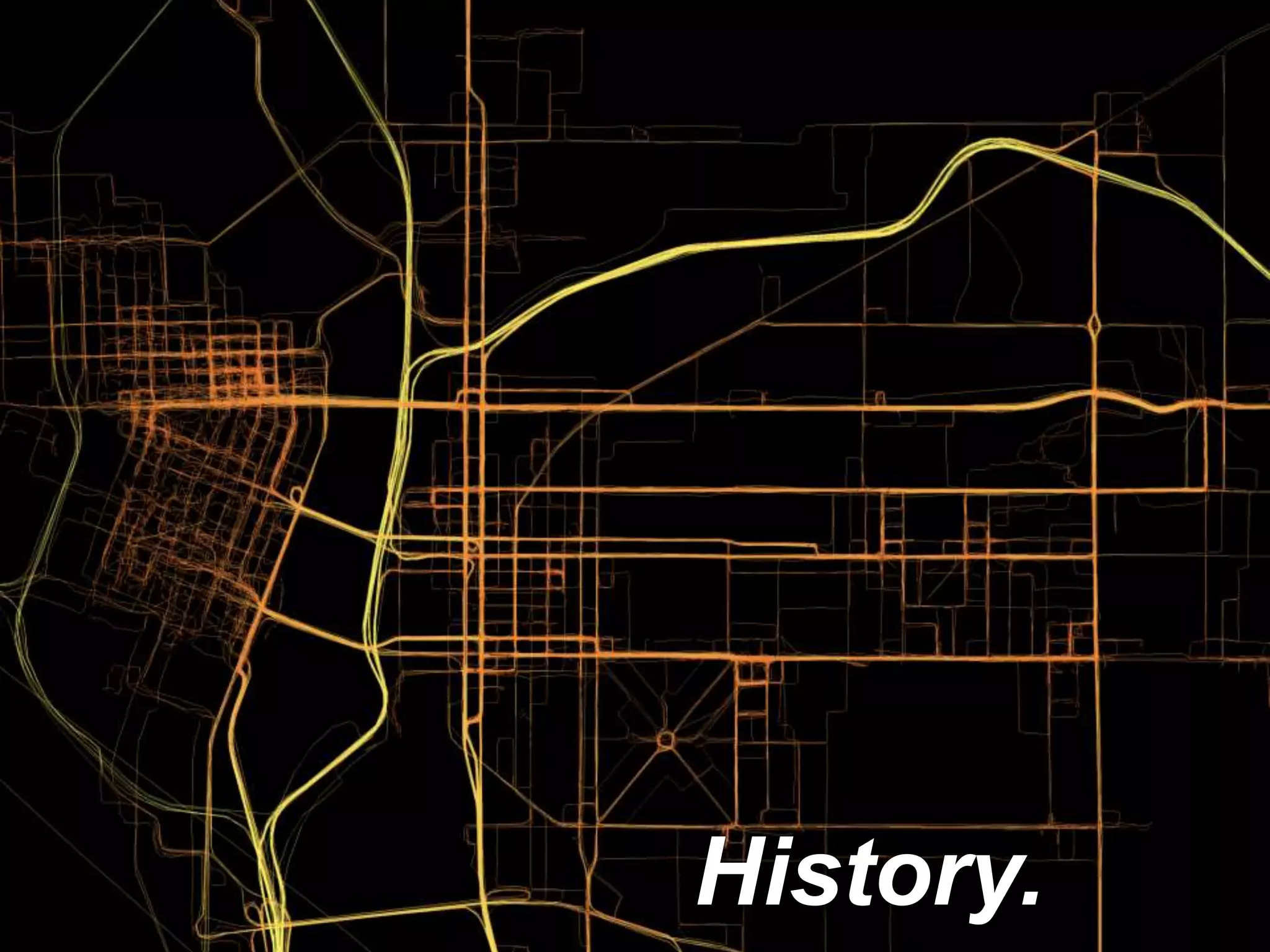
History.
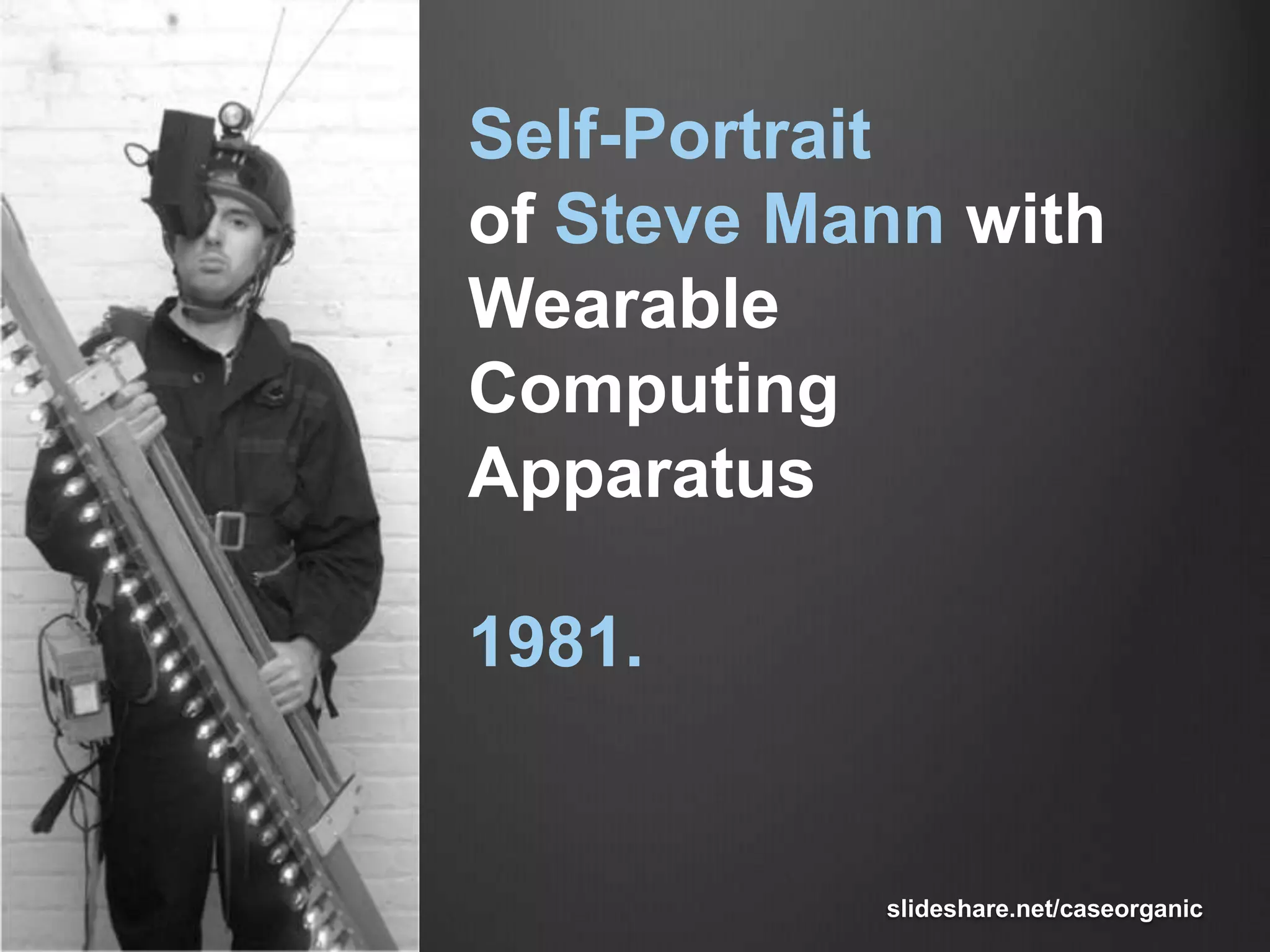
Self-Portrait of Steve Mann with Wearable Computing Apparatus1981.slideshare.net/caseorganic
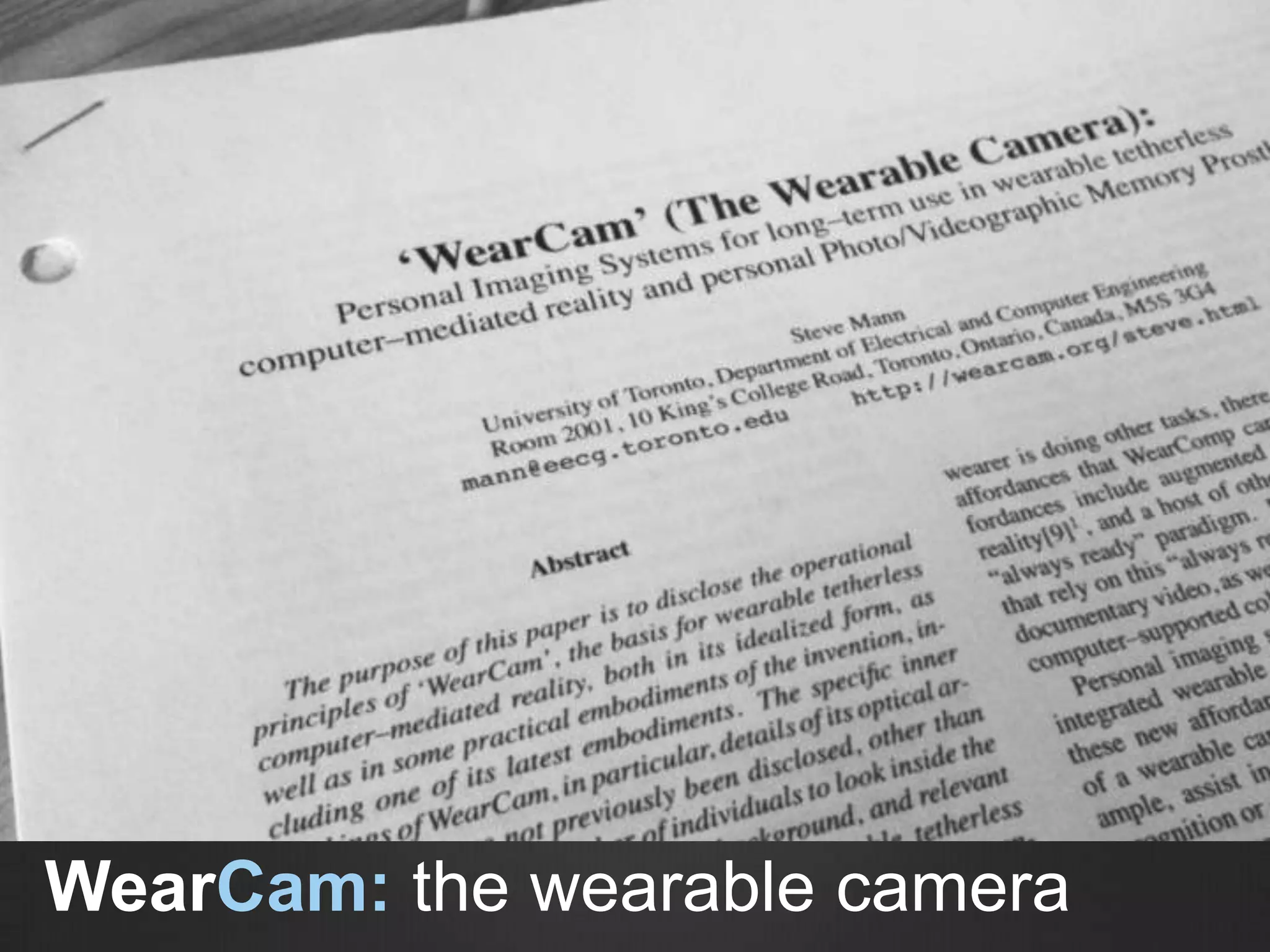
WearCam:the wearable camera
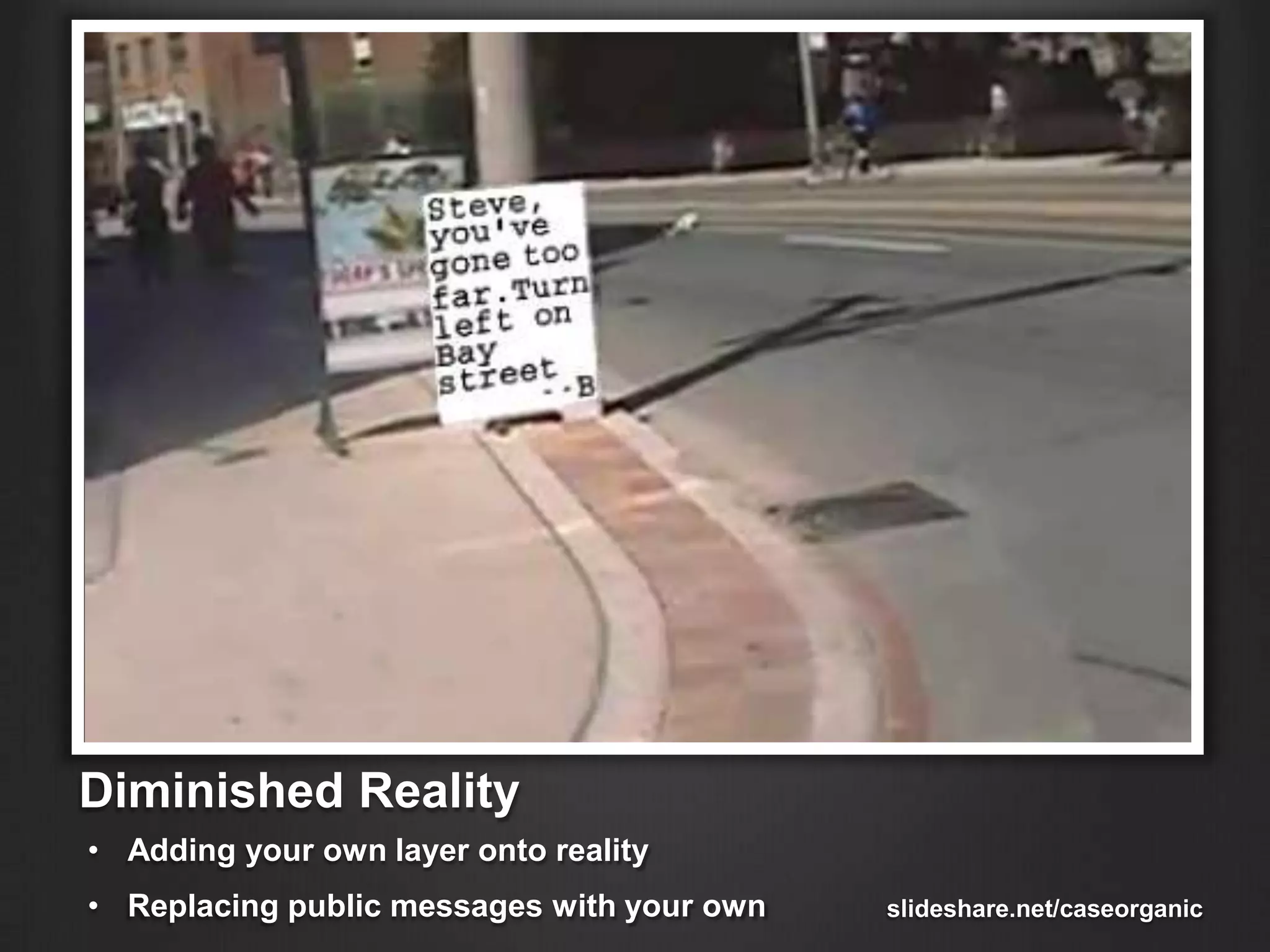
Diminished RealityAdding your own layer onto reality
Replacing public messages with your ownslideshare.net/caseorganic
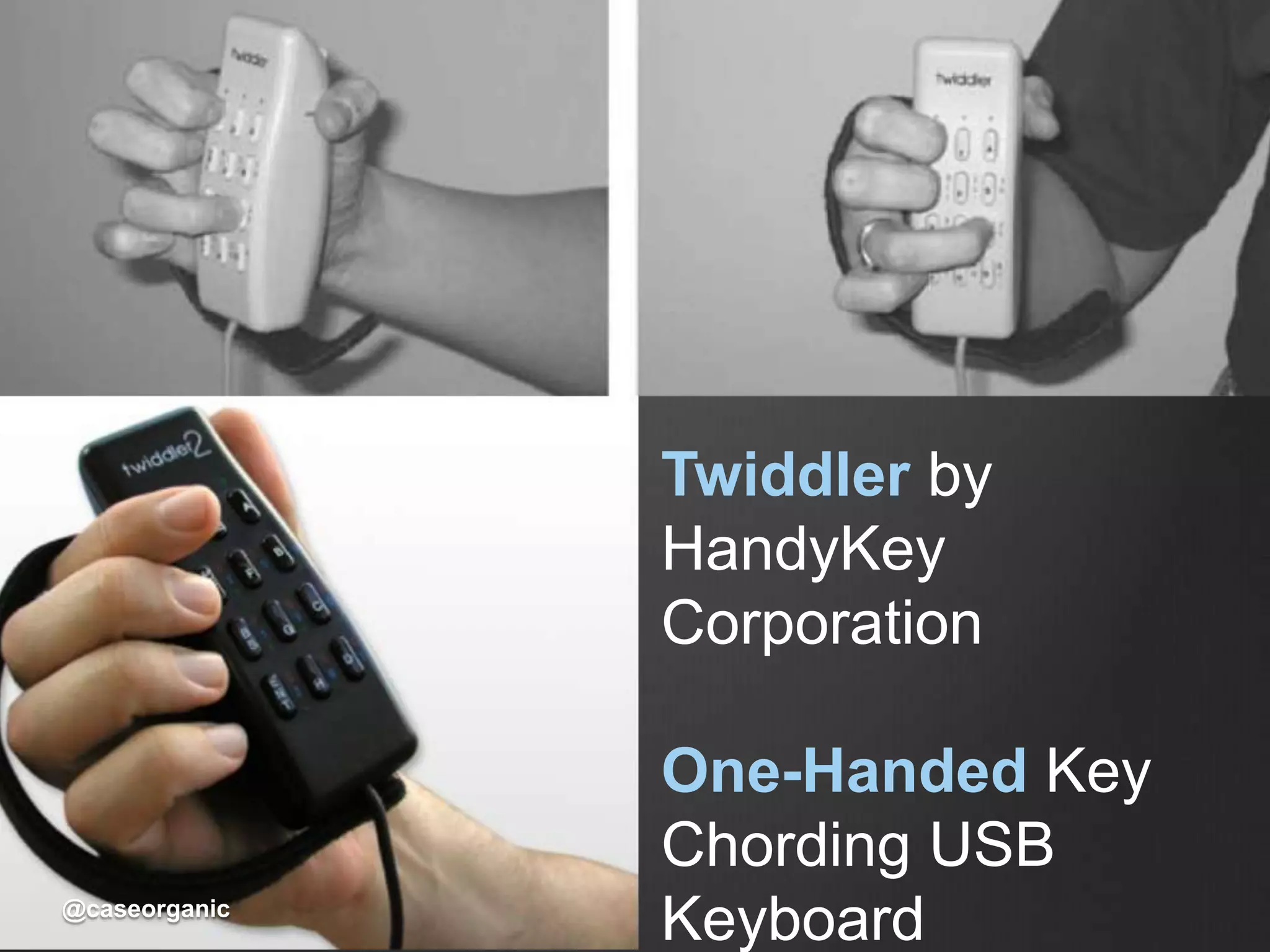
Twiddlerby HandyKeyCorporationOne-Handed Key Chording USB Keyboard@caseorganic
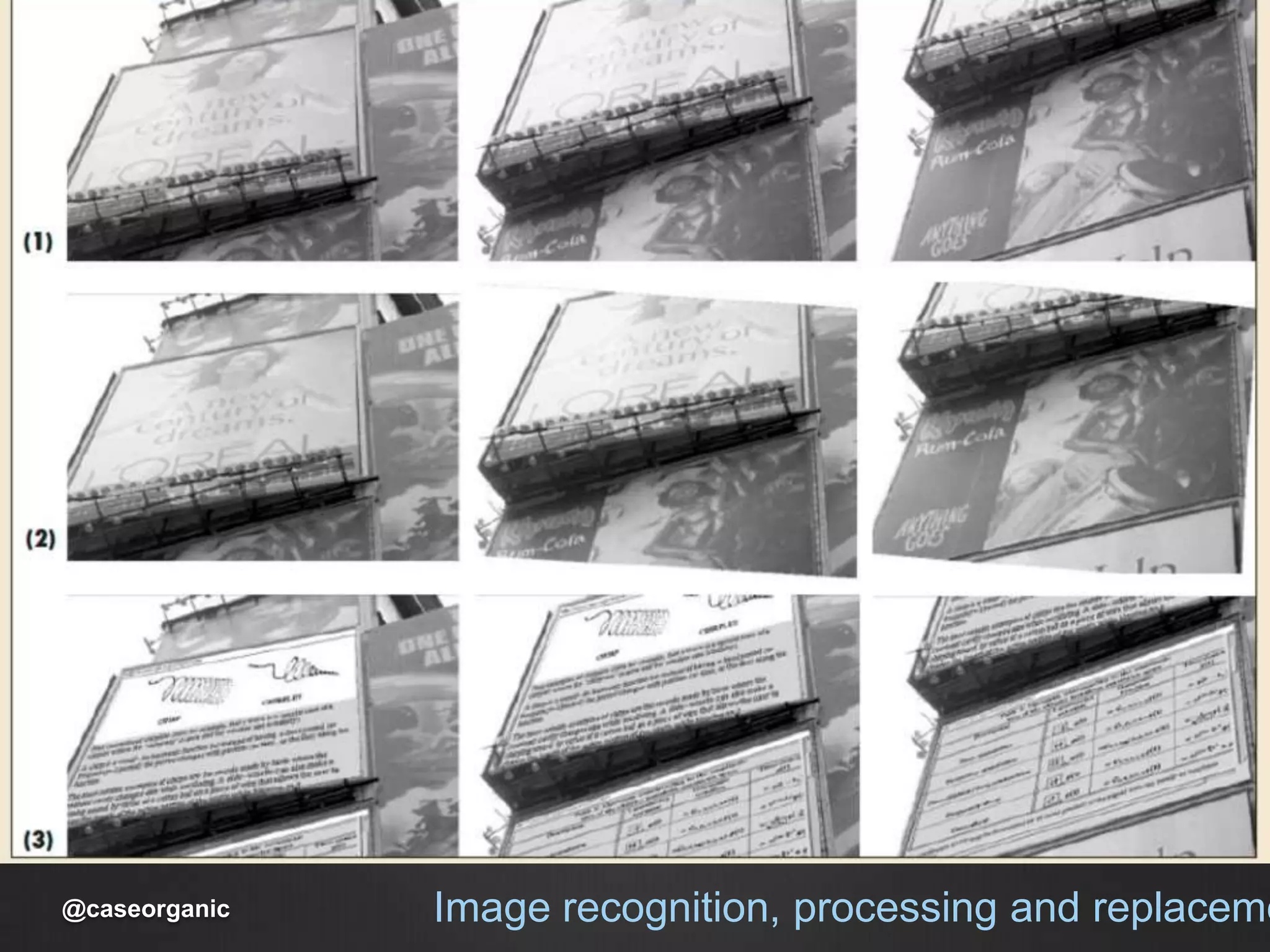
Image recognition, processing and replacement. @caseorganic
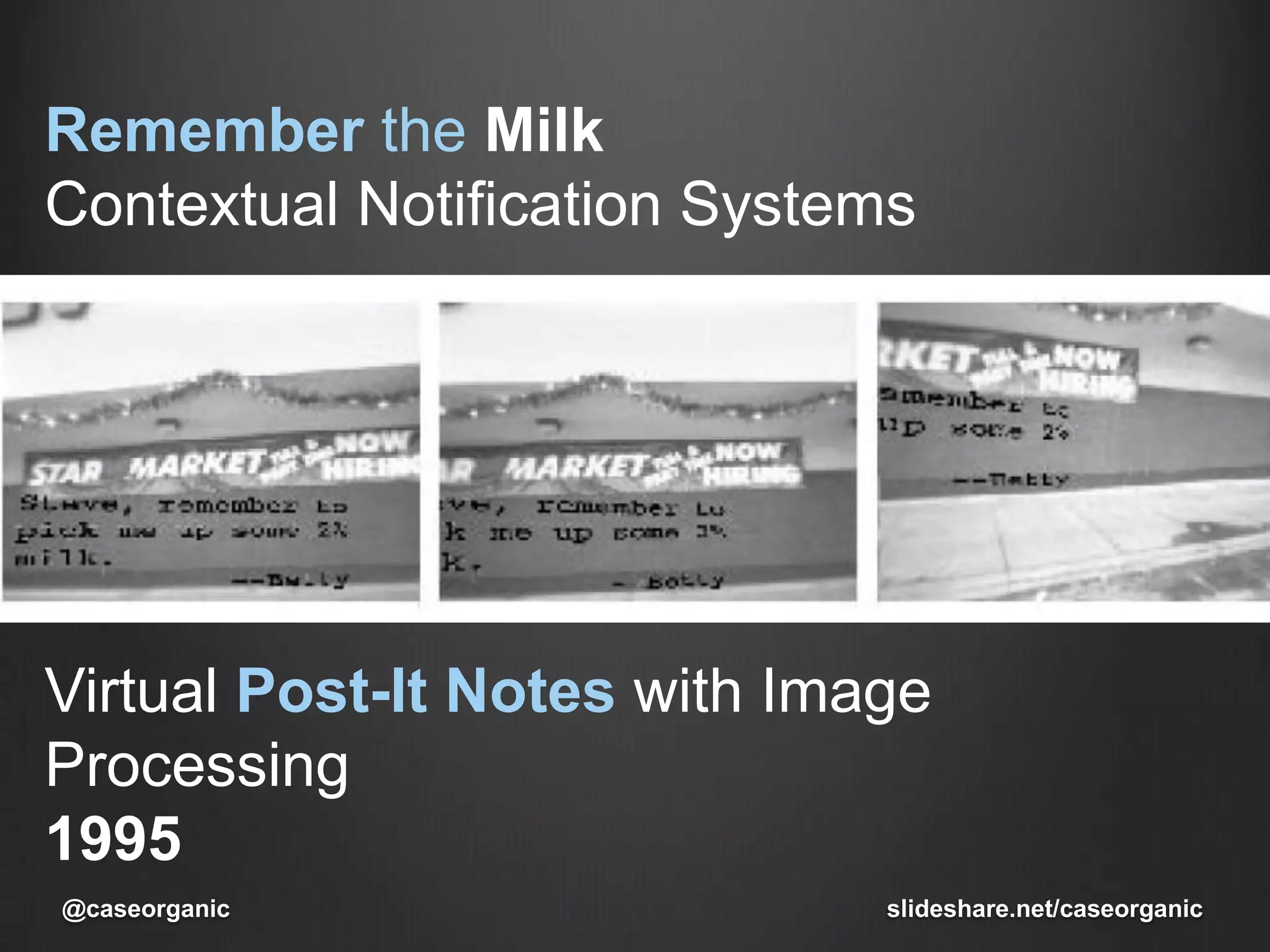
Remember the MilkContextual Notification SystemsVirtual Post-It Noteswith Image Processing1995slideshare.net/caseorganic@caseorganic
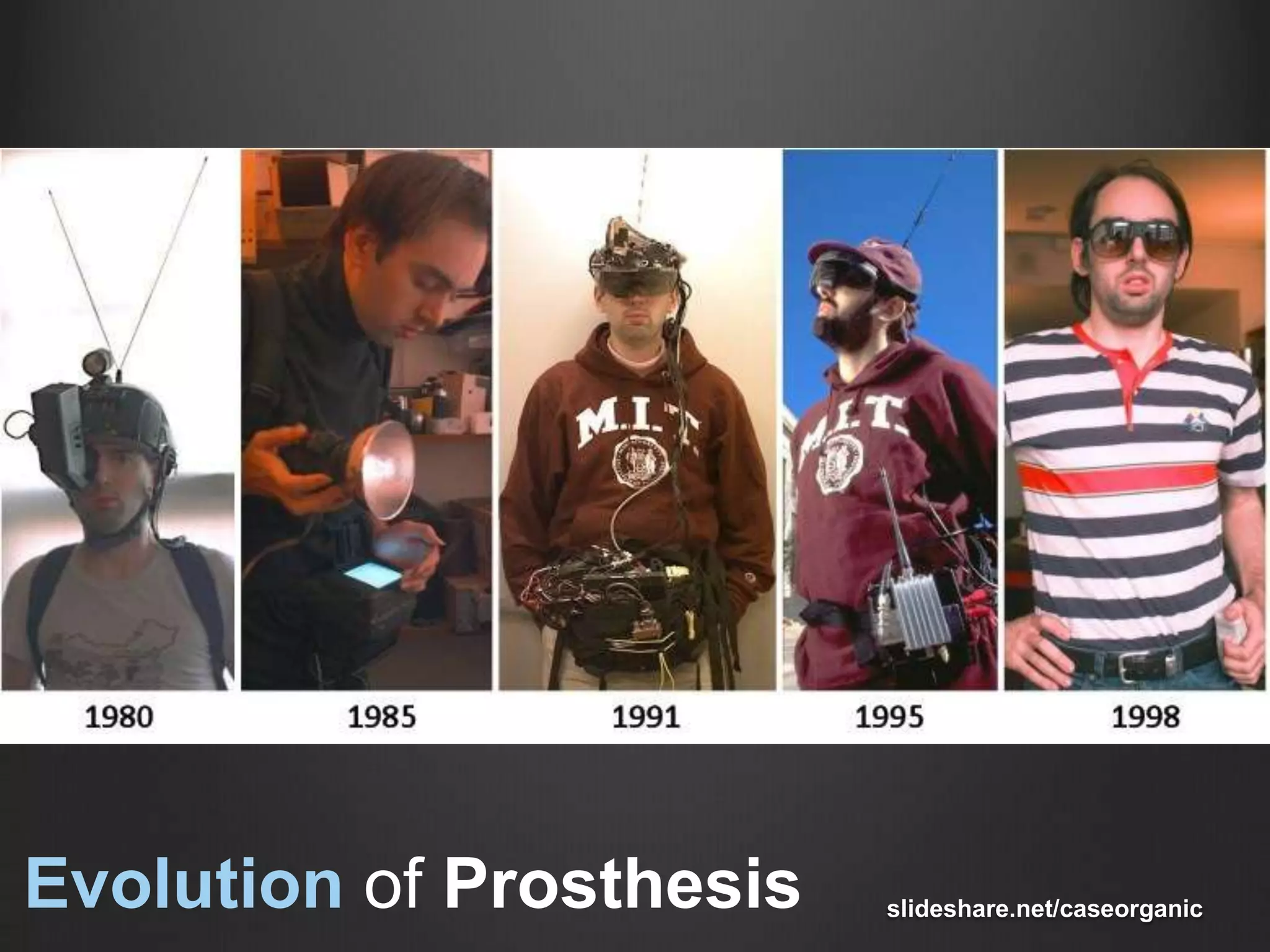
Evolutionof Prosthesisslideshare.net/caseorganic
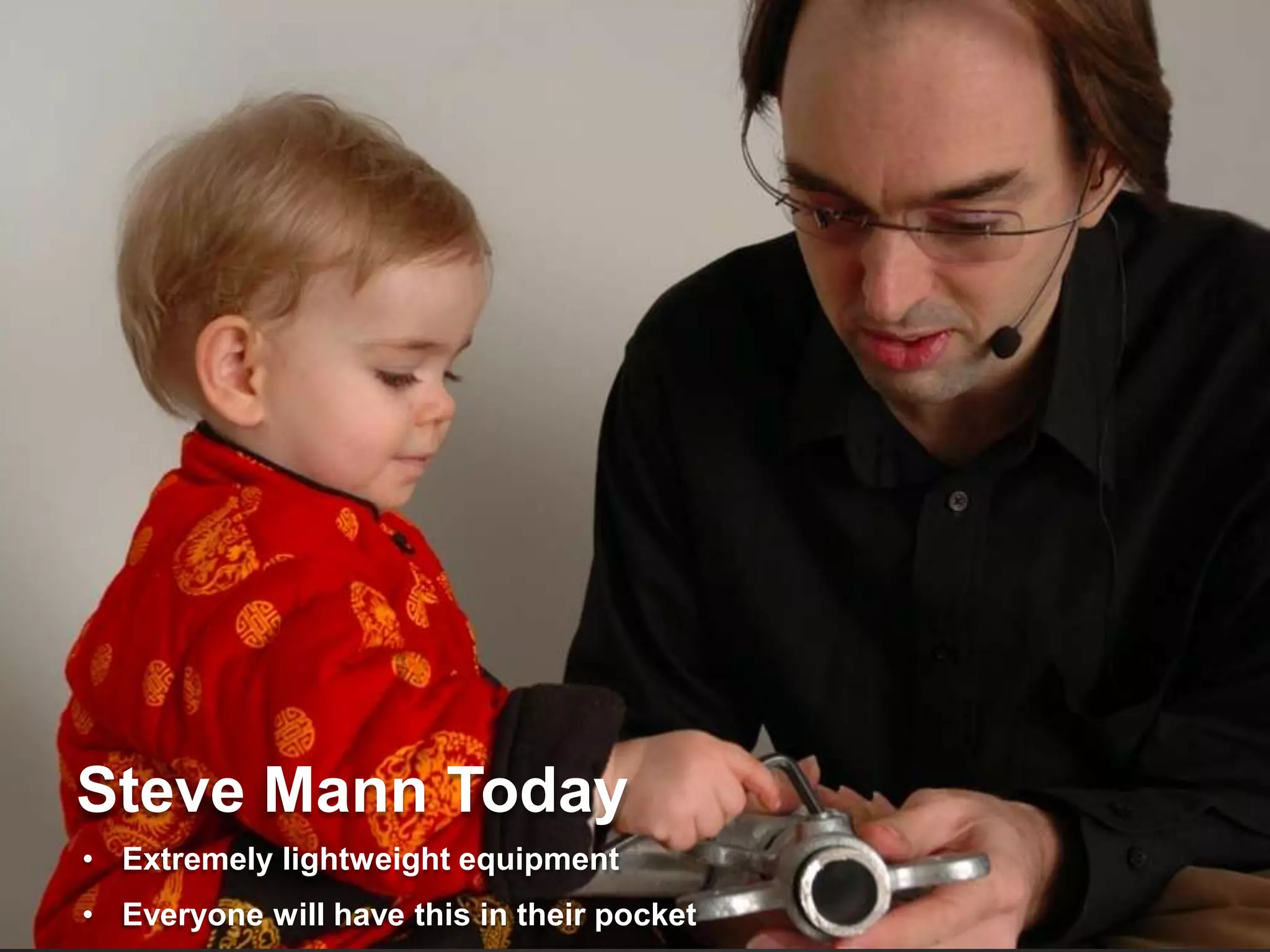
Steve Mann TodayExtremely lightweight equipment
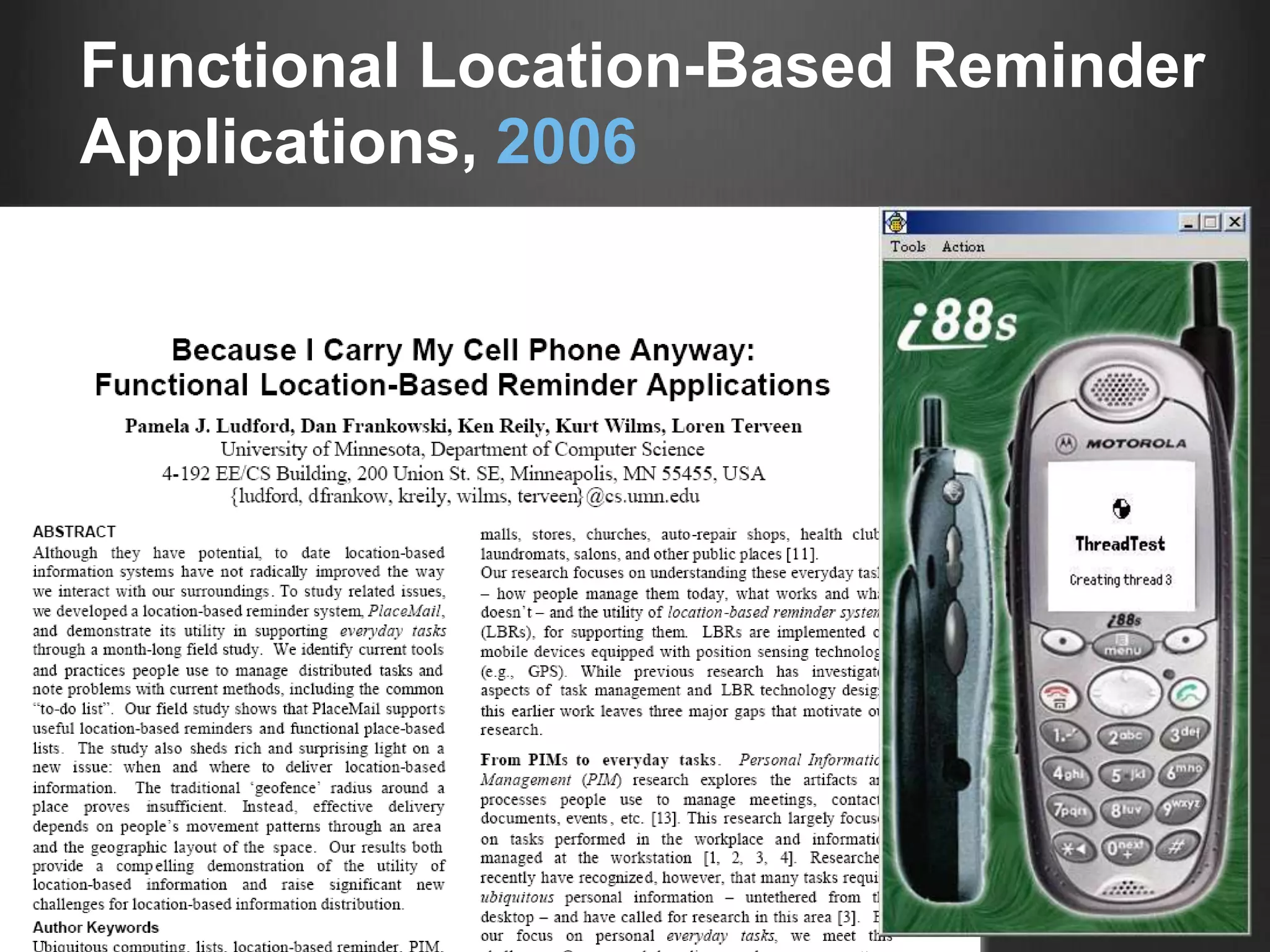
Everyone will have this in their pocketFunctional Location-Based Reminder Applications, 2006
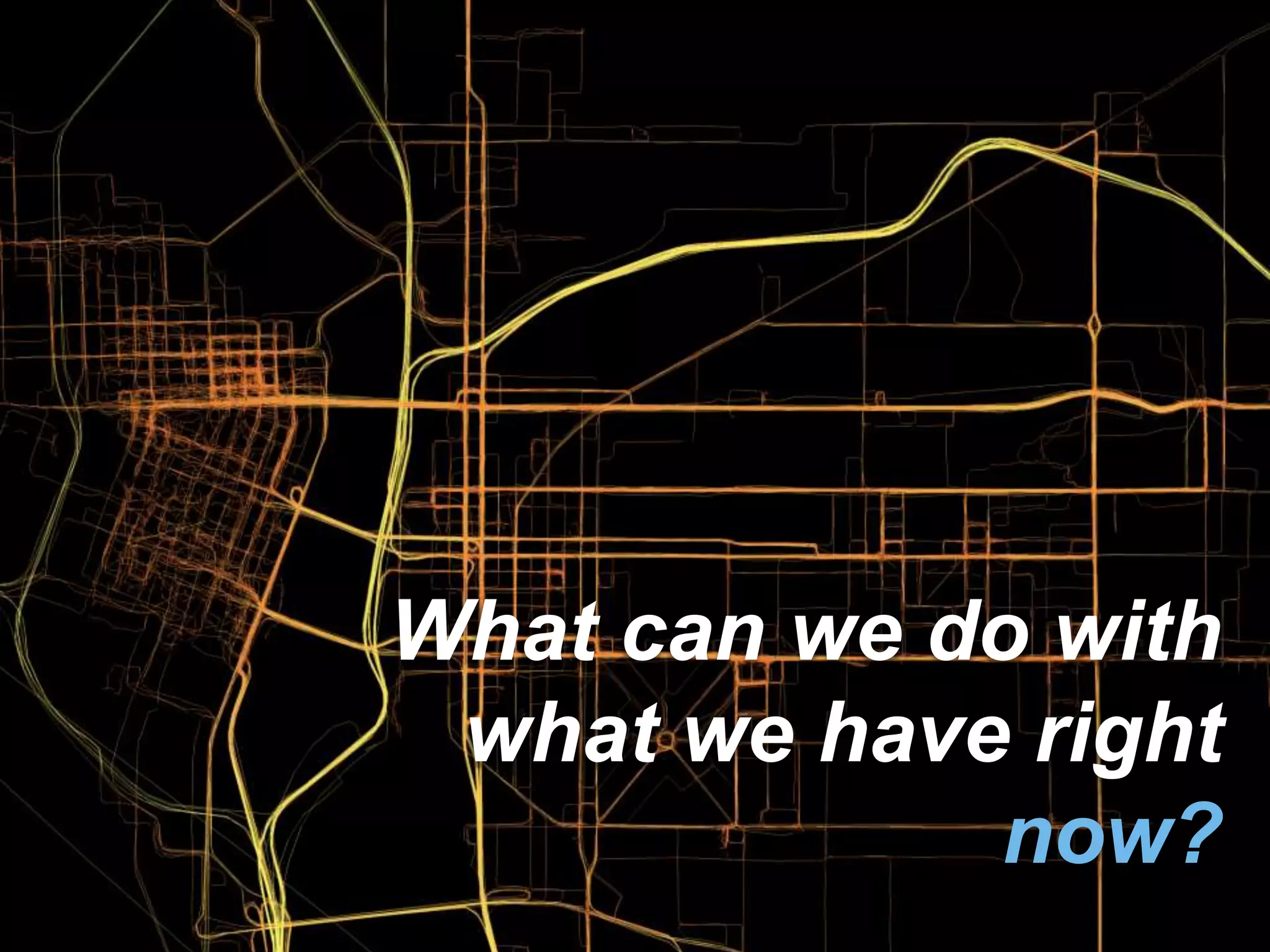
What can we do with what we have right now?
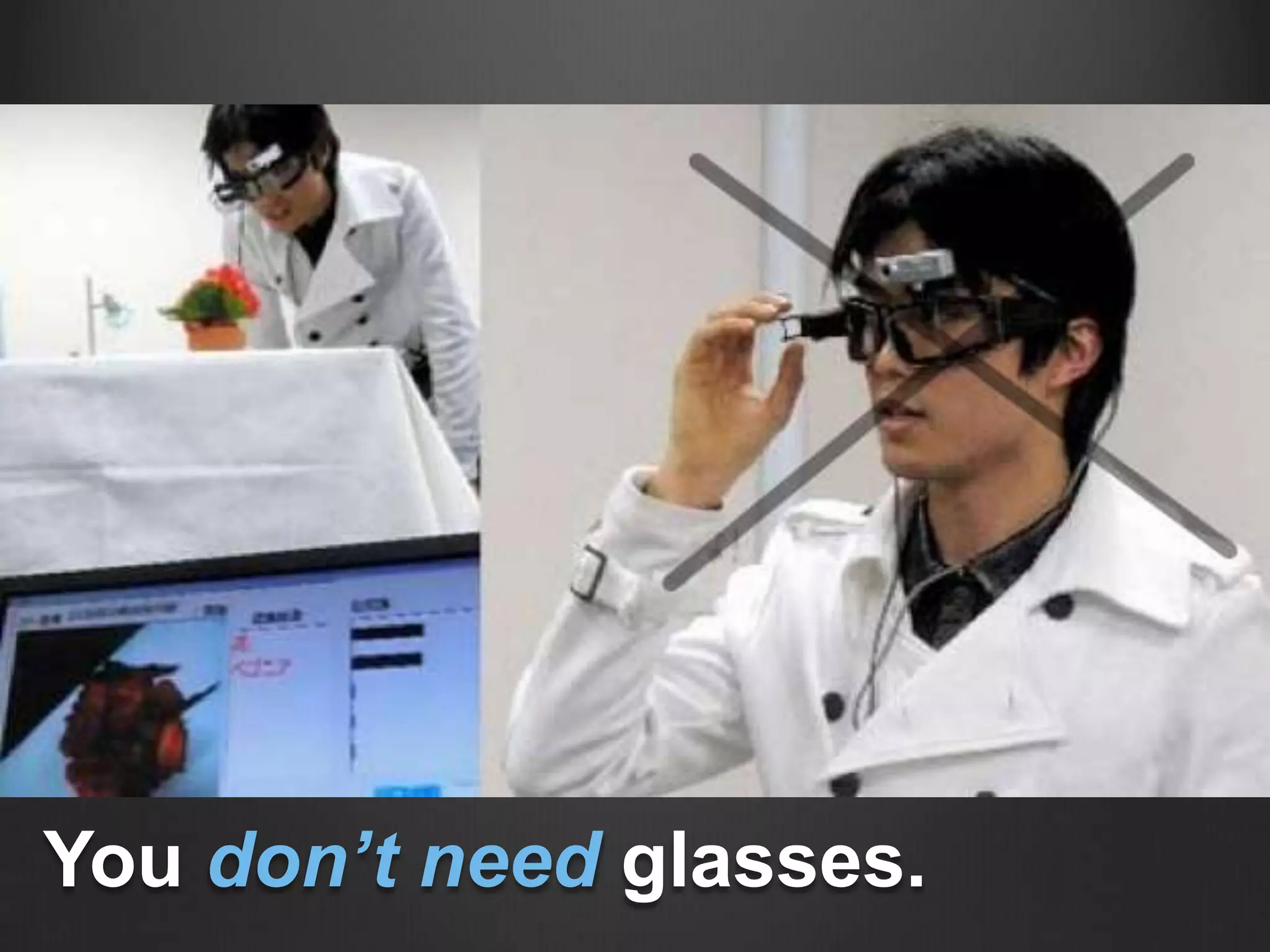
You don’t need glasses.
What is an ambient application?slideshare.net/caseorganic@caseorganic
What is an ambient application?Processes occur in the background Data is pushed to the userUser input can come in many forms, not just through keyboard input slideshare.net/caseorganic@caseorganic
Information should be pushed to youA robot working for you behind the scenes. The more it knows about you the more it can do for you. slideshare.net/caseorganic@caseorganic
Ambient user inputUser’s locationTime of day Current speed (slow or fast?)Average speed over time (driving vs. walking) Prior actions (clicks, subscriptionsUser’s friends on another platformslideshare.net/caseorganic@caseorganic
slideshare.net/caseorganic@caseorganic
@caseorganic
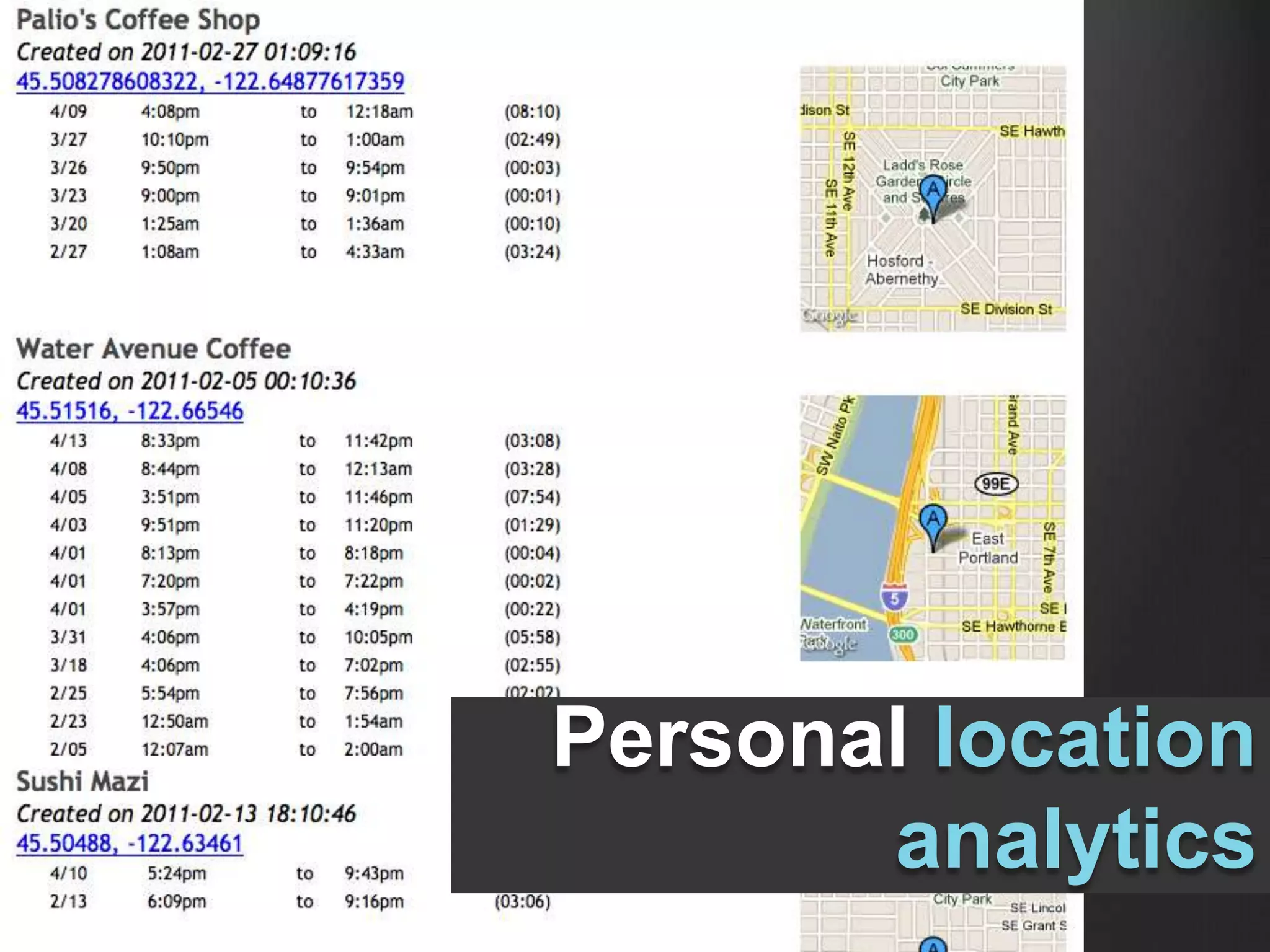
Personal location analytics
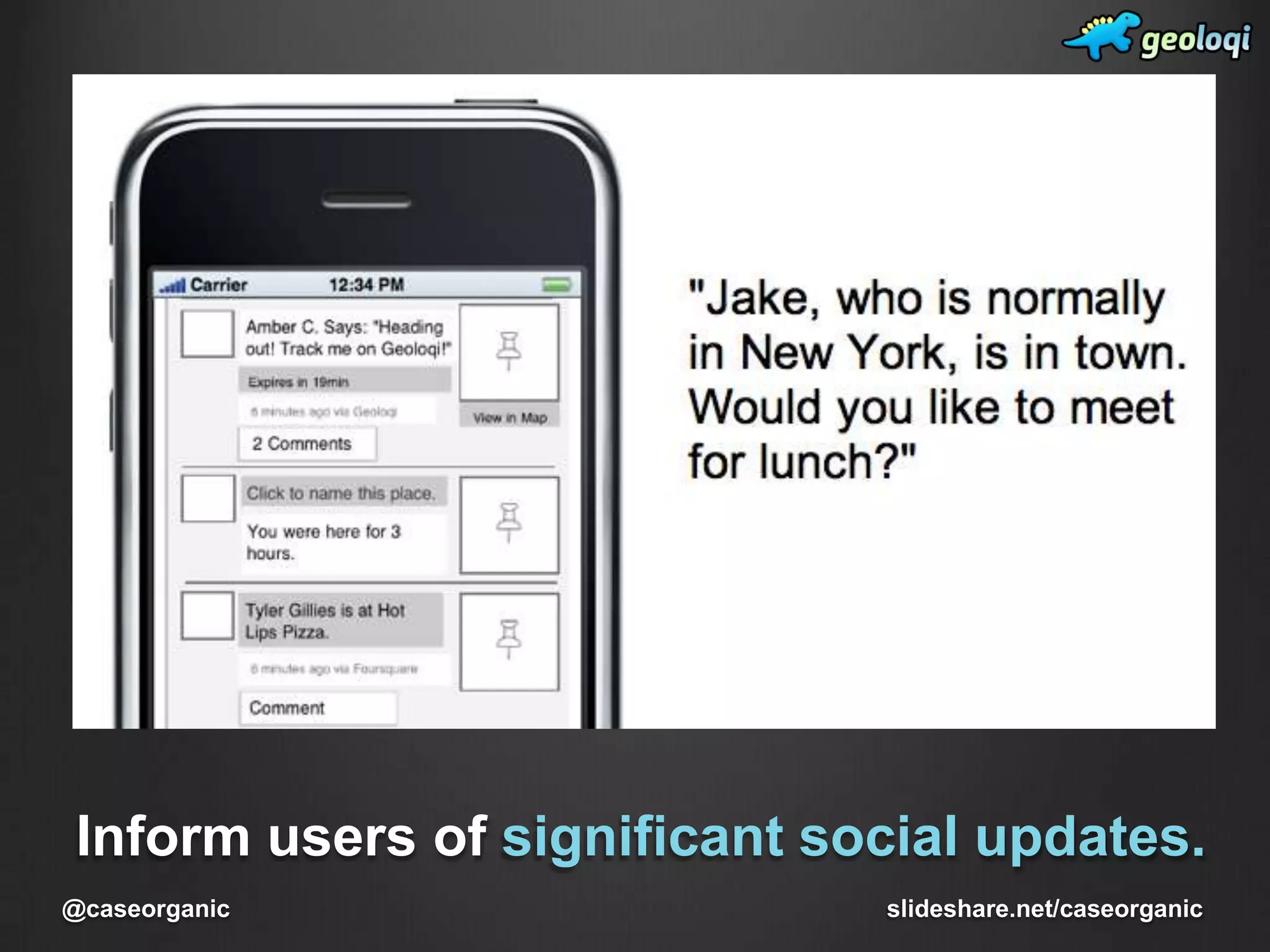
Inform users of significant social updates.slideshare.net/caseorganic@caseorganic
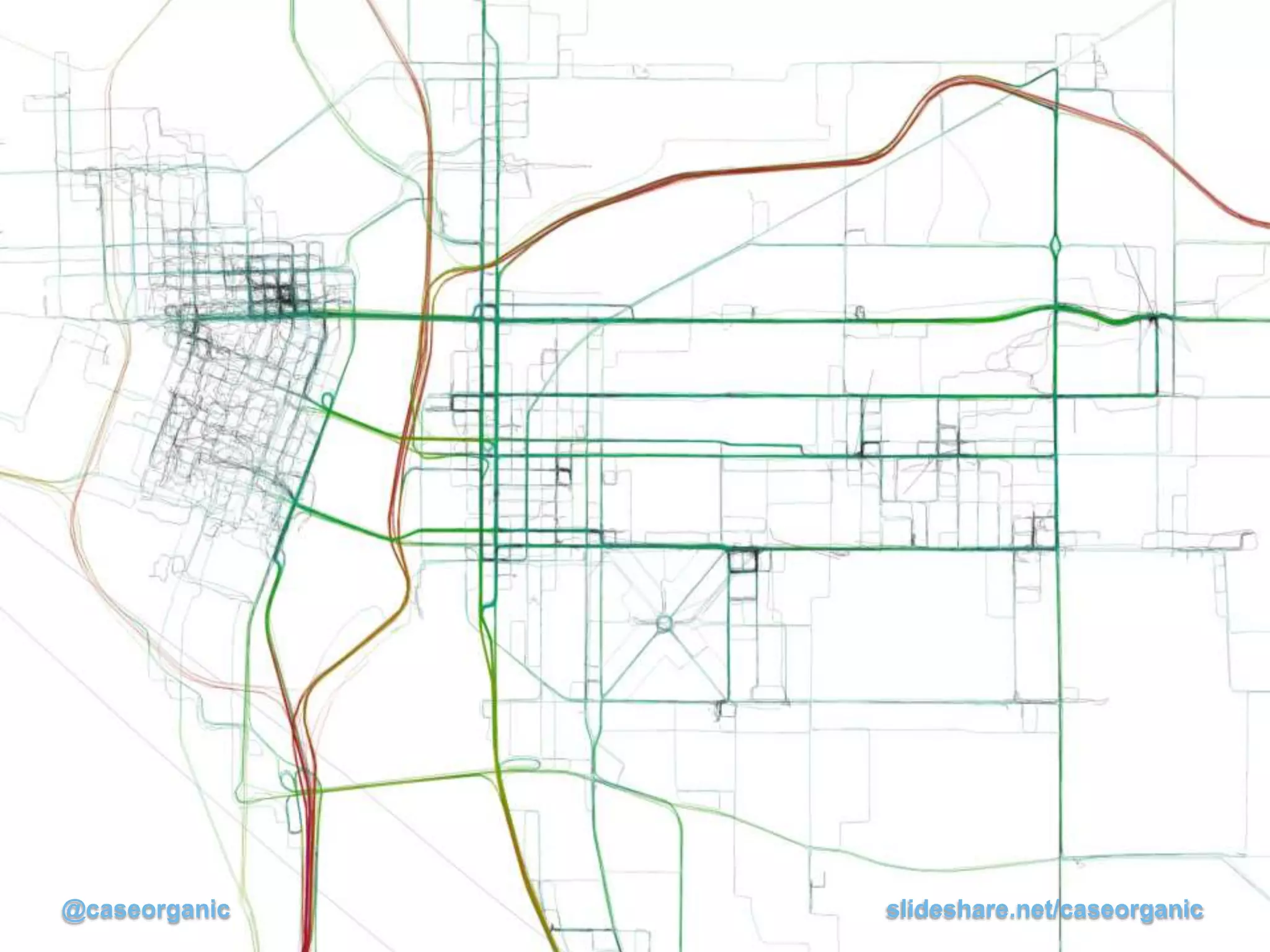
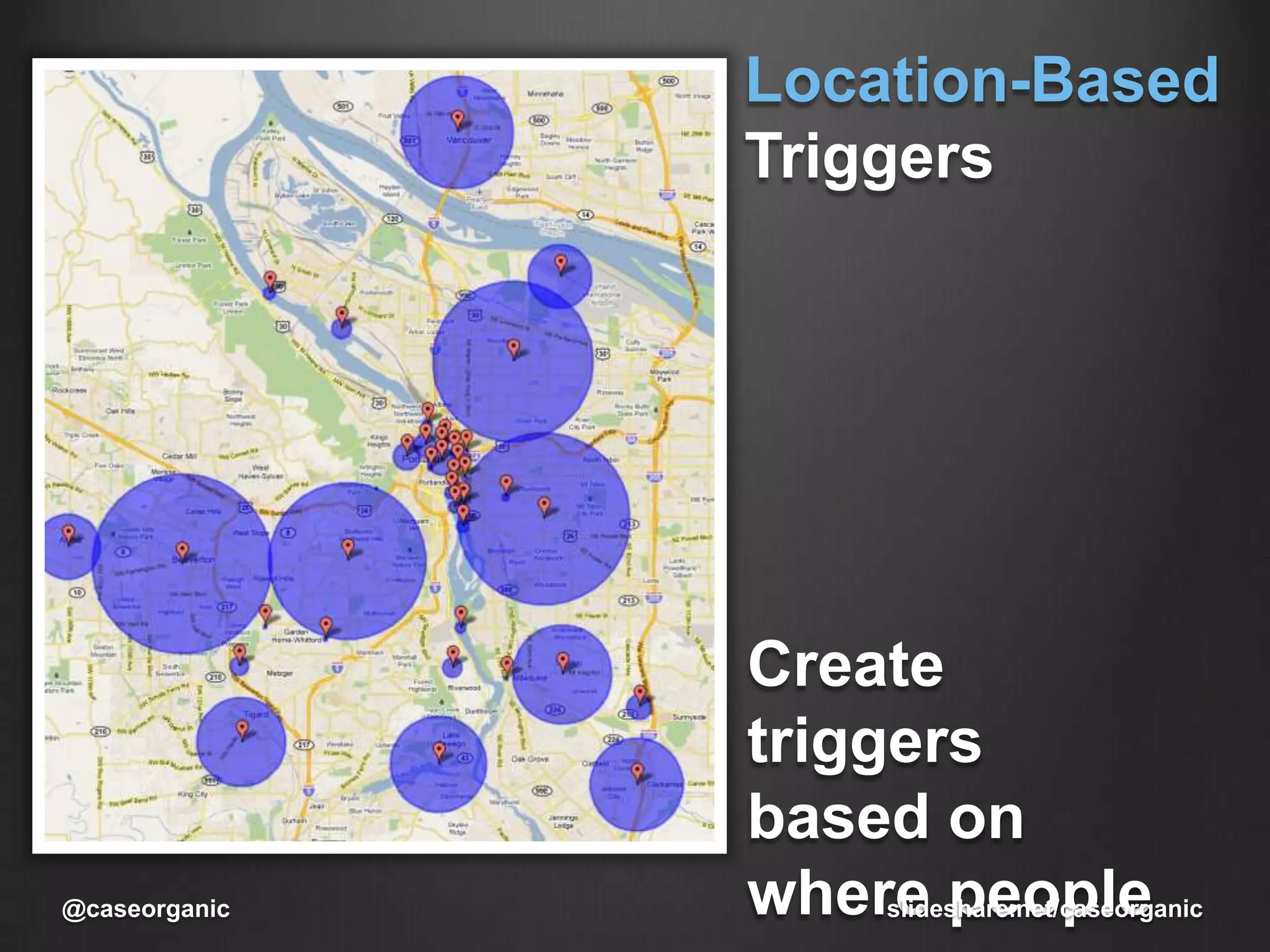
Everyone has a unique footprint of their city.slideshare.net/caseorganic@caseorganic
Location-Based TriggersCreate triggers based on where people are. slideshare.net/caseorganic@caseorganic
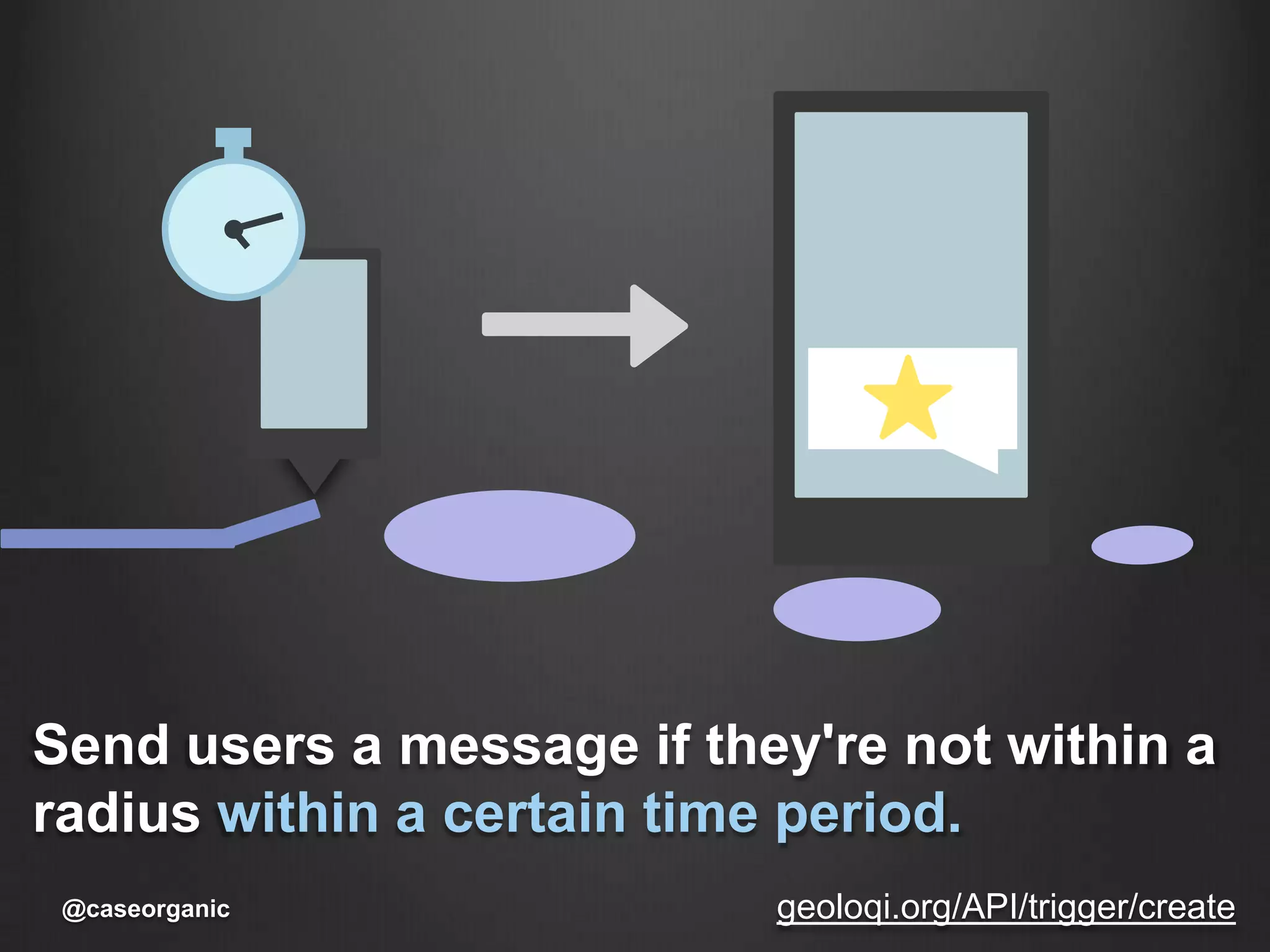
Send users a message if they're not within a radius within a certain time period.geoloqi.org/API/trigger/create@caseorganic
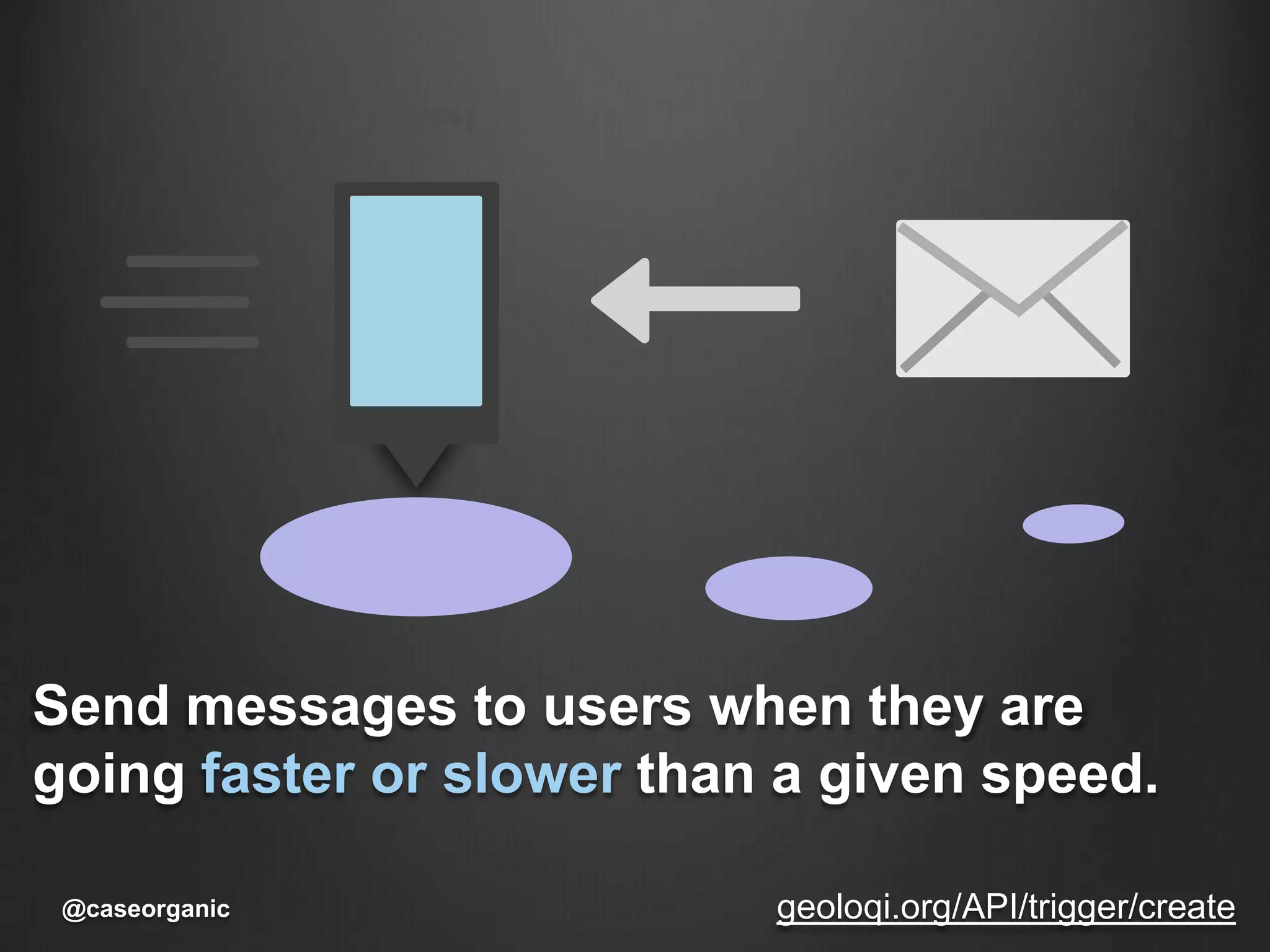
Send messages to users when they are going faster or slower than a given speed.geoloqi.org/API/trigger/create@caseorganic
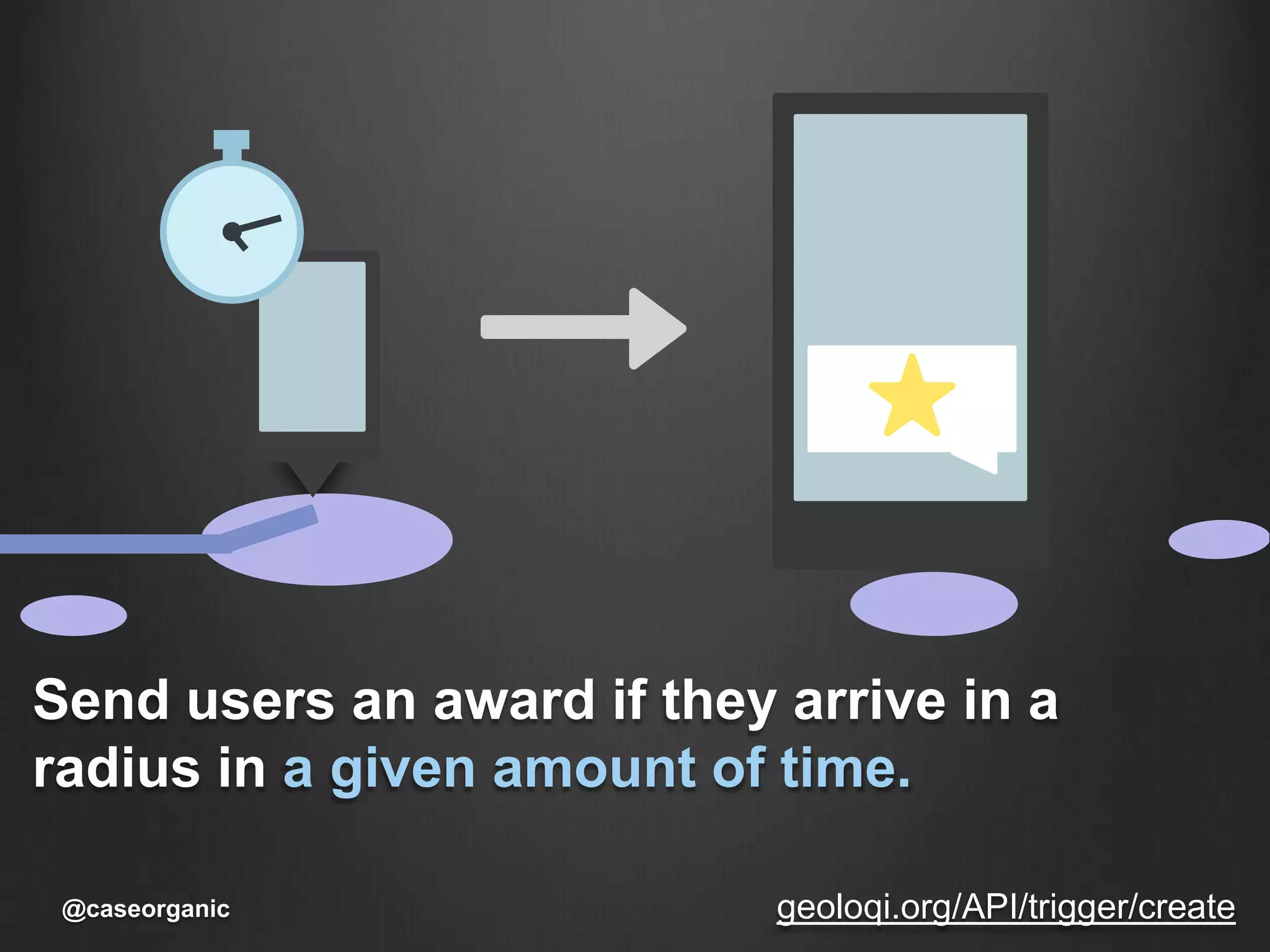
Send users an award if they arrive in a radius in a given amount of time.geoloqi.org/API/trigger/create@caseorganic
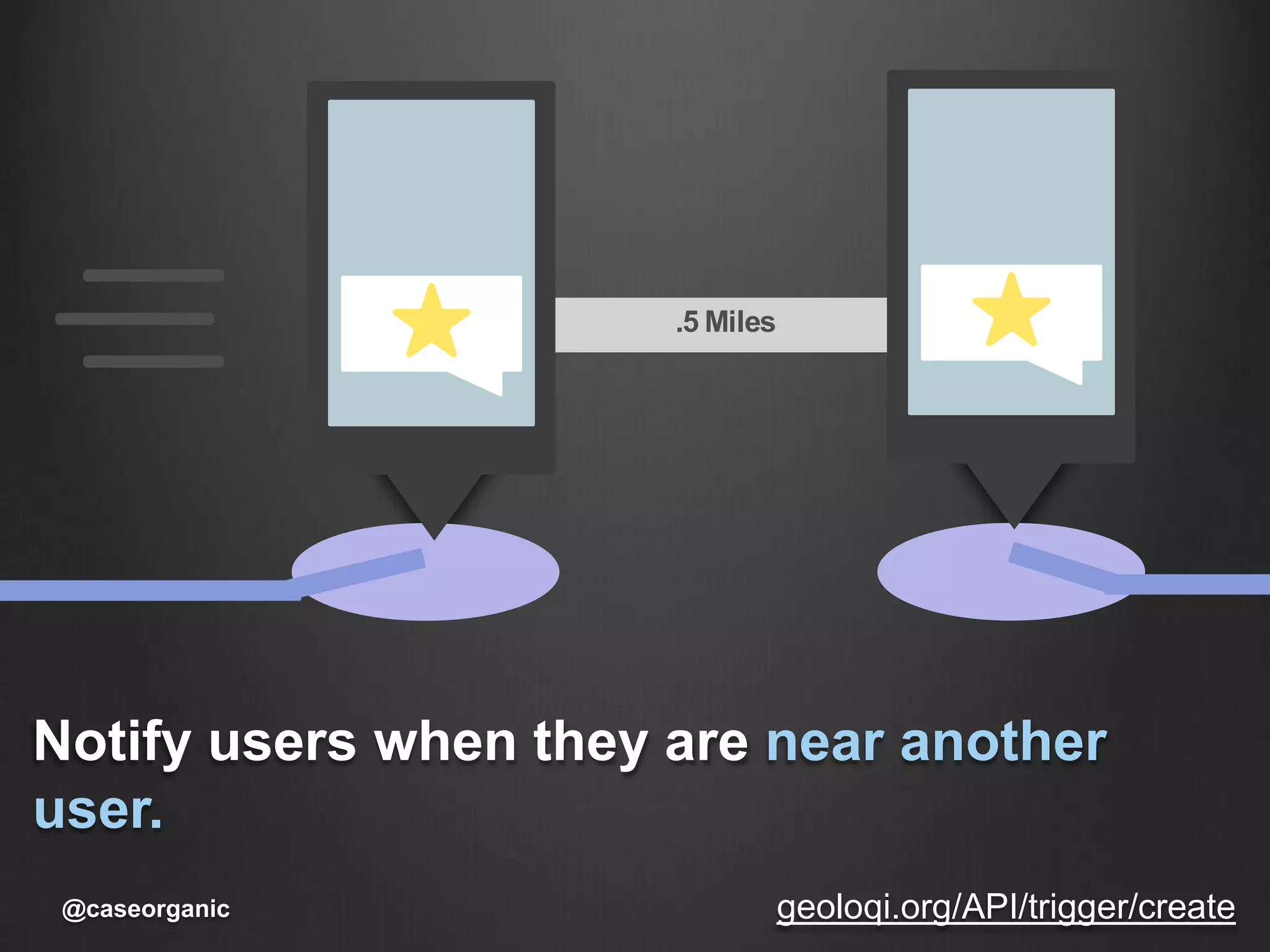
Notify users when they are near another user.geoloqi.org/API/trigger/create@caseorganic
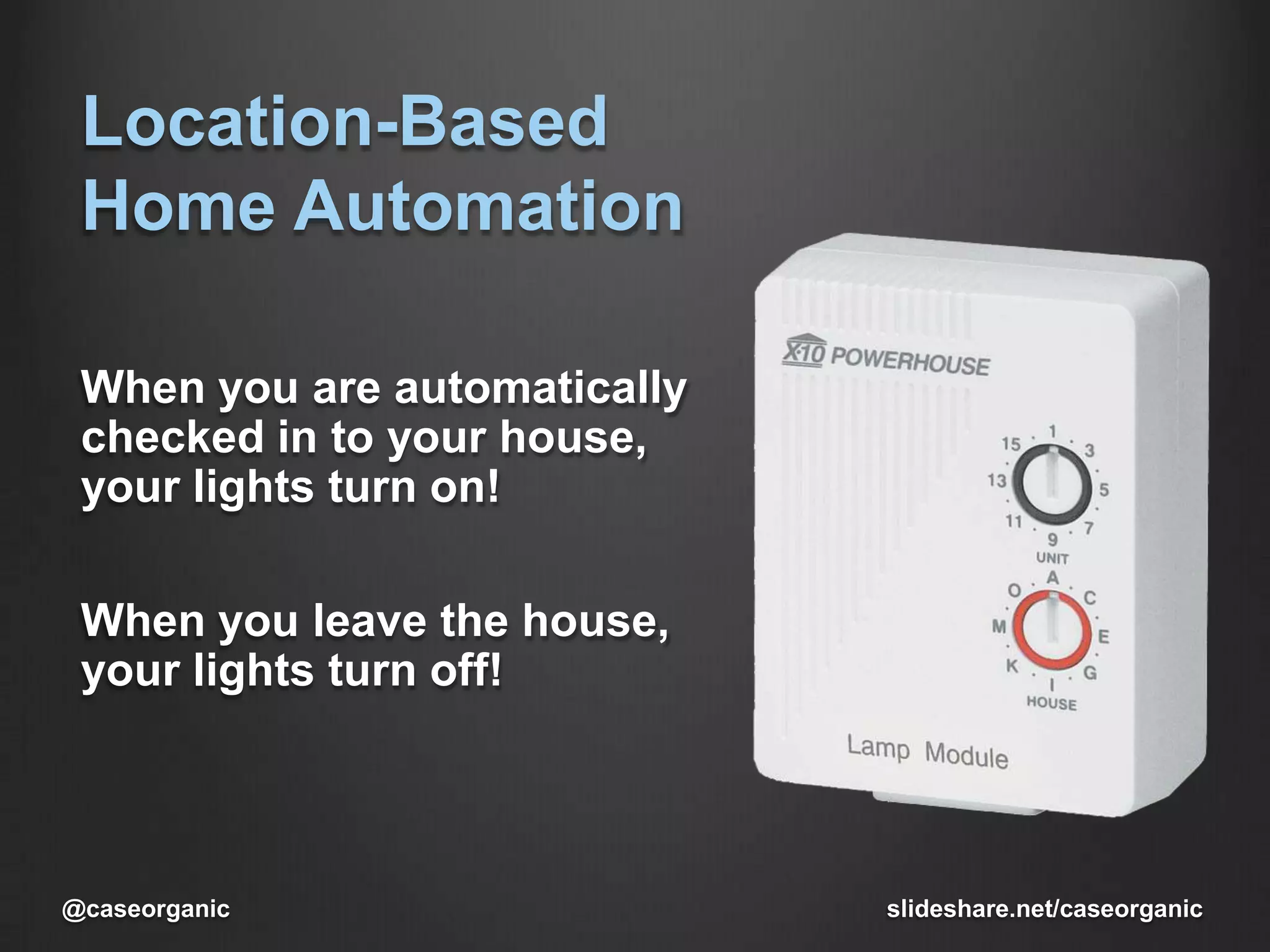
When you are automatically checked in to your house, your lights turn on!When you leave the house, your lights turn off!slideshare.net/caseorganic@caseorganicLocation-Based Home Automation
your phone becomes a remote control for reality.slideshare.net/caseorganic@caseorganic
slideshare.net/caseorganic@caseorganic
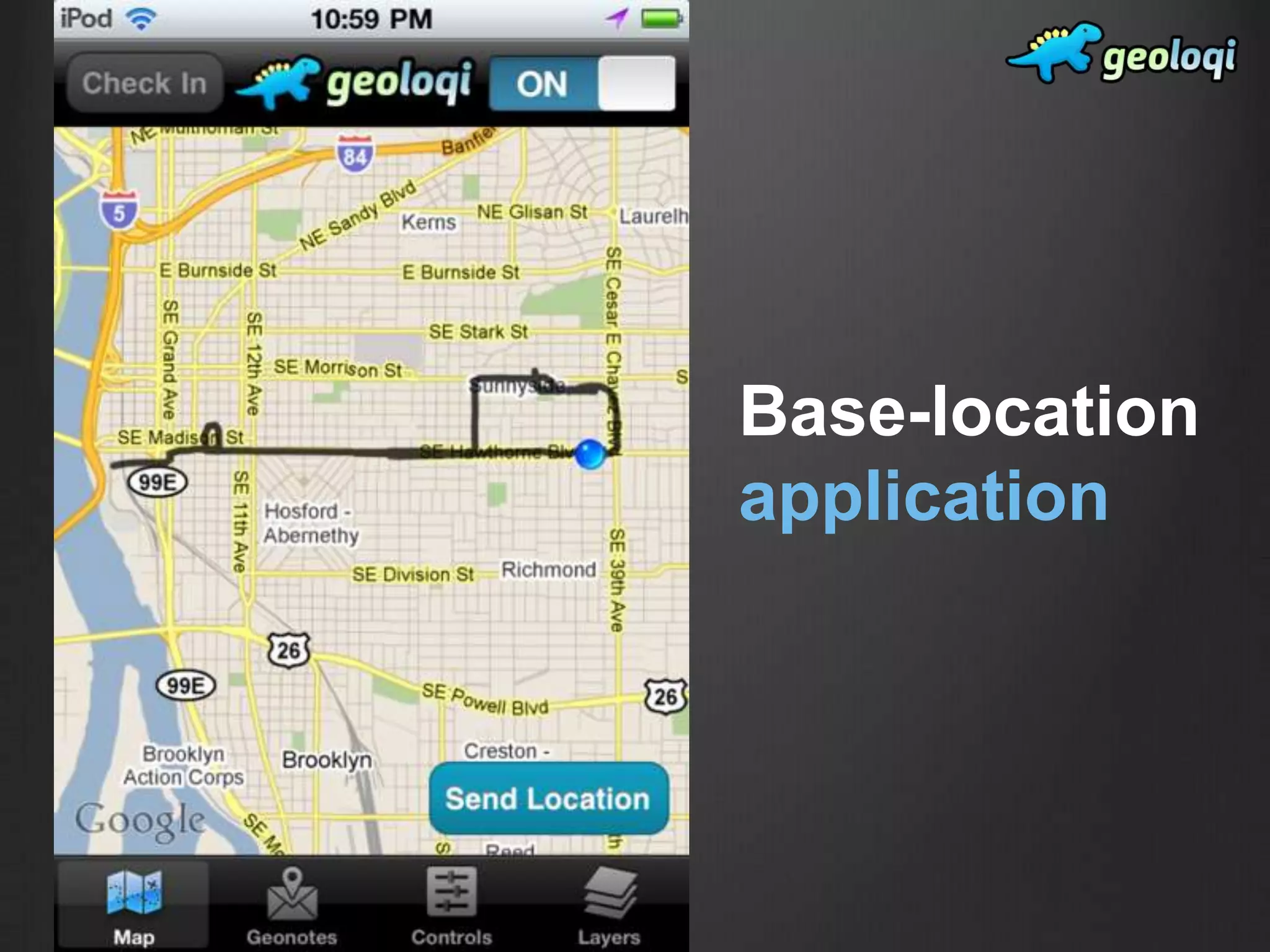
Base-location application
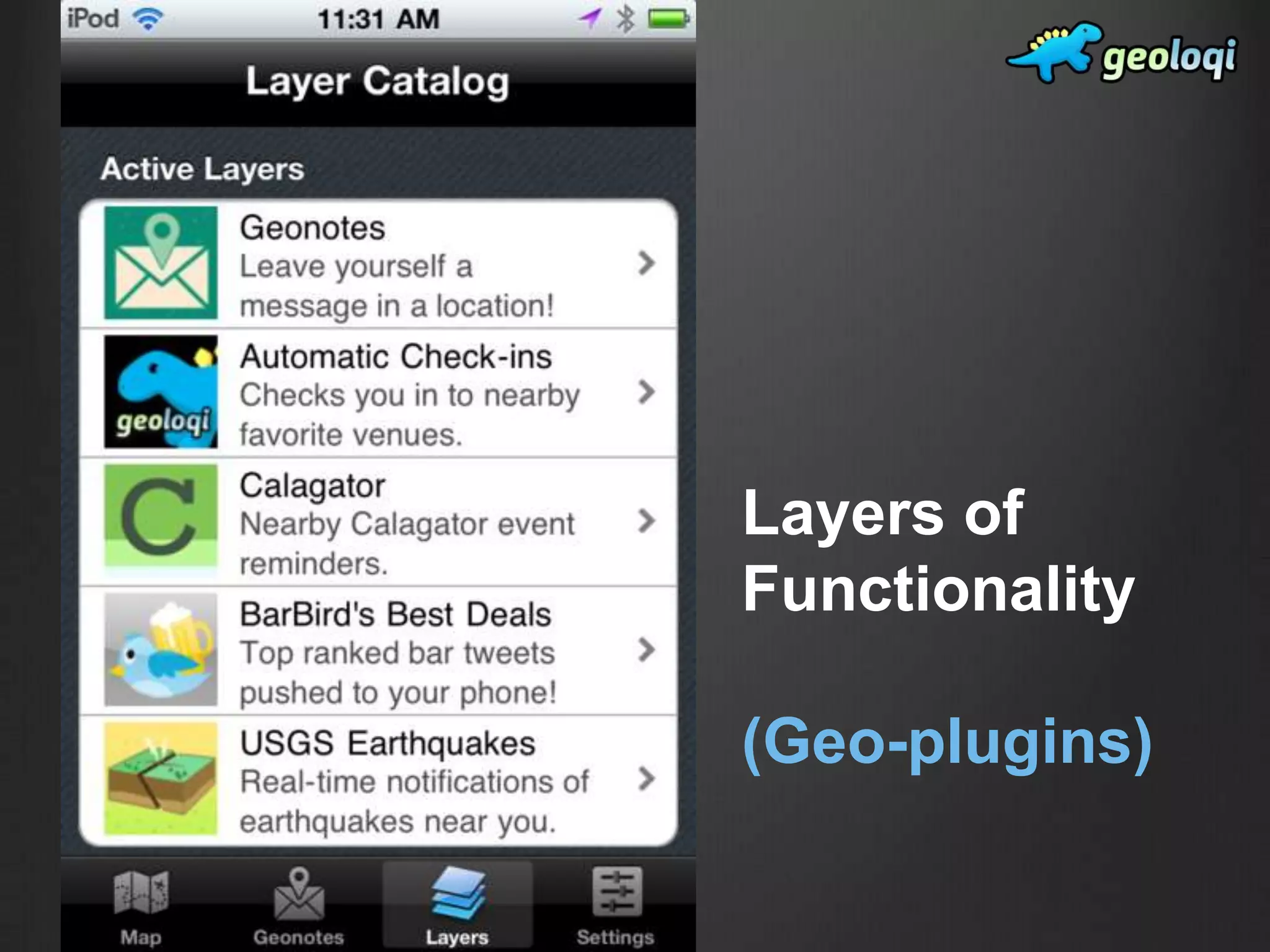
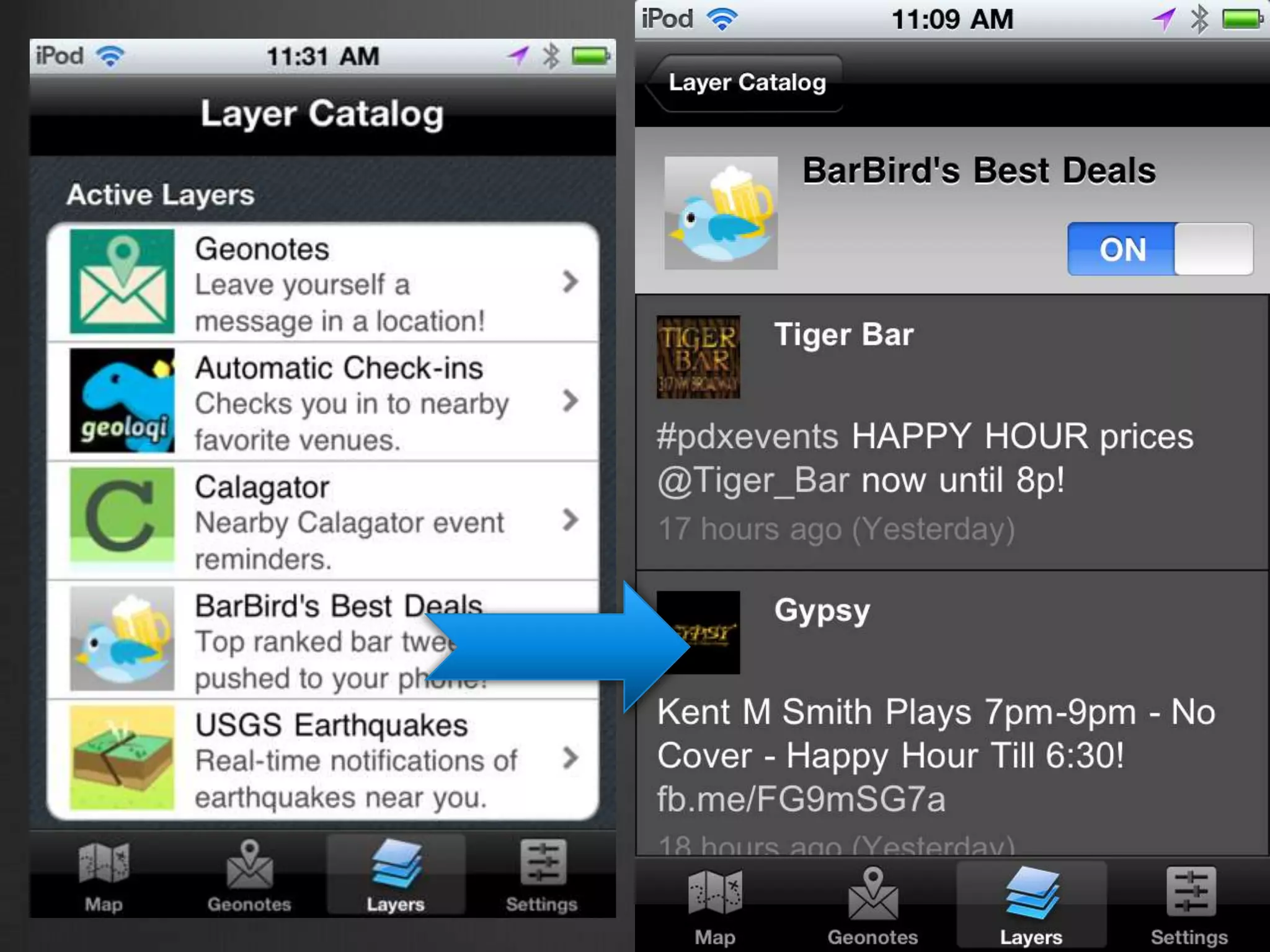
Layers of Functionality(Geo-plugins)
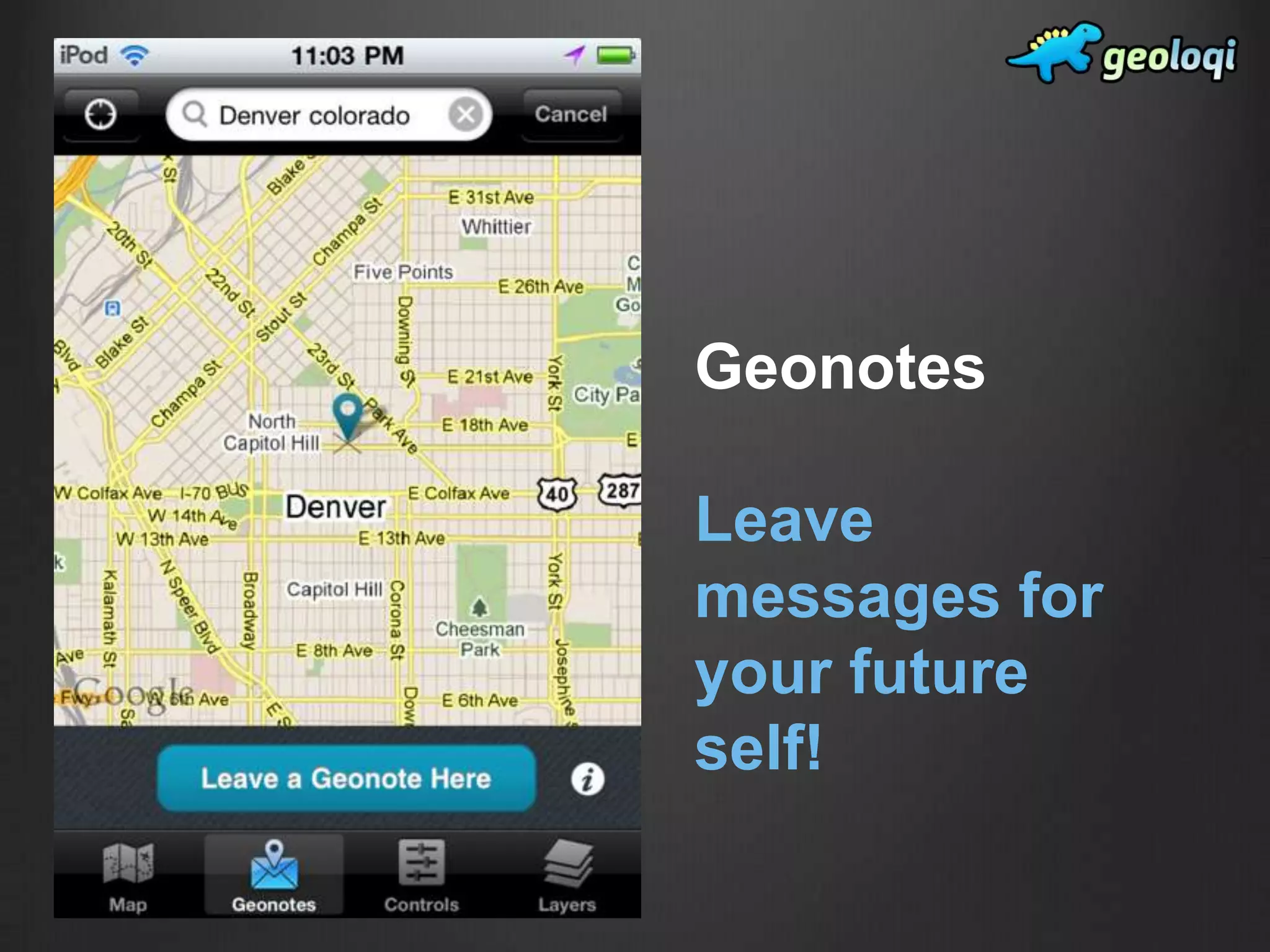
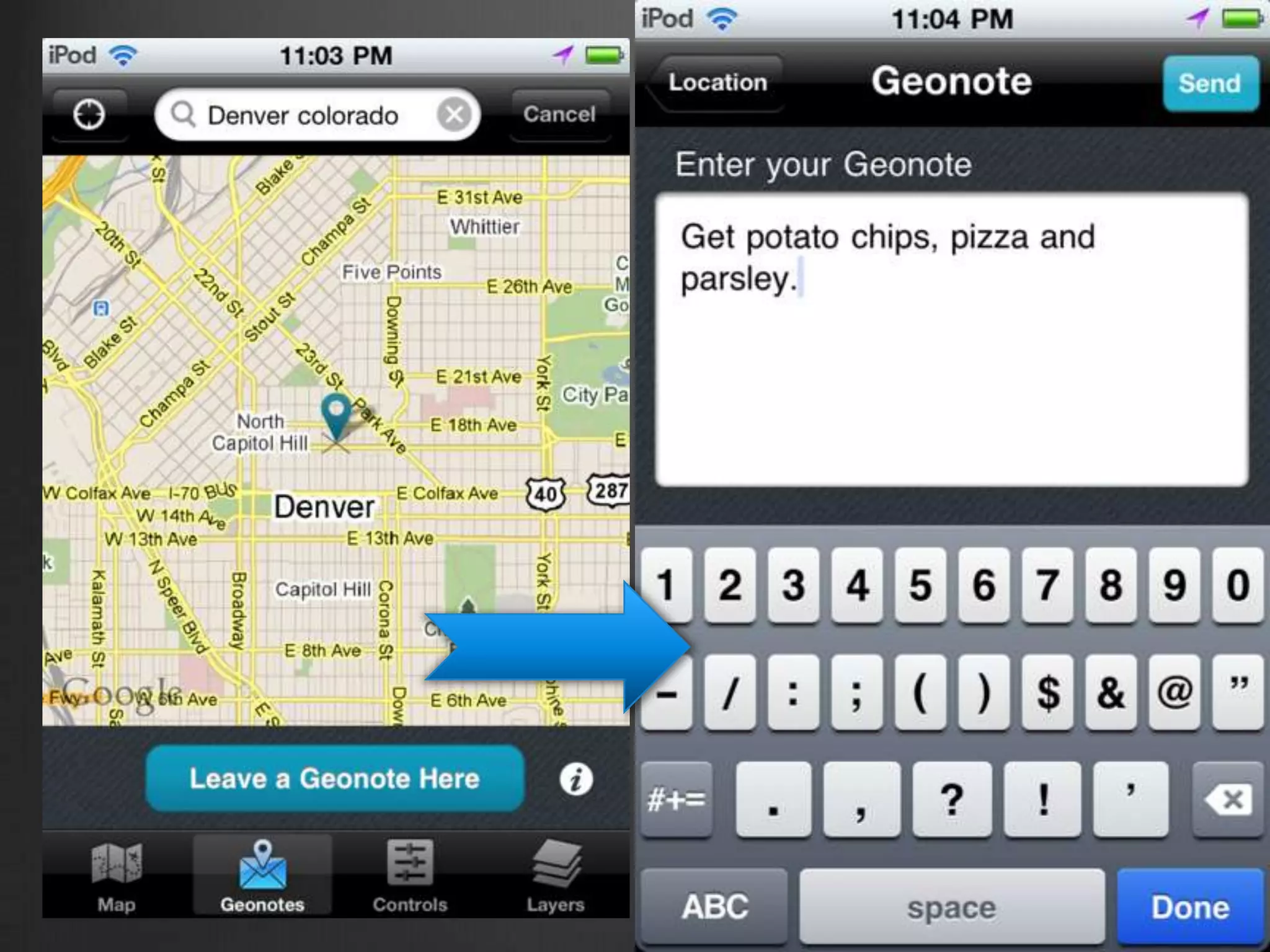
GeonotesLeave messages for your future self!
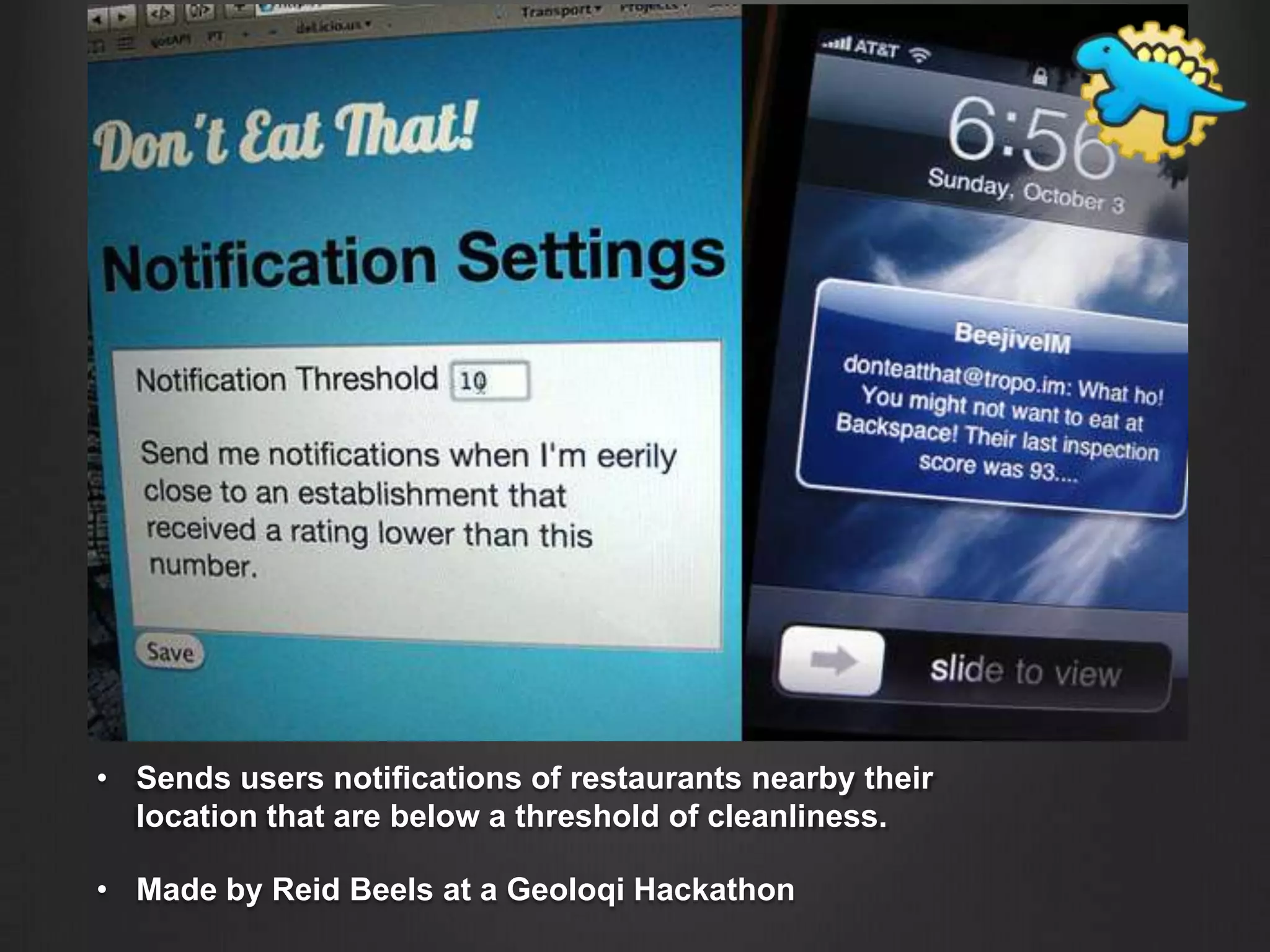
Sends users notifications of restaurants nearby their location that are below a threshold of cleanliness.
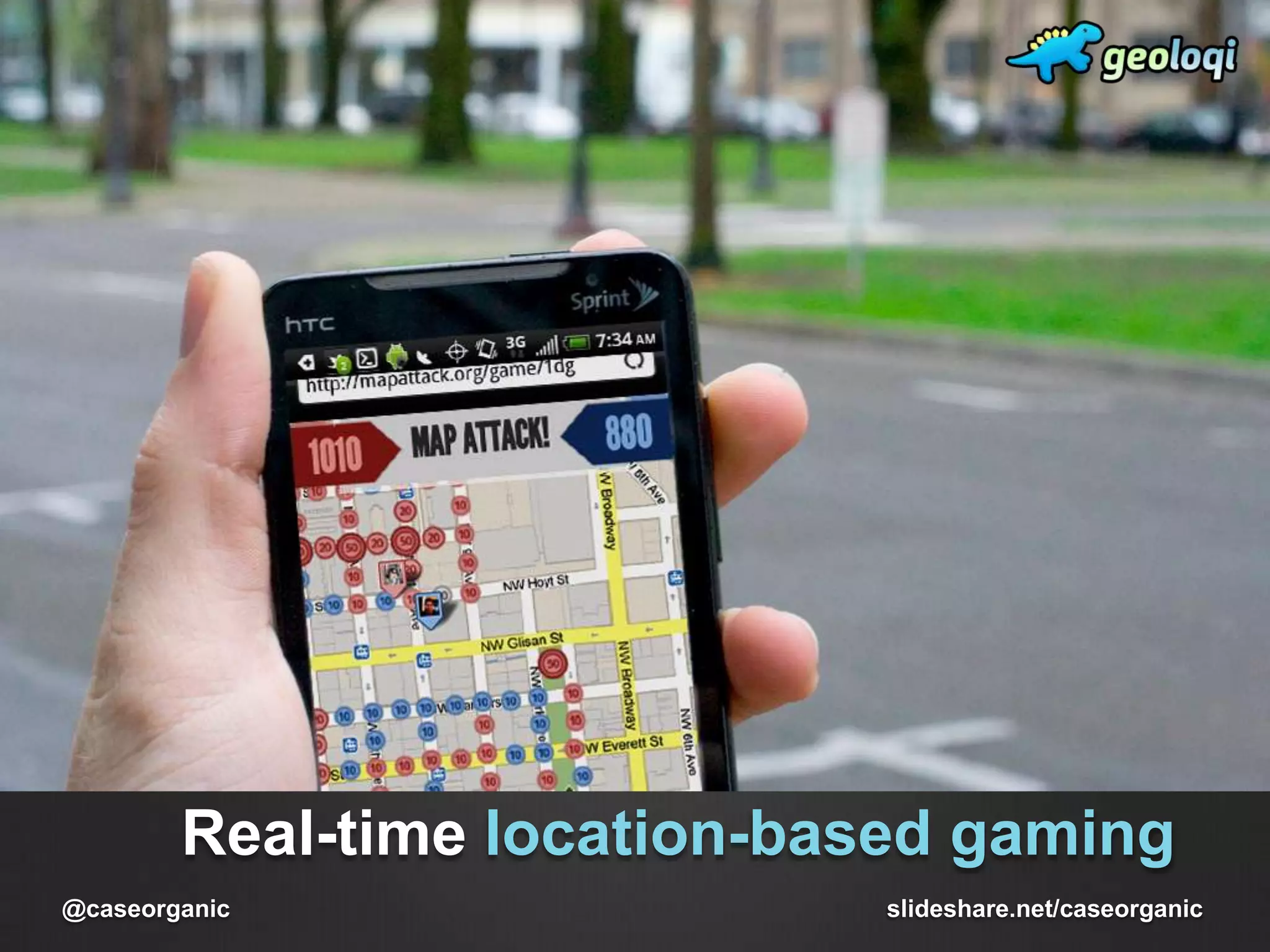
Made by Reid Beels at a GeoloqiHackathonReal-time location-based gamingslideshare.net/caseorganic@caseorganic
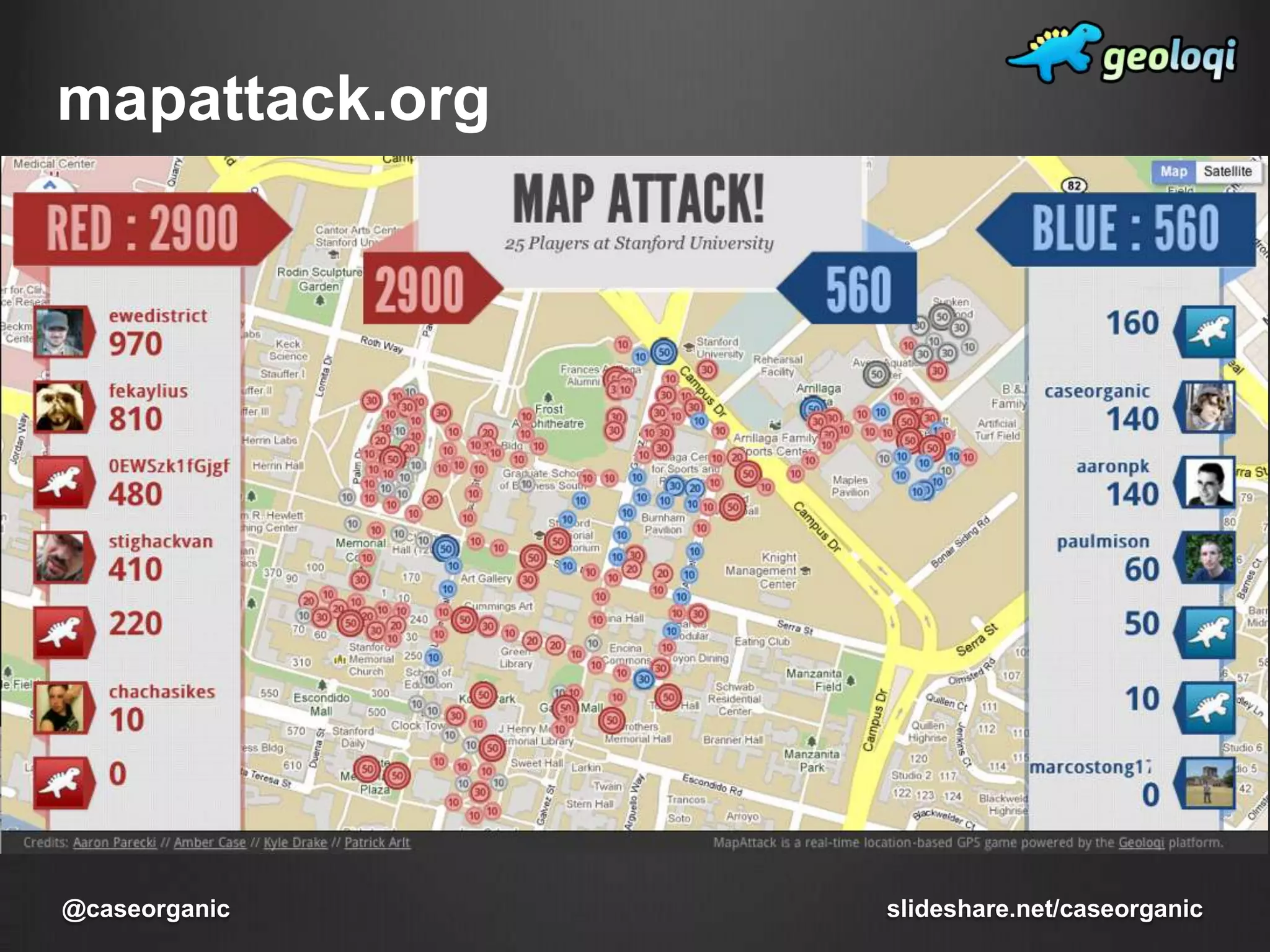
mapattack.orgslideshare.net/caseorganic@caseorganic
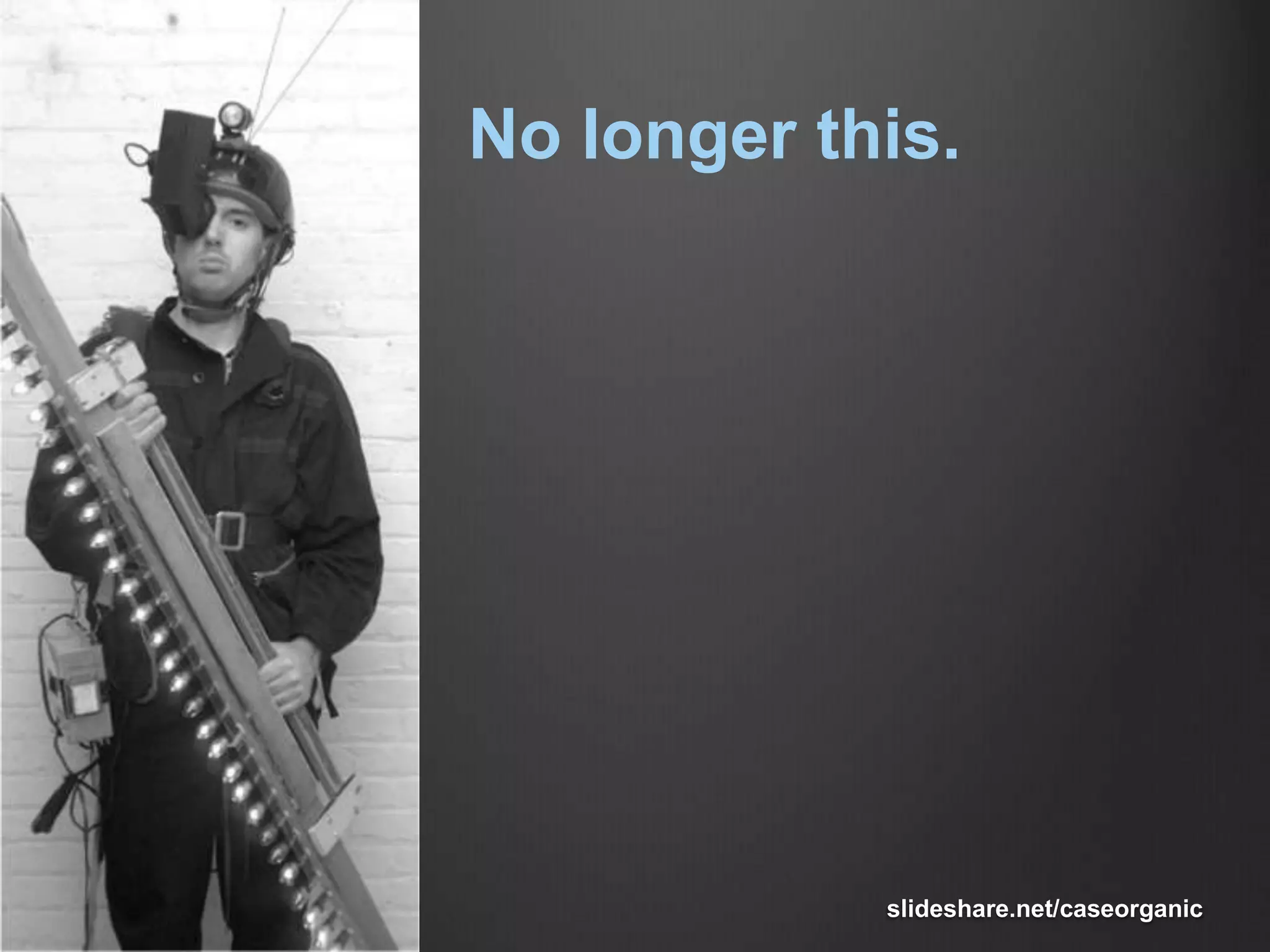
No longer this.slideshare.net/caseorganic
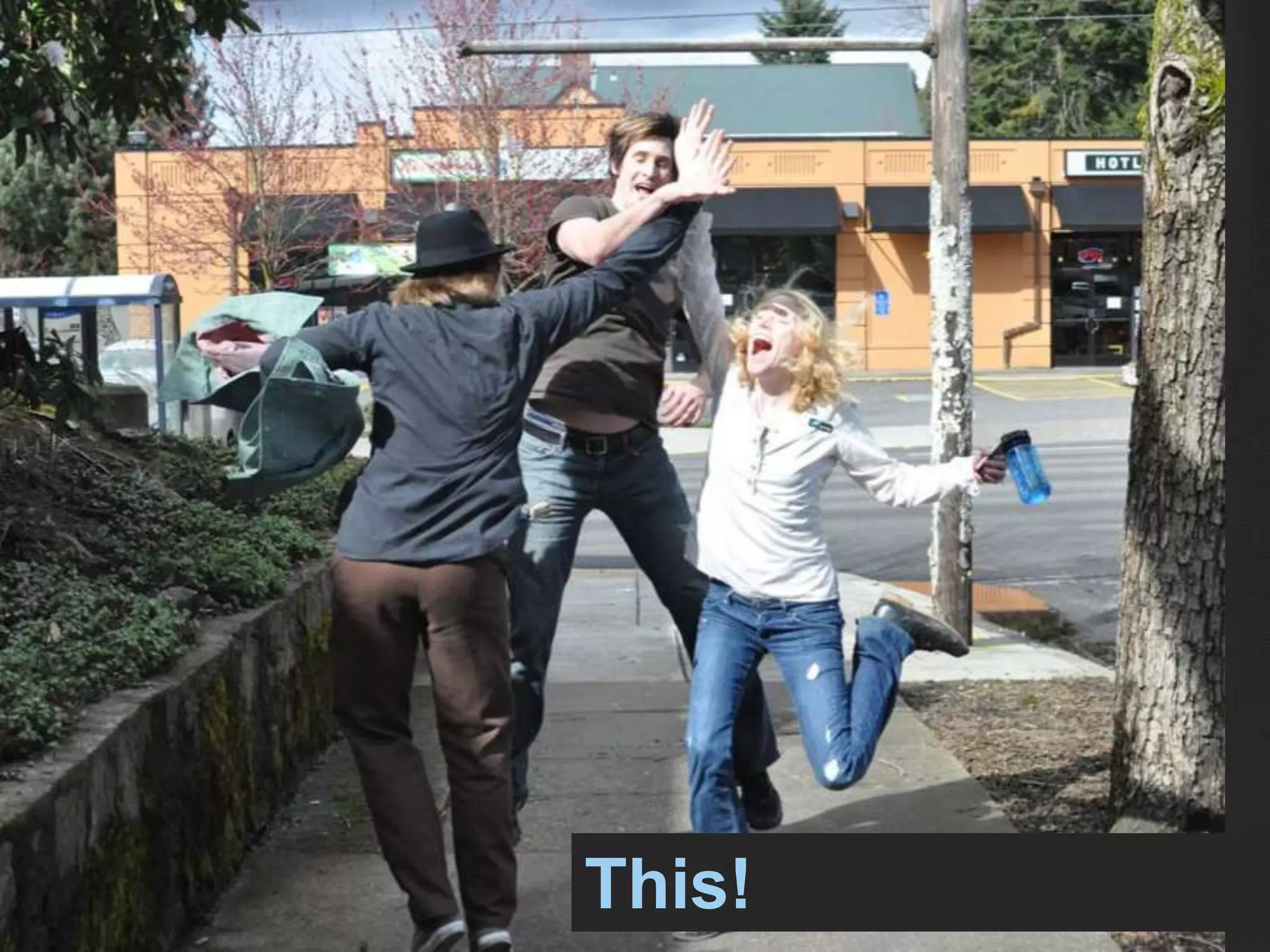
slideshare.net/caseorganicThis!
slideshare.net/caseorganicThe best interface is invisible.

Location as Invisible Interface - ARE2011 Presentation

Editor's Notes

  • #17 The point is information should be pushed to you instead of having to seek it out. In order to do this, we need to make our computers and systems more aware of our context so they can work for us. One component of this, and the one we’re focusing on, is location. Imagine if this app knows you haven’t eaten in a while, so it suggests some places you might like to eat that are nearby.
  • #19 Now I have been logging GPS positions everywhere I go and have been doing it for the last 3 years.
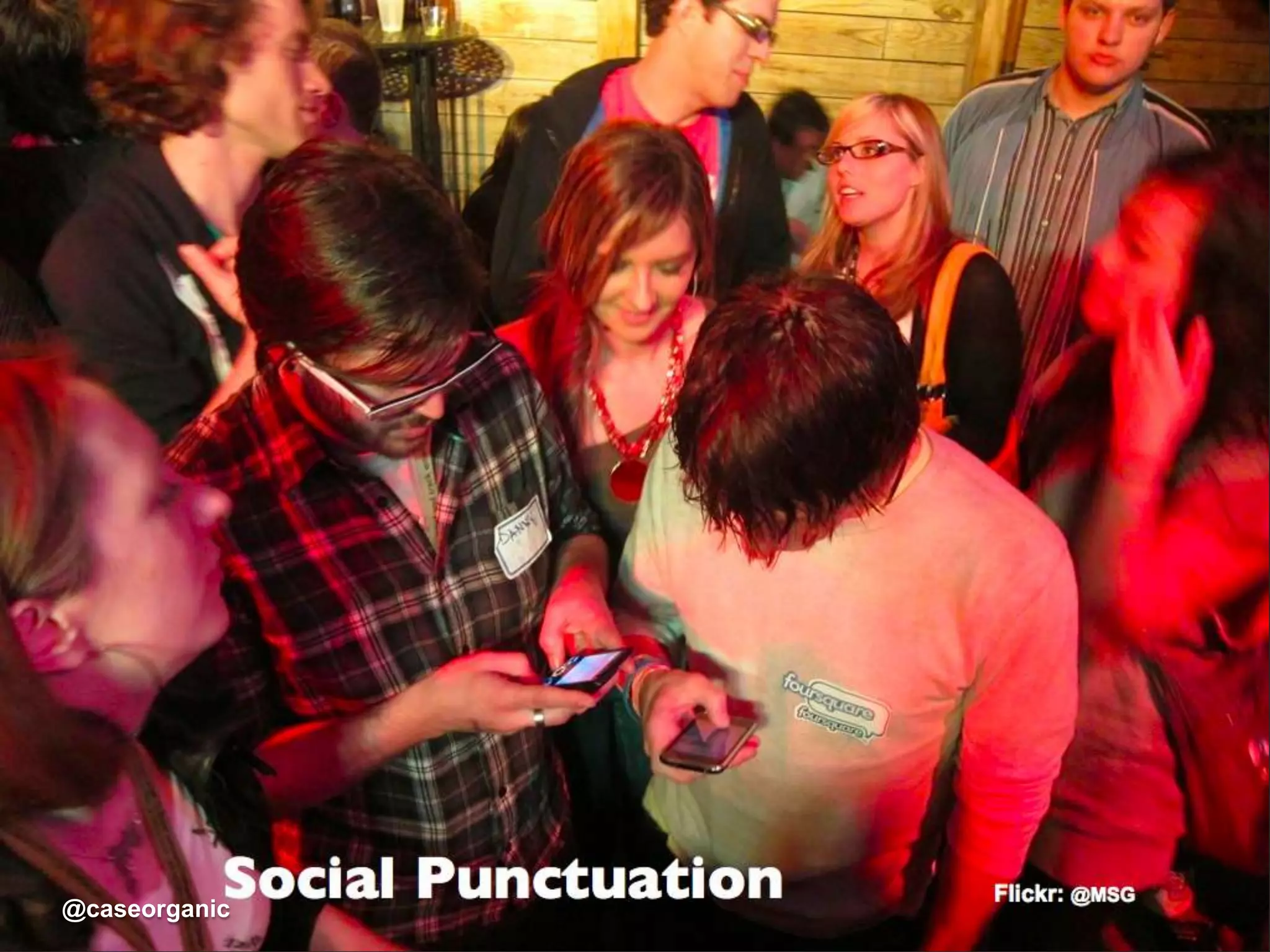
  • #20 We see people experimenting with location and building things like Foursquare. Putting yourself on pause at a social gathering in order to check in on Foursquare is sometimes awkward. We want a more passive system, something that doesn’t require as much interaction to use.----- Meeting Notes (2011-05-17 11:54) -----2:30
  • #21 What we’ve been doing in Geoloqi is building up profiles of where people spend time. This, for example, is a list of three places I often visit, and the dates and times of each of my visits. You can see I spent 8 hours at this coffee shop on April 9th, and about 3 hours there on March 27th.
  • #22 Frankly, I don’t care if my friend in New York is at his neighborhood coffee shop or his local gym, but if he is anywhere in San Francisco, I’d like to know so I can invite him to lunch. There’s a difference between privacy and looking for the signal in the noise.Even if he's comfortable sharing everything publicly, I just don't really need to know about it.
  • #23 We can use this information to build a unique footprint of the city for each person. Then we can provide recommendations and filter events based on each person’s individual pattern.----- Meeting Notes (2011-05-17 11:54) -----6:00
  • #37 Example: take restaurant inspection scores, and send an SMS if you’re near a restaurant with a low score.
  • #39 Explain map attack game at Stanford. While we were there, Mark from Spot Metrix quickly set up a viewer for the game board in his augmented reality view framework!