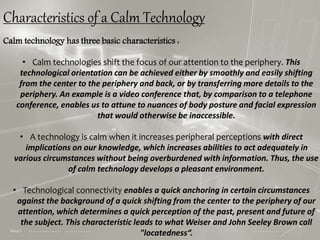
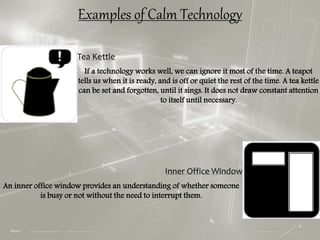
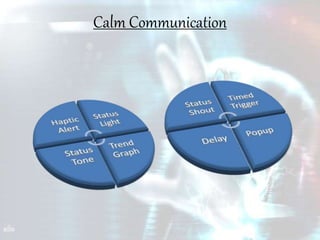
Calm technology aims to reduce information overload by allowing users to select what information is central to their attention and what is peripheral. It was coined in 1995 by Mark Weiser and John Seeley Brown of Xerox PARC. Calm technology shifts focus to the periphery and uses ambient awareness through different senses to communicate without taking the user away from their task. It informs and calms users and makes use of their peripheral attention. Examples of calm technology include a tea kettle, inner office windows, sleep trackers, and smart badges - technologies that remain quiet until needed and provide information subtly and calmly.