Bonding Types – ionic and covalent

Covalent Bonding – equal/unequal sharing

 Bonding Model – Lewis Structures (with
formal charge and resonance structures)
How compounds are held together:
    covalent vs ionic bonding
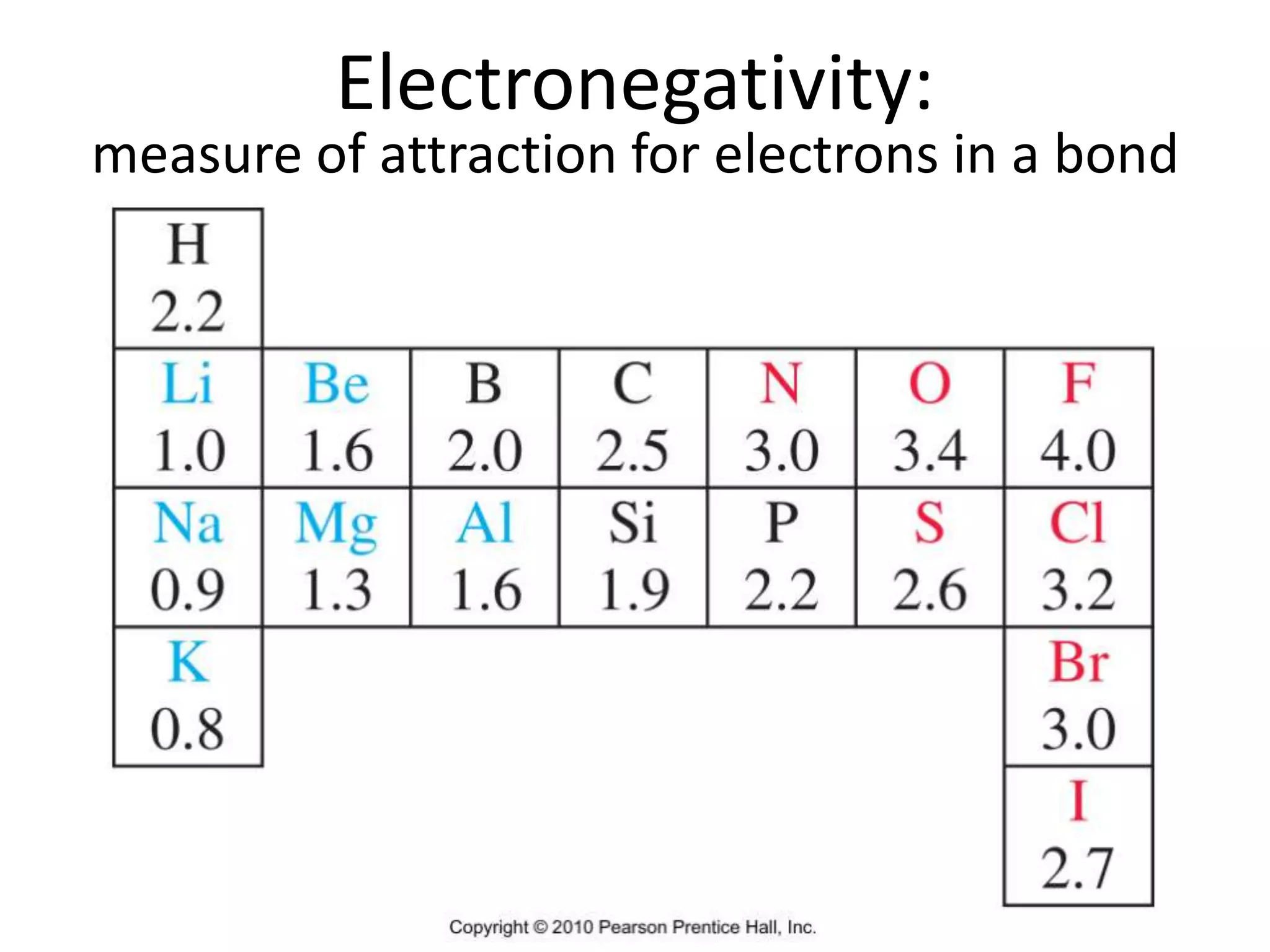
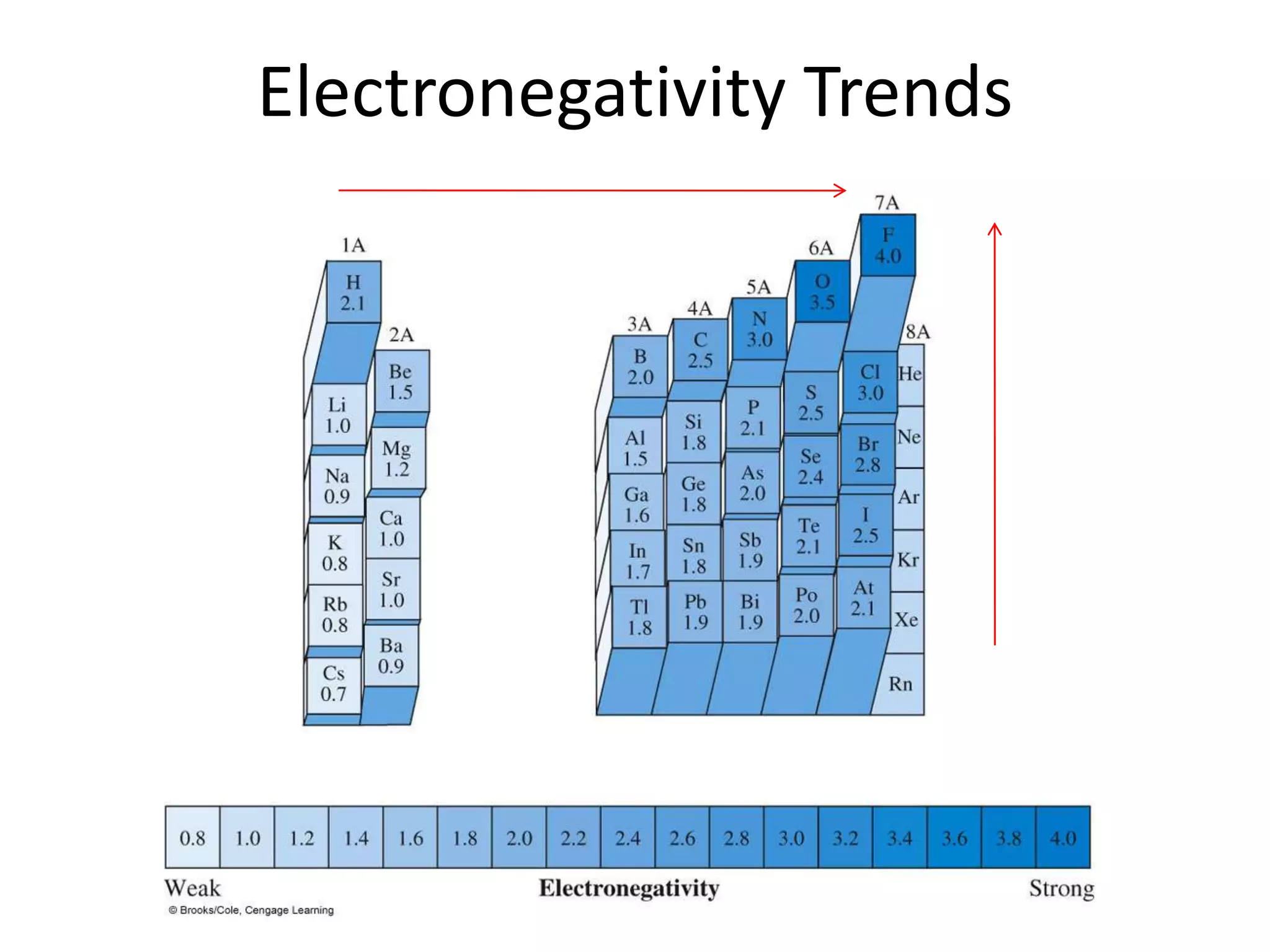
Electronegativity:
measure of attraction for electrons in a bond
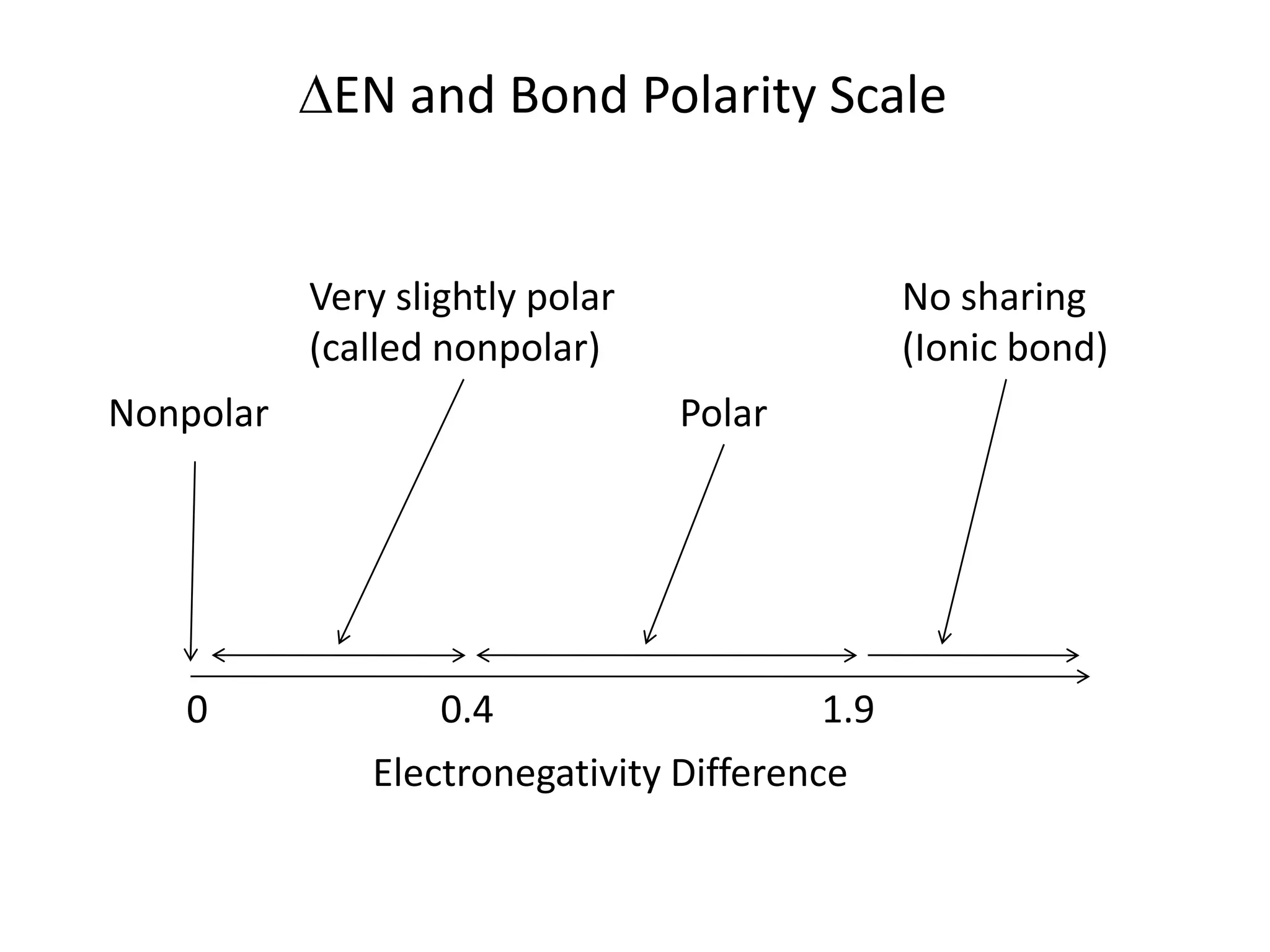
EN and Bond Polarity Scale


           Very slightly polar                 No sharing
           (called nonpolar)                   (Ionic bond)
Nonpolar                         Polar


   0              0.4                    1.9
              Electronegativity Difference
Electronegativity Trends
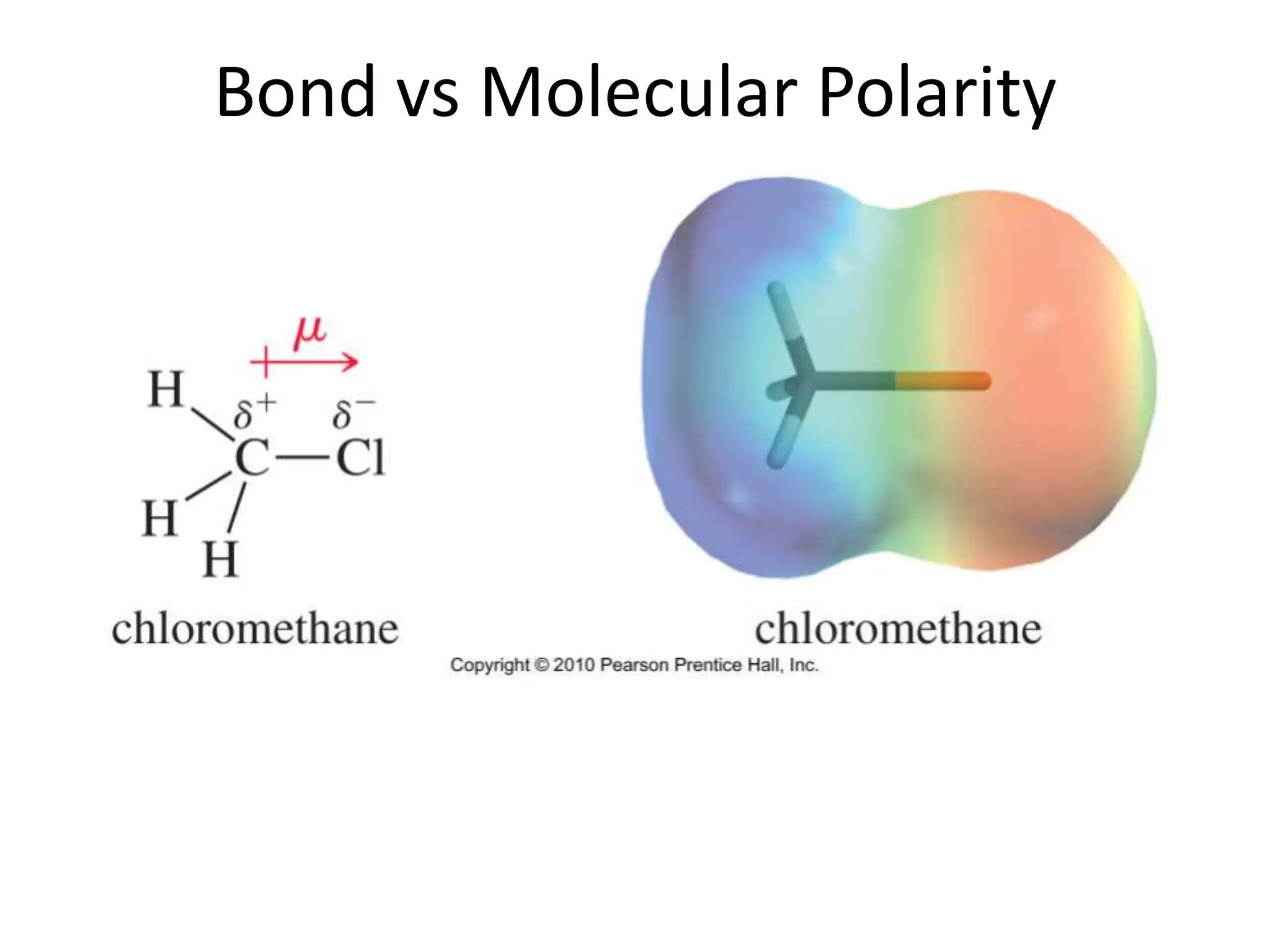
Bond vs Molecular Polarity
Lewis Structures: model to describe
  bonding in covalent molecules
- Valence electrons represented by dots
- Bonding pair represented by line
- Valence e- so 2 for H and 8 for 2nd row elements
Formal Charge: way of keeping track* of
   where charge is within a molecule
 Electrons that contribute to atom’s charge:
 1. All of unshared electrons
 2. Half of shared electrons

FC = group number – nonbonding e- – ½ shared e-
Resonance (when 1 Lewis structure
    doesn’t tell the story well)
Resonance “rules of thumb”
• Must be valid Lewis structure
• Move electrons, not nuclei
• Number of unpaired electrons (if any) remain
  the same
• Major contributor has lowest energy (see
  other rules)
• Resonance – most important when charge is
  delocalized
Comparing Resonance Structures
• As many octets as possible
• As many bonds as possible
• Any negative charges on electronegative
  atoms
• As little charge separation as possible
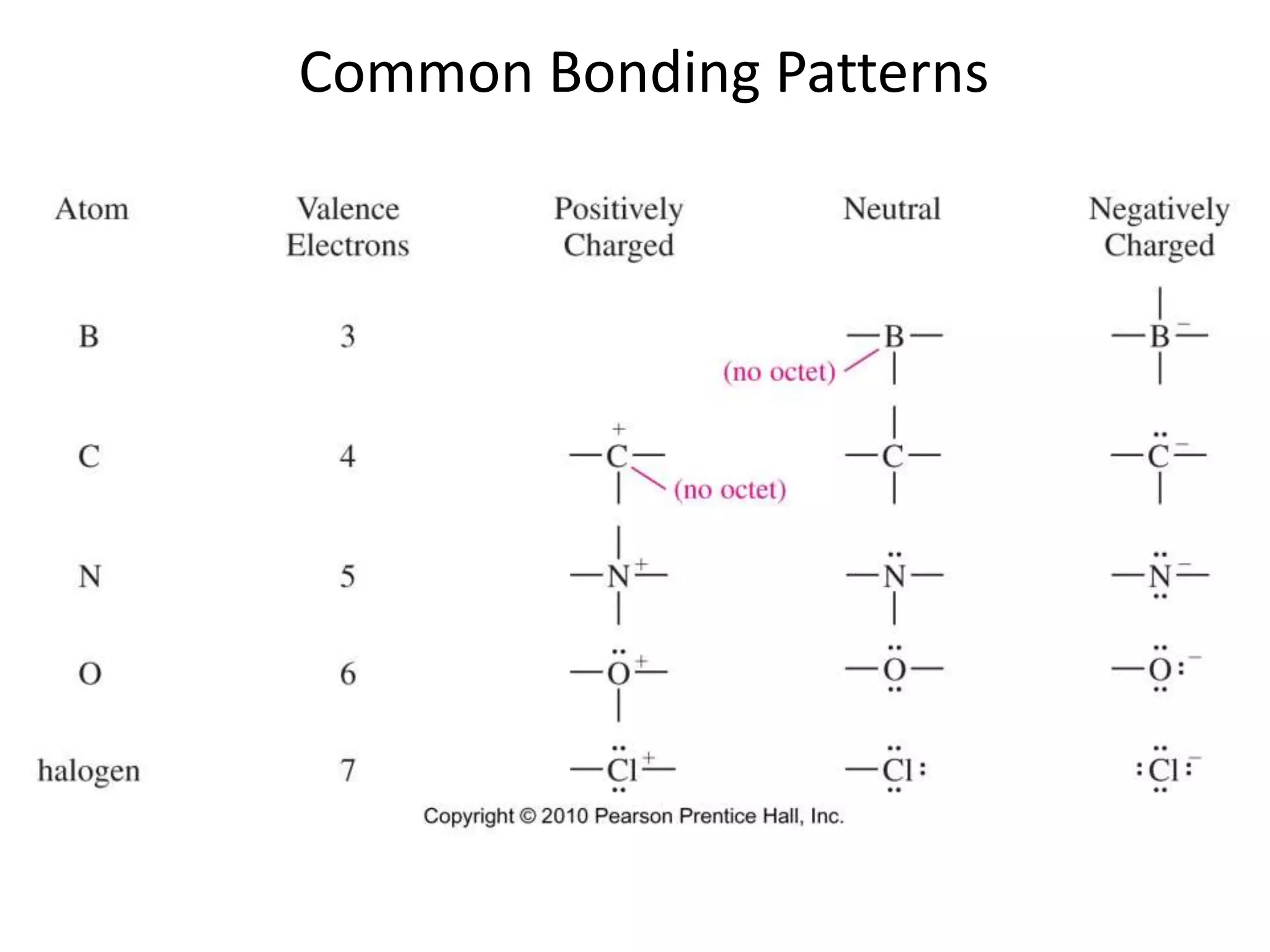
Common Bonding Patterns

Ch1 a

  • 1.
    Bonding Types –ionic and covalent Covalent Bonding – equal/unequal sharing Bonding Model – Lewis Structures (with formal charge and resonance structures)
  • 2.
    How compounds areheld together: covalent vs ionic bonding
  • 3.
  • 4.
    EN and BondPolarity Scale Very slightly polar No sharing (called nonpolar) (Ionic bond) Nonpolar Polar 0 0.4 1.9 Electronegativity Difference
  • 5.
  • 6.
  • 7.
    Lewis Structures: modelto describe bonding in covalent molecules - Valence electrons represented by dots - Bonding pair represented by line - Valence e- so 2 for H and 8 for 2nd row elements
  • 8.
    Formal Charge: wayof keeping track* of where charge is within a molecule Electrons that contribute to atom’s charge: 1. All of unshared electrons 2. Half of shared electrons FC = group number – nonbonding e- – ½ shared e-
  • 9.
    Resonance (when 1Lewis structure doesn’t tell the story well)
  • 10.
    Resonance “rules ofthumb” • Must be valid Lewis structure • Move electrons, not nuclei • Number of unpaired electrons (if any) remain the same • Major contributor has lowest energy (see other rules) • Resonance – most important when charge is delocalized
  • 11.
    Comparing Resonance Structures •As many octets as possible • As many bonds as possible • Any negative charges on electronegative atoms • As little charge separation as possible
  • 12.