
Moving Educational Technology from Enhancement to Transformation
February 22, 2014
#bcedsfu
SFU Symposium

Brian Kuhn

My Coordinates…

Director of Technology / CIO
Vancouver School Board
bkuhn@vsb.bc.ca / @bkuhn

http://www.shift2future.com
http://www.slideshare.net/bkuhn
http://www.linkedin.com/in/kuhnbrian
istockphoto.com # 16760119
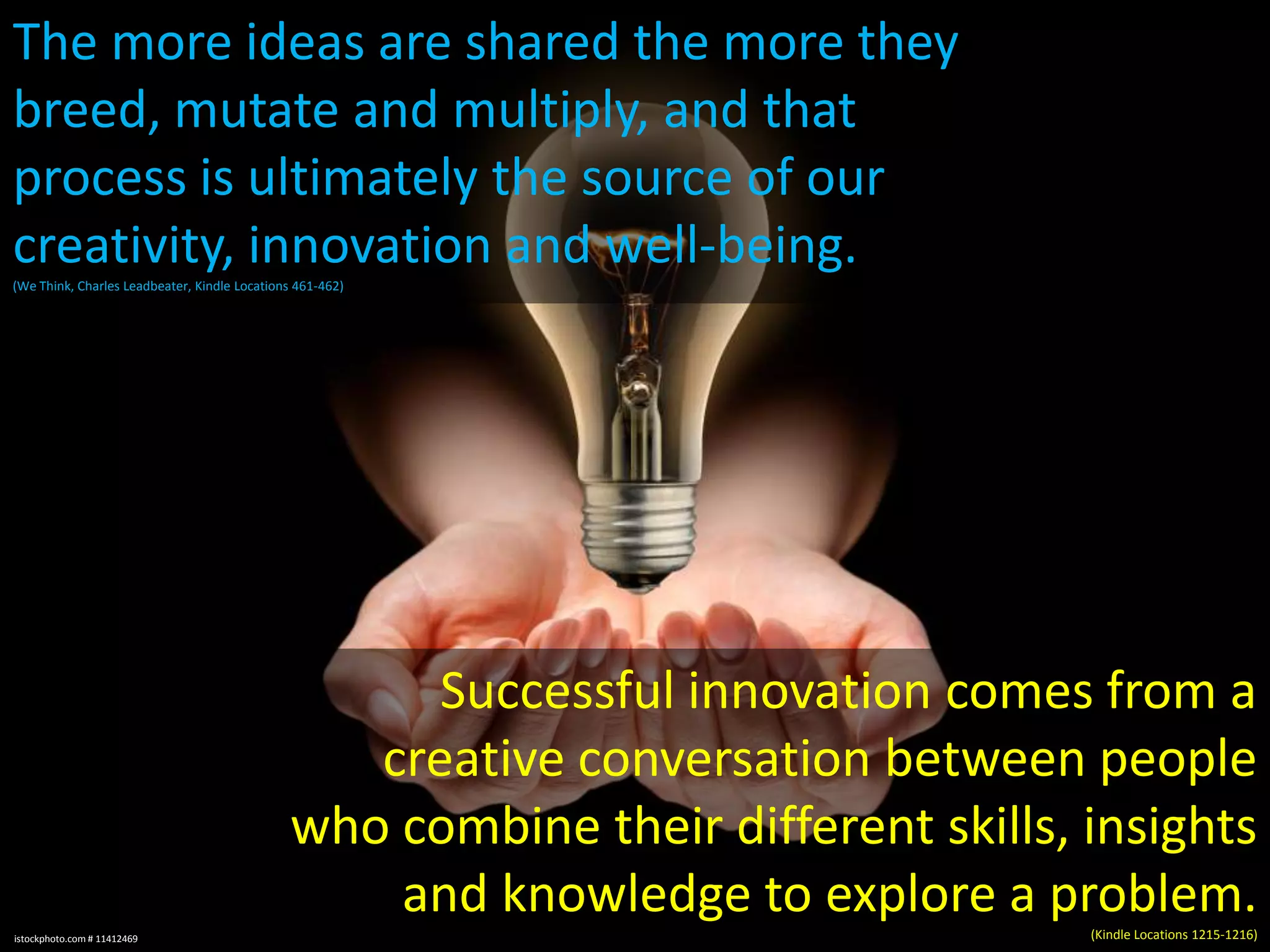
The more ideas are shared the more they
breed, mutate and multiply, and that
process is ultimately the source of our
creativity, innovation and well-being.
(We Think, Charles Leadbeater, Kindle Locations 461-462)

Successful innovation comes from a
creative conversation between people
who combine their different skills, insights
and knowledge to explore a problem.
istockphoto.com # 11412469

(Kindle Locations 1215-1216)
Experience is the best teacher. A
compelling story is a close second.
(Lead with a Story, Paul Smith, p. 2)

People, even children, aren’t
really afraid of change. They’re
afraid of not being prepared for
the change.
(p. 29)

Fear is really about their own
preparedness, not the change itself. The
harder they work to prepare for the
change, the more their fear will abate.
(p. 30)
istockphoto.com # 21022342

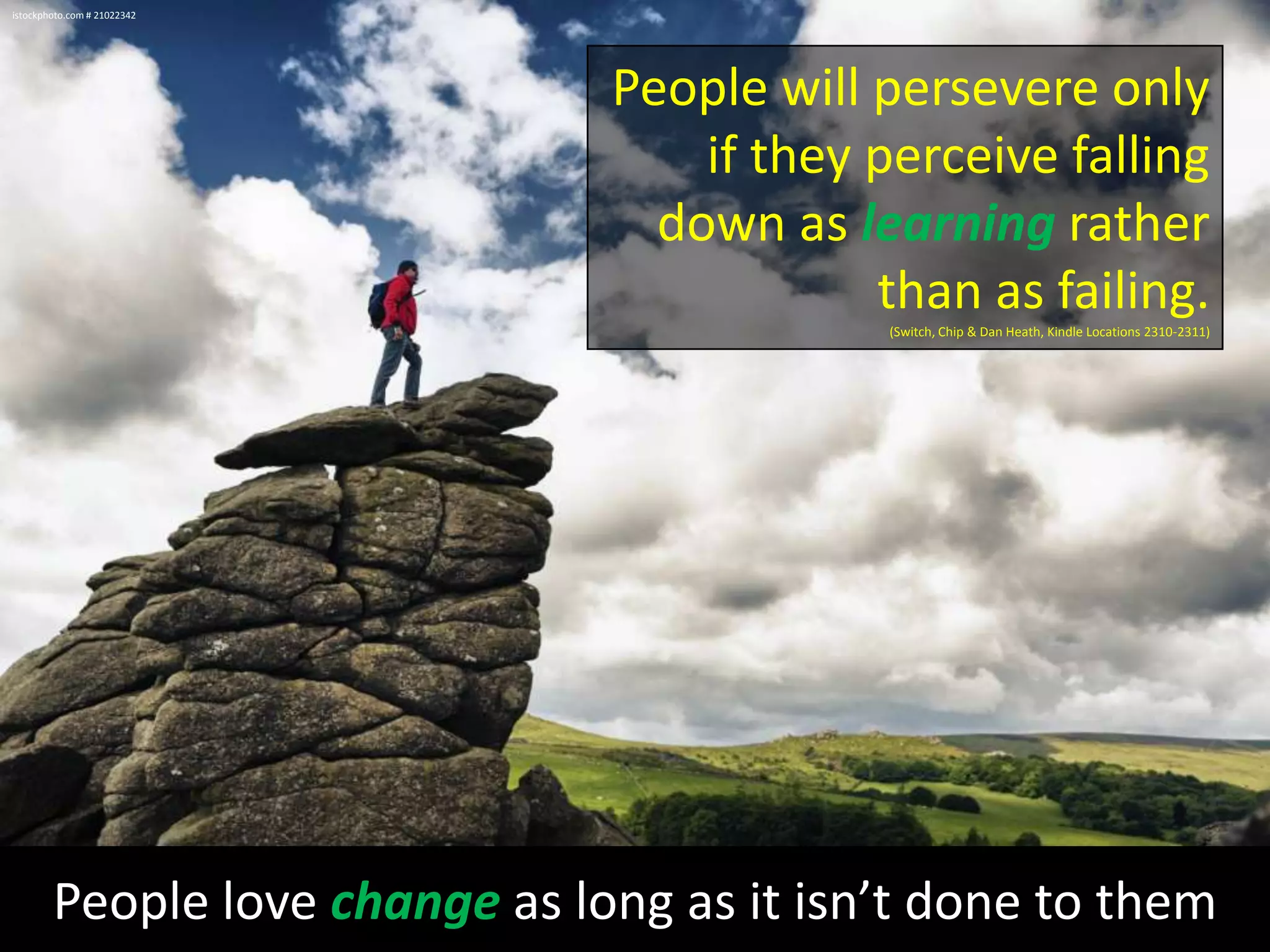
People will persevere only
if they perceive falling
down as learning rather
than as failing.
(Switch, Chip & Dan Heath, Kindle Locations 2310-2311)

People love change as long as it isn’t done to them
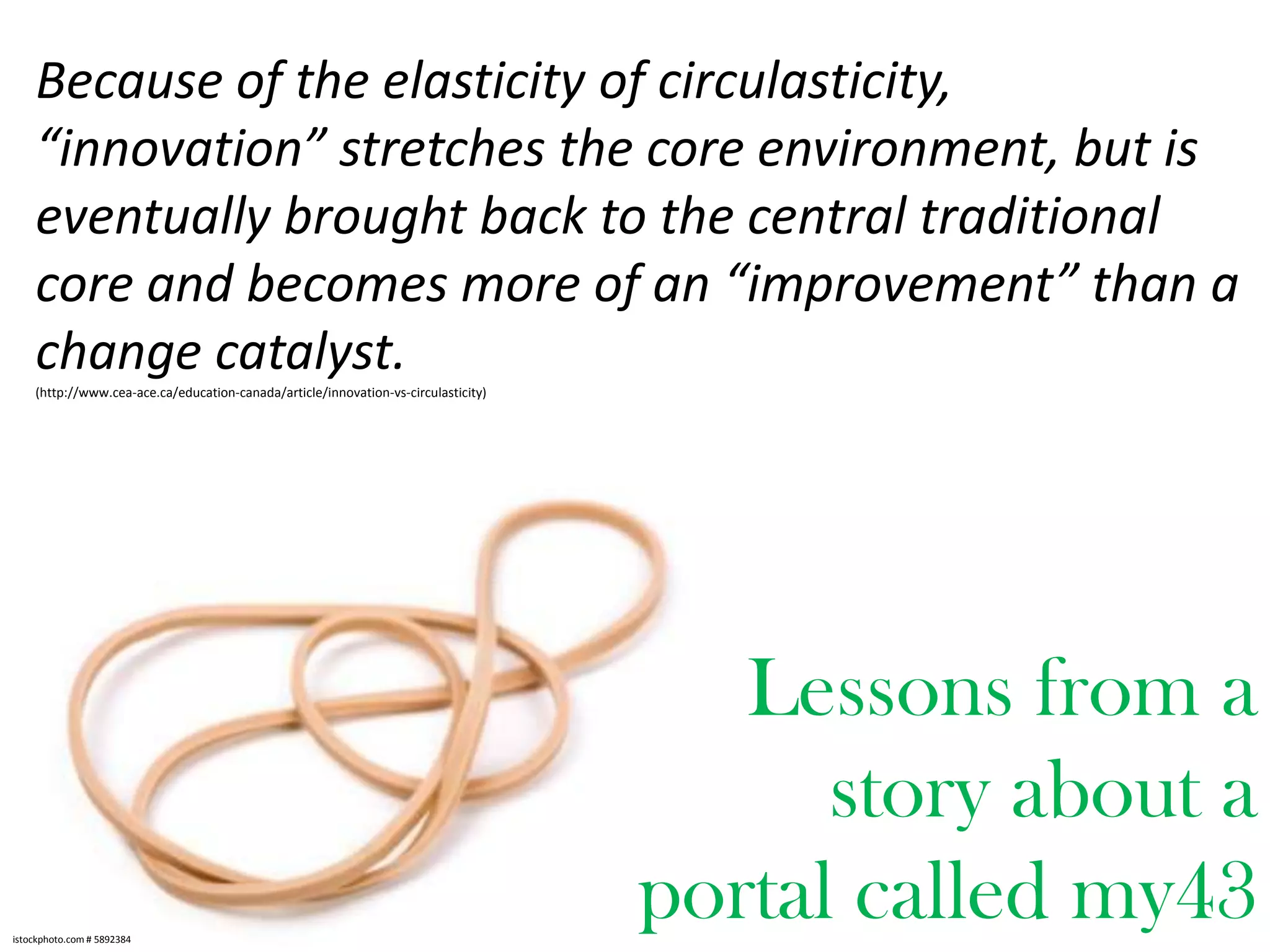
Because of the elasticity of circulasticity,
“innovation” stretches the core environment, but is
eventually brought back to the central traditional
core and becomes more of an “improvement” than a
change catalyst.
(http://www.cea-ace.ca/education-canada/article/innovation-vs-circulasticity)

Lessons from a
story about a
portal called my43
istockphoto.com # 5892384
They have been doing it the
same way for so long that
their ability to compete
against a new technology or
see a new perspective
becomes a daunting task.
(Start with Why, Simon Sinek, Kindle Locations 748-749)

istockphoto.com # 1563122
Change is hard because people wear
themselves out. And that’s the second
surprise about change: What looks like
laziness is often exhaustion.
(Switch, Chip & Dan Heath, Kindle Location 167)

There are two routes to building
people’s confidence so that they feel
“big” relative to their challenge. You
can shrink the change or grow your
people (or, preferably, both).
(Kindle Locations 2394-2395)
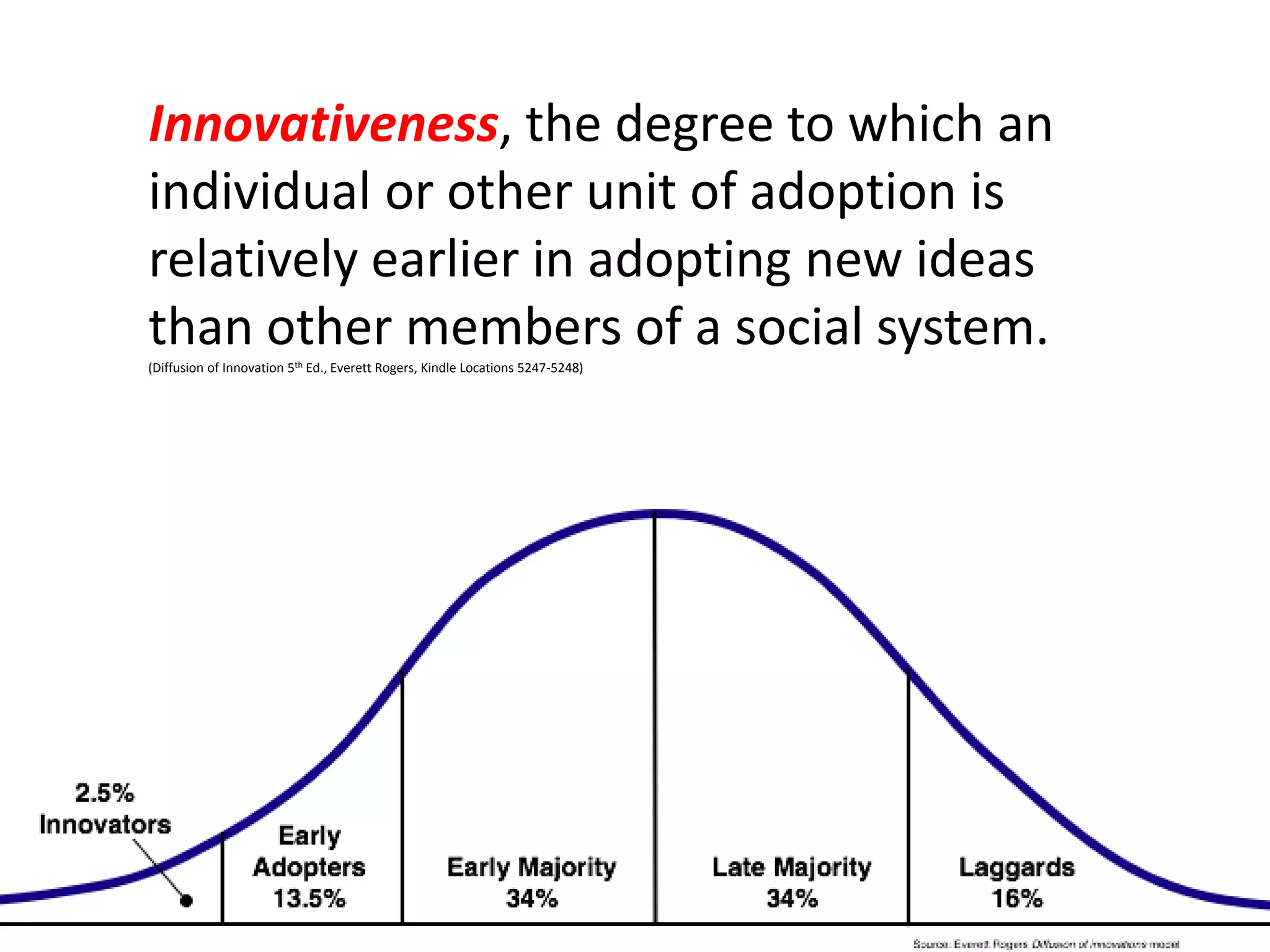
Innovativeness, the degree to which an
individual or other unit of adoption is
relatively earlier in adopting new ideas
than other members of a social system.
(Diffusion of Innovation 5th Ed., Everett Rogers, Kindle Locations 5247-5248)
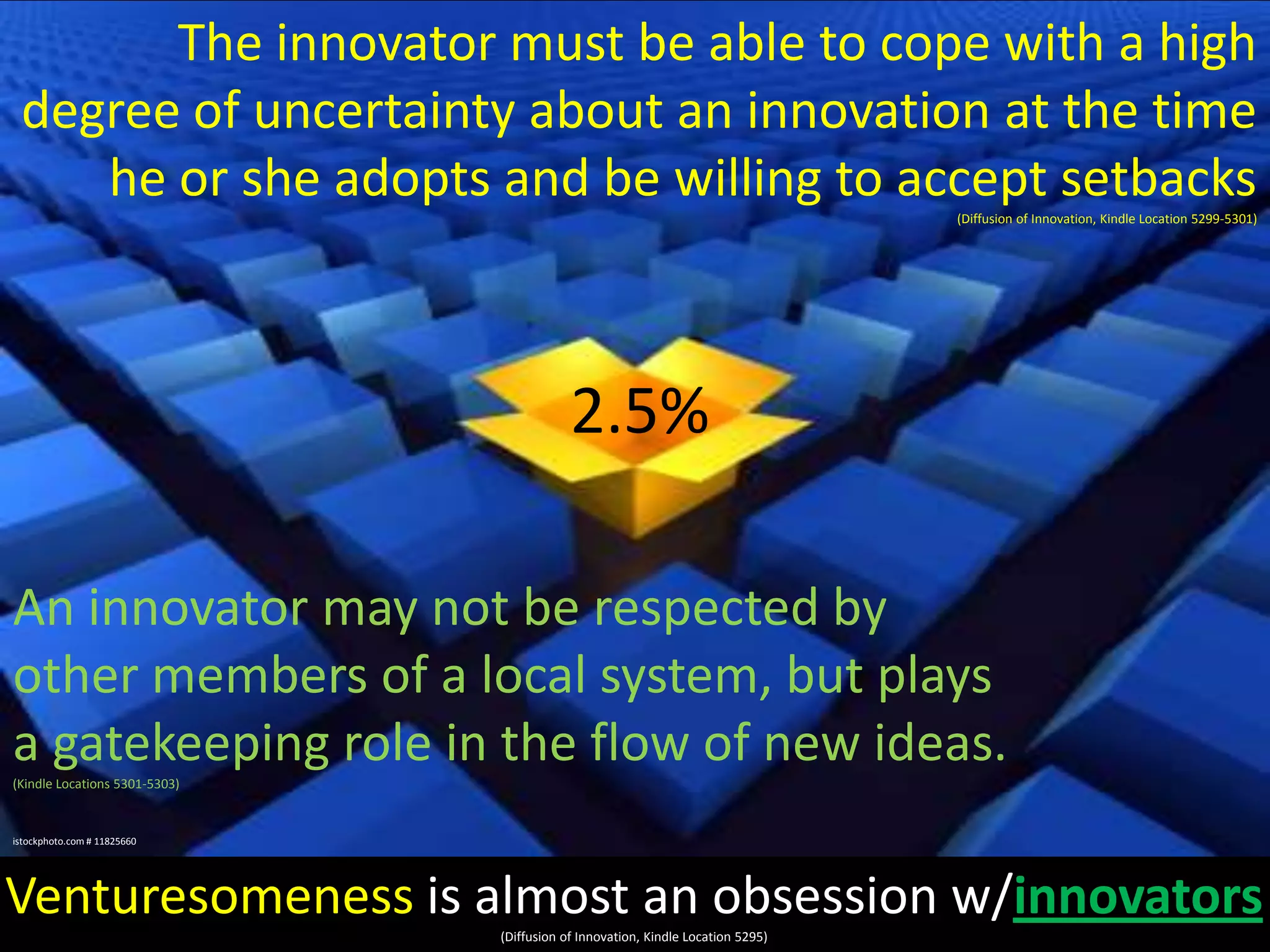
The innovator must be able to cope with a high
degree of uncertainty about an innovation at the time
he or she adopts and be willing to accept setbacks
(Diffusion of Innovation, Kindle Location 5299-5301)

2.5%
An innovator may not be respected by
other members of a local system, but plays
a gatekeeping role in the flow of new ideas.
(Kindle Locations 5301-5303)

istockphoto.com # 11825660

Venturesomeness is almost an obsession w/innovators
(Diffusion of Innovation, Kindle Location 5295)
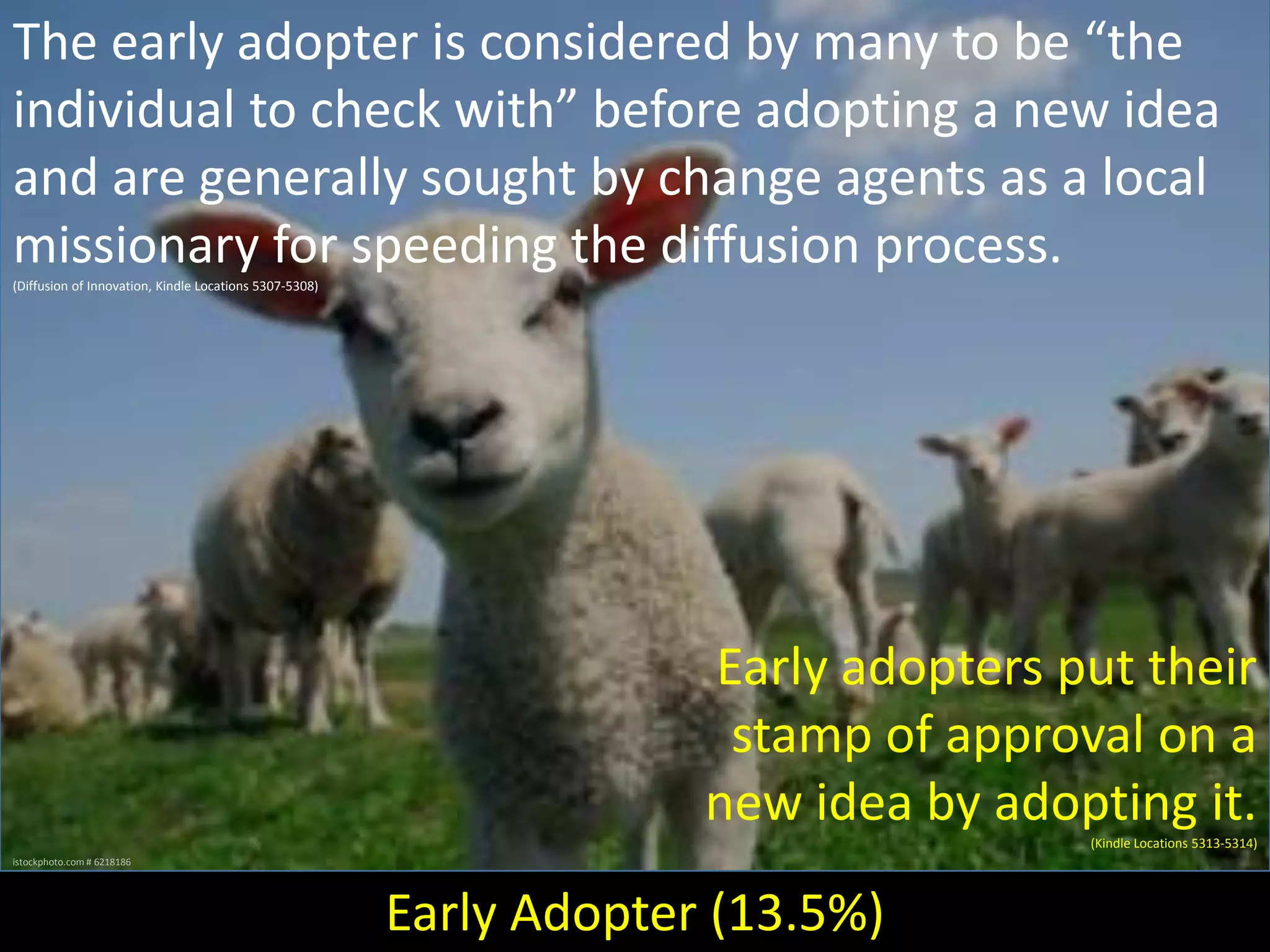
The early adopter is considered by many to be “the
individual to check with” before adopting a new idea
and are generally sought by change agents as a local
missionary for speeding the diffusion process.
(Diffusion of Innovation, Kindle Locations 5307-5308)

Early adopters put their
stamp of approval on a
new idea by adopting it.
(Kindle Locations 5313-5314)
istockphoto.com # 6218186

Early Adopter (13.5%)
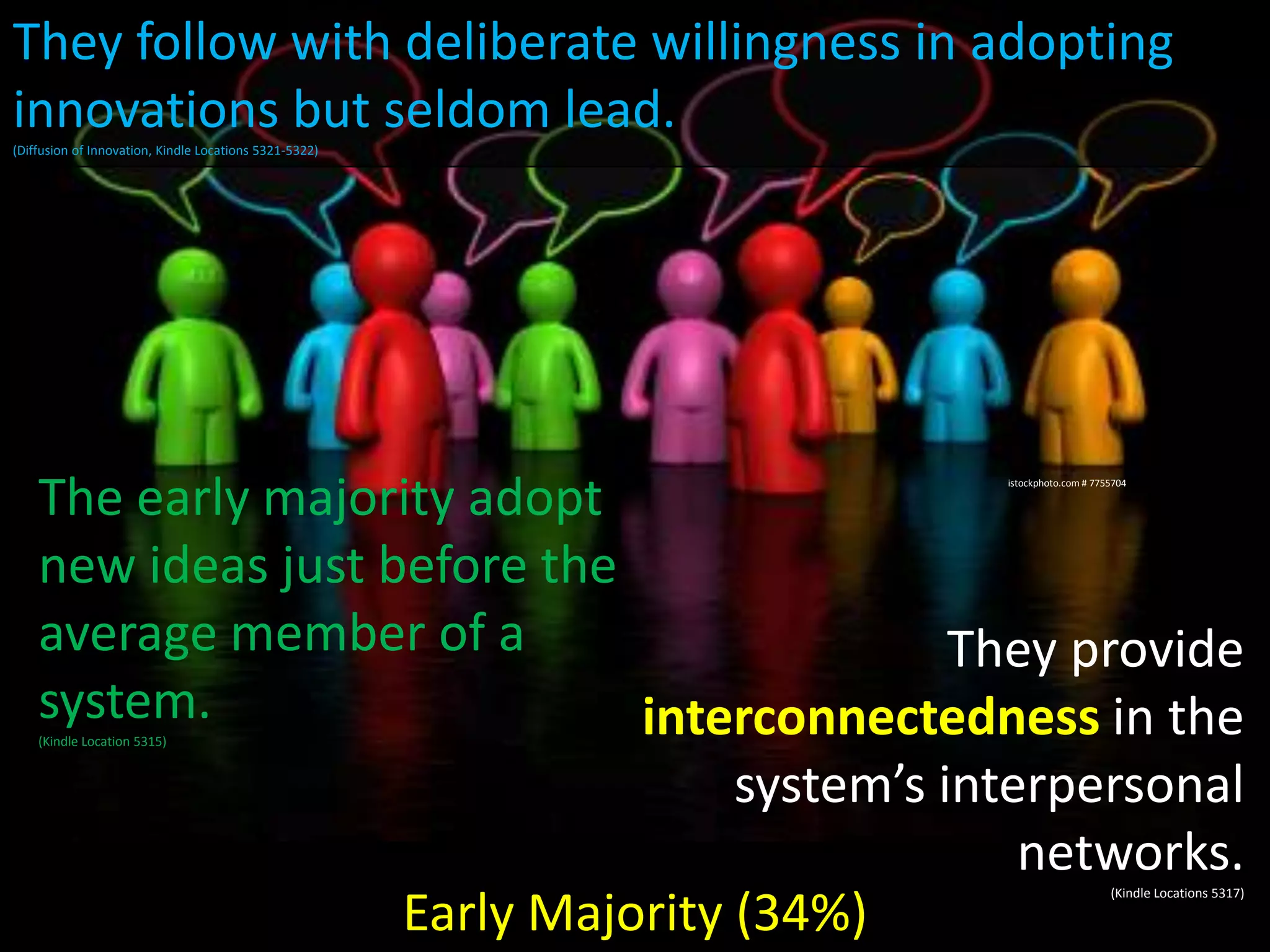
They follow with deliberate willingness in adopting
innovations but seldom lead.
(Diffusion of Innovation, Kindle Locations 5321-5322)

The early majority adopt
new ideas just before the
average member of a
They provide
system.
interconnectedness in the
system’s interpersonal
networks.
Early Majority (34%)
istockphoto.com # 7755704

(Kindle Location 5315)

(Kindle Locations 5317)
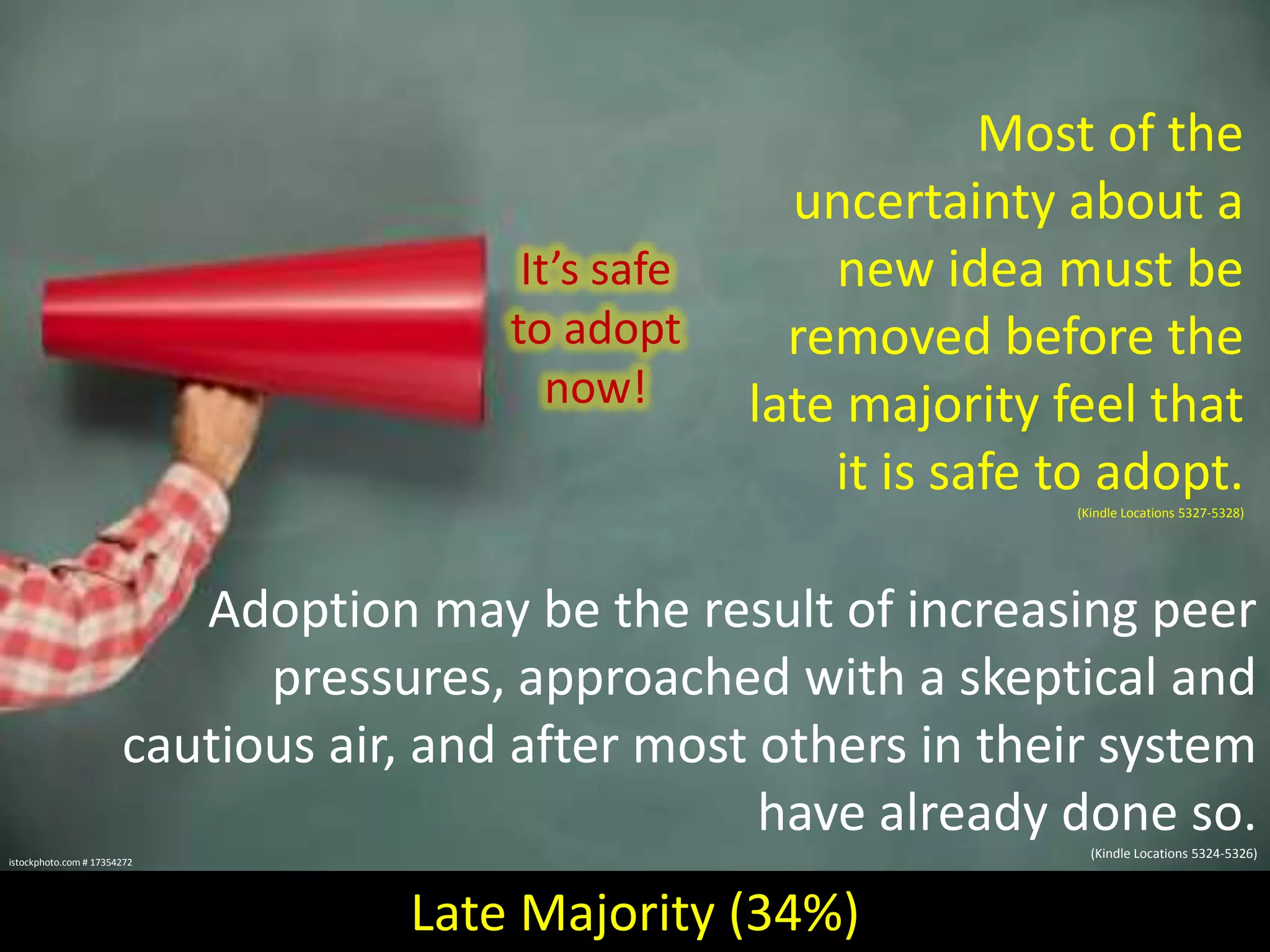
It’s safe
to adopt
now!

Most of the
uncertainty about a
new idea must be
removed before the
late majority feel that
it is safe to adopt.
(Kindle Locations 5327-5328)

Adoption may be the result of increasing peer
pressures, approached with a skeptical and
cautious air, and after most others in their system
have already done so.
(Kindle Locations 5324-5326)

istockphoto.com # 17354272

Late Majority (34%)
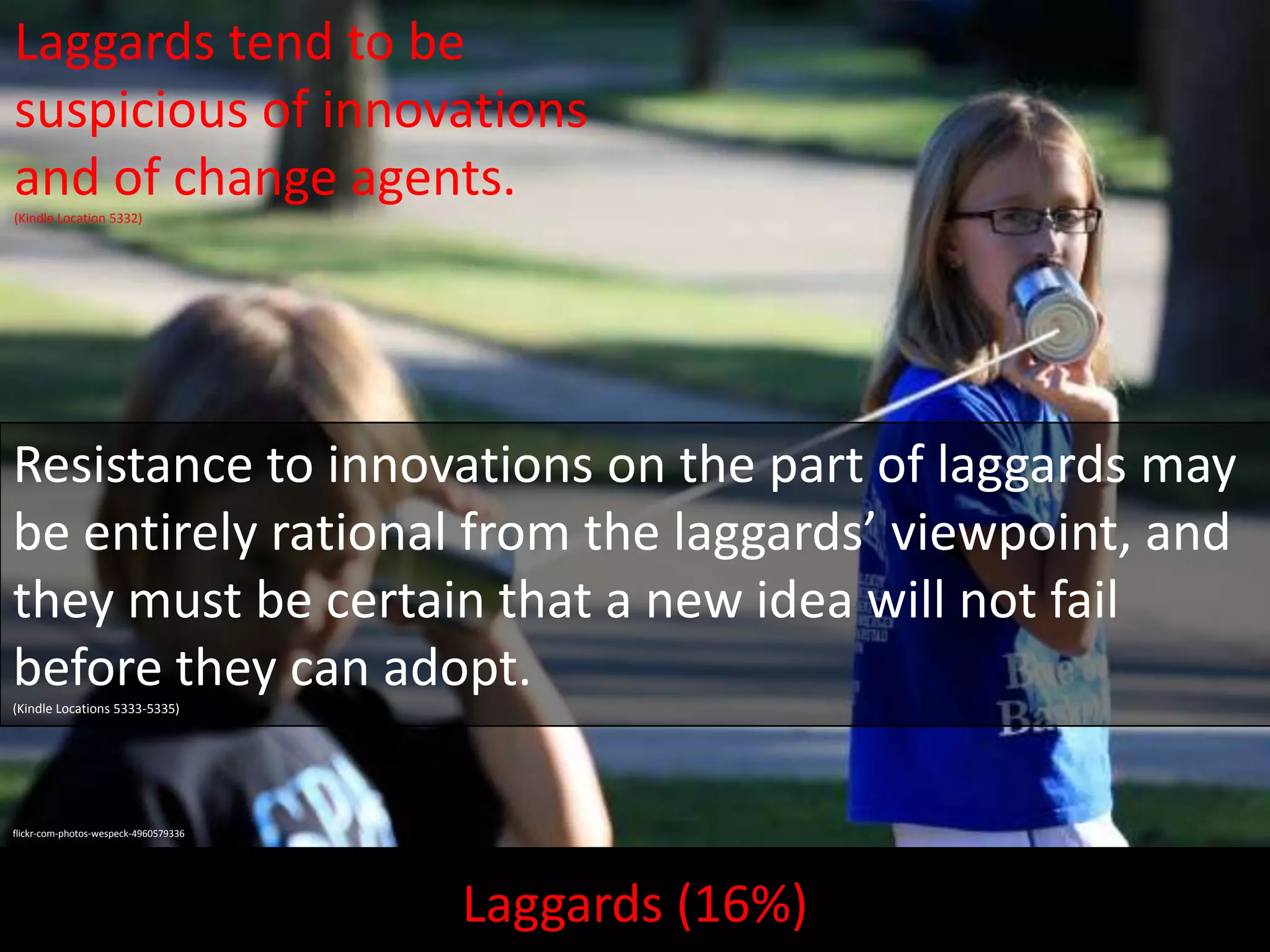
Laggards tend to be
suspicious of innovations
and of change agents.
(Kindle Location 5332)

Resistance to innovations on the part of laggards may
be entirely rational from the laggards’ viewpoint, and
they must be certain that a new idea will not fail
before they can adopt.
(Kindle Locations 5333-5335)

flickr-com-photos-wespeck-4960579336

Laggards (16%)
istockphoto.com # 16027894
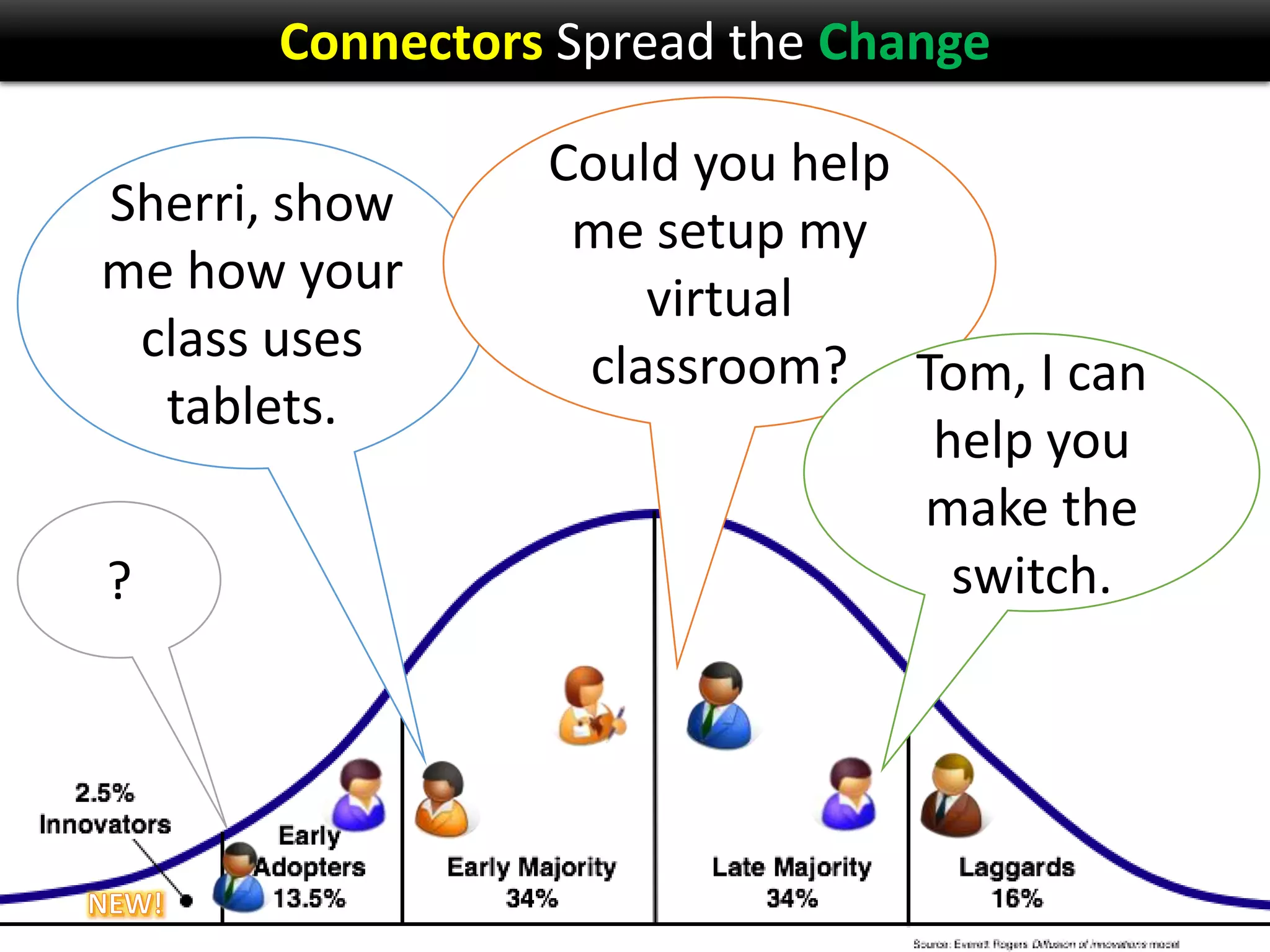
Connectors Spread the Change
Sherri, show
me how your
class uses
tablets.
?

Could you help
me setup my
virtual
classroom? Tom, I can
help you
make the
switch.
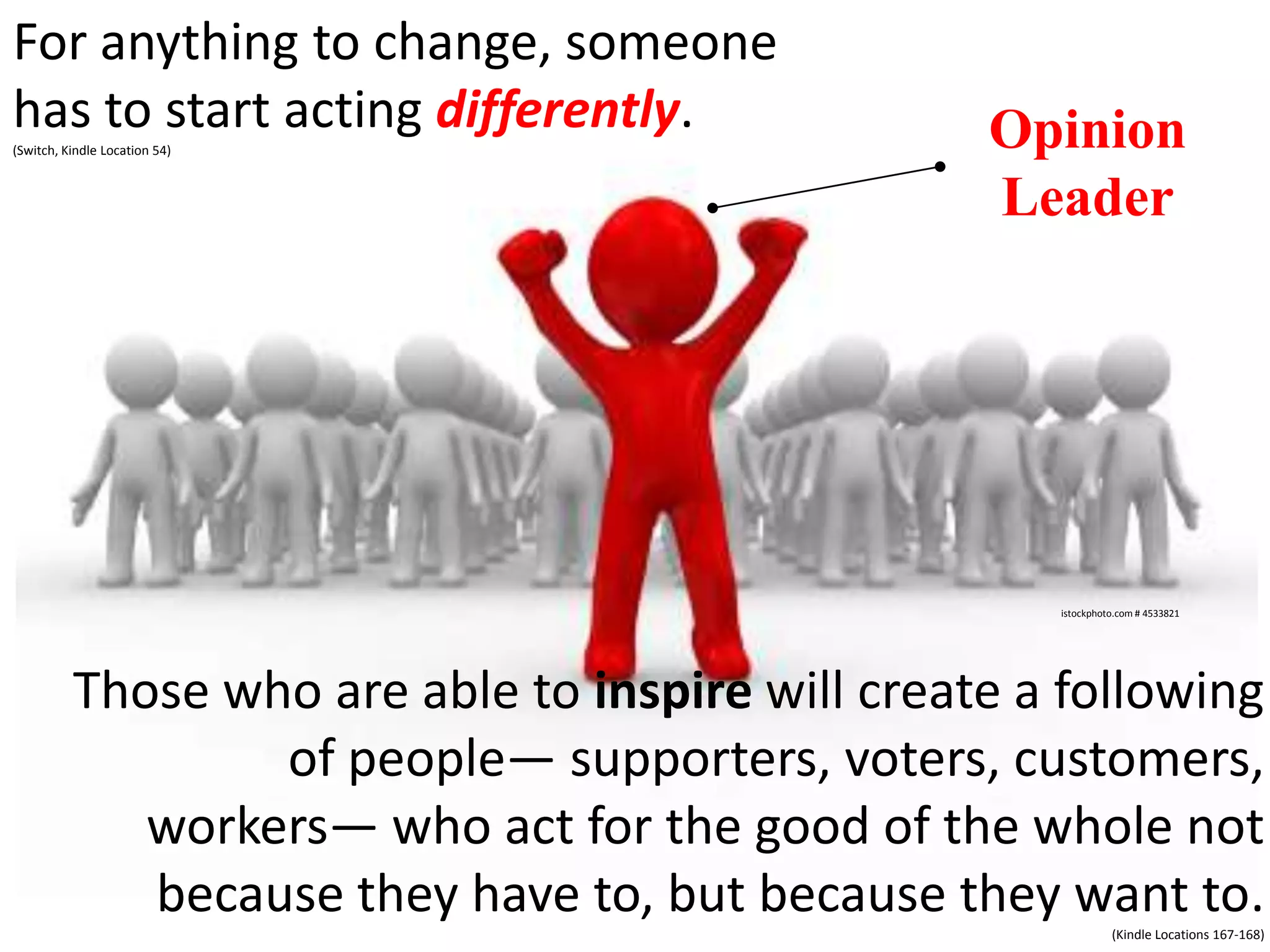
For anything to change, someone
has to start acting differently.
(Switch, Kindle Location 54)

Opinion
Leader

istockphoto.com # 4533821

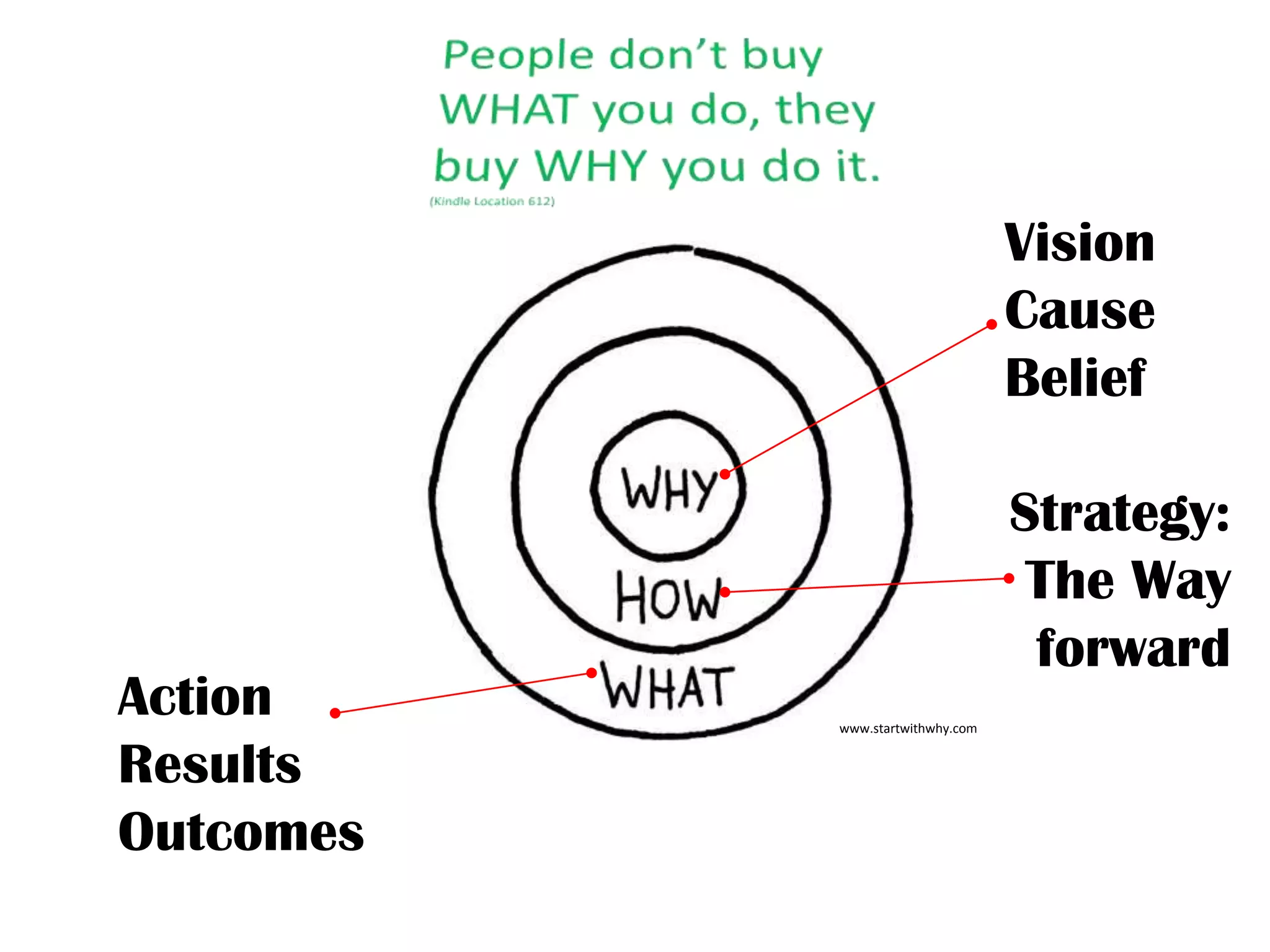
Those who are able to inspire will create a following
of people— supporters, voters, customers,
workers— who act for the good of the whole not
because they have to, but because they want to.
(Kindle Locations 167-168)
Vision
Cause
Belief

Action
Results
Outcomes

Strategy:
The Way
forward
www.startwithwhy.com
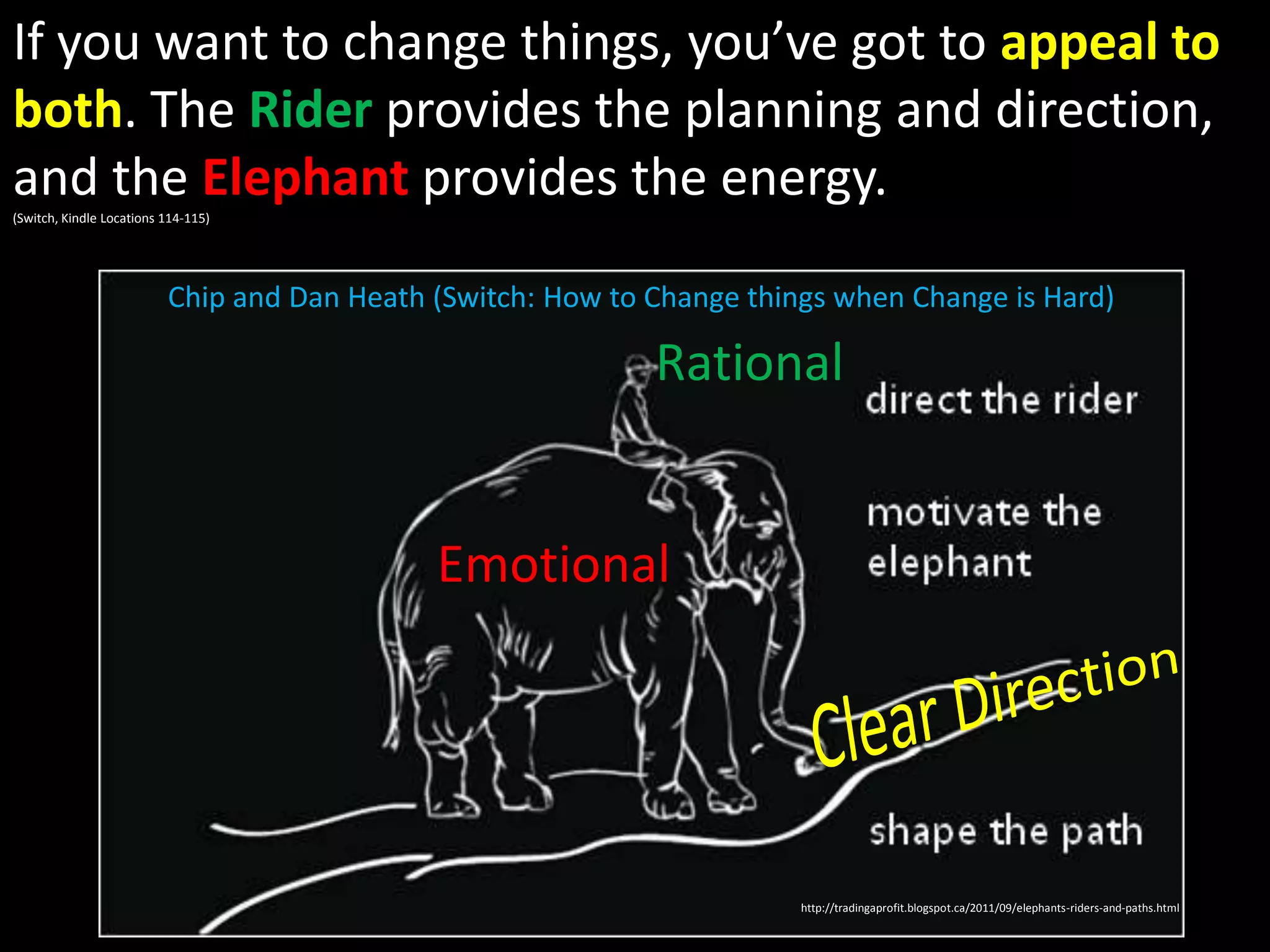
If you want to change things, you’ve got to appeal to
both. The Rider provides the planning and direction,
and the Elephant provides the energy.
(Switch, Kindle Locations 114-115)

Chip and Dan Heath (Switch: How to Change things when Change is Hard)

Rational

Emotional

http://tradingaprofit.blogspot.ca/2011/09/elephants-riders-and-paths.html
istockphoto.com # 8173342

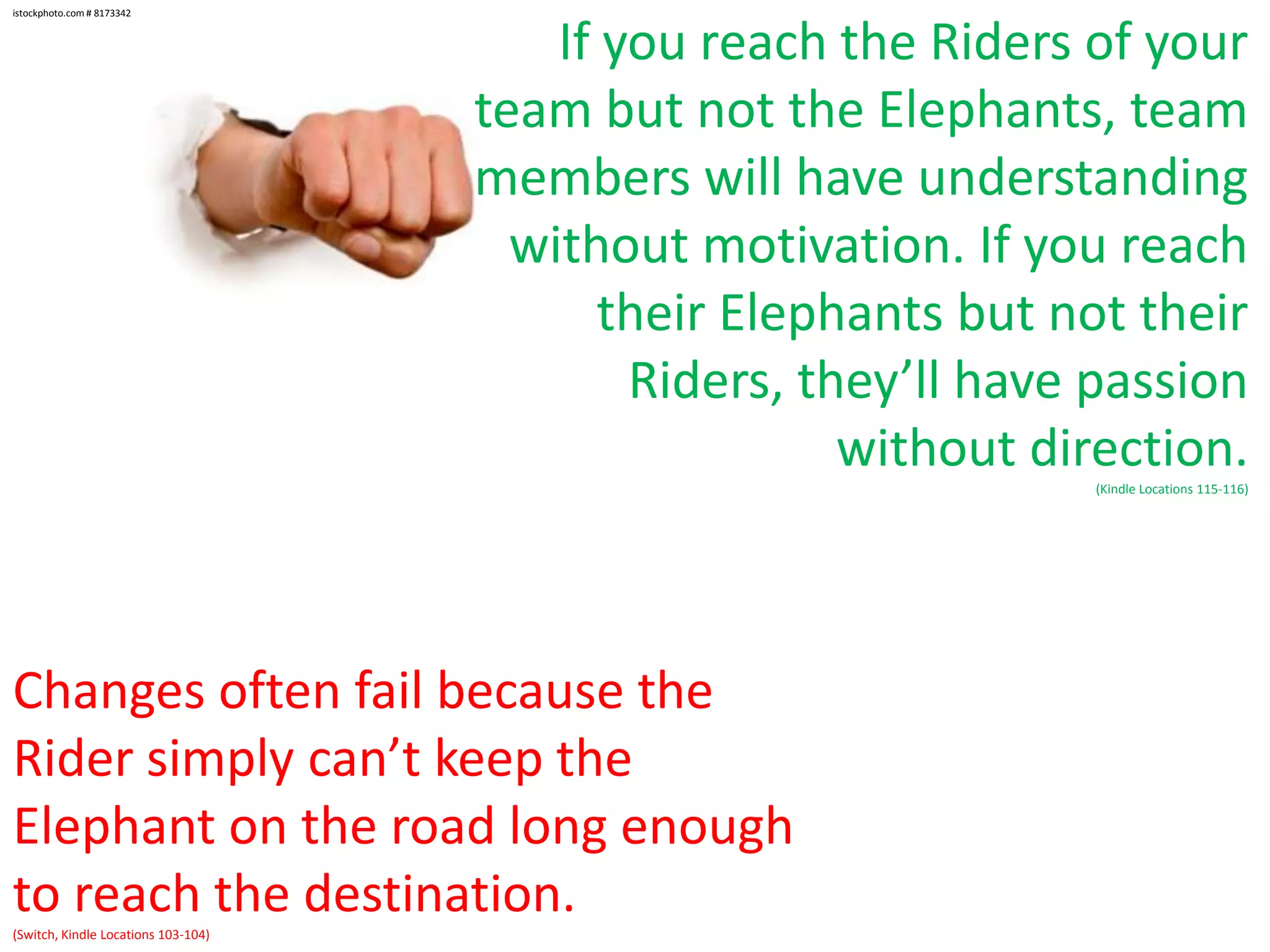
If you reach the Riders of your
team but not the Elephants, team
members will have understanding
without motivation. If you reach
their Elephants but not their
Riders, they’ll have passion
without direction.
(Kindle Locations 115-116)

Changes often fail because the
Rider simply can’t keep the
Elephant on the road long enough
to reach the destination.
(Switch, Kindle Locations 103-104)
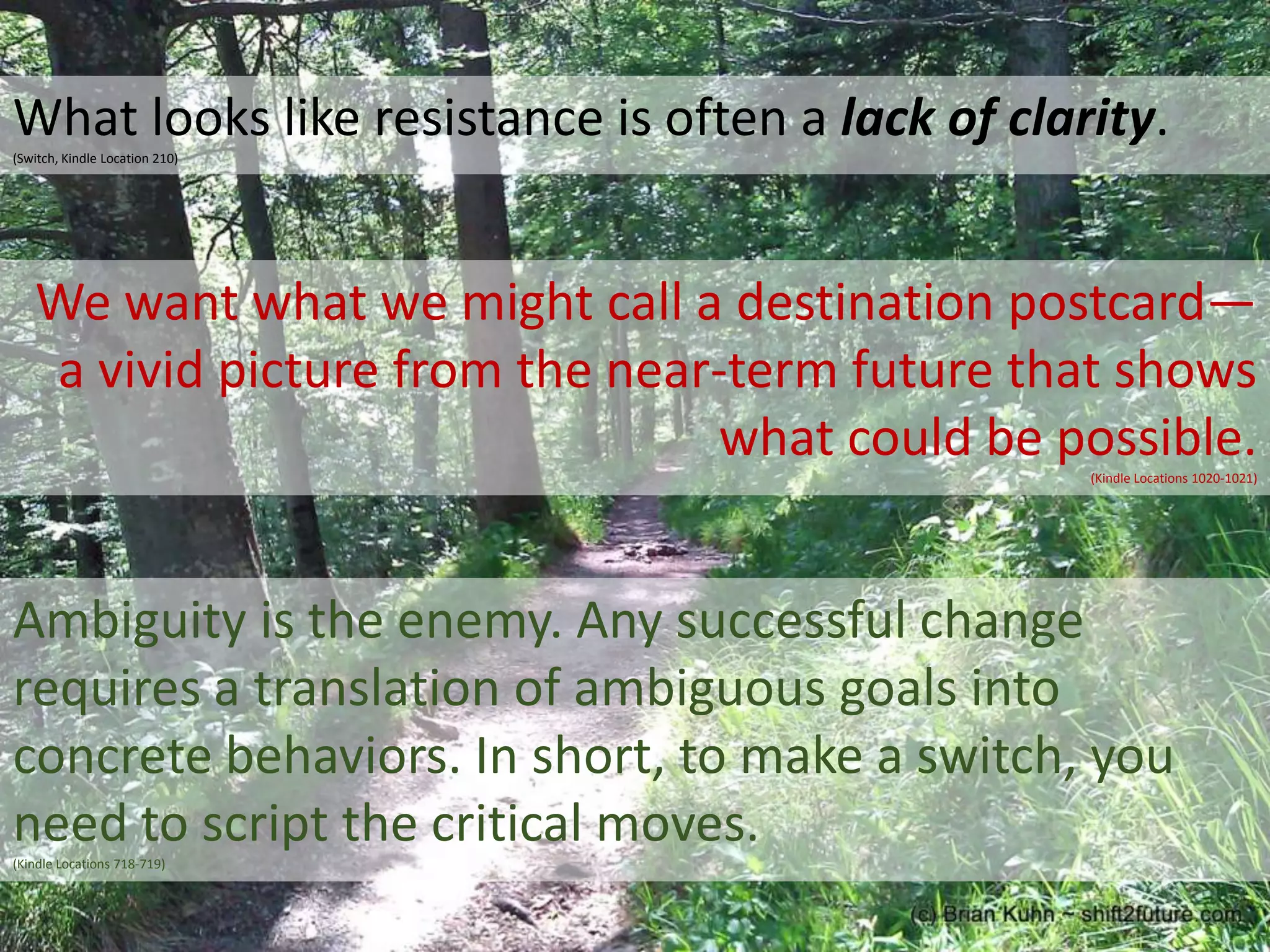
What looks like resistance is often a lack of clarity.
(Switch, Kindle Location 210)

We want what we might call a destination postcard—
a vivid picture from the near-term future that shows
what could be possible.
(Kindle Locations 1020-1021)

Ambiguity is the enemy. Any successful change
requires a translation of ambiguous goals into
concrete behaviors. In short, to make a switch, you
need to script the critical moves.
(Kindle Locations 718-719)
Instead of [just] using
rational or emotional
appeals, change the
environment so it’s
difficult or impossible not
to change.
(Lead with a Story, p. 31)

istockphoto.com # 7192634
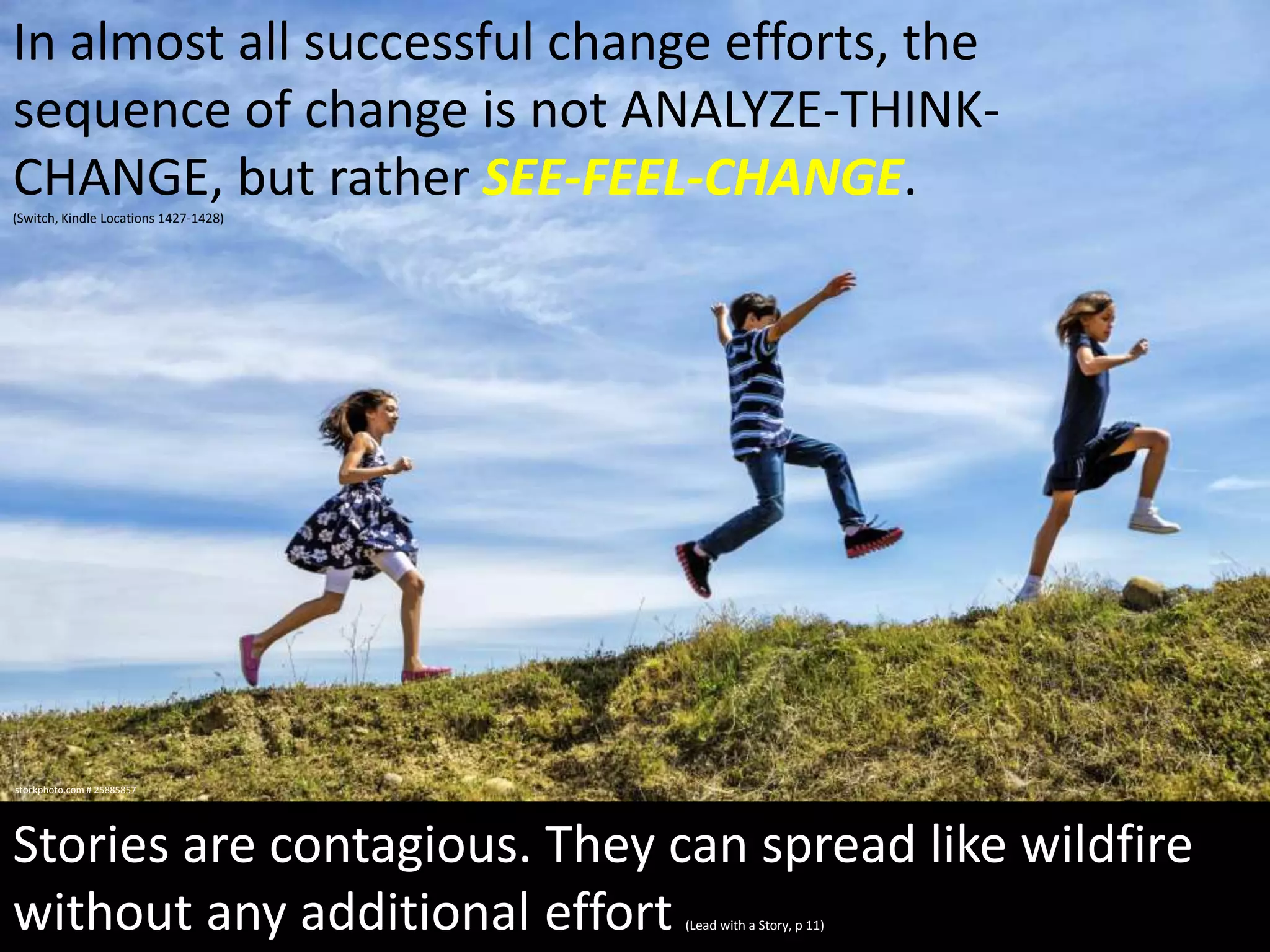
In almost all successful change efforts, the
sequence of change is not ANALYZE-THINKCHANGE, but rather SEE-FEEL-CHANGE.
(Switch, Kindle Locations 1427-1428)

istockphoto.com # 25885857

Stories are contagious. They can spread like wildfire
without any additional effort
(Lead with a Story, p 11)

Transformative Change - SFU Symposium

  • 1.
    Moving Educational Technologyfrom Enhancement to Transformation February 22, 2014 #bcedsfu SFU Symposium Brian Kuhn My Coordinates… Director of Technology / CIO Vancouver School Board bkuhn@vsb.bc.ca / @bkuhn http://www.shift2future.com http://www.slideshare.net/bkuhn http://www.linkedin.com/in/kuhnbrian
  • 2.
  • 3.
    The more ideasare shared the more they breed, mutate and multiply, and that process is ultimately the source of our creativity, innovation and well-being. (We Think, Charles Leadbeater, Kindle Locations 461-462) Successful innovation comes from a creative conversation between people who combine their different skills, insights and knowledge to explore a problem. istockphoto.com # 11412469 (Kindle Locations 1215-1216)
  • 4.
    Experience is thebest teacher. A compelling story is a close second. (Lead with a Story, Paul Smith, p. 2) People, even children, aren’t really afraid of change. They’re afraid of not being prepared for the change. (p. 29) Fear is really about their own preparedness, not the change itself. The harder they work to prepare for the change, the more their fear will abate. (p. 30)
  • 5.
    istockphoto.com # 21022342 Peoplewill persevere only if they perceive falling down as learning rather than as failing. (Switch, Chip & Dan Heath, Kindle Locations 2310-2311) People love change as long as it isn’t done to them
  • 6.
    Because of theelasticity of circulasticity, “innovation” stretches the core environment, but is eventually brought back to the central traditional core and becomes more of an “improvement” than a change catalyst. (http://www.cea-ace.ca/education-canada/article/innovation-vs-circulasticity) Lessons from a story about a portal called my43 istockphoto.com # 5892384
  • 7.
    They have beendoing it the same way for so long that their ability to compete against a new technology or see a new perspective becomes a daunting task. (Start with Why, Simon Sinek, Kindle Locations 748-749) istockphoto.com # 1563122
  • 8.
    Change is hardbecause people wear themselves out. And that’s the second surprise about change: What looks like laziness is often exhaustion. (Switch, Chip & Dan Heath, Kindle Location 167) There are two routes to building people’s confidence so that they feel “big” relative to their challenge. You can shrink the change or grow your people (or, preferably, both). (Kindle Locations 2394-2395)
  • 9.
    Innovativeness, the degreeto which an individual or other unit of adoption is relatively earlier in adopting new ideas than other members of a social system. (Diffusion of Innovation 5th Ed., Everett Rogers, Kindle Locations 5247-5248)
  • 10.
    The innovator mustbe able to cope with a high degree of uncertainty about an innovation at the time he or she adopts and be willing to accept setbacks (Diffusion of Innovation, Kindle Location 5299-5301) 2.5% An innovator may not be respected by other members of a local system, but plays a gatekeeping role in the flow of new ideas. (Kindle Locations 5301-5303) istockphoto.com # 11825660 Venturesomeness is almost an obsession w/innovators (Diffusion of Innovation, Kindle Location 5295)
  • 11.
    The early adopteris considered by many to be “the individual to check with” before adopting a new idea and are generally sought by change agents as a local missionary for speeding the diffusion process. (Diffusion of Innovation, Kindle Locations 5307-5308) Early adopters put their stamp of approval on a new idea by adopting it. (Kindle Locations 5313-5314) istockphoto.com # 6218186 Early Adopter (13.5%)
  • 12.
    They follow withdeliberate willingness in adopting innovations but seldom lead. (Diffusion of Innovation, Kindle Locations 5321-5322) The early majority adopt new ideas just before the average member of a They provide system. interconnectedness in the system’s interpersonal networks. Early Majority (34%) istockphoto.com # 7755704 (Kindle Location 5315) (Kindle Locations 5317)
  • 13.
    It’s safe to adopt now! Mostof the uncertainty about a new idea must be removed before the late majority feel that it is safe to adopt. (Kindle Locations 5327-5328) Adoption may be the result of increasing peer pressures, approached with a skeptical and cautious air, and after most others in their system have already done so. (Kindle Locations 5324-5326) istockphoto.com # 17354272 Late Majority (34%)
  • 14.
    Laggards tend tobe suspicious of innovations and of change agents. (Kindle Location 5332) Resistance to innovations on the part of laggards may be entirely rational from the laggards’ viewpoint, and they must be certain that a new idea will not fail before they can adopt. (Kindle Locations 5333-5335) flickr-com-photos-wespeck-4960579336 Laggards (16%)
  • 15.
  • 16.
    Connectors Spread theChange Sherri, show me how your class uses tablets. ? Could you help me setup my virtual classroom? Tom, I can help you make the switch.
  • 17.
    For anything tochange, someone has to start acting differently. (Switch, Kindle Location 54) Opinion Leader istockphoto.com # 4533821 Those who are able to inspire will create a following of people— supporters, voters, customers, workers— who act for the good of the whole not because they have to, but because they want to. (Kindle Locations 167-168)
  • 18.
  • 19.
    If you wantto change things, you’ve got to appeal to both. The Rider provides the planning and direction, and the Elephant provides the energy. (Switch, Kindle Locations 114-115) Chip and Dan Heath (Switch: How to Change things when Change is Hard) Rational Emotional http://tradingaprofit.blogspot.ca/2011/09/elephants-riders-and-paths.html
  • 20.
    istockphoto.com # 8173342 Ifyou reach the Riders of your team but not the Elephants, team members will have understanding without motivation. If you reach their Elephants but not their Riders, they’ll have passion without direction. (Kindle Locations 115-116) Changes often fail because the Rider simply can’t keep the Elephant on the road long enough to reach the destination. (Switch, Kindle Locations 103-104)
  • 21.
    What looks likeresistance is often a lack of clarity. (Switch, Kindle Location 210) We want what we might call a destination postcard— a vivid picture from the near-term future that shows what could be possible. (Kindle Locations 1020-1021) Ambiguity is the enemy. Any successful change requires a translation of ambiguous goals into concrete behaviors. In short, to make a switch, you need to script the critical moves. (Kindle Locations 718-719)
  • 22.
    Instead of [just]using rational or emotional appeals, change the environment so it’s difficult or impossible not to change. (Lead with a Story, p. 31) istockphoto.com # 7192634
  • 23.
    In almost allsuccessful change efforts, the sequence of change is not ANALYZE-THINKCHANGE, but rather SEE-FEEL-CHANGE. (Switch, Kindle Locations 1427-1428) istockphoto.com # 25885857 Stories are contagious. They can spread like wildfire without any additional effort (Lead with a Story, p 11)