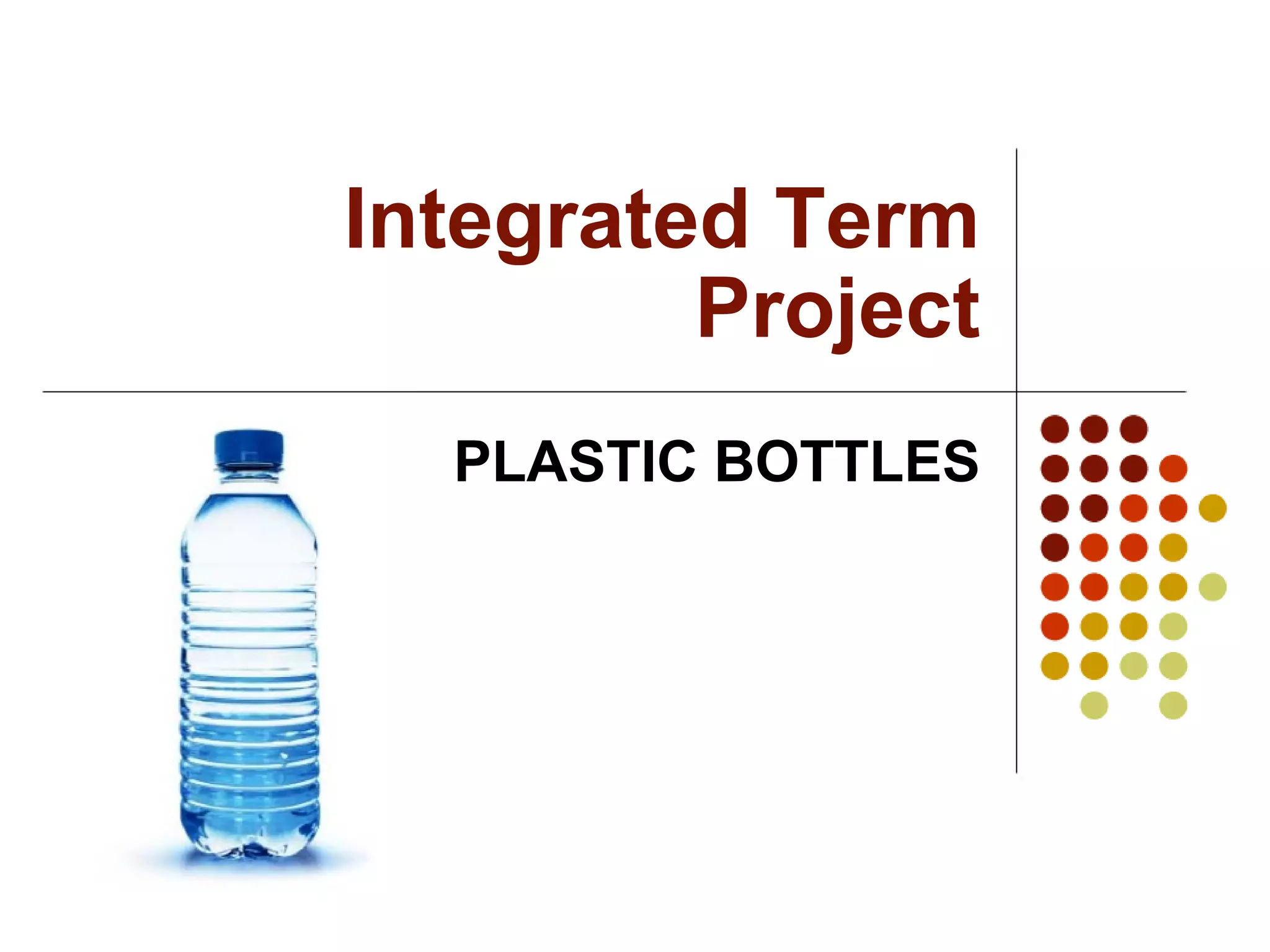
Integrated Term Project PLASTIC BOTTLES
History of Plastic Bottle Timeline of development : Leonardo Da Vinci, 16 th  century Alexander Parkes, 1862 Leo Bakeland, 1907 1 st  Commercial plastic bottle, 1947 High Density Polyethylene, 1960’s
Concept of Plastic Bottle The concept of plastic bottle came from the fact that they are: Transparent Flexible & Durable Corrosion Resistant Chemically Inert & Non- Permeable High Pressure withstanding Capacity Impact- resistant & non- Brittle Lightweight & High Strength.
Plasticity Stress- Strain Curve: Ductile Material Non Ductile Material
Mechanism of Polymerization Chain Initiation Step Chain Propagation Step Chain Termination Step
Physical & Chemical Property Properties LDPE HDPE Melting Point 115 0 C 135 0 C Crystallinity  Low Crystallinity High Crystallinity Flexibility  High  Low  Strength  Low High Heat Resistance  Good to use at NTP Useful above 100 0 C Transparency  Good Less transparent than LDPE
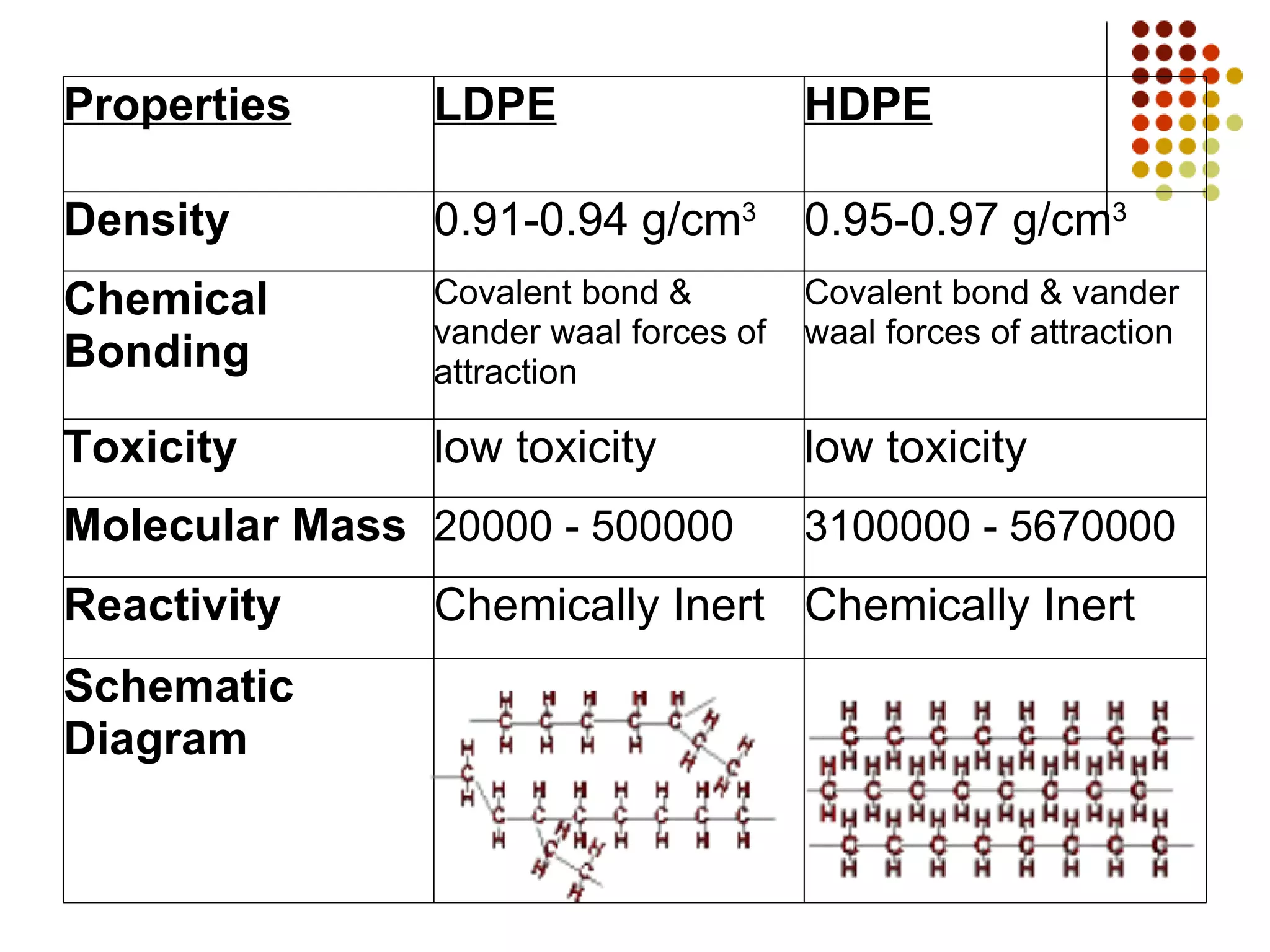
Properties LDPE HDPE Density 0.91-0.94 g/cm 3   0.95-0.97 g/cm 3 Chemical Bonding Covalent bond & vander waal forces of attraction  Covalent bond & vander waal forces of attraction  Toxicity low toxicity  low toxicity  Molecular Mass 20000 - 500000   3100000 - 5670000   Reactivity Chemically Inert Chemically Inert Schematic Diagram
Types of Plastic Bottle On the basis of Material Used : PETE – Polyethylene terephthalate HDPE - High-density polyethylene PVC - Polyvinyl chloride LDPE - Low-density polyethylene   PP –Polypropylene PS - Polystyrene
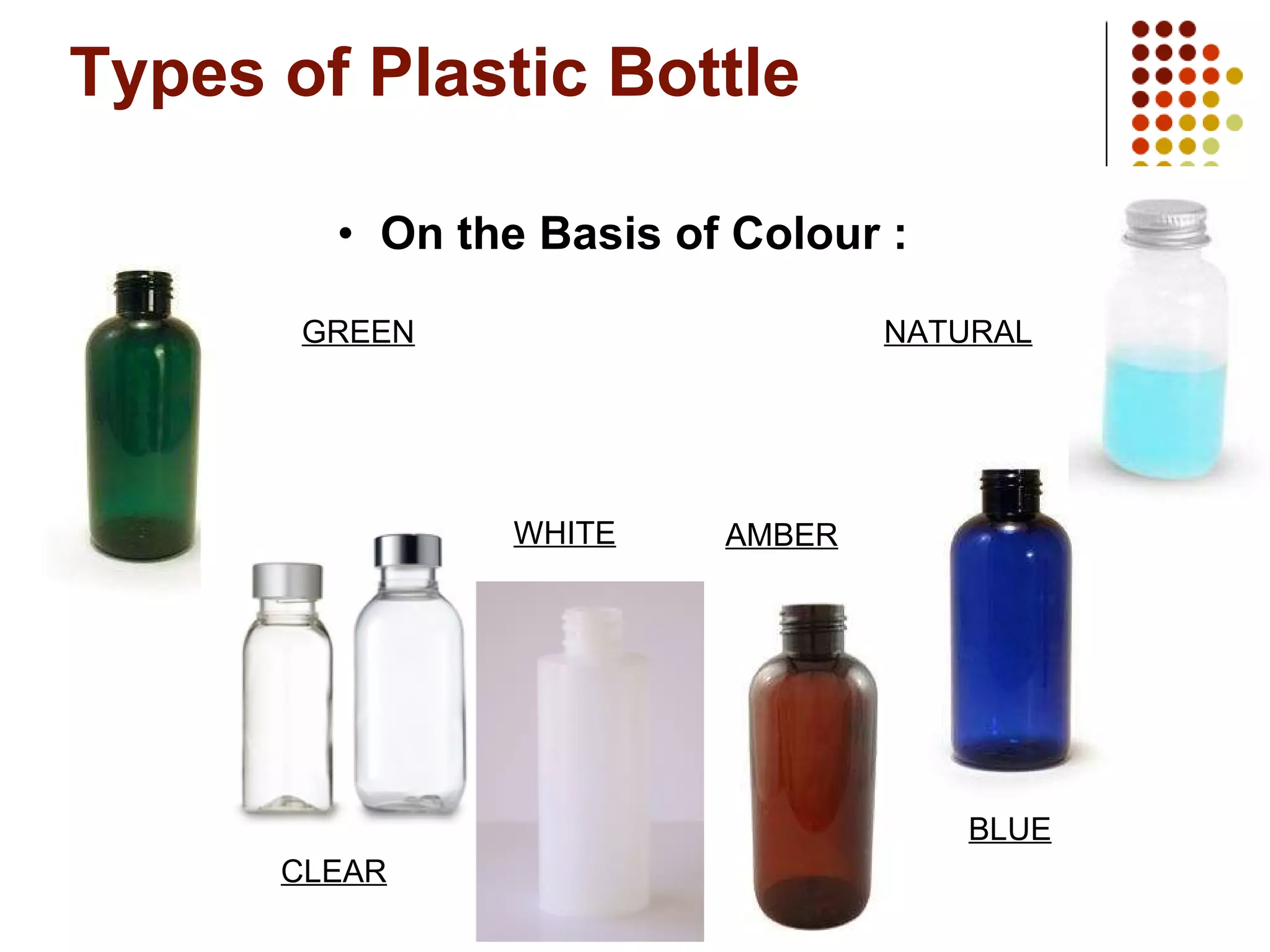
Types of Plastic Bottle On the Basis of Colour : GREEN CLEAR WHITE AMBER BLUE NATURAL
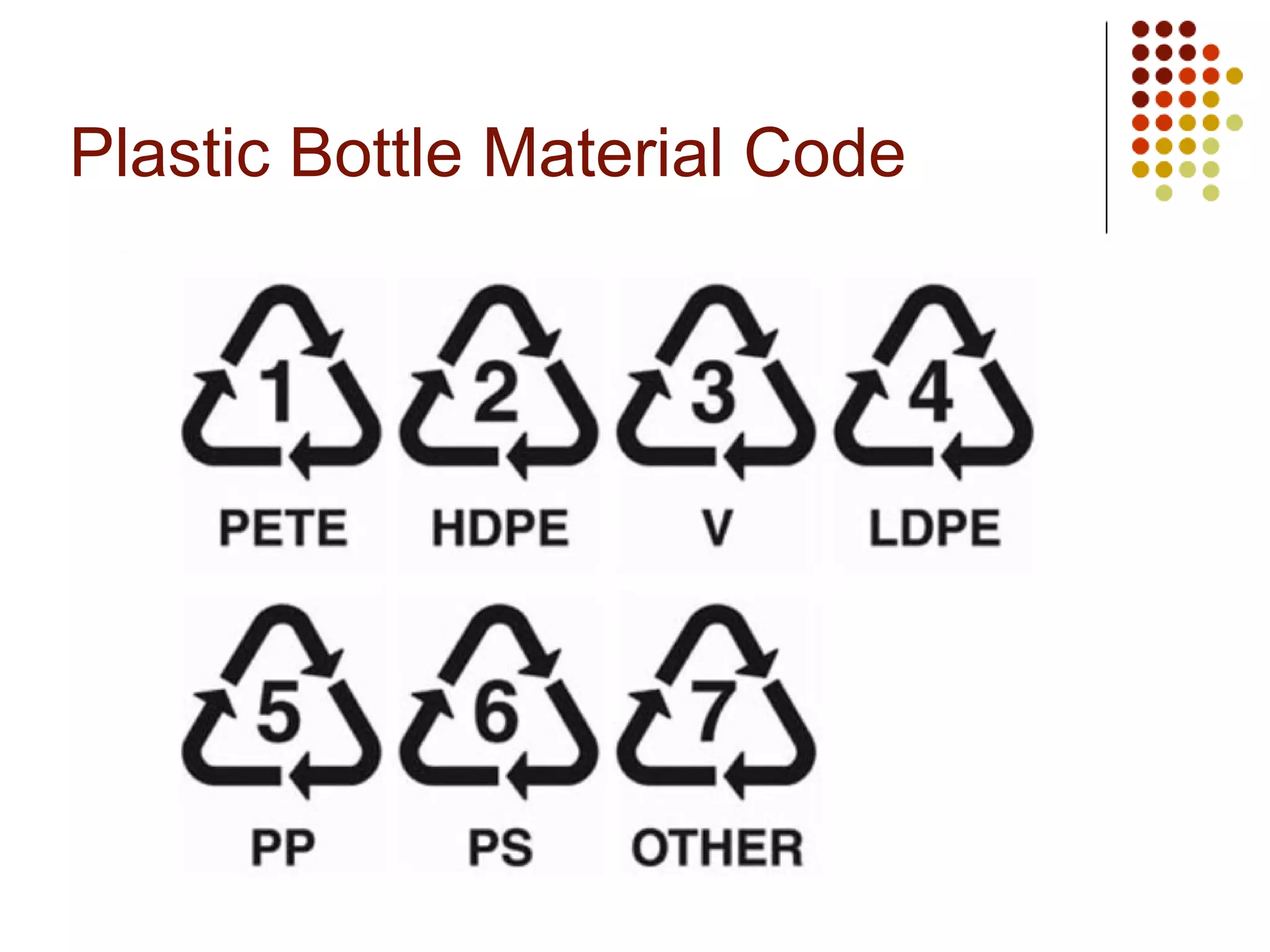
Plastic Bottle Material Code
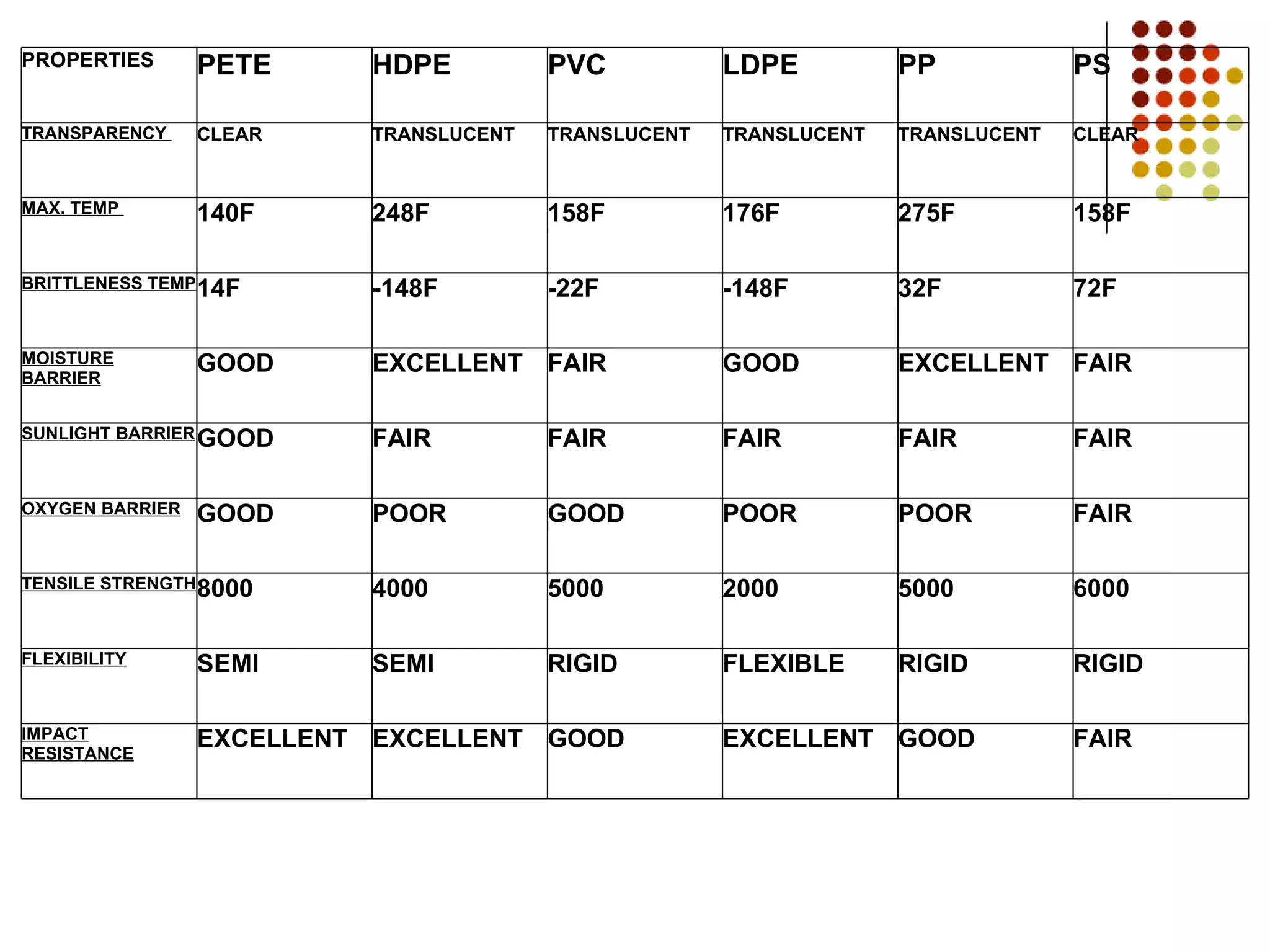
PROPERTIES PETE HDPE PVC LDPE PP PS TRANSPARENCY  CLEAR TRANSLUCENT TRANSLUCENT TRANSLUCENT TRANSLUCENT CLEAR MAX. TEMP  140F 248F 158F 176F 275F 158F BRITTLENESS TEMP 14F -148F -22F -148F 32F 72F MOISTURE BARRIER GOOD EXCELLENT FAIR GOOD EXCELLENT FAIR SUNLIGHT BARRIER GOOD FAIR FAIR FAIR FAIR FAIR OXYGEN BARRIER GOOD POOR GOOD POOR POOR FAIR TENSILE STRENGTH 8000 4000 5000 2000 5000 6000 FLEXIBILITY SEMI SEMI RIGID FLEXIBLE RIGID RIGID IMPACT RESISTANCE EXCELLENT EXCELLENT GOOD EXCELLENT GOOD FAIR
Uses & Applications: HDPE:  Bleach bottles, detergent bottles, shampoo bottles, motor oil bottles.   LDPE:  Squeezable Bottle of Honey, Mustard and Flexible Container Lids.   PETE:  Soft drink, Juice, Water, Detergent and Cleaner Bottles. PVC:  Window Cleaner, Food Stuff Bottles, Cooking Oil, Detergent Bottles. PP:  Yoghurt bottles, Microwaveable Disposable take-away Containers.
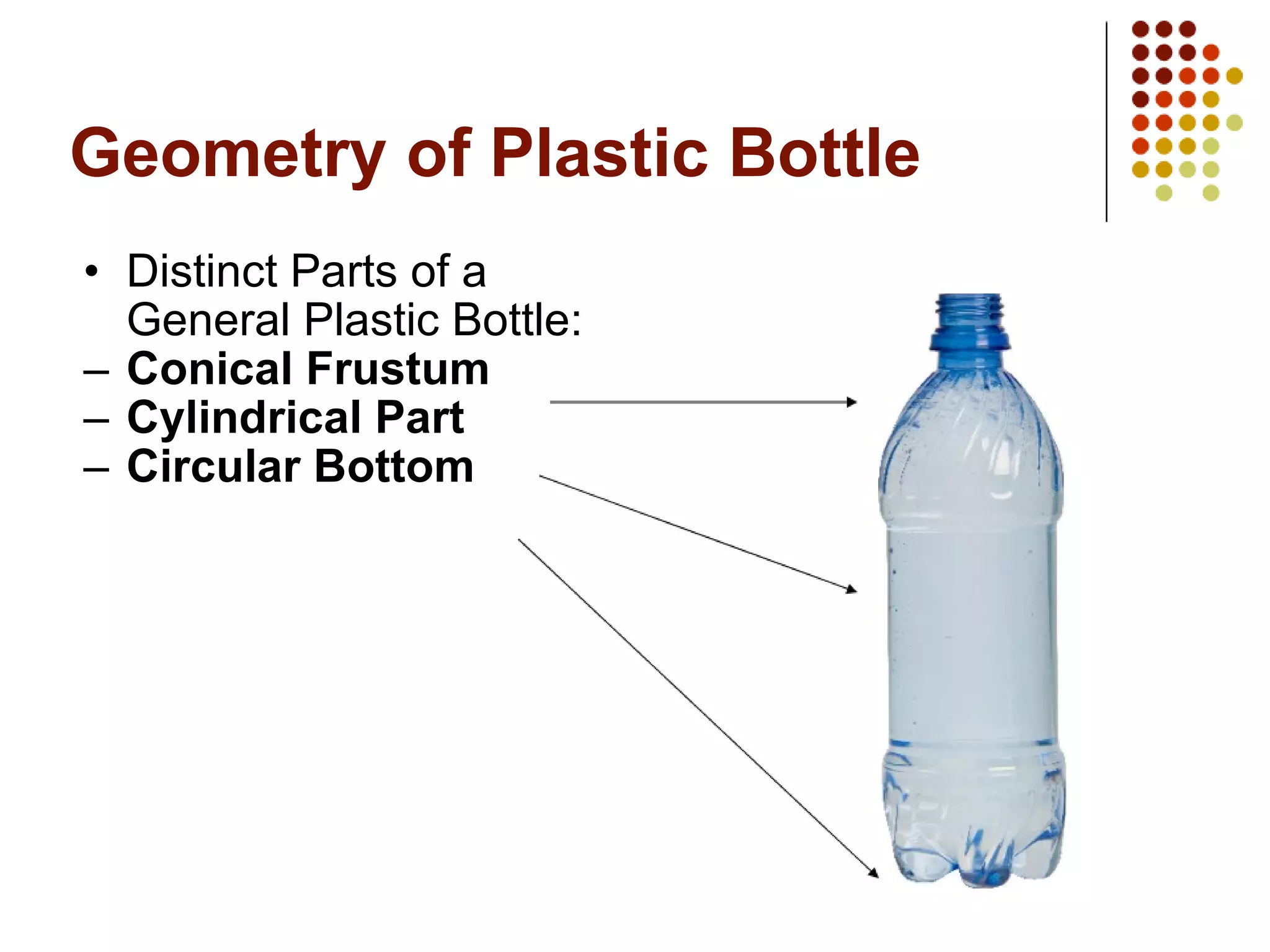
Geometry of Plastic Bottle Distinct Parts of a General Plastic Bottle: Conical Frustum Cylindrical Part Circular Bottom
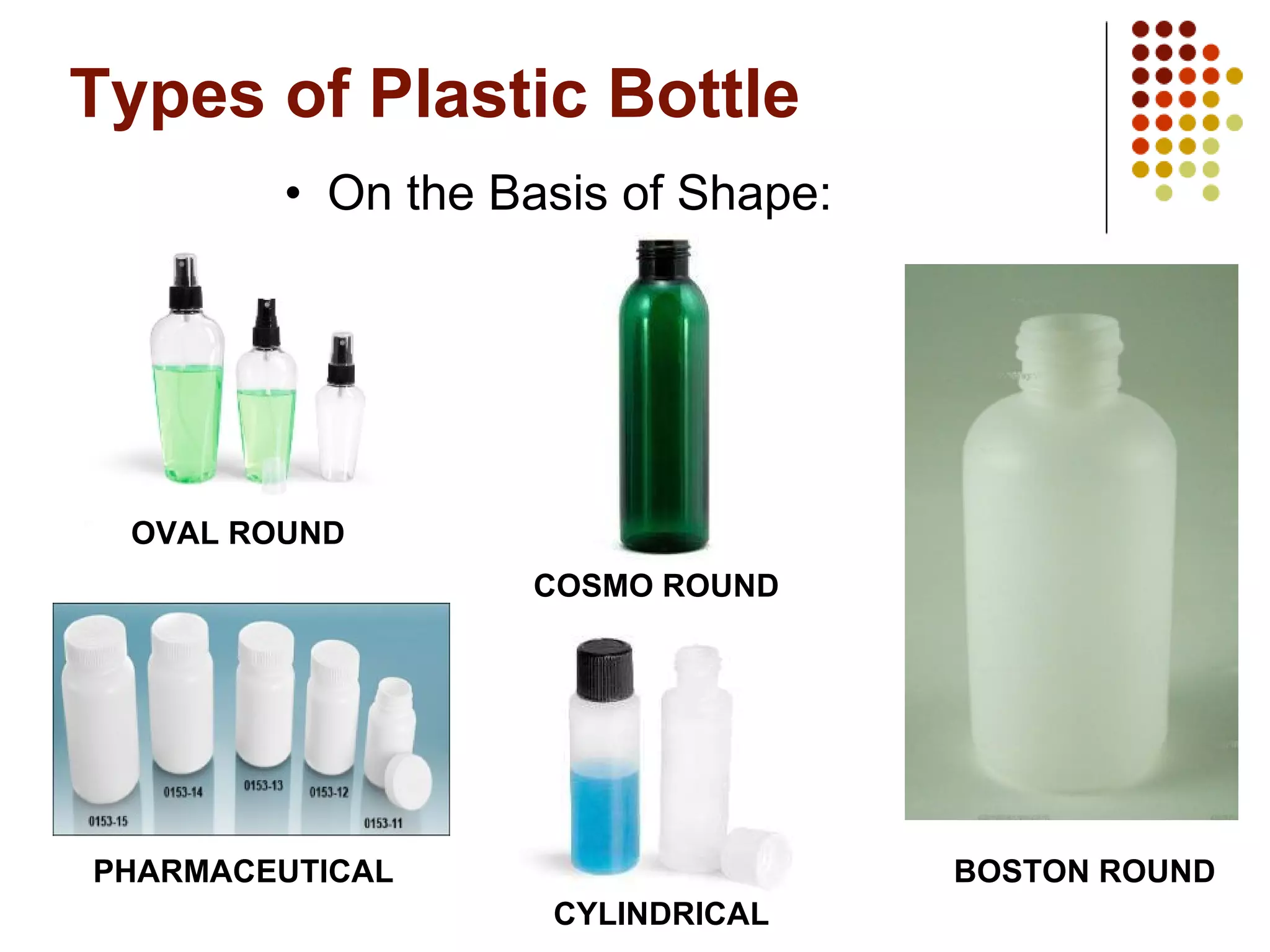
Types of Plastic Bottle On the Basis of Shape: BOSTON ROUND COSMO ROUND CYLINDRICAL OVAL ROUND PHARMACEUTICAL
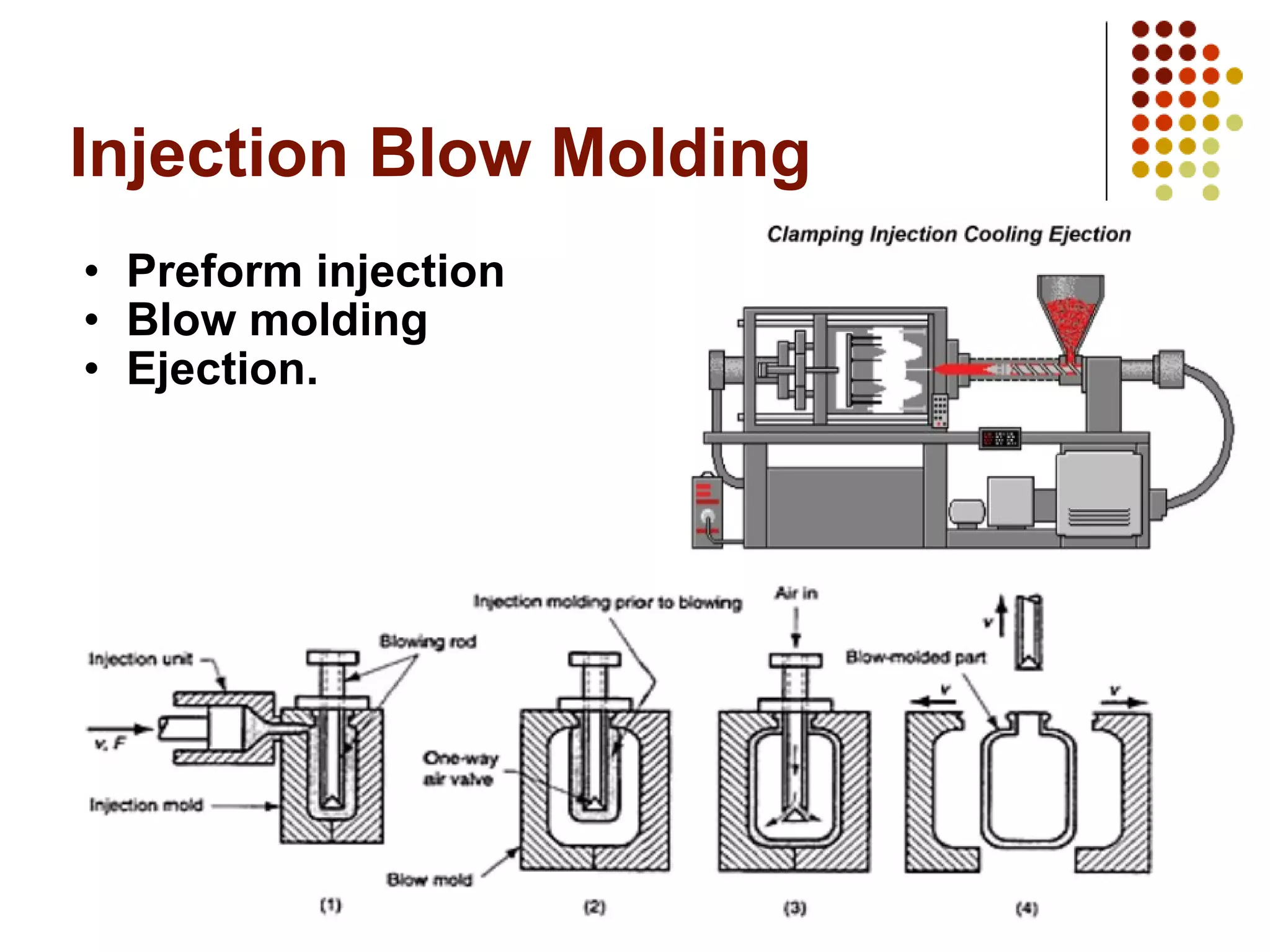
Manufacturing Plastic bottles are prepared by a process known as  BLOW MOLDING . Extrusion blow molding, Injection blow molding, and  Stretch blow molding
Injection Blow Molding Preform injection Blow molding Ejection.
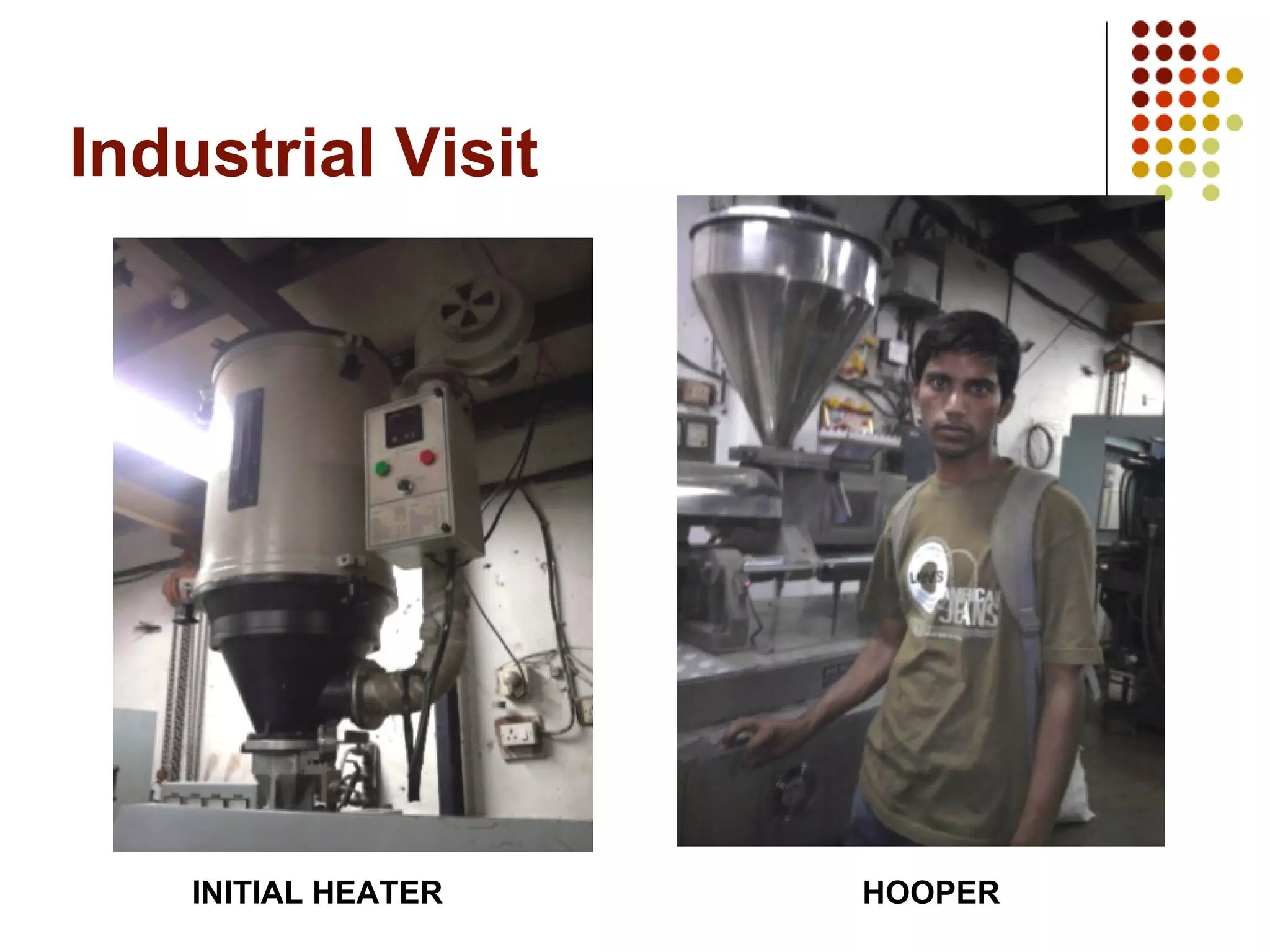
Industrial Visit INITIAL HEATER HOOPER
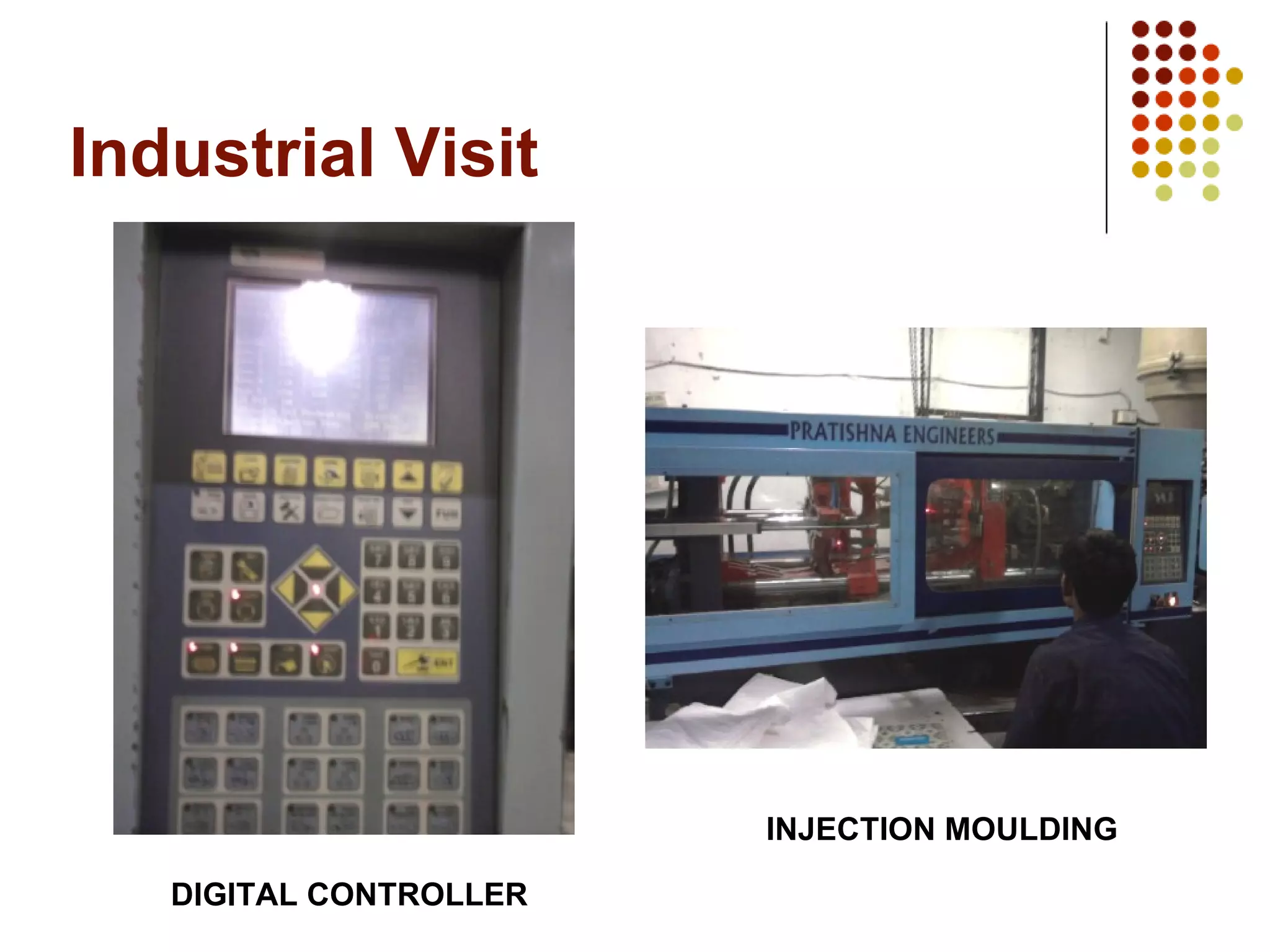
Industrial Visit DIGITAL CONTROLLER INJECTION MOULDING
Industrial Visit COLOUR MIXER GRINDER
Environmental Impacts & Recycling Environmental impacts: Non-Decomposable Wastage of Petroleum Accumulation of Trash Effect on fertility of Soil Incineration takes 2 times of the energy to manufacture. Recycling : Collection Delivery to recycling facility  Sorting Flaking HDPE/PETE flakes Retail
Technological Advancement and R&D Shift from rigid packaging to flexible packaging.  Reducing the thickness of plastic bottle. Development of hot fill containers. Dispersion of antioxidant additives. Development of smart plastic bottles. Use of bioplastic for manufacturing bottles. Integration of handles with PET bottles. Reducing manufacturing costs. Use of recyclable material.
Thank you.

Integrated Term Project

  • 1.
    Integrated Term ProjectPLASTIC BOTTLES
  • 2.
    History of PlasticBottle Timeline of development : Leonardo Da Vinci, 16 th century Alexander Parkes, 1862 Leo Bakeland, 1907 1 st Commercial plastic bottle, 1947 High Density Polyethylene, 1960’s
  • 3.
    Concept of PlasticBottle The concept of plastic bottle came from the fact that they are: Transparent Flexible & Durable Corrosion Resistant Chemically Inert & Non- Permeable High Pressure withstanding Capacity Impact- resistant & non- Brittle Lightweight & High Strength.
  • 4.
    Plasticity Stress- StrainCurve: Ductile Material Non Ductile Material
  • 5.
    Mechanism of PolymerizationChain Initiation Step Chain Propagation Step Chain Termination Step
  • 6.
    Physical & ChemicalProperty Properties LDPE HDPE Melting Point 115 0 C 135 0 C Crystallinity Low Crystallinity High Crystallinity Flexibility High Low Strength Low High Heat Resistance Good to use at NTP Useful above 100 0 C Transparency Good Less transparent than LDPE
  • 7.
    Properties LDPE HDPEDensity 0.91-0.94 g/cm 3 0.95-0.97 g/cm 3 Chemical Bonding Covalent bond & vander waal forces of attraction Covalent bond & vander waal forces of attraction Toxicity low toxicity low toxicity Molecular Mass 20000 - 500000 3100000 - 5670000 Reactivity Chemically Inert Chemically Inert Schematic Diagram
  • 8.
    Types of PlasticBottle On the basis of Material Used : PETE – Polyethylene terephthalate HDPE - High-density polyethylene PVC - Polyvinyl chloride LDPE - Low-density polyethylene PP –Polypropylene PS - Polystyrene
  • 9.
    Types of PlasticBottle On the Basis of Colour : GREEN CLEAR WHITE AMBER BLUE NATURAL
  • 10.
  • 11.
    PROPERTIES PETE HDPEPVC LDPE PP PS TRANSPARENCY CLEAR TRANSLUCENT TRANSLUCENT TRANSLUCENT TRANSLUCENT CLEAR MAX. TEMP 140F 248F 158F 176F 275F 158F BRITTLENESS TEMP 14F -148F -22F -148F 32F 72F MOISTURE BARRIER GOOD EXCELLENT FAIR GOOD EXCELLENT FAIR SUNLIGHT BARRIER GOOD FAIR FAIR FAIR FAIR FAIR OXYGEN BARRIER GOOD POOR GOOD POOR POOR FAIR TENSILE STRENGTH 8000 4000 5000 2000 5000 6000 FLEXIBILITY SEMI SEMI RIGID FLEXIBLE RIGID RIGID IMPACT RESISTANCE EXCELLENT EXCELLENT GOOD EXCELLENT GOOD FAIR
  • 12.
    Uses & Applications:HDPE: Bleach bottles, detergent bottles, shampoo bottles, motor oil bottles. LDPE: Squeezable Bottle of Honey, Mustard and Flexible Container Lids. PETE: Soft drink, Juice, Water, Detergent and Cleaner Bottles. PVC: Window Cleaner, Food Stuff Bottles, Cooking Oil, Detergent Bottles. PP: Yoghurt bottles, Microwaveable Disposable take-away Containers.
  • 13.
    Geometry of PlasticBottle Distinct Parts of a General Plastic Bottle: Conical Frustum Cylindrical Part Circular Bottom
  • 14.
    Types of PlasticBottle On the Basis of Shape: BOSTON ROUND COSMO ROUND CYLINDRICAL OVAL ROUND PHARMACEUTICAL
  • 15.
    Manufacturing Plastic bottlesare prepared by a process known as BLOW MOLDING . Extrusion blow molding, Injection blow molding, and Stretch blow molding
  • 16.
    Injection Blow MoldingPreform injection Blow molding Ejection.
  • 17.
  • 18.
    Industrial Visit DIGITALCONTROLLER INJECTION MOULDING
  • 19.
  • 20.
    Environmental Impacts &Recycling Environmental impacts: Non-Decomposable Wastage of Petroleum Accumulation of Trash Effect on fertility of Soil Incineration takes 2 times of the energy to manufacture. Recycling : Collection Delivery to recycling facility Sorting Flaking HDPE/PETE flakes Retail
  • 21.
    Technological Advancement andR&D Shift from rigid packaging to flexible packaging. Reducing the thickness of plastic bottle. Development of hot fill containers. Dispersion of antioxidant additives. Development of smart plastic bottles. Use of bioplastic for manufacturing bottles. Integration of handles with PET bottles. Reducing manufacturing costs. Use of recyclable material.
  • 22.