DIFFERENT TYPES OF PLASTICS AND THEIR CLASSIFICATION 
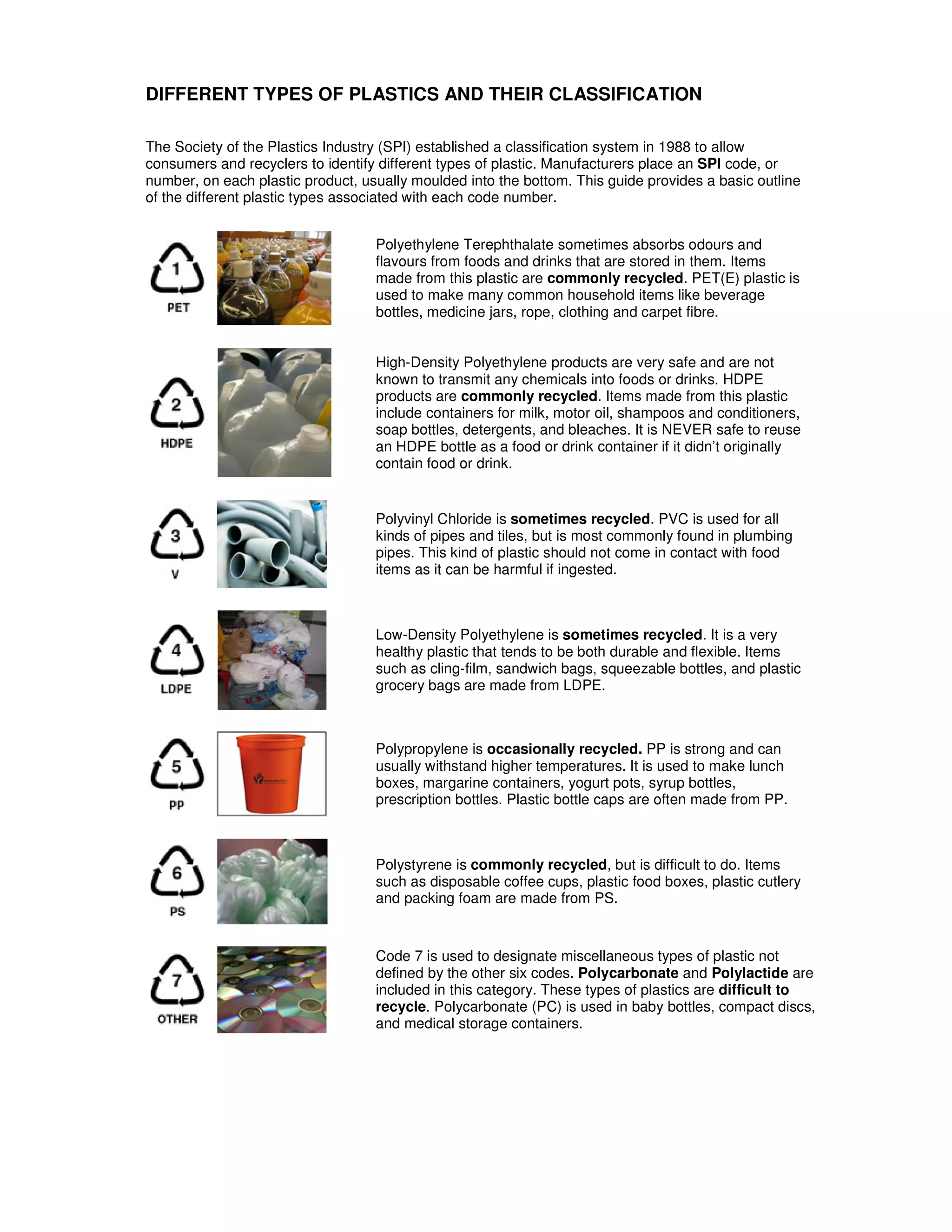
The Society of the Plastics Industry (SPI) established a classification system in 1988 to allow 
consumers and recyclers to identify different types of plastic. Manufacturers place an SPI code, or 
number, on each plastic product, usually moulded into the bottom. This guide provides a basic outline 
of the different plastic types associated with each code number. 
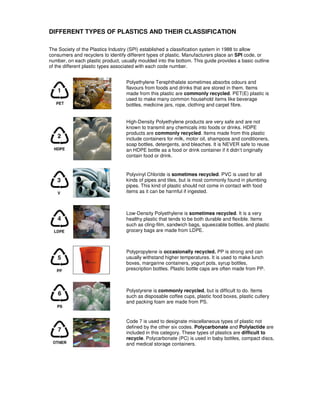
Polyethylene Terephthalate sometimes absorbs odours and 
flavours from foods and drinks that are stored in them. Items 
made from this plastic are commonly recycled. PET(E) plastic is 
used to make many common household items like beverage 
bottles, medicine jars, rope, clothing and carpet fibre. 
High-Density Polyethylene products are very safe and are not 
known to transmit any chemicals into foods or drinks. HDPE 
products are commonly recycled. Items made from this plastic 
include containers for milk, motor oil, shampoos and conditioners, 
soap bottles, detergents, and bleaches. It is NEVER safe to reuse 
an HDPE bottle as a food or drink container if it didn’t originally 
contain food or drink. 
Polyvinyl Chloride is sometimes recycled. PVC is used for all 
kinds of pipes and tiles, but is most commonly found in plumbing 
pipes. This kind of plastic should not come in contact with food 
items as it can be harmful if ingested. 
Low-Density Polyethylene is sometimes recycled. It is a very 
healthy plastic that tends to be both durable and flexible. Items 
such as cling-film, sandwich bags, squeezable bottles, and plastic 
grocery bags are made from LDPE. 
Polypropylene is occasionally recycled. PP is strong and can 
usually withstand higher temperatures. It is used to make lunch 
boxes, margarine containers, yogurt pots, syrup bottles, 
prescription bottles. Plastic bottle caps are often made from PP. 
Polystyrene is commonly recycled, but is difficult to do. Items 
such as disposable coffee cups, plastic food boxes, plastic cutlery 
and packing foam are made from PS. 
Code 7 is used to designate miscellaneous types of plastic not 
defined by the other six codes. Polycarbonate and Polylactide are 
included in this category. These types of plastics are difficult to 
recycle. Polycarbonate (PC) is used in baby bottles, compact discs, 
and medical storage containers.
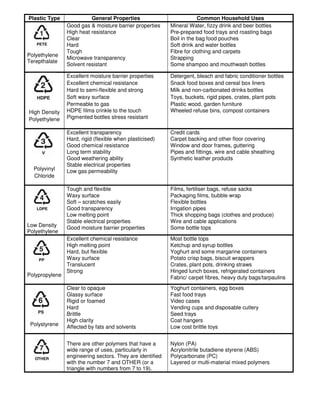
Plastic Type General Properties Common Household Uses 
Polyethylene 
Terepthalate 
Good gas & moisture barrier properties Mineral Water, fizzy drink and beer bottles 
High heat resistance Pre-prepared food trays and roasting bags 
Clear Boil in the bag food pouches 
Hard Soft drink and water bottles 
Tough Fibre for clothing and carpets 
Microwave transparency Strapping 
Solvent resistant Some shampoo and mouthwash bottles 
High Density 
Polyethylene 
Excellent moisture barrier properties Detergent, bleach and fabric conditioner bottles 
Excellent chemical resistance Snack food boxes and cereal box liners 
Hard to semi-flexible and strong Milk and non-carbonated drinks bottles 
Soft waxy surface Toys, buckets, rigid pipes, crates, plant pots 
Permeable to gas Plastic wood, garden furniture 
HDPE films crinkle to the touch Wheeled refuse bins, compost containers 
Pigmented bottles stress resistant 
Polyvinyl 
Chloride 
Excellent transparency Credit cards 
Hard, rigid (flexible when plasticised) Carpet backing and other floor covering 
Good chemical resistance Window and door frames, guttering 
Long term stability Pipes and fittings, wire and cable sheathing 
Good weathering ability Synthetic leather products 
Stable electrical properties 
Low gas permeability 
Low Density 
Polyethylene 
Tough and flexible Films, fertiliser bags, refuse sacks 
Waxy surface Packaging films, bubble wrap 
Soft – scratches easily Flexible bottles 
Good transparency Irrigation pipes 
Low melting point Thick shopping bags (clothes and produce) 
Stable electrical properties Wire and cable applications 
Good moisture barrier properties Some bottle tops 
Polypropylene 
Excellent chemical resistance Most bottle tops 
High melting point Ketchup and syrup bottles 
Hard, but flexible Yoghurt and some margarine containers 
Waxy surface Potato crisp bags, biscuit wrappers 
Translucent Crates, plant pots, drinking straws 
Strong Hinged lunch boxes, refrigerated containers 
Fabric/ carpet fibres, heavy duty bags/tarpaulins 
Polystyrene 
Clear to opaque Yoghurt containers, egg boxes 
Glassy surface Fast food trays 
Rigid or foamed Video cases 
Hard Vending cups and disposable cutlery 
Brittle Seed trays 
High clarity Coat hangers 
Affected by fats and solvents Low cost brittle toys 
There are other polymers that have a 
wide range of uses, particularly in 
engineering sectors. They are identified 
with the number 7 and OTHER (or a 
triangle with numbers from 7 to 19). 
Nylon (PA) 
Acrylonitrile butadiene styrene (ABS) 
Polycarbonate (PC) 
Layered or multi-material mixed polymers

Different plastic polymer_types

  • 1.
    DIFFERENT TYPES OFPLASTICS AND THEIR CLASSIFICATION The Society of the Plastics Industry (SPI) established a classification system in 1988 to allow consumers and recyclers to identify different types of plastic. Manufacturers place an SPI code, or number, on each plastic product, usually moulded into the bottom. This guide provides a basic outline of the different plastic types associated with each code number. Polyethylene Terephthalate sometimes absorbs odours and flavours from foods and drinks that are stored in them. Items made from this plastic are commonly recycled. PET(E) plastic is used to make many common household items like beverage bottles, medicine jars, rope, clothing and carpet fibre. High-Density Polyethylene products are very safe and are not known to transmit any chemicals into foods or drinks. HDPE products are commonly recycled. Items made from this plastic include containers for milk, motor oil, shampoos and conditioners, soap bottles, detergents, and bleaches. It is NEVER safe to reuse an HDPE bottle as a food or drink container if it didn’t originally contain food or drink. Polyvinyl Chloride is sometimes recycled. PVC is used for all kinds of pipes and tiles, but is most commonly found in plumbing pipes. This kind of plastic should not come in contact with food items as it can be harmful if ingested. Low-Density Polyethylene is sometimes recycled. It is a very healthy plastic that tends to be both durable and flexible. Items such as cling-film, sandwich bags, squeezable bottles, and plastic grocery bags are made from LDPE. Polypropylene is occasionally recycled. PP is strong and can usually withstand higher temperatures. It is used to make lunch boxes, margarine containers, yogurt pots, syrup bottles, prescription bottles. Plastic bottle caps are often made from PP. Polystyrene is commonly recycled, but is difficult to do. Items such as disposable coffee cups, plastic food boxes, plastic cutlery and packing foam are made from PS. Code 7 is used to designate miscellaneous types of plastic not defined by the other six codes. Polycarbonate and Polylactide are included in this category. These types of plastics are difficult to recycle. Polycarbonate (PC) is used in baby bottles, compact discs, and medical storage containers.
  • 2.
    Plastic Type GeneralProperties Common Household Uses Polyethylene Terepthalate Good gas & moisture barrier properties Mineral Water, fizzy drink and beer bottles High heat resistance Pre-prepared food trays and roasting bags Clear Boil in the bag food pouches Hard Soft drink and water bottles Tough Fibre for clothing and carpets Microwave transparency Strapping Solvent resistant Some shampoo and mouthwash bottles High Density Polyethylene Excellent moisture barrier properties Detergent, bleach and fabric conditioner bottles Excellent chemical resistance Snack food boxes and cereal box liners Hard to semi-flexible and strong Milk and non-carbonated drinks bottles Soft waxy surface Toys, buckets, rigid pipes, crates, plant pots Permeable to gas Plastic wood, garden furniture HDPE films crinkle to the touch Wheeled refuse bins, compost containers Pigmented bottles stress resistant Polyvinyl Chloride Excellent transparency Credit cards Hard, rigid (flexible when plasticised) Carpet backing and other floor covering Good chemical resistance Window and door frames, guttering Long term stability Pipes and fittings, wire and cable sheathing Good weathering ability Synthetic leather products Stable electrical properties Low gas permeability Low Density Polyethylene Tough and flexible Films, fertiliser bags, refuse sacks Waxy surface Packaging films, bubble wrap Soft – scratches easily Flexible bottles Good transparency Irrigation pipes Low melting point Thick shopping bags (clothes and produce) Stable electrical properties Wire and cable applications Good moisture barrier properties Some bottle tops Polypropylene Excellent chemical resistance Most bottle tops High melting point Ketchup and syrup bottles Hard, but flexible Yoghurt and some margarine containers Waxy surface Potato crisp bags, biscuit wrappers Translucent Crates, plant pots, drinking straws Strong Hinged lunch boxes, refrigerated containers Fabric/ carpet fibres, heavy duty bags/tarpaulins Polystyrene Clear to opaque Yoghurt containers, egg boxes Glassy surface Fast food trays Rigid or foamed Video cases Hard Vending cups and disposable cutlery Brittle Seed trays High clarity Coat hangers Affected by fats and solvents Low cost brittle toys There are other polymers that have a wide range of uses, particularly in engineering sectors. They are identified with the number 7 and OTHER (or a triangle with numbers from 7 to 19). Nylon (PA) Acrylonitrile butadiene styrene (ABS) Polycarbonate (PC) Layered or multi-material mixed polymers