Vocal Cord Dysfunction Joan C. Grillo
Outline Definition & Other Labels Presentation Patient profile Demographics Comorbidities Potential Etiologies Differential Diagnosis Treatment Team Treatment methods Conclusion
Definition Vocal Cord Dysfunction  (VCD) is a disorder of the upper airway in which the vocal folds (and sometimes the ventricular folds)  adduct  during inspiration, exhalation, or both.  This often results in inspiratory stridor and respiratory distress.  In the literature, it is most often described as adduction upon  inspiration .
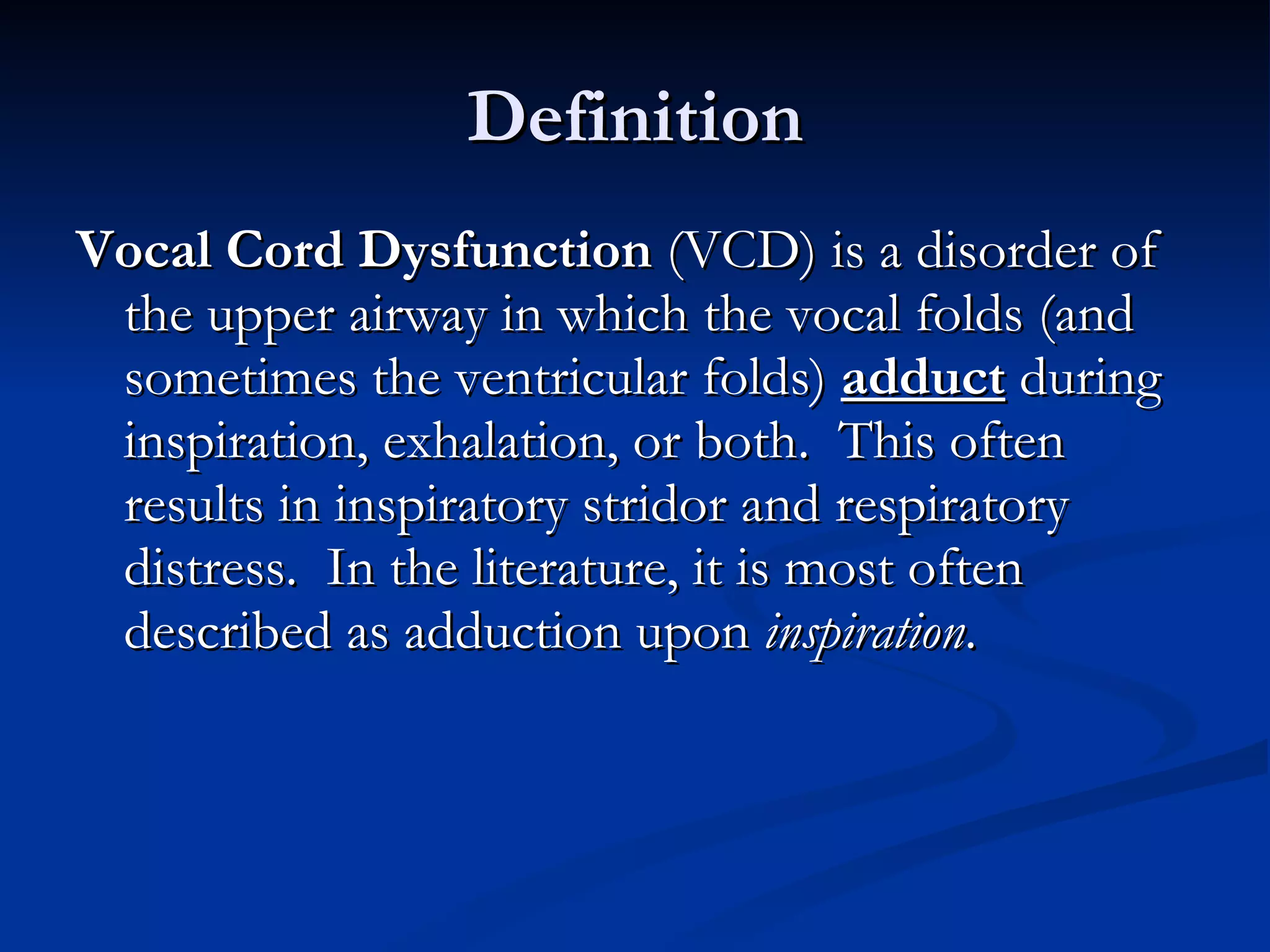
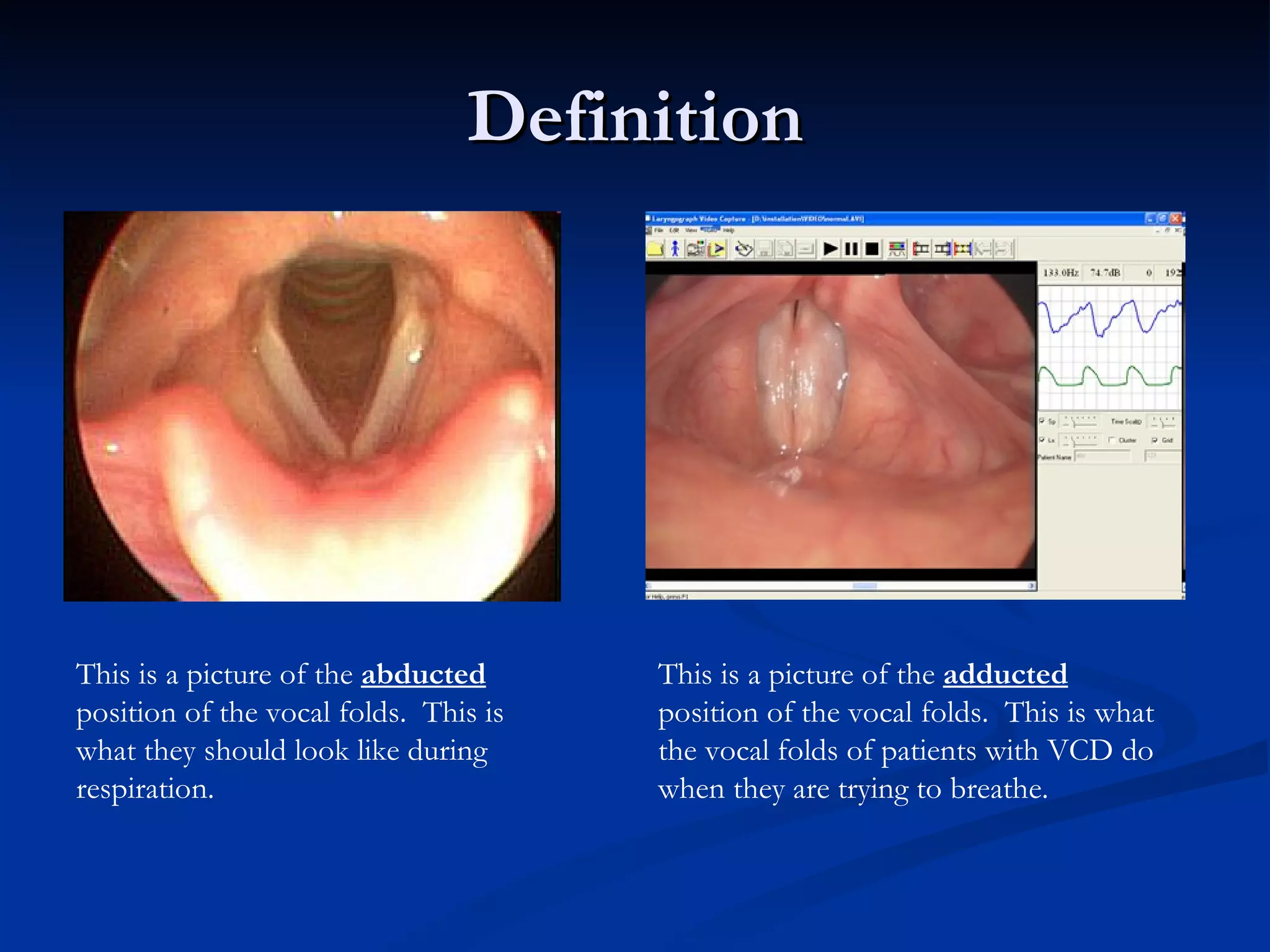
Definition This is a picture of the  abducted  position of the vocal folds.  This is what they should look like during respiration. This is a picture of the  adducted  position of the vocal folds.  This is what the vocal folds of patients with VCD do when they are trying to breathe.
Other Labels Paradoxical Vocal Fold Motion/Movement (PVFM) Paradoxical Vocal Cord Motion/Movement (PVCM) Paradoxical Vocal Fold Dysfunction (PVFD) Paradoxical Vocal Cord Dysfunction (PVCD) Irritable Larynx Syndrome Munchausen’s stridor (original name, first reported in 1974) Factitious asthma Hysterical or psychogenic asthma Steroid-resistant asthma Episodic paroxysmal laryngospasm Functional upper airway obstruction Functional laryngeal stridor Psychogenic stridor Episodic Laryngeal dyskinesia This long list of labels helps illustrate the point that VCD is actually a family of syndromes
Presentation
Presentation Patients most often present with symptoms such as Stridor (particularly on inhalation) Wheezing Choking sensation Acute episodic dyspnea (shortness of breath) Aphonia Dysphonia Dysphagia Chronic cough (often triggered by exposure to irritants or on exertion) Tightness in the throat Difficulty “getting air in” Globus sensation
Presentation Patients often report that certain things trigger episodes, such as Cigarette smoke Cold air Exercise Perfume Cleaners Chemical odors Stress In children, the airway obstruction experienced during an episode can trigger a panic attack
Patient Profile
Patient Profile Demographic characteristics Most often occurs in females Children and teens with VCD tend to be high achievers and athletes Many have high levels of stress and/or anxiety Different studies describe very different profiles Incidence and prevalence data are sparse
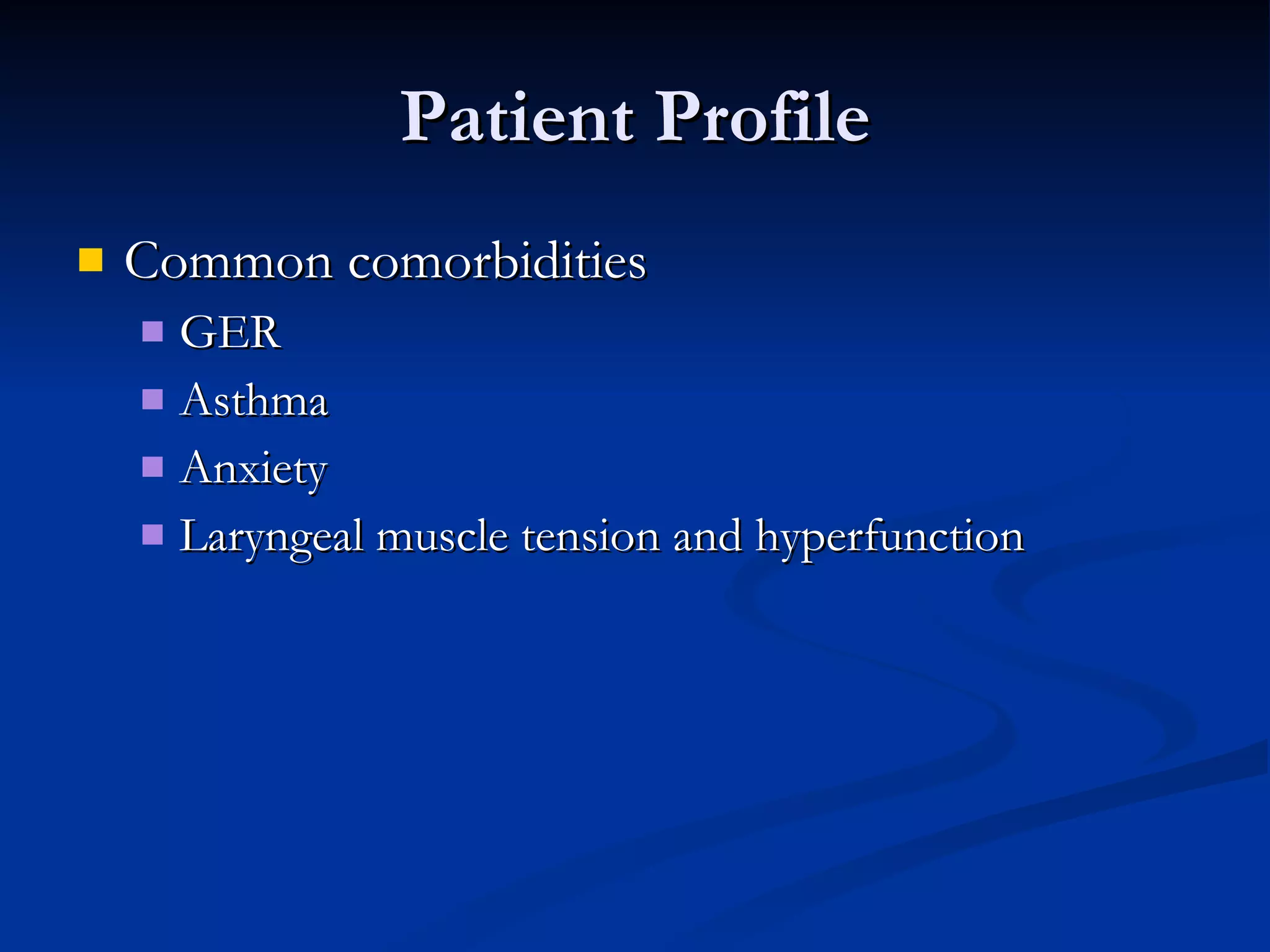
Patient Profile Common comorbidities GER Asthma Anxiety Laryngeal muscle tension and hyperfunction
Potential Etiologies
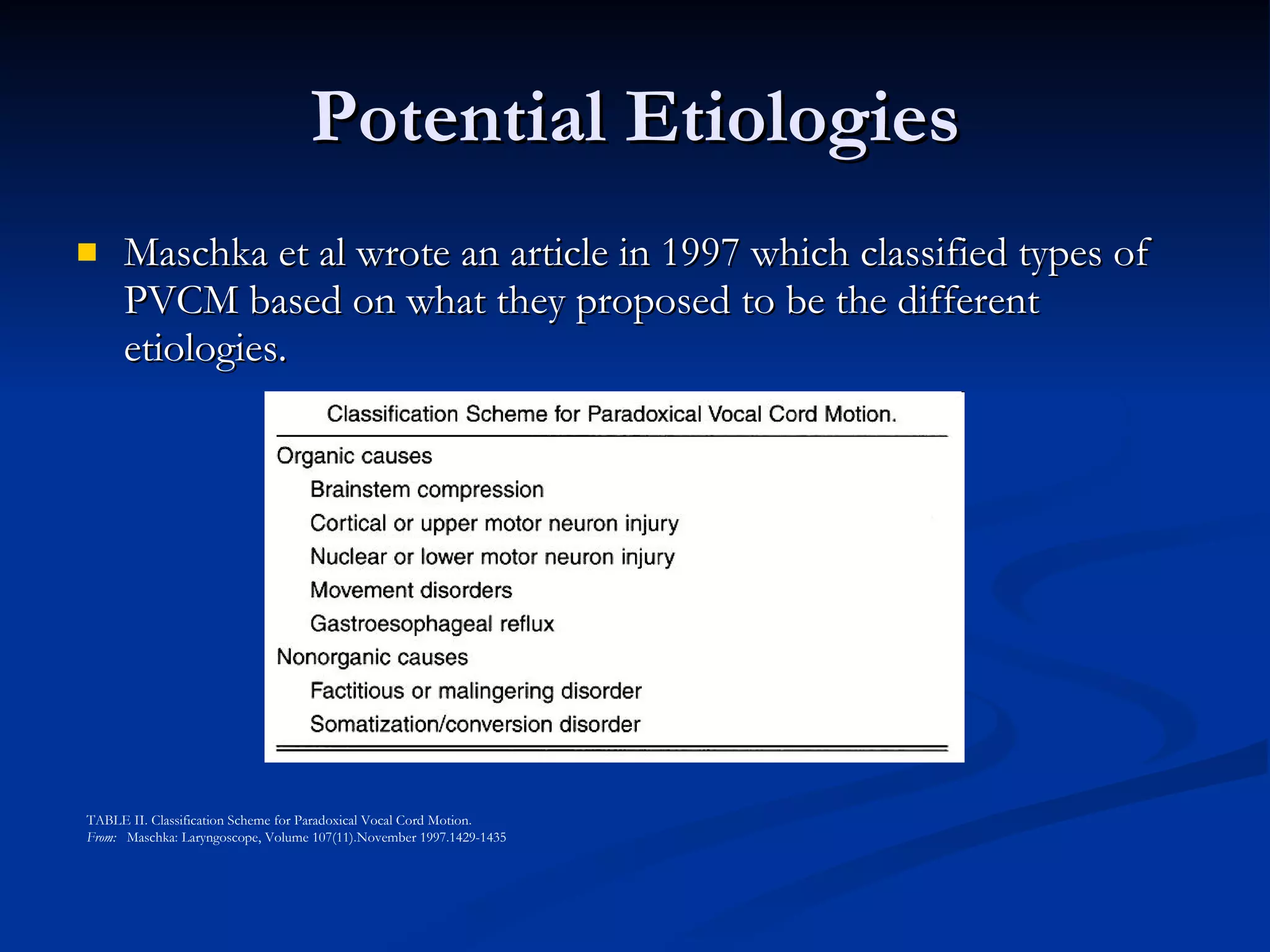
Potential Etiologies Maschka et al wrote an article in 1997 which classified types of PVCM based on what they proposed to be the different etiologies. TABLE II. Classification Scheme for Paradoxical Vocal Cord Motion.  From:    Maschka: Laryngoscope, Volume 107(11).November 1997.1429-1435
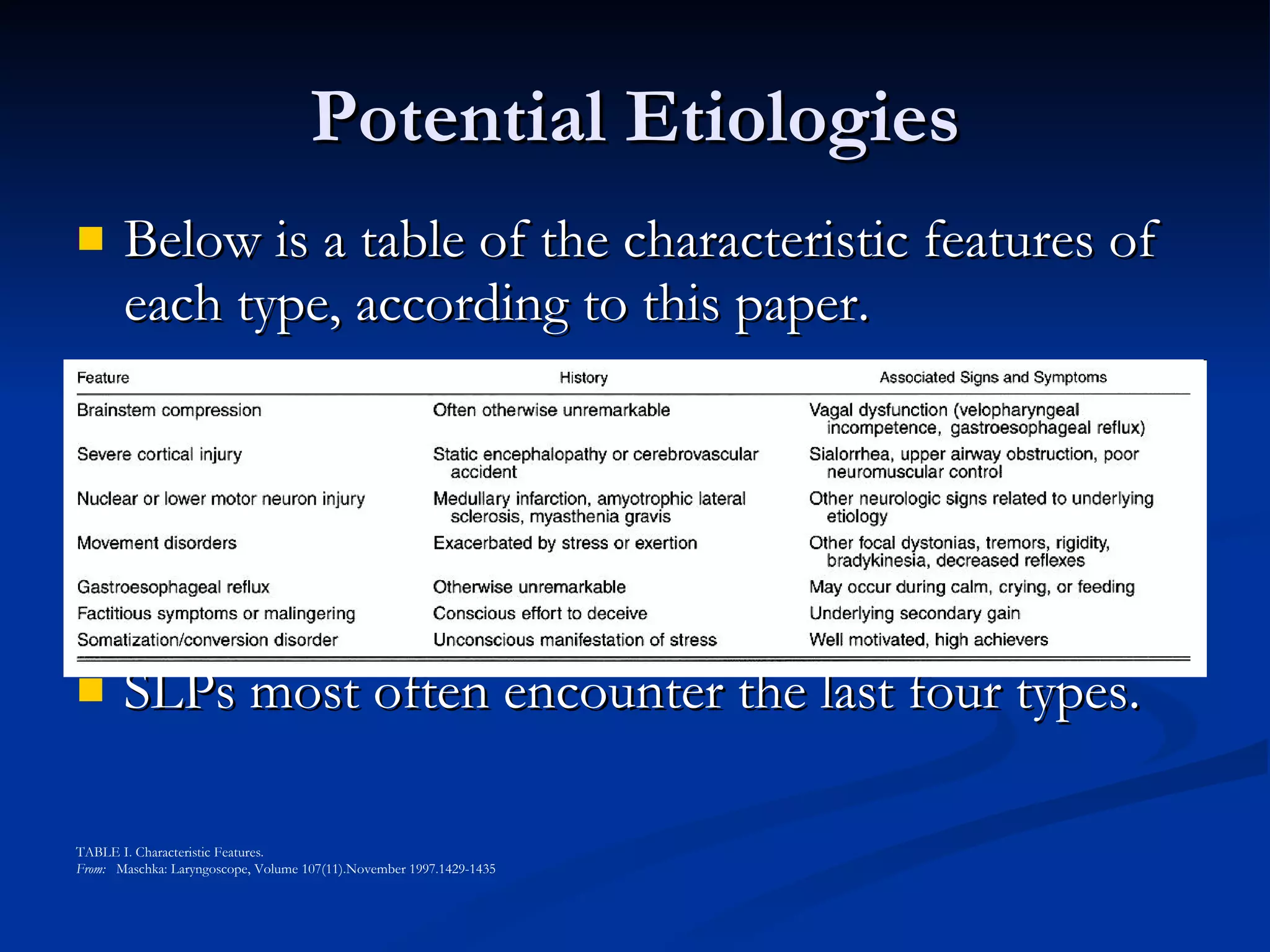
Potential Etiologies Below is a table of the characteristic features of each type, according to this paper. SLPs most often encounter the last four types. TABLE I. Characteristic Features.  From:    Maschka: Laryngoscope, Volume 107(11).November 1997.1429-1435
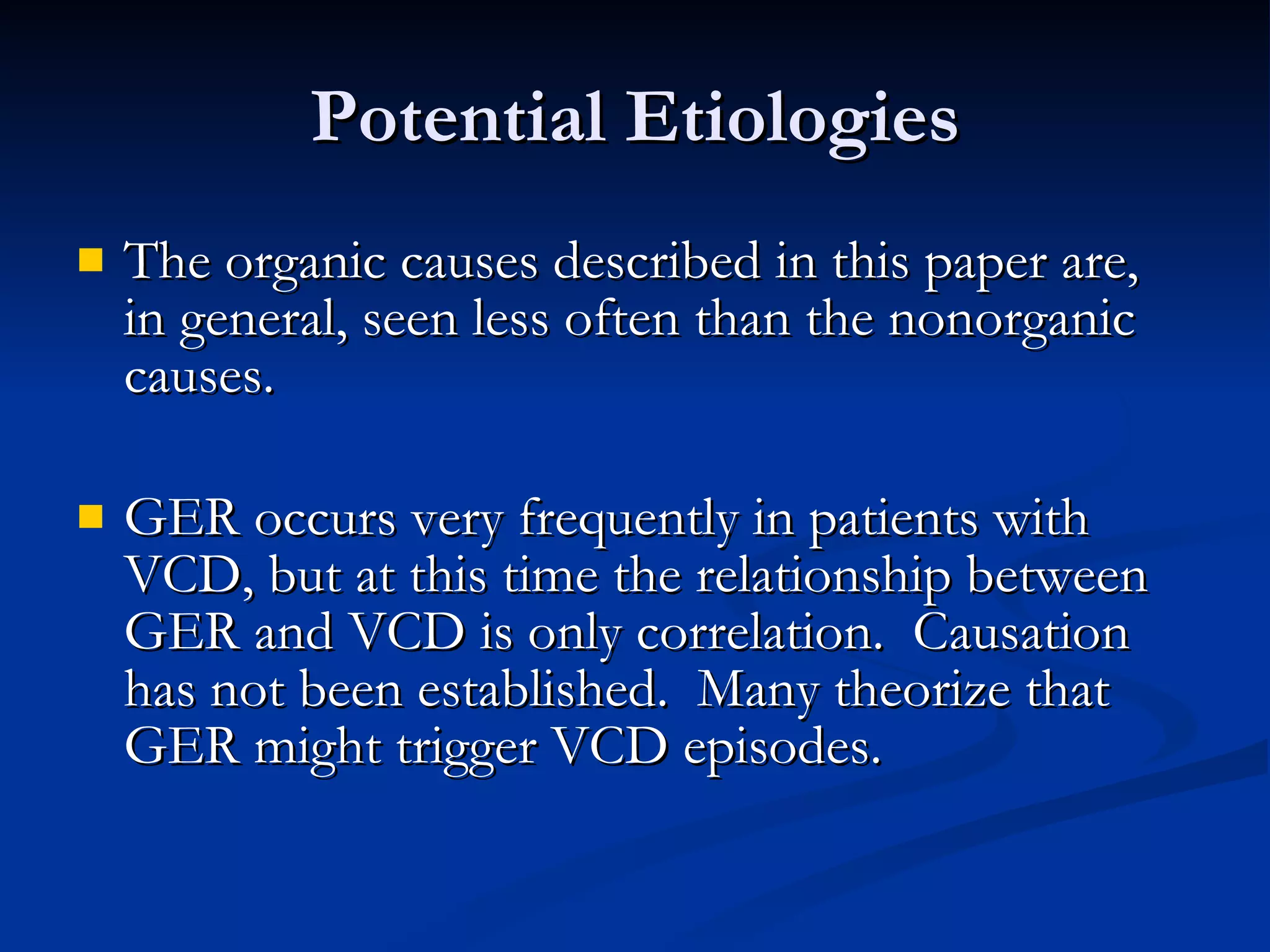
Potential Etiologies The organic causes described in this paper are, in general, seen less often than the nonorganic causes. GER occurs very frequently in patients with VCD, but at this time the relationship between GER and VCD is only correlation.  Causation has not been established.  Many theorize that GER might trigger VCD episodes.
Potential Etiologies In 1982, Kellman & Leopold wrote a paper on three cases of PVCM they had seen in the hospital. Although they considered all three cases to be functional in nature, all three patients continued to have true vocal fold adduction on inspiration  during asymptomatic periods  when examined via indirect laryngoscopy.
Potential Etiologies In 1999, Treole et al did a study in which they examined 50 adult patients diagnosed with PVFD and 54 normal adult controls. All 50 of the patients with PVFD had some degree of abnormal adduction of the true vocal folds during respiration  even when asymptomatic . Stroboscopy during asymptomatic periods revealed abnormalities such as decreased amplitude and mucosal wave, unstable zero phase, and phase asymmetry for the PVFD group significantly more often than the control group. These results and the findings of the previous study indicate that, at least for some patients, “…PVFD is not episodic but exists as a continuum of laryngeal instability that may, due to various precipitating factors, be exacerbated to breathing attacks.” (p. 143)
Potential Etiologies Morrison et al describe, in their 1999 paper, a unifying hypothesis to account for a variety of symptoms in what they call Irritable Larynx Syndrome (ILS). The theory is that neural plastic changes occur in brainstem laryngeal control networks – similar to those that occur with chronic pain – which cause the larynx to be in a constant spasm-ready state of hyper-excitability for people with ILS. Inclusion criteria for ILS are  Symptoms attributable to laryngeal tension Dysphonia and/or laryngospasm With or without globus and/or chronic cough Visible and palpable evidence of tension Laryngoscopic lateral and AP contraction Palpation:  suprahyoid, thyrohyoid, and cricothyroid, pharynx Presence of a sensory trigger Airborne substance, esophageal irritant, odor The diagnosis of ILS is excluded if there is apparent organic laryngeal pathology, an identifiable neurological disease, or identifiable psychiatric diagnosis. The ILS theory explains some subgroups of patients with VCD very well, although the requirement of overt laryngeal muscle tension excludes much of the VCD population. This theory parallels Treole’s idea that some sort of change has occurred in these certain individuals that causes the larynx to be hypersensitive to certain triggers. Morrison et al., (1999) p. 448
Differential Diagnosis
Differential Diagnosis Because of the presentation, VCD is often misdiagnosed as asthma or multiple chemical sensitivity, despite the fact that VCD is not responsive to asthma treatments.  It is important to remember that VCD does occur comorbidly with asthma in some patients, and this can complicate diagnosis. This misdiagnosis of asthma often leads to unsuccessful treatment of asthma with steroids and other medications which are ineffective and can have negative side effects. In extreme cases, patients have been intubated or given tracheostomies due to acute respiratory distress.  Many believe that these measures may be avoided if proper diagnosis of VCD is made. VCD can also be misdiagnosed as true laryngospasm – the difference being that in true laryngospasm, the vocal folds do not abduct. VCD was once considered to be purely psychogenic, but a body of literature is developing that supports the theory that in some patients, there is an actual laryngeal hypersensitivity, incoordination, or dystonia that exists all the time, and worsens with acute attacks.
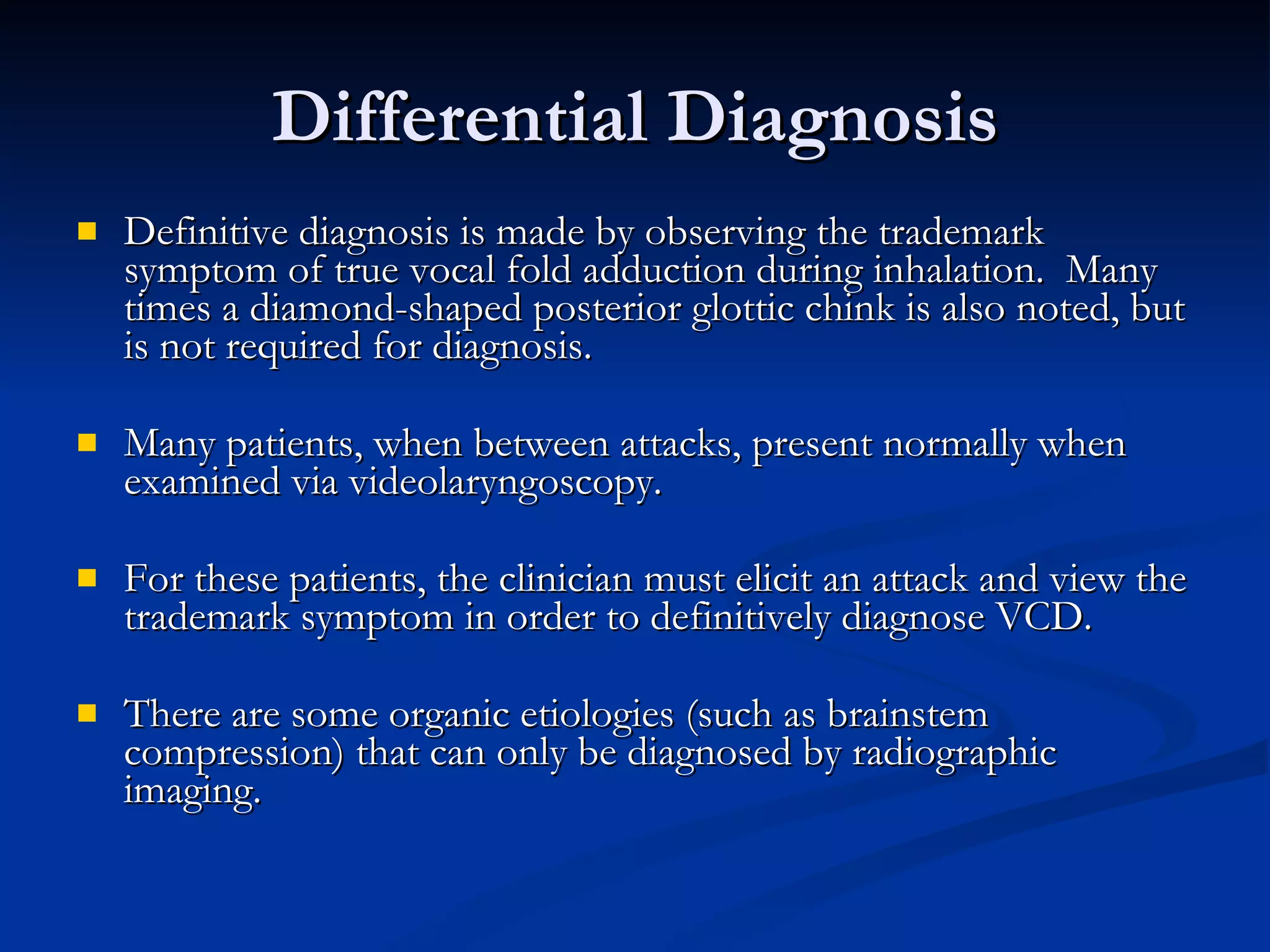
Differential Diagnosis Definitive diagnosis is made by observing the trademark symptom of true vocal fold adduction during inhalation.  Many times a diamond-shaped posterior glottic chink is also noted, but is not required for diagnosis. Many patients, when between attacks, present normally when examined via videolaryngoscopy. For these patients, the clinician must elicit an attack and view the trademark symptom in order to definitively diagnose VCD. There are some organic etiologies (such as brainstem compression) that can only be diagnosed by radiographic imaging.
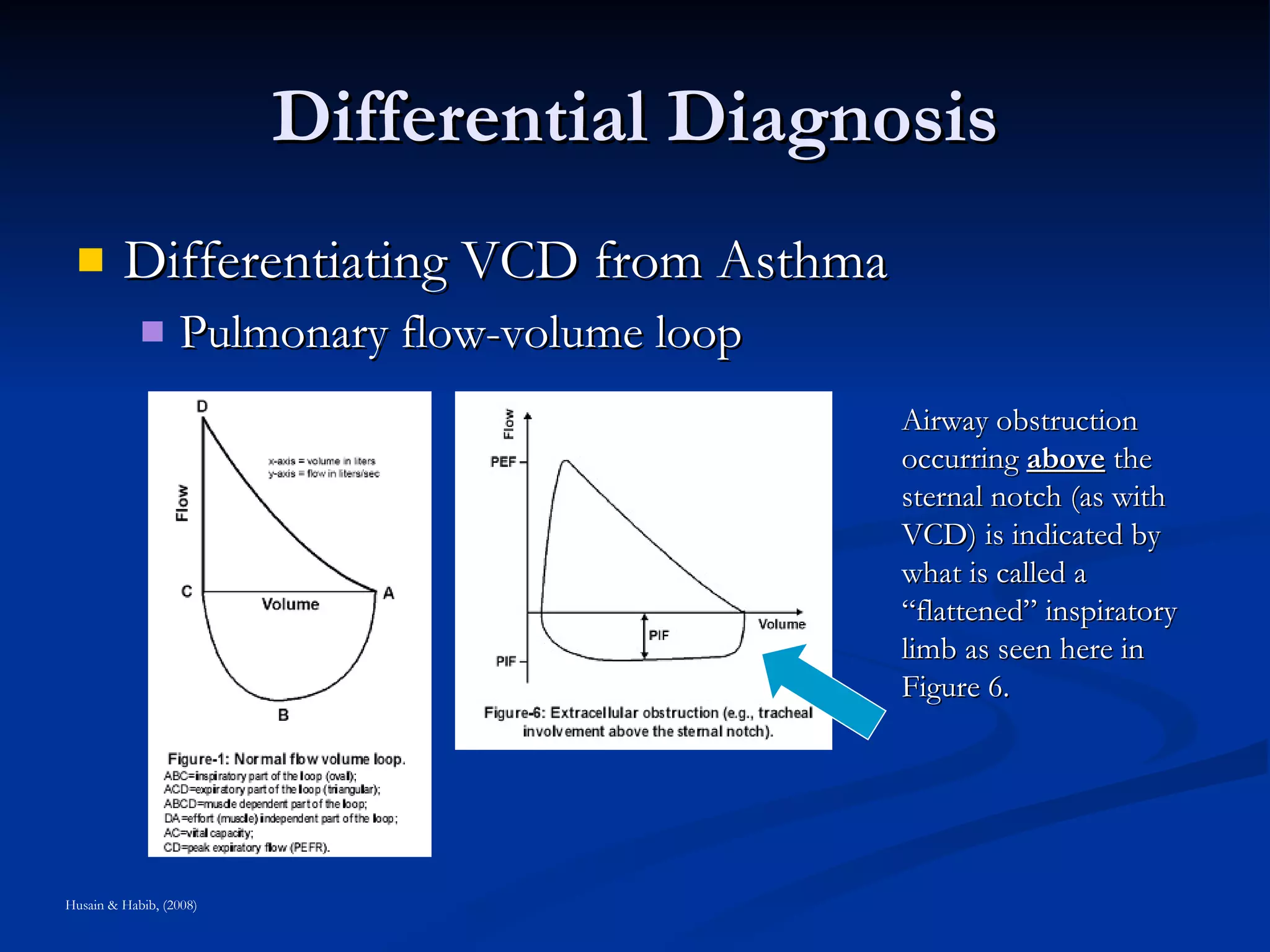
Differential Diagnosis Differentiating VCD from Asthma Pulmonary flow-volume loop Husain & Habib, (2008) Airway obstruction occurring  above  the sternal notch (as with VCD) is indicated by what is called a “flattened” inspiratory limb as seen here in Figure 6.
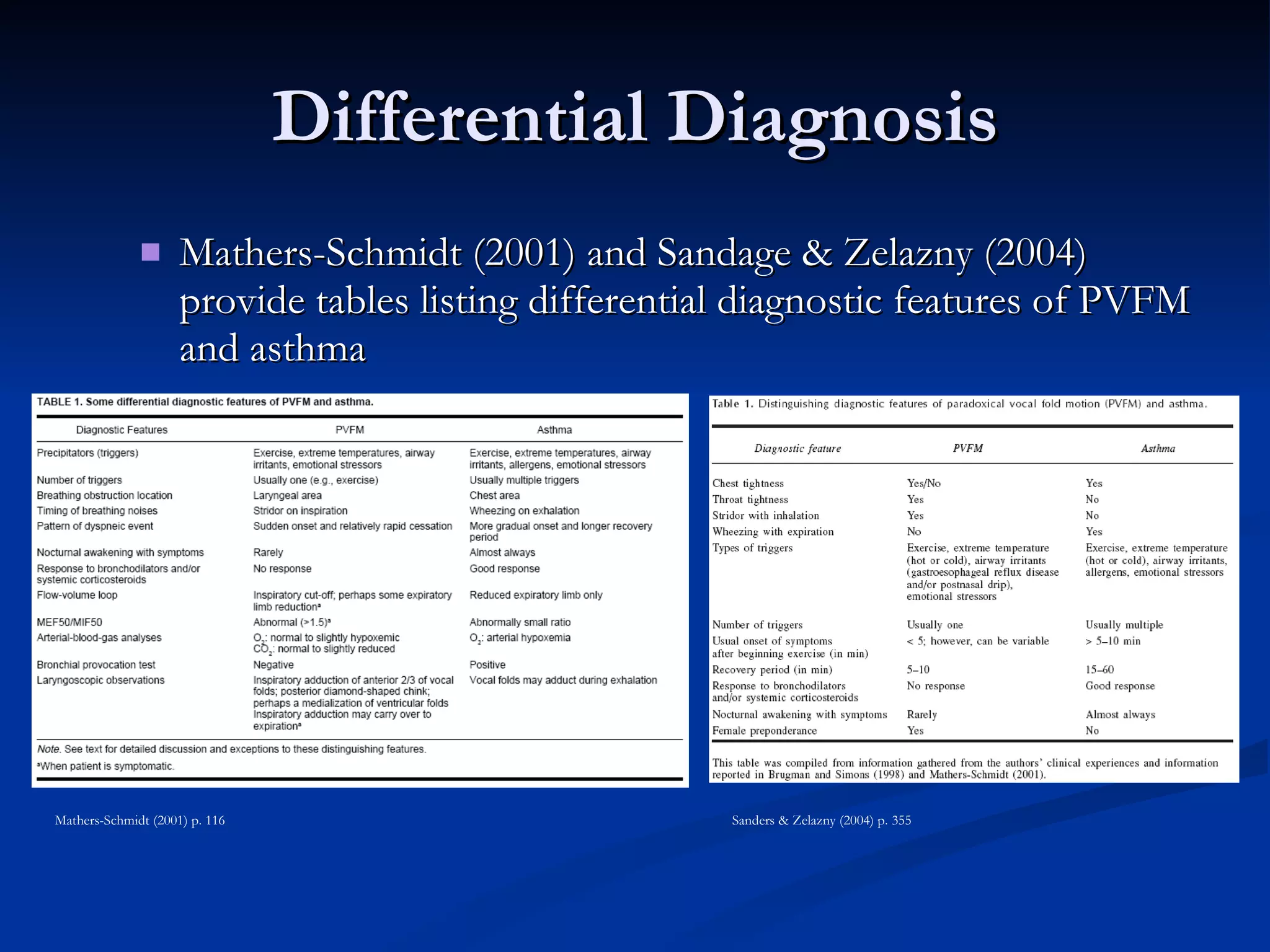
Differential Diagnosis Mathers-Schmidt (2001) and Sandage & Zelazny (2004) provide tables listing differential diagnostic features of PVFM and asthma Mathers-Schmidt (2001) p. 116 Sanders & Zelazny (2004) p. 355
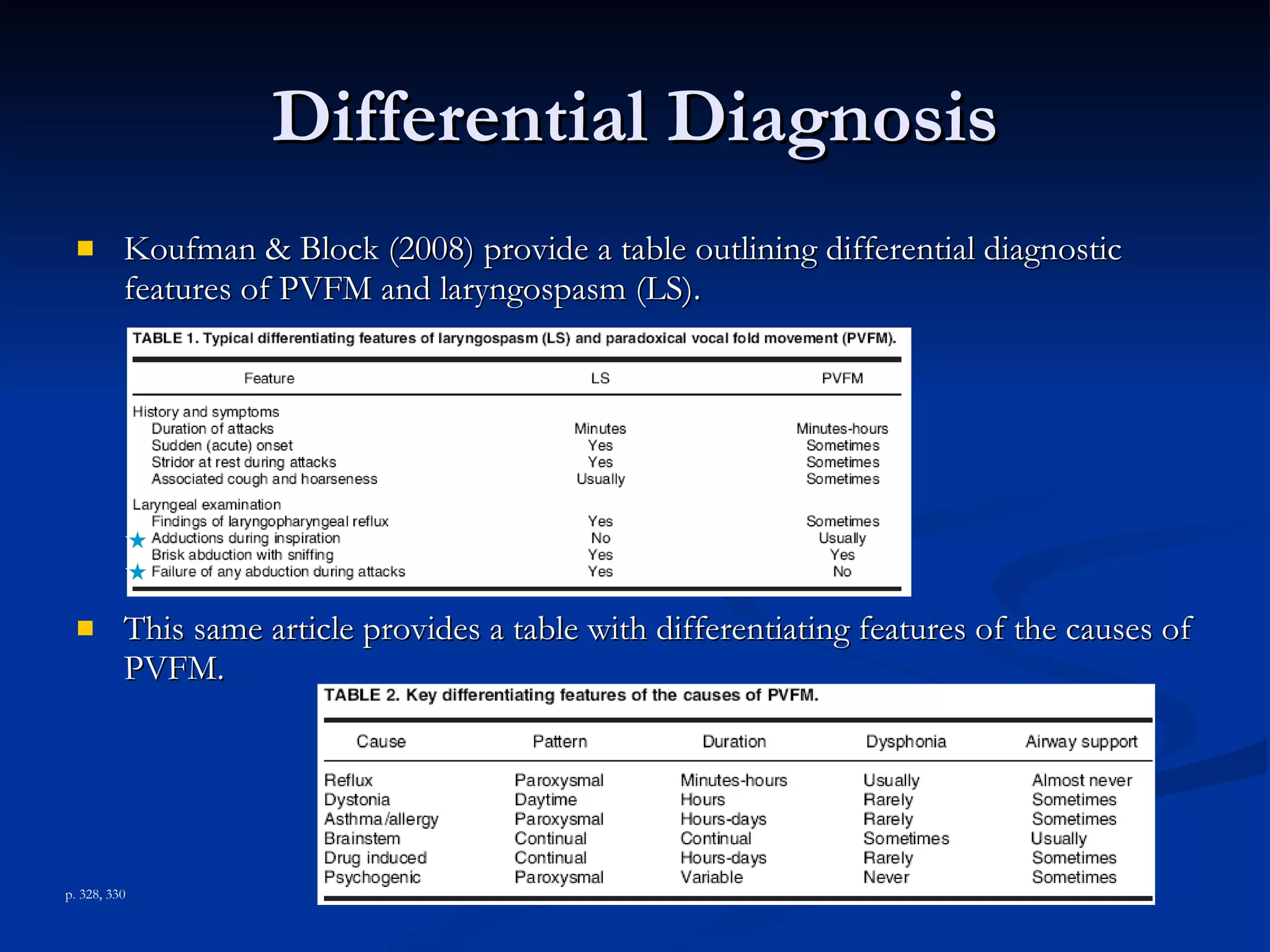
Differential Diagnosis Koufman & Block (2008) provide a table outlining differential diagnostic features of PVFM and laryngospasm (LS). This same article provides a table with differentiating features of the causes of PVFM. p. 328, 330
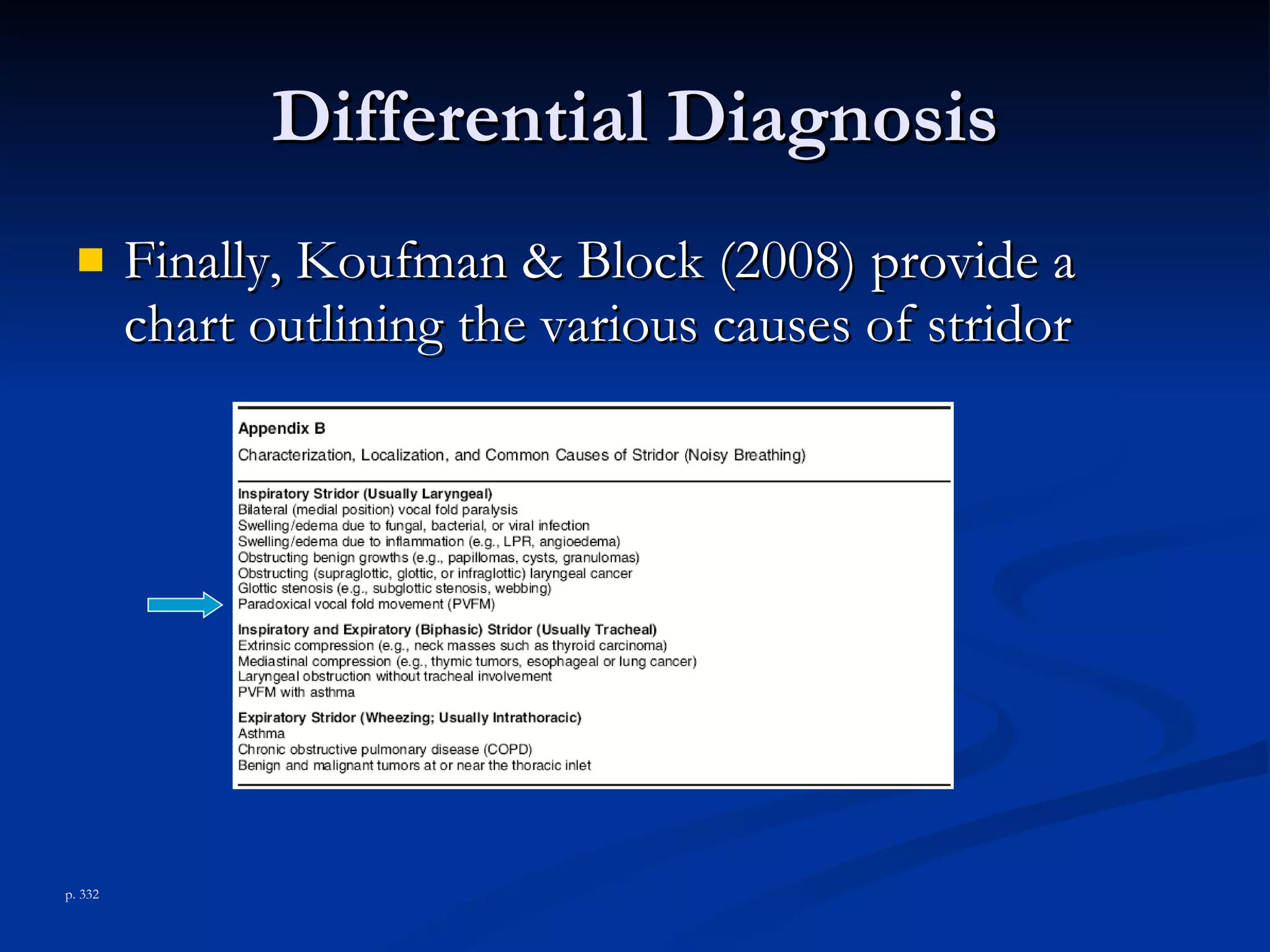
Differential Diagnosis Finally, Koufman & Block (2008) provide a chart outlining the various causes of stridor p. 332
Treatment
Treatment To adequately diagnose and treat VCD requires a team approach.  Team members include Primary care physician Pulmonologist Otolaryngologist Speech-Language Pathologist Possibly psychiatrist/psychologist
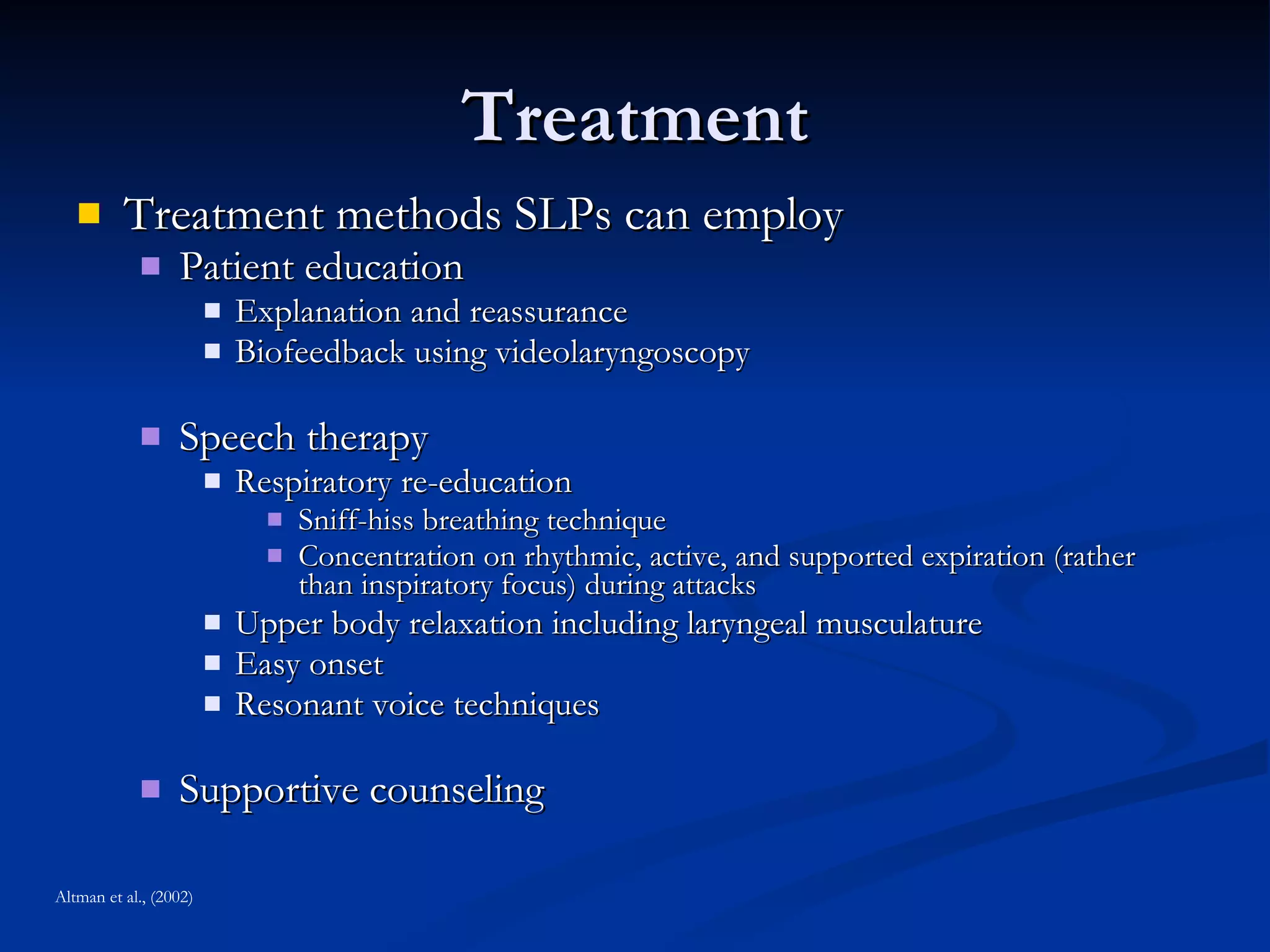
Treatment Treatment methods SLPs can employ Patient education Explanation and reassurance Biofeedback using videolaryngoscopy Speech therapy Respiratory re-education Sniff-hiss breathing technique Concentration on rhythmic, active, and supported expiration (rather than inspiratory focus) during attacks Upper body relaxation including laryngeal musculature Easy onset Resonant voice techniques Supportive counseling Altman et al., (2002)
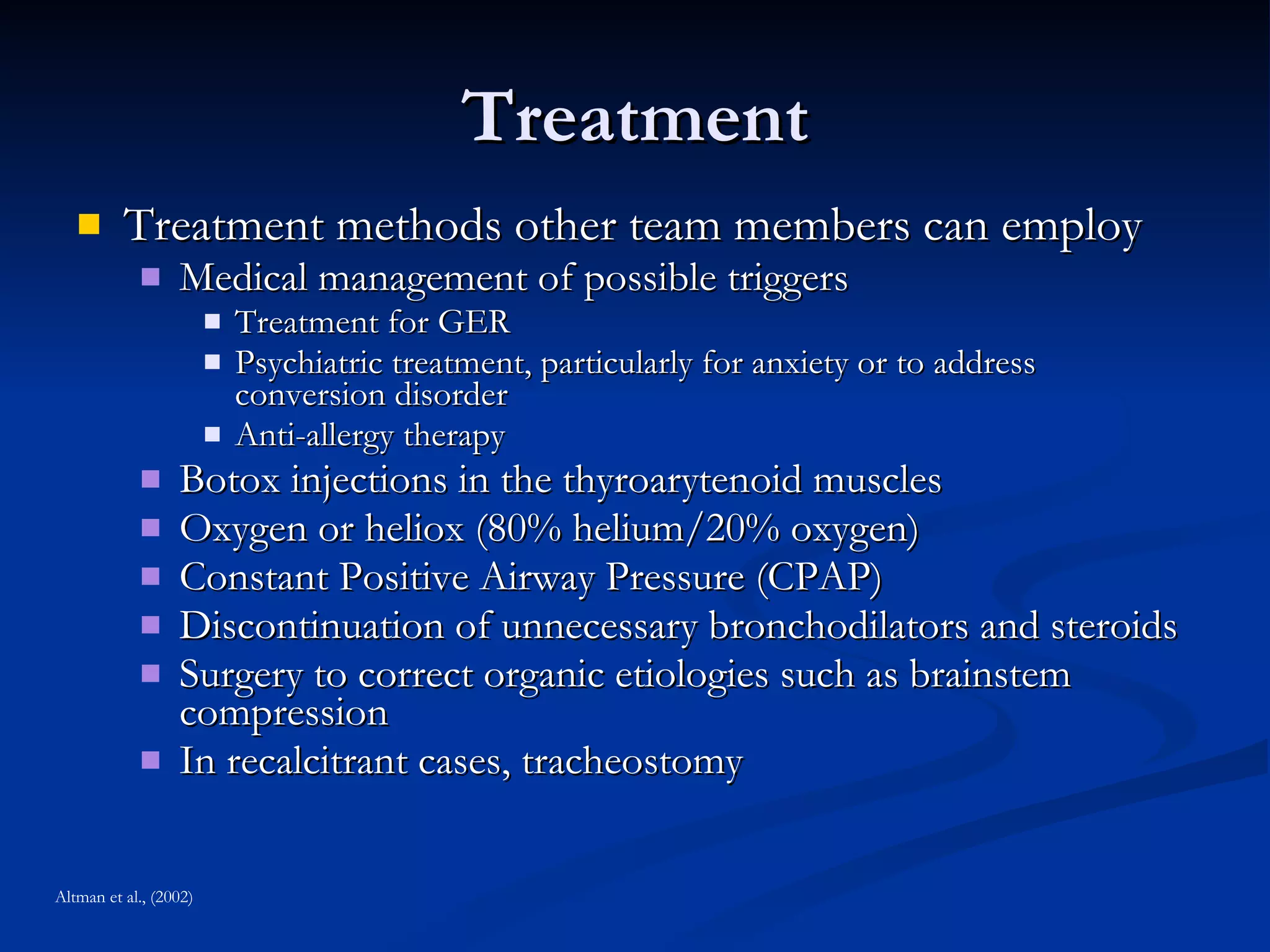
Treatment Treatment methods other team members can employ Medical management of possible triggers Treatment for GER Psychiatric treatment, particularly for anxiety or to address conversion disorder Anti-allergy therapy Botox injections in the thyroarytenoid muscles  Oxygen or heliox (80% helium/20% oxygen) Constant Positive Airway Pressure (CPAP) Discontinuation of unnecessary bronchodilators and steroids Surgery to correct organic etiologies such as brainstem compression In recalcitrant cases, tracheostomy Altman et al., (2002)
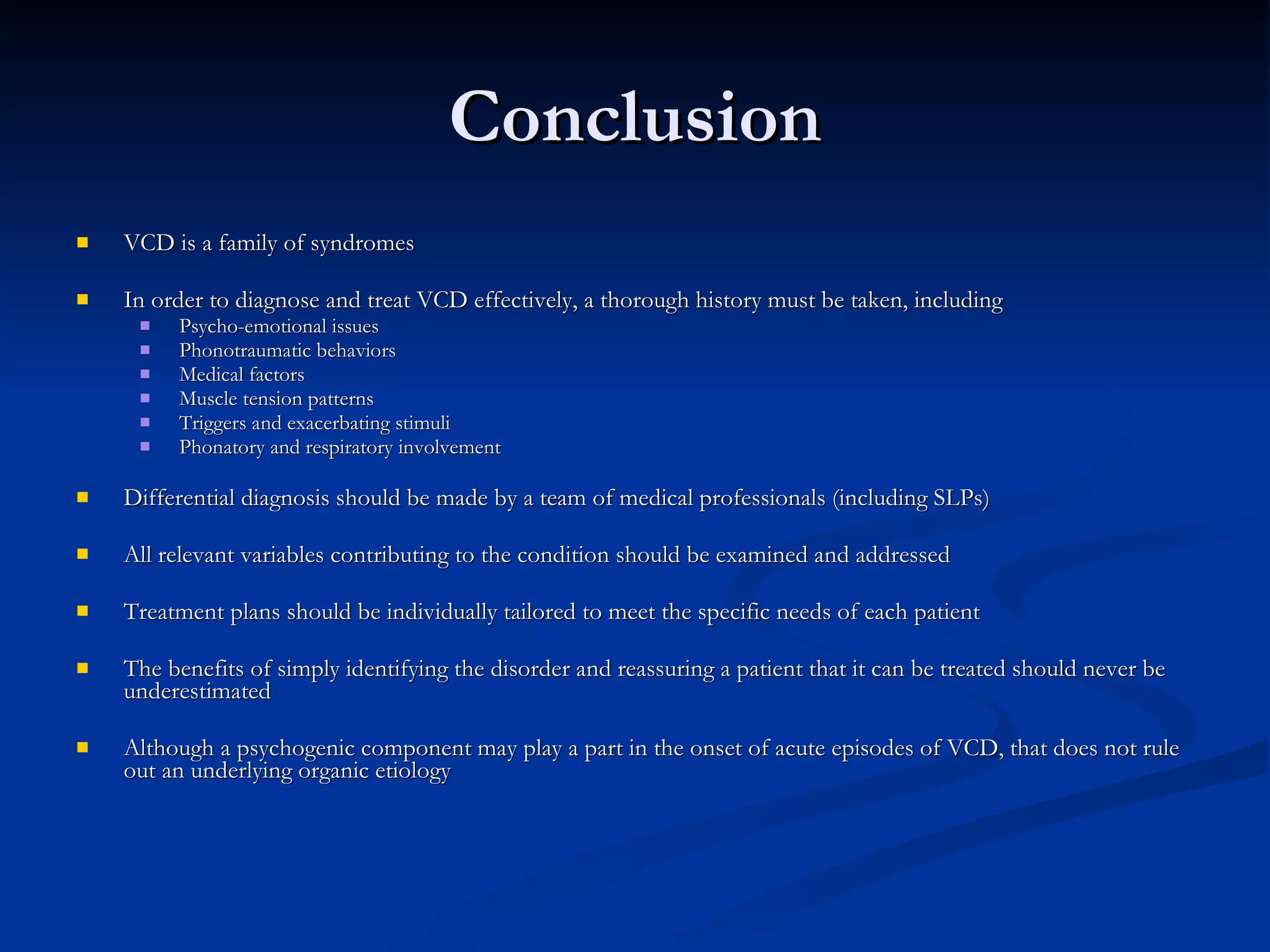
Conclusion VCD is a family of syndromes In order to diagnose and treat VCD effectively, a thorough history must be taken, including Psycho-emotional issues Phonotraumatic behaviors Medical factors Muscle tension patterns Triggers and exacerbating stimuli Phonatory and respiratory involvement Differential diagnosis should be made by a team of medical professionals (including SLPs) All relevant variables contributing to the condition should be examined and addressed Treatment plans should be individually tailored to meet the specific needs of each patient The benefits of simply identifying the disorder and reassuring a patient that it can be treated should never be underestimated Although a psychogenic component may play a part in the onset of acute episodes of VCD, that does not rule out an underlying organic etiology
References Altman, K.W., Mirza, N., Ruiz, C., & Sataloff, R.T. (2000).  Paradoxical vocal fold motion:  Presentation and  treatment options.  Journal of Voice, 14 (1), 99-103. Altman, K.W., Simpson, C.B., Amin, M.R., Abaza, M., Balkissoon, R., & Casiano, R.R. (2002).  Cough and  paradoxical vocal fold motion.  Otolaryngology – Head & Neck Surgery, 127 (6), 501-511. Andrianopolous, M.V., Gallivan, G.J., & Gallivan, H. (2000).  PVCM, PVCD, EPL, and Irritable Larynx  Syndrome:  What are we talking about and how do  we treat it?  Journal of Voice, 14 (4), 607-618. Archer, G.J., Hoyle, J.L., McCluskey, A., & Macdonald, J. (2000).  Inspiratory vocal cord dysfunction, a new  approach in treatment.  European Respiratory Journal, 15,  617-618. Blager, F.B. (2000).  Paradoxical vocal fold movement:  Diagnosis and management.  Current Opinion in  Otolaryngology & Head and Neck Surgery, 8,  180-183. Goldstein, R., Bright, J., Jones, S.M, & Niven, R.M. (2006).  Severe vocal cord dysfunction resistant to all  current therapeutic interventions.  Journal of Respiratory Medicine, 101,  857-858. Husain, A. & Habib, S.S. (2008).  Pattern identification of obstructive and restrictive ventilatory impairment  through flow volume curves.  Pakistan Journal of Physiology, 4 (1), 30-34. Ibrahim, W.H., Gheriani, H.A., Almohamed, A.A., & Raza, T. (2007).  Paradoxical vocal cord motion disorder:  Past, present and future.  Postgraduate Medical Journal, 83,  164-172. Kellman, R..M. & Leopold, D.A. (1982).  Paradoxical vocal cord motion:  An important cause of stridor.  Laryngoscope, 92 , 58-60. Koufman, J.A. & Block, C. (2008).  Differential diagnosis of paradoxical vocal fold movement.  American Journal  of Speech-Language Pathology, 17,  327-334.
References Maschka, D.A., Bauman, N.M., McCray, P.B., Hoffman, H.T., Karnell, M.P., & Smith, R.J.H. (1997).  A  classification scheme for paradoxical vocal cord motion.  The Laryngoscope, 107 (11), 1429-1435. Mathers-Schmidt, B.A. (2001).  Paradoxical vocal fold motion:  A tutorial on a complex disorder and the  speech-language pathologist’s role.  American Journal of Speech-Language Pathology, 10,  111-125. Morrison, M., Rammage, L., & Emami, A.J. (1999).  The irritable larynx syndrome.  Journal of Voice, 13 (3),  447-455. Perkner, J.J., Fennely, K.P., Balkissoon, R., Bartelson, B.B., Ruttenber, A.J., Wood II, R.P., & Newman, L.S.  (1998).  Irritant-associated vocal cord dysfunction.  Journal of  Occupational and Environmental Medicine,  40 (2),  139-143. Powell, D.M., Karanfilov, B.I., Beechler, K.B., Treole, K., Trudeau, M.D., & Forrest, L.A. (2000).  Paradoxical  vocal cord dysfunction in juveniles.  Archives of Otolaryngology - Head & Neck Surgery, 126,  29-34. Sandage, M.J. & Zelazny, S.K. (2004).  Paradoxical vocal fold motion in children and adolescents.  Language,  Speech, and Hearing Services in Schools, 35,  353-362. Selner, J.C., Staudenmayer, H., Koepke, J.W., Harvey, R., & Kent, C. (1987).  Vocal fold dysfunction:  The  importance of psychologic factors and provocation challenge testing.  The Journal of Allergy and Clinical  Immunology, 79,  726-733. Sullivan, M.D., Heywood, B.M, & Beukelman, D.R. (2001).  A treatment for vocal cord dysfunction in female  athletes:  An outcome study.  The Laryngoscope, 111,  1751-1755. Treole, K., Trudeau, M.D., & Forrest, L.A. (1999).  Endoscopic and stroboscopic descriptions of adults with  paradoxical vocal fold dysfunction.  Journal of Voice, 13,  143-152. Vertigan, A.E., Gibson, P.G., Theodoros, D.G., & Winkworth, A.L. (2007).  A review of voice and upper  airway function in chronic cough and paradoxical vocal cord movement.  Current Opinion in Allergy and  Clinical Immunology, 7 (1), 37-42. Weir, M. (2002).  Vocal cord dysfunction mimics asthma and may respond to heliox.  Clinical Pediatrics 41 (1),  37-41.

Vocal Cord Dysfunction

  • 1.
    Vocal Cord DysfunctionJoan C. Grillo
  • 2.
    Outline Definition &Other Labels Presentation Patient profile Demographics Comorbidities Potential Etiologies Differential Diagnosis Treatment Team Treatment methods Conclusion
  • 3.
    Definition Vocal CordDysfunction (VCD) is a disorder of the upper airway in which the vocal folds (and sometimes the ventricular folds) adduct during inspiration, exhalation, or both. This often results in inspiratory stridor and respiratory distress. In the literature, it is most often described as adduction upon inspiration .
  • 4.
    Definition This isa picture of the abducted position of the vocal folds. This is what they should look like during respiration. This is a picture of the adducted position of the vocal folds. This is what the vocal folds of patients with VCD do when they are trying to breathe.
  • 5.
    Other Labels ParadoxicalVocal Fold Motion/Movement (PVFM) Paradoxical Vocal Cord Motion/Movement (PVCM) Paradoxical Vocal Fold Dysfunction (PVFD) Paradoxical Vocal Cord Dysfunction (PVCD) Irritable Larynx Syndrome Munchausen’s stridor (original name, first reported in 1974) Factitious asthma Hysterical or psychogenic asthma Steroid-resistant asthma Episodic paroxysmal laryngospasm Functional upper airway obstruction Functional laryngeal stridor Psychogenic stridor Episodic Laryngeal dyskinesia This long list of labels helps illustrate the point that VCD is actually a family of syndromes
  • 6.
  • 7.
    Presentation Patients mostoften present with symptoms such as Stridor (particularly on inhalation) Wheezing Choking sensation Acute episodic dyspnea (shortness of breath) Aphonia Dysphonia Dysphagia Chronic cough (often triggered by exposure to irritants or on exertion) Tightness in the throat Difficulty “getting air in” Globus sensation
  • 8.
    Presentation Patients oftenreport that certain things trigger episodes, such as Cigarette smoke Cold air Exercise Perfume Cleaners Chemical odors Stress In children, the airway obstruction experienced during an episode can trigger a panic attack
  • 9.
  • 10.
    Patient Profile Demographiccharacteristics Most often occurs in females Children and teens with VCD tend to be high achievers and athletes Many have high levels of stress and/or anxiety Different studies describe very different profiles Incidence and prevalence data are sparse
  • 11.
    Patient Profile Commoncomorbidities GER Asthma Anxiety Laryngeal muscle tension and hyperfunction
  • 12.
  • 13.
    Potential Etiologies Maschkaet al wrote an article in 1997 which classified types of PVCM based on what they proposed to be the different etiologies. TABLE II. Classification Scheme for Paradoxical Vocal Cord Motion. From:   Maschka: Laryngoscope, Volume 107(11).November 1997.1429-1435
  • 14.
    Potential Etiologies Belowis a table of the characteristic features of each type, according to this paper. SLPs most often encounter the last four types. TABLE I. Characteristic Features. From:   Maschka: Laryngoscope, Volume 107(11).November 1997.1429-1435
  • 15.
    Potential Etiologies Theorganic causes described in this paper are, in general, seen less often than the nonorganic causes. GER occurs very frequently in patients with VCD, but at this time the relationship between GER and VCD is only correlation. Causation has not been established. Many theorize that GER might trigger VCD episodes.
  • 16.
    Potential Etiologies In1982, Kellman & Leopold wrote a paper on three cases of PVCM they had seen in the hospital. Although they considered all three cases to be functional in nature, all three patients continued to have true vocal fold adduction on inspiration during asymptomatic periods when examined via indirect laryngoscopy.
  • 17.
    Potential Etiologies In1999, Treole et al did a study in which they examined 50 adult patients diagnosed with PVFD and 54 normal adult controls. All 50 of the patients with PVFD had some degree of abnormal adduction of the true vocal folds during respiration even when asymptomatic . Stroboscopy during asymptomatic periods revealed abnormalities such as decreased amplitude and mucosal wave, unstable zero phase, and phase asymmetry for the PVFD group significantly more often than the control group. These results and the findings of the previous study indicate that, at least for some patients, “…PVFD is not episodic but exists as a continuum of laryngeal instability that may, due to various precipitating factors, be exacerbated to breathing attacks.” (p. 143)
  • 18.
    Potential Etiologies Morrisonet al describe, in their 1999 paper, a unifying hypothesis to account for a variety of symptoms in what they call Irritable Larynx Syndrome (ILS). The theory is that neural plastic changes occur in brainstem laryngeal control networks – similar to those that occur with chronic pain – which cause the larynx to be in a constant spasm-ready state of hyper-excitability for people with ILS. Inclusion criteria for ILS are Symptoms attributable to laryngeal tension Dysphonia and/or laryngospasm With or without globus and/or chronic cough Visible and palpable evidence of tension Laryngoscopic lateral and AP contraction Palpation: suprahyoid, thyrohyoid, and cricothyroid, pharynx Presence of a sensory trigger Airborne substance, esophageal irritant, odor The diagnosis of ILS is excluded if there is apparent organic laryngeal pathology, an identifiable neurological disease, or identifiable psychiatric diagnosis. The ILS theory explains some subgroups of patients with VCD very well, although the requirement of overt laryngeal muscle tension excludes much of the VCD population. This theory parallels Treole’s idea that some sort of change has occurred in these certain individuals that causes the larynx to be hypersensitive to certain triggers. Morrison et al., (1999) p. 448
  • 19.
  • 20.
    Differential Diagnosis Becauseof the presentation, VCD is often misdiagnosed as asthma or multiple chemical sensitivity, despite the fact that VCD is not responsive to asthma treatments. It is important to remember that VCD does occur comorbidly with asthma in some patients, and this can complicate diagnosis. This misdiagnosis of asthma often leads to unsuccessful treatment of asthma with steroids and other medications which are ineffective and can have negative side effects. In extreme cases, patients have been intubated or given tracheostomies due to acute respiratory distress. Many believe that these measures may be avoided if proper diagnosis of VCD is made. VCD can also be misdiagnosed as true laryngospasm – the difference being that in true laryngospasm, the vocal folds do not abduct. VCD was once considered to be purely psychogenic, but a body of literature is developing that supports the theory that in some patients, there is an actual laryngeal hypersensitivity, incoordination, or dystonia that exists all the time, and worsens with acute attacks.
  • 21.
    Differential Diagnosis Definitivediagnosis is made by observing the trademark symptom of true vocal fold adduction during inhalation. Many times a diamond-shaped posterior glottic chink is also noted, but is not required for diagnosis. Many patients, when between attacks, present normally when examined via videolaryngoscopy. For these patients, the clinician must elicit an attack and view the trademark symptom in order to definitively diagnose VCD. There are some organic etiologies (such as brainstem compression) that can only be diagnosed by radiographic imaging.
  • 22.
    Differential Diagnosis DifferentiatingVCD from Asthma Pulmonary flow-volume loop Husain & Habib, (2008) Airway obstruction occurring above the sternal notch (as with VCD) is indicated by what is called a “flattened” inspiratory limb as seen here in Figure 6.
  • 23.
    Differential Diagnosis Mathers-Schmidt(2001) and Sandage & Zelazny (2004) provide tables listing differential diagnostic features of PVFM and asthma Mathers-Schmidt (2001) p. 116 Sanders & Zelazny (2004) p. 355
  • 24.
    Differential Diagnosis Koufman& Block (2008) provide a table outlining differential diagnostic features of PVFM and laryngospasm (LS). This same article provides a table with differentiating features of the causes of PVFM. p. 328, 330
  • 25.
    Differential Diagnosis Finally,Koufman & Block (2008) provide a chart outlining the various causes of stridor p. 332
  • 26.
  • 27.
    Treatment To adequatelydiagnose and treat VCD requires a team approach. Team members include Primary care physician Pulmonologist Otolaryngologist Speech-Language Pathologist Possibly psychiatrist/psychologist
  • 28.
    Treatment Treatment methodsSLPs can employ Patient education Explanation and reassurance Biofeedback using videolaryngoscopy Speech therapy Respiratory re-education Sniff-hiss breathing technique Concentration on rhythmic, active, and supported expiration (rather than inspiratory focus) during attacks Upper body relaxation including laryngeal musculature Easy onset Resonant voice techniques Supportive counseling Altman et al., (2002)
  • 29.
    Treatment Treatment methodsother team members can employ Medical management of possible triggers Treatment for GER Psychiatric treatment, particularly for anxiety or to address conversion disorder Anti-allergy therapy Botox injections in the thyroarytenoid muscles Oxygen or heliox (80% helium/20% oxygen) Constant Positive Airway Pressure (CPAP) Discontinuation of unnecessary bronchodilators and steroids Surgery to correct organic etiologies such as brainstem compression In recalcitrant cases, tracheostomy Altman et al., (2002)
  • 30.
    Conclusion VCD isa family of syndromes In order to diagnose and treat VCD effectively, a thorough history must be taken, including Psycho-emotional issues Phonotraumatic behaviors Medical factors Muscle tension patterns Triggers and exacerbating stimuli Phonatory and respiratory involvement Differential diagnosis should be made by a team of medical professionals (including SLPs) All relevant variables contributing to the condition should be examined and addressed Treatment plans should be individually tailored to meet the specific needs of each patient The benefits of simply identifying the disorder and reassuring a patient that it can be treated should never be underestimated Although a psychogenic component may play a part in the onset of acute episodes of VCD, that does not rule out an underlying organic etiology
  • 31.
    References Altman, K.W.,Mirza, N., Ruiz, C., & Sataloff, R.T. (2000). Paradoxical vocal fold motion: Presentation and treatment options. Journal of Voice, 14 (1), 99-103. Altman, K.W., Simpson, C.B., Amin, M.R., Abaza, M., Balkissoon, R., & Casiano, R.R. (2002). Cough and paradoxical vocal fold motion. Otolaryngology – Head & Neck Surgery, 127 (6), 501-511. Andrianopolous, M.V., Gallivan, G.J., & Gallivan, H. (2000). PVCM, PVCD, EPL, and Irritable Larynx Syndrome: What are we talking about and how do we treat it? Journal of Voice, 14 (4), 607-618. Archer, G.J., Hoyle, J.L., McCluskey, A., & Macdonald, J. (2000). Inspiratory vocal cord dysfunction, a new approach in treatment. European Respiratory Journal, 15, 617-618. Blager, F.B. (2000). Paradoxical vocal fold movement: Diagnosis and management. Current Opinion in Otolaryngology & Head and Neck Surgery, 8, 180-183. Goldstein, R., Bright, J., Jones, S.M, & Niven, R.M. (2006). Severe vocal cord dysfunction resistant to all current therapeutic interventions. Journal of Respiratory Medicine, 101, 857-858. Husain, A. & Habib, S.S. (2008). Pattern identification of obstructive and restrictive ventilatory impairment through flow volume curves. Pakistan Journal of Physiology, 4 (1), 30-34. Ibrahim, W.H., Gheriani, H.A., Almohamed, A.A., & Raza, T. (2007). Paradoxical vocal cord motion disorder: Past, present and future. Postgraduate Medical Journal, 83, 164-172. Kellman, R..M. & Leopold, D.A. (1982). Paradoxical vocal cord motion: An important cause of stridor. Laryngoscope, 92 , 58-60. Koufman, J.A. & Block, C. (2008). Differential diagnosis of paradoxical vocal fold movement. American Journal of Speech-Language Pathology, 17, 327-334.
  • 32.
    References Maschka, D.A.,Bauman, N.M., McCray, P.B., Hoffman, H.T., Karnell, M.P., & Smith, R.J.H. (1997). A classification scheme for paradoxical vocal cord motion. The Laryngoscope, 107 (11), 1429-1435. Mathers-Schmidt, B.A. (2001). Paradoxical vocal fold motion: A tutorial on a complex disorder and the speech-language pathologist’s role. American Journal of Speech-Language Pathology, 10, 111-125. Morrison, M., Rammage, L., & Emami, A.J. (1999). The irritable larynx syndrome. Journal of Voice, 13 (3), 447-455. Perkner, J.J., Fennely, K.P., Balkissoon, R., Bartelson, B.B., Ruttenber, A.J., Wood II, R.P., & Newman, L.S. (1998). Irritant-associated vocal cord dysfunction. Journal of Occupational and Environmental Medicine, 40 (2), 139-143. Powell, D.M., Karanfilov, B.I., Beechler, K.B., Treole, K., Trudeau, M.D., & Forrest, L.A. (2000). Paradoxical vocal cord dysfunction in juveniles. Archives of Otolaryngology - Head & Neck Surgery, 126, 29-34. Sandage, M.J. & Zelazny, S.K. (2004). Paradoxical vocal fold motion in children and adolescents. Language, Speech, and Hearing Services in Schools, 35, 353-362. Selner, J.C., Staudenmayer, H., Koepke, J.W., Harvey, R., & Kent, C. (1987). Vocal fold dysfunction: The importance of psychologic factors and provocation challenge testing. The Journal of Allergy and Clinical Immunology, 79, 726-733. Sullivan, M.D., Heywood, B.M, & Beukelman, D.R. (2001). A treatment for vocal cord dysfunction in female athletes: An outcome study. The Laryngoscope, 111, 1751-1755. Treole, K., Trudeau, M.D., & Forrest, L.A. (1999). Endoscopic and stroboscopic descriptions of adults with paradoxical vocal fold dysfunction. Journal of Voice, 13, 143-152. Vertigan, A.E., Gibson, P.G., Theodoros, D.G., & Winkworth, A.L. (2007). A review of voice and upper airway function in chronic cough and paradoxical vocal cord movement. Current Opinion in Allergy and Clinical Immunology, 7 (1), 37-42. Weir, M. (2002). Vocal cord dysfunction mimics asthma and may respond to heliox. Clinical Pediatrics 41 (1), 37-41.