Computer Generations
www.dailyict.com
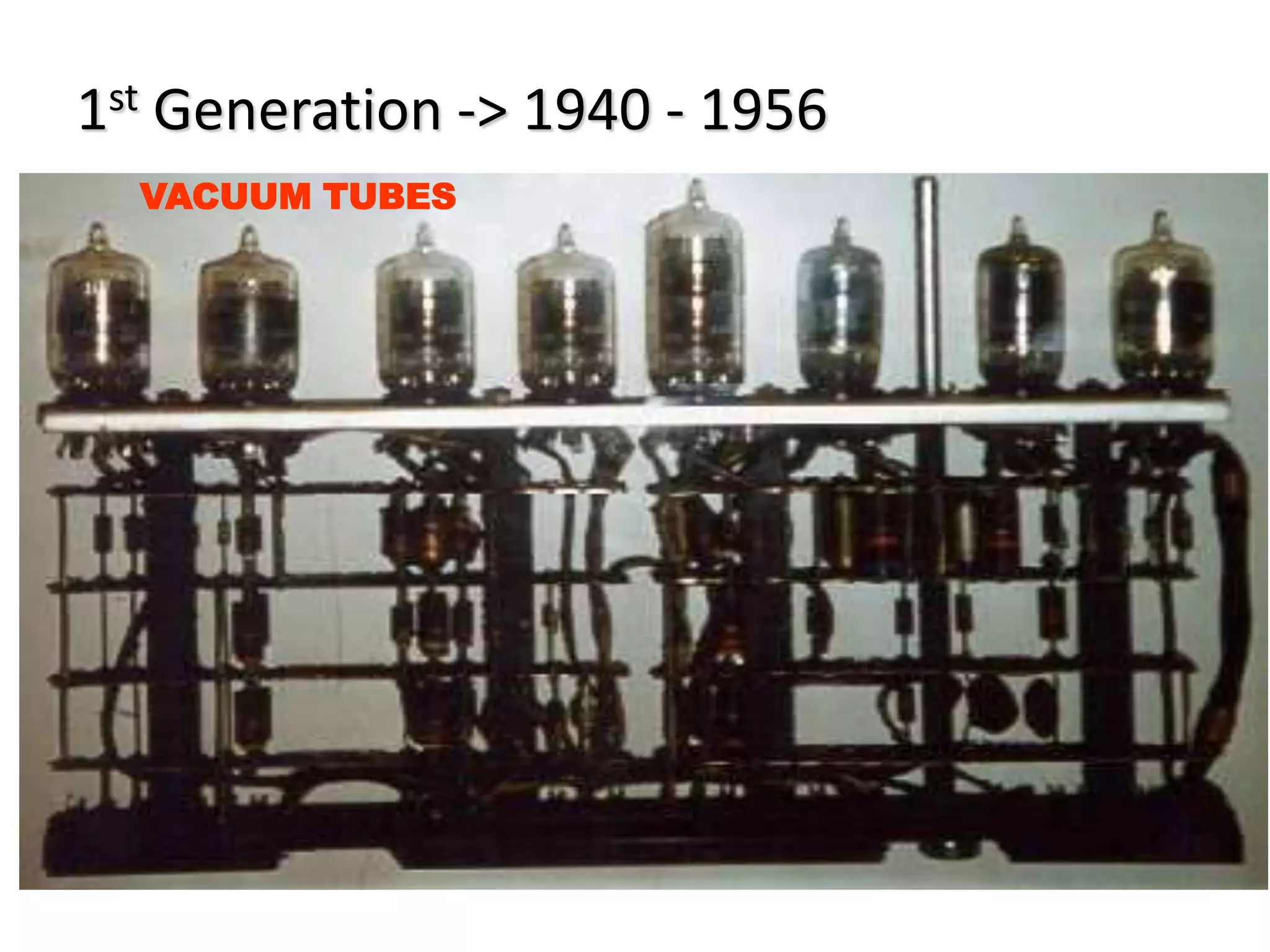
1st Generation -> 1940 - 1956
VACUUM TUBES
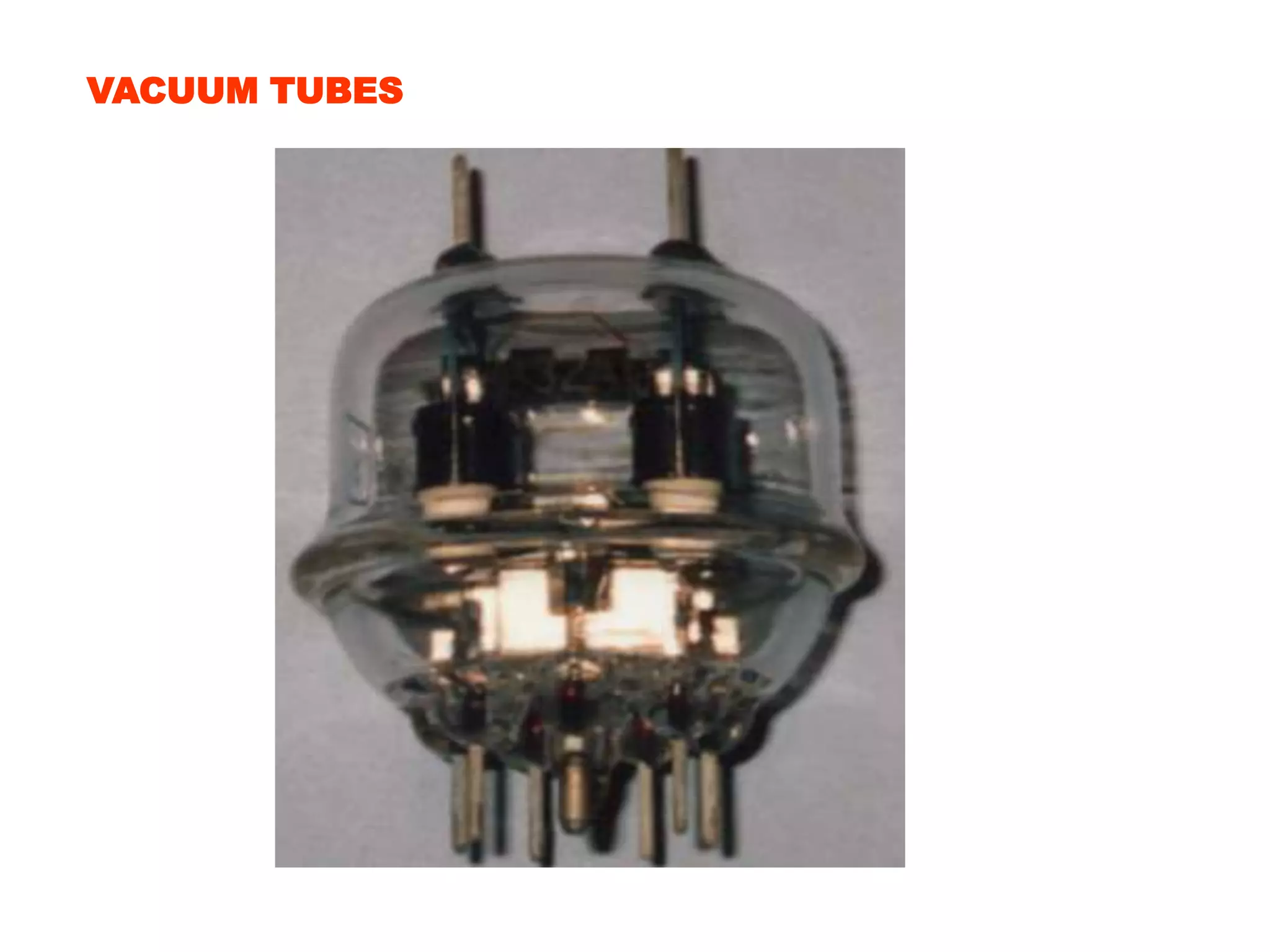
VACUUM TUBES
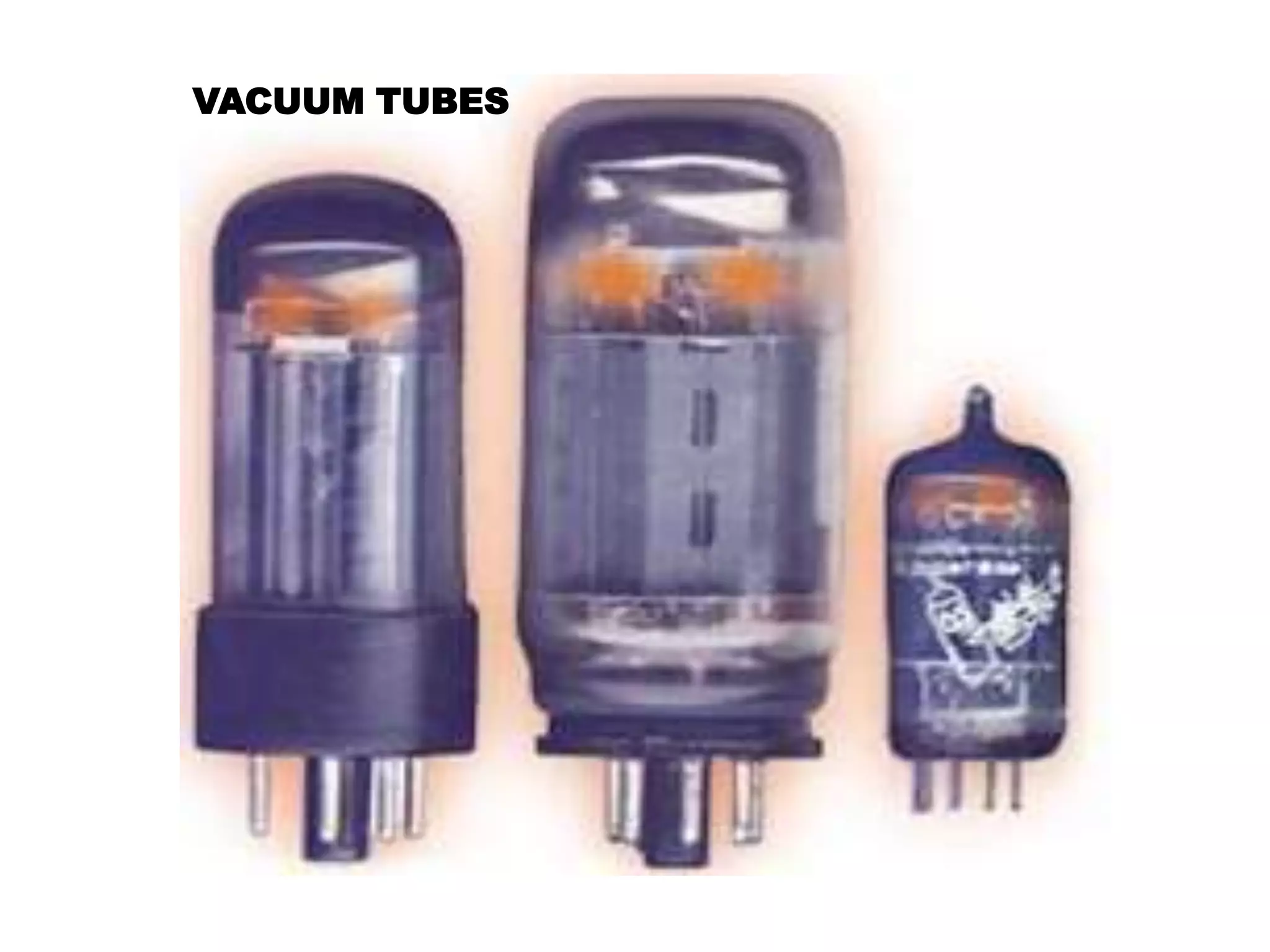
VACUUM TUBES
• Used vacuum tubes
• Was large in size
• Very expensive to operate
• High electricity consumption.
• Generated a high volume of heat.
• Depended on machine language which is in
the binary format.
• Could only solve one problem at a time.
– Speed of instructions up to
10,000 Instructions per second (IPS)
• Input was based on punched cards and paper
tapes
• Output was displayed on printouts.
• Examples of 1st generation computers
– UNIVAC ‘Universal Automatic Calculator’
– ENIAC ‘Electronic Numerical Integrator & Computer’
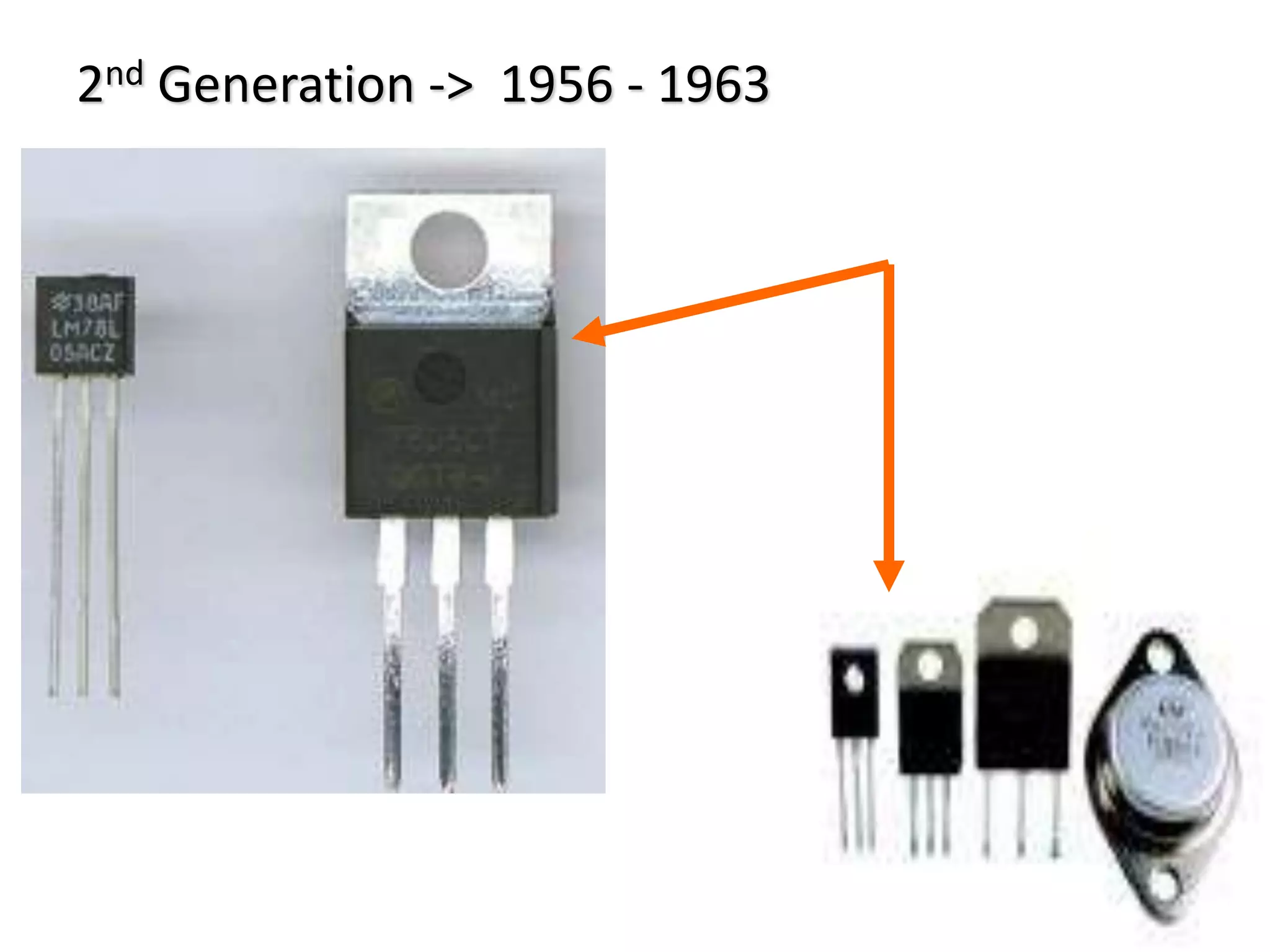
2nd Generation -> 1956 - 1963
• Used transistors instead of vacuum tubes.
• The ‘Transistor’ was invented in 1947.
• Transistors helped computers to become
– Smaller
– More faster (200,000- 300,000 IPS)
– Cheaper
– More energy efficient
– More reliable than 1st generation computers.
• Still used punch cards for inputs & printouts
for outputs.
• Changed from machine or binary language to
symbolic or assembly language.
• This helped programmers to give instructions
in words.
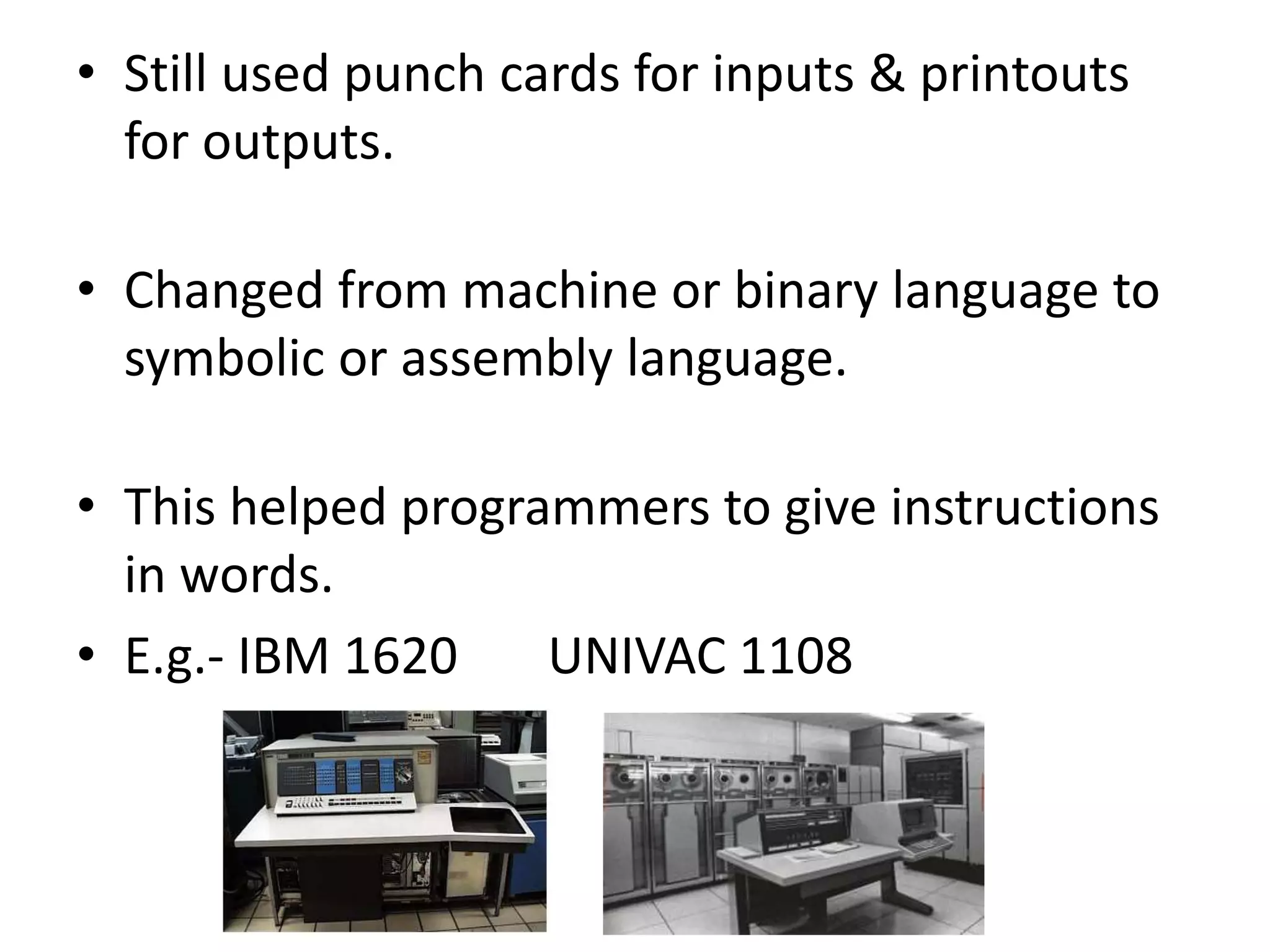
• E.g.- IBM 1620 UNIVAC 1108
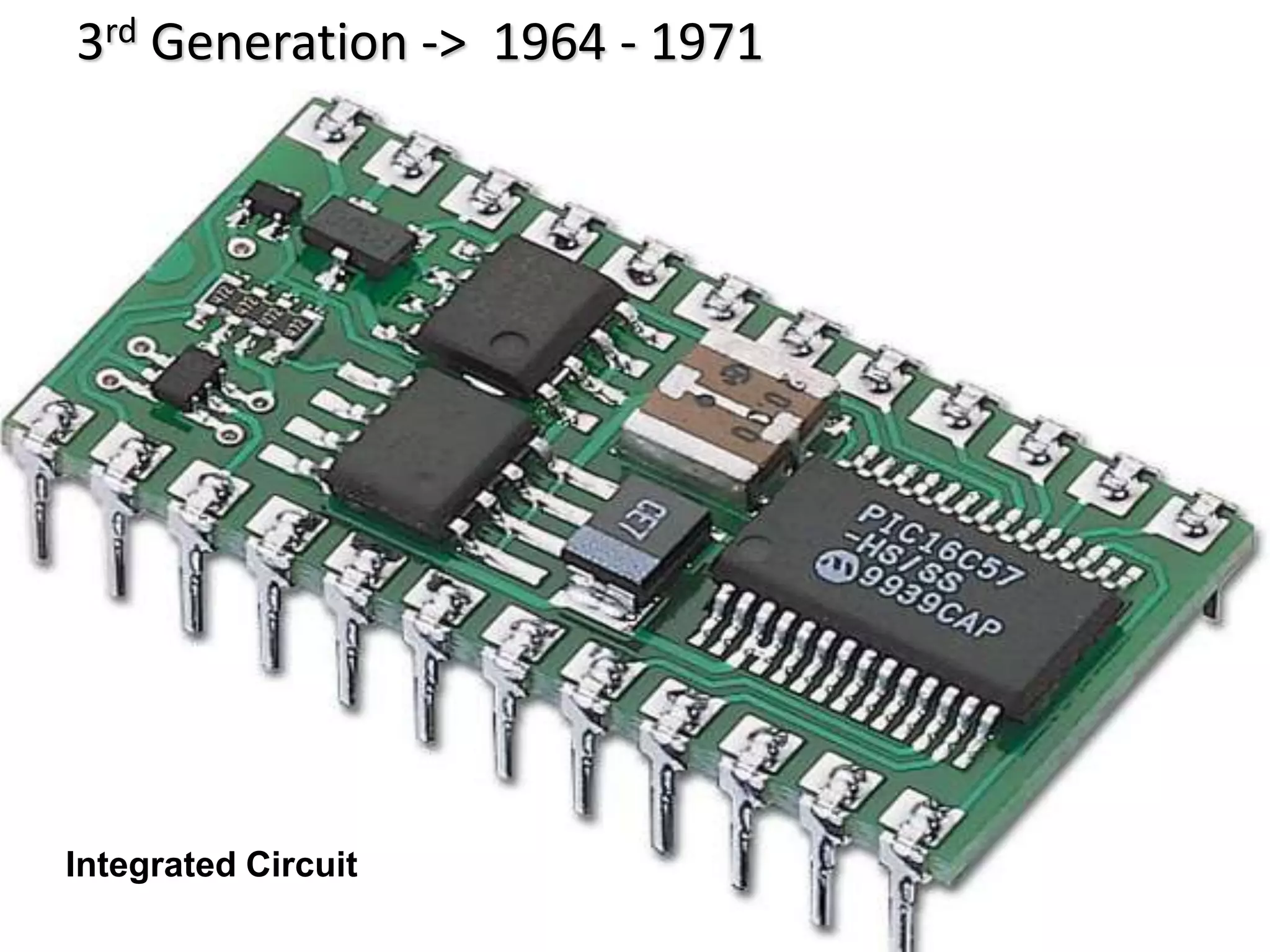
3rd Generation -> 1964 - 1971
Integrated Circuit
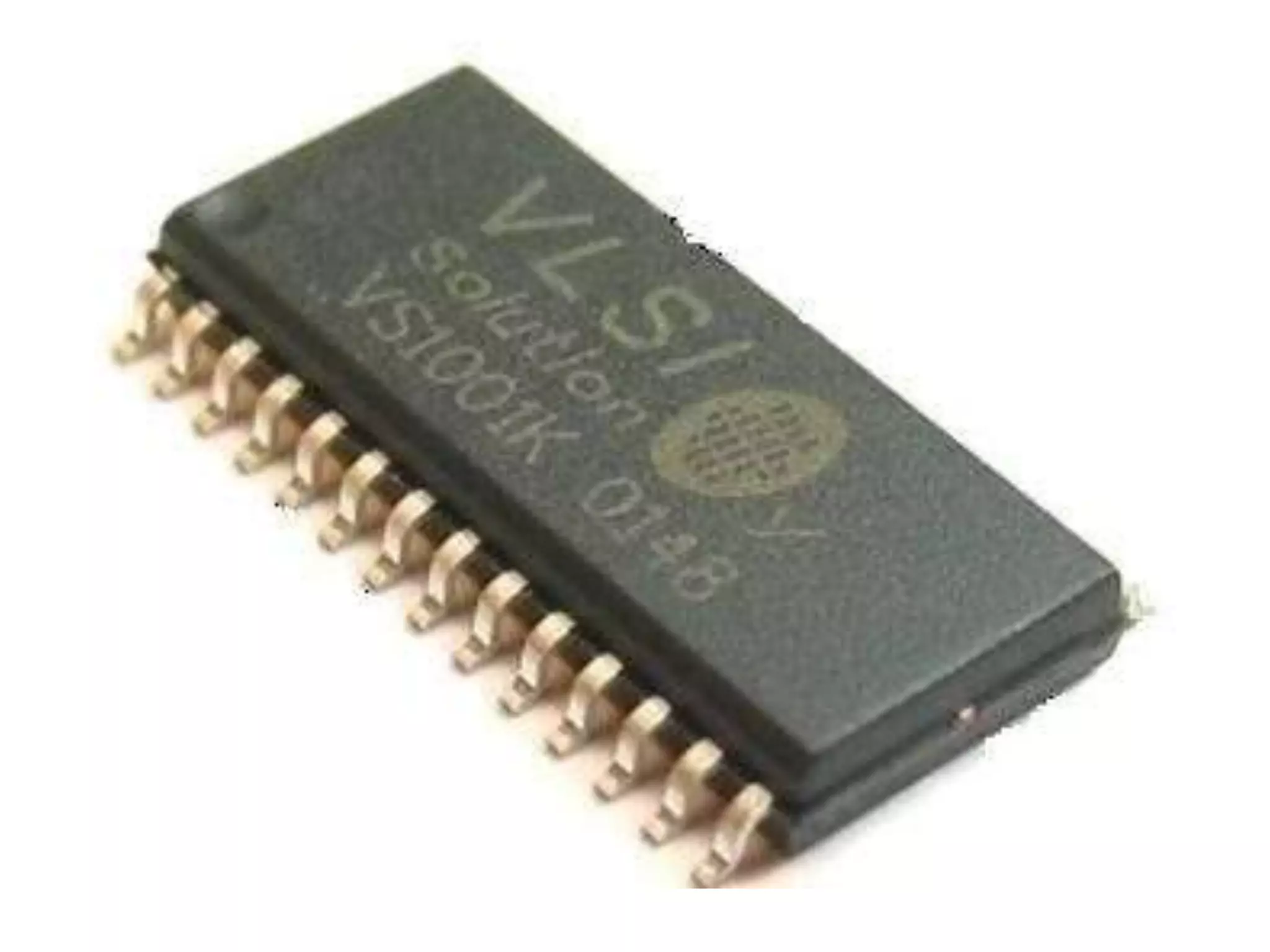
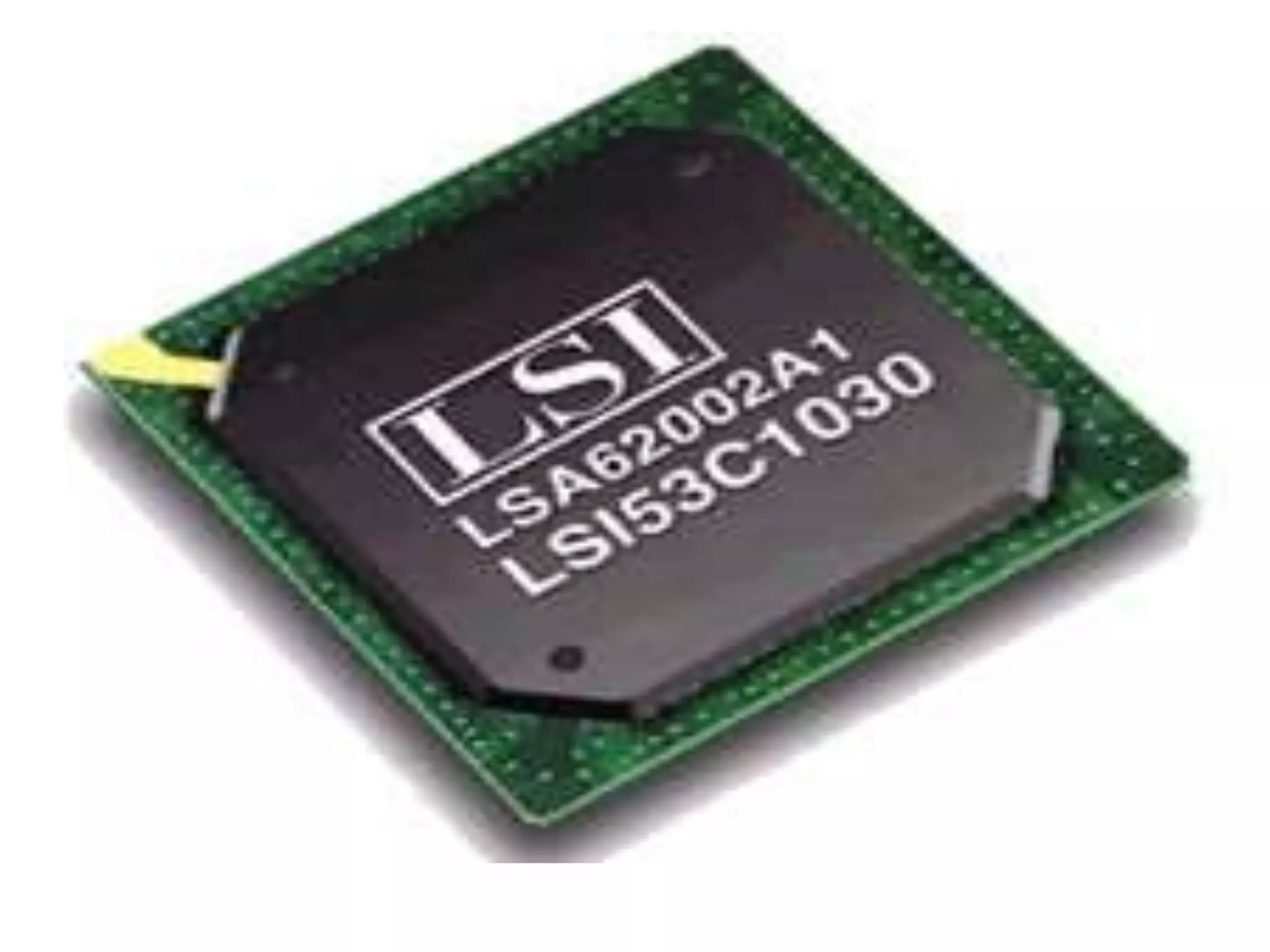
• In this stage used ‘Integrated Circuits’.
• Also used ‘semiconductors’ where transistors were
placed on silicon chips .
• Data input was through keyboards.
• Output was taken on to monitors.
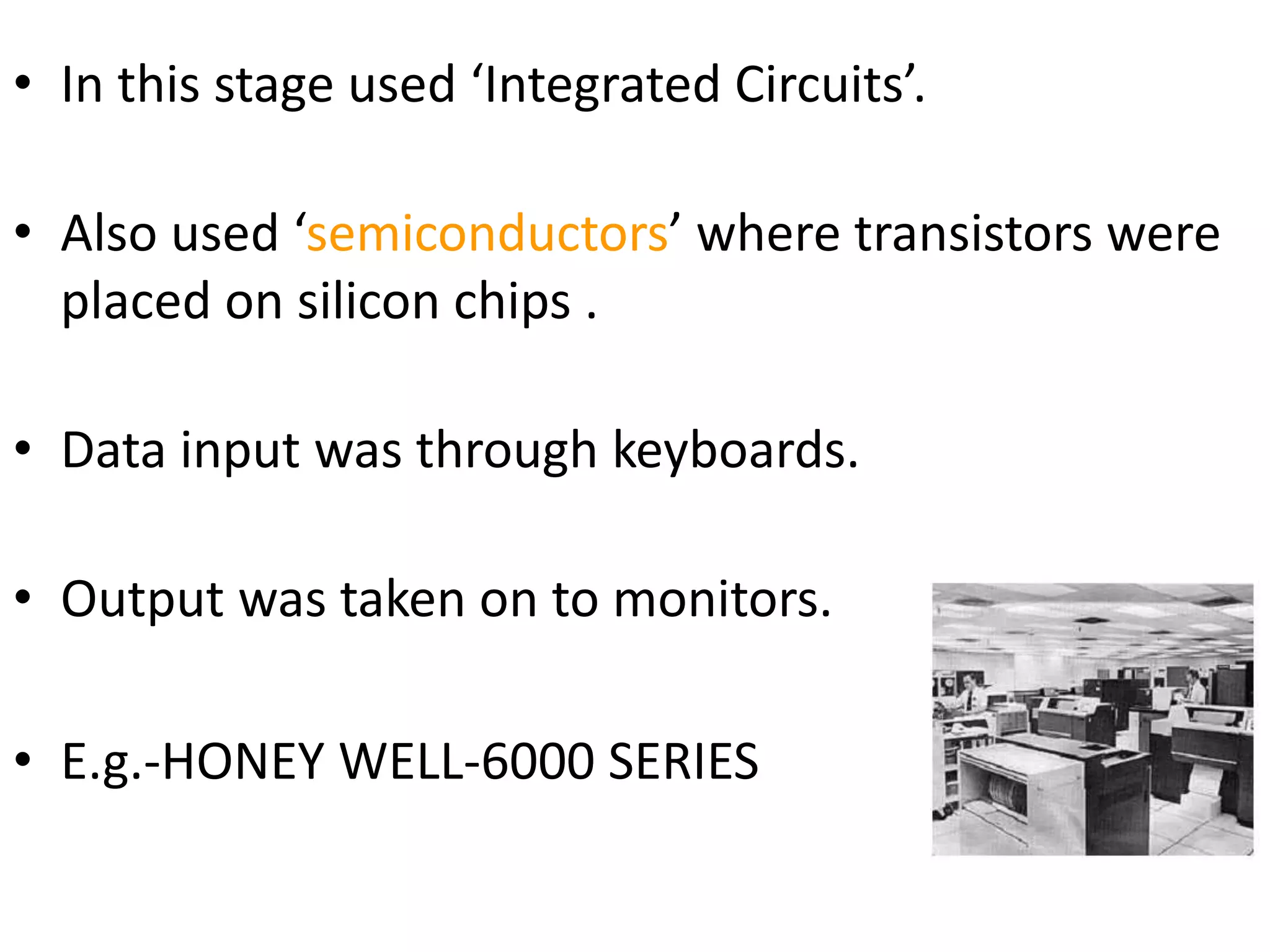
• E.g.-HONEY WELL-6000 SERIES
• Started using an operating systems where we
can run many applications.
• Computers were accessible for a wide range of
people
– Because they were ;
• Smaller in size
• & cheaper in price than 2nd generation computers.
• Speed up to 5 Million Instructions per second (MIPS)
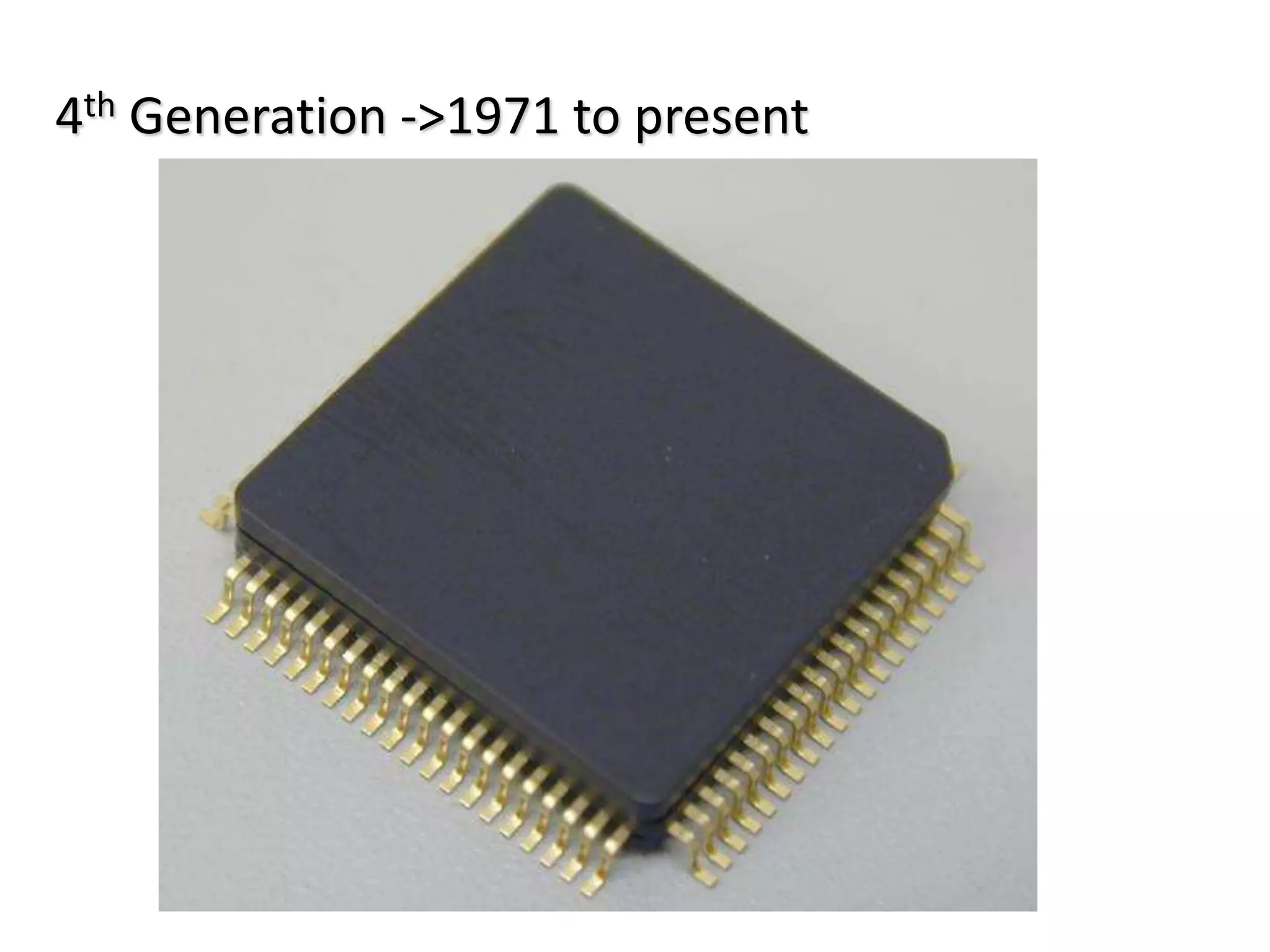
4th Generation ->1971 to present
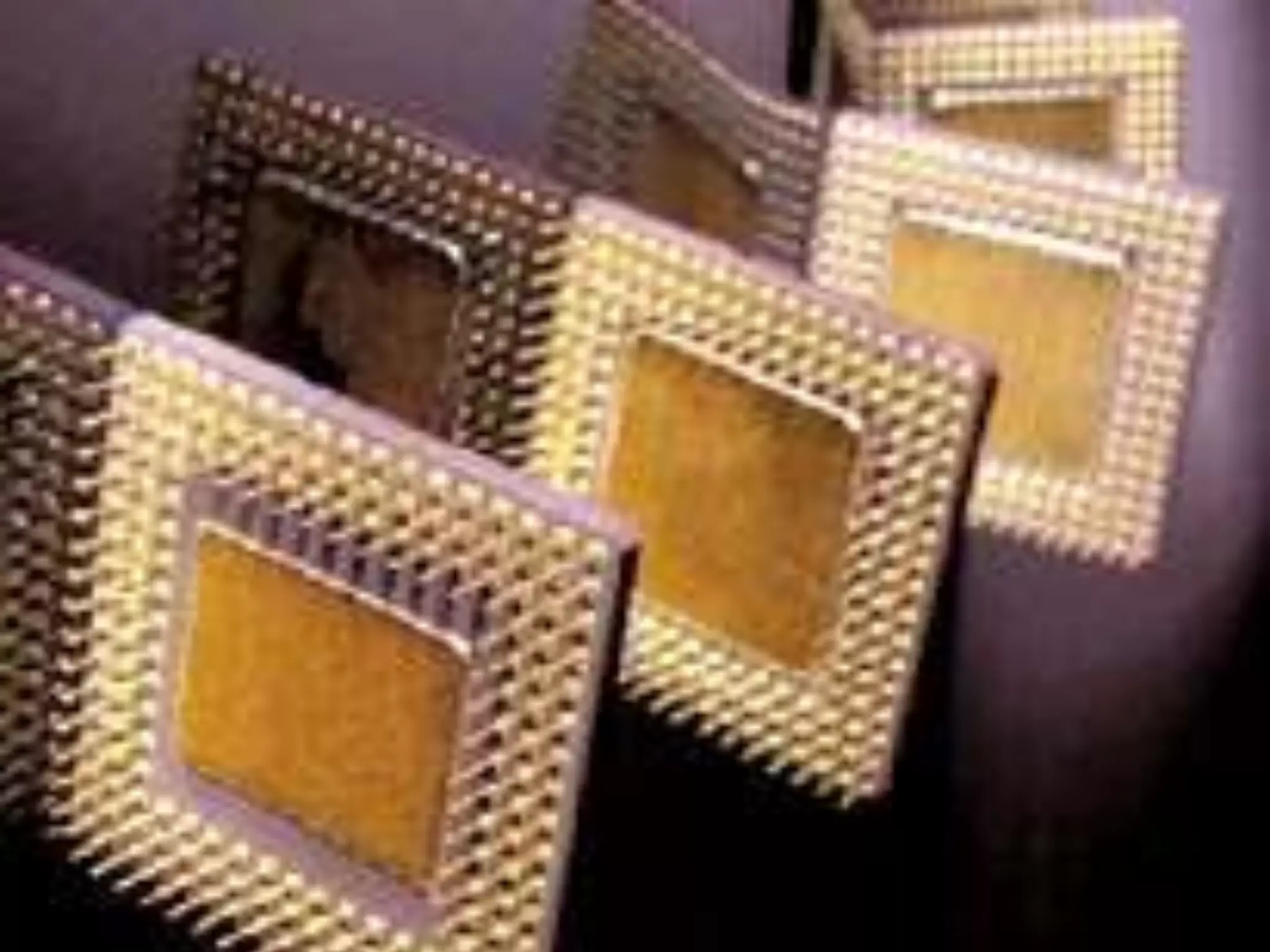
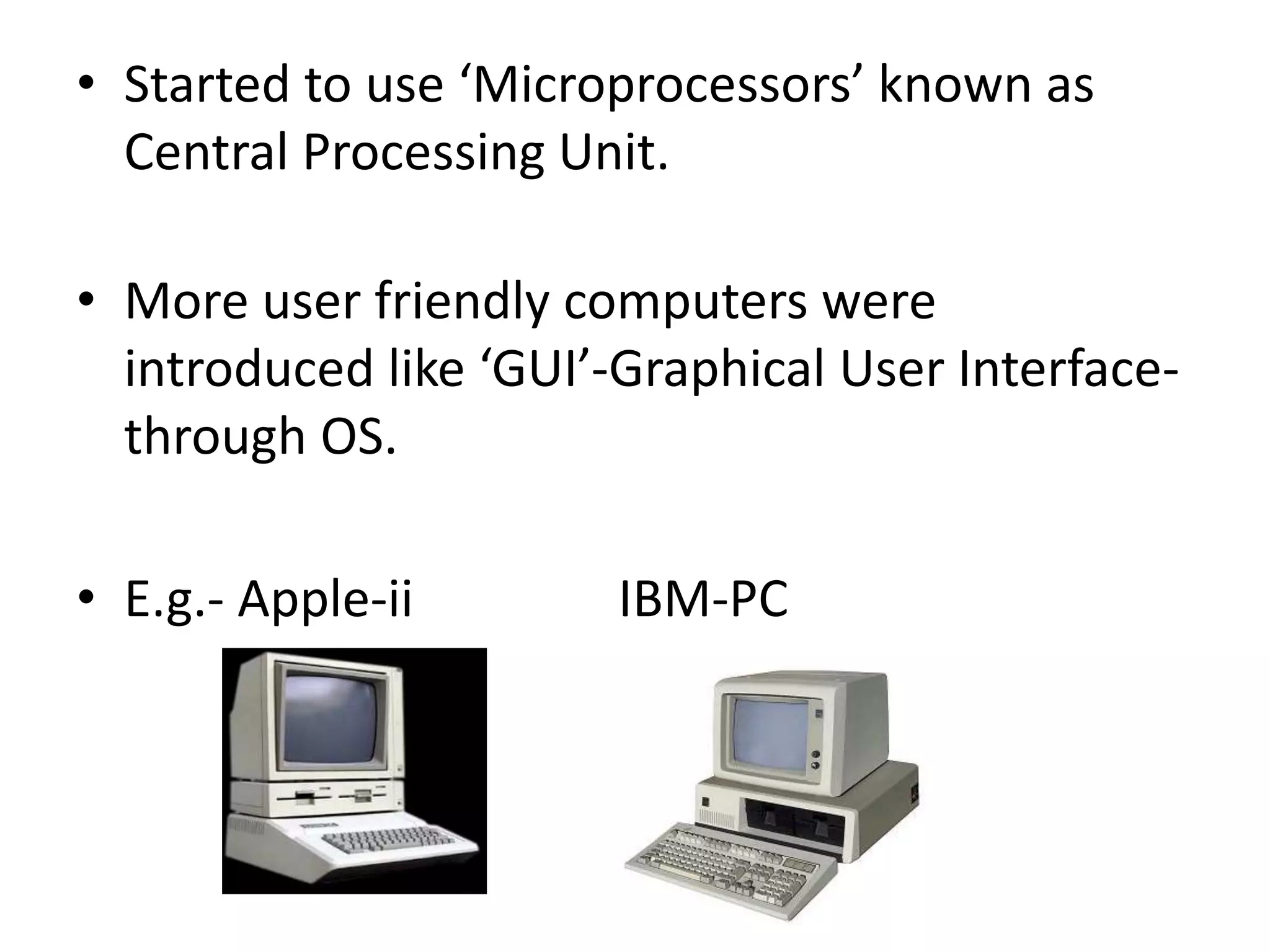
• Started to use ‘Microprocessors’ known as
Central Processing Unit.
• More user friendly computers were
introduced like ‘GUI’-Graphical User Interface-
through OS.
• E.g.- Apple-ii IBM-PC
• Special features are;
– These are more powerful
– Very low price than other generations.
– Smaller
– Large memory space available (Specially for
Storage)
– Speed up to 200 MIPS
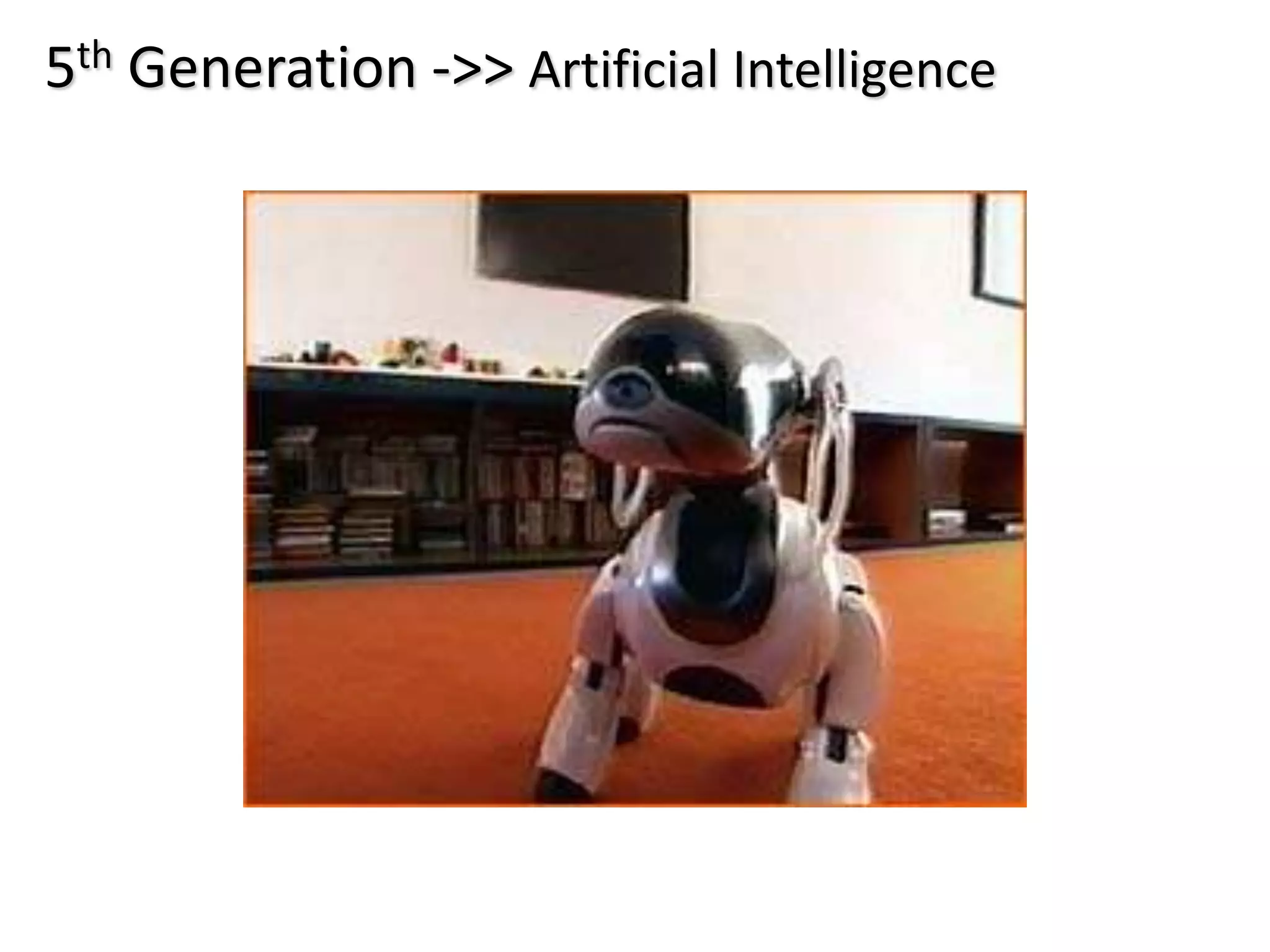
5th Generation ->> Artificial Intelligence
• Computers based on artificial intelligence
which are still on development.
• The goal of these computers is to develop
computers that can respond to natural
languages.
Read & free download more articles on
www.dailyict.com

Computer generations

  • 1.
  • 2.
    1st Generation ->1940 - 1956 VACUUM TUBES
  • 3.
  • 4.
  • 5.
    • Used vacuumtubes • Was large in size • Very expensive to operate • High electricity consumption. • Generated a high volume of heat. • Depended on machine language which is in the binary format.
  • 6.
    • Could onlysolve one problem at a time. – Speed of instructions up to 10,000 Instructions per second (IPS) • Input was based on punched cards and paper tapes • Output was displayed on printouts. • Examples of 1st generation computers – UNIVAC ‘Universal Automatic Calculator’ – ENIAC ‘Electronic Numerical Integrator & Computer’
  • 7.
    2nd Generation ->1956 - 1963
  • 8.
    • Used transistorsinstead of vacuum tubes. • The ‘Transistor’ was invented in 1947. • Transistors helped computers to become – Smaller – More faster (200,000- 300,000 IPS) – Cheaper – More energy efficient – More reliable than 1st generation computers.
  • 9.
    • Still usedpunch cards for inputs & printouts for outputs. • Changed from machine or binary language to symbolic or assembly language. • This helped programmers to give instructions in words. • E.g.- IBM 1620 UNIVAC 1108
  • 10.
    3rd Generation ->1964 - 1971 Integrated Circuit
  • 11.
    • In thisstage used ‘Integrated Circuits’. • Also used ‘semiconductors’ where transistors were placed on silicon chips . • Data input was through keyboards. • Output was taken on to monitors. • E.g.-HONEY WELL-6000 SERIES
  • 12.
    • Started usingan operating systems where we can run many applications. • Computers were accessible for a wide range of people – Because they were ; • Smaller in size • & cheaper in price than 2nd generation computers. • Speed up to 5 Million Instructions per second (MIPS)
  • 13.
  • 17.
    • Started touse ‘Microprocessors’ known as Central Processing Unit. • More user friendly computers were introduced like ‘GUI’-Graphical User Interface- through OS. • E.g.- Apple-ii IBM-PC
  • 18.
    • Special featuresare; – These are more powerful – Very low price than other generations. – Smaller – Large memory space available (Specially for Storage) – Speed up to 200 MIPS
  • 19.
    5th Generation ->>Artificial Intelligence
  • 20.
    • Computers basedon artificial intelligence which are still on development. • The goal of these computers is to develop computers that can respond to natural languages.
  • 21.
    Read & freedownload more articles on www.dailyict.com