Developing a set of shared norms for the new K-12 school.
How can we as a group of new colleagues build a
 professional learning community which enables us to
 work collaboratively and develop shared norms for
 positive teaching strategies within a K-12 setting?

Actions:
 Investigate established schools and models
 Visit each other’s campuses
 Investigate the capability of developing shared norms
  within the Engage domain of E5
 Facilitate substantive conversations.
“For classroom teachers, the open plan classroom was akin to positioning a
   newly designed open cockpit of a 747 jet in the passenger compartment
   surrounded by 250 exuberant, noisy customers and ordering the pilot to fly
   the plane with patience, empathy and skill.

“For many children it was a loud, chaotic, confusing nightmare. Teacher stress
   levels rose dramatically, mainly because of the noise, the interruption, and
   the confusion of housing so many children in one space.

“Diverse teaching styles, effective in self-contained classrooms, often proved
  inappropriate in this throng of lively youngsters....

“It wasn’t long before distraught teachers appeared in droves at principal’s
    doors pleading for walls or partitions...gradually the gurus at head office
    were forced to eat crow”
(Dr David McDonald Former Ontario Principal)
Shared Norms
Cross campus visits and our work on E5 at our PLATO
 days have made it clear that this an area that we need
 to work on. It is one of the basic building blocks that
 we need to establish in order to go forward in a
 positive, productive and supported way for all staff and
 students.
Think, Pair, Share
 Think about what routines you use in your classroom
 and list them.
Think, Pair, Share
 Now pair with a staff member from your own campus
 to discuss your ideas.
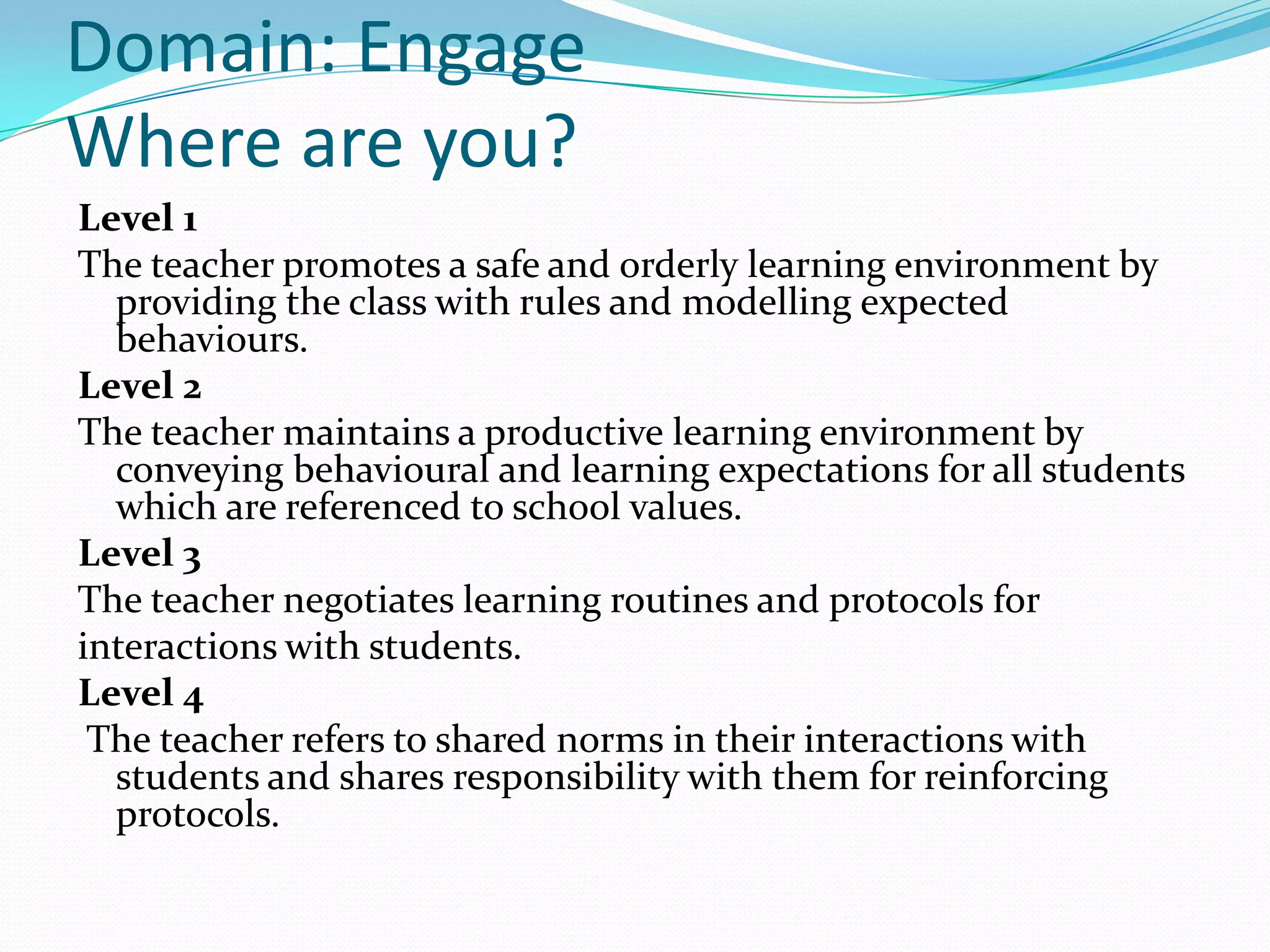
Domain: Engage
Where are you?
Level 1
The teacher promotes a safe and orderly learning environment by
  providing the class with rules and modelling expected
  behaviours.
Level 2
The teacher maintains a productive learning environment by
  conveying behavioural and learning expectations for all students
  which are referenced to school values.
Level 3
The teacher negotiates learning routines and protocols for
interactions with students.
Level 4
 The teacher refers to shared norms in their interactions with
  students and shares responsibility with them for reinforcing
  protocols.
Think, Pair, Share
Now get into groups of five or six with a mix of primary
 and secondary to share your ideas.
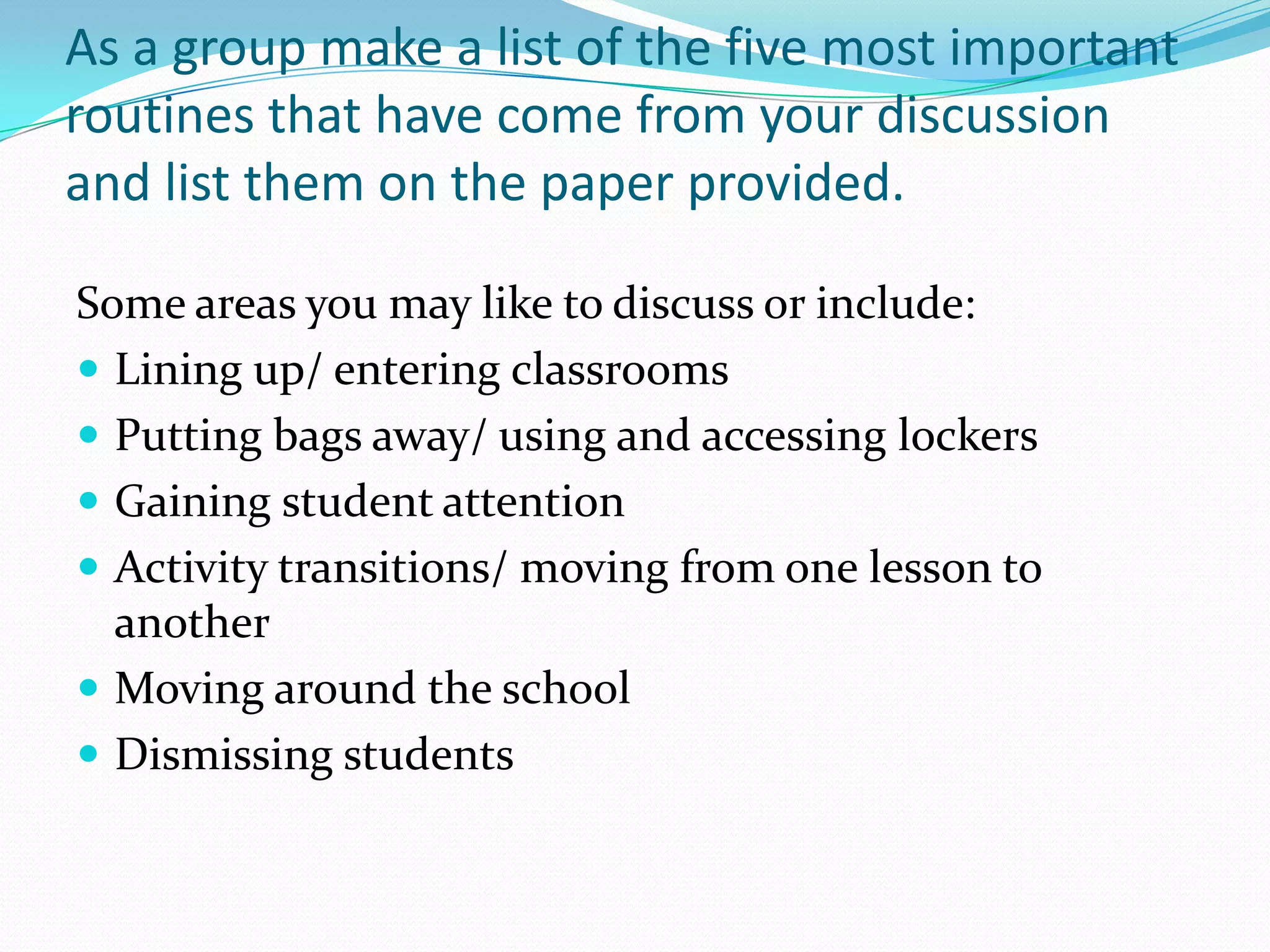
As a group make a list of the five most important
routines that have come from your discussion
and list them on the paper provided.

Some areas you may like to discuss or include:
 Lining up/ entering classrooms
 Putting bags away/ using and accessing lockers
 Gaining student attention
 Activity transitions/ moving from one lesson to
  another
 Moving around the school
 Dismissing students
Where to from here?
Using today's input we will begin to work on a document
   of shared norms for both campuses to use and
   implement next year in preparation for the merger in
   2013.
It is anticipated that you will have the opportunity to be
   part of further discussions before the final draft is
   produced and presented at the beginning of next year.
“It is easier to establish routine
 initially and then relax them
 than it is to re-establish them
 once control is lost” (Arthur,
 Gordon and Butterfield 2003)
Don’t Forget
 Have a look at the BLOG
  www.boroniak-12.blogspot.com


 Please complete the survey; the link is in your email.

Shared norms

  • 1.
    Developing a setof shared norms for the new K-12 school.
  • 2.
    How can weas a group of new colleagues build a professional learning community which enables us to work collaboratively and develop shared norms for positive teaching strategies within a K-12 setting? Actions:  Investigate established schools and models  Visit each other’s campuses  Investigate the capability of developing shared norms within the Engage domain of E5  Facilitate substantive conversations.
  • 3.
    “For classroom teachers,the open plan classroom was akin to positioning a newly designed open cockpit of a 747 jet in the passenger compartment surrounded by 250 exuberant, noisy customers and ordering the pilot to fly the plane with patience, empathy and skill. “For many children it was a loud, chaotic, confusing nightmare. Teacher stress levels rose dramatically, mainly because of the noise, the interruption, and the confusion of housing so many children in one space. “Diverse teaching styles, effective in self-contained classrooms, often proved inappropriate in this throng of lively youngsters.... “It wasn’t long before distraught teachers appeared in droves at principal’s doors pleading for walls or partitions...gradually the gurus at head office were forced to eat crow” (Dr David McDonald Former Ontario Principal)
  • 4.
    Shared Norms Cross campusvisits and our work on E5 at our PLATO days have made it clear that this an area that we need to work on. It is one of the basic building blocks that we need to establish in order to go forward in a positive, productive and supported way for all staff and students.
  • 5.
    Think, Pair, Share Think about what routines you use in your classroom and list them.
  • 6.
    Think, Pair, Share Now pair with a staff member from your own campus to discuss your ideas.
  • 7.
    Domain: Engage Where areyou? Level 1 The teacher promotes a safe and orderly learning environment by providing the class with rules and modelling expected behaviours. Level 2 The teacher maintains a productive learning environment by conveying behavioural and learning expectations for all students which are referenced to school values. Level 3 The teacher negotiates learning routines and protocols for interactions with students. Level 4 The teacher refers to shared norms in their interactions with students and shares responsibility with them for reinforcing protocols.
  • 8.
    Think, Pair, Share Nowget into groups of five or six with a mix of primary and secondary to share your ideas.
  • 9.
    As a groupmake a list of the five most important routines that have come from your discussion and list them on the paper provided. Some areas you may like to discuss or include:  Lining up/ entering classrooms  Putting bags away/ using and accessing lockers  Gaining student attention  Activity transitions/ moving from one lesson to another  Moving around the school  Dismissing students
  • 10.
    Where to fromhere? Using today's input we will begin to work on a document of shared norms for both campuses to use and implement next year in preparation for the merger in 2013. It is anticipated that you will have the opportunity to be part of further discussions before the final draft is produced and presented at the beginning of next year.
  • 11.
    “It is easierto establish routine initially and then relax them than it is to re-establish them once control is lost” (Arthur, Gordon and Butterfield 2003)
  • 12.
    Don’t Forget  Havea look at the BLOG www.boroniak-12.blogspot.com  Please complete the survey; the link is in your email.