TUBERCULOSIS
Dr.Riyaz Sheriff
PULMONARY TUBERCULOSIS
 Bacillary shedding  Sputum
 Caseation : Abundant
 Organized lesions: Scanty
 Sample best collected early morning ..
 Best to collect 2 samples
 Spot sample
 Early morning sample
 Laryngeal swab
 Bronchial washings
 Gastric lavage (in children )
Microscopy
 Direct or concentrated smears of sputum
 Reliable method for diagnosis
 Do not reuse the slides
 Smears prepared from thick and purulent part
of sputum
 Smears dried, Heat fixed and stained by Ziehl-
Neelsen technique
Diagnosis by microscopy
 Minimum 10,000 AFB/ ml of sputum should be present
 300 fields to be examined before giving a report
 Positive report can be given if 2 or more bacilli are seen
 Grading
 Microscopy : Presumptive evidence
 Saprophytic Mycobacteria can be misleading
 Saprophytic species  Stain uniformly (No beading/ No Barred
appearance), only acid fast. Not alcohol fast
Saprophytic mycobacteria
 Seen in
 Tap water
 Rubber tubes
 Cork
 Barks
 Not seen in respiratory secretions
 Seen in gastric aspirates
 Feces
 Urogenital specimens
Grading of ziehl –neelsen smears
NUMBER OF AFB NO.OF FIELDS REPORT
0 1000 Negative
1-9 100 SCANTY
10-99/ 100 FIELDS 100 1+
1-10/ FIELD 50 2+
10 or more/ FIELD 20 3+
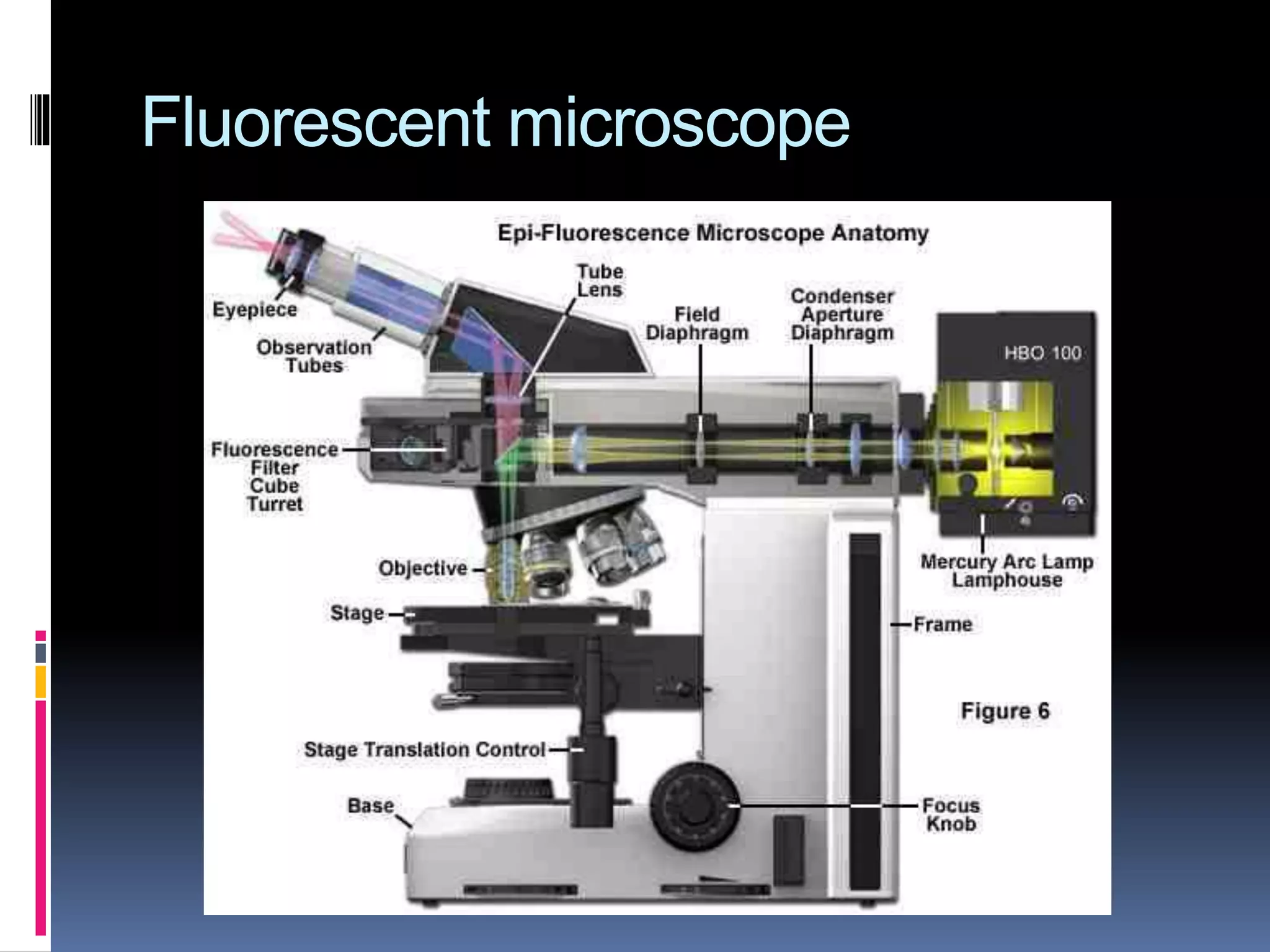
Fluorescent microscopy
 Useful in screening larger number of smears
 Smears stained with Auramine Phenol or
Auramine rhodamine fluorescent dyes
 Examined under ultraviolet illumination
 Seen using 40X objective
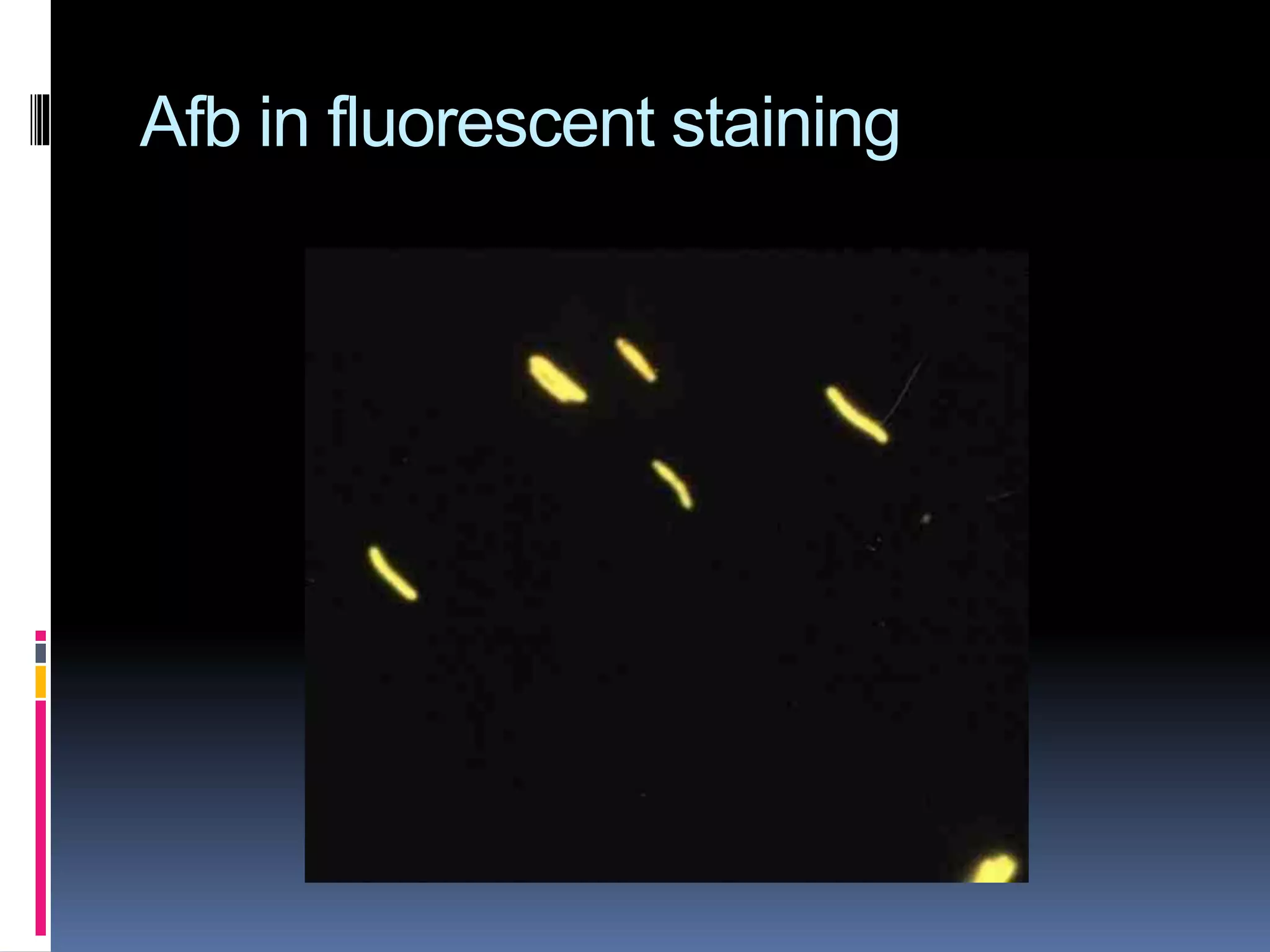
 Bacilli appear as bright rods in a dark
background
Fluorescent microscope
Afb in fluorescent staining
Concentration methods
 For microscopy
 For culture
 For animal inoculation
For microscopy only
 Procedure kills the bacilli without altering the
shape or staining reaction
 Methods
 Antiformin
 Sodium carbonate
 Hypochlorite
 Detergents
 Tergitol
 Flotation
 Hydrocarbons
 Autoclaving
Homogenisation & Concentration
 Petroff’s method
 Simple
 Sputum incubated with equal volume of 4%NaOH @ 37°C with frequent
shaking
 Wait for 20minutes or till the mixture becomes clear
 Centrifuge at 3000rpm for 20mins
 Discard the supernatent
 Neutralize the sediment with N/10Hcl
 This sediment is used for smear, culture and animal inoculation
Method 2
 Sterile solution - 20gms cetrimonium bromide and 40 g of
NaOH added to litre of distilled water
 Sputum treated with equal amounts of sterile solution
prepared
 Contents mixed with cotton swab and allowed to stand for
5mins
 0.2ml of inoculum smeared firmly on IUAT-LJ medium with
KH2PO4 per litre
 Same swab use for inoculating another medium
Homogenization
 NaOH
 Dilute acids
 6%Sulphuric acid
 3%Hcl
 5%Oxalic acid
 N- acetyl cysteine with NaOH
 Pancreatin
 Desogen
 Zephiran
 Cetrimide
Culture
 Sensitive
 Needs only 10-100bacilli / ml of sputum
 2 bottles of LJ medium are inoculated for every sample`
 Drug sensitivity can also be done if needed
 First examination after 4 days  Rapid growers, Contamination &
Fungus
 Any slow growing, Non pigmented , Niacin positive, Acid Fast Bacilli :
M.tuberculosis
 Recent trends : automated cultures (BACTEC 460), Identification using
nucleic acid probes  report can be issued in 2-3 weeks
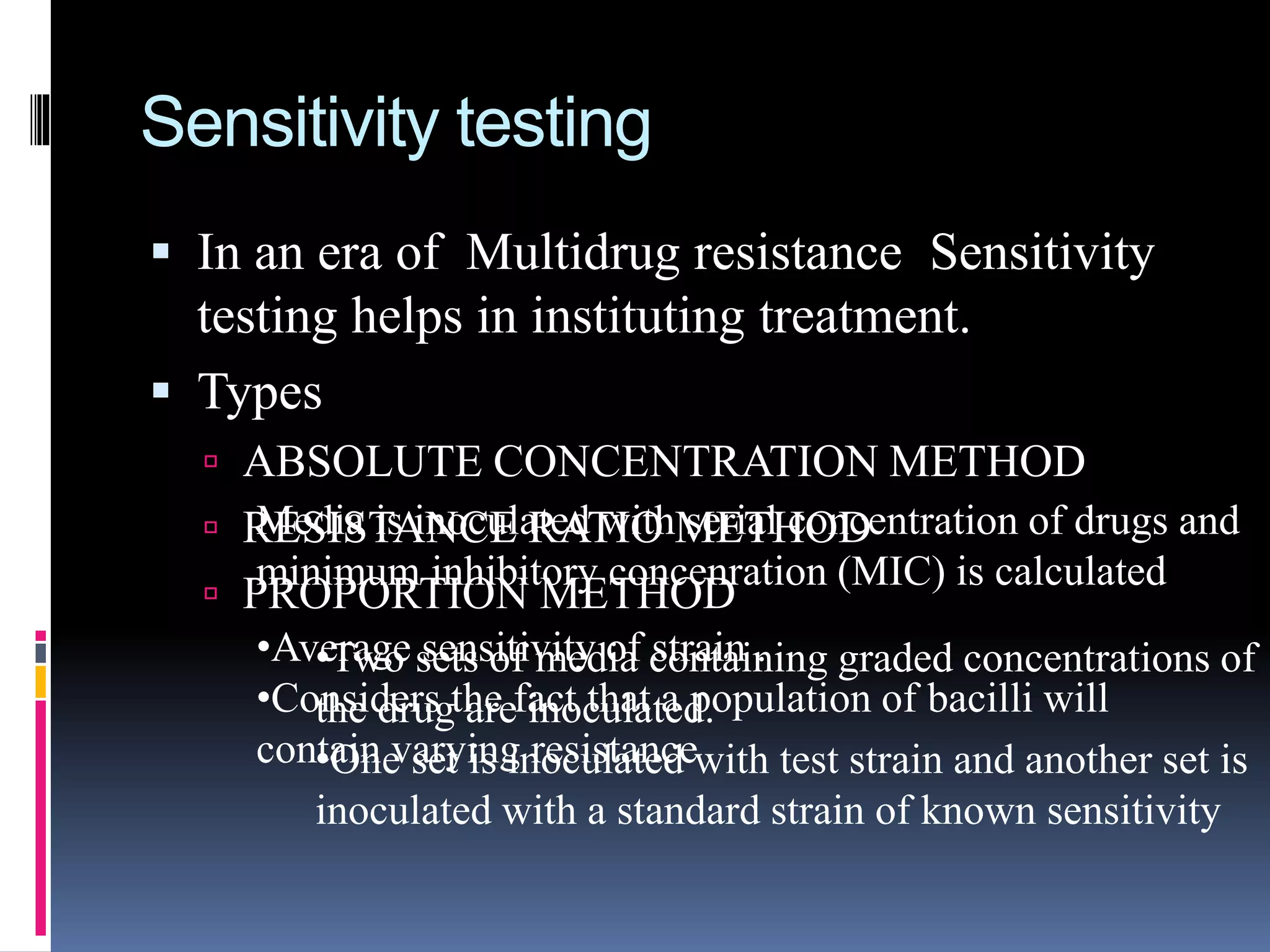
Sensitivity testing
 In an era of Multidrug resistance Sensitivity
testing helps in instituting treatment.
 Types
 ABSOLUTE CONCENTRATION METHOD
 RESISTANCE RATIO METHOD
 PROPORTION METHOD
Media is inoculated with serial concentration of drugs and
minimum inhibitory concenration (MIC) is calculated
•Two sets of media containing graded concentrations of
the drug are inoculated.
•One set is inoculated with test strain and another set is
inoculated with a standard strain of known sensitivity
•Average sensitivity of strain .
•Considers the fact that a population of bacilli will
contain varying resistance
Animal inoculation
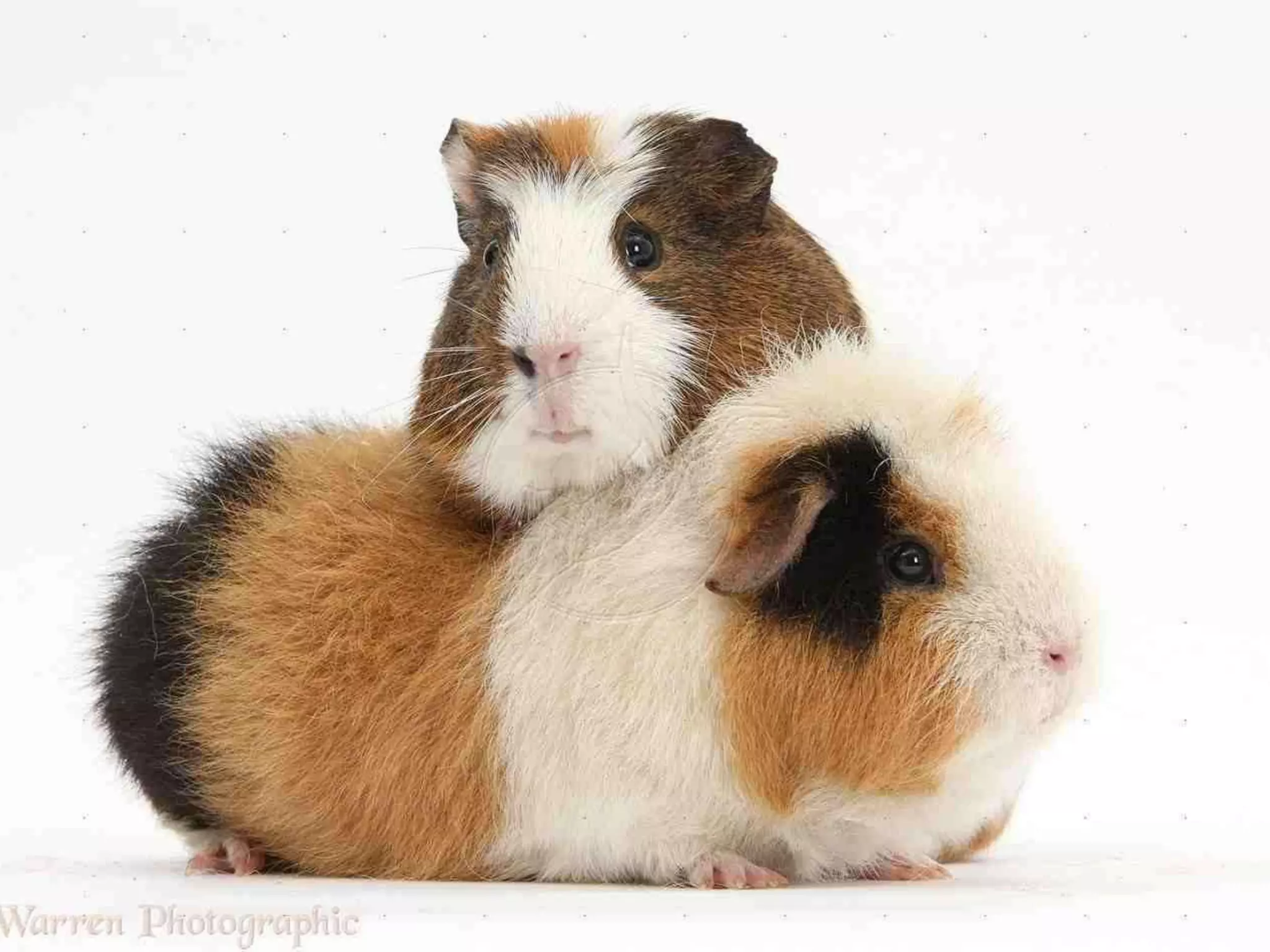
 Guinea pigs : 2
 12 weeks old
 Weighed before inoculation
 Intramuscular inoculation
 Animal weighed at regular intervals
 Progressive loss of weight  INFECTION
 Tuberculin : POSITIVE
 One animal killed at 4 weeks.
 Caseous lesion at the site of inoculation
 Pus filled localized lesions
 Draining lymph node enlargement
 Spleenomegaly with necrotic areas
 Tubercles in peritoneum, lung
 No lesions in the kidney
 Autopsied lesions stained using Ziehl Neelsen
staining : to R/O Y.pseudotuberculosis
 If no positive findings the second animal is
killed at 8 weeks
Animal inoculation
Genes to our rescue!
 Polymerase chain reaction
 Ribosomal RNA amplification
 Ligase chain reaction
 RFLP
Immunodiagnosis
 Serology : NOT USEFUL in tuberculosis
 Tuberculin testing : age old method: Does not
diagnose infection
 Detection of antibody to Mycobacterial lipo-
arabinoannan may be useful
Tuberculin testing : Mantoux test
 0.1ml of Purified Protein Derivative (PPD) containing 5 Tuberculin
Units (TU)
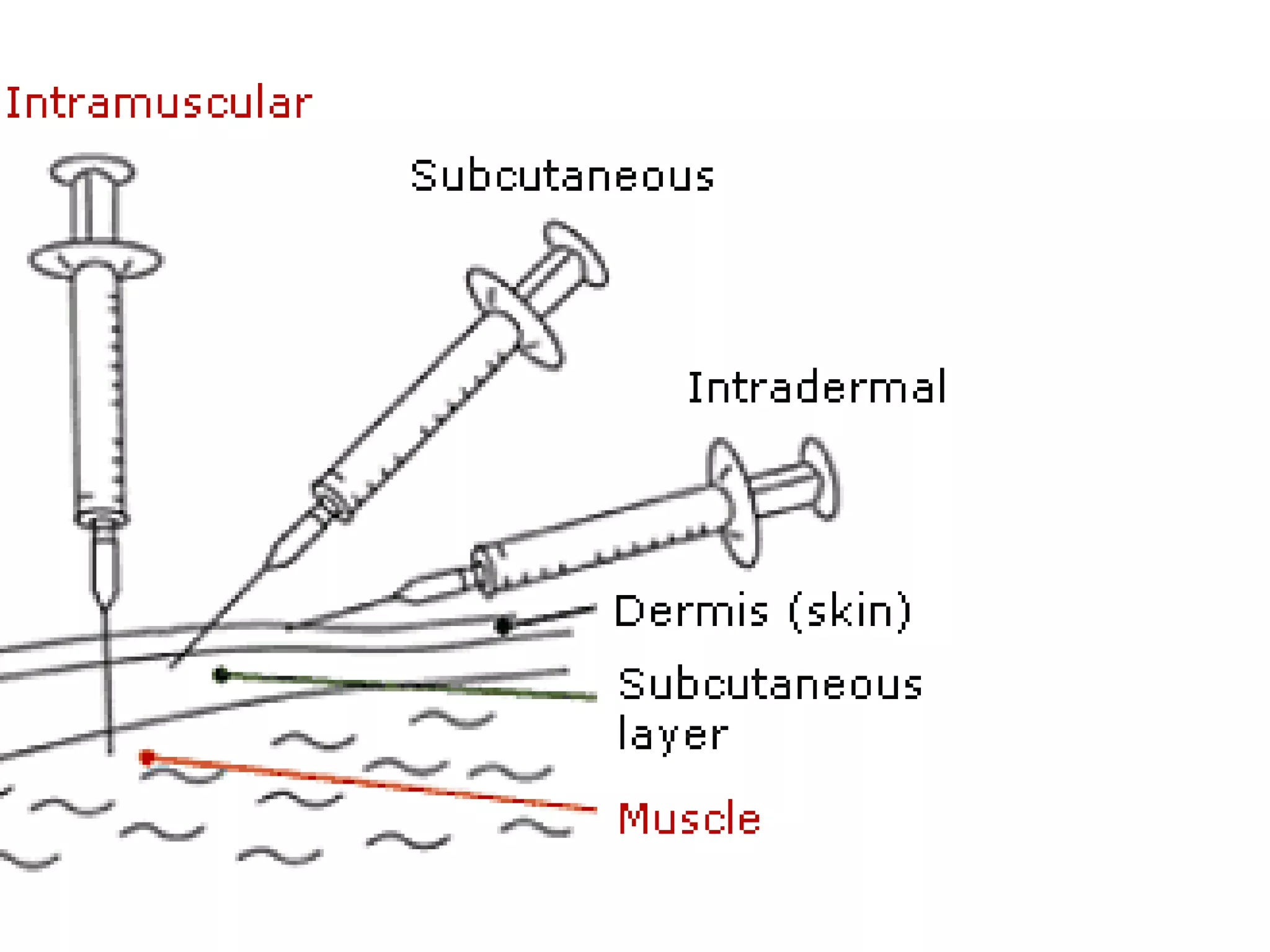
 Injected INTRADERMALLY in flexor aspect of forearm using a tuberculin
syringe
 Injection site examined after 48-72hours
 Induration measured transversely to long axis of forearm.
 >10MM  POSITIVE
 <5MM  NEGATIVE
 6-9MM  EQUIVOCAL
 PPD dose of 1TU is used when extreme hypersensitivity is suspected
 PPD dose of 10 or 100 TU is used when test with 5TU is negative
Other tests
 Heaf Test:
 Useful in screening and surveys
 Multiple puncture technique
 Not diagnostic
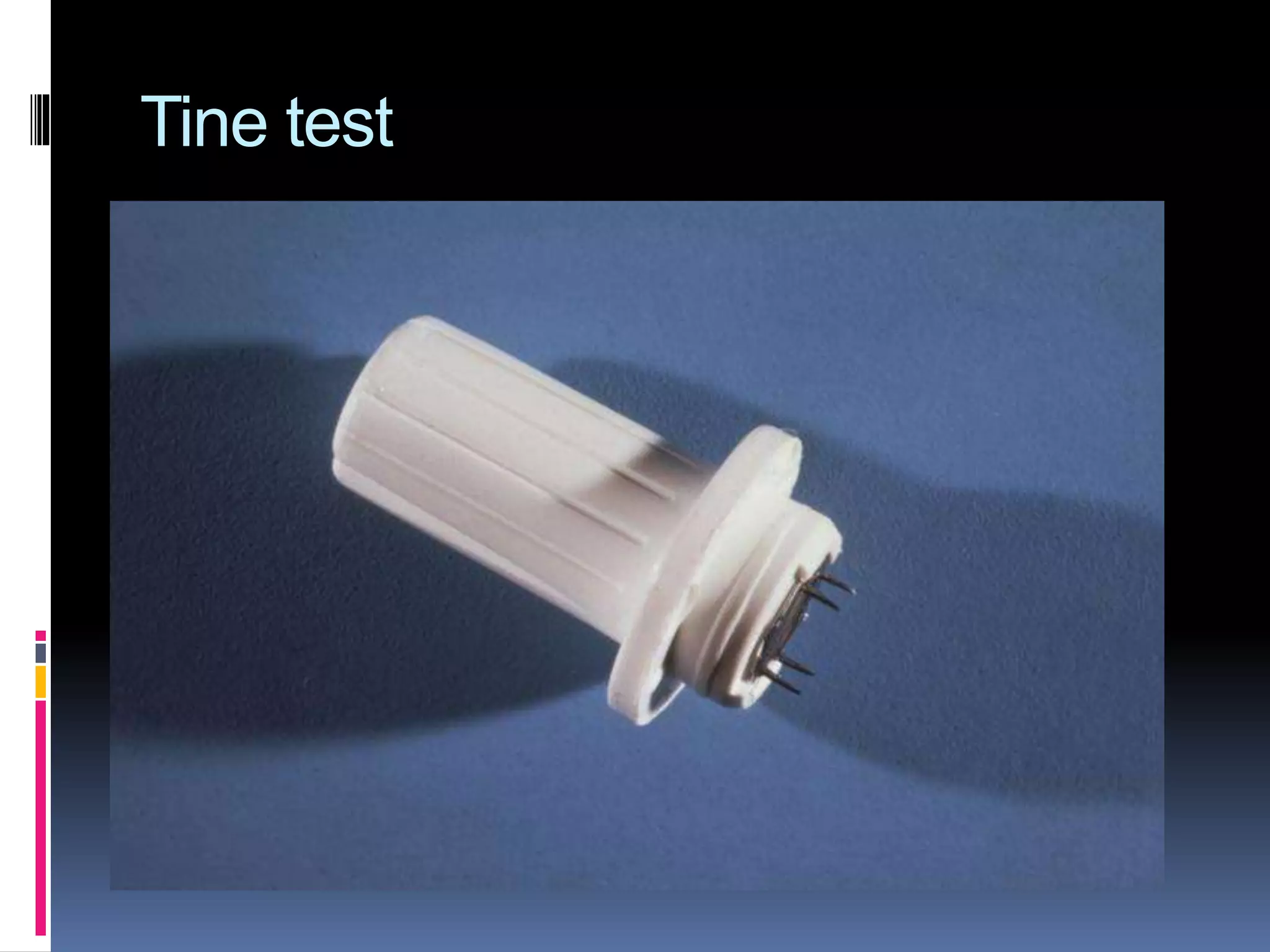
 Tine test :
 Disposable prongs containing dried PPD for
individual testing
Heaf test
Tine test
Interpretation of tuberculin tests
 POSITIVE
 Infection with tubercle bacillus / BCG vaccination
 May or may not have clinical disease
 4-6 weeks post exposure
 If no further exposure tuberculin allergy wanes by 4-5 years
 FALSE POSITIVE
 Infection with atypical mycobacteria
 TWO STEP TESTING
 Repeated tuberculin testing  enhances intensity of response in a reactive
individual
 Useful in patients with equivocal results
 Second testing should be done on a different site
Interpretation of tuberculin tests
 NEGATIVE
 No contact with tubercle bacilli
 FALSE NEGATIVE
 ANERGY
 Inactive PPD
 Faulty injection Technique
 Miliary tuberculosis
 Post viral infections : Measles
 Lymphoreticular malignancies
 Sarcoidosis
 Severe malnutrition
 Immunosuppressive therapy
 Impaired CMI
EXTRAPULMONARY TUBERCULOSIS
Bacilli are fewer compared to pulmonary disease
Tip: CSF from tuberculous meningitis forms
spider web clot on standing
Bone marrow , Liver biopsy From miliary TB :
Culture
Blood from HIV coinfection :Culture
Pus from tuberculous abscess : Positive on smear
and culture
Pleural effusion and other exudates collected in
citrated tubes to prevent coagulation
EXTRAPULMONARY
TUBERCULOSISIn the absence of bacterial contamination
exudates can be used for culture directly
If bacterial contamination is present
concentration techniques are employed before
inoculating in culture medium .
In renal Tuberculosis the excretion of bacilli is
intermittent , Hence 3-6 morning samples of
urine are collected
Centrifuged at 3000rpm for 30mins
Sediment use for culture
PROPHYLAXIS : BCG
 BCG = Bacille Calmette Guerin
 Attenued strain of M.bovis by 239 serial subcultures in
glycerine – bile –potato medium over a period of 13 years!!
 Immunity lasts for 10-15 years
 Given immediately after birth
 Efficacy varies
 Protection against meningitis , disseminated tuberculosis
PROPHYLAXIS : BCG
 Should not be given to babies with active HIV
 Should not be given to babies born to AFB positive
mothers, Given after a course of preventive chemotherapy
 Stimulates immune system
 Some protection against leprosy and leukemia
 Adjuvant in therapy of some malignancies
Chemotherapy: anti-tubercular drugs
 Preventive chemotherapy
 Isoniazid :
 Latent TB
 High risk population
 Infants of mothers with active infection
 Children living in active TB house hold
5mg/kg body weight daily for 6-12 months
Chemotherapy: anti-tubercular drugs
 Bacteriocidal
 Rifampicin (R)
 Pyrazinamide (Z)
 Isoniazid (H) : Effective against replicating bacilli
 Streptomycin (S) : effective against extracellular
bacilli
 Bacteriostatic
 Ethambutol (E)
 Short course regimens (HRZE) : 6-7 months
 Intensive phase : 2months
 Continuation phase (HR) : 4 months
Drug resistance
 Mutations
 Multidrug therapy
 Not followed properly  Bacteria has become resistant
 Primary resistance : infected with resistant bacilli
 Secondary resistance : Initially sensitive but becomes resistant during course
of treatment
 Secondary resistance more common
 MDR-TB : resistance to Rifampicin & Isoniazid
 Second line drugs : Quinolones , Aminoglycosides , Macrolides, PAS,
Cycloserine etc
 XDR – TB : MDR + resistance to fluroquinolones and injectables
Rntcp & dots
 Revised National Tuberculosis Control
Program – 1933
 Directly Observed Treatment, Short course
Chemotherapy
 DOTS plus in XDR cases
Tuberculosis 2

Tuberculosis 2

  • 1.
  • 2.
    PULMONARY TUBERCULOSIS  Bacillaryshedding  Sputum  Caseation : Abundant  Organized lesions: Scanty  Sample best collected early morning ..  Best to collect 2 samples  Spot sample  Early morning sample  Laryngeal swab  Bronchial washings  Gastric lavage (in children )
  • 3.
    Microscopy  Direct orconcentrated smears of sputum  Reliable method for diagnosis  Do not reuse the slides  Smears prepared from thick and purulent part of sputum  Smears dried, Heat fixed and stained by Ziehl- Neelsen technique
  • 4.
    Diagnosis by microscopy Minimum 10,000 AFB/ ml of sputum should be present  300 fields to be examined before giving a report  Positive report can be given if 2 or more bacilli are seen  Grading  Microscopy : Presumptive evidence  Saprophytic Mycobacteria can be misleading  Saprophytic species  Stain uniformly (No beading/ No Barred appearance), only acid fast. Not alcohol fast
  • 5.
    Saprophytic mycobacteria  Seenin  Tap water  Rubber tubes  Cork  Barks  Not seen in respiratory secretions  Seen in gastric aspirates  Feces  Urogenital specimens
  • 6.
    Grading of ziehl–neelsen smears NUMBER OF AFB NO.OF FIELDS REPORT 0 1000 Negative 1-9 100 SCANTY 10-99/ 100 FIELDS 100 1+ 1-10/ FIELD 50 2+ 10 or more/ FIELD 20 3+
  • 7.
    Fluorescent microscopy  Usefulin screening larger number of smears  Smears stained with Auramine Phenol or Auramine rhodamine fluorescent dyes  Examined under ultraviolet illumination  Seen using 40X objective  Bacilli appear as bright rods in a dark background
  • 8.
  • 9.
  • 10.
  • 11.
    Concentration methods  Formicroscopy  For culture  For animal inoculation
  • 12.
    For microscopy only Procedure kills the bacilli without altering the shape or staining reaction  Methods  Antiformin  Sodium carbonate  Hypochlorite  Detergents  Tergitol  Flotation  Hydrocarbons  Autoclaving
  • 13.
    Homogenisation & Concentration Petroff’s method  Simple  Sputum incubated with equal volume of 4%NaOH @ 37°C with frequent shaking  Wait for 20minutes or till the mixture becomes clear  Centrifuge at 3000rpm for 20mins  Discard the supernatent  Neutralize the sediment with N/10Hcl  This sediment is used for smear, culture and animal inoculation
  • 14.
    Method 2  Sterilesolution - 20gms cetrimonium bromide and 40 g of NaOH added to litre of distilled water  Sputum treated with equal amounts of sterile solution prepared  Contents mixed with cotton swab and allowed to stand for 5mins  0.2ml of inoculum smeared firmly on IUAT-LJ medium with KH2PO4 per litre  Same swab use for inoculating another medium
  • 15.
    Homogenization  NaOH  Diluteacids  6%Sulphuric acid  3%Hcl  5%Oxalic acid  N- acetyl cysteine with NaOH  Pancreatin  Desogen  Zephiran  Cetrimide
  • 16.
    Culture  Sensitive  Needsonly 10-100bacilli / ml of sputum  2 bottles of LJ medium are inoculated for every sample`  Drug sensitivity can also be done if needed  First examination after 4 days  Rapid growers, Contamination & Fungus  Any slow growing, Non pigmented , Niacin positive, Acid Fast Bacilli : M.tuberculosis  Recent trends : automated cultures (BACTEC 460), Identification using nucleic acid probes  report can be issued in 2-3 weeks
  • 17.
    Sensitivity testing  Inan era of Multidrug resistance Sensitivity testing helps in instituting treatment.  Types  ABSOLUTE CONCENTRATION METHOD  RESISTANCE RATIO METHOD  PROPORTION METHOD Media is inoculated with serial concentration of drugs and minimum inhibitory concenration (MIC) is calculated •Two sets of media containing graded concentrations of the drug are inoculated. •One set is inoculated with test strain and another set is inoculated with a standard strain of known sensitivity •Average sensitivity of strain . •Considers the fact that a population of bacilli will contain varying resistance
  • 18.
    Animal inoculation  Guineapigs : 2  12 weeks old  Weighed before inoculation  Intramuscular inoculation  Animal weighed at regular intervals  Progressive loss of weight  INFECTION  Tuberculin : POSITIVE  One animal killed at 4 weeks.  Caseous lesion at the site of inoculation  Pus filled localized lesions  Draining lymph node enlargement
  • 20.
     Spleenomegaly withnecrotic areas  Tubercles in peritoneum, lung  No lesions in the kidney  Autopsied lesions stained using Ziehl Neelsen staining : to R/O Y.pseudotuberculosis  If no positive findings the second animal is killed at 8 weeks Animal inoculation
  • 21.
    Genes to ourrescue!  Polymerase chain reaction  Ribosomal RNA amplification  Ligase chain reaction  RFLP
  • 22.
    Immunodiagnosis  Serology :NOT USEFUL in tuberculosis  Tuberculin testing : age old method: Does not diagnose infection  Detection of antibody to Mycobacterial lipo- arabinoannan may be useful
  • 23.
    Tuberculin testing :Mantoux test  0.1ml of Purified Protein Derivative (PPD) containing 5 Tuberculin Units (TU)  Injected INTRADERMALLY in flexor aspect of forearm using a tuberculin syringe  Injection site examined after 48-72hours  Induration measured transversely to long axis of forearm.  >10MM  POSITIVE  <5MM  NEGATIVE  6-9MM  EQUIVOCAL  PPD dose of 1TU is used when extreme hypersensitivity is suspected  PPD dose of 10 or 100 TU is used when test with 5TU is negative
  • 25.
    Other tests  HeafTest:  Useful in screening and surveys  Multiple puncture technique  Not diagnostic  Tine test :  Disposable prongs containing dried PPD for individual testing
  • 26.
  • 27.
  • 28.
    Interpretation of tuberculintests  POSITIVE  Infection with tubercle bacillus / BCG vaccination  May or may not have clinical disease  4-6 weeks post exposure  If no further exposure tuberculin allergy wanes by 4-5 years  FALSE POSITIVE  Infection with atypical mycobacteria  TWO STEP TESTING  Repeated tuberculin testing  enhances intensity of response in a reactive individual  Useful in patients with equivocal results  Second testing should be done on a different site
  • 29.
    Interpretation of tuberculintests  NEGATIVE  No contact with tubercle bacilli  FALSE NEGATIVE  ANERGY  Inactive PPD  Faulty injection Technique  Miliary tuberculosis  Post viral infections : Measles  Lymphoreticular malignancies  Sarcoidosis  Severe malnutrition  Immunosuppressive therapy  Impaired CMI
  • 31.
    EXTRAPULMONARY TUBERCULOSIS Bacilli arefewer compared to pulmonary disease Tip: CSF from tuberculous meningitis forms spider web clot on standing Bone marrow , Liver biopsy From miliary TB : Culture Blood from HIV coinfection :Culture Pus from tuberculous abscess : Positive on smear and culture Pleural effusion and other exudates collected in citrated tubes to prevent coagulation
  • 32.
    EXTRAPULMONARY TUBERCULOSISIn the absenceof bacterial contamination exudates can be used for culture directly If bacterial contamination is present concentration techniques are employed before inoculating in culture medium . In renal Tuberculosis the excretion of bacilli is intermittent , Hence 3-6 morning samples of urine are collected Centrifuged at 3000rpm for 30mins Sediment use for culture
  • 33.
    PROPHYLAXIS : BCG BCG = Bacille Calmette Guerin  Attenued strain of M.bovis by 239 serial subcultures in glycerine – bile –potato medium over a period of 13 years!!  Immunity lasts for 10-15 years  Given immediately after birth  Efficacy varies  Protection against meningitis , disseminated tuberculosis
  • 34.
    PROPHYLAXIS : BCG Should not be given to babies with active HIV  Should not be given to babies born to AFB positive mothers, Given after a course of preventive chemotherapy  Stimulates immune system  Some protection against leprosy and leukemia  Adjuvant in therapy of some malignancies
  • 35.
    Chemotherapy: anti-tubercular drugs Preventive chemotherapy  Isoniazid :  Latent TB  High risk population  Infants of mothers with active infection  Children living in active TB house hold 5mg/kg body weight daily for 6-12 months
  • 36.
    Chemotherapy: anti-tubercular drugs Bacteriocidal  Rifampicin (R)  Pyrazinamide (Z)  Isoniazid (H) : Effective against replicating bacilli  Streptomycin (S) : effective against extracellular bacilli  Bacteriostatic  Ethambutol (E)  Short course regimens (HRZE) : 6-7 months  Intensive phase : 2months  Continuation phase (HR) : 4 months
  • 37.
    Drug resistance  Mutations Multidrug therapy  Not followed properly  Bacteria has become resistant  Primary resistance : infected with resistant bacilli  Secondary resistance : Initially sensitive but becomes resistant during course of treatment  Secondary resistance more common  MDR-TB : resistance to Rifampicin & Isoniazid  Second line drugs : Quinolones , Aminoglycosides , Macrolides, PAS, Cycloserine etc  XDR – TB : MDR + resistance to fluroquinolones and injectables
  • 38.
    Rntcp & dots Revised National Tuberculosis Control Program – 1933  Directly Observed Treatment, Short course Chemotherapy  DOTS plus in XDR cases