
ICT in Classroom
Teaching
By- Rati Soni
Welcome to the 21st Century
EDUCATION
where Learning process is
redefined
The Reality
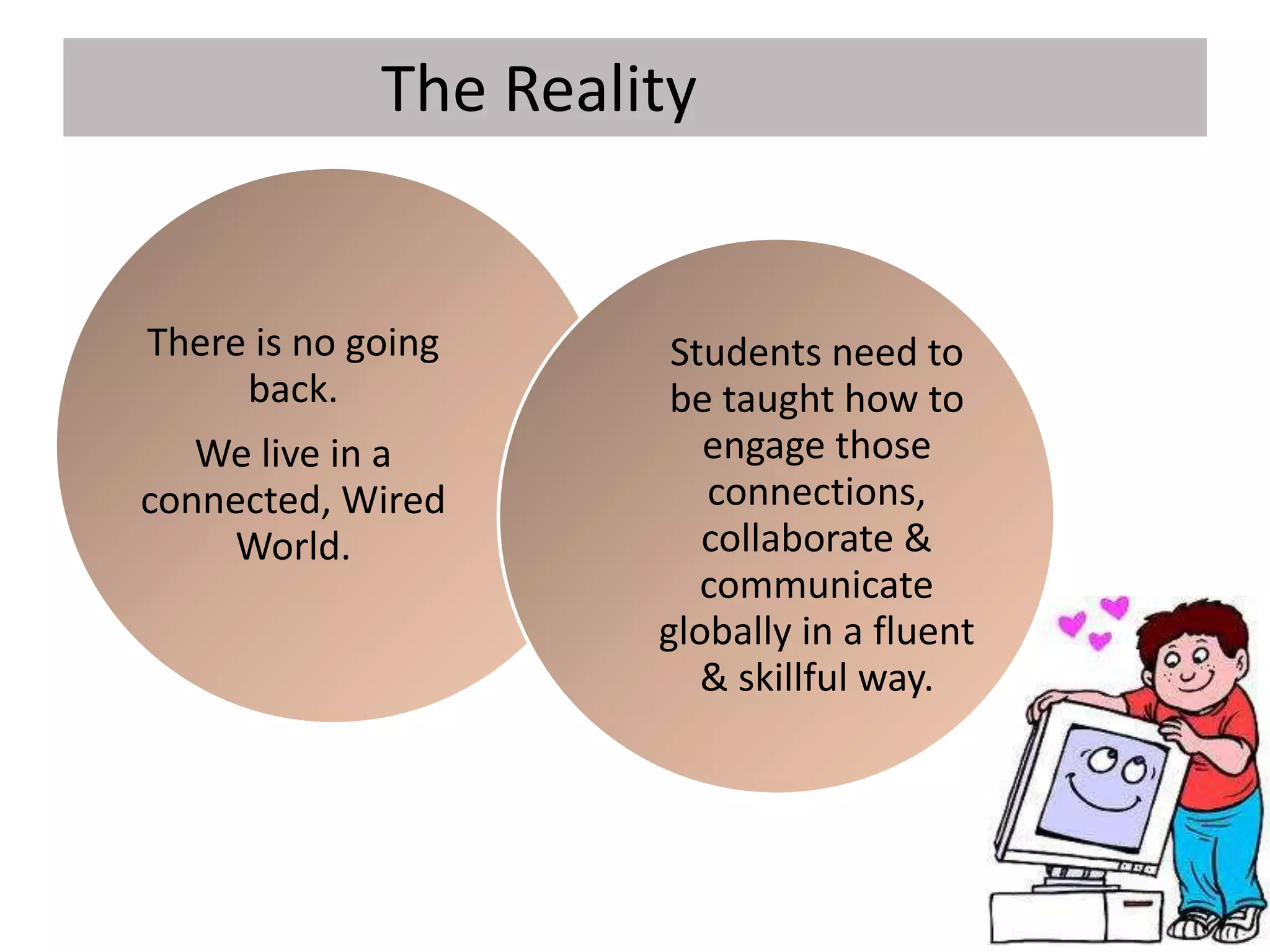
There is no going
back.
We live in a
connected, Wired
World.
Students need to
be taught how to
engage those
connections,
collaborate &
communicate
globally in a fluent
& skillful way.
ICT- Information & Communication Technology
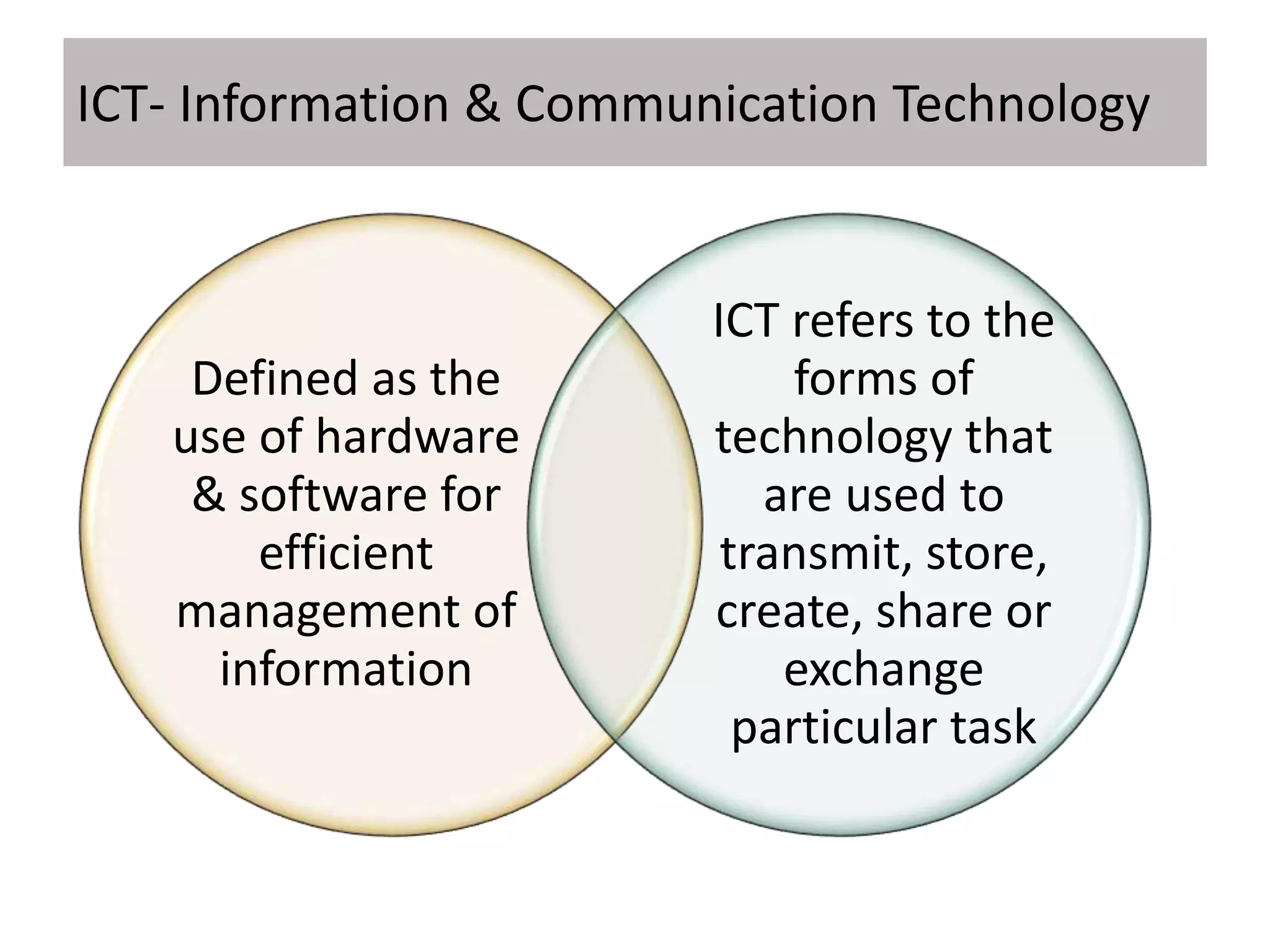
Defined as the
use of hardware
& software for
efficient
management of
information
ICT refers to the
forms of
technology that
are used to
transmit, store,
create, share or
exchange
particular task
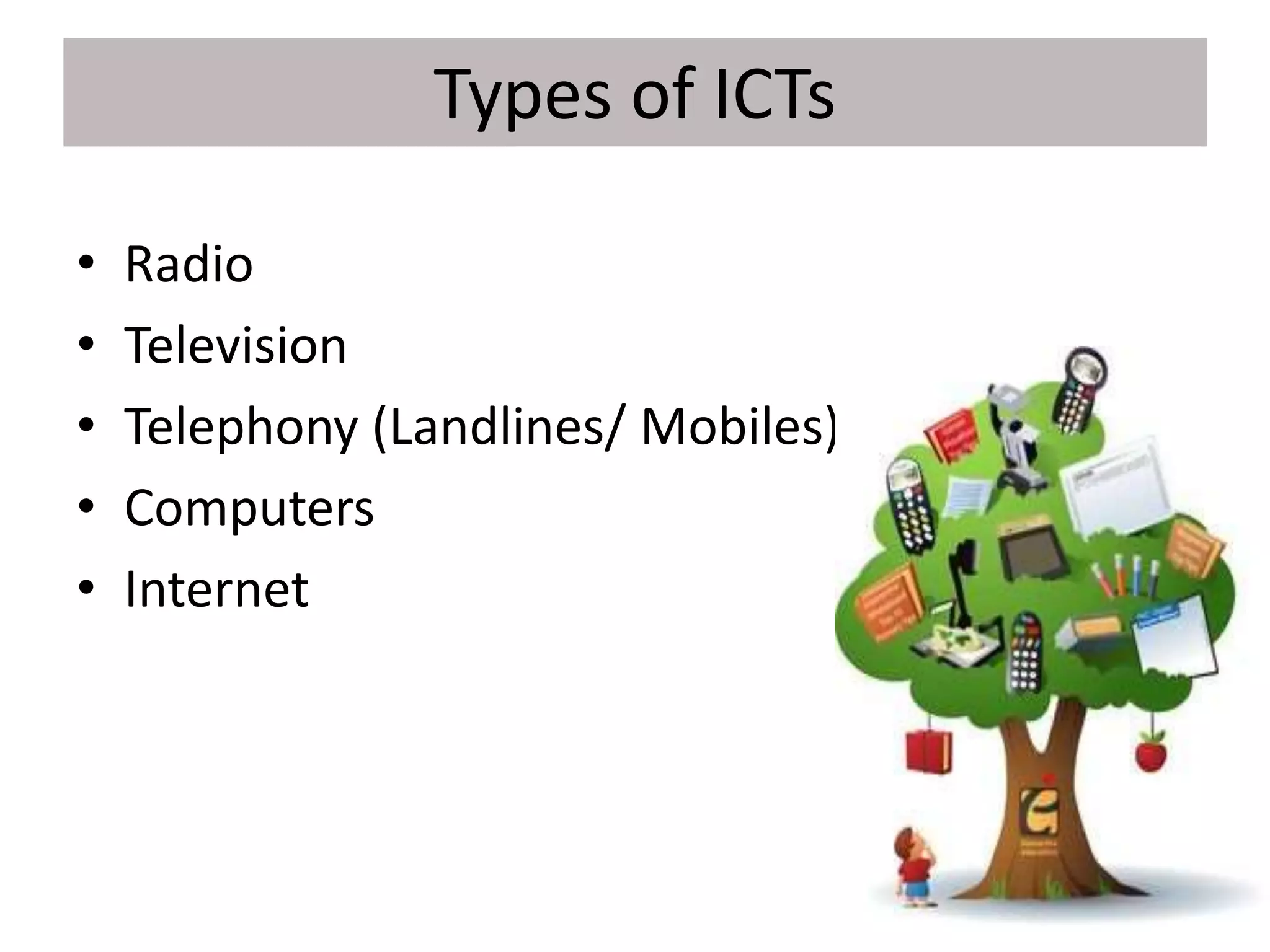
Types of ICTs
• Radio
• Television
• Telephony (Landlines/ Mobiles)
• Computers
• Internet
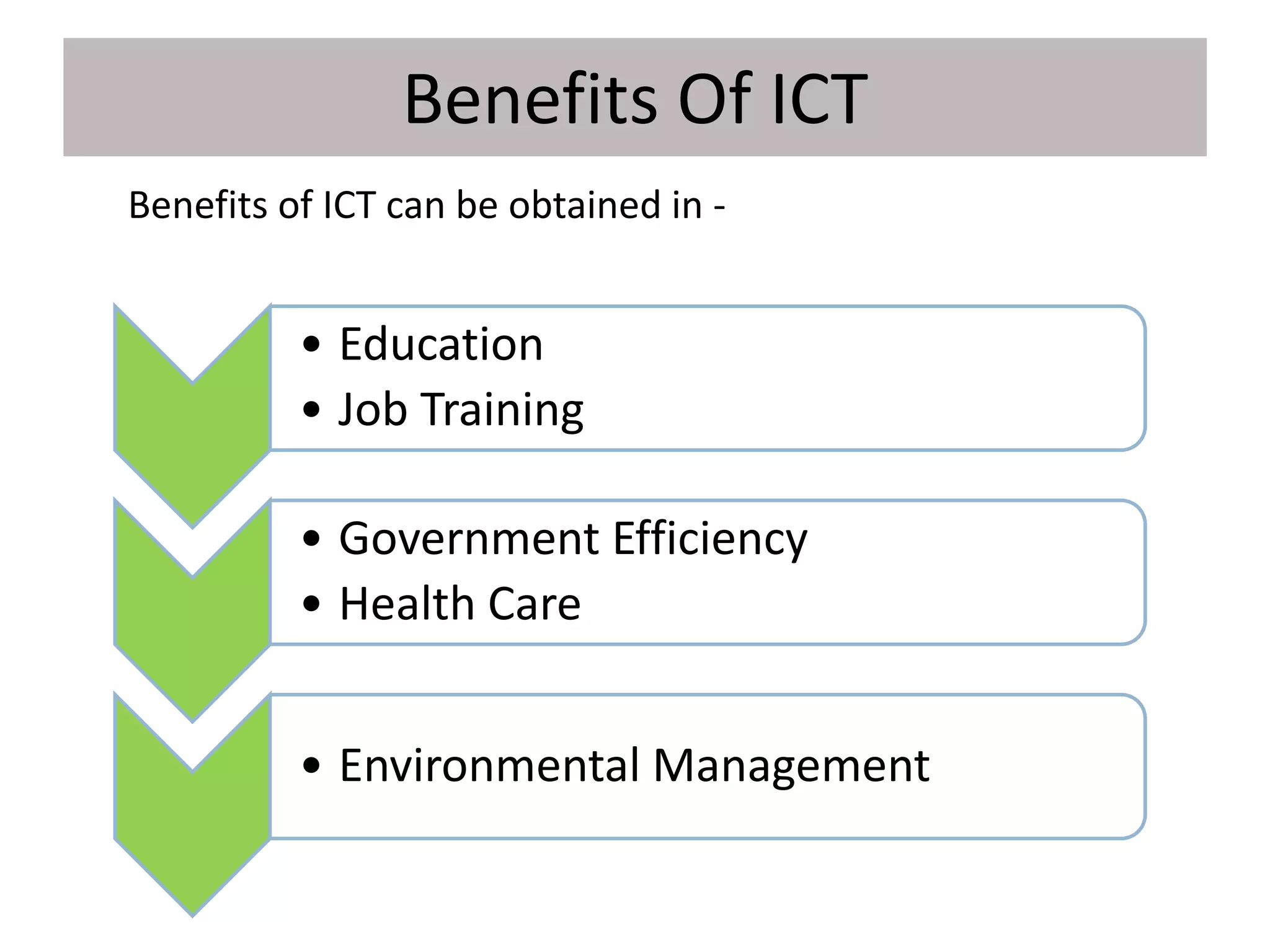
Benefits Of ICT
• Education
• Job Training
• Government Efficiency
• Health Care
• Environmental Management
Benefits of ICT can be obtained in -
The Role Of ICT In Education
WHY ICT?
There is now clear evidence that ICT, when
used well, improves attainment in all subjects
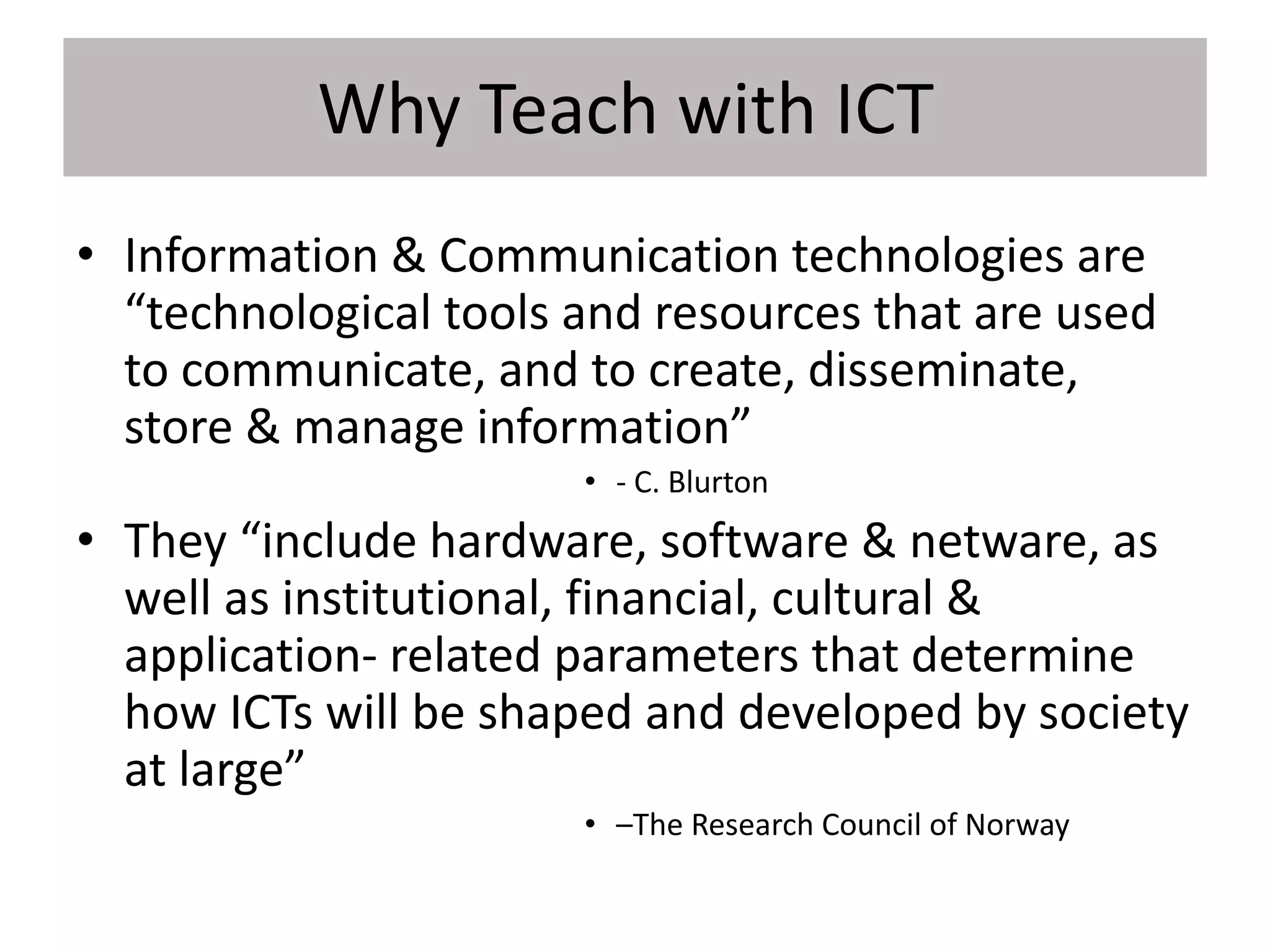
Why Teach with ICT
• Information & Communication technologies are
“technological tools and resources that are used
to communicate, and to create, disseminate,
store & manage information”
• - C. Blurton
• They “include hardware, software & netware, as
well as institutional, financial, cultural &
application- related parameters that determine
how ICTs will be shaped and developed by society
at large”
• –The Research Council of Norway
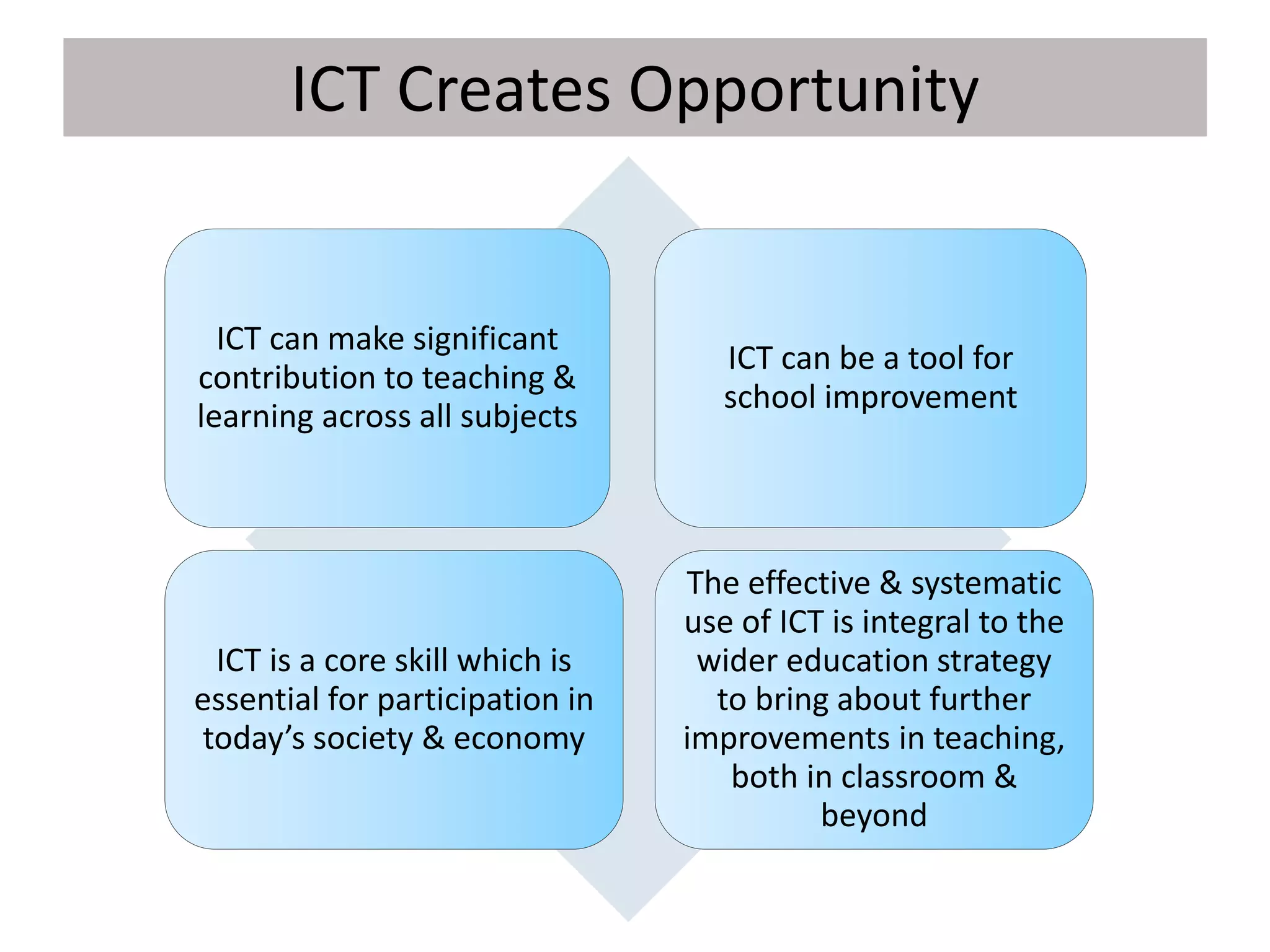
ICT Creates Opportunity
ICT can make significant
contribution to teaching &
learning across all subjects
ICT can be a tool for
school improvement
ICT is a core skill which is
essential for participation in
today’s society & economy
The effective & systematic
use of ICT is integral to the
wider education strategy
to bring about further
improvements in teaching,
both in classroom &
beyond
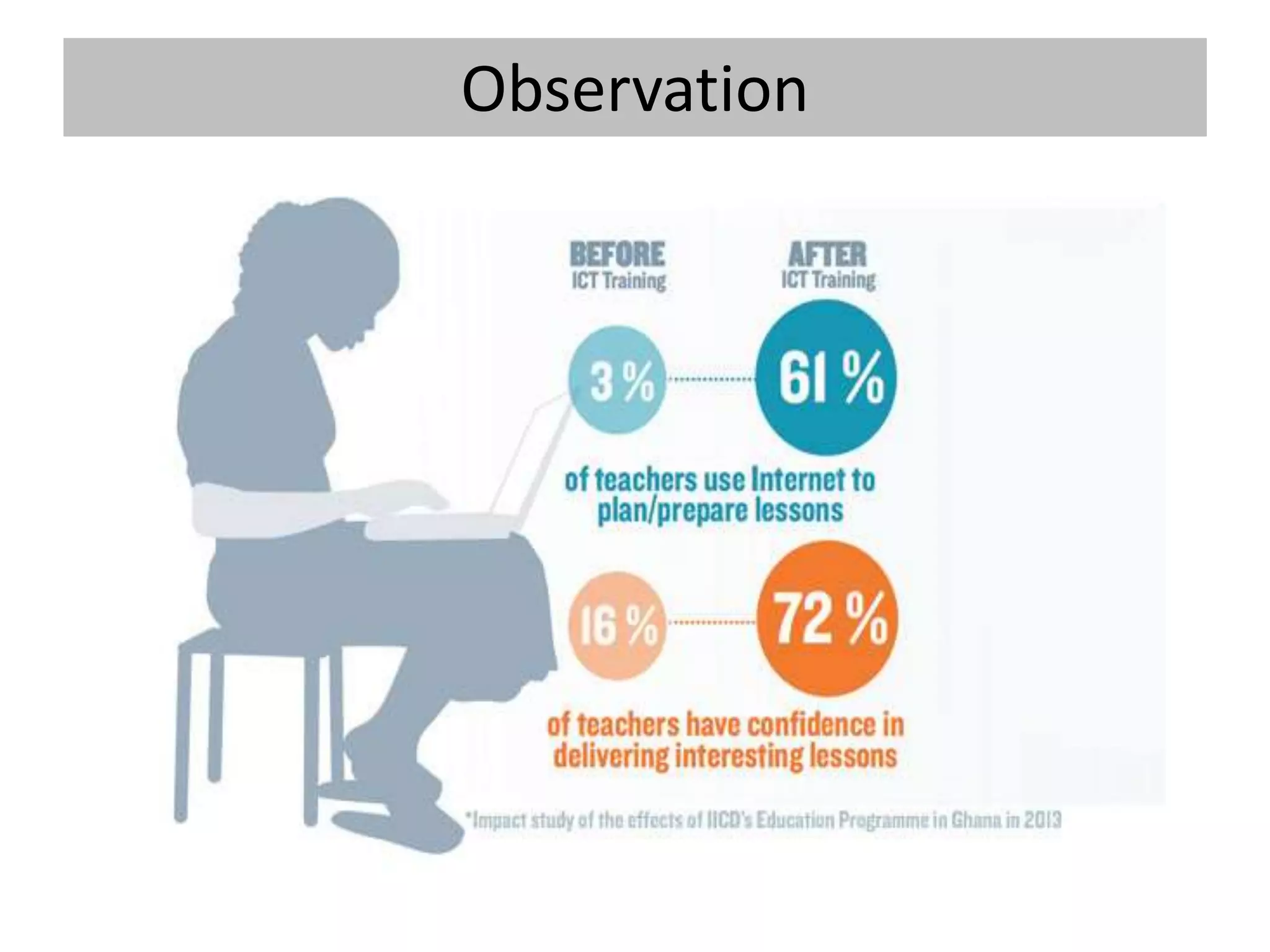
Observation
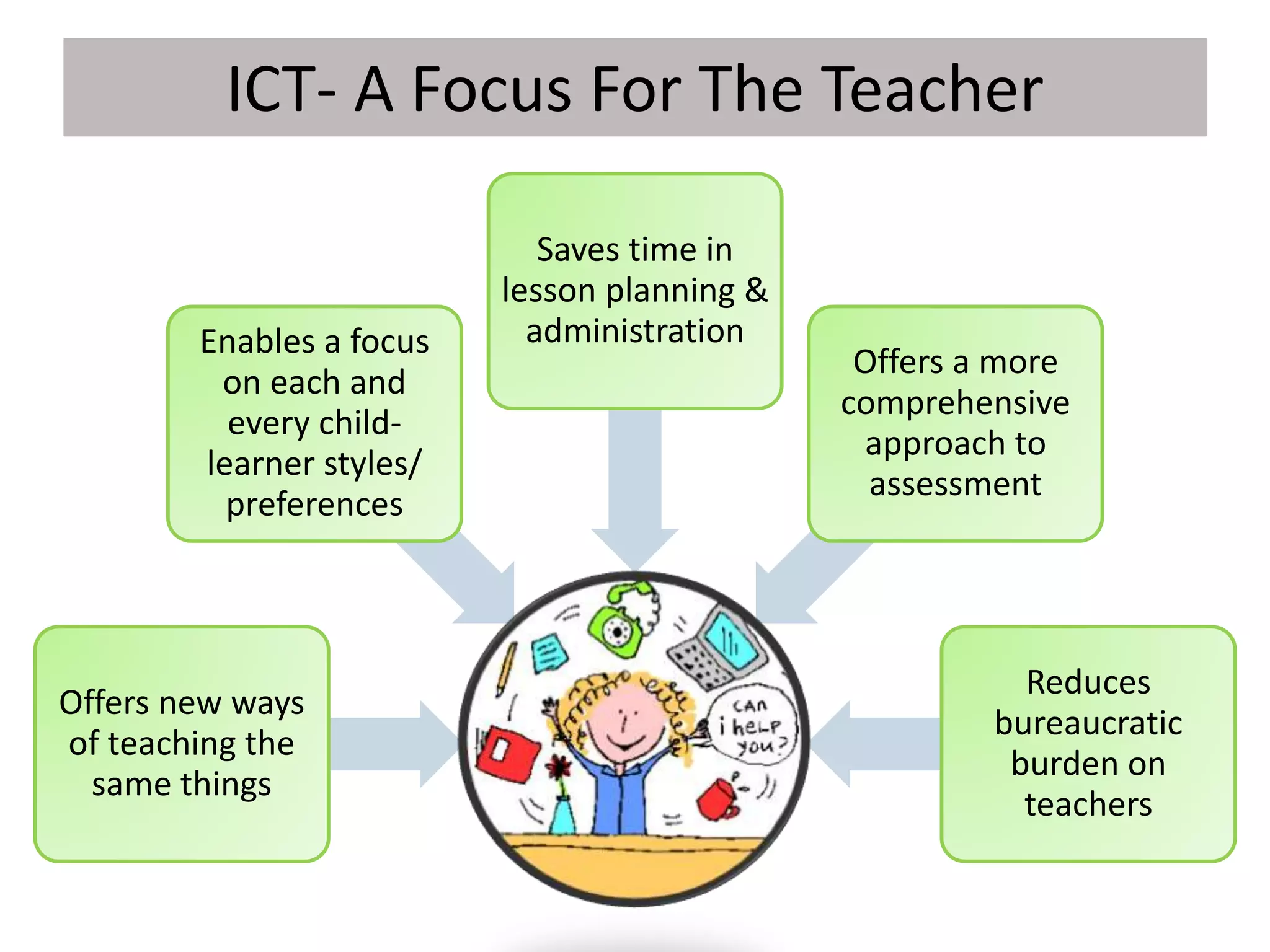
ICT- A Focus For The Teacher
Offers new ways
of teaching the
same things
Enables a focus
on each and
every child-
learner styles/
preferences
Saves time in
lesson planning &
administration
Offers a more
comprehensive
approach to
assessment
Reduces
bureaucratic
burden on
teachers
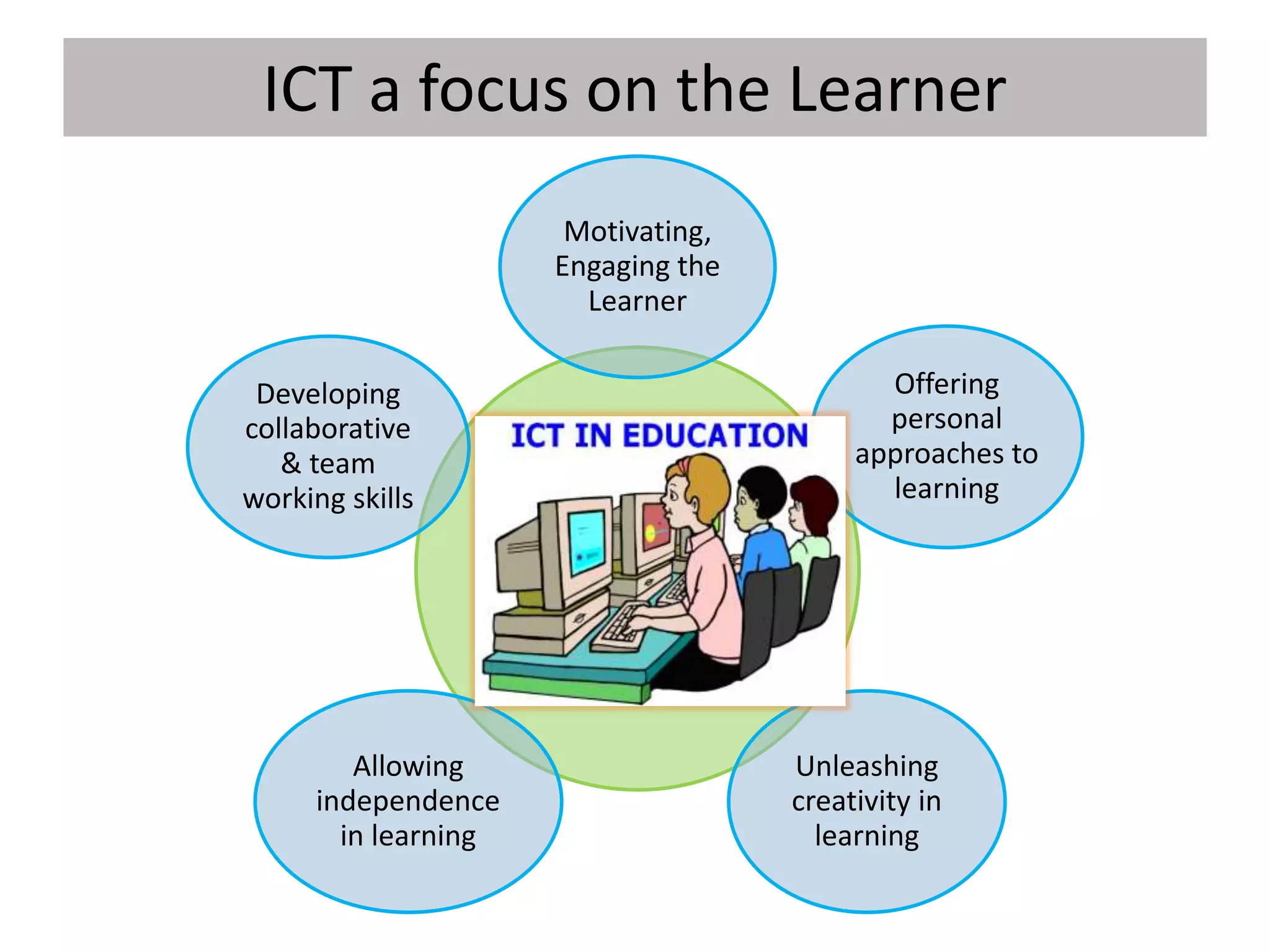
ICT a focus on the Learner
Motivating,
Engaging the
Learner
Offering
personal
approaches to
learning
Unleashing
creativity in
learning
Allowing
independence
in learning
Developing
collaborative
& team
working skills
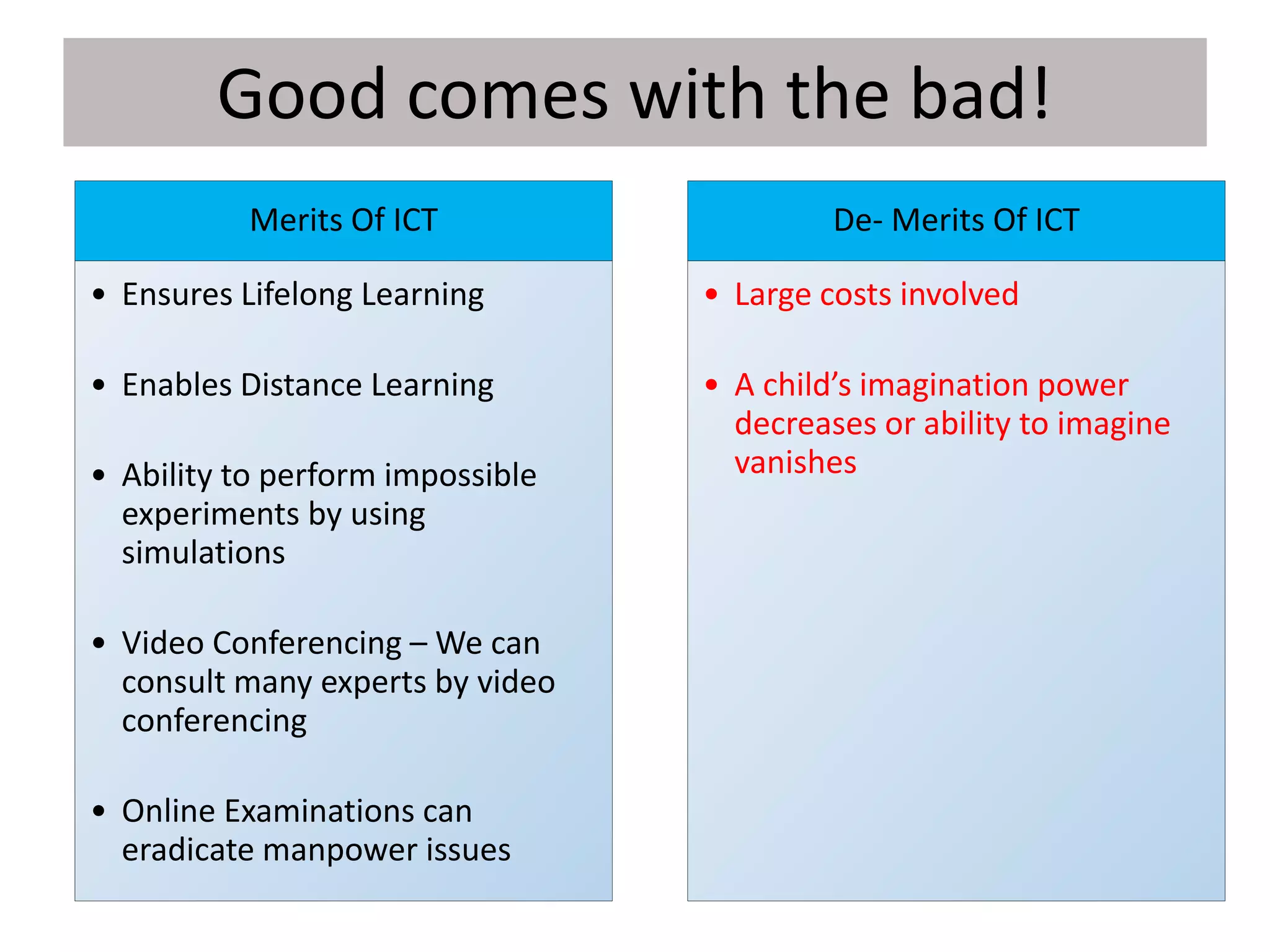
Good comes with the bad!
Merits Of ICT
• Ensures Lifelong Learning
• Enables Distance Learning
• Ability to perform impossible
experiments by using
simulations
• Video Conferencing – We can
consult many experts by video
conferencing
• Online Examinations can
eradicate manpower issues
De- Merits Of ICT
• Large costs involved
• A child’s imagination power
decreases or ability to imagine
vanishes
To “tech” or not to “tech”
education is not the question…
The real question is how to harvest the
power of technology to meet the
challenges of the 21st century and
make education relevant, responsive,
and effective for everyone, anywhere,
anytime
Thank You!

ICT in classroom teaching

  • 1.
  • 2.
    Welcome to the21st Century EDUCATION where Learning process is redefined
  • 3.
    The Reality There isno going back. We live in a connected, Wired World. Students need to be taught how to engage those connections, collaborate & communicate globally in a fluent & skillful way.
  • 4.
    ICT- Information &Communication Technology Defined as the use of hardware & software for efficient management of information ICT refers to the forms of technology that are used to transmit, store, create, share or exchange particular task
  • 5.
    Types of ICTs •Radio • Television • Telephony (Landlines/ Mobiles) • Computers • Internet
  • 6.
    Benefits Of ICT •Education • Job Training • Government Efficiency • Health Care • Environmental Management Benefits of ICT can be obtained in -
  • 7.
    The Role OfICT In Education
  • 8.
    WHY ICT? There isnow clear evidence that ICT, when used well, improves attainment in all subjects
  • 9.
    Why Teach withICT • Information & Communication technologies are “technological tools and resources that are used to communicate, and to create, disseminate, store & manage information” • - C. Blurton • They “include hardware, software & netware, as well as institutional, financial, cultural & application- related parameters that determine how ICTs will be shaped and developed by society at large” • –The Research Council of Norway
  • 10.
    ICT Creates Opportunity ICTcan make significant contribution to teaching & learning across all subjects ICT can be a tool for school improvement ICT is a core skill which is essential for participation in today’s society & economy The effective & systematic use of ICT is integral to the wider education strategy to bring about further improvements in teaching, both in classroom & beyond
  • 11.
  • 12.
    ICT- A FocusFor The Teacher Offers new ways of teaching the same things Enables a focus on each and every child- learner styles/ preferences Saves time in lesson planning & administration Offers a more comprehensive approach to assessment Reduces bureaucratic burden on teachers
  • 13.
    ICT a focuson the Learner Motivating, Engaging the Learner Offering personal approaches to learning Unleashing creativity in learning Allowing independence in learning Developing collaborative & team working skills
  • 14.
    Good comes withthe bad! Merits Of ICT • Ensures Lifelong Learning • Enables Distance Learning • Ability to perform impossible experiments by using simulations • Video Conferencing – We can consult many experts by video conferencing • Online Examinations can eradicate manpower issues De- Merits Of ICT • Large costs involved • A child’s imagination power decreases or ability to imagine vanishes
  • 15.
    To “tech” ornot to “tech” education is not the question… The real question is how to harvest the power of technology to meet the challenges of the 21st century and make education relevant, responsive, and effective for everyone, anywhere, anytime
  • 16.