TECHNOLOGY FOR
TEACHING AND
LEARNING
MICHAEL P. ARGONILLO, LPT, MAED
INSTRUCTOR
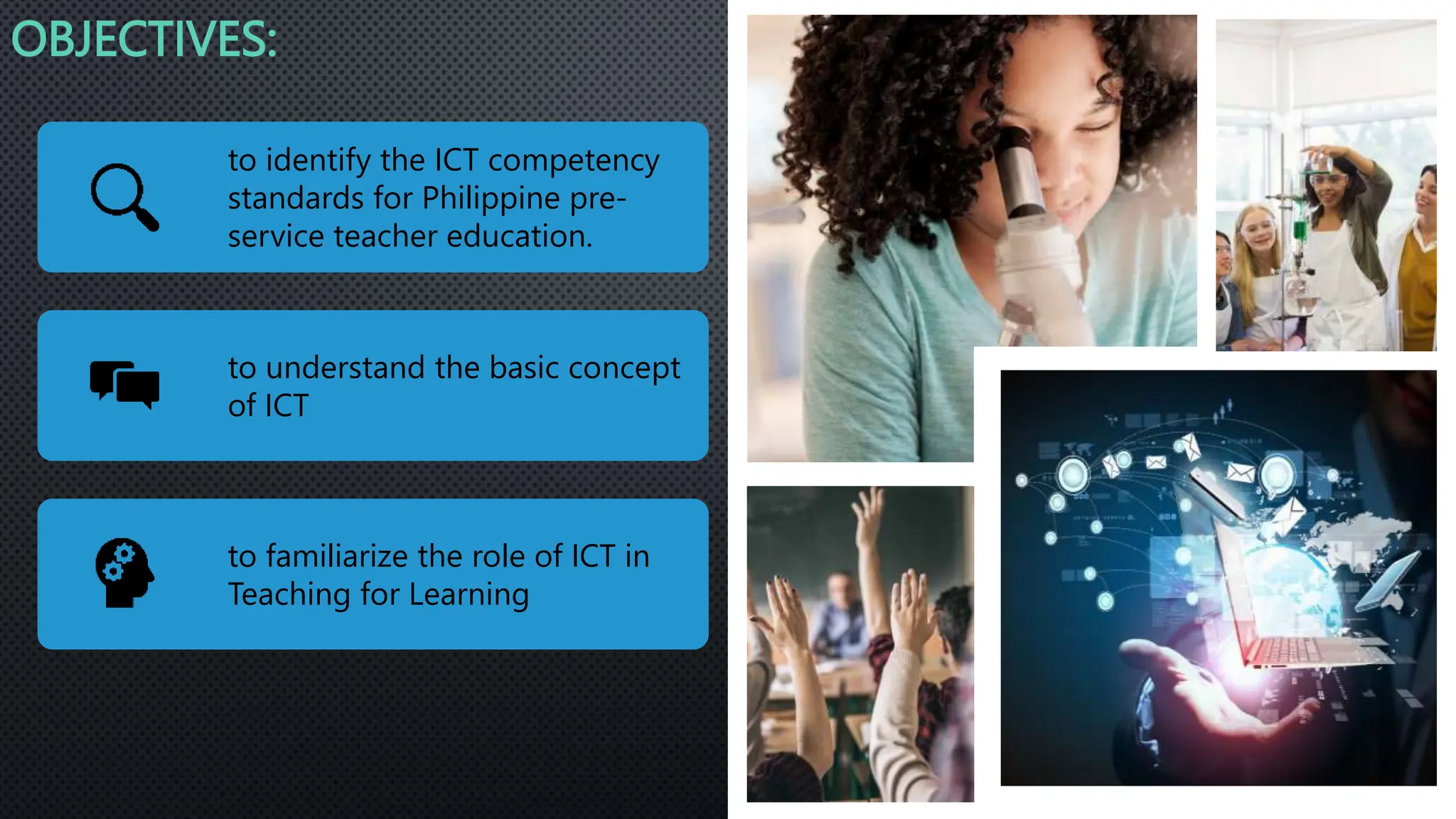
OBJECTIVES:
to identify the ICT competency
standards for Philippine pre-
service teacher education.
to understand the basic concept
of ICT
to familiarize the role of ICT in
Teaching for Learning
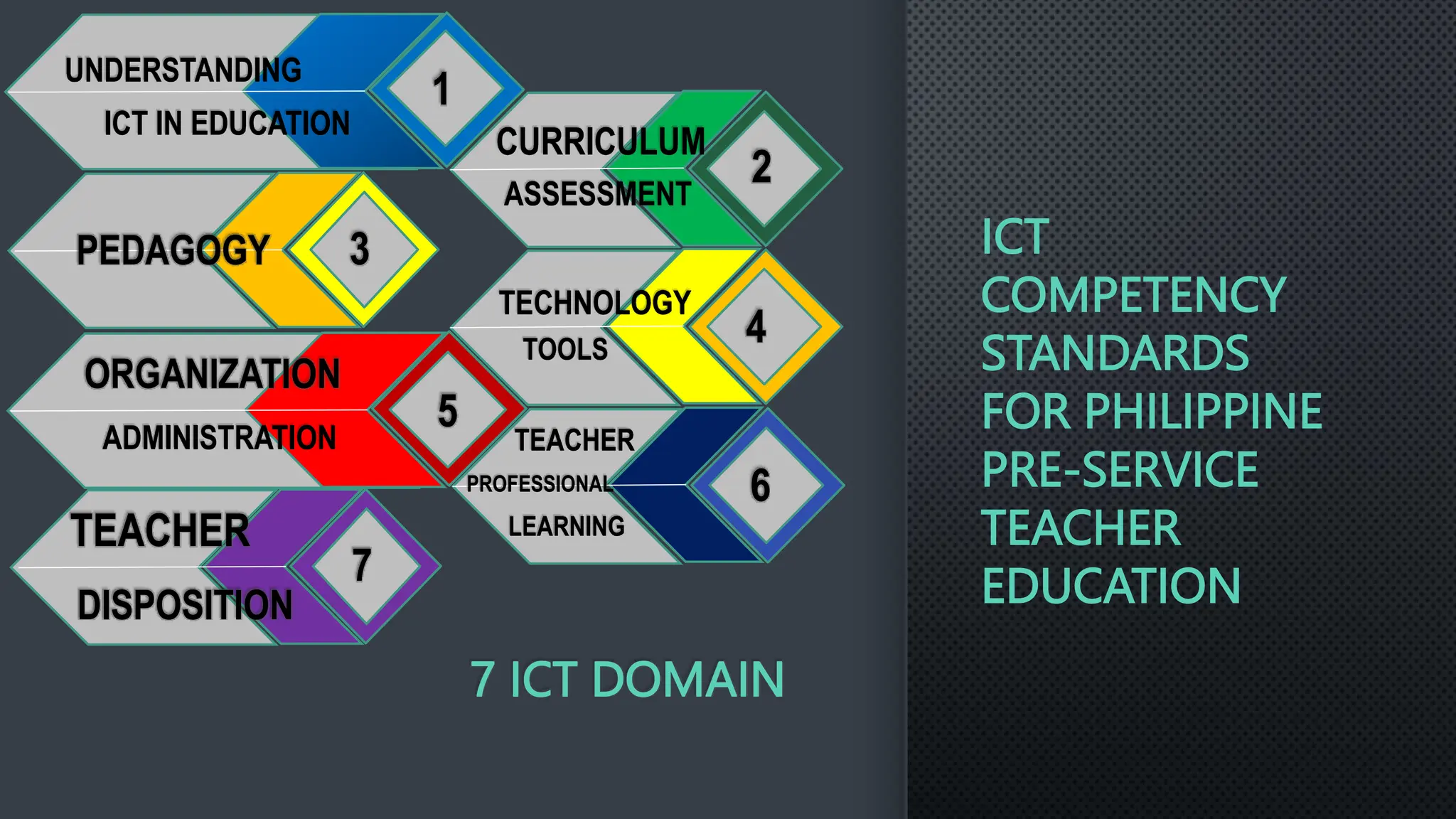
ICT
COMPETENCY
STANDARDS
FOR PHILIPPINE
PRE-SERVICE
TEACHER
EDUCATION
UNDERSTANDING
ICT IN EDUCATION
1
2
3
4
5
6
7
CURRICULUM
ASSESSMENT
PEDAGOGY
TECHNOLOGY
TOOLS
ORGANIZATION
ADMINISTRATION TEACHER
PROFESSIONAL
LEARNING
TEACHER
DISPOSITION
7 ICT DOMAIN
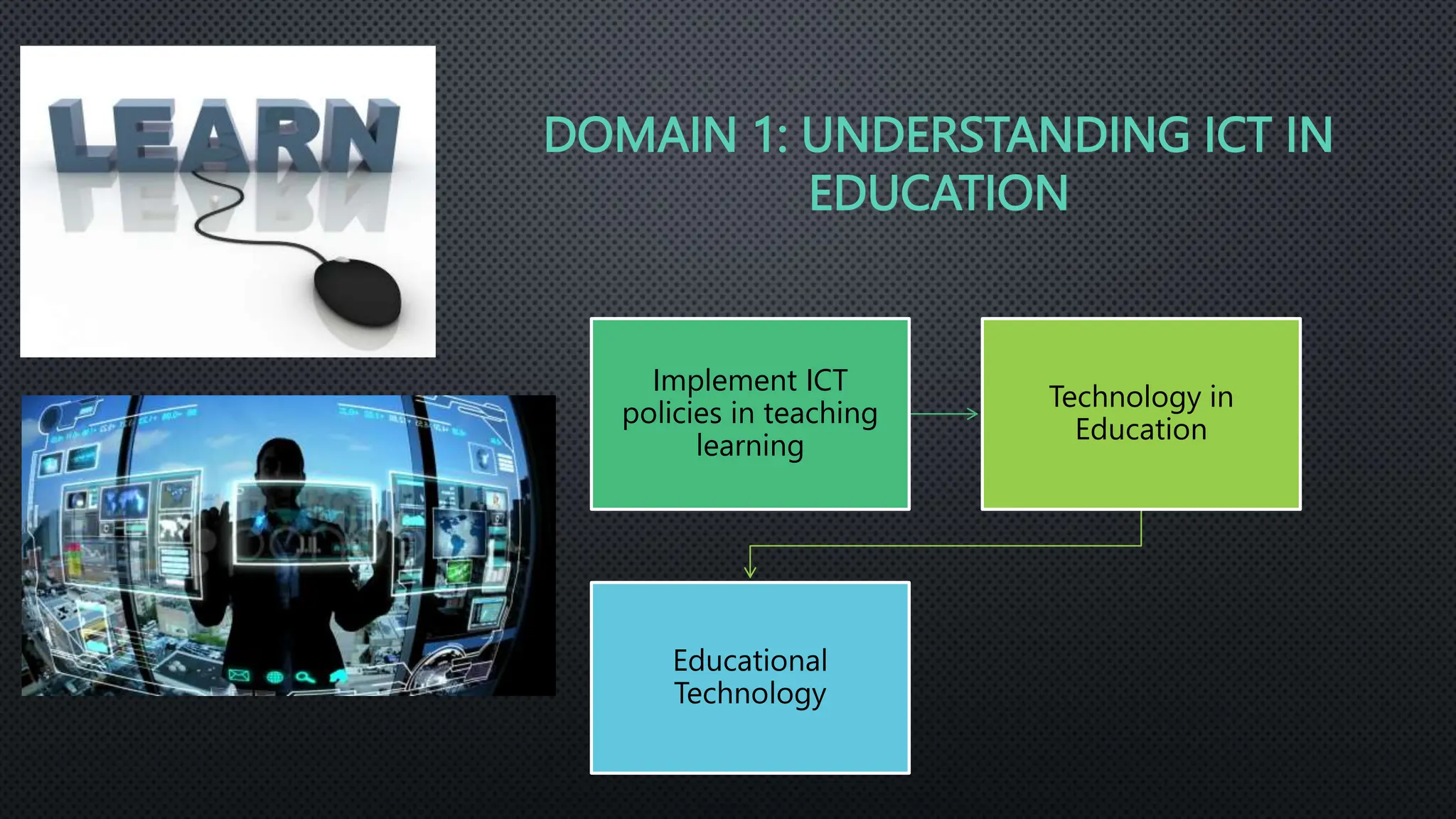
DOMAIN 1: UNDERSTANDING ICT IN
EDUCATION
Implement ICT
policies in teaching
learning
Technology in
Education
Educational
Technology
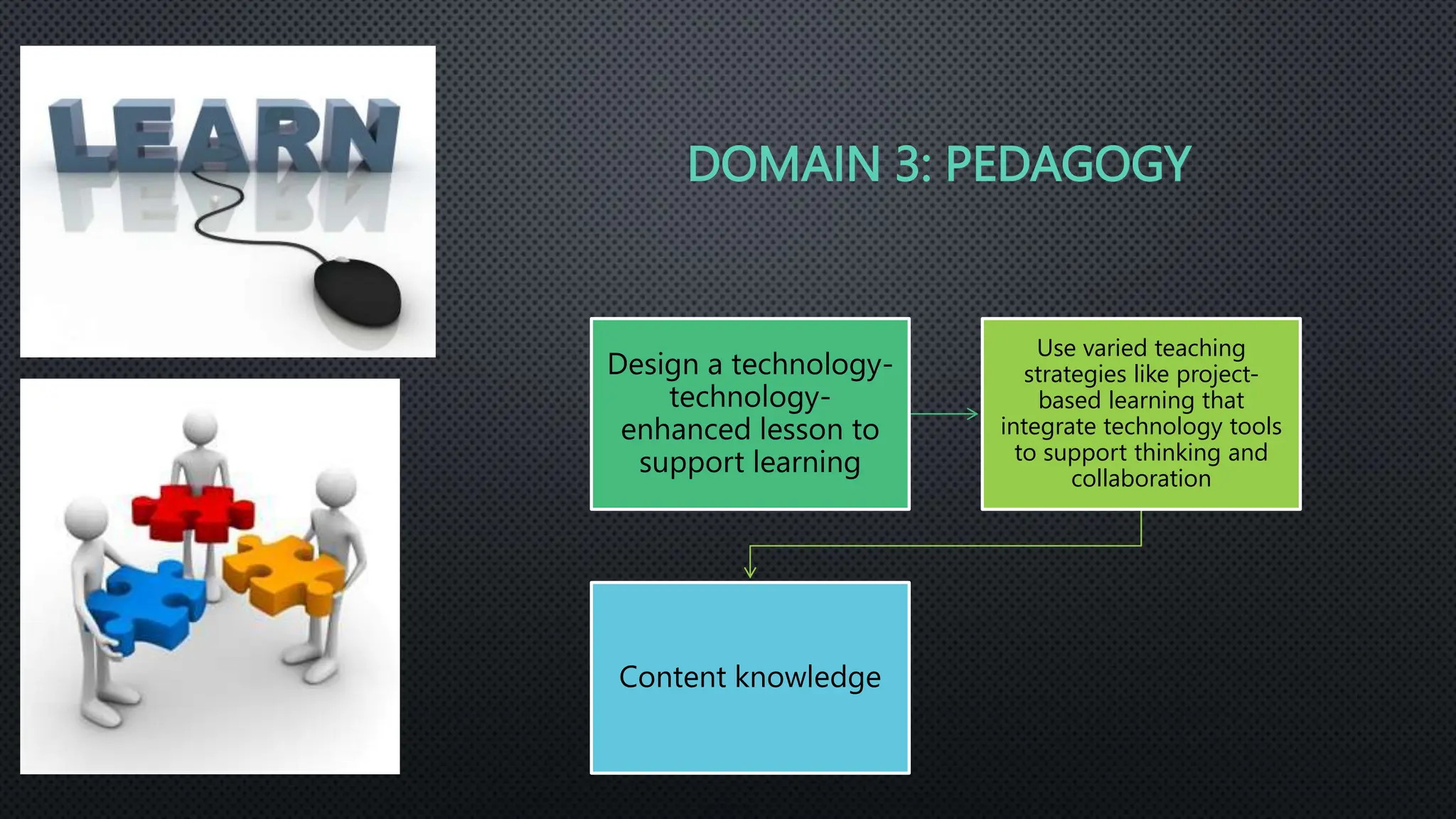
DOMAIN 2: CURRICULUM AND ASSESSMENT
Discuss ICT concepts,
principles & theories in
various teaching
learning process
Integrate ICT in
teaching plans that
require learners to
connect the content of
the lesson to society
ICT Based Instruction
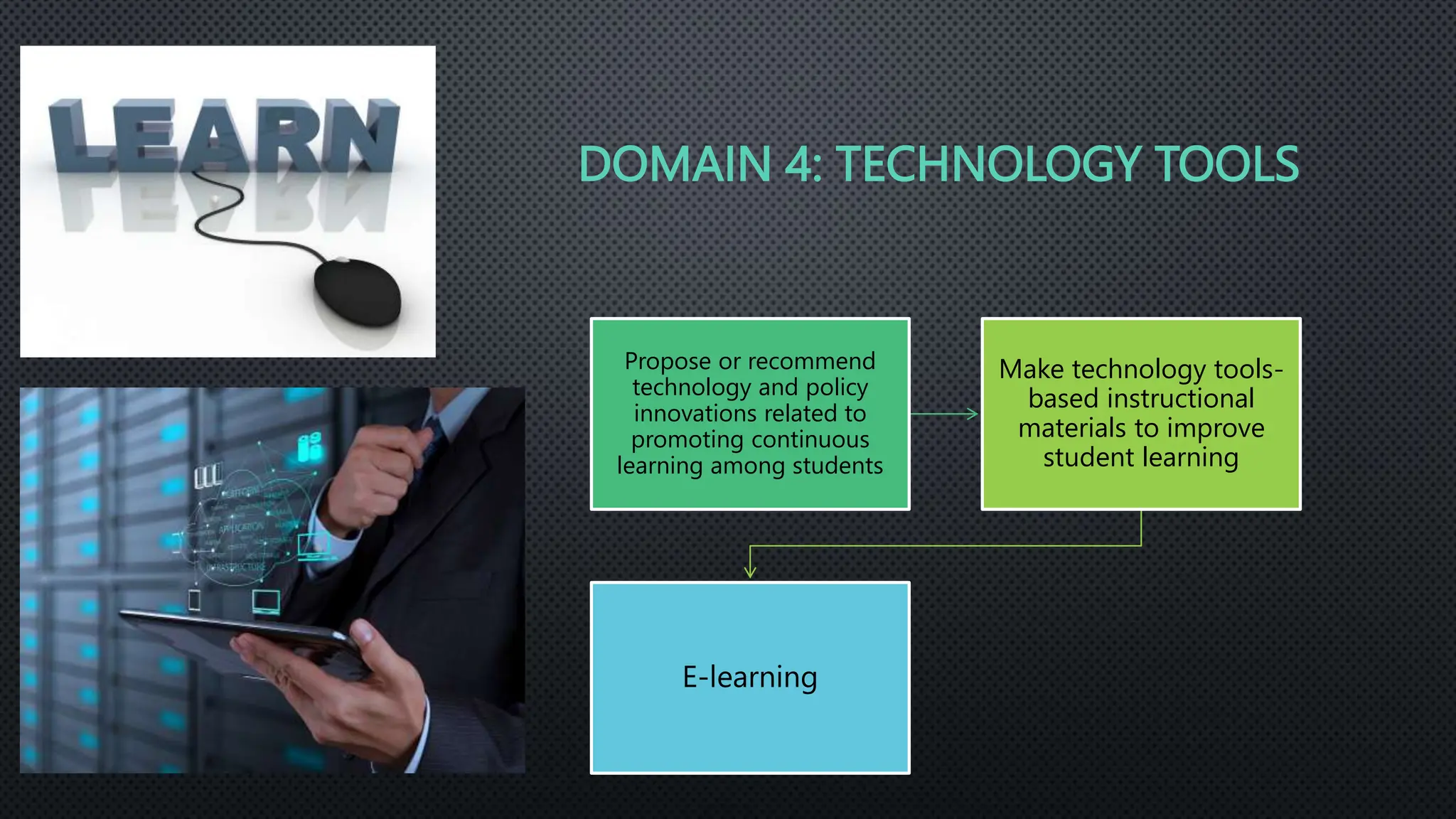
DOMAIN 3: PEDAGOGY
Design a technology-
technology-
enhanced lesson to
support learning
Use varied teaching
strategies like project-
based learning that
integrate technology tools
to support thinking and
collaboration
Content knowledge
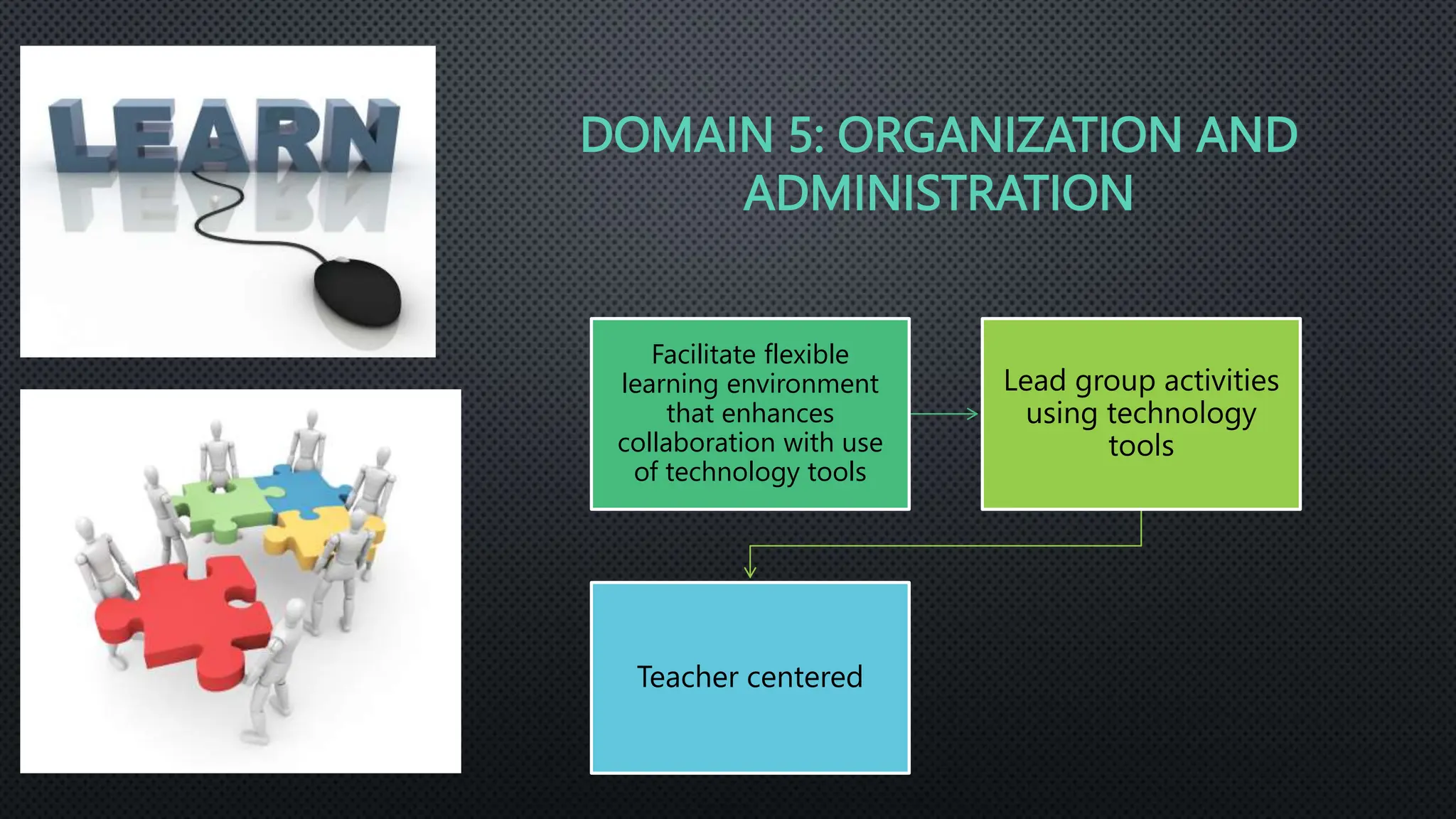
DOMAIN 4: TECHNOLOGY TOOLS
Propose or recommend
technology and policy
innovations related to
promoting continuous
learning among students
Make technology tools-
based instructional
materials to improve
student learning
E-learning
DOMAIN 5: ORGANIZATION AND
ADMINISTRATION
Facilitate flexible
learning environment
that enhances
collaboration with use
of technology tools
Lead group activities
using technology
tools
Teacher centered
DOMAIN 6: TEACHER PROFESSIONAL
LEARNING
Use technology tools to
search for, manage,
analyze, integrate and
evaluate information that
can be used to support
professional learning
Identify educational
sites and portals
suitable to their subject
area
Adopt changes
DOMAIN 7: TEACHER DISPOSITION
Discuss safety issues in
obtaining resource
materials from local
area network based
and the internet
Institute mechanisms
to ensure child
online safety and
prevent cyber
bullying.
Advantages and
Disadvantages
Concept of ICT
The Role of ICT
Key issues to remember in
relation to the importance of ICT
in Education
ICT IS A BROAD SUBJECT AND THE CONCEPTS ARE
EVOLVING (E.G., PERSONAL COMPUTERS, DIGITAL
TELEVISION, EMAIL, OR ROBOTS). THEORETICAL
DIFFERENCES BETWEEN INTERPERSONAL-
COMMUNICATION TECHNOLOGIES AND MASS-
COMMUNICATION TECHNOLOGIES HAVE BEEN
BY THE PHILOSOPHER PIYUSH MATHUR. SKILLS
FRAMEWORK FOR THE INFORMATION AGE IS ONE OF
MANY MODELS FOR DESCRIBING AND MANAGING
COMPETENCIES FOR ICT PROFESSIONALS FOR THE 21ST
CENTURY.
CONCEPT OF ICT
TODAY WE DO NOT NEED TO GO ANY FURTHER THAN OUR OWN HOME OR
EVEN ROOM, TO SEE SOME FORM OF ICT IN OUR LIVES. WHETHER IT BE A
COMPUTER, PLASMA TV, OR MOBILE PHONE, WE ALL HAVE THEM IN SOME PART OF
OUR LIVES. IN TODAY’S SOCIETY, PEOPLE AS CONSUMERS OF ICT, ALL STRIVE FOR
THE ONE DREAM – THE DREAM OF A CONNECTED LIFE.
THIS MAKES ICT A LIFESTYLE CHOICE FOR MUCH OF THE POPULATION. IN
ADDITION, THIS LIFESTYLE CHOICE IS CHANGING THE WAY WE COMMUNICATE,
INCREASING THE RATE OF CONSUMERISM, AND CHANGING HOW WE INTERACT
AND GATHER INFORMATION (SHERRINGHAM, DEC 2008/JAN 2009).
ICT HAS INVADED AND TRANSFORMED MANY ASPECTS OF OUR LIVES TO THE
EXTENT THAT WE LIVE IN AN ENVIRONMENT THAT IS DOMINATED BY TECHNOLOGY
WHICH ITSELF IS CONSUMER-DRIVEN (SEMENOV, 2005). NO MATTER HOW WE
PERCEIVE ITS PRESENCE, THERE IS NO DENYING THAT IT IS AN IMPORTANT PART OF
OUR LIVES AND THAT IT IS HERE TO STAY.
ROLE OF ICT
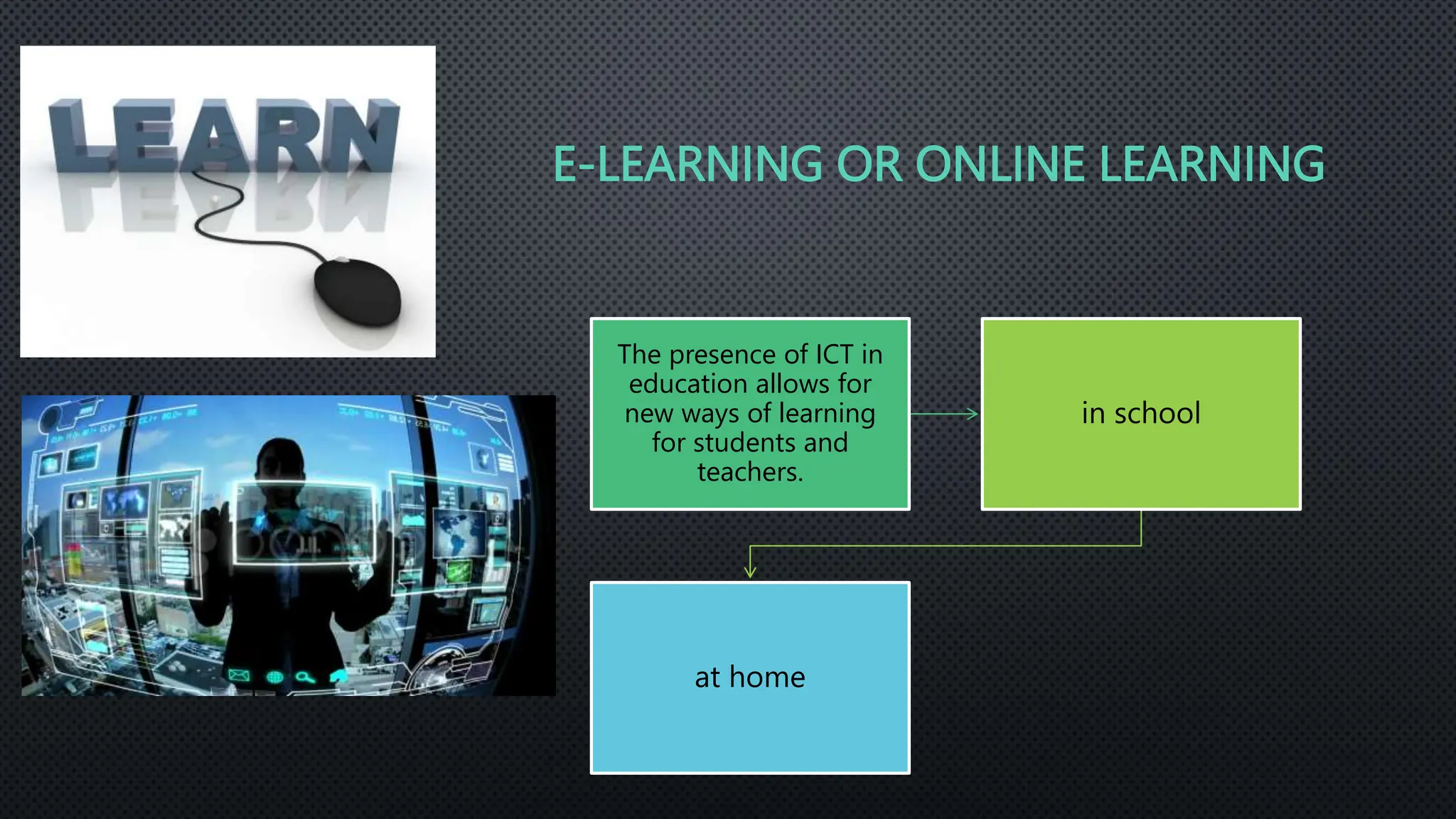
E-LEARNING OR ONLINE LEARNING
The presence of ICT in
education allows for
new ways of learning
for students and
teachers.
in school
at home
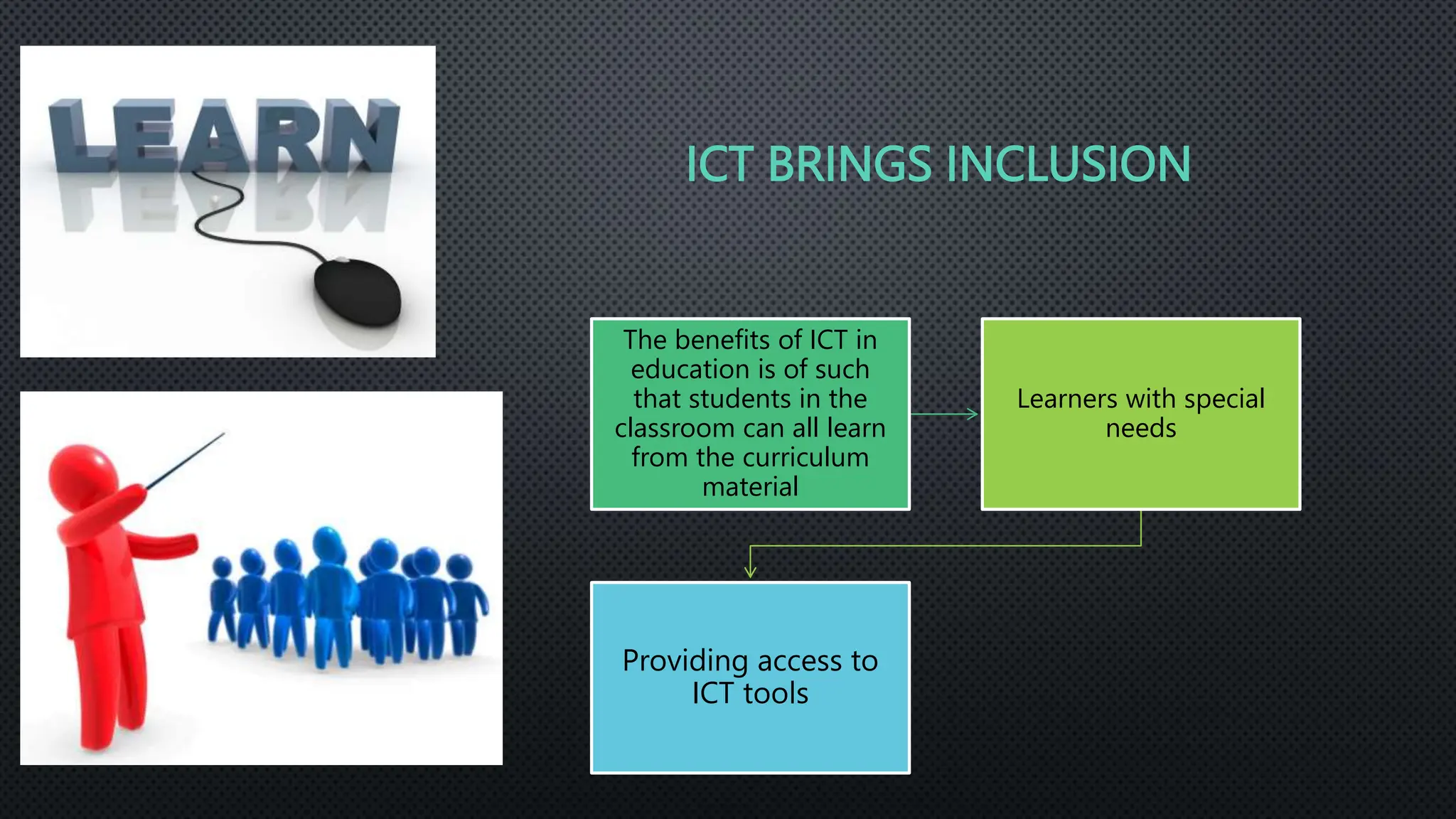
ICT BRINGS INCLUSION
The benefits of ICT in
education is of such
that students in the
classroom can all learn
from the curriculum
material
Learners with special
needs
Providing access to
ICT tools
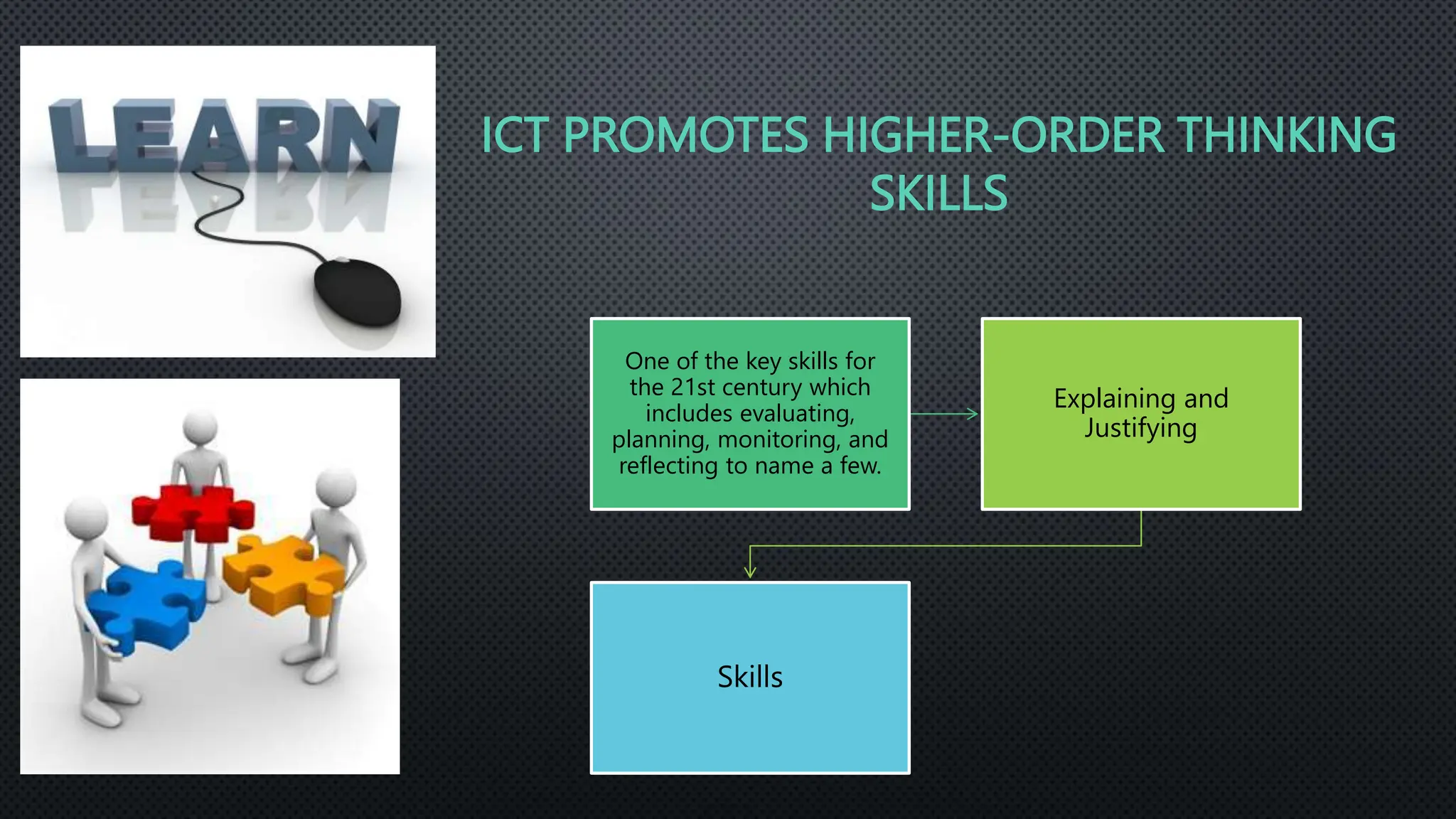
ICT PROMOTES HIGHER-ORDER THINKING
SKILLS
One of the key skills for
the 21st century which
includes evaluating,
planning, monitoring, and
reflecting to name a few.
Explaining and
Justifying
Skills
ICT ENHANCES SUBJECT LEARNING
It is well known these days
that the use of ICT in
education adds a lot of
value to key learning areas
like literacy and
numeracy.
Video presentation
Interactive learning
ICT USE DEVELOPS ICT LITERACY AND ICT
CAPABILITY
Both are 21st-century
skills that are best
developed whilst ICT
remains transparent in
the background of
subject learning
Meaningful activities
student centered
ICT USE ENCOURAGES COLLABORATION
ICT naturally brings children
together where they can talk and
discuss what they are doing for
their work and this in turn, opens
up avenues for communication
thus leading to language
development.
teamwork
socialization
ICT USE MOTIVATES LEARNING
Society's demands for
new technology has
not left out children
and their needs
Encourages and
Motivates
Advantages and
Disadvantages
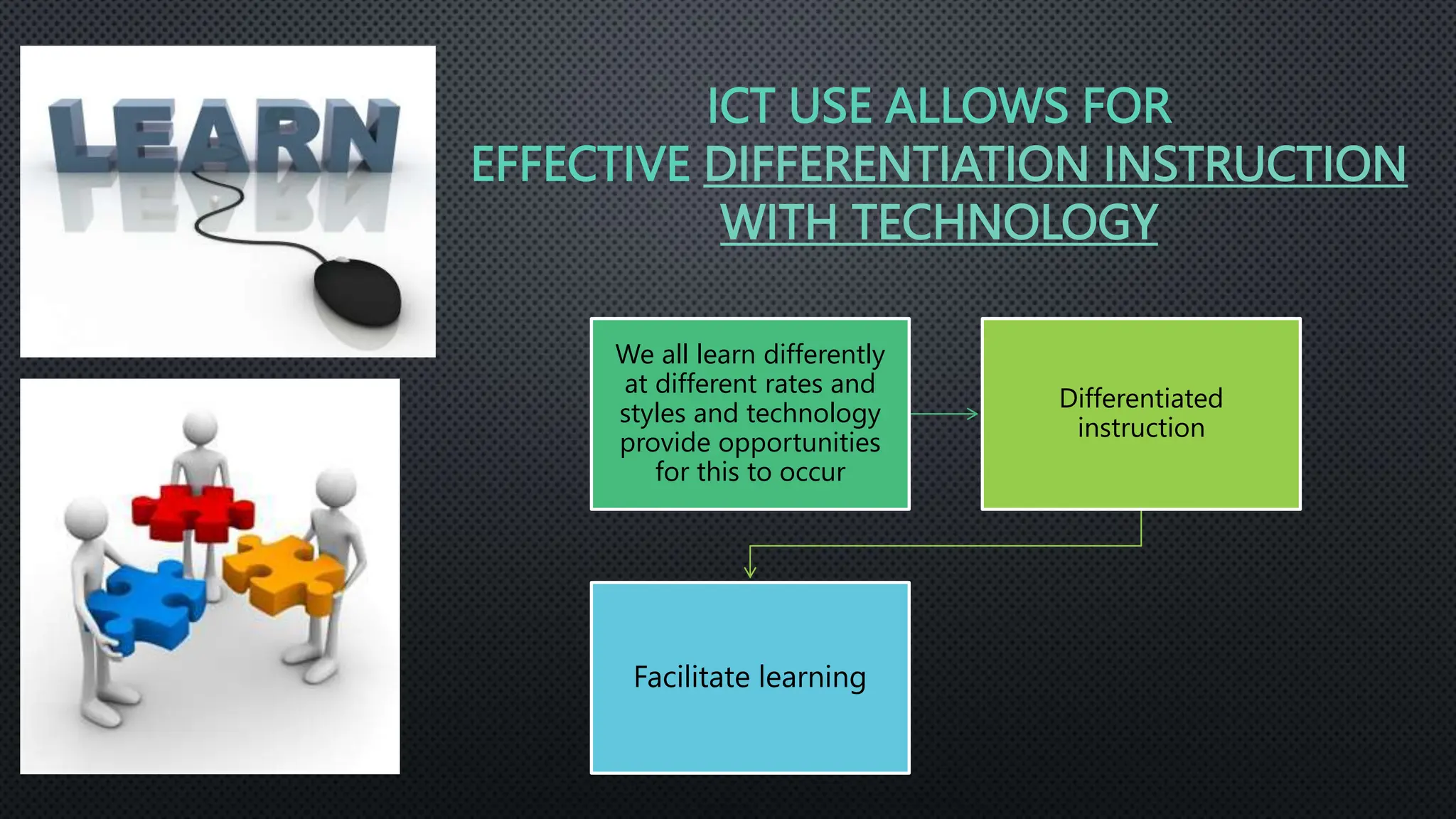
ICT IN EDUCATION IMPROVES ENGAGEMENT
AND KNOWLEDGE RETENTION
When ICT is integrated
into lessons, students
become more engaged
in their work
More fun and
Retain knowledge
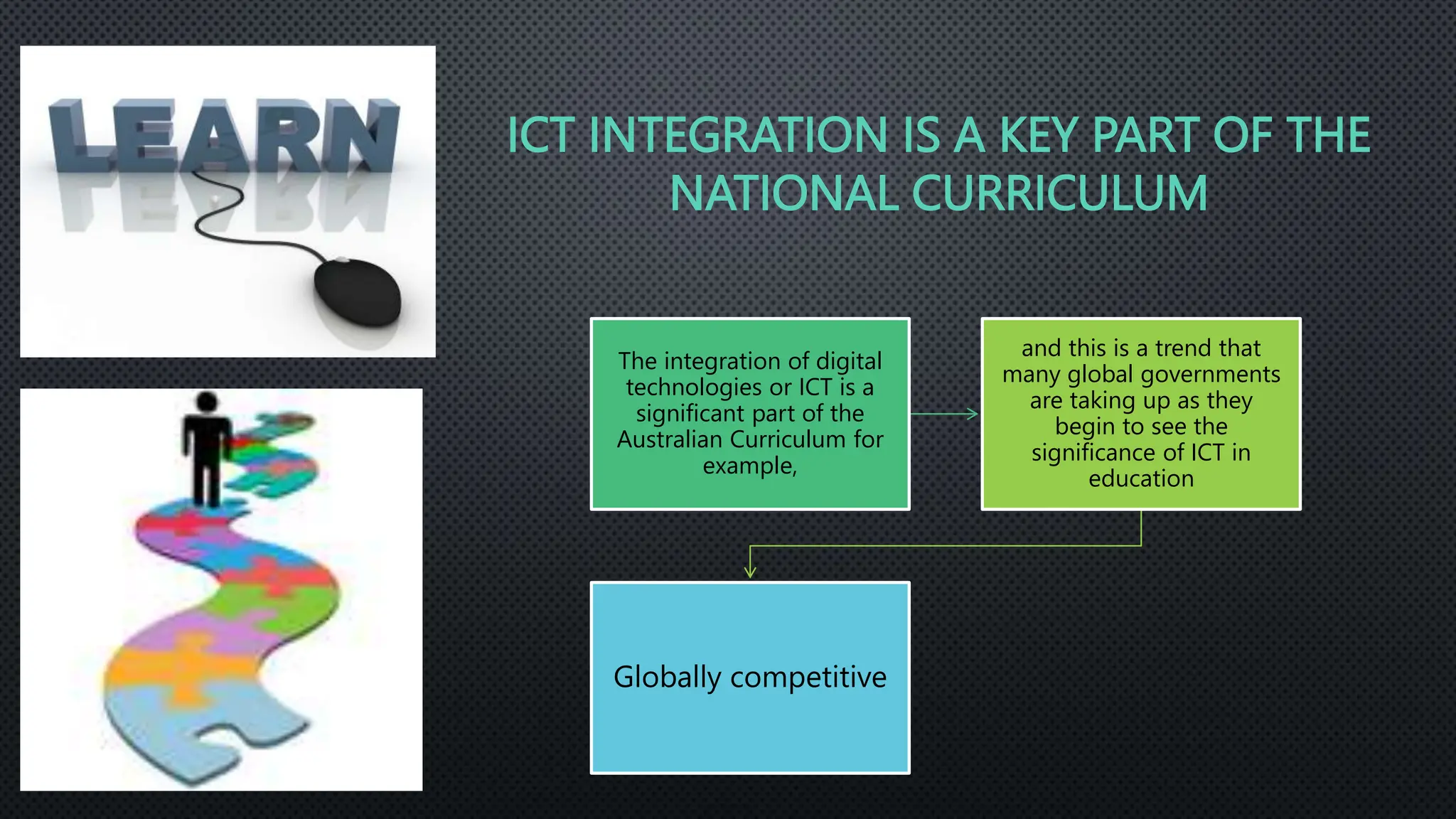
ICT USE ALLOWS FOR
EFFECTIVE DIFFERENTIATION INSTRUCTION
WITH TECHNOLOGY
We all learn differently
at different rates and
styles and technology
provide opportunities
for this to occur
Differentiated
instruction
Facilitate learning
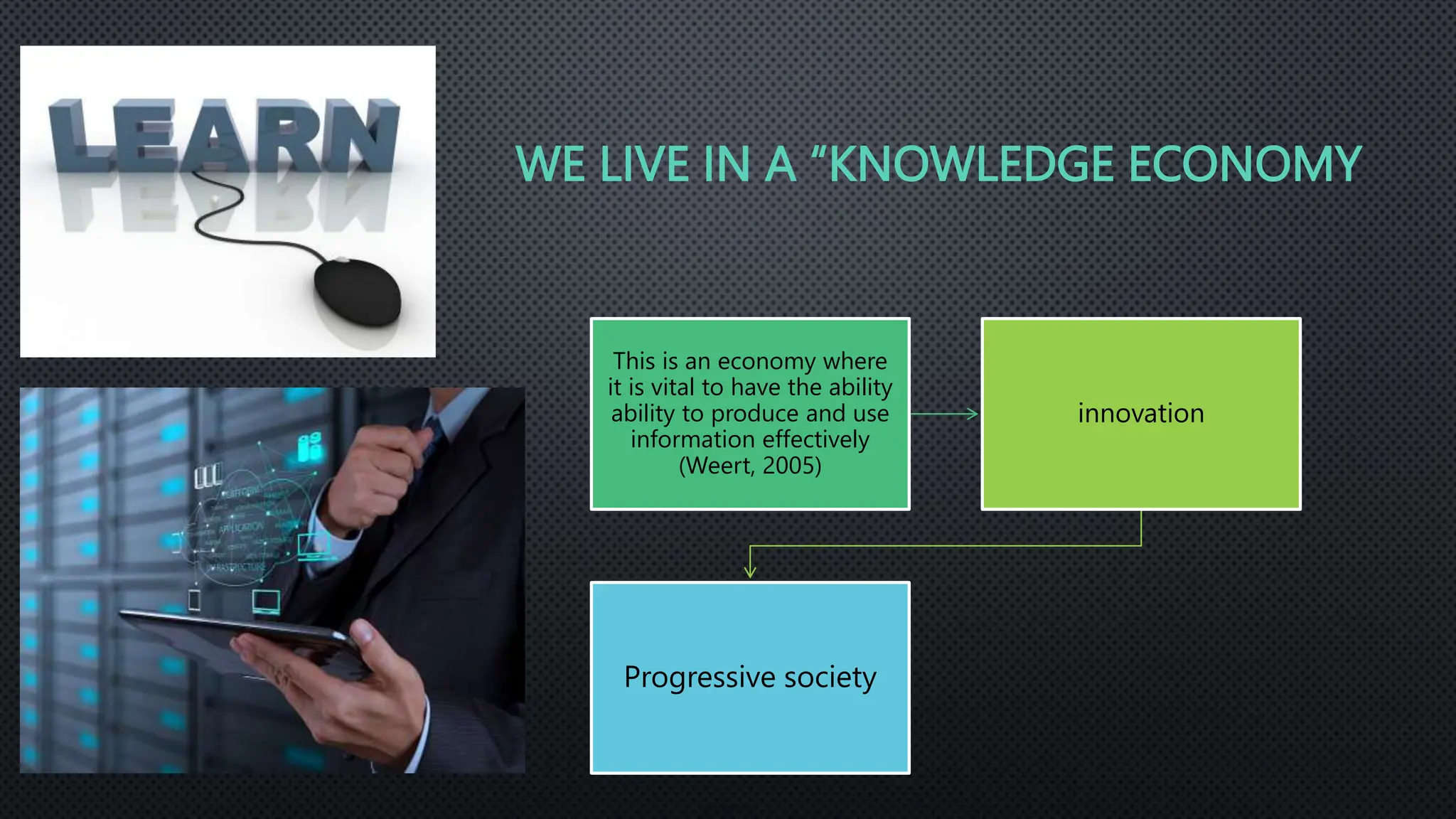
ICT INTEGRATION IS A KEY PART OF THE
NATIONAL CURRICULUM
The integration of digital
technologies or ICT is a
significant part of the
Australian Curriculum for
example,
and this is a trend that
many global governments
are taking up as they
begin to see the
significance of ICT in
education
Globally competitive
WE LIVE IN A “KNOWLEDGE ECONOMY
This is an economy where
it is vital to have the ability
ability to produce and use
information effectively
(Weert, 2005)
innovation
Progressive society
ICTS WILL CONTINUE TO BE A SIGNIFICANT PART
OF OUR FUTURE AS IT CONNECTS ITSELF TO MORE
AND MORE PARTS OF OUR LIVES. IT WILL
CONTINUALLY EVOLVE AND CHANGE BECAUSE AS
CONSUMERS WE ALL LIKE A CHOICE. WE LIKE TO
USE ICT FOR PERSONAL GROWTH, CREATIVITY, AND
JOY, CONSUMPTION, AND WEALTH (SEMENOV,
2005).
IF YOU PUT A LOT OF THOUGHT INTO YOUR PLANNING,
YOU WILL NOTICE A HIGHER DEGREE OF ENGAGEMENT
AND THIS CAN LEAD TO THE DEVELOPMENT OF 21ST-
CENTURY SKILLS SUCH AS COMPLEX THINKING, CREATIVE
PROBLEM-SOLVING, AND COLLABORATION.
TECHNOLOGY INTEGRATION IN THE CLASSROOM IS
AN INSTRUCTIONAL CHOICE BY YOU, THE TEACHER,
AND SHOULD ALWAYS INVOLVE COLLABORATION AND
DELIBERATE PLANNING.
THANK
YOU
MPA

Ed Tech 1. Chapter 1.pptx

  • 2.
    TECHNOLOGY FOR TEACHING AND LEARNING MICHAELP. ARGONILLO, LPT, MAED INSTRUCTOR
  • 4.
    OBJECTIVES: to identify theICT competency standards for Philippine pre- service teacher education. to understand the basic concept of ICT to familiarize the role of ICT in Teaching for Learning
  • 5.
    ICT COMPETENCY STANDARDS FOR PHILIPPINE PRE-SERVICE TEACHER EDUCATION UNDERSTANDING ICT INEDUCATION 1 2 3 4 5 6 7 CURRICULUM ASSESSMENT PEDAGOGY TECHNOLOGY TOOLS ORGANIZATION ADMINISTRATION TEACHER PROFESSIONAL LEARNING TEACHER DISPOSITION 7 ICT DOMAIN
  • 6.
    DOMAIN 1: UNDERSTANDINGICT IN EDUCATION Implement ICT policies in teaching learning Technology in Education Educational Technology
  • 7.
    DOMAIN 2: CURRICULUMAND ASSESSMENT Discuss ICT concepts, principles & theories in various teaching learning process Integrate ICT in teaching plans that require learners to connect the content of the lesson to society ICT Based Instruction
  • 8.
    DOMAIN 3: PEDAGOGY Designa technology- technology- enhanced lesson to support learning Use varied teaching strategies like project- based learning that integrate technology tools to support thinking and collaboration Content knowledge
  • 9.
    DOMAIN 4: TECHNOLOGYTOOLS Propose or recommend technology and policy innovations related to promoting continuous learning among students Make technology tools- based instructional materials to improve student learning E-learning
  • 10.
    DOMAIN 5: ORGANIZATIONAND ADMINISTRATION Facilitate flexible learning environment that enhances collaboration with use of technology tools Lead group activities using technology tools Teacher centered
  • 11.
    DOMAIN 6: TEACHERPROFESSIONAL LEARNING Use technology tools to search for, manage, analyze, integrate and evaluate information that can be used to support professional learning Identify educational sites and portals suitable to their subject area Adopt changes
  • 12.
    DOMAIN 7: TEACHERDISPOSITION Discuss safety issues in obtaining resource materials from local area network based and the internet Institute mechanisms to ensure child online safety and prevent cyber bullying. Advantages and Disadvantages
  • 13.
    Concept of ICT TheRole of ICT Key issues to remember in relation to the importance of ICT in Education
  • 14.
    ICT IS ABROAD SUBJECT AND THE CONCEPTS ARE EVOLVING (E.G., PERSONAL COMPUTERS, DIGITAL TELEVISION, EMAIL, OR ROBOTS). THEORETICAL DIFFERENCES BETWEEN INTERPERSONAL- COMMUNICATION TECHNOLOGIES AND MASS- COMMUNICATION TECHNOLOGIES HAVE BEEN BY THE PHILOSOPHER PIYUSH MATHUR. SKILLS FRAMEWORK FOR THE INFORMATION AGE IS ONE OF MANY MODELS FOR DESCRIBING AND MANAGING COMPETENCIES FOR ICT PROFESSIONALS FOR THE 21ST CENTURY. CONCEPT OF ICT
  • 15.
    TODAY WE DONOT NEED TO GO ANY FURTHER THAN OUR OWN HOME OR EVEN ROOM, TO SEE SOME FORM OF ICT IN OUR LIVES. WHETHER IT BE A COMPUTER, PLASMA TV, OR MOBILE PHONE, WE ALL HAVE THEM IN SOME PART OF OUR LIVES. IN TODAY’S SOCIETY, PEOPLE AS CONSUMERS OF ICT, ALL STRIVE FOR THE ONE DREAM – THE DREAM OF A CONNECTED LIFE. THIS MAKES ICT A LIFESTYLE CHOICE FOR MUCH OF THE POPULATION. IN ADDITION, THIS LIFESTYLE CHOICE IS CHANGING THE WAY WE COMMUNICATE, INCREASING THE RATE OF CONSUMERISM, AND CHANGING HOW WE INTERACT AND GATHER INFORMATION (SHERRINGHAM, DEC 2008/JAN 2009). ICT HAS INVADED AND TRANSFORMED MANY ASPECTS OF OUR LIVES TO THE EXTENT THAT WE LIVE IN AN ENVIRONMENT THAT IS DOMINATED BY TECHNOLOGY WHICH ITSELF IS CONSUMER-DRIVEN (SEMENOV, 2005). NO MATTER HOW WE PERCEIVE ITS PRESENCE, THERE IS NO DENYING THAT IT IS AN IMPORTANT PART OF OUR LIVES AND THAT IT IS HERE TO STAY. ROLE OF ICT
  • 16.
    E-LEARNING OR ONLINELEARNING The presence of ICT in education allows for new ways of learning for students and teachers. in school at home
  • 17.
    ICT BRINGS INCLUSION Thebenefits of ICT in education is of such that students in the classroom can all learn from the curriculum material Learners with special needs Providing access to ICT tools
  • 18.
    ICT PROMOTES HIGHER-ORDERTHINKING SKILLS One of the key skills for the 21st century which includes evaluating, planning, monitoring, and reflecting to name a few. Explaining and Justifying Skills
  • 19.
    ICT ENHANCES SUBJECTLEARNING It is well known these days that the use of ICT in education adds a lot of value to key learning areas like literacy and numeracy. Video presentation Interactive learning
  • 20.
    ICT USE DEVELOPSICT LITERACY AND ICT CAPABILITY Both are 21st-century skills that are best developed whilst ICT remains transparent in the background of subject learning Meaningful activities student centered
  • 21.
    ICT USE ENCOURAGESCOLLABORATION ICT naturally brings children together where they can talk and discuss what they are doing for their work and this in turn, opens up avenues for communication thus leading to language development. teamwork socialization
  • 22.
    ICT USE MOTIVATESLEARNING Society's demands for new technology has not left out children and their needs Encourages and Motivates Advantages and Disadvantages
  • 23.
    ICT IN EDUCATIONIMPROVES ENGAGEMENT AND KNOWLEDGE RETENTION When ICT is integrated into lessons, students become more engaged in their work More fun and Retain knowledge
  • 24.
    ICT USE ALLOWSFOR EFFECTIVE DIFFERENTIATION INSTRUCTION WITH TECHNOLOGY We all learn differently at different rates and styles and technology provide opportunities for this to occur Differentiated instruction Facilitate learning
  • 25.
    ICT INTEGRATION ISA KEY PART OF THE NATIONAL CURRICULUM The integration of digital technologies or ICT is a significant part of the Australian Curriculum for example, and this is a trend that many global governments are taking up as they begin to see the significance of ICT in education Globally competitive
  • 26.
    WE LIVE INA “KNOWLEDGE ECONOMY This is an economy where it is vital to have the ability ability to produce and use information effectively (Weert, 2005) innovation Progressive society
  • 27.
    ICTS WILL CONTINUETO BE A SIGNIFICANT PART OF OUR FUTURE AS IT CONNECTS ITSELF TO MORE AND MORE PARTS OF OUR LIVES. IT WILL CONTINUALLY EVOLVE AND CHANGE BECAUSE AS CONSUMERS WE ALL LIKE A CHOICE. WE LIKE TO USE ICT FOR PERSONAL GROWTH, CREATIVITY, AND JOY, CONSUMPTION, AND WEALTH (SEMENOV, 2005).
  • 28.
    IF YOU PUTA LOT OF THOUGHT INTO YOUR PLANNING, YOU WILL NOTICE A HIGHER DEGREE OF ENGAGEMENT AND THIS CAN LEAD TO THE DEVELOPMENT OF 21ST- CENTURY SKILLS SUCH AS COMPLEX THINKING, CREATIVE PROBLEM-SOLVING, AND COLLABORATION. TECHNOLOGY INTEGRATION IN THE CLASSROOM IS AN INSTRUCTIONAL CHOICE BY YOU, THE TEACHER, AND SHOULD ALWAYS INVOLVE COLLABORATION AND DELIBERATE PLANNING.
  • 29.