

Color combinations basics for
presentation designers
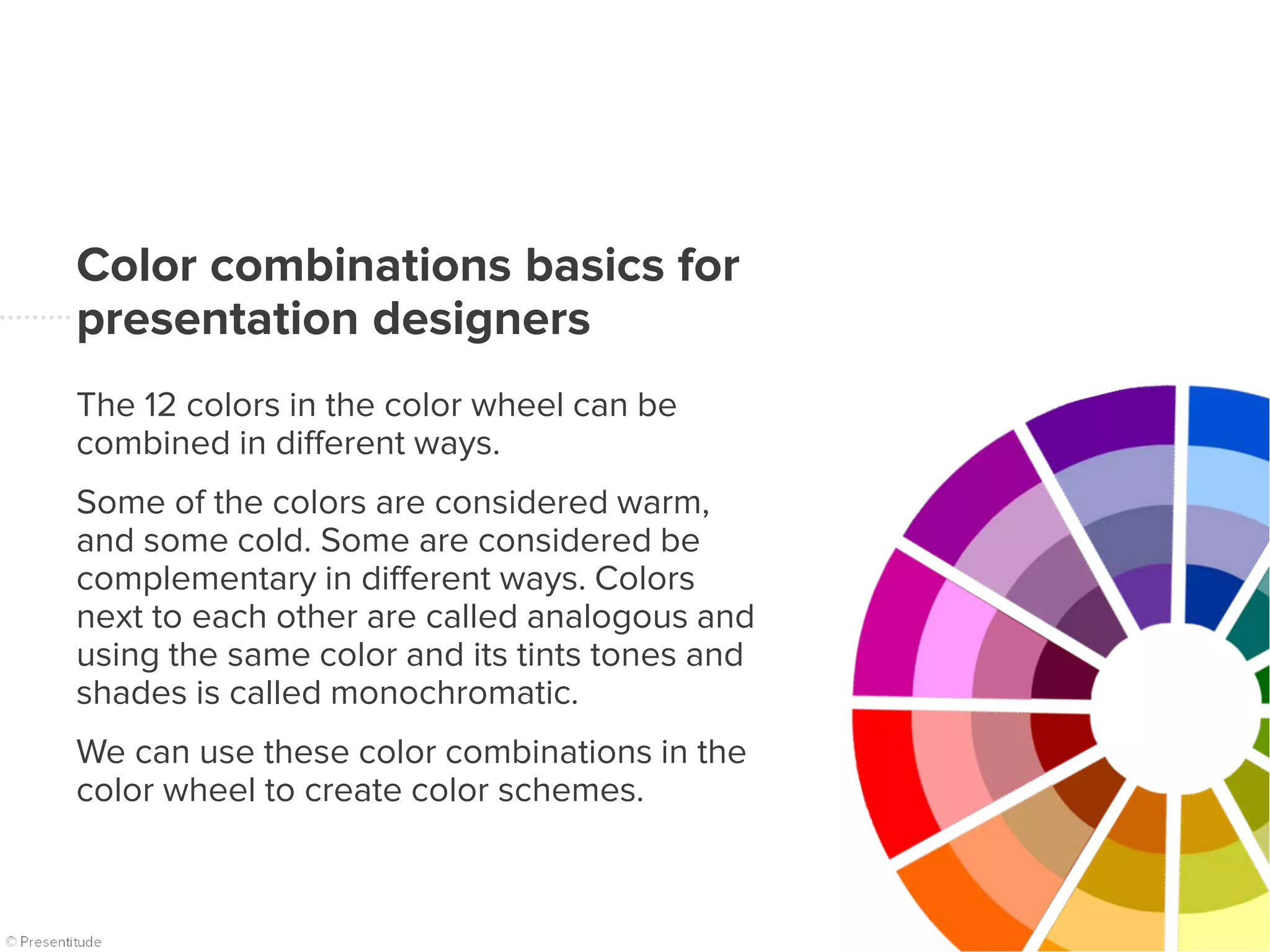
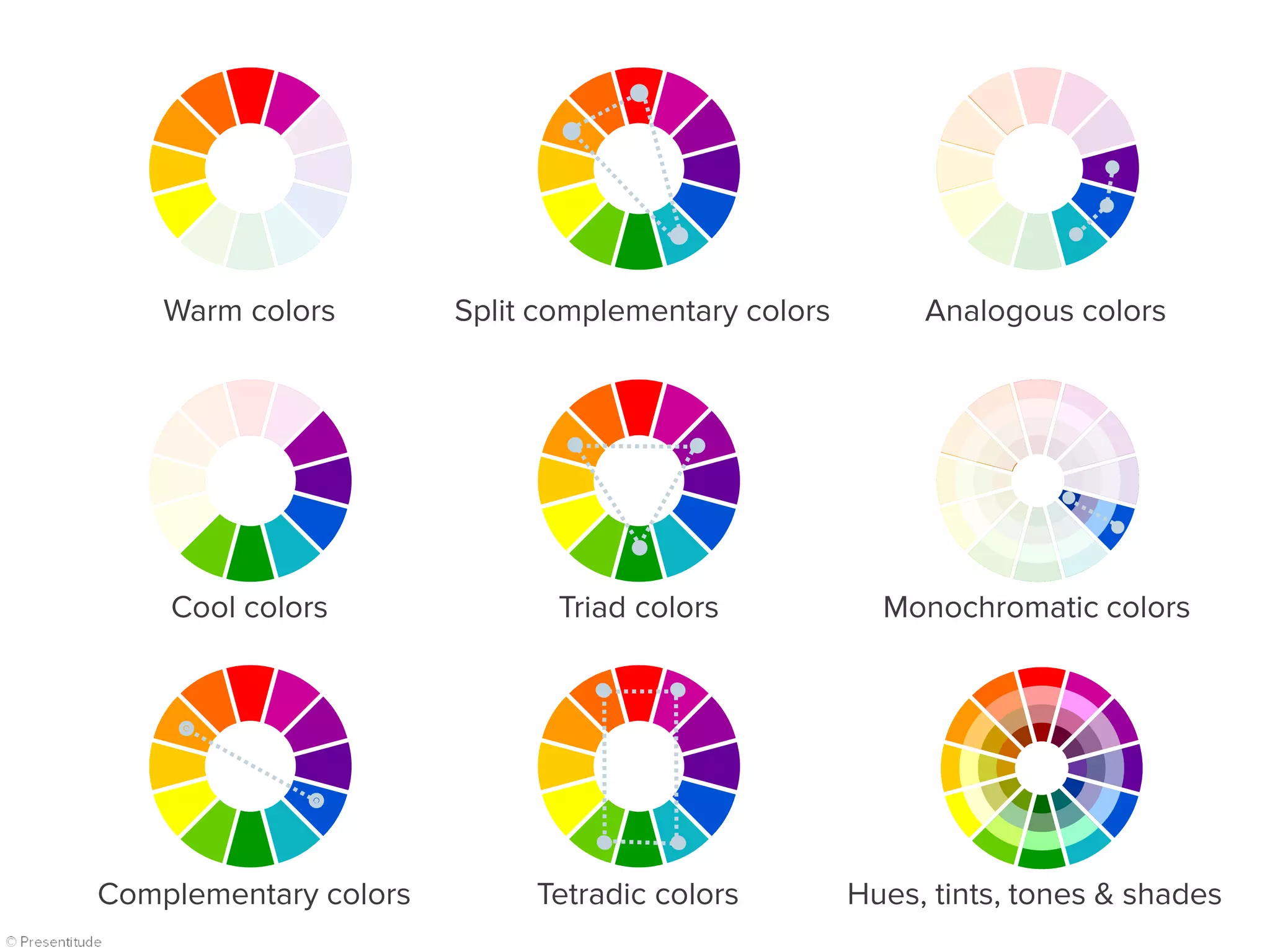
The 12 colors in the color wheel can be
combined in different ways.
Some of the colors are considered warm,
and some cold. Some are considered be
complementary in different ways. Colors
next to each other are called analogous and
using the same color and its tints tones and
shades is called monochromatic.
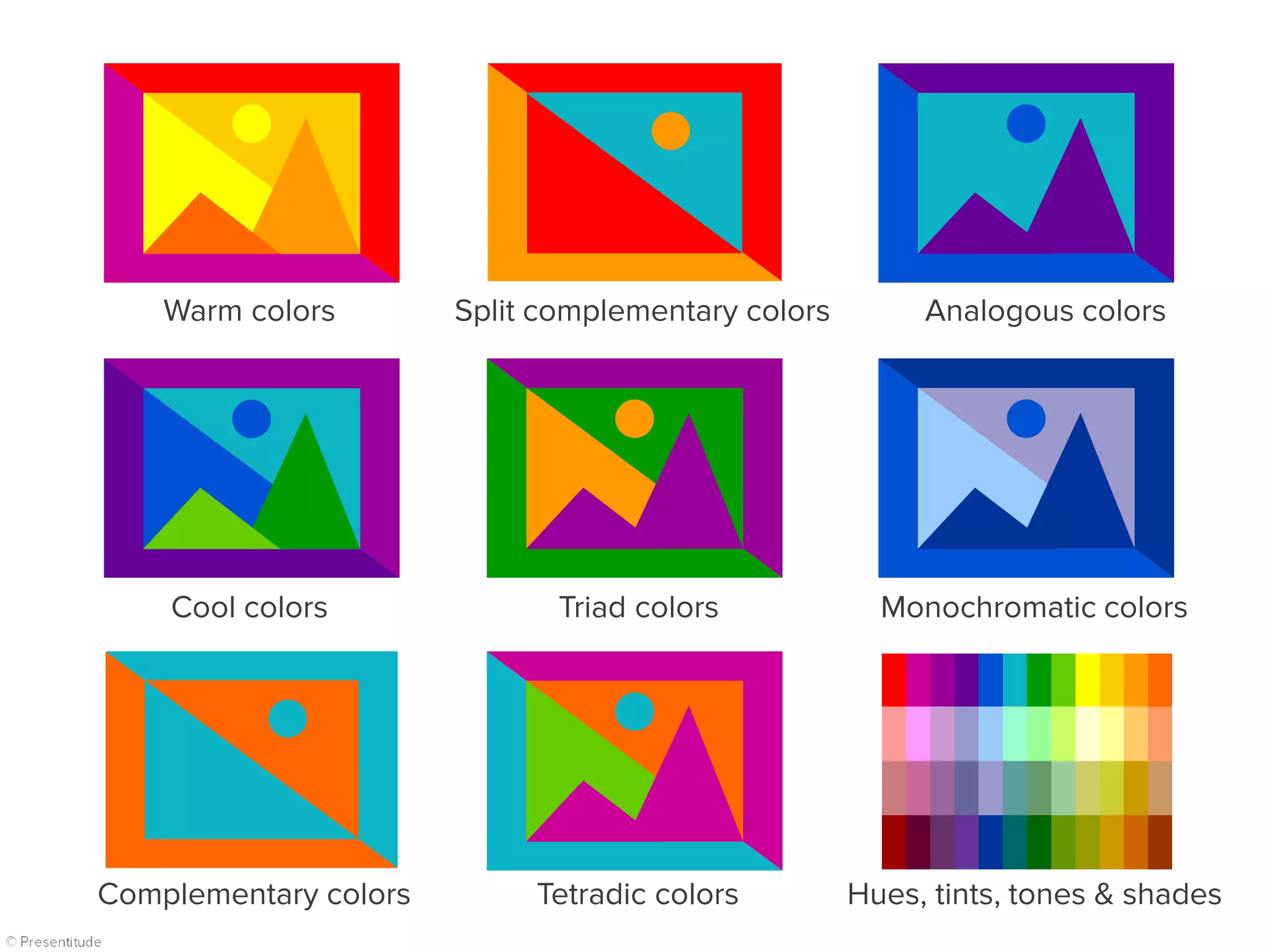
We can use these color combinations in the
color wheel to create color schemes.
© Presentitude
CREATING COLOR
COMBINATIONS USING
THE COLOR WHEEL
Part II of Basic Color Theory for Presentation Designers
© Presentitude
WARM COLORS
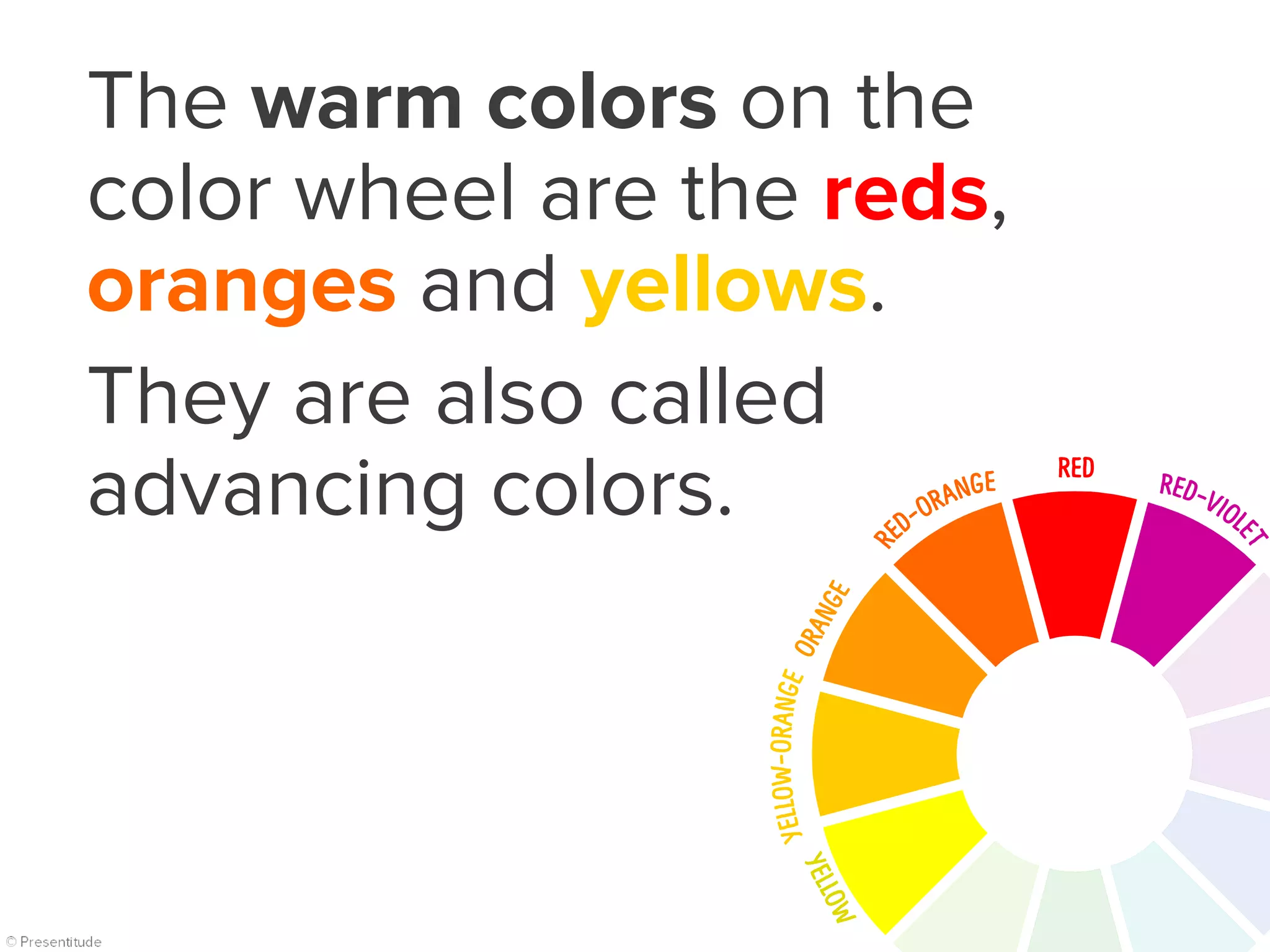
The warm colors on the
color wheel are the reds,
oranges and yellows.
They are also called
advancing colors. RED
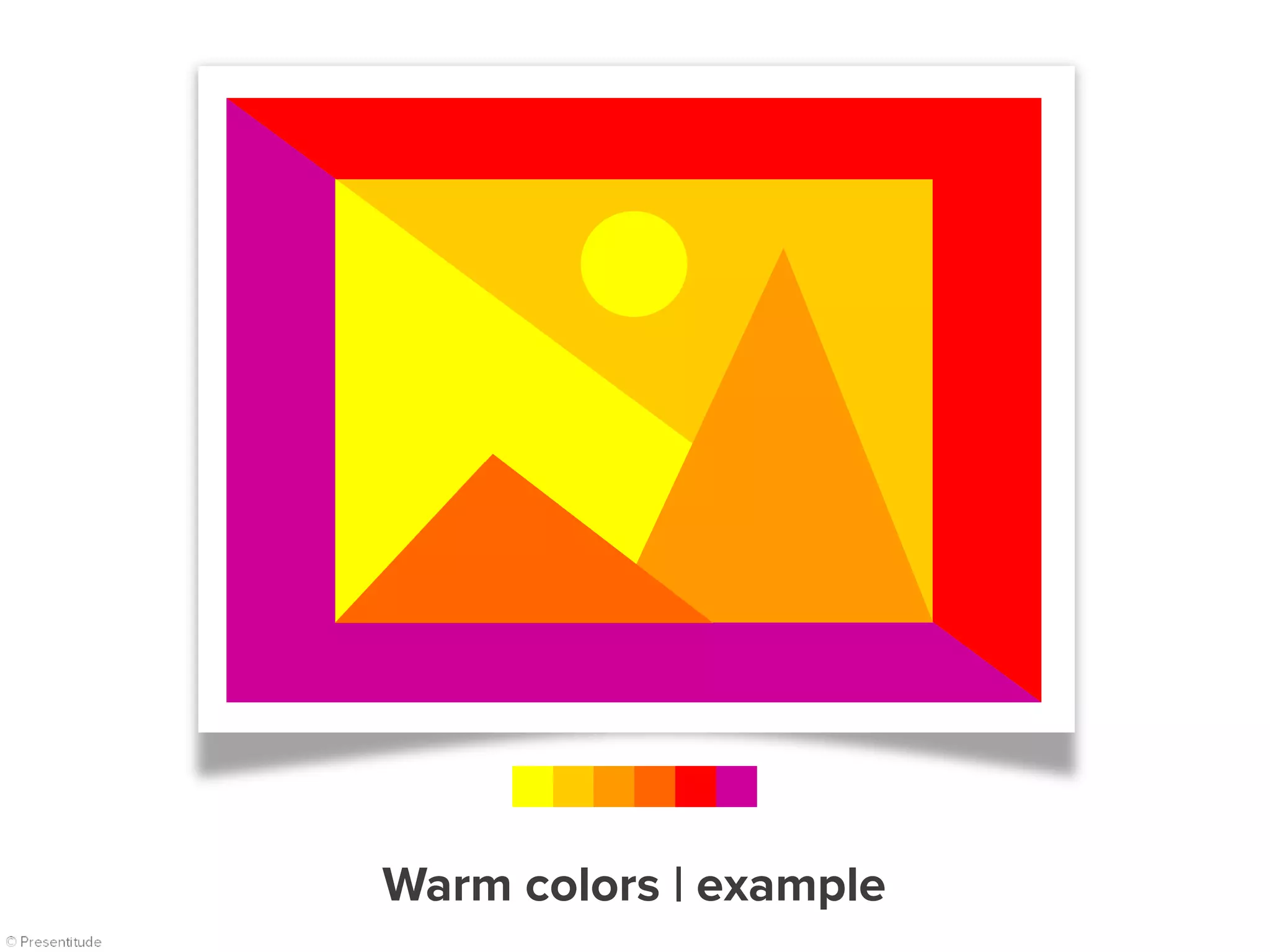
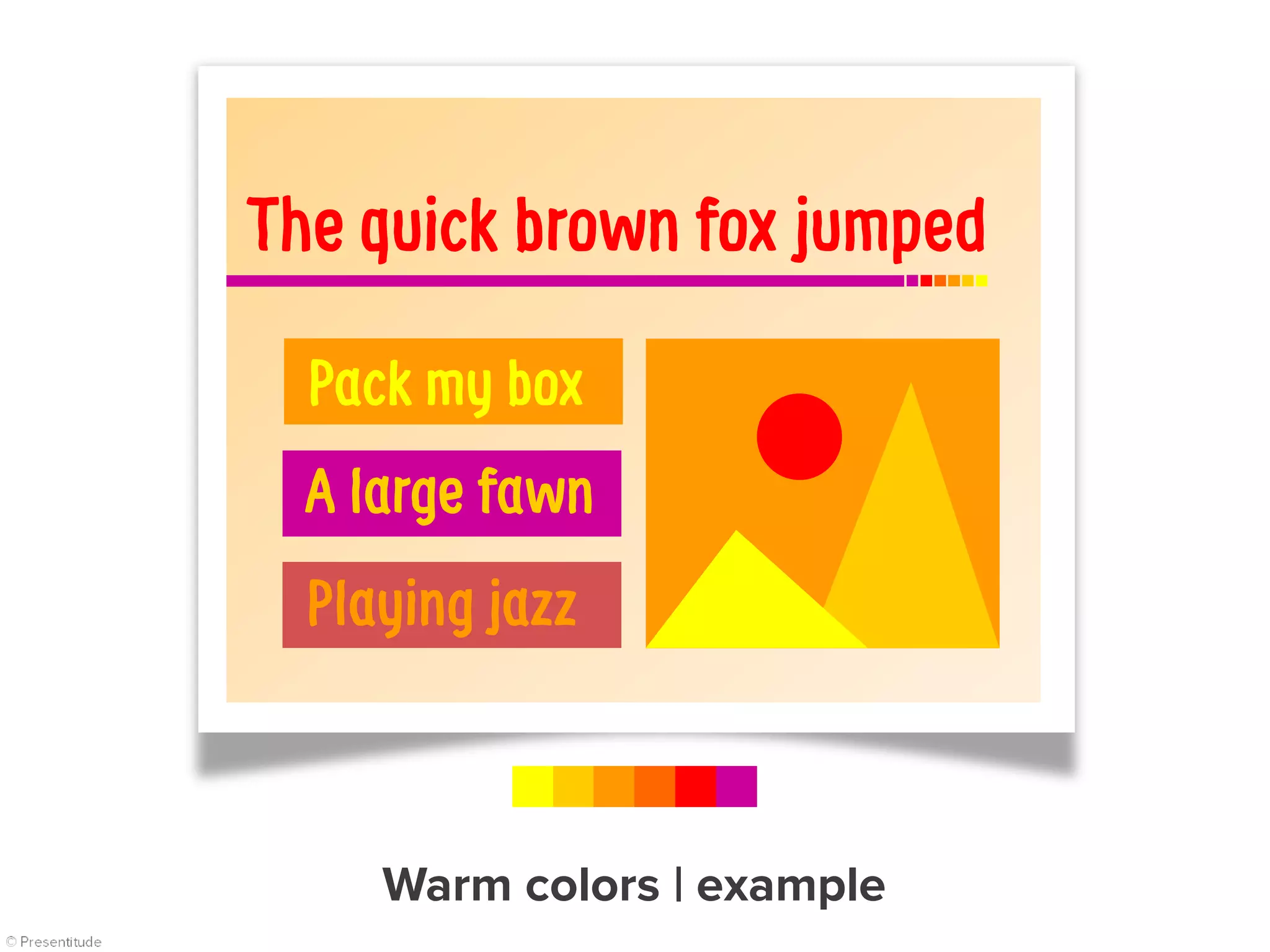
Warm colors | example
The quick brown fox jumped
Pack my box
A large fawn
Playing jazz
Warm colors | example
© Presentitude
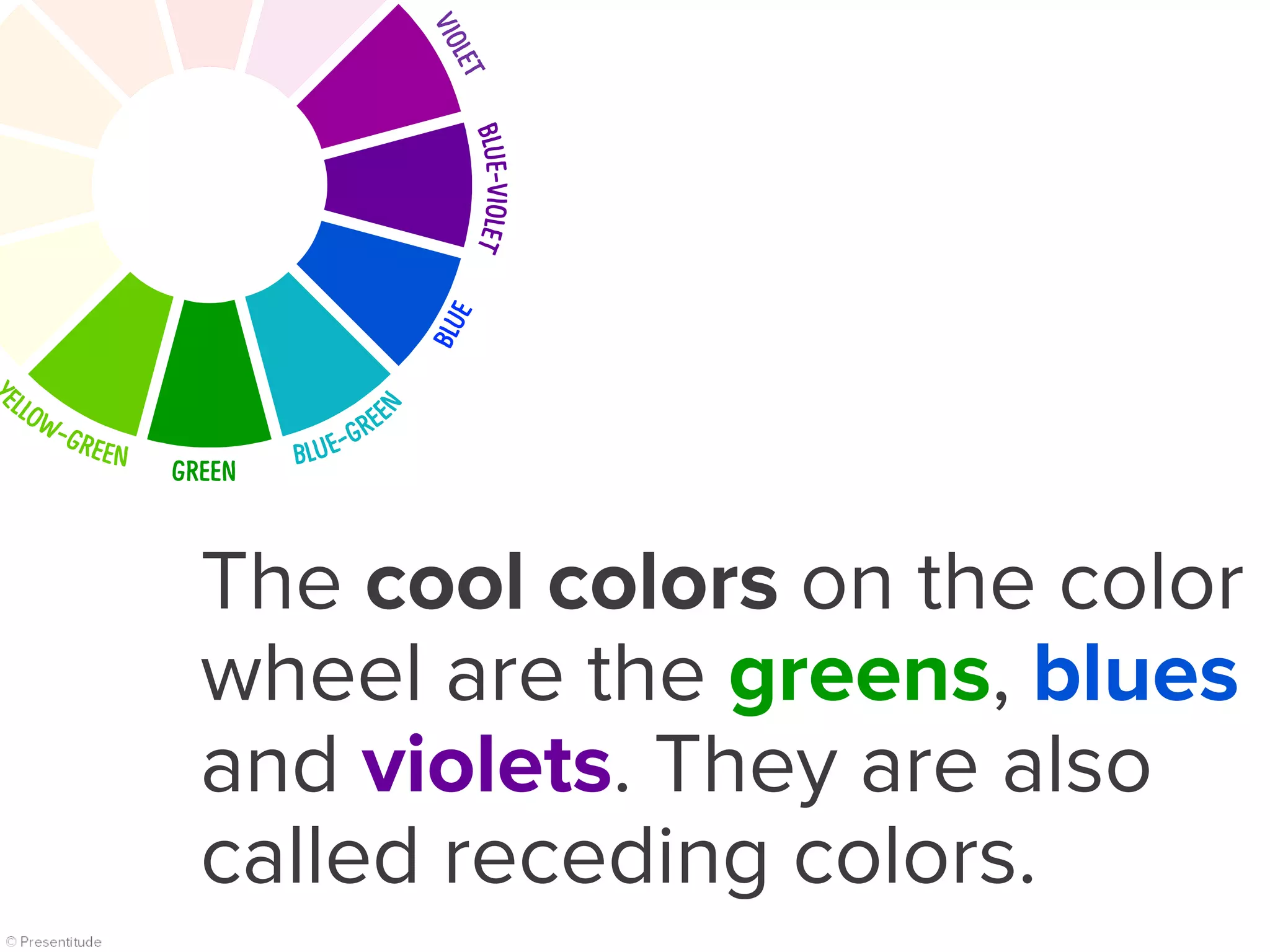
COOL COLORS
The cool colors on the color
wheel are the greens, blues
and violets. They are also
called receding colors.
GREEN
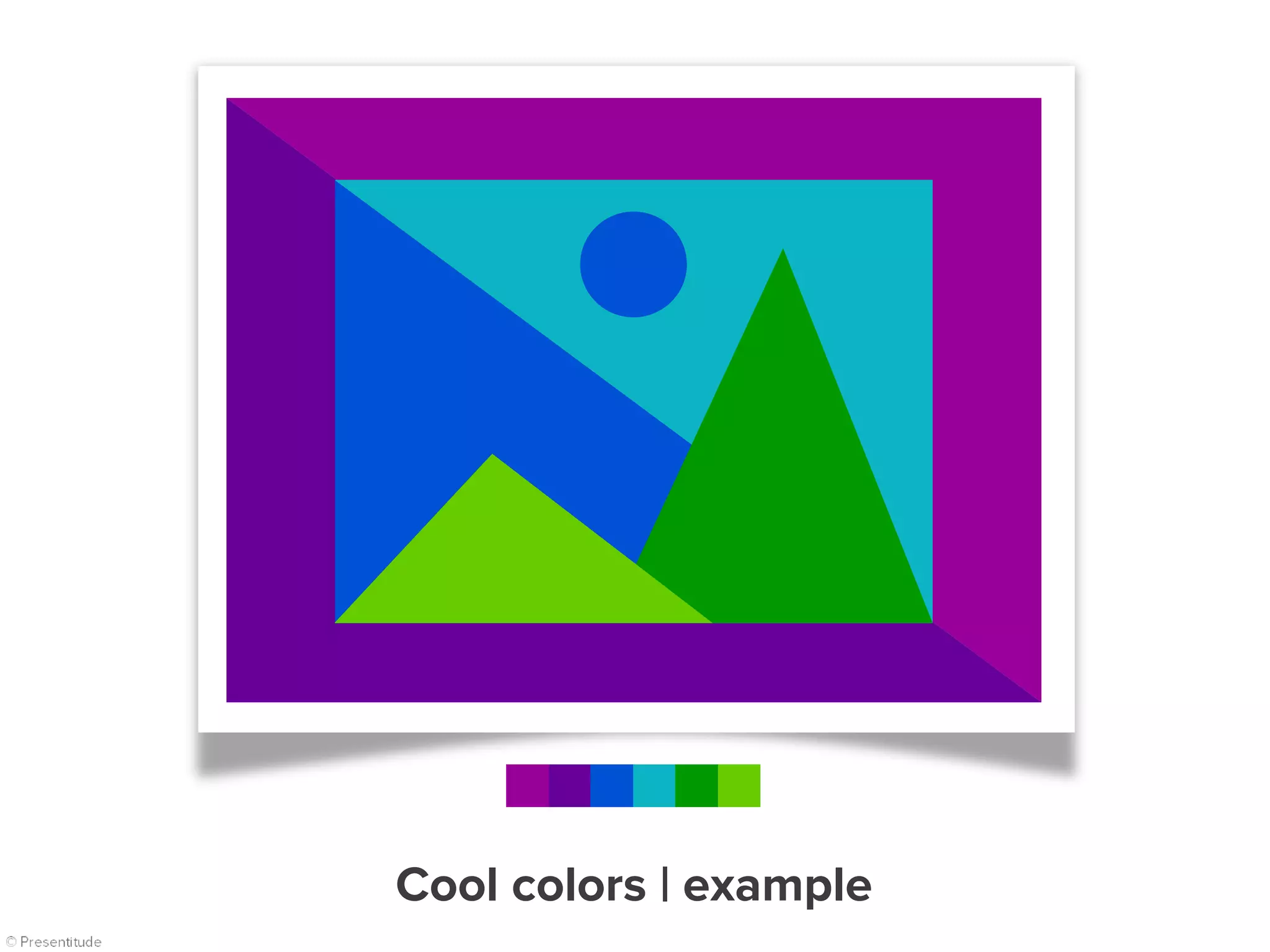
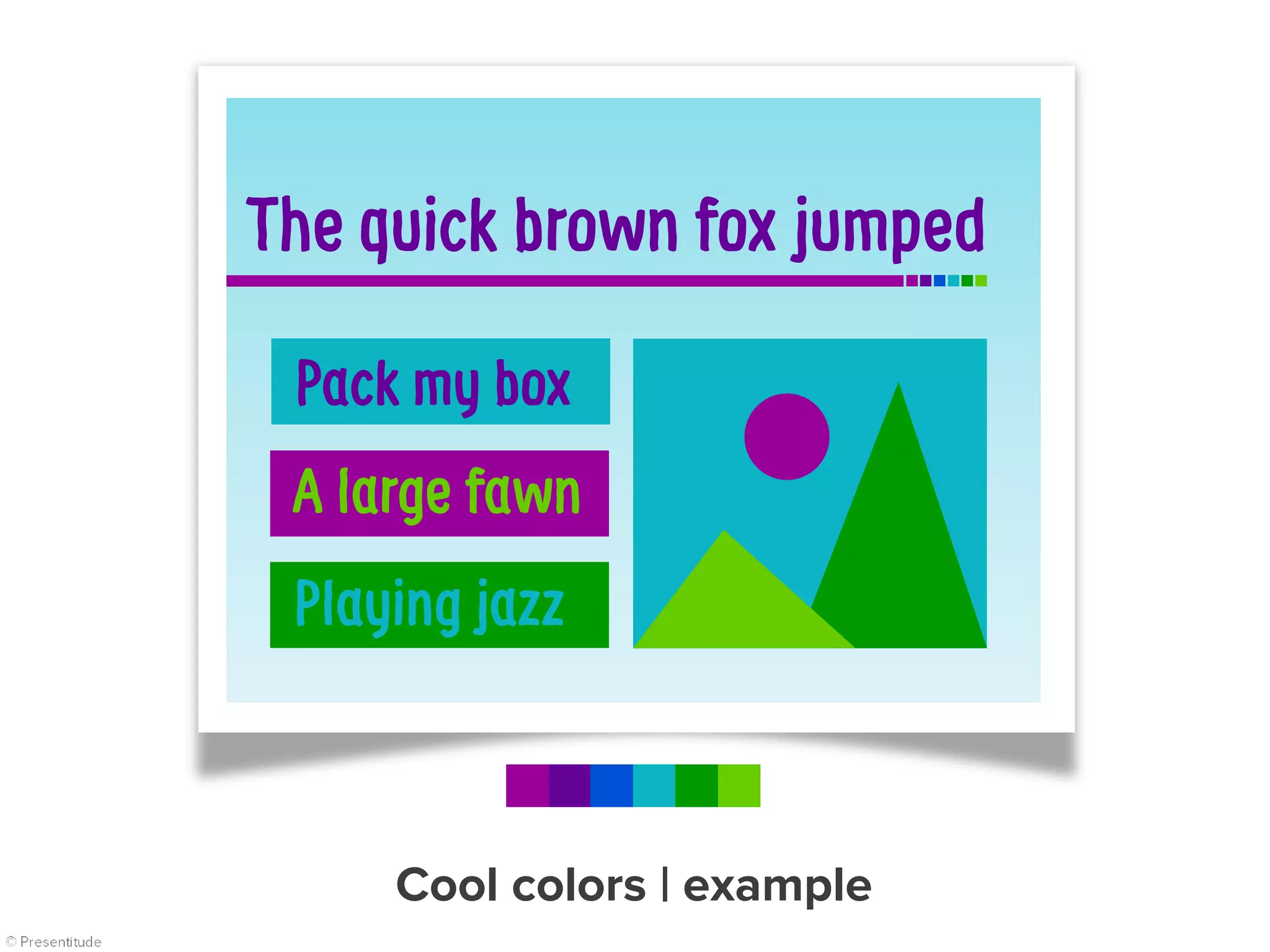
Cool colors | example
The quick brown fox jumped
Pack my box
A large fawn
Playing jazz
Cool colors | example
© Presentitude
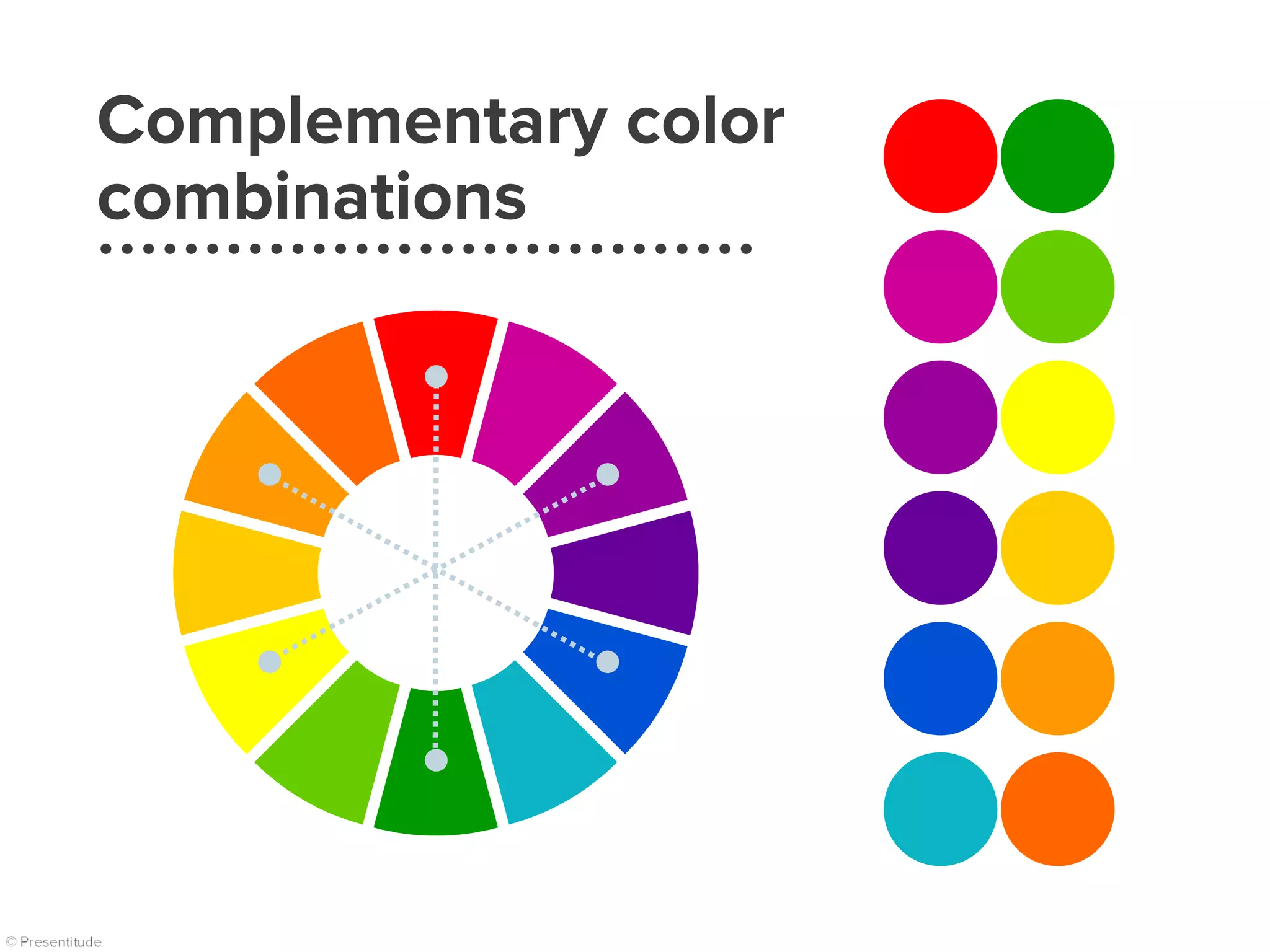
COMPLEMENTARY
COLORS
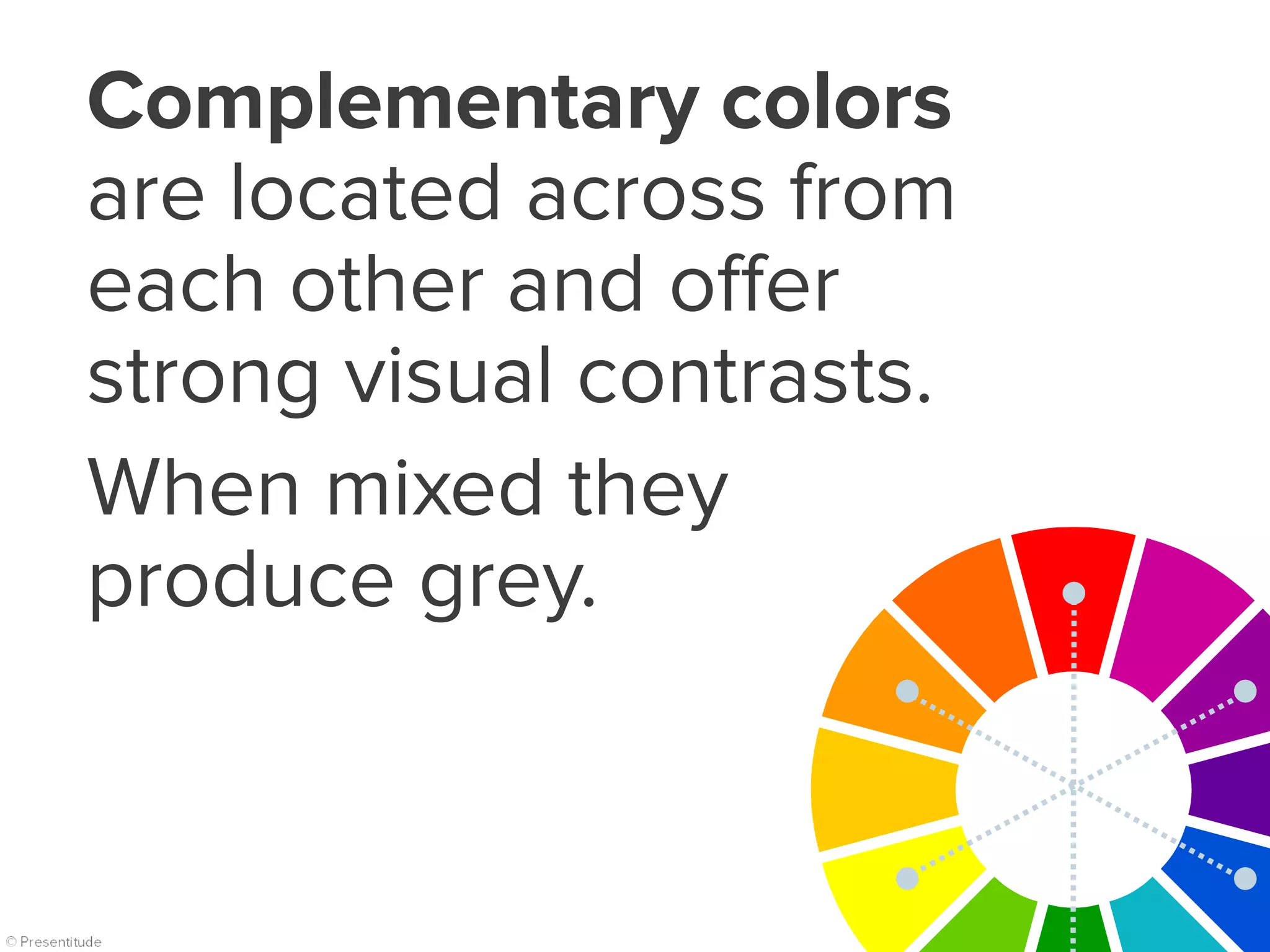
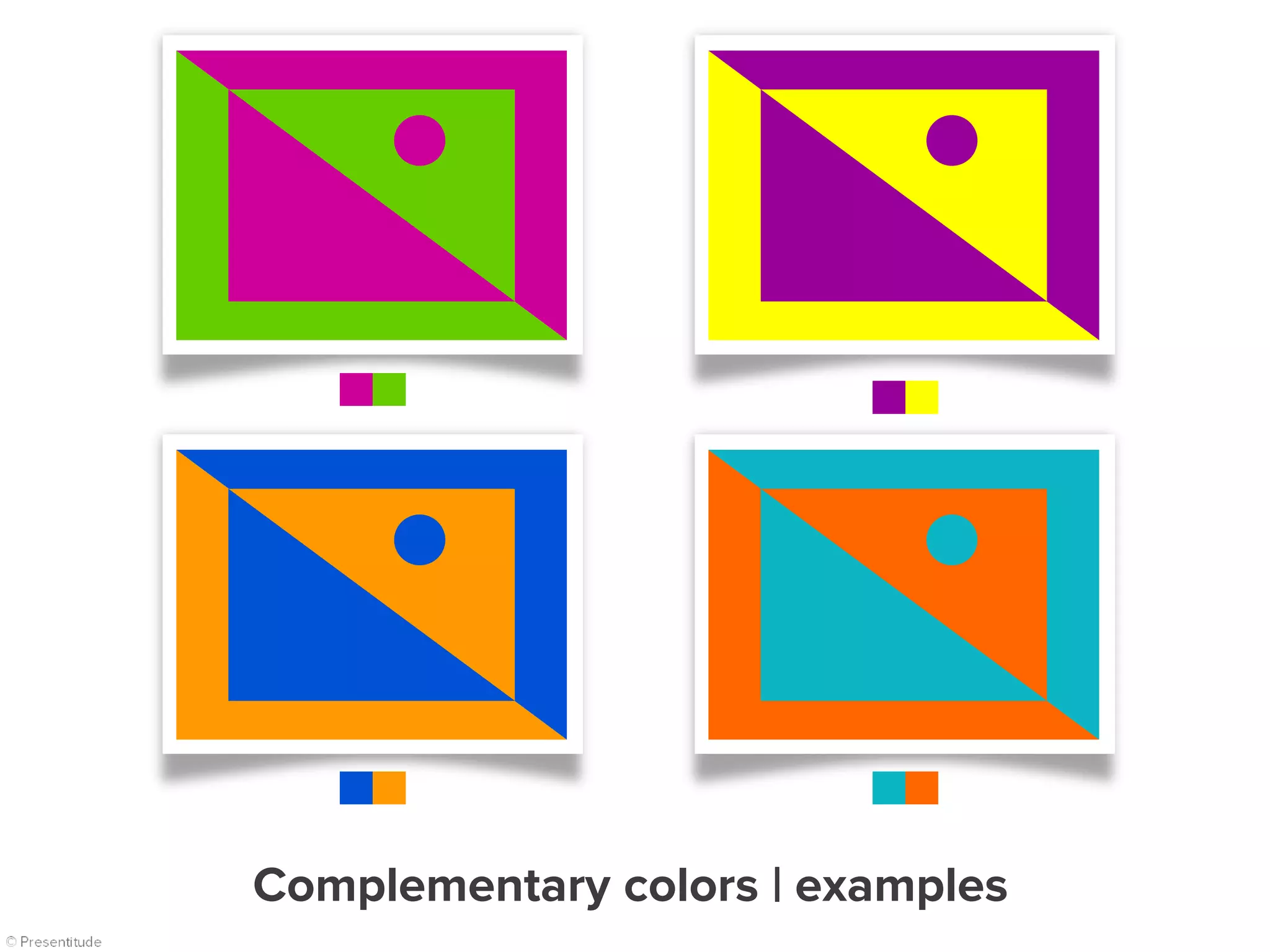
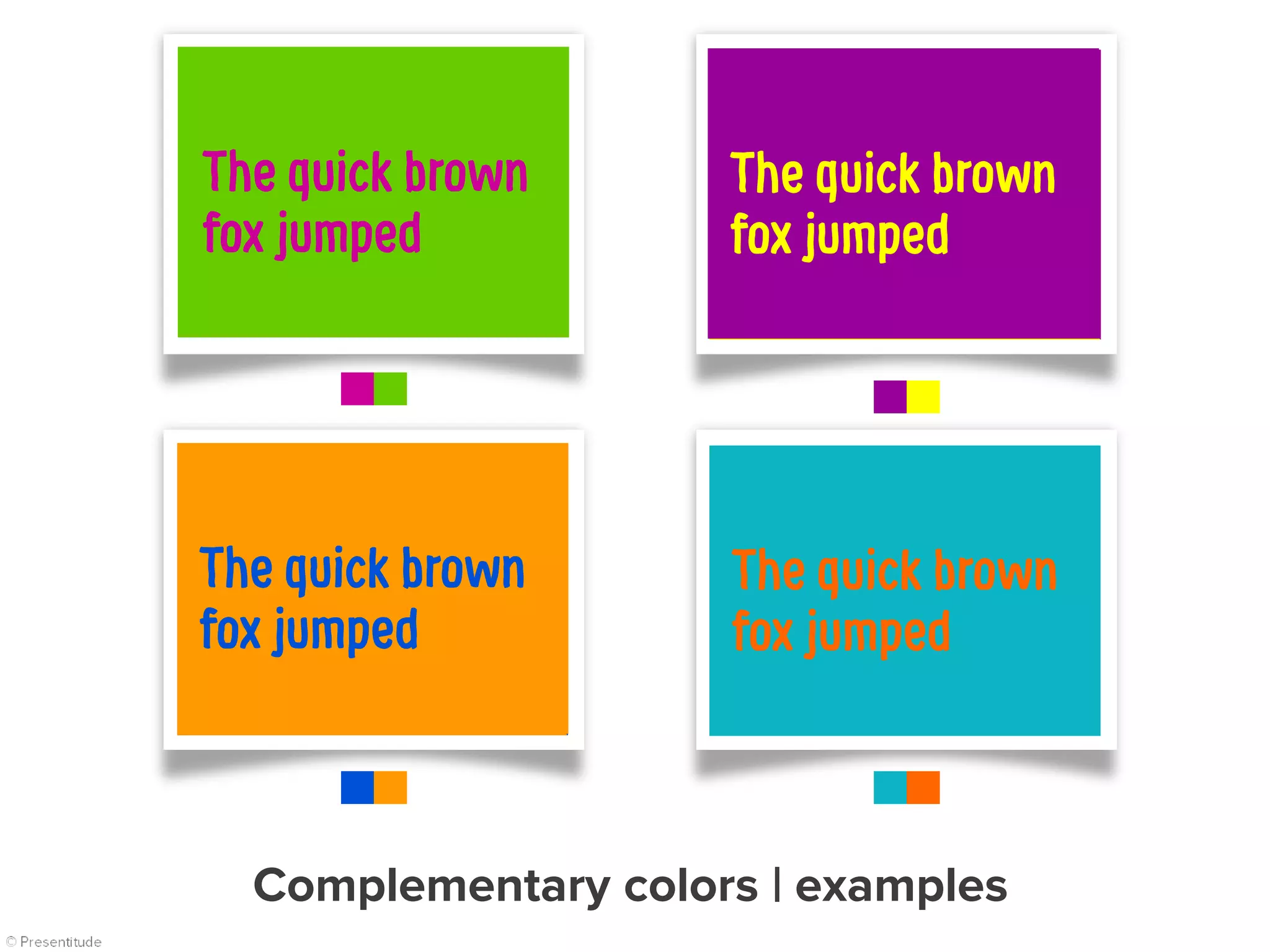
Complementary colors
are located across from
each other and offer
strong visual contrasts.
When mixed they
produce grey.
Complementary color
combinations
Complementary colors | examples
The quick brown
fox jumped
The quick brown
fox jumped
The quick brown
fox jumped
The quick brown
fox jumped
Complementary colors | examples
© Presentitude
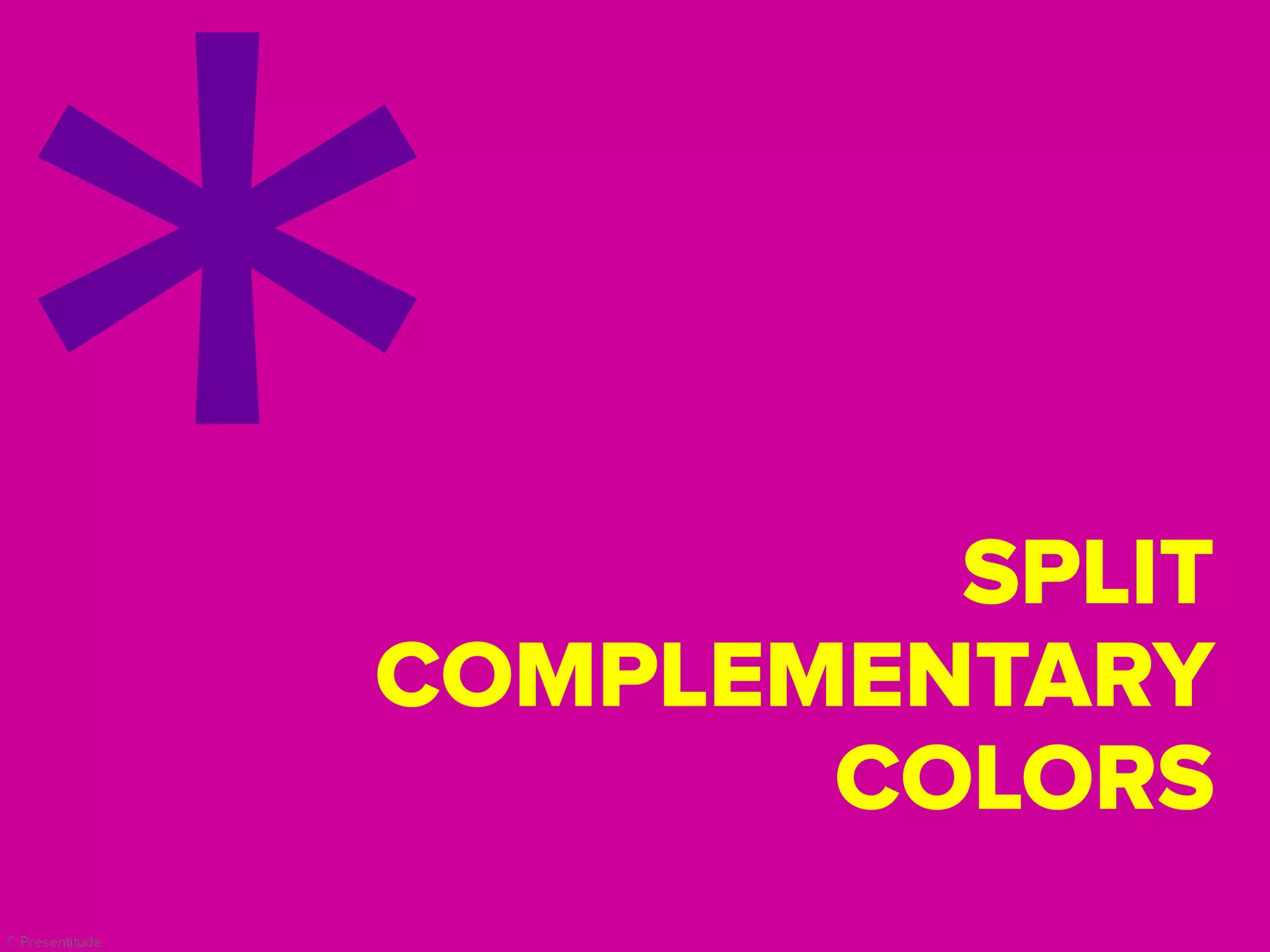
SPLIT
COMPLEMENTARY
COLORS
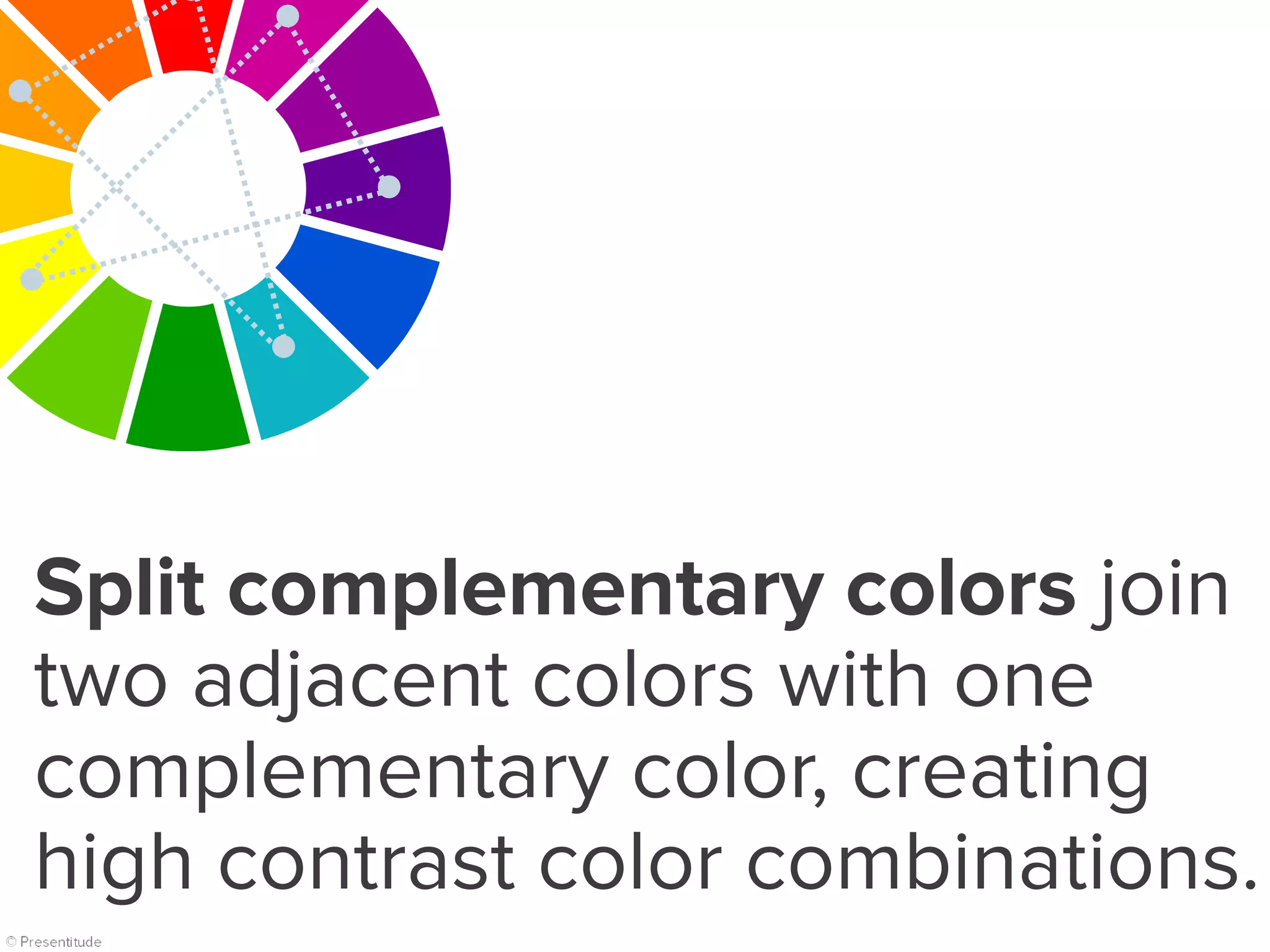
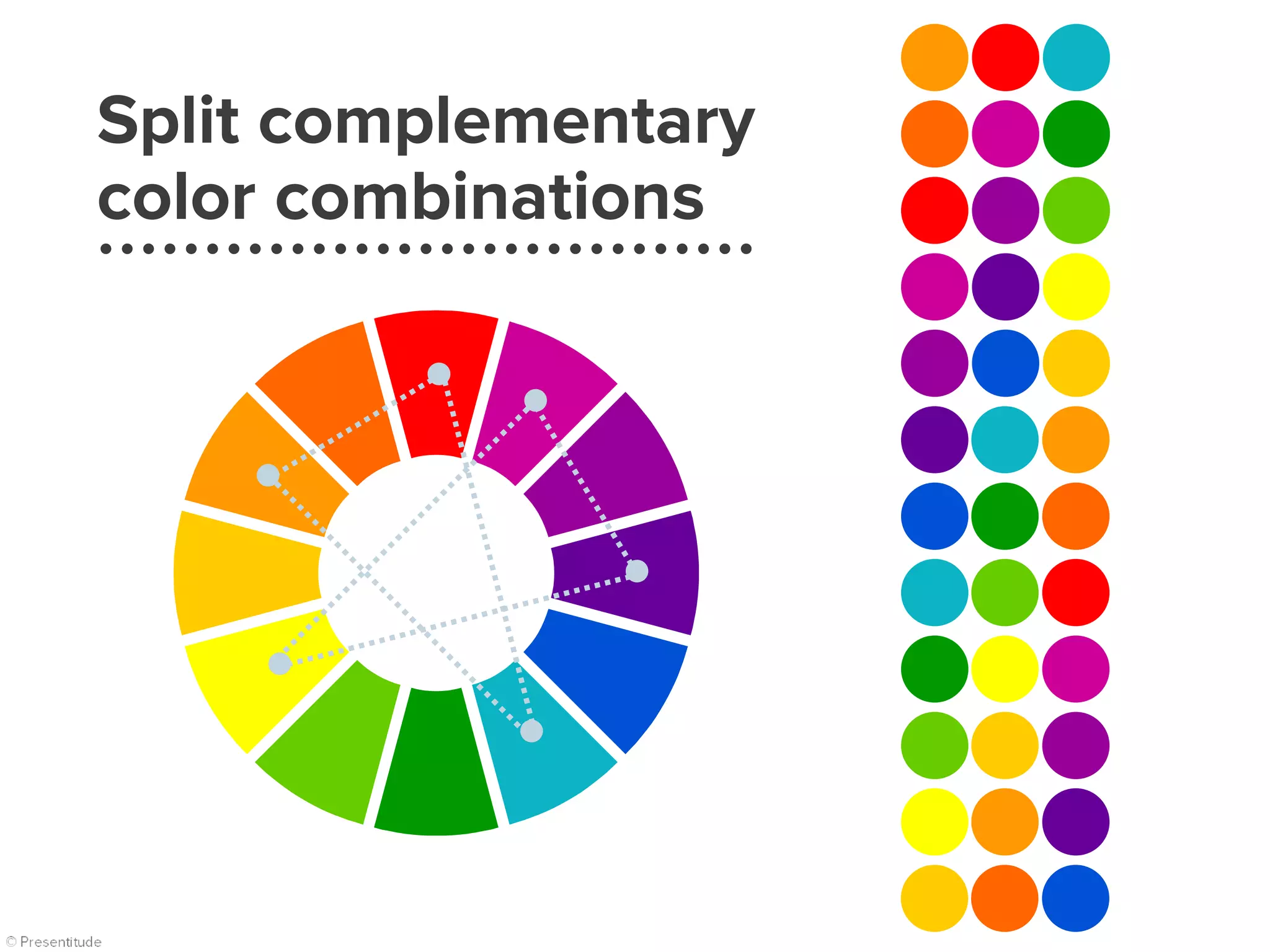
Split complementary colors join
two adjacent colors with one
complementary color, creating
high contrast color combinations.
Split complementary
color combinations
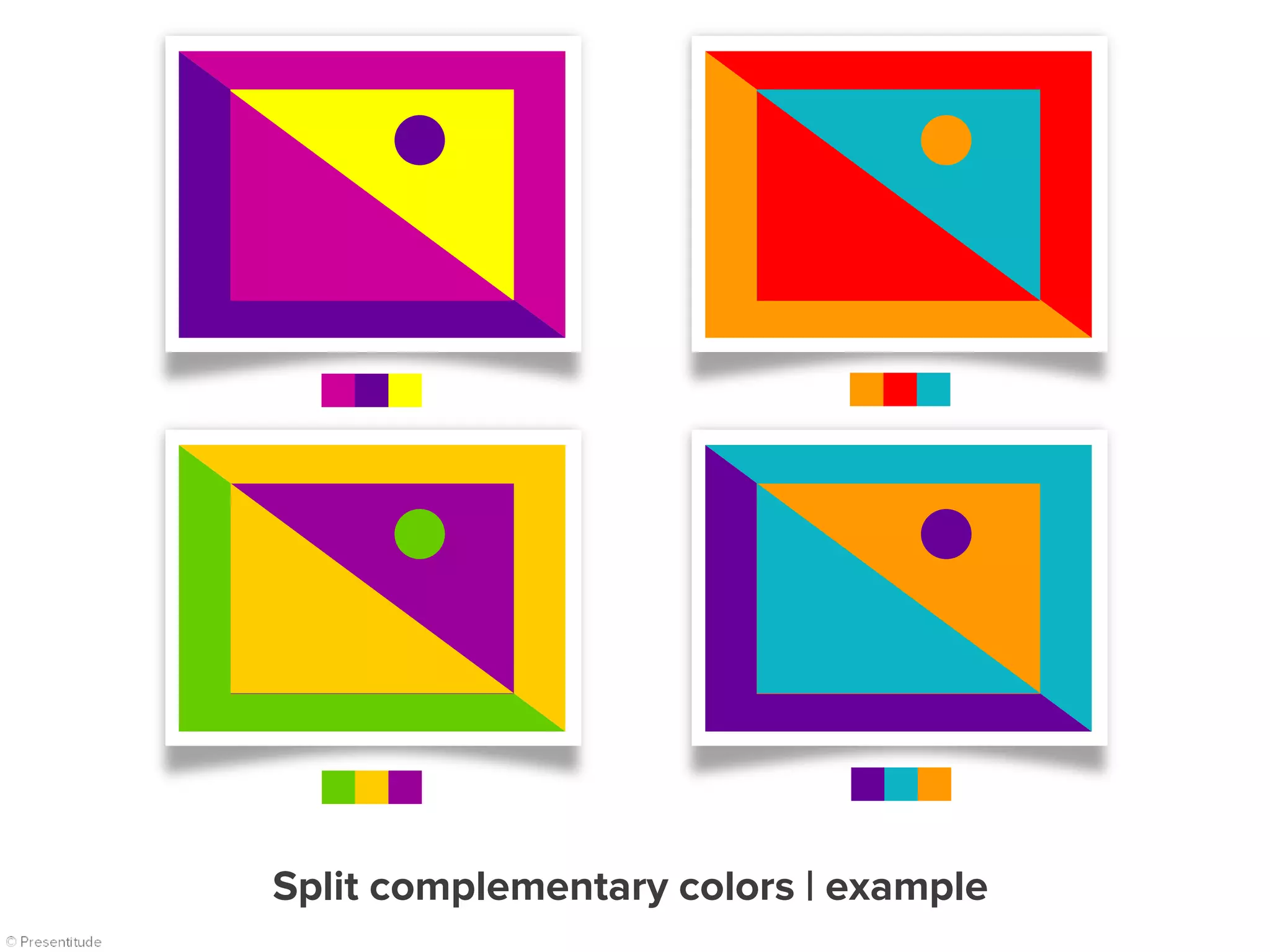
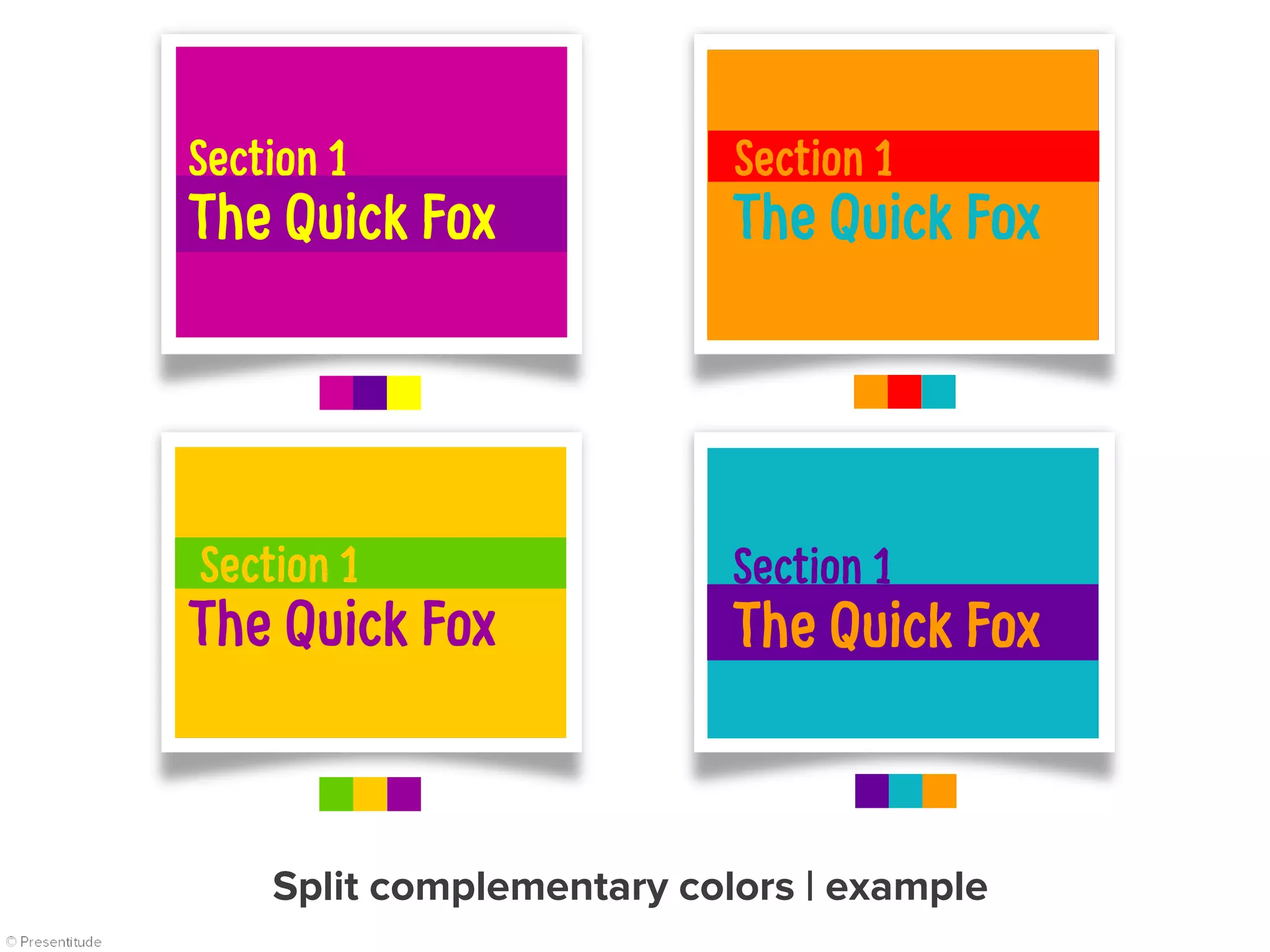
Split complementary colors | example
Section 1
The Quick Fox The Quick Fox
Section 1
The Quick Fox The Quick Fox
Section 1
Section 1
Split complementary colors | example
© Presentitude
TRIADS AND
TETRADIC COLORS
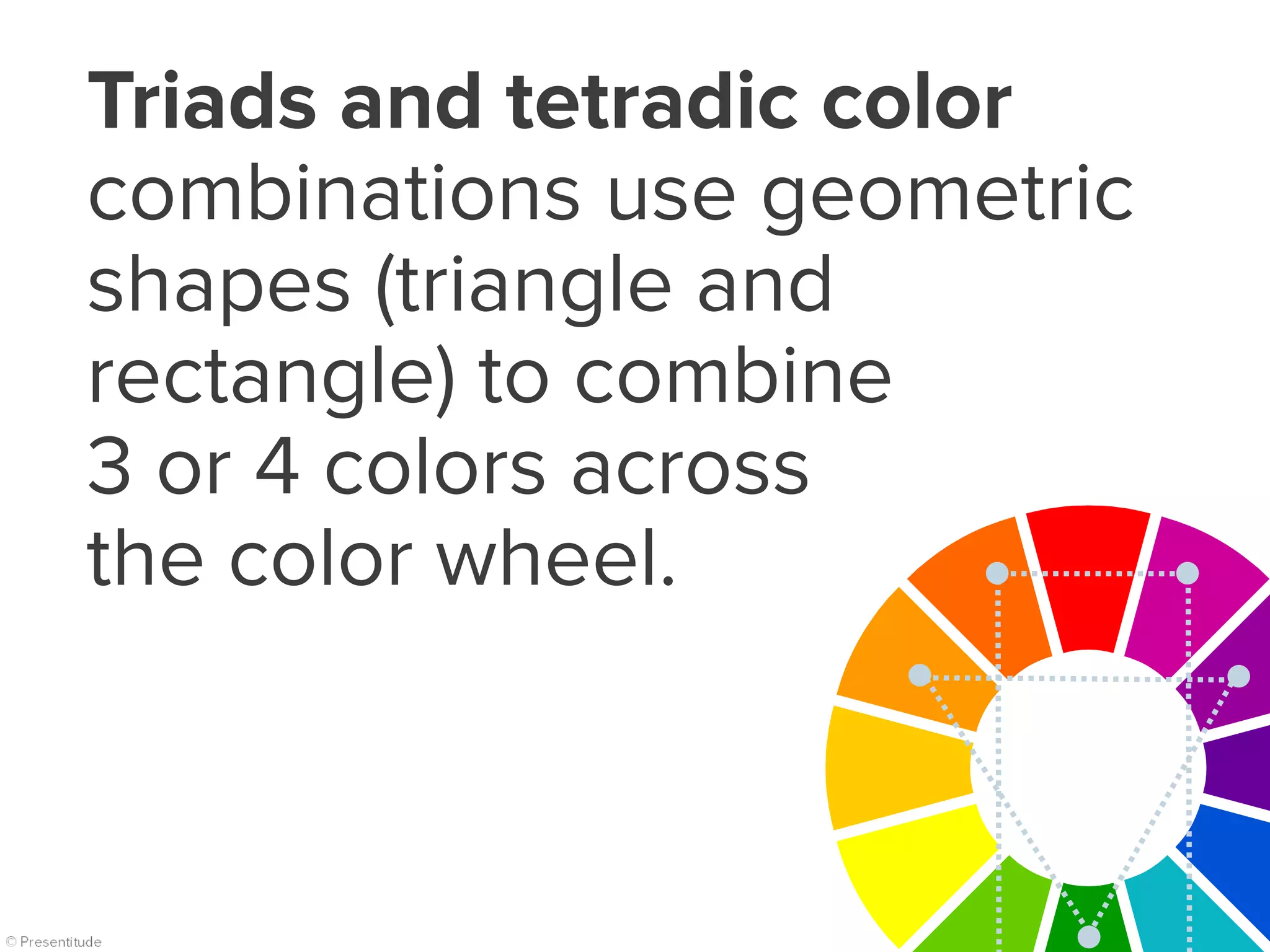
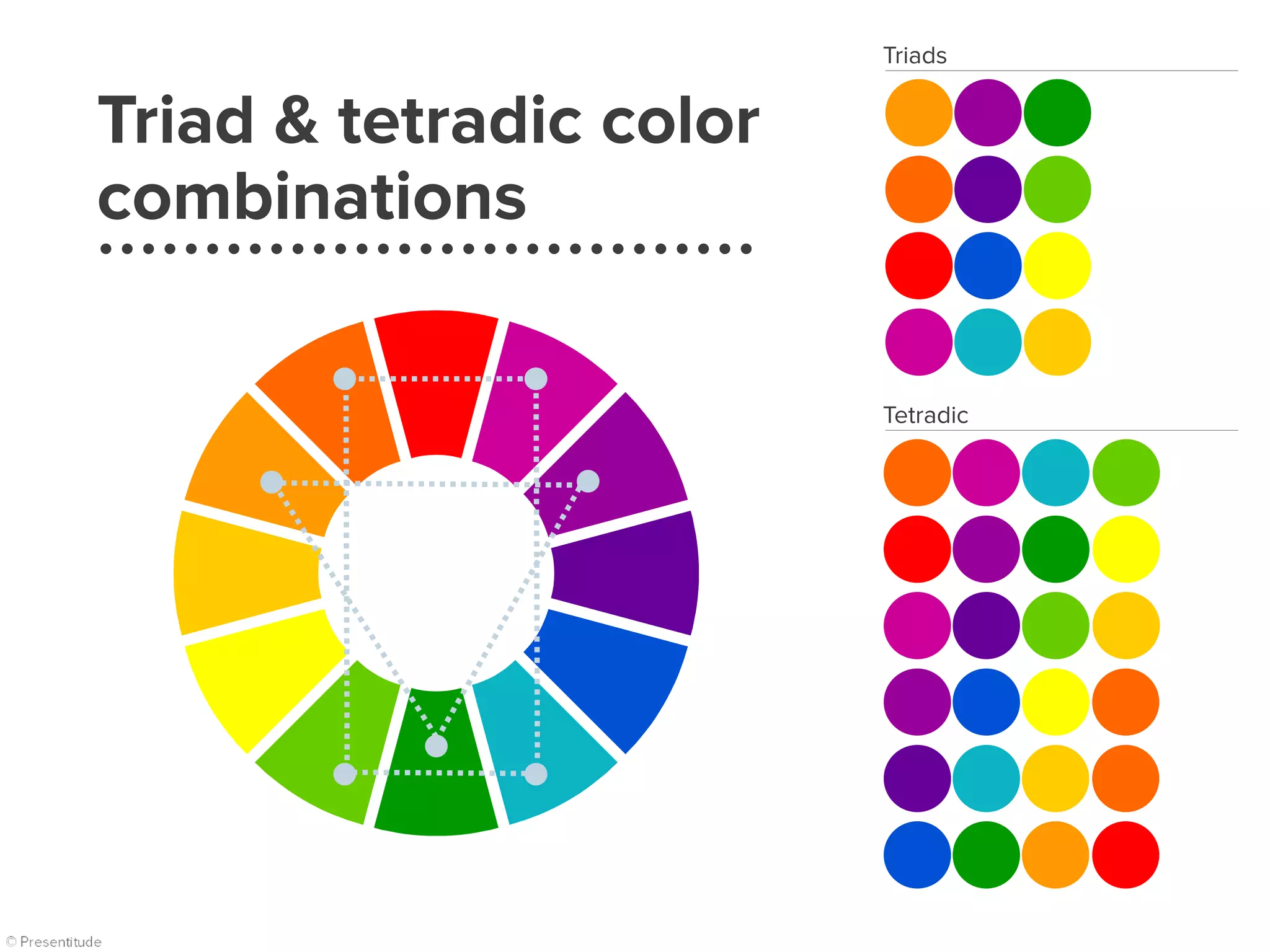
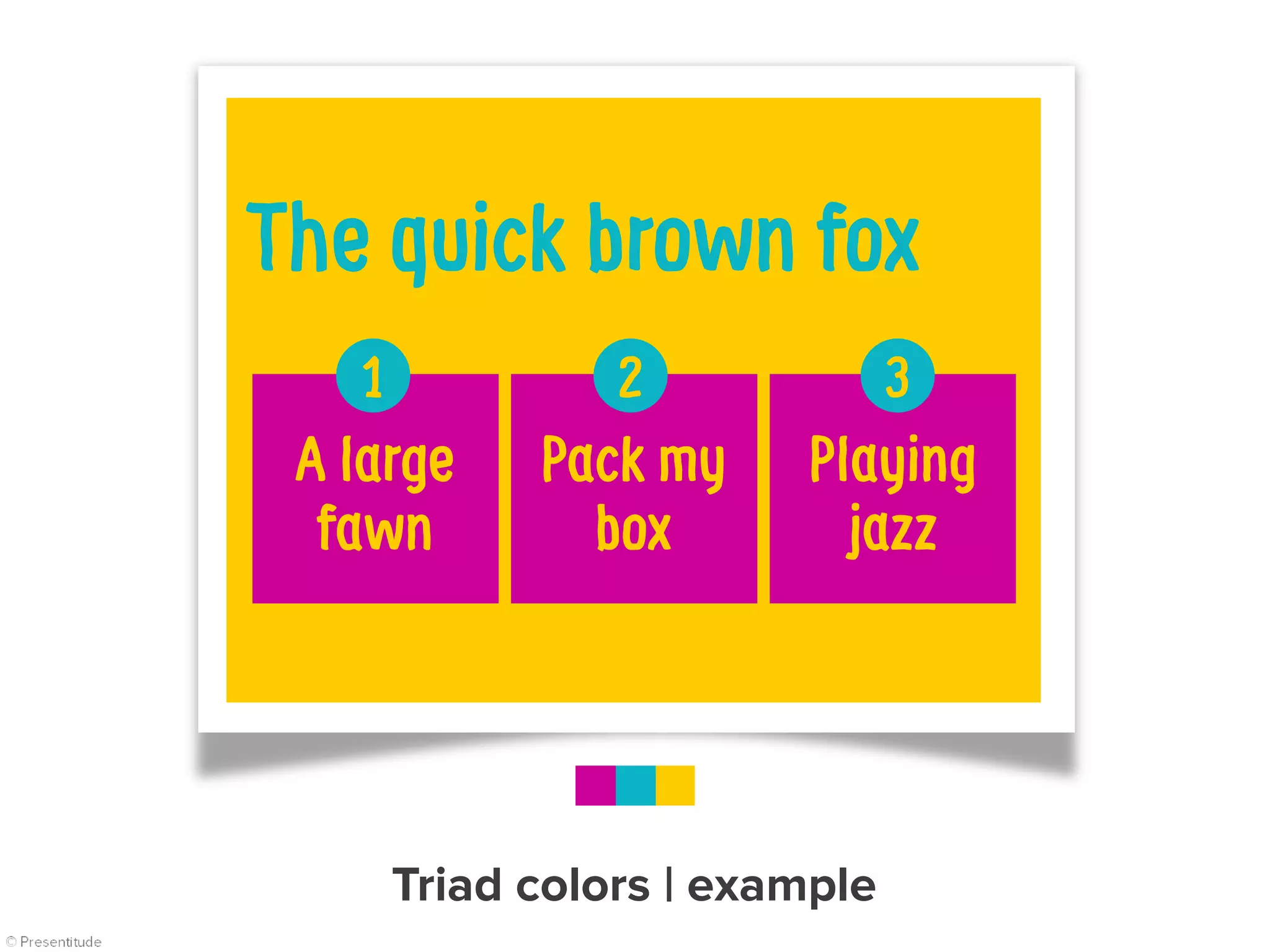
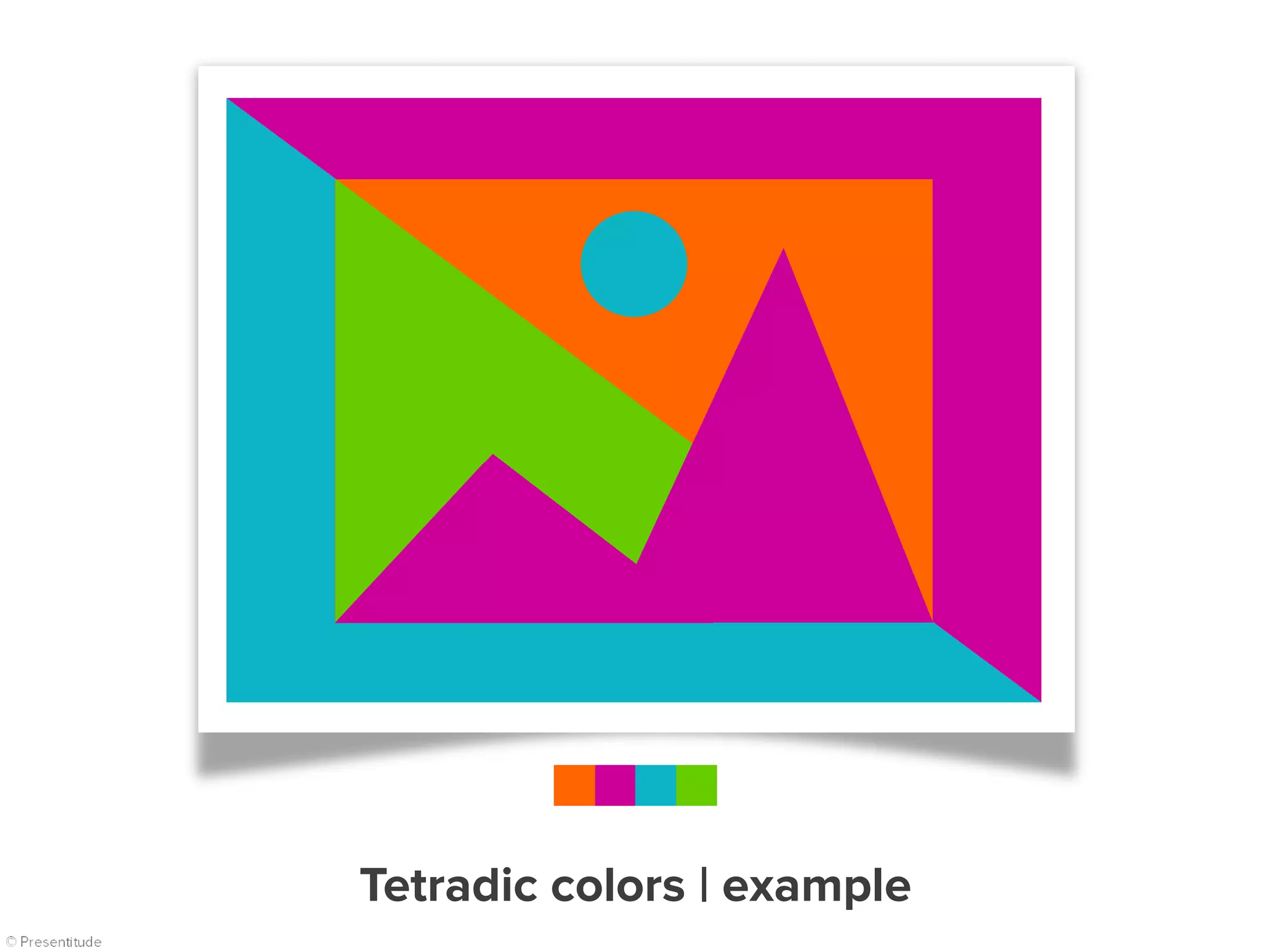
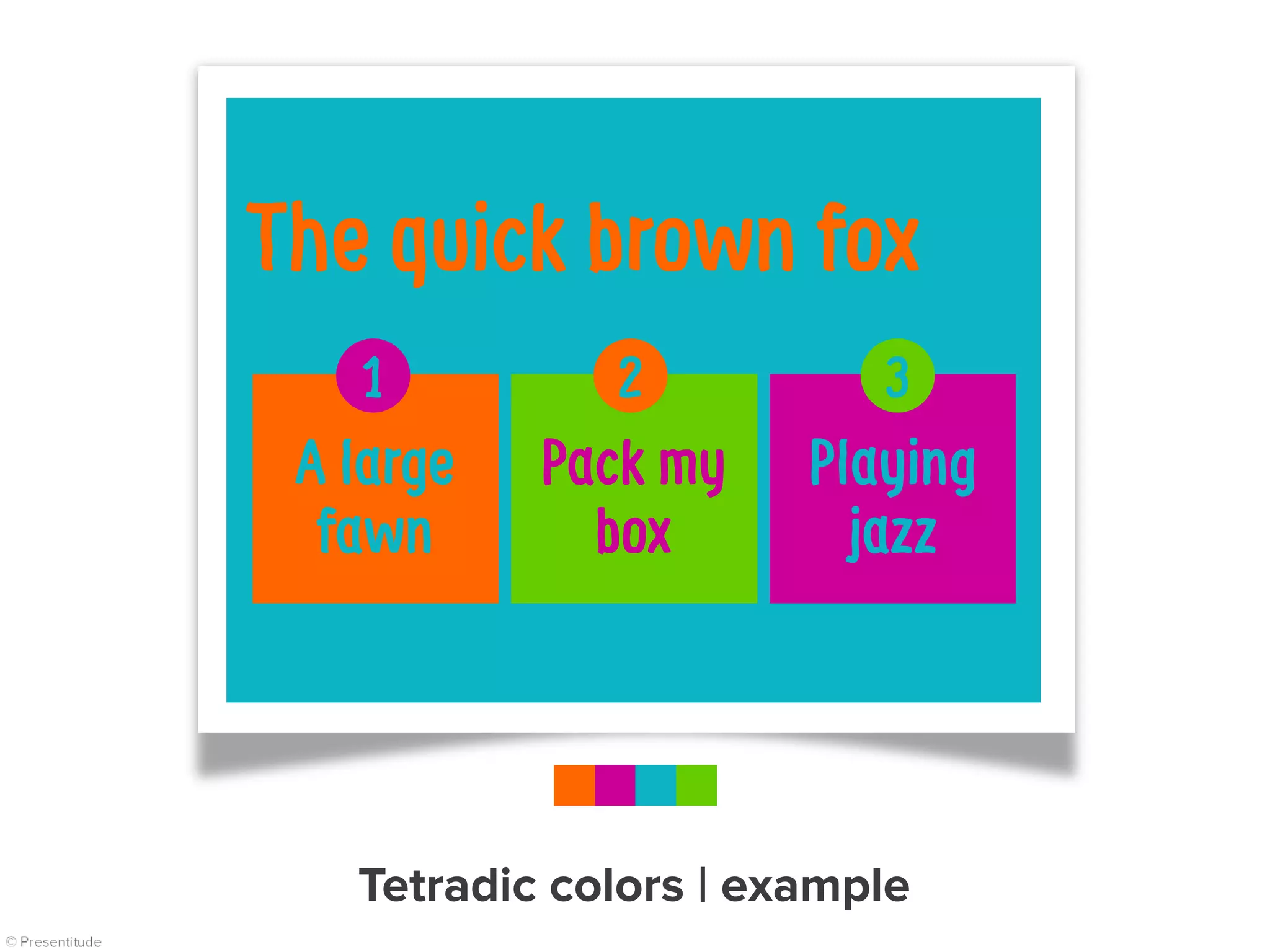
Triads and tetradic color
combinations use geometric
shapes (triangle and
rectangle) to combine
3 or 4 colors across
the color wheel.
Triad & tetradic color
combinations
Triads
Tetradic
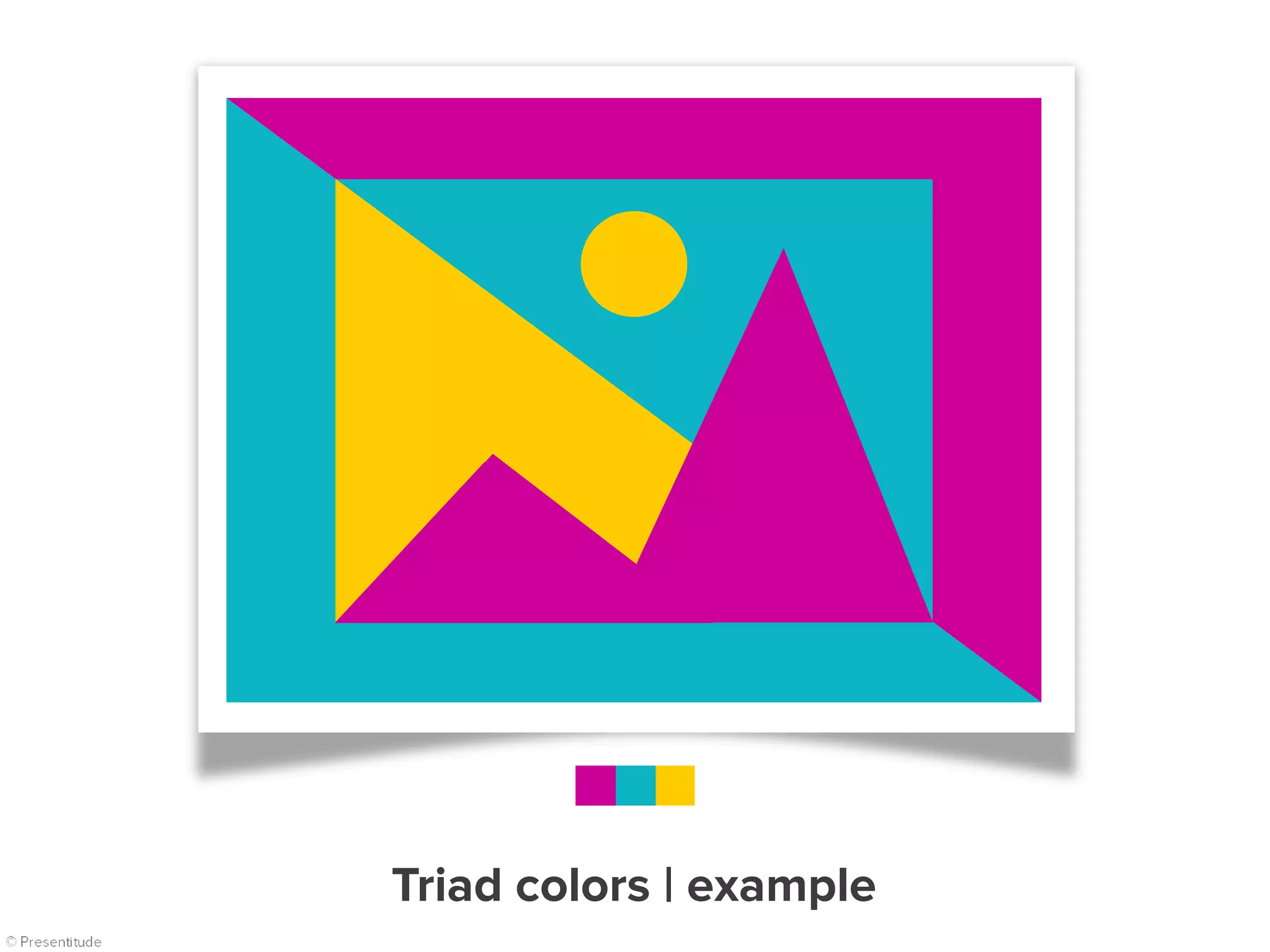
Triad colors | example
The quick brown fox
Pack my
box
A large
fawn
Playing
jazz
Triad colors | example
1 2 3
Tetradic colors | example
The quick brown fox
Pack my
box
A large
fawn
Playing
jazz
1 2 3
Tetradic colors | example
© Presentitude
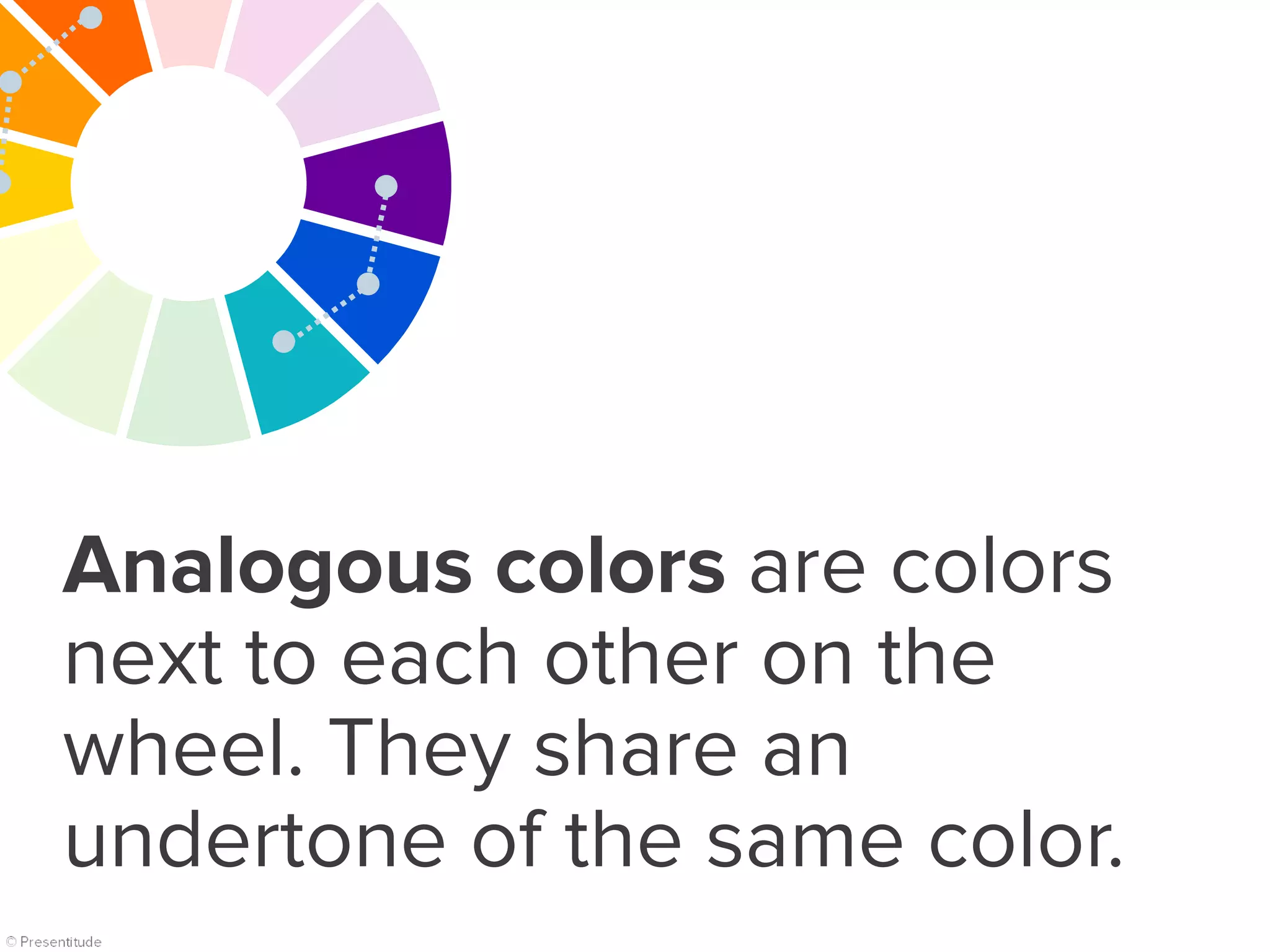
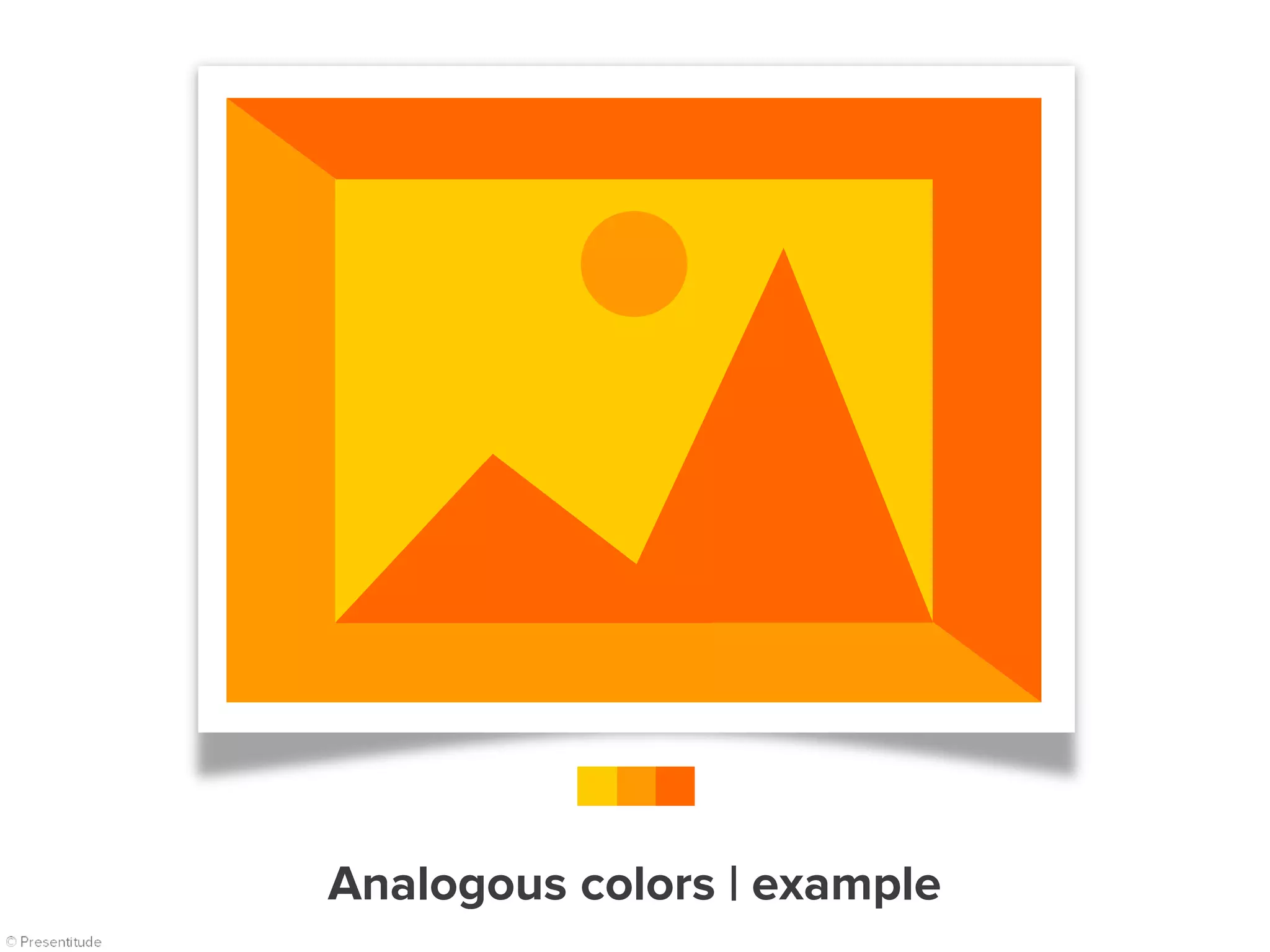
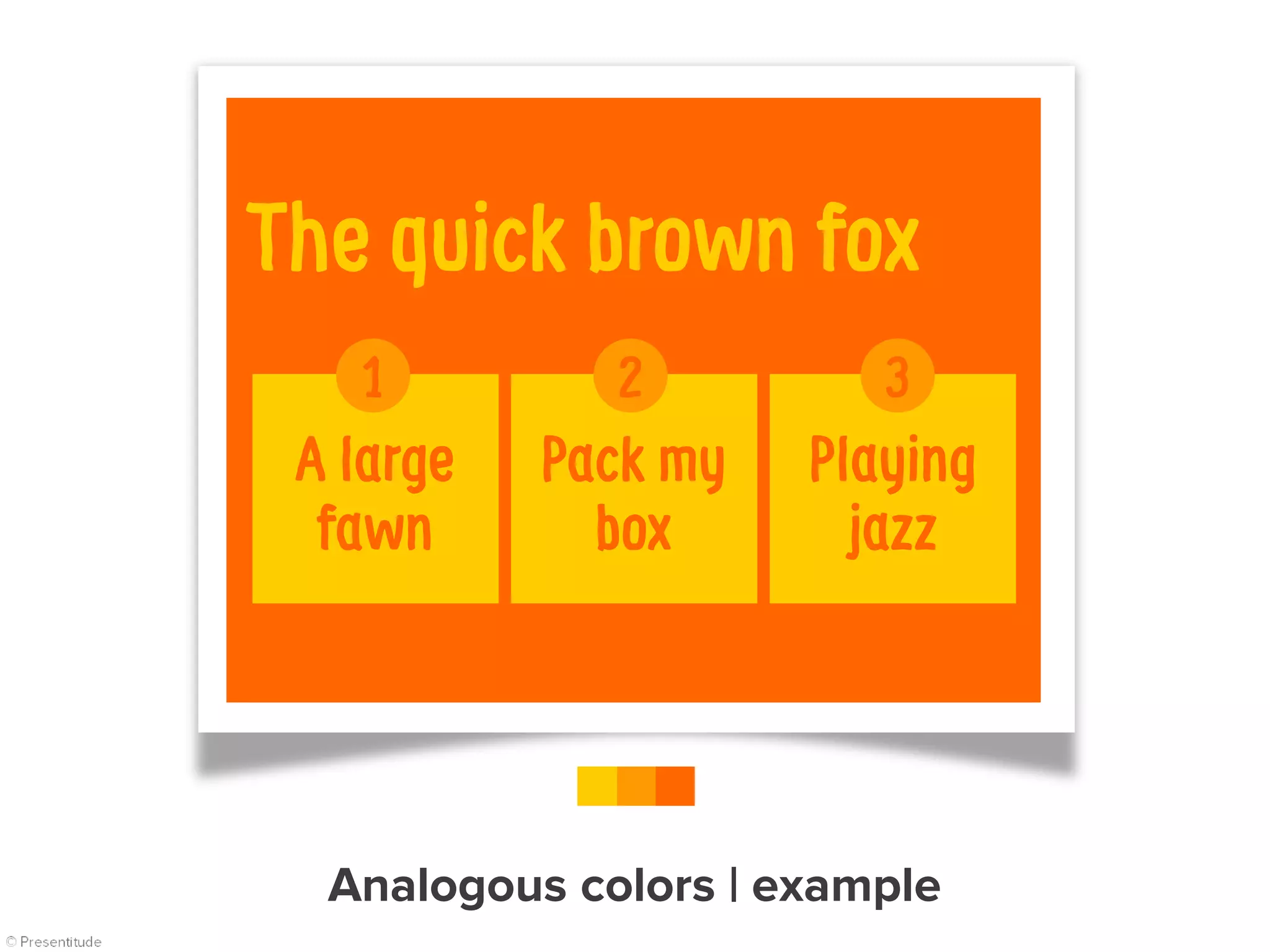
ANALOGOUS COLORS
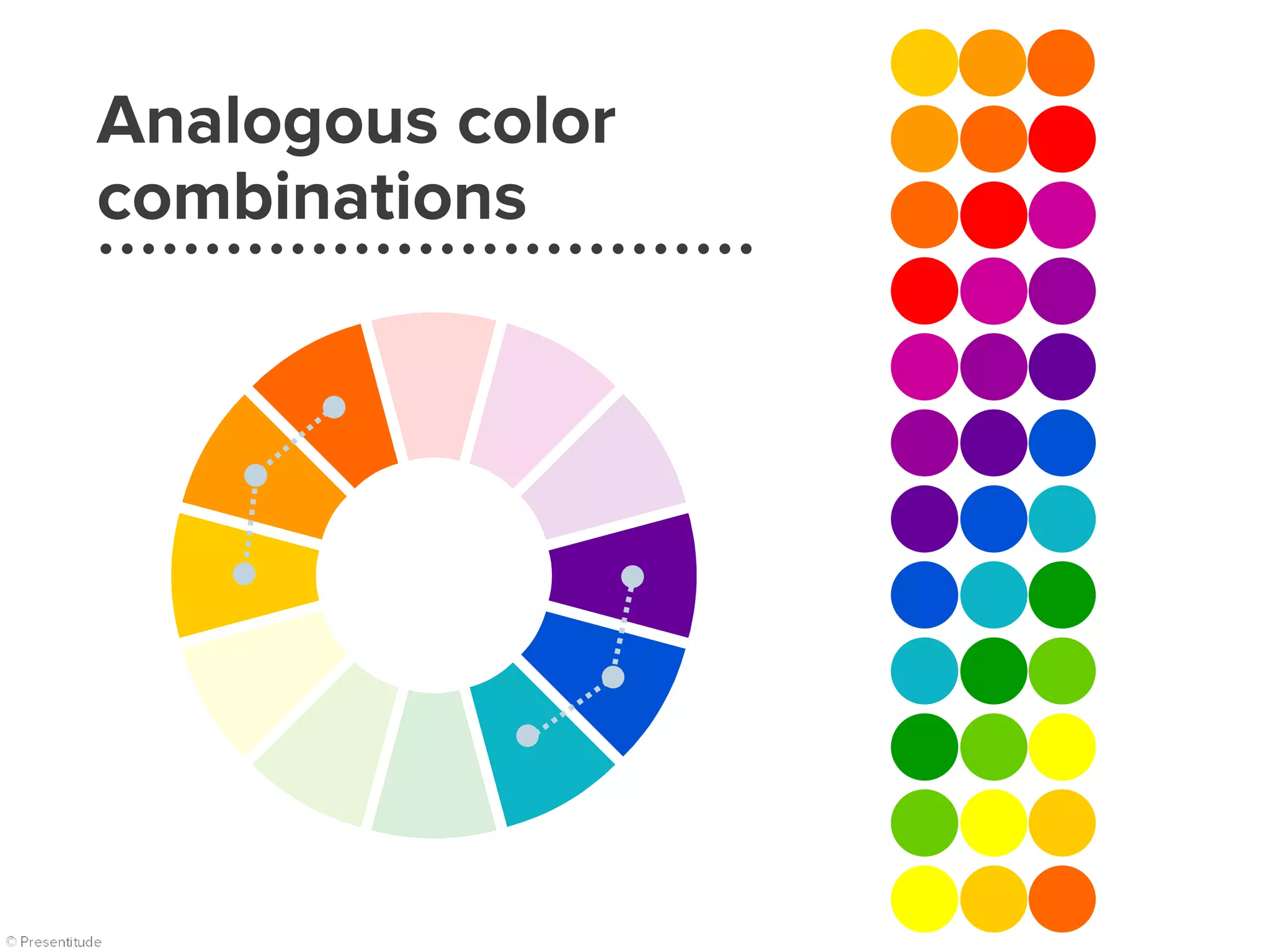
Analogous colors are colors
next to each other on the
wheel. They share an
undertone of the same color.
Analogous color
combinations
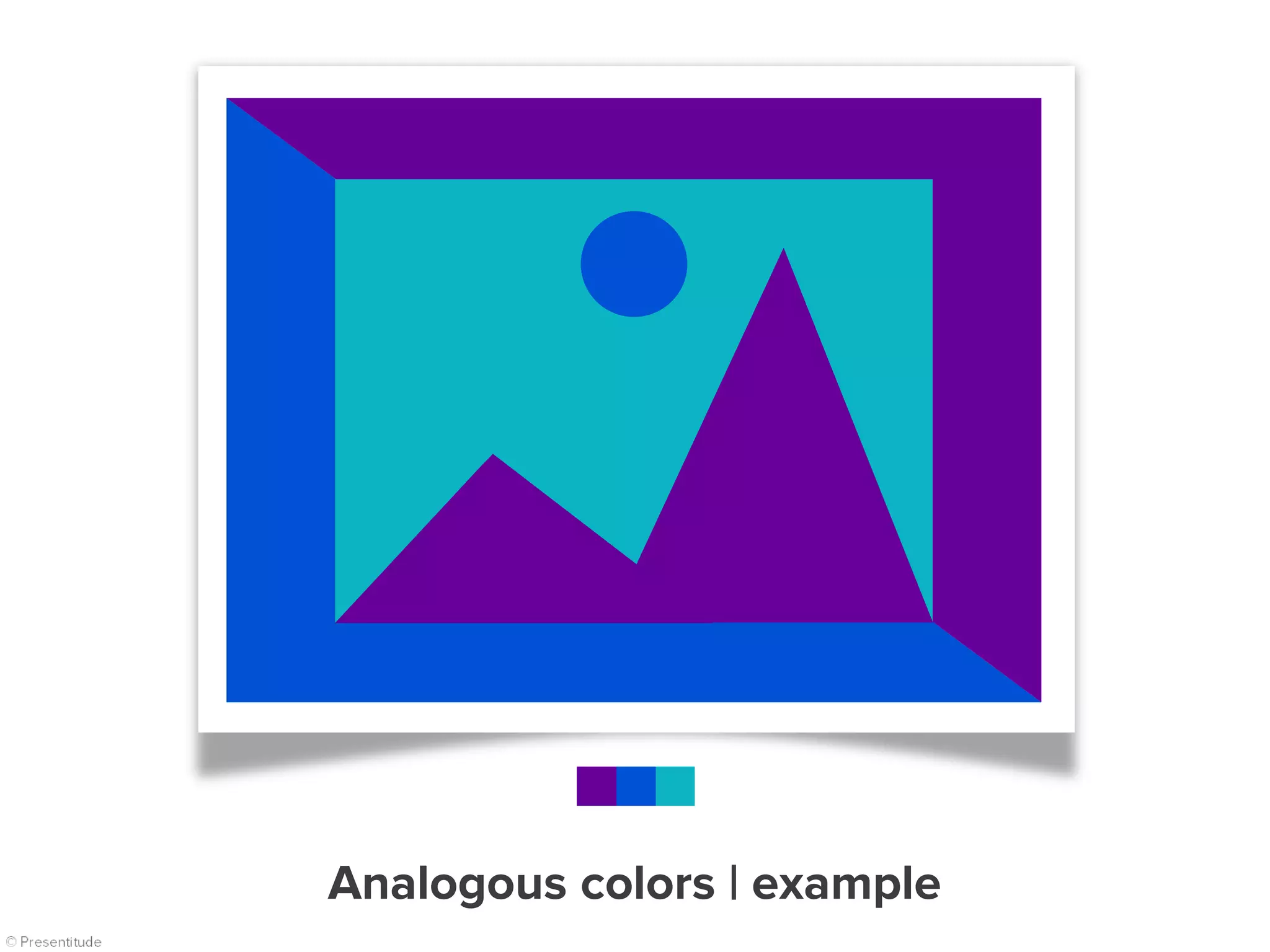
Analogous colors | example
The quick brown fox
Pack my
box
A large
fawn
Playing
jazz
1 2 3
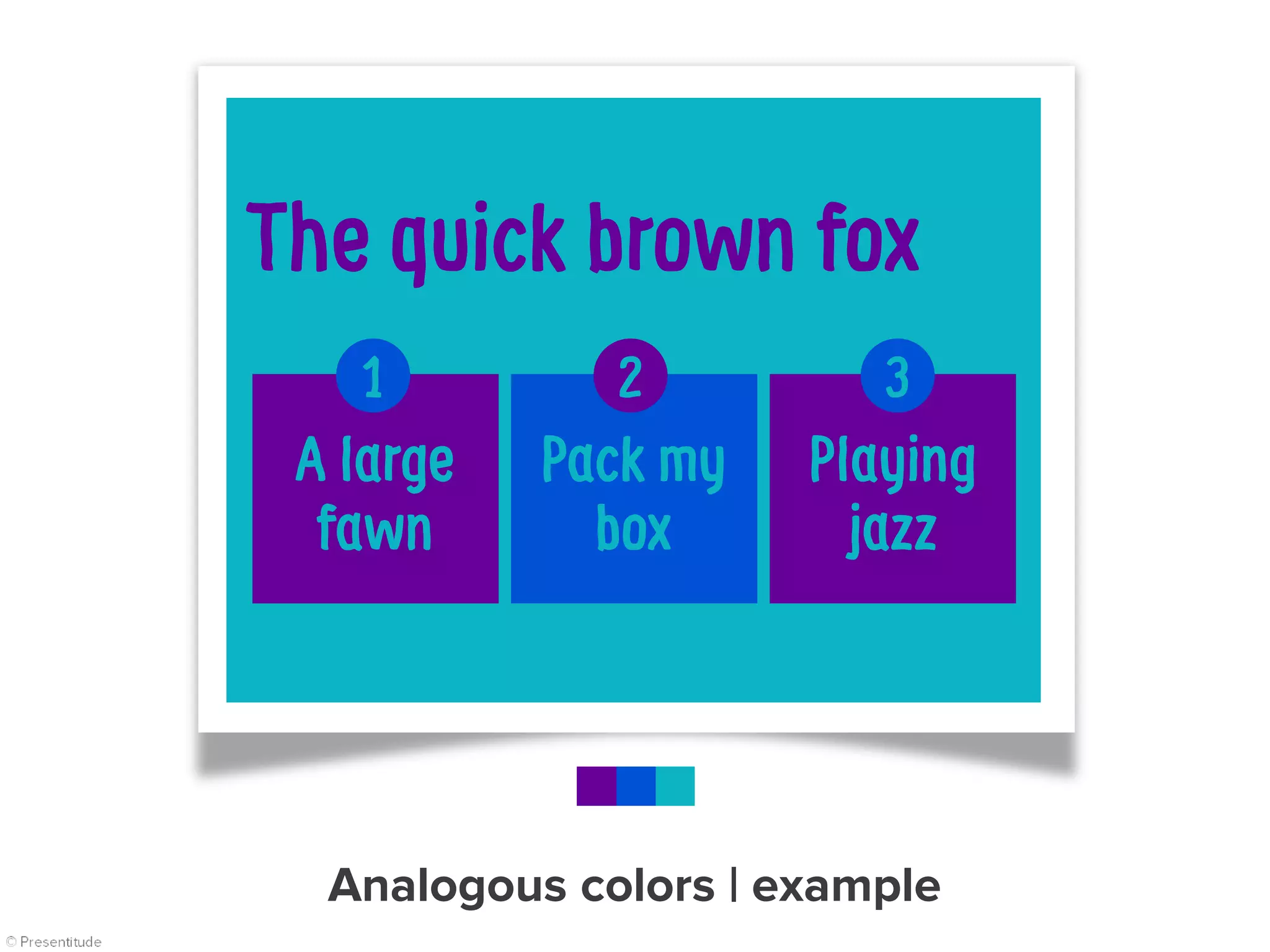
Analogous colors | example
The quick brown fox
Pack my
box
A large
fawn
Playing
jazz
1 2 3
Analogous colors | example
© Presentitude
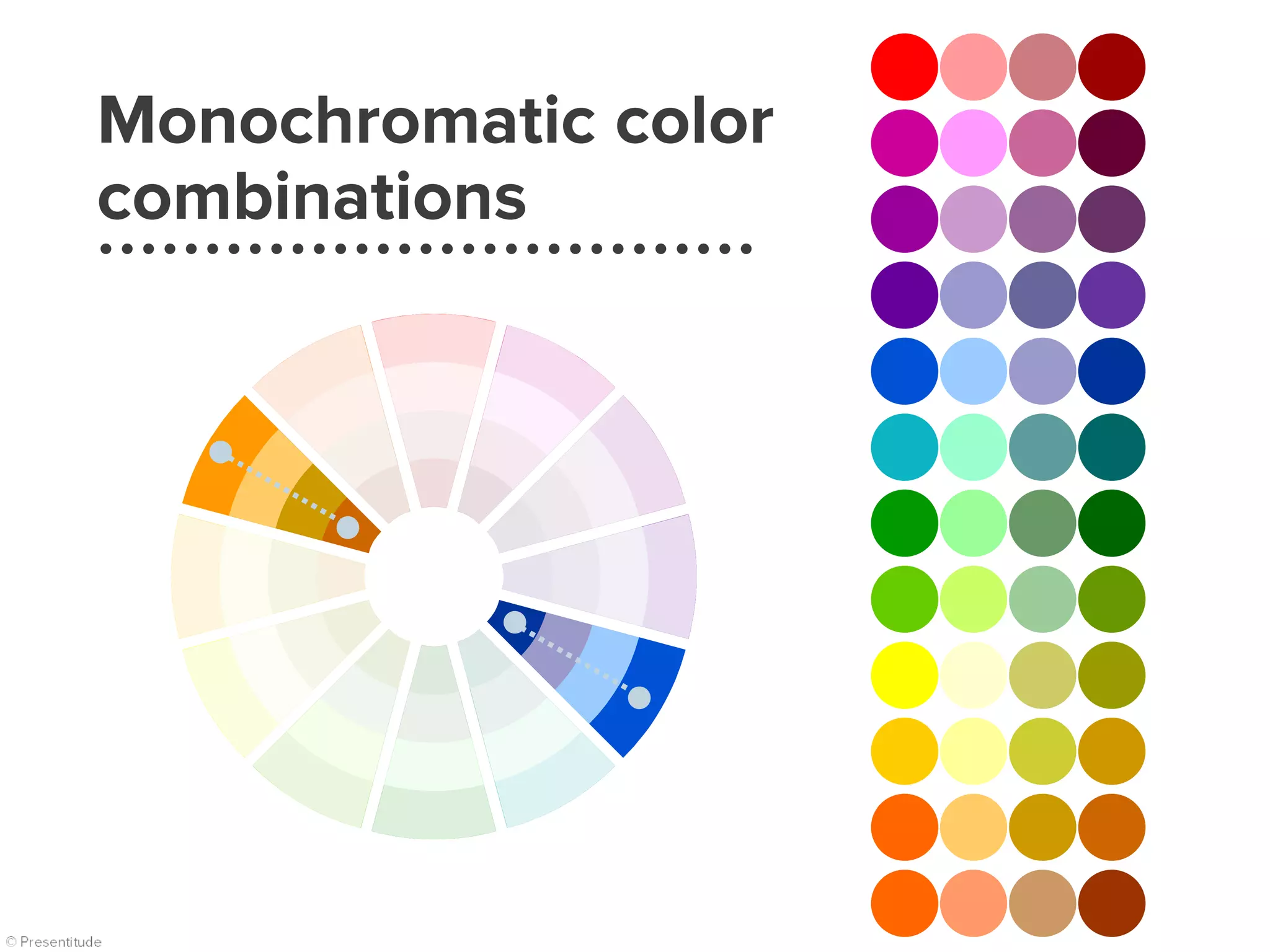
MONOCHROMATIC
COLORS
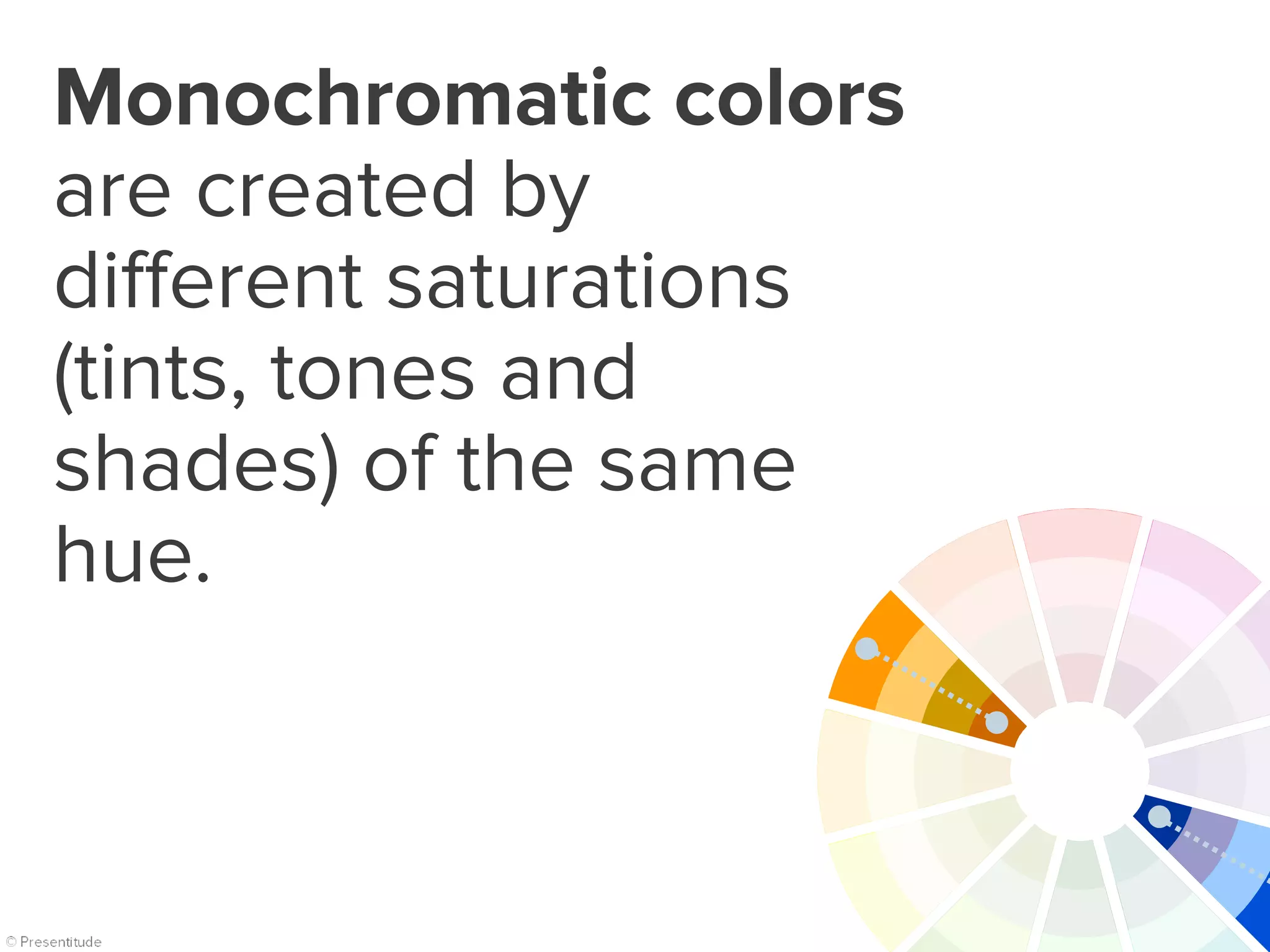
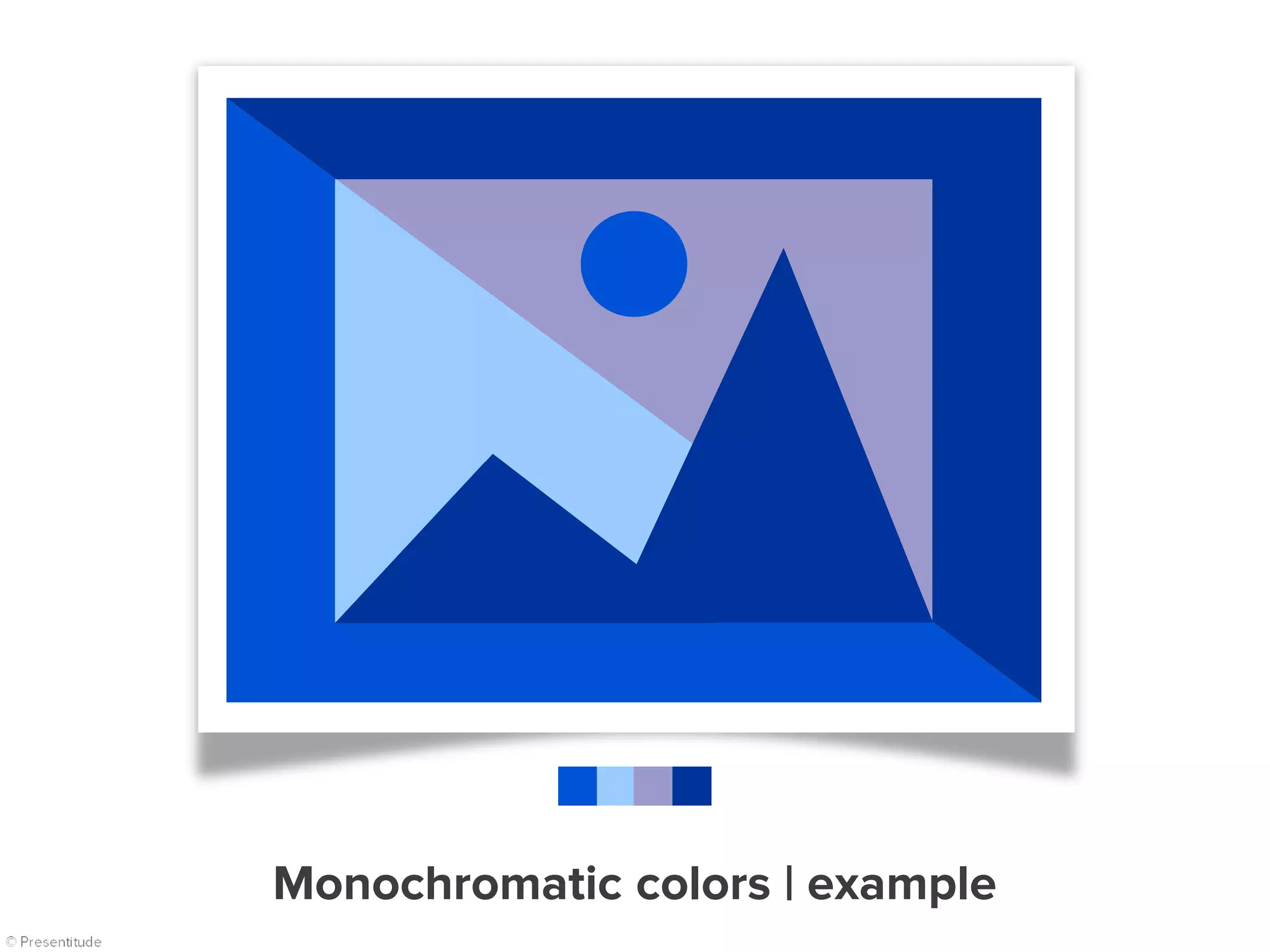
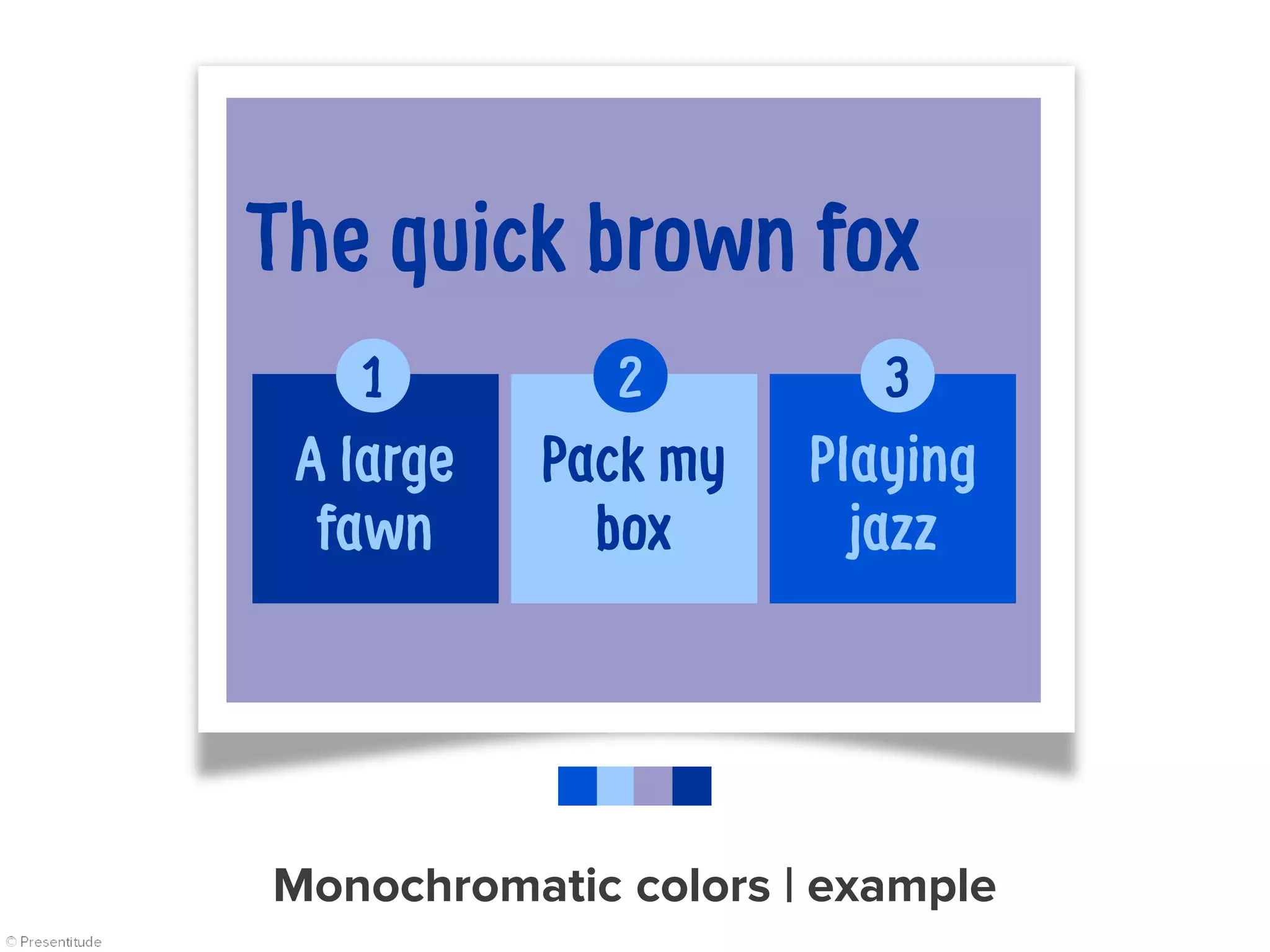
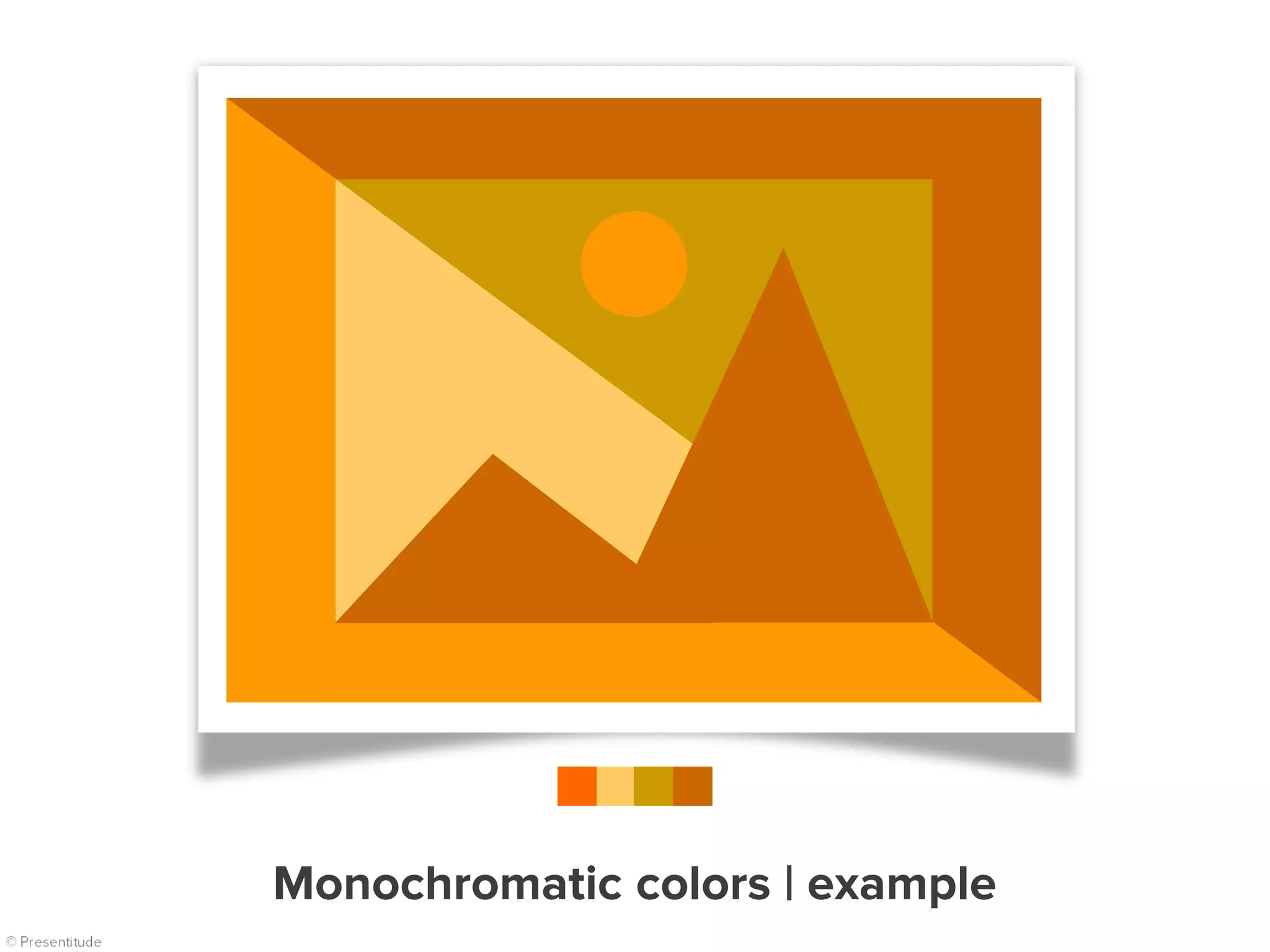
Monochromatic colors
are created by
different saturations
(tints, tones and
shades) of the same
hue.
Monochromatic color
combinations
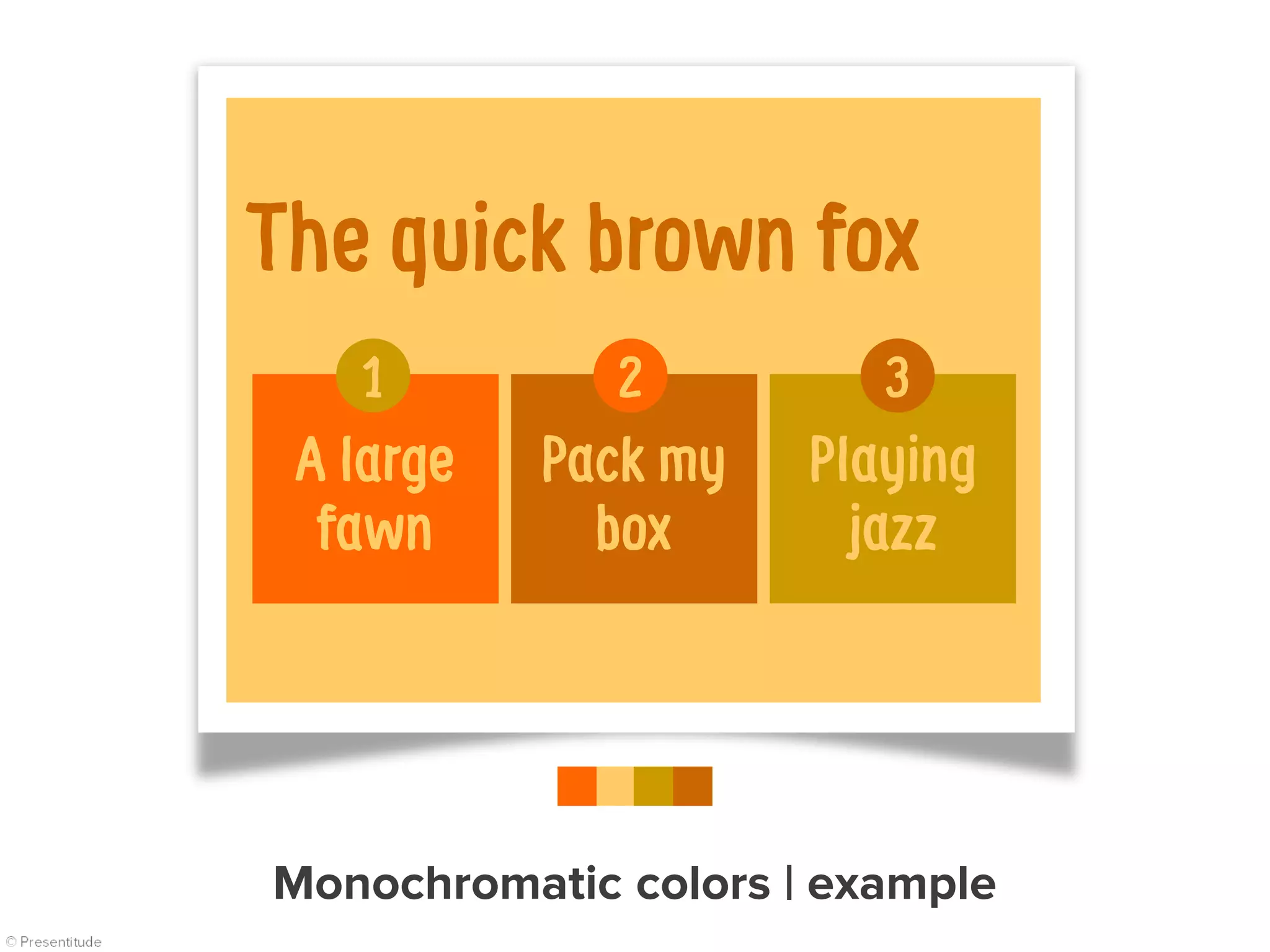
Monochromatic colors | example
The quick brown fox
Pack my
box
A large
fawn
Playing
jazz
1 2 3
Monochromatic colors | example
The quick brown fox
Pack my
box
A large
fawn
Playing
jazz
1 2 3
Monochromatic colors | example
© Presentitude
Are
WARM, COLD, SPLIT,
COMPLEMENTARY, TRIAD,
TETRADIC, ANALOGOUS &
MONOCHROMATIC COLORS…
ARE YOU STILL WITH US?
Warm colors
Cool colors
Split complementary colors
Triad colors
Tetradic colors
Analogous colors
Monochromatic colors
Complementary colors Hues, tints, tones & shades
Cool colors
Split complementary colors
Triad colors
Tetradic colors
Analogous colors
Monochromatic colors
Complementary colors
Warm colors
Hues, tints, tones & shades
Click to read to read full
article on this topic.
Click to read more articles
and sign up for content.
Click to view Part 2Click to view Part 1
Click to view Part 4Click to view Part 3
PRESENTITUDE
www.presentitude.com
http://plus.google.com/+
Presentitude/posts
http://www.facebook.co
m/presentitude
https://twitter.com/Prese
ntitude
http://www.linkedin.com/
company/presentitude
‘
Presentitude Presents

How to use the color wheel to create colorful presentations