Communication in
Automatic Teller Machine (ATM)
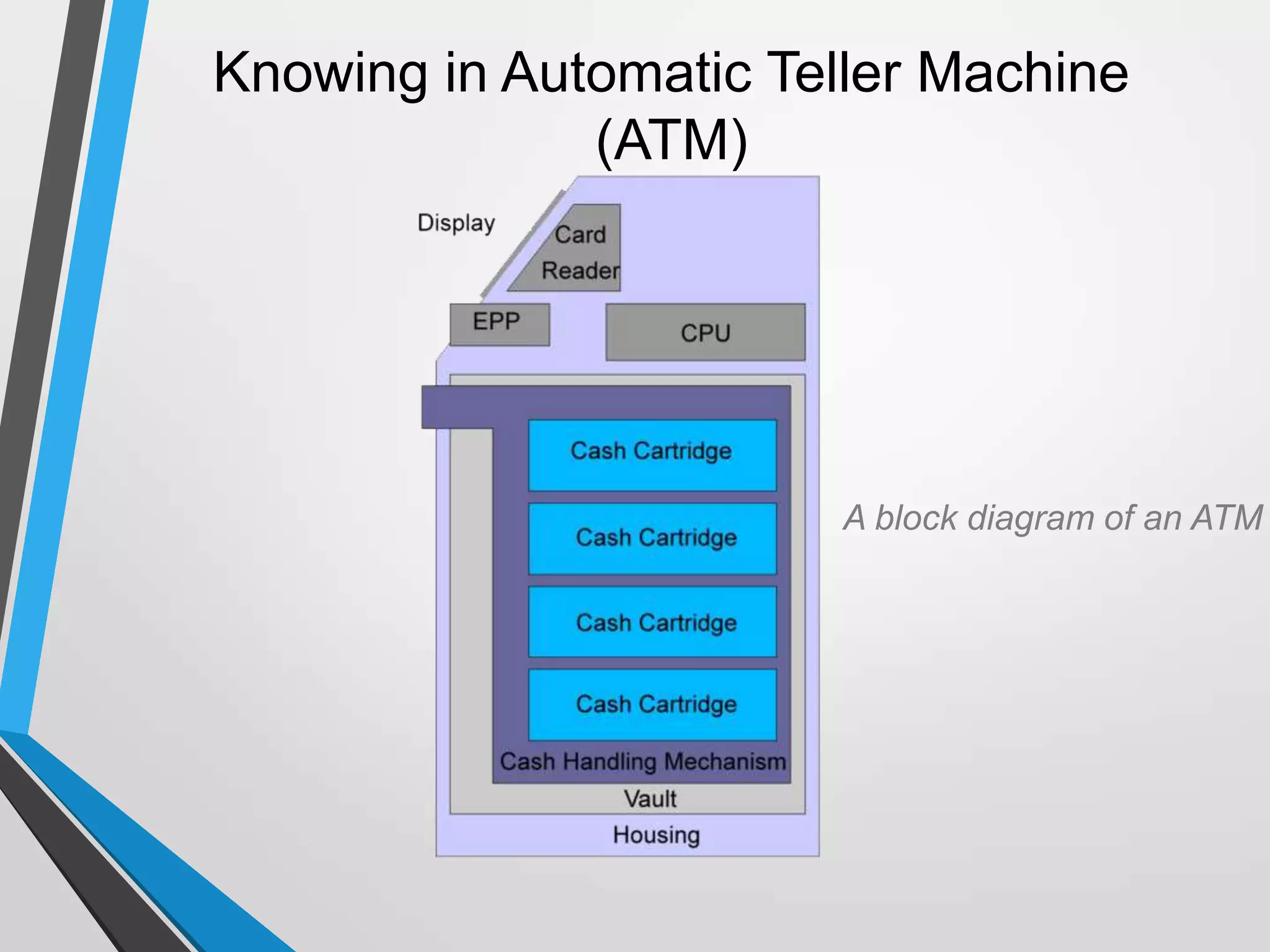
Knowing in Automatic Teller Machine
(ATM)
A block diagram of an ATM
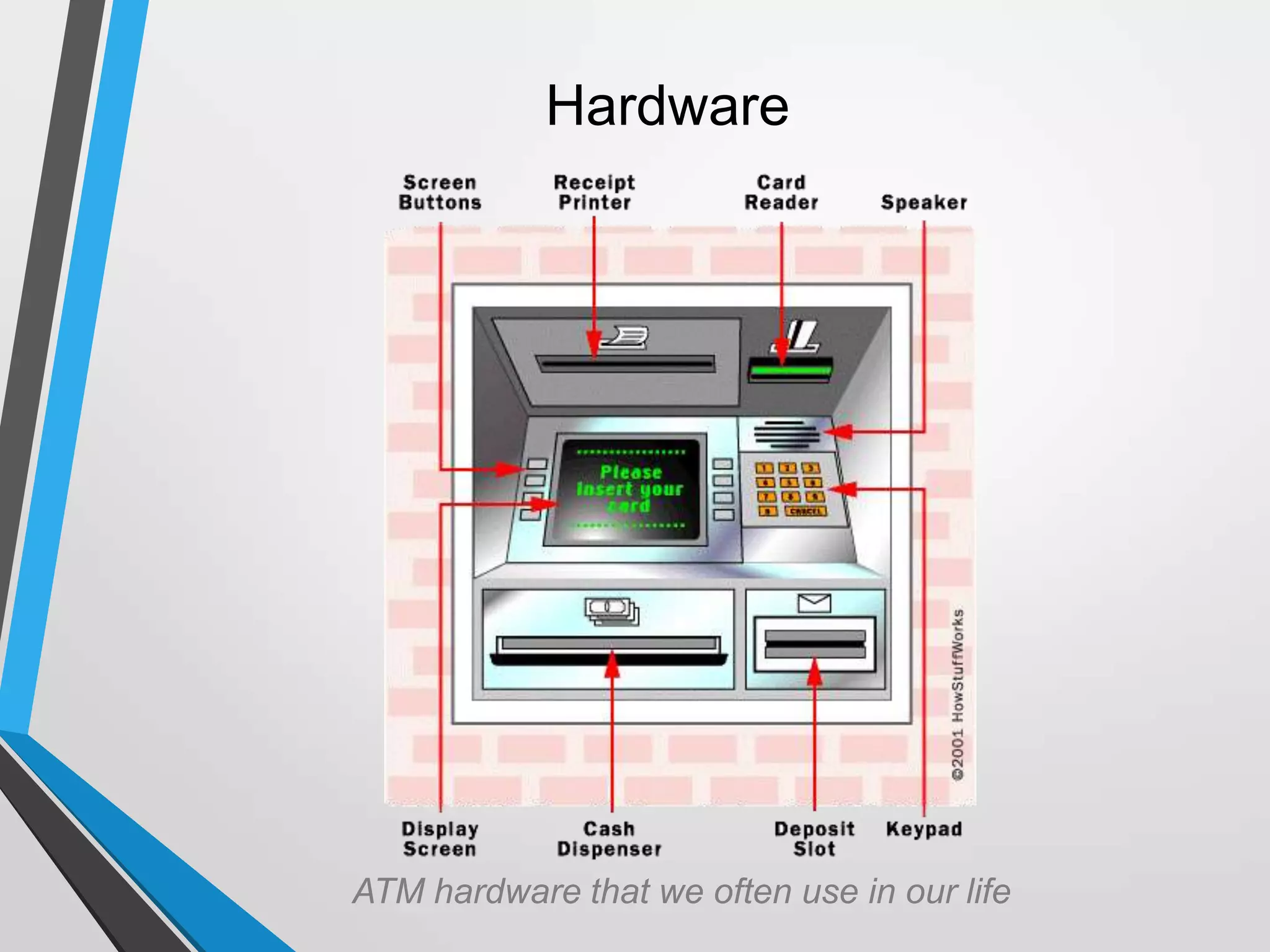
Hardware
ATM hardware that we often use in our life
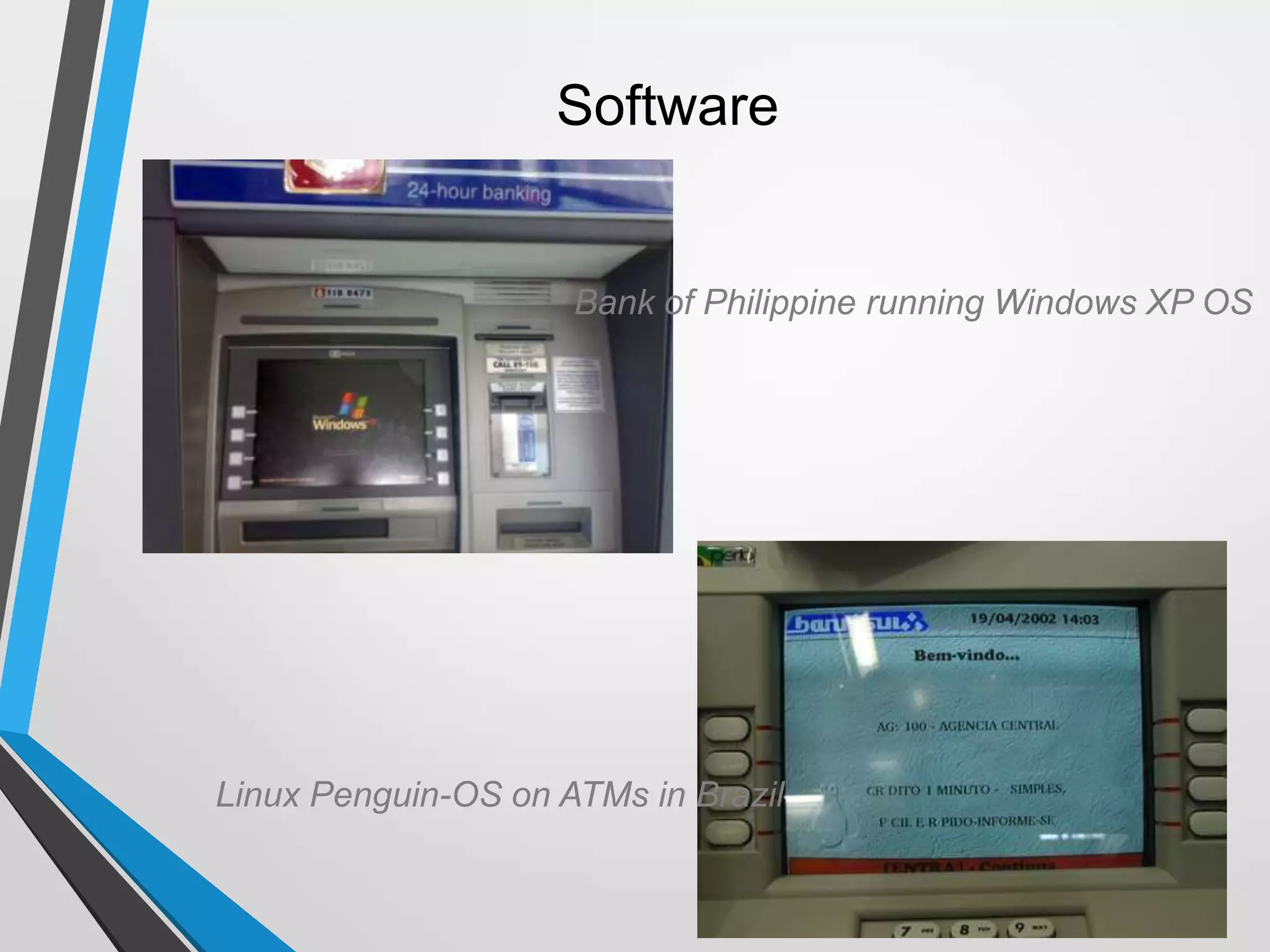
Software
VS.
Software
Linux Penguin-OS on ATMs in Brazil
Bank of Philippine running Windows XP OS
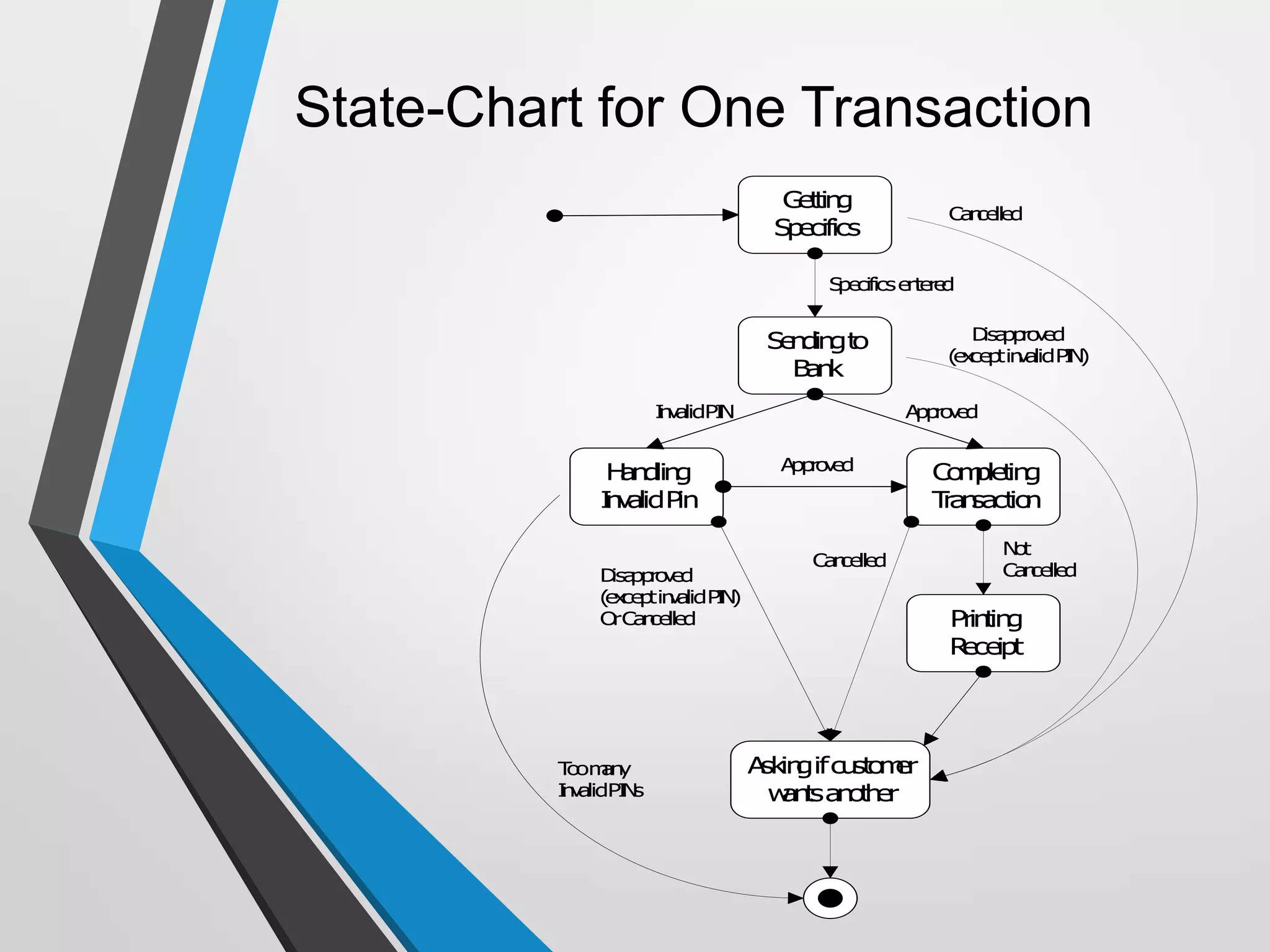
State-Chart for One Transaction
Getting
Specifics
Sendingto
Bank
Handling
InvalidPin
Completing
Transaction
Printing
Receipt
Askingifcustomer
wantsanother
Cancelled
Specificsentered
Disapproved
(exceptinvalidPIN)
ApprovedInvalidPIN
Approved
Cancelled
Not
Cancelled
Toomany
InvalidPINs
Disapproved
(exceptinvalidPIN)
OrCancelled
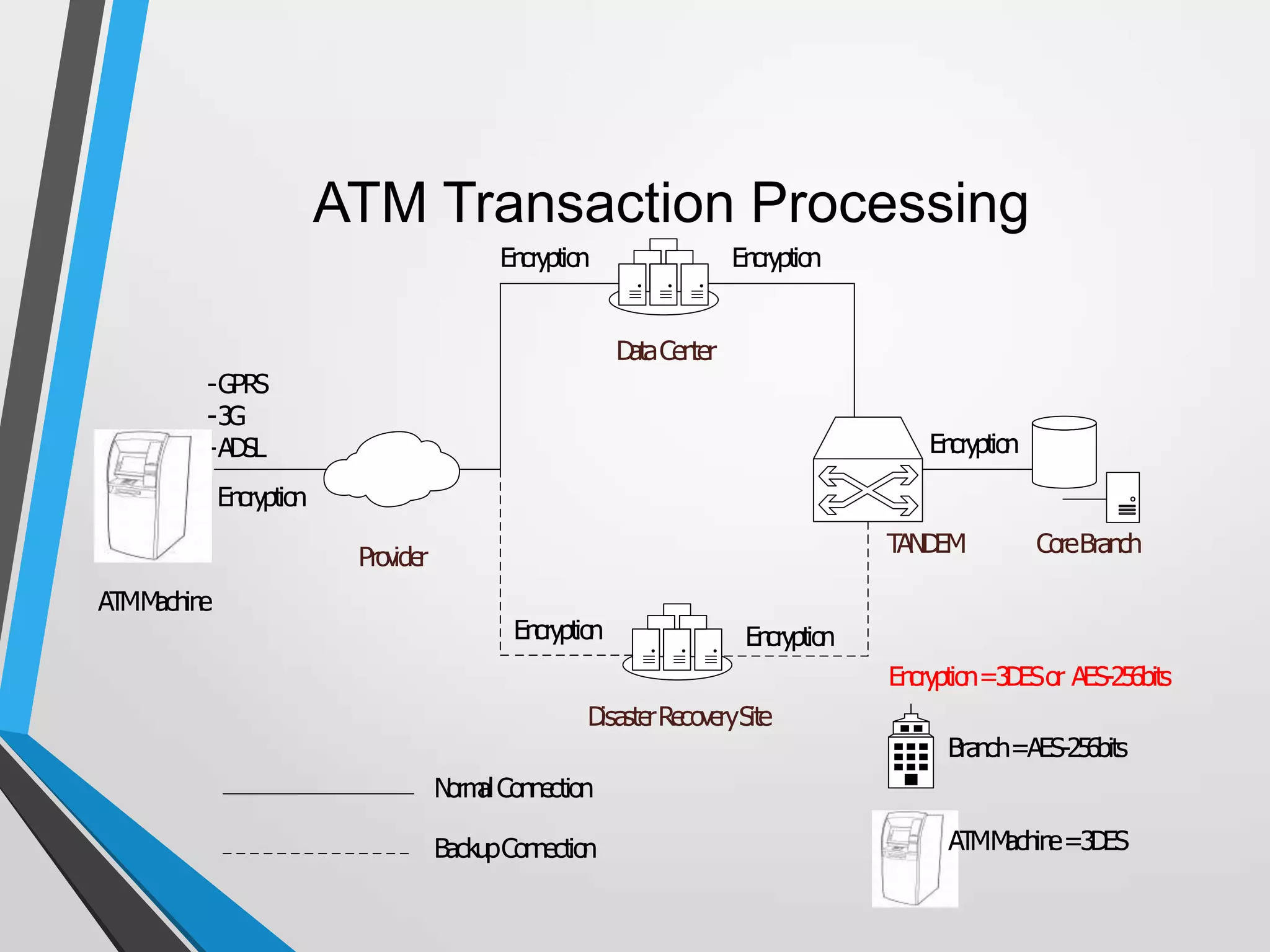
ATM Transaction Processing
Provider
DataCenter
TANDEM CoreBranch
-GPRS
-3G
-ADSL
Encryption
Encryption
Encryption
ATMMachine
Encryption=3DESor AES-256bits
Branch=AES-256bits
ATMMachine=3DES
DisasterRecoverySite
Encryption Encryption
Encryption
NormalConnection
BackupConnection
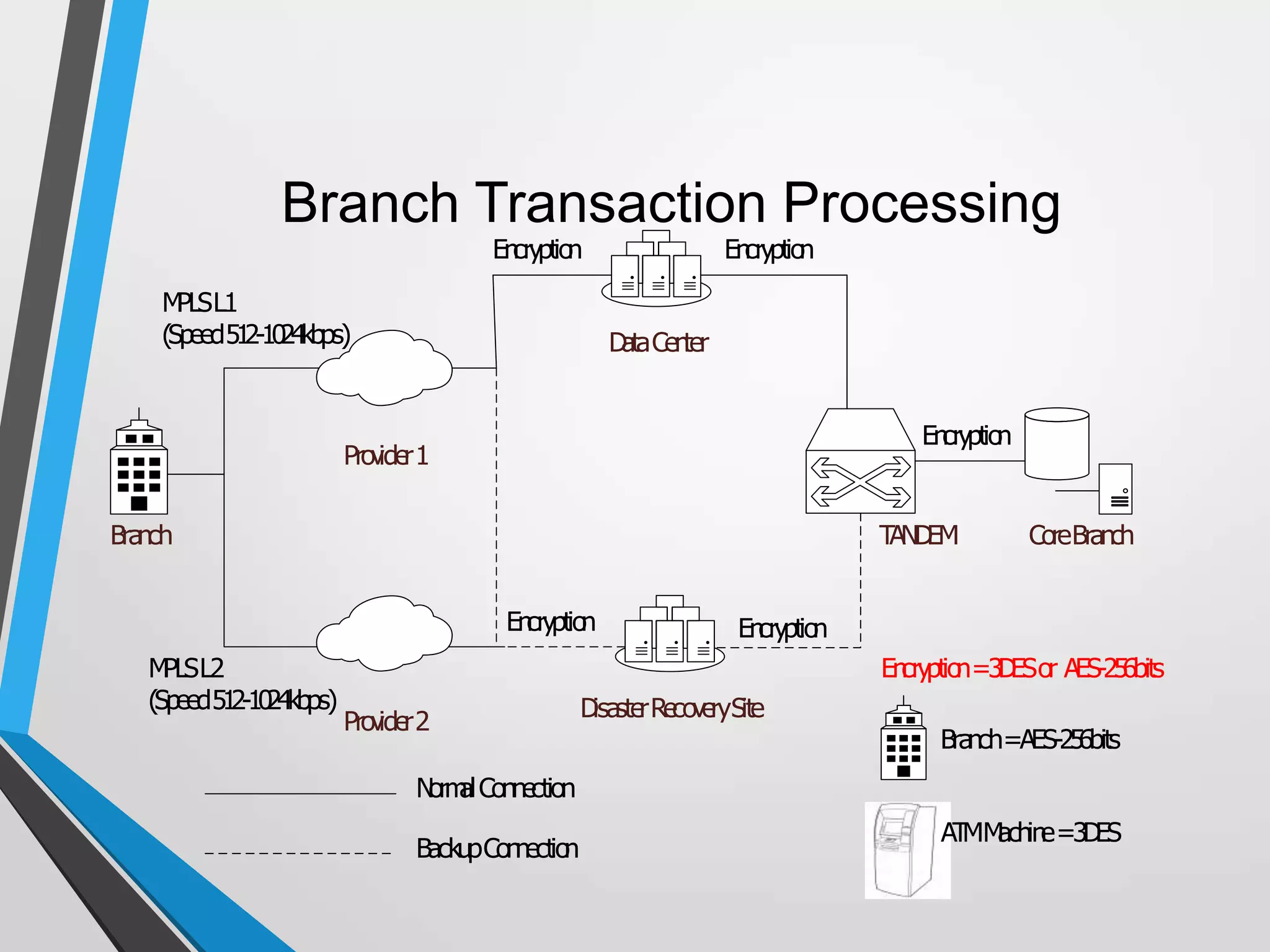
Branch Transaction Processing
Provider1
DataCenter
TANDEM CoreBranch
Encryption
Encryption
Encryption=3DESor AES-256bits
Branch=AES-256bits
ATMMachine=3DES
DisasterRecoverySite
Encryption Encryption
Encryption
Branch
Provider2
MPLSL2
(Speed512-1024kbps)
MPLSL1
(Speed512-1024kbps)
NormalConnection
BackupConnection
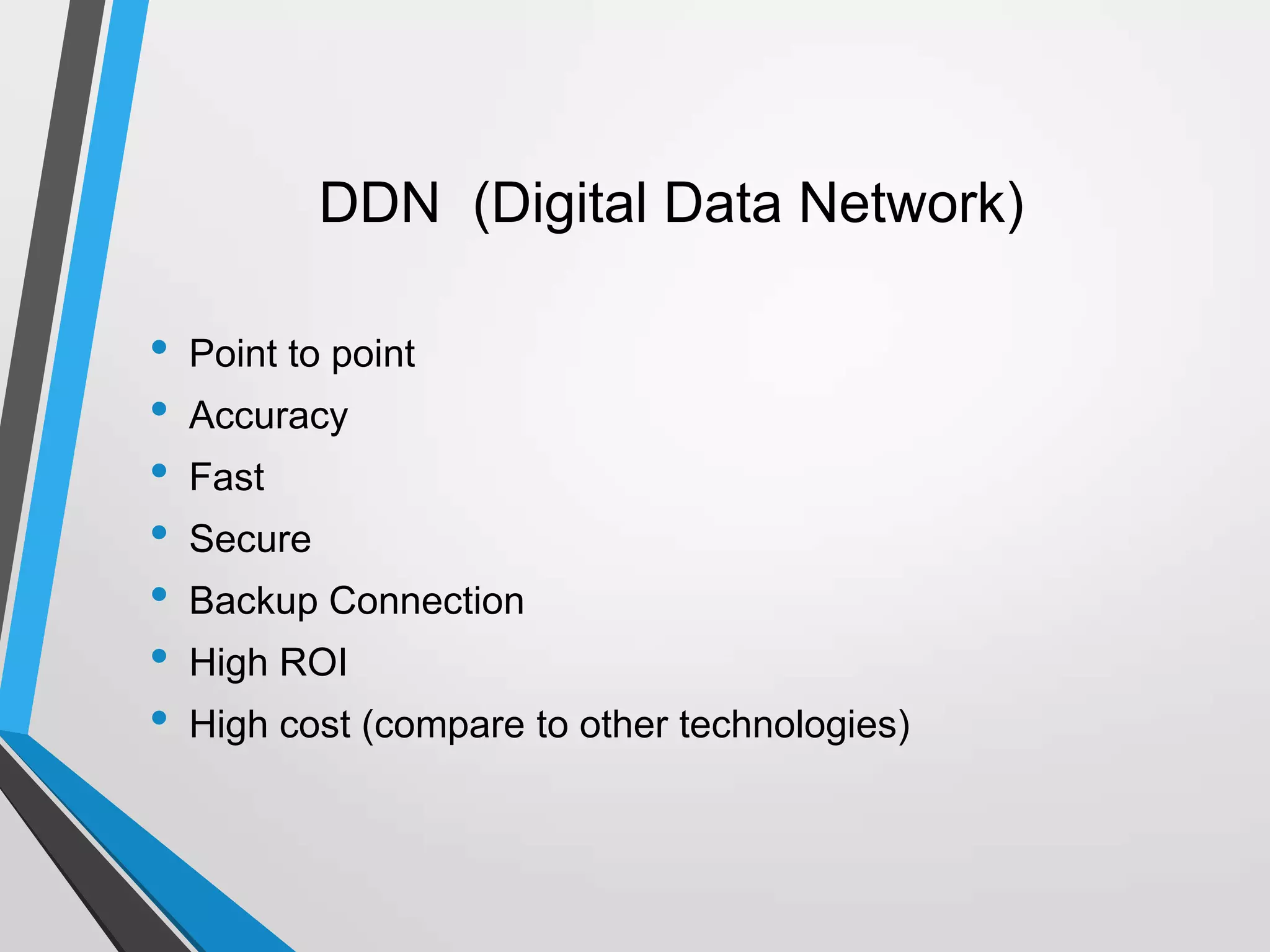
DDN (Digital Data Network)
• Point to point
• Accuracy
• Fast
• Secure
• Backup Connection
• High ROI
• High cost (compare to other technologies)
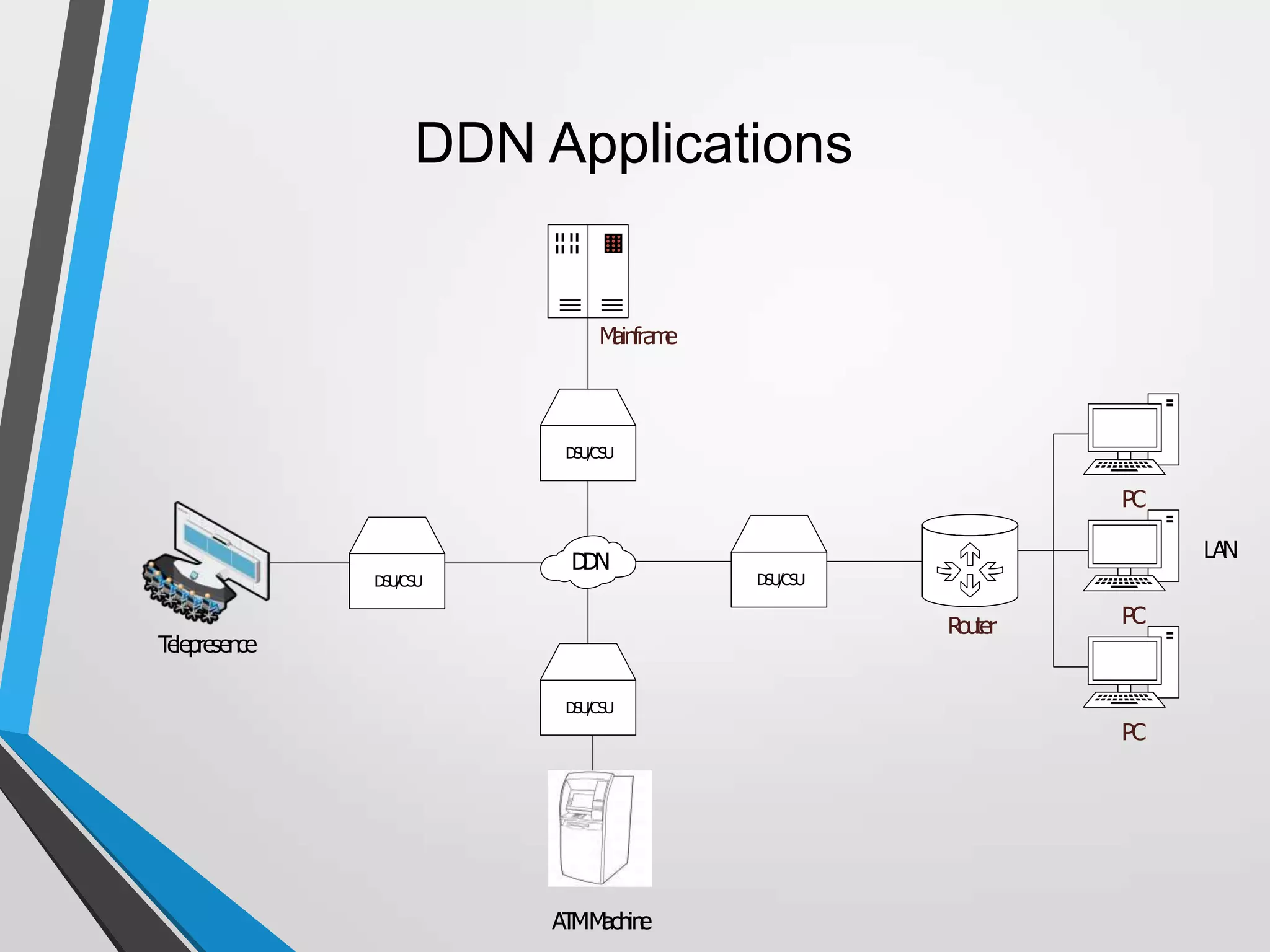
DDN Applications
DSU/CSU
DSU/CSU
DSU/CSU
DSU/CSU
Router
PC
PC
PC
Mainframe
ATMMachine
Telepresence
DDN LAN
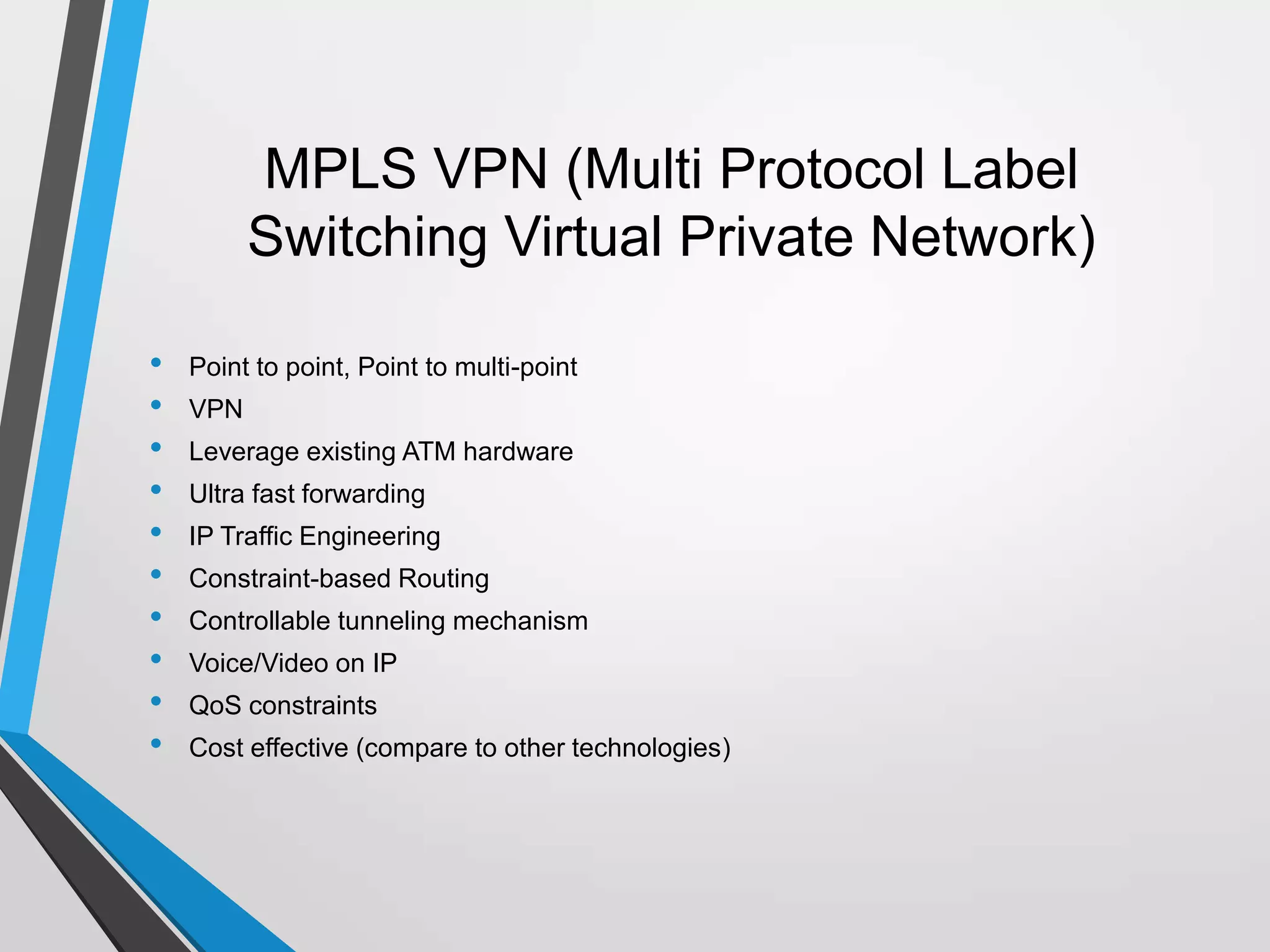
MPLS VPN (Multi Protocol Label
Switching Virtual Private Network)
• Point to point, Point to multi-point
• VPN
• Leverage existing ATM hardware
• Ultra fast forwarding
• IP Traffic Engineering
• Constraint-based Routing
• Controllable tunneling mechanism
• Voice/Video on IP
• QoS constraints
• Cost effective (compare to other technologies)
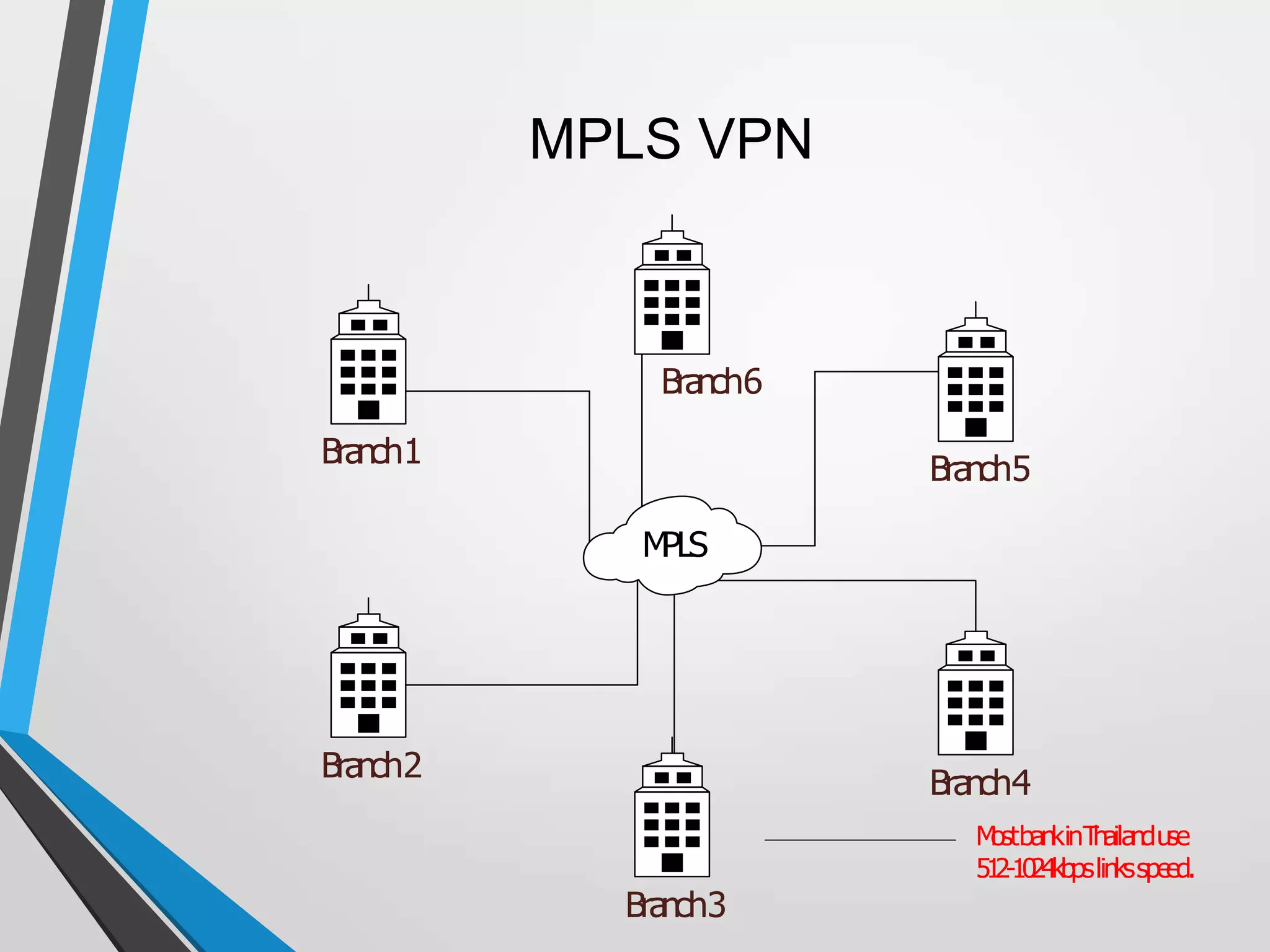
MPLS
Branch1
Branch6
Branch2
Branch3
Branch4
Branch5
MPLS VPN
MostbankinThailanduse
512-1024kbpslinksspeed.
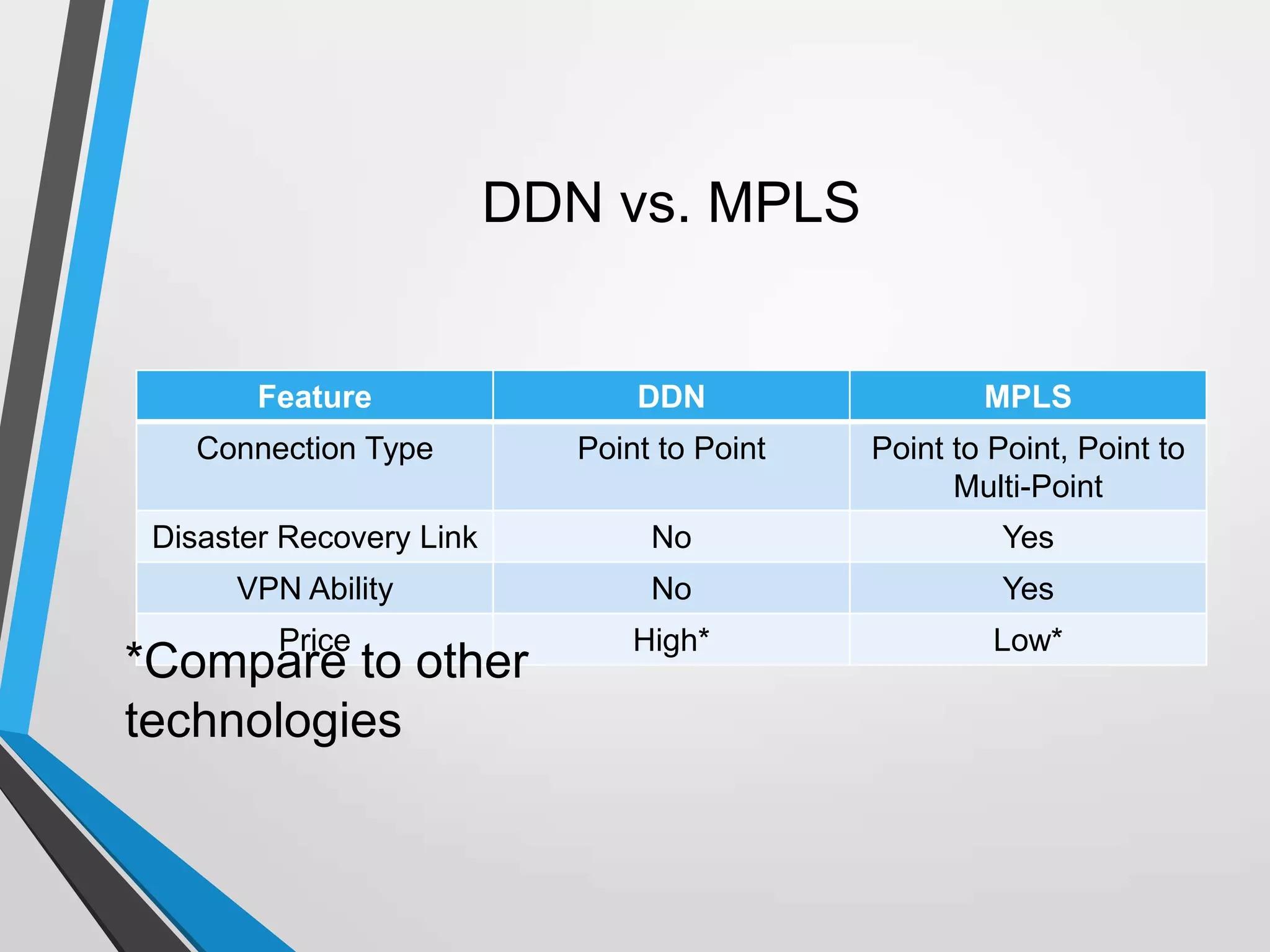
DDN vs. MPLS
Feature DDN MPLS
Connection Type Point to Point Point to Point, Point to
Multi-Point
Disaster Recovery Link No Yes
VPN Ability No Yes
Price High* Low*
*Compare to other
technologies
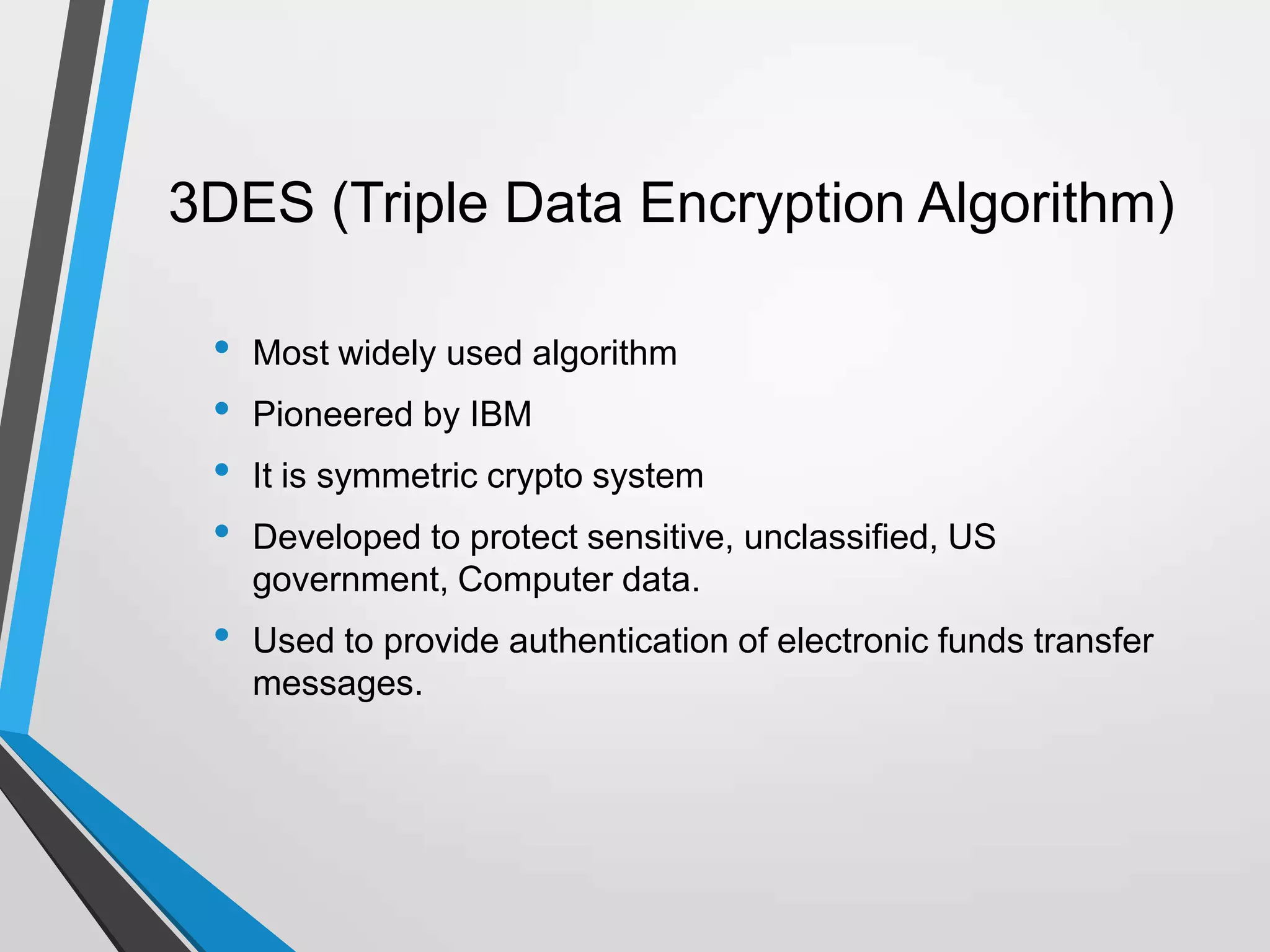
3DES (Triple Data Encryption Algorithm)
• Most widely used algorithm
• Pioneered by IBM
• It is symmetric crypto system
• Developed to protect sensitive, unclassified, US
government, Computer data.
• Used to provide authentication of electronic funds transfer
messages.
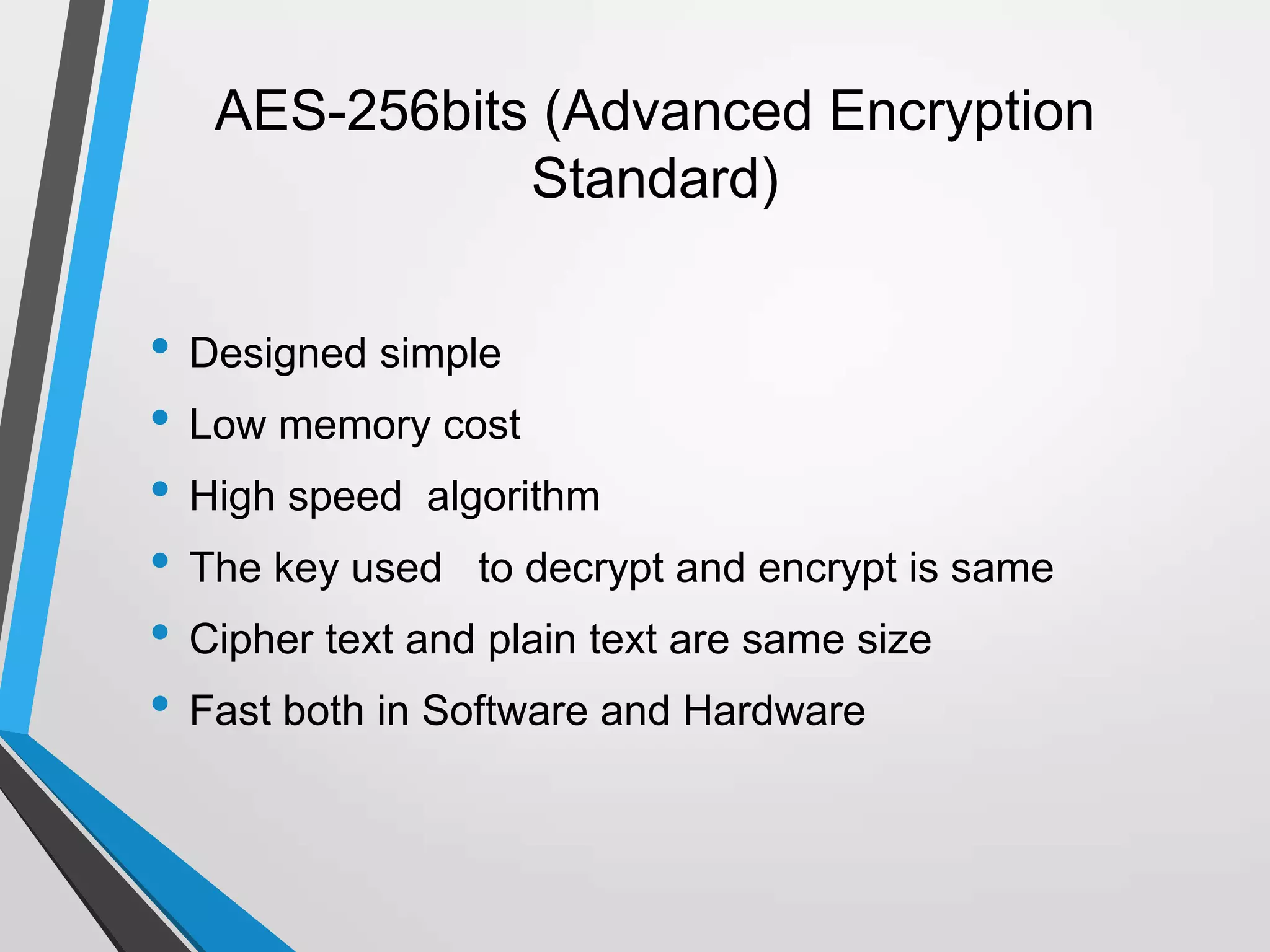
AES-256bits (Advanced Encryption
Standard)
• Designed simple
• Low memory cost
• High speed algorithm
• The key used to decrypt and encrypt is same
• Cipher text and plain text are same size
• Fast both in Software and Hardware
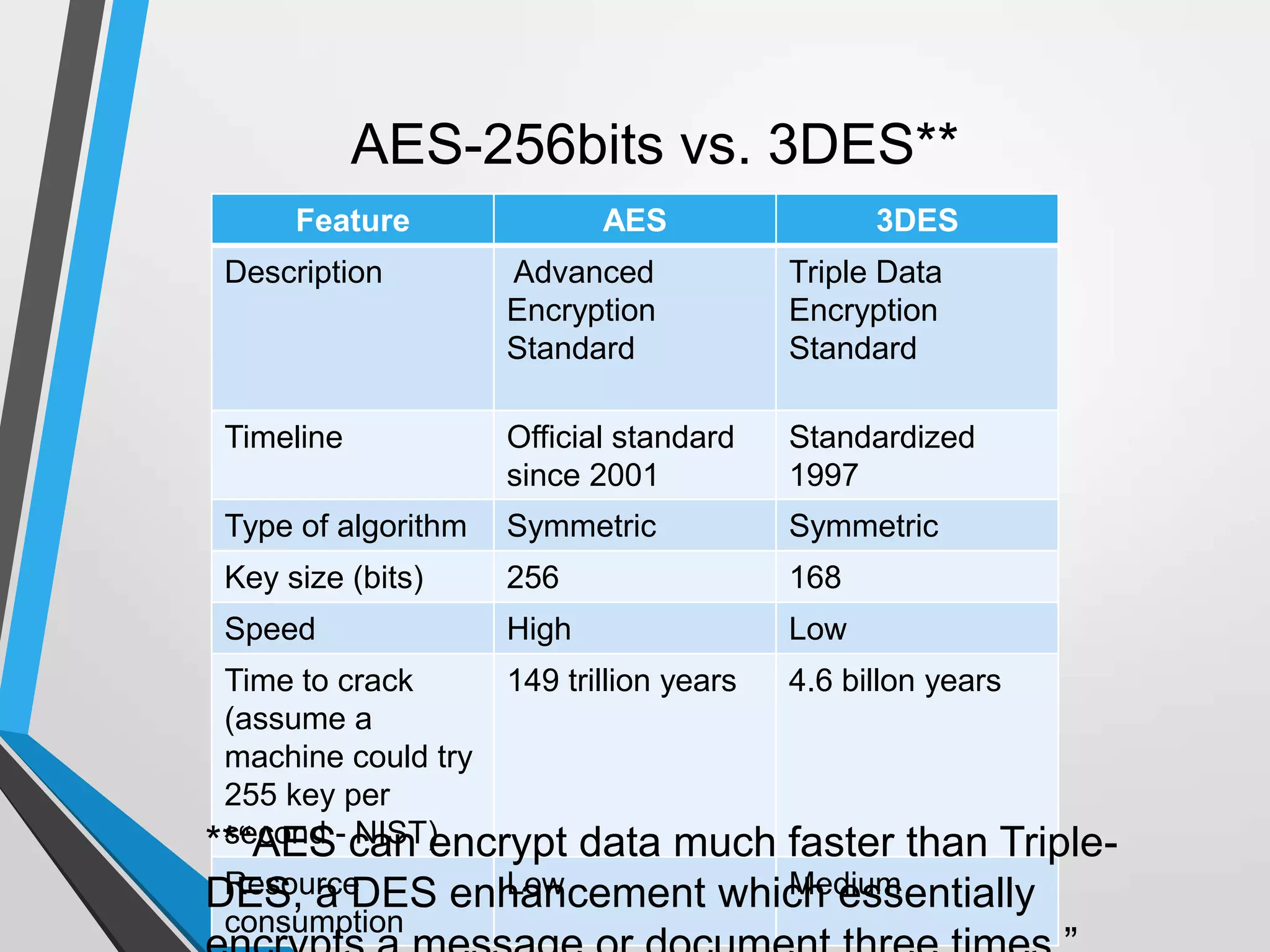
AES-256bits vs. 3DES**
Feature AES 3DES
Description Advanced
Encryption
Standard
Triple Data
Encryption
Standard
Timeline Official standard
since 2001
Standardized
1997
Type of algorithm Symmetric Symmetric
Key size (bits) 256 168
Speed High Low
Time to crack
(assume a
machine could try
255 key per
second - NIST)
149 trillion years 4.6 billon years
Resource
consumption
Low Medium
**“AES can encrypt data much faster than Triple-
DES, a DES enhancement which essentially
Q&A

Communication in automatic teller machine (atm)

  • 1.
  • 2.
    Knowing in AutomaticTeller Machine (ATM) A block diagram of an ATM
  • 3.
    Hardware ATM hardware thatwe often use in our life
  • 4.
  • 5.
    Software Linux Penguin-OS onATMs in Brazil Bank of Philippine running Windows XP OS
  • 6.
    State-Chart for OneTransaction Getting Specifics Sendingto Bank Handling InvalidPin Completing Transaction Printing Receipt Askingifcustomer wantsanother Cancelled Specificsentered Disapproved (exceptinvalidPIN) ApprovedInvalidPIN Approved Cancelled Not Cancelled Toomany InvalidPINs Disapproved (exceptinvalidPIN) OrCancelled
  • 7.
    ATM Transaction Processing Provider DataCenter TANDEMCoreBranch -GPRS -3G -ADSL Encryption Encryption Encryption ATMMachine Encryption=3DESor AES-256bits Branch=AES-256bits ATMMachine=3DES DisasterRecoverySite Encryption Encryption Encryption NormalConnection BackupConnection
  • 8.
    Branch Transaction Processing Provider1 DataCenter TANDEMCoreBranch Encryption Encryption Encryption=3DESor AES-256bits Branch=AES-256bits ATMMachine=3DES DisasterRecoverySite Encryption Encryption Encryption Branch Provider2 MPLSL2 (Speed512-1024kbps) MPLSL1 (Speed512-1024kbps) NormalConnection BackupConnection
  • 9.
    DDN (Digital DataNetwork) • Point to point • Accuracy • Fast • Secure • Backup Connection • High ROI • High cost (compare to other technologies)
  • 10.
  • 11.
    MPLS VPN (MultiProtocol Label Switching Virtual Private Network) • Point to point, Point to multi-point • VPN • Leverage existing ATM hardware • Ultra fast forwarding • IP Traffic Engineering • Constraint-based Routing • Controllable tunneling mechanism • Voice/Video on IP • QoS constraints • Cost effective (compare to other technologies)
  • 12.
  • 13.
    DDN vs. MPLS FeatureDDN MPLS Connection Type Point to Point Point to Point, Point to Multi-Point Disaster Recovery Link No Yes VPN Ability No Yes Price High* Low* *Compare to other technologies
  • 14.
    3DES (Triple DataEncryption Algorithm) • Most widely used algorithm • Pioneered by IBM • It is symmetric crypto system • Developed to protect sensitive, unclassified, US government, Computer data. • Used to provide authentication of electronic funds transfer messages.
  • 15.
    AES-256bits (Advanced Encryption Standard) •Designed simple • Low memory cost • High speed algorithm • The key used to decrypt and encrypt is same • Cipher text and plain text are same size • Fast both in Software and Hardware
  • 16.
    AES-256bits vs. 3DES** FeatureAES 3DES Description Advanced Encryption Standard Triple Data Encryption Standard Timeline Official standard since 2001 Standardized 1997 Type of algorithm Symmetric Symmetric Key size (bits) 256 168 Speed High Low Time to crack (assume a machine could try 255 key per second - NIST) 149 trillion years 4.6 billon years Resource consumption Low Medium **“AES can encrypt data much faster than Triple- DES, a DES enhancement which essentially
  • 17.