Payment Gateway/Payment Service Providers
   and future trends in mobile payment
Agenda


•   Overview
•   Connectivity
•   Processing
•   3-D Secure
•   PCI-DSS compliancy
•   Key Benefits
•   Future Trends
Overview


Payment gateway


A Payment Gateway/Payment Service Provider (PG/PSP)
facilitates the transfer of information between a payment
portal (such as a website) and the Front End Processor or
acquiring bank. It offers merchants online services for accepting
electronic payments by a variety of payment methods including
credit card, bank-based payments such as direct debit, bank
transfer and real-time bank transfer based on online banking.
Connectivity


  Type of connectivity
• Direct XML API solution - all actions are performed within the
  website (online booking engine) environment of the merchant,
  credit card data is processed via XML API connection.
• Generic solution (redirection) – the merchant’s website redirects
  the customer to a third party acquirer’s payment page where the
  credit card data is submitted, processed and if successful, system
  redirects back to webpage of merchant for completion of process.
  Alternatively redirection can be done after booking process is
  complete.
Processing


  Payment processing
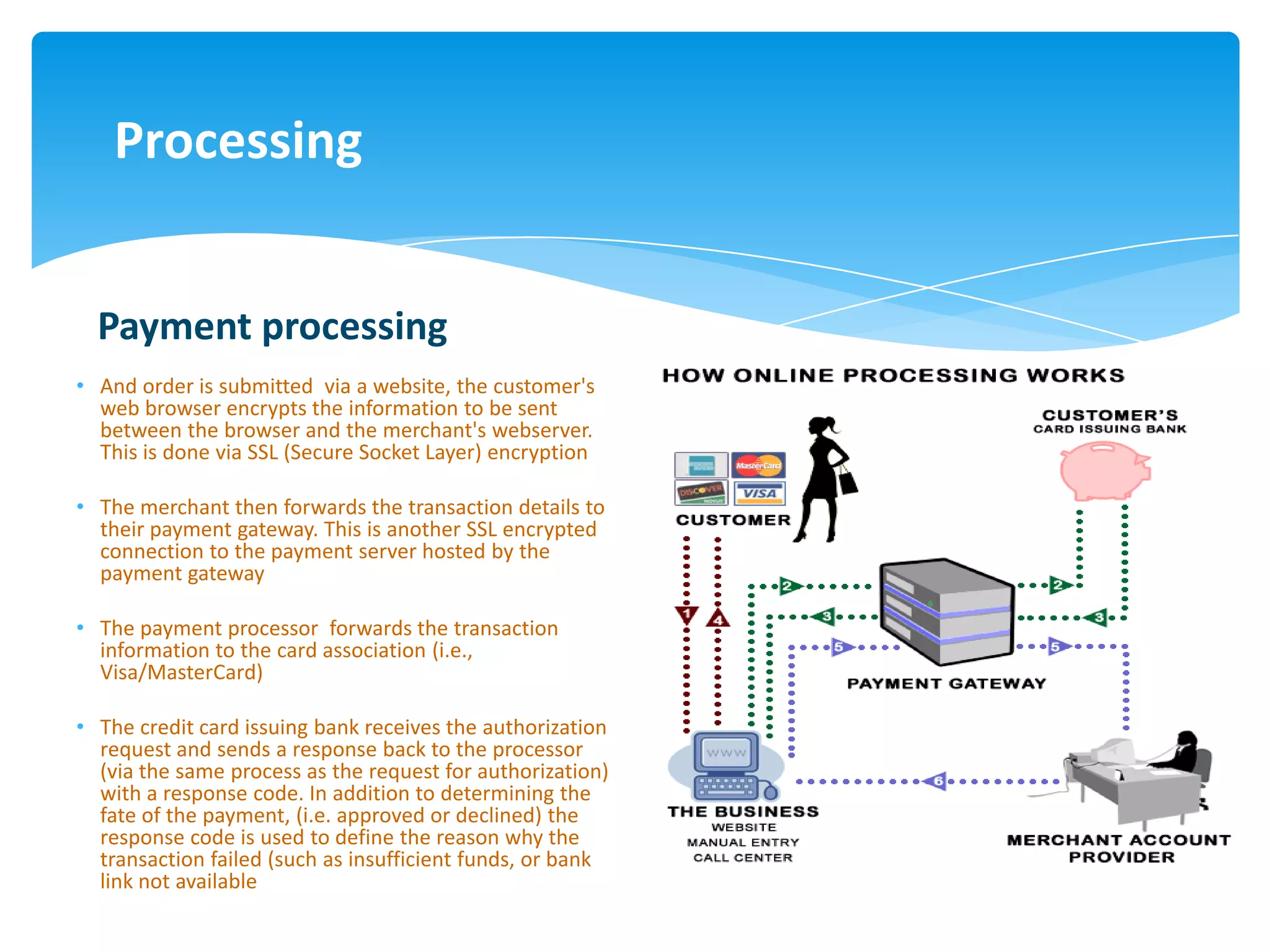
• And order is submitted via a website, the customer's
  web browser encrypts the information to be sent
  between the browser and the merchant's webserver.
  This is done via SSL (Secure Socket Layer) encryption

• The merchant then forwards the transaction details to
  their payment gateway. This is another SSL encrypted
  connection to the payment server hosted by the
  payment gateway

• The payment processor forwards the transaction
  information to the card association (i.e.,
  Visa/MasterCard)

• The credit card issuing bank receives the authorization
  request and sends a response back to the processor
  (via the same process as the request for authorization)
  with a response code. In addition to determining the
  fate of the payment, (i.e. approved or declined) the
  response code is used to define the reason why the
  transaction failed (such as insufficient funds, or bank
  link not available
Processing


  Payment processing
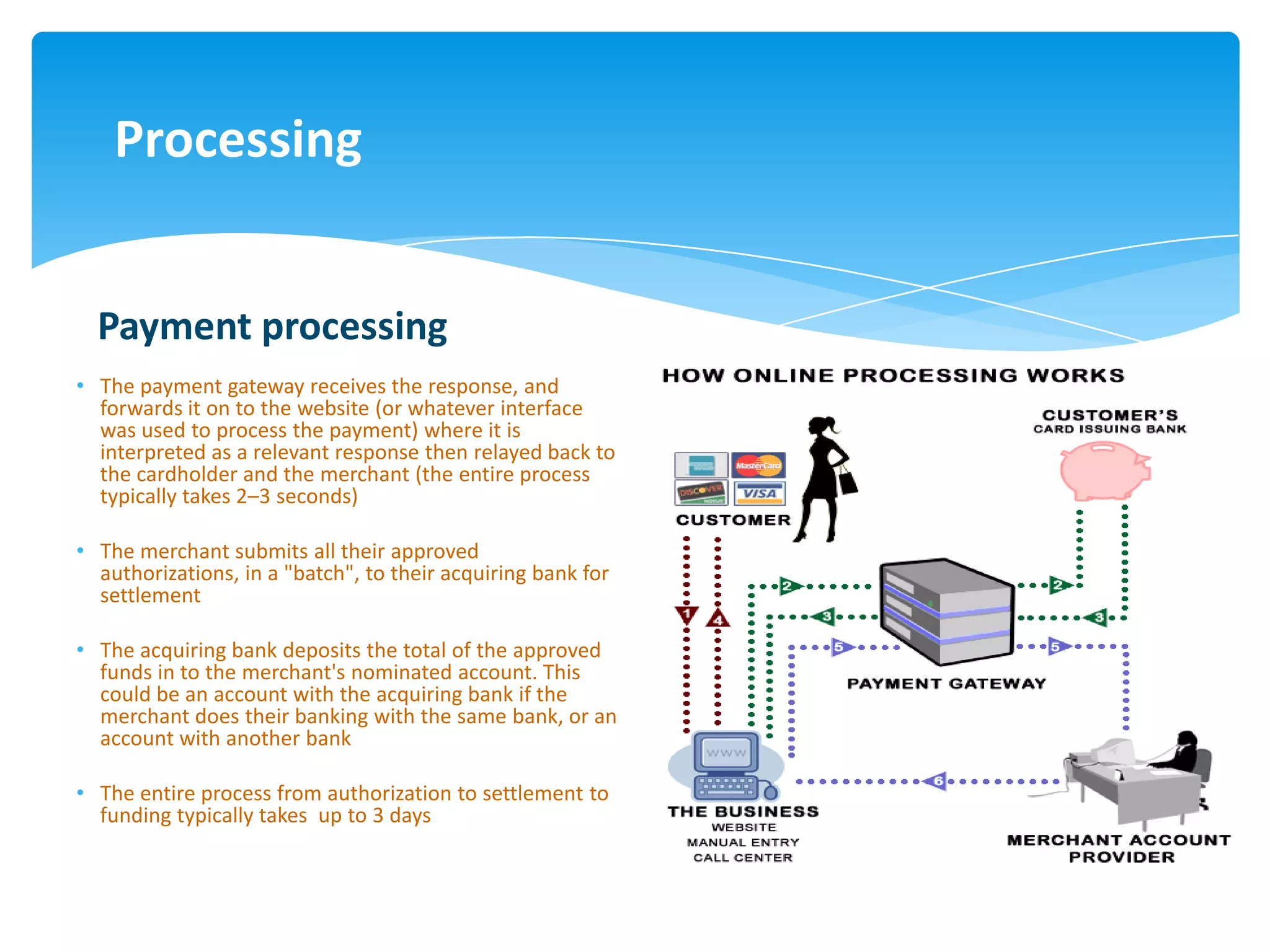
• The payment gateway receives the response, and
  forwards it on to the website (or whatever interface
  was used to process the payment) where it is
  interpreted as a relevant response then relayed back to
  the cardholder and the merchant (the entire process
  typically takes 2–3 seconds)

• The merchant submits all their approved
  authorizations, in a "batch", to their acquiring bank for
  settlement

• The acquiring bank deposits the total of the approved
  funds in to the merchant's nominated account. This
  could be an account with the acquiring bank if the
  merchant does their banking with the same bank, or an
  account with another bank

• The entire process from authorization to settlement to
  funding typically takes up to 3 days
3-D Secure


3-D Secure is an XML-based protocol used as an added layer of
security for online credit and debit card transactions. It was
developed by Visa to improve the security of Internet
payments. It adds another authentication step for online
payments.
          In most current implementations of 3-D Secure, the
issuing bank prompts the buyer for a password that is known
only to the bank/ACS provider and the buyer. Since the
merchant does not know this password and is not responsible
for capturing it, it can be used by the issuing bank as evidence
that the purchaser is indeed their cardholder
3-D Secure


This decreases risk in two ways:
• Copying card details, either by writing down the numbers on
  the card itself or by way of modified terminals or ATMs, does
  not result in the ability to purchase over the Internet
  because of the additional password, which is not stored on
  or written on the card.
• Since the merchant does not capture the password, there is
  a reduced risk from security incidents at online merchants;
  while an incident may still result in hackers obtaining other
  card details, there is no way for them to get the associated
  password.
PCI DSS compliancy


Compliancy

In order to be able to accept online payment a merchant has to
meet certain standards and requirements.

There are 12 requirements for compliancy in the Payment Card
Industry Data Security Standard (PCI DSS) organized into six
logically related groups.

Validation and certification of compliance can be performed
either internally or externally, with the assistance of the PCI
Requirements, depending on the volume of card transactions
the merchant organization is handling, but regardless of the size
of the organization, compliance must be assessed annually.
Benefits


  Key Benefits

• Long term reduction of costs

• Automation of payment processing

• Fraud detection tools

• Flexibility - partial or full capture

• Accept online payments 24/7

• Improved security – PCI DSS
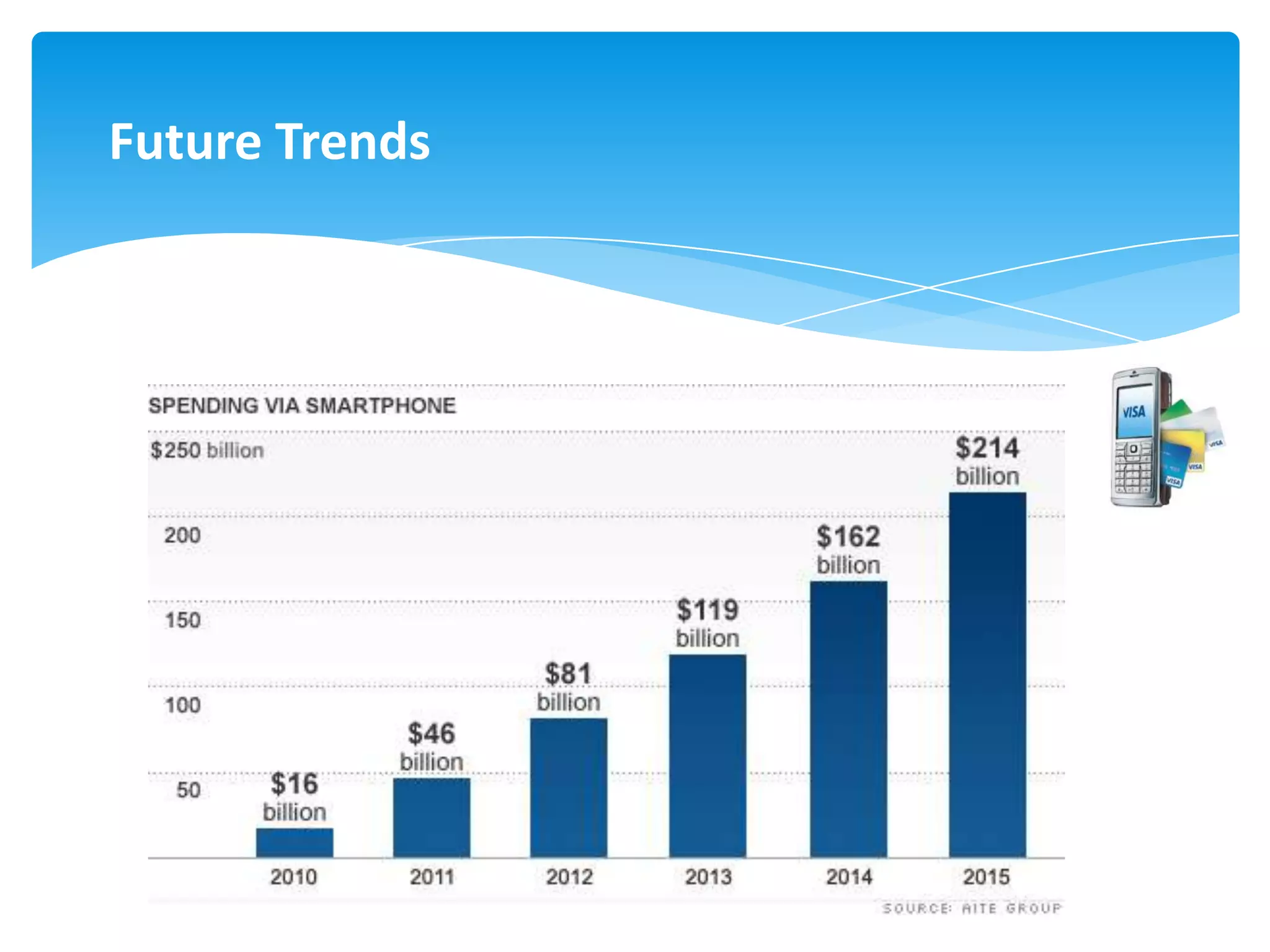
Future Trends


With the development of wireless technologies and the online
industry, it becomes clear that in the near future credit cards will
become obsolete. In development are new online and offline
mobile payment technologies which allow for increased flexibility
of using your mobile device , which has all your credit card data
encrypted and stored within your SIM card.

This will allow for future merging of online banking and mobile
services together and usage of the full potential of wireless
technologies. Here are some in-development as well as already
implemented technologies:
Online payment


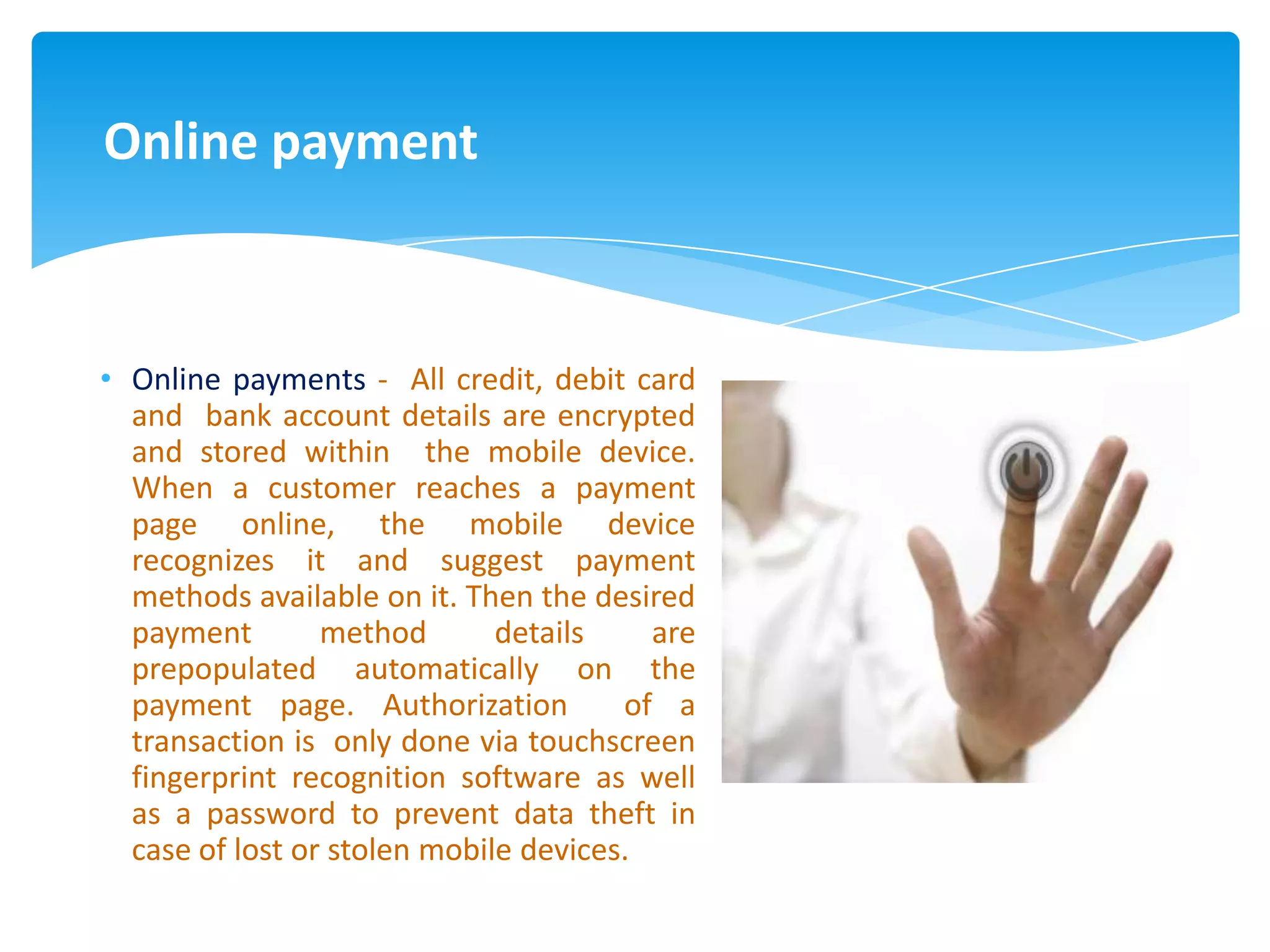
• Online payments - All credit, debit card
  and bank account details are encrypted
  and stored within the mobile device.
  When a customer reaches a payment
  page online, the mobile device
  recognizes it and suggest payment
  methods available on it. Then the desired
  payment        method       details    are
  prepopulated automatically on the
  payment page. Authorization          of a
  transaction is only done via touchscreen
  fingerprint recognition software as well
  as a password to prevent data theft in
  case of lost or stolen mobile devices.
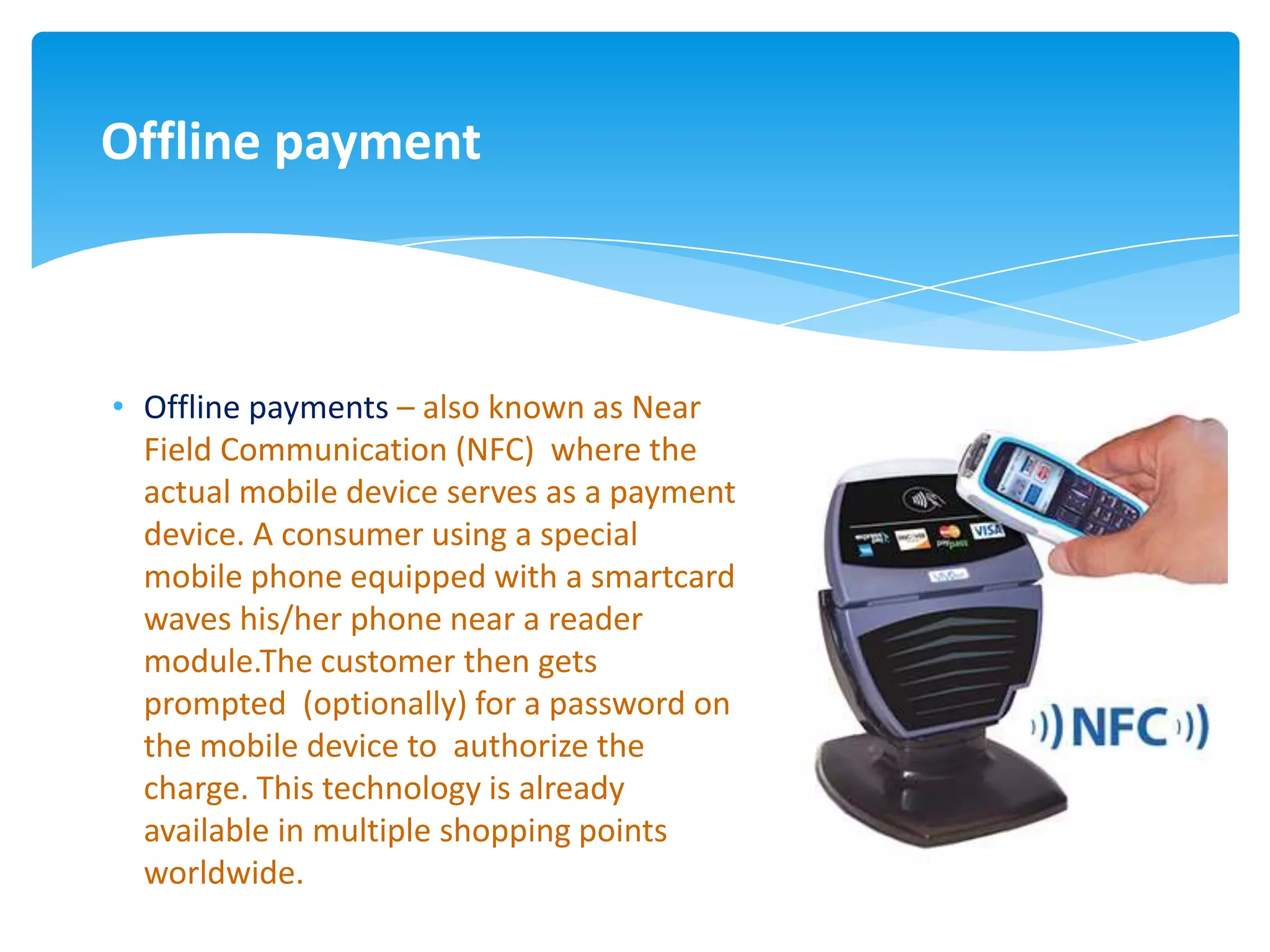
Offline payment


• Offline payments – also known as Near
  Field Communication (NFC) where the
  actual mobile device serves as a payment
  device. A consumer using a special
  mobile phone equipped with a smartcard
  waves his/her phone near a reader
  module.The customer then gets
  prompted (optionally) for a password on
  the mobile device to authorize the
  charge. This technology is already
  available in multiple shopping points
  worldwide.
Future Trends
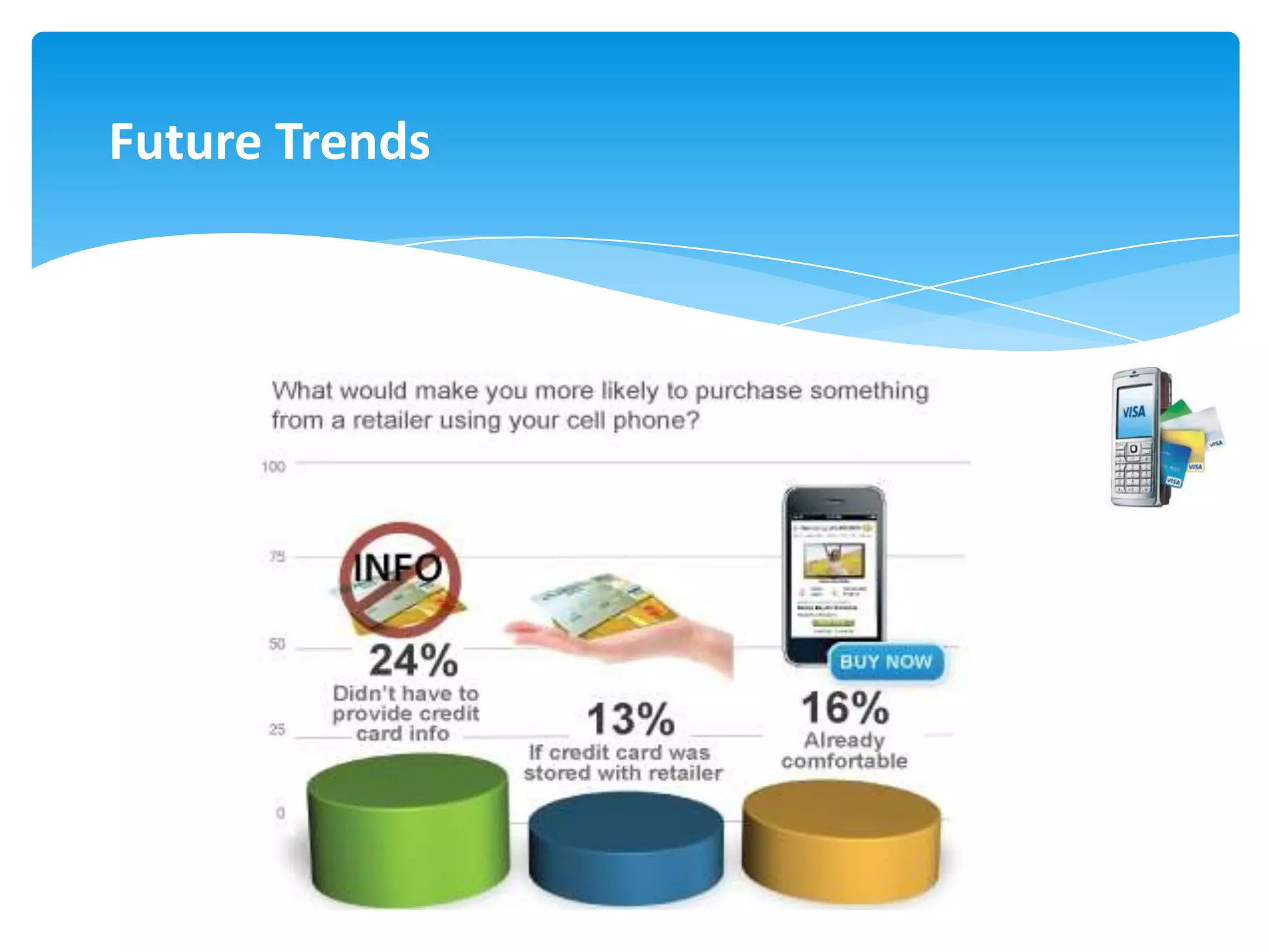
Future Trends
Thank you! Questions?

Danail Yotov
Head of Content Department
TravelStoreMaker.com
danail.yotov@travelstoremaker.com
www.travelstoremaker.com

Payment gateway/payment service providers and future trends in mobile payment by Danail Yotov

  • 1.
    Payment Gateway/Payment ServiceProviders and future trends in mobile payment
  • 2.
    Agenda • Overview • Connectivity • Processing • 3-D Secure • PCI-DSS compliancy • Key Benefits • Future Trends
  • 3.
    Overview Payment gateway A PaymentGateway/Payment Service Provider (PG/PSP) facilitates the transfer of information between a payment portal (such as a website) and the Front End Processor or acquiring bank. It offers merchants online services for accepting electronic payments by a variety of payment methods including credit card, bank-based payments such as direct debit, bank transfer and real-time bank transfer based on online banking.
  • 4.
    Connectivity Typeof connectivity • Direct XML API solution - all actions are performed within the website (online booking engine) environment of the merchant, credit card data is processed via XML API connection. • Generic solution (redirection) – the merchant’s website redirects the customer to a third party acquirer’s payment page where the credit card data is submitted, processed and if successful, system redirects back to webpage of merchant for completion of process. Alternatively redirection can be done after booking process is complete.
  • 5.
    Processing Paymentprocessing • And order is submitted via a website, the customer's web browser encrypts the information to be sent between the browser and the merchant's webserver. This is done via SSL (Secure Socket Layer) encryption • The merchant then forwards the transaction details to their payment gateway. This is another SSL encrypted connection to the payment server hosted by the payment gateway • The payment processor forwards the transaction information to the card association (i.e., Visa/MasterCard) • The credit card issuing bank receives the authorization request and sends a response back to the processor (via the same process as the request for authorization) with a response code. In addition to determining the fate of the payment, (i.e. approved or declined) the response code is used to define the reason why the transaction failed (such as insufficient funds, or bank link not available
  • 6.
    Processing Paymentprocessing • The payment gateway receives the response, and forwards it on to the website (or whatever interface was used to process the payment) where it is interpreted as a relevant response then relayed back to the cardholder and the merchant (the entire process typically takes 2–3 seconds) • The merchant submits all their approved authorizations, in a "batch", to their acquiring bank for settlement • The acquiring bank deposits the total of the approved funds in to the merchant's nominated account. This could be an account with the acquiring bank if the merchant does their banking with the same bank, or an account with another bank • The entire process from authorization to settlement to funding typically takes up to 3 days
  • 7.
    3-D Secure 3-D Secureis an XML-based protocol used as an added layer of security for online credit and debit card transactions. It was developed by Visa to improve the security of Internet payments. It adds another authentication step for online payments. In most current implementations of 3-D Secure, the issuing bank prompts the buyer for a password that is known only to the bank/ACS provider and the buyer. Since the merchant does not know this password and is not responsible for capturing it, it can be used by the issuing bank as evidence that the purchaser is indeed their cardholder
  • 8.
    3-D Secure This decreasesrisk in two ways: • Copying card details, either by writing down the numbers on the card itself or by way of modified terminals or ATMs, does not result in the ability to purchase over the Internet because of the additional password, which is not stored on or written on the card. • Since the merchant does not capture the password, there is a reduced risk from security incidents at online merchants; while an incident may still result in hackers obtaining other card details, there is no way for them to get the associated password.
  • 9.
    PCI DSS compliancy Compliancy Inorder to be able to accept online payment a merchant has to meet certain standards and requirements. There are 12 requirements for compliancy in the Payment Card Industry Data Security Standard (PCI DSS) organized into six logically related groups. Validation and certification of compliance can be performed either internally or externally, with the assistance of the PCI Requirements, depending on the volume of card transactions the merchant organization is handling, but regardless of the size of the organization, compliance must be assessed annually.
  • 10.
    Benefits KeyBenefits • Long term reduction of costs • Automation of payment processing • Fraud detection tools • Flexibility - partial or full capture • Accept online payments 24/7 • Improved security – PCI DSS
  • 11.
    Future Trends With thedevelopment of wireless technologies and the online industry, it becomes clear that in the near future credit cards will become obsolete. In development are new online and offline mobile payment technologies which allow for increased flexibility of using your mobile device , which has all your credit card data encrypted and stored within your SIM card. This will allow for future merging of online banking and mobile services together and usage of the full potential of wireless technologies. Here are some in-development as well as already implemented technologies:
  • 12.
    Online payment • Onlinepayments - All credit, debit card and bank account details are encrypted and stored within the mobile device. When a customer reaches a payment page online, the mobile device recognizes it and suggest payment methods available on it. Then the desired payment method details are prepopulated automatically on the payment page. Authorization of a transaction is only done via touchscreen fingerprint recognition software as well as a password to prevent data theft in case of lost or stolen mobile devices.
  • 13.
    Offline payment • Offlinepayments – also known as Near Field Communication (NFC) where the actual mobile device serves as a payment device. A consumer using a special mobile phone equipped with a smartcard waves his/her phone near a reader module.The customer then gets prompted (optionally) for a password on the mobile device to authorize the charge. This technology is already available in multiple shopping points worldwide.
  • 14.
  • 15.
  • 16.
    Thank you! Questions? DanailYotov Head of Content Department TravelStoreMaker.com danail.yotov@travelstoremaker.com www.travelstoremaker.com