WELCOME
TO
INFORMATION TECHNOLOGY IN
MANAGEMENT
PRESENTATION ON ATM
1
BY
VINOD KUMAR R BBA
2
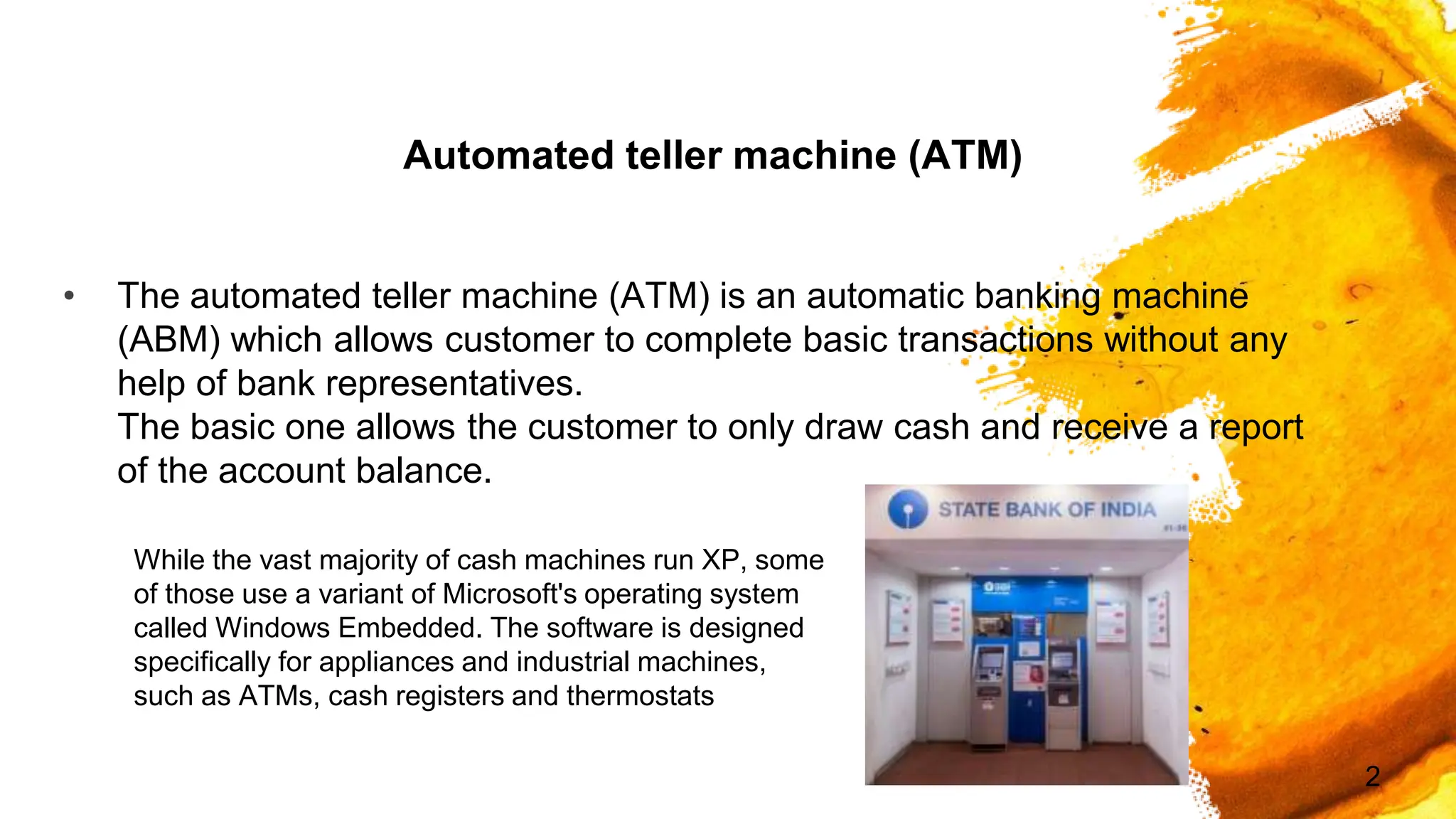
• The automated teller machine (ATM) is an automatic banking machine
(ABM) which allows customer to complete basic transactions without any
help of bank representatives.
The basic one allows the customer to only draw cash and receive a report
of the account balance.
Automated teller machine (ATM)
While the vast majority of cash machines run XP, some
of those use a variant of Microsoft's operating system
called Windows Embedded. The software is designed
specifically for appliances and industrial machines,
such as ATMs, cash registers and thermostats
1. It is an electronic device which is used by only bank
customers to process account transactions.
The users access their account through special type of
plastic card that is encoded with user information on a
magnetic strip.
2. The strip contains an identification code that is
transmitted to the bank’s central computer by modem. The
users insert the card into ATMs to access the account and
process their account transactions.
3. The automated teller machine was invented by john
shepherd-Barron in year of 1960.
3
Automated teller machine (ATM)
4
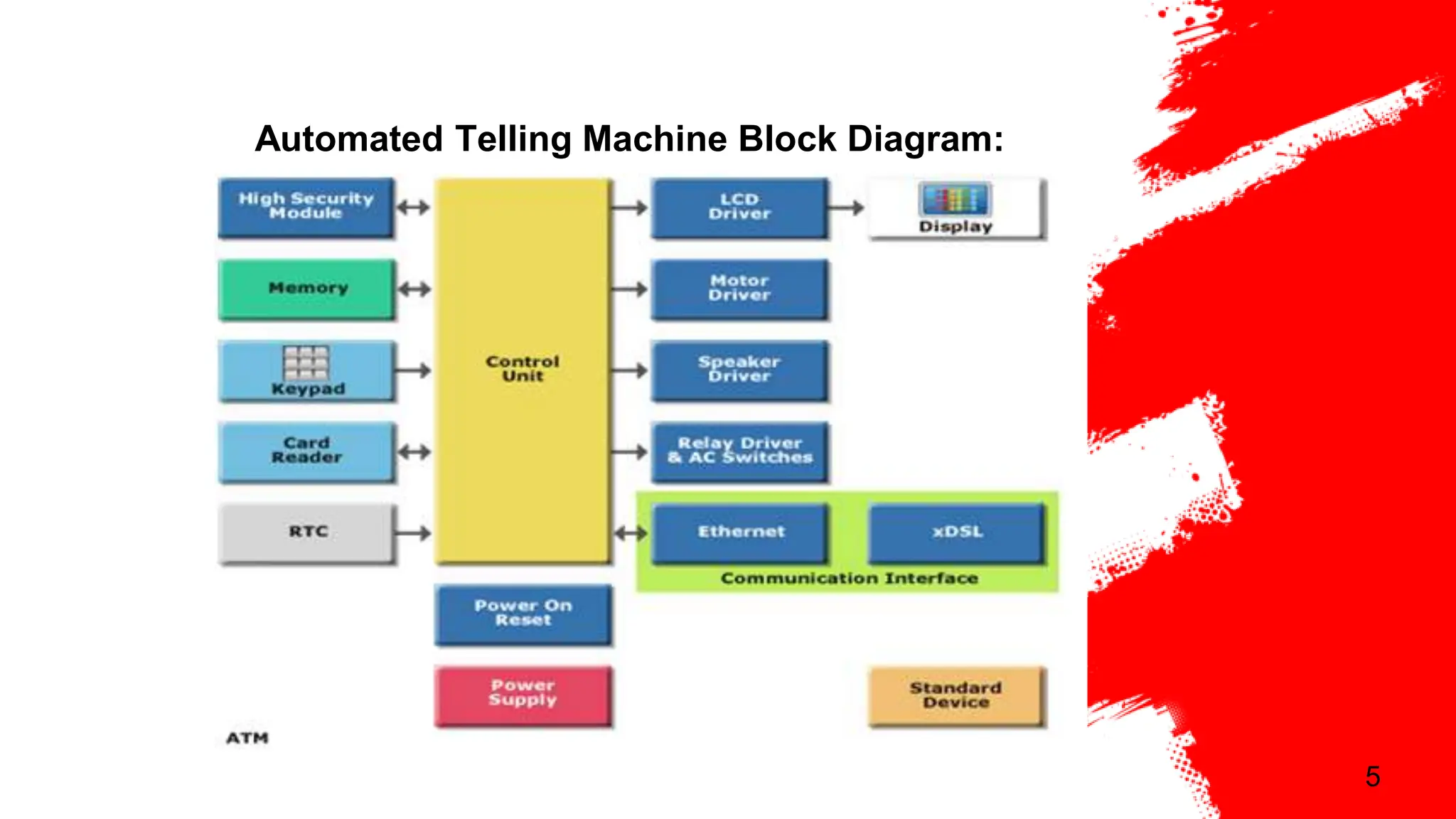
• The automated teller machine consists of mainly two input
devices and four output devices that are:
• Input Devices:
• Card reader
• Keypad
• Output Devices:
• Speaker
• Display Screen
• Receipt Printer
• Cash Depositor
Automated Telling Machine Block Diagram:
5
Automated Telling Machine Block Diagram:
6
• Input Devices:
Card Reader:
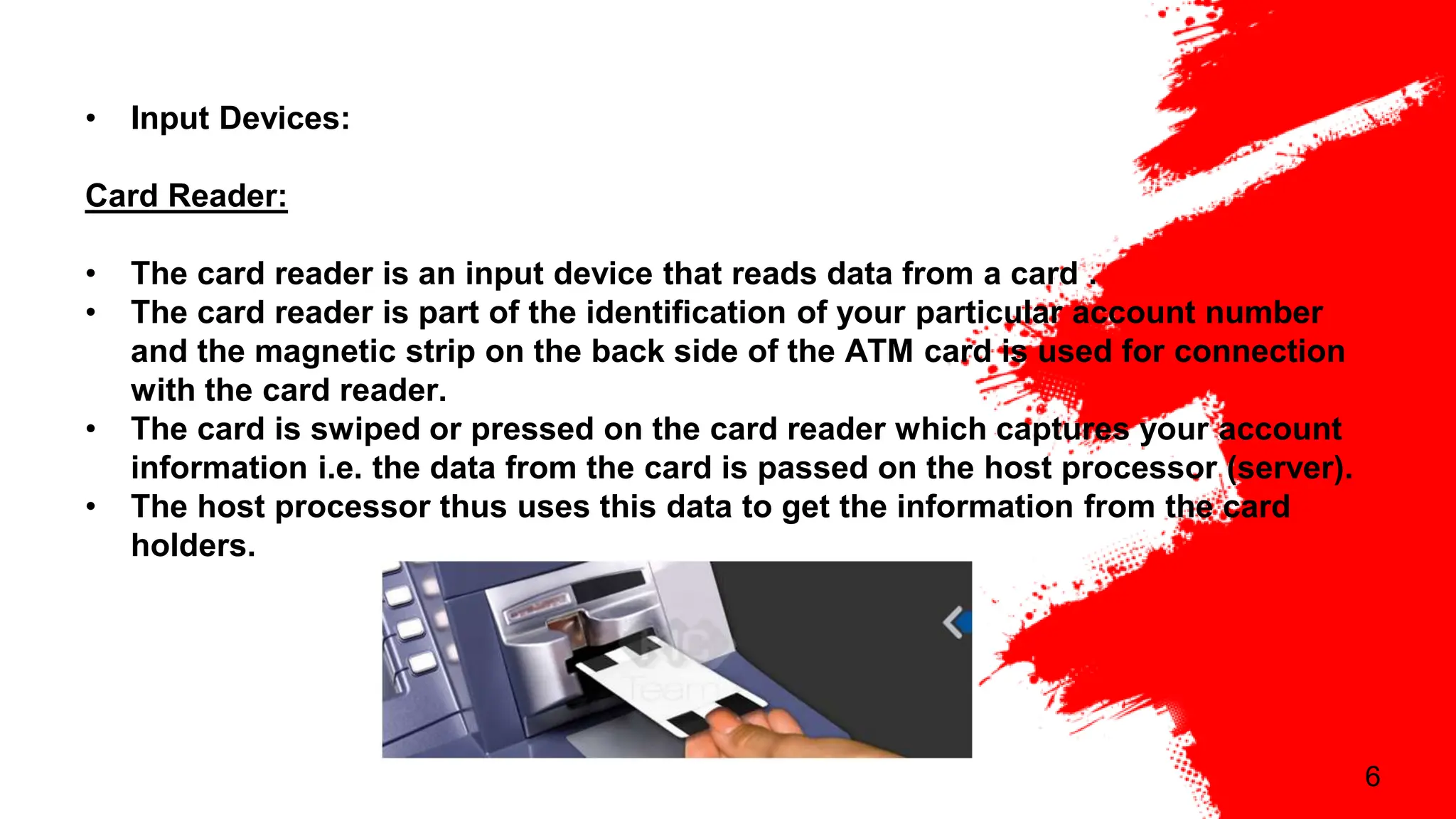
• The card reader is an input device that reads data from a card .
• The card reader is part of the identification of your particular account number
and the magnetic strip on the back side of the ATM card is used for connection
with the card reader.
• The card is swiped or pressed on the card reader which captures your account
information i.e. the data from the card is passed on the host processor (server).
• The host processor thus uses this data to get the information from the card
holders.
• Keypad:
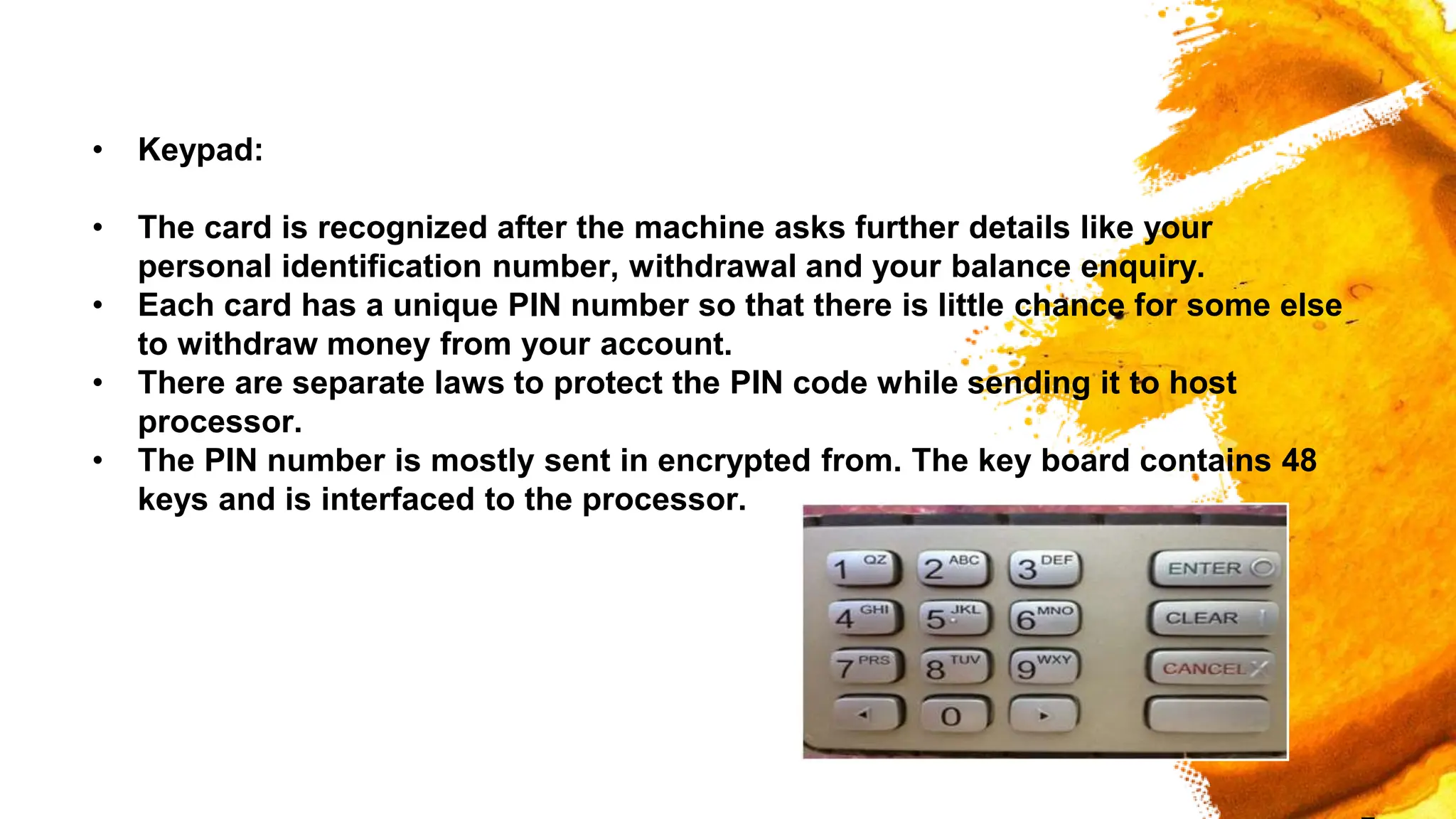
• The card is recognized after the machine asks further details like your
personal identification number, withdrawal and your balance enquiry.
• Each card has a unique PIN number so that there is little chance for some else
to withdraw money from your account.
• There are separate laws to protect the PIN code while sending it to host
processor.
• The PIN number is mostly sent in encrypted from. The key board contains 48
keys and is interfaced to the processor.
8
Output Devices:
Speaker:
The speaker provides the audio feedback when the particular
key is pressed.
Display Screen:
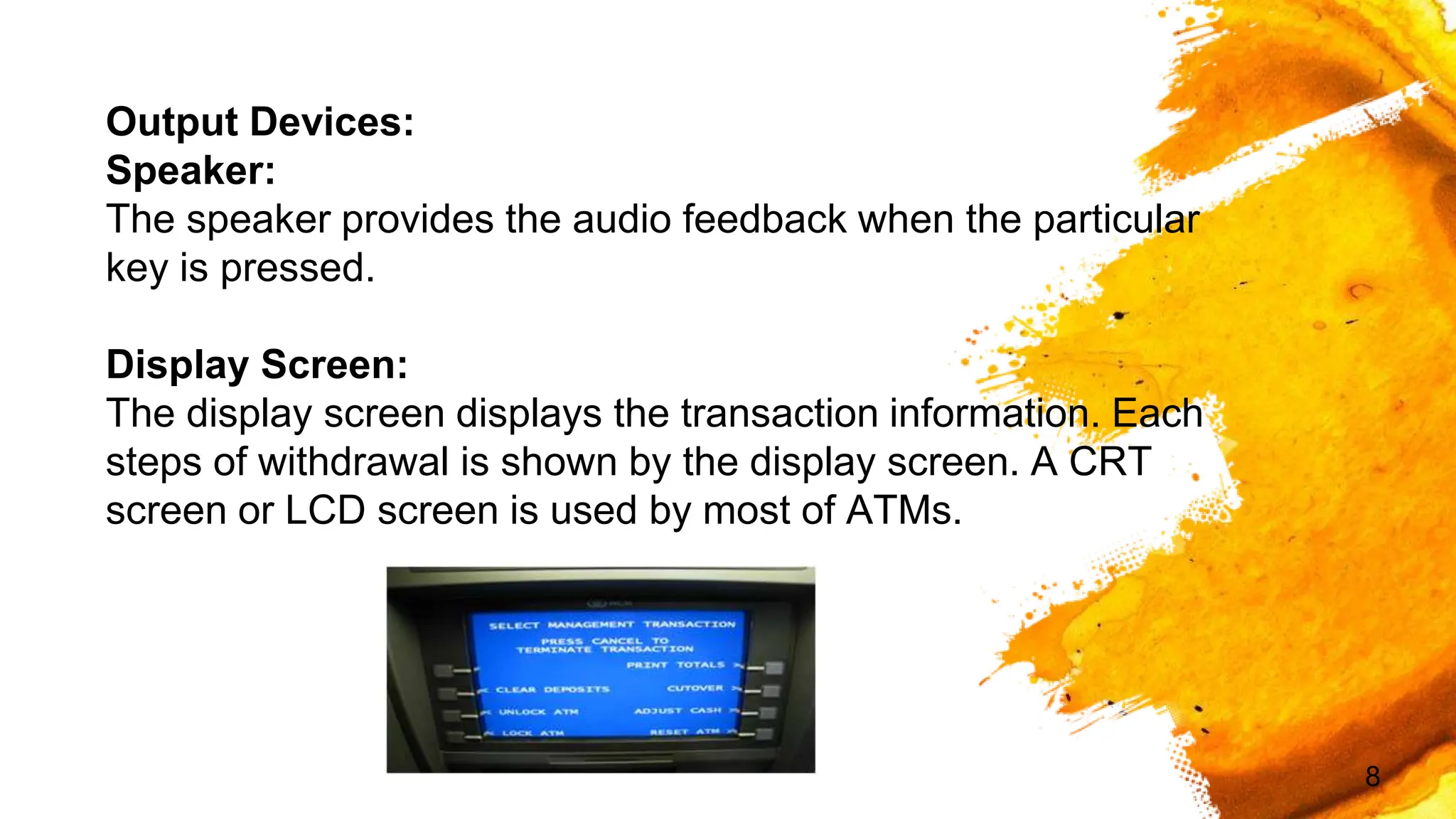
The display screen displays the transaction information. Each
steps of withdrawal is shown by the display screen. A CRT
screen or LCD screen is used by most of ATMs.
9
• Receipt Printer:
• The receipt printer print all the details recording your withdrawal, date and time and the
amount of withdrawn and also shows balance of your account in the receipt.
• Cash Dispenser:
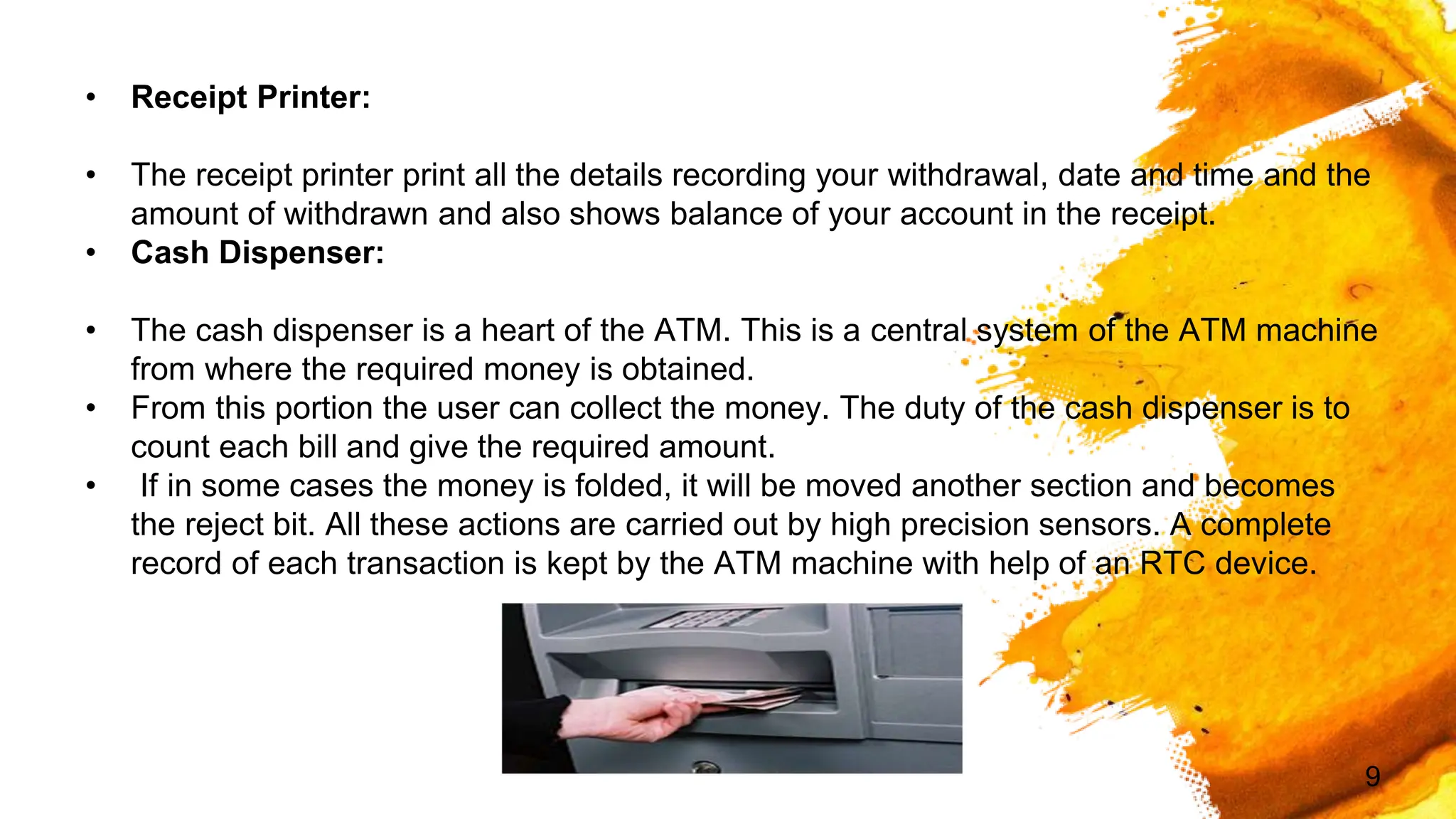
• The cash dispenser is a heart of the ATM. This is a central system of the ATM machine
from where the required money is obtained.
• From this portion the user can collect the money. The duty of the cash dispenser is to
count each bill and give the required amount.
• If in some cases the money is folded, it will be moved another section and becomes
the reject bit. All these actions are carried out by high precision sensors. A complete
record of each transaction is kept by the ATM machine with help of an RTC device.
10
• ATM Networking:
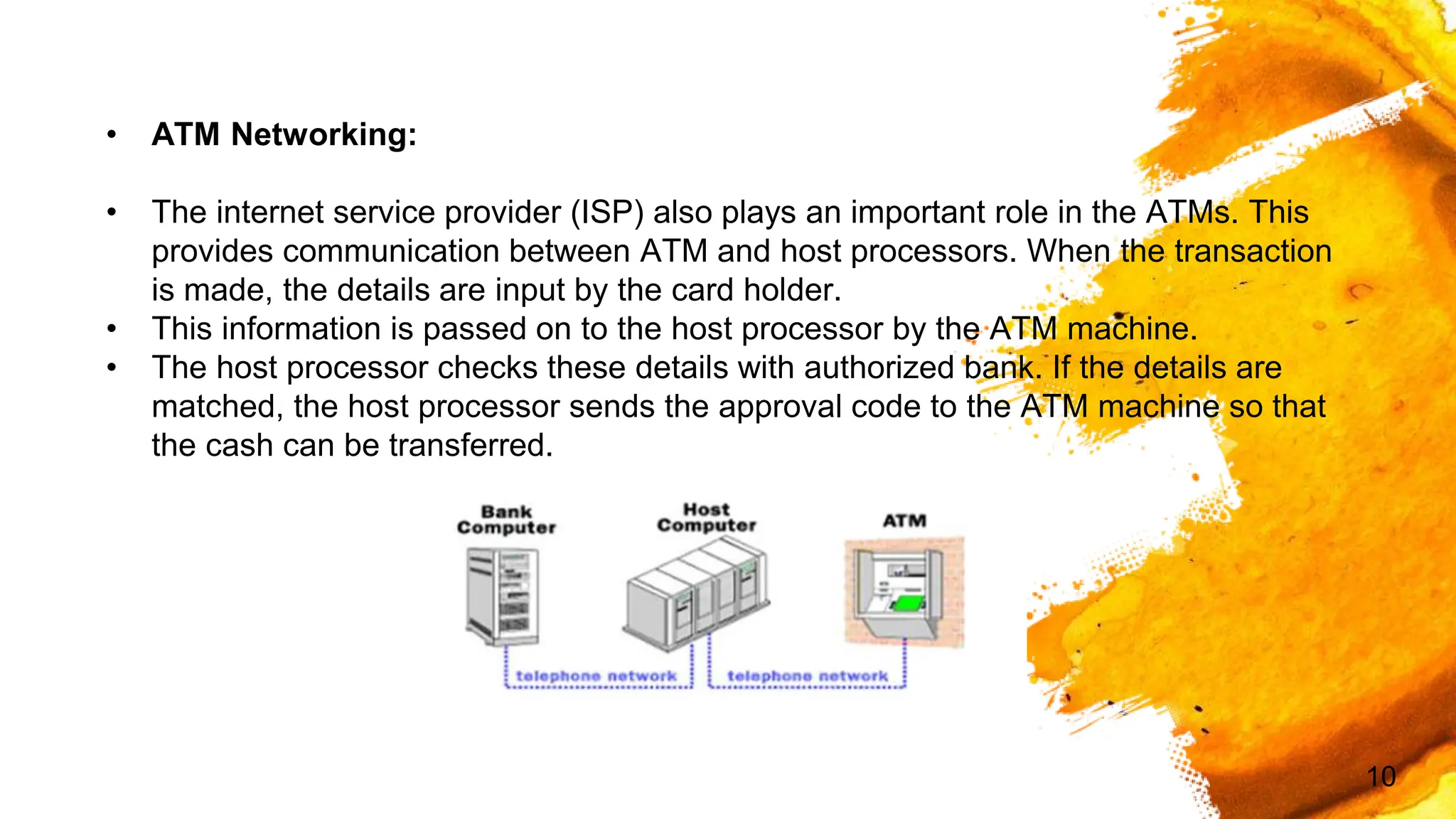
• The internet service provider (ISP) also plays an important role in the ATMs. This
provides communication between ATM and host processors. When the transaction
is made, the details are input by the card holder.
• This information is passed on to the host processor by the ATM machine.
• The host processor checks these details with authorized bank. If the details are
matched, the host processor sends the approval code to the ATM machine so that
the cash can be transferred.
11
2 Types of ATM Machines
Most of the host processors can support either leased line or dial up machines
•Leased line ATM machines
•Dial up ATM machines
Leased Line ATM Machines:
The leased line machines connect direct to the host processor through a four wire
point to point dedicated telephone line. These types of machines are preferred in
place. The operating cost of these machines is very high.
Dial Up ATM Machines:
The dial up ATMs connects to the host processor through a normal phone line using
a modem. These require a normal connections their and their initial installation cost
is very less. The operating cost of these machines is low compared with leased line
machines.
12
ATM Security:
The ATM card is secured with PIN number which is kept secret. There is no way to get the PIN
number from your card. It is encrypted by the strong software like Triple data Encryption
Slandered.
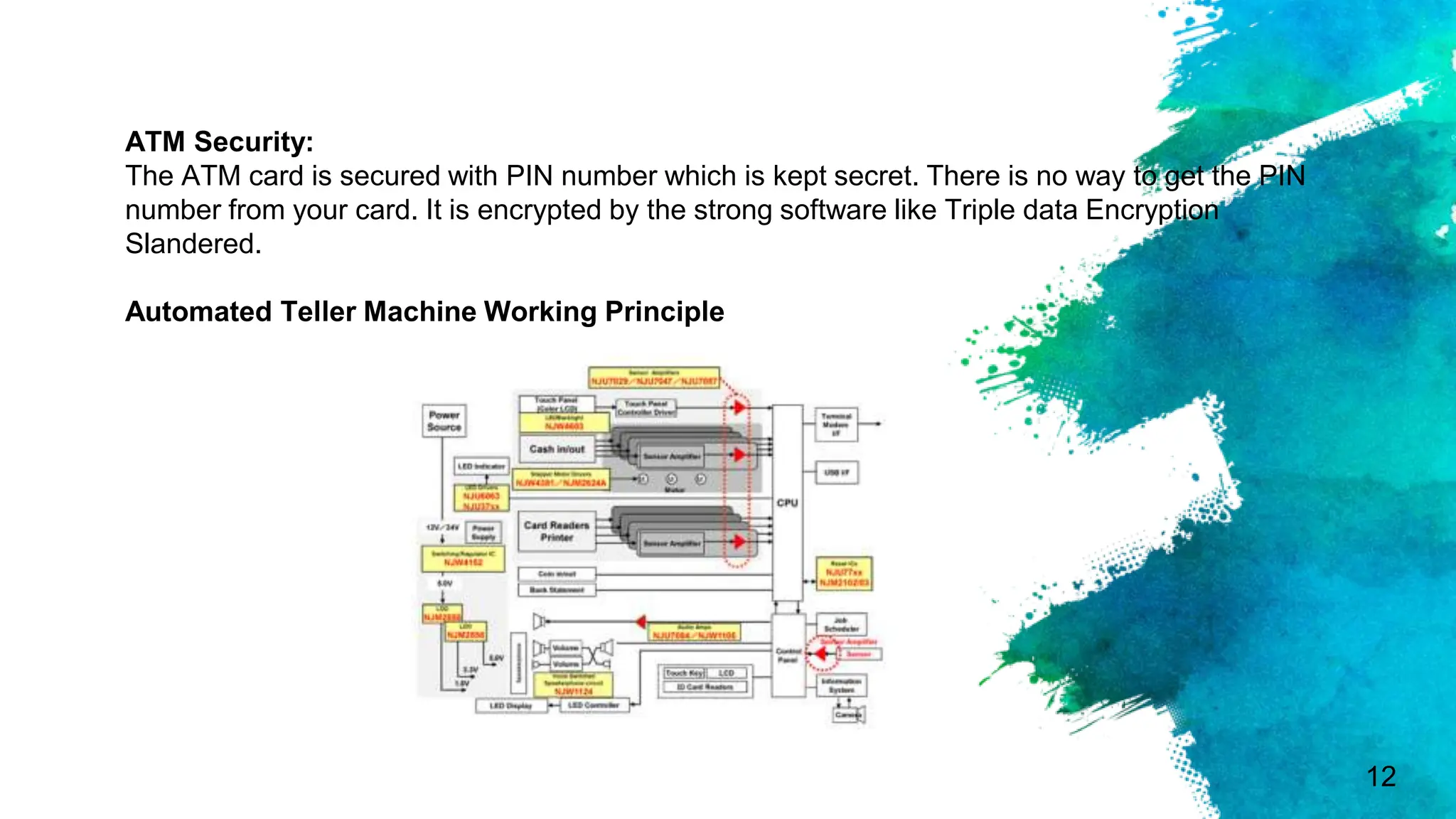
Automated Teller Machine Working Principle
13
• The automated teller machine is simply a data terminal with two input
and four output devices. These devices are interfaced to the
processor. The processor is heart of the ATM machine.
• All the ATM machines working around the world are based on
centralized database system.
• The ATM has to connect and communicate with the host processor
(server). The host processor is communicating with the internet
service provider (ISP). It is the gateway through all the ATM networks
available to the card holder.
• When a card holder wants does an ATM transaction, user provides
necessary information through card reader and keypad.
• The ATM forwards this information to the host processor. The host
processor enters the transaction request to the cardholder bank.
14
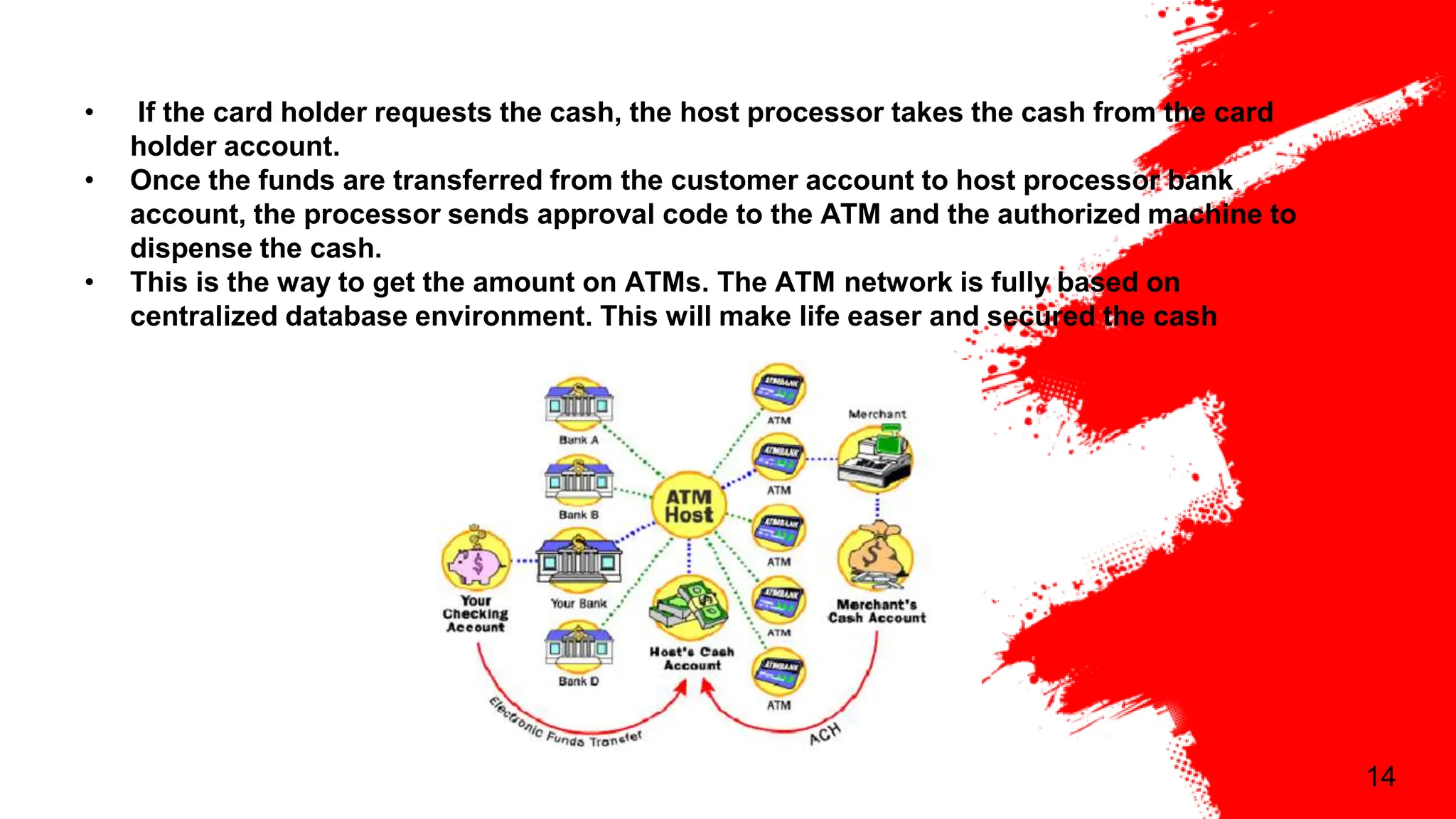
• If the card holder requests the cash, the host processor takes the cash from the card
holder account.
• Once the funds are transferred from the customer account to host processor bank
account, the processor sends approval code to the ATM and the authorized machine to
dispense the cash.
• This is the way to get the amount on ATMs. The ATM network is fully based on
centralized database environment. This will make life easer and secured the cash

vinodkumarpptitpresentation-180916071852 (1).pdf

  • 1.
  • 2.
    2 • The automatedteller machine (ATM) is an automatic banking machine (ABM) which allows customer to complete basic transactions without any help of bank representatives. The basic one allows the customer to only draw cash and receive a report of the account balance. Automated teller machine (ATM) While the vast majority of cash machines run XP, some of those use a variant of Microsoft's operating system called Windows Embedded. The software is designed specifically for appliances and industrial machines, such as ATMs, cash registers and thermostats
  • 3.
    1. It isan electronic device which is used by only bank customers to process account transactions. The users access their account through special type of plastic card that is encoded with user information on a magnetic strip. 2. The strip contains an identification code that is transmitted to the bank’s central computer by modem. The users insert the card into ATMs to access the account and process their account transactions. 3. The automated teller machine was invented by john shepherd-Barron in year of 1960. 3 Automated teller machine (ATM)
  • 4.
    4 • The automatedteller machine consists of mainly two input devices and four output devices that are: • Input Devices: • Card reader • Keypad • Output Devices: • Speaker • Display Screen • Receipt Printer • Cash Depositor Automated Telling Machine Block Diagram:
  • 5.
  • 6.
    6 • Input Devices: CardReader: • The card reader is an input device that reads data from a card . • The card reader is part of the identification of your particular account number and the magnetic strip on the back side of the ATM card is used for connection with the card reader. • The card is swiped or pressed on the card reader which captures your account information i.e. the data from the card is passed on the host processor (server). • The host processor thus uses this data to get the information from the card holders.
  • 7.
    • Keypad: • Thecard is recognized after the machine asks further details like your personal identification number, withdrawal and your balance enquiry. • Each card has a unique PIN number so that there is little chance for some else to withdraw money from your account. • There are separate laws to protect the PIN code while sending it to host processor. • The PIN number is mostly sent in encrypted from. The key board contains 48 keys and is interfaced to the processor.
  • 8.
    8 Output Devices: Speaker: The speakerprovides the audio feedback when the particular key is pressed. Display Screen: The display screen displays the transaction information. Each steps of withdrawal is shown by the display screen. A CRT screen or LCD screen is used by most of ATMs.
  • 9.
    9 • Receipt Printer: •The receipt printer print all the details recording your withdrawal, date and time and the amount of withdrawn and also shows balance of your account in the receipt. • Cash Dispenser: • The cash dispenser is a heart of the ATM. This is a central system of the ATM machine from where the required money is obtained. • From this portion the user can collect the money. The duty of the cash dispenser is to count each bill and give the required amount. • If in some cases the money is folded, it will be moved another section and becomes the reject bit. All these actions are carried out by high precision sensors. A complete record of each transaction is kept by the ATM machine with help of an RTC device.
  • 10.
    10 • ATM Networking: •The internet service provider (ISP) also plays an important role in the ATMs. This provides communication between ATM and host processors. When the transaction is made, the details are input by the card holder. • This information is passed on to the host processor by the ATM machine. • The host processor checks these details with authorized bank. If the details are matched, the host processor sends the approval code to the ATM machine so that the cash can be transferred.
  • 11.
    11 2 Types ofATM Machines Most of the host processors can support either leased line or dial up machines •Leased line ATM machines •Dial up ATM machines Leased Line ATM Machines: The leased line machines connect direct to the host processor through a four wire point to point dedicated telephone line. These types of machines are preferred in place. The operating cost of these machines is very high. Dial Up ATM Machines: The dial up ATMs connects to the host processor through a normal phone line using a modem. These require a normal connections their and their initial installation cost is very less. The operating cost of these machines is low compared with leased line machines.
  • 12.
    12 ATM Security: The ATMcard is secured with PIN number which is kept secret. There is no way to get the PIN number from your card. It is encrypted by the strong software like Triple data Encryption Slandered. Automated Teller Machine Working Principle
  • 13.
    13 • The automatedteller machine is simply a data terminal with two input and four output devices. These devices are interfaced to the processor. The processor is heart of the ATM machine. • All the ATM machines working around the world are based on centralized database system. • The ATM has to connect and communicate with the host processor (server). The host processor is communicating with the internet service provider (ISP). It is the gateway through all the ATM networks available to the card holder. • When a card holder wants does an ATM transaction, user provides necessary information through card reader and keypad. • The ATM forwards this information to the host processor. The host processor enters the transaction request to the cardholder bank.
  • 14.
    14 • If thecard holder requests the cash, the host processor takes the cash from the card holder account. • Once the funds are transferred from the customer account to host processor bank account, the processor sends approval code to the ATM and the authorized machine to dispense the cash. • This is the way to get the amount on ATMs. The ATM network is fully based on centralized database environment. This will make life easer and secured the cash