EXPLORING CARE 
VALUES 
L E S SON 4 
SAF EGUARDING
STARTER 
Use your computer to find a health and social article 
on safeguarding from recent press issues
BY THE END OF THIS LESSON YOU WILL: 
• LO 
• Define the term safeguarding 
• Identify two ways of safeguarding an individual 
• Research and describe in detail how we safeguard 
individuals and produce a poster
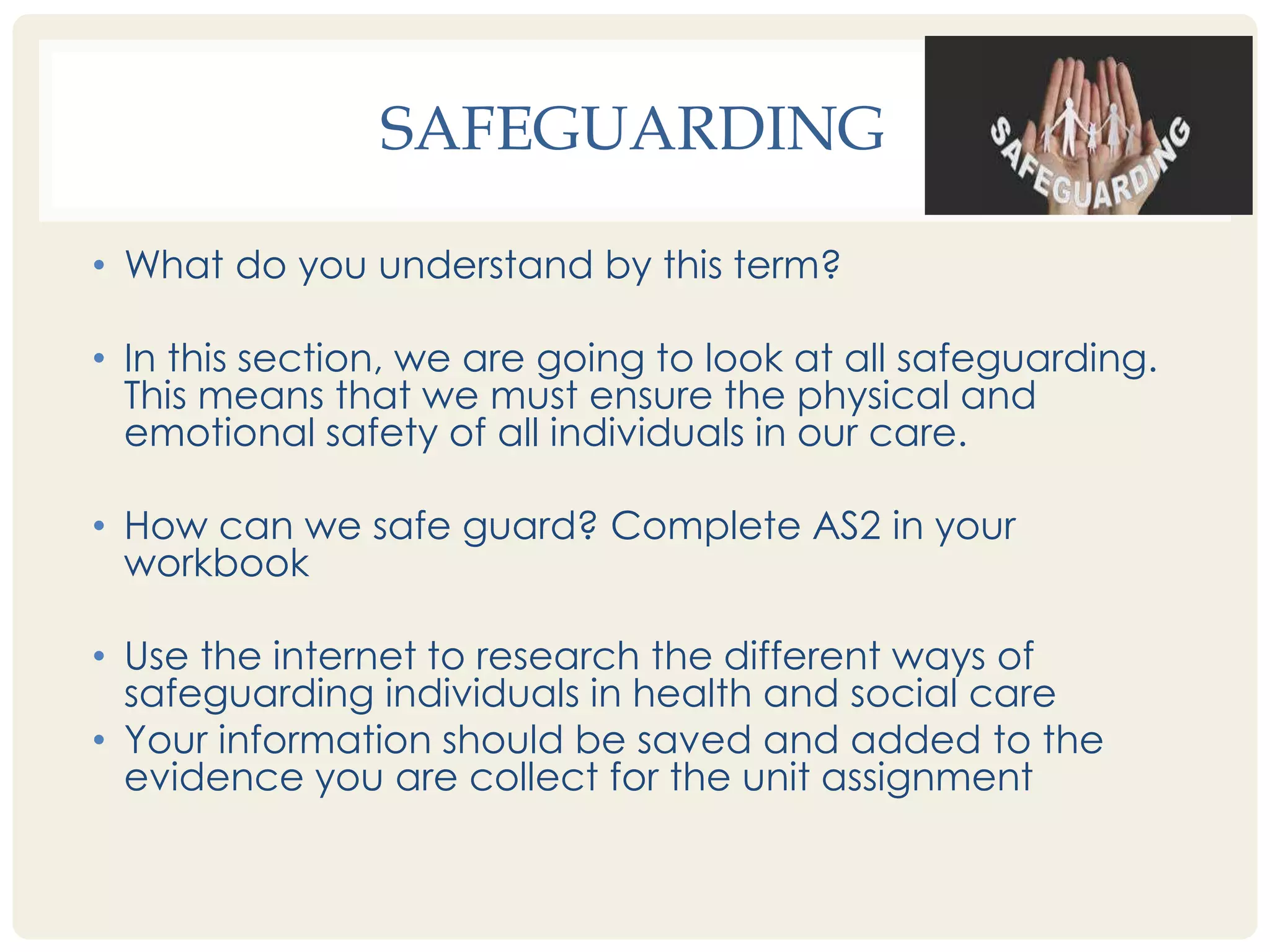
SAFEGUARDING 
• What do you understand by this term? 
• In this section, we are going to look at all safeguarding. 
This means that we must ensure the physical and 
emotional safety of all individuals in our care. 
• How can we safe guard? Complete AS2 in your 
workbook 
• Use the internet to research the different ways of 
safeguarding individuals in health and social care 
• Your information should be saved and added to the 
evidence you are collect for the unit assignment
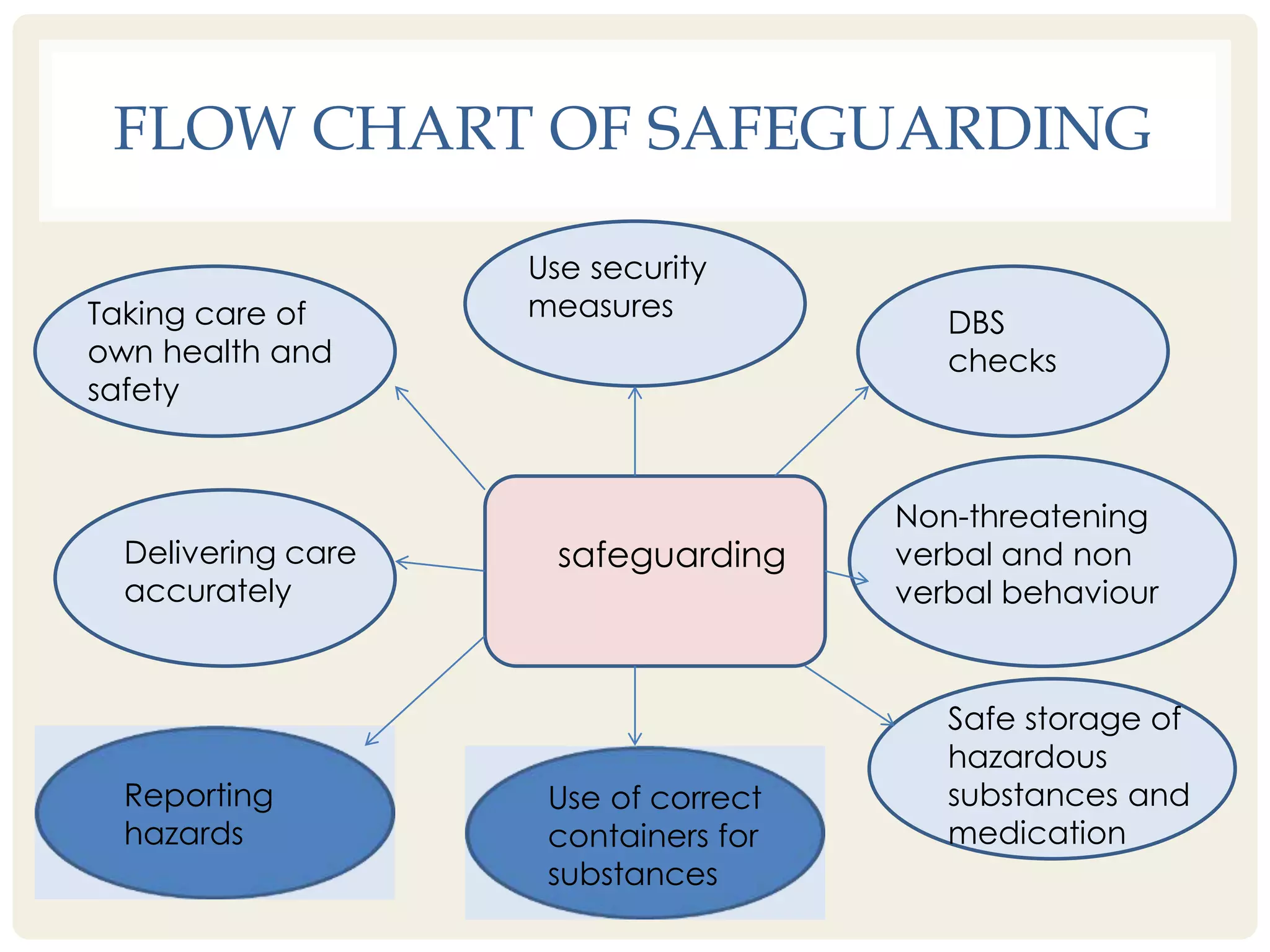
FLOW CHART OF SAFEGUARDING 
Use security 
measures 
safeguarding 
DBS 
checks 
Non-threatening 
verbal and non 
verbal behaviour 
Safe storage of 
hazardous 
substances and 
medication 
Taking care of 
own health and 
safety 
Delivering care 
accurately 
Reporting 
hazards 
Use of correct 
containers for 
substances
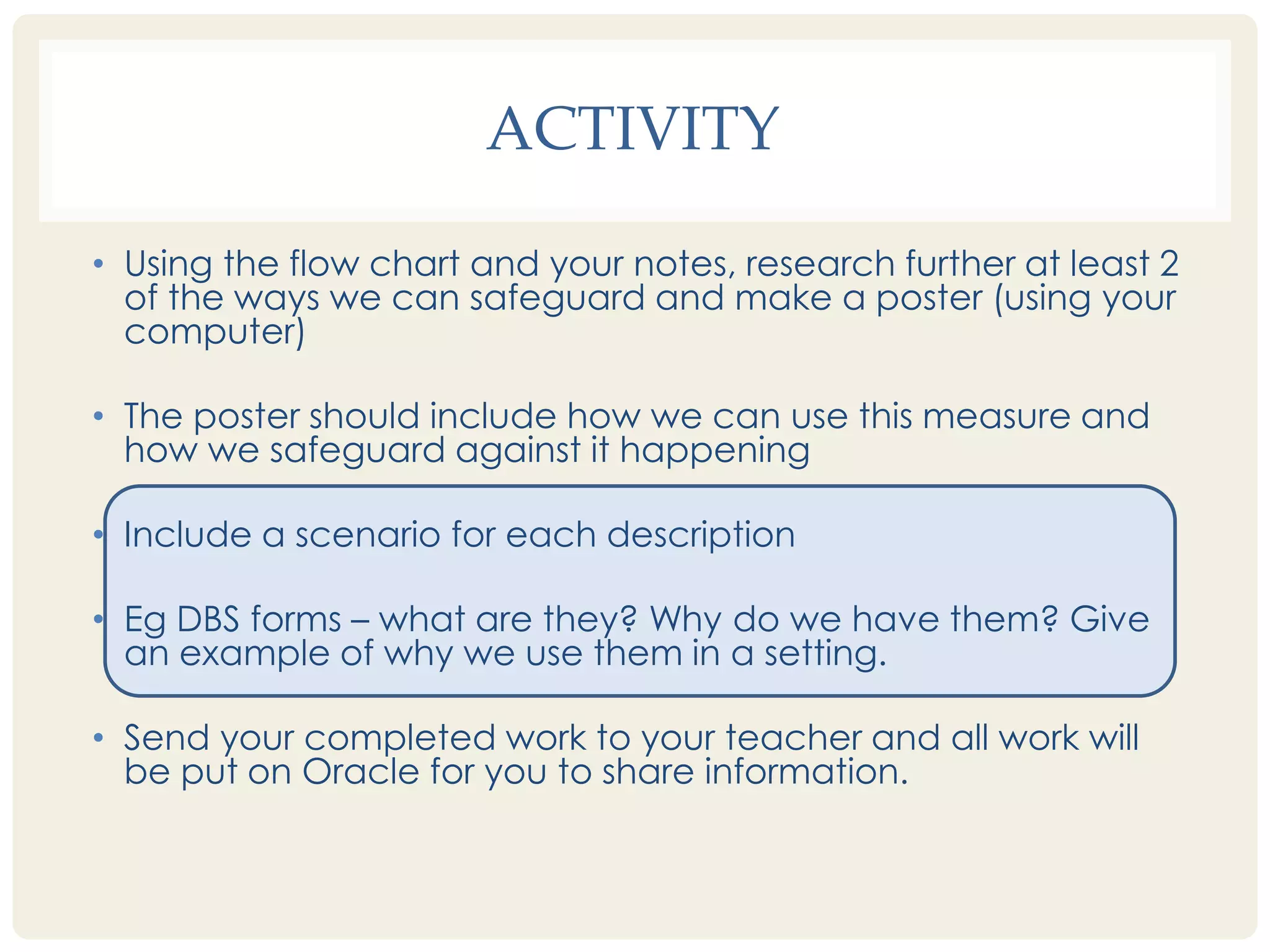
ACTIVITY 
• Using the flow chart and your notes, research further at least 2 
of the ways we can safeguard and make a poster (using your 
computer) 
• The poster should include how we can use this measure and 
how we safeguard against it happening 
• Include a scenario for each description 
• Eg DBS forms – what are they? Why do we have them? Give 
an example of why we use them in a setting. 
• Send your completed work to your teacher and all work will 
be put on Oracle for you to share information.
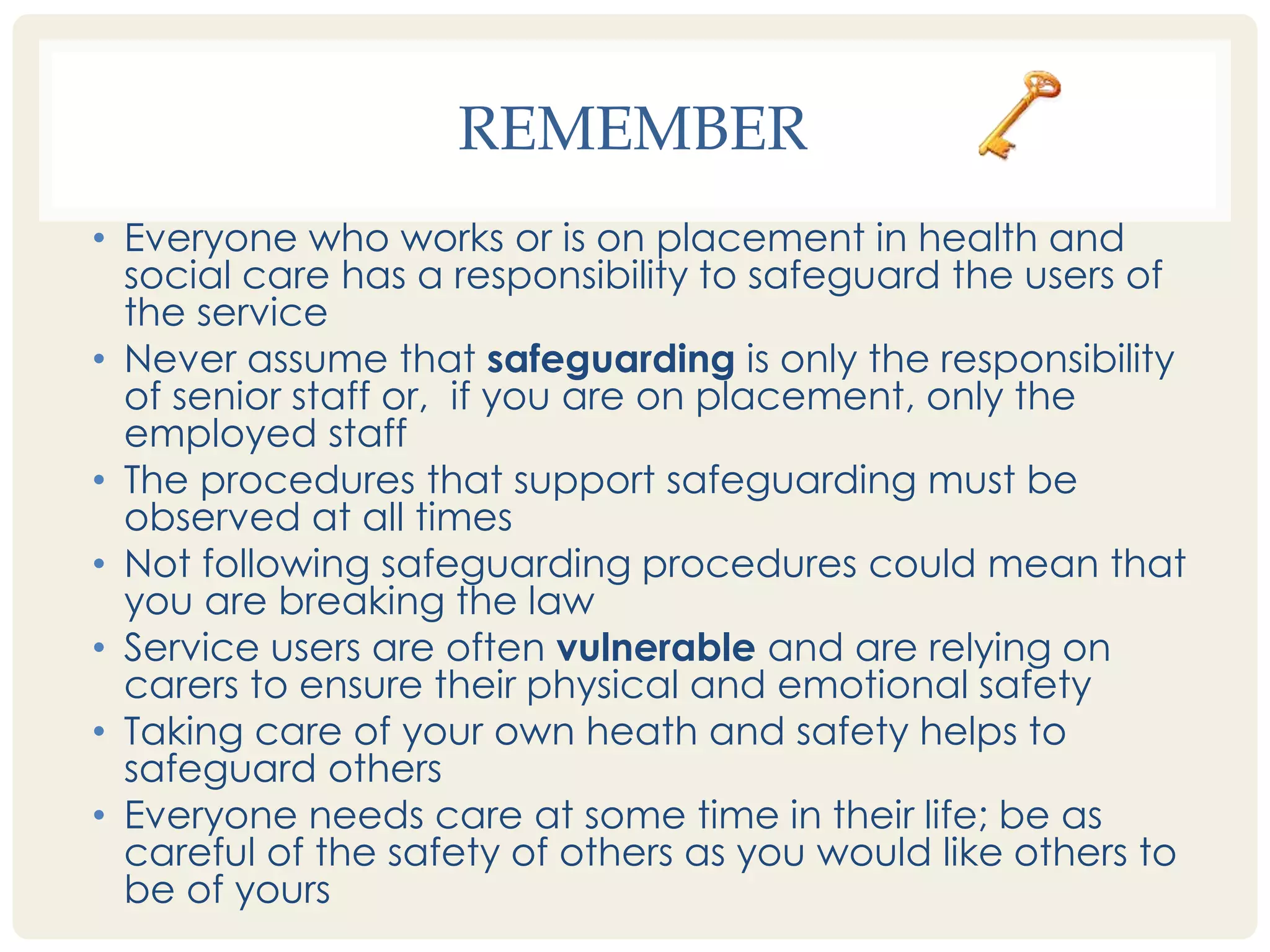
REMEMBER 
• Everyone who works or is on placement in health and 
social care has a responsibility to safeguard the users of 
the service 
• Never assume that safeguarding is only the responsibility 
of senior staff or, if you are on placement, only the 
employed staff 
• The procedures that support safeguarding must be 
observed at all times 
• Not following safeguarding procedures could mean that 
you are breaking the law 
• Service users are often vulnerable and are relying on 
carers to ensure their physical and emotional safety 
• Taking care of your own heath and safety helps to 
safeguard others 
• Everyone needs care at some time in their life; be as 
careful of the safety of others as you would like others to 
be of yours
ABUSE OF POWER 
• Watch the first 2 minutes of this clip and discuss how 
the care worker has abused his power over the 
service users. 
• (this contains some scenes of physical abuse) 
• http://youtu.be/tzi8IKlGS4E?list=PLYMAQFWR9P7IAK 
qVnzHFyUHhV8Bd_Ohnw
PHYSICAL ABUSE 
• Physical abuse can also happen unintentionally. As 
a care professional you may have to perform 
personal care and moving and handling. You can 
cause damage to the service user and yourself. 
• Watch this clip and take notes. 
• http://youtu.be/dHxzxXoEeyM
REPORTING ABUSE 
• What action should a care worker take if they observe 
bruises on a service user? 
• Raising concerns of suspected abuse 
• Your first priority should always be to ensure the safety 
and protection of vulnerable adults. It is the responsibility 
of all staff to act on any suspicion or evidence of abuse 
or neglect by raising an alert. You should then report it to 
your line manager or safeguarding manager at the 
setting. 
• In most settings, you will be asked to complete a form 
recording your concerns.
QUIZ 
• Can you name 2 ways of safeguarding an individual 
• What is meant by the phrase ‘abuse of power’? 
• Why is it important to be careful when supporting 
individuals physically, for example when dealing with 
personal care? 
• What action should a care worker take if they notice 
bruising on service user? 
• What action should a care worker take if a service user 
claims that money has disappeared from their purser? 
• What are of safety is at risk when a care worker shouts at 
a service user?
RECAP 
• Revisit learning outcomes from this lesson

Lesson 4 safeguarding

  • 1.
    EXPLORING CARE VALUES L E S SON 4 SAF EGUARDING
  • 2.
    STARTER Use yourcomputer to find a health and social article on safeguarding from recent press issues
  • 3.
    BY THE ENDOF THIS LESSON YOU WILL: • LO • Define the term safeguarding • Identify two ways of safeguarding an individual • Research and describe in detail how we safeguard individuals and produce a poster
  • 4.
    SAFEGUARDING • Whatdo you understand by this term? • In this section, we are going to look at all safeguarding. This means that we must ensure the physical and emotional safety of all individuals in our care. • How can we safe guard? Complete AS2 in your workbook • Use the internet to research the different ways of safeguarding individuals in health and social care • Your information should be saved and added to the evidence you are collect for the unit assignment
  • 5.
    FLOW CHART OFSAFEGUARDING Use security measures safeguarding DBS checks Non-threatening verbal and non verbal behaviour Safe storage of hazardous substances and medication Taking care of own health and safety Delivering care accurately Reporting hazards Use of correct containers for substances
  • 6.
    ACTIVITY • Usingthe flow chart and your notes, research further at least 2 of the ways we can safeguard and make a poster (using your computer) • The poster should include how we can use this measure and how we safeguard against it happening • Include a scenario for each description • Eg DBS forms – what are they? Why do we have them? Give an example of why we use them in a setting. • Send your completed work to your teacher and all work will be put on Oracle for you to share information.
  • 7.
    REMEMBER • Everyonewho works or is on placement in health and social care has a responsibility to safeguard the users of the service • Never assume that safeguarding is only the responsibility of senior staff or, if you are on placement, only the employed staff • The procedures that support safeguarding must be observed at all times • Not following safeguarding procedures could mean that you are breaking the law • Service users are often vulnerable and are relying on carers to ensure their physical and emotional safety • Taking care of your own heath and safety helps to safeguard others • Everyone needs care at some time in their life; be as careful of the safety of others as you would like others to be of yours
  • 8.
    ABUSE OF POWER • Watch the first 2 minutes of this clip and discuss how the care worker has abused his power over the service users. • (this contains some scenes of physical abuse) • http://youtu.be/tzi8IKlGS4E?list=PLYMAQFWR9P7IAK qVnzHFyUHhV8Bd_Ohnw
  • 9.
    PHYSICAL ABUSE •Physical abuse can also happen unintentionally. As a care professional you may have to perform personal care and moving and handling. You can cause damage to the service user and yourself. • Watch this clip and take notes. • http://youtu.be/dHxzxXoEeyM
  • 10.
    REPORTING ABUSE •What action should a care worker take if they observe bruises on a service user? • Raising concerns of suspected abuse • Your first priority should always be to ensure the safety and protection of vulnerable adults. It is the responsibility of all staff to act on any suspicion or evidence of abuse or neglect by raising an alert. You should then report it to your line manager or safeguarding manager at the setting. • In most settings, you will be asked to complete a form recording your concerns.
  • 11.
    QUIZ • Canyou name 2 ways of safeguarding an individual • What is meant by the phrase ‘abuse of power’? • Why is it important to be careful when supporting individuals physically, for example when dealing with personal care? • What action should a care worker take if they notice bruising on service user? • What action should a care worker take if a service user claims that money has disappeared from their purser? • What are of safety is at risk when a care worker shouts at a service user?
  • 12.
    RECAP • Revisitlearning outcomes from this lesson

Editor's Notes

  • #6 Students to come up to board and write down ways of safeguarding. Reveal the correct answers and compare. Students make a copy of the flow chart
  • #7 Students to be given 2 of the items from the flow chart. Make sure all 8 are covered.
  • #8 Students to read the slide. Each point should be read by a member of the class, if not tutor to read and explain. Key words symbol – students to note down key word and find definition if not already done so.
  • #9 Students to watch first two minutes of clip only and discuss their understanding of the term ‘abuse of power’
  • #10 Students to watch clip and take notes why its important to support individuals physically
  • #11 Students to consider response. Discuss correct procedure
  • #12 Students to answer questions individually then swap with a partner to mark