MATERIAL SCIENCE AND ENGINEERING
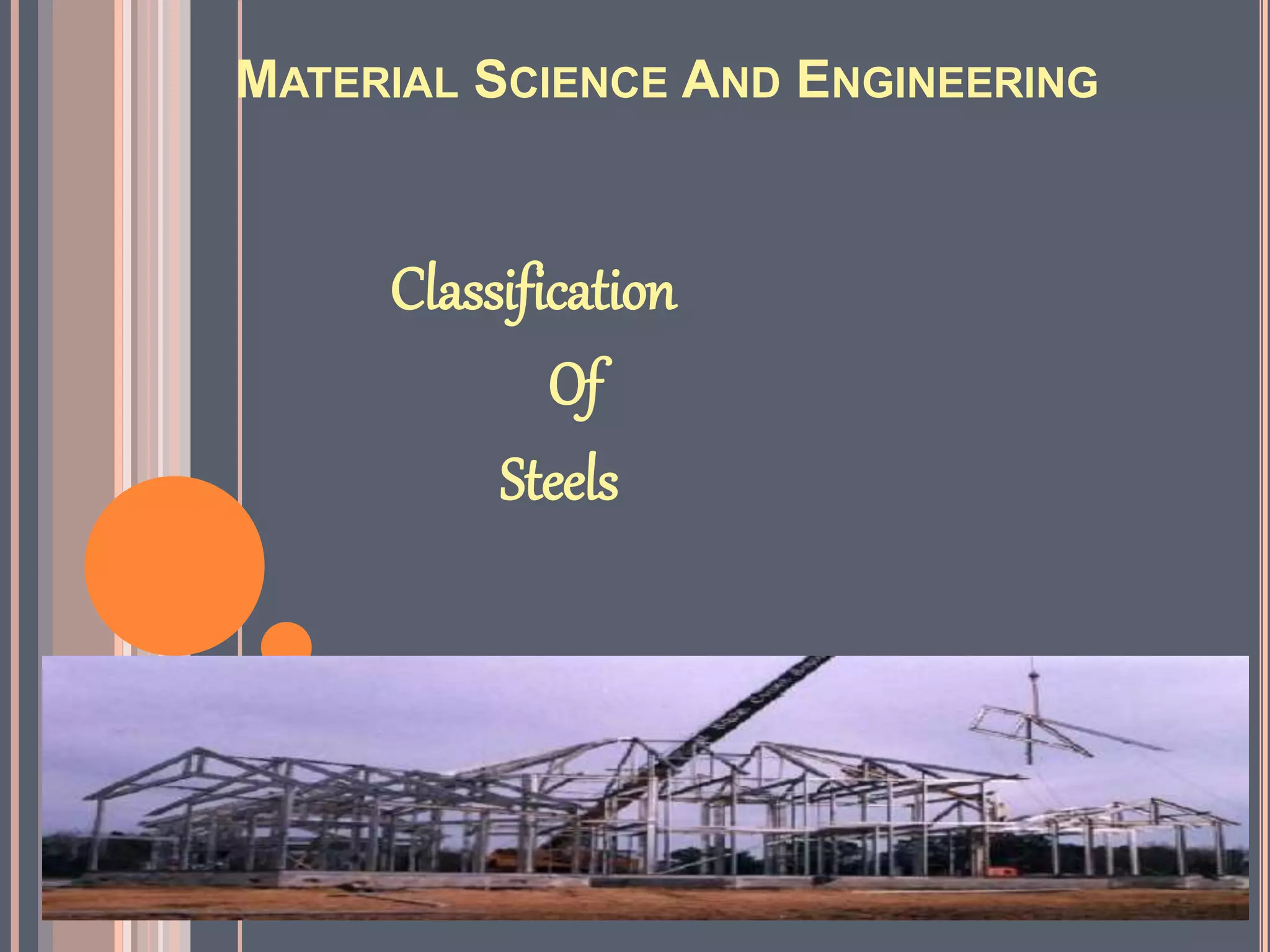
Classification
Of
Steels
REFERENCES
 Materials Science and Engineering, V. Raghavan,
Fifth Edition, Prentice Hall of India Pvt. Ltd., New
Delhi, 2004.
 Materials Science and Engineering: An Introduction,
William D. Callister
John Wiley & Sons, 2010.
ONLINE - Nptel
Ferrous Materials
Ferrous
Steels Cast iron
Low Alloy High Alloy
Tool steel Stainless steel
CLASSIFICATION OF STEELS
FERROUS MATERIAL - STEELS
.
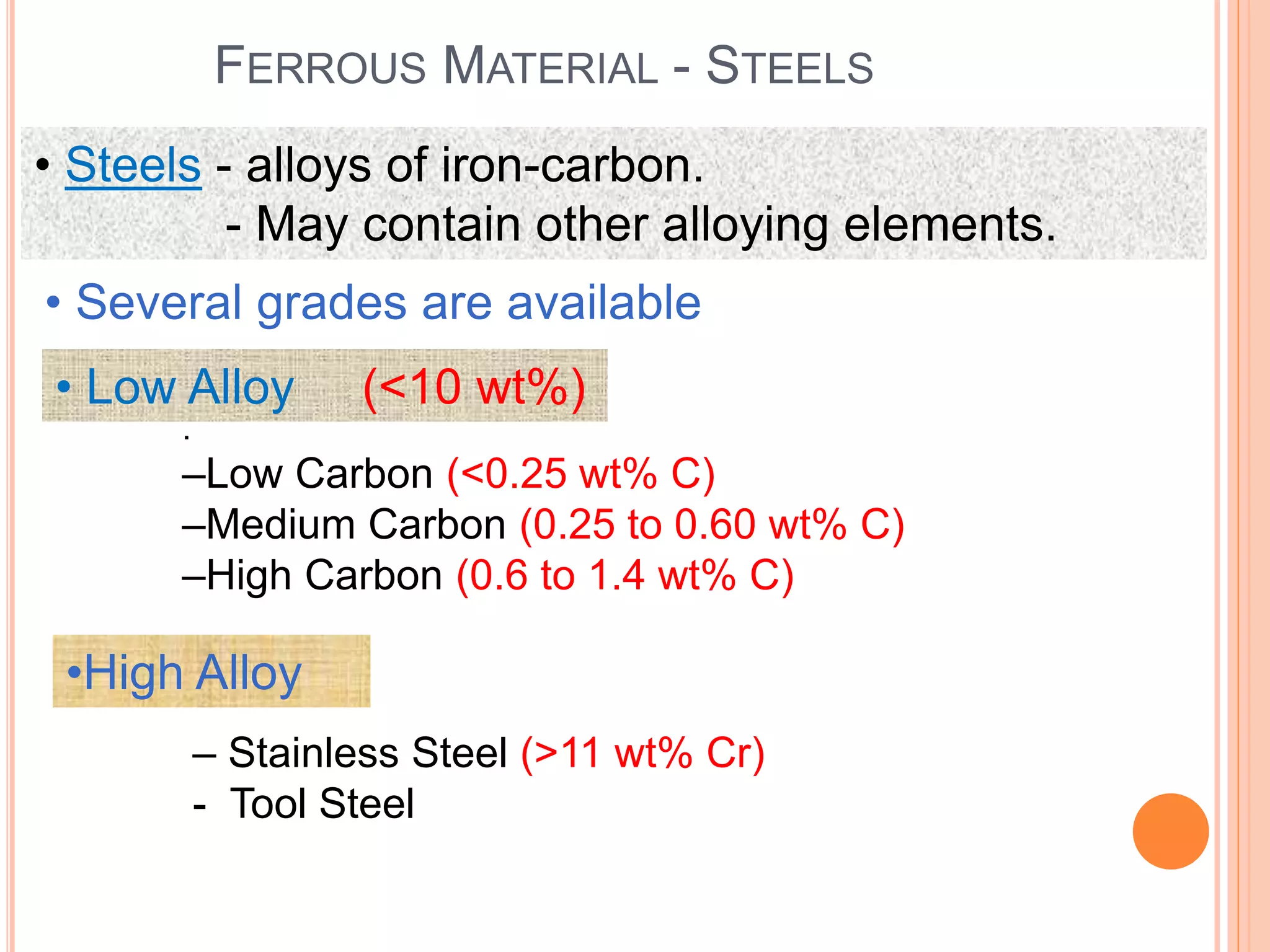
–Low Carbon (<0.25 wt% C)
–Medium Carbon (0.25 to 0.60 wt% C)
–High Carbon (0.6 to 1.4 wt% C)
• Steels - alloys of iron-carbon.
- May contain other alloying elements.
• Several grades are available
• Low Alloy (<10 wt%)
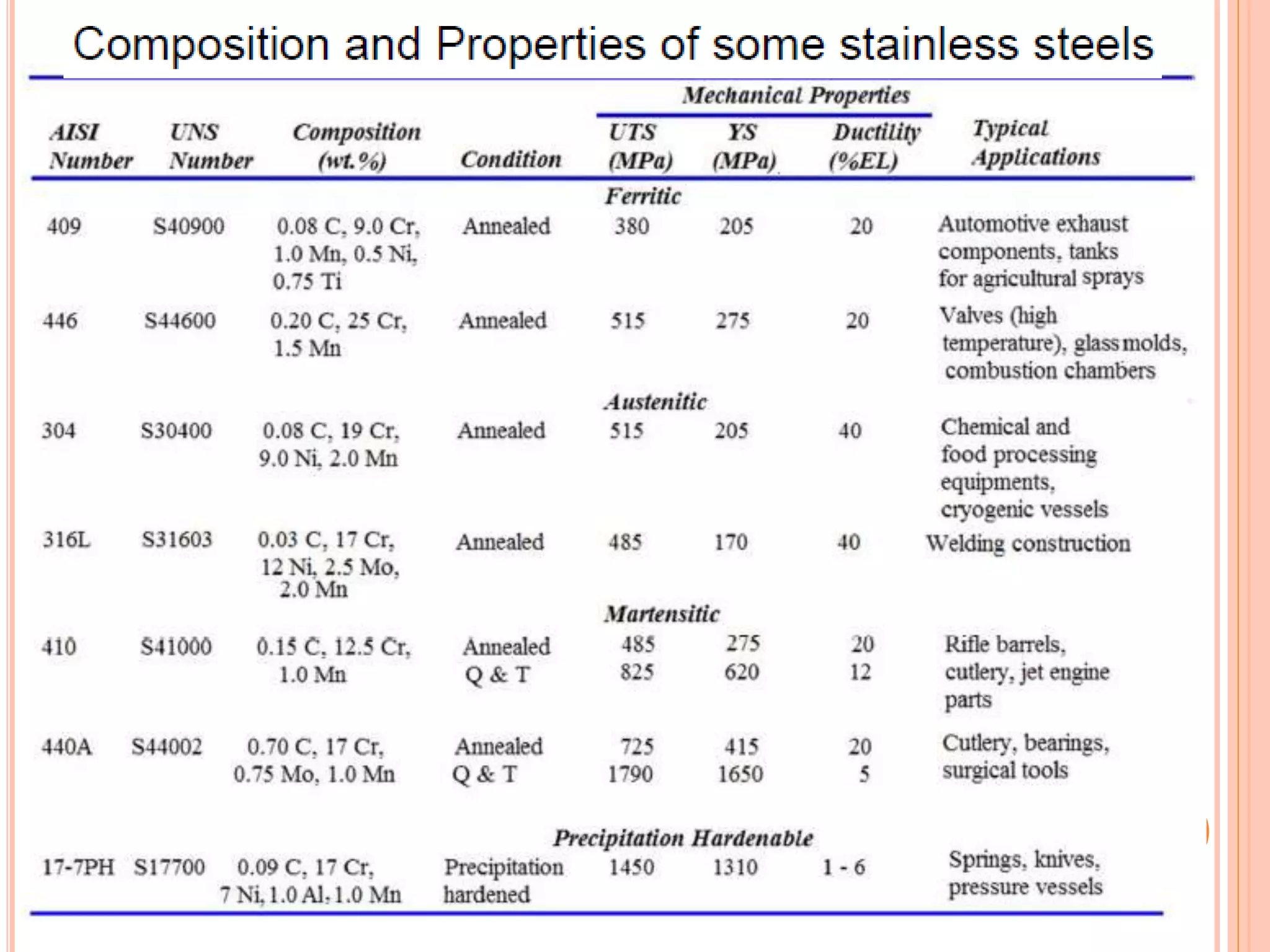
– Stainless Steel (>11 wt% Cr)
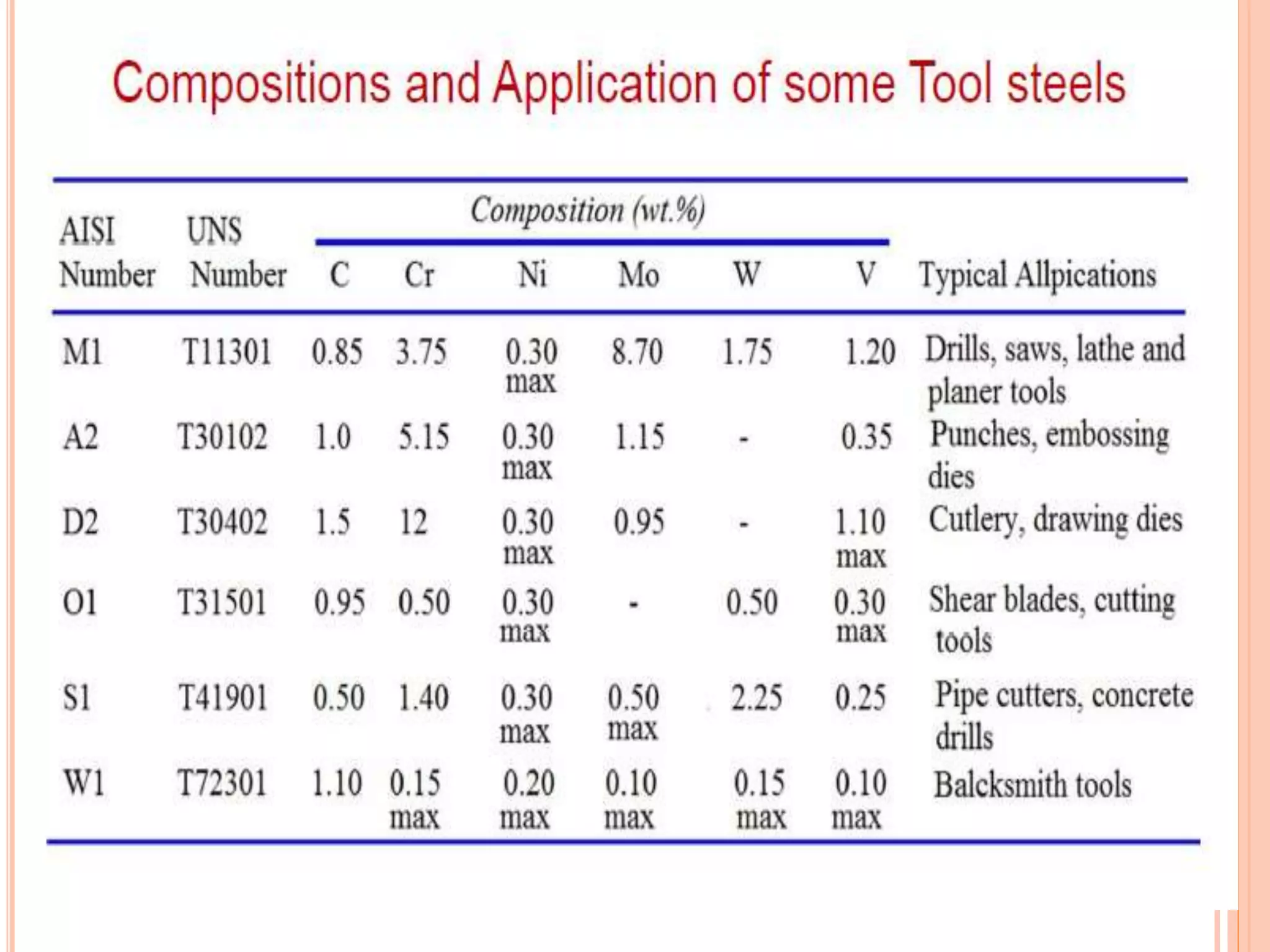
- Tool Steel
•High Alloy
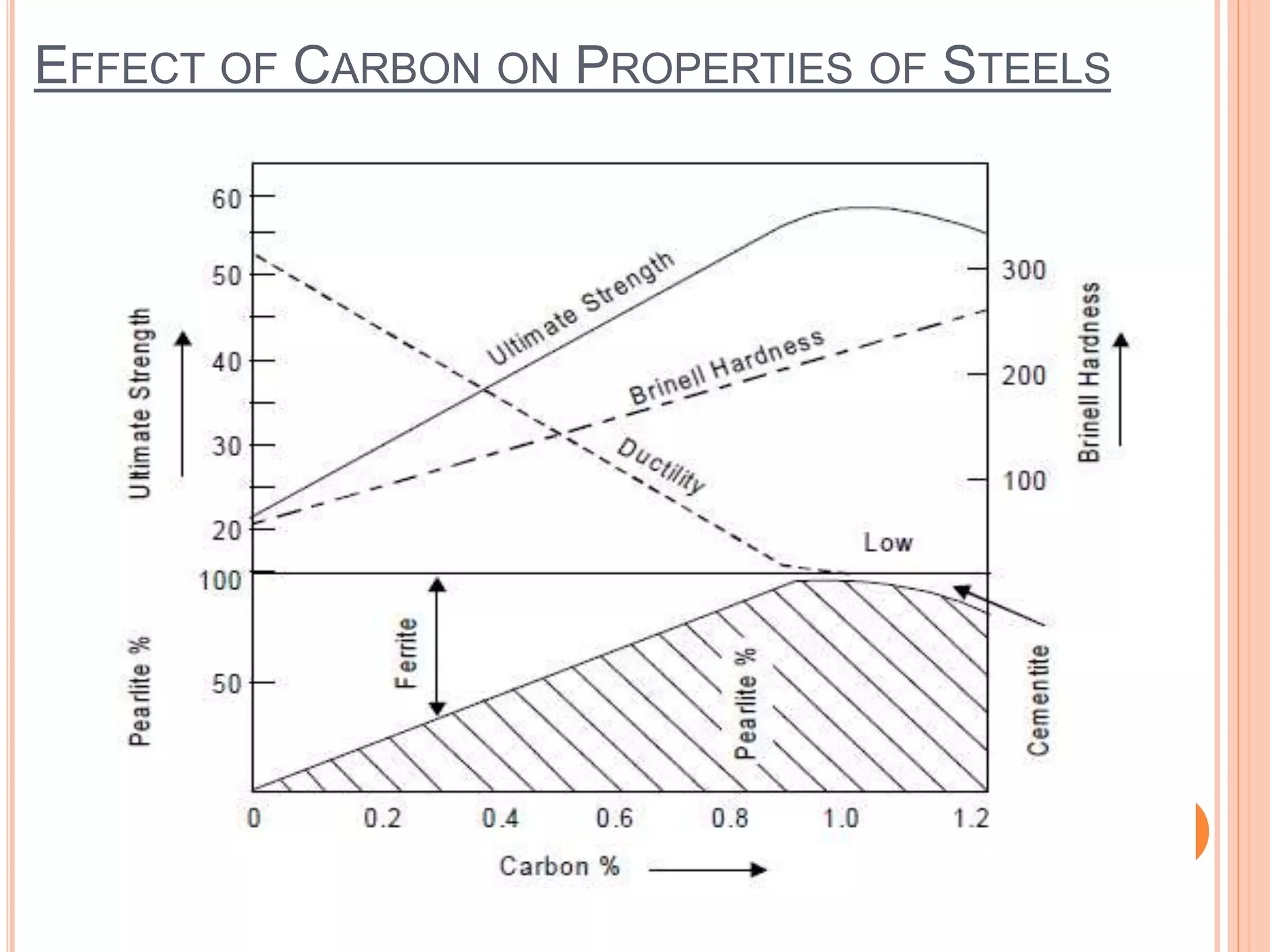
EFFECT OF CARBON ON PROPERTIES OF STEELS
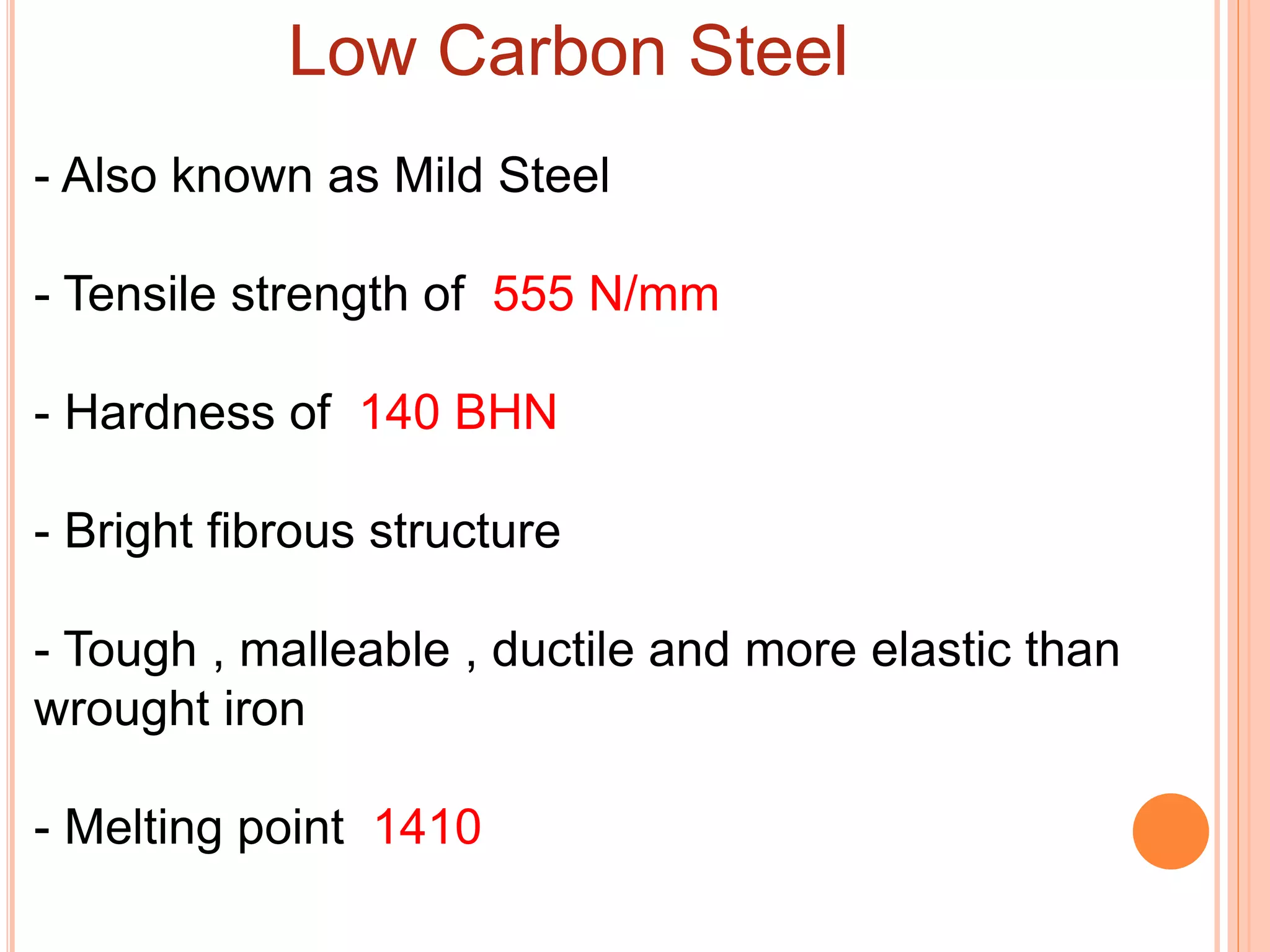
Low Carbon Steel
- Also known as Mild Steel
- Tensile strength of 555 N/mm
- Hardness of 140 BHN
- Bright fibrous structure
- Tough , malleable , ductile and more elastic than
wrought iron
- Melting point 1410
Low Carbon Steel
Plain carbon steels - very low content of alloying elements
and small amounts of Mn.
Most abundant grade of steel is low carbon steel –
greatest quantity produced; least expensive.
Not responsive to heat treatment; cold working needed to
improve the strength.
Good Weldability and machinability
High Strength, Low Alloy (HSLA) steels - alloying elements
(like Cu, V, Ni and Mo) up to 10 wt %; have higher strengths
and may be heat treated.
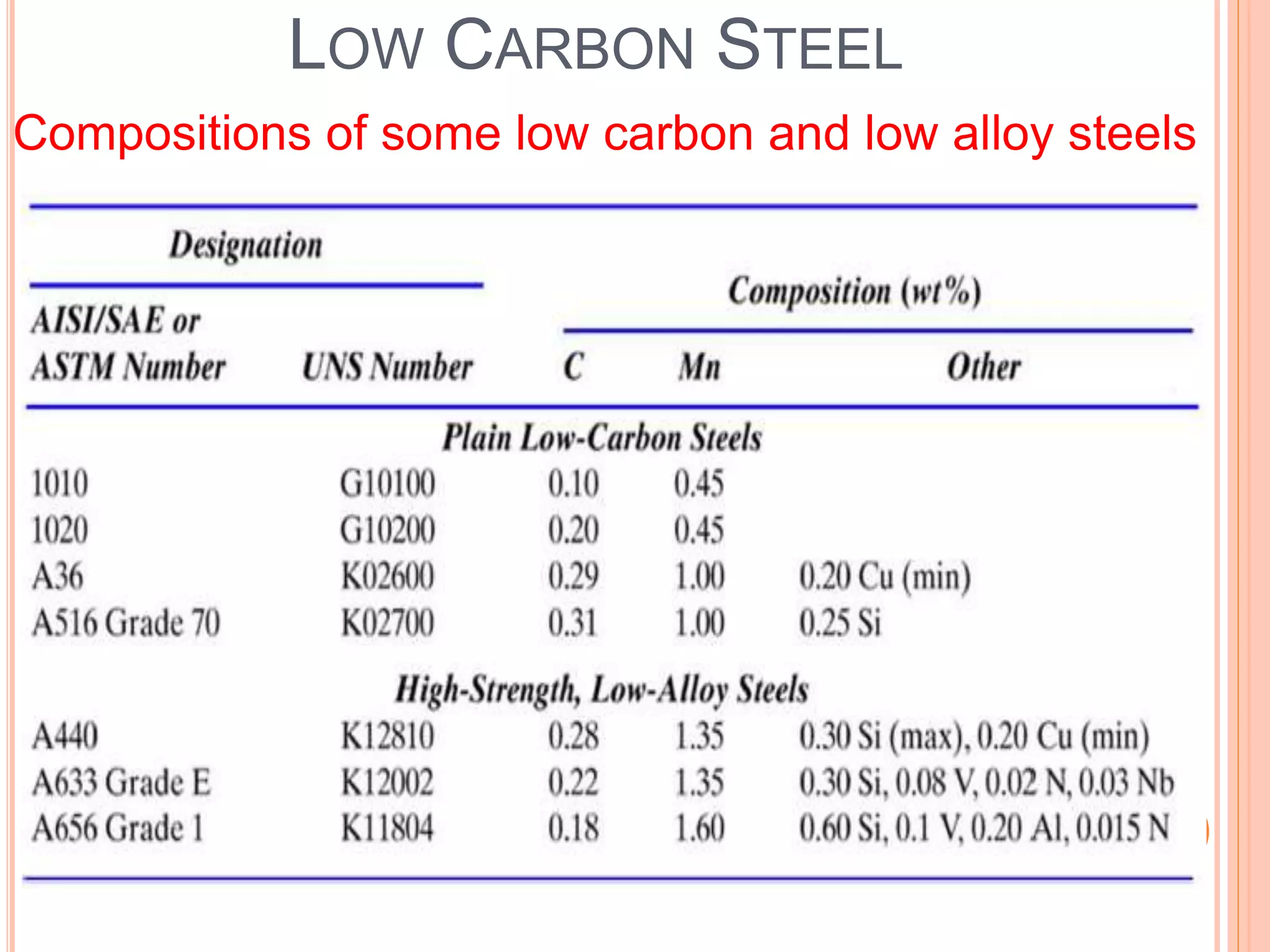
LOW CARBON STEEL
Compositions of some low carbon and low alloy steels
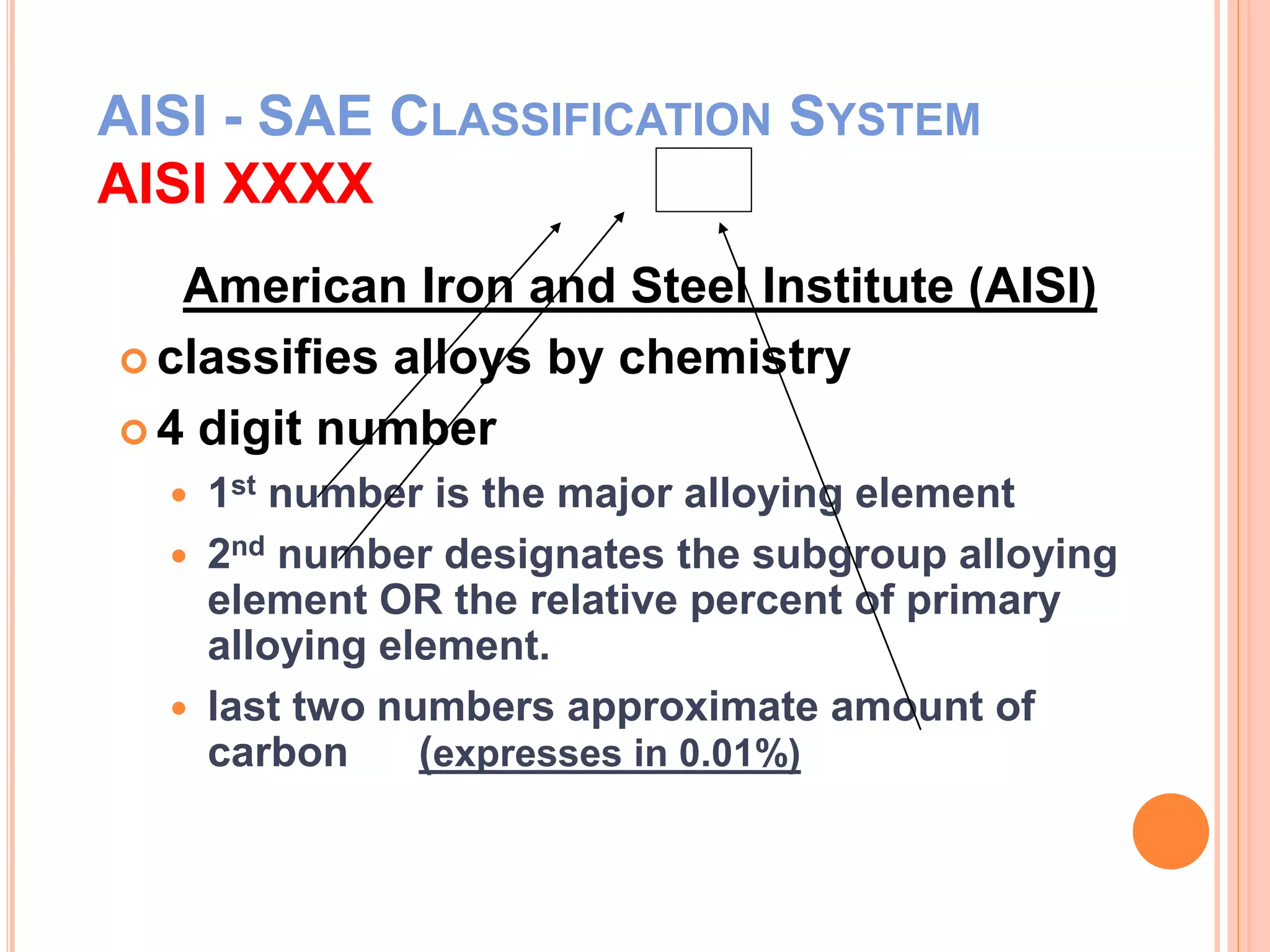
AISI - SAE CLASSIFICATION SYSTEM
AISI XXXX
American Iron and Steel Institute (AISI)
 classifies alloys by chemistry
 4 digit number
 1st number is the major alloying element
 2nd number designates the subgroup alloying
element OR the relative percent of primary
alloying element.
 last two numbers approximate amount of
carbon (expresses in 0.01%)
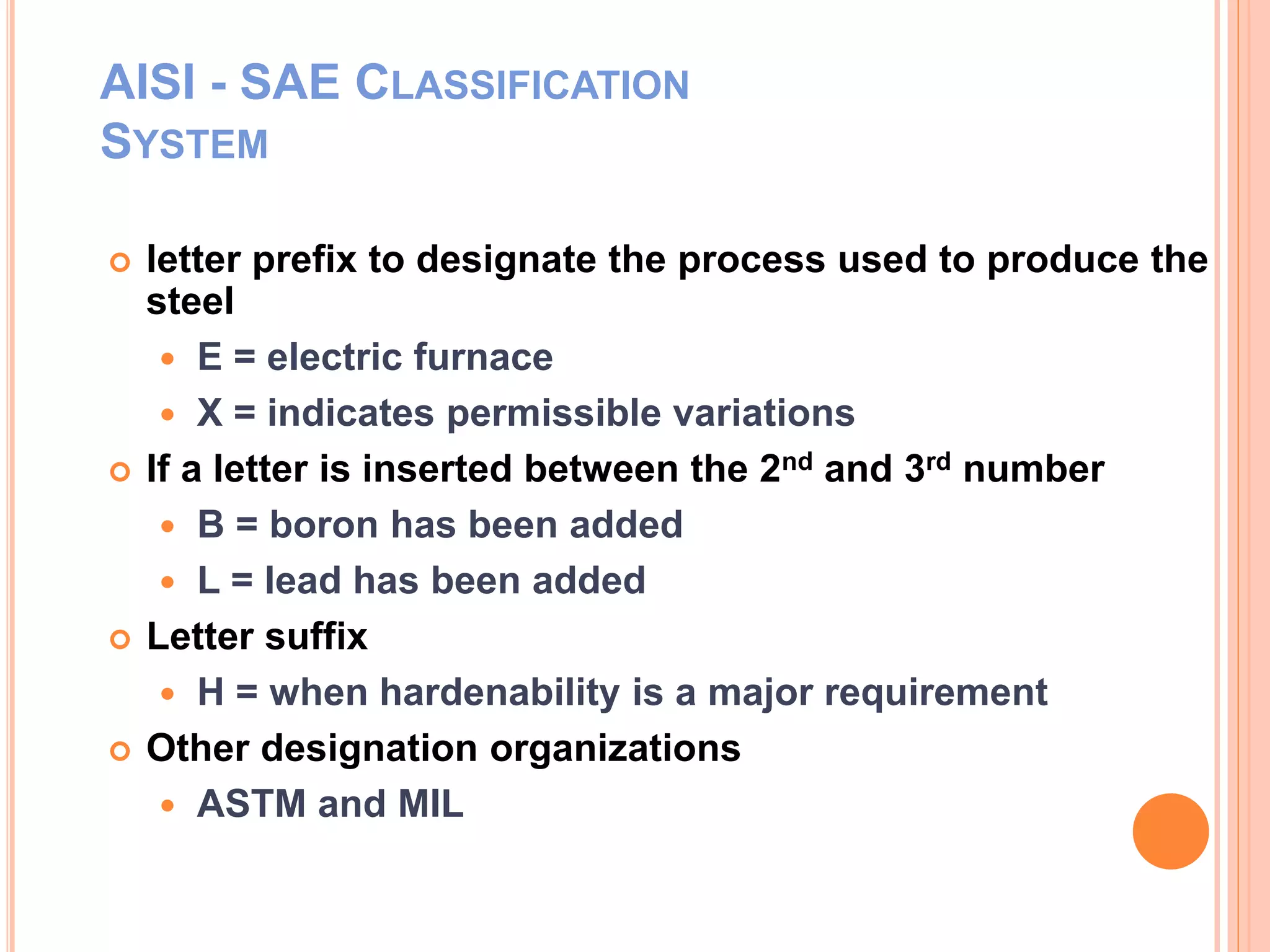
AISI - SAE CLASSIFICATION
SYSTEM
 letter prefix to designate the process used to produce the
steel
 E = electric furnace
 X = indicates permissible variations
 If a letter is inserted between the 2nd and 3rd number
 B = boron has been added
 L = lead has been added
 Letter suffix
 H = when hardenability is a major requirement
 Other designation organizations
 ASTM and MIL
MEDIUM CARBON STEEL
Carbon content in the range of 0.3 – 0.6%.
Can be heat treated - austenitizing, quenching and then
tempering.
Most often used in tempered condition – tempered
martensite
Medium carbon steels have low hardenability
Addition of Cr, Ni, Mo improves the heat treating capacity
Heat treated alloys are stronger but have lower ductility
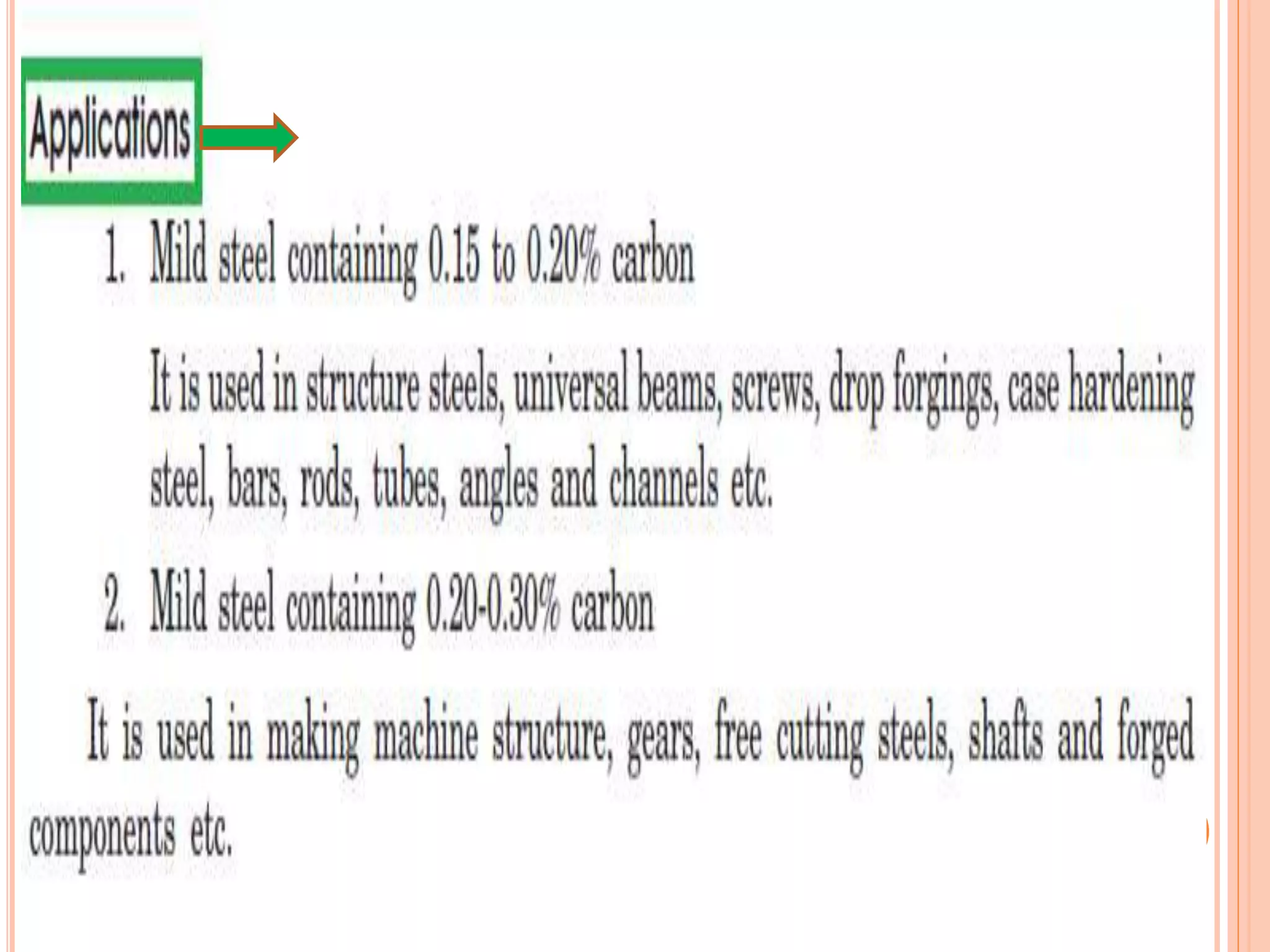
Typical applications – Railway wheels and tracks, gears,
crankshafts.
MEDIUM CARBON STEEL
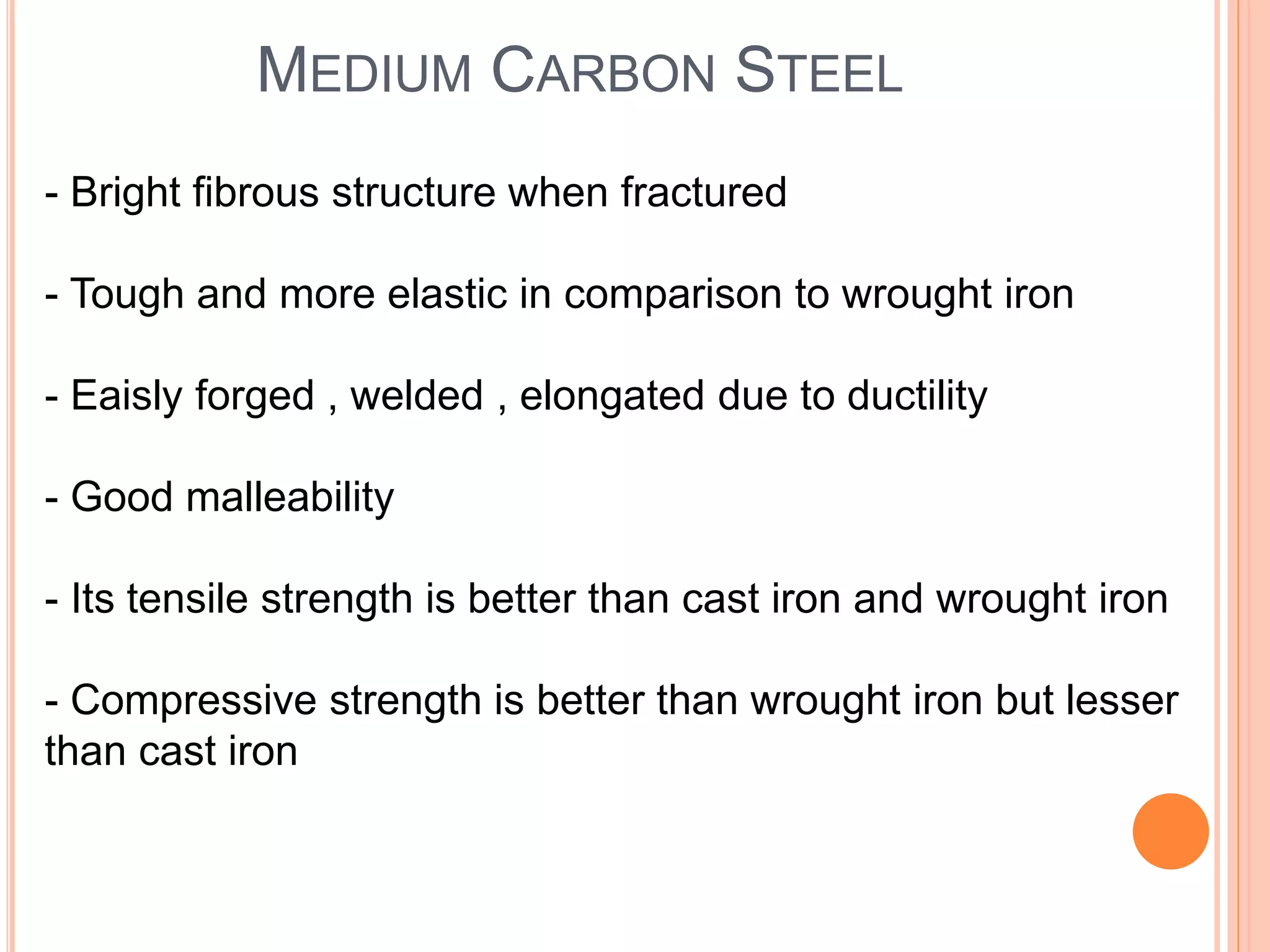
- Bright fibrous structure when fractured
- Tough and more elastic in comparison to wrought iron
- Eaisly forged , welded , elongated due to ductility
- Good malleability
- Its tensile strength is better than cast iron and wrought iron
- Compressive strength is better than wrought iron but lesser
than cast iron
HIGH CARBON STEEL
APPLICATIONS -
STRUCTURAL STEELS
- Possess high strength and toughness
- resistance to softening at elevated temperatures
- resistance to corrosion
- possess weldability , workability & high
hardenability
- principle alloying elements chromium , nickel ,
manganese
STAINLESS STEELS
EFFECTS OF ALLOYING ELEMENTS ON STEEL
 Manganese contributes to strength and hardness; dependent upon the carbon
content. Increasing the manganese content decreases ductility and weldability.
Manganese has a significant effect on the hardenability of steel.
 Phosphorus increases strength and hardness and decreases ductility and notch
impact toughness of steel. The adverse effects on ductility and toughness are
greater in quenched and tempered higher-carbon steels.
 Sulfur decreases ductility and notch impact toughness especially in the transverse
direction. Weldability decreases with increasing sulfur content. Sulfur is found
primarily in the form of sulfide inclusions.
 Silicon is one of the principal deoxidizers used in steelmaking. Silicon is less
effective than manganese in increasing as-rolled strength and hardness. In low-
carbon steels, silicon is generally detrimental to surface quality.
 Copper in significant amounts is detrimental to hot-working steels. Copper can be
detrimental to surface quality. Copper is beneficial to atmospheric corrosion
resistance when present in amounts exceeding 0.20%.
 Nickel is a ferrite strengthener. Nickel does not form carbides in steel. It remains
in solution in ferrite, strengthening and toughening the ferrite phase. Nickel
increases the hardenability and impact strength of steels.
 Molybdenum increases the hardenability of steel. It enhances the creep strength
of low-alloy steels at elevated temperatures.
Classification of Steel

Classification of Steel

  • 1.
    MATERIAL SCIENCE ANDENGINEERING Classification Of Steels
  • 2.
    REFERENCES  Materials Scienceand Engineering, V. Raghavan, Fifth Edition, Prentice Hall of India Pvt. Ltd., New Delhi, 2004.  Materials Science and Engineering: An Introduction, William D. Callister John Wiley & Sons, 2010. ONLINE - Nptel
  • 3.
    Ferrous Materials Ferrous Steels Castiron Low Alloy High Alloy Tool steel Stainless steel
  • 4.
  • 5.
    FERROUS MATERIAL -STEELS . –Low Carbon (<0.25 wt% C) –Medium Carbon (0.25 to 0.60 wt% C) –High Carbon (0.6 to 1.4 wt% C) • Steels - alloys of iron-carbon. - May contain other alloying elements. • Several grades are available • Low Alloy (<10 wt%) – Stainless Steel (>11 wt% Cr) - Tool Steel •High Alloy
  • 6.
    EFFECT OF CARBONON PROPERTIES OF STEELS
  • 7.
    Low Carbon Steel -Also known as Mild Steel - Tensile strength of 555 N/mm - Hardness of 140 BHN - Bright fibrous structure - Tough , malleable , ductile and more elastic than wrought iron - Melting point 1410
  • 8.
    Low Carbon Steel Plaincarbon steels - very low content of alloying elements and small amounts of Mn. Most abundant grade of steel is low carbon steel – greatest quantity produced; least expensive. Not responsive to heat treatment; cold working needed to improve the strength. Good Weldability and machinability High Strength, Low Alloy (HSLA) steels - alloying elements (like Cu, V, Ni and Mo) up to 10 wt %; have higher strengths and may be heat treated.
  • 9.
    LOW CARBON STEEL Compositionsof some low carbon and low alloy steels
  • 10.
    AISI - SAECLASSIFICATION SYSTEM AISI XXXX American Iron and Steel Institute (AISI)  classifies alloys by chemistry  4 digit number  1st number is the major alloying element  2nd number designates the subgroup alloying element OR the relative percent of primary alloying element.  last two numbers approximate amount of carbon (expresses in 0.01%)
  • 11.
    AISI - SAECLASSIFICATION SYSTEM  letter prefix to designate the process used to produce the steel  E = electric furnace  X = indicates permissible variations  If a letter is inserted between the 2nd and 3rd number  B = boron has been added  L = lead has been added  Letter suffix  H = when hardenability is a major requirement  Other designation organizations  ASTM and MIL
  • 14.
    MEDIUM CARBON STEEL Carboncontent in the range of 0.3 – 0.6%. Can be heat treated - austenitizing, quenching and then tempering. Most often used in tempered condition – tempered martensite Medium carbon steels have low hardenability Addition of Cr, Ni, Mo improves the heat treating capacity Heat treated alloys are stronger but have lower ductility Typical applications – Railway wheels and tracks, gears, crankshafts.
  • 15.
    MEDIUM CARBON STEEL -Bright fibrous structure when fractured - Tough and more elastic in comparison to wrought iron - Eaisly forged , welded , elongated due to ductility - Good malleability - Its tensile strength is better than cast iron and wrought iron - Compressive strength is better than wrought iron but lesser than cast iron
  • 18.
  • 19.
  • 21.
    STRUCTURAL STEELS - Possesshigh strength and toughness - resistance to softening at elevated temperatures - resistance to corrosion - possess weldability , workability & high hardenability - principle alloying elements chromium , nickel , manganese
  • 23.
  • 26.
    EFFECTS OF ALLOYINGELEMENTS ON STEEL  Manganese contributes to strength and hardness; dependent upon the carbon content. Increasing the manganese content decreases ductility and weldability. Manganese has a significant effect on the hardenability of steel.  Phosphorus increases strength and hardness and decreases ductility and notch impact toughness of steel. The adverse effects on ductility and toughness are greater in quenched and tempered higher-carbon steels.  Sulfur decreases ductility and notch impact toughness especially in the transverse direction. Weldability decreases with increasing sulfur content. Sulfur is found primarily in the form of sulfide inclusions.  Silicon is one of the principal deoxidizers used in steelmaking. Silicon is less effective than manganese in increasing as-rolled strength and hardness. In low- carbon steels, silicon is generally detrimental to surface quality.  Copper in significant amounts is detrimental to hot-working steels. Copper can be detrimental to surface quality. Copper is beneficial to atmospheric corrosion resistance when present in amounts exceeding 0.20%.  Nickel is a ferrite strengthener. Nickel does not form carbides in steel. It remains in solution in ferrite, strengthening and toughening the ferrite phase. Nickel increases the hardenability and impact strength of steels.  Molybdenum increases the hardenability of steel. It enhances the creep strength of low-alloy steels at elevated temperatures.