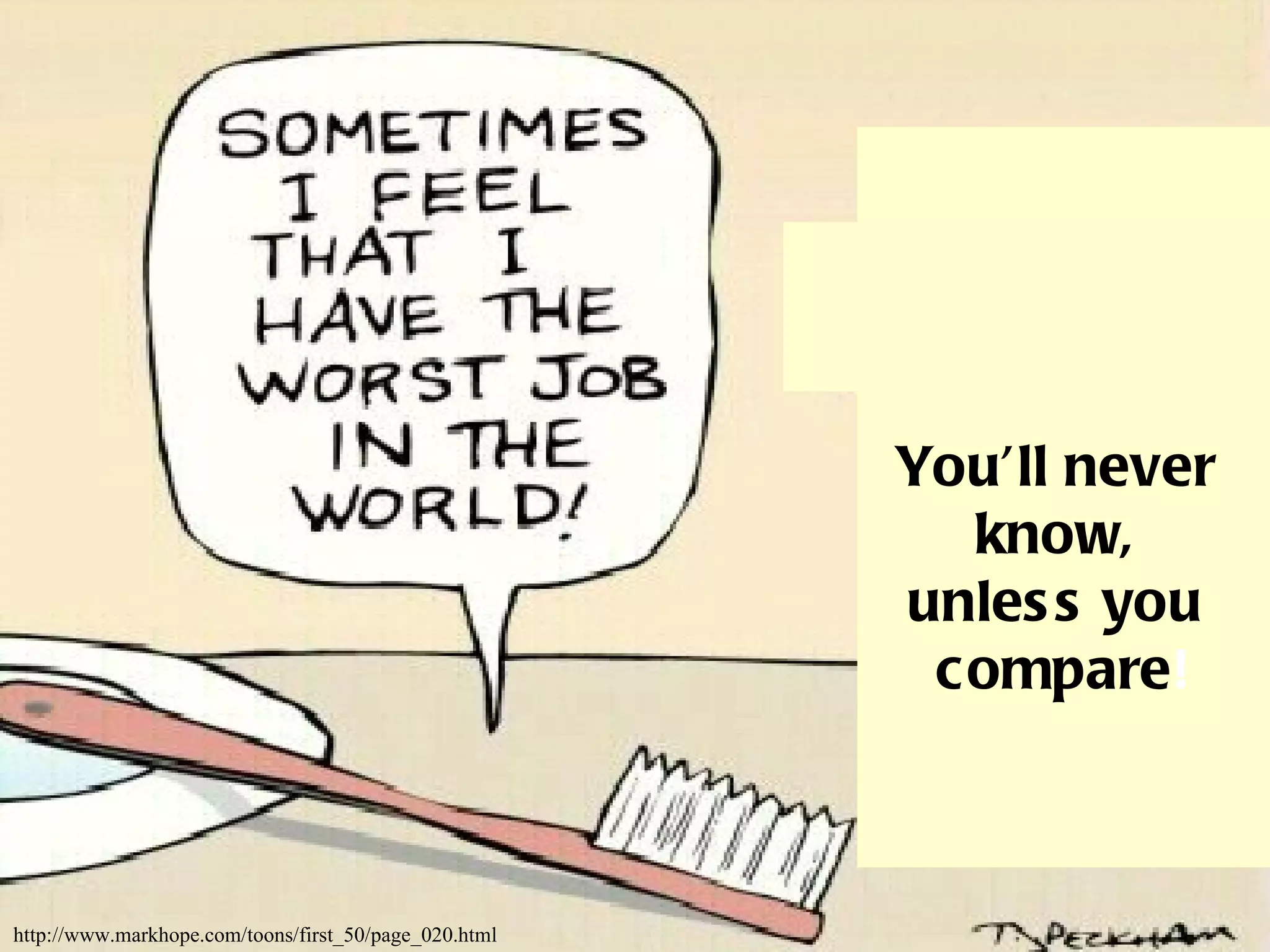
You’ll never  know,  unless you  compare ! http://www.markhope.com/toons/first_50/page_020.html
Comparing  Sources Source A   Source B   WORKING  WITH  SOURCES
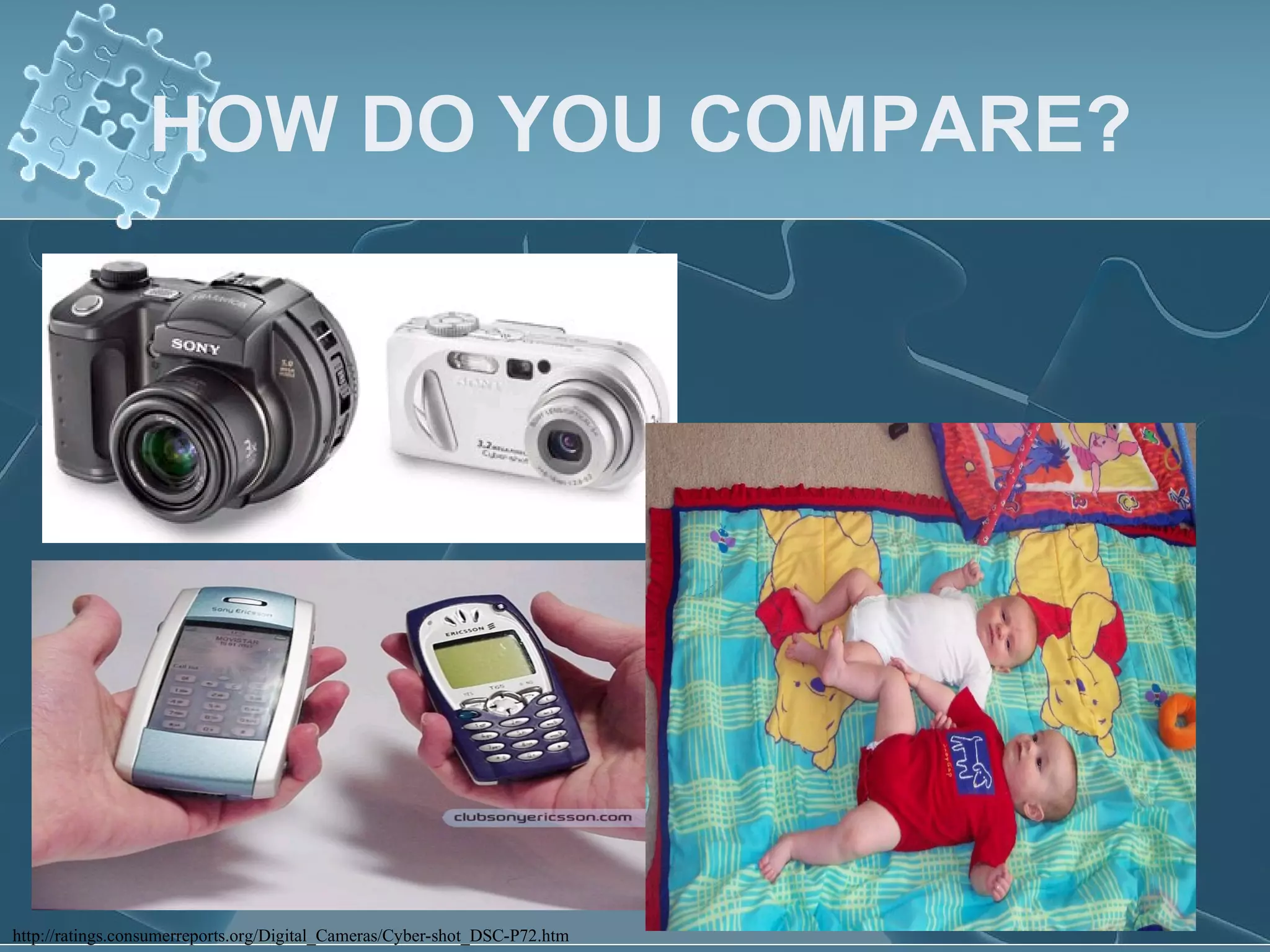
HOW DO YOU COMPARE? http://ratings.consumerreports.org/Digital_Cameras/Cyber-shot_DSC-P72.htm
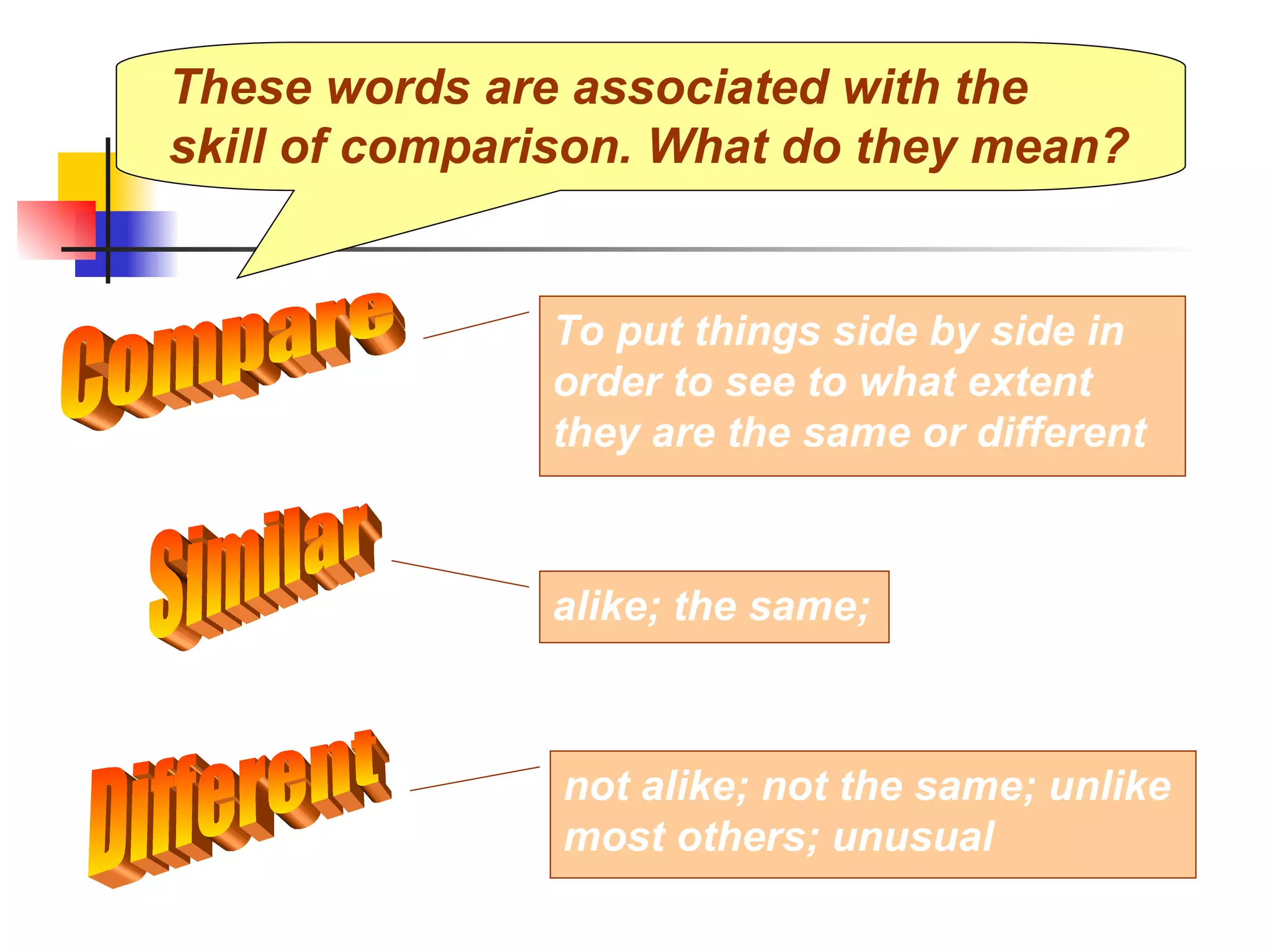
To put things side by side in order to see to what extent they are the same or different Compare alike; the same;  Similar These words are associated with the skill of comparison. What do they mean?  not alike; not the same; unlike most others; unusual Different
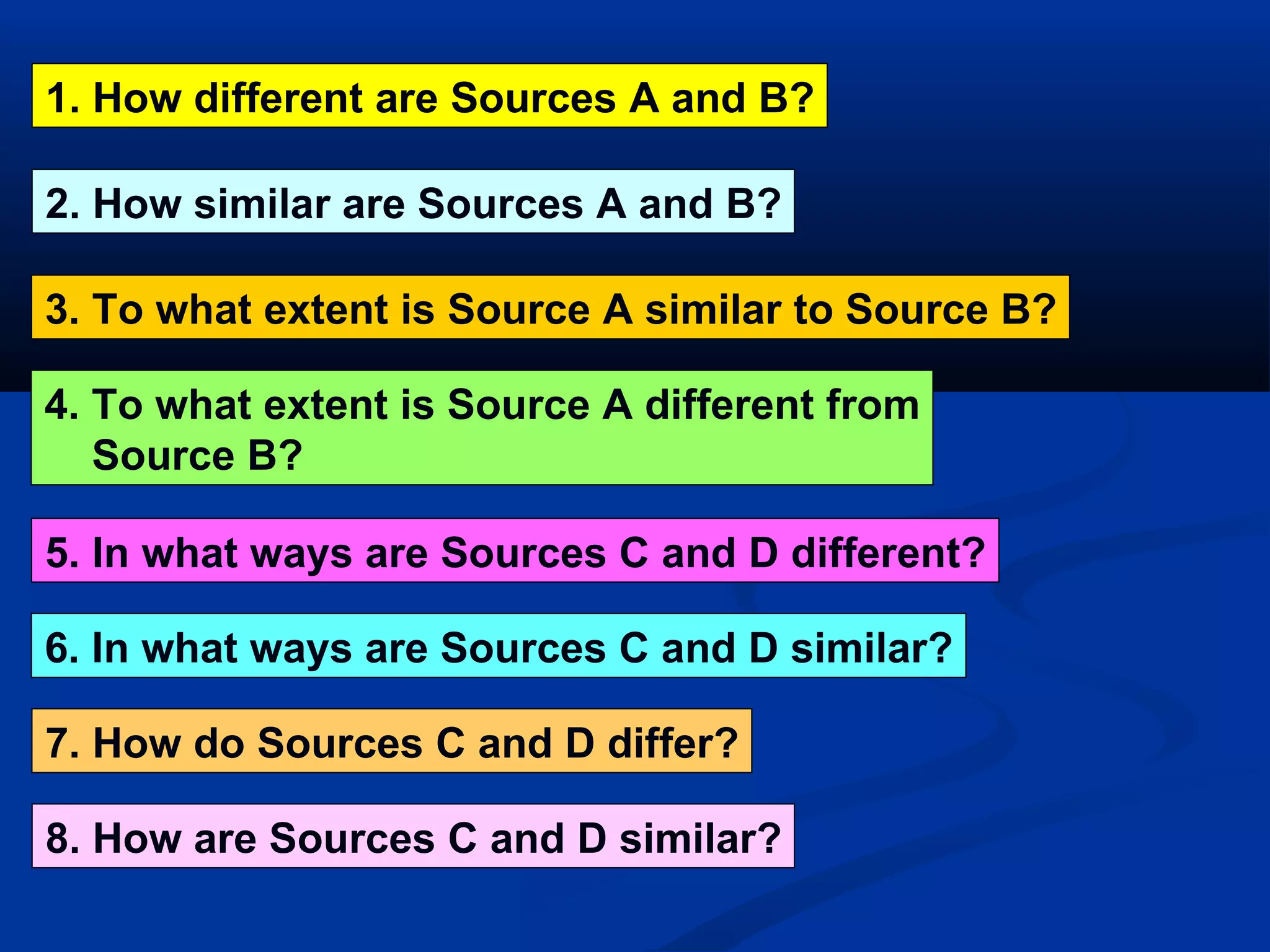
1. How different are Sources A and B? 6. In what ways are Sources C and D similar? 3. To what extent is Source A similar to Source B? 5. In what ways are Sources C and D different? 2. How similar are Sources A and B? 7. How do Sources C and D differ? 8. How are Sources C and D similar? 4. To what extent is Source A different from Source B?
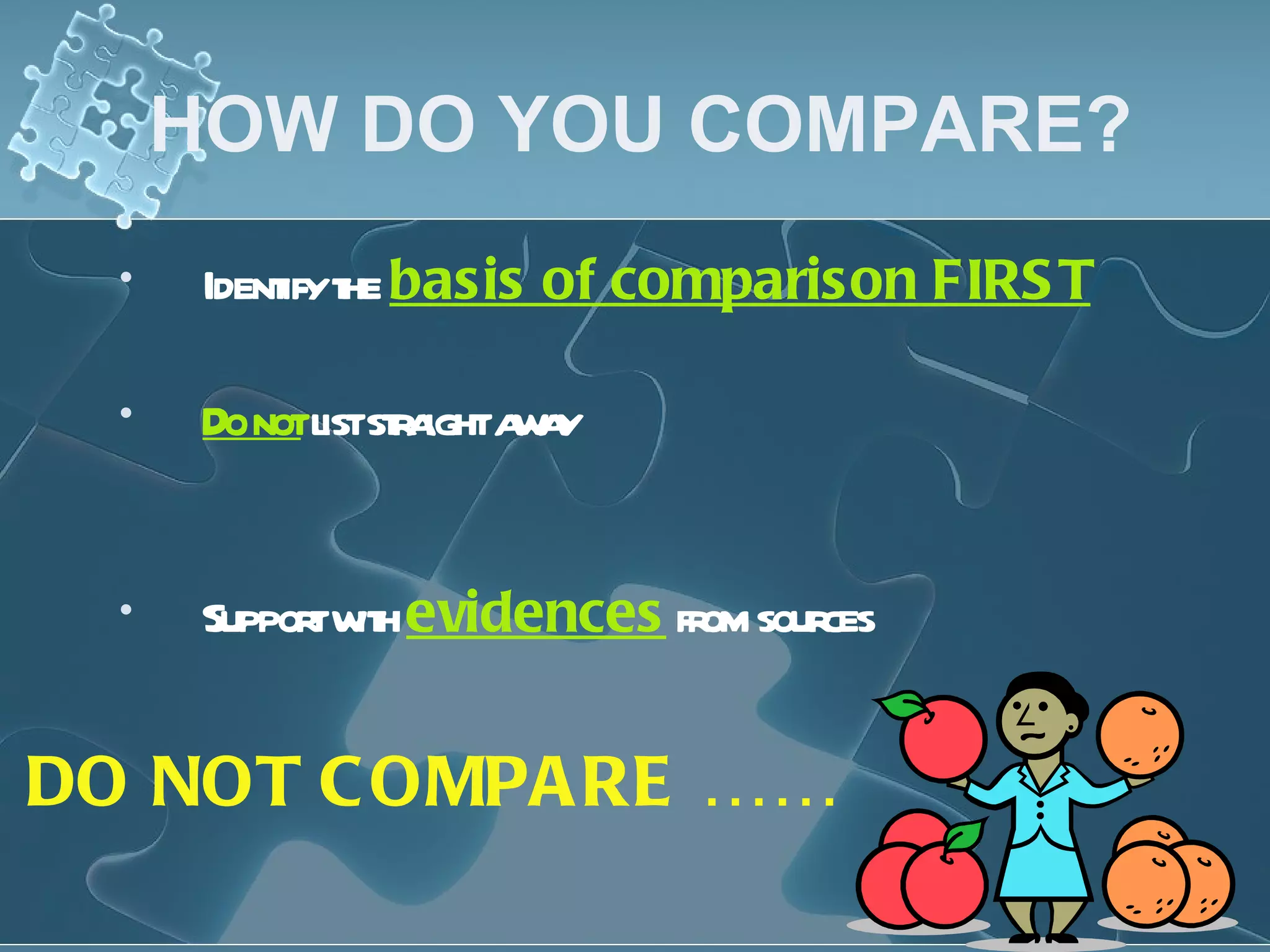
HOW DO YOU COMPARE? Identify the  basis of comparison FIRST Do not  list straight away Support with  evidences  from sources DO NOT COMPARE ……
HOW DO YOU COMPARE? What areas would be compared? LENSES COLOURS BRANDS SIZES
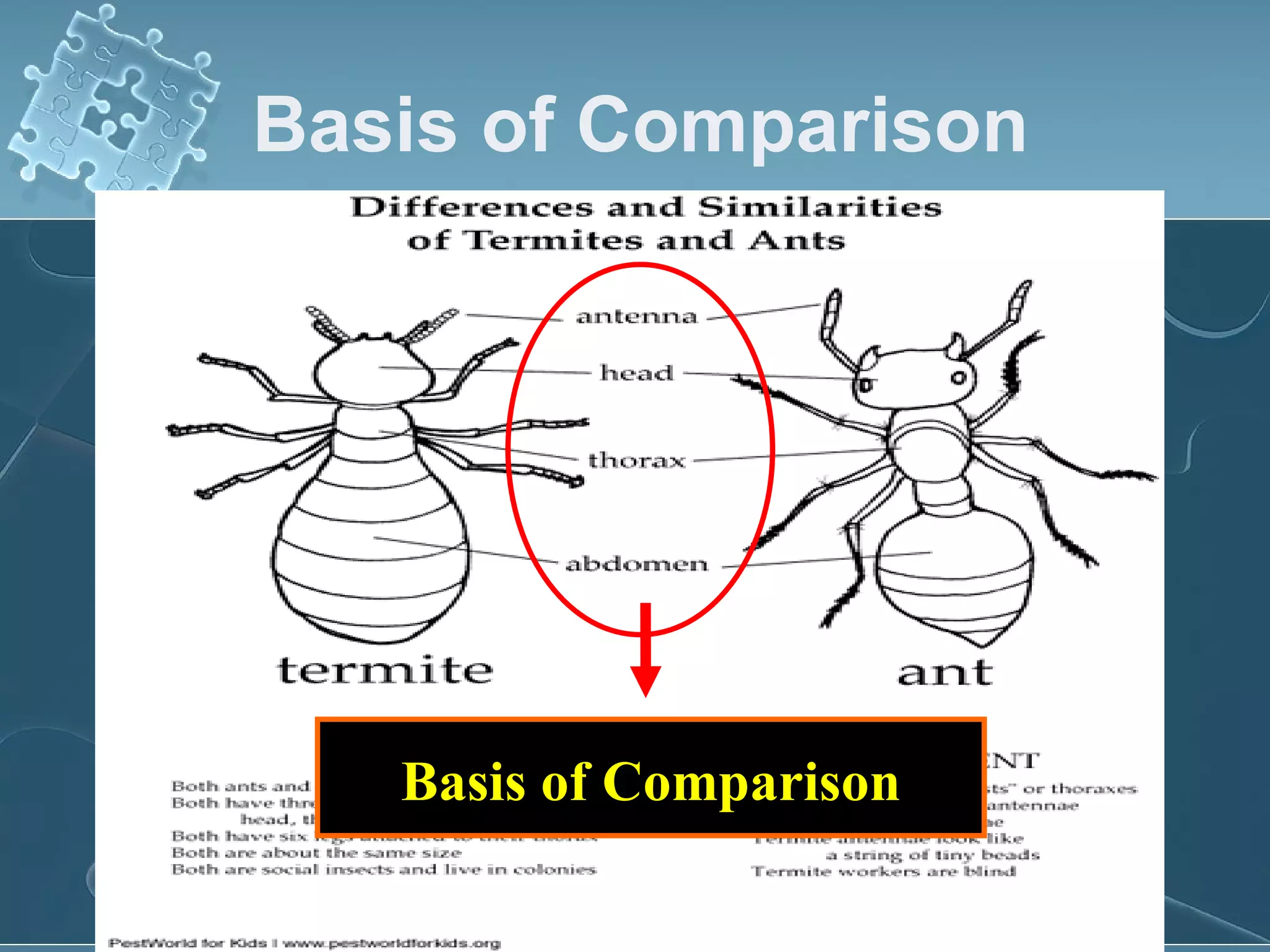
Basis of Comparison Basis of Comparison
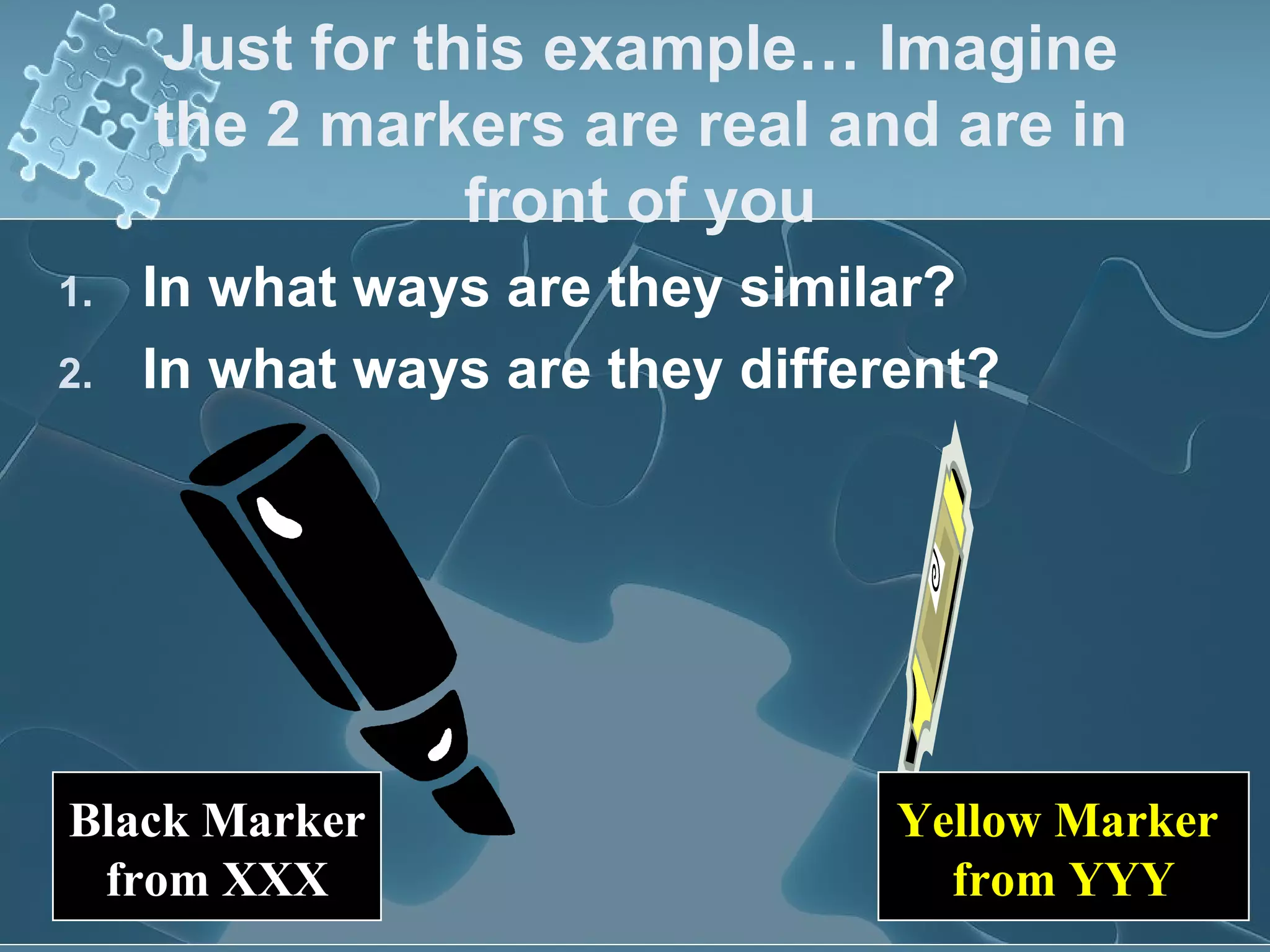
Just for this example… Imagine the 2 markers are real and are in front of you In what ways are they similar? In what ways are they different? Black Marker from XXX Yellow Marker  from YYY
1) In what ways are they SIMILAR One is a black marker, one is a yellow marker. They are made from the same material. Plastic   They serve the same function Writes on whiteboard
Consequences One is a black marker, one is a yellow marker. If there are  NO basis  of comparison: In the worst case scenario, you would be awarded  ZERO  marks Why? Not comparing    Not answering the question
2) In what ways are they DIFFERENT? One is black, one is yellow They differ in colours. One is black One is yellow They differ in size. Black one is fat Yellow one is thin
Compare & Contrast Skills STEP 1: Identify what the question wants: STEP 2: Identify basis of comparison Most difficult STEP 3: Support with evidence
SIMILARITY Step 1: Point of comparison (in your own words) e.g. Both Sources A and B are similar in terms of / in showing____. Step 2: Detail (Optional if point of comparison is obvious enough. In your own words.) e.g. Both sources talk about _________________. Step 3: Evidence from first source e.g. The evidence from Source A is “_______________.” Step 4: Evidence from second source e.g. The evidence from Source B is “________________.”
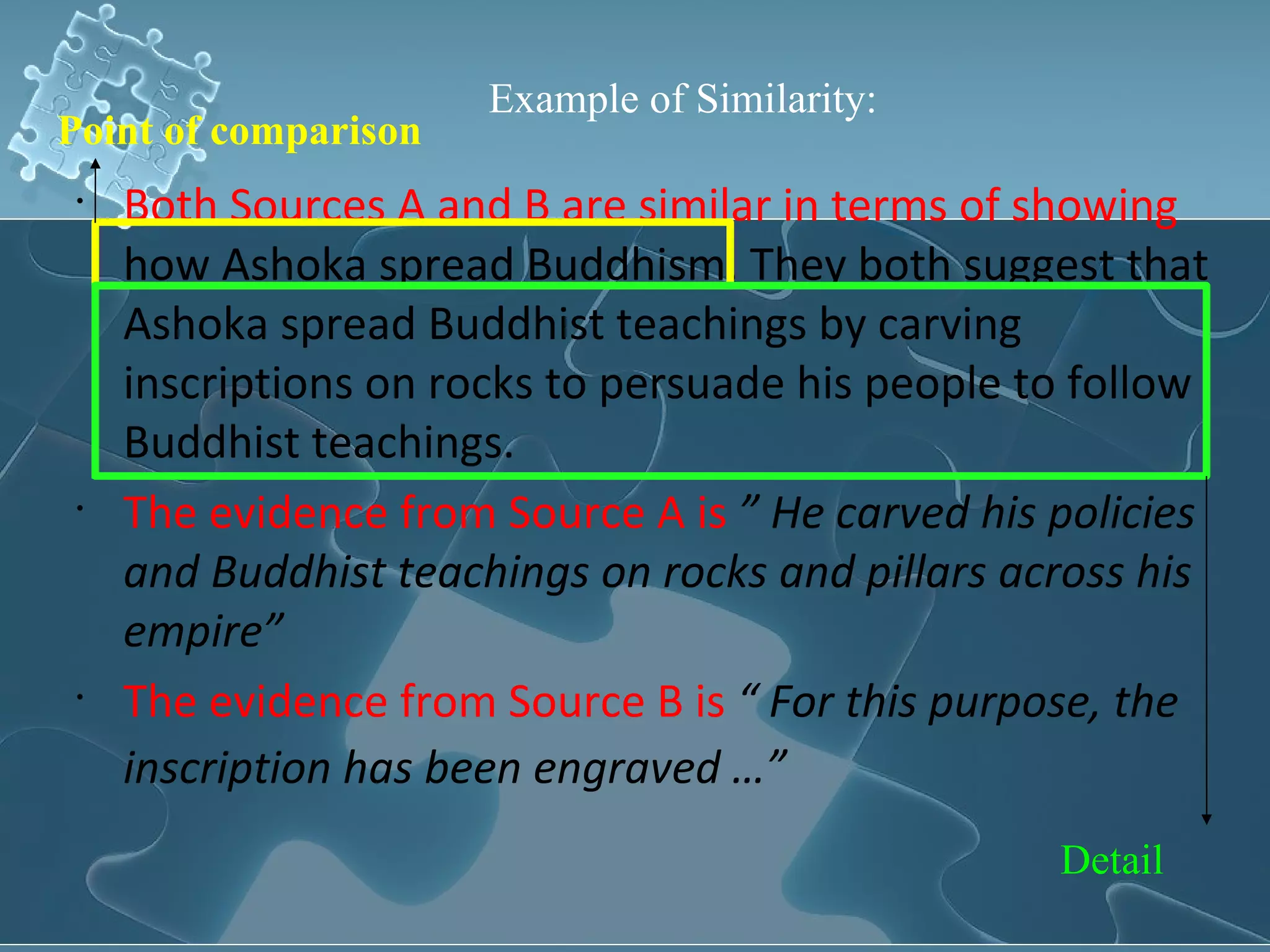
Example of Similarity: Both Sources A and B are similar in terms of showing  how Ashoka spread Buddhism. They both suggest that Ashoka spread Buddhist teachings by carving inscriptions on rocks to persuade his people to follow Buddhist teachings.  The evidence from Source A is  ” He carved his policies and Buddhist teachings on rocks and pillars across his empire”  The evidence from Source B is  “ For this purpose, the inscription has been engraved …”   Point of comparison Detail
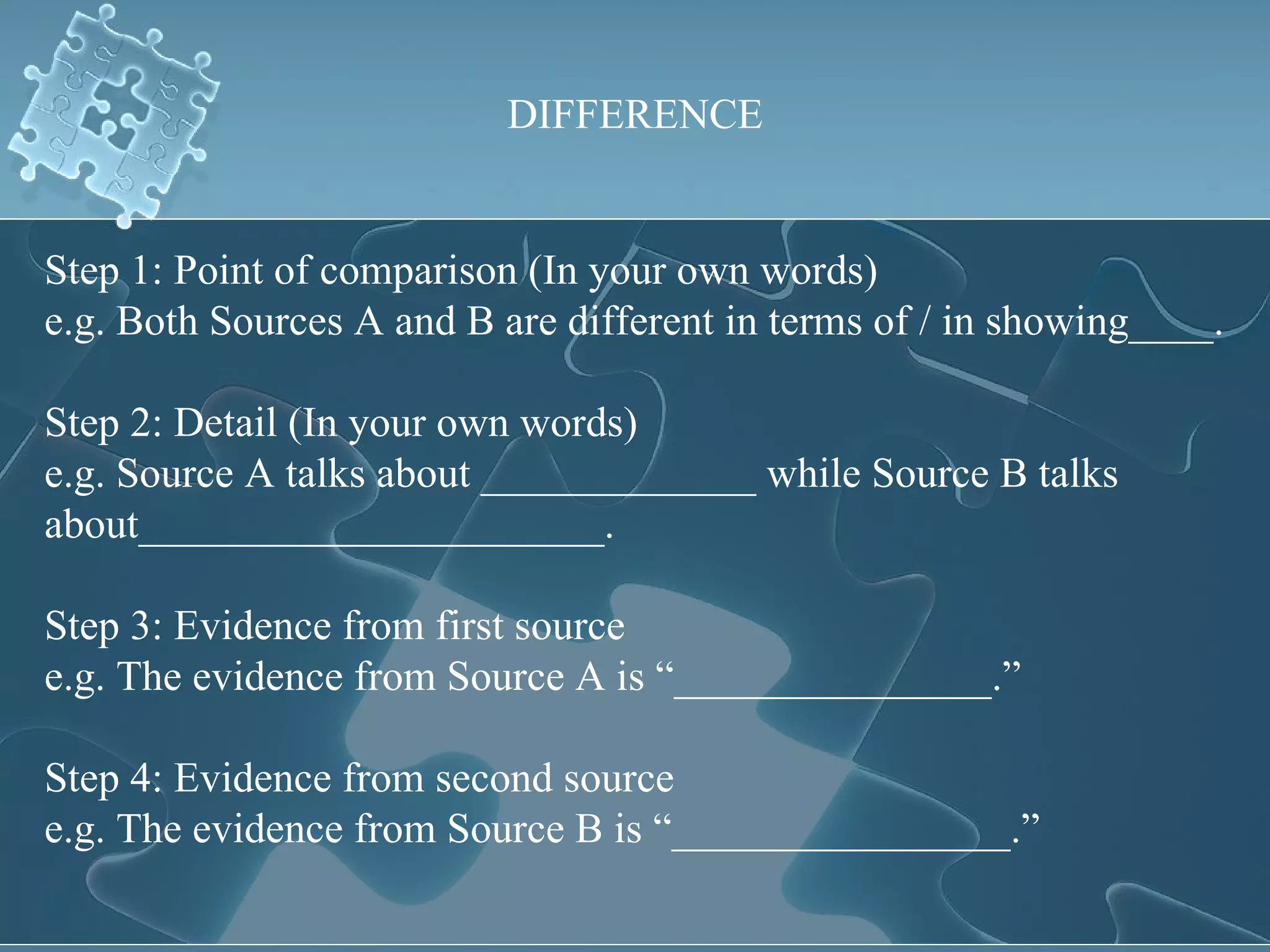
DIFFERENCE Step 1: Point of comparison (In your own words) e.g. Both Sources A and B are different in terms of / in showing____. Step 2: Detail (In your own words) e.g. Source A talks about _____________ while Source B talks about______________________. Step 3: Evidence from first source e.g. The evidence from Source A is “_______________.” Step 4: Evidence from second source e.g. The evidence from Source B is “________________.”
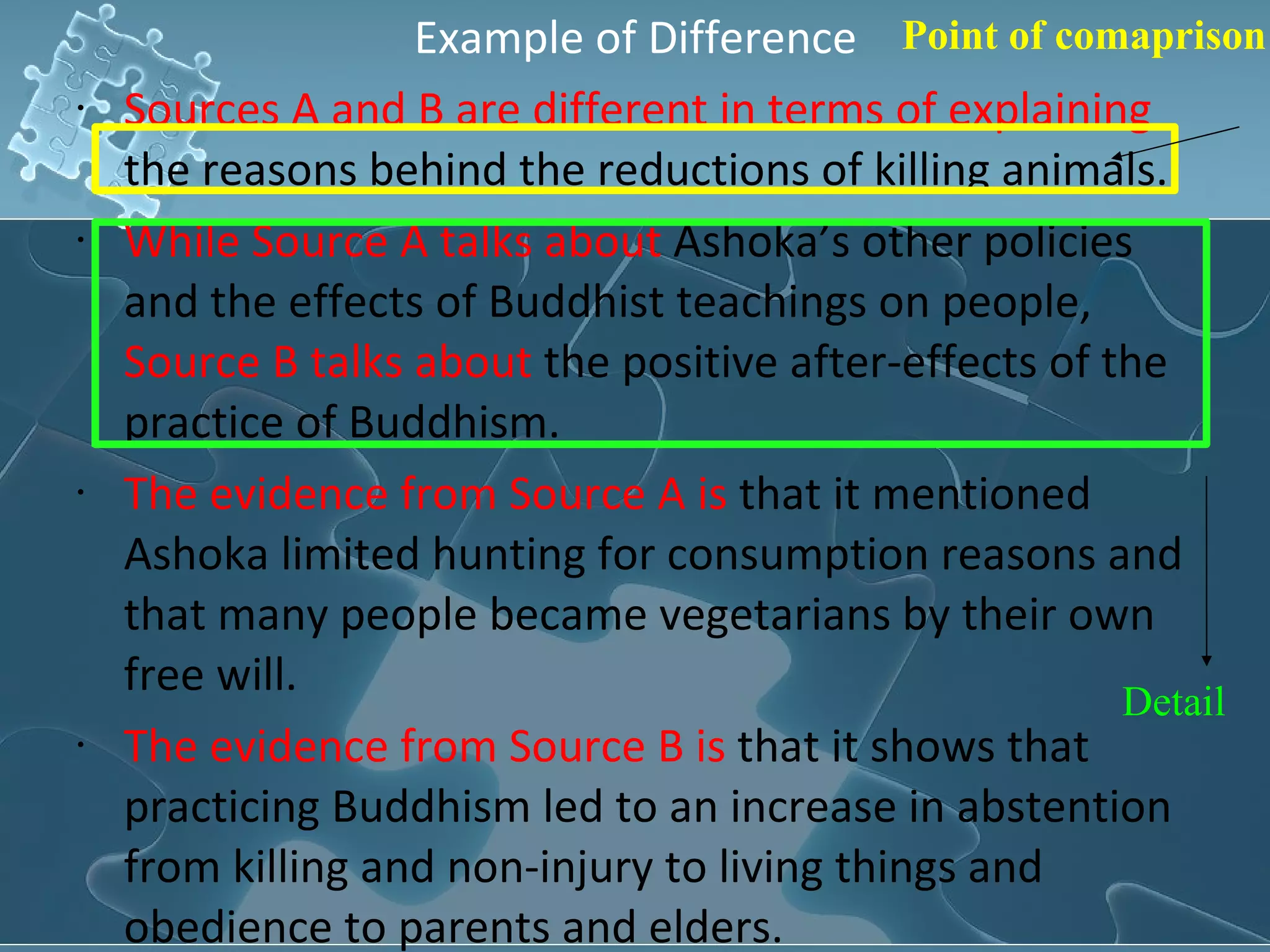
Example of Difference Sources A and B are different in terms of explaining  the reasons behind the reductions of killing animals.   While Source A talks about  Ashoka’s other policies and the effects of Buddhist teachings on people,  Source B talks about  the positive after-effects of the practice of Buddhism. The evidence from Source A is  that it mentioned Ashoka limited hunting for consumption reasons and that many people became vegetarians by their own free will.  The evidence from Source B is  that it shows that practicing Buddhism led to an increase in abstention from killing and non-injury to living things and obedience to parents and elders.  Point of comaprison Detail
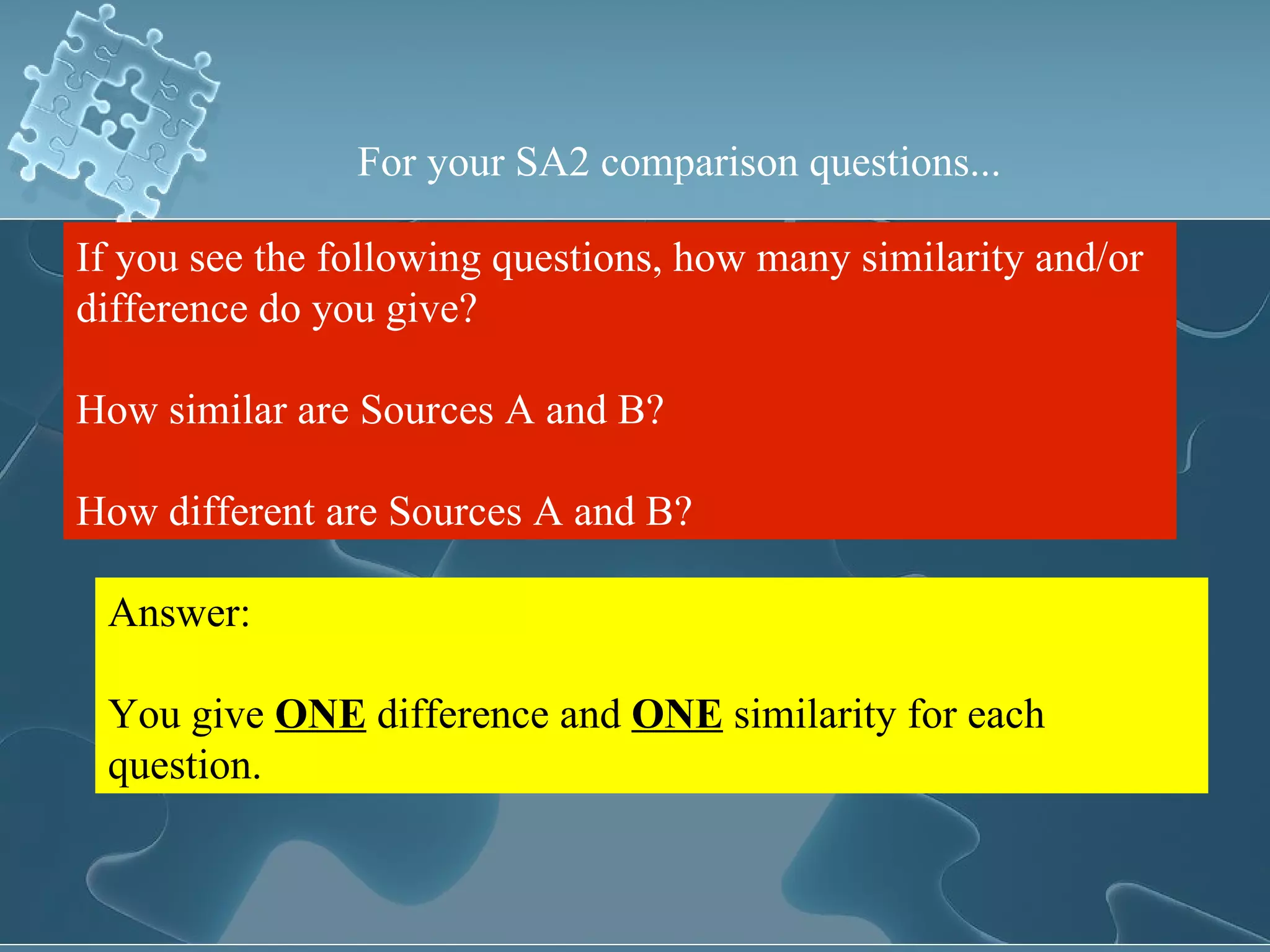
For your SA2 comparison questions... If you see the following questions, how many similarity and/or difference do you give? How similar are Sources A and B? How different are Sources A and B? Answer: You give  ONE  difference and  ONE  similarity for each question.
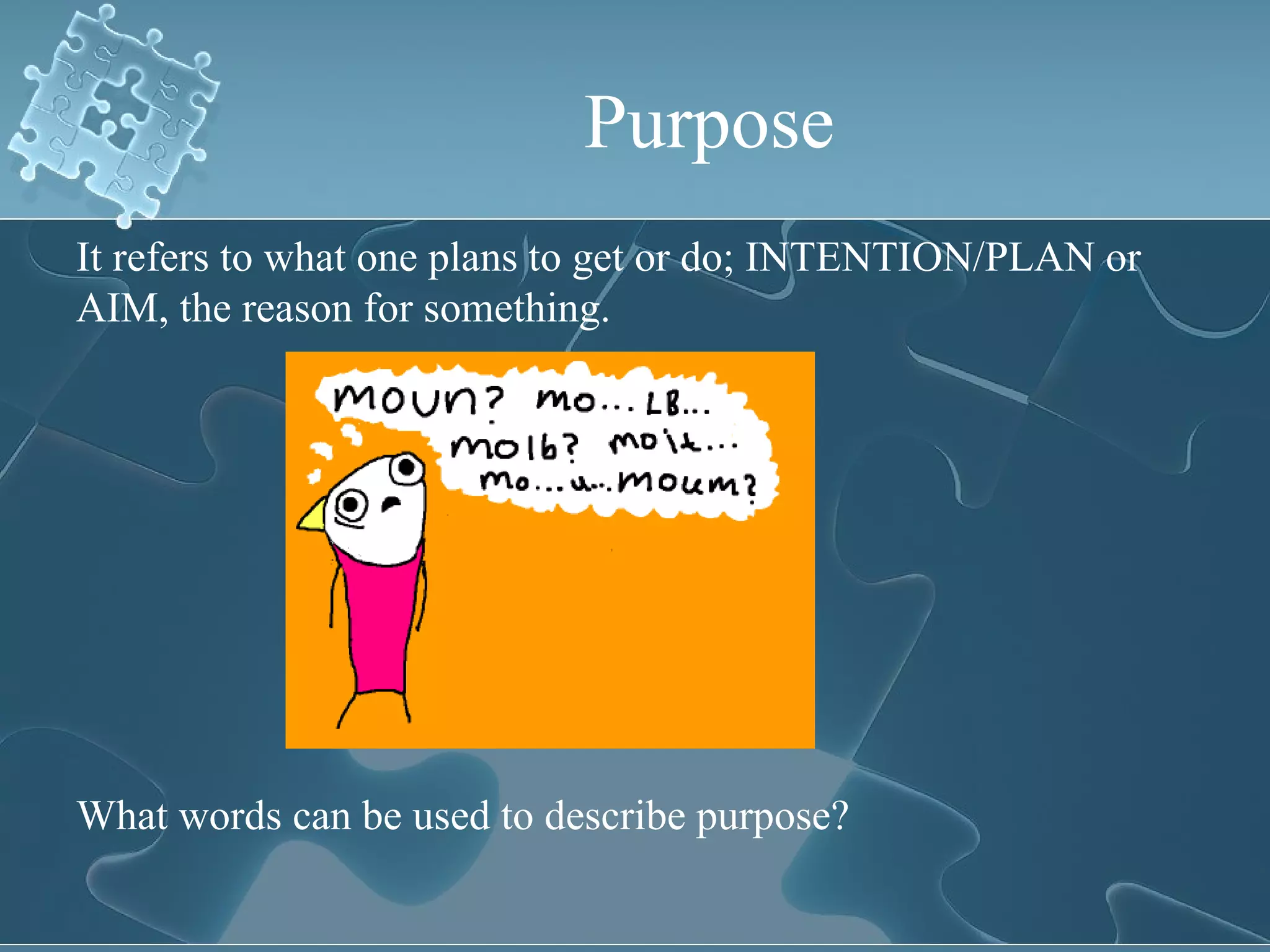
Purpose It refers to what one plans to get or do; INTENTION/PLAN or AIM, the reason for something. What words can be used to describe purpose?
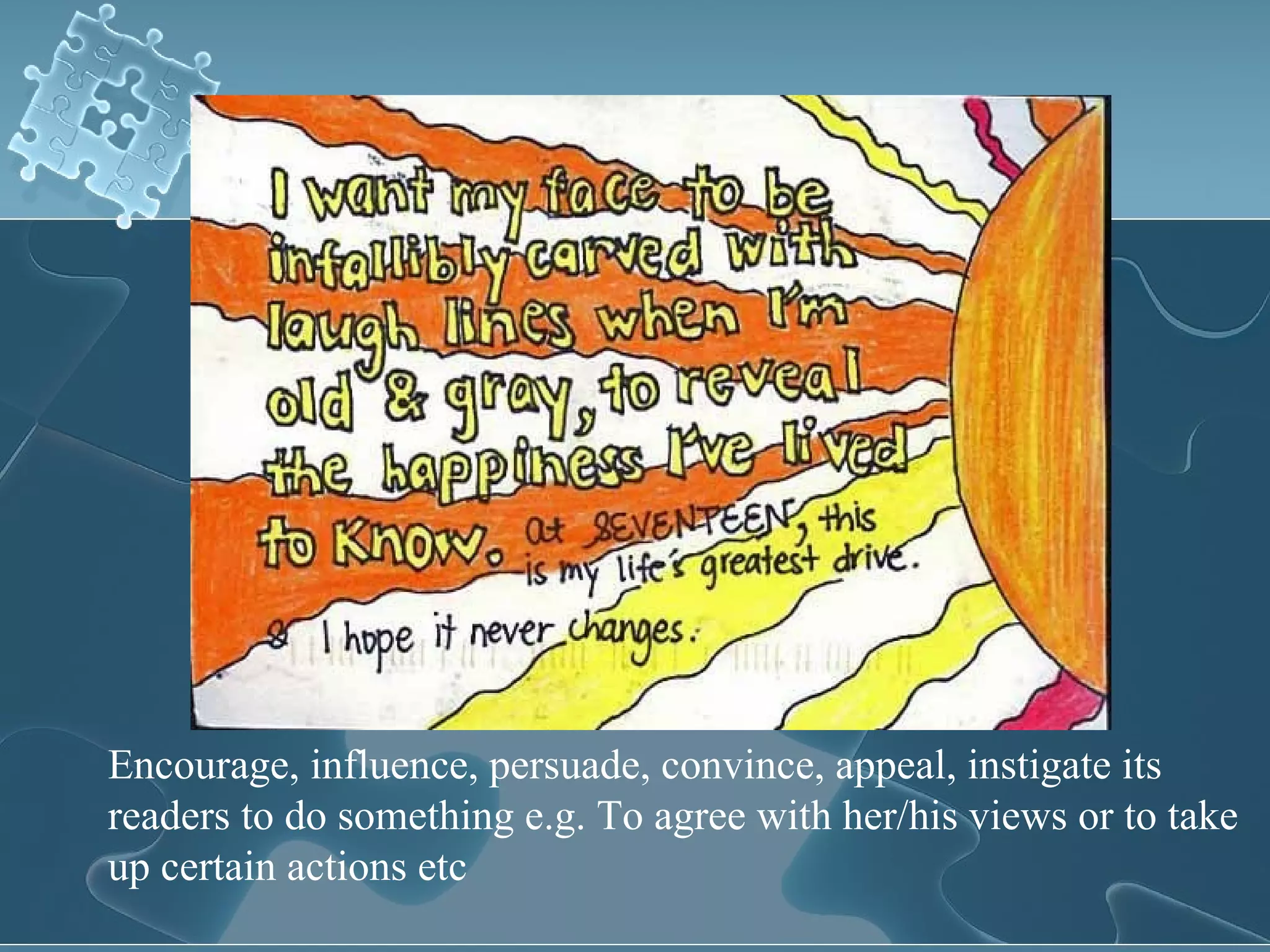
Encourage, influence, persuade, convince, appeal, instigate its readers to do something e.g. To agree with her/his views or to take up certain actions etc
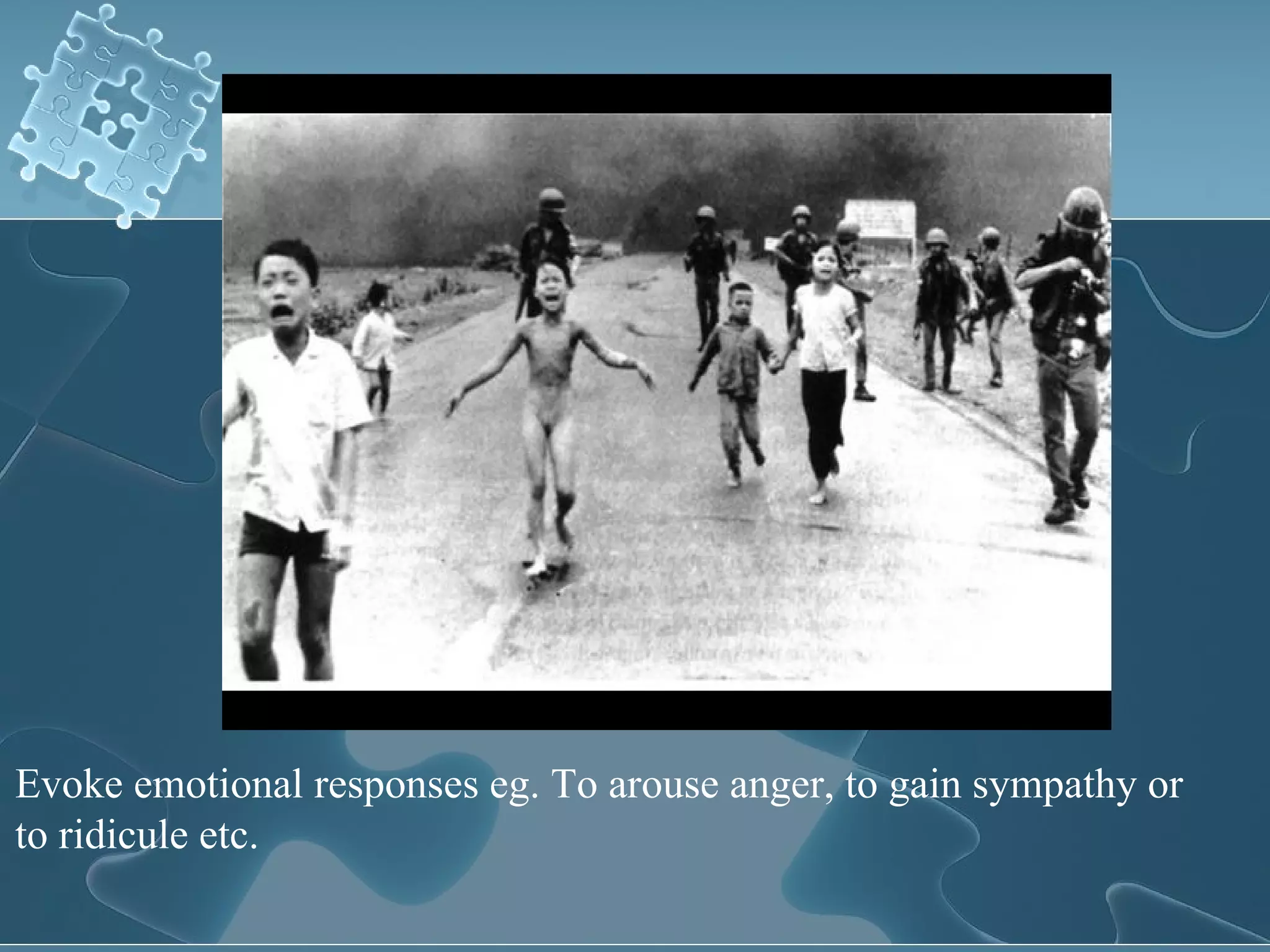
Evoke emotional responses eg. To arouse anger, to gain sympathy or to ridicule etc.
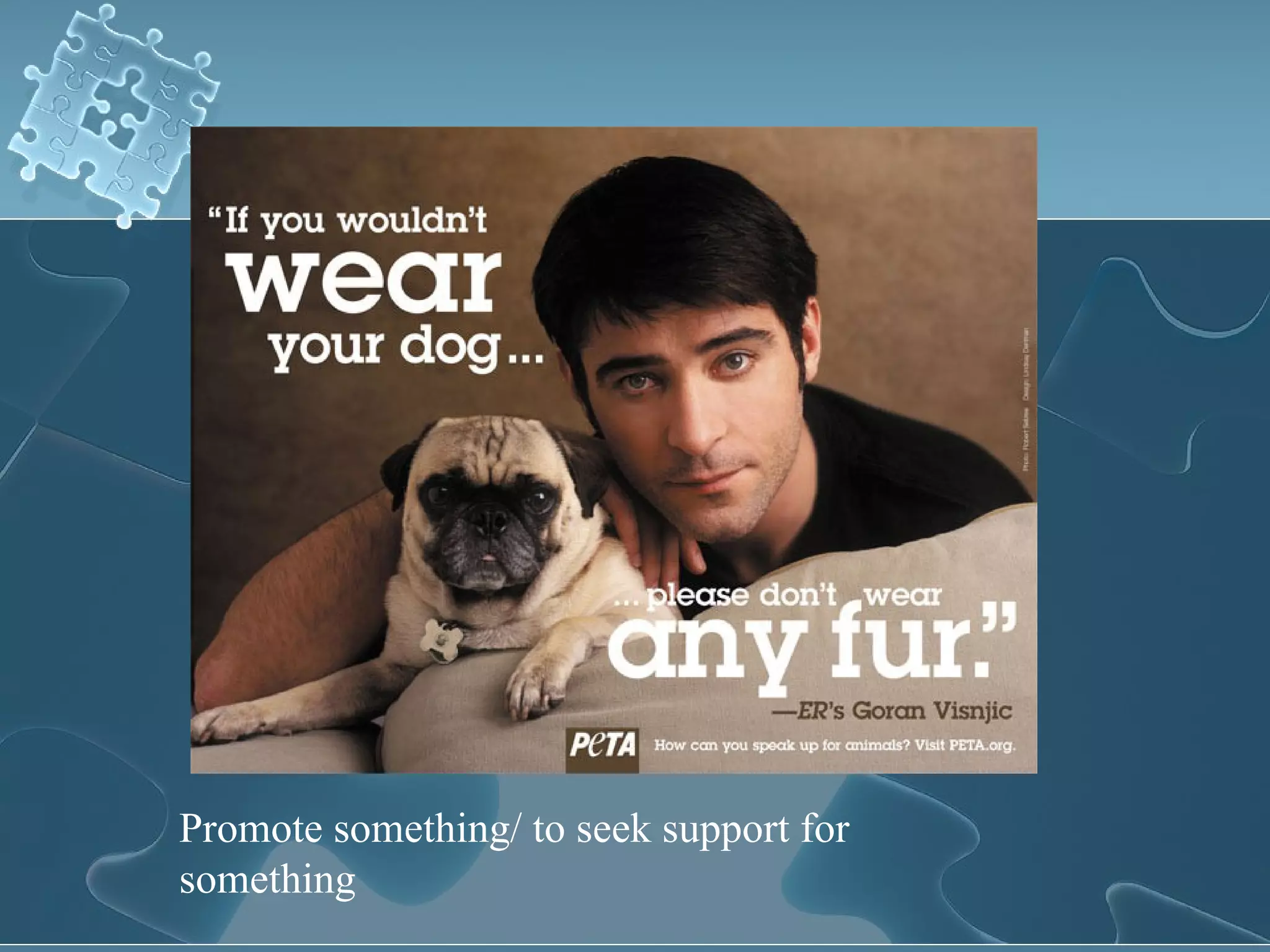
Promote something/ to seek support for something
To inform and educate readers
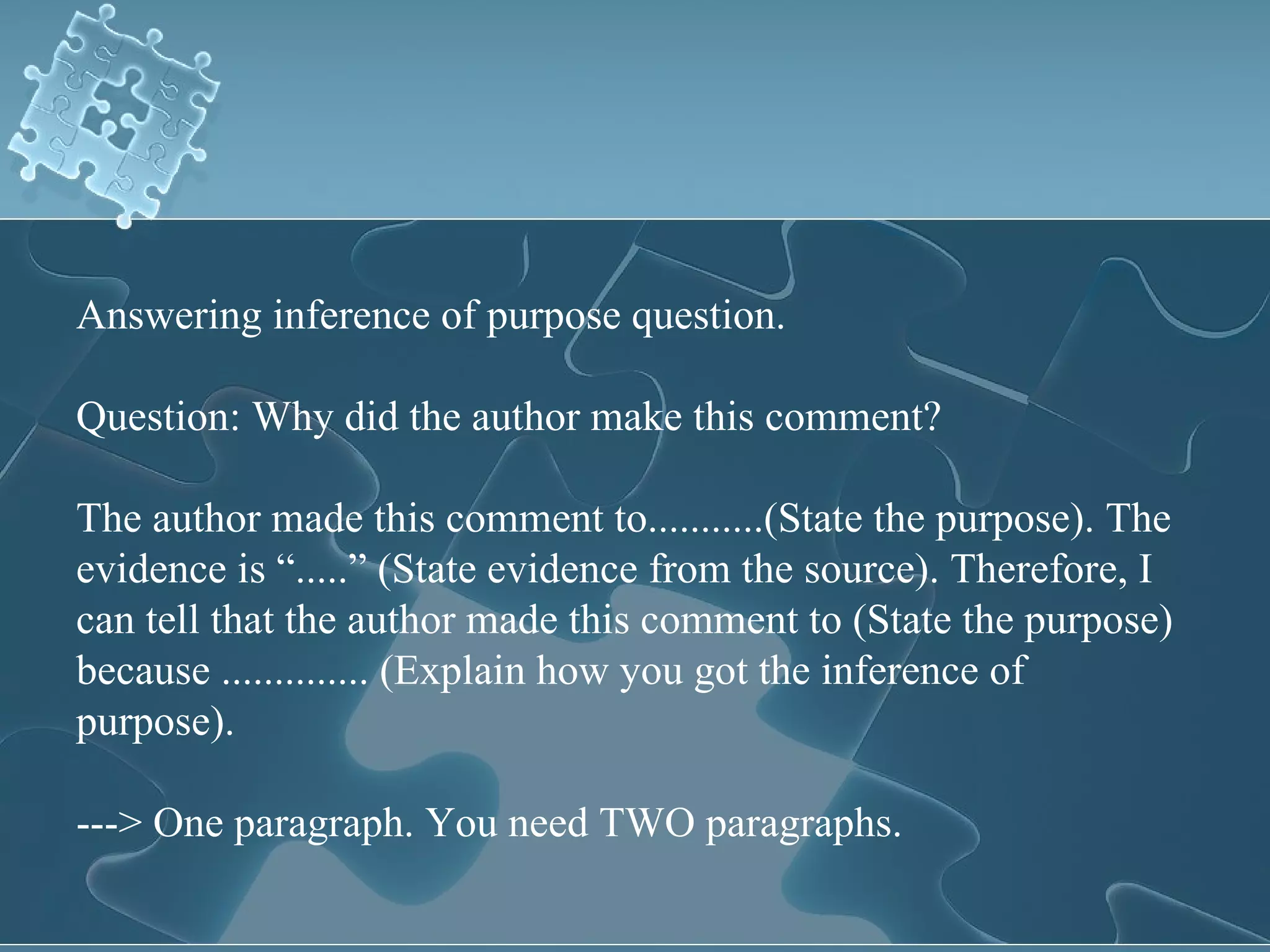
Answering inference of purpose question. Question: Why did the author make this comment? The author made this comment to...........(State the purpose). The evidence is “.....” (State evidence from the source). Therefore, I can tell that the author made this comment to (State the purpose) because .............. (Explain how you got the inference of purpose). ---> One paragraph. You need TWO paragraphs.

Comparison and Purpose Questions

  • 1.
    You’ll never know, unless you compare ! http://www.markhope.com/toons/first_50/page_020.html
  • 2.
    Comparing SourcesSource A Source B WORKING WITH SOURCES
  • 3.
    HOW DO YOUCOMPARE? http://ratings.consumerreports.org/Digital_Cameras/Cyber-shot_DSC-P72.htm
  • 4.
    To put thingsside by side in order to see to what extent they are the same or different Compare alike; the same; Similar These words are associated with the skill of comparison. What do they mean? not alike; not the same; unlike most others; unusual Different
  • 5.
    1. How differentare Sources A and B? 6. In what ways are Sources C and D similar? 3. To what extent is Source A similar to Source B? 5. In what ways are Sources C and D different? 2. How similar are Sources A and B? 7. How do Sources C and D differ? 8. How are Sources C and D similar? 4. To what extent is Source A different from Source B?
  • 6.
    HOW DO YOUCOMPARE? Identify the basis of comparison FIRST Do not list straight away Support with evidences from sources DO NOT COMPARE ……
  • 7.
    HOW DO YOUCOMPARE? What areas would be compared? LENSES COLOURS BRANDS SIZES
  • 8.
    Basis of ComparisonBasis of Comparison
  • 9.
    Just for thisexample… Imagine the 2 markers are real and are in front of you In what ways are they similar? In what ways are they different? Black Marker from XXX Yellow Marker from YYY
  • 10.
    1) In whatways are they SIMILAR One is a black marker, one is a yellow marker. They are made from the same material. Plastic They serve the same function Writes on whiteboard
  • 11.
    Consequences One isa black marker, one is a yellow marker. If there are NO basis of comparison: In the worst case scenario, you would be awarded ZERO marks Why? Not comparing  Not answering the question
  • 12.
    2) In whatways are they DIFFERENT? One is black, one is yellow They differ in colours. One is black One is yellow They differ in size. Black one is fat Yellow one is thin
  • 13.
    Compare & ContrastSkills STEP 1: Identify what the question wants: STEP 2: Identify basis of comparison Most difficult STEP 3: Support with evidence
  • 14.
    SIMILARITY Step 1:Point of comparison (in your own words) e.g. Both Sources A and B are similar in terms of / in showing____. Step 2: Detail (Optional if point of comparison is obvious enough. In your own words.) e.g. Both sources talk about _________________. Step 3: Evidence from first source e.g. The evidence from Source A is “_______________.” Step 4: Evidence from second source e.g. The evidence from Source B is “________________.”
  • 15.
    Example of Similarity:Both Sources A and B are similar in terms of showing how Ashoka spread Buddhism. They both suggest that Ashoka spread Buddhist teachings by carving inscriptions on rocks to persuade his people to follow Buddhist teachings. The evidence from Source A is ” He carved his policies and Buddhist teachings on rocks and pillars across his empire” The evidence from Source B is “ For this purpose, the inscription has been engraved …” Point of comparison Detail
  • 16.
    DIFFERENCE Step 1:Point of comparison (In your own words) e.g. Both Sources A and B are different in terms of / in showing____. Step 2: Detail (In your own words) e.g. Source A talks about _____________ while Source B talks about______________________. Step 3: Evidence from first source e.g. The evidence from Source A is “_______________.” Step 4: Evidence from second source e.g. The evidence from Source B is “________________.”
  • 17.
    Example of DifferenceSources A and B are different in terms of explaining the reasons behind the reductions of killing animals. While Source A talks about Ashoka’s other policies and the effects of Buddhist teachings on people, Source B talks about the positive after-effects of the practice of Buddhism. The evidence from Source A is that it mentioned Ashoka limited hunting for consumption reasons and that many people became vegetarians by their own free will. The evidence from Source B is that it shows that practicing Buddhism led to an increase in abstention from killing and non-injury to living things and obedience to parents and elders. Point of comaprison Detail
  • 18.
    For your SA2comparison questions... If you see the following questions, how many similarity and/or difference do you give? How similar are Sources A and B? How different are Sources A and B? Answer: You give ONE difference and ONE similarity for each question.
  • 19.
    Purpose It refersto what one plans to get or do; INTENTION/PLAN or AIM, the reason for something. What words can be used to describe purpose?
  • 20.
    Encourage, influence, persuade,convince, appeal, instigate its readers to do something e.g. To agree with her/his views or to take up certain actions etc
  • 21.
    Evoke emotional responseseg. To arouse anger, to gain sympathy or to ridicule etc.
  • 22.
    Promote something/ toseek support for something
  • 23.
    To inform andeducate readers
  • 24.
    Answering inference ofpurpose question. Question: Why did the author make this comment? The author made this comment to...........(State the purpose). The evidence is “.....” (State evidence from the source). Therefore, I can tell that the author made this comment to (State the purpose) because .............. (Explain how you got the inference of purpose). ---> One paragraph. You need TWO paragraphs.