The Light
Microscope
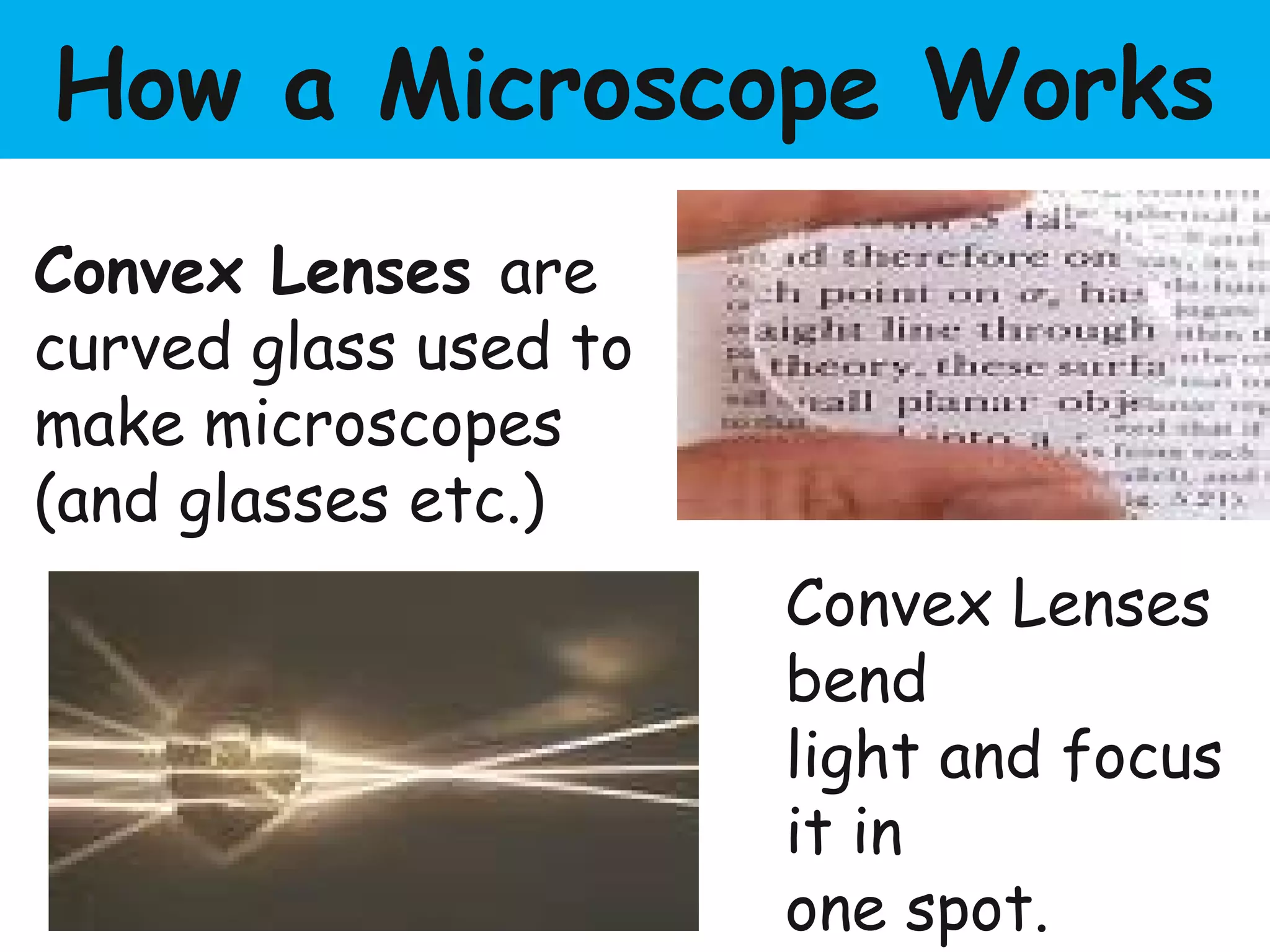
Convex Lenses are
curved glass used to
make microscopes
(and glasses etc.)
Convex Lenses
bend
light and focus
it in
one spot.
How a Microscope Works
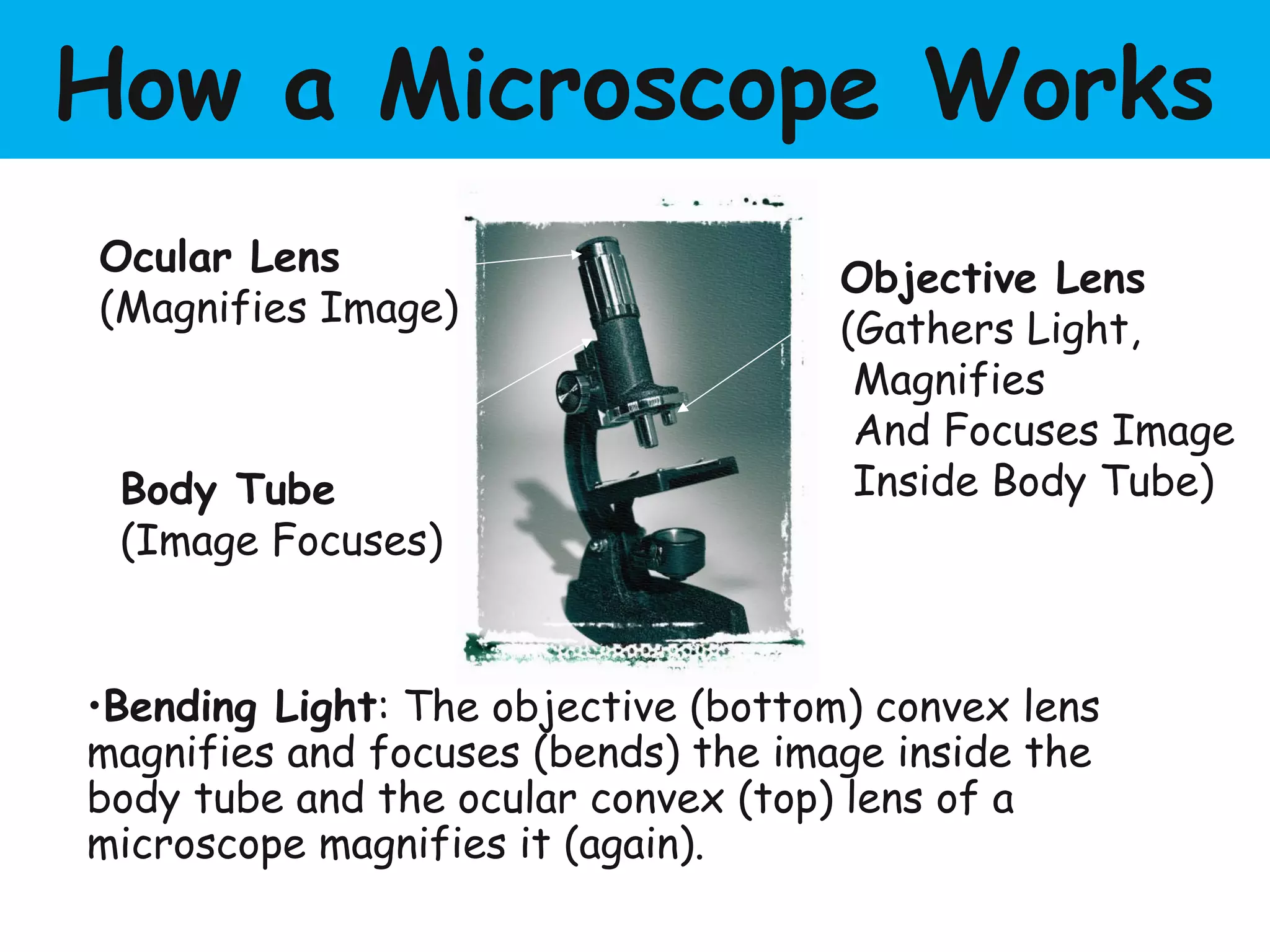
Ocular Lens
(Magnifies Image)
Objective Lens
(Gathers Light,
Magnifies
And Focuses Image
Inside Body Tube)Body Tube
(Image Focuses)
•Bending Light: The objective (bottom) convex lens
magnifies and focuses (bends) the image inside the
body tube and the ocular convex (top) lens of a
microscope magnifies it (again).
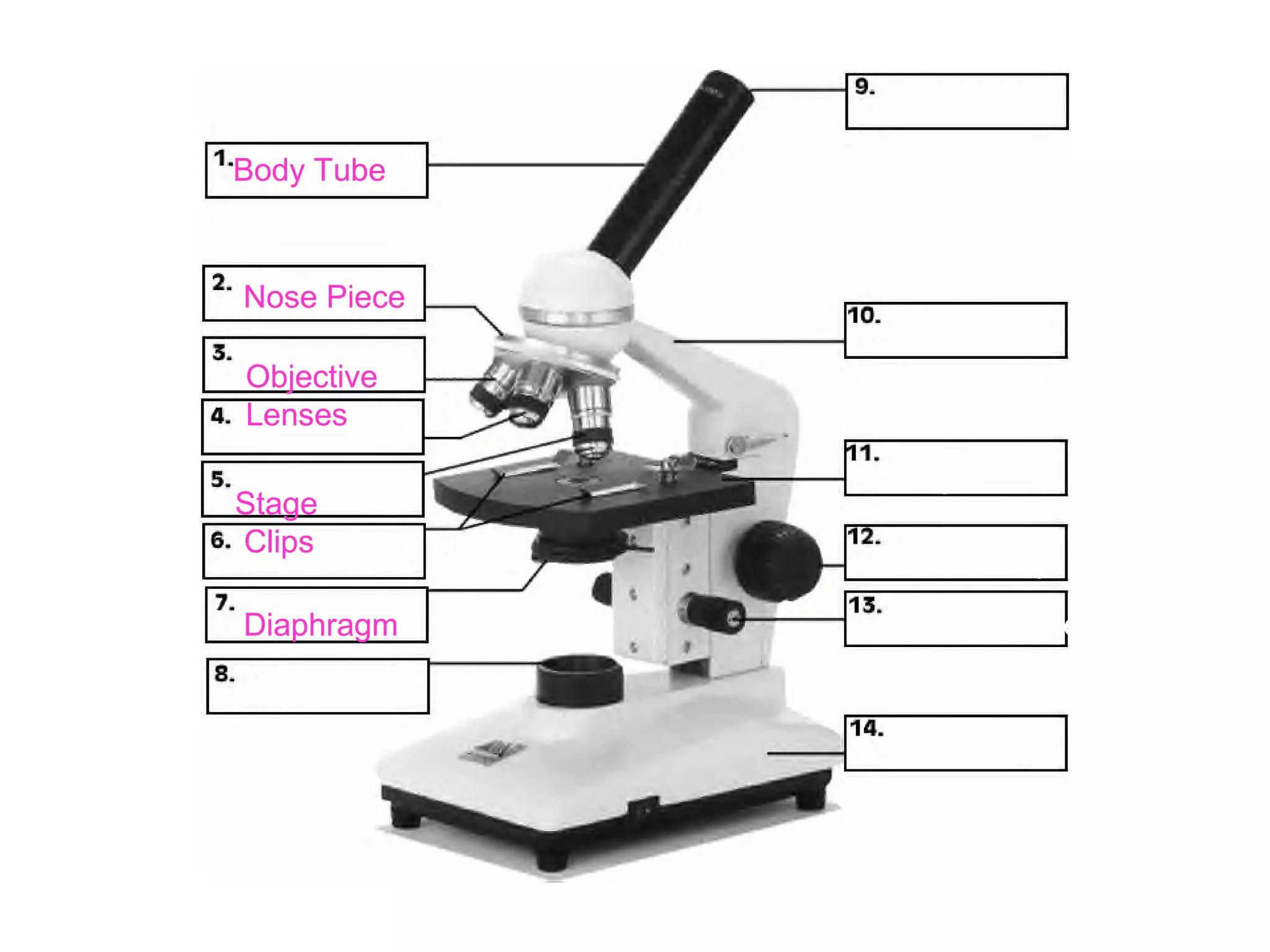
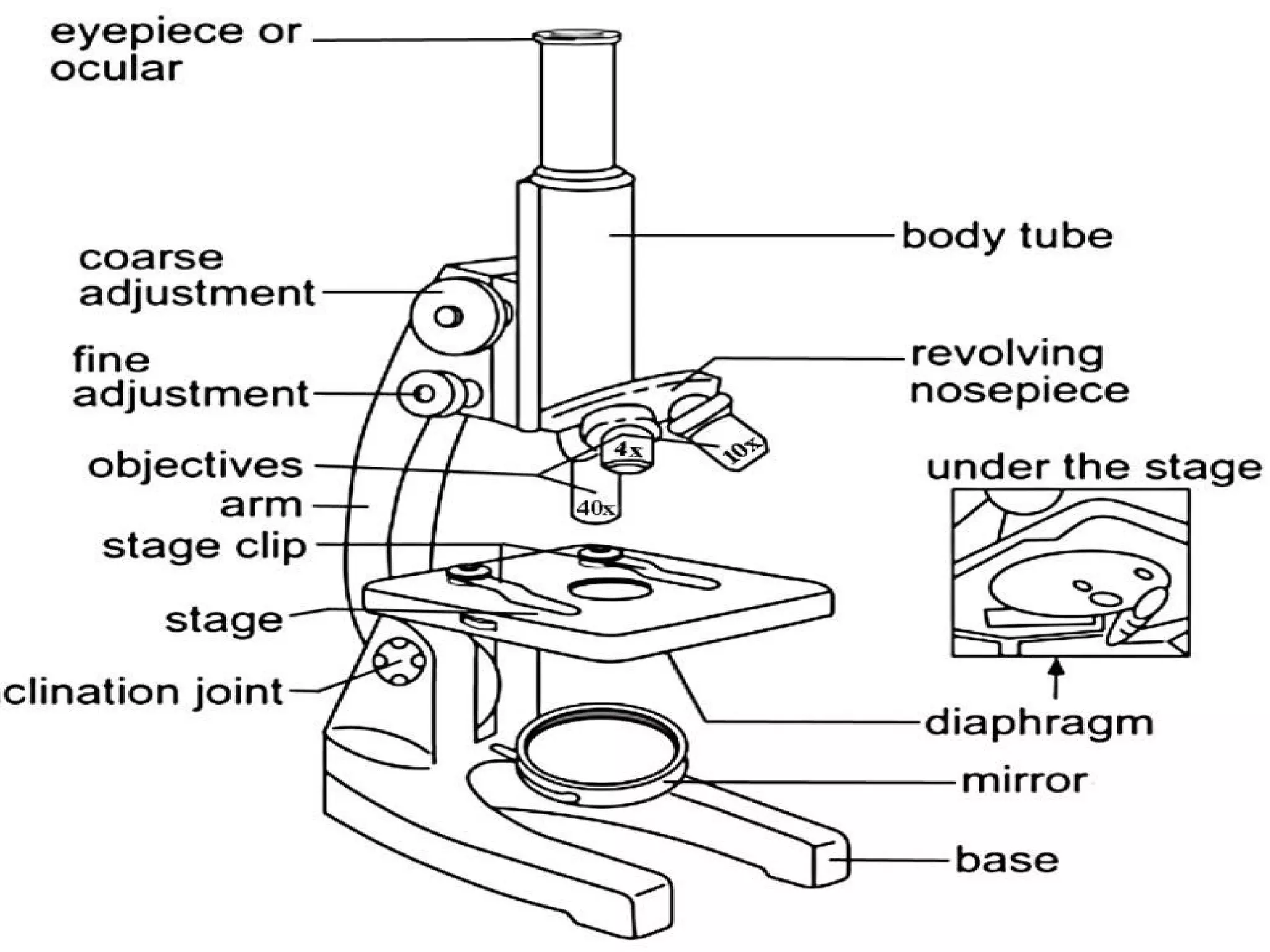
Body Tube
Nose Piece
Objective
Lenses
Stage
Clips
Diaphragm
Light Source
Ocular Lens
Arm
Stage
Coarse Adj.
Fine Adjustment
Base
Skip to Magnification Section
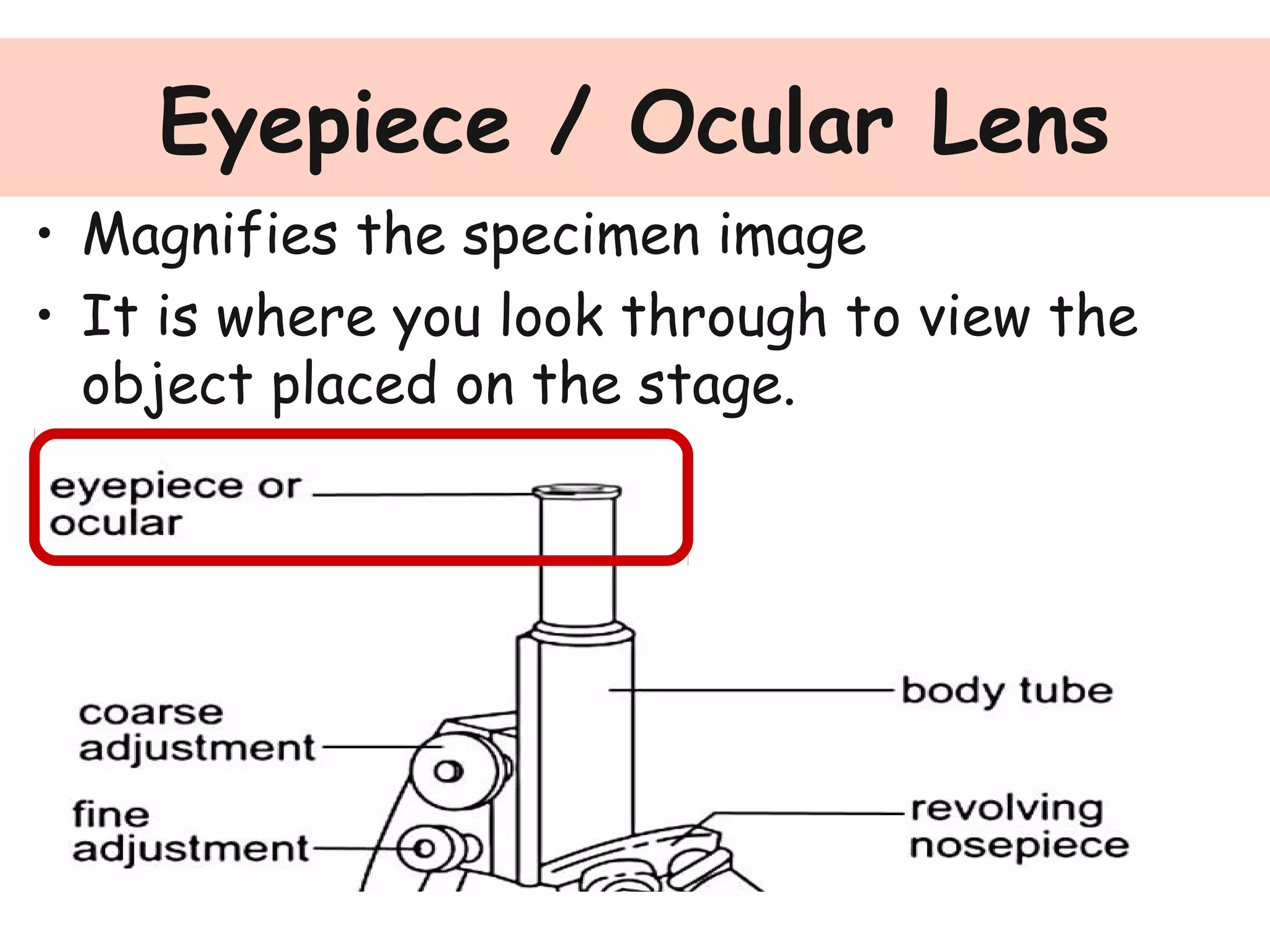
Eyepiece / Ocular Lens
• Magnifies the specimen image
• It is where you look through to view the
object placed on the stage.
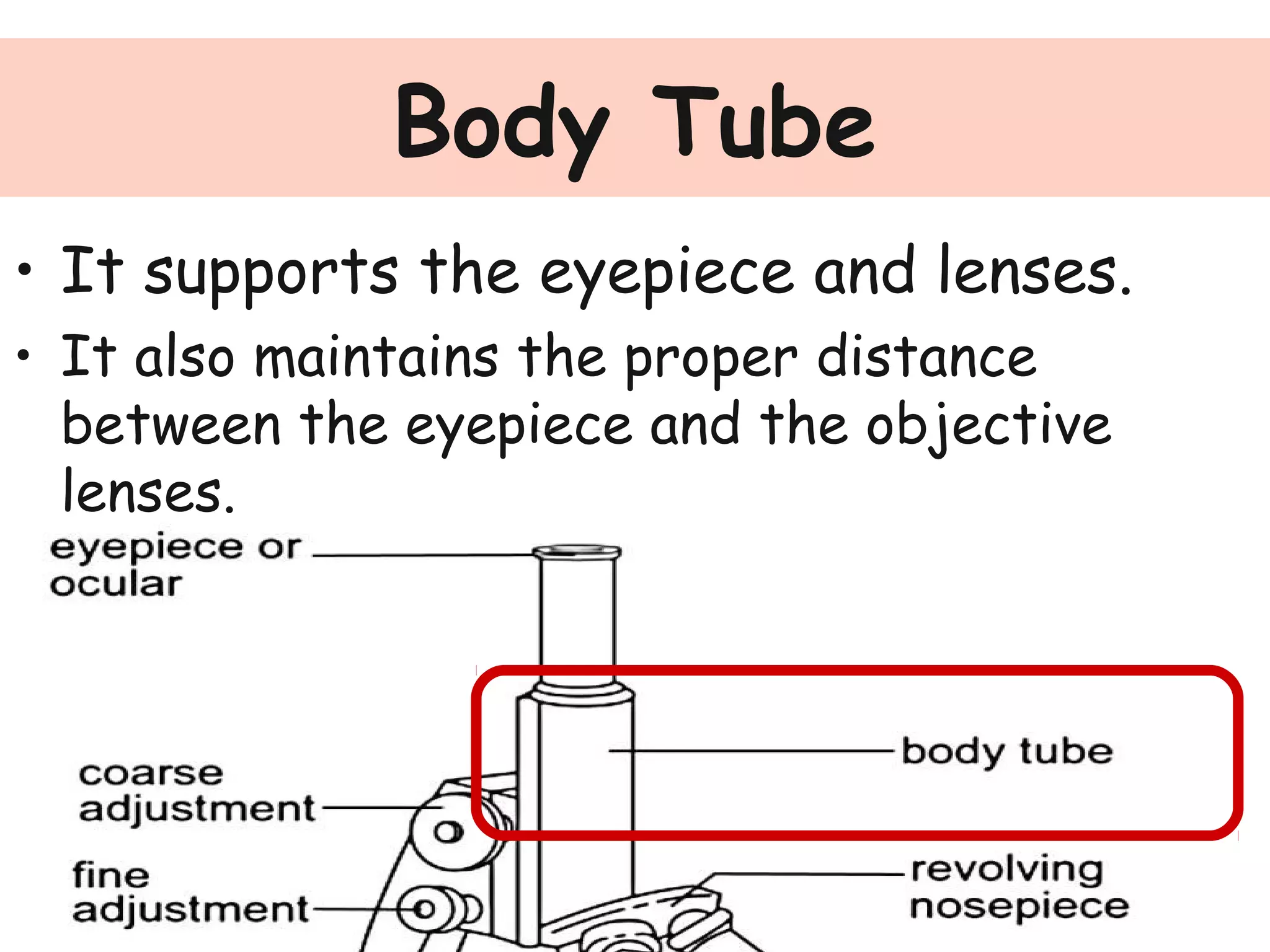
Body Tube
• It supports the eyepiece and lenses.
• It also maintains the proper distance
between the eyepiece and the objective
lenses.
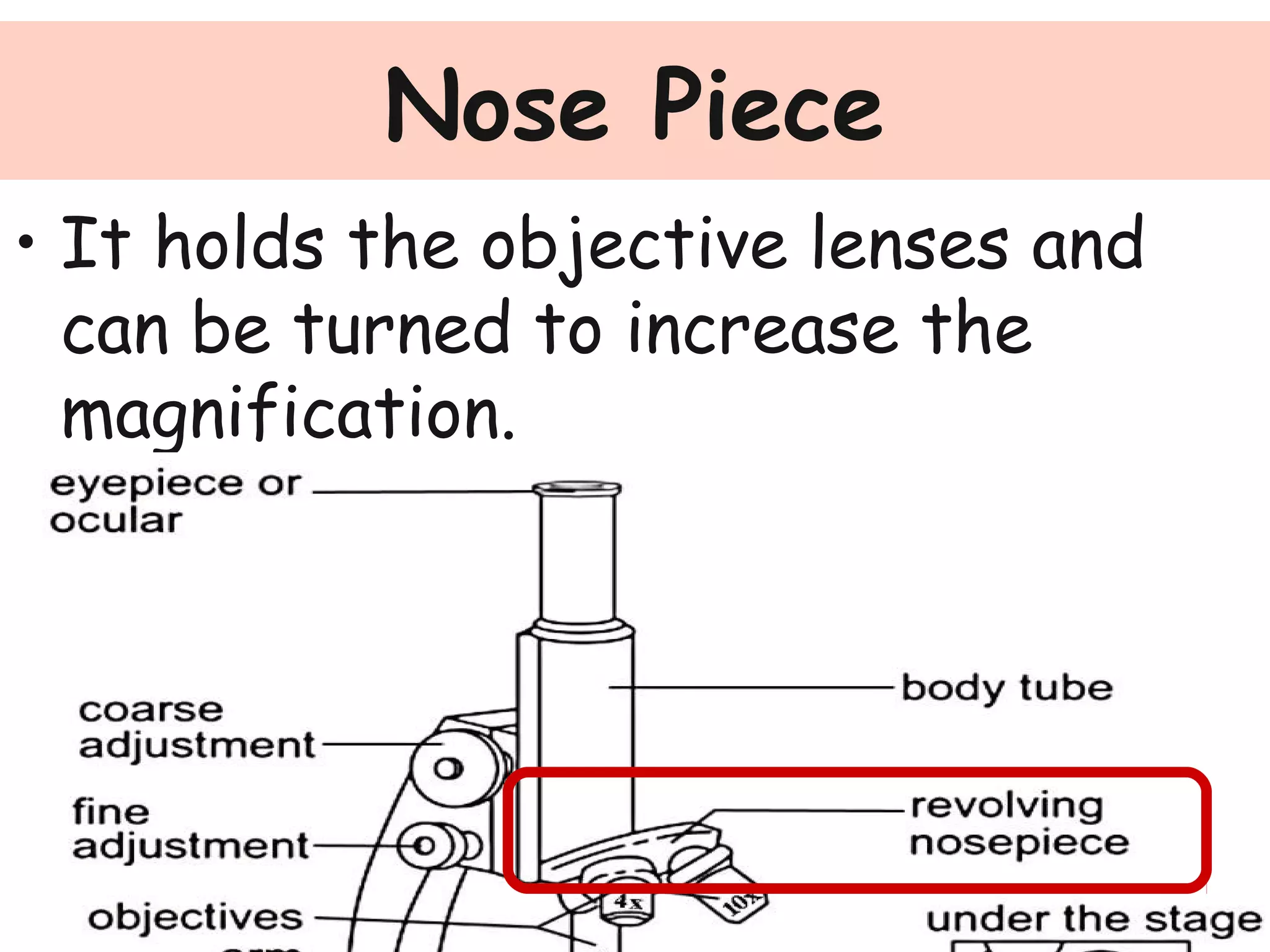
Nose Piece
• It holds the objective lenses and
can be turned to increase the
magnification.
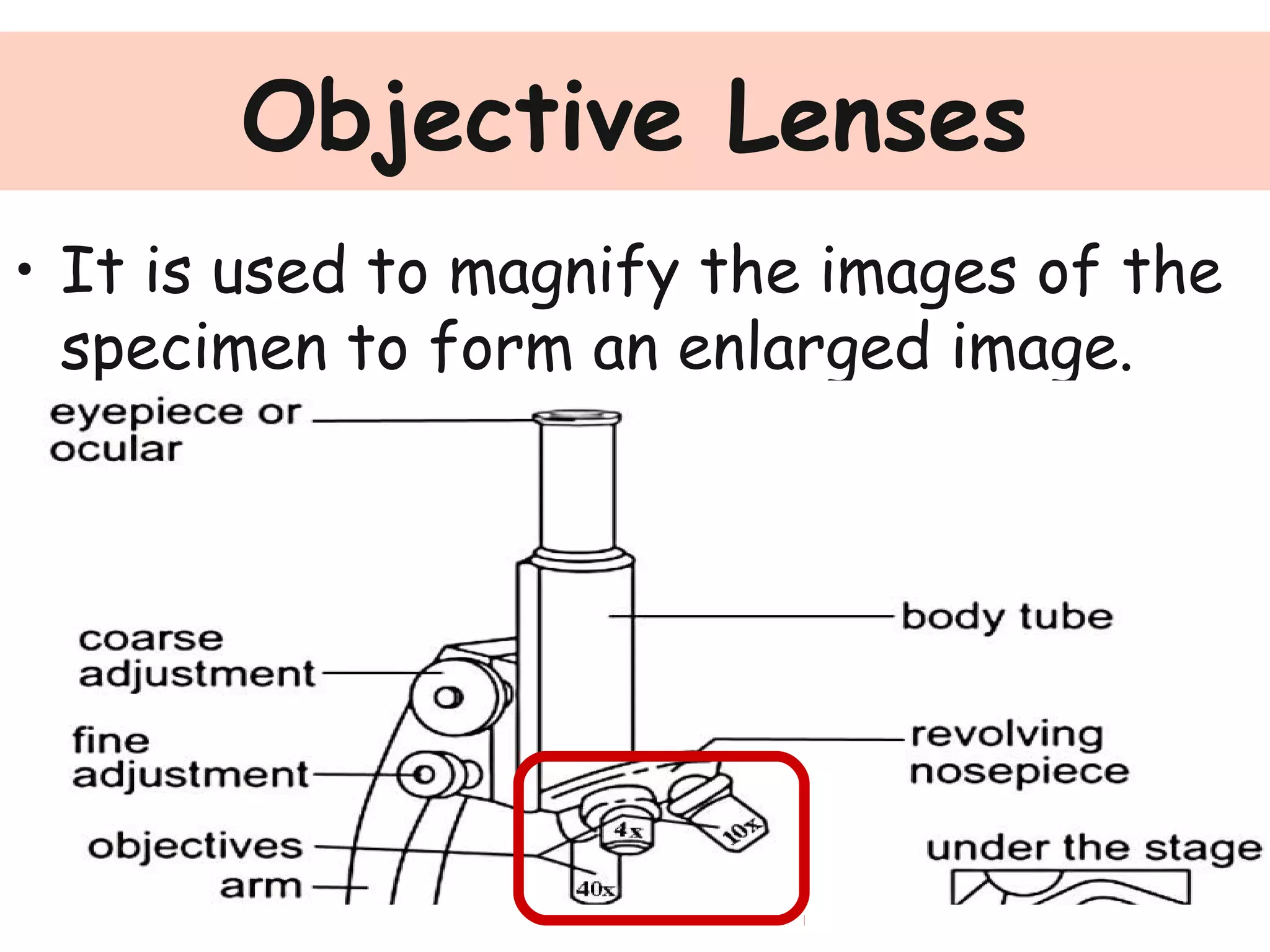
Objective Lenses
• It is used to magnify the images of the
specimen to form an enlarged image.
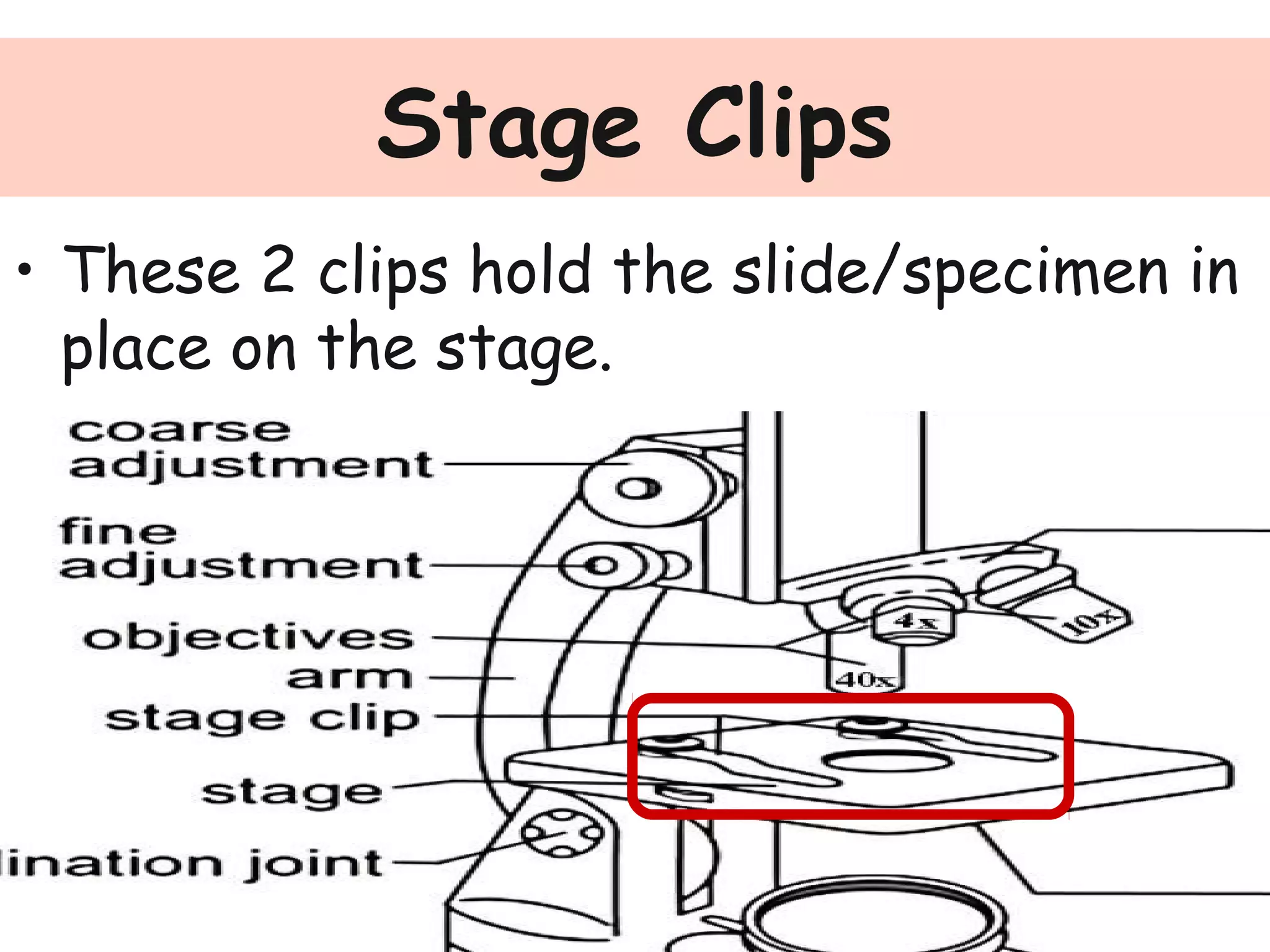
Stage Clips
• These 2 clips hold the slide/specimen in
place on the stage.
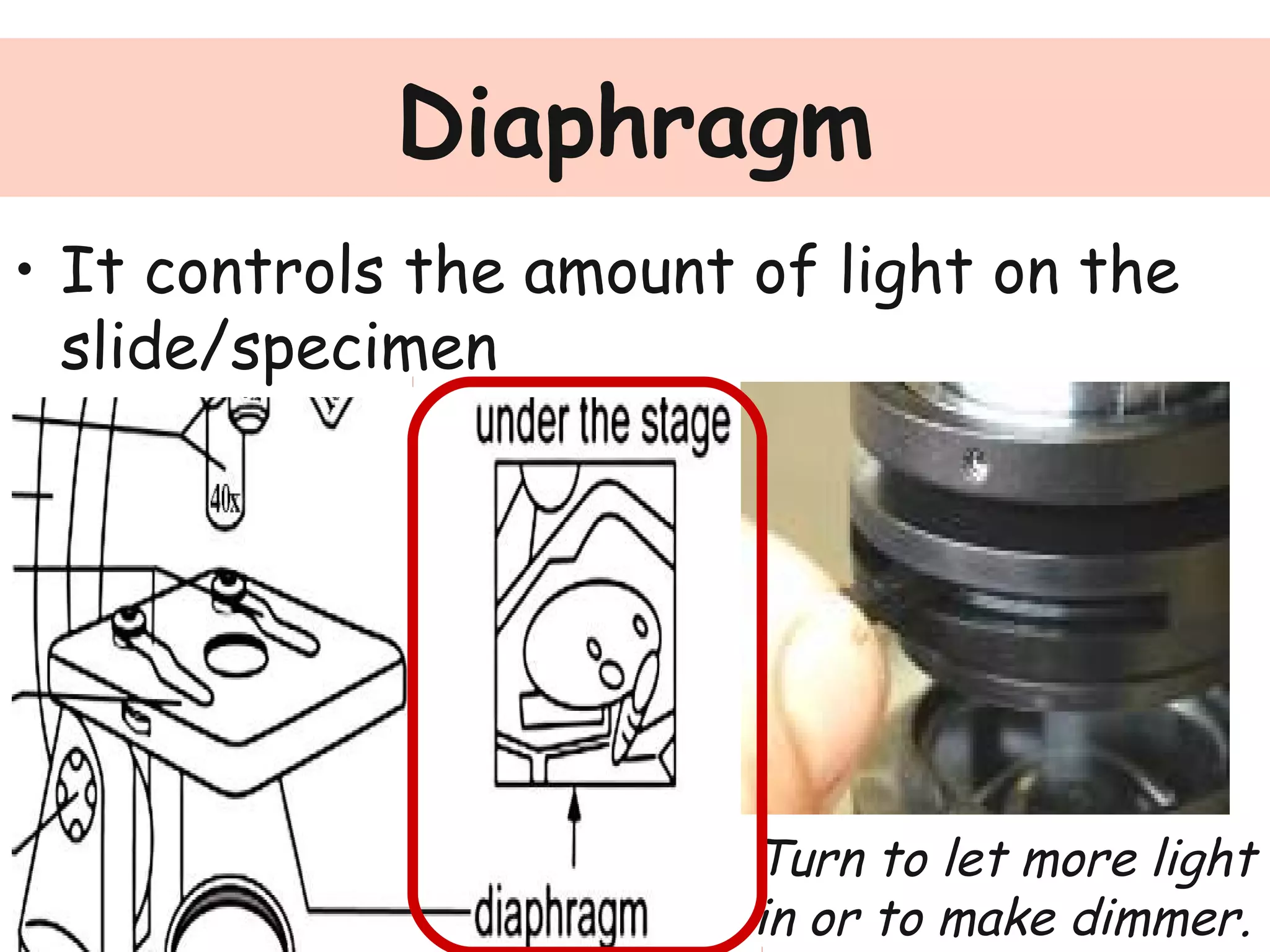
Diaphragm
• It controls the amount of light on the
slide/specimen
Turn to let more light
in or to make dimmer.
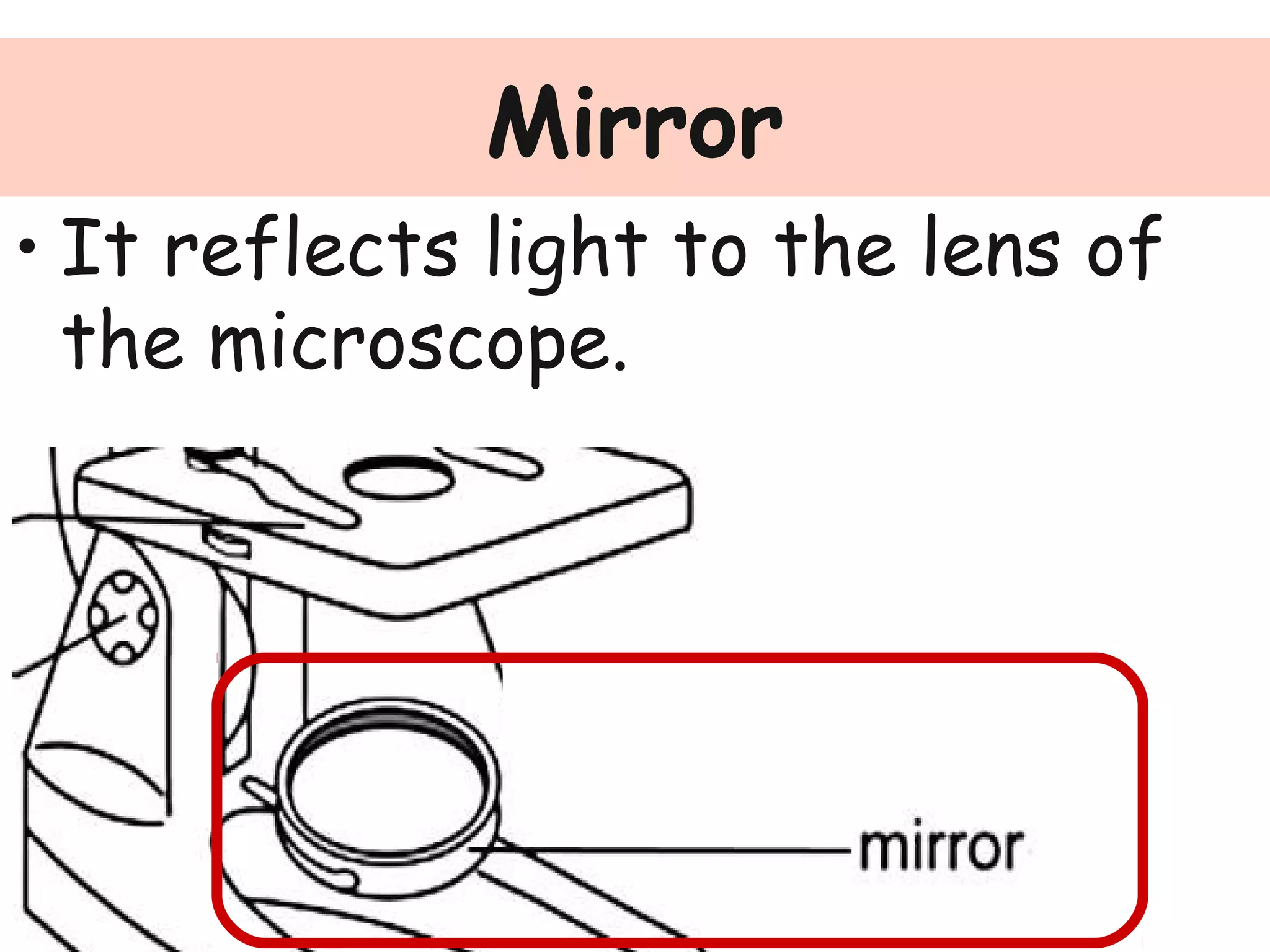
Mirror
• It reflects light to the lens of
the microscope.
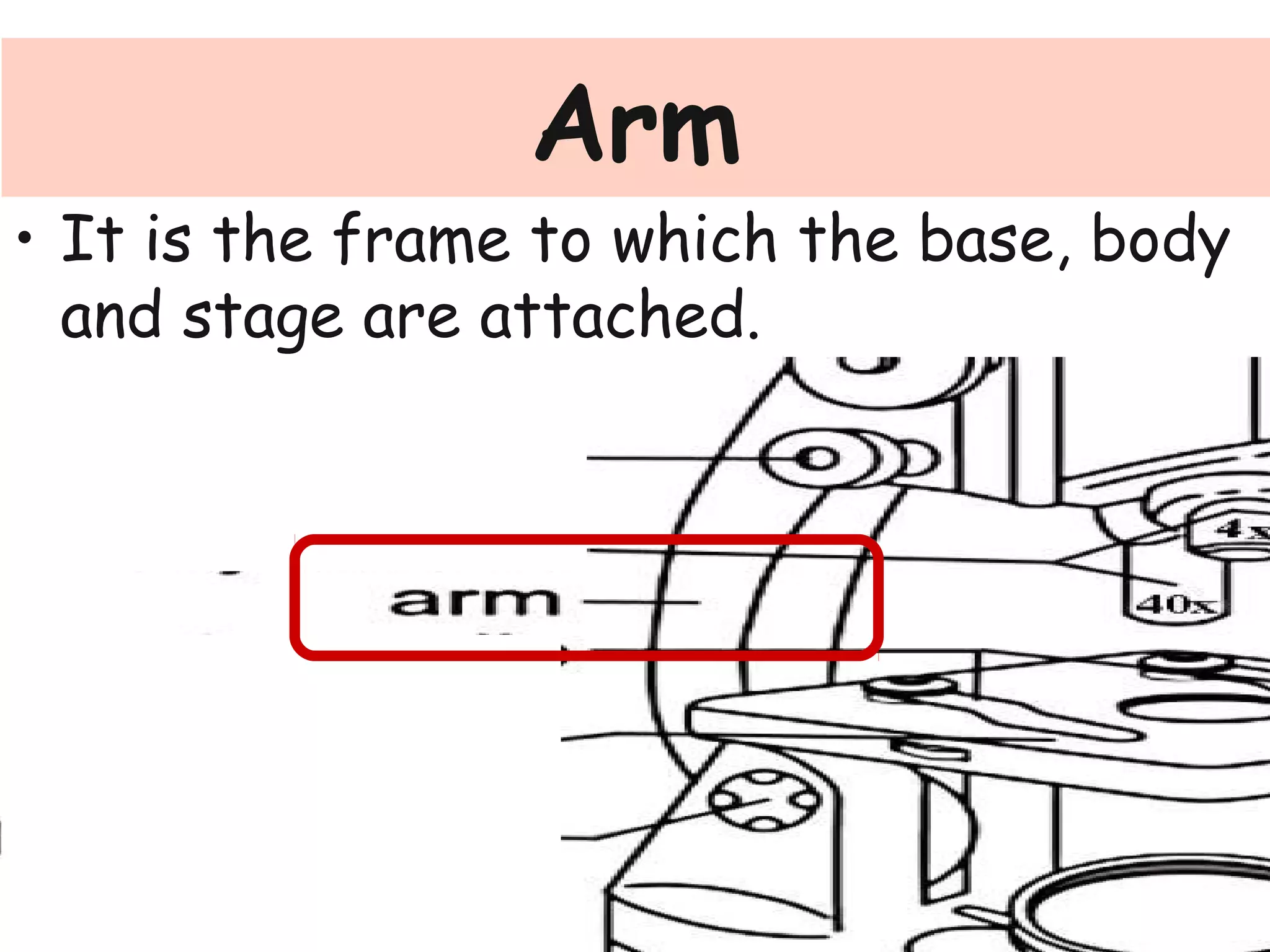
Arm
• It is the frame to which the base, body
and stage are attached.
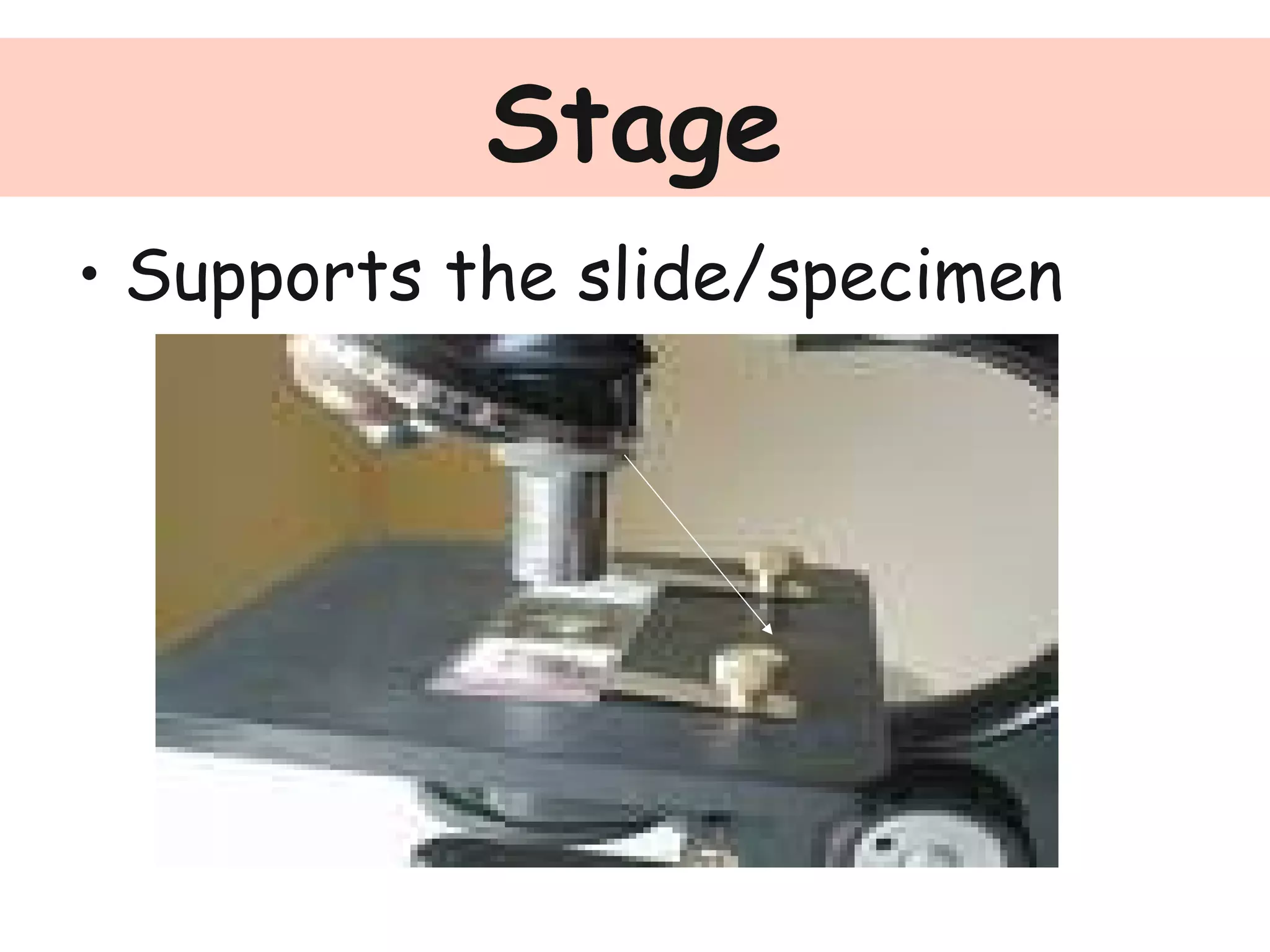
Stage
• Supports the slide/specimen
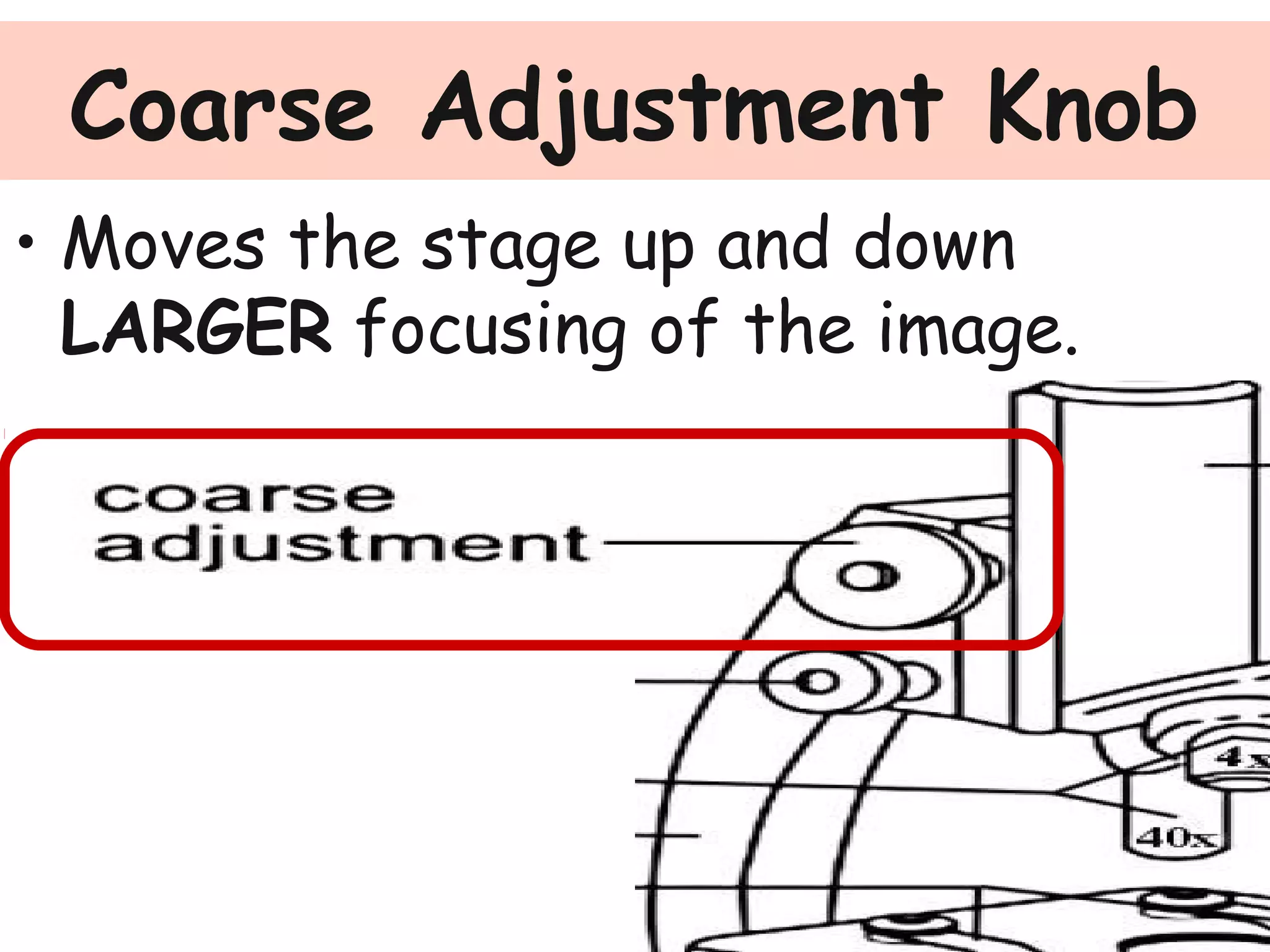
Coarse Adjustment Knob
• Moves the stage up and down
LARGER focusing of the image.
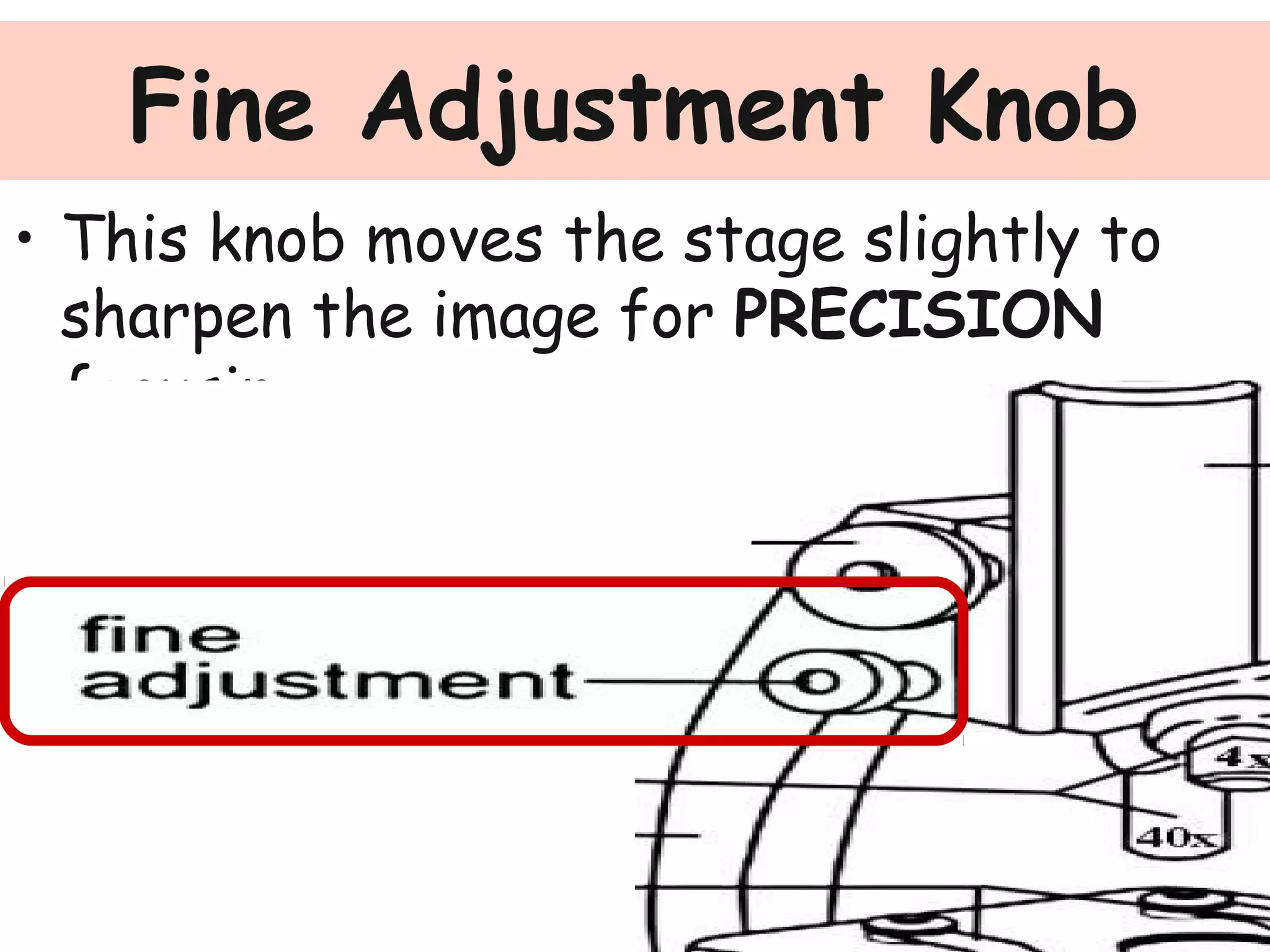
• This knob moves the stage slightly to
sharpen the image for PRECISION
focusing.
Fine Adjustment Knob
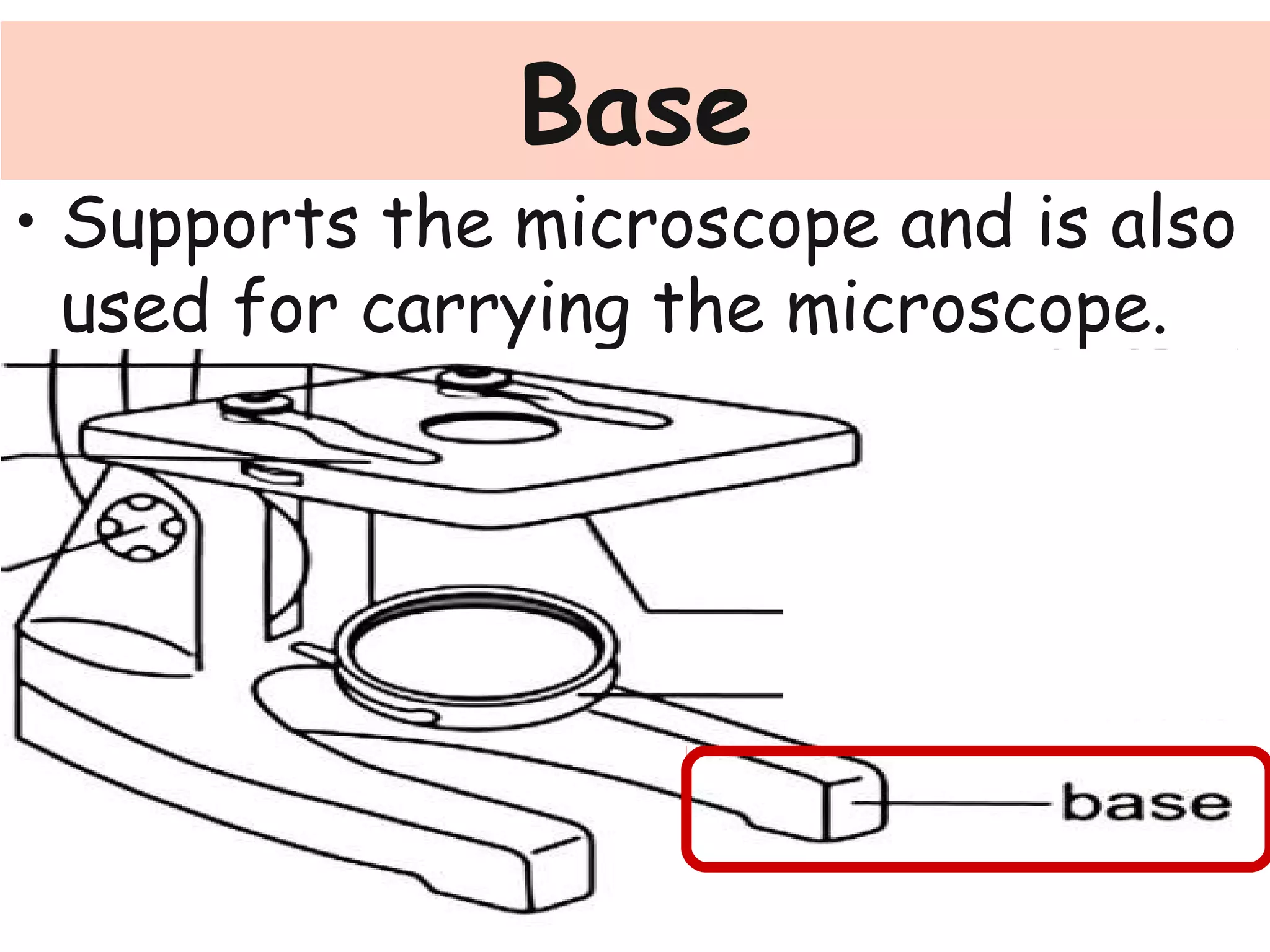
Base
• Supports the microscope and is also
used for carrying the microscope.
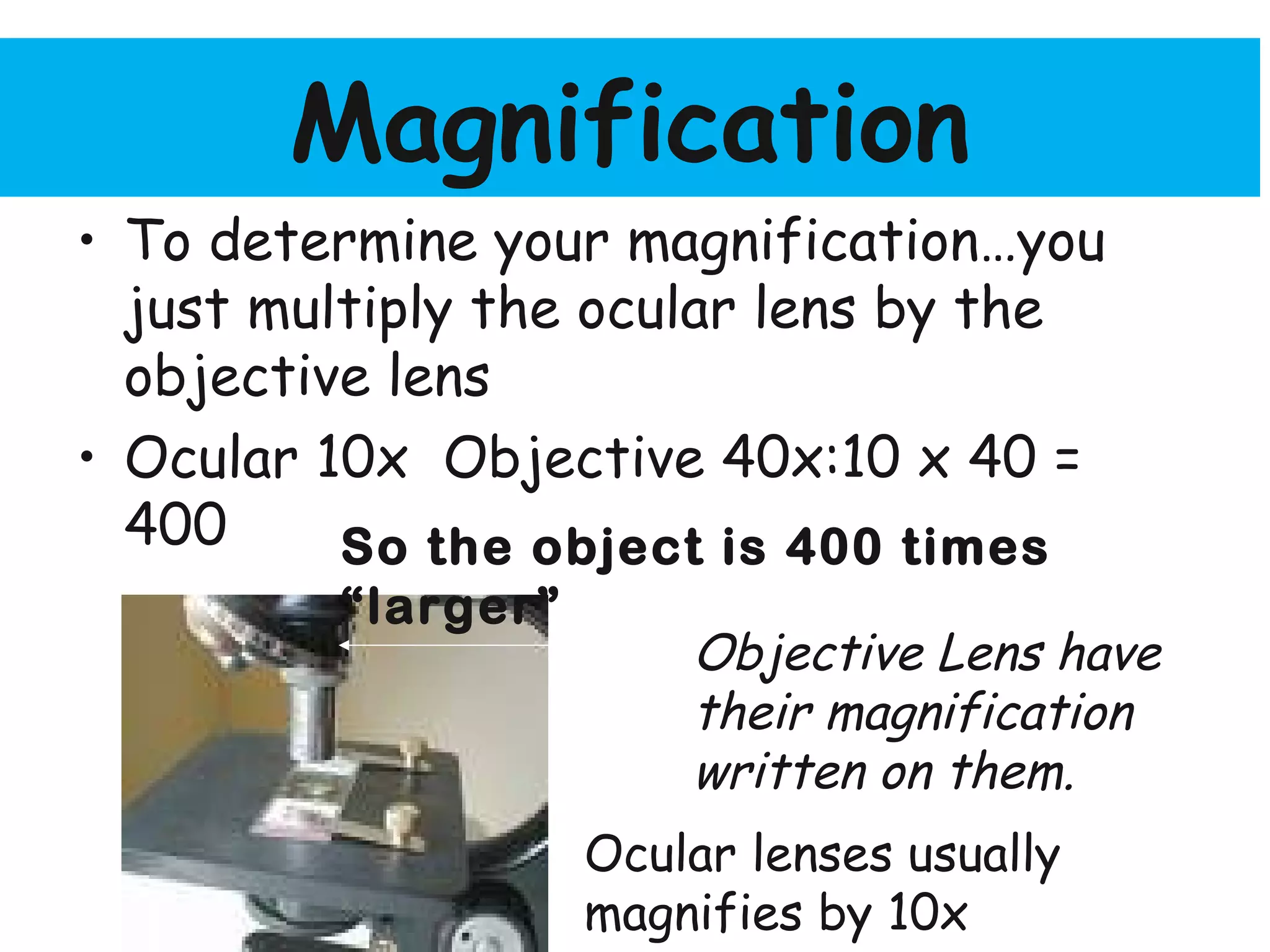
Magnification
• To determine your magnification…you
just multiply the ocular lens by the
objective lens
• Ocular 10x Objective 40x:10 x 40 =
400
Objective Lens have
their magnification
written on them.
Ocular lenses usually
magnifies by 10x
So the object is 400 times
“larger”
Caring for a Microscope
• Clean only with a soft
cloth/tissue
• Make sure it’s on a flat surface
• Carry it with 2 HANDS…one on
the arm and the other on the
base
Using a Microscope
• Start on the lowest magnification
• Don’t use the coarse adjustment
knob on high magnification … you’ll
break the slide.
• Place slide on stage and lock clips
• Adjust light source/ mirror.
• Use fine adjustment to focus
Credits
• You and the Natural World:
Integrated Science by Lilia G.
Vengco and Teresita F. Religioso.
Phoenix Publishing House, Inc.
• Discover Science by Allas, et. al.
Diwa Learning Systems Inc.
• http://www.freeclubweb.com/powerp
oints/science/index.html

Parts of the microscope and their functions

  • 1.
  • 2.
    Convex Lenses are curvedglass used to make microscopes (and glasses etc.) Convex Lenses bend light and focus it in one spot. How a Microscope Works
  • 3.
    How a MicroscopeWorks Ocular Lens (Magnifies Image) Objective Lens (Gathers Light, Magnifies And Focuses Image Inside Body Tube)Body Tube (Image Focuses) •Bending Light: The objective (bottom) convex lens magnifies and focuses (bends) the image inside the body tube and the ocular convex (top) lens of a microscope magnifies it (again).
  • 4.
    Body Tube Nose Piece Objective Lenses Stage Clips Diaphragm LightSource Ocular Lens Arm Stage Coarse Adj. Fine Adjustment Base Skip to Magnification Section
  • 6.
    Eyepiece / OcularLens • Magnifies the specimen image • It is where you look through to view the object placed on the stage.
  • 7.
    Body Tube • Itsupports the eyepiece and lenses. • It also maintains the proper distance between the eyepiece and the objective lenses.
  • 8.
    Nose Piece • Itholds the objective lenses and can be turned to increase the magnification.
  • 9.
    Objective Lenses • Itis used to magnify the images of the specimen to form an enlarged image.
  • 10.
    Stage Clips • These2 clips hold the slide/specimen in place on the stage.
  • 11.
    Diaphragm • It controlsthe amount of light on the slide/specimen Turn to let more light in or to make dimmer.
  • 12.
    Mirror • It reflectslight to the lens of the microscope.
  • 13.
    Arm • It isthe frame to which the base, body and stage are attached.
  • 14.
    Stage • Supports theslide/specimen
  • 15.
    Coarse Adjustment Knob •Moves the stage up and down LARGER focusing of the image.
  • 16.
    • This knobmoves the stage slightly to sharpen the image for PRECISION focusing. Fine Adjustment Knob
  • 17.
    Base • Supports themicroscope and is also used for carrying the microscope.
  • 18.
    Magnification • To determineyour magnification…you just multiply the ocular lens by the objective lens • Ocular 10x Objective 40x:10 x 40 = 400 Objective Lens have their magnification written on them. Ocular lenses usually magnifies by 10x So the object is 400 times “larger”
  • 19.
    Caring for aMicroscope • Clean only with a soft cloth/tissue • Make sure it’s on a flat surface • Carry it with 2 HANDS…one on the arm and the other on the base
  • 20.
    Using a Microscope •Start on the lowest magnification • Don’t use the coarse adjustment knob on high magnification … you’ll break the slide. • Place slide on stage and lock clips • Adjust light source/ mirror. • Use fine adjustment to focus
  • 21.
    Credits • You andthe Natural World: Integrated Science by Lilia G. Vengco and Teresita F. Religioso. Phoenix Publishing House, Inc. • Discover Science by Allas, et. al. Diwa Learning Systems Inc. • http://www.freeclubweb.com/powerp oints/science/index.html