Group members
 M. Waheed Khalid 12-cse-43
 Syed Faisal Sabbir 12-cse-59
 Saqlain Hussain Shah 12-cse-69
 Saddaqat hussain 12-cse-44
Trees
 Non linear data structure.
 Hierarchical structure consist of nodes.
 Used to represent data contain hierarchical
relationship.
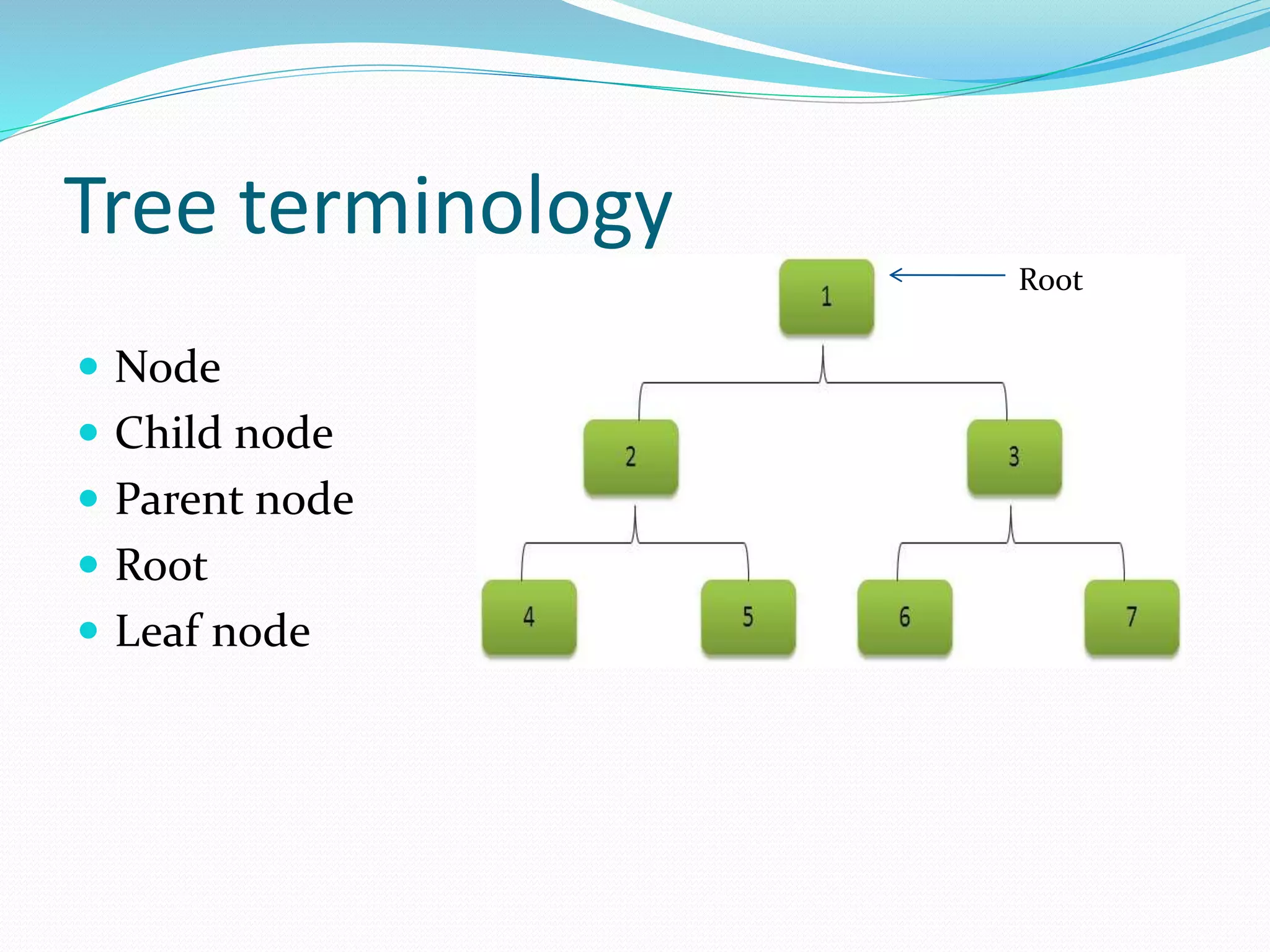
Tree terminology
 Node
 Child node
 Parent node
 Root
 Leaf node
Root
Binary tree
 Every node has at most two children.
 Either empty or partitioned into three disjoint subsets.
 First is root.
 Other two are left and right subtree and satisfies
following conditions:-
 All keys of left subtree of root are less than the key of root
 All keys of right subtree of root are greater than the key of
root
 Left and right subtree of root are also binary trees
Implementation
 Binary tree can be implemented by using linked list
 Each node will consist
 Value stored in node
 Pointer to the next node at the right
 Pointer to the next node at the left
Operation on binary tree
 Searching
 Insertion
 Creation
 Deletion
 Traversing
Searching
 Start from the root node and move down in tree by
comparing the desired key with key of node
 If the desired key is equal to key in node then search is
successful and take appropriate action
 If desired key is less than key of node then move to left child.
 If desired key is greater than key of node then move to right
child.
 If we reach NULL then search is unsuccessful i.e. desired key is
not present..
Searching
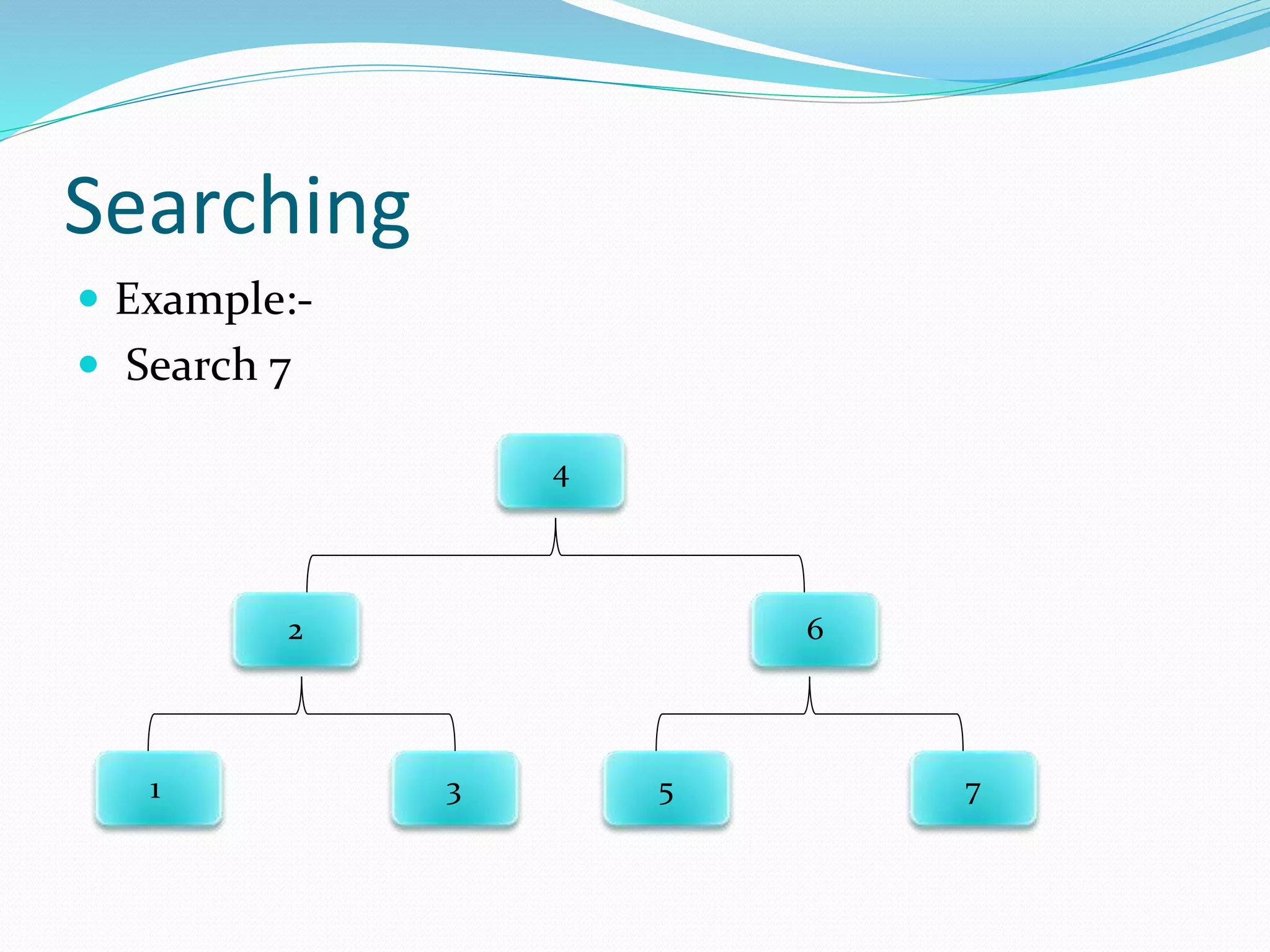
 Example:-
 Search 7
4
2 6
1 3 5 7
Insertion
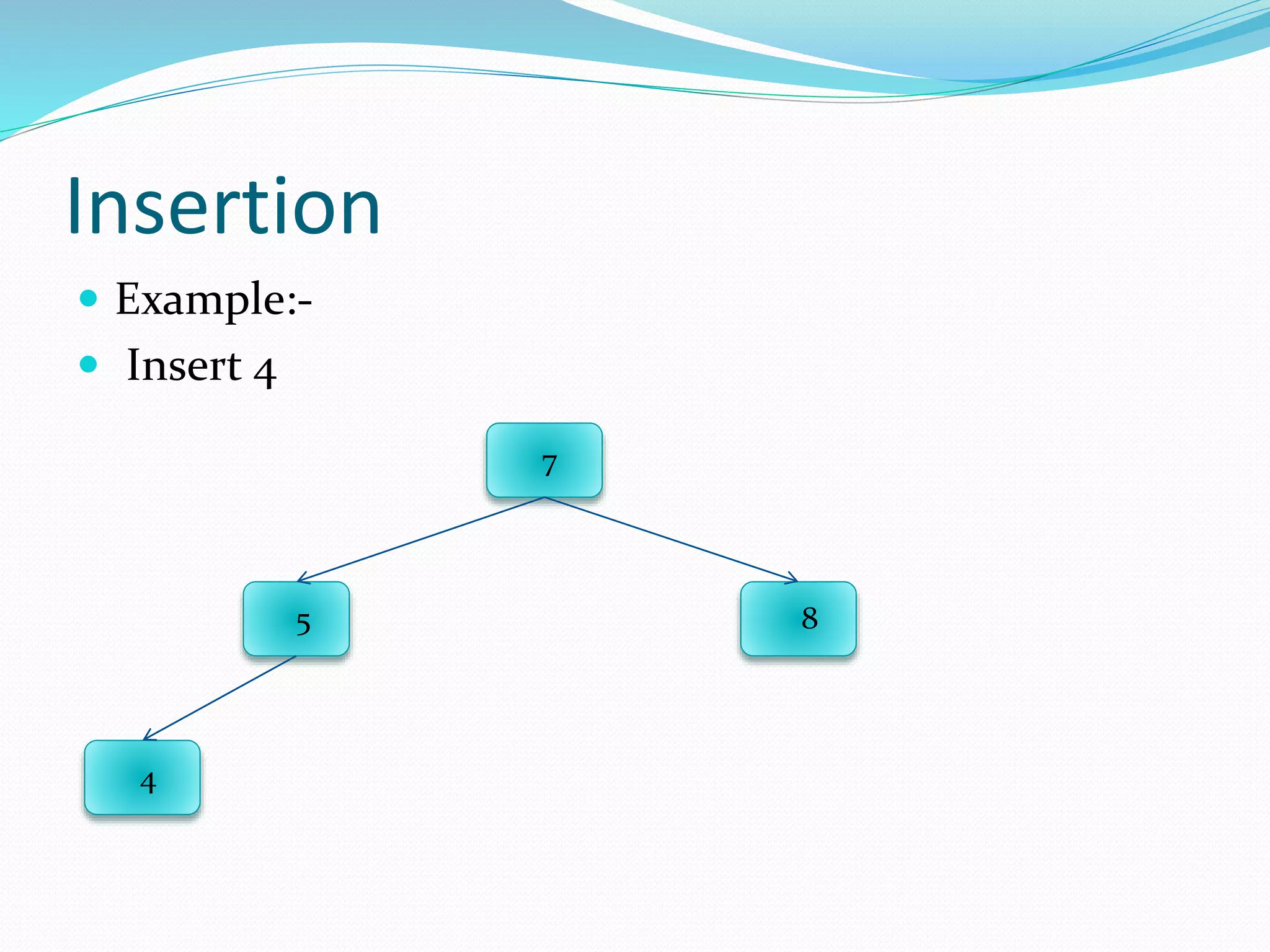
 Insertion a node consisting of two operations:-
 First, the tree must be searched where the node is inserted
 Second, the node is inserted into the tree on completion
 Insert into an Empty tree:-
 In this case, node is inserted into tree considered as root
 Insert into a non-Empty tree:-
 In this case, tree is searched and then insert node in the tree
Insertion
 Example:-
 Insert 4
7
85
4
Creation
 Binary tree is created by repeating insertion of nodes
but insertion must maintain the order of tree. e.g.
 First ,root is insert then next node.
 If the value of new node is less than root then appended
it as left leaf of node.
 If the value of new node is greater than root then
appended it as right leaf of node.
Creation
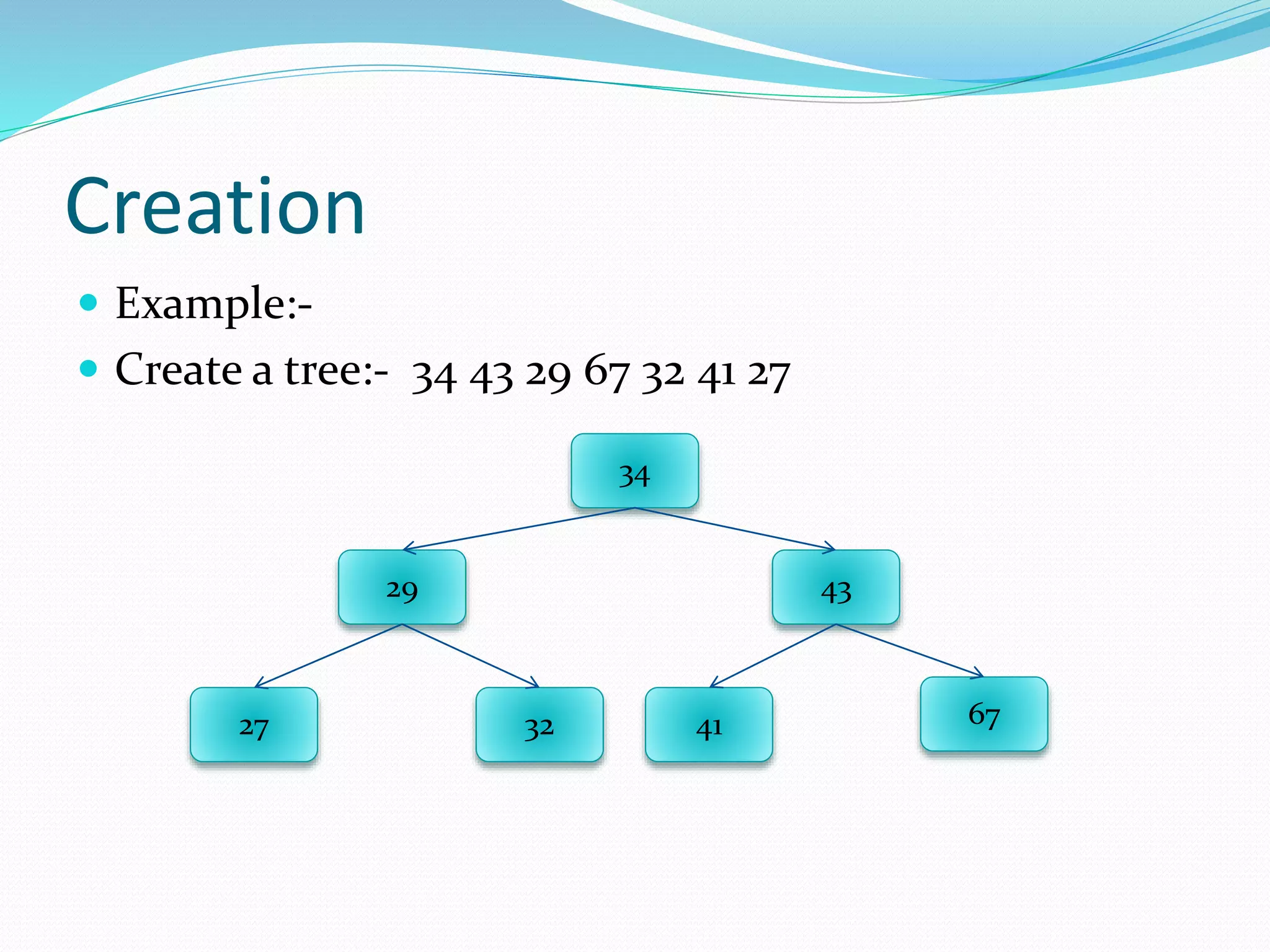
 Example:-
 Create a tree:- 34 43 29 67 32 41 27
34
29
6732
43
4127
Deletion
 Deletion consist of two operations, searching and
deletion. We can delete following nodes node:-
 Node has no children
 Node has one children
 Node has two children
 Replace node with it’s the inorder successor node
 Else if no right subtree exists replace with it’s left child
Deletion
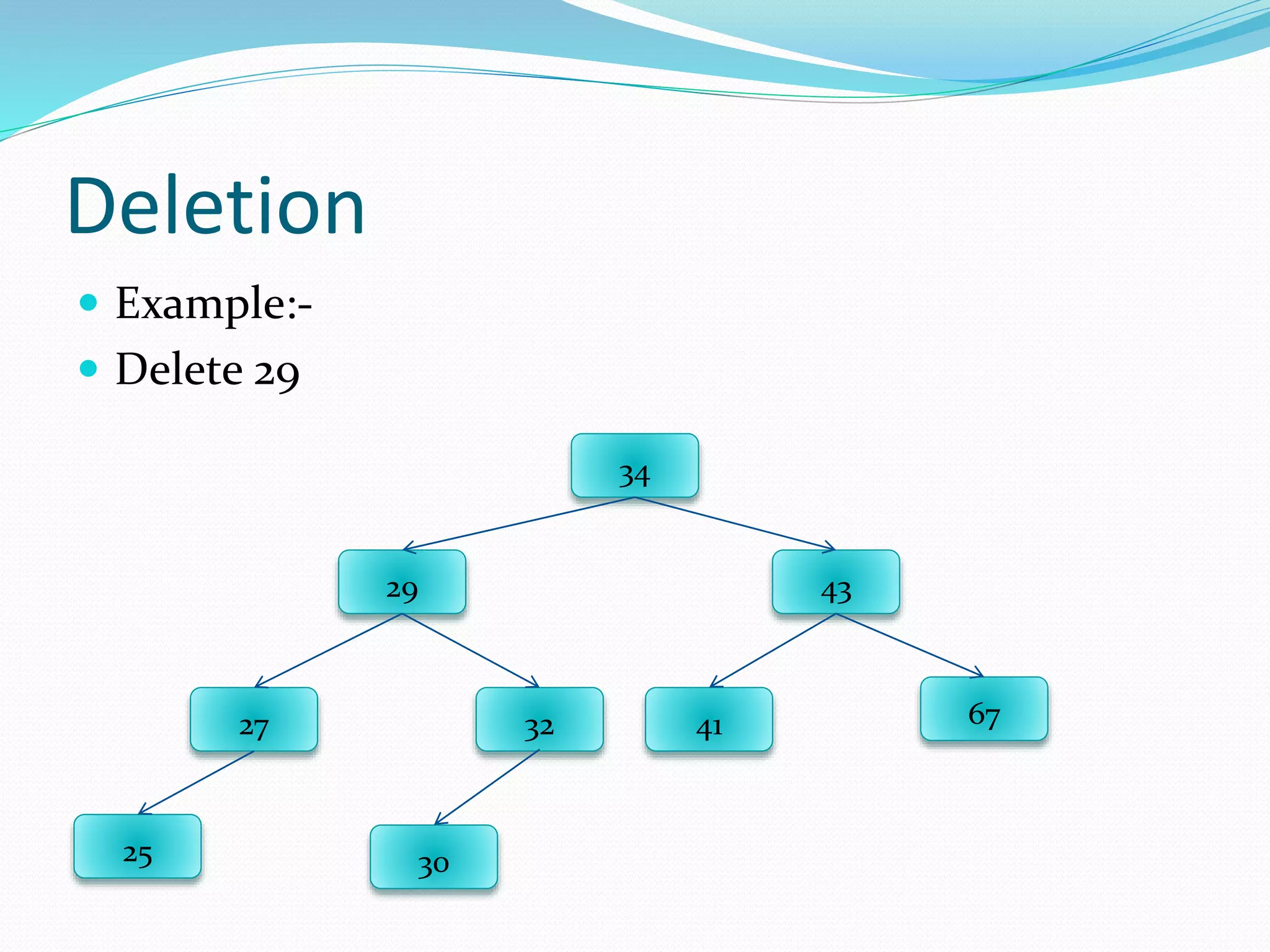
 Example:-
 Delete 29
34
29
6732
43
4127
3025
Deletion
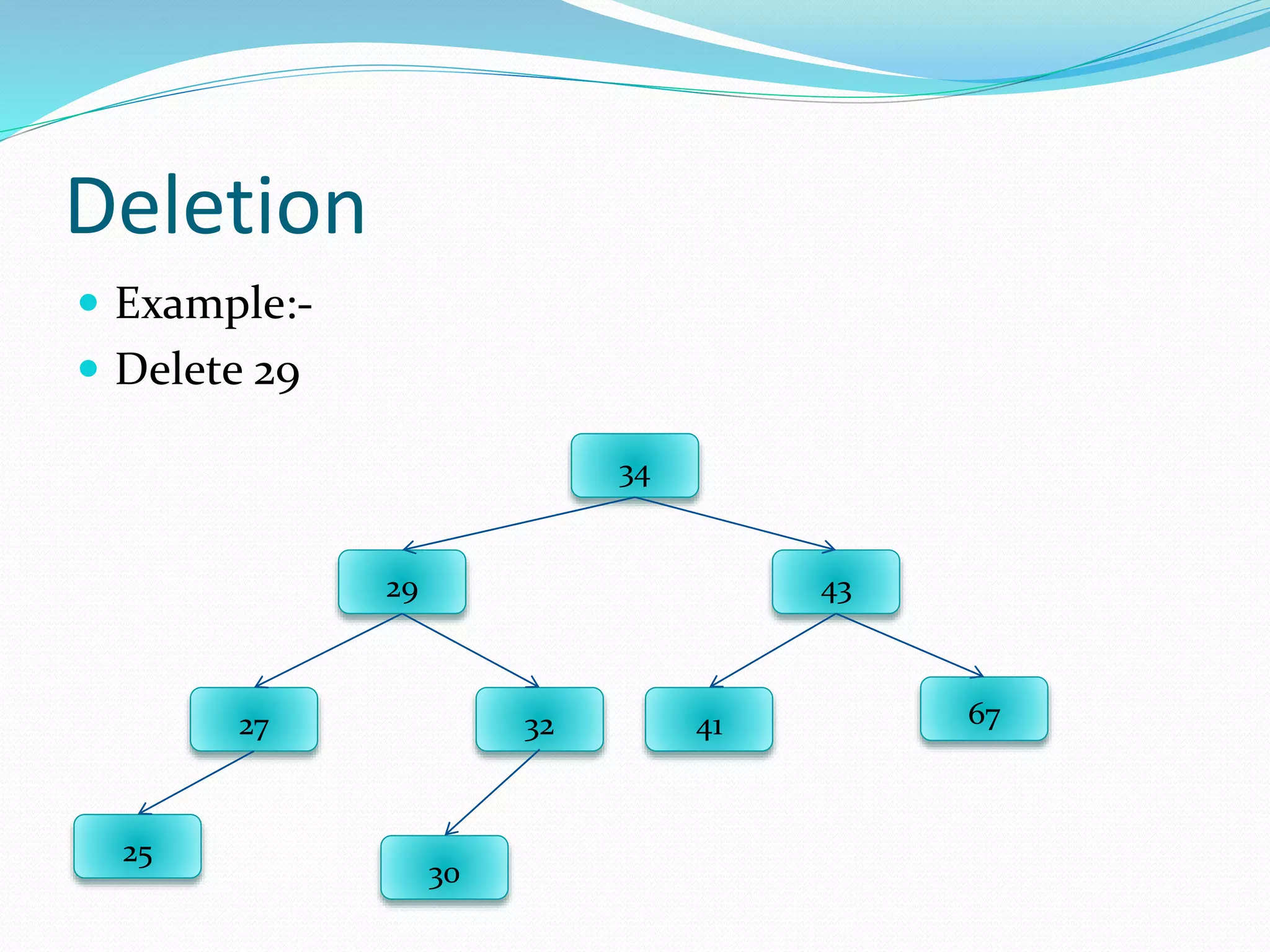
 Example:-
 Delete 29
34
29
6732
43
4127
30
25
Traversing in binary tree
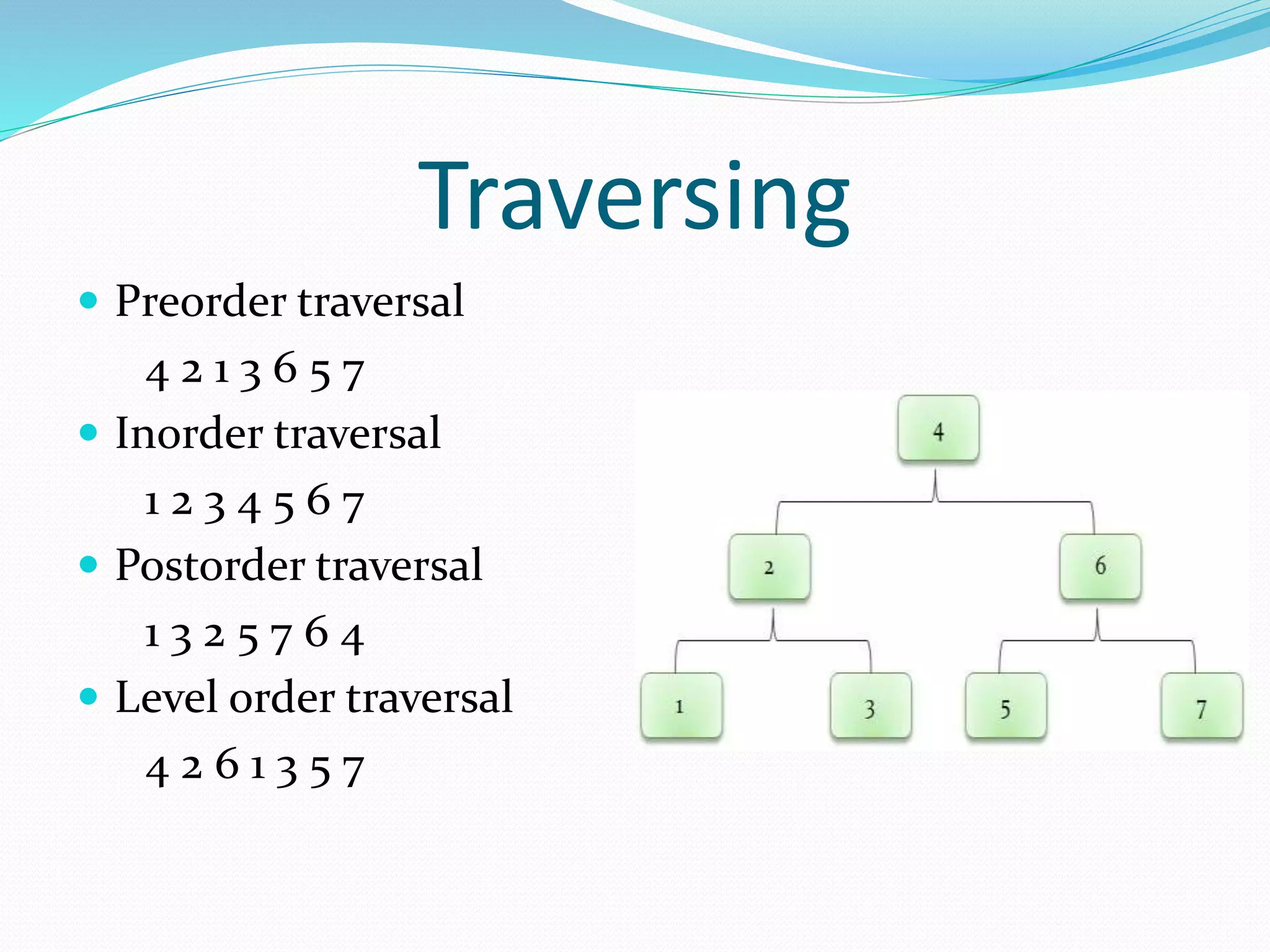
 Preorder traversal (NLR)
 Inorder traversal (LNR)
 Postorder traversal (LNR)
 Level order traversal
Traversing
 Preorder traversal
4 2 1 3 6 5 7
 Inorder traversal
1 2 3 4 5 6 7
 Postorder traversal
1 3 2 5 7 6 4
 Level order traversal
4 2 6 1 3 5 7
Any question?

data structure(tree operations)

  • 3.
    Group members  M.Waheed Khalid 12-cse-43  Syed Faisal Sabbir 12-cse-59  Saqlain Hussain Shah 12-cse-69  Saddaqat hussain 12-cse-44
  • 4.
    Trees  Non lineardata structure.  Hierarchical structure consist of nodes.  Used to represent data contain hierarchical relationship.
  • 5.
    Tree terminology  Node Child node  Parent node  Root  Leaf node Root
  • 6.
    Binary tree  Everynode has at most two children.  Either empty or partitioned into three disjoint subsets.  First is root.  Other two are left and right subtree and satisfies following conditions:-  All keys of left subtree of root are less than the key of root  All keys of right subtree of root are greater than the key of root  Left and right subtree of root are also binary trees
  • 7.
    Implementation  Binary treecan be implemented by using linked list  Each node will consist  Value stored in node  Pointer to the next node at the right  Pointer to the next node at the left
  • 8.
    Operation on binarytree  Searching  Insertion  Creation  Deletion  Traversing
  • 9.
    Searching  Start fromthe root node and move down in tree by comparing the desired key with key of node  If the desired key is equal to key in node then search is successful and take appropriate action  If desired key is less than key of node then move to left child.  If desired key is greater than key of node then move to right child.  If we reach NULL then search is unsuccessful i.e. desired key is not present..
  • 10.
  • 11.
    Insertion  Insertion anode consisting of two operations:-  First, the tree must be searched where the node is inserted  Second, the node is inserted into the tree on completion  Insert into an Empty tree:-  In this case, node is inserted into tree considered as root  Insert into a non-Empty tree:-  In this case, tree is searched and then insert node in the tree
  • 12.
  • 13.
    Creation  Binary treeis created by repeating insertion of nodes but insertion must maintain the order of tree. e.g.  First ,root is insert then next node.  If the value of new node is less than root then appended it as left leaf of node.  If the value of new node is greater than root then appended it as right leaf of node.
  • 14.
    Creation  Example:-  Createa tree:- 34 43 29 67 32 41 27 34 29 6732 43 4127
  • 15.
    Deletion  Deletion consistof two operations, searching and deletion. We can delete following nodes node:-  Node has no children  Node has one children  Node has two children  Replace node with it’s the inorder successor node  Else if no right subtree exists replace with it’s left child
  • 16.
    Deletion  Example:-  Delete29 34 29 6732 43 4127 3025
  • 17.
    Deletion  Example:-  Delete29 34 29 6732 43 4127 30 25
  • 18.
    Traversing in binarytree  Preorder traversal (NLR)  Inorder traversal (LNR)  Postorder traversal (LNR)  Level order traversal
  • 19.
    Traversing  Preorder traversal 42 1 3 6 5 7  Inorder traversal 1 2 3 4 5 6 7  Postorder traversal 1 3 2 5 7 6 4  Level order traversal 4 2 6 1 3 5 7
  • 20.