Zemblanity and Serendipity in Guardian and Trader Narratives
This document discusses different types of narrative structures and how they relate to concepts like serendipity, zemblanity, and rationality. It proposes that classical narratives tend to follow a structure of increasing and decreasing tension that resolves in the restoration of a sacred order, exhibiting a feeling of zemblanity. In contrast, non-classical narratives allow for continuously expanding possibilities and feelings of serendipity by not requiring a return to a fixed sacred order. The document encourages participants to work in pairs to create comic book stories that explore these concepts through examples of characters experiencing serendipitous or zemblanitous events.
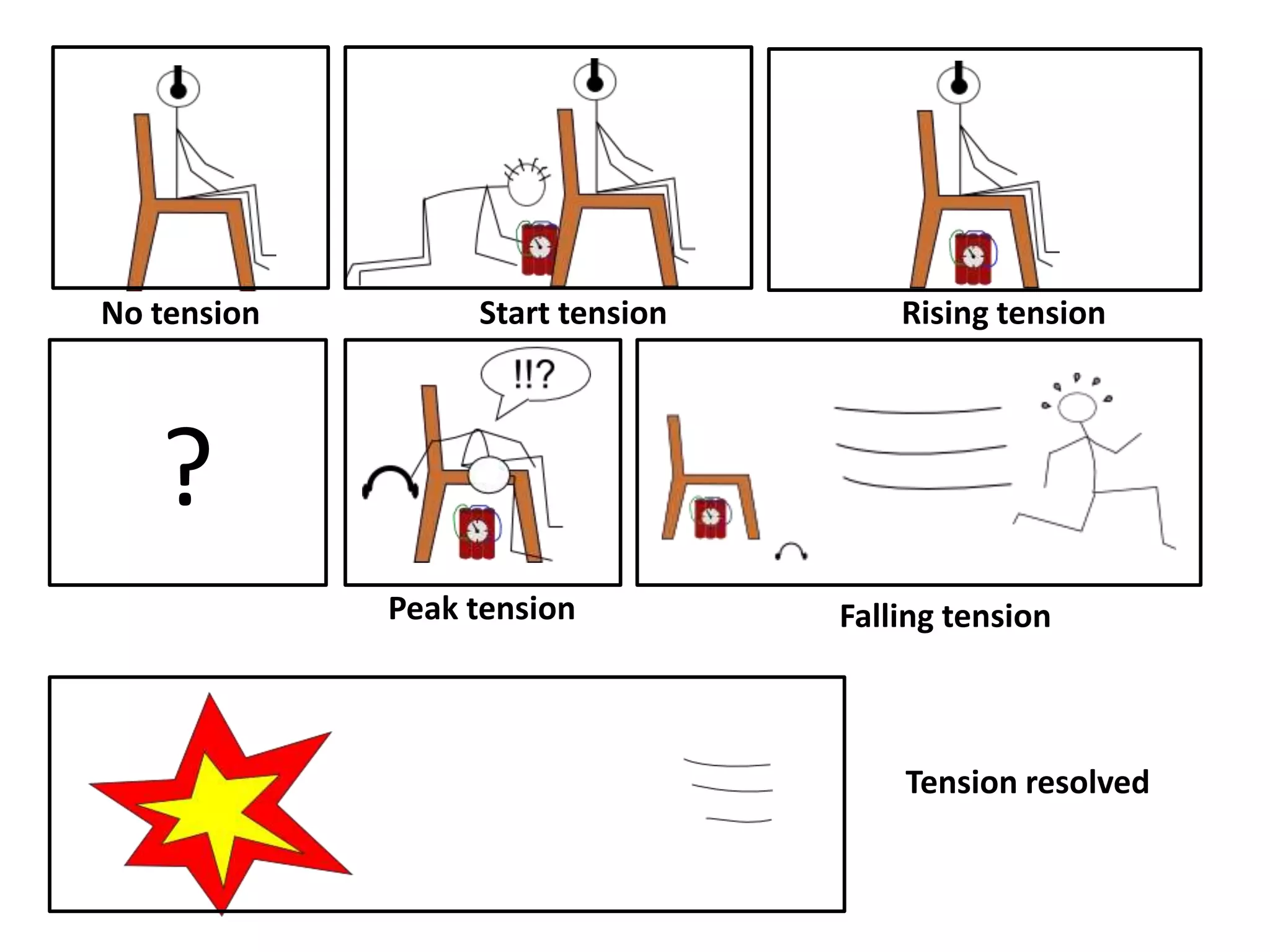
?
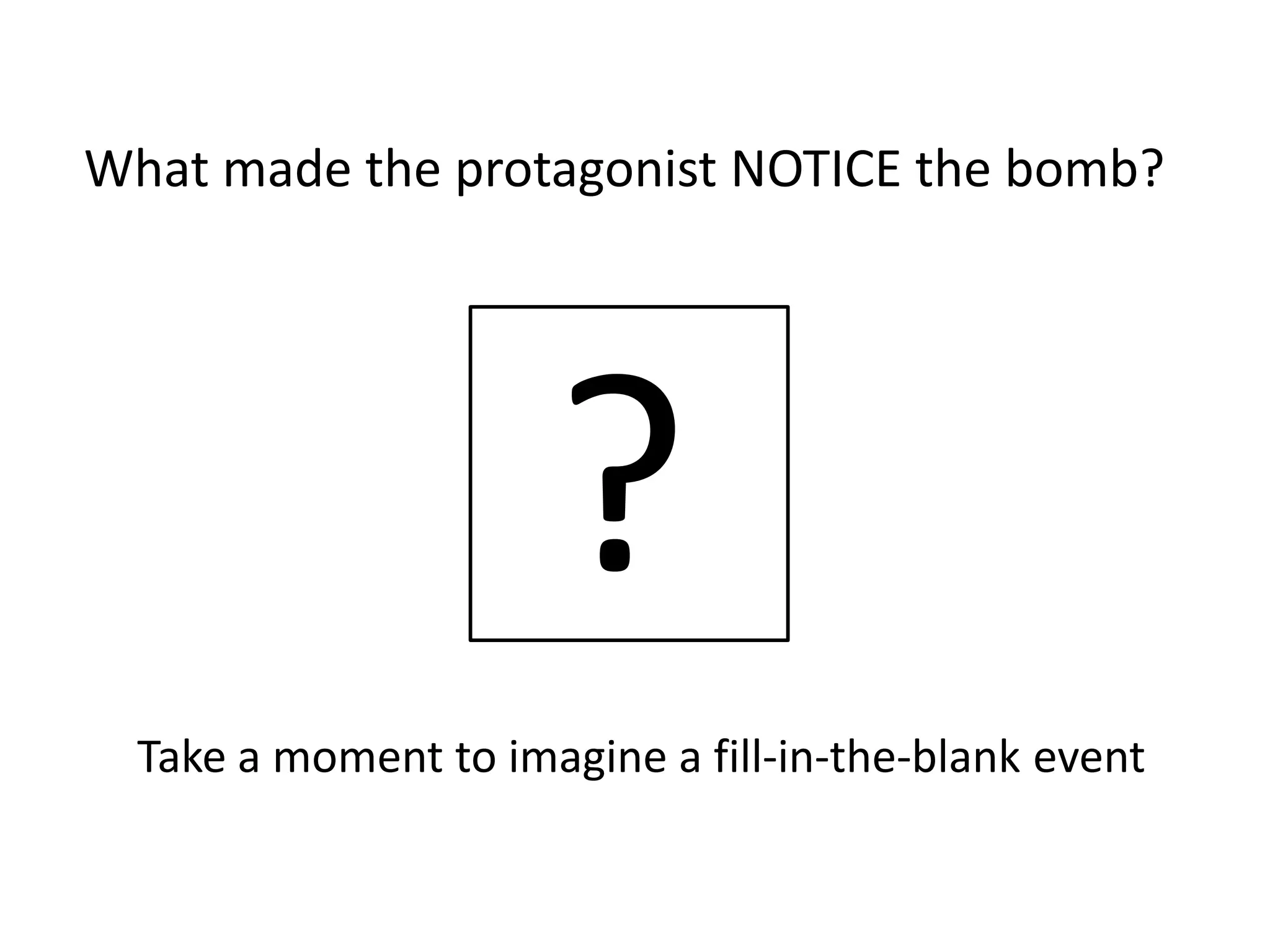
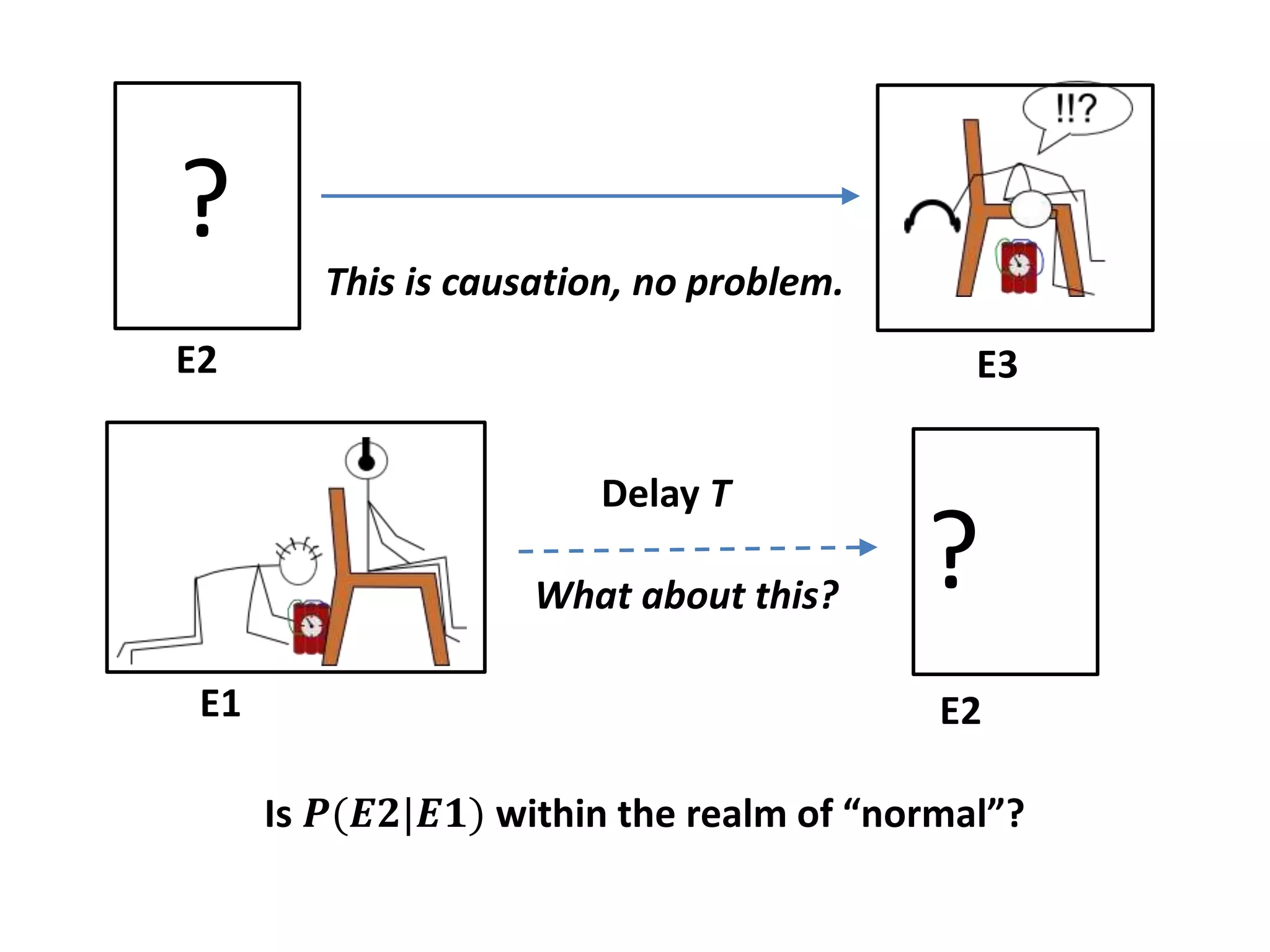
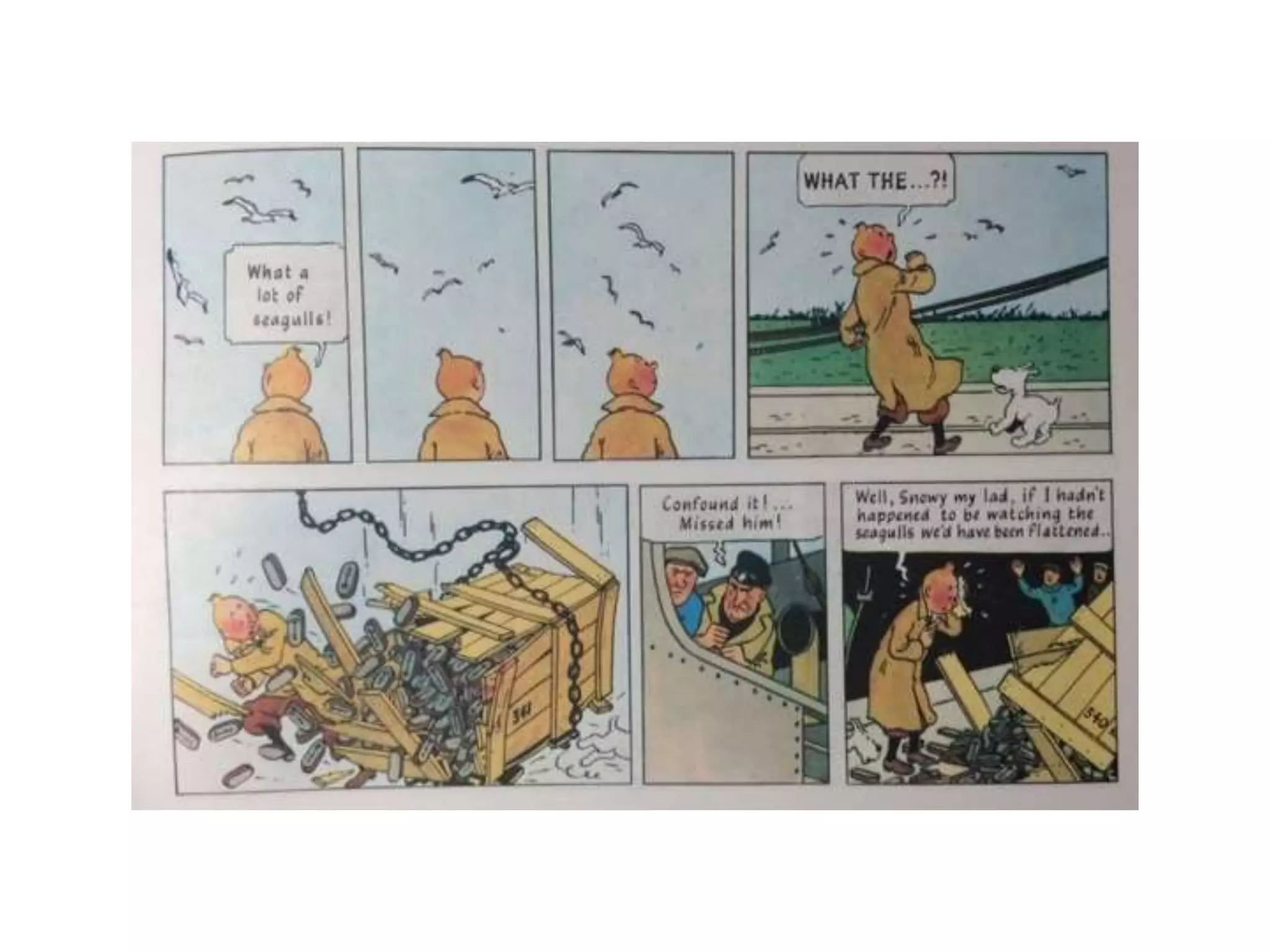
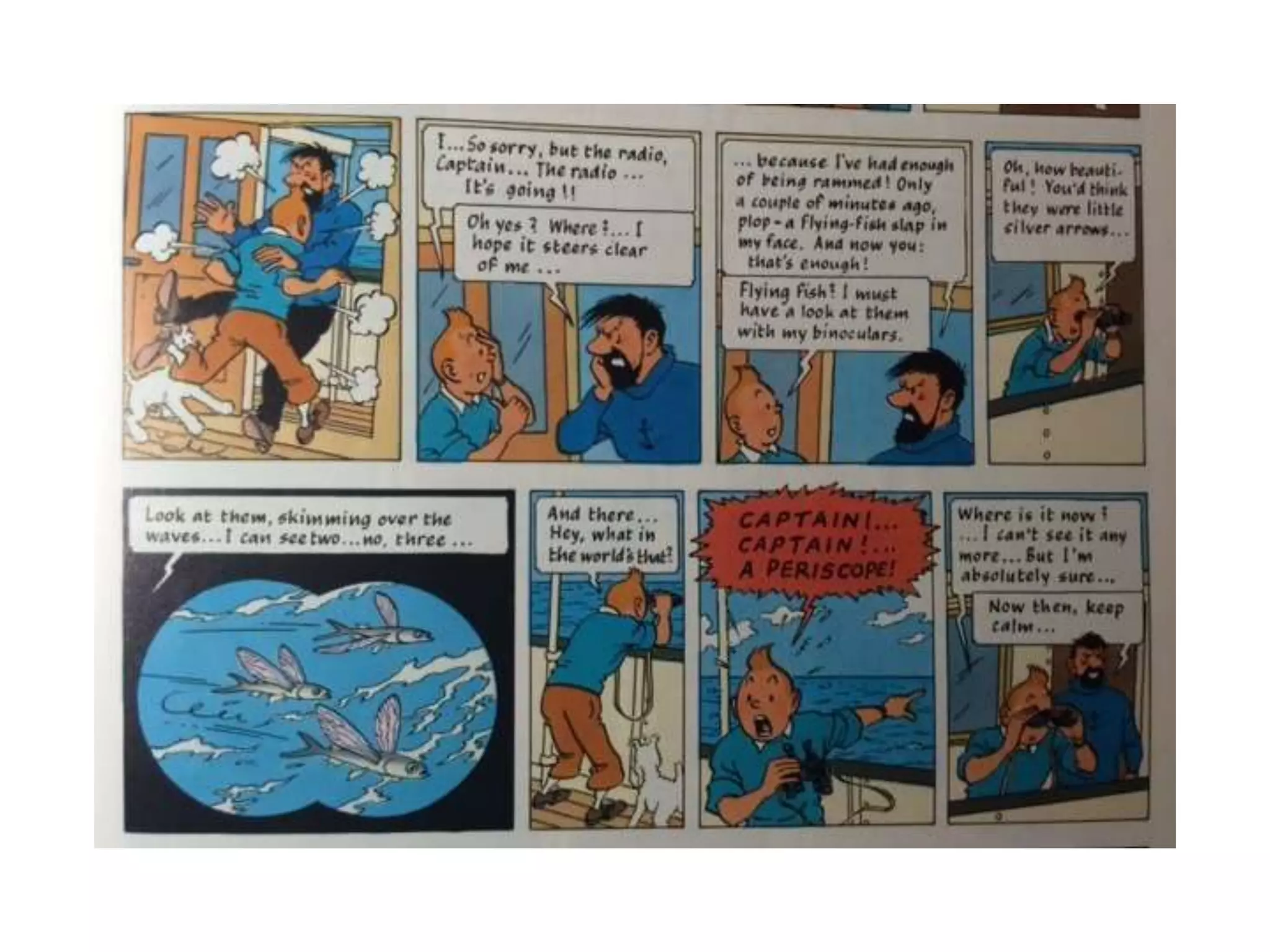
What made theprotagonist NOTICE the bomb?
Take a moment to imagine a fill-in-the-blank event
4.
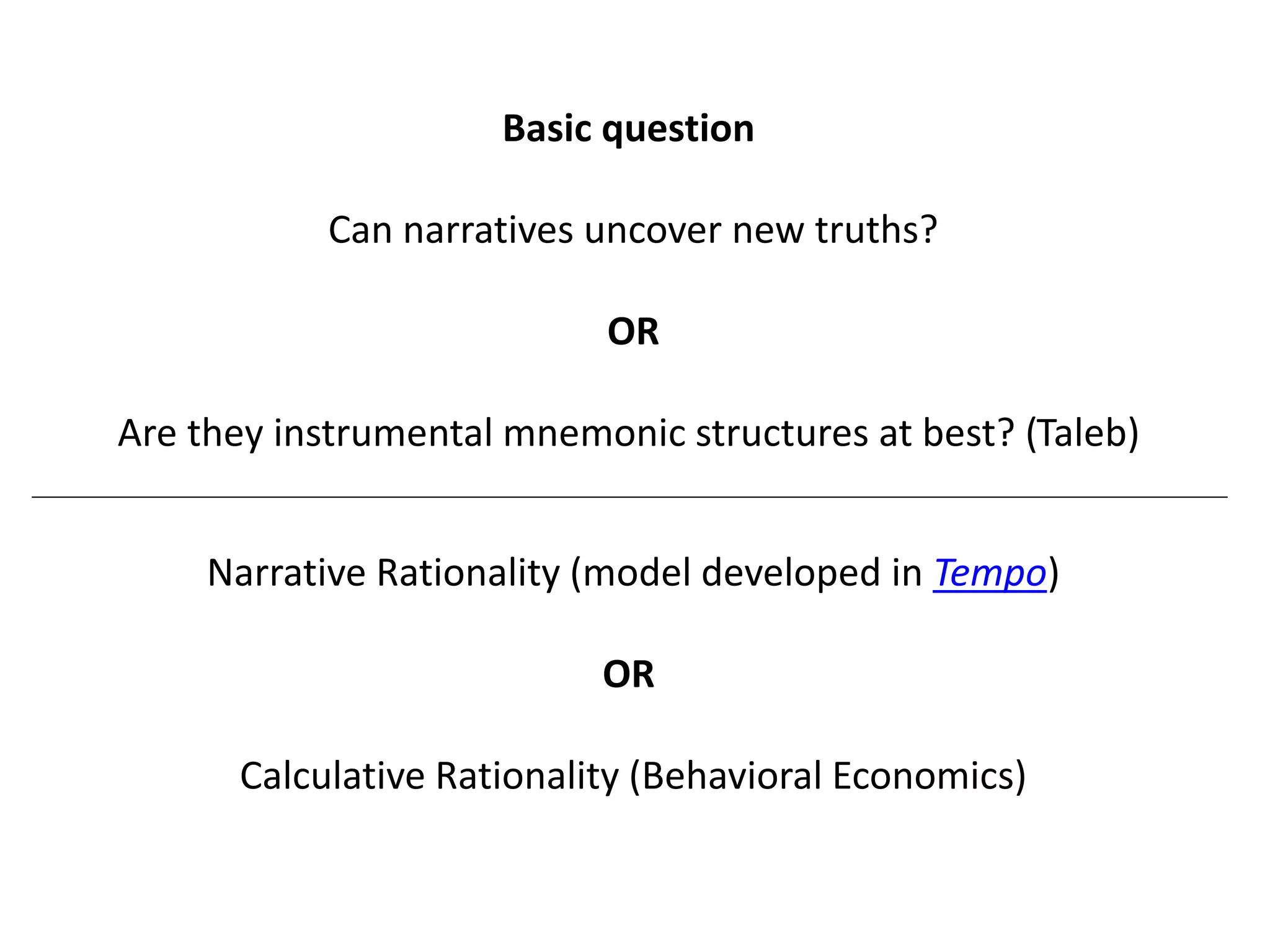
Basic question
Can narrativesuncover new truths?
OR
Are they instrumental mnemonic structures at best? (Taleb)
Narrative Rationality (model developed in Tempo)
OR
Calculative Rationality (Behavioral Economics)
5.
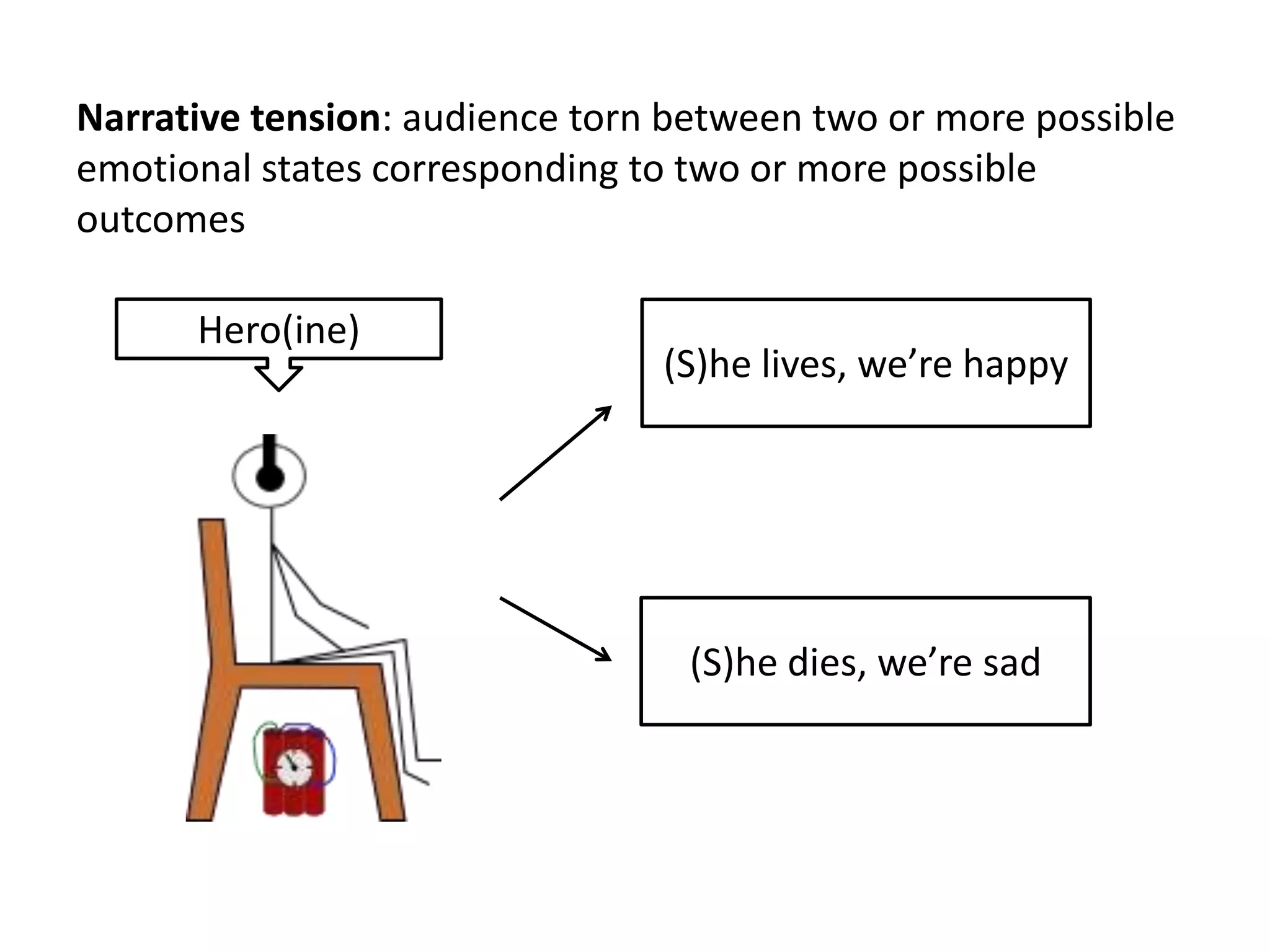
Narrative tension: audiencetorn between two or more possible
emotional states corresponding to two or more possible
outcomes
(S)he lives, we’re happy
(S)he dies, we’re sad
Hero(ine)
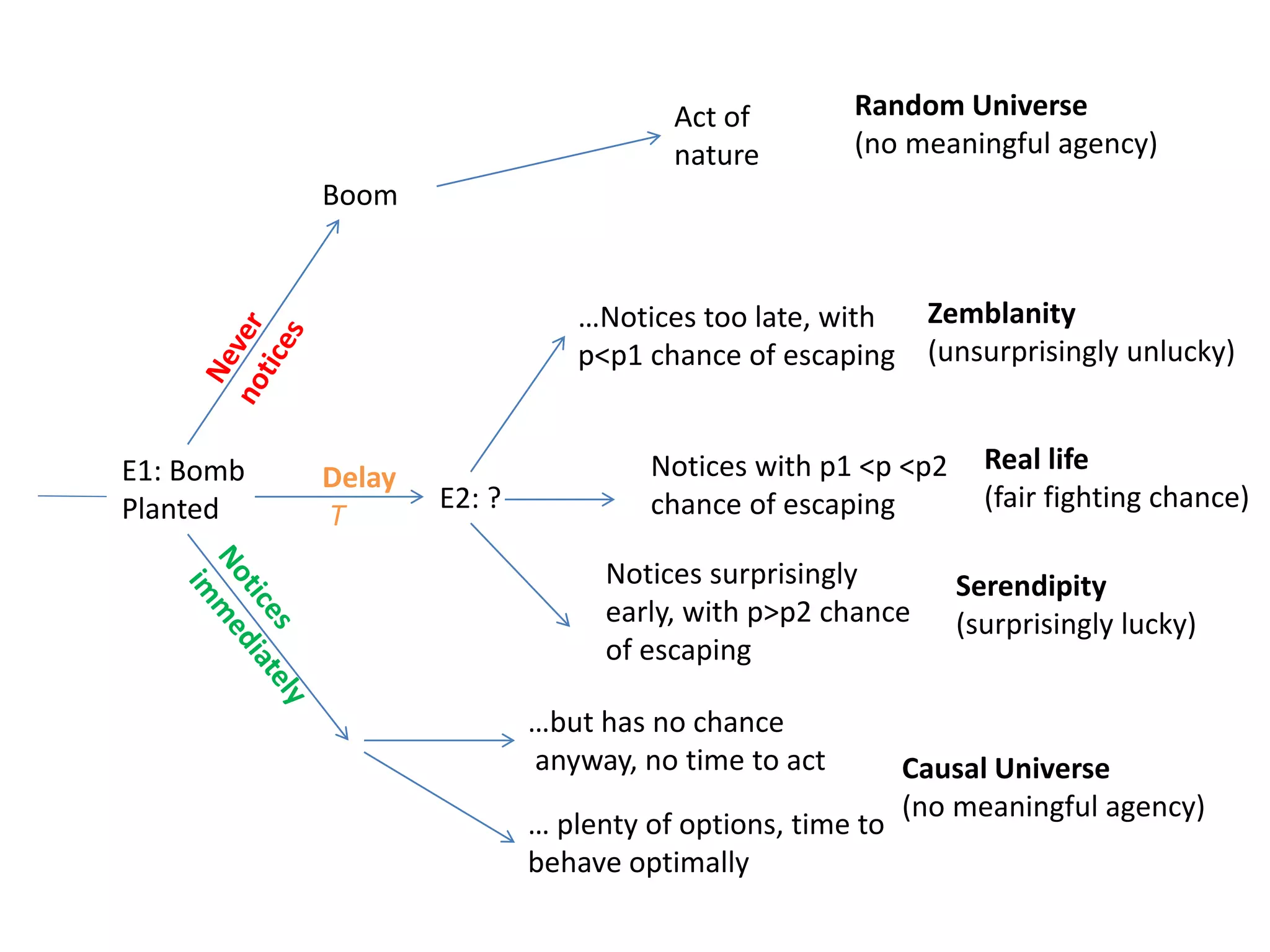
Notices with p1<p <p2
chance of escaping
Delay
T
Boom
…but has no chance
anyway, no time to act
Notices surprisingly
early, with p>p2 chance
of escaping
… plenty of options, time to
behave optimally
…Notices too late, with
p<p1 chance of escaping
Act of
nature
E1: Bomb
Planted E2: ?
Random Universe
(no meaningful agency)
Causal Universe
(no meaningful agency)
Real life
(fair fighting chance)
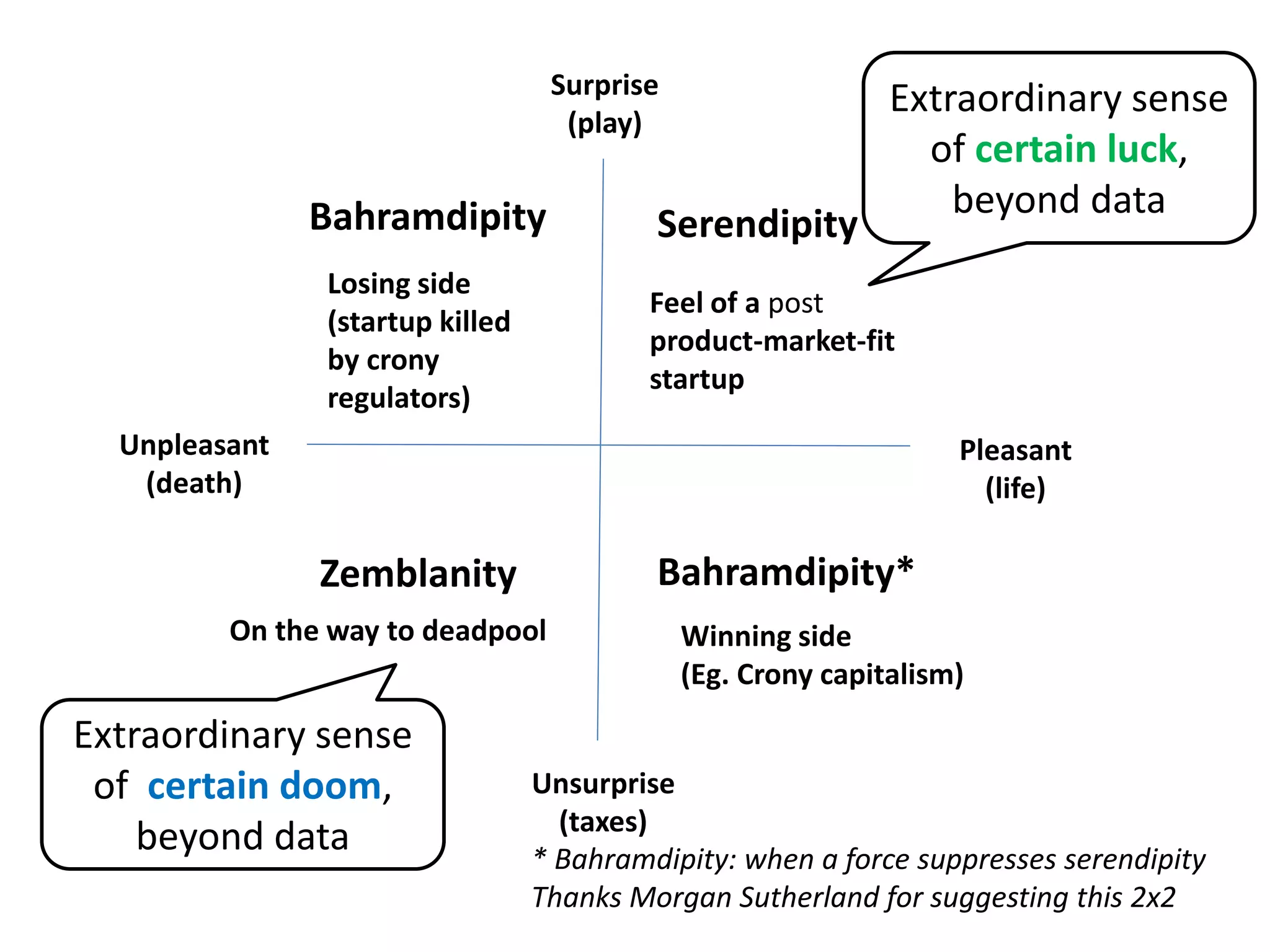
Serendipity
(surprisingly lucky)
Zemblanity
(unsurprisingly unlucky)
8.
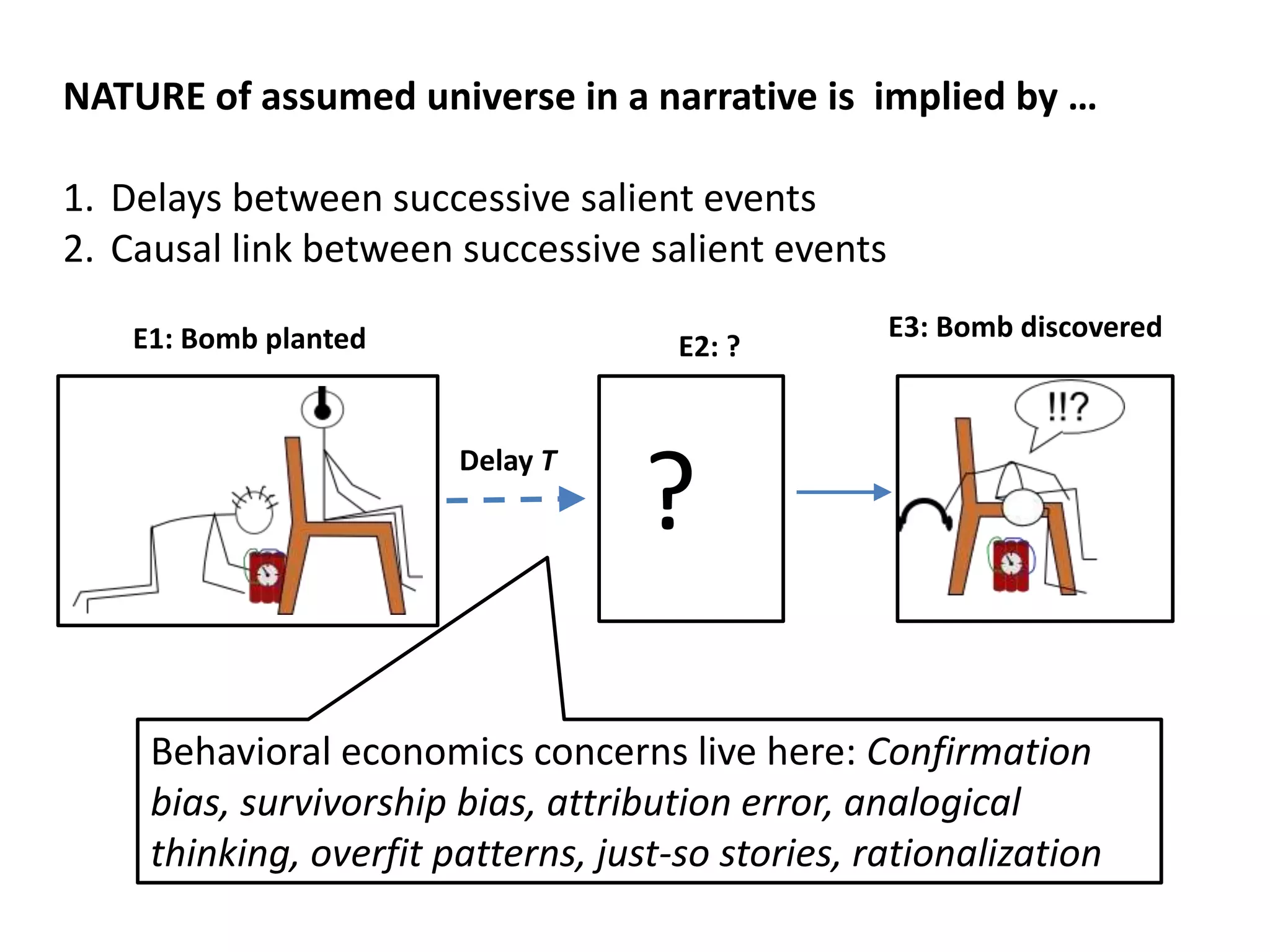
NATURE of assumeduniverse in a narrative is implied by …
1. Delays between successive salient events
2. Causal link between successive salient events
Delay T
E1: Bomb planted E2: ?
?
Behavioral economics concerns live here: Confirmation
bias, survivorship bias, attribution error, analogical
thinking, overfit patterns, just-so stories, rationalization
E3: Bomb discovered
9.
Delay T
E1 E2
Thisis causation, no problem.
What about this?
Is 𝑷(𝑬𝟐|𝑬𝟏) within the realm of “normal”?
E2
?
E3
?
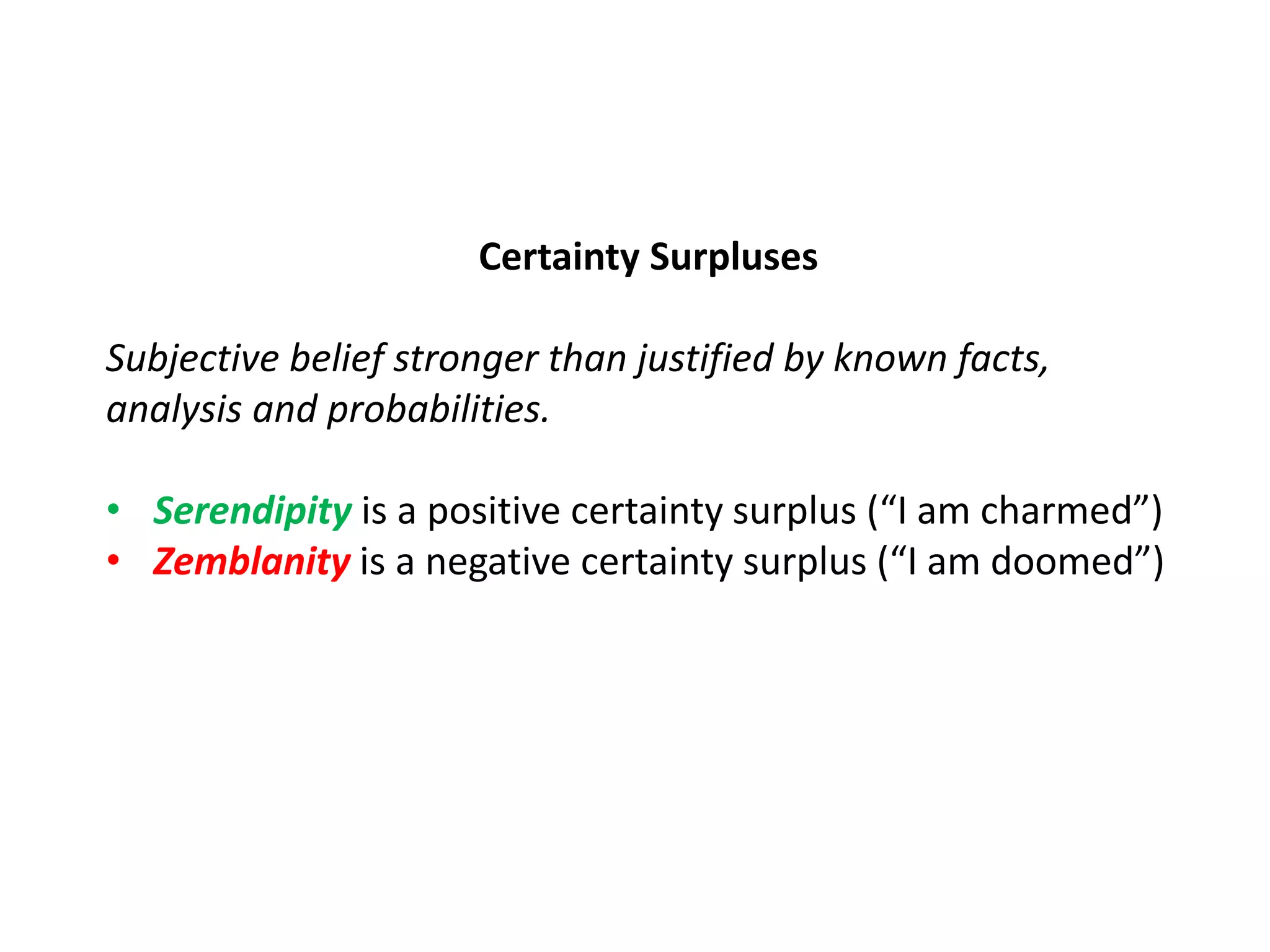
Certainty Surpluses
Subjective beliefstronger than justified by known facts,
analysis and probabilities.
• Serendipity is a positive certainty surplus (“I am charmed”)
• Zemblanity is a negative certainty surplus (“I am doomed”)
12.
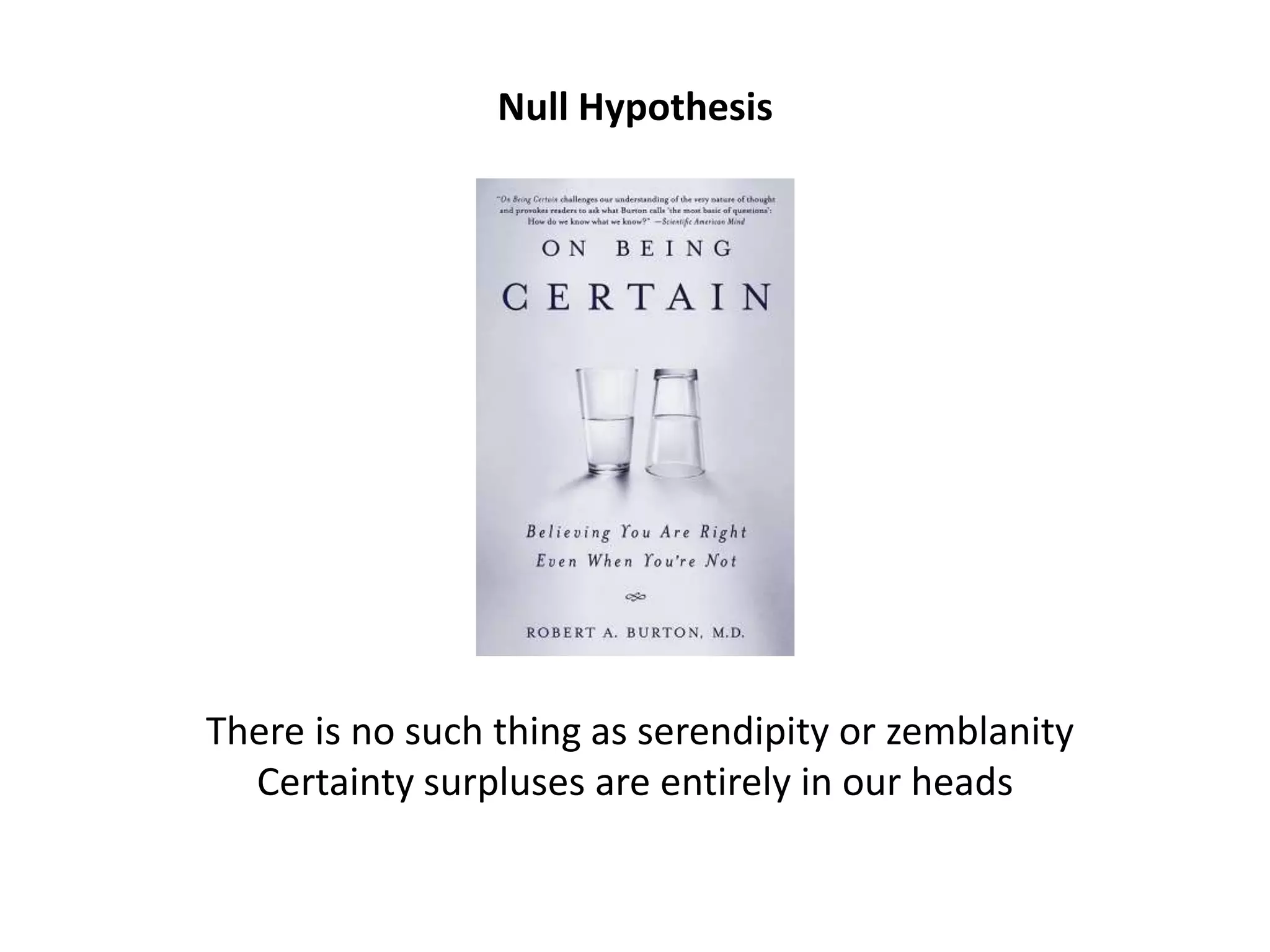
Null Hypothesis
There isno such thing as serendipity or zemblanity
Certainty surpluses are entirely in our heads
13.
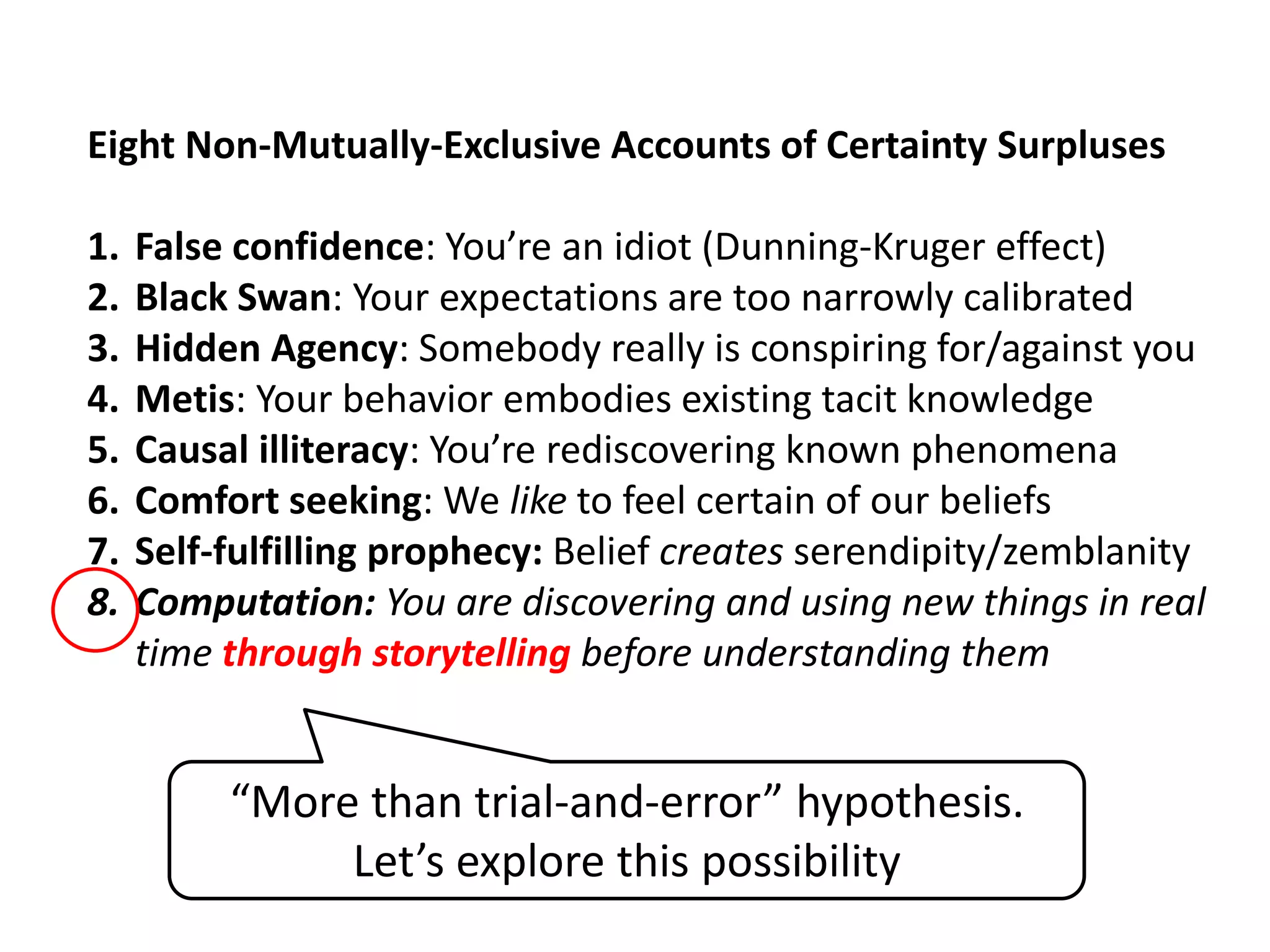
Eight Non-Mutually-Exclusive Accountsof Certainty Surpluses
1. False confidence: You’re an idiot (Dunning-Kruger effect)
2. Black Swan: Your expectations are too narrowly calibrated
3. Hidden Agency: Somebody really is conspiring for/against you
4. Metis: Your behavior embodies existing tacit knowledge
5. Causal illiteracy: You’re rediscovering known phenomena
6. Comfort seeking: We like to feel certain of our beliefs
7. Self-fulfilling prophecy: Belief creates serendipity/zemblanity
8. Computation: You are discovering and using new things in real
time through storytelling before understanding them
“More than trial-and-error” hypothesis.
Let’s explore this possibility
14.
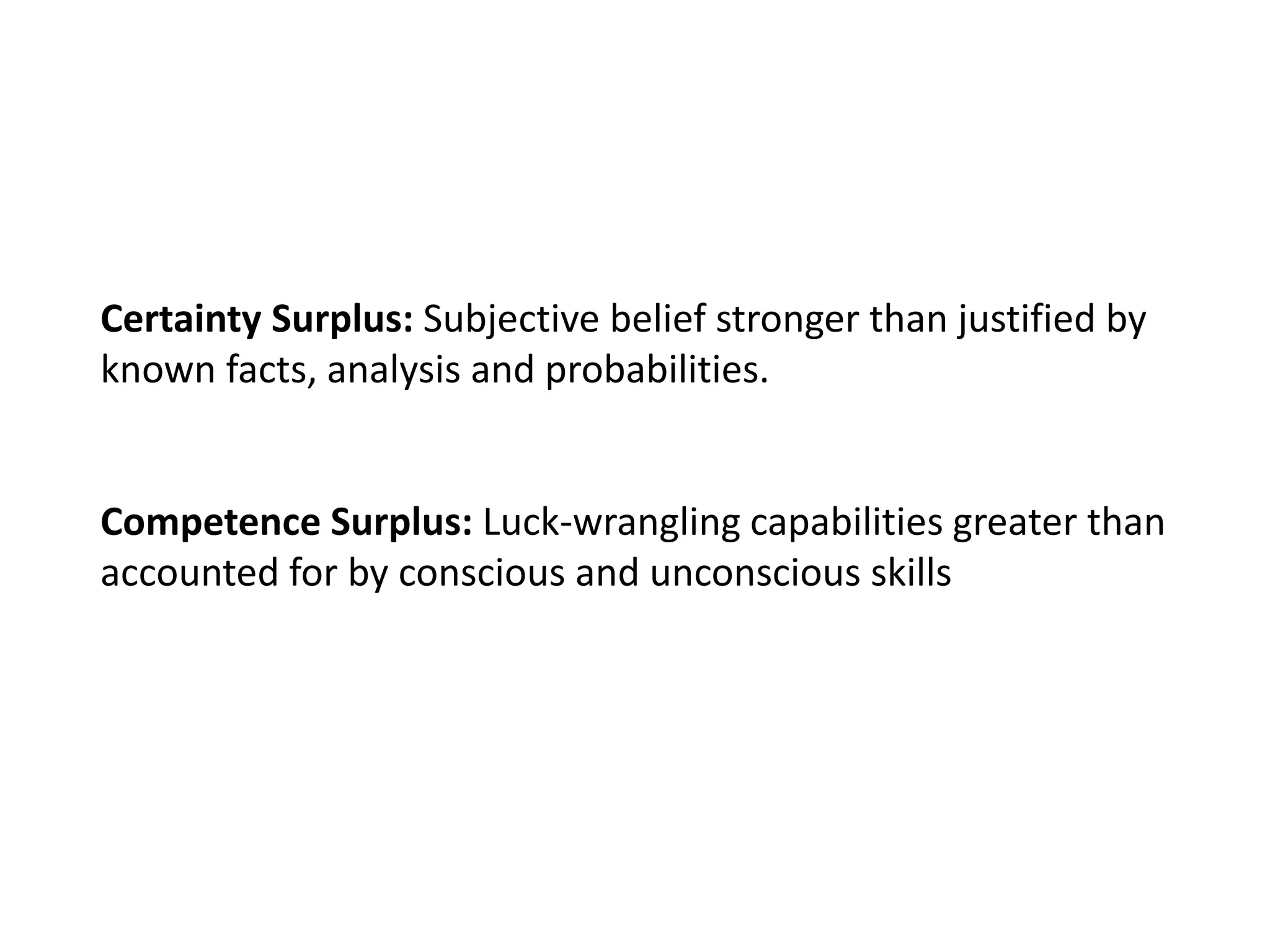
Certainty Surplus: Subjectivebelief stronger than justified by
known facts, analysis and probabilities.
Competence Surplus: Luck-wrangling capabilities greater than
accounted for by conscious and unconscious skills
15.
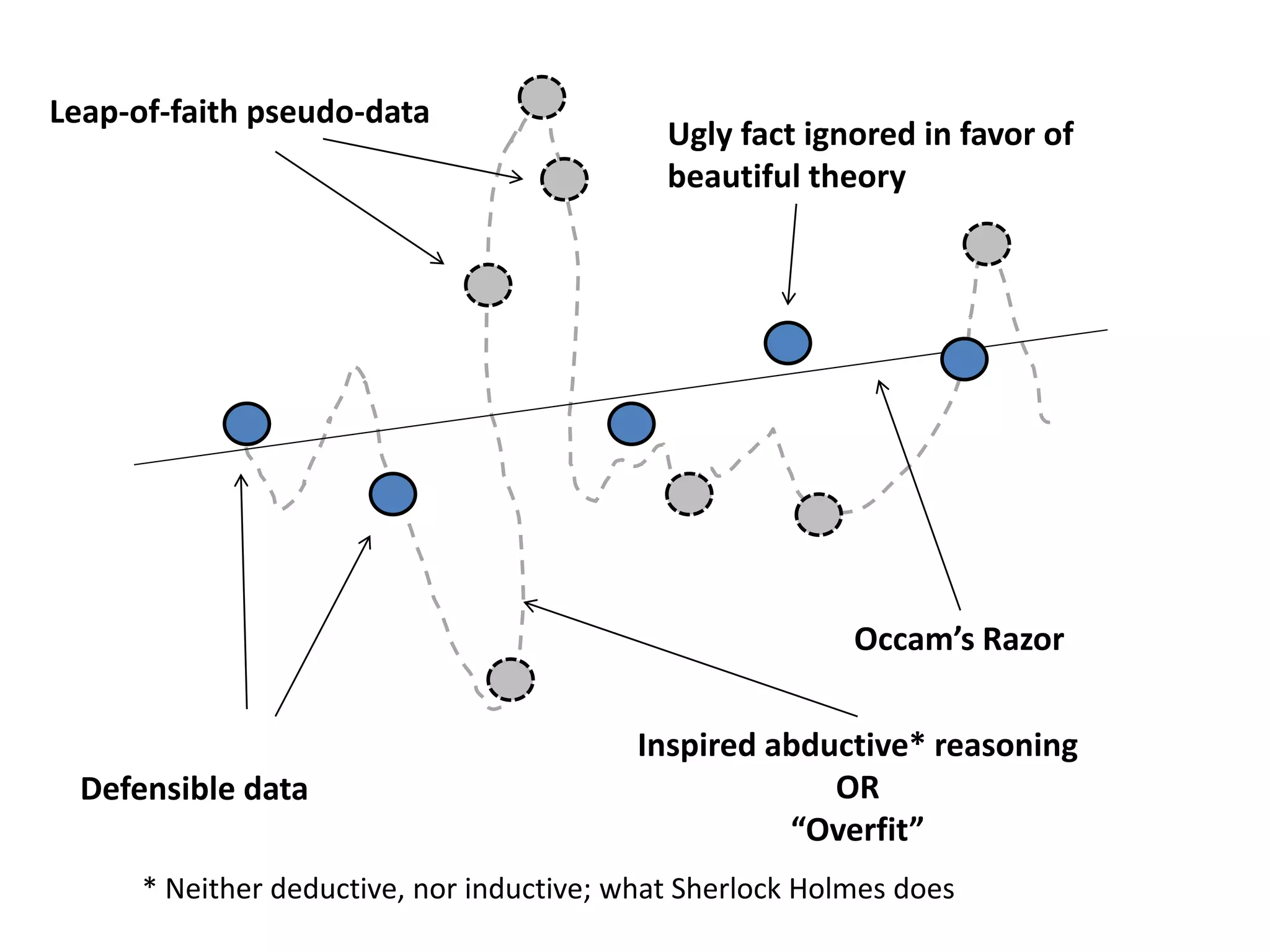
Defensible data
Leap-of-faith pseudo-data
Occam’sRazor
Inspired abductive* reasoning
OR
“Overfit”
Ugly fact ignored in favor of
beautiful theory
* Neither deductive, nor inductive; what Sherlock Holmes does
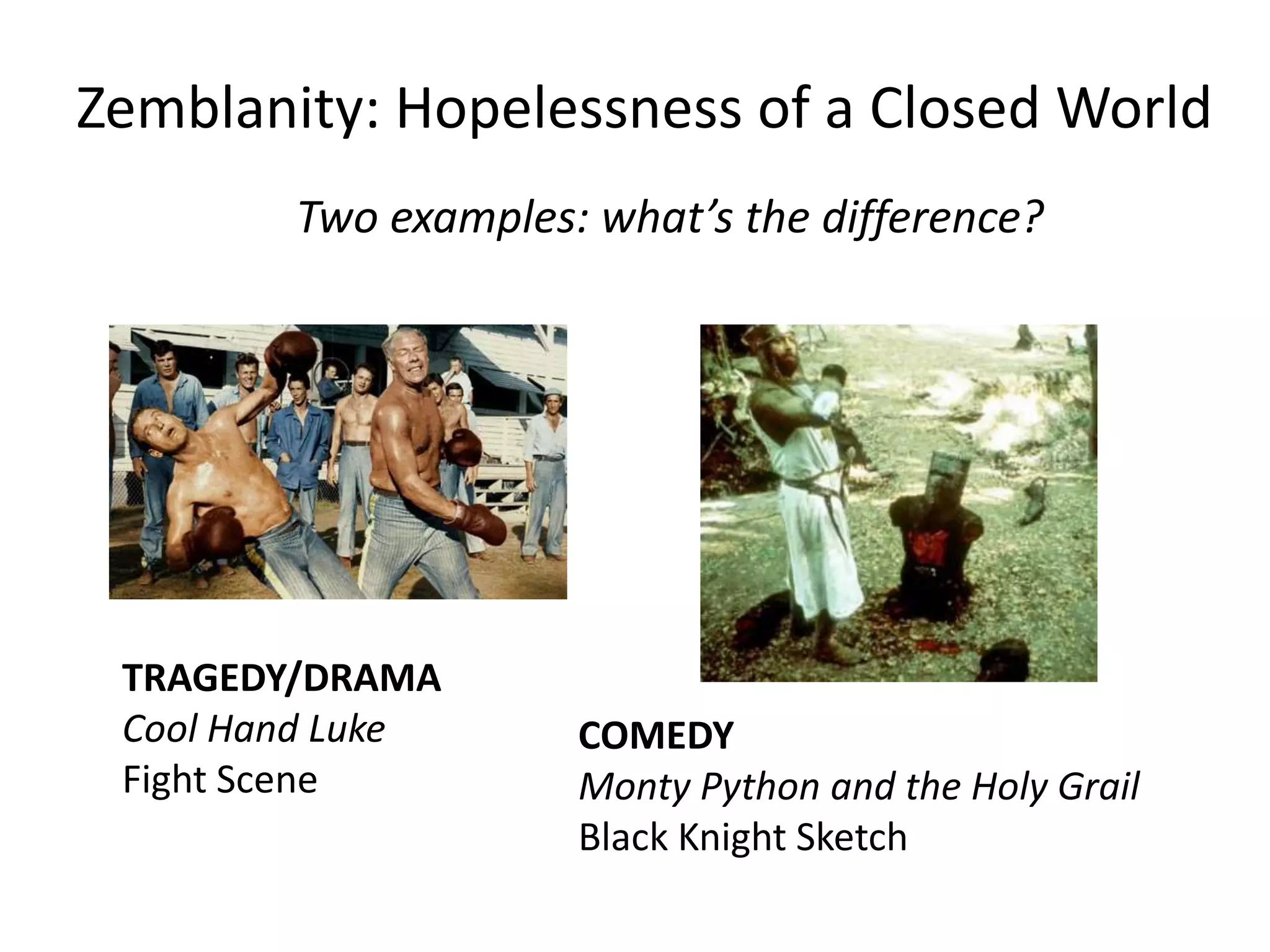
COMEDY
Monty Python andthe Holy Grail
Black Knight Sketch
TRAGEDY/DRAMA
Cool Hand Luke
Fight Scene
Zemblanity: Hopelessness of a Closed World
Two examples: what’s the difference?
21.
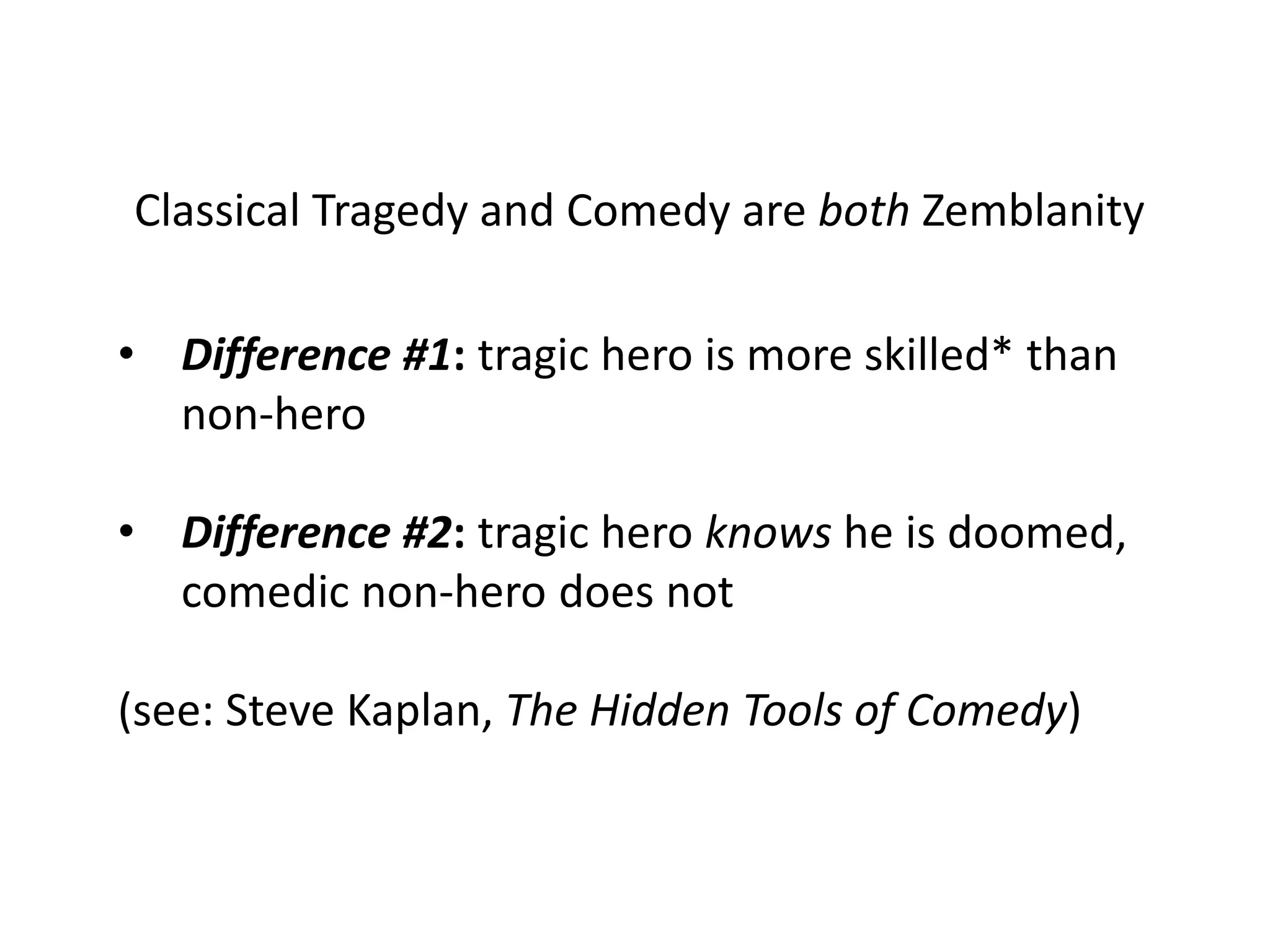
Classical Tragedy andComedy are both Zemblanity
• Difference #1: tragic hero is more skilled* than
non-hero
• Difference #2: tragic hero knows he is doomed,
comedic non-hero does not
(see: Steve Kaplan, The Hidden Tools of Comedy)
22.
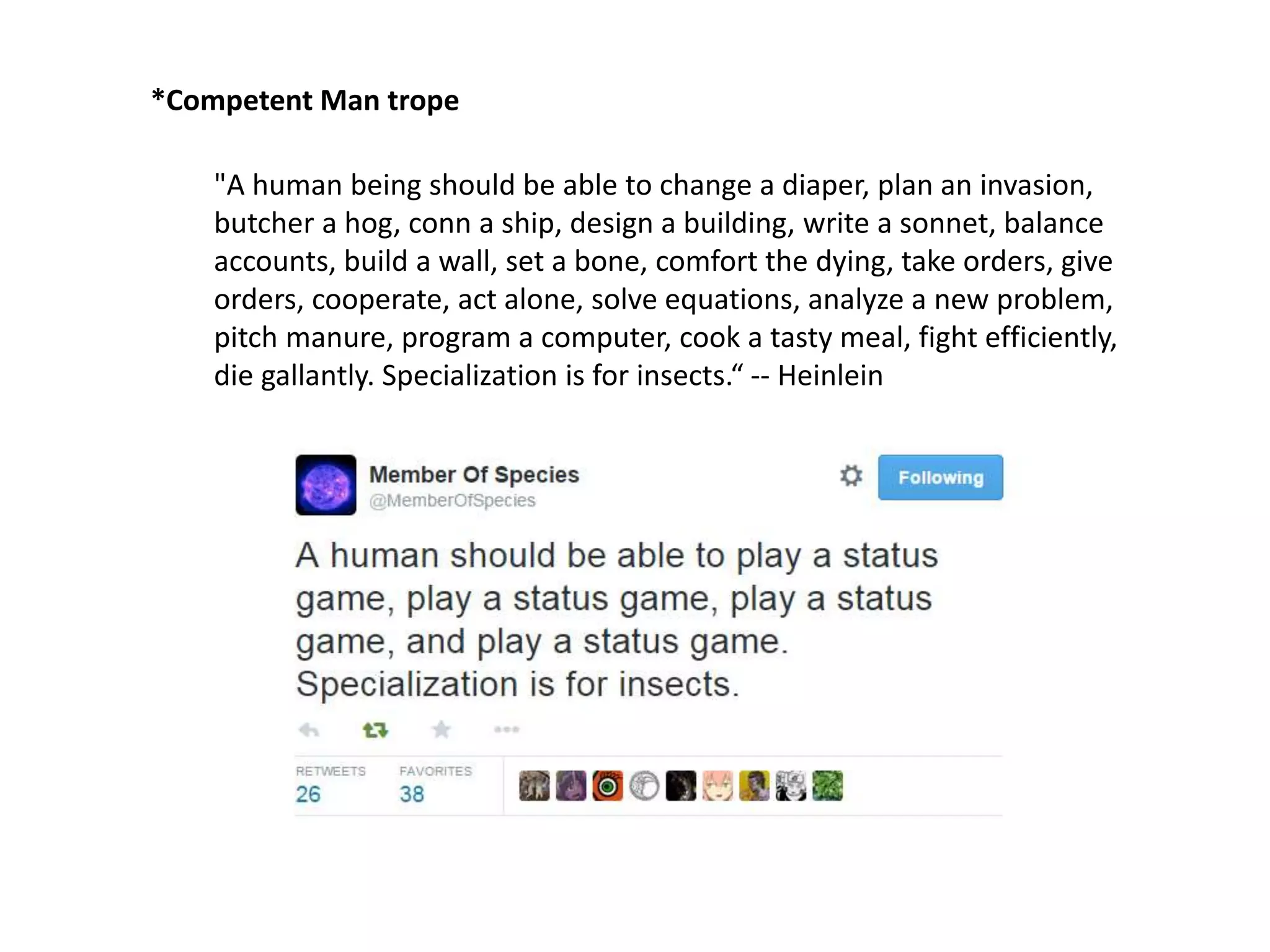
"A human beingshould be able to change a diaper, plan an invasion,
butcher a hog, conn a ship, design a building, write a sonnet, balance
accounts, build a wall, set a bone, comfort the dying, take orders, give
orders, cooperate, act alone, solve equations, analyze a new problem,
pitch manure, program a computer, cook a tasty meal, fight efficiently,
die gallantly. Specialization is for insects.“ -- Heinlein
*Competent Man trope
23.
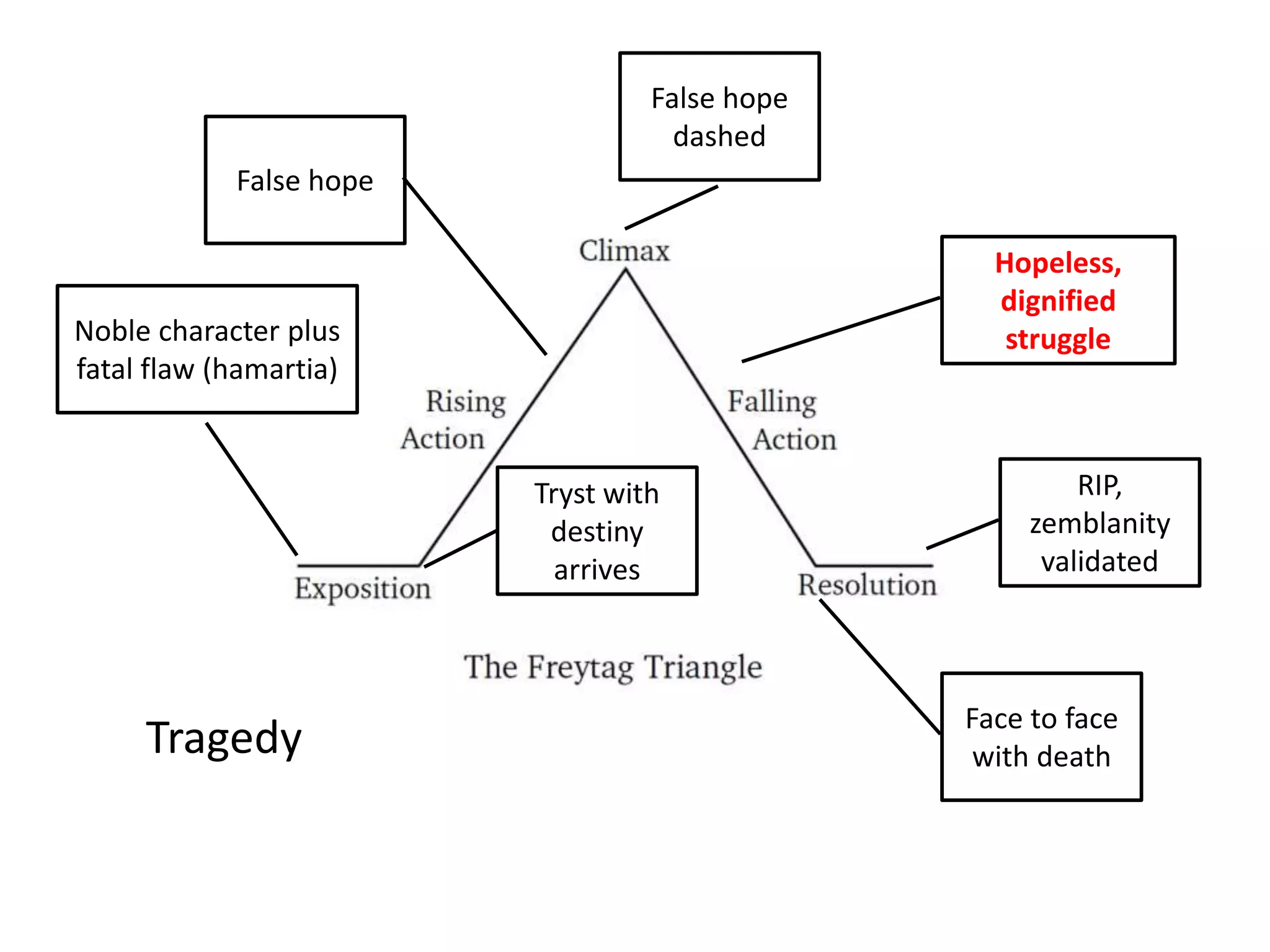
Noble character plus
fatalflaw (hamartia)
Tryst with
destiny
arrives
False hope
False hope
dashed
Face to face
with death
RIP,
zemblanity
validated
Tragedy
Hopeless,
dignified
struggle
24.
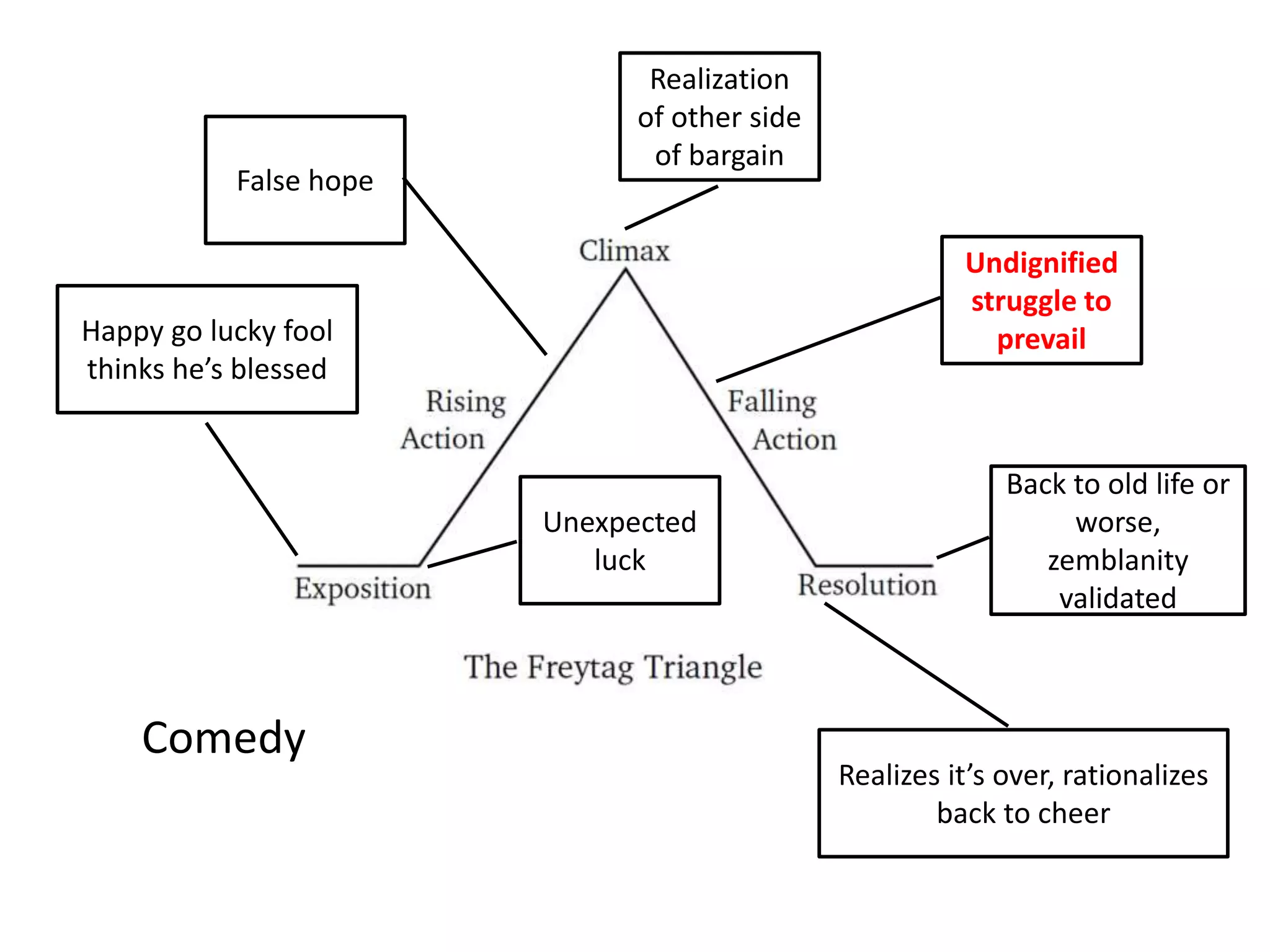
Happy go luckyfool
thinks he’s blessed
Unexpected
luck
False hope
Realization
of other side
of bargain
Undignified
struggle to
prevail
Realizes it’s over, rationalizes
back to cheer
Back to old life or
worse,
zemblanity
validated
Comedy
25.
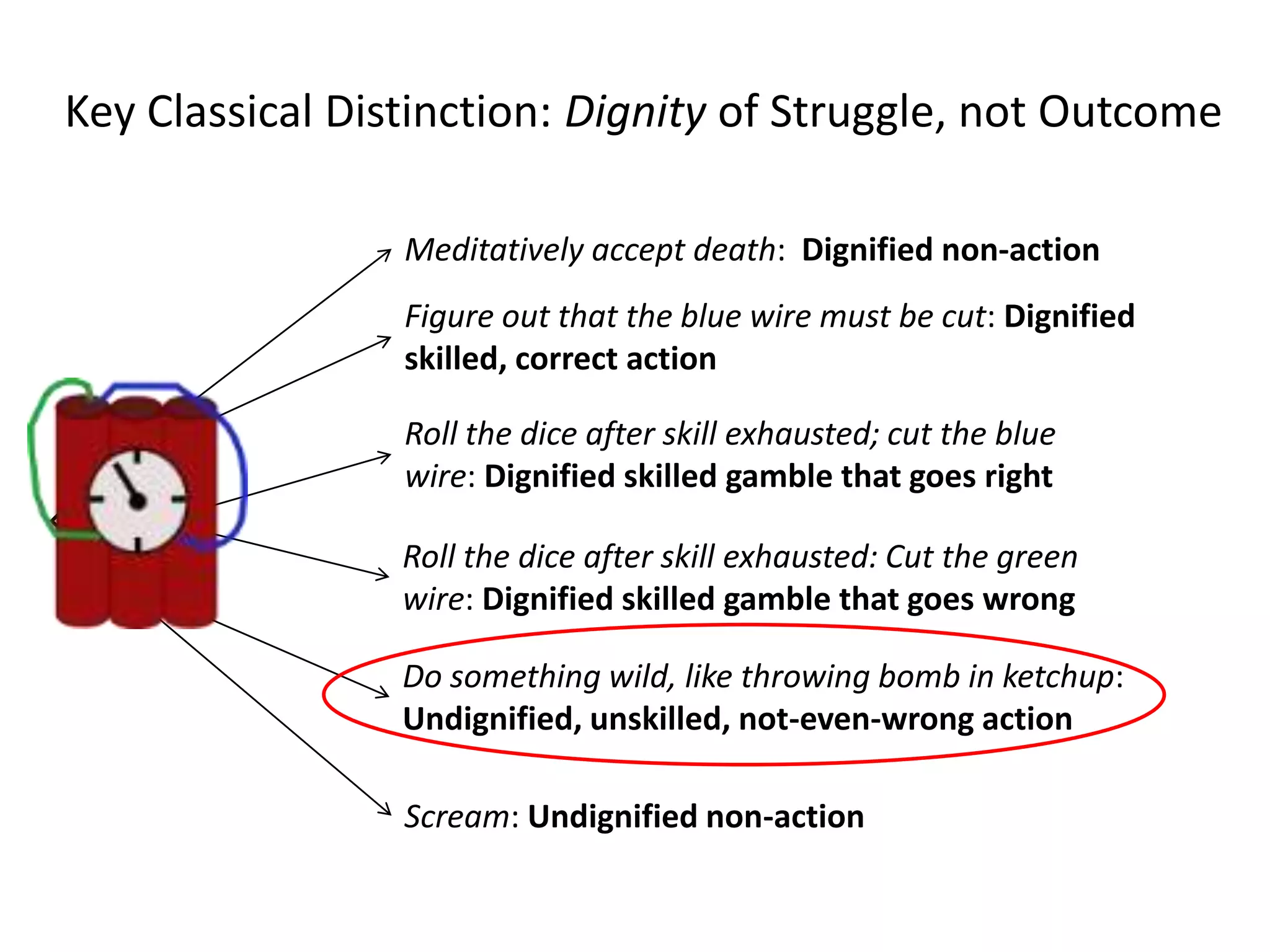
Key Classical Distinction:Dignity of Struggle, not Outcome
Roll the dice after skill exhausted: Cut the green
wire: Dignified skilled gamble that goes wrong
Do something wild, like throwing bomb in ketchup:
Undignified, unskilled, not-even-wrong action
Roll the dice after skill exhausted; cut the blue
wire: Dignified skilled gamble that goes right
Meditatively accept death: Dignified non-action
Scream: Undignified non-action
Figure out that the blue wire must be cut: Dignified
skilled, correct action
26.
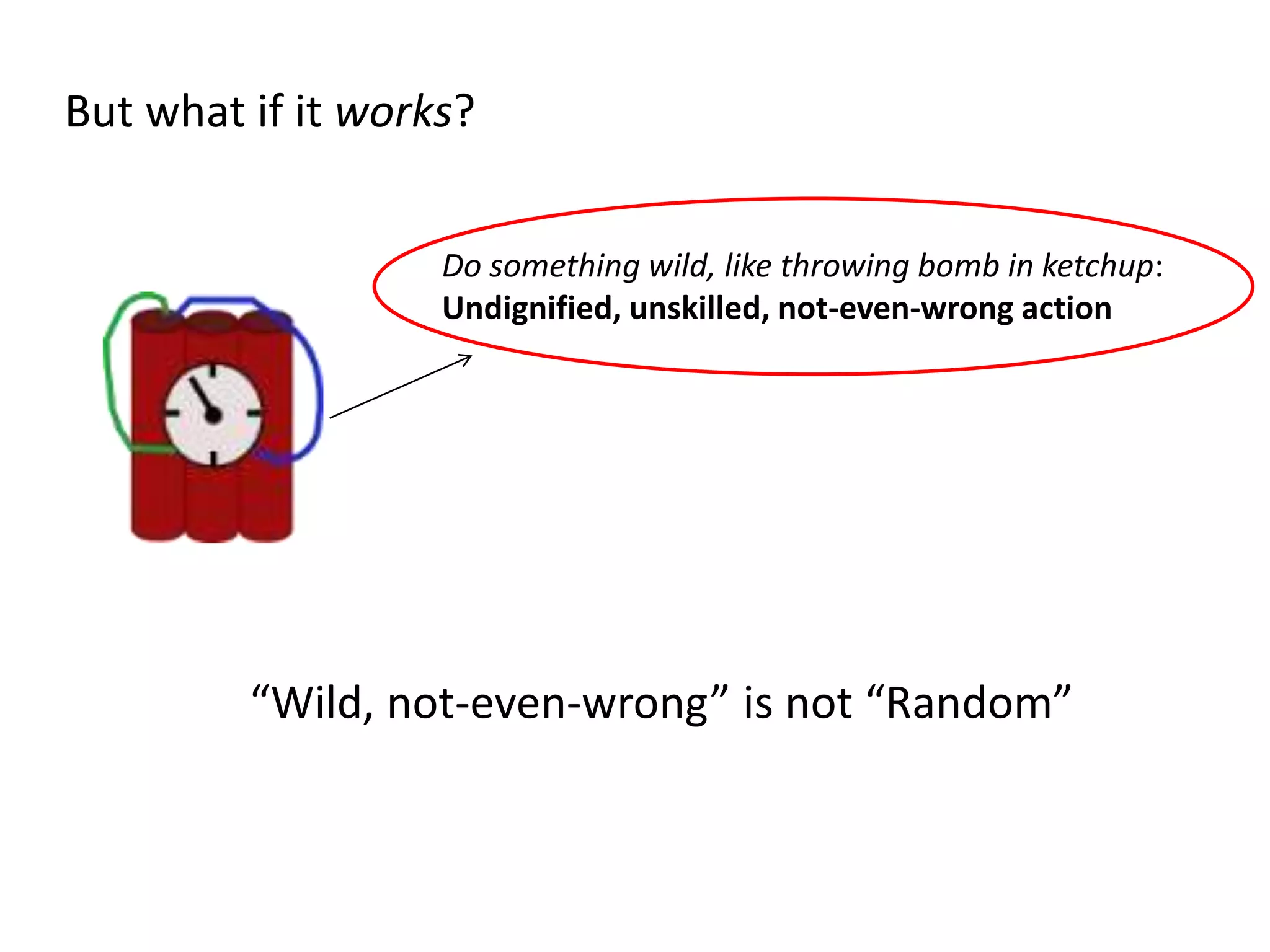
But what ifit works?
Do something wild, like throwing bomb in ketchup:
Undignified, unskilled, not-even-wrong action
“Wild, not-even-wrong” is not “Random”
27.
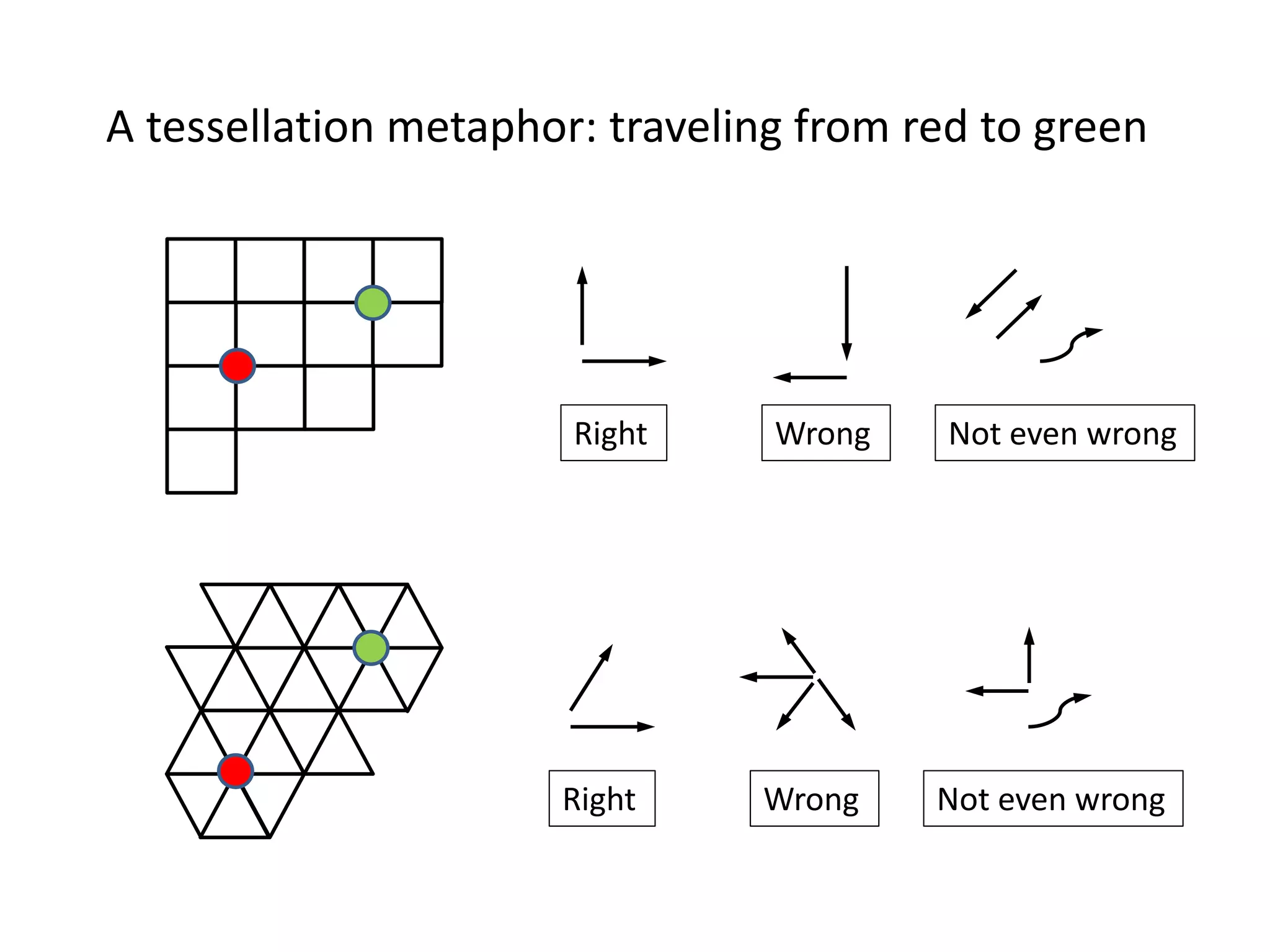
Right Wrong Noteven wrong
Right Wrong Not even wrong
A tessellation metaphor: traveling from red to green
28.
Sidebar for Deleuzeand Guattari fans (can safely ignore):
• Right and wrong actions are striated with respect to a
mental model
• Not-even-wrong actions are smooth with respect to a
mental model
Sidebar for John Boyd fans (can safely ignore):
• Right and wrong actions operate within an orientation
• Not-even-wrong actions reorient to get inside the
decision cycle of an orientation
29.
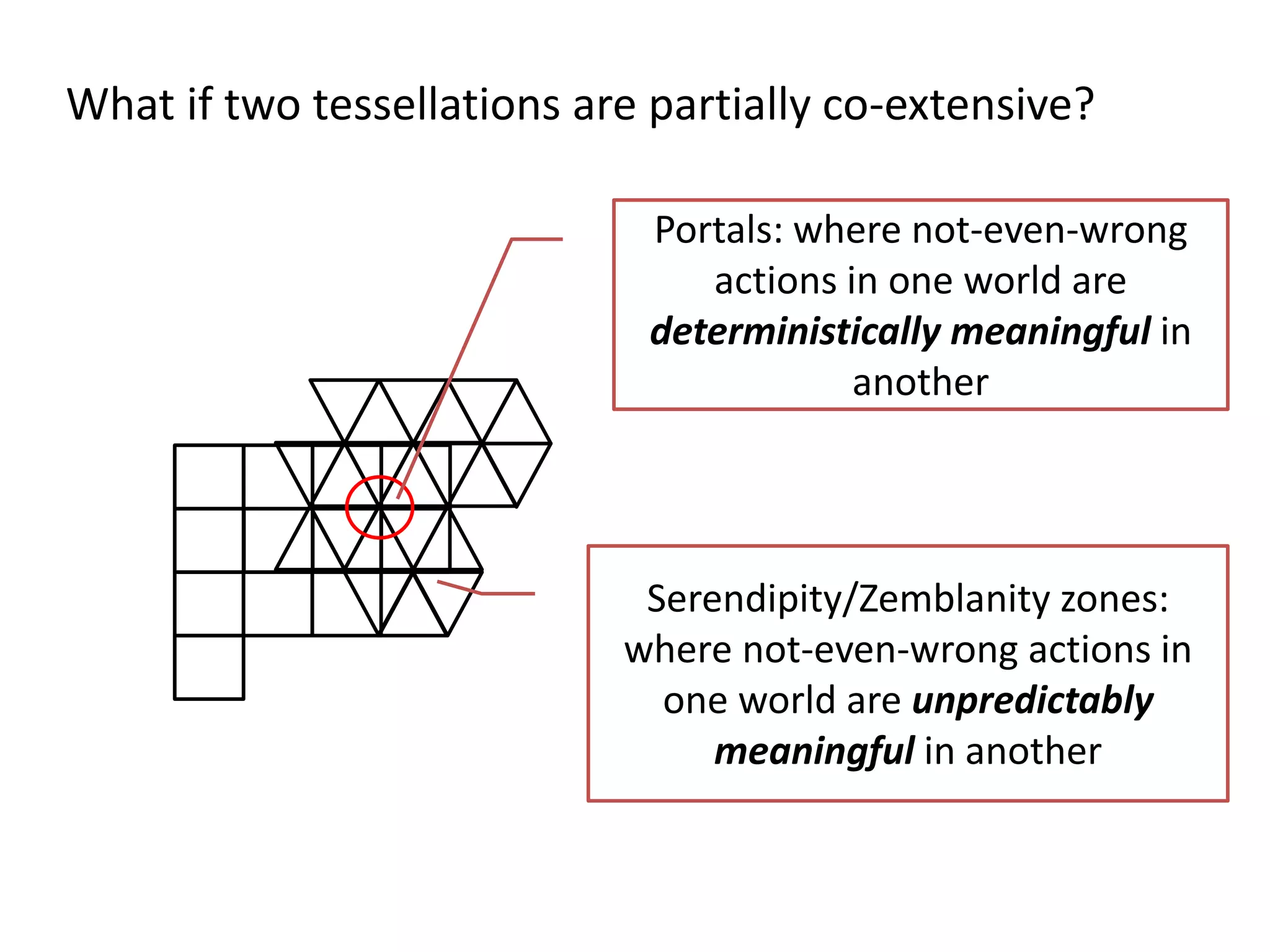
Portals: where not-even-wrong
actionsin one world are
deterministically meaningful in
another
Serendipity/Zemblanity zones:
where not-even-wrong actions in
one world are unpredictably
meaningful in another
What if two tessellations are partially co-extensive?
30.
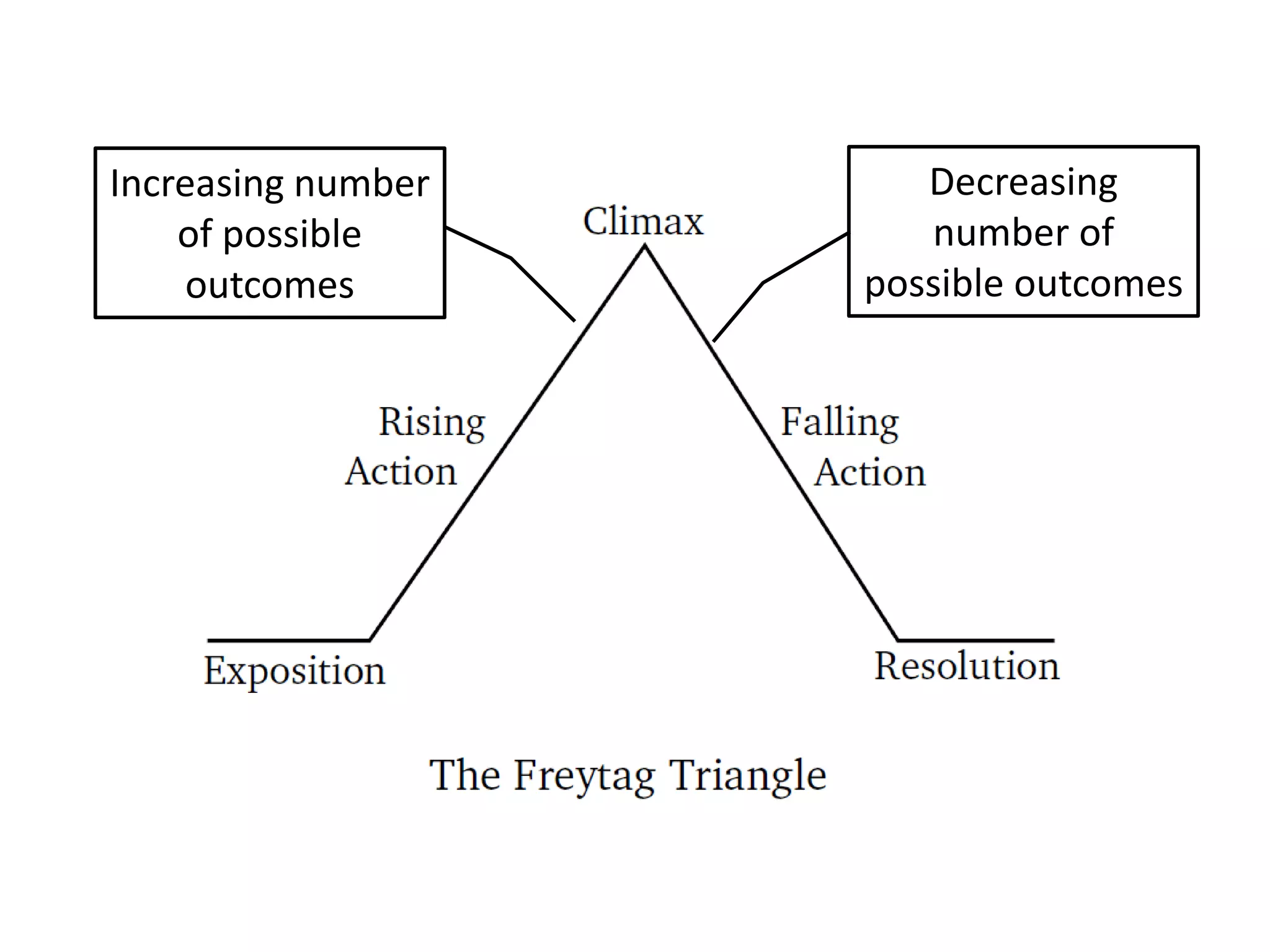
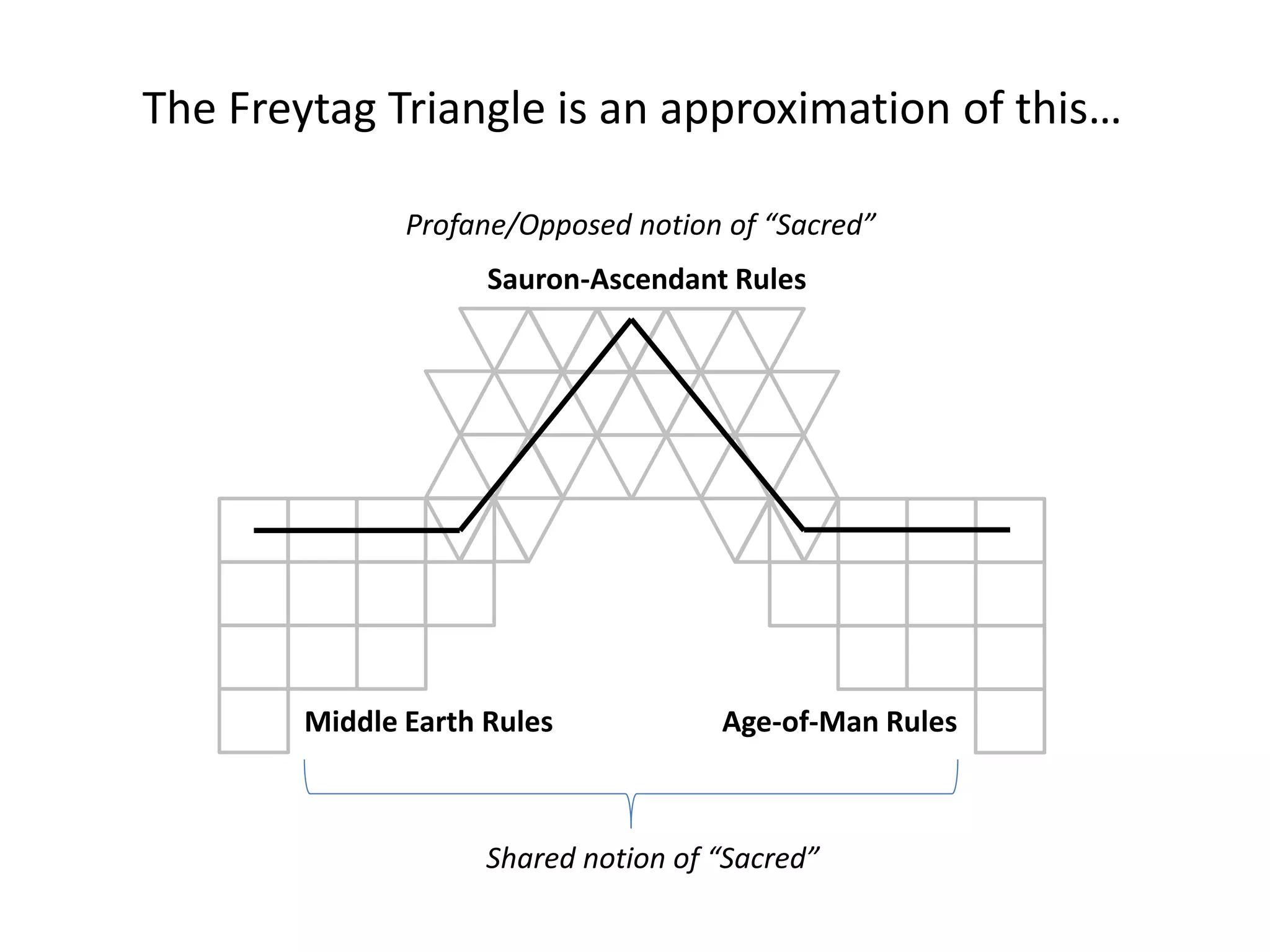
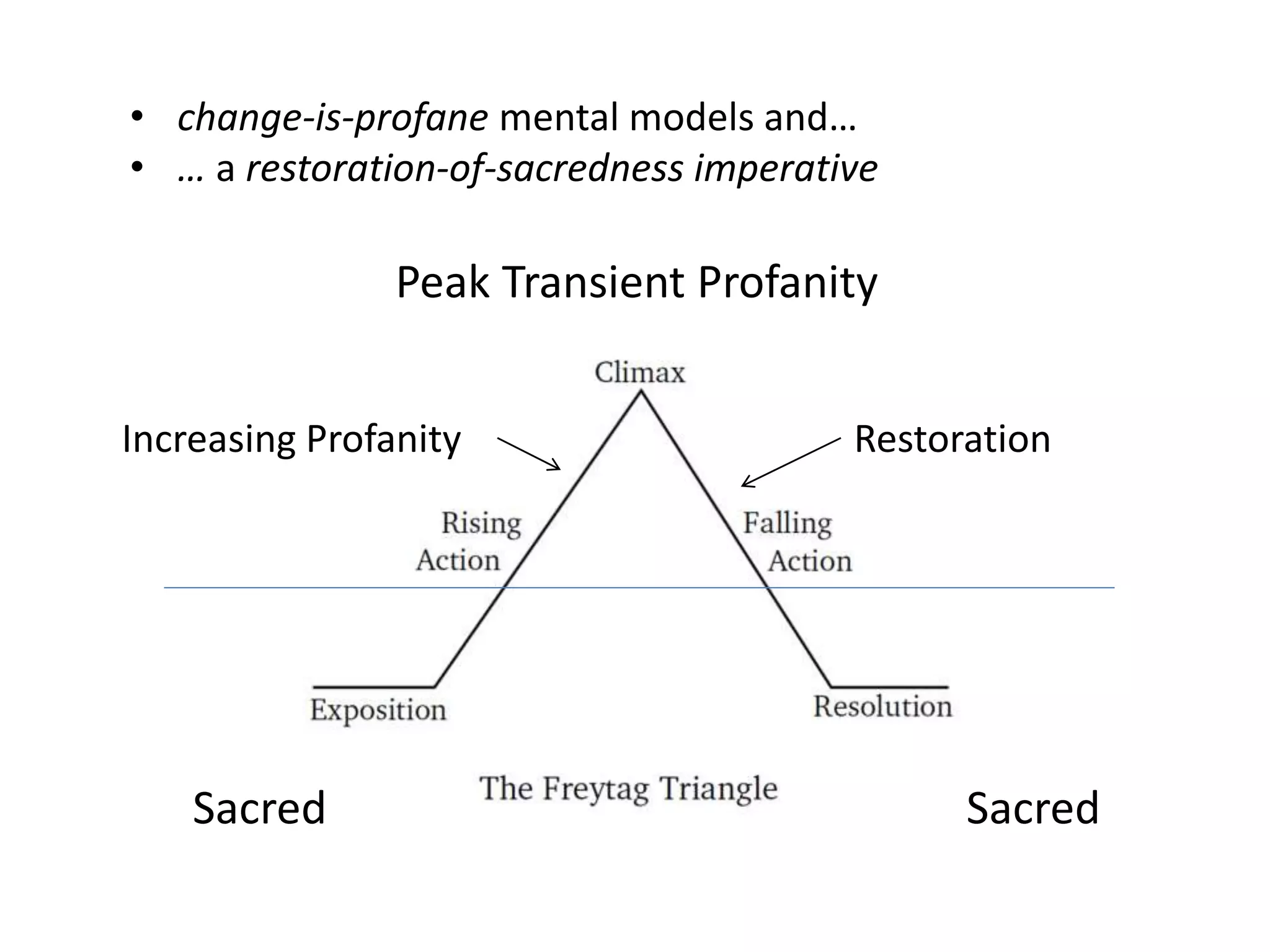
The Freytag Triangleis an approximation of this…
Middle Earth Rules
Sauron-Ascendant Rules
Age-of-Man Rules
Shared notion of “Sacred”
Profane/Opposed notion of “Sacred”
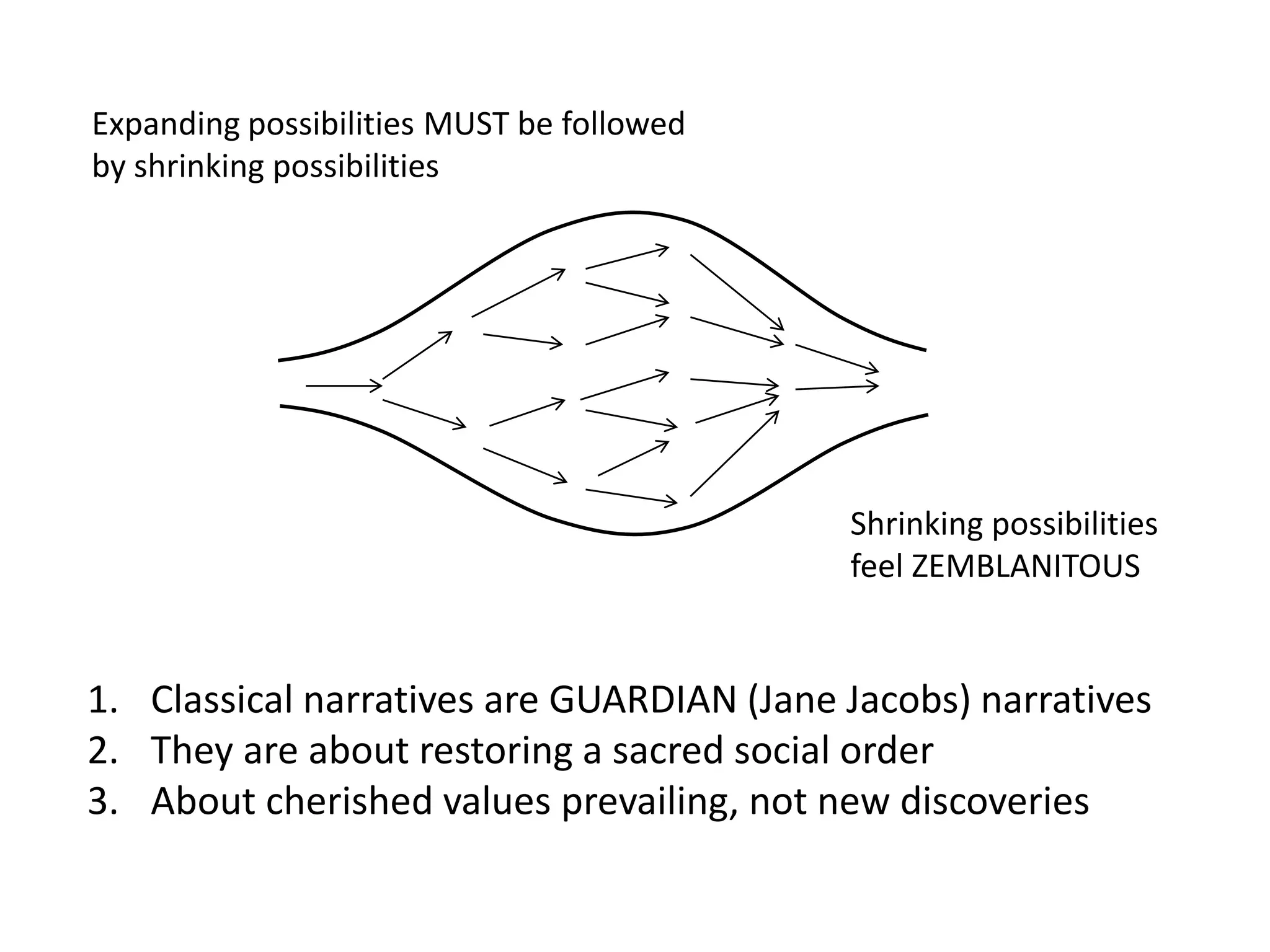
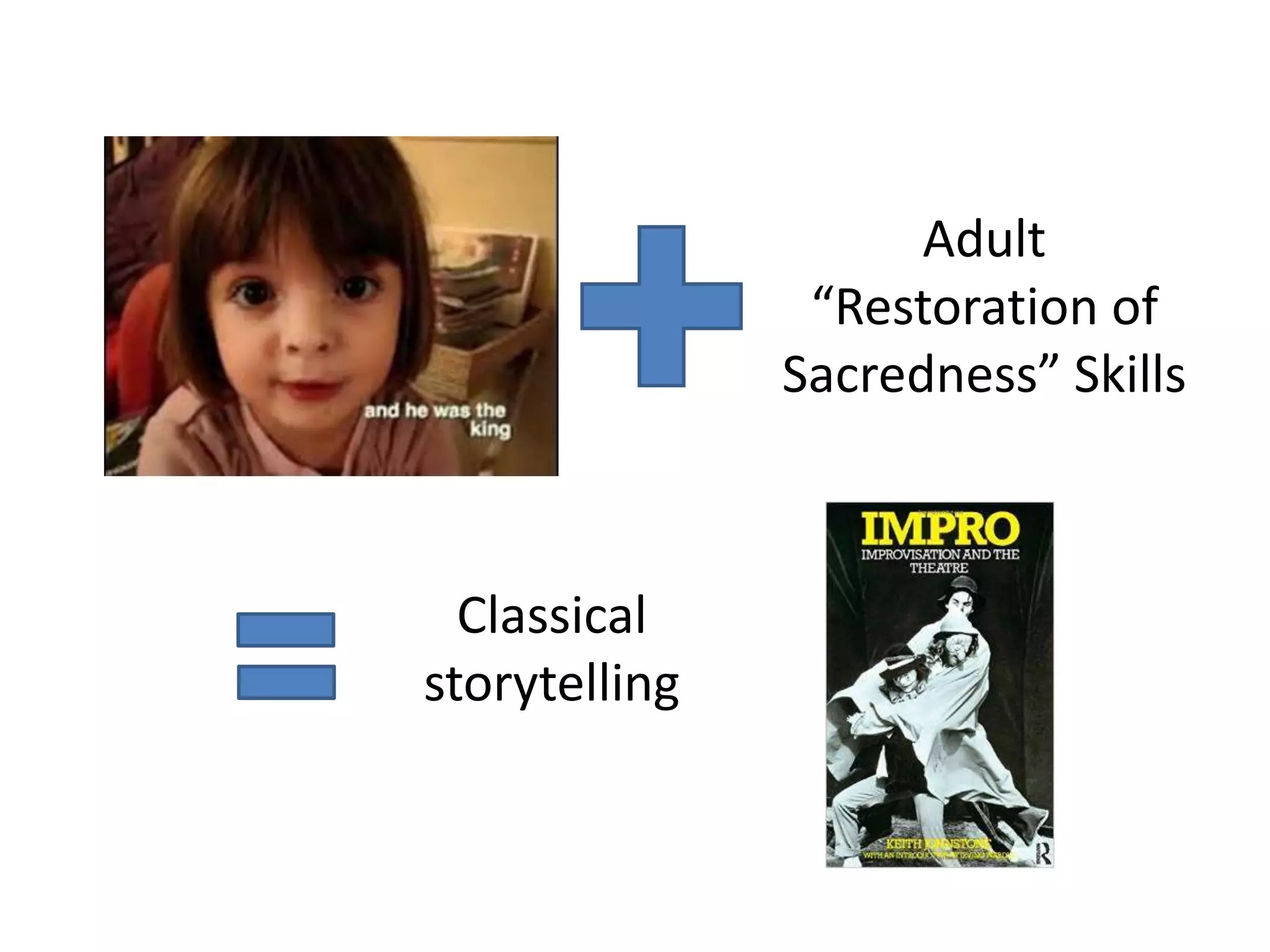
1. Classical narrativesare GUARDIAN (Jane Jacobs) narratives
2. They are about restoring a sacred social order
3. About cherished values prevailing, not new discoveries
Expanding possibilities MUST be followed
by shrinking possibilities
Shrinking possibilities
feel ZEMBLANITOUS
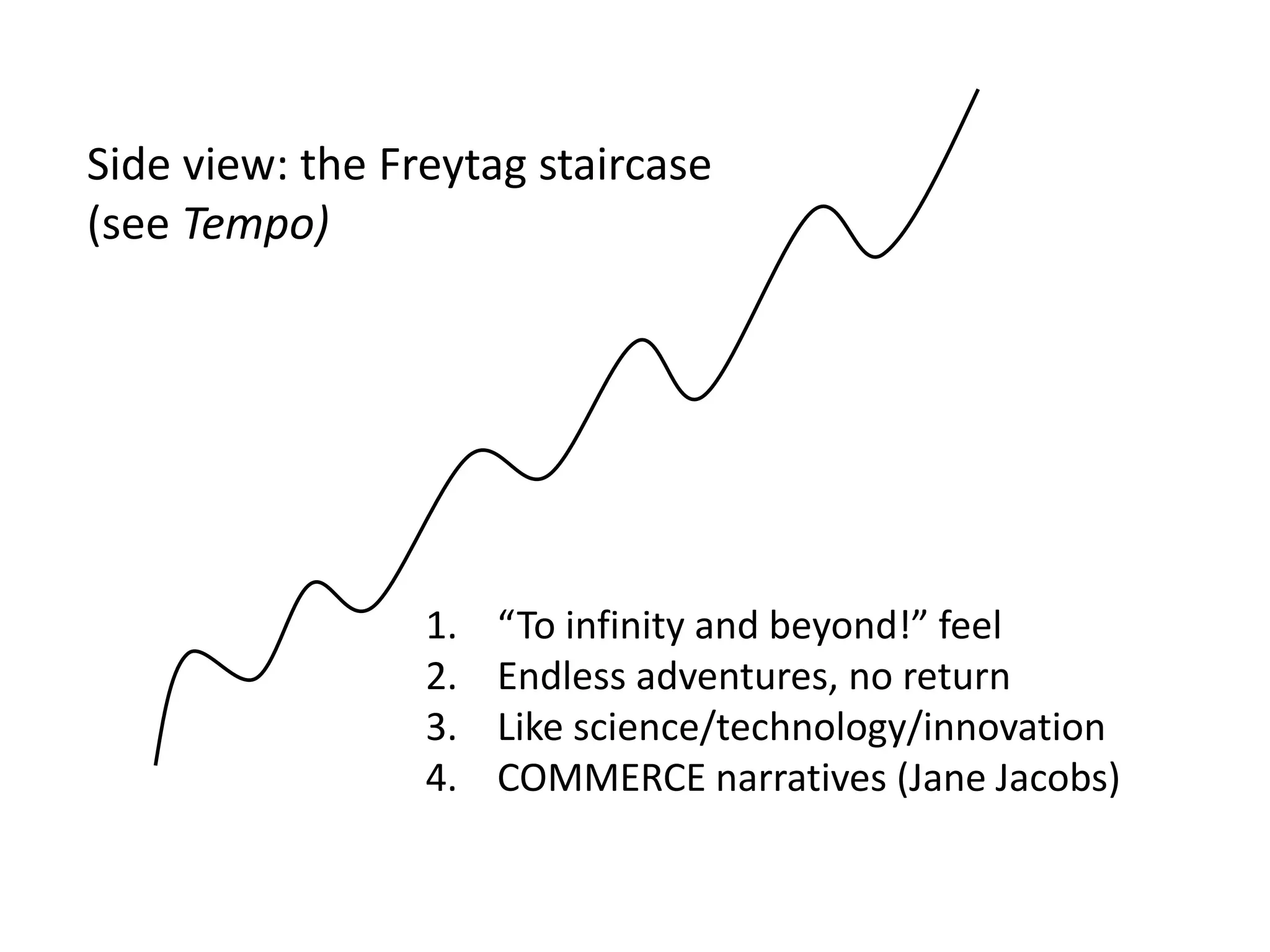
Side view: theFreytag staircase
(see Tempo)
1. “To infinity and beyond!” feel
2. Endless adventures, no return
3. Like science/technology/innovation
4. COMMERCE narratives (Jane Jacobs)
37.
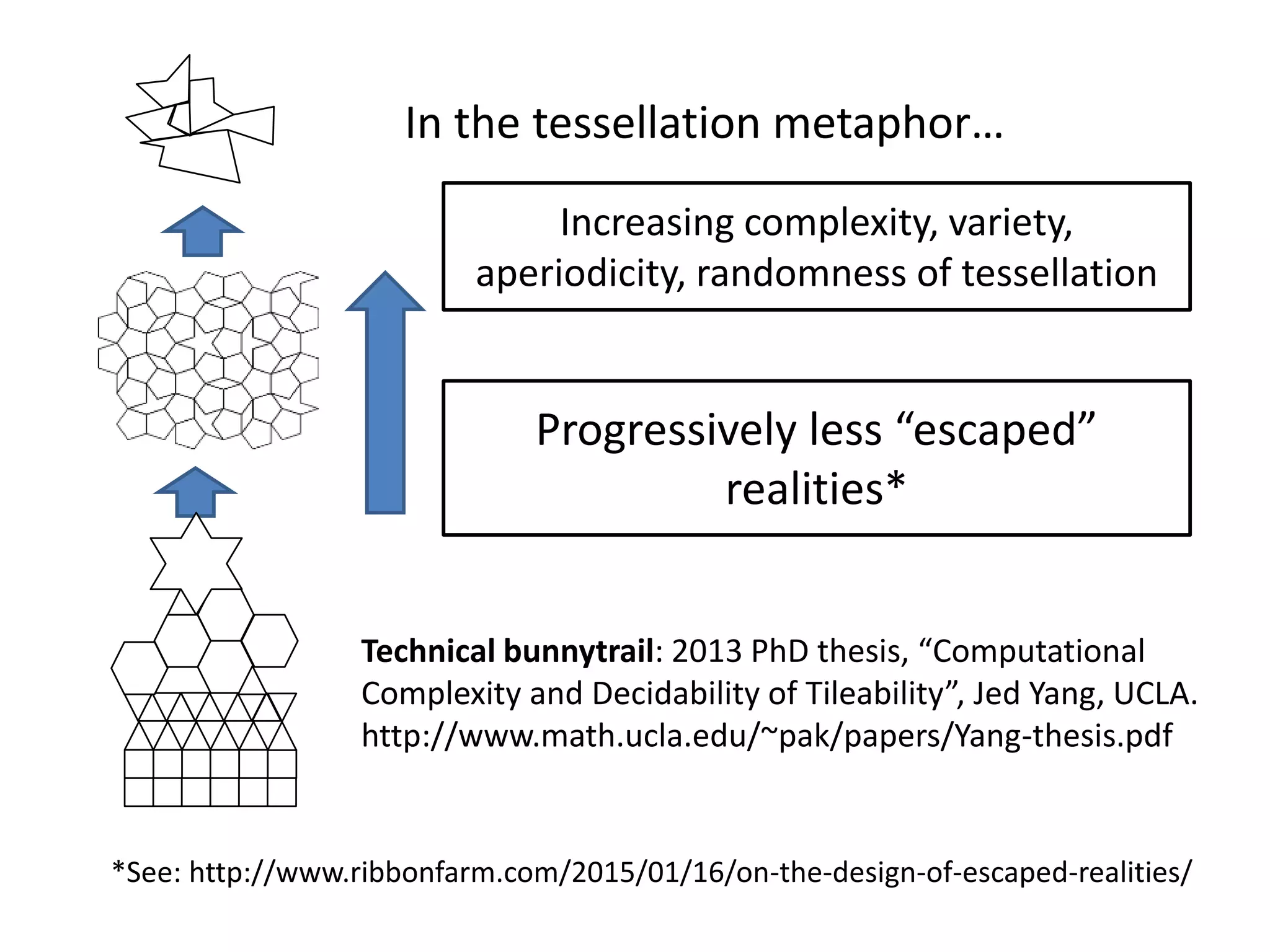
In the tessellationmetaphor…
Increasing complexity, variety,
aperiodicity, randomness of tessellation
Progressively less “escaped”
realities*
*See: http://www.ribbonfarm.com/2015/01/16/on-the-design-of-escaped-realities/
Technical bunnytrail: 2013 PhD thesis, “Computational
Complexity and Decidability of Tileability”, Jed Yang, UCLA.
http://www.math.ucla.edu/~pak/papers/Yang-thesis.pdf
What might non-classicalstorytelling skills look like?
• Necessarily more comic than tragic
• “Unreasonable effectiveness of wild actions”
• Hitchhiker’s Guide
42.
Comic Book Exercise
1.We will use a template based on bomb example
2. Self-identify as artist or scriptwriter and pair up
3. Decide broad story parameters
a) Serendipity or Zemblanity for hero/heroine (or villain)?
b) Are characters Guardian or Trader?
c) Comic or Tragic? (right/wrong/not-even-wrong action?)
4. Brainstorm an inspired, abductive overfit to filled-in frames
5. Storyboard till you get a story you like
6. Draw, letter and ink the final version like a stick-figure pro
7. Turn in to a facilitator for inclusion in Refactor Camp 2015
comicbook