Formations and Injection Drilling Tom McKeown Ken Ryan Franklin Hamilton
What is a Formation? Petroleum is found in a porous rock formation in the upper strata of the earth’s crust. A formation consists of a certain number of rock  strata  that have a comparable  lithology ,  facies  or other similar properties. Formations are not defined on the thickness of the rock strata they consist of and the thickness of different formations can therefore vary widely. Geologic formations are typically named for the geographic area in which they were first described. Strictly, formations cannot be defined on any other criteria except primary lithology. However, it is often useful to define  Biostratigraphic  units  based on  paleontological  criteria,  Chronostratigraphic  units  based on the age of the rocks, and Chemostratigraphic units based on geochemical criteria.
[ edit ] North America
Geology Rock Systems   Rock Formations   Rock Types   Rock Depth  - often distinguished system/age   Rock Age - Often distinguishes Depth
Geology I) 3 main types of Sedimentary Rock (Description) A) Limestone- Limestone rocks are sedimentary rocks that are made from the mineral calcite which came from the beds of evaporated seas and lakes and from sea animal shells. This rock is used in concrete and is an excellent building stone for humid regions. B) Sandstone- a  sedimentary  rock  composed mainly of  sand -size  mineral  or rock  grains . Most sandstone is composed of  quartz  and/or  feldspar  because these are the most common minerals in the Earth's  crust C) Shale -(also called  mudstone ) is a fine-grained  sedimentary rock  whose original constituents were  clay minerals  or  muds . It is characterized by thin laminae [1]  breaking with an irregular curving fracture, often splintery and usually parallel to the often-indistinguishable bedding plane
Geology II) What is a Source Rock? -   In  Petroleum geology   Source rock  refers to rocks from which  hydrocarbons  have been generated or are capable of being generated. They form one of the necessary elements of a working hydrocarbon system. They are organic rich sediments that may have been deposited in a variety of  environments  including deepwater marine,  lacustrine  and  deltaic . III) Main types of Formations 1)  Crude Oil Reservoirs-Three conditions must be present for oil reservoirs to form: a source rock rich in hydrocarbon material buried deep enough for subterranean heat to cook it into oil; a  porous  and  permeable  reservoir rock for it to accumulate in; and a cap rock (seal) or other mechanism that prevents it from escaping to the surface. Within these reservoirs, fluids will typically organize themselves like a three-layer cake with a layer of water below the oil layer and a layer of gas above it, although the different layers vary in size between reservoirs . 2) Non-Conventional Oil- reservoirs- I.E) Shales, Sands. They are typically not porous and permeable. 3) Abiogenic Orgin-Applies to Russia- base on Methane hypothesis.
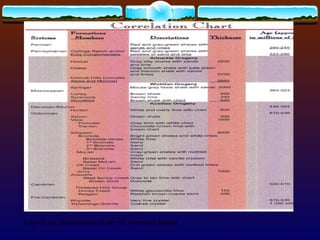
What is a Basin? A collection of formations that hold oil and gas reservoirs. Each large Oil and gas basin has a collection sub basins, uplifts, and embankments. Each basin is classified by mixture of: type of rocks, age of rocks. I.E- Permian Basin
 
INJECTION WELLS
Injection Wells 30% of Oil reserves are extractable Fluids are “Injected” into the well to maintain reservoir pressure.  Increasing the % of extractable Oil Two Types: Gas and Water Water Injection Advantage: Waste disposal Oil is lighter than Water which is lighter than Solid Waste
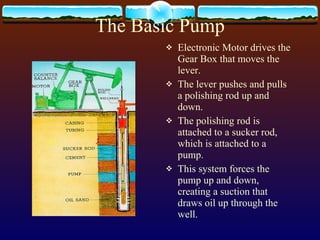
The Basic Pump Electronic Motor drives the Gear Box that moves the lever. The lever pushes and pulls a polishing rod up and down. The polishing rod is attached to a sucker rod, which is attached to a pump.  This system forces the pump up and down, creating a suction that draws oil up through the well.
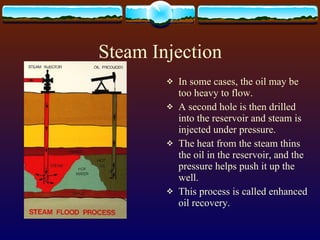
Steam Injection In some cases, the oil may be too heavy to flow.  A second hole is then drilled into the reservoir and steam is injected under pressure.  The heat from the steam thins the oil in the reservoir, and the pressure helps push it up the well.  This process is called enhanced oil recovery.

Formations And Injection Drilling

  • 1.
    Formations and InjectionDrilling Tom McKeown Ken Ryan Franklin Hamilton
  • 2.
    What is aFormation? Petroleum is found in a porous rock formation in the upper strata of the earth’s crust. A formation consists of a certain number of rock strata that have a comparable lithology , facies or other similar properties. Formations are not defined on the thickness of the rock strata they consist of and the thickness of different formations can therefore vary widely. Geologic formations are typically named for the geographic area in which they were first described. Strictly, formations cannot be defined on any other criteria except primary lithology. However, it is often useful to define Biostratigraphic units based on paleontological criteria, Chronostratigraphic units based on the age of the rocks, and Chemostratigraphic units based on geochemical criteria.
  • 3.
    [ edit ]North America
  • 4.
    Geology Rock Systems Rock Formations  Rock Types  Rock Depth - often distinguished system/age  Rock Age - Often distinguishes Depth
  • 5.
    Geology I) 3main types of Sedimentary Rock (Description) A) Limestone- Limestone rocks are sedimentary rocks that are made from the mineral calcite which came from the beds of evaporated seas and lakes and from sea animal shells. This rock is used in concrete and is an excellent building stone for humid regions. B) Sandstone- a sedimentary rock composed mainly of sand -size mineral or rock grains . Most sandstone is composed of quartz and/or feldspar because these are the most common minerals in the Earth's crust C) Shale -(also called mudstone ) is a fine-grained sedimentary rock whose original constituents were clay minerals or muds . It is characterized by thin laminae [1] breaking with an irregular curving fracture, often splintery and usually parallel to the often-indistinguishable bedding plane
  • 6.
    Geology II) Whatis a Source Rock? - In Petroleum geology Source rock refers to rocks from which hydrocarbons have been generated or are capable of being generated. They form one of the necessary elements of a working hydrocarbon system. They are organic rich sediments that may have been deposited in a variety of environments including deepwater marine, lacustrine and deltaic . III) Main types of Formations 1) Crude Oil Reservoirs-Three conditions must be present for oil reservoirs to form: a source rock rich in hydrocarbon material buried deep enough for subterranean heat to cook it into oil; a porous and permeable reservoir rock for it to accumulate in; and a cap rock (seal) or other mechanism that prevents it from escaping to the surface. Within these reservoirs, fluids will typically organize themselves like a three-layer cake with a layer of water below the oil layer and a layer of gas above it, although the different layers vary in size between reservoirs . 2) Non-Conventional Oil- reservoirs- I.E) Shales, Sands. They are typically not porous and permeable. 3) Abiogenic Orgin-Applies to Russia- base on Methane hypothesis.
  • 7.
    What is aBasin? A collection of formations that hold oil and gas reservoirs. Each large Oil and gas basin has a collection sub basins, uplifts, and embankments. Each basin is classified by mixture of: type of rocks, age of rocks. I.E- Permian Basin
  • 8.
  • 9.
  • 10.
    Injection Wells 30%of Oil reserves are extractable Fluids are “Injected” into the well to maintain reservoir pressure. Increasing the % of extractable Oil Two Types: Gas and Water Water Injection Advantage: Waste disposal Oil is lighter than Water which is lighter than Solid Waste
  • 11.
    The Basic PumpElectronic Motor drives the Gear Box that moves the lever. The lever pushes and pulls a polishing rod up and down. The polishing rod is attached to a sucker rod, which is attached to a pump. This system forces the pump up and down, creating a suction that draws oil up through the well.
  • 12.
    Steam Injection Insome cases, the oil may be too heavy to flow. A second hole is then drilled into the reservoir and steam is injected under pressure. The heat from the steam thins the oil in the reservoir, and the pressure helps push it up the well. This process is called enhanced oil recovery.