a naturally occurring solid material
from which a metal or valuable mineral
can be profitably extracted
a rock that contains a significant
quantity of ore minerals; rock with a
relatively high concentration of a
particular metal.
Copper ore
(Chalcopyrite)
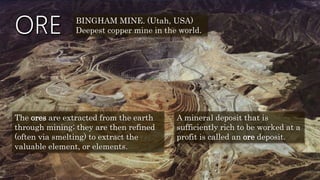
The ores are extracted from the earth
through mining; they are then refined
(often via smelting) to extract the
valuable element, or elements.
A mineral deposit that is
sufficiently rich to be worked at a
profit is called an ore deposit.
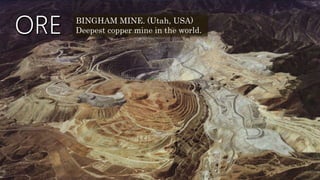
BINGHAM MINE. (Utah, USA)
Deepest copper mine in the world.
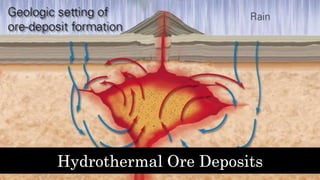
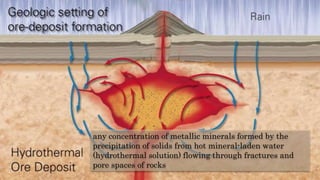
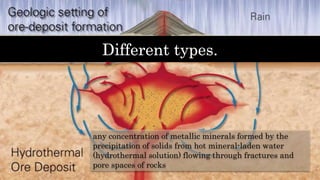
any concentration of metallic minerals formed by the
precipitation of solids from hot mineral-laden water
(hydrothermal solution) flowing through fractures and
pore spaces of rocks
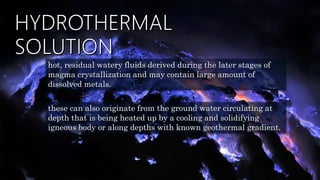
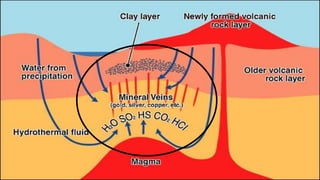
hot, residual watery fluids derived during the later stages of
magma crystallization and may contain large amount of
dissolved metals.
these can also originate from the ground water circulating at
depth that is being heated up by a cooling and solidifying
igneous body or along depths with known geothermal gradient.
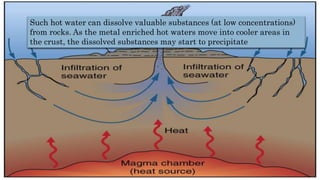
Such hot water can dissolve valuable substances (at low concentrations)
from rocks. As the metal enriched hot waters move into cooler areas in
the crust, the dissolved substances may start to precipitate
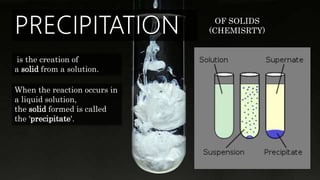
is the creation of
a solid from a solution.
When the reaction occurs in
a liquid solution,
the solid formed is called
the 'precipitate'.
OF SOLIDS
(CHEMISRTY)
any concentration of metallic minerals formed by the
precipitation of solids from hot mineral-laden water
(hydrothermal solution) flowing through fractures and
pore spaces of rocks
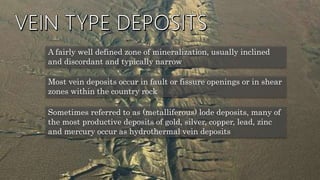
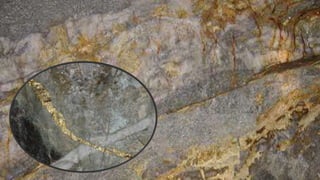
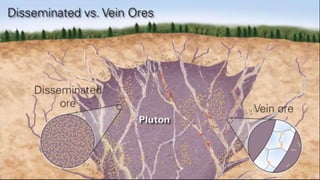
A fairly well defined zone of mineralization, usually inclined
and discordant and typically narrow
Most vein deposits occur in fault or fissure openings or in shear
zones within the country rock
Sometimes referred to as (metalliferous) lode deposits, many of
the most productive deposits of gold, silver, copper, lead, zinc
and mercury occur as hydrothermal vein deposits
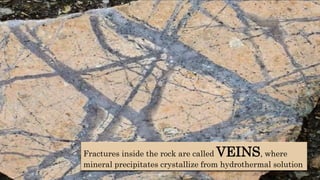
Fractures inside the rock are called VEINS, where
mineral precipitates crystallize from hydrothermal solution
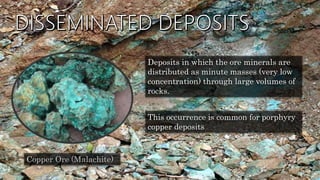
Deposits in which the ore minerals are
distributed as minute masses (very low
concentration) through large volumes of
rocks.
This occurrence is common for porphyry
copper deposits
Copper Ore (Malachite)
BINGHAM MINE. (Utah, USA)
Deepest copper mine in the world.
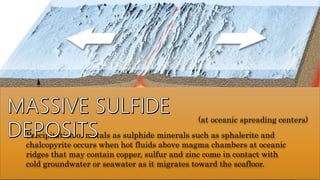
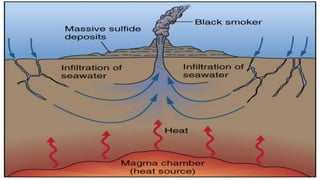
Precipitation of metals as sulphide minerals such as sphalerite and
chalcopyrite occurs when hot fluids above magma chambers at oceanic
ridges that may contain copper, sulfur and zinc come in contact with
cold groundwater or seawater as it migrates toward the seafloor.
(at oceanic spreading centers)
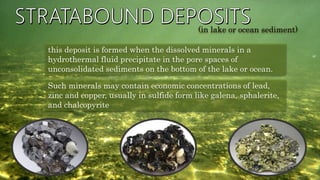
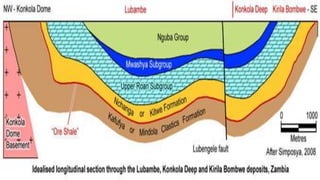
this deposit is formed when the dissolved minerals in a
hydrothermal fluid precipitate in the pore spaces of
unconsolidated sediments on the bottom of the lake or ocean.
Such minerals may contain economic concentrations of lead,
zinc and copper, usually in sulfide form like galena, sphalerite,
and chalcopyrite
(in lake or ocean sediment)
Hydrothermal Ore Deposits: A DISCUSSION

Hydrothermal Ore Deposits: A DISCUSSION

  • 1.
    a naturally occurringsolid material from which a metal or valuable mineral can be profitably extracted a rock that contains a significant quantity of ore minerals; rock with a relatively high concentration of a particular metal. Copper ore (Chalcopyrite)
  • 2.
    The ores areextracted from the earth through mining; they are then refined (often via smelting) to extract the valuable element, or elements. A mineral deposit that is sufficiently rich to be worked at a profit is called an ore deposit. BINGHAM MINE. (Utah, USA) Deepest copper mine in the world.
  • 4.
    any concentration ofmetallic minerals formed by the precipitation of solids from hot mineral-laden water (hydrothermal solution) flowing through fractures and pore spaces of rocks
  • 5.
    hot, residual wateryfluids derived during the later stages of magma crystallization and may contain large amount of dissolved metals. these can also originate from the ground water circulating at depth that is being heated up by a cooling and solidifying igneous body or along depths with known geothermal gradient.
  • 6.
    Such hot watercan dissolve valuable substances (at low concentrations) from rocks. As the metal enriched hot waters move into cooler areas in the crust, the dissolved substances may start to precipitate
  • 7.
    is the creationof a solid from a solution. When the reaction occurs in a liquid solution, the solid formed is called the 'precipitate'. OF SOLIDS (CHEMISRTY)
  • 8.
    any concentration ofmetallic minerals formed by the precipitation of solids from hot mineral-laden water (hydrothermal solution) flowing through fractures and pore spaces of rocks
  • 9.
    A fairly welldefined zone of mineralization, usually inclined and discordant and typically narrow Most vein deposits occur in fault or fissure openings or in shear zones within the country rock Sometimes referred to as (metalliferous) lode deposits, many of the most productive deposits of gold, silver, copper, lead, zinc and mercury occur as hydrothermal vein deposits
  • 10.
    Fractures inside therock are called VEINS, where mineral precipitates crystallize from hydrothermal solution
  • 13.
    Deposits in whichthe ore minerals are distributed as minute masses (very low concentration) through large volumes of rocks. This occurrence is common for porphyry copper deposits Copper Ore (Malachite)
  • 14.
    BINGHAM MINE. (Utah,USA) Deepest copper mine in the world.
  • 16.
    Precipitation of metalsas sulphide minerals such as sphalerite and chalcopyrite occurs when hot fluids above magma chambers at oceanic ridges that may contain copper, sulfur and zinc come in contact with cold groundwater or seawater as it migrates toward the seafloor. (at oceanic spreading centers)
  • 18.
    this deposit isformed when the dissolved minerals in a hydrothermal fluid precipitate in the pore spaces of unconsolidated sediments on the bottom of the lake or ocean. Such minerals may contain economic concentrations of lead, zinc and copper, usually in sulfide form like galena, sphalerite, and chalcopyrite (in lake or ocean sediment)