Micro
propagation
in
Horticulture
“....the art and the science of multiplying
plants in vitro.”
TANVI SINGH
CHAUHAN
Horticulture
The term ―Horticulture is derived from two Latin words‖
i.e. Hortus meaning garden or enclosure and Cultra
meaning cultivation.
So, horticulture literally means garden culture or culture of
garden crops.
The term Agriculture refers broadly to the technology of
raising plants and animals .
On the other hand Horticulture” which is a part of
agriculture is concerned with the raising of so called garden
crops.
Micropropagation
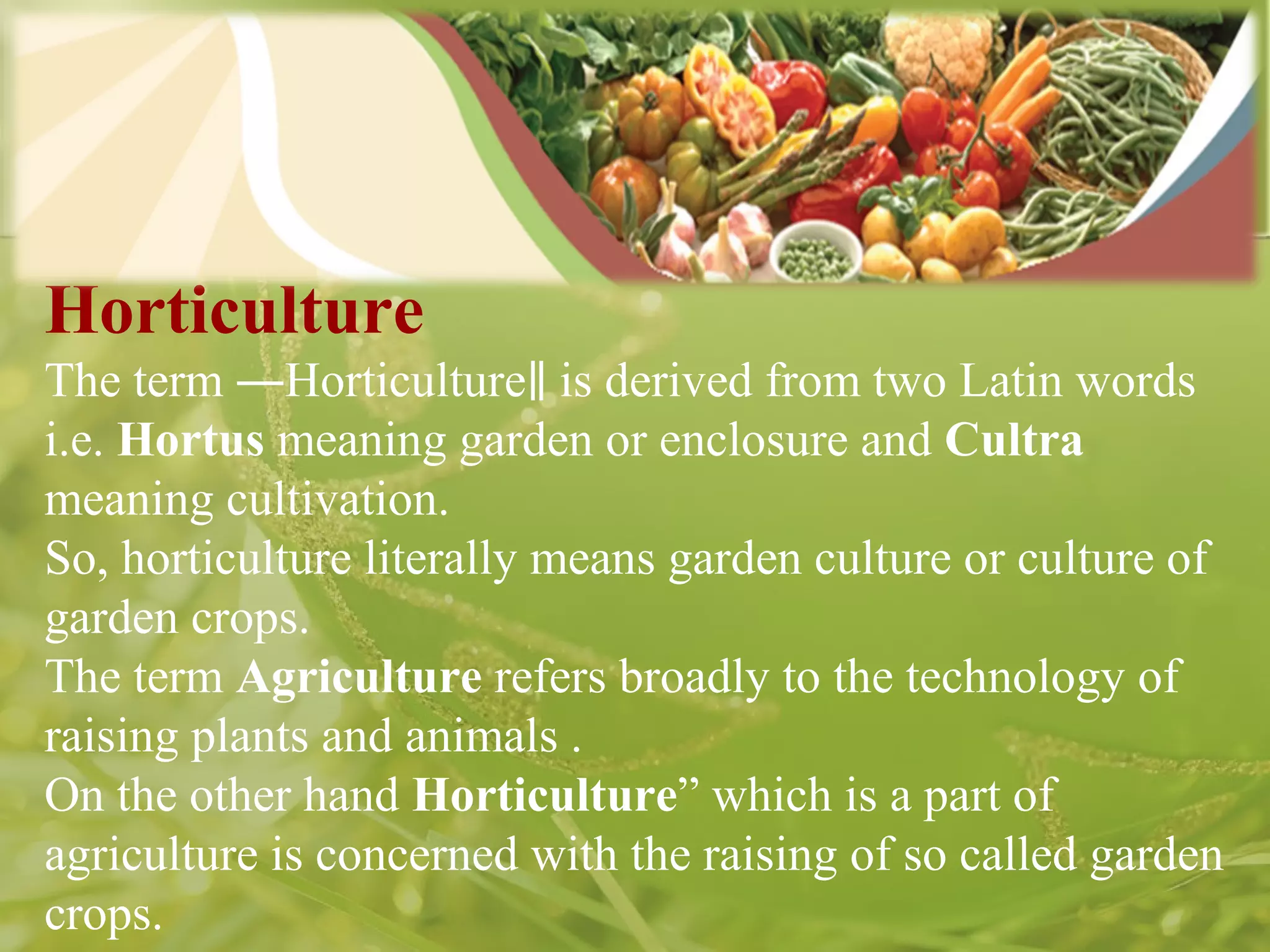
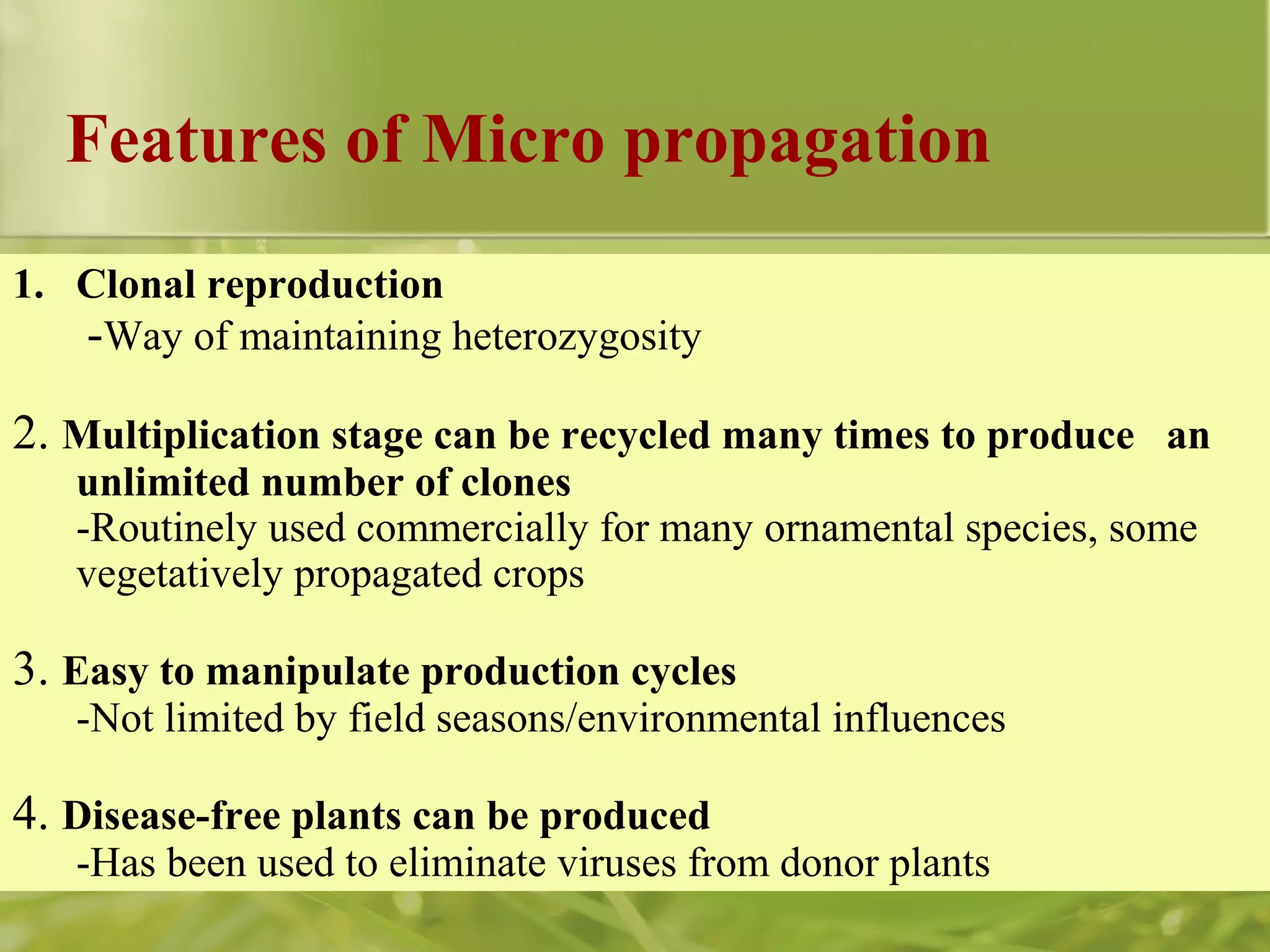
Micro propagation (tissue culture or invitro culture) refers to the multiplication of
plants, in aseptic condition and in artificial growth medium from plant parts like
meristem tip, callus, embryos anthers, axillary buds etc. It is a method by which a
true to type and disease free entire plant can be regenerated from a miniature
piece of plant in aseptic condition in artificial growing medium rapidly
throughout the year.
Introduction:
Micropropagation in Horticulture
The horticulture plants could be multiplied by sexual methods i.e.,
through seeds. The plants thus raised, although strong and healthy are
not true to type. To overcome this difficulty, asexual methods the
variation problem was solved but these methods themselves were very
cumbersome and time consuming.
In addition, various virus like disease could be transmitted from the
mother plant to the sapling.
To overcome these difficulties, a new method of propagation called Plant
"Tissue Culture" has been develop “in vitro” and aseptic cultivation of
any plant part on a nutrient medium in an artificial environment.
Micropropagation
Involve
Features of Micro propagation
1. Clonal reproduction
-Way of maintaining heterozygosity
2. Multiplication stage can be recycled many times to produce an
unlimited number of clones
-Routinely used commercially for many ornamental species, some
vegetatively propagated crops
3. Easy to manipulate production cycles
-Not limited by field seasons/environmental influences
4. Disease-free plants can be produced
-Has been used to eliminate viruses from donor plants
METHODOLOGY
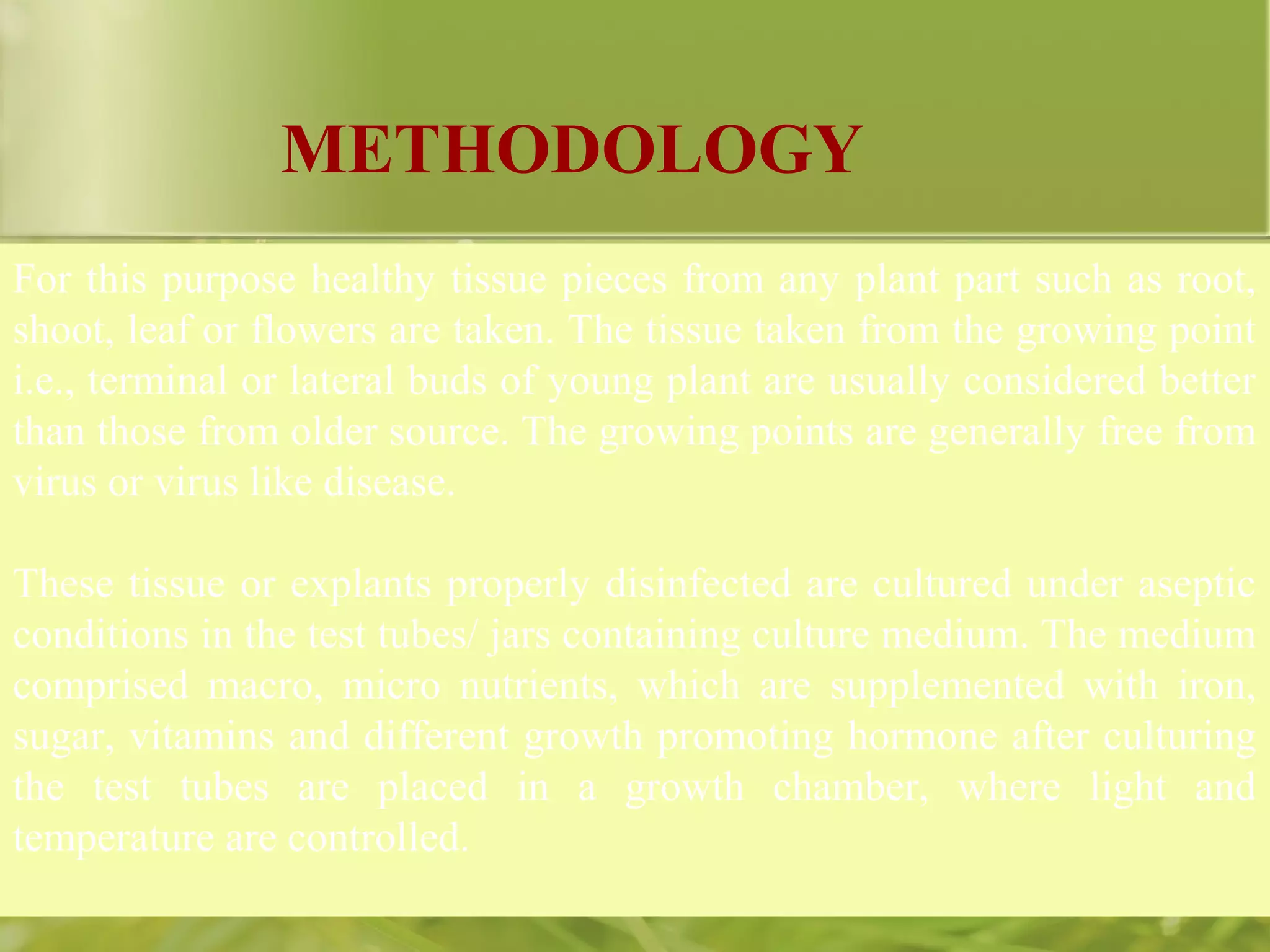
For this purpose healthy tissue pieces from any plant part such as root,
shoot, leaf or flowers are taken. The tissue taken from the growing point
i.e., terminal or lateral buds of young plant are usually considered better
than those from older source. The growing points are generally free from
virus or virus like disease.
These tissue or explants properly disinfected are cultured under aseptic
conditions in the test tubes/ jars containing culture medium. The medium
comprised macro, micro nutrients, which are supplemented with iron,
sugar, vitamins and different growth promoting hormone after culturing
the test tubes are placed in a growth chamber, where light and
temperature are controlled.
The shoot and root production from these explants depend on the type of
the plant, variety, media, hormones, time of the year, etc. It usually takes
1-4 months to produce a complete plantlet by this technique. When these
plantlets attain proper size, these are transferred into the pots containing
sterilized soil and then shifted to low intensity of light intensity is
gradually increased and humidity is reduced to get these plants hardened.
Then these plants are shifted to glass house for further growth.
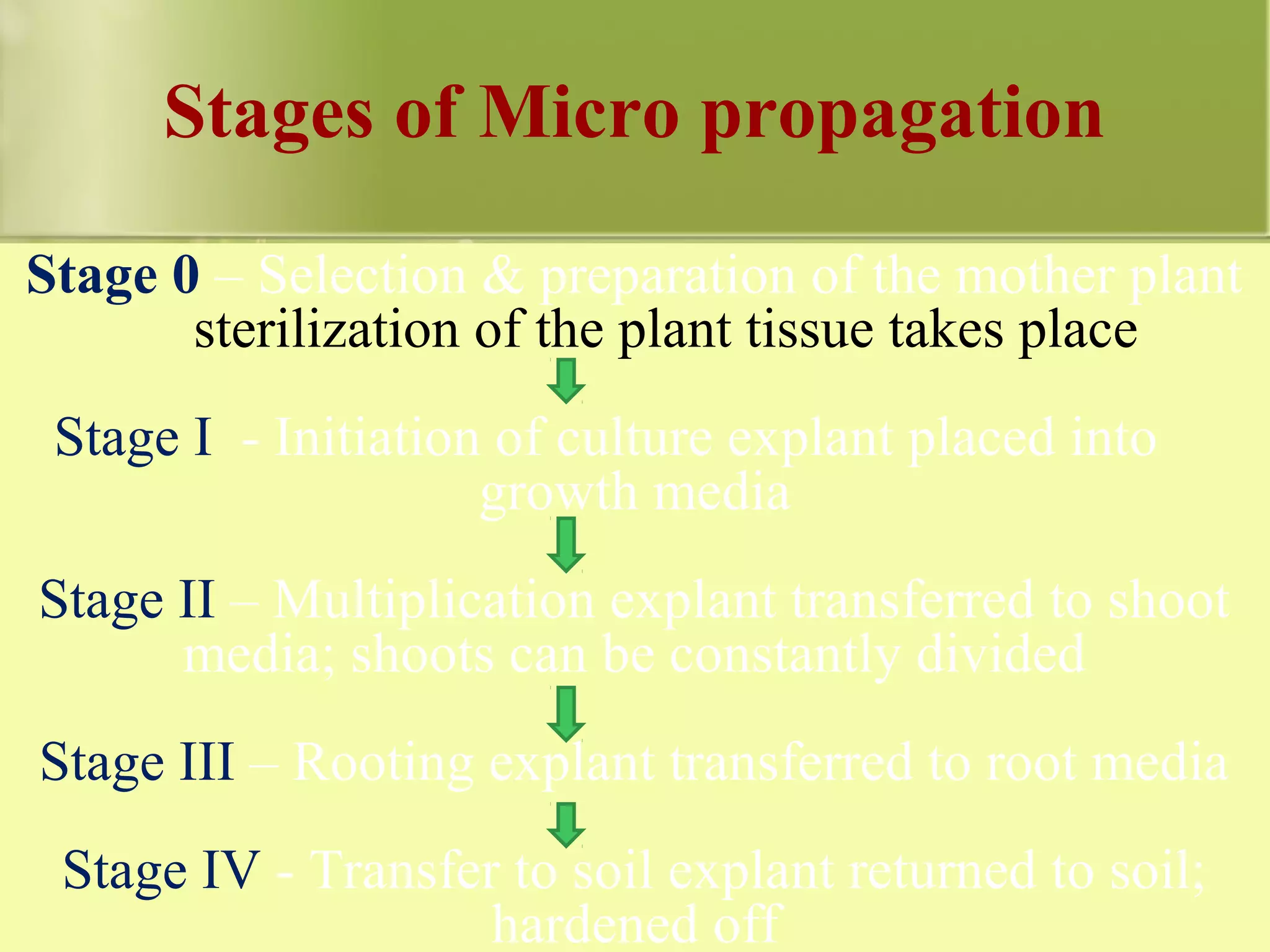
Stages of Micro propagation
Stage 0 – Selection & preparation of the mother plant
sterilization of the plant tissue takes place
Stage I - Initiation of culture explant placed into
growth media
Stage II – Multiplication explant transferred to shoot
media; shoots can be constantly divided
Stage III – Rooting explant transferred to root media
Stage IV - Transfer to soil explant returned to soil;
hardened off
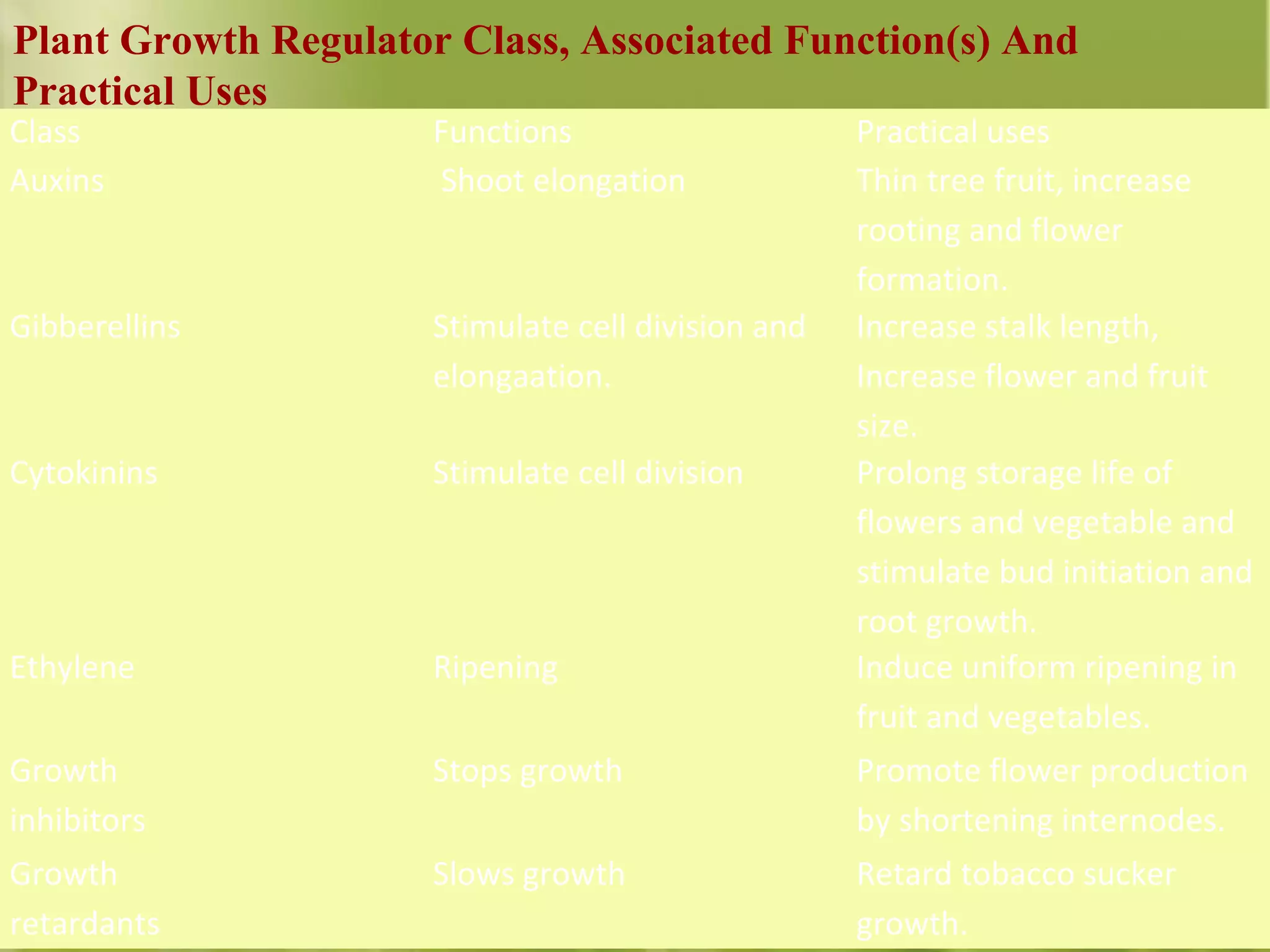
Class Functions Practical uses
Auxins Shoot elongation Thin tree fruit, increase
rooting and flower
formation.
Gibberellins Stimulate cell division and
elongaation.
Increase stalk length,
Increase flower and fruit
size.
Cytokinins Stimulate cell division Prolong storage life of
flowers and vegetable and
stimulate bud initiation and
root growth.
Ethylene Ripening Induce uniform ripening in
fruit and vegetables.
Growth
inhibitors
Stops growth Promote flower production
by shortening internodes.
Growth
retardants
Slows growth Retard tobacco sucker
growth.
Plant Growth Regulator Class, Associated Function(s) And
Practical Uses
Induction
Auxins required for induction.
Proembryogenic masses form.
2,4-D most used.
NAA, dicamba also used.
Development
 Auxin must be removed for embryo development
 Stages are similar to those of zygotic embryogenesis
 Globular
 Heart
 Torpedo
 Cotyledonary
 Germination
Maturation
Require complete maturation with apical
meristem, radicle, and cotyledons
Storage protein production necessary
Often require ABA for complete maturation
ABA often required for normal embryo
morphology
Fasciation Precocious germination.
• In situ : Conservation in ‘normal’ habitat
–rain forests, gardens, farms
• Ex Situ :
–Field collection, Botanical gardens
–Seed collections
–In vitro collection: Extension of micro propagation techniques
•Normal growth (short term storage)
•Slow growth (medium term storage)
•Cryopreservation (long term storage)
• DNA Banks
Plant germplasm preservation
Comparison of conventional & micro
propagation in virus indexed.
Conventional Micropropagation
Duration: 6 years 2 years
Labor: Dig & replant every 2 years; Subculture every 4 weeks;
unskilled (Inexpensive) skilled (more expensive)
Space: More, but less expensive (field) Less, but more expensive
(laboratory)
Required to
prevent viral Screening, fumigation, spraying None
infection:
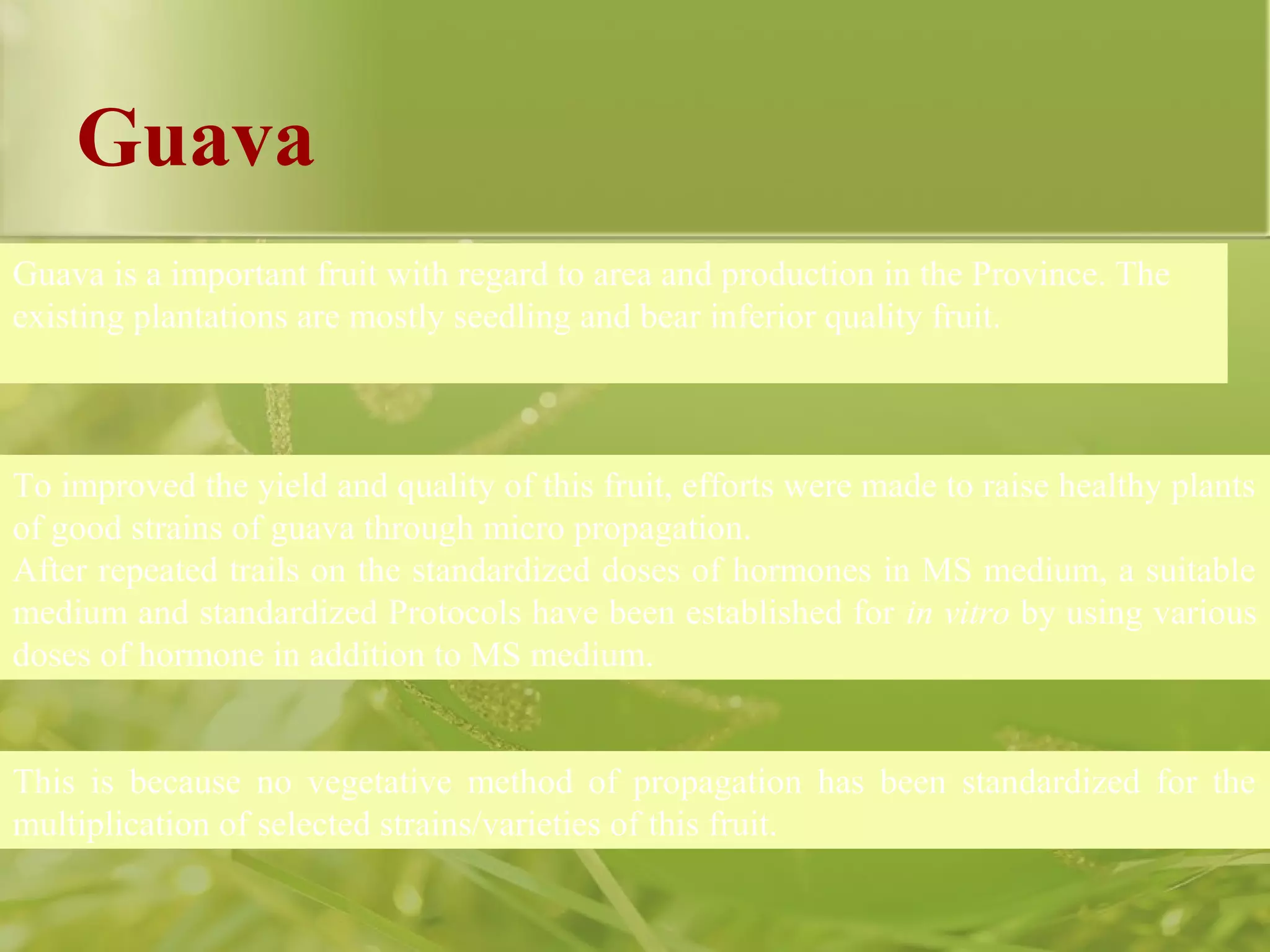
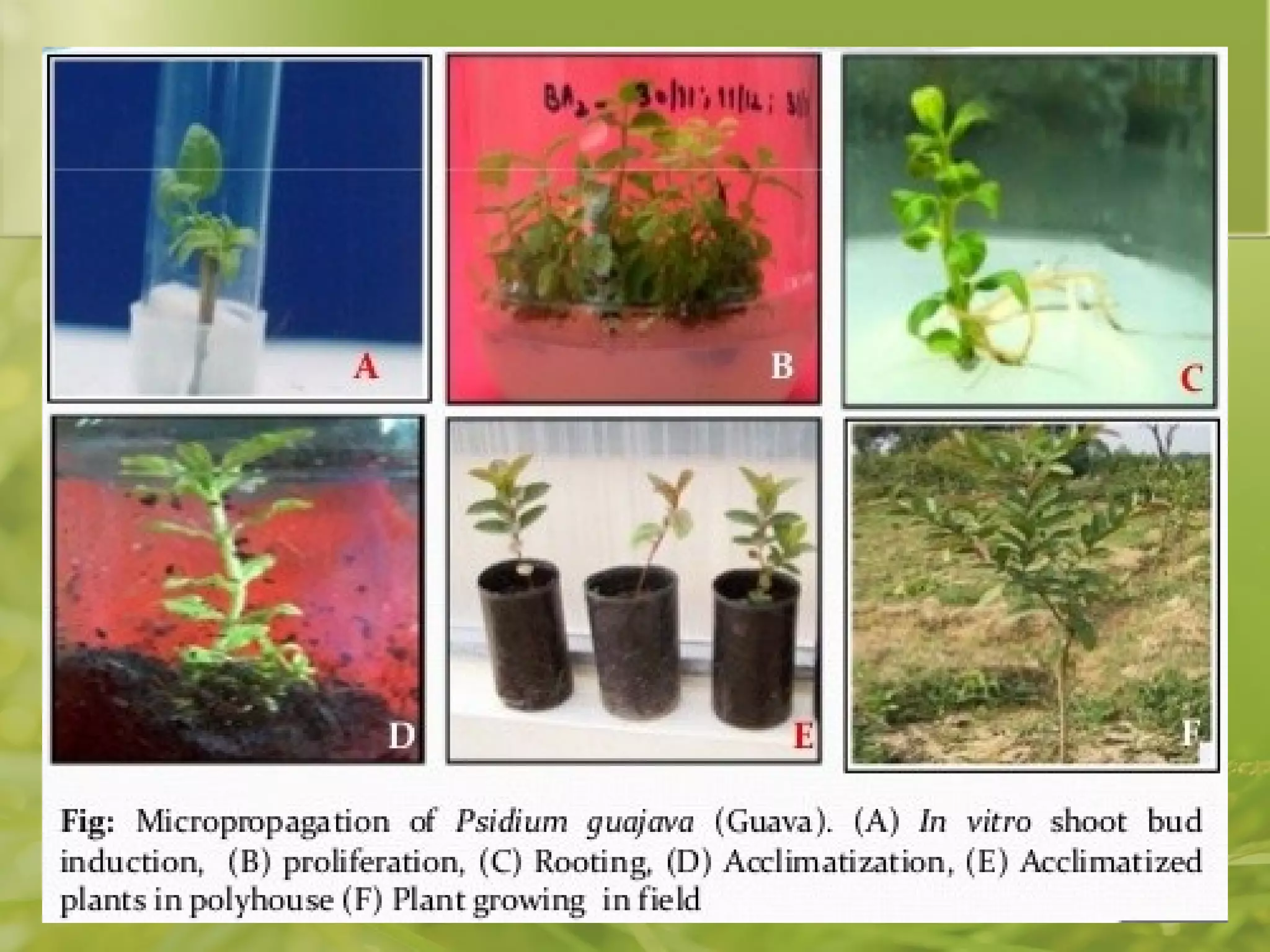
Guava
Guava is a important fruit with regard to area and production in the Province. The
existing plantations are mostly seedling and bear inferior quality fruit.
To improved the yield and quality of this fruit, efforts were made to raise healthy plants
of good strains of guava through micro propagation.
After repeated trails on the standardized doses of hormones in MS medium, a suitable
medium and standardized Protocols have been established for in vitro by using various
doses of hormone in addition to MS medium.
This is because no vegetative method of propagation has been standardized for the
multiplication of selected strains/varieties of this fruit.
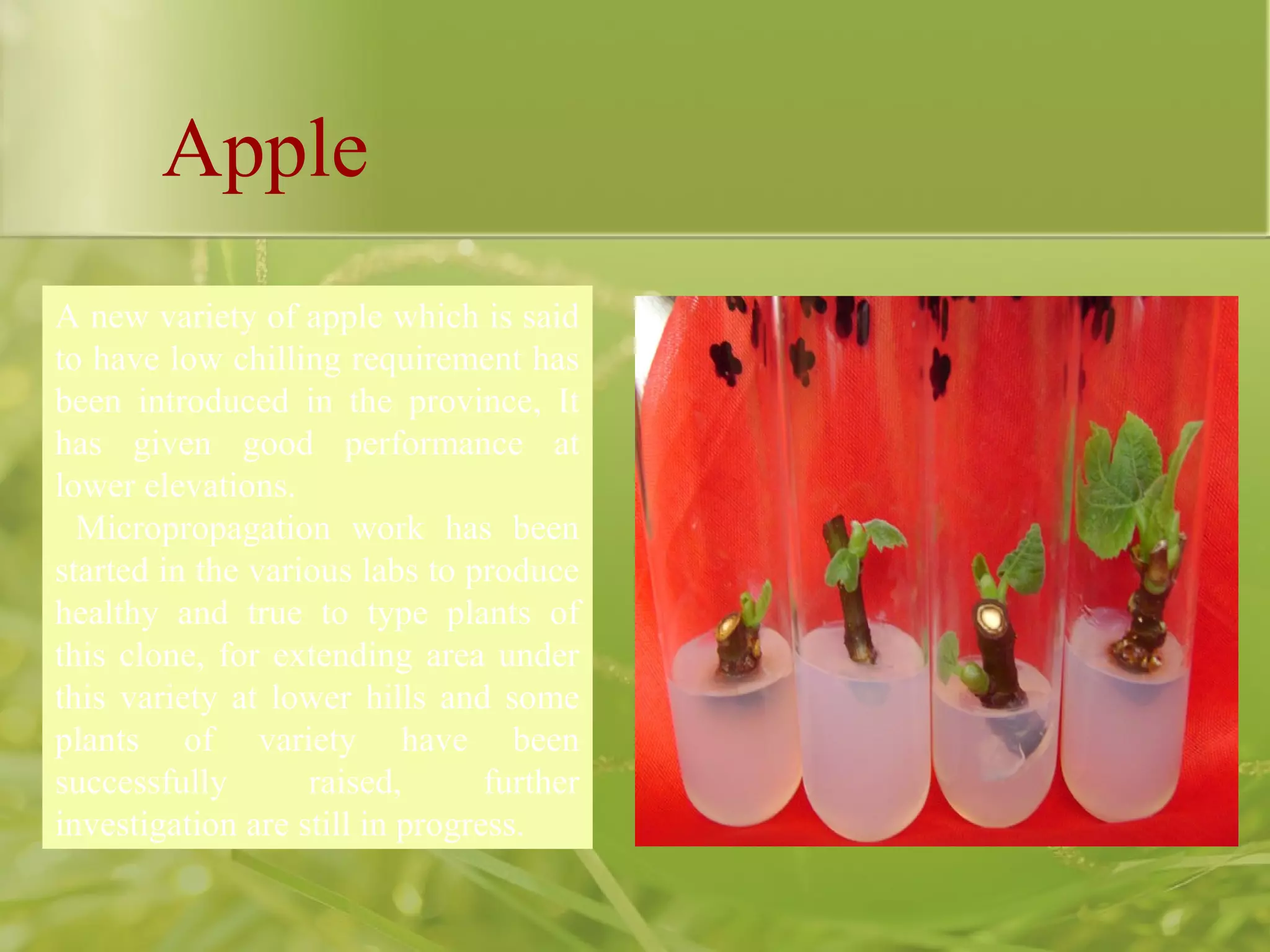
A new variety of apple which is said
to have low chilling requirement has
been introduced in the province, It
has given good performance at
lower elevations.
Micropropagation work has been
started in the various labs to produce
healthy and true to type plants of
this clone, for extending area under
this variety at lower hills and some
plants of variety have been
successfully raised, further
investigation are still in progress.
Apple
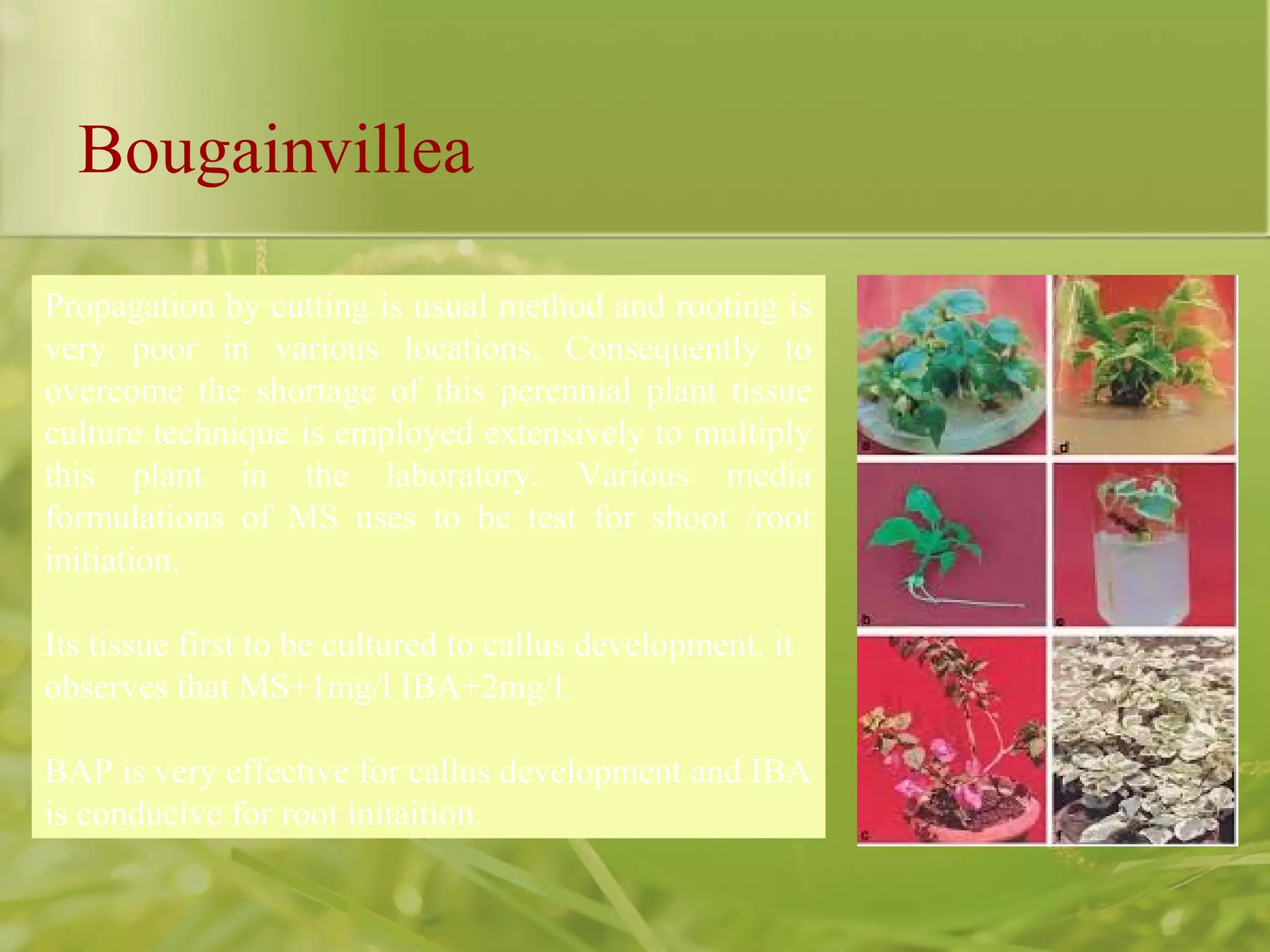
Bougainvillea
Propagation by cutting is usual method and rooting is
very poor in various locations. Consequently to
overcome the shortage of this perennial plant tissue
culture technique is employed extensively to multiply
this plant in the laboratory. Various media
formulations of MS uses to be test for shoot /root
initiation.
Its tissue first to be cultured to callus development. it
observes that MS+1mg/l IBA+2mg/l.
BAP is very effective for callus development and IBA
is conducive for root initaition.
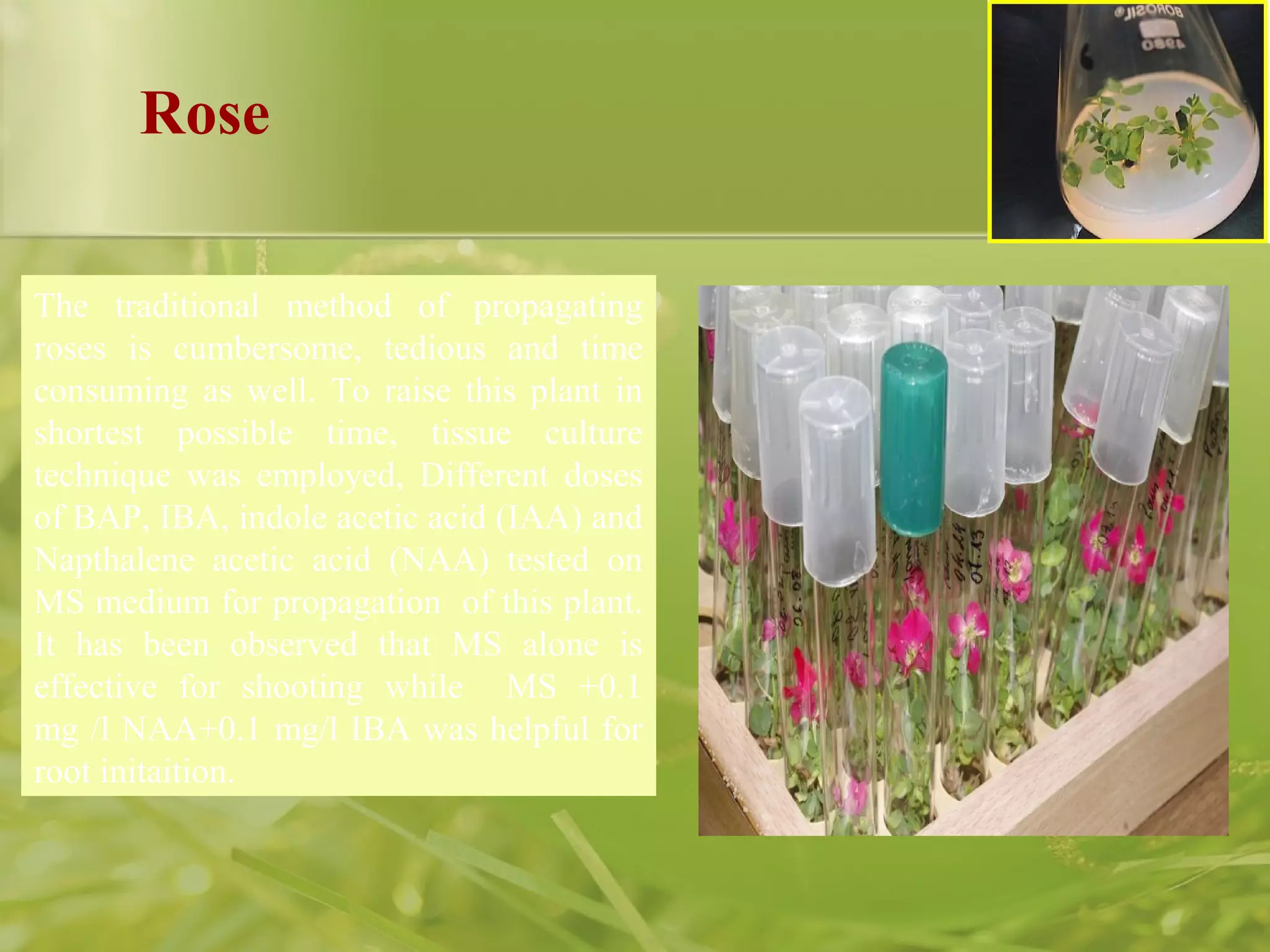
The traditional method of propagating
roses is cumbersome, tedious and time
consuming as well. To raise this plant in
shortest possible time, tissue culture
technique was employed, Different doses
of BAP, IBA, indole acetic acid (IAA) and
Napthalene acetic acid (NAA) tested on
MS medium for propagation of this plant.
It has been observed that MS alone is
effective for shooting while MS +0.1
mg /l NAA+0.1 mg/l IBA was helpful for
root initaition.
Rose
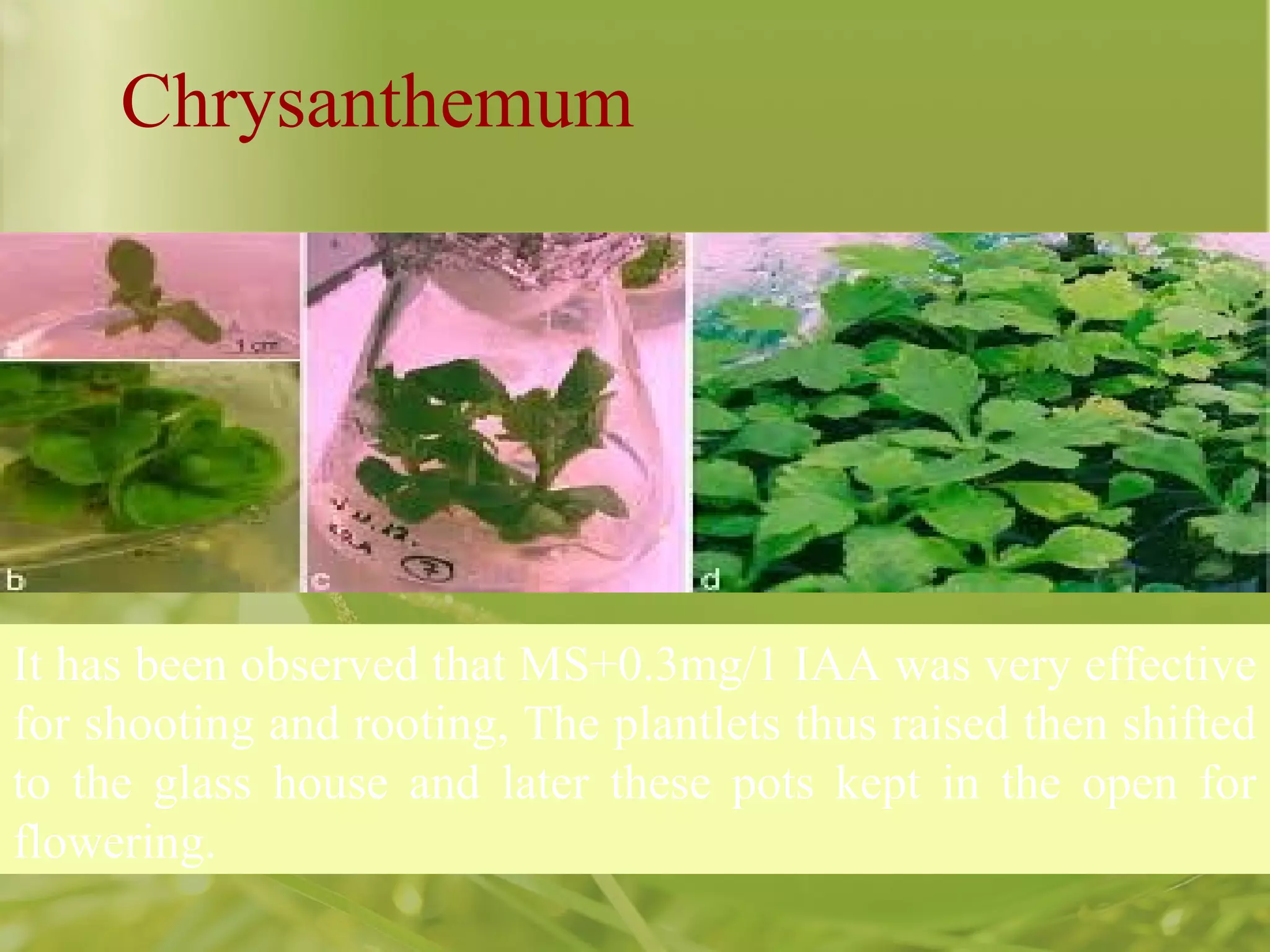
It has been observed that MS+0.3mg/1 IAA was very effective
for shooting and rooting, The plantlets thus raised then shifted
to the glass house and later these pots kept in the open for
flowering.
Chrysanthemum
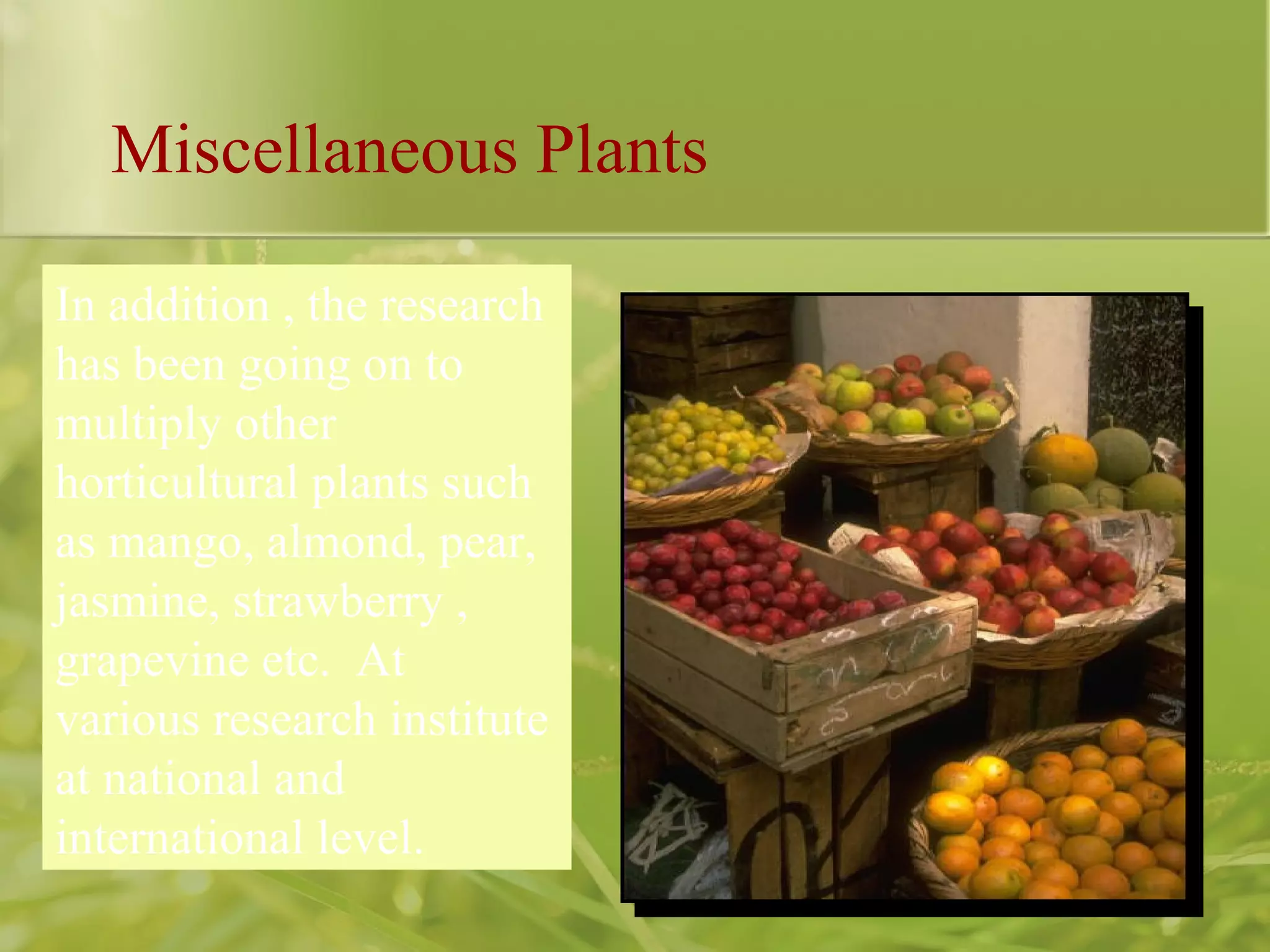
In addition , the research
has been going on to
multiply other
horticultural plants such
as mango, almond, pear,
jasmine, strawberry ,
grapevine etc. At
various research institute
at national and
international level.
Miscellaneous Plants
Advantages
Advantages of Micro propagation are :-
1.To raise true to type plants.
2. Mass propagation of plants within shortest possible
3. Multiply disease and virus free plants.
4. Enhanced multiplication rate.
5. Preservation of rare varieties.
6. Evolution of new varieties through protoplast fusion
and callus.
Merits of micro propagation
 Helps in rapid multiplication of true to type plants throughout the year.
 A new plant can be regenerated from a miniature plant part, whereas, in conventional
methods a shoot of considerable length is required.
 Large number of plants can be produced in culture tubes in small space with uniform
growth and productivity instead of growing them in large areas in nursery.
 Tissue culture coupled with somatic hybridization (production of hybrid cells by
fusion of two protoplasts with different genetic makeup) helps in evolving new
cultivars in a short time.
 Micro propagation facilitates long distance transport of propagation materials and
long term storage of clonal materials.
 Effective in plants that don‘t breed true from seeds, seeds are not viable (male
sterile) or not available (banana) and in plant where propagation by conventional
methods are expensive (Orchids)
Demerits of Micro propagation:
a) The cost involved in setting up and maintenance of a laboratory is
very high and may not justify their use in all the horticultural plants
ordinarily.
b) Tissue culture techniques require skilled manpower.
c) Slight infection may damage the entire lot of plants.
d) Some genetic modification (mutation) of the plant may develop with
some varieties and culture systems, which may alter the quality of
the produce.
e) The seedlings grown under artificial condition may not survive when
placed under normal environmental condition.
Conclusion
isogenic lines.
compatible lines.
Conversion to Out breeding.
Isolation of Homozygous S-allele lines.
Maintenance and multiplication of inbred
lines.
Hybrid production.
THANK YOU

Micropropagation

  • 1.
    Micro propagation in Horticulture “....the art andthe science of multiplying plants in vitro.” TANVI SINGH CHAUHAN
  • 2.
    Horticulture The term ―Horticultureis derived from two Latin words‖ i.e. Hortus meaning garden or enclosure and Cultra meaning cultivation. So, horticulture literally means garden culture or culture of garden crops. The term Agriculture refers broadly to the technology of raising plants and animals . On the other hand Horticulture” which is a part of agriculture is concerned with the raising of so called garden crops.
  • 3.
    Micropropagation Micro propagation (tissueculture or invitro culture) refers to the multiplication of plants, in aseptic condition and in artificial growth medium from plant parts like meristem tip, callus, embryos anthers, axillary buds etc. It is a method by which a true to type and disease free entire plant can be regenerated from a miniature piece of plant in aseptic condition in artificial growing medium rapidly throughout the year.
  • 4.
    Introduction: Micropropagation in Horticulture Thehorticulture plants could be multiplied by sexual methods i.e., through seeds. The plants thus raised, although strong and healthy are not true to type. To overcome this difficulty, asexual methods the variation problem was solved but these methods themselves were very cumbersome and time consuming. In addition, various virus like disease could be transmitted from the mother plant to the sapling. To overcome these difficulties, a new method of propagation called Plant "Tissue Culture" has been develop “in vitro” and aseptic cultivation of any plant part on a nutrient medium in an artificial environment.
  • 5.
  • 6.
    Features of Micropropagation 1. Clonal reproduction -Way of maintaining heterozygosity 2. Multiplication stage can be recycled many times to produce an unlimited number of clones -Routinely used commercially for many ornamental species, some vegetatively propagated crops 3. Easy to manipulate production cycles -Not limited by field seasons/environmental influences 4. Disease-free plants can be produced -Has been used to eliminate viruses from donor plants
  • 7.
    METHODOLOGY For this purposehealthy tissue pieces from any plant part such as root, shoot, leaf or flowers are taken. The tissue taken from the growing point i.e., terminal or lateral buds of young plant are usually considered better than those from older source. The growing points are generally free from virus or virus like disease. These tissue or explants properly disinfected are cultured under aseptic conditions in the test tubes/ jars containing culture medium. The medium comprised macro, micro nutrients, which are supplemented with iron, sugar, vitamins and different growth promoting hormone after culturing the test tubes are placed in a growth chamber, where light and temperature are controlled.
  • 8.
    The shoot androot production from these explants depend on the type of the plant, variety, media, hormones, time of the year, etc. It usually takes 1-4 months to produce a complete plantlet by this technique. When these plantlets attain proper size, these are transferred into the pots containing sterilized soil and then shifted to low intensity of light intensity is gradually increased and humidity is reduced to get these plants hardened. Then these plants are shifted to glass house for further growth.
  • 9.
    Stages of Micropropagation Stage 0 – Selection & preparation of the mother plant sterilization of the plant tissue takes place Stage I - Initiation of culture explant placed into growth media Stage II – Multiplication explant transferred to shoot media; shoots can be constantly divided Stage III – Rooting explant transferred to root media Stage IV - Transfer to soil explant returned to soil; hardened off
  • 10.
    Class Functions Practicaluses Auxins Shoot elongation Thin tree fruit, increase rooting and flower formation. Gibberellins Stimulate cell division and elongaation. Increase stalk length, Increase flower and fruit size. Cytokinins Stimulate cell division Prolong storage life of flowers and vegetable and stimulate bud initiation and root growth. Ethylene Ripening Induce uniform ripening in fruit and vegetables. Growth inhibitors Stops growth Promote flower production by shortening internodes. Growth retardants Slows growth Retard tobacco sucker growth. Plant Growth Regulator Class, Associated Function(s) And Practical Uses
  • 11.
    Induction Auxins required forinduction. Proembryogenic masses form. 2,4-D most used. NAA, dicamba also used.
  • 12.
    Development  Auxin mustbe removed for embryo development  Stages are similar to those of zygotic embryogenesis  Globular  Heart  Torpedo  Cotyledonary  Germination
  • 13.
    Maturation Require complete maturationwith apical meristem, radicle, and cotyledons Storage protein production necessary Often require ABA for complete maturation ABA often required for normal embryo morphology Fasciation Precocious germination.
  • 14.
    • In situ: Conservation in ‘normal’ habitat –rain forests, gardens, farms • Ex Situ : –Field collection, Botanical gardens –Seed collections –In vitro collection: Extension of micro propagation techniques •Normal growth (short term storage) •Slow growth (medium term storage) •Cryopreservation (long term storage) • DNA Banks Plant germplasm preservation
  • 15.
    Comparison of conventional& micro propagation in virus indexed. Conventional Micropropagation Duration: 6 years 2 years Labor: Dig & replant every 2 years; Subculture every 4 weeks; unskilled (Inexpensive) skilled (more expensive) Space: More, but less expensive (field) Less, but more expensive (laboratory) Required to prevent viral Screening, fumigation, spraying None infection:
  • 16.
    Guava Guava is aimportant fruit with regard to area and production in the Province. The existing plantations are mostly seedling and bear inferior quality fruit. To improved the yield and quality of this fruit, efforts were made to raise healthy plants of good strains of guava through micro propagation. After repeated trails on the standardized doses of hormones in MS medium, a suitable medium and standardized Protocols have been established for in vitro by using various doses of hormone in addition to MS medium. This is because no vegetative method of propagation has been standardized for the multiplication of selected strains/varieties of this fruit.
  • 18.
    A new varietyof apple which is said to have low chilling requirement has been introduced in the province, It has given good performance at lower elevations. Micropropagation work has been started in the various labs to produce healthy and true to type plants of this clone, for extending area under this variety at lower hills and some plants of variety have been successfully raised, further investigation are still in progress. Apple
  • 19.
    Bougainvillea Propagation by cuttingis usual method and rooting is very poor in various locations. Consequently to overcome the shortage of this perennial plant tissue culture technique is employed extensively to multiply this plant in the laboratory. Various media formulations of MS uses to be test for shoot /root initiation. Its tissue first to be cultured to callus development. it observes that MS+1mg/l IBA+2mg/l. BAP is very effective for callus development and IBA is conducive for root initaition.
  • 20.
    The traditional methodof propagating roses is cumbersome, tedious and time consuming as well. To raise this plant in shortest possible time, tissue culture technique was employed, Different doses of BAP, IBA, indole acetic acid (IAA) and Napthalene acetic acid (NAA) tested on MS medium for propagation of this plant. It has been observed that MS alone is effective for shooting while MS +0.1 mg /l NAA+0.1 mg/l IBA was helpful for root initaition. Rose
  • 21.
    It has beenobserved that MS+0.3mg/1 IAA was very effective for shooting and rooting, The plantlets thus raised then shifted to the glass house and later these pots kept in the open for flowering. Chrysanthemum
  • 22.
    In addition ,the research has been going on to multiply other horticultural plants such as mango, almond, pear, jasmine, strawberry , grapevine etc. At various research institute at national and international level. Miscellaneous Plants
  • 23.
    Advantages Advantages of Micropropagation are :- 1.To raise true to type plants. 2. Mass propagation of plants within shortest possible 3. Multiply disease and virus free plants. 4. Enhanced multiplication rate. 5. Preservation of rare varieties. 6. Evolution of new varieties through protoplast fusion and callus.
  • 24.
    Merits of micropropagation  Helps in rapid multiplication of true to type plants throughout the year.  A new plant can be regenerated from a miniature plant part, whereas, in conventional methods a shoot of considerable length is required.  Large number of plants can be produced in culture tubes in small space with uniform growth and productivity instead of growing them in large areas in nursery.  Tissue culture coupled with somatic hybridization (production of hybrid cells by fusion of two protoplasts with different genetic makeup) helps in evolving new cultivars in a short time.  Micro propagation facilitates long distance transport of propagation materials and long term storage of clonal materials.  Effective in plants that don‘t breed true from seeds, seeds are not viable (male sterile) or not available (banana) and in plant where propagation by conventional methods are expensive (Orchids)
  • 25.
    Demerits of Micropropagation: a) The cost involved in setting up and maintenance of a laboratory is very high and may not justify their use in all the horticultural plants ordinarily. b) Tissue culture techniques require skilled manpower. c) Slight infection may damage the entire lot of plants. d) Some genetic modification (mutation) of the plant may develop with some varieties and culture systems, which may alter the quality of the produce. e) The seedlings grown under artificial condition may not survive when placed under normal environmental condition.
  • 26.
    Conclusion isogenic lines. compatible lines. Conversionto Out breeding. Isolation of Homozygous S-allele lines. Maintenance and multiplication of inbred lines. Hybrid production.
  • 27.