It is the plan of the organizational
expectations for a specified period expressed
in financial terms. It is a plan for the
company’s operations and resources.
PURPOSES OF A BUDGET
To state the organisation’s expectations and goals
To communicate expectations to all concerned
To co-ordinate the activities to maximize the use of
resources
To provide a means of measuring the performance
so that corrective actions evolve.
ADVANTAGES OF
BUDGETTING
 Compels management to plan for the future
 Helps to co-ordinate the efforts of the various
departments
 Provides definite expectations to judge the
subsequent performance
 Helps to optimize the use of the resources
 Develops an atmosphere of profit mindedness
and cost consciousness
 Measures efficiency and inefficiency
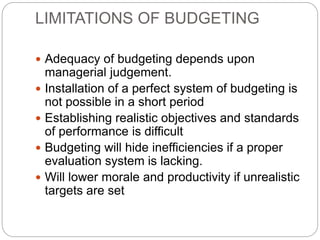
LIMITATIONS OF BUDGETING
 Adequacy of budgeting depends upon
managerial judgement.
 Installation of a perfect system of budgeting is
not possible in a short period
 Establishing realistic objectives and standards
of performance is difficult
 Budgeting will hide inefficiencies if a proper
evaluation system is lacking.
 Will lower morale and productivity if unrealistic
targets are set
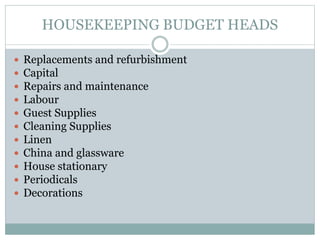
HOUSEKEEPING BUDGET HEADS
 Replacements and refurbishment
 Capital
 Repairs and maintenance
 Labour
 Guest Supplies
 Cleaning Supplies
 Linen
 China and glassware
 House stationary
 Periodicals
 Decorations
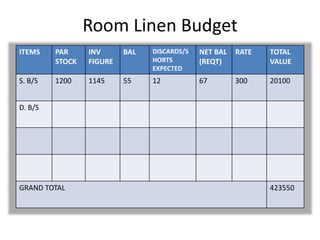
ITEMS PAR
STOCK
INV
FIGURE
BAL DISCARDS/S
HORTS
EXPECTED
NET BAL
(REQT)
RATE TOTAL
VALUE
S. B/S 1200 1145 55 12 67 300 20100
D. B/S
GRAND TOTAL 423550
Room Linen Budget
 Consumption pattern (CP)
- consumption/room night
 Room nights projection
 Layout
 Items
 Historical data of past three years
n 1100
Items CP April May June…………. Total Rate
(Rs)
Value
(Rs)
Soap 0.5 5000 6000 4500………… 1.50 75000
GRAND TOTAL 783450
Guest Supplies Budget
10000 12000 9000
50000
Room
Nights
Items No of
tables/
covers
Specs Rest Par
Stock
Linen Room
Par Stock
Inventory
Figure
Balance
TABLE LINEN BUDGET
Items/
Metre
Material
Reqd
Rate/M
etre
Total Mat
Cost
Fabrication
Chg/Pc
Total Fab
Charge
Total
Value
Department
Area
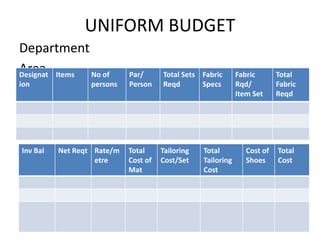
UNIFORM BUDGET
Designat
ion
Items No of
persons
Par/
Person
Total Sets
Reqd
Fabric
Specs
Fabric
Rqd/
Item Set
Total
Fabric
Reqd
Inv Bal Net Reqt Rate/m
etre
Total
Cost of
Mat
Tailoring
Cost/Set
Total
Tailoring
Cost
Cost of
Shoes
Total
Cost
TYPES OF BUDGETS
• OPERATIONAL BUDGET
• CAPITAL BUDGET
OPERATING BUDGET
An operating budget forecasts revenues &
expenses associated with routine operations
during a specified period
Examples of operating expenses:
Salaries, cleaning supplies, guest supplies etc
CAPITAL BUDGET
A capital budget plans for the expenditure on
company assets for items costing above a
specified amount.
These items have a useful life exceeding a
year.
Examples:
Furniture, fixtures, equipment, linen uniforms
PLANNING THE OPERATING BUDGET
• Room sales forecast (by Front Office)
• Consumption pattern – consumption per
occupied room
• Predicting expected prices
PLANNING THE CAPITAL BUDGET
Decision to incur capital expenditure is based
on:
i) Renovation plans
ii) Addition of rooms/public areas
iii) Replacement of equipment, carpets etc
iv) Introduction of automation
PLANNING THE CAPITAL BUDGET
Steps in the process
• Supplier identification
• Receiving competitive quotations
• Selection of a supplier
• Making the budget (product, freight and
handling charges
CONTROLLING EXPENSES
• Maintaining accurate records
• Effective scheduling
• Careful training and supervision
• Efficient purchasing
INCOME STATEMENT
Expresses the actual result of operations
during an accounting period identifying
revenues earned and expenses incurred
A comparison with the operating budget will
indicate the level of success of the hotel
operations

Housekeeping Budgets

  • 1.
    It is theplan of the organizational expectations for a specified period expressed in financial terms. It is a plan for the company’s operations and resources.
  • 2.
    PURPOSES OF ABUDGET To state the organisation’s expectations and goals To communicate expectations to all concerned To co-ordinate the activities to maximize the use of resources To provide a means of measuring the performance so that corrective actions evolve.
  • 3.
    ADVANTAGES OF BUDGETTING  Compelsmanagement to plan for the future  Helps to co-ordinate the efforts of the various departments  Provides definite expectations to judge the subsequent performance  Helps to optimize the use of the resources  Develops an atmosphere of profit mindedness and cost consciousness  Measures efficiency and inefficiency
  • 4.
    LIMITATIONS OF BUDGETING Adequacy of budgeting depends upon managerial judgement.  Installation of a perfect system of budgeting is not possible in a short period  Establishing realistic objectives and standards of performance is difficult  Budgeting will hide inefficiencies if a proper evaluation system is lacking.  Will lower morale and productivity if unrealistic targets are set
  • 5.
    HOUSEKEEPING BUDGET HEADS Replacements and refurbishment  Capital  Repairs and maintenance  Labour  Guest Supplies  Cleaning Supplies  Linen  China and glassware  House stationary  Periodicals  Decorations
  • 6.
    ITEMS PAR STOCK INV FIGURE BAL DISCARDS/S HORTS EXPECTED NETBAL (REQT) RATE TOTAL VALUE S. B/S 1200 1145 55 12 67 300 20100 D. B/S GRAND TOTAL 423550 Room Linen Budget
  • 7.
     Consumption pattern(CP) - consumption/room night  Room nights projection  Layout  Items  Historical data of past three years
  • 8.
    n 1100 Items CPApril May June…………. Total Rate (Rs) Value (Rs) Soap 0.5 5000 6000 4500………… 1.50 75000 GRAND TOTAL 783450 Guest Supplies Budget 10000 12000 9000 50000 Room Nights
  • 9.
    Items No of tables/ covers SpecsRest Par Stock Linen Room Par Stock Inventory Figure Balance TABLE LINEN BUDGET Items/ Metre Material Reqd Rate/M etre Total Mat Cost Fabrication Chg/Pc Total Fab Charge Total Value
  • 10.
    Department Area UNIFORM BUDGET Designat ion Items Noof persons Par/ Person Total Sets Reqd Fabric Specs Fabric Rqd/ Item Set Total Fabric Reqd Inv Bal Net Reqt Rate/m etre Total Cost of Mat Tailoring Cost/Set Total Tailoring Cost Cost of Shoes Total Cost
  • 11.
    TYPES OF BUDGETS •OPERATIONAL BUDGET • CAPITAL BUDGET
  • 12.
    OPERATING BUDGET An operatingbudget forecasts revenues & expenses associated with routine operations during a specified period Examples of operating expenses: Salaries, cleaning supplies, guest supplies etc
  • 13.
    CAPITAL BUDGET A capitalbudget plans for the expenditure on company assets for items costing above a specified amount. These items have a useful life exceeding a year. Examples: Furniture, fixtures, equipment, linen uniforms
  • 14.
    PLANNING THE OPERATINGBUDGET • Room sales forecast (by Front Office) • Consumption pattern – consumption per occupied room • Predicting expected prices
  • 15.
    PLANNING THE CAPITALBUDGET Decision to incur capital expenditure is based on: i) Renovation plans ii) Addition of rooms/public areas iii) Replacement of equipment, carpets etc iv) Introduction of automation
  • 16.
    PLANNING THE CAPITALBUDGET Steps in the process • Supplier identification • Receiving competitive quotations • Selection of a supplier • Making the budget (product, freight and handling charges
  • 17.
    CONTROLLING EXPENSES • Maintainingaccurate records • Effective scheduling • Careful training and supervision • Efficient purchasing
  • 18.
    INCOME STATEMENT Expresses theactual result of operations during an accounting period identifying revenues earned and expenses incurred A comparison with the operating budget will indicate the level of success of the hotel operations