Wasp sting: Inflammation & Relief by Topical Natural Phytochemicals
The presentation by Dr. Kevin K.F. Ng discusses the nature of wasp stings, outlining their prevalence, the composition of wasp venom, and the body's immune response to stings. It emphasizes the varying reactions to wasp stings, from localized inflammation to severe systemic reactions requiring immediate medical intervention. Additionally, the talk explores the potential of anti-inflammatory phytochemicals as effective topical treatments for wasp stings compared to conventional remedies.
Wasp sting: Inflammation & Relief by Topical Natural Phytochemicals
1.
WASP STING:
INFLAMMATION &RELIEF BY TOPICAL
NATURAL PHYTOCHEMICALS
By
Kevin KF Ng, MD, PhD
Former Associate Professor of Medicine
Division of Clinical Pharmacology
University of Miami, FL, USA
Email: kevinng68@gmail.com
Presented at HealthCare provider Seminar 2018
2.
Lecture Outline
▪ Introduction:what is a wasp? What is wasp sting?
▪ Statistics: incidence of wasp stings and deaths
▪ Composition of wasp venom
▪ Reactions to wasp sting by immune system
▪ Acute inflammation: mediators
▪ Treatment of wasp stings: Local reaction
Systemic reaction or anaphylaxis
▪ Anti-inflammatory phytochemicals
▪ Effect of topical anti-inflammatory phytochemicals
▪ Summary and future directions.
2
Background of WaspStings
▪ More than 25,000 species of wasps exist worldwide. They include yellow jackets,
paper wasps and hornets of the genus Vespula.
▪ Stings by members of the order Hymenoptera is a major cause of morbidity and
mortality and accounts for more fatalities than any other venomous animal.
▪ The skin is the most commonly affected organ system.
▪ The result of a wasp sting can vary from a single area of localized inflammation
to a generalized urticarial rash.
4
5.
Hymenoptera (wasp, hornets,yellow jackets) Stings in USA
▪ Annual number of stings by Hymenoptera
• more than1 million stings annually
• 3% of general population
▪ Systemic reactions
• 0.4-0.8 % of children
• 3 % of adults
https://emedicine.medscape.com/article/768764-overview#a6
Deaths from 2003-2010
5
6.
Incidence of Reactionsto Wasp Stings in Emergency Room
n = 2606 patients in 2015
https://emedicine.medscape.com/article/169324-overview#a6
Under
reported
Hymenoptera stings and wasp stings
have increased over the last 60 years
and now account for over 79 deaths
each year.
6
7.
Fatal occupational injuriesinvolving insects 2003-2013
http://blogs.marketwatch.com/capitolreport/2014/08/11/bee-stings-are-behind-most-insect-related-deaths-for-workers/
number
7
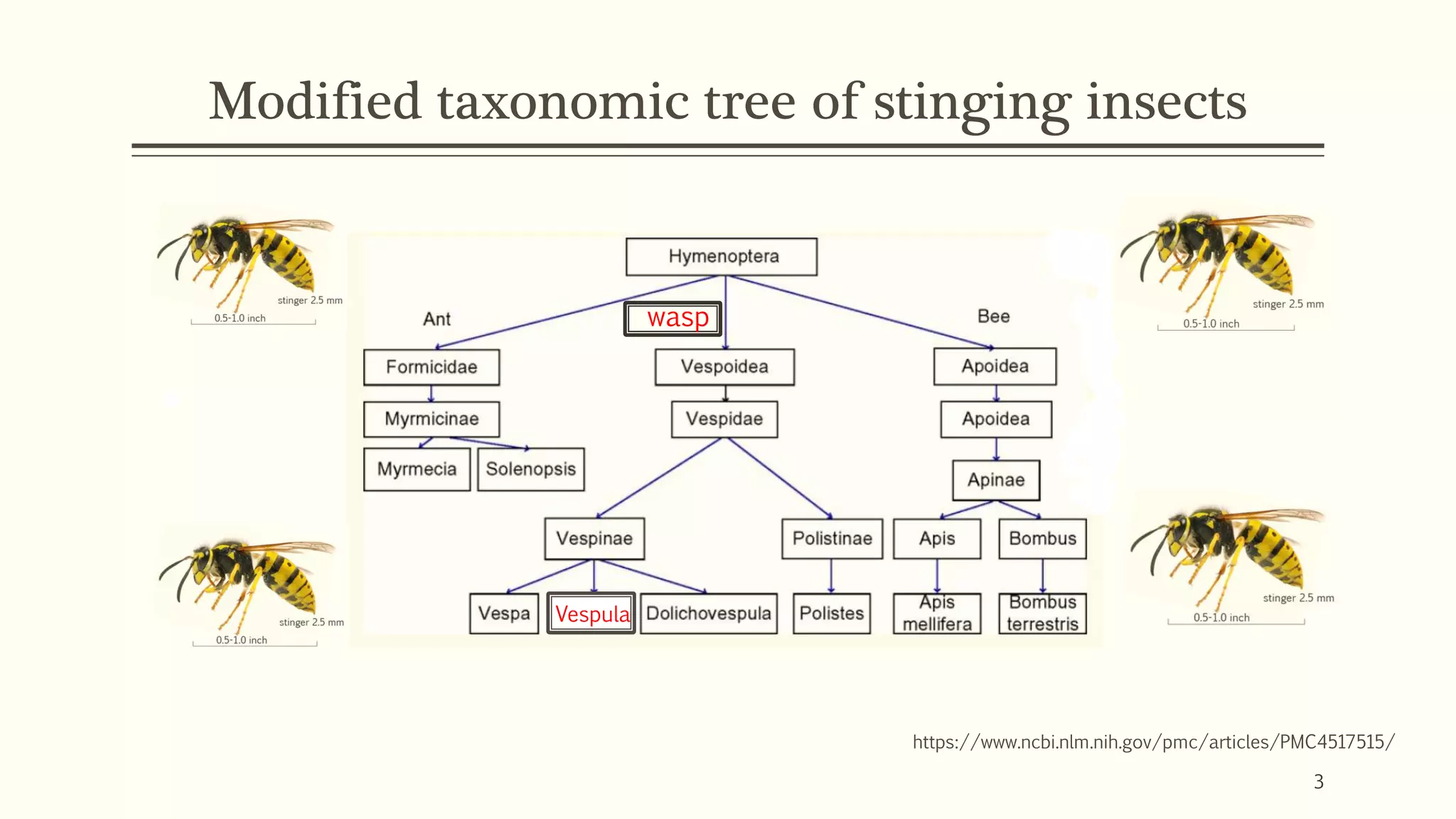
Features of anadult female worker wasp
▪ Length: 0.5-1.0 inch
▪ Stinger: 2.5 mm/0.1 inch
▪ Narrow waist
▪ Black and yellow stripes in abdomen
▪ Only worker wasp (sterile female) has stinger
▪ Fly with legs hanging down
▪ Feed on flower nectar, ripen fruits and insects https://www.confirmakill.co.uk/services/wasp-nest-removal/
stinger 2.5 mm
0.5-1.0 inch
9
10.
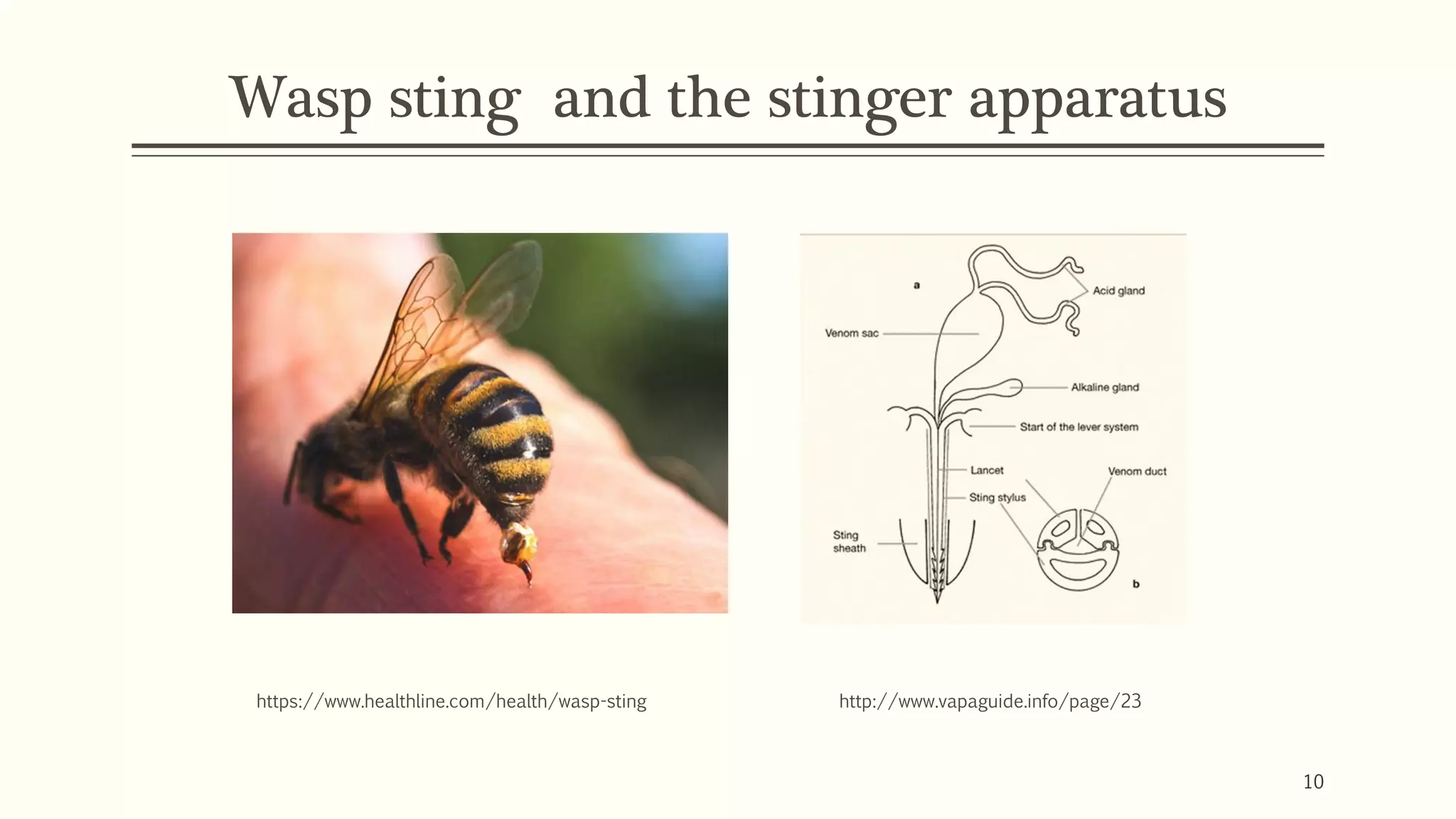
Wasp sting andthe stinger apparatus
http://www.vapaguide.info/page/23https://www.healthline.com/health/wasp-sting
10
11.
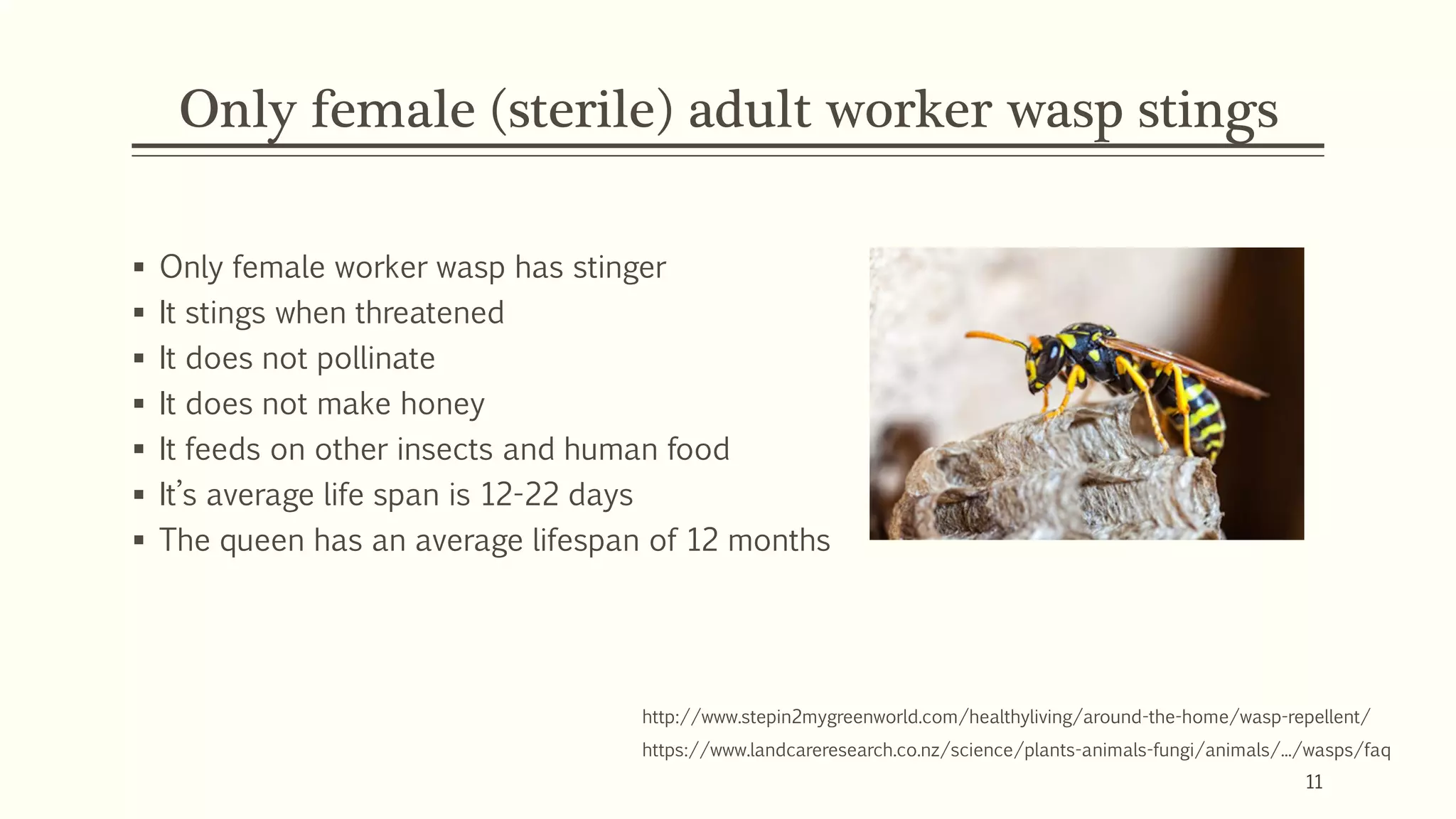
Only female (sterile)adult worker wasp stings
▪ Only female worker wasp has stinger
▪ It stings when threatened
▪ It does not pollinate
▪ It does not make honey
▪ It feeds on other insects and human food
▪ It’s average life span is 12-22 days
▪ The queen has an average lifespan of 12 months
http://www.stepin2mygreenworld.com/healthyliving/around-the-home/wasp-repellent/
https://www.landcareresearch.co.nz/science/plants-animals-fungi/animals/.../wasps/faq
11
12.
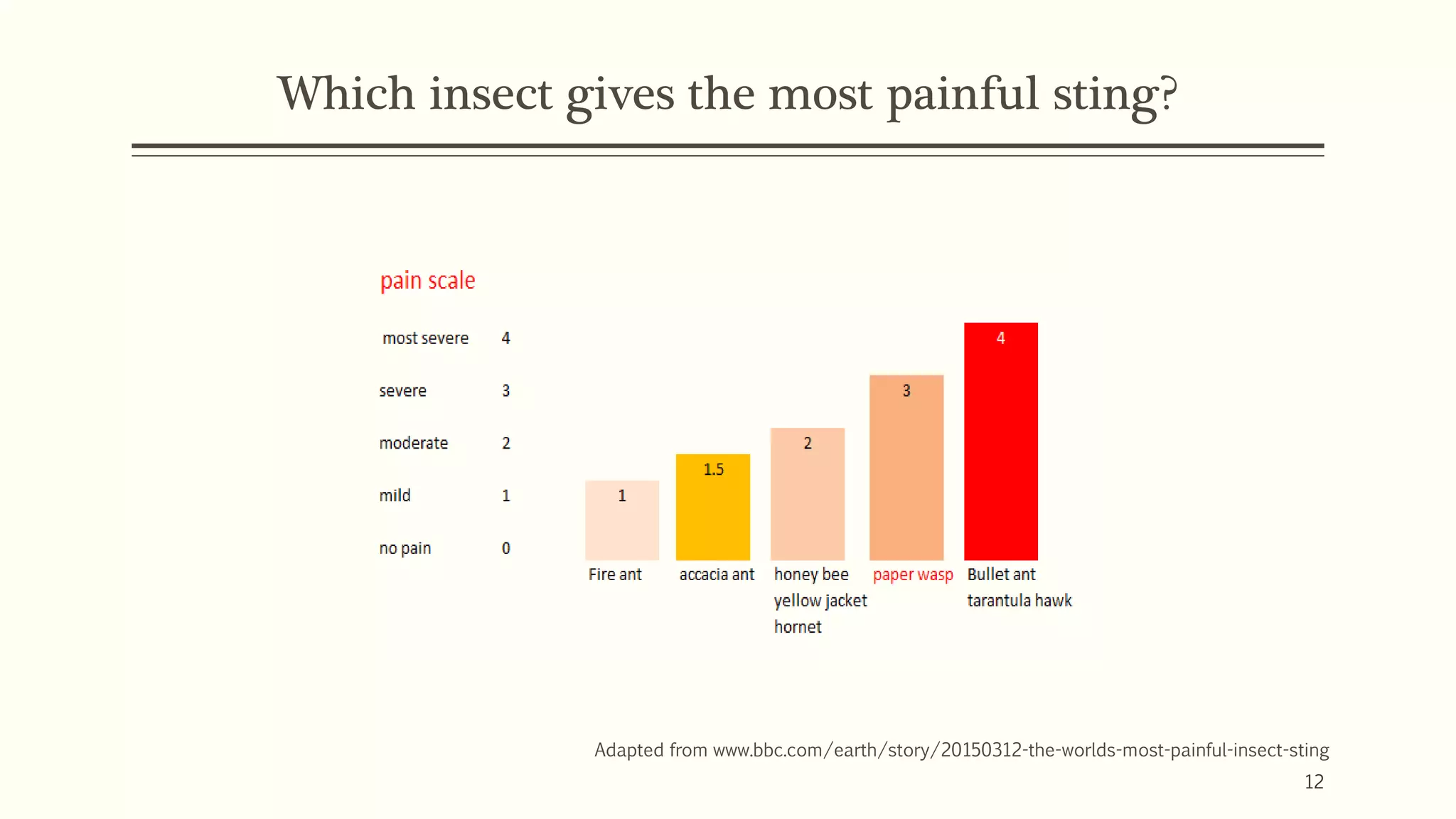
Which insect givesthe most painful sting?
Adapted from www.bbc.com/earth/story/20150312-the-worlds-most-painful-insect-sting
12
13.
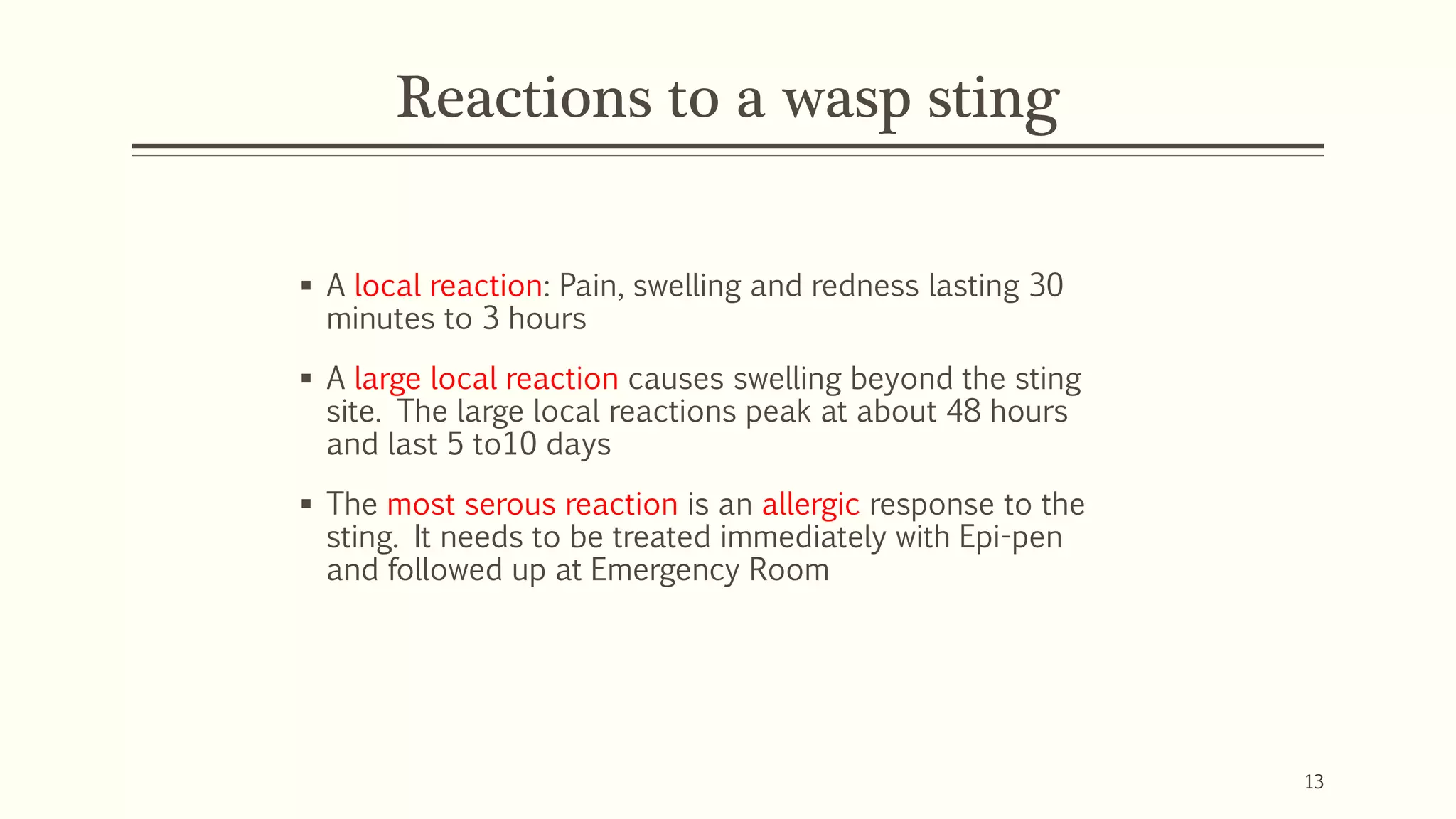
Reactions to awasp sting
▪ A local reaction: Pain, swelling and redness lasting 30
minutes to 3 hours
▪ A large local reaction causes swelling beyond the sting
site. The large local reactions peak at about 48 hours
and last 5 to10 days
▪ The most serous reaction is an allergic response to the
sting. It needs to be treated immediately with Epi-pen
and followed up at Emergency Room
13
14.
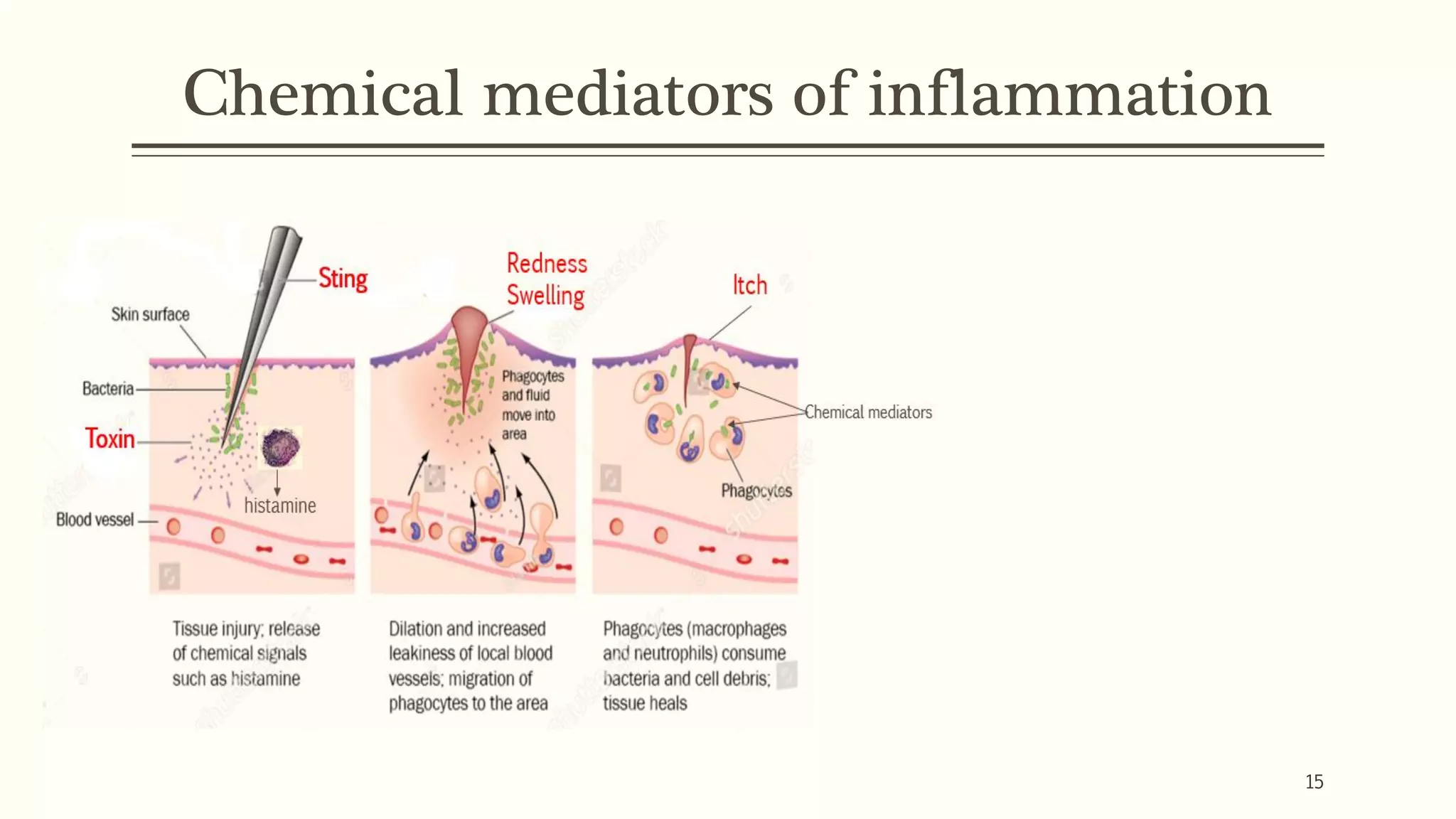
What happens whena wasp stings ?
(1 sting contains 2 – 15 µg venom)
Acute Inflammation
to 10 days
to 5 days
14
Pathophysiology (local reaction)
▪Wasp does not leave the stinger behind.
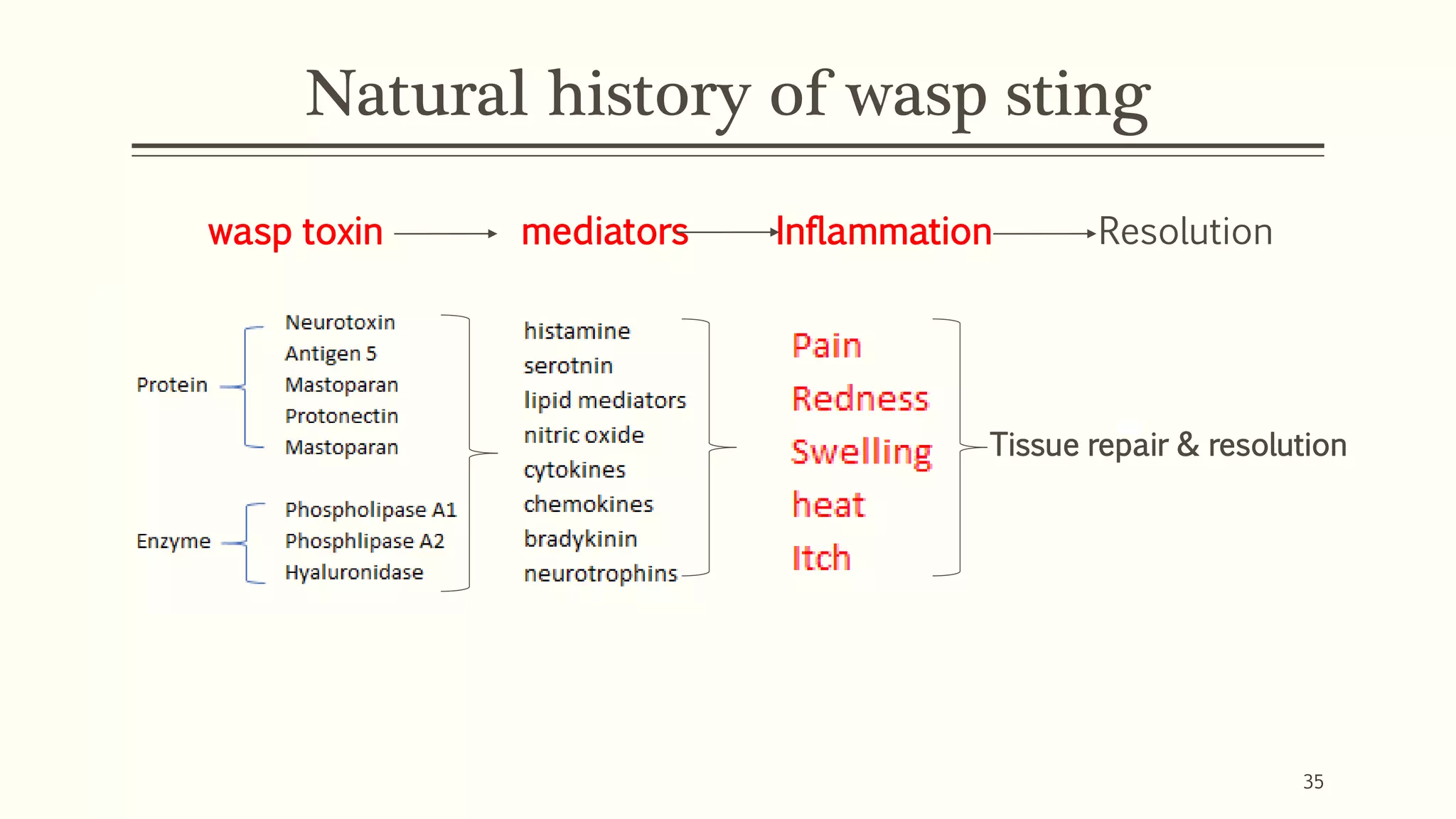
▪ Wasp venom contains up to 13 different antigens.
▪ The venom causes an intense stinging sensation that is mediated by acetylcholine
and serotonin, which make up to 5% of the dry weight of the venom
▪ The acetylcholine stimulates nociceptors within the dermis. The serotonin causes
multiple effects through the 5-hydroxytryptamine (5-HT) receptors,
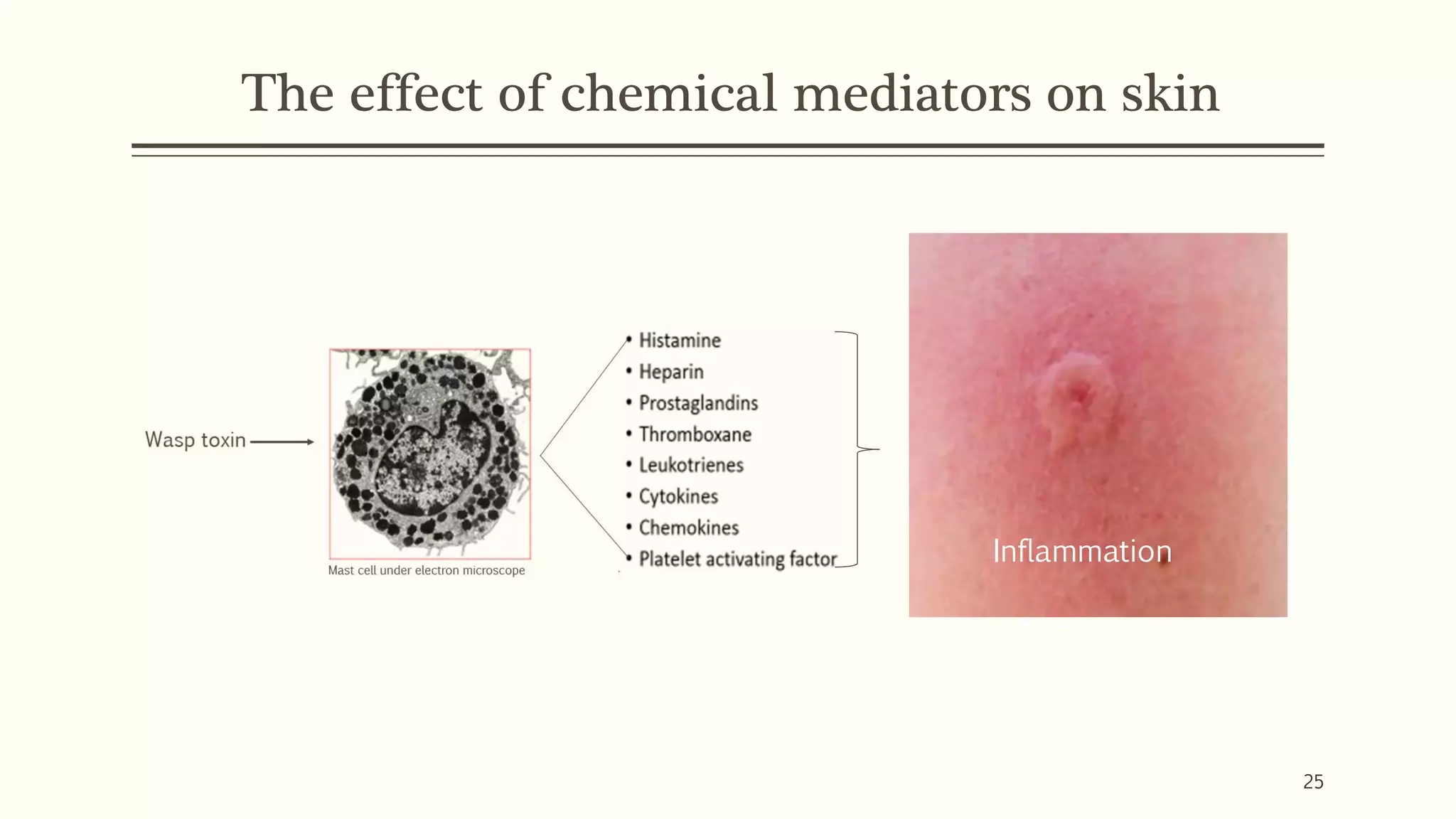
▪ The wasp venom also contains phospholipase A2 , phospholipase B, as well as
mastoparan peptide, which can cause direct mast cell degranulation with the release
of histamine.
https://emedicine.medscape.com/article/169324-overview#a5 27
28.
Pathophysiology (Systemic reaction)
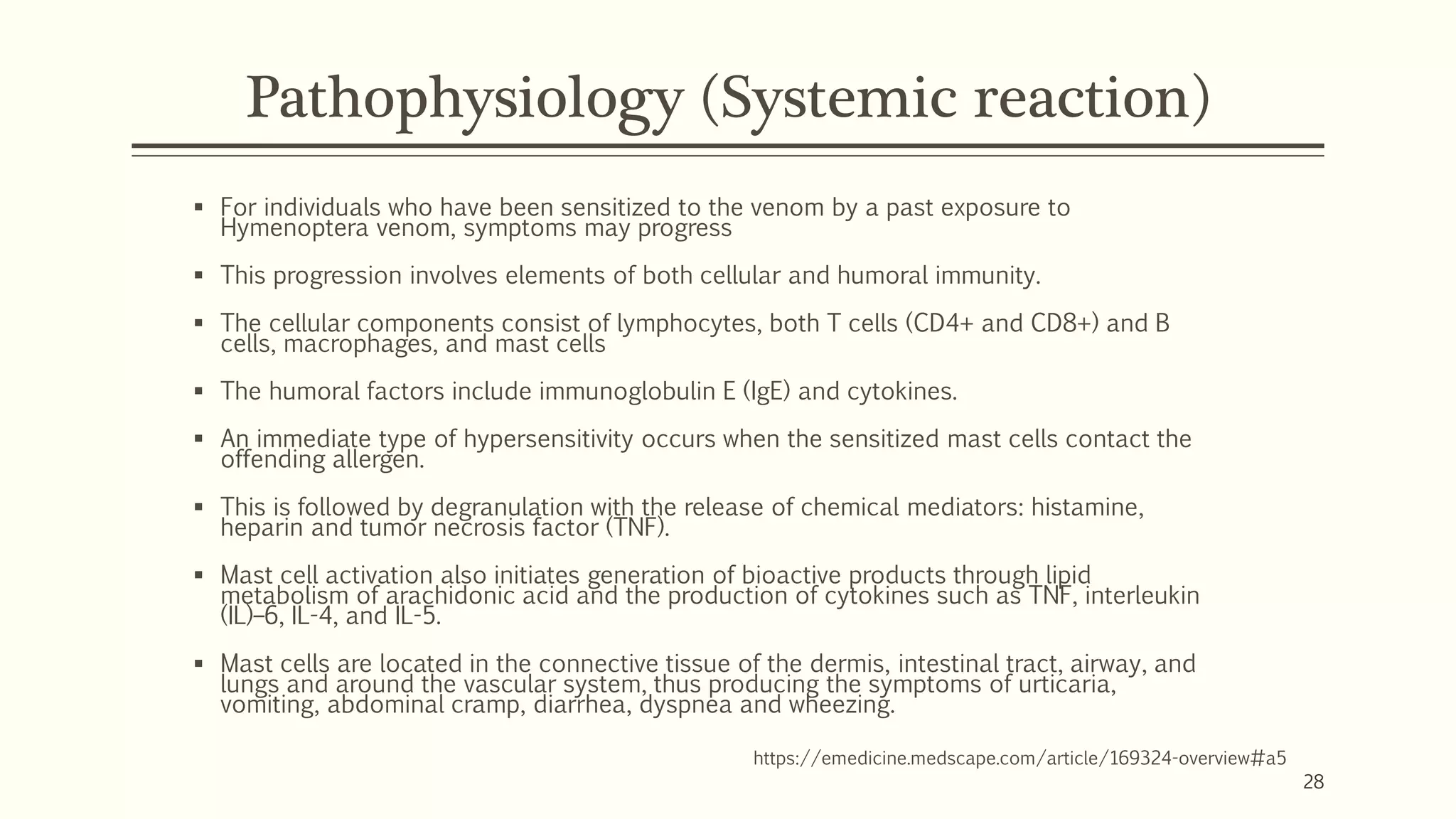
▪For individuals who have been sensitized to the venom by a past exposure to
Hymenoptera venom, symptoms may progress
▪ This progression involves elements of both cellular and humoral immunity.
▪ The cellular components consist of lymphocytes, both T cells (CD4+ and CD8+) and B
cells, macrophages, and mast cells
▪ The humoral factors include immunoglobulin E (IgE) and cytokines.
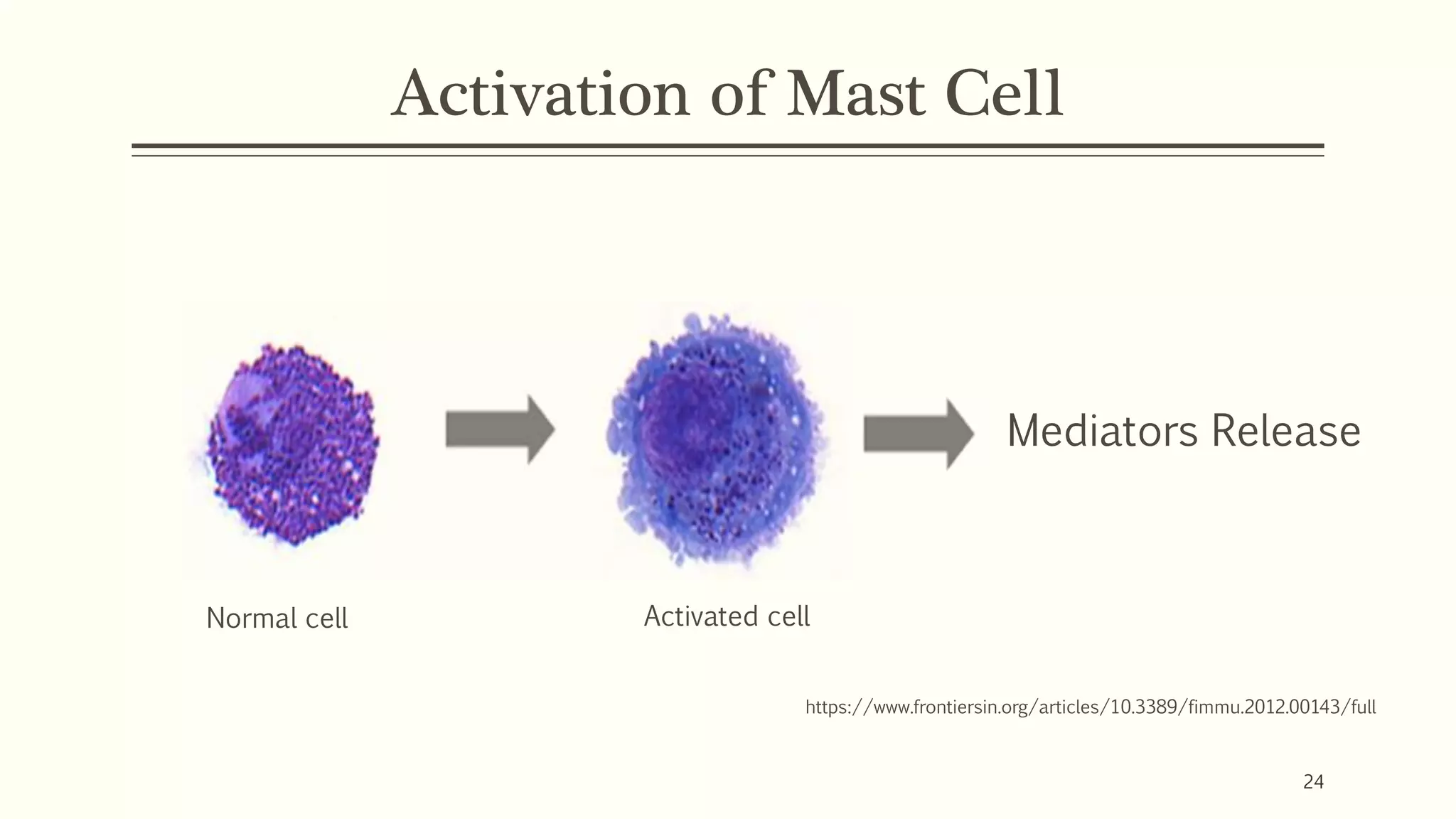
▪ An immediate type of hypersensitivity occurs when the sensitized mast cells contact the
offending allergen.
▪ This is followed by degranulation with the release of chemical mediators: histamine,
heparin and tumor necrosis factor (TNF).
▪ Mast cell activation also initiates generation of bioactive products through lipid
metabolism of arachidonic acid and the production of cytokines such as TNF, interleukin
(IL)–6, IL-4, and IL-5.
▪ Mast cells are located in the connective tissue of the dermis, intestinal tract, airway, and
lungs and around the vascular system, thus producing the symptoms of urticaria,
vomiting, abdominal cramp, diarrhea, dyspnea and wheezing.
https://emedicine.medscape.com/article/169324-overview#a5
28
29.
Signs and symptomsof Severe Wasp Sting or
Anaphylaxis
https://en.wikipedia.org/wiki/Anaphylaxis
Treatment
● Epi-Pen
● Call 911 or
go to Emergency Room
29
30.
Pathophysiology: severe systemicor anaphylactic reaction
▪ Anaphylactic shock is an immediate-type hypersensitivity reaction that occurs when
mast cells are activated within multiple organ systems.
▪ The explosive of histamine and cytokines cause vascular collapse.
▪ This is an IgE-mediated reaction to the sting.
▪ Most fatalities occur within 1 hour, with most severe reactions occurring within 10
minutes of the wasp sting.
▪ In one study of postmortem sera from patients with sudden death, 23% had
elevated levels to Hymenoptera venom
https://emedicine.medscape.com/article/169324-overview#a5
30
31.
Requirements for rationaltreatment of
local reaction to wasp sting
▪ Knowledge of the severity of reaction to wasp sting
▪ Knowledge of potency of wasp venom
▪ Knowledge of components of wasp venom
▪ Knowledge of the immune response to wasp venom
▪ Knowledge of the natural history of wasp sting
▪ Knowledge of pharmacology of anti-inflammatory drugs and phytochemicals.
▪ Combination of these knowledges help to formulate a natural topical product based
on anti-inflammatory phytochemicals,
31
32.
Potency of HymenopteranVenom
(1/lethal dose x 1000)
Source: Schmidt, J.O. (1983) Hymenoptera envenomation
Potency
32
33.
Lethality of HymenopteranStings
http://www.artasaweapon.info/pages/bullet-ant-sting-pain-scale.awp
33
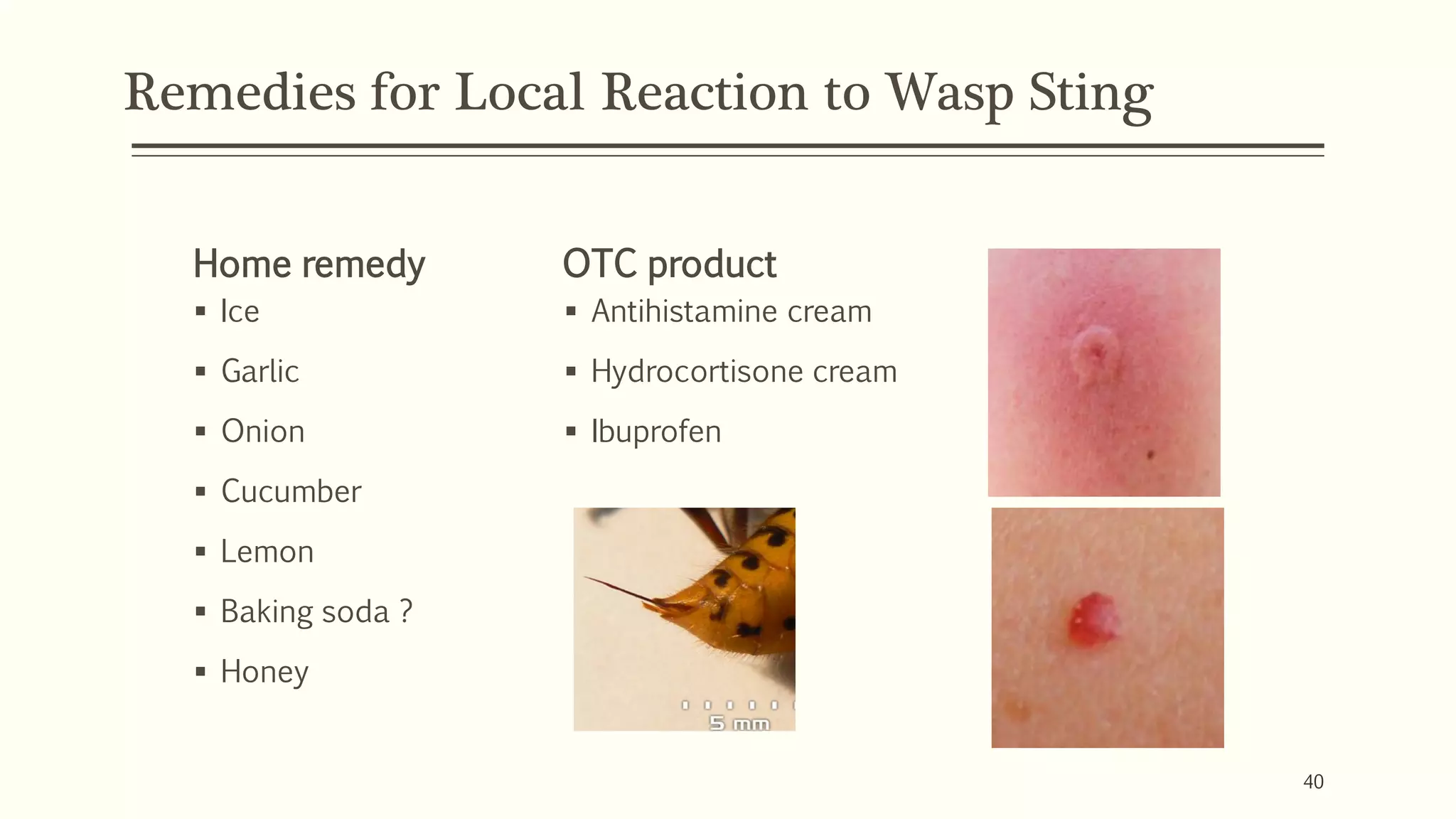
Remedies for LocalReaction to Wasp Sting
Home remedy
▪ Ice
▪ Garlic
▪ Onion
▪ Cucumber
▪ Lemon
▪ Baking soda ?
▪ Honey
OTC product
▪ Antihistamine cream
▪ Hydrocortisone cream
▪ Ibuprofen
40
41.
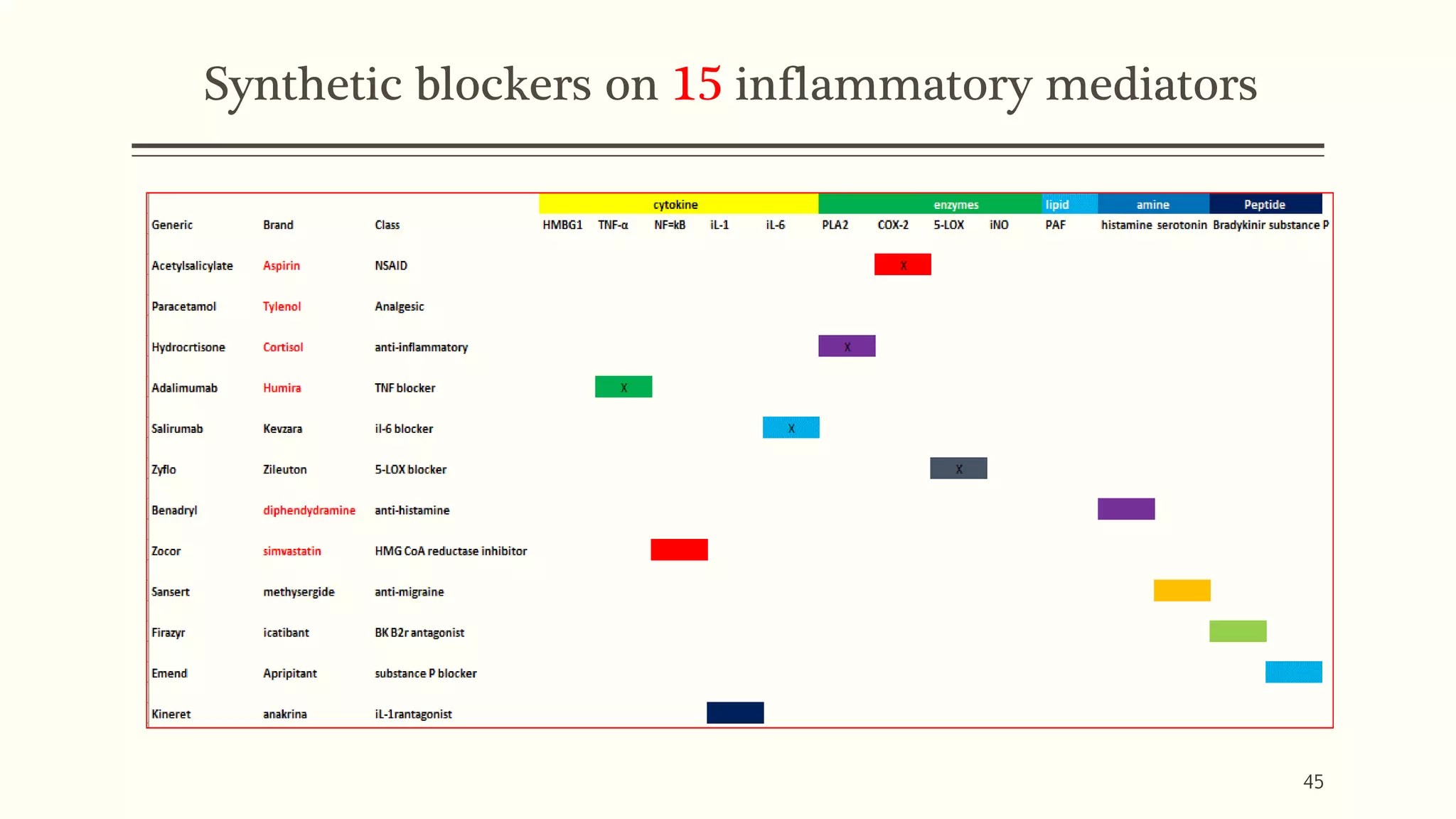
Disadvantages of CurrentTopical Renedies
▪ Low concentration of active ingredients.
▪ Water-based formulations.
▪ Inefficient and slow absorption.
▪ Actions limited to 2 out of 14 mediators.
▪ Many mediators act unopposed.
▪ Therefore treatment is incomplete.
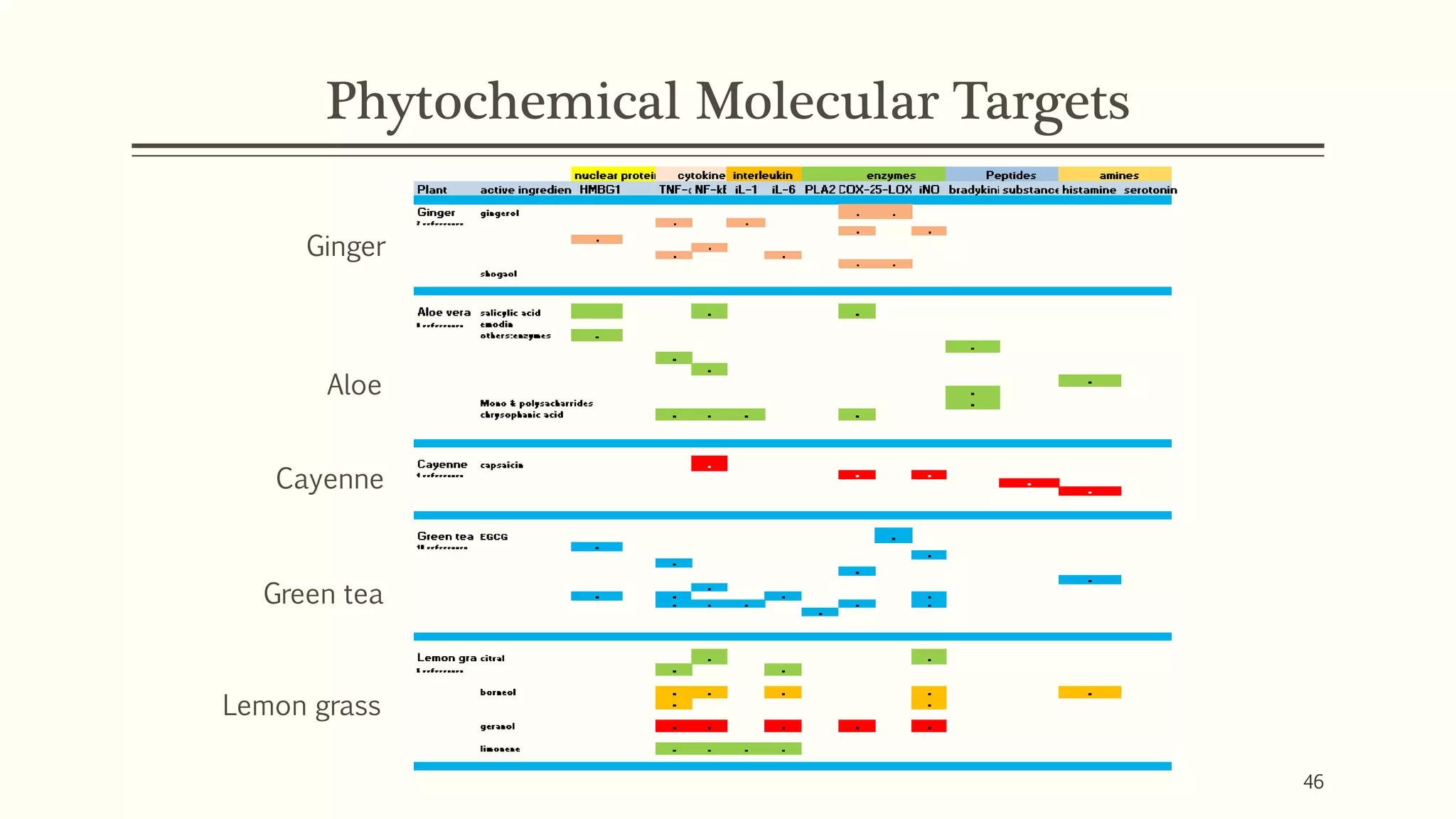
▪ This prompted us to search for anti-inflammatory
phytochemicals among food, spices and herbs.
41
42.
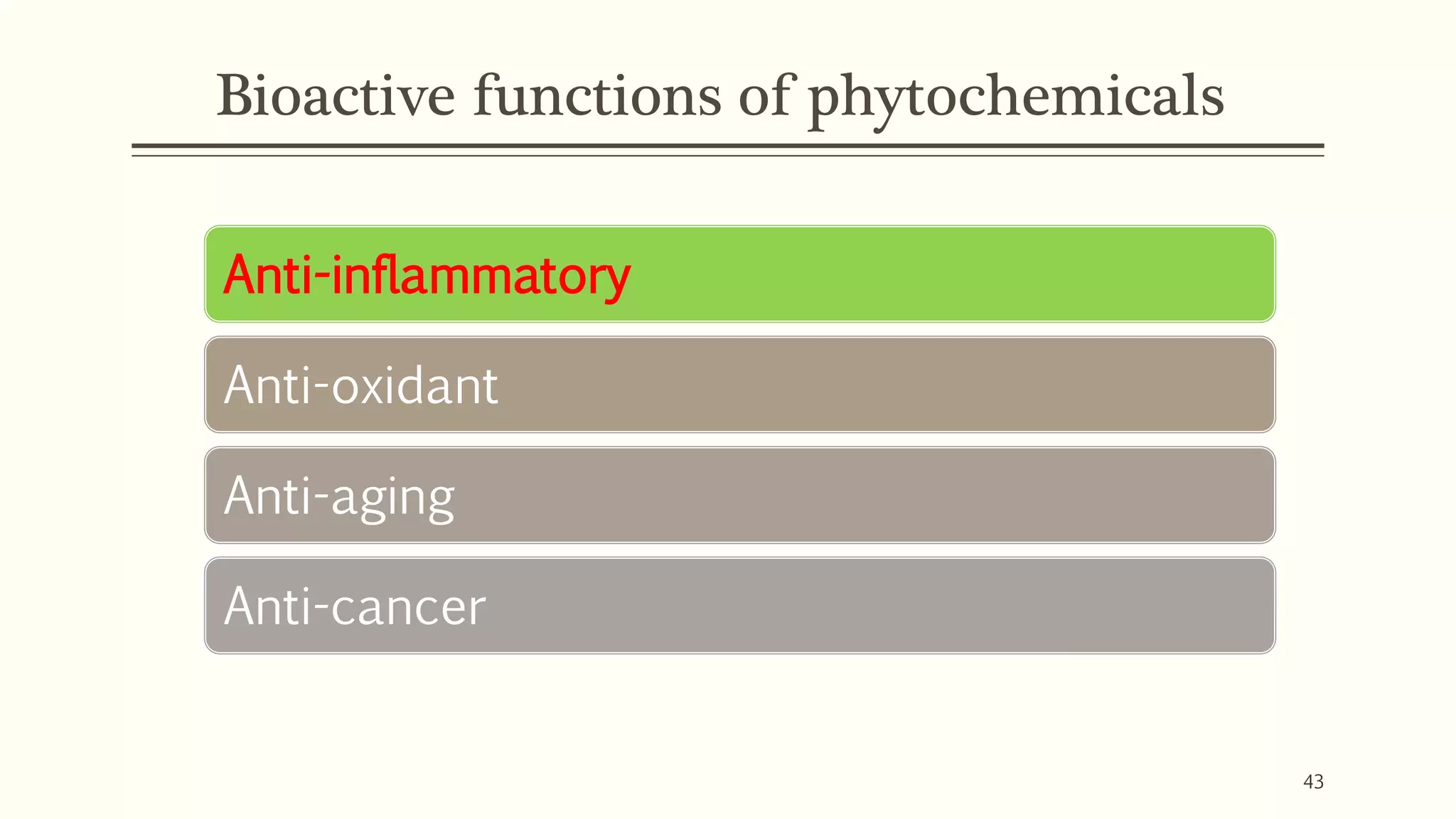
What are phytochemicals?
▪Phytochemicals are bioactive substances
found in plants.
▪ Phytochemicals are found in roots, barks, stems,
leaves, flowers, fruits.
▪ Phytochemicals are beneficial for health.
▪ Phytochemicals are not vitamins.
▪ Phytochemicals can be extracted by water,
alcohol or massage oils.
42
Examples of anti-inflammatoryphytochemicals
in food, spices and herbs
Product Variety Active ingredient
Fruit Grape Resveratrol
Apple Quercetin
Chili pepper Capsaicin
Leaf Green tea EGCG
Aloe Salicylic acid, emodin
Bark White willow Salicylic acid
Magnolia Honokiol
Root Ginseng Ginsenosides
Galagal Galagin
Tumeric Cucumin
44
A phytochemical formulaL35 made from spices and herbs for
Itch, Pain and Swelling caused by wasp sting
chemical mediators
Spices
Herbs
48
49.
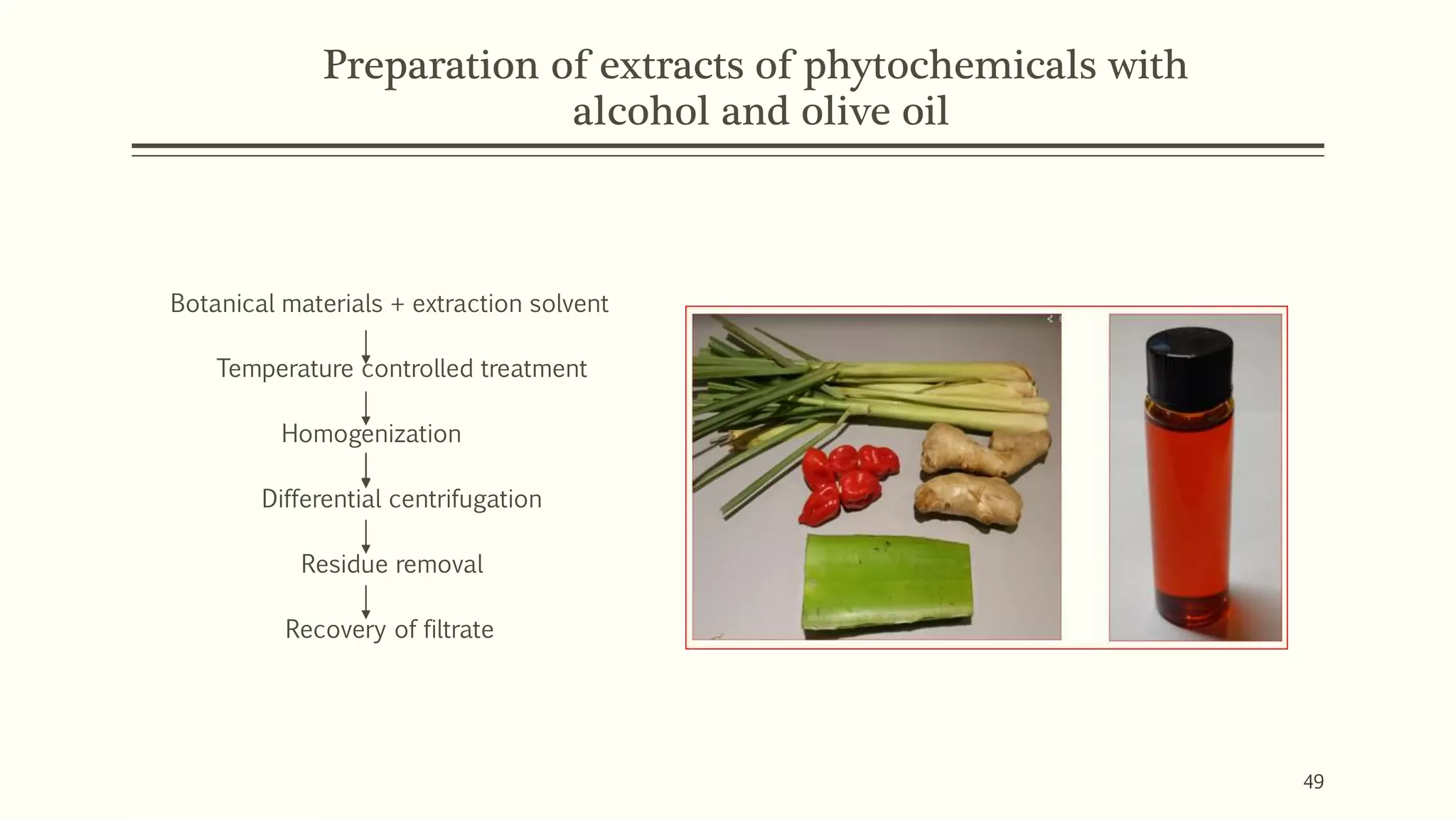
Preparation of extractsof phytochemicals with
alcohol and olive oil
Botanical materials + extraction solvent
Temperature controlled treatment
Homogenization
Differential centrifugation
Residue removal
Recovery of filtrate
49
50.
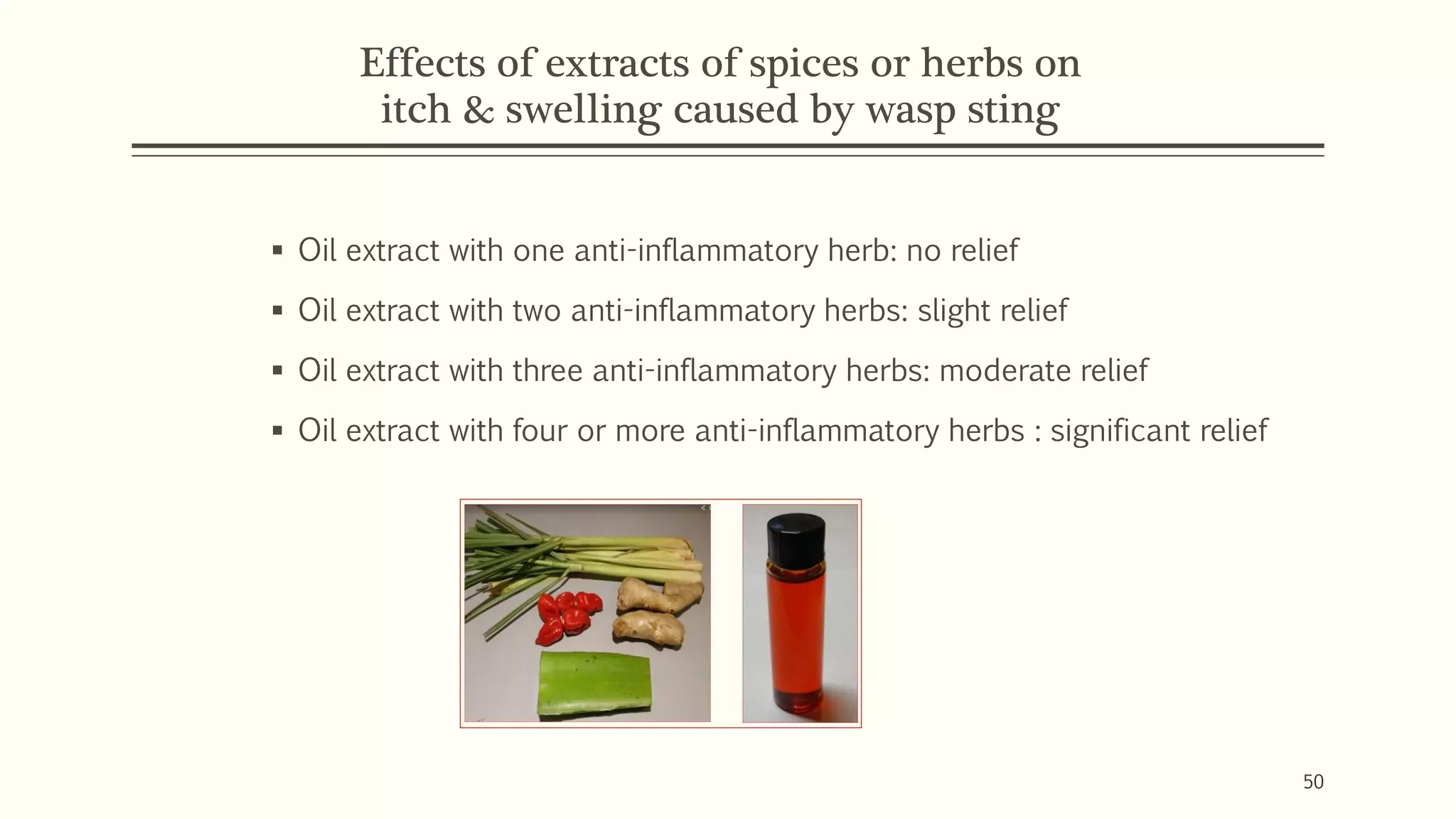
Effects of extractsof spices or herbs on
itch & swelling caused by wasp sting
▪ Oil extract with one anti-inflammatory herb: no relief
▪ Oil extract with two anti-inflammatory herbs: slight relief
▪ Oil extract with three anti-inflammatory herbs: moderate relief
▪ Oil extract with four or more anti-inflammatory herbs : significant relief
50
51.
Effect of L35on symptoms of wasp sting:
significant relief
Pain
Redness
Swelling
Itch
● Control data based on family exposure
● L35 Rx based on personal experience
51
52.
Summary
▪ Only female(sterile) adult worker wasp stings.
▪ Wasp venom contains allergens, proteins, peptides, enzymes, etc.
▪ Exposure of the skin to wasp venoms results in the release of multiple
chemical mediators which cause a local reaction, severe systemic
reaction or anaphylaxis.
▪ Local reactions are self-limiting, whereas severe systemic and toxic
reaction require immediate medical intervention.
▪ Home remedies and OTC products for local reactions are generally
not effective as they target only a few chemical mediators.
▪ A combination of phytochemicals target most of the chemical
mediators and provide a rational local treatment of wasp stings.
52