AUBHO 2014 
Rachna T. Shroff, MD, MS 
Assistant Professor, 
Dept of GI Medical Oncology 
M.D. Anderson Cancer Center 
rshroff@mdanderson.org
None with the subject matter to be 
presented 
Research Funding: 
Celgene 
Clovis Oncology
>7,0000 cases annually in 2009 
5-year survival is <15% 
Most patients present with locally advanced or metastatic 
disease 
Treatment commonly administered in the community, 
at low-volume centers.
Obesity, Metabolic Syndrome 
Chronic inflammation (hepatitis, ETOH, smoking, 
occupational) 
Parasitic infections 
Primary sclerosing cholangitis, Crohns disease 
Cysts, anomalous pancreatobiliary ducts 
Biliary polyps (>10 mm)
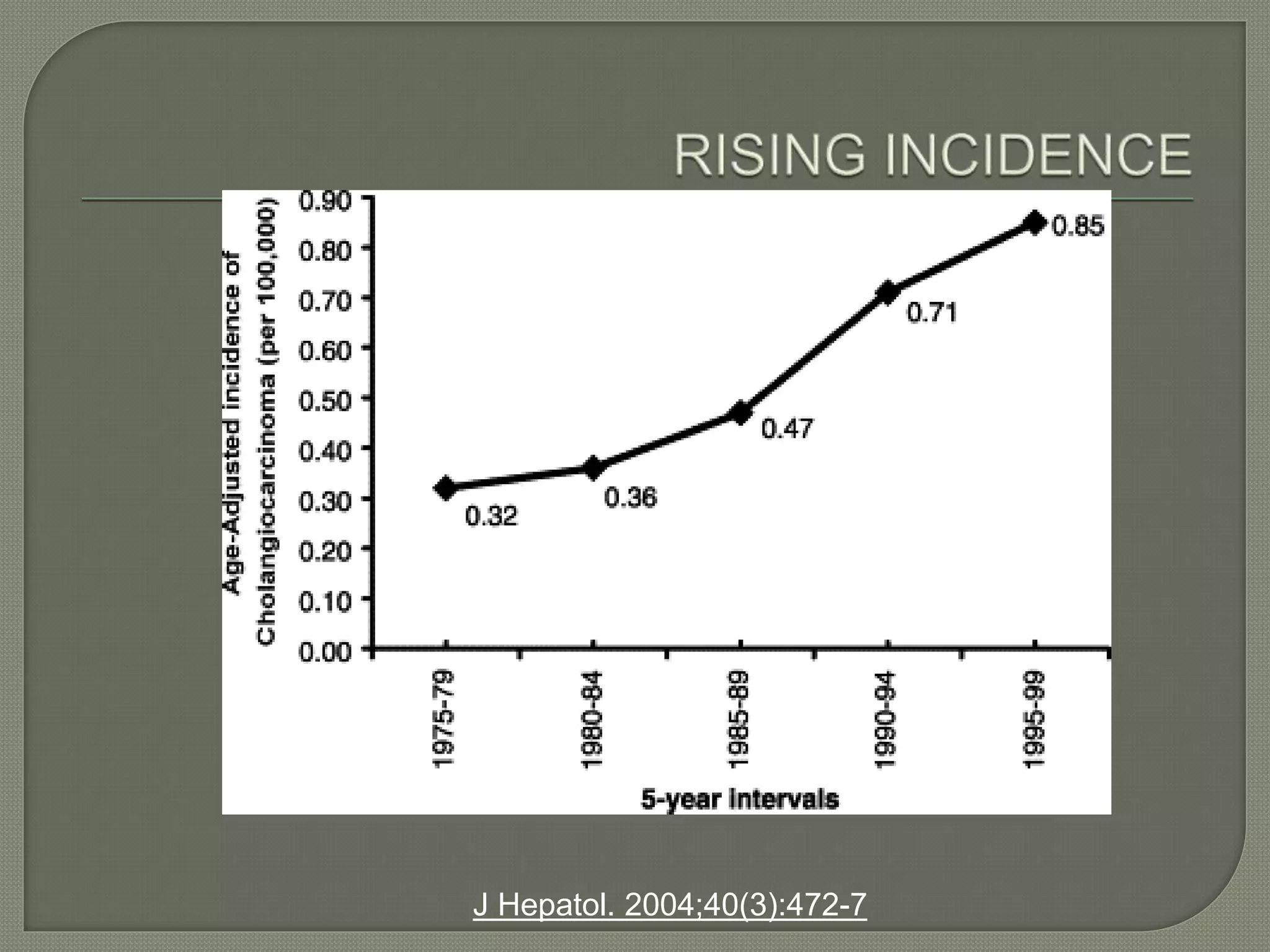
J Hepatol. 2004;40(3):472-7
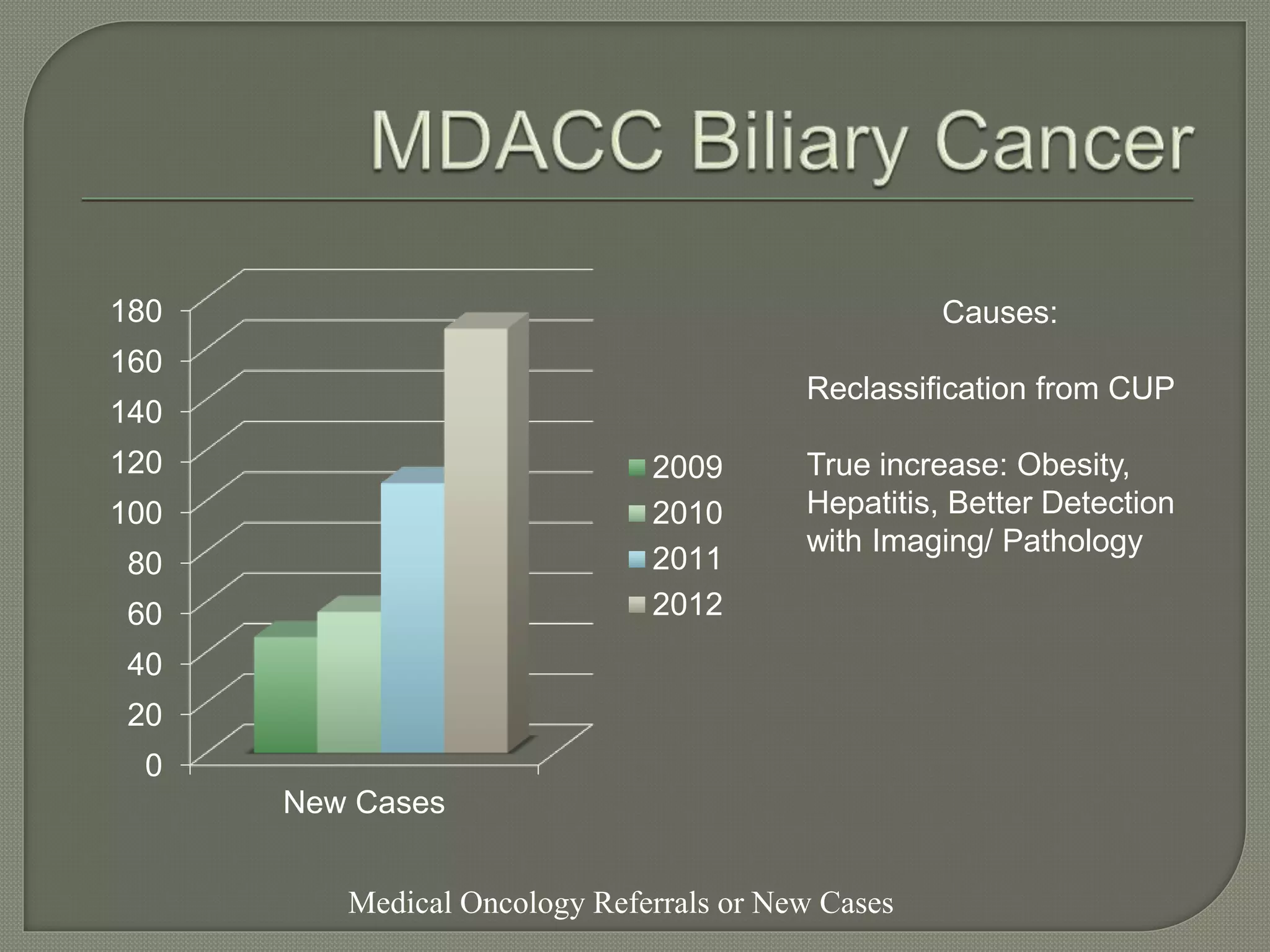
180 
160 
140 
120 
100 
80 
60 
40 
20 
0 
New Cases 
2009 
2010 
2011 
2012 
Medical Oncology Referrals or New Cases 
Causes: 
Reclassification from CUP 
True increase: Obesity, 
Hepatitis, Better Detection 
with Imaging/ Pathology
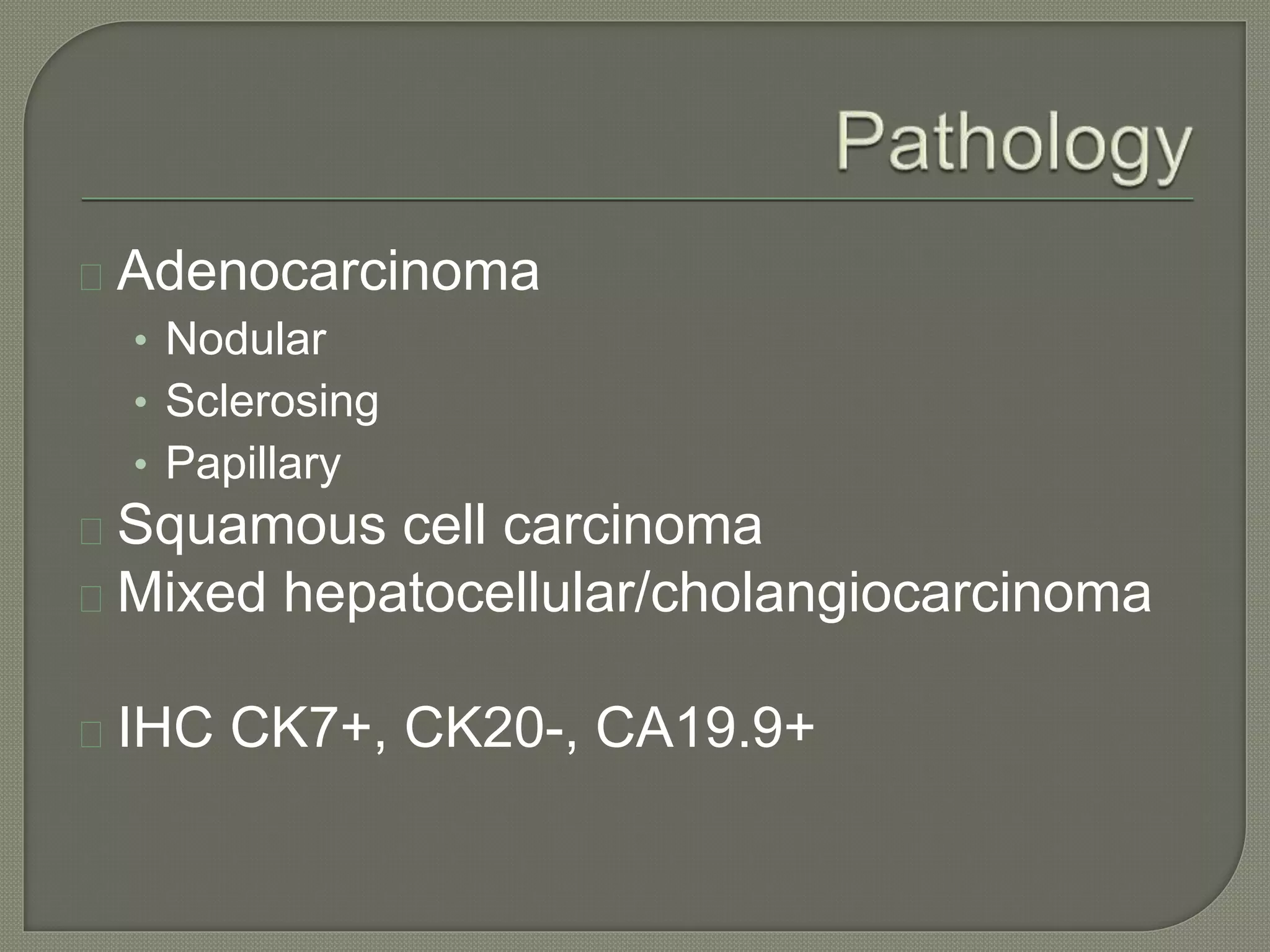
Adenocarcinoma 
• Nodular 
• Sclerosing 
• Papillary 
Squamous cell carcinoma 
Mixed hepatocellular/cholangiocarcinoma 
IHC CK7+, CK20-, CA19.9+
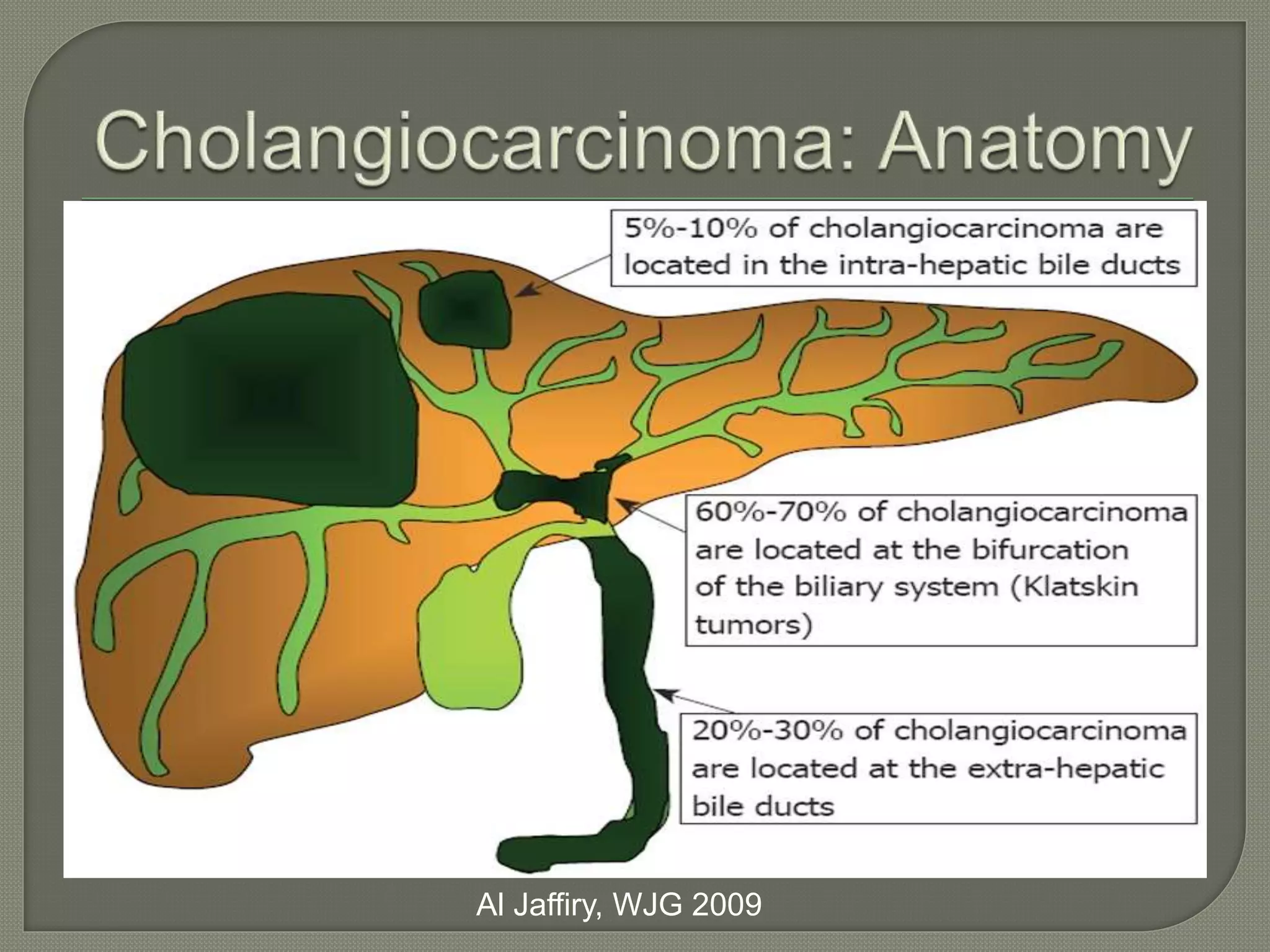
Al Jaffiry, WJG 2009
Extrahepatic 
• Painless jaundice 
• Weight loss 
• Fever 
Intrahepatic 
• Constitutional Symptoms 
• Pain 
• Hepatomegaly 
• Abnormal Liver Chemistries
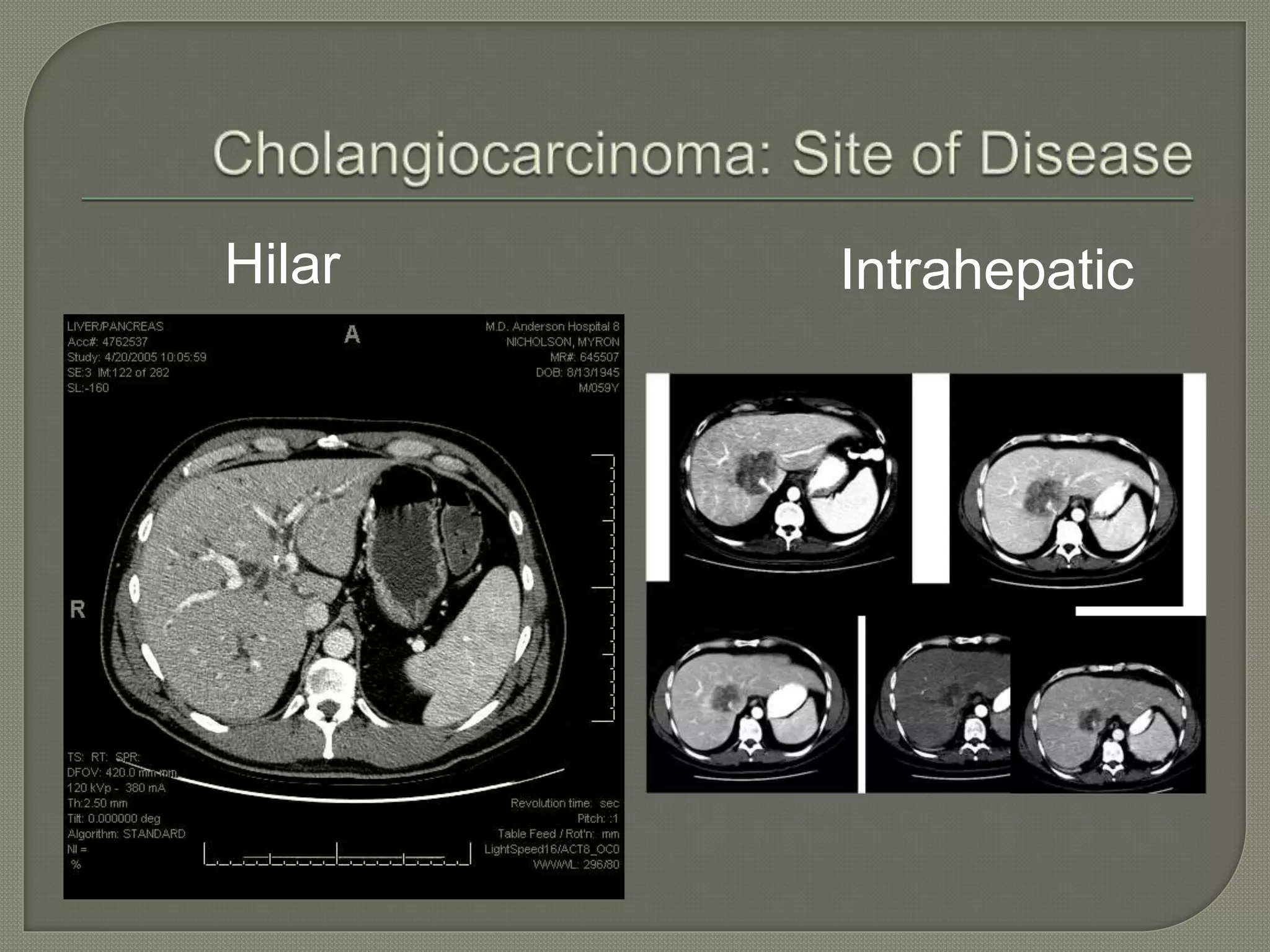
Hilar Intrahepatic
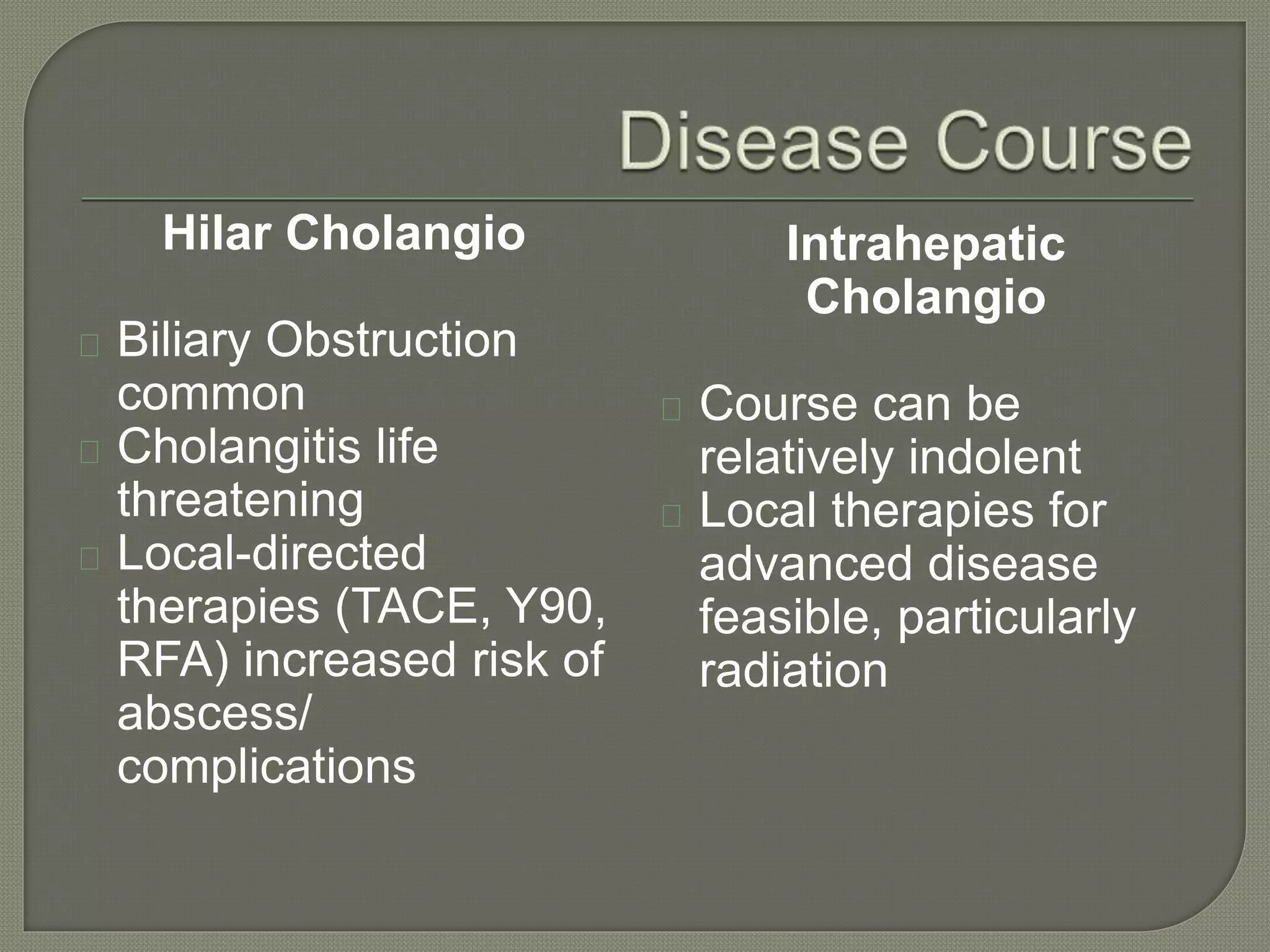
Hilar Cholangio 
Biliary Obstruction 
common 
Cholangitis life 
threatening 
Local-directed 
therapies (TACE, Y90, 
RFA) increased risk of 
abscess/ 
complications 
Intrahepatic 
Cholangio 
Course can be 
relatively indolent 
Local therapies for 
advanced disease 
feasible, particularly 
radiation
Surgical resection is the standard of care 
Post operative radiation/ chemoradiation therapy 
improves recurrence-free survival in R1 disease 
Role of adjuvant therapy in R0 resection is debatable 
Role of liver transplantation in unresectable hilar 
cholangiocarcinoma. 
NCCN Guidelines
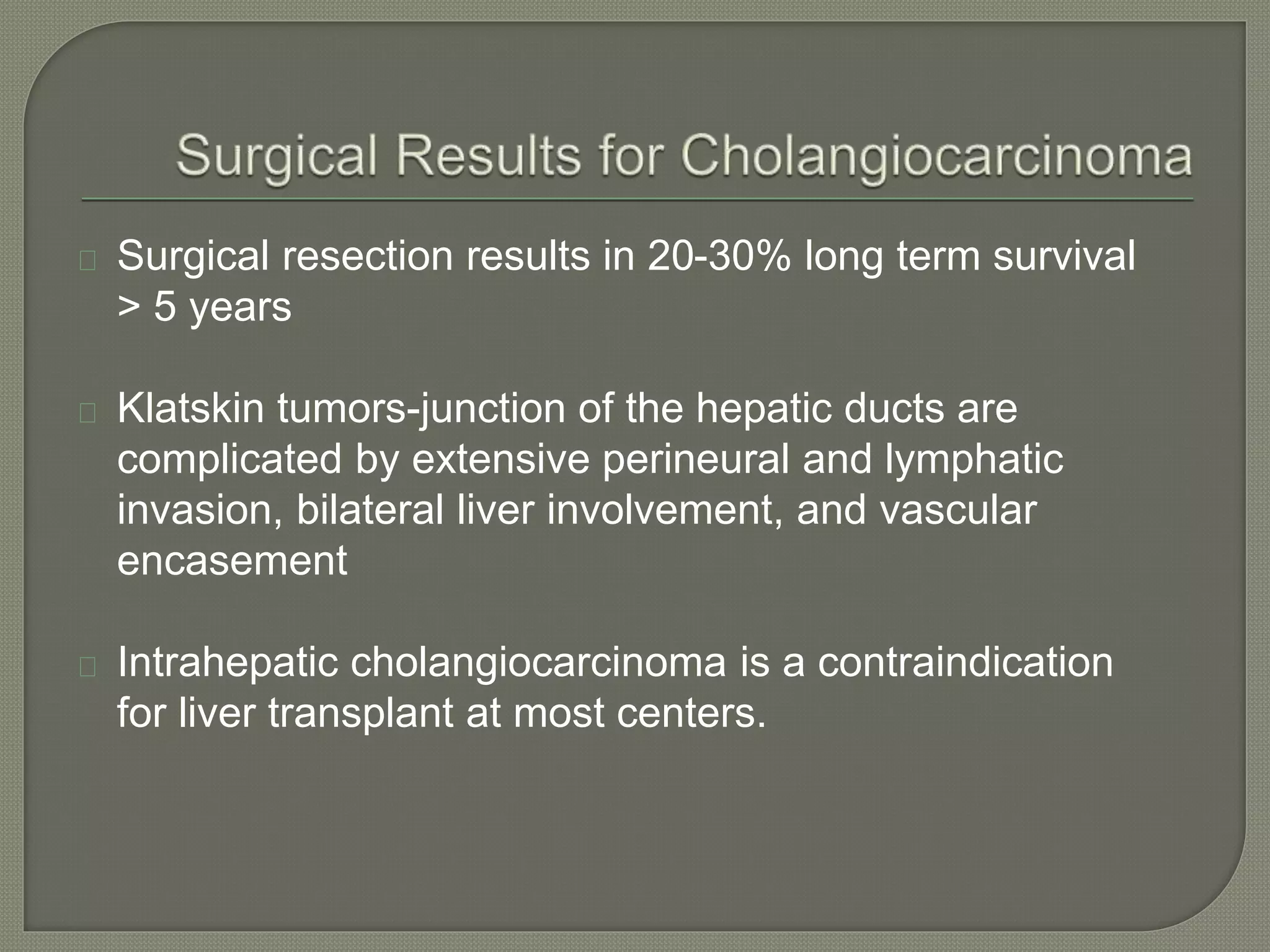
Surgical resection results in 20-30% long term survival 
> 5 years 
Klatskin tumors-junction of the hepatic ducts are 
complicated by extensive perineural and lymphatic 
invasion, bilateral liver involvement, and vascular 
encasement 
Intrahepatic cholangiocarcinoma is a contraindication 
for liver transplant at most centers.
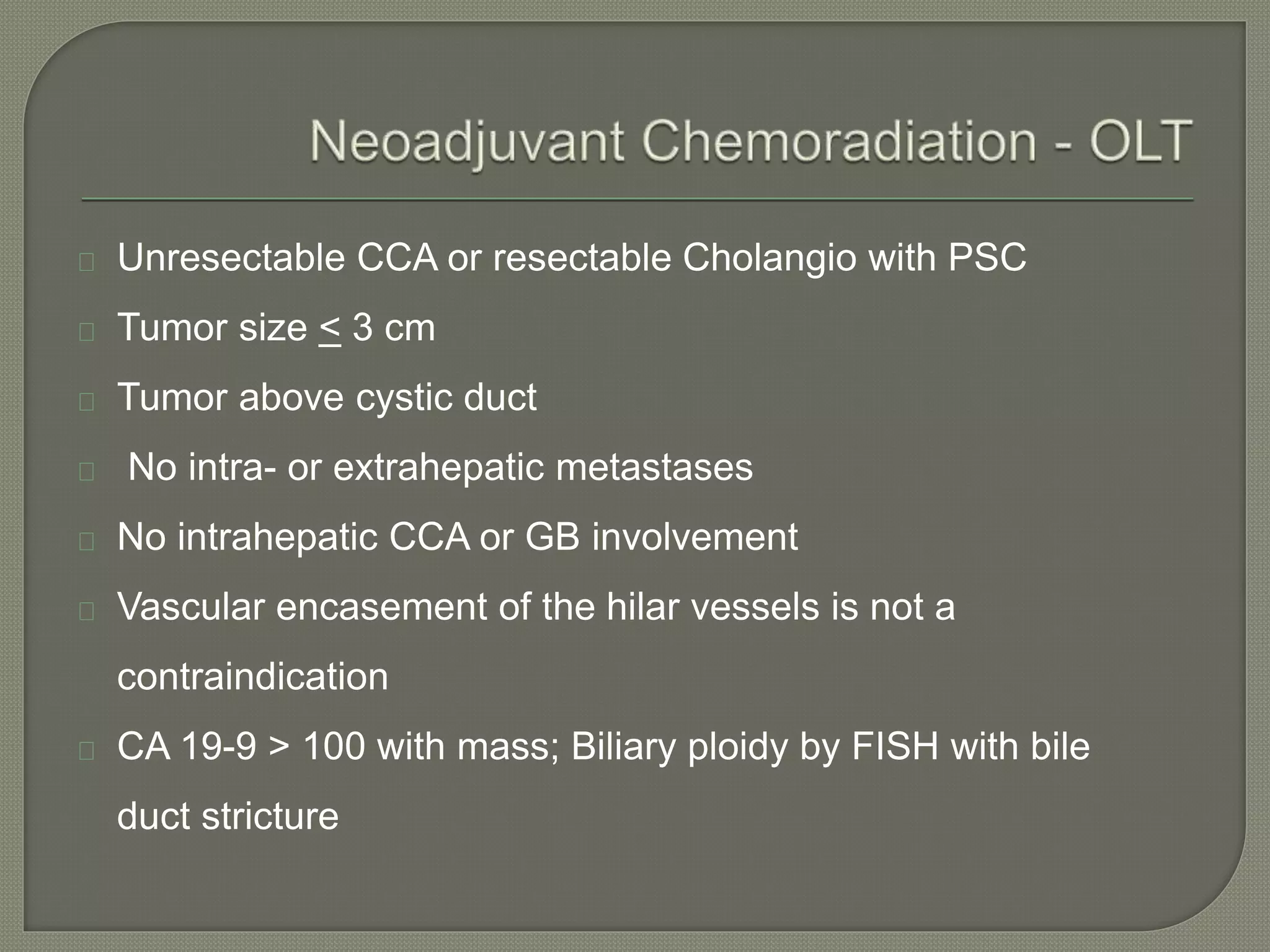
Unresectable CCA or resectable Cholangio with PSC 
Tumor size < 3 cm 
Tumor above cystic duct 
No intra- or extrahepatic metastases 
No intrahepatic CCA or GB involvement 
Vascular encasement of the hilar vessels is not a 
contraindication 
CA 19-9 > 100 with mass; Biliary ploidy by FISH with bile 
duct stricture
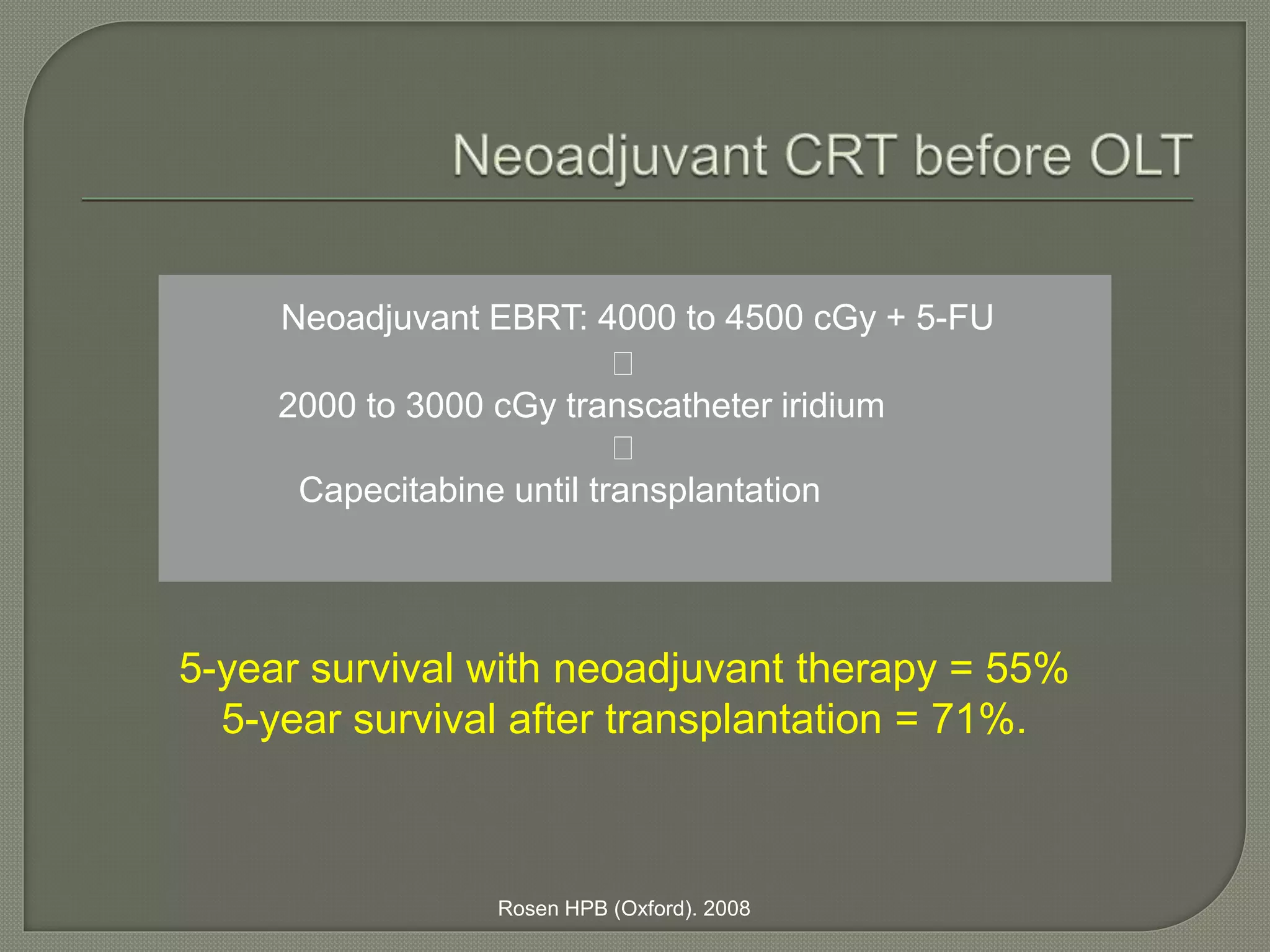
Neoadjuvant EBRT: 4000 to 4500 cGy + 5-FU 
2000 to 3000 cGy transcatheter iridium 
Capecitabine until transplantation 
5-year survival with neoadjuvant therapy = 55% 
5-year survival after transplantation = 71%. 
Rosen HPB (Oxford). 2008
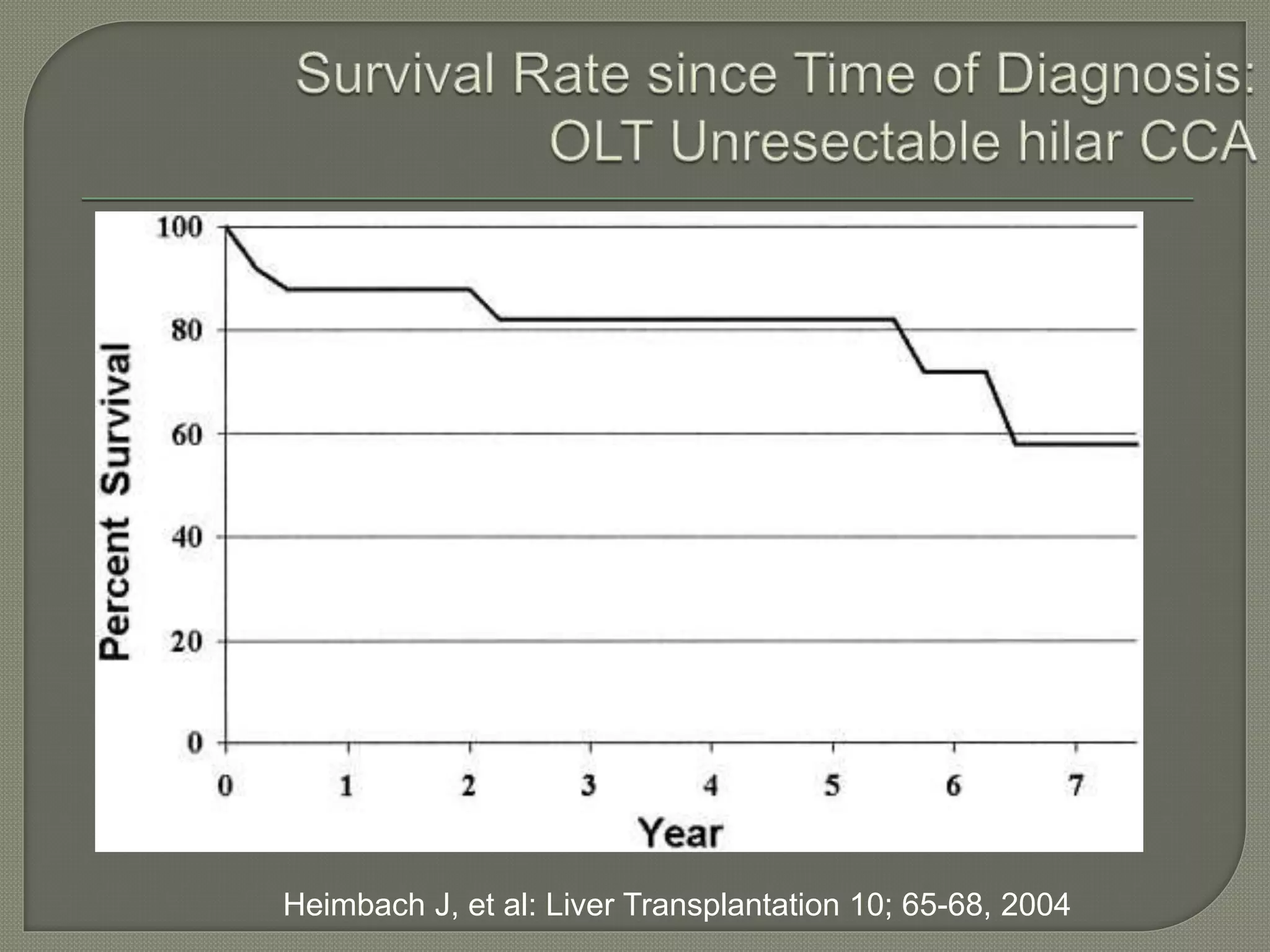
American Association for the Study of Liver Diseases 
Heimbach J, et al: Liver Transplantation 10; 65-68, 2004
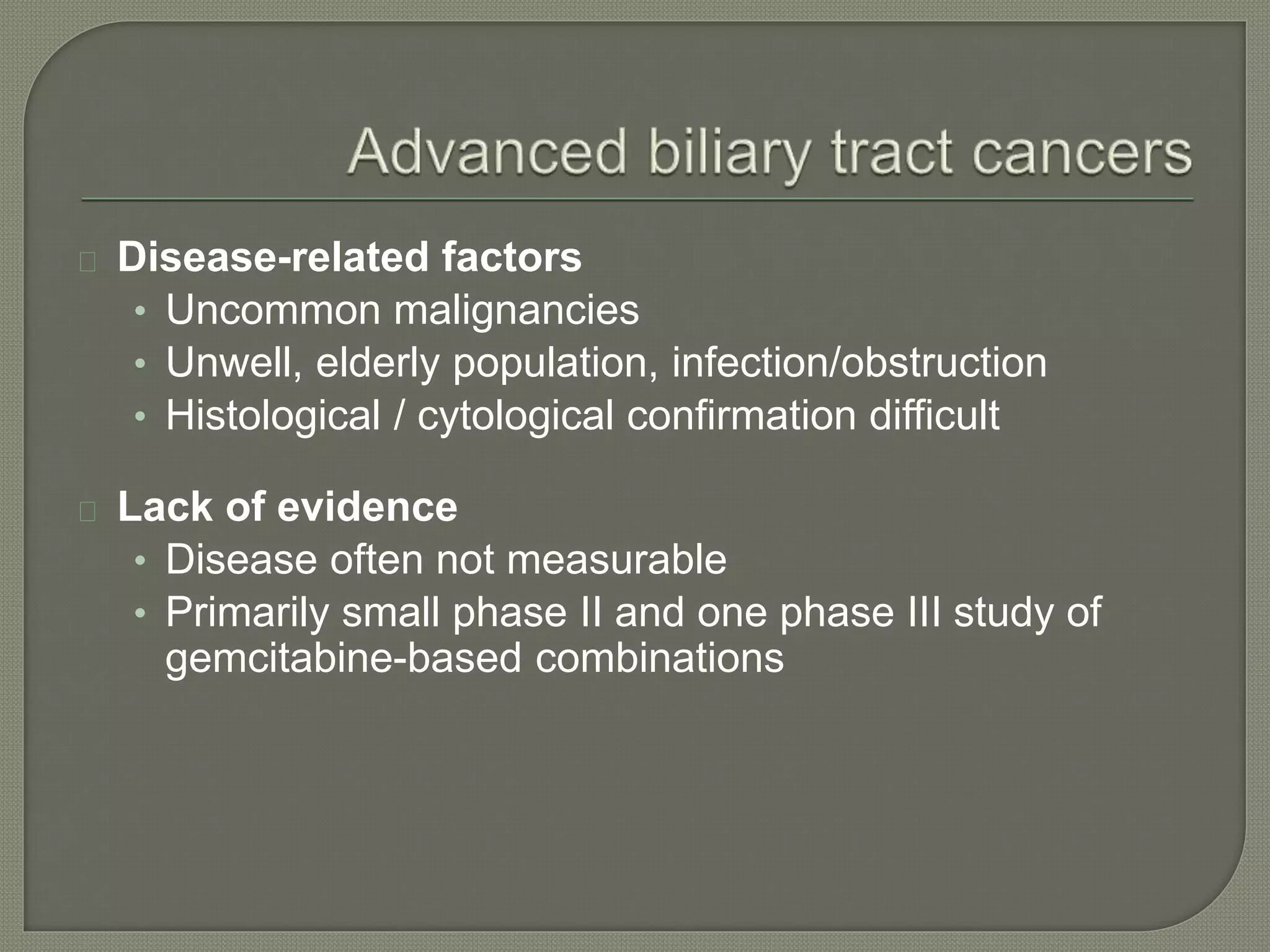
Disease-related factors 
• Uncommon malignancies 
• Unwell, elderly population, infection/obstruction 
• Histological / cytological confirmation difficult 
Lack of evidence 
• Disease often not measurable 
• Primarily small phase II and one phase III study of 
gemcitabine-based combinations
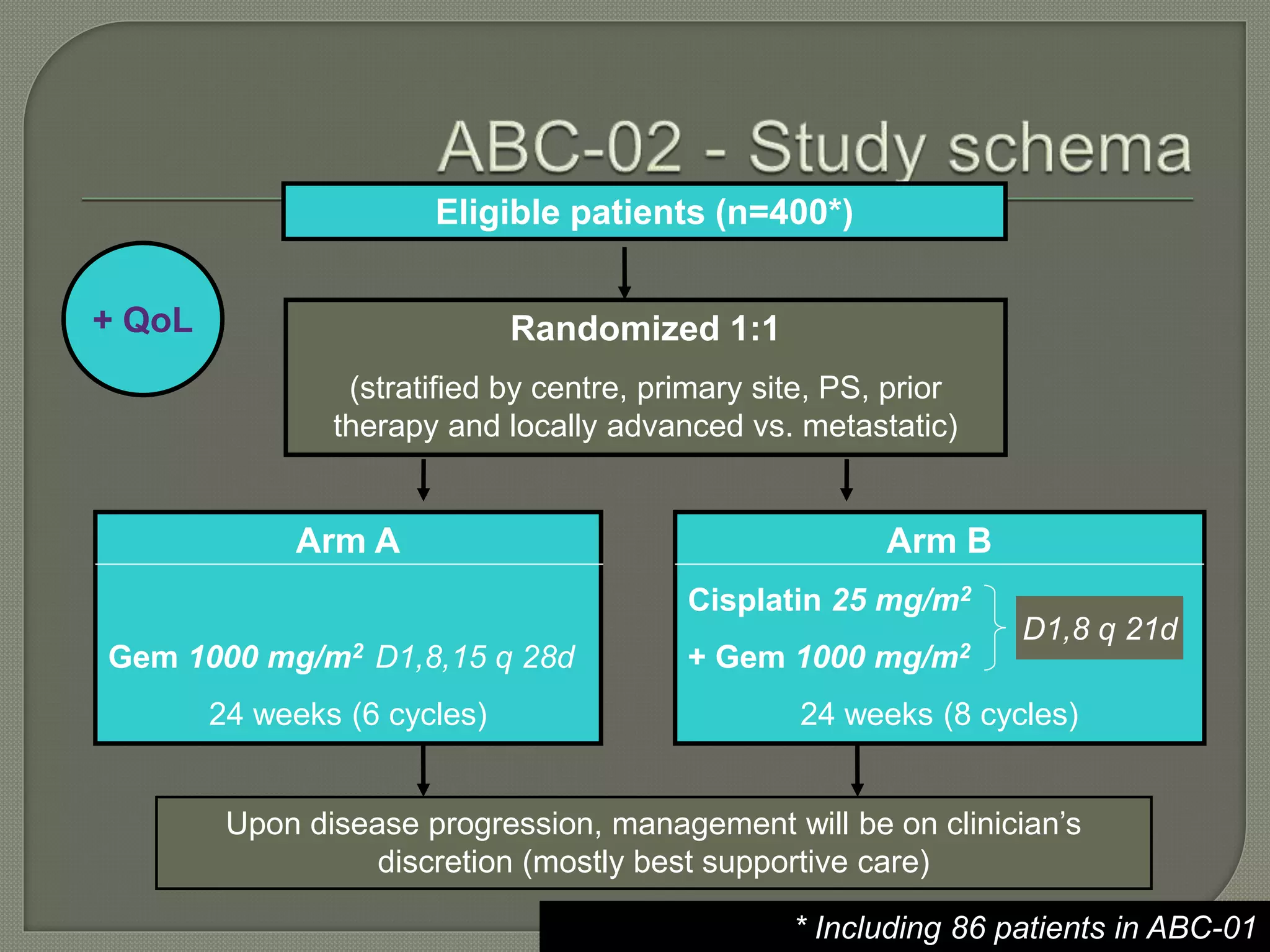
Eligible patients (n=400*) 
Arm A 
Gem 1000 mg/m2 D1,8,15 q 28d 
24 weeks (6 cycles) 
Arm B 
Cisplatin 25 mg/m2 
+ Gem 1000 mg/m2 
24 weeks (8 cycles) 
Randomized 1:1 
(stratified by centre, primary site, PS, prior 
therapy and locally advanced vs. metastatic) 
Upon disease progression, management will be on clinician’s 
discretion (mostly best supportive care) 
D1,8 q 21d 
* Including 86 patients in ABC-01 
+ QoL
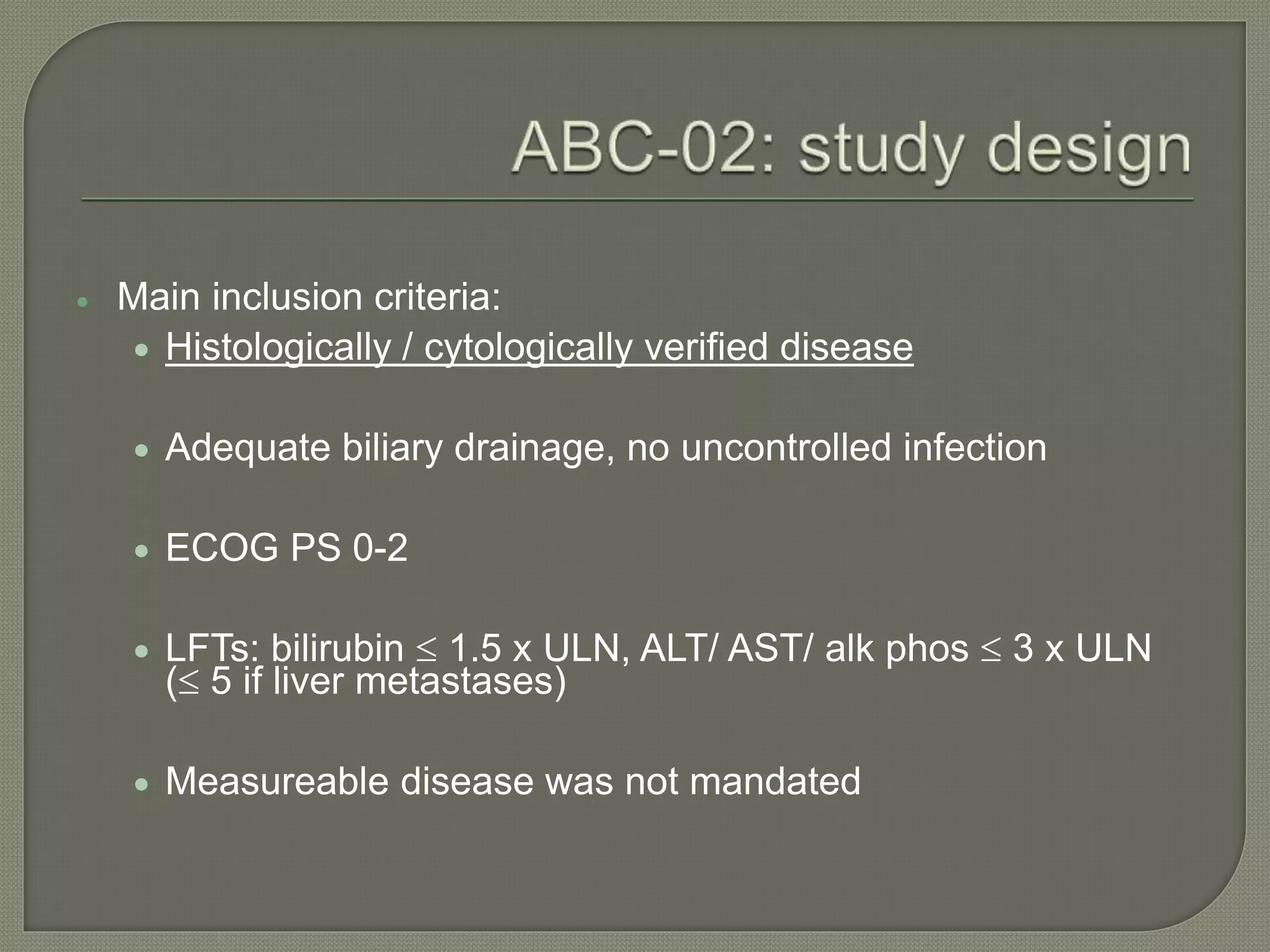
 Main inclusion criteria: 
 Histologically / cytologically verified disease 
 Adequate biliary drainage, no uncontrolled infection 
 ECOG PS 0-2 
 LFTs: bilirubin  1.5 x ULN, ALT/ AST/ alk phos  3 x ULN 
( 5 if liver metastases) 
 Measureable disease was not mandated
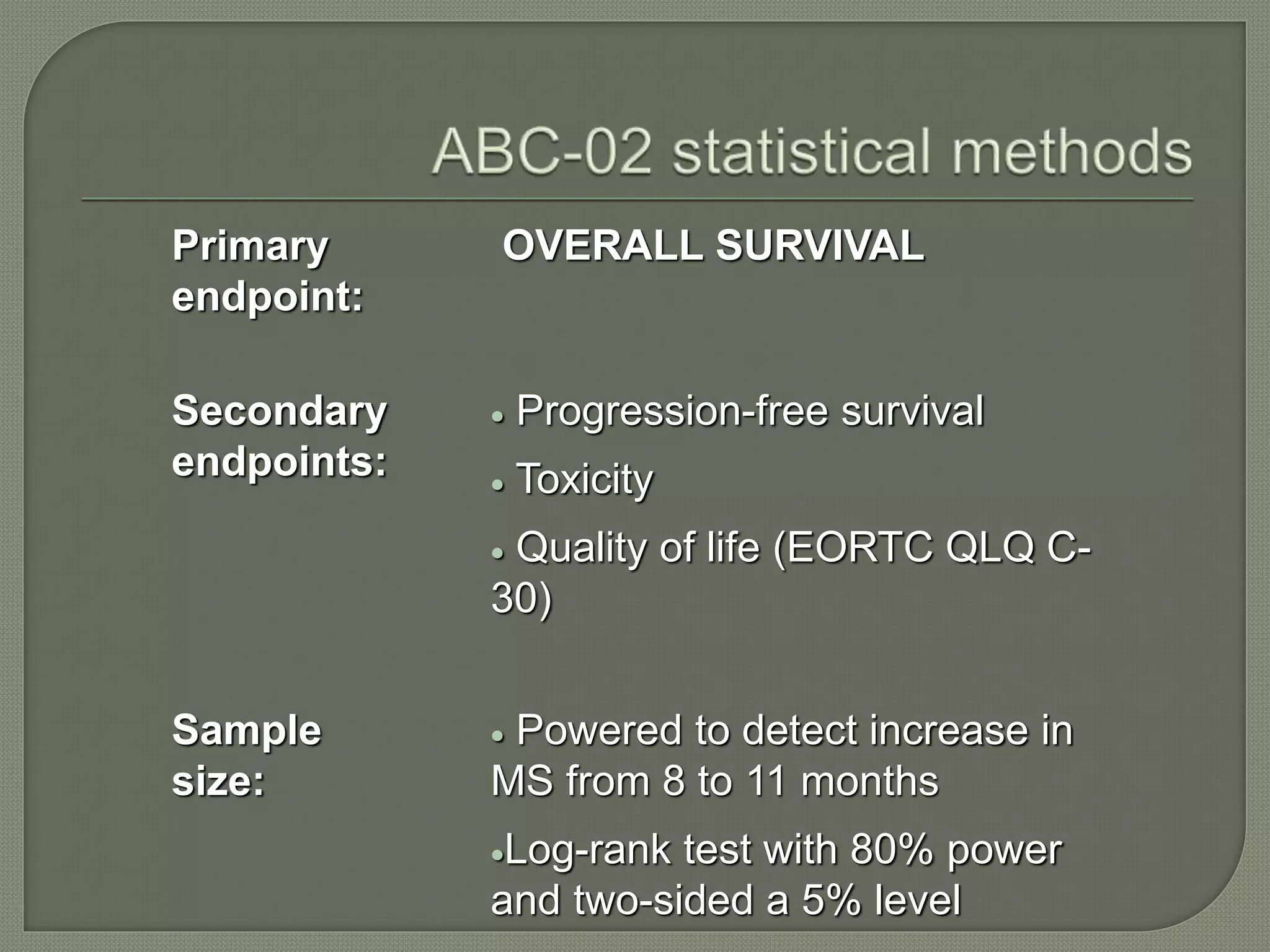
Primary 
endpoint: 
OVERALL SURVIVAL 
Secondary 
endpoints: 
 Progression-free survival 
 Toxicity 
 Quality of life (EORTC QLQ C- 
30) 
Sample 
size: 
 Powered to detect increase in 
MS from 8 to 11 months 
Log-rank test with 80% power 
and two-sided a 5% level
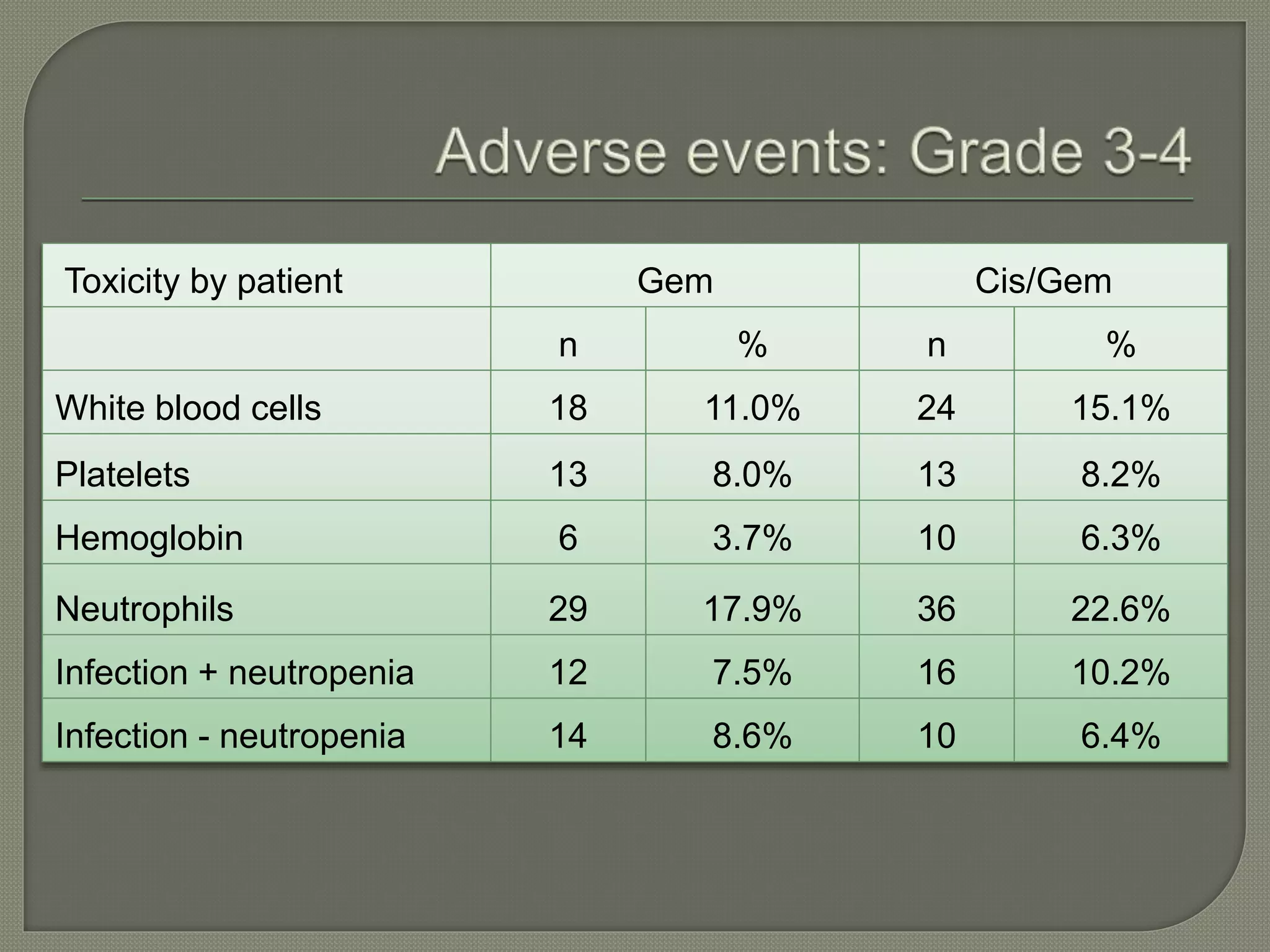
Toxicity by patient Gem Cis/Gem 
n % n % 
White blood cells 18 11.0% 24 15.1% 
Platelets 13 8.0% 13 8.2% 
Hemoglobin 6 3.7% 10 6.3% 
Neutrophils 29 17.9% 36 22.6% 
Infection + neutropenia 12 7.5% 16 10.2% 
Infection - neutropenia 14 8.6% 10 6.4%
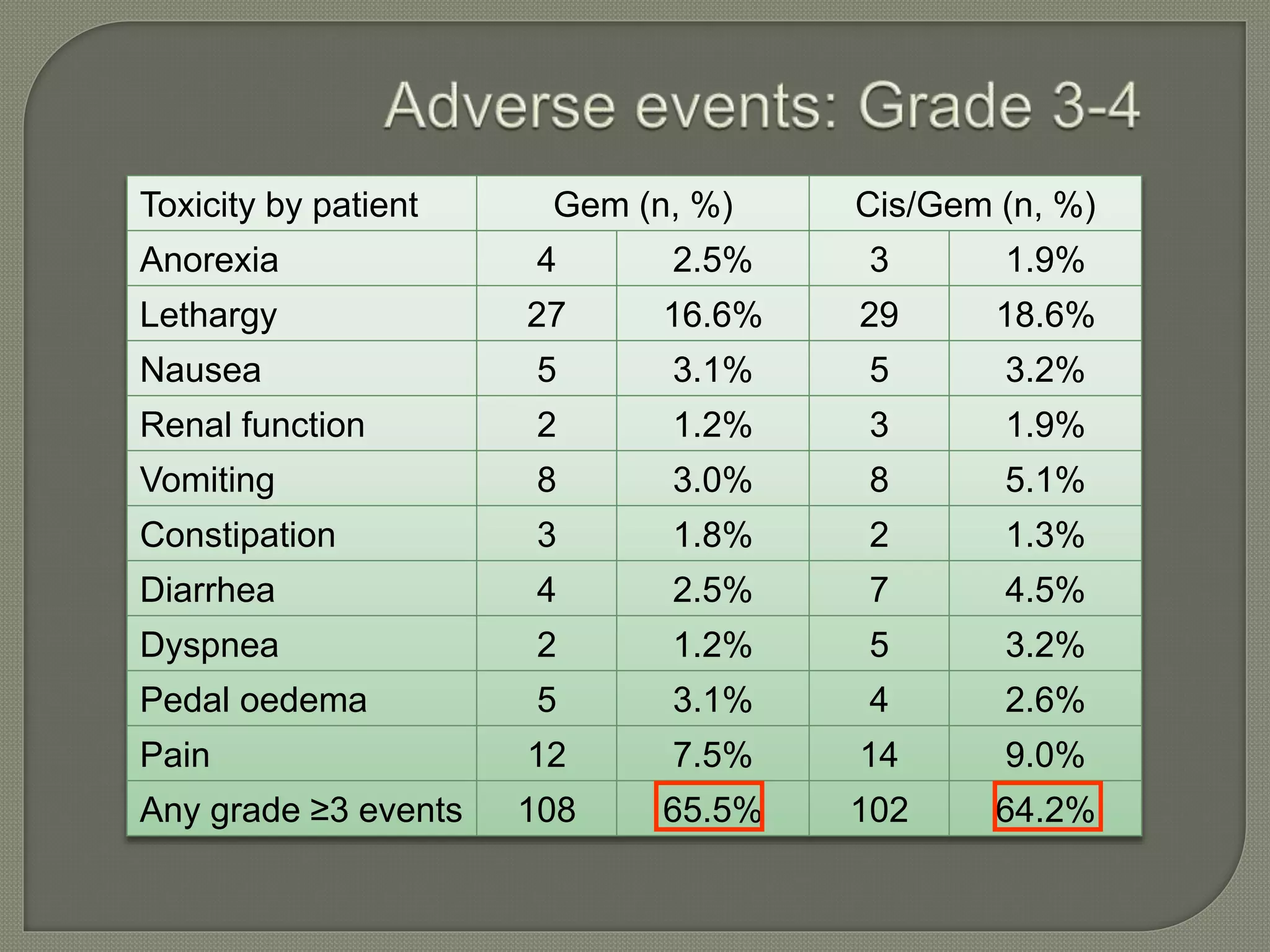
Toxicity by patient Gem (n, %) Cis/Gem (n, %) 
Anorexia 4 2.5% 3 1.9% 
Lethargy 27 16.6% 29 18.6% 
Nausea 5 3.1% 5 3.2% 
Renal function 2 1.2% 3 1.9% 
Vomiting 8 3.0% 8 5.1% 
Constipation 3 1.8% 2 1.3% 
Diarrhea 4 2.5% 7 4.5% 
Dyspnea 2 1.2% 5 3.2% 
Pedal oedema 5 3.1% 4 2.6% 
Pain 12 7.5% 14 9.0% 
Any grade ≥3 events 108 65.5% 102 64.2%
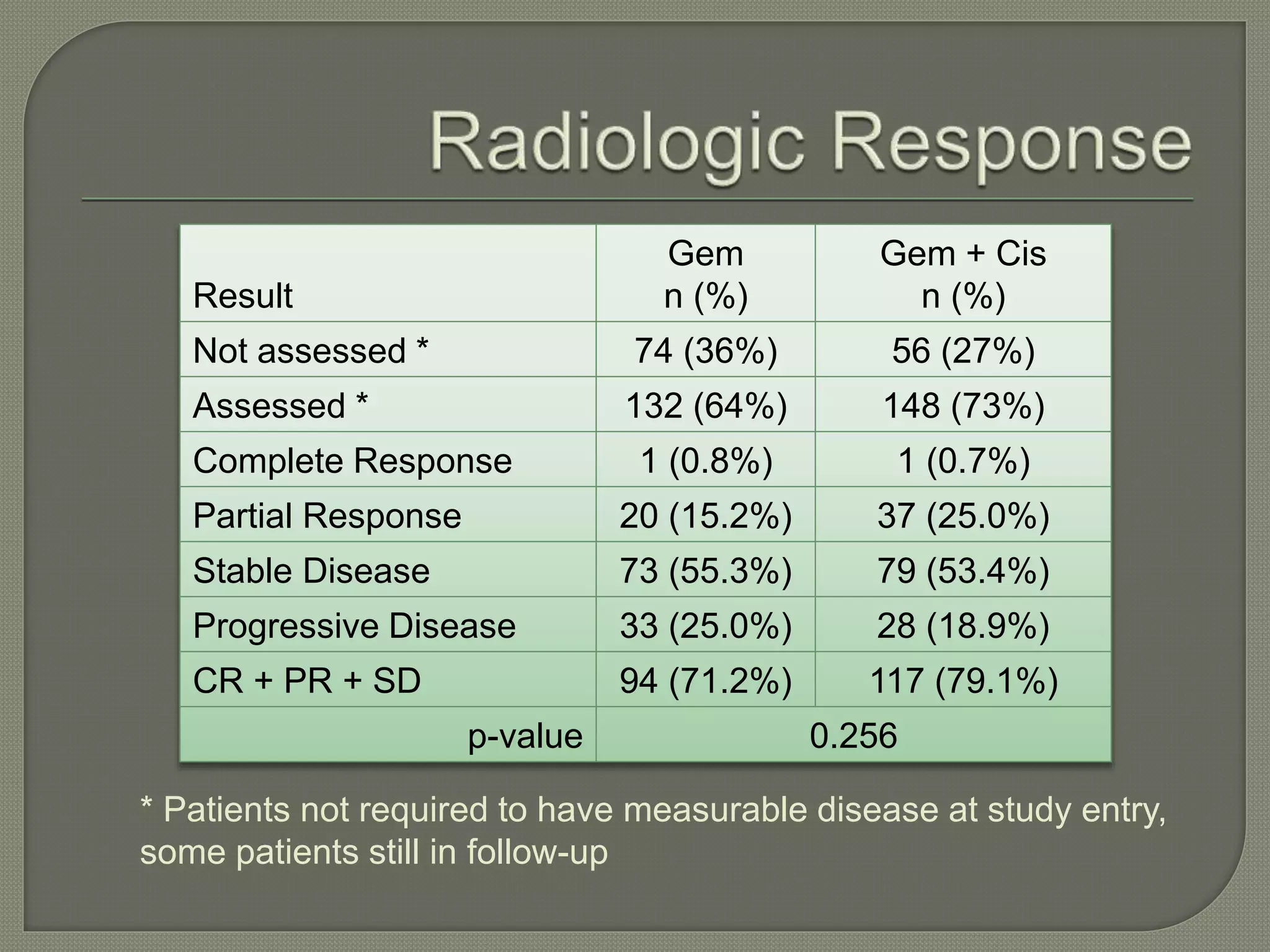
Result 
Gem 
n (%) 
Gem + Cis 
n (%) 
Not assessed * 74 (36%) 56 (27%) 
Assessed * 132 (64%) 148 (73%) 
Complete Response 1 (0.8%) 1 (0.7%) 
Partial Response 20 (15.2%) 37 (25.0%) 
Stable Disease 73 (55.3%) 79 (53.4%) 
Progressive Disease 33 (25.0%) 28 (18.9%) 
CR + PR + SD 94 (71.2%) 117 (79.1%) 
p-value 0.256 
* Patients not required to have measurable disease at study entry, 
some patients still in follow-up
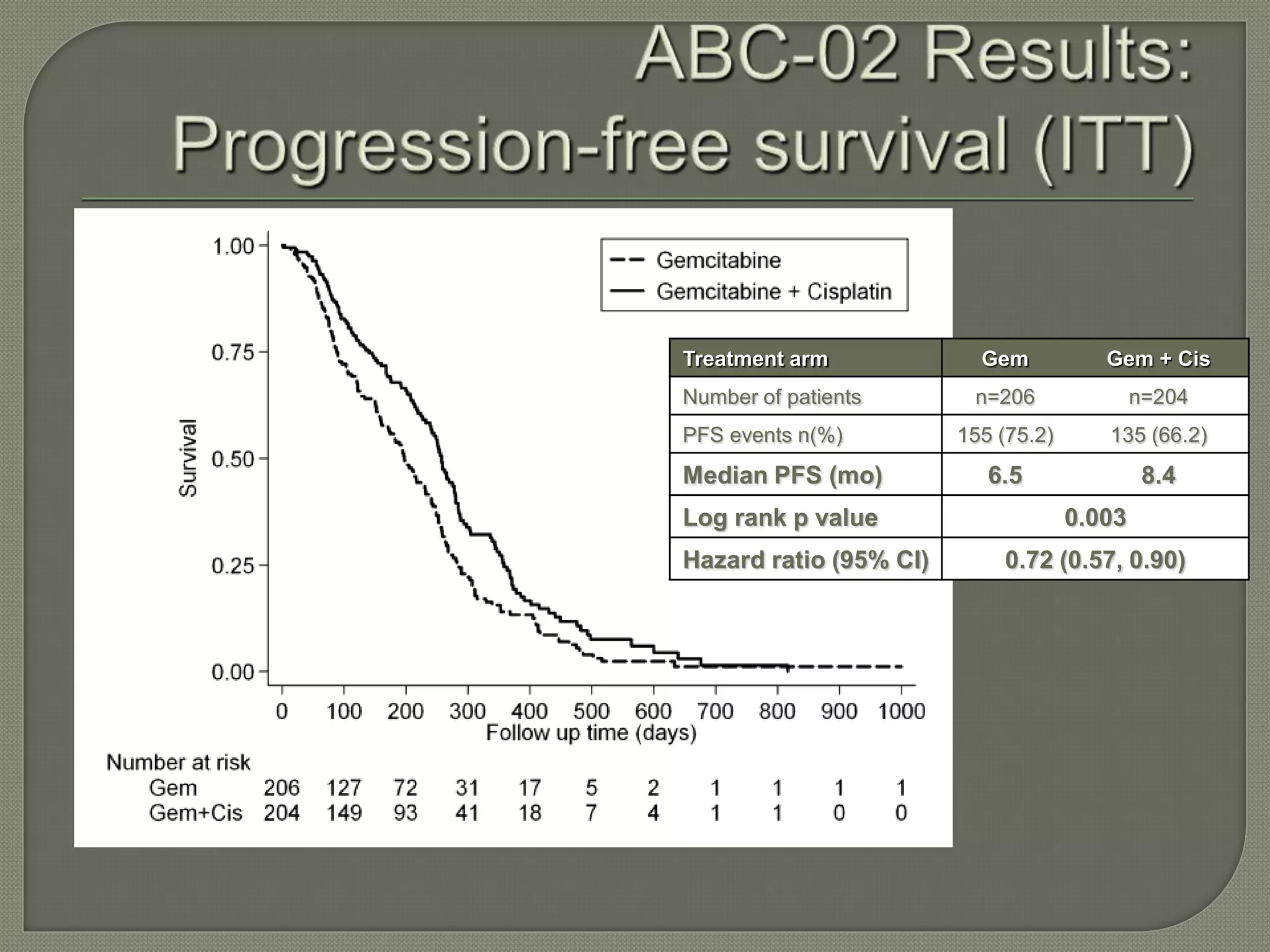
Treatment arm Gem Gem + Cis 
Number of patients n=206 n=204 
PFS events n(%) 155 (75.2) 135 (66.2) 
Median PFS (mo) 6.5 8.4 
Log rank p value 0.003 
Hazard ratio (95% CI) 0.72 (0.57, 0.90)
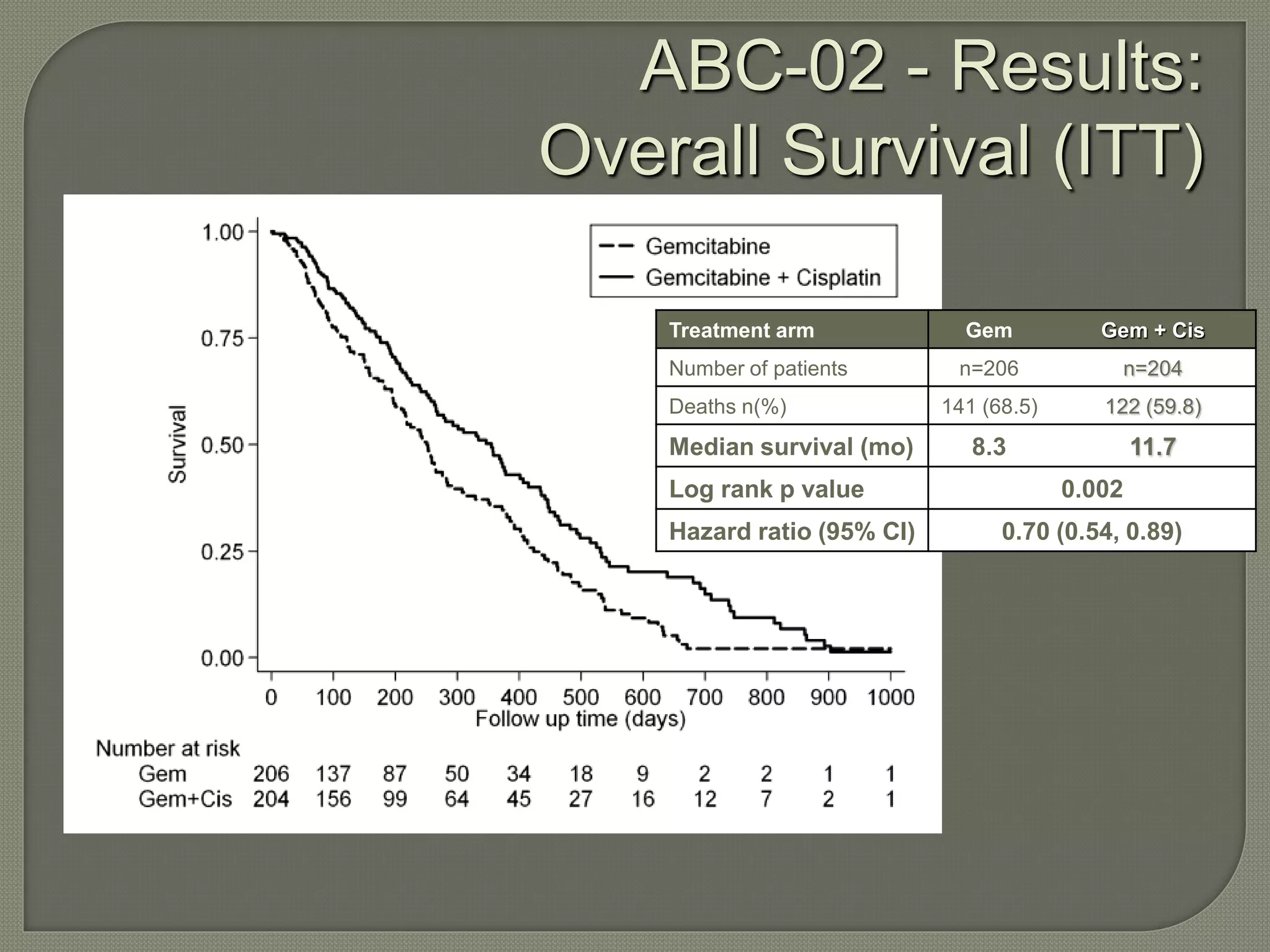
ABC-02 - Results: 
Overall Survival (ITT) 
Treatment arm Gem Gem + Cis 
Number of patients n=206 n=204 
Deaths n(%) 141 (68.5) 122 (59.8) 
Median survival (mo) 8.3 11.7 
Log rank p value 0.002 
Hazard ratio (95% CI) 0.70 (0.54, 0.89)
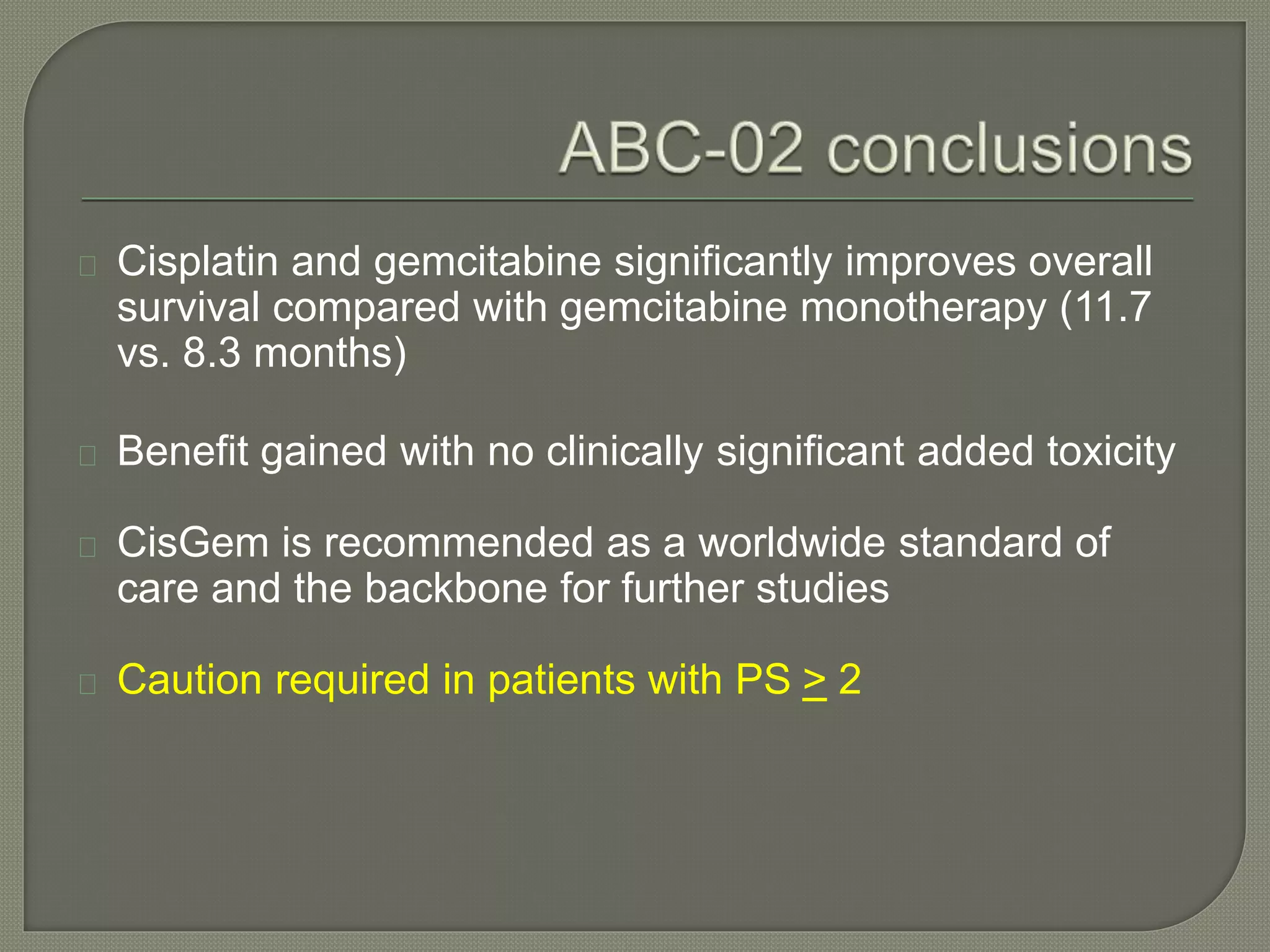
Cisplatin and gemcitabine significantly improves overall 
survival compared with gemcitabine monotherapy (11.7 
vs. 8.3 months) 
Benefit gained with no clinically significant added toxicity 
CisGem is recommended as a worldwide standard of 
care and the backbone for further studies 
Caution required in patients with PS > 2
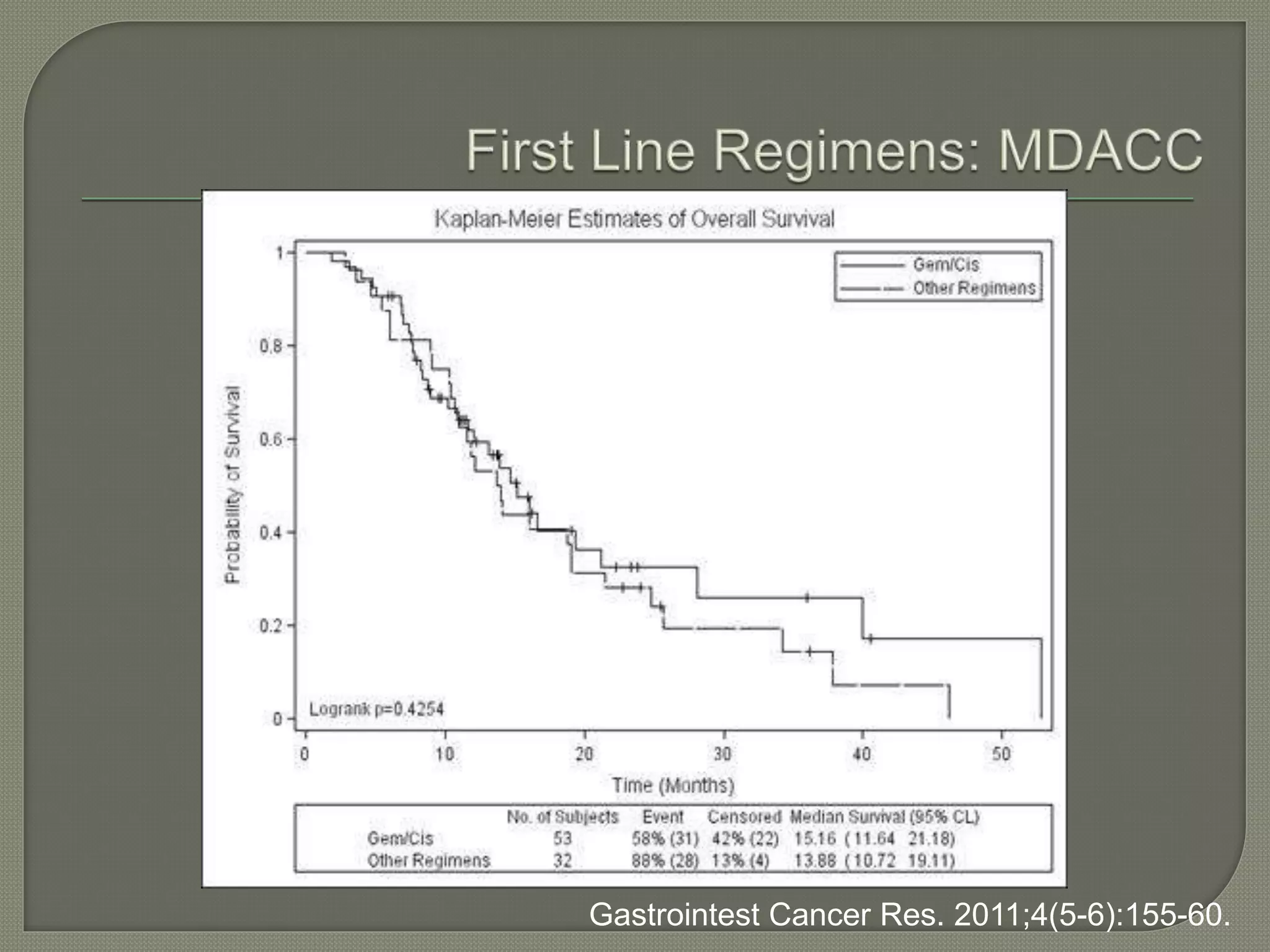
Gastrointest Cancer Res. 2011;4(5-6):155-60.
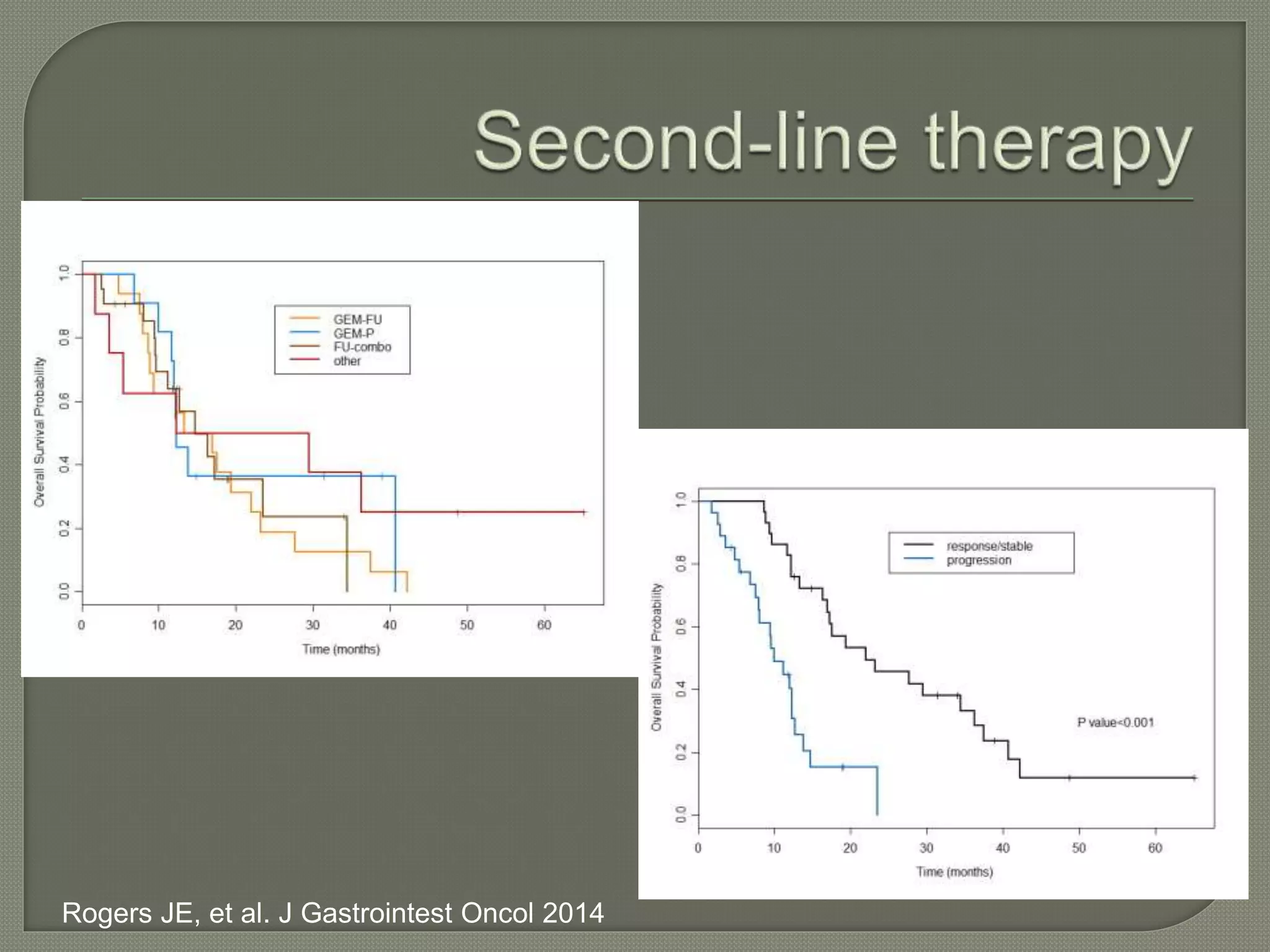
Rogers JE, et al. J Gastrointest Oncol 2014
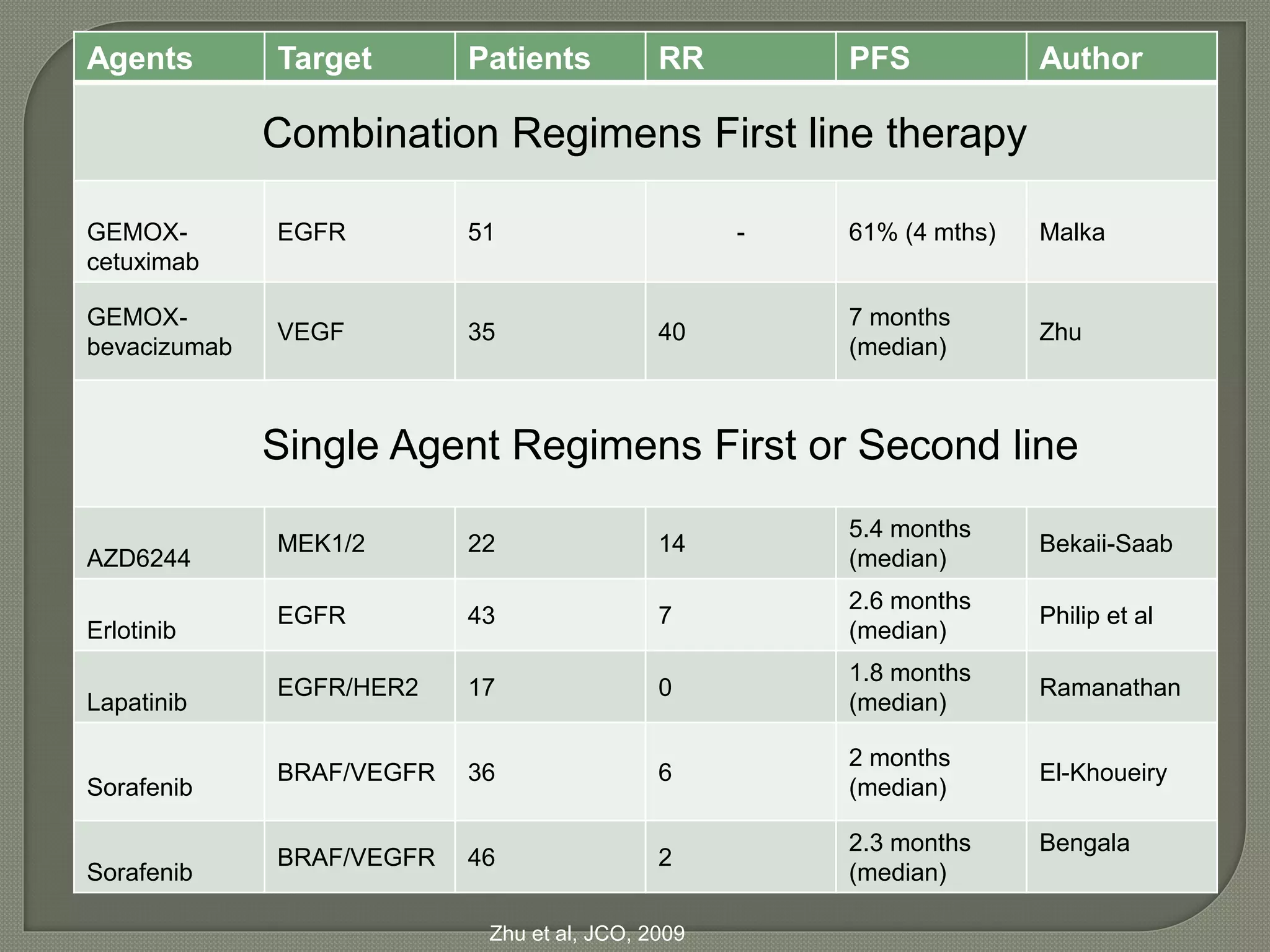
Agents Target Patients RR PFS Author 
Combination Regimens First line therapy 
GEMOX-cetuximab 
EGFR 51 - 61% (4 mths) Malka 
GEMOX-bevacizumab 
VEGF 35 40 
7 months 
(median) 
Zhu 
Single Agent Regimens First or Second line 
AZD6244 
MEK1/2 22 14 
5.4 months 
(median) 
Bekaii-Saab 
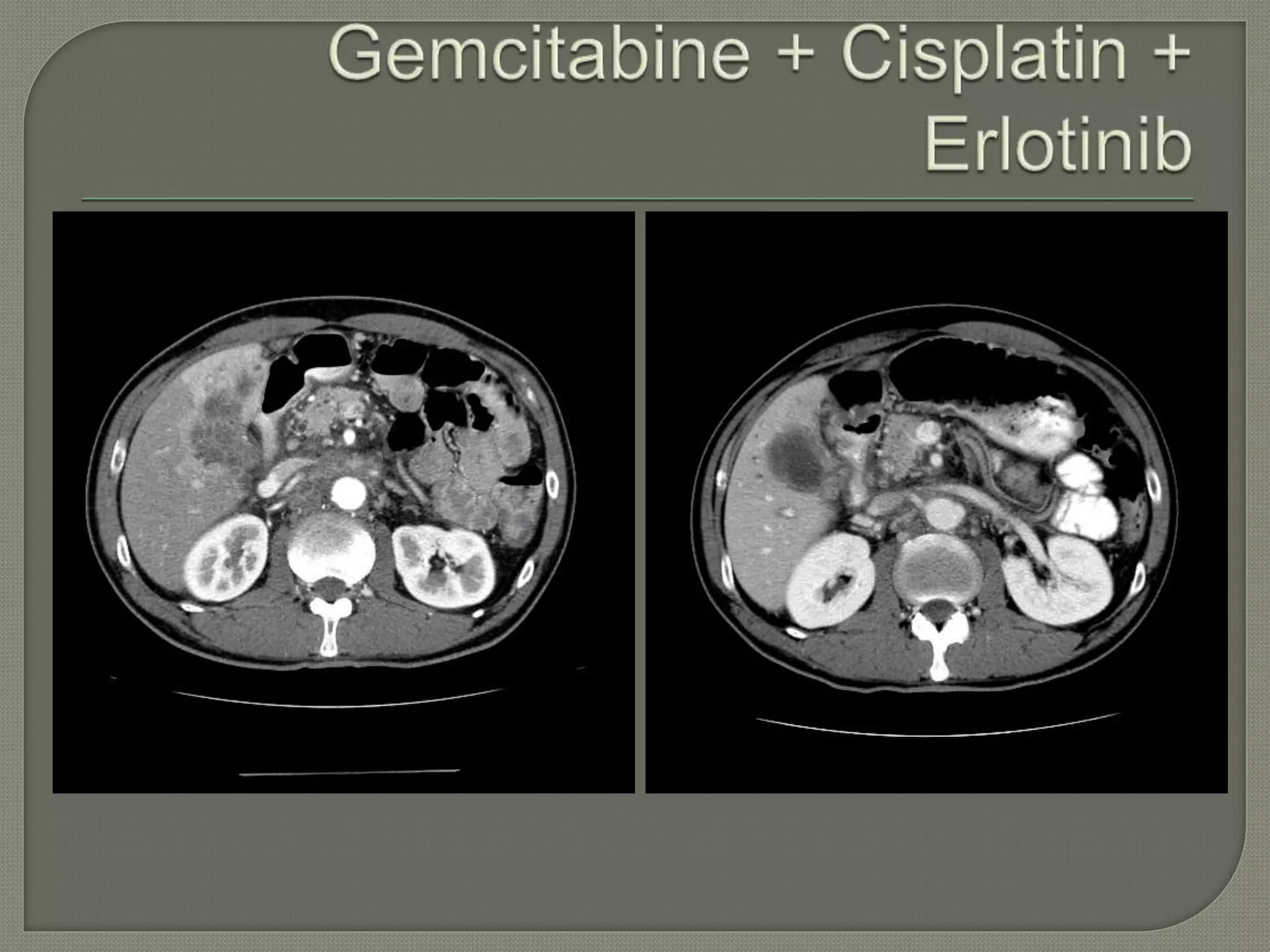
Erlotinib 
EGFR 43 7 
2.6 months 
(median) 
Philip et al 
Lapatinib 
EGFR/HER2 17 0 
1.8 months 
(median) 
Ramanathan 
Sorafenib 
BRAF/VEGFR 36 6 
2 months 
(median) 
El-Khoueiry 
Sorafenib 
BRAF/VEGFR 46 2 
2.3 months 
(median) 
Bengala 
Zhu et al, JCO, 2009
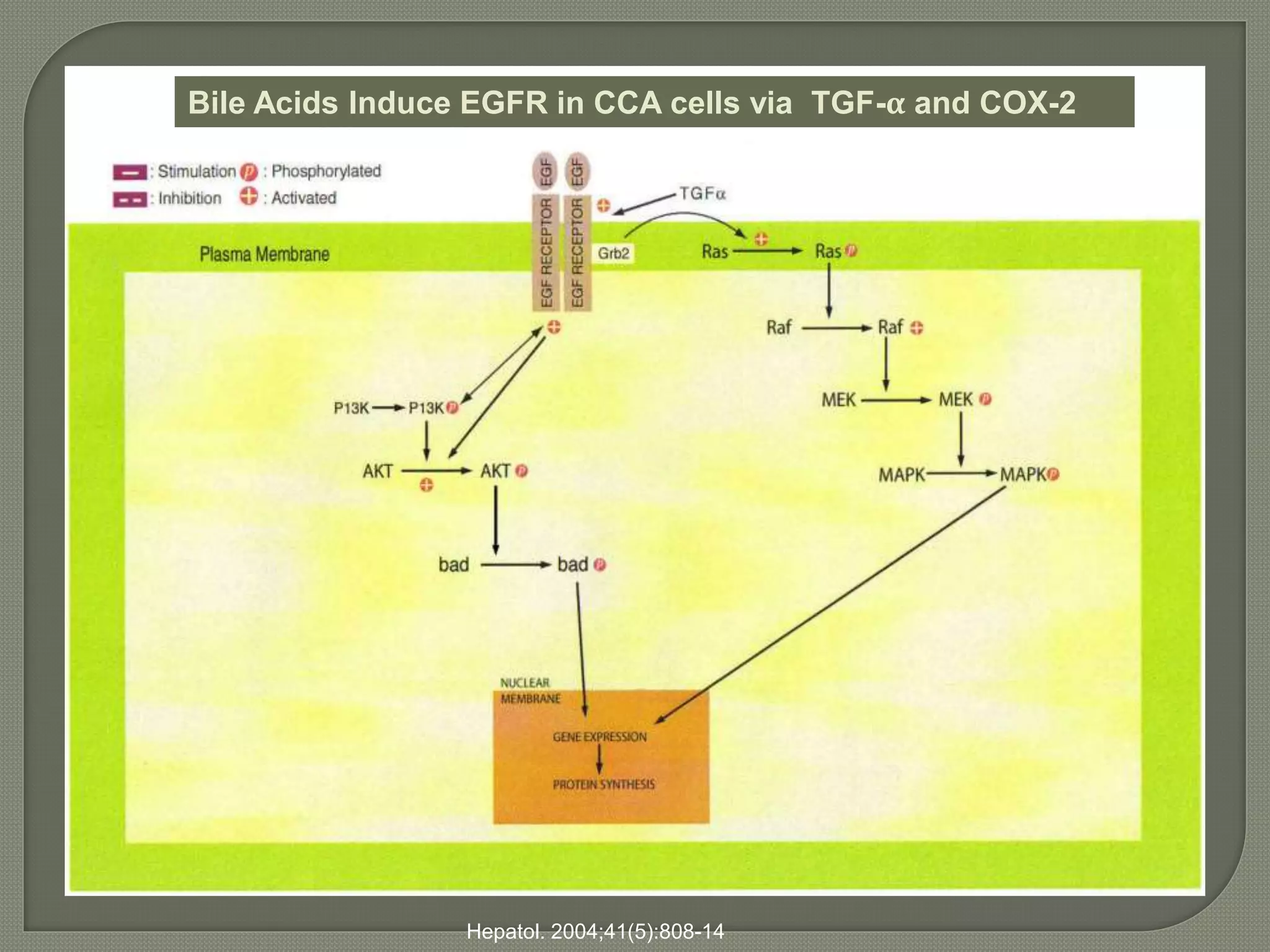
Bile Acids Induce EGFR in CCA cells via TGF-α and COX-2 
Hepatol. 2004;41(5):808-14
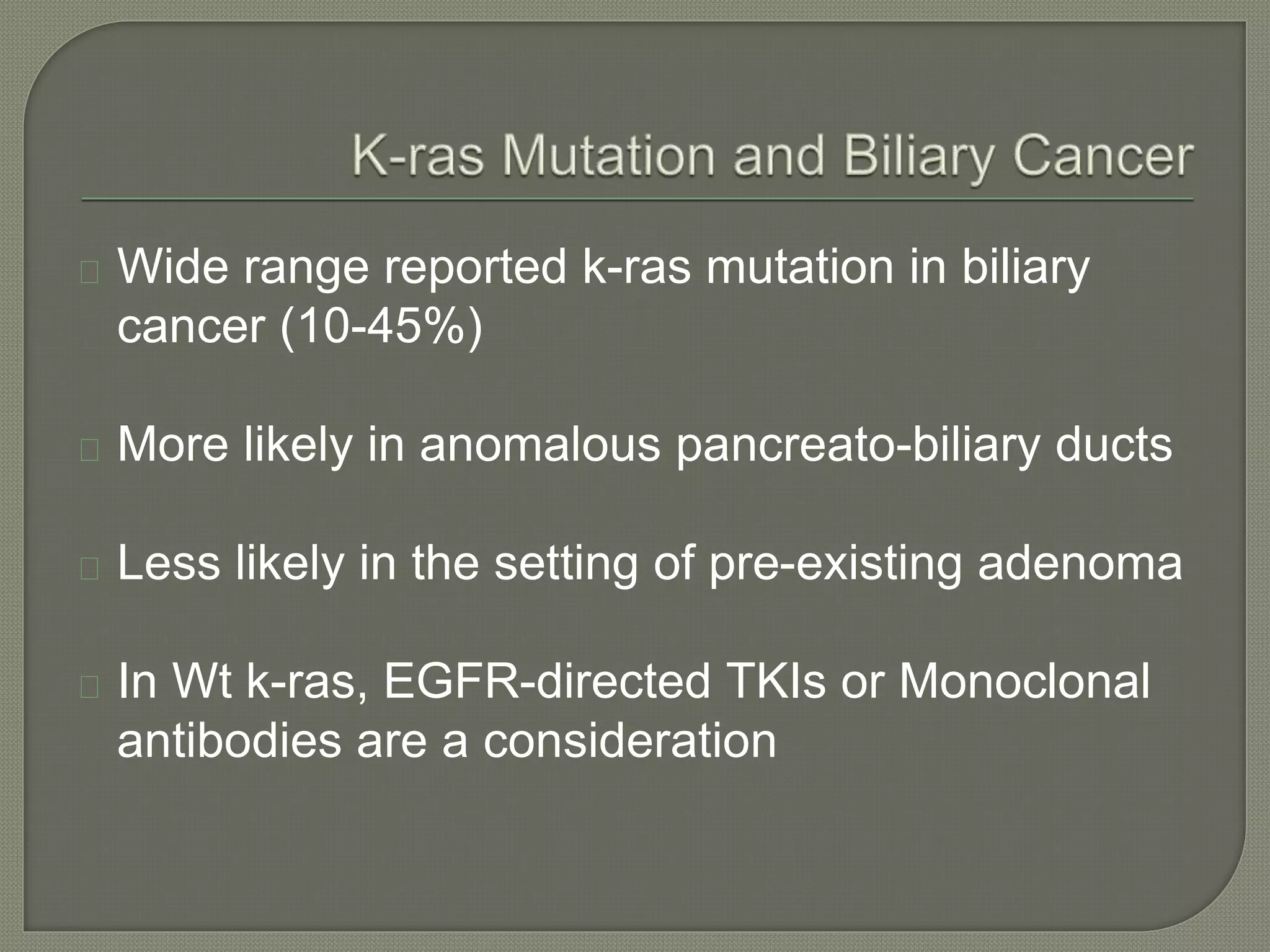
Wide range reported k-ras mutation in biliary 
cancer (10-45%) 
More likely in anomalous pancreato-biliary ducts 
Less likely in the setting of pre-existing adenoma 
In Wt k-ras, EGFR-directed TKIs or Monoclonal 
antibodies are a consideration
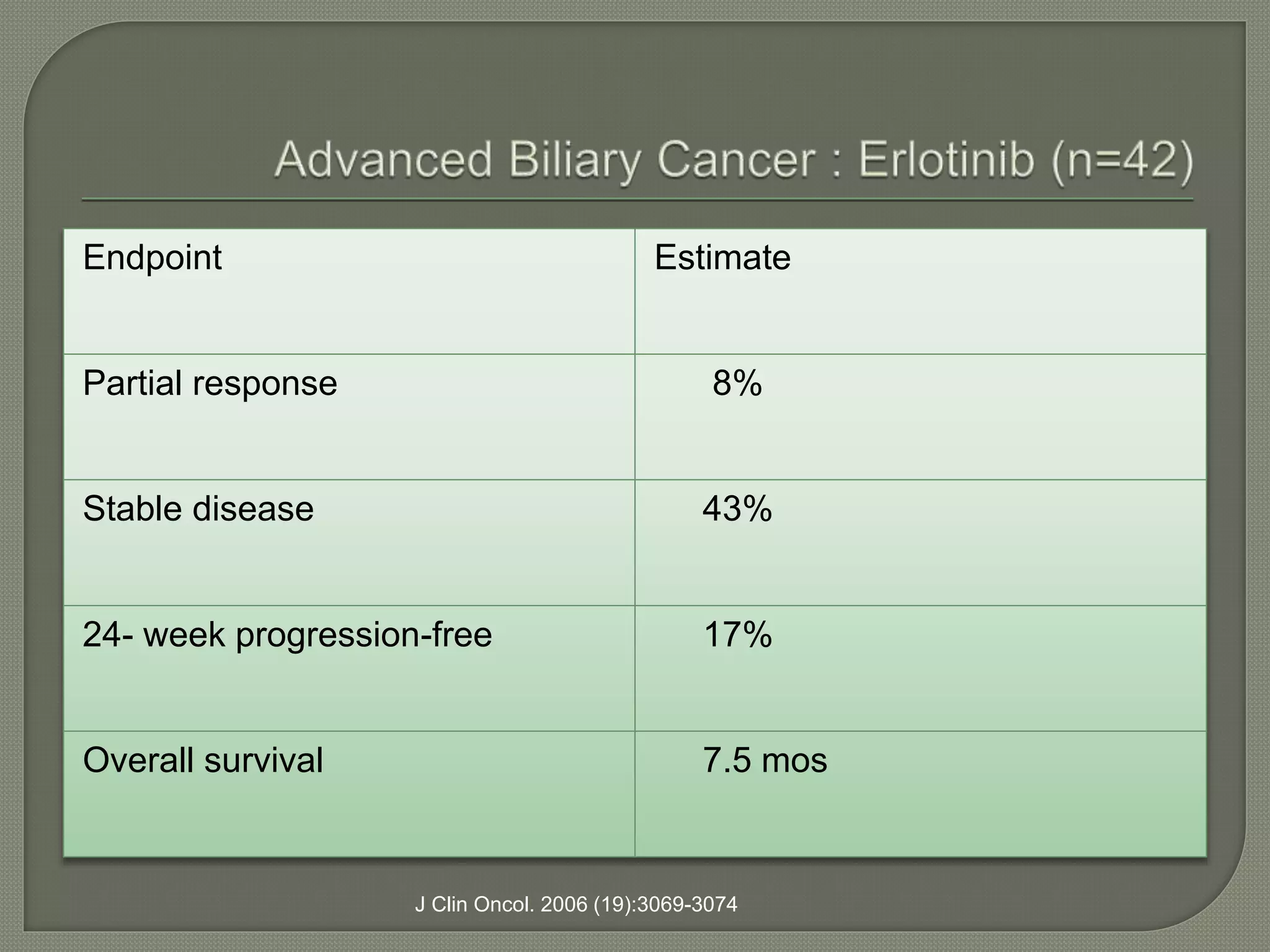
Endpoint Estimate 
Partial response 8% 
Stable disease 43% 
24- week progression-free 17% 
Overall survival 7.5 mos 
J Clin Oncol. 2006 (19):3069-3074
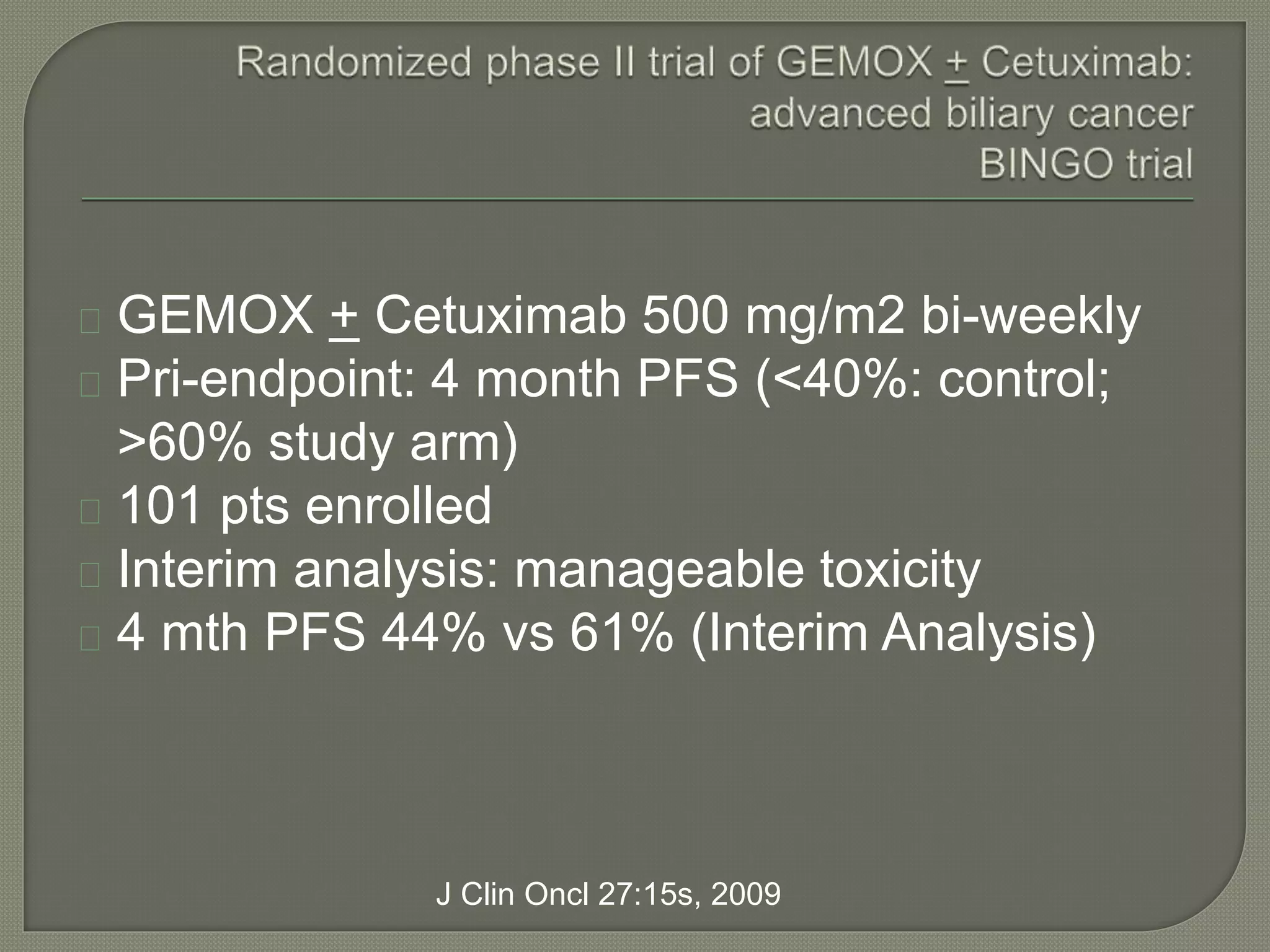
GEMOX + Cetuximab 500 mg/m2 bi-weekly 
Pri-endpoint: 4 month PFS (<40%: control; 
>60% study arm) 
101 pts enrolled 
Interim analysis: manageable toxicity 
4 mth PFS 44% vs 61% (Interim Analysis) 
J Clin Oncl 27:15s, 2009
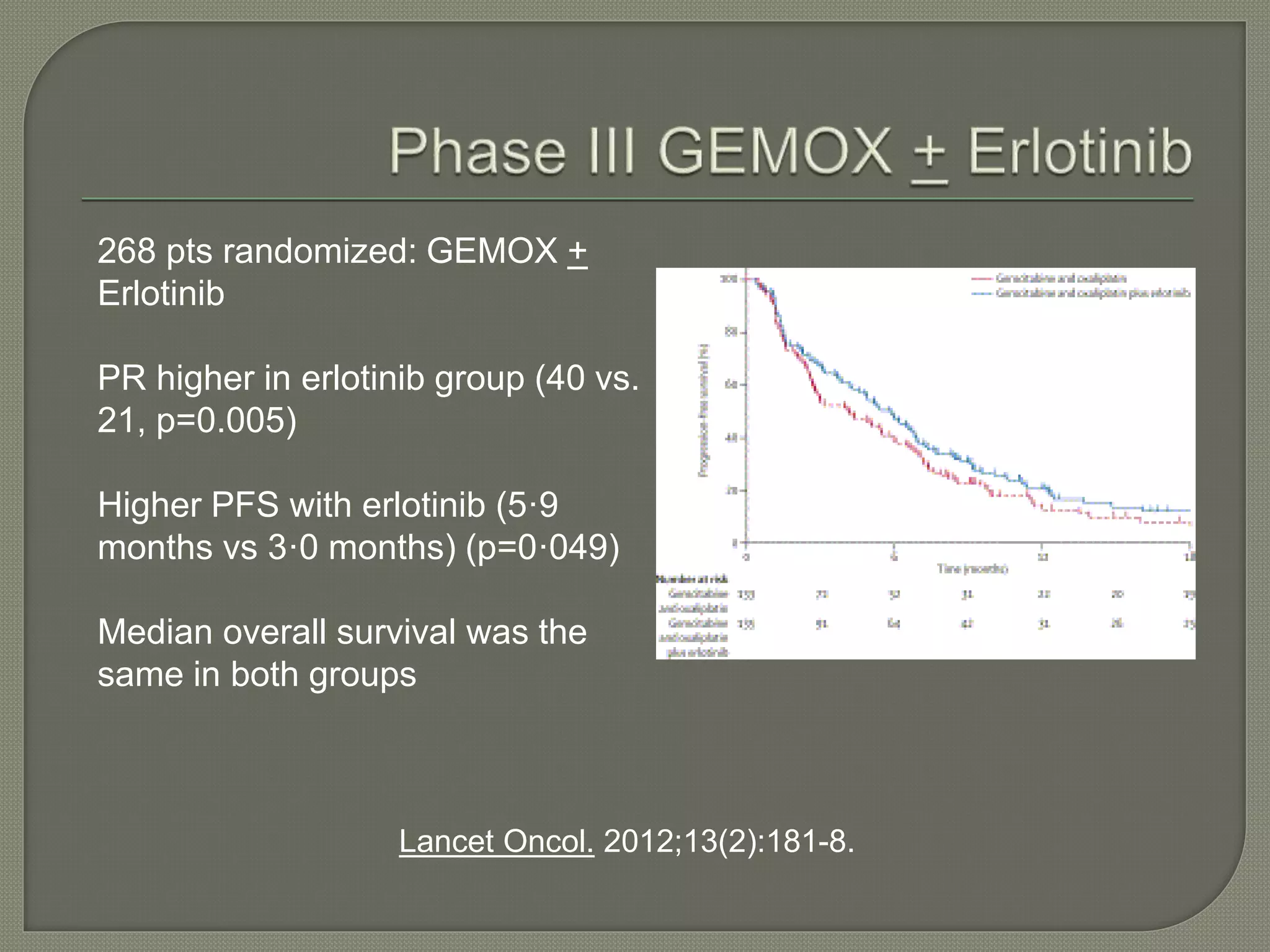
268 pts randomized: GEMOX + 
Erlotinib 
PR higher in erlotinib group (40 vs. 
21, p=0.005) 
Higher PFS with erlotinib (5·9 
months vs 3·0 months) (p=0·049) 
Median overall survival was the 
same in both groups 
Lancet Oncol. 2012;13(2):181-8.
Phase 2: GEMOX+ Bevacizumab (10 mg/kg bi-weekly) 
35 pts enrolled 
Median PFS 7 months (6 months was 63%) 
Toxicities: neutropenia, hypertension, AST 
elevation, neuropathy 
Partial responses or SD associated with 
significant improvement in SUV 
Lancet Oncol Nov 2009 (Epub)
Sorafenib: 400 mg twice a day 
46 patients were treated; 26 (56%) had received 
chemotherapy earlier 
Progression-free survival (PFS) was 2.3 months (range: 
0-12 months) 
Median overall survival was 4.4 months (range: 0-22 
months). 
El Khoureiy, ASCO 2007
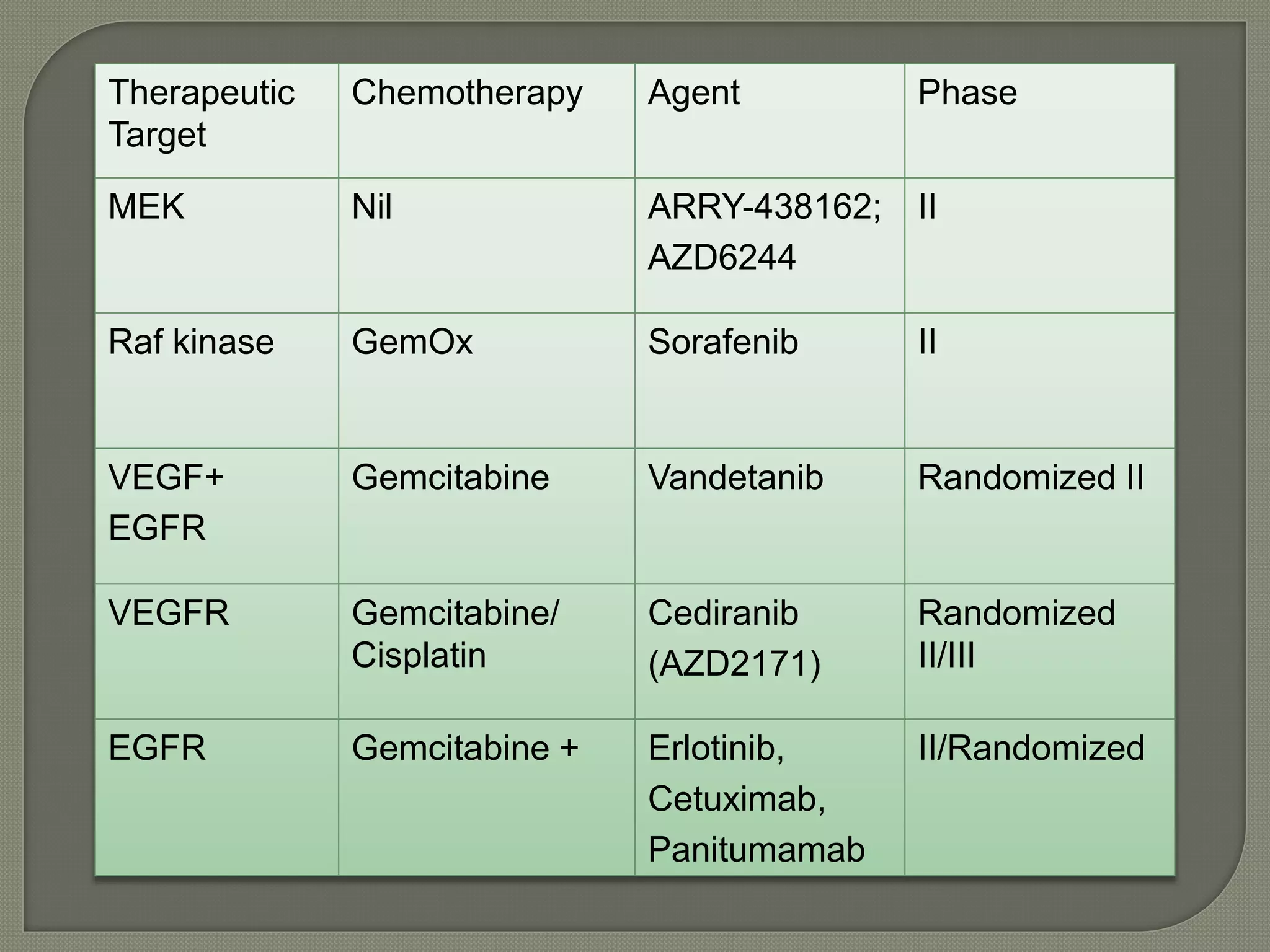
Therapeutic 
Target 
Chemotherapy Agent Phase 
MEK Nil ARRY-438162; 
AZD6244 
II 
Raf kinase GemOx Sorafenib II 
VEGF+ 
EGFR 
Gemcitabine Vandetanib Randomized II 
VEGFR Gemcitabine/ 
Cisplatin 
Cediranib 
(AZD2171) 
Randomized 
II/III 
EGFR Gemcitabine + Erlotinib, 
Cetuximab, 
Panitumamab 
II/Randomized
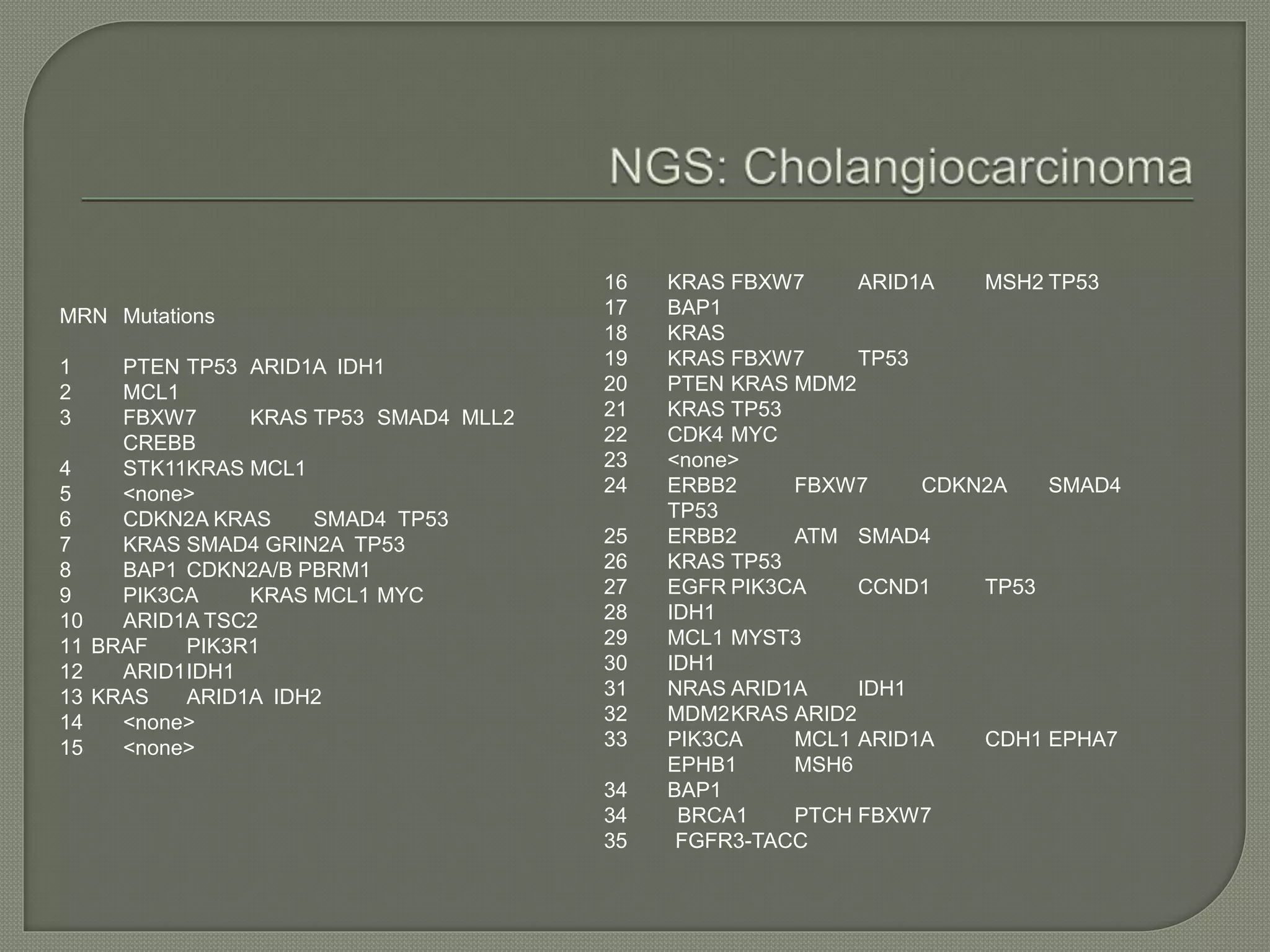
MRN Mutations 
1 PTEN TP53 ARID1A IDH1 
2 MCL1 
3 FBXW7 KRAS TP53 SMAD4 MLL2 
CREBB 
4 STK11KRAS MCL1 
5 <none> 
6 CDKN2A KRAS SMAD4 TP53 
7 KRAS SMAD4 GRIN2A TP53 
8 BAP1 CDKN2A/B PBRM1 
9 PIK3CA KRAS MCL1 MYC 
10 ARID1A TSC2 
11 BRAF PIK3R1 
12 ARID1IDH1 
13 KRAS ARID1A IDH2 
14 <none> 
15 <none> 
16 KRAS FBXW7 ARID1A MSH2 TP53 
17 BAP1 
18 KRAS 
19 KRAS FBXW7 TP53 
20 PTEN KRAS MDM2 
21 KRAS TP53 
22 CDK4 MYC 
23 <none> 
24 ERBB2 FBXW7 CDKN2A SMAD4 
TP53 
25 ERBB2 ATM SMAD4 
26 KRAS TP53 
27 EGFR PIK3CA CCND1 TP53 
28 IDH1 
29 MCL1 MYST3 
30 IDH1 
31 NRAS ARID1A IDH1 
32 MDM2KRAS ARID2 
33 PIK3CA MCL1 ARID1A CDH1 EPHA7 
EPHB1 MSH6 
34 BAP1 
34 BRCA1 PTCH FBXW7 
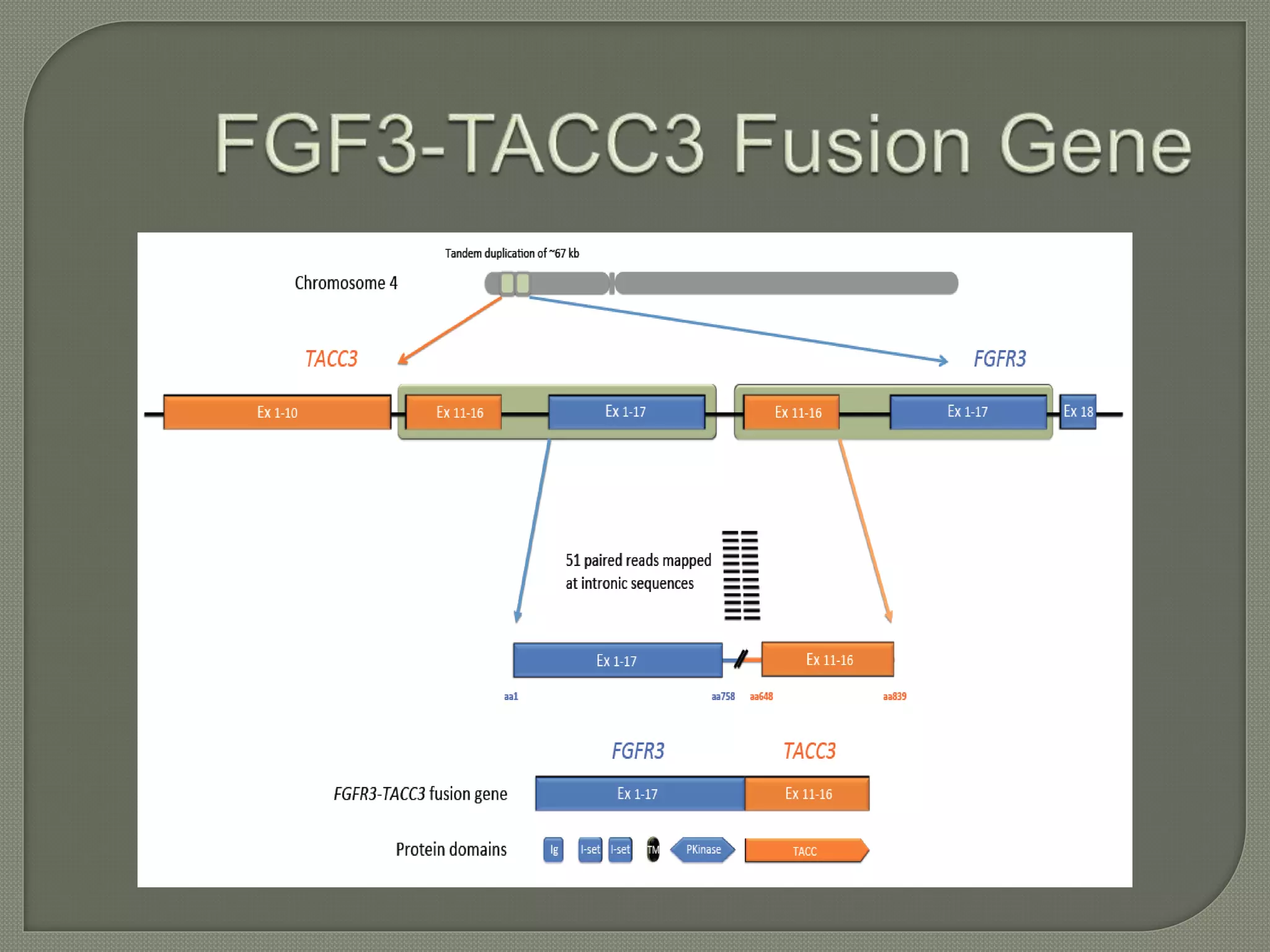
35 FGFR3-TACC
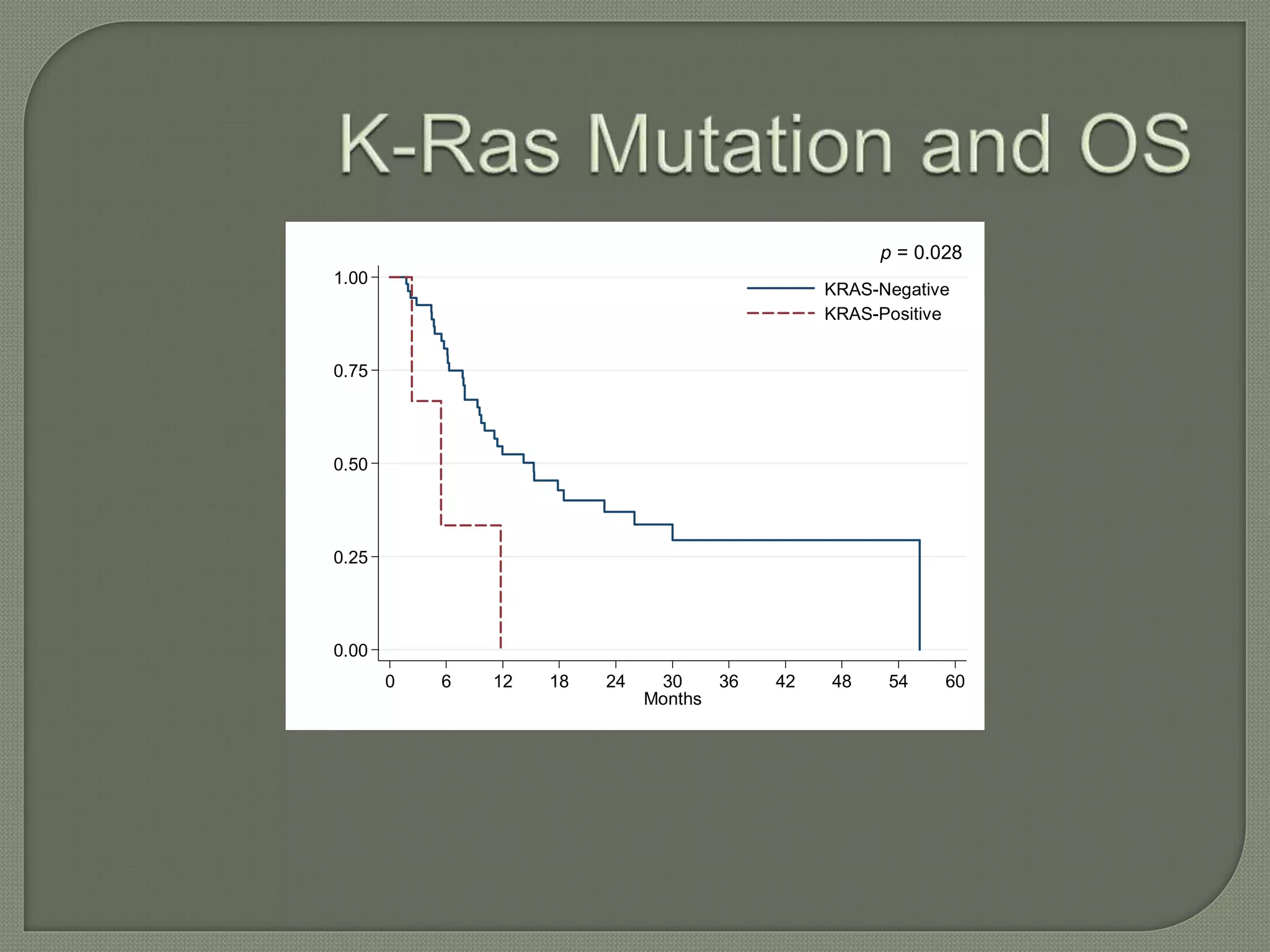
1.00 
0.75 
0.50 
0.25 
0.00 
Proportion Surviving 
p = 0.028 
0 6 12 18 24 30 36 42 48 54 60 
Months 
KRAS-Negative 
KRAS-Positive
33 patients with intrahepatic cholangioca 
Median tumor size - 8.8 cm 
88% previously chemotherapy 
Dose: 50.4 Gy (range, 35–70 Gy), most with xeloda 
1-year PFS: 47%, and 1-year OS: 62% 
1-year OS rate was 100% with RT dose ≥ 60 Gy 
Gastrointest Cancer Res. 2010 Nov-Dec; (Suppl 1): S34
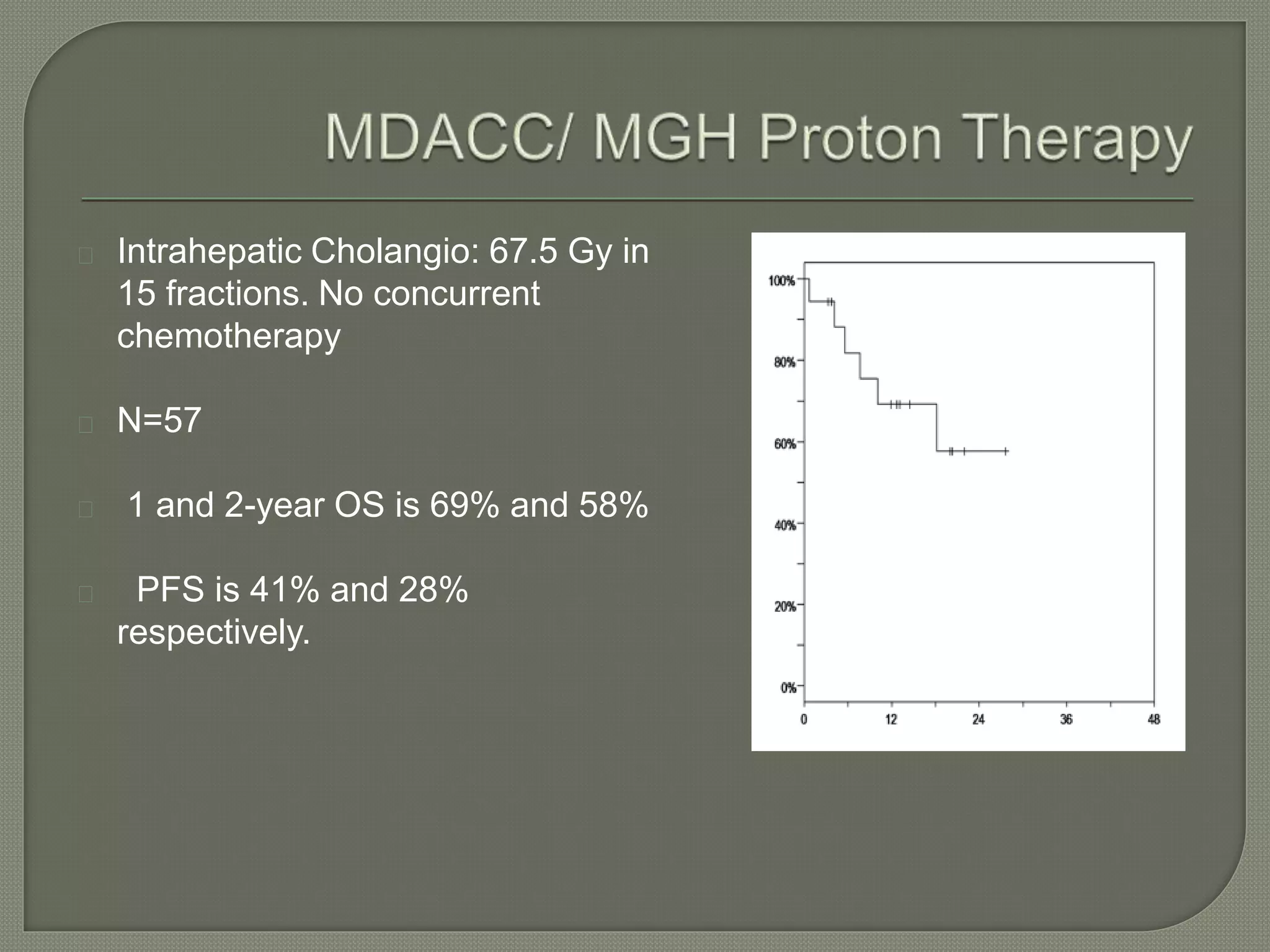
Intrahepatic Cholangio: 67.5 Gy in 
15 fractions. No concurrent 
chemotherapy 
N=57 
1 and 2-year OS is 69% and 58% 
PFS is 41% and 28% 
respectively.
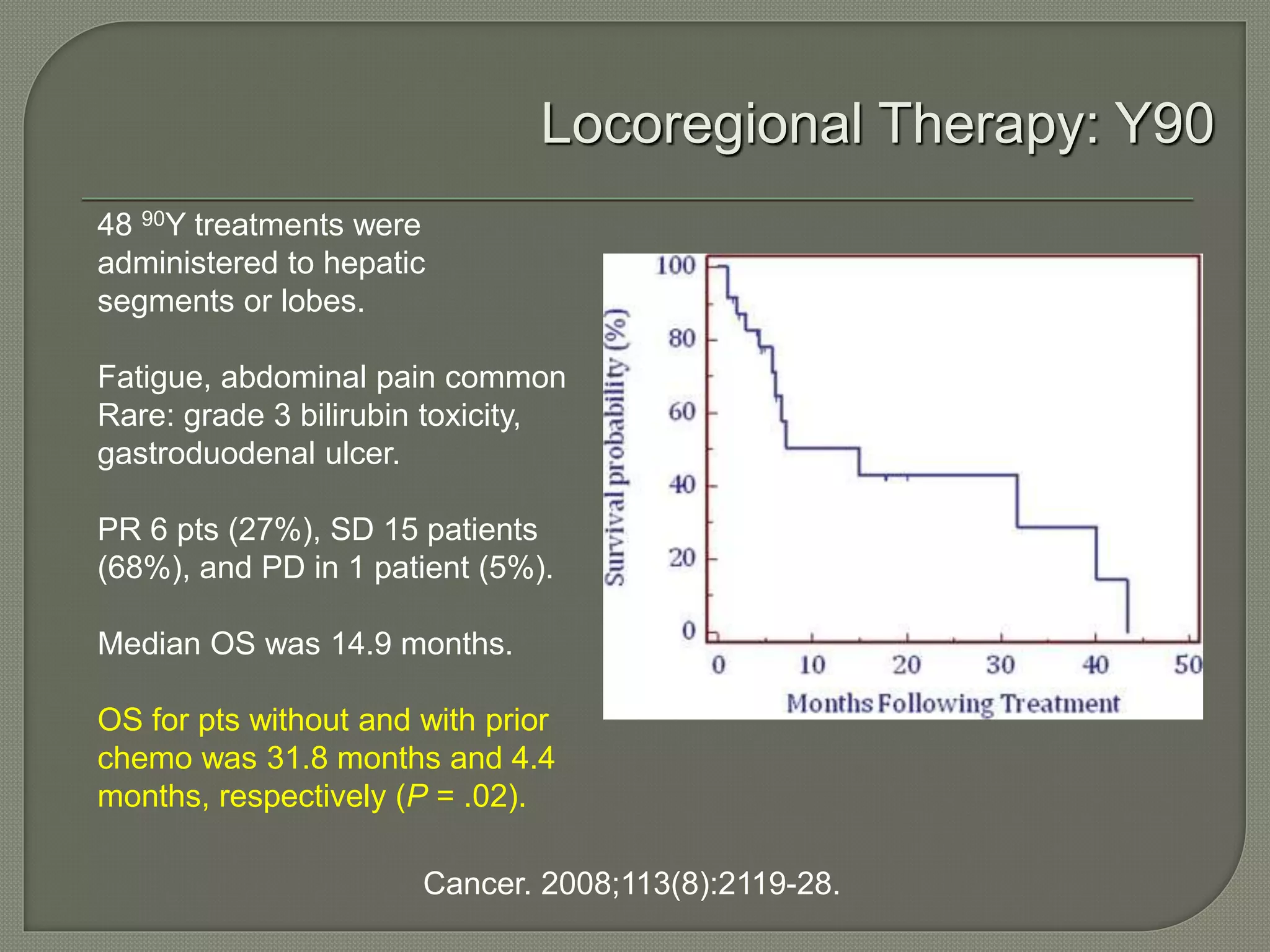
Locoregional Therapy: Y90 
48 90Y treatments were 
administered to hepatic 
segments or lobes. 
Fatigue, abdominal pain common 
Rare: grade 3 bilirubin toxicity, 
gastroduodenal ulcer. 
PR 6 pts (27%), SD 15 patients 
(68%), and PD in 1 patient (5%). 
Median OS was 14.9 months. 
OS for pts without and with prior 
chemo was 31.8 months and 4.4 
months, respectively (P = .02). 
Cancer. 2008;113(8):2119-28.
Vascularity is lower than HCC, thus limiting 
the value of TACE 
Retrospective Study 60 cases 
DEB-TACE: PFS of 3.9 mos, OS 11.7 mos, 
cTACE: PFS of 1.8 mos OS of 5.7 mos 
Chemo (GEMOX): PFS of 6.2 mos and OS 
of 11.0 mos 
Eur J Gastroenterol Hepatol. 2012 (4):437-43.
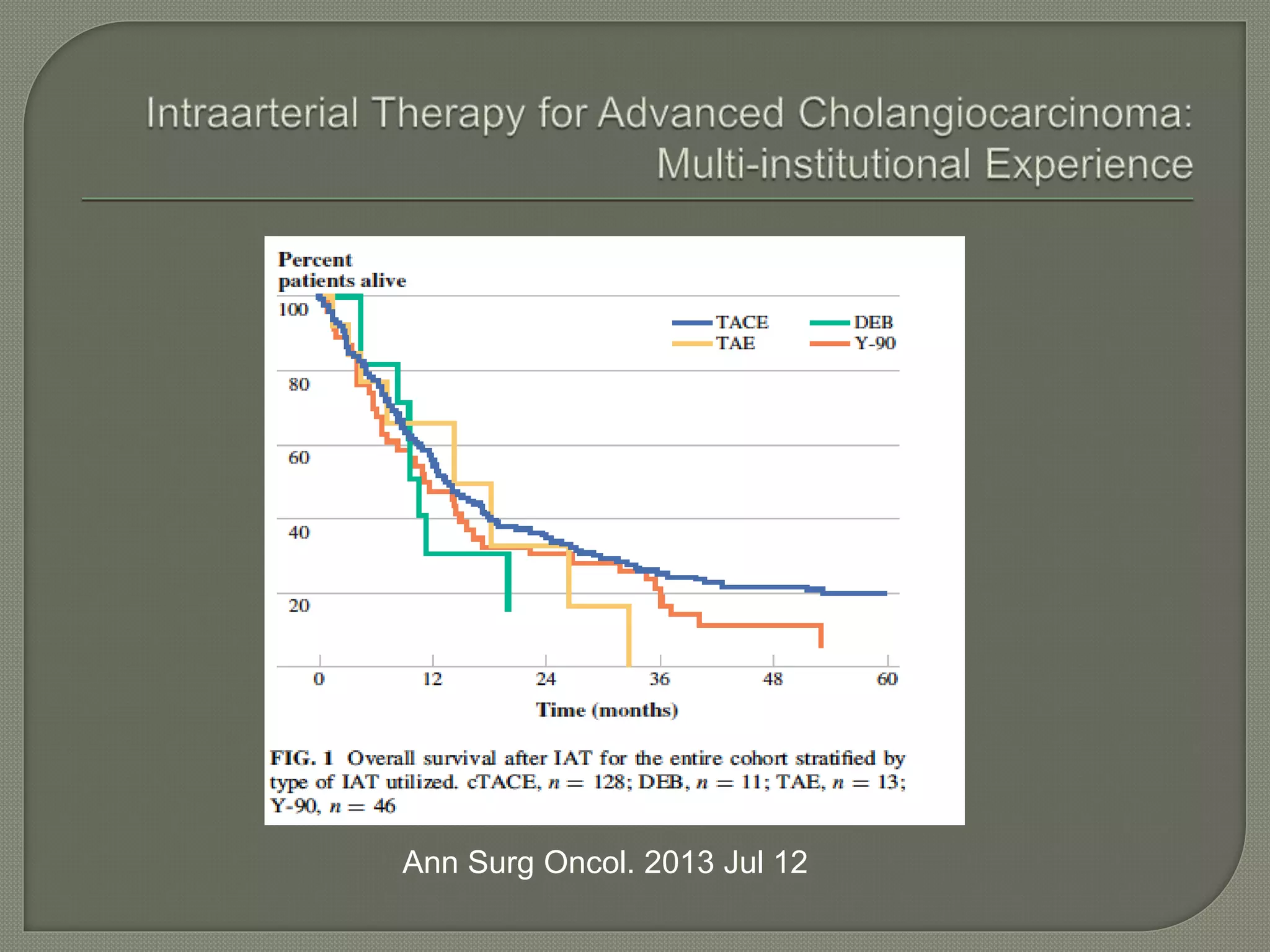
Ann Surg Oncol. 2013 Jul 12
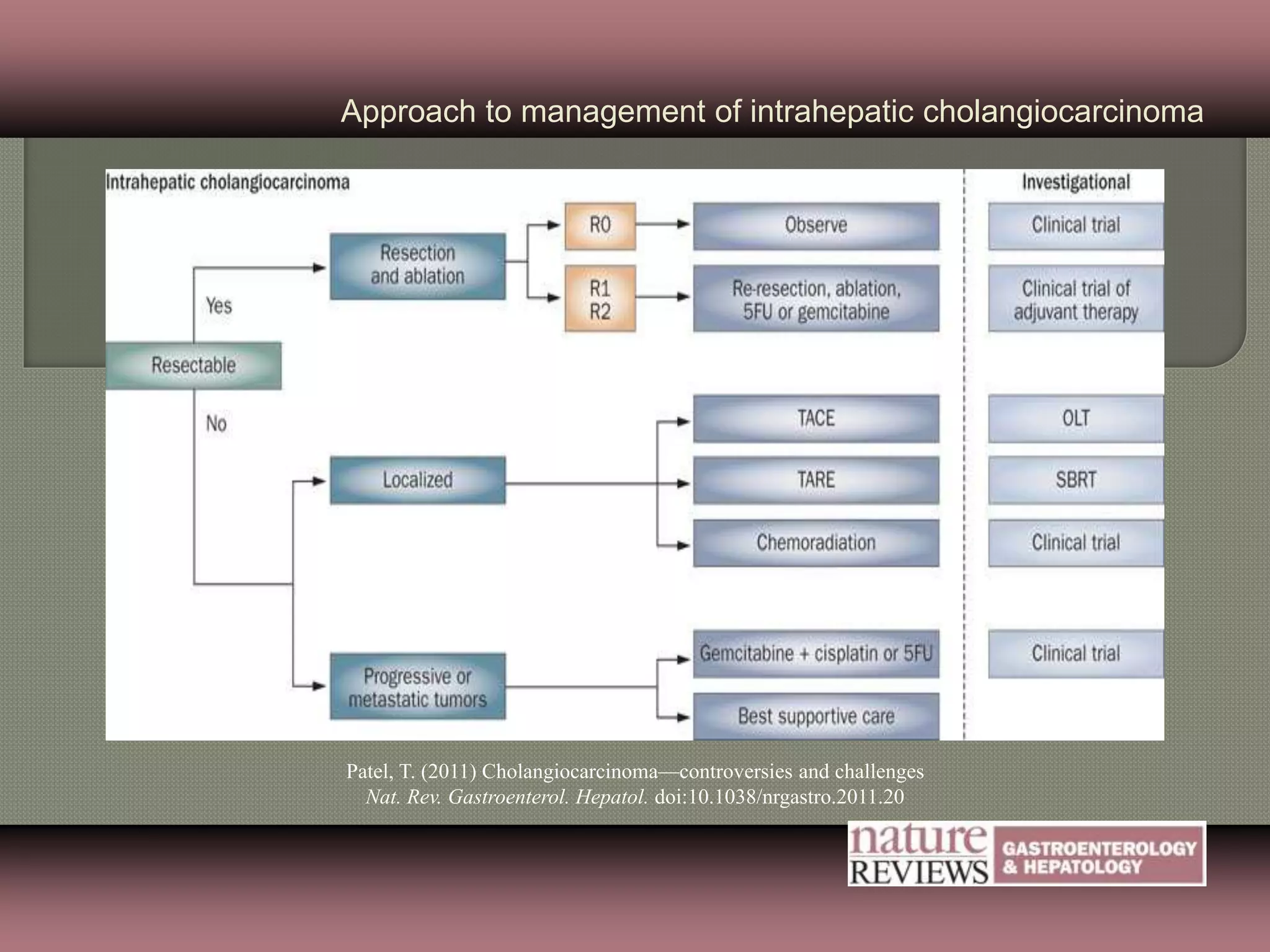
Approach to management of intrahepatic cholangiocarcinoma 
Patel, T. (2011) Cholangiocarcinoma—controversies and challenges 
Nat. Rev. Gastroenterol. Hepatol. doi:10.1038/nrgastro.2011.20
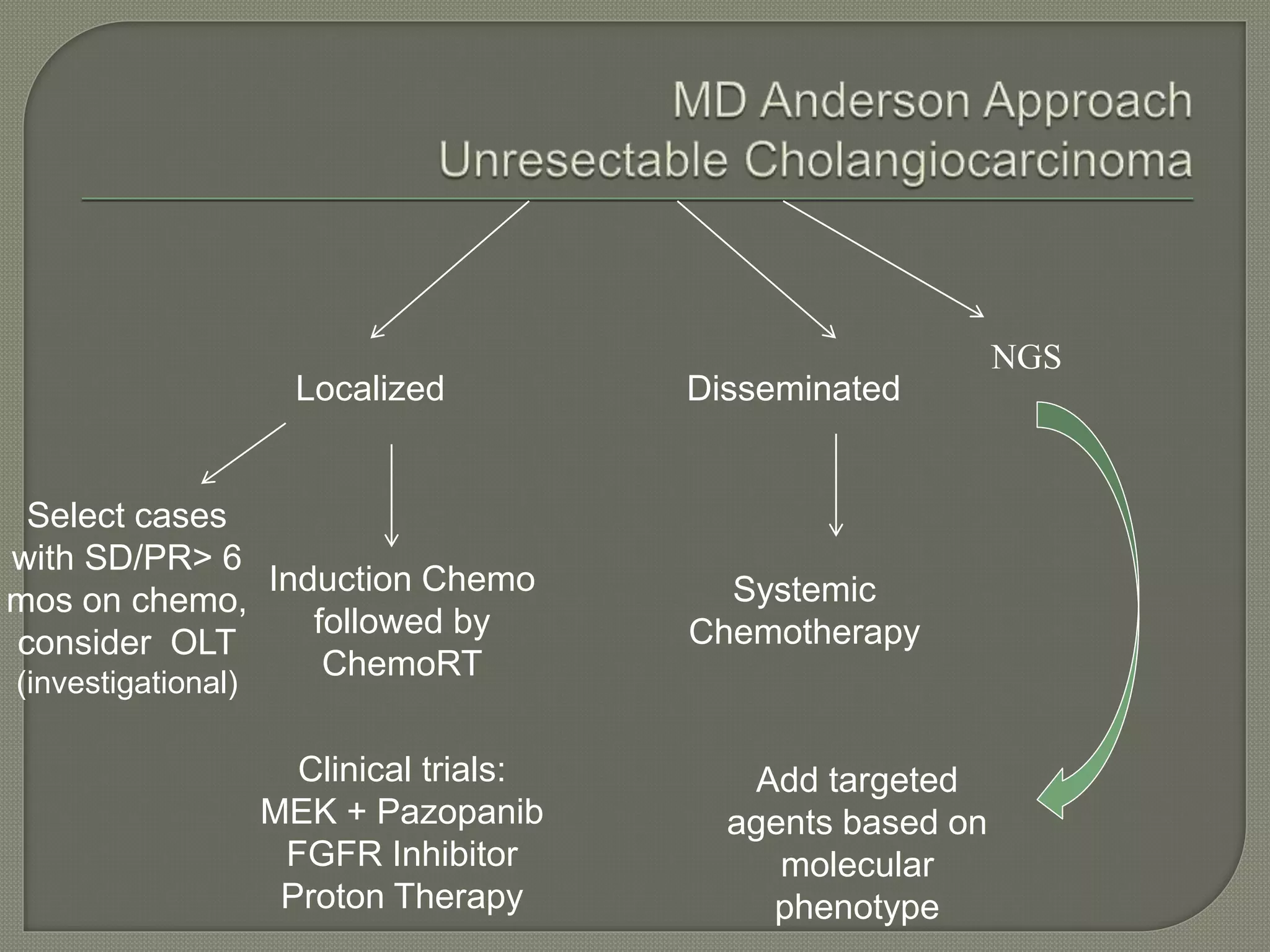
Localized 
Induction Chemo 
followed by 
ChemoRT 
Disseminated 
Systemic 
Chemotherapy 
NGS 
Add targeted 
agents based on 
molecular 
phenotype 
Clinical trials: 
MEK + Pazopanib 
FGFR Inhibitor 
Proton Therapy 
Select cases 
with SD/PR> 6 
mos on chemo, 
consider OLT 
(investigational)
Advances in cholangiocarcinoma

Advances in cholangiocarcinoma

  • 1.
    AUBHO 2014 RachnaT. Shroff, MD, MS Assistant Professor, Dept of GI Medical Oncology M.D. Anderson Cancer Center rshroff@mdanderson.org
  • 2.
    None with thesubject matter to be presented Research Funding: Celgene Clovis Oncology
  • 3.
    >7,0000 cases annuallyin 2009 5-year survival is <15% Most patients present with locally advanced or metastatic disease Treatment commonly administered in the community, at low-volume centers.
  • 4.
    Obesity, Metabolic Syndrome Chronic inflammation (hepatitis, ETOH, smoking, occupational) Parasitic infections Primary sclerosing cholangitis, Crohns disease Cysts, anomalous pancreatobiliary ducts Biliary polyps (>10 mm)
  • 5.
  • 6.
    180 160 140 120 100 80 60 40 20 0 New Cases 2009 2010 2011 2012 Medical Oncology Referrals or New Cases Causes: Reclassification from CUP True increase: Obesity, Hepatitis, Better Detection with Imaging/ Pathology
  • 7.
    Adenocarcinoma • Nodular • Sclerosing • Papillary Squamous cell carcinoma Mixed hepatocellular/cholangiocarcinoma IHC CK7+, CK20-, CA19.9+
  • 8.
  • 9.
    Extrahepatic • Painlessjaundice • Weight loss • Fever Intrahepatic • Constitutional Symptoms • Pain • Hepatomegaly • Abnormal Liver Chemistries
  • 10.
  • 11.
    Hilar Cholangio BiliaryObstruction common Cholangitis life threatening Local-directed therapies (TACE, Y90, RFA) increased risk of abscess/ complications Intrahepatic Cholangio Course can be relatively indolent Local therapies for advanced disease feasible, particularly radiation
  • 12.
    Surgical resection isthe standard of care Post operative radiation/ chemoradiation therapy improves recurrence-free survival in R1 disease Role of adjuvant therapy in R0 resection is debatable Role of liver transplantation in unresectable hilar cholangiocarcinoma. NCCN Guidelines
  • 13.
    Surgical resection resultsin 20-30% long term survival > 5 years Klatskin tumors-junction of the hepatic ducts are complicated by extensive perineural and lymphatic invasion, bilateral liver involvement, and vascular encasement Intrahepatic cholangiocarcinoma is a contraindication for liver transplant at most centers.
  • 14.
    Unresectable CCA orresectable Cholangio with PSC Tumor size < 3 cm Tumor above cystic duct No intra- or extrahepatic metastases No intrahepatic CCA or GB involvement Vascular encasement of the hilar vessels is not a contraindication CA 19-9 > 100 with mass; Biliary ploidy by FISH with bile duct stricture
  • 15.
    Neoadjuvant EBRT: 4000to 4500 cGy + 5-FU 2000 to 3000 cGy transcatheter iridium Capecitabine until transplantation 5-year survival with neoadjuvant therapy = 55% 5-year survival after transplantation = 71%. Rosen HPB (Oxford). 2008
  • 16.
    American Association forthe Study of Liver Diseases Heimbach J, et al: Liver Transplantation 10; 65-68, 2004
  • 17.
    Disease-related factors •Uncommon malignancies • Unwell, elderly population, infection/obstruction • Histological / cytological confirmation difficult Lack of evidence • Disease often not measurable • Primarily small phase II and one phase III study of gemcitabine-based combinations
  • 18.
    Eligible patients (n=400*) Arm A Gem 1000 mg/m2 D1,8,15 q 28d 24 weeks (6 cycles) Arm B Cisplatin 25 mg/m2 + Gem 1000 mg/m2 24 weeks (8 cycles) Randomized 1:1 (stratified by centre, primary site, PS, prior therapy and locally advanced vs. metastatic) Upon disease progression, management will be on clinician’s discretion (mostly best supportive care) D1,8 q 21d * Including 86 patients in ABC-01 + QoL
  • 19.
     Main inclusioncriteria:  Histologically / cytologically verified disease  Adequate biliary drainage, no uncontrolled infection  ECOG PS 0-2  LFTs: bilirubin  1.5 x ULN, ALT/ AST/ alk phos  3 x ULN ( 5 if liver metastases)  Measureable disease was not mandated
  • 20.
    Primary endpoint: OVERALLSURVIVAL Secondary endpoints:  Progression-free survival  Toxicity  Quality of life (EORTC QLQ C- 30) Sample size:  Powered to detect increase in MS from 8 to 11 months Log-rank test with 80% power and two-sided a 5% level
  • 21.
    Toxicity by patientGem Cis/Gem n % n % White blood cells 18 11.0% 24 15.1% Platelets 13 8.0% 13 8.2% Hemoglobin 6 3.7% 10 6.3% Neutrophils 29 17.9% 36 22.6% Infection + neutropenia 12 7.5% 16 10.2% Infection - neutropenia 14 8.6% 10 6.4%
  • 22.
    Toxicity by patientGem (n, %) Cis/Gem (n, %) Anorexia 4 2.5% 3 1.9% Lethargy 27 16.6% 29 18.6% Nausea 5 3.1% 5 3.2% Renal function 2 1.2% 3 1.9% Vomiting 8 3.0% 8 5.1% Constipation 3 1.8% 2 1.3% Diarrhea 4 2.5% 7 4.5% Dyspnea 2 1.2% 5 3.2% Pedal oedema 5 3.1% 4 2.6% Pain 12 7.5% 14 9.0% Any grade ≥3 events 108 65.5% 102 64.2%
  • 23.
    Result Gem n(%) Gem + Cis n (%) Not assessed * 74 (36%) 56 (27%) Assessed * 132 (64%) 148 (73%) Complete Response 1 (0.8%) 1 (0.7%) Partial Response 20 (15.2%) 37 (25.0%) Stable Disease 73 (55.3%) 79 (53.4%) Progressive Disease 33 (25.0%) 28 (18.9%) CR + PR + SD 94 (71.2%) 117 (79.1%) p-value 0.256 * Patients not required to have measurable disease at study entry, some patients still in follow-up
  • 24.
    Treatment arm GemGem + Cis Number of patients n=206 n=204 PFS events n(%) 155 (75.2) 135 (66.2) Median PFS (mo) 6.5 8.4 Log rank p value 0.003 Hazard ratio (95% CI) 0.72 (0.57, 0.90)
  • 25.
    ABC-02 - Results: Overall Survival (ITT) Treatment arm Gem Gem + Cis Number of patients n=206 n=204 Deaths n(%) 141 (68.5) 122 (59.8) Median survival (mo) 8.3 11.7 Log rank p value 0.002 Hazard ratio (95% CI) 0.70 (0.54, 0.89)
  • 27.
    Cisplatin and gemcitabinesignificantly improves overall survival compared with gemcitabine monotherapy (11.7 vs. 8.3 months) Benefit gained with no clinically significant added toxicity CisGem is recommended as a worldwide standard of care and the backbone for further studies Caution required in patients with PS > 2
  • 28.
    Gastrointest Cancer Res.2011;4(5-6):155-60.
  • 29.
    Rogers JE, etal. J Gastrointest Oncol 2014
  • 31.
    Agents Target PatientsRR PFS Author Combination Regimens First line therapy GEMOX-cetuximab EGFR 51 - 61% (4 mths) Malka GEMOX-bevacizumab VEGF 35 40 7 months (median) Zhu Single Agent Regimens First or Second line AZD6244 MEK1/2 22 14 5.4 months (median) Bekaii-Saab Erlotinib EGFR 43 7 2.6 months (median) Philip et al Lapatinib EGFR/HER2 17 0 1.8 months (median) Ramanathan Sorafenib BRAF/VEGFR 36 6 2 months (median) El-Khoueiry Sorafenib BRAF/VEGFR 46 2 2.3 months (median) Bengala Zhu et al, JCO, 2009
  • 32.
    Bile Acids InduceEGFR in CCA cells via TGF-α and COX-2 Hepatol. 2004;41(5):808-14
  • 33.
    Wide range reportedk-ras mutation in biliary cancer (10-45%) More likely in anomalous pancreato-biliary ducts Less likely in the setting of pre-existing adenoma In Wt k-ras, EGFR-directed TKIs or Monoclonal antibodies are a consideration
  • 35.
    Endpoint Estimate Partialresponse 8% Stable disease 43% 24- week progression-free 17% Overall survival 7.5 mos J Clin Oncol. 2006 (19):3069-3074
  • 36.
    GEMOX + Cetuximab500 mg/m2 bi-weekly Pri-endpoint: 4 month PFS (<40%: control; >60% study arm) 101 pts enrolled Interim analysis: manageable toxicity 4 mth PFS 44% vs 61% (Interim Analysis) J Clin Oncl 27:15s, 2009
  • 37.
    268 pts randomized:GEMOX + Erlotinib PR higher in erlotinib group (40 vs. 21, p=0.005) Higher PFS with erlotinib (5·9 months vs 3·0 months) (p=0·049) Median overall survival was the same in both groups Lancet Oncol. 2012;13(2):181-8.
  • 38.
    Phase 2: GEMOX+Bevacizumab (10 mg/kg bi-weekly) 35 pts enrolled Median PFS 7 months (6 months was 63%) Toxicities: neutropenia, hypertension, AST elevation, neuropathy Partial responses or SD associated with significant improvement in SUV Lancet Oncol Nov 2009 (Epub)
  • 39.
    Sorafenib: 400 mgtwice a day 46 patients were treated; 26 (56%) had received chemotherapy earlier Progression-free survival (PFS) was 2.3 months (range: 0-12 months) Median overall survival was 4.4 months (range: 0-22 months). El Khoureiy, ASCO 2007
  • 40.
    Therapeutic Target ChemotherapyAgent Phase MEK Nil ARRY-438162; AZD6244 II Raf kinase GemOx Sorafenib II VEGF+ EGFR Gemcitabine Vandetanib Randomized II VEGFR Gemcitabine/ Cisplatin Cediranib (AZD2171) Randomized II/III EGFR Gemcitabine + Erlotinib, Cetuximab, Panitumamab II/Randomized
  • 41.
    MRN Mutations 1PTEN TP53 ARID1A IDH1 2 MCL1 3 FBXW7 KRAS TP53 SMAD4 MLL2 CREBB 4 STK11KRAS MCL1 5 <none> 6 CDKN2A KRAS SMAD4 TP53 7 KRAS SMAD4 GRIN2A TP53 8 BAP1 CDKN2A/B PBRM1 9 PIK3CA KRAS MCL1 MYC 10 ARID1A TSC2 11 BRAF PIK3R1 12 ARID1IDH1 13 KRAS ARID1A IDH2 14 <none> 15 <none> 16 KRAS FBXW7 ARID1A MSH2 TP53 17 BAP1 18 KRAS 19 KRAS FBXW7 TP53 20 PTEN KRAS MDM2 21 KRAS TP53 22 CDK4 MYC 23 <none> 24 ERBB2 FBXW7 CDKN2A SMAD4 TP53 25 ERBB2 ATM SMAD4 26 KRAS TP53 27 EGFR PIK3CA CCND1 TP53 28 IDH1 29 MCL1 MYST3 30 IDH1 31 NRAS ARID1A IDH1 32 MDM2KRAS ARID2 33 PIK3CA MCL1 ARID1A CDH1 EPHA7 EPHB1 MSH6 34 BAP1 34 BRCA1 PTCH FBXW7 35 FGFR3-TACC
  • 43.
    1.00 0.75 0.50 0.25 0.00 Proportion Surviving p = 0.028 0 6 12 18 24 30 36 42 48 54 60 Months KRAS-Negative KRAS-Positive
  • 44.
    33 patients withintrahepatic cholangioca Median tumor size - 8.8 cm 88% previously chemotherapy Dose: 50.4 Gy (range, 35–70 Gy), most with xeloda 1-year PFS: 47%, and 1-year OS: 62% 1-year OS rate was 100% with RT dose ≥ 60 Gy Gastrointest Cancer Res. 2010 Nov-Dec; (Suppl 1): S34
  • 45.
    Intrahepatic Cholangio: 67.5Gy in 15 fractions. No concurrent chemotherapy N=57 1 and 2-year OS is 69% and 58% PFS is 41% and 28% respectively.
  • 46.
    Locoregional Therapy: Y90 48 90Y treatments were administered to hepatic segments or lobes. Fatigue, abdominal pain common Rare: grade 3 bilirubin toxicity, gastroduodenal ulcer. PR 6 pts (27%), SD 15 patients (68%), and PD in 1 patient (5%). Median OS was 14.9 months. OS for pts without and with prior chemo was 31.8 months and 4.4 months, respectively (P = .02). Cancer. 2008;113(8):2119-28.
  • 47.
    Vascularity is lowerthan HCC, thus limiting the value of TACE Retrospective Study 60 cases DEB-TACE: PFS of 3.9 mos, OS 11.7 mos, cTACE: PFS of 1.8 mos OS of 5.7 mos Chemo (GEMOX): PFS of 6.2 mos and OS of 11.0 mos Eur J Gastroenterol Hepatol. 2012 (4):437-43.
  • 48.
    Ann Surg Oncol.2013 Jul 12
  • 49.
    Approach to managementof intrahepatic cholangiocarcinoma Patel, T. (2011) Cholangiocarcinoma—controversies and challenges Nat. Rev. Gastroenterol. Hepatol. doi:10.1038/nrgastro.2011.20
  • 50.
    Localized Induction Chemo followed by ChemoRT Disseminated Systemic Chemotherapy NGS Add targeted agents based on molecular phenotype Clinical trials: MEK + Pazopanib FGFR Inhibitor Proton Therapy Select cases with SD/PR> 6 mos on chemo, consider OLT (investigational)