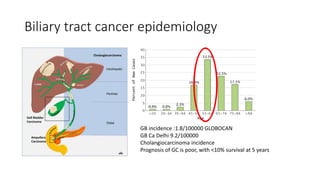
Biliary tract cancer epidemiology
GB incidence :1.8/100000 GLOBOCAN
GB Ca Delhi 9.2/100000
Cholangiocarcinoma incidence
Prognosis of GC is poor, with <10% survival at 5 years
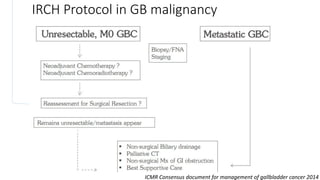
IRCH Protocol in GB malignancy
ICMR Consensus document for management of gallbladder cancer 2014
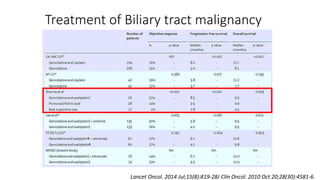
Treatment of Biliary tract malignancy
Lancet Oncol. 2014 Jul;15(8):819-28J Clin Oncol. 2010 Oct 20;28(30):4581-6.
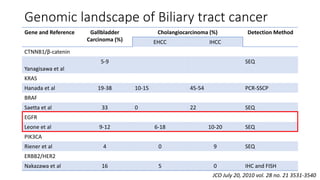
Genomic landscape of Biliary tract cancer
Gene and Reference Gallbladder
Carcinoma (%)
Cholangiocarcinoma (%) Detection Method
EHCC IHCC
CTNNB1/β-catenin
Yanagisawa et al
5-9 SEQ
KRAS
Hanada et al 19-38 10-15 45-54 PCR-SSCP
BRAF
Saetta et al 33 0 22 SEQ
EGFR
Leone et al 9-12 6-18 10-20 SEQ
PIK3CA
Riener et al 4 0 9 SEQ
ERBB2/HER2
Nakazawa et al 16 5 0 IHC and FISH
JCO July 20, 2010 vol. 28 no. 21 3531-3540
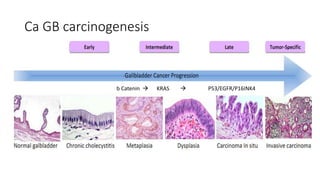
Ca GB carcinogenesis
• GB Ca Cholangiocarcinoma
b Catenin  KRAS  P53/EGFR/P16INK4
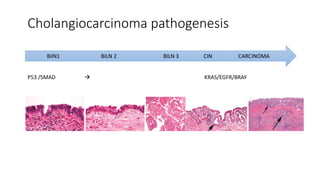
Cholangiocarcinoma pathogenesis
BilN1 BILN 2 BILN 3 CIN CARCINOMA
P53 /SMAD  KRAS/EGFR/BRAF
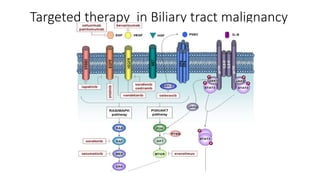
Targeted therapy in Biliary tract malignancy
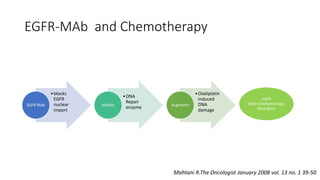
EGFR-MAb and Chemotherapy
•blocks
EGFR
nuclear
import
EGFR Mab
•DNA
Repair
enzymeInhibits
•Oxaliplatin
induced
DNA
damage
Augments
EGFR
Mab+Chemotherapy
Synergism
Mahtani R.The Oncologist January 2008 vol. 13 no. 1 39-50
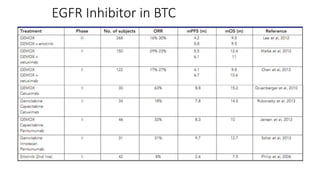
EGFR Inhibitor in BTC
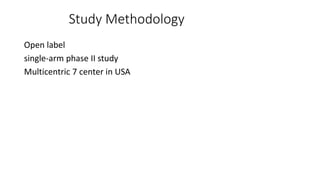
Study Methodology
Open label
single-arm phase II study
Multicentric 7 center in USA
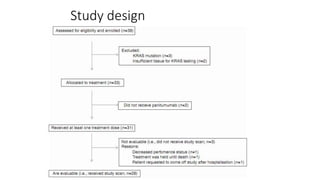
Study design
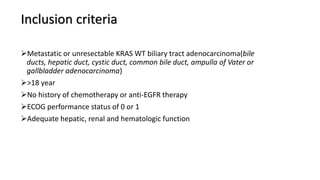
Inclusion criteria
Metastatic or unresectable KRAS WT biliary tract adenocarcinoma(bile
ducts, hepatic duct, cystic duct, common bile duct, ampulla of Vater or
gallbladder adenocarcinoma)
>18 year
No history of chemotherapy or anti-EGFR therapy
ECOG performance status of 0 or 1
Adequate hepatic, renal and hematologic function
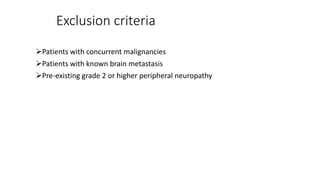
Exclusion criteria
Patients with concurrent malignancies
Patients with known brain metastasis
Pre-existing grade 2 or higher peripheral neuropathy
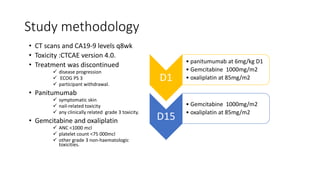
Study methodology
• CT scans and CA19-9 levels q8wk
• Toxicity :CTCAE version 4.0.
• Treatment was discontinued
 disease progression
 ECOG PS 3
 participant withdrawal.
• Panitumumab
 symptomatic skin
 nail-related toxicity
 any clinically related grade 3 toxicity.
• Gemcitabine and oxaliplatin
 ANC <1000 mcl
 platelet count <75 000mcl
 other grade 3 non-haematologic
toxicities.
D1
• panitumumab at 6mg/kg D1
• Gemcitabine 1000mg/m2
• oxaliplatin at 85mg/m2
D15
• Gemcitabine 1000mg/m2
• oxaliplatin at 85mg/m2
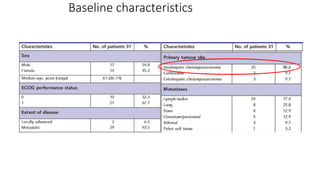
Baseline characteristics
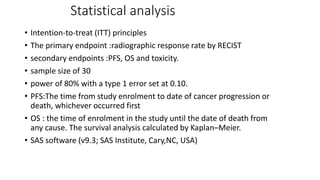
Statistical analysis
• Intention-to-treat (ITT) principles
• The primary endpoint :radiographic response rate by RECIST
• secondary endpoints :PFS, OS and toxicity.
• sample size of 30
• power of 80% with a type 1 error set at 0.10.
• PFS:The time from study enrolment to date of cancer progression or
death, whichever occurred first
• OS : the time of enrolment in the study until the date of death from
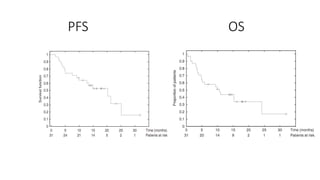
any cause. The survival analysis calculated by Kaplan–Meier.
• SAS software (v9.3; SAS Institute, Cary,NC, USA)
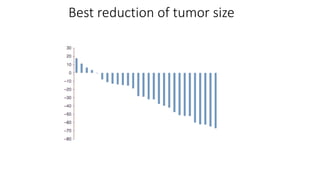
Best reduction of tumor size
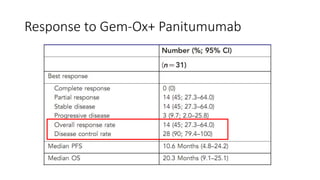
Response to Gem-Ox+ Panitumumab
PFS OS
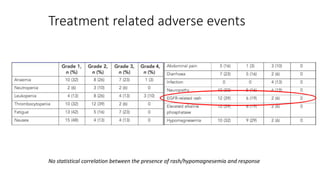
Treatment related adverse events
No statistical correlation between the presence of rash/hypomagnesemia and response
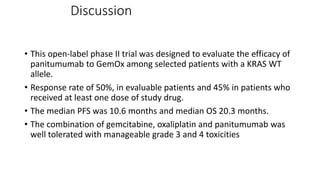
Discussion
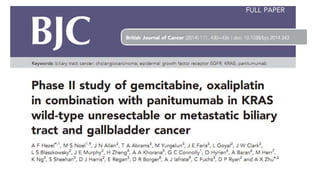
• This open-label phase II trial was designed to evaluate the efficacy of
panitumumab to GemOx among selected patients with a KRAS WT
allele.
• Response rate of 50%, in evaluable patients and 45% in patients who
received at least one dose of study drug.
• The median PFS was 10.6 months and median OS 20.3 months.
• The combination of gemcitabine, oxaliplatin and panitumumab was
well tolerated with manageable grade 3 and 4 toxicities
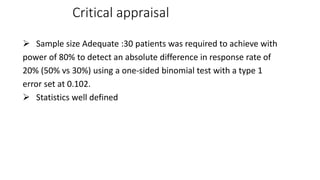
Critical appraisal
 Sample size Adequate :30 patients was required to achieve with
power of 80% to detect an absolute difference in response rate of
20% (50% vs 30%) using a one-sided binomial test with a type 1
error set at 0.102.
 Statistics well defined
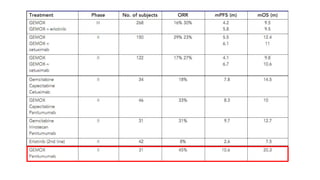
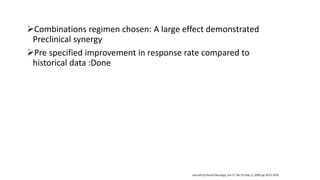
Combinations regimen chosen: A large effect demonstrated
Preclinical synergy
Pre specified improvement in response rate compared to
historical data :Done
Journal of Clinical Oncology, Vol 27, No 19 (July 1), 2009: pp 3073-3076
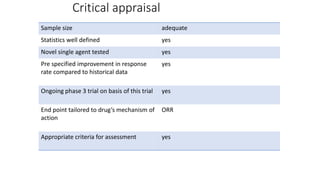
Critical appraisal
Sample size adequate
Statistics well defined yes
Novel single agent tested yes
Pre specified improvement in response
rate compared to historical data
yes
Ongoing phase 3 trial on basis of this trial yes
End point tailored to drug’s mechanism of
action
ORR
Appropriate criteria for assessment yes
Gem ox  panitumumab
Gem ox  panitumumab

Gem ox panitumumab

  • 2.
    Biliary tract cancerepidemiology GB incidence :1.8/100000 GLOBOCAN GB Ca Delhi 9.2/100000 Cholangiocarcinoma incidence Prognosis of GC is poor, with <10% survival at 5 years
  • 3.
    IRCH Protocol inGB malignancy ICMR Consensus document for management of gallbladder cancer 2014
  • 4.
    Treatment of Biliarytract malignancy Lancet Oncol. 2014 Jul;15(8):819-28J Clin Oncol. 2010 Oct 20;28(30):4581-6.
  • 5.
    Genomic landscape ofBiliary tract cancer Gene and Reference Gallbladder Carcinoma (%) Cholangiocarcinoma (%) Detection Method EHCC IHCC CTNNB1/β-catenin Yanagisawa et al 5-9 SEQ KRAS Hanada et al 19-38 10-15 45-54 PCR-SSCP BRAF Saetta et al 33 0 22 SEQ EGFR Leone et al 9-12 6-18 10-20 SEQ PIK3CA Riener et al 4 0 9 SEQ ERBB2/HER2 Nakazawa et al 16 5 0 IHC and FISH JCO July 20, 2010 vol. 28 no. 21 3531-3540
  • 6.
    Ca GB carcinogenesis •GB Ca Cholangiocarcinoma b Catenin  KRAS  P53/EGFR/P16INK4
  • 7.
    Cholangiocarcinoma pathogenesis BilN1 BILN2 BILN 3 CIN CARCINOMA P53 /SMAD  KRAS/EGFR/BRAF
  • 8.
    Targeted therapy inBiliary tract malignancy
  • 9.
    EGFR-MAb and Chemotherapy •blocks EGFR nuclear import EGFRMab •DNA Repair enzymeInhibits •Oxaliplatin induced DNA damage Augments EGFR Mab+Chemotherapy Synergism Mahtani R.The Oncologist January 2008 vol. 13 no. 1 39-50
  • 11.
  • 13.
    Study Methodology Open label single-armphase II study Multicentric 7 center in USA
  • 14.
  • 15.
    Inclusion criteria Metastatic orunresectable KRAS WT biliary tract adenocarcinoma(bile ducts, hepatic duct, cystic duct, common bile duct, ampulla of Vater or gallbladder adenocarcinoma) >18 year No history of chemotherapy or anti-EGFR therapy ECOG performance status of 0 or 1 Adequate hepatic, renal and hematologic function
  • 16.
    Exclusion criteria Patients withconcurrent malignancies Patients with known brain metastasis Pre-existing grade 2 or higher peripheral neuropathy
  • 17.
    Study methodology • CTscans and CA19-9 levels q8wk • Toxicity :CTCAE version 4.0. • Treatment was discontinued  disease progression  ECOG PS 3  participant withdrawal. • Panitumumab  symptomatic skin  nail-related toxicity  any clinically related grade 3 toxicity. • Gemcitabine and oxaliplatin  ANC <1000 mcl  platelet count <75 000mcl  other grade 3 non-haematologic toxicities. D1 • panitumumab at 6mg/kg D1 • Gemcitabine 1000mg/m2 • oxaliplatin at 85mg/m2 D15 • Gemcitabine 1000mg/m2 • oxaliplatin at 85mg/m2
  • 18.
  • 19.
    Statistical analysis • Intention-to-treat(ITT) principles • The primary endpoint :radiographic response rate by RECIST • secondary endpoints :PFS, OS and toxicity. • sample size of 30 • power of 80% with a type 1 error set at 0.10. • PFS:The time from study enrolment to date of cancer progression or death, whichever occurred first • OS : the time of enrolment in the study until the date of death from any cause. The survival analysis calculated by Kaplan–Meier. • SAS software (v9.3; SAS Institute, Cary,NC, USA)
  • 20.
  • 21.
  • 22.
  • 23.
    Treatment related adverseevents No statistical correlation between the presence of rash/hypomagnesemia and response
  • 25.
    Discussion • This open-labelphase II trial was designed to evaluate the efficacy of panitumumab to GemOx among selected patients with a KRAS WT allele. • Response rate of 50%, in evaluable patients and 45% in patients who received at least one dose of study drug. • The median PFS was 10.6 months and median OS 20.3 months. • The combination of gemcitabine, oxaliplatin and panitumumab was well tolerated with manageable grade 3 and 4 toxicities
  • 26.
    Critical appraisal  Samplesize Adequate :30 patients was required to achieve with power of 80% to detect an absolute difference in response rate of 20% (50% vs 30%) using a one-sided binomial test with a type 1 error set at 0.102.  Statistics well defined
  • 27.
    Combinations regimen chosen:A large effect demonstrated Preclinical synergy Pre specified improvement in response rate compared to historical data :Done Journal of Clinical Oncology, Vol 27, No 19 (July 1), 2009: pp 3073-3076
  • 28.
    Critical appraisal Sample sizeadequate Statistics well defined yes Novel single agent tested yes Pre specified improvement in response rate compared to historical data yes Ongoing phase 3 trial on basis of this trial yes End point tailored to drug’s mechanism of action ORR Appropriate criteria for assessment yes

Editor's Notes

  • #3 GBC carries a worse prognosis than CC; however, GBC tends to exhibit a greater response rate (RR) to chemotherapy.4 After surgery, GBC is more likely recur distantly than EHCC
  • #9 Lancet Oncol. 2014 May;15(6):569-79. doi: 10.1016/S1470-2045(14)70118-4. Epub 2014 Apr 14. Panitumumab versus cetuximab in patients with chemotherapy-refractory wild-type KRAS exon 2 metastatic colorectal cancer (ASPECCT): a randomised, multicentre, open-label, non-inferiority phase 3 study
  • #18 Treatment could be delayed for upto 3 weeks to allow for recovery from toxicity, if the patient did not meet re-treatment criteria after a 3-week delay, then the patient will be removed from the study
  • #21 Waterfall plot of percentage of tumor change from baseline in 28 evaluable patients
  • #26 GEMOX : favourable side-effect profile, convenient schedule (once every 2 weeks) and similar efficacy when compared to gemcitabine and cisplatin
  • #28 Priority for this design will be given to studies of novel single agents, prposed to combinations, since the contribution of the experimental agent will be easier to determine, combination regimens that demonstrate an effect size large enough to assure the editors and readership that the results are not likely to be due to the other active drugs in the regimen, he novel agent has preclinical evidence of synergy with other drugs in the combination.
  • #29 5% phase 2 trial not defined and these they recommend further study