DVT PROPHYLAXIS IN
ORTHOPEDIC SURGERIES
PRESENTED BY –DR SOUVIK PAUL
MODERATED BY –DR PRINCE RAINA
What Is Deep Vein
Thrombosis ?
INTRODUCTION
• WHAT IS VTE ?
• includes spectrum of deep vein thrombosis
(DVT) and pulmonary embolism (PE).
NEED OF DVT PROPHYLAXIS
.
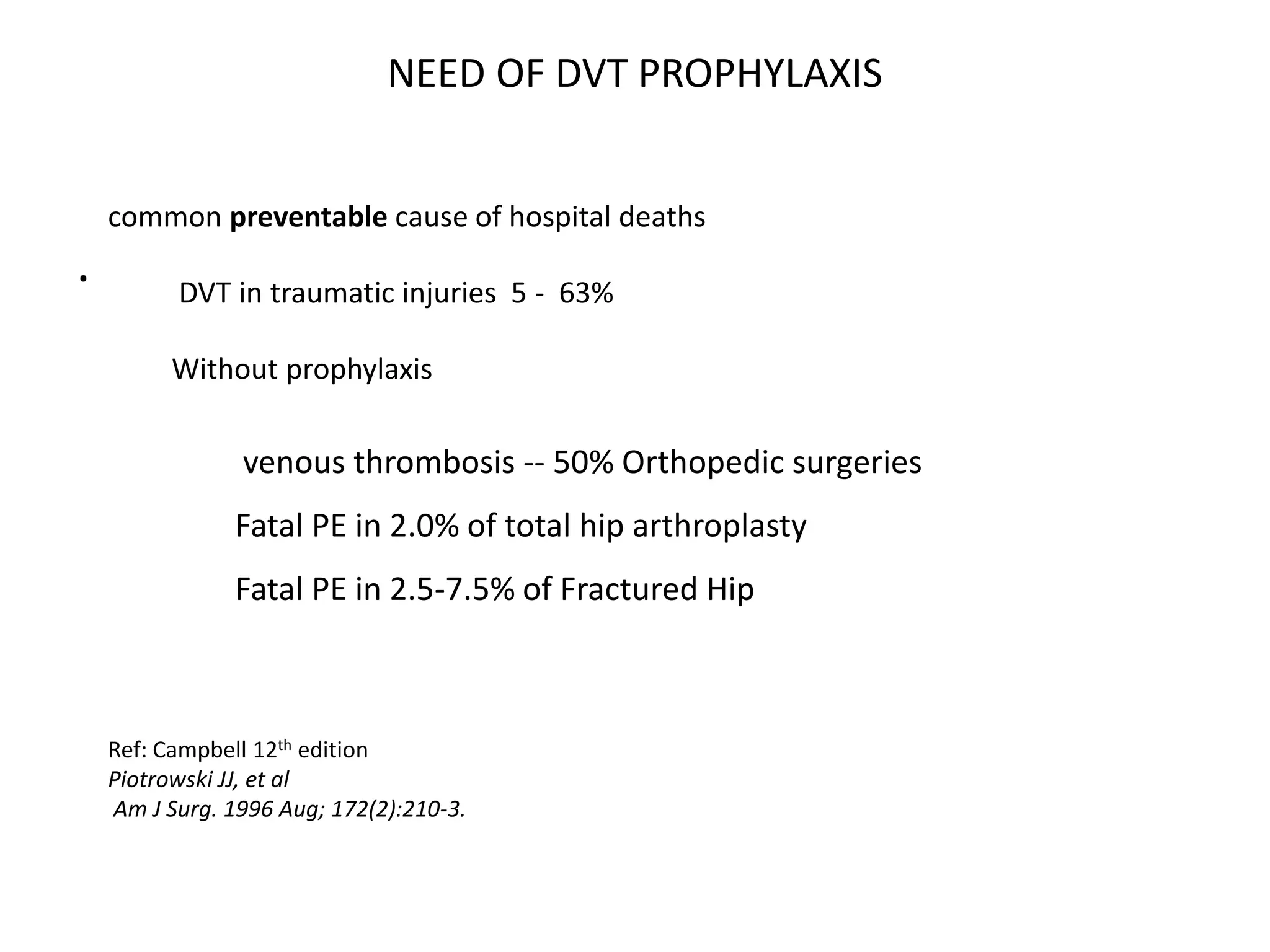
common preventable cause of hospital deaths
DVT in traumatic injuries 5 - 63%
Without prophylaxis
venous thrombosis -- 50% Orthopedic surgeries
Fatal PE in 2.0% of total hip arthroplasty
Fatal PE in 2.5-7.5% of Fractured Hip
Ref: Campbell 12th edition
Piotrowski JJ, et al
Am J Surg. 1996 Aug; 172(2):210-3.
Indian J Urol. 2009 Jan-Mar; 25(1): 11–16.
doi: 10.4103/0970-1591.45531
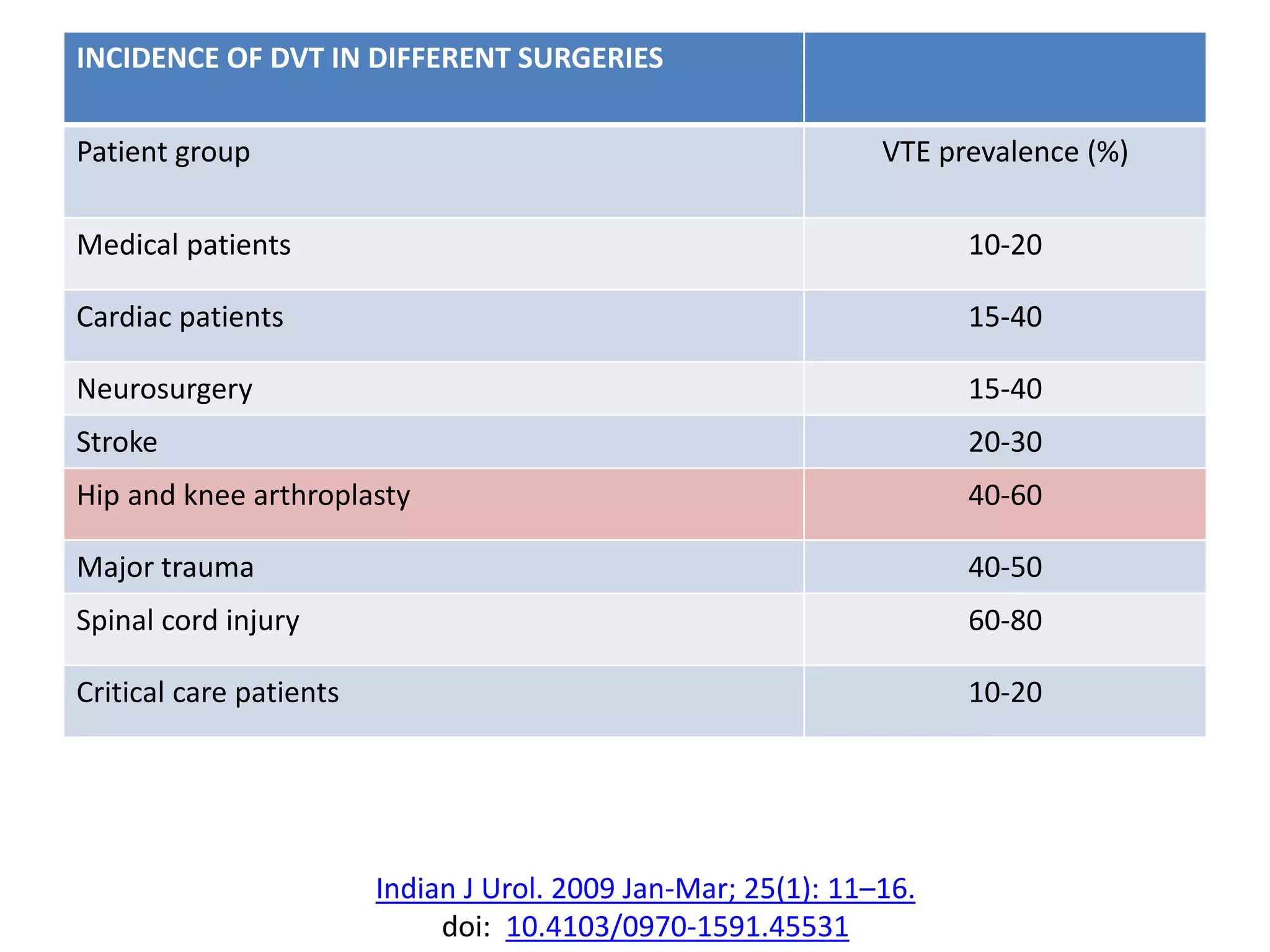
INCIDENCE OF DVT IN DIFFERENT SURGERIES
Patient group VTE prevalence (%)
Medical patients 10-20
Cardiac patients 15-40
Neurosurgery 15-40
Stroke 20-30
Hip and knee arthroplasty 40-60
Major trauma 40-50
Spinal cord injury 60-80
Critical care patients 10-20
Strong risk factors
1. Hip or leg fracture
2. Hip or knee replacement
3. Major general surgery
4. Major trauma, including spinal cord injury
Moderate risk factors
1. Arthroscopic knee surgery
2. Central venous catheterization
3. HRT or OC Pills
4. Malignancy (active or recently treated)
5. Pregnancy
6. Paralytic stroke
7. Prior VTE
8. Thrombophilia (inherited or acquired)
Weak risk factors
1. Bed rest > 3d
2. Prolonged immobility
3. Advanced age
4. Laparoscopic surgery
5. Obesity
6. Pregnancy
7. Varicose veins
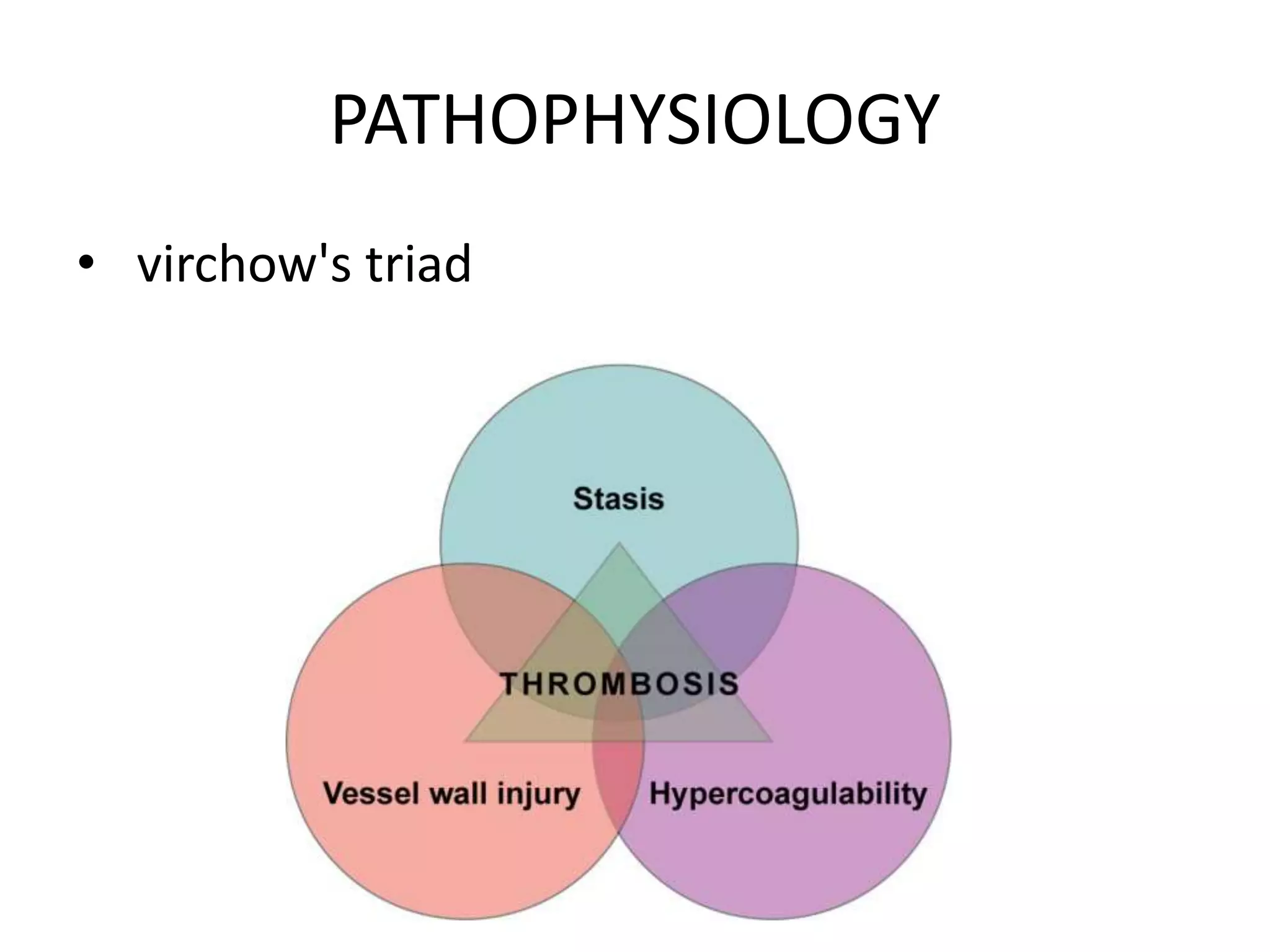
PATHOPHYSIOLOGY
• virchow's triad
Presentation and Physical
Examination
• Calf pain or tenderness
• Swelling + pitting oedema
• Increased skin temperature
and fever
• Superficial venous dilatation
Clinical examination
• Palpate distal pulses
• Evaluate capillary refill .
• Neurologic evaluation
• Homans sign:
pain posterior calf /knee with forced dorsiflexion of foot.
• Moses sign
Gentle squeezing of lower part of calf from side to side.
• Neuhofs sign
Thickening and deep tenderness elicited while palpating deep in calf muscles
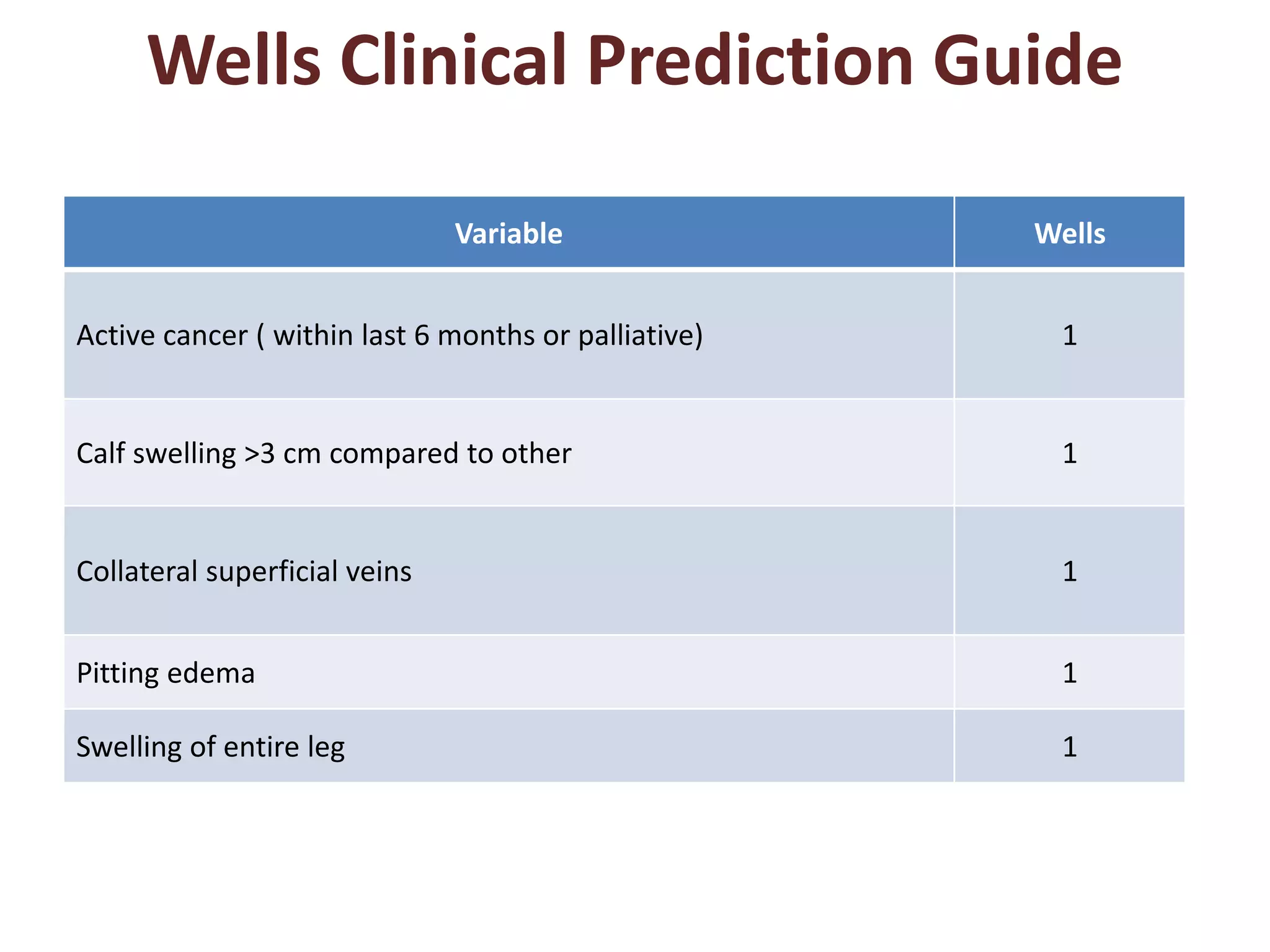
Wells Clinical Prediction Guide
Variable Wells
Active cancer ( within last 6 months or palliative) 1
Calf swelling >3 cm compared to other 1
Collateral superficial veins 1
Pitting edema 1
Swelling of entire leg 1
variable wells
Paralysis, paresis, or recent cast immobilization of lower
extremities
1
Recently bedridden > 3 days, or major surgery 1
Previous DVT 1
Alternative diagnosis at least as likely deep vein thrombosis
-2
Localized pain along distribution of deep venous system 1
Interpretation
High probability: ≥ 3 (Prevalence of DVT - 53%)
Moderate probability: 1-2 (Prevalence of DVT - 17%)
Low probability: ≤ 0 (Prevalence of DVT - 5%)
Adapted from Anand SS, et al. JAMA. 1998; 279 [14];1094
Over 20 different VTE risk assessment
models
• Individualized point-based scoring models
e.g.:CAPRINI
PADUA
REVISED GENEVA SCORE
• Grouping or “bucket” models:
– NICE / NHS guidelines
– Classic “3 bucket” model
A TOTAL SCORE >4 INDICATES HIGH RISK OF VTE
Interpretation of revised Geneva score
0-3 score : low risk
4-10 score : intermediate risk
>11 score : high risk
.
• Validated in predicting risk
• Can be difficult to use reliably
Caprini Model
1 point for each risk factors
• Age 41-60
• Swollen legs
• Varicose veins
• Obesity
• Sepsis
• OCP or HRT
• Pregnancy or postpartum
• AMI
• CHF
• Prolonged bed rest
• Prior major surgery
2 points for each risk factors
• Age 61-74 yrs
• Arthroscopic surgery
• Malignancy
• Laparoscopic surgery
• Immobilisation with plaster cast (<1 month)
3 points for each risk factor
• Age >75 yrs
• History of DVT /PE
• Positive factor leiden
• Family history of VTE
• Positive lupus anticoagulant
• HIT
• Elevated anticardiolipin antibodies
5 points for each risk factors
• Stroke (<1 months)
• Elective major lower limb arthroplasty
• Hip ,pelvic , leg fractures(<1 month)
• Spinal cord injury (<1 month)
1. Mechanical
2. Pharmacological
Mechanical
1. Physiotherapy
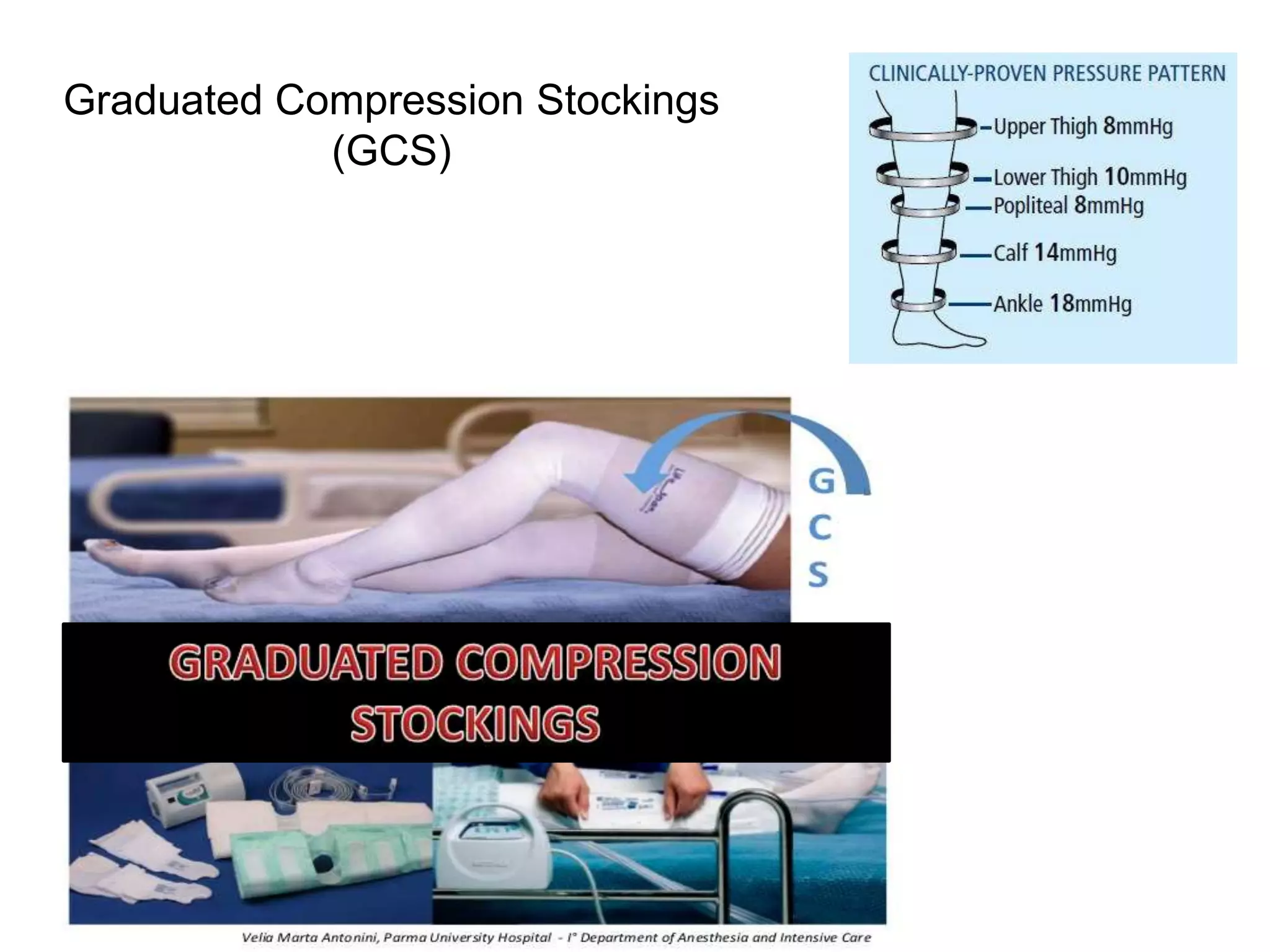
2. Graduated Compression Stockings (GCS)
3. Intermittent Pneumatic Compression Devices (IPC)
and Venous foot pumps (VFP).
4. IVC filters
Graduated Compression Stockings
(GCS)
Update of
Elastic compression stockings for prevention of deep vein
thrombosis. [Cochrane Database Syst Rev. 2010]
19 RCTs
1681 individual patients and 1064 individual legs (2745 analytic units).
9 TRIALS- general surgery,
6 TRIALS- orthopaedic surgery,
1 TRIAL- medical patients.
G c s applied on the day before surgery or on the day of surgery . worn up
until discharge or until the patients were fully mobile
Treatment group (GCS) of 1391 units -126 developed DVT
control group (without GCS) of 1354 units - 282 developed
DVT
odds ratio was 0.33
(95% CI) 0.26 to 0.41 (P < 0.00001).
INTERMITTENT PNEUMATIC
COMPRESSION [IPC]
• Inflation Cycle :10-20 secs
• Deflation cycle :30 secs
• At 40 mm Hg -maximum velocities with calf
and/or thigh compression –
Femoral velocity- 35–60 cm/s with augmentations at around 50–250%
popliteal velocities -55 cm/s.
At 120 mm Hg –
peak velocities of >100 cm/s in both popliteal and
femoral veins
• Foot compression has produced more modest results
20–40 cm/s -femoral vein
30–55 cm/s - popliteal vein
TYPES OF IPC
A: Venous blood flow velocity in the posterior tibial vein during compression by a foot cuff (velocity/ time
B: Venous blood flow velocity in the femoral vein during compression by a foot cuff (velocity [cm/s] vs. time [1
second per vertical dotted line]).
Problems in IPC
Improperly fitted compression stockings
reversed pressure gradient
higher incidence of VTE
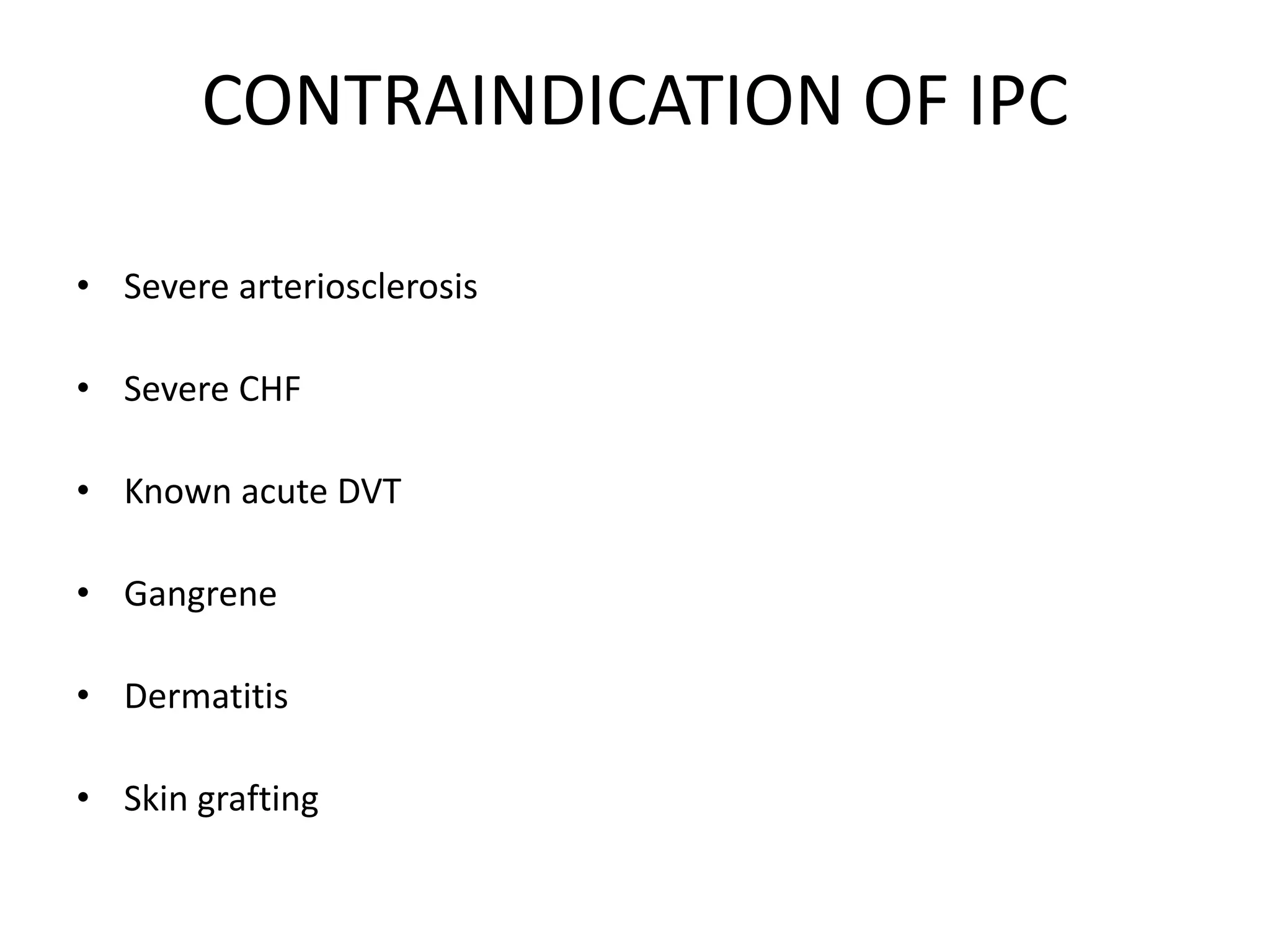
CONTRAINDICATION OF IPC
• Severe arteriosclerosis
• Severe CHF
• Known acute DVT
• Gangrene
• Dermatitis
• Skin grafting
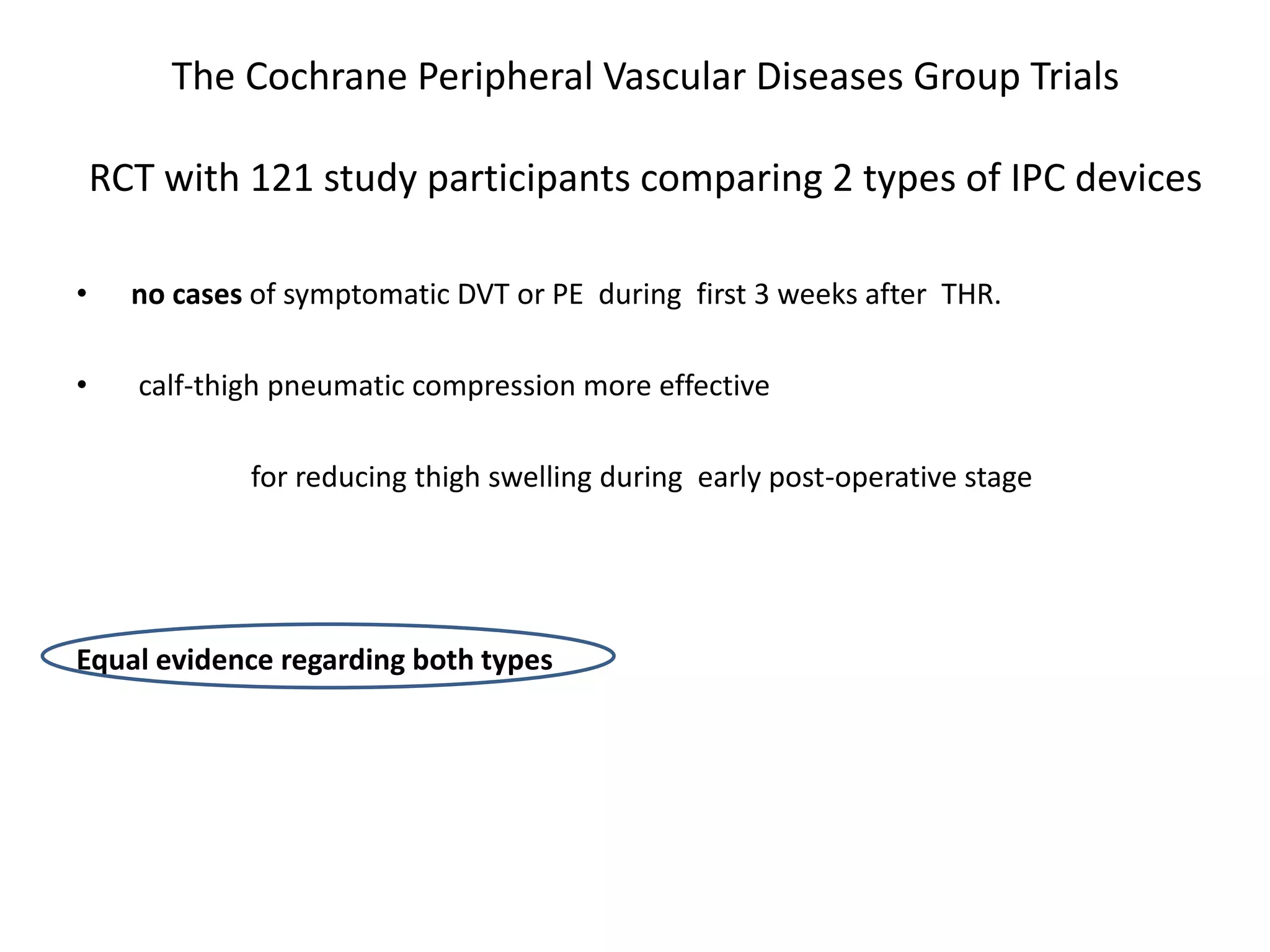
The Cochrane Peripheral Vascular Diseases Group Trials
RCT with 121 study participants comparing 2 types of IPC devices
• no cases of symptomatic DVT or PE during first 3 weeks after THR.
• calf-thigh pneumatic compression more effective
for reducing thigh swelling during early post-operative stage
Equal evidence regarding both types
DVT PUMP
• SET Pressures:
uniform thigh and calf / uniform calf garment 40 mmhg
sequential thigh and calf /sequential calf garment 45 mmhg
foot garment 130 mmhg
IVC filters
• FDA approved
• Ideal for young patients with reversible
PE risk factors
Indications
• Proven VTE
• Recurrent VTE
• Contraindications to anticoagulation
• Short Term Risk of PE/Short Term contraindication of anticoagulation
:retrievable filter
• Uncertain Risk of PE and/or lack of control for anticoagulation :
Permanent Filter
• Long Term Risk of PE/Recurrent PE/Recurrent DVT: Permanent Filter
SIDE EFFECTS
• Device-associated morbidity
• Device migration
• Filter embolization
• Filter fracture
• Insertion-site thrombosis
• Perforation of the vena cava
• Recurrent DVT
• Recurrent PE
• Thrombotic complications
• Vena cava thrombosis
Pharmacological:
1. Oral antiplatelet agents
2. Injectable low-molecular-weight heparins
3. Injectable unfractionated heparin
4. Injectable or oral factor Xa inhibitors
5. Injectable or oral direct thrombin inhibitors
6. Oral vitamin K antagonists
Oral antiplatelet agents
• Aspirin
Permanently inhibits COX-1 and COX-2
• Dipyridamole
Inhibits PDE; increases Camp
• Ticlopidine
• Clopidrgrel
• Abciximab
• Eptifibatide
• Tirofiban
Aspirin
• Dosage : 75 mg OD
• ACCP and AAOS guidelines do not include aspirin in prevention of VTE
• Present indications:
1.elective TKR
2.elective THR
3.contraindication to other pharmacologic prophylaxis
Contraindications to Antiplatelet Therapy
- Recent thoracic, abdominal, or cns surgery
-Recent CVA , trauma, or neoplasm
-Bleeding ulcer
-Hypertension
-Anticipated invasive procedures
-Concurrent hemostatic dysfunction
Heparin
• Types :
Un fractionated heparin(UFH) : inhibit factor II and X
Dose for DVT prophylaxis: 5000 u sc every 8 to 12 hours
Monitoring : aPTT
More risk for bleeding and heparin induced thrombocytopenia(8%)
Antidote: Protamine sulphate
LMWH
• Examples: enoxaparin, dalteparin, tinzaparin
• Inhibit thrombin only
• Dose in prophylaxis : 40 mg in 0.4 mL SC OD
• Lesser risk of and bleeding HIT
• No need to regular monitoring
• No antidote
Baseline Postoperative Risks of VTE Outcomes in the Absence of
Pharmacological Prophylaxis
•Outcome Total Hip
Replacement
Strength of
Evidence
(THR)
Total Knee
Replacement
Strength of
Evidence
(TKR)
Pulmonary
embolism
6% Low 1% Low
Deep vein
thrombosis
39% Low 46% Low
Major
bleeding
1% Moderate 3% Low
Minor
bleeding
5% Low 5% Moderate
Sobieraj DM, et al. Comparative Effectiveness Review No. 49. Available at
www.effectivehealthcare.ahrq.gov/thrombo.cfm
Comparative Effectiveness of Pharmacological Prophylaxis
Agents: LMWH Versus UFH
Comparators DVT PE Major
Bleeding
Heparin-induced
Thrombo-cytopenia
LMWH
vs. UFH
Decreased risk by
20%
RR 0.80
Decreased odds
by 52%
OR 0.48
Decreased odds
by 35%
OR 0.57
Decreased odds by
88%
OR 0.12
Sobieraj DM, et al. Comparative Effectiveness Review No. 49. Available at
www.effectivehealthcare.ahrq.gov/thrombo.cfm
warfarin
• Vitamin k antagonist
• Cause defective coagulation
• Slow in onset
• Good oral absorption
• Monitor with PT and INR
Comparative Effectiveness of Pharmacological
Prophylaxis Agents: LMWH Versus Warfarin
Comparators DVT Proximal
DVT
Symptomatic
VTE
PE
LMWH
vs. warfarin
Decreased risk
by 34%
RR 0.66
No difference;
RR 0.63
No difference;
OR 1.00
No difference;
OR 1.11
Sobieraj DM, et al. Comparative Effectiveness Review No. 49. Available at
www.effectivehealthcare.ahrq.gov/thrombo.cfm
Fondaparinux
– Synthetic Factor Xa inhibitor
– FDA approved for prophylaxis, treatment
• Prophylaxis: 2.5/d SC
• Treatment: weight based 5, 7.5 or 10/d SC
– Start warfarin simultaneously, continue 5-7 days as with heparin
• Avoid with GFR < 30
Comparative Effectiveness of Pharmacological Prophylaxis
Agents: Enoxaparin Versus Fondaparinux
Comparators DVT Symptomatic
VTE
PE Major
Bleeding
Enoxaparin
vs.
fondaparinux
Relative risk is
higher for
enoxaparin
by 99%
RR 1.99
No difference;
OR 0.70
No difference
OR 3.34
Decreased
odds by 35%
OR 0.65
Sobieraj DM, et al. Comparative Effectiveness Review No. 49. Available at www.effectivehealthcare.ahrq.gov/thrombo.cfm
Ximelagatran
• Direct thrombin inhibitors
• Alternative to warfarin
– Oral - fixed dose
• Acute clot or orthopedic prophylaxis: 36 mg bid
• Secondary prevention: 24 mg bid
– No monitoring, no initial heparin
• Safety questions
– No antidote
– Can elevate LFTs
NICE Guidelines 2015
Elective hip / knee replacement
Start mechanical VTE prophylaxis at admission
• anti-embolism stockings (GCS)
• foot impulse devices
• intermittent pneumatic compression (IPC)devices
Continue mechanical VTE prophylaxis until the patient no longer has significantly reduced
mobility.
If no contraindications, start pharmacological VTE prophylaxis after surgery
• dabigatran etexilate 1–4 hours after surgery
• fondaparinux sodium 6 hours after
• LMWH 6–12 hours after
• Rivaroxaban 6–10 hours after
• UFH (for renal failure patients) 6–12 hours after
Continue pharmacological VTE prophylaxis for 28–35 days in hip replacements
Continue pharmacological VTE prophylaxis for 10-14 days in knee replacements
• Hip fractures:
Start mechanical VTE prophylaxis at admission
•Anti-embolism stockings
•Foot impulse devices
•Intermittent pneumatic compression devices (thigh or knee length).
Continue mechanical VTE prophylaxis until the patient no longer has significantly
reduced mobility.
If no contraindications, start pharmacological VTE prophylaxis after surgery
• fondaparinux sodium not recommnded pre op,
can be given 6 hrs post op
• LMWH start at admission,
stop 12 hr before restart 6–12 hours after surgery
• Rivaroxaban 6–10 hours after
• UFH (for CRF) start at admission
stop 12 hr before Restart 6–12 hours after surgery
• Continue pharmacological VTE prophylaxis for 28–35 days
Other orthopaedic surgery
Start mechanical VTE prophylaxis at admission.
• Anti-embolism stockings
• Foot impulse devices
• Intermittent pneumatic compression devices (thigh or knee length).
Continue mechanical VTE prophylaxis until the patient no longer has
significantly reduced mobility.
Pharmacological VTE prophylaxis 6–12 hours after
surgery.
• LMWH
• UFH (for renal failure).
• Continue pharmacological VTE prophylaxis until patient no longer has
significantly reduced mobility.
DVT prophylaxis : ORTHOPEDICS SURGERY
• Low risk
– Early ambulation
• Moderate risk
– UFH 5000 u sc bid or LMWH, IPC
• High risk
– LMWH - may combine with IPC
AAOS Clinical Practice Guideline
Schematic of estimated incidence rates for LMWH and no prophylaxis for major orthopaedic
surgery
• Ref:Prevention of VTE in orthopedic surgery patients: Antithrombotic Therapy and Prevention of Thrombosis, 9th ed: American
College of Chest Physicians Evidence-Based Clinical Practice Guidelines.
• Falck-Ytter Y1, Francis CW, Johanson NA, Curley C, Dahl OE, Schulman S, Ortel TL, Pauker SG, Colwell CW Jr;
Systematic Review – Regarding DVT Prophylaxis
 Meta regression analysis
 Compare other therapies to enoxaparin for prevention of
VTE following THR
Dranitsaris 2011
http://www.aaos.org/
Low-molecular-weight heparin and intermittent pneumatic compression for
thromboprophylaxis in critical patients
BING WAN, et al Oct 13. 2015 PMC
• 500 patients were divided into four groups
• IPC( int. Pneumatic compression) 95
• LMWH 185
• LMWH + IPC 75
• control 145
Doppler study diagnosis done
Incidence of DVT, PE and complications of treatment in
the four groups.
Group No. of patients DVT cases PE cases Bleeding cases
IPC 95 9 28 0
LMWH 185 31 4 18
LMWH + IPC 75 0 0 3
Control 145 49 29 0
conclusion
• LMWH combined with IPC exhibited an excellent prophylactic
effect against DVT and PE.
• RR : 0.281 for IPC,
• RR: 0.49 for LMWH.
Comparative efficacy and safety of anticoagulants and aspirin for
extended treatment of venous thromboembolism: A network
meta-analysis
Diana M. Sobieraj et al
systematic literature search and searching of reference lists
identify RCT of patients completed initial anticoagulant treatment for VTE
randomized for the extension study
comparison of anticoagulant treatment to placebo
.• Ten trials (n = 11,079) were included.
• Apixaban ,dabigatran, rivaroxaban, idraparinux and vitamin
K antagonists (VKA) reduced risk of VTE recurrence
compared to placebo.
COMPARATIVE EFFICACY AND SAFETY OF NEW ORAL ANTICOAGULANTS(NOAC)
VERSUS WARFARIN FOR LONG-TERM TREATMENT OF VENOUS THROMBOEMBOLISM:
A META-ANALYSIS
Ajay Vallakati et al
• We searched PubMed, Cochrane library and Embase for RCTs comparing
NOACs (dabigatran, apixaban, rivaroxaban, and edoxaban) with placebo or
warfarin for long-term treatment of VTE
5 RCTs (n=16117) compared
NOACs (n=8484)
with either placebo (n=2085)
or warfarin (n=5548).
NOACs significantly reduced the risk of VTE
when compared to placebo/ warfarin (OR: 0.33; 95% CI, 0.13 −0.87)
• .
THANK YOU
•.

DVT PROPHYLAXIS IN ORTHOPEDIC SURGERIES

  • 1.
    DVT PROPHYLAXIS IN ORTHOPEDICSURGERIES PRESENTED BY –DR SOUVIK PAUL MODERATED BY –DR PRINCE RAINA
  • 2.
    What Is DeepVein Thrombosis ?
  • 3.
    INTRODUCTION • WHAT ISVTE ? • includes spectrum of deep vein thrombosis (DVT) and pulmonary embolism (PE).
  • 4.
    NEED OF DVTPROPHYLAXIS . common preventable cause of hospital deaths DVT in traumatic injuries 5 - 63% Without prophylaxis venous thrombosis -- 50% Orthopedic surgeries Fatal PE in 2.0% of total hip arthroplasty Fatal PE in 2.5-7.5% of Fractured Hip Ref: Campbell 12th edition Piotrowski JJ, et al Am J Surg. 1996 Aug; 172(2):210-3.
  • 5.
    Indian J Urol.2009 Jan-Mar; 25(1): 11–16. doi: 10.4103/0970-1591.45531 INCIDENCE OF DVT IN DIFFERENT SURGERIES Patient group VTE prevalence (%) Medical patients 10-20 Cardiac patients 15-40 Neurosurgery 15-40 Stroke 20-30 Hip and knee arthroplasty 40-60 Major trauma 40-50 Spinal cord injury 60-80 Critical care patients 10-20
  • 6.
    Strong risk factors 1.Hip or leg fracture 2. Hip or knee replacement 3. Major general surgery 4. Major trauma, including spinal cord injury
  • 7.
    Moderate risk factors 1.Arthroscopic knee surgery 2. Central venous catheterization 3. HRT or OC Pills 4. Malignancy (active or recently treated) 5. Pregnancy 6. Paralytic stroke 7. Prior VTE 8. Thrombophilia (inherited or acquired)
  • 8.
    Weak risk factors 1.Bed rest > 3d 2. Prolonged immobility 3. Advanced age 4. Laparoscopic surgery 5. Obesity 6. Pregnancy 7. Varicose veins
  • 9.
  • 10.
    Presentation and Physical Examination •Calf pain or tenderness • Swelling + pitting oedema • Increased skin temperature and fever • Superficial venous dilatation
  • 11.
    Clinical examination • Palpatedistal pulses • Evaluate capillary refill . • Neurologic evaluation
  • 12.
    • Homans sign: painposterior calf /knee with forced dorsiflexion of foot. • Moses sign Gentle squeezing of lower part of calf from side to side. • Neuhofs sign Thickening and deep tenderness elicited while palpating deep in calf muscles
  • 13.
    Wells Clinical PredictionGuide Variable Wells Active cancer ( within last 6 months or palliative) 1 Calf swelling >3 cm compared to other 1 Collateral superficial veins 1 Pitting edema 1 Swelling of entire leg 1
  • 14.
    variable wells Paralysis, paresis,or recent cast immobilization of lower extremities 1 Recently bedridden > 3 days, or major surgery 1 Previous DVT 1 Alternative diagnosis at least as likely deep vein thrombosis -2 Localized pain along distribution of deep venous system 1
  • 15.
    Interpretation High probability: ≥3 (Prevalence of DVT - 53%) Moderate probability: 1-2 (Prevalence of DVT - 17%) Low probability: ≤ 0 (Prevalence of DVT - 5%) Adapted from Anand SS, et al. JAMA. 1998; 279 [14];1094
  • 16.
    Over 20 differentVTE risk assessment models • Individualized point-based scoring models e.g.:CAPRINI PADUA REVISED GENEVA SCORE • Grouping or “bucket” models: – NICE / NHS guidelines – Classic “3 bucket” model
  • 18.
    A TOTAL SCORE>4 INDICATES HIGH RISK OF VTE
  • 20.
    Interpretation of revisedGeneva score 0-3 score : low risk 4-10 score : intermediate risk >11 score : high risk .
  • 21.
    • Validated inpredicting risk • Can be difficult to use reliably Caprini Model
  • 22.
    1 point foreach risk factors • Age 41-60 • Swollen legs • Varicose veins • Obesity • Sepsis • OCP or HRT • Pregnancy or postpartum • AMI • CHF • Prolonged bed rest • Prior major surgery
  • 23.
    2 points foreach risk factors • Age 61-74 yrs • Arthroscopic surgery • Malignancy • Laparoscopic surgery • Immobilisation with plaster cast (<1 month)
  • 24.
    3 points foreach risk factor • Age >75 yrs • History of DVT /PE • Positive factor leiden • Family history of VTE • Positive lupus anticoagulant • HIT • Elevated anticardiolipin antibodies
  • 25.
    5 points foreach risk factors • Stroke (<1 months) • Elective major lower limb arthroplasty • Hip ,pelvic , leg fractures(<1 month) • Spinal cord injury (<1 month)
  • 26.
  • 27.
    Mechanical 1. Physiotherapy 2. GraduatedCompression Stockings (GCS) 3. Intermittent Pneumatic Compression Devices (IPC) and Venous foot pumps (VFP). 4. IVC filters
  • 28.
  • 29.
    Update of Elastic compressionstockings for prevention of deep vein thrombosis. [Cochrane Database Syst Rev. 2010] 19 RCTs 1681 individual patients and 1064 individual legs (2745 analytic units). 9 TRIALS- general surgery, 6 TRIALS- orthopaedic surgery, 1 TRIAL- medical patients. G c s applied on the day before surgery or on the day of surgery . worn up until discharge or until the patients were fully mobile
  • 30.
    Treatment group (GCS)of 1391 units -126 developed DVT control group (without GCS) of 1354 units - 282 developed DVT odds ratio was 0.33 (95% CI) 0.26 to 0.41 (P < 0.00001).
  • 31.
    INTERMITTENT PNEUMATIC COMPRESSION [IPC] •Inflation Cycle :10-20 secs • Deflation cycle :30 secs
  • 32.
    • At 40mm Hg -maximum velocities with calf and/or thigh compression – Femoral velocity- 35–60 cm/s with augmentations at around 50–250% popliteal velocities -55 cm/s. At 120 mm Hg – peak velocities of >100 cm/s in both popliteal and femoral veins
  • 33.
    • Foot compressionhas produced more modest results 20–40 cm/s -femoral vein 30–55 cm/s - popliteal vein
  • 34.
  • 35.
    A: Venous bloodflow velocity in the posterior tibial vein during compression by a foot cuff (velocity/ time B: Venous blood flow velocity in the femoral vein during compression by a foot cuff (velocity [cm/s] vs. time [1 second per vertical dotted line]).
  • 36.
    Problems in IPC Improperlyfitted compression stockings reversed pressure gradient higher incidence of VTE
  • 37.
    CONTRAINDICATION OF IPC •Severe arteriosclerosis • Severe CHF • Known acute DVT • Gangrene • Dermatitis • Skin grafting
  • 38.
    The Cochrane PeripheralVascular Diseases Group Trials RCT with 121 study participants comparing 2 types of IPC devices • no cases of symptomatic DVT or PE during first 3 weeks after THR. • calf-thigh pneumatic compression more effective for reducing thigh swelling during early post-operative stage Equal evidence regarding both types
  • 39.
    DVT PUMP • SETPressures: uniform thigh and calf / uniform calf garment 40 mmhg sequential thigh and calf /sequential calf garment 45 mmhg foot garment 130 mmhg
  • 40.
    IVC filters • FDAapproved • Ideal for young patients with reversible PE risk factors
  • 41.
    Indications • Proven VTE •Recurrent VTE • Contraindications to anticoagulation • Short Term Risk of PE/Short Term contraindication of anticoagulation :retrievable filter • Uncertain Risk of PE and/or lack of control for anticoagulation : Permanent Filter • Long Term Risk of PE/Recurrent PE/Recurrent DVT: Permanent Filter
  • 42.
    SIDE EFFECTS • Device-associatedmorbidity • Device migration • Filter embolization • Filter fracture • Insertion-site thrombosis • Perforation of the vena cava • Recurrent DVT • Recurrent PE • Thrombotic complications • Vena cava thrombosis
  • 43.
    Pharmacological: 1. Oral antiplateletagents 2. Injectable low-molecular-weight heparins 3. Injectable unfractionated heparin 4. Injectable or oral factor Xa inhibitors 5. Injectable or oral direct thrombin inhibitors 6. Oral vitamin K antagonists
  • 44.
    Oral antiplatelet agents •Aspirin Permanently inhibits COX-1 and COX-2 • Dipyridamole Inhibits PDE; increases Camp • Ticlopidine • Clopidrgrel • Abciximab • Eptifibatide • Tirofiban
  • 45.
    Aspirin • Dosage :75 mg OD • ACCP and AAOS guidelines do not include aspirin in prevention of VTE • Present indications: 1.elective TKR 2.elective THR 3.contraindication to other pharmacologic prophylaxis
  • 46.
    Contraindications to AntiplateletTherapy - Recent thoracic, abdominal, or cns surgery -Recent CVA , trauma, or neoplasm -Bleeding ulcer -Hypertension -Anticipated invasive procedures -Concurrent hemostatic dysfunction
  • 47.
    Heparin • Types : Unfractionated heparin(UFH) : inhibit factor II and X Dose for DVT prophylaxis: 5000 u sc every 8 to 12 hours Monitoring : aPTT More risk for bleeding and heparin induced thrombocytopenia(8%) Antidote: Protamine sulphate
  • 48.
    LMWH • Examples: enoxaparin,dalteparin, tinzaparin • Inhibit thrombin only • Dose in prophylaxis : 40 mg in 0.4 mL SC OD • Lesser risk of and bleeding HIT • No need to regular monitoring • No antidote
  • 49.
    Baseline Postoperative Risksof VTE Outcomes in the Absence of Pharmacological Prophylaxis •Outcome Total Hip Replacement Strength of Evidence (THR) Total Knee Replacement Strength of Evidence (TKR) Pulmonary embolism 6% Low 1% Low Deep vein thrombosis 39% Low 46% Low Major bleeding 1% Moderate 3% Low Minor bleeding 5% Low 5% Moderate Sobieraj DM, et al. Comparative Effectiveness Review No. 49. Available at www.effectivehealthcare.ahrq.gov/thrombo.cfm
  • 50.
    Comparative Effectiveness ofPharmacological Prophylaxis Agents: LMWH Versus UFH Comparators DVT PE Major Bleeding Heparin-induced Thrombo-cytopenia LMWH vs. UFH Decreased risk by 20% RR 0.80 Decreased odds by 52% OR 0.48 Decreased odds by 35% OR 0.57 Decreased odds by 88% OR 0.12 Sobieraj DM, et al. Comparative Effectiveness Review No. 49. Available at www.effectivehealthcare.ahrq.gov/thrombo.cfm
  • 51.
    warfarin • Vitamin kantagonist • Cause defective coagulation • Slow in onset • Good oral absorption • Monitor with PT and INR
  • 52.
    Comparative Effectiveness ofPharmacological Prophylaxis Agents: LMWH Versus Warfarin Comparators DVT Proximal DVT Symptomatic VTE PE LMWH vs. warfarin Decreased risk by 34% RR 0.66 No difference; RR 0.63 No difference; OR 1.00 No difference; OR 1.11 Sobieraj DM, et al. Comparative Effectiveness Review No. 49. Available at www.effectivehealthcare.ahrq.gov/thrombo.cfm
  • 53.
    Fondaparinux – Synthetic FactorXa inhibitor – FDA approved for prophylaxis, treatment • Prophylaxis: 2.5/d SC • Treatment: weight based 5, 7.5 or 10/d SC – Start warfarin simultaneously, continue 5-7 days as with heparin • Avoid with GFR < 30
  • 54.
    Comparative Effectiveness ofPharmacological Prophylaxis Agents: Enoxaparin Versus Fondaparinux Comparators DVT Symptomatic VTE PE Major Bleeding Enoxaparin vs. fondaparinux Relative risk is higher for enoxaparin by 99% RR 1.99 No difference; OR 0.70 No difference OR 3.34 Decreased odds by 35% OR 0.65 Sobieraj DM, et al. Comparative Effectiveness Review No. 49. Available at www.effectivehealthcare.ahrq.gov/thrombo.cfm
  • 55.
    Ximelagatran • Direct thrombininhibitors • Alternative to warfarin – Oral - fixed dose • Acute clot or orthopedic prophylaxis: 36 mg bid • Secondary prevention: 24 mg bid – No monitoring, no initial heparin • Safety questions – No antidote – Can elevate LFTs
  • 56.
    NICE Guidelines 2015 Electivehip / knee replacement Start mechanical VTE prophylaxis at admission • anti-embolism stockings (GCS) • foot impulse devices • intermittent pneumatic compression (IPC)devices Continue mechanical VTE prophylaxis until the patient no longer has significantly reduced mobility.
  • 57.
    If no contraindications,start pharmacological VTE prophylaxis after surgery • dabigatran etexilate 1–4 hours after surgery • fondaparinux sodium 6 hours after • LMWH 6–12 hours after • Rivaroxaban 6–10 hours after • UFH (for renal failure patients) 6–12 hours after Continue pharmacological VTE prophylaxis for 28–35 days in hip replacements Continue pharmacological VTE prophylaxis for 10-14 days in knee replacements
  • 58.
    • Hip fractures: Startmechanical VTE prophylaxis at admission •Anti-embolism stockings •Foot impulse devices •Intermittent pneumatic compression devices (thigh or knee length). Continue mechanical VTE prophylaxis until the patient no longer has significantly reduced mobility.
  • 59.
    If no contraindications,start pharmacological VTE prophylaxis after surgery • fondaparinux sodium not recommnded pre op, can be given 6 hrs post op • LMWH start at admission, stop 12 hr before restart 6–12 hours after surgery • Rivaroxaban 6–10 hours after • UFH (for CRF) start at admission stop 12 hr before Restart 6–12 hours after surgery • Continue pharmacological VTE prophylaxis for 28–35 days
  • 60.
    Other orthopaedic surgery Startmechanical VTE prophylaxis at admission. • Anti-embolism stockings • Foot impulse devices • Intermittent pneumatic compression devices (thigh or knee length). Continue mechanical VTE prophylaxis until the patient no longer has significantly reduced mobility.
  • 61.
    Pharmacological VTE prophylaxis6–12 hours after surgery. • LMWH • UFH (for renal failure). • Continue pharmacological VTE prophylaxis until patient no longer has significantly reduced mobility.
  • 62.
    DVT prophylaxis :ORTHOPEDICS SURGERY • Low risk – Early ambulation • Moderate risk – UFH 5000 u sc bid or LMWH, IPC • High risk – LMWH - may combine with IPC AAOS Clinical Practice Guideline
  • 63.
    Schematic of estimatedincidence rates for LMWH and no prophylaxis for major orthopaedic surgery • Ref:Prevention of VTE in orthopedic surgery patients: Antithrombotic Therapy and Prevention of Thrombosis, 9th ed: American College of Chest Physicians Evidence-Based Clinical Practice Guidelines. • Falck-Ytter Y1, Francis CW, Johanson NA, Curley C, Dahl OE, Schulman S, Ortel TL, Pauker SG, Colwell CW Jr;
  • 64.
    Systematic Review –Regarding DVT Prophylaxis  Meta regression analysis  Compare other therapies to enoxaparin for prevention of VTE following THR Dranitsaris 2011 http://www.aaos.org/
  • 66.
    Low-molecular-weight heparin andintermittent pneumatic compression for thromboprophylaxis in critical patients BING WAN, et al Oct 13. 2015 PMC • 500 patients were divided into four groups • IPC( int. Pneumatic compression) 95 • LMWH 185 • LMWH + IPC 75 • control 145 Doppler study diagnosis done
  • 67.
    Incidence of DVT,PE and complications of treatment in the four groups. Group No. of patients DVT cases PE cases Bleeding cases IPC 95 9 28 0 LMWH 185 31 4 18 LMWH + IPC 75 0 0 3 Control 145 49 29 0
  • 68.
    conclusion • LMWH combinedwith IPC exhibited an excellent prophylactic effect against DVT and PE. • RR : 0.281 for IPC, • RR: 0.49 for LMWH.
  • 69.
    Comparative efficacy andsafety of anticoagulants and aspirin for extended treatment of venous thromboembolism: A network meta-analysis Diana M. Sobieraj et al systematic literature search and searching of reference lists identify RCT of patients completed initial anticoagulant treatment for VTE randomized for the extension study comparison of anticoagulant treatment to placebo
  • 70.
    .• Ten trials(n = 11,079) were included. • Apixaban ,dabigatran, rivaroxaban, idraparinux and vitamin K antagonists (VKA) reduced risk of VTE recurrence compared to placebo.
  • 71.
    COMPARATIVE EFFICACY ANDSAFETY OF NEW ORAL ANTICOAGULANTS(NOAC) VERSUS WARFARIN FOR LONG-TERM TREATMENT OF VENOUS THROMBOEMBOLISM: A META-ANALYSIS Ajay Vallakati et al • We searched PubMed, Cochrane library and Embase for RCTs comparing NOACs (dabigatran, apixaban, rivaroxaban, and edoxaban) with placebo or warfarin for long-term treatment of VTE
  • 72.
    5 RCTs (n=16117)compared NOACs (n=8484) with either placebo (n=2085) or warfarin (n=5548). NOACs significantly reduced the risk of VTE when compared to placebo/ warfarin (OR: 0.33; 95% CI, 0.13 −0.87) • .
  • 73.