
ZIKA VIRUS
Dr. Herminio Olivero
ObGyn, FACOG
What is ZIKA virus?
 Mosquito bourne flavivirus
 Transmitted by Aedes Aegyptus mosquito
Found throughout the region of The Americas
 Dengue and Chikungunya both transmitted by these
mosquitoes
Zika Virus
 Humans are primary host
 80% asymptomatic
 Symptomatic disease mild compared to dengue and chikungunya
 Acute onset fever
 Macular rash
 Arthralgia
 Non-purulent conjunctivitis
 Symptoms last days-1 wk
 Hospitalization/fatalities rare
ZIKA Virus
 No vaccine
 No prophylaxis to travelers
 Mosquitoes bite mostly during daylight
 Long sleeve shirts/pants
 Repellants with DEET/IR 3535/picaridin safe during pregnancy
 Infected persons to avoid mosquito exposure during 1st week of illness
to avoid human to human transmission
ZIKA Virus
 No treatment
 Supportive
 Rest
 Fluid
 Analgesic/antipyretic
 Avoid aspirin, NSAID until Dengue ruled out
ZIKA Virus infection
 Intrauterine transmission
 Intrapartum transmission
 RNA detected in breast milk but no documented transmission
ZIKA outbreak in Brasil
 Zika virus identified in specimens of
 Brain tissue
 Placenta/amniotic fluid
 Infants with microcephaly
ZIKA virus testing
 No commercial testing available
 Diagnosis by molecular and serologic testing
 RT-PCR for viral RNA
 IG-Immunoglobulin MELISA for Zika activity
 PRNT-plasma reduction neutralization test-for Zika
antibodies
 Testing performed at CDC
CDC guidelines for US health care providers
caring for pregnant women during ZIKA virus
outbreak
 Serologic testing for asymptomatic pregnant women exposed
 Offered 2-12 weeks after return from travel
 Pregnant women who reside in areas with ongoing outbreak
 Testing at initiation of PNC and at mid-second trimester
 With negative Zika virus IGM testing
 Routine PNC
 US 18-20 wks gestation for fetal anatomy
 US later in pregnancy as follow up
Pregnant women with positive or
inconclusive ZIKA virus test results
 Monitor fetal anatomy
 Monitor fetal growth every 3-4 weeks
 Referral to maternal-fetal specialists
 Testing at time of delivery
 Testing of cord tissue for Zika virus RNA
 If fetal loss
 Zika virus RT-PCR of fetal tissue, umbilical cord and
placenta
Preconceptive care for women in areas
of active Zika virus transmission
 Plan pregnancy
 Personal decision
 Contraceptive methods
 Assessment of risk
 Signs and symptoms of Zika
Men and Women diagnosed with ZIKA
 CDC recommends
 Women to wait 8 weeks before trying to get pregnant
 Men to wait at least 6 months after symtpons
 No reported cases of Zika virus transmission through assisted
reproductive technology (ART)
 No evidence of increased risk for future pregnancies
Prenatal diagnosis of microcephaly
 Ultrasound is safe during pregnancy
 Preventive fetal ultrasound at 18-20 weeks
 Ultrasound findings associated with Zika
 Microcephaly
 intracranial calcification
 Brain and eye anomalies
Ultrasound accuracy of microcephaly
 Accuracy to detect microcephaly associated to Zika virus depends on
many factors
 Severity of microcephaly
 Maternal obesity
 Gestational age
 Equipment
 Expertise
 Fetal MRI is last screening tool
Microcephaly
 Occipitofrontal circumference less than 3%
 If mother potentially infected infant should be tested
 Test infant serum for Zika virus RNA/Zika virus IgM and ab’s
 Initial sample from umbilical cord or directly from infant within 2
days after birth
 If CSF obtained for other studies-perform above testing
 Consider histopathologic evaluation of placenta and umbilical cord
 Test mother’s serum if not done during pregnancy
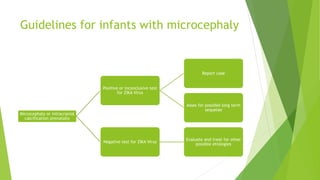
Guidelines for infants with microcephaly
Microcephaly or intracranial
calcification prenatally
Positive or inconclusive test
for ZIKA Virus
Report case
Asses for possible long term
sequelae
Negative test for ZIKA Virus
Evaluate and treat for other
possible etiologies
Indications for testing infants
 Infant with microcephaly or intracranial calcification born
to women who travel or reside in area with active Zika
virus transmission
 Infant born to mothers with positive or inconclusive tests
for Zika virus
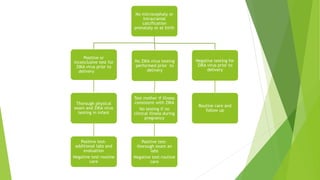
No microcephaly or
intracranial
calcification
prenataly or at birth
Positive or
inconclusive test for
ZIKA virus prior to
delivery
Thorough physical
exam and ZIKA virus
testing in infant
Positive test-
additional labs and
evaluation
Negative test-routine
care
No ZIKA virus testing
performed prior to
delivery
Test mother if illness
consistent with ZIKA
No testing if no
clinical illness during
pregnancy
Positive test-
thorough exam an
labs
Negative test-routine
care
Negative testing for
ZIKA virus prior to
delivery
Routine care and
follow up
Infants with possible Zika virus infection
 Comprehensive physical evaluation
 Head circumference, length and weight for gestational
age
 Evaluate for neurologic abnormalities
 Dysmorphic features, splenomegaly,
hepatosplenomegaly, rash or other skin lesions
 Cranial ultrasound
 Hearing – evoked optoacoustic emissions testing or ABR
Infants with possible Zika virus infection
 Ophtalmologic evaluation
 If microcephaly/intracranial calcifications
 Geneticist evaluation
 Pediatric neurologist
 Test for other congenital infections
 CBC, liver function, imaging studies
 If positive or inconclusive Zika virus testing-report case to state health
department and assess for long term sequelae
Management and prevention of
congenital Zika virus infection
 No antiviral treatment available
 Supportive
 Specific medical and neurodevelopmental needs
 Encourage breastfeeding
 To prevent congenital Zika – prevent maternal infection
Orden administrativa num 345
2 de febrero 2016
 Para ordenar a los proveedores medicos y aseguradoras sobre
cernimiento y cuidado pre y post natal a toda embarazada
 Declaro estado de emergencia como resultado del Virus ZIKA en
Puerto Rico, ordenando a todos los profesionales de la salud notificar
todo caso sospechoso y/o confirmado de ZIKA
 Todo proveedor medico que evalue a una mujer embarazada que
presente sintomas asociados al ZIKA se le ordenara realizarse la
prueba de PCR-la aseguradora cubrira la toma de muestra
Orden administrativa num 345
 Toda mujer embarazada que no presente sintomas, tendra
la opcion de hacerse pruebas serologicas para ZIKA y
dengue en aquellas areas de alta densidad de transmission
segun informes epidemiologicos semanales emitidos por el
Departamento de Salud. Las pruebas seran enviadas al
Departamento de Salud y la toma de muestra sera
cubierta por la aseguradora. Si la prueba arroja un
resultado negative se puede considerar repetir la prueba
en el Segundo trimestre
Orden administrativa num 345
 Si resultado fuese positivo el cuidado prenatal comprende lo siguiente
en adicion al cuidado prenatal preventivo
 Sonogramas cada 4 semanas
 Ofrecer amniocentesis despues de semana 15 pesando riesgo con
su proveedor y muestra sera enviada al Dpt de Salud-cubierto por
aseguradora
 Cuido post natal para madre y bebe con resultado positivo
 Si nace bebe con microcefalia se recomienda prueba de PCR a
cordon umbilical y suero
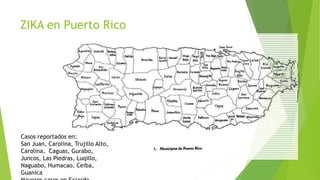
ZIKA en Puerto Rico
Casos reportados en:
San Juan, Carolina, Trujillo Alto,
Carolina, Caguas, Gurabo,
Juncos, Las Piedras, Luqillo,
Naguabo, Humacao, Ceiba,
Guanica
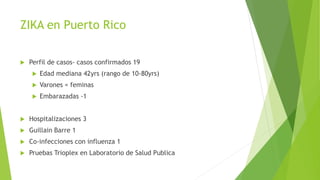
ZIKA en Puerto Rico
 Perfil de casos- casos confirmados 19
 Edad mediana 42yrs (rango de 10-80yrs)
 Varones = feminas
 Embarazadas -1
 Hospitalizaciones 3
 Guillain Barre 1
 Co-infecciones con influenza 1
 Pruebas Trioplex en Laboratorio de Salud Publica
Preguntas????????

Zika virus

  • 1.
    ZIKA VIRUS Dr. HerminioOlivero ObGyn, FACOG
  • 2.
    What is ZIKAvirus?  Mosquito bourne flavivirus  Transmitted by Aedes Aegyptus mosquito Found throughout the region of The Americas  Dengue and Chikungunya both transmitted by these mosquitoes
  • 3.
    Zika Virus  Humansare primary host  80% asymptomatic  Symptomatic disease mild compared to dengue and chikungunya  Acute onset fever  Macular rash  Arthralgia  Non-purulent conjunctivitis  Symptoms last days-1 wk  Hospitalization/fatalities rare
  • 4.
    ZIKA Virus  Novaccine  No prophylaxis to travelers  Mosquitoes bite mostly during daylight  Long sleeve shirts/pants  Repellants with DEET/IR 3535/picaridin safe during pregnancy  Infected persons to avoid mosquito exposure during 1st week of illness to avoid human to human transmission
  • 5.
    ZIKA Virus  Notreatment  Supportive  Rest  Fluid  Analgesic/antipyretic  Avoid aspirin, NSAID until Dengue ruled out
  • 6.
    ZIKA Virus infection Intrauterine transmission  Intrapartum transmission  RNA detected in breast milk but no documented transmission
  • 7.
    ZIKA outbreak inBrasil  Zika virus identified in specimens of  Brain tissue  Placenta/amniotic fluid  Infants with microcephaly
  • 8.
    ZIKA virus testing No commercial testing available  Diagnosis by molecular and serologic testing  RT-PCR for viral RNA  IG-Immunoglobulin MELISA for Zika activity  PRNT-plasma reduction neutralization test-for Zika antibodies  Testing performed at CDC
  • 9.
    CDC guidelines forUS health care providers caring for pregnant women during ZIKA virus outbreak  Serologic testing for asymptomatic pregnant women exposed  Offered 2-12 weeks after return from travel  Pregnant women who reside in areas with ongoing outbreak  Testing at initiation of PNC and at mid-second trimester  With negative Zika virus IGM testing  Routine PNC  US 18-20 wks gestation for fetal anatomy  US later in pregnancy as follow up
  • 10.
    Pregnant women withpositive or inconclusive ZIKA virus test results  Monitor fetal anatomy  Monitor fetal growth every 3-4 weeks  Referral to maternal-fetal specialists  Testing at time of delivery  Testing of cord tissue for Zika virus RNA  If fetal loss  Zika virus RT-PCR of fetal tissue, umbilical cord and placenta
  • 11.
    Preconceptive care forwomen in areas of active Zika virus transmission  Plan pregnancy  Personal decision  Contraceptive methods  Assessment of risk  Signs and symptoms of Zika
  • 12.
    Men and Womendiagnosed with ZIKA  CDC recommends  Women to wait 8 weeks before trying to get pregnant  Men to wait at least 6 months after symtpons  No reported cases of Zika virus transmission through assisted reproductive technology (ART)  No evidence of increased risk for future pregnancies
  • 13.
    Prenatal diagnosis ofmicrocephaly  Ultrasound is safe during pregnancy  Preventive fetal ultrasound at 18-20 weeks  Ultrasound findings associated with Zika  Microcephaly  intracranial calcification  Brain and eye anomalies
  • 14.
    Ultrasound accuracy ofmicrocephaly  Accuracy to detect microcephaly associated to Zika virus depends on many factors  Severity of microcephaly  Maternal obesity  Gestational age  Equipment  Expertise  Fetal MRI is last screening tool
  • 15.
    Microcephaly  Occipitofrontal circumferenceless than 3%  If mother potentially infected infant should be tested  Test infant serum for Zika virus RNA/Zika virus IgM and ab’s  Initial sample from umbilical cord or directly from infant within 2 days after birth  If CSF obtained for other studies-perform above testing  Consider histopathologic evaluation of placenta and umbilical cord  Test mother’s serum if not done during pregnancy
  • 16.
    Guidelines for infantswith microcephaly Microcephaly or intracranial calcification prenatally Positive or inconclusive test for ZIKA Virus Report case Asses for possible long term sequelae Negative test for ZIKA Virus Evaluate and treat for other possible etiologies
  • 17.
    Indications for testinginfants  Infant with microcephaly or intracranial calcification born to women who travel or reside in area with active Zika virus transmission  Infant born to mothers with positive or inconclusive tests for Zika virus
  • 18.
    No microcephaly or intracranial calcification prenatalyor at birth Positive or inconclusive test for ZIKA virus prior to delivery Thorough physical exam and ZIKA virus testing in infant Positive test- additional labs and evaluation Negative test-routine care No ZIKA virus testing performed prior to delivery Test mother if illness consistent with ZIKA No testing if no clinical illness during pregnancy Positive test- thorough exam an labs Negative test-routine care Negative testing for ZIKA virus prior to delivery Routine care and follow up
  • 19.
    Infants with possibleZika virus infection  Comprehensive physical evaluation  Head circumference, length and weight for gestational age  Evaluate for neurologic abnormalities  Dysmorphic features, splenomegaly, hepatosplenomegaly, rash or other skin lesions  Cranial ultrasound  Hearing – evoked optoacoustic emissions testing or ABR
  • 20.
    Infants with possibleZika virus infection  Ophtalmologic evaluation  If microcephaly/intracranial calcifications  Geneticist evaluation  Pediatric neurologist  Test for other congenital infections  CBC, liver function, imaging studies  If positive or inconclusive Zika virus testing-report case to state health department and assess for long term sequelae
  • 21.
    Management and preventionof congenital Zika virus infection  No antiviral treatment available  Supportive  Specific medical and neurodevelopmental needs  Encourage breastfeeding  To prevent congenital Zika – prevent maternal infection
  • 22.
    Orden administrativa num345 2 de febrero 2016  Para ordenar a los proveedores medicos y aseguradoras sobre cernimiento y cuidado pre y post natal a toda embarazada  Declaro estado de emergencia como resultado del Virus ZIKA en Puerto Rico, ordenando a todos los profesionales de la salud notificar todo caso sospechoso y/o confirmado de ZIKA  Todo proveedor medico que evalue a una mujer embarazada que presente sintomas asociados al ZIKA se le ordenara realizarse la prueba de PCR-la aseguradora cubrira la toma de muestra
  • 23.
    Orden administrativa num345  Toda mujer embarazada que no presente sintomas, tendra la opcion de hacerse pruebas serologicas para ZIKA y dengue en aquellas areas de alta densidad de transmission segun informes epidemiologicos semanales emitidos por el Departamento de Salud. Las pruebas seran enviadas al Departamento de Salud y la toma de muestra sera cubierta por la aseguradora. Si la prueba arroja un resultado negative se puede considerar repetir la prueba en el Segundo trimestre
  • 24.
    Orden administrativa num345  Si resultado fuese positivo el cuidado prenatal comprende lo siguiente en adicion al cuidado prenatal preventivo  Sonogramas cada 4 semanas  Ofrecer amniocentesis despues de semana 15 pesando riesgo con su proveedor y muestra sera enviada al Dpt de Salud-cubierto por aseguradora  Cuido post natal para madre y bebe con resultado positivo  Si nace bebe con microcefalia se recomienda prueba de PCR a cordon umbilical y suero
  • 25.
    ZIKA en PuertoRico Casos reportados en: San Juan, Carolina, Trujillo Alto, Carolina, Caguas, Gurabo, Juncos, Las Piedras, Luqillo, Naguabo, Humacao, Ceiba, Guanica
  • 26.
    ZIKA en PuertoRico  Perfil de casos- casos confirmados 19  Edad mediana 42yrs (rango de 10-80yrs)  Varones = feminas  Embarazadas -1  Hospitalizaciones 3  Guillain Barre 1  Co-infecciones con influenza 1  Pruebas Trioplex en Laboratorio de Salud Publica
  • 27.