




XXX !
By
Ahmed Alsherbeny
MD, CABOphth, MRCSEd Ophth, FRCS Ophth (Glasg), FICO
Chapter I
The Infections
Herpes
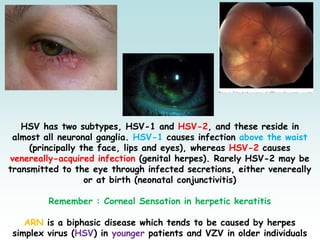
HSV has two subtypes, HSV-1 and HSV-2, and these reside in
almost all neuronal ganglia. HSV-1 causes infection above the waist
(principally the face, lips and eyes), whereas HSV-2 causes
venereally-acquired infection (genital herpes). Rarely HSV-2 may be
transmitted to the eye through infected secretions, either venereally
or at birth (neonatal conjunctivitis)
Remember : Corneal Sensation in herpetic keratitis
ARN is a biphasic disease which tends to be caused by herpes
simplex virus (HSV) in younger patients and VZV in older individuals
Syphilis
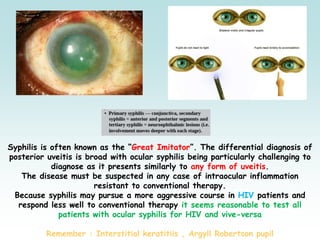
Syphilis is often known as the “Great Imitator”. The differential diagnosis of
posterior uveitis is broad with ocular syphilis being particularly challenging to
diagnose as it presents similarly to any form of uveitis.
The disease must be suspected in any case of intraocular inflammation
resistant to conventional therapy.
Because syphilis may pursue a more aggressive course in HIV patients and
respond less well to conventional therapy it seems reasonable to test all
patients with ocular syphilis for HIV and vive-versa
Remember : Interstitial keratitiis , Argyll Robertson pupil
Gonorrhea
Gonorrhea is a venreal
genitourinary tract
infection caused by
Neisseria gonorrhoea,
which capable of invading
the intact corneal
epithelium
N.B. The patient must
be hospitalized if there
is corneal ulceration
N.B. Patients must be
referred to a
genitourinary department
to be screened for
associated chlamydial
infection and contact
tracing.
Human Papillomavirus (HPV)
Conjunctival papillomata are strongly associated with human
papillomavirus infection
Venereal warts (condylomata acuminata) are a viral
infection that’s passed on by direct contact with wart
tissue. The warts can show up on the eyelids, mouth, or
genitals
HIV/AIDS
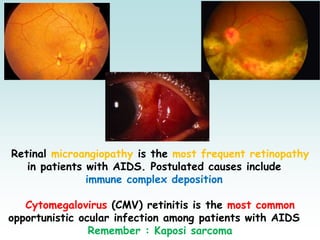
Retinal microangiopathy is the most frequent retinopathy
in patients with AIDS. Postulated causes include
immune complex deposition
Cytomegalovirus (CMV) retinitis is the most common
opportunistic ocular infection among patients with AIDS
Remember : Kaposi sarcoma
Pubic Lice
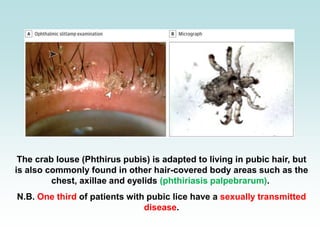
The crab louse (Phthirus pubis) is adapted to living in pubic hair, but
is also commonly found in other hair-covered body areas such as the
chest, axillae and eyelids (phthiriasis palpebrarum).
N.B. One third of patients with pubic lice have a sexually transmitted
disease.
Chlamydia
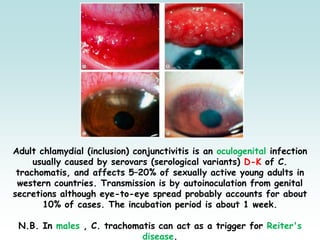
Adult chlamydial (inclusion) conjunctivitis is an oculogenital infection
usually caused by serovars (serological variants) D-K of C.
trachomatis, and affects 5–20% of sexually active young adults in
western countries. Transmission is by autoinoculation from genital
secretions although eye-to-eye spread probably accounts for about
10% of cases. The incubation period is about 1 week.
N.B. In males , C. trachomatis can act as a trigger for Reiter's
disease.
Ophthalmia Neonatorum
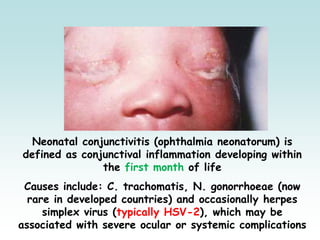
Neonatal conjunctivitis (ophthalmia neonatorum) is
defined as conjunctival inflammation developing within
the first month of life
Causes include: C. trachomatis, N. gonorrhoeae (now
rare in developed countries) and occasionally herpes
simplex virus (typically HSV-2), which may be
associated with severe ocular or systemic complications
Molluscum Contagiosum
Molluscum contagiosum virus can cause pearly white papules with
central umbilication on the skin of the eyelids or in the
periorbital area.
If they are on the eyelid margin there may be a secondary
keratitis and chronic follicular conjunctivitis unless the lid margin
is examined carefully the causative lesion may be overlooked.
Patients with concurrent HIV infection may suffer a more
aggressive disease with a common distribution in the chinstrap
region
Chapter II
The Drugs
Contraception
Retinal vein occlusion, occasionally found in young
adults, has been described in patients taking the oral
contraceptives. Pseudotumour cerebri, optic neuritis and
changes in colour vision have also been reported
Iatrogenic Ocular Toxicity
Ocular side effects of drugs with common
use by sexual health physicians
Medication Side effects
Bactrim StevensJohnsonsyndrome
Chloramphenicol Opticneuritis
Cidofovir Uveitis
Ethambutol Opticneuritis
Isoniazid Opticneuritis
Quinolones Pseudotumourcerebri
Rifampicin Blepharoconjunctivitis
Rifabutin Uveitis
Tetracycline Pseudotumourcerebri
The Function
Diabetic retinopathy is significantly associated with erectile
dysfunction, supporting the concept that it is a microvascular problem,
but it does not appear to be a useful marker for the disease
Impotence is an uncommon though well described side effect of
topical beta blockers, such as timolol, which are first line management
for glaucoma , Acetazolamide also has been reported for decreased
libido and impotence
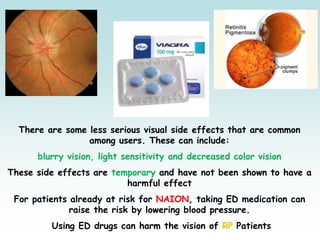
Viagra
There are some less serious visual side effects that are common
among users. These can include:
blurry vision, light sensitivity and decreased color vision
These side effects are temporary and have not been shown to have a
harmful effect
For patients already at risk for NAION, taking ED medication can
raise the risk by lowering blood pressure.
Using ED drugs can harm the vision of RP Patients
Thank You

xXx !

  • 1.
    XXX ! By Ahmed Alsherbeny MD,CABOphth, MRCSEd Ophth, FRCS Ophth (Glasg), FICO
  • 2.
  • 3.
  • 4.
    HSV has twosubtypes, HSV-1 and HSV-2, and these reside in almost all neuronal ganglia. HSV-1 causes infection above the waist (principally the face, lips and eyes), whereas HSV-2 causes venereally-acquired infection (genital herpes). Rarely HSV-2 may be transmitted to the eye through infected secretions, either venereally or at birth (neonatal conjunctivitis) Remember : Corneal Sensation in herpetic keratitis ARN is a biphasic disease which tends to be caused by herpes simplex virus (HSV) in younger patients and VZV in older individuals
  • 5.
  • 6.
    Syphilis is oftenknown as the “Great Imitator”. The differential diagnosis of posterior uveitis is broad with ocular syphilis being particularly challenging to diagnose as it presents similarly to any form of uveitis. The disease must be suspected in any case of intraocular inflammation resistant to conventional therapy. Because syphilis may pursue a more aggressive course in HIV patients and respond less well to conventional therapy it seems reasonable to test all patients with ocular syphilis for HIV and vive-versa Remember : Interstitial keratitiis , Argyll Robertson pupil
  • 7.
  • 8.
    Gonorrhea is avenreal genitourinary tract infection caused by Neisseria gonorrhoea, which capable of invading the intact corneal epithelium N.B. The patient must be hospitalized if there is corneal ulceration N.B. Patients must be referred to a genitourinary department to be screened for associated chlamydial infection and contact tracing.
  • 9.
  • 10.
    Conjunctival papillomata arestrongly associated with human papillomavirus infection Venereal warts (condylomata acuminata) are a viral infection that’s passed on by direct contact with wart tissue. The warts can show up on the eyelids, mouth, or genitals
  • 11.
  • 12.
    Retinal microangiopathy isthe most frequent retinopathy in patients with AIDS. Postulated causes include immune complex deposition Cytomegalovirus (CMV) retinitis is the most common opportunistic ocular infection among patients with AIDS Remember : Kaposi sarcoma
  • 13.
  • 14.
    The crab louse(Phthirus pubis) is adapted to living in pubic hair, but is also commonly found in other hair-covered body areas such as the chest, axillae and eyelids (phthiriasis palpebrarum). N.B. One third of patients with pubic lice have a sexually transmitted disease.
  • 15.
  • 16.
    Adult chlamydial (inclusion)conjunctivitis is an oculogenital infection usually caused by serovars (serological variants) D-K of C. trachomatis, and affects 5–20% of sexually active young adults in western countries. Transmission is by autoinoculation from genital secretions although eye-to-eye spread probably accounts for about 10% of cases. The incubation period is about 1 week. N.B. In males , C. trachomatis can act as a trigger for Reiter's disease.
  • 17.
  • 18.
    Neonatal conjunctivitis (ophthalmianeonatorum) is defined as conjunctival inflammation developing within the first month of life Causes include: C. trachomatis, N. gonorrhoeae (now rare in developed countries) and occasionally herpes simplex virus (typically HSV-2), which may be associated with severe ocular or systemic complications
  • 19.
  • 20.
    Molluscum contagiosum viruscan cause pearly white papules with central umbilication on the skin of the eyelids or in the periorbital area. If they are on the eyelid margin there may be a secondary keratitis and chronic follicular conjunctivitis unless the lid margin is examined carefully the causative lesion may be overlooked. Patients with concurrent HIV infection may suffer a more aggressive disease with a common distribution in the chinstrap region
  • 21.
  • 22.
  • 23.
    Retinal vein occlusion,occasionally found in young adults, has been described in patients taking the oral contraceptives. Pseudotumour cerebri, optic neuritis and changes in colour vision have also been reported
  • 24.
  • 25.
    Ocular side effectsof drugs with common use by sexual health physicians Medication Side effects Bactrim StevensJohnsonsyndrome Chloramphenicol Opticneuritis Cidofovir Uveitis Ethambutol Opticneuritis Isoniazid Opticneuritis Quinolones Pseudotumourcerebri Rifampicin Blepharoconjunctivitis Rifabutin Uveitis Tetracycline Pseudotumourcerebri
  • 26.
  • 27.
    Diabetic retinopathy issignificantly associated with erectile dysfunction, supporting the concept that it is a microvascular problem, but it does not appear to be a useful marker for the disease Impotence is an uncommon though well described side effect of topical beta blockers, such as timolol, which are first line management for glaucoma , Acetazolamide also has been reported for decreased libido and impotence
  • 28.
  • 29.
    There are someless serious visual side effects that are common among users. These can include: blurry vision, light sensitivity and decreased color vision These side effects are temporary and have not been shown to have a harmful effect For patients already at risk for NAION, taking ED medication can raise the risk by lowering blood pressure. Using ED drugs can harm the vision of RP Patients
  • 30.