SIG-based Earthquake
Information System
Wina Witanti
Falahah
Yuliana
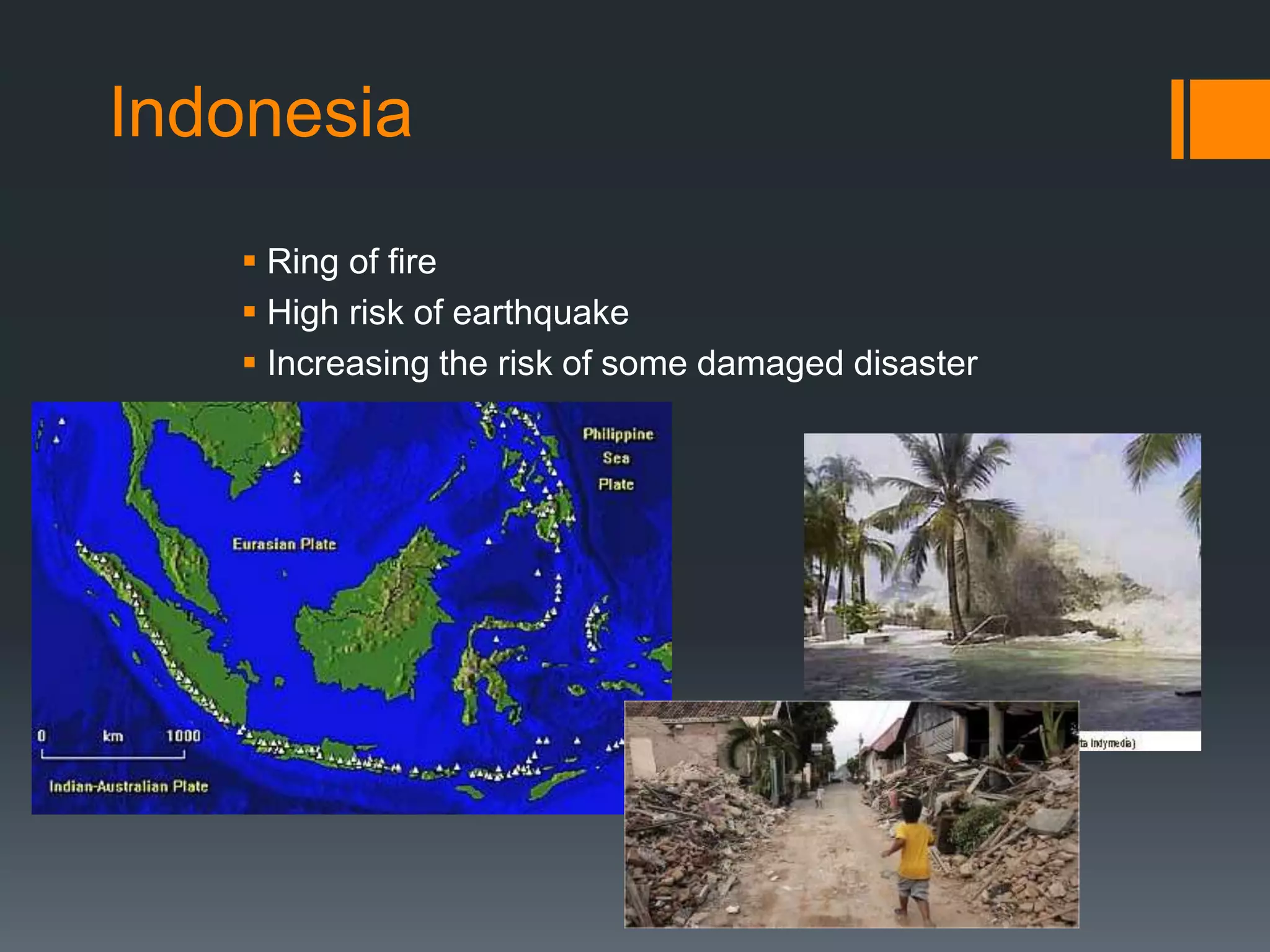
Indonesia
 Ring of fire
 High risk of earthquake
 Increasing the risk of some damaged disaster
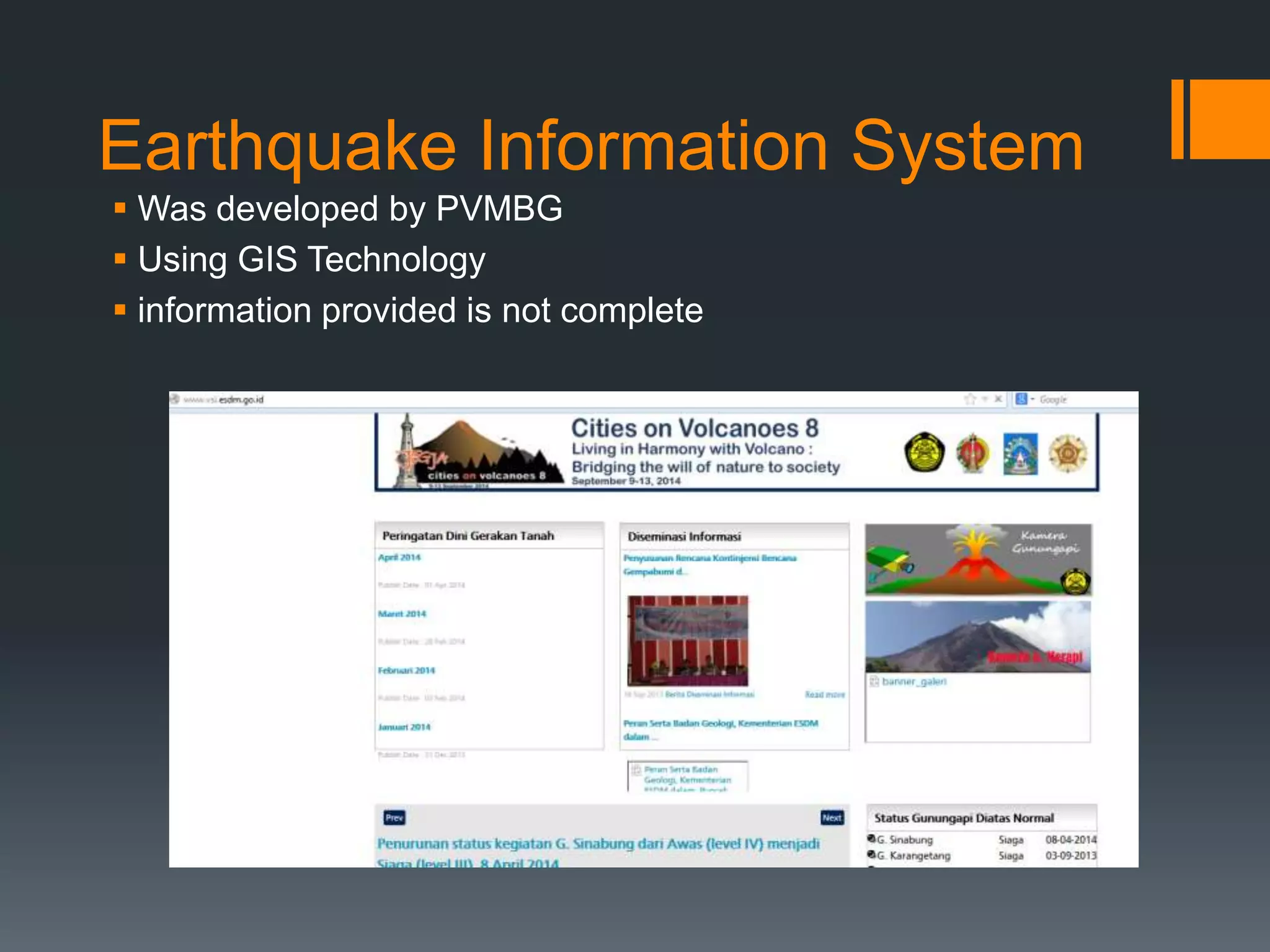
Earthquake Information System
 Was developed by PVMBG
 Using GIS Technology
 information provided is not complete
Current Problem
 The existing website of earthquake could not accommodate
all the required information because there are many tools
that could not executed.
 Geospatial data that is not managed properly so that the
news delivered incomplete, both in mapping and news
content.
 There is no content mapping in detail is shown with a
particular coloration to indicate areas prone to earthquakes
are grouped according to the districts in Indonesia.
 Mapping the earthquake information for 300 years (1629 –
present)
Proposed Solution
Build a new web GIS Based Earthquake Information System
which can provide :
 Breaking news, information about recent earthquake.
 Maps and Information, information about the region in
Indonesia that have experienced earthquakes since 1629-now
in spatial format.
 Each area that have experienced earthquakes is marked with
a dot on a map, and the news is displayed bellow.
 The area which has more frequent earthquake is marked with
specific colors.
 Using Content Management System approach
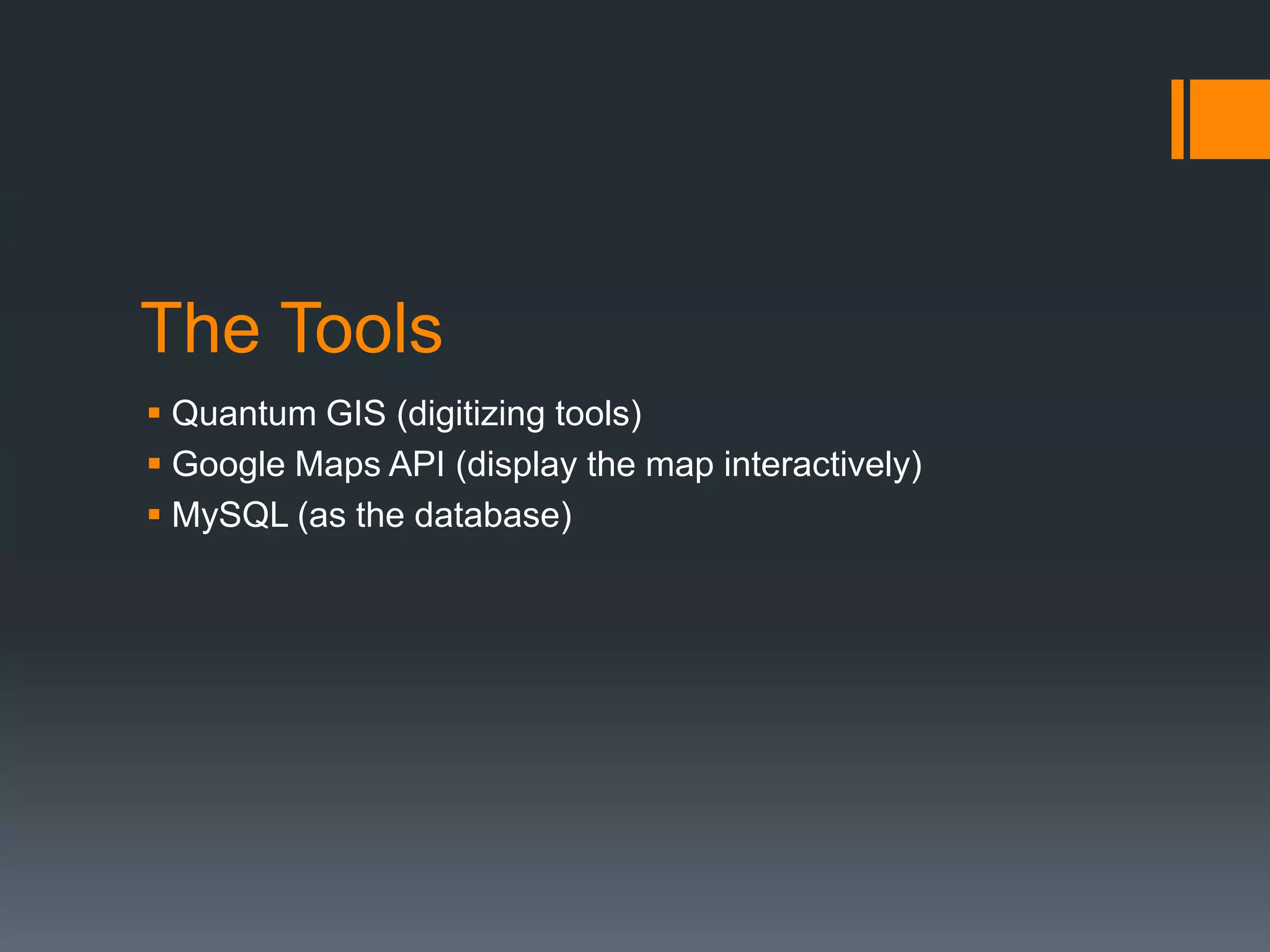
The Tools
 Quantum GIS (digitizing tools)
 Google Maps API (display the map interactively)
 MySQL (as the database)
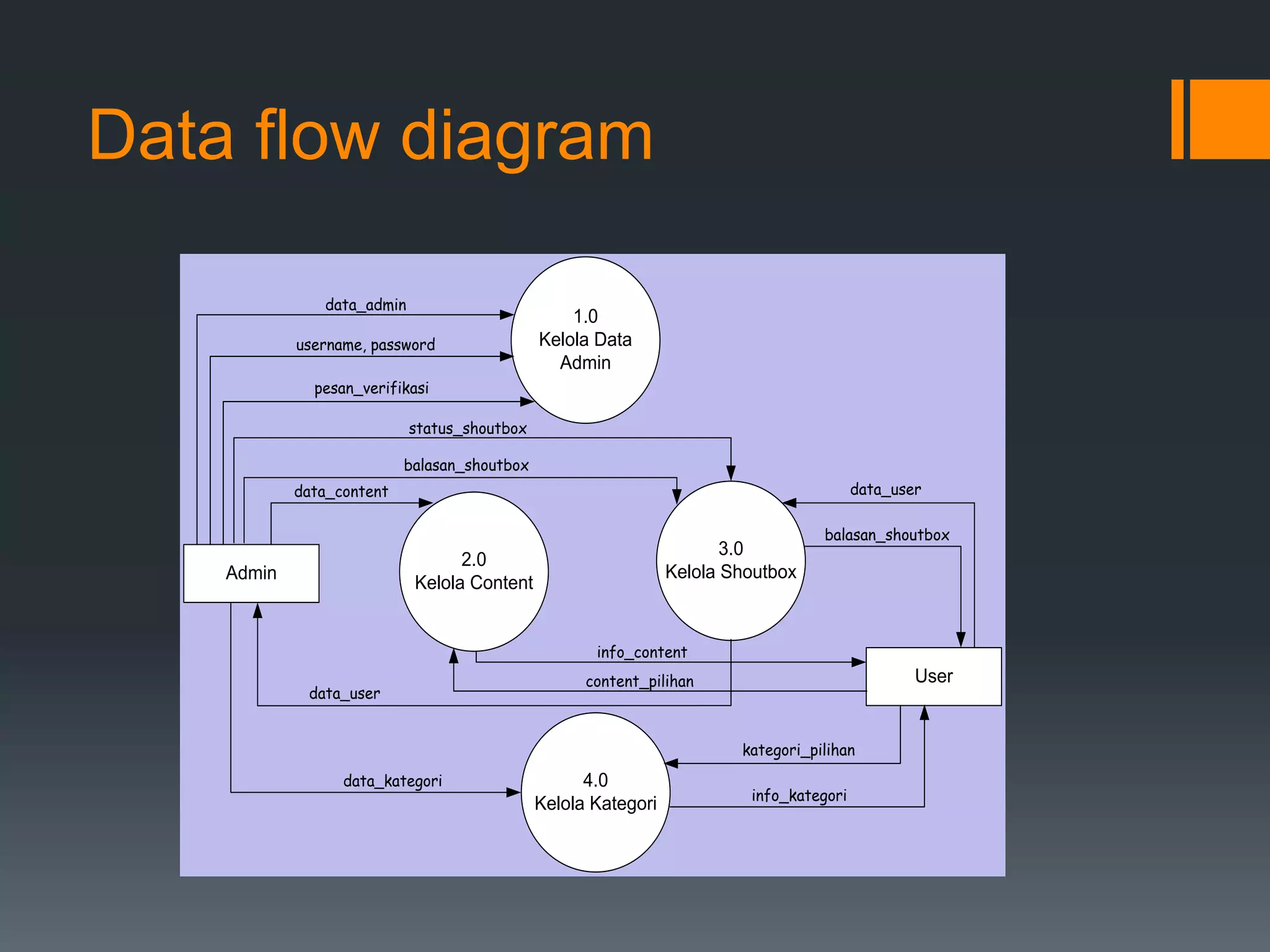
Data flow diagram
1.0
Kelola Data
Admin
2.0
Kelola Content
3.0
Kelola Shoutbox
4.0
Kelola Kategori
Admin
User
data_admin
username, password
pesan_verifikasi
info_content
content_pilihan
balasan_shoutbox
data_user
kategori_pilihan
info_kategori
data_user
status_shoutbox
balasan_shoutbox
data_kategori
data_content
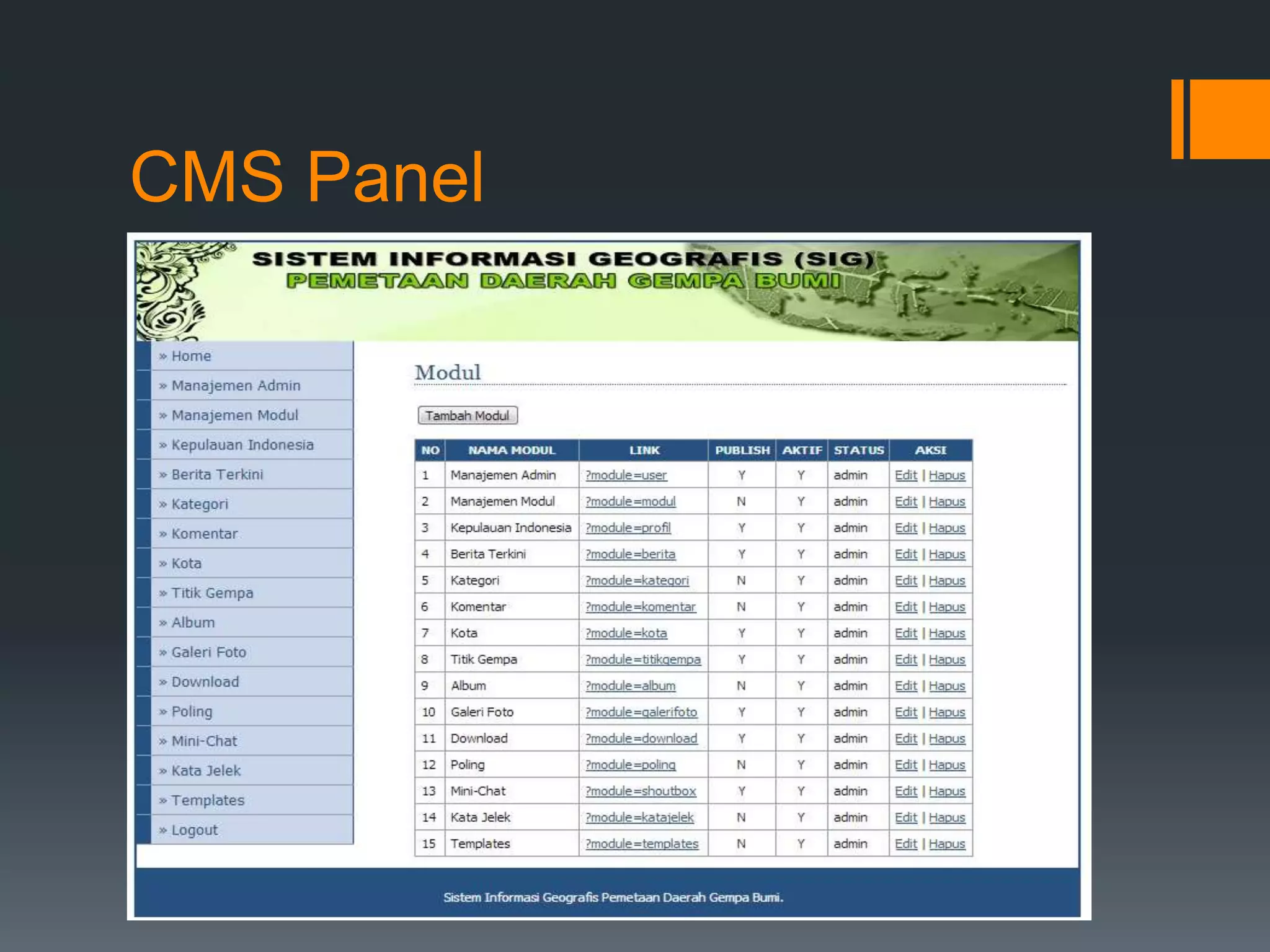
CMS Panel
Main Panel
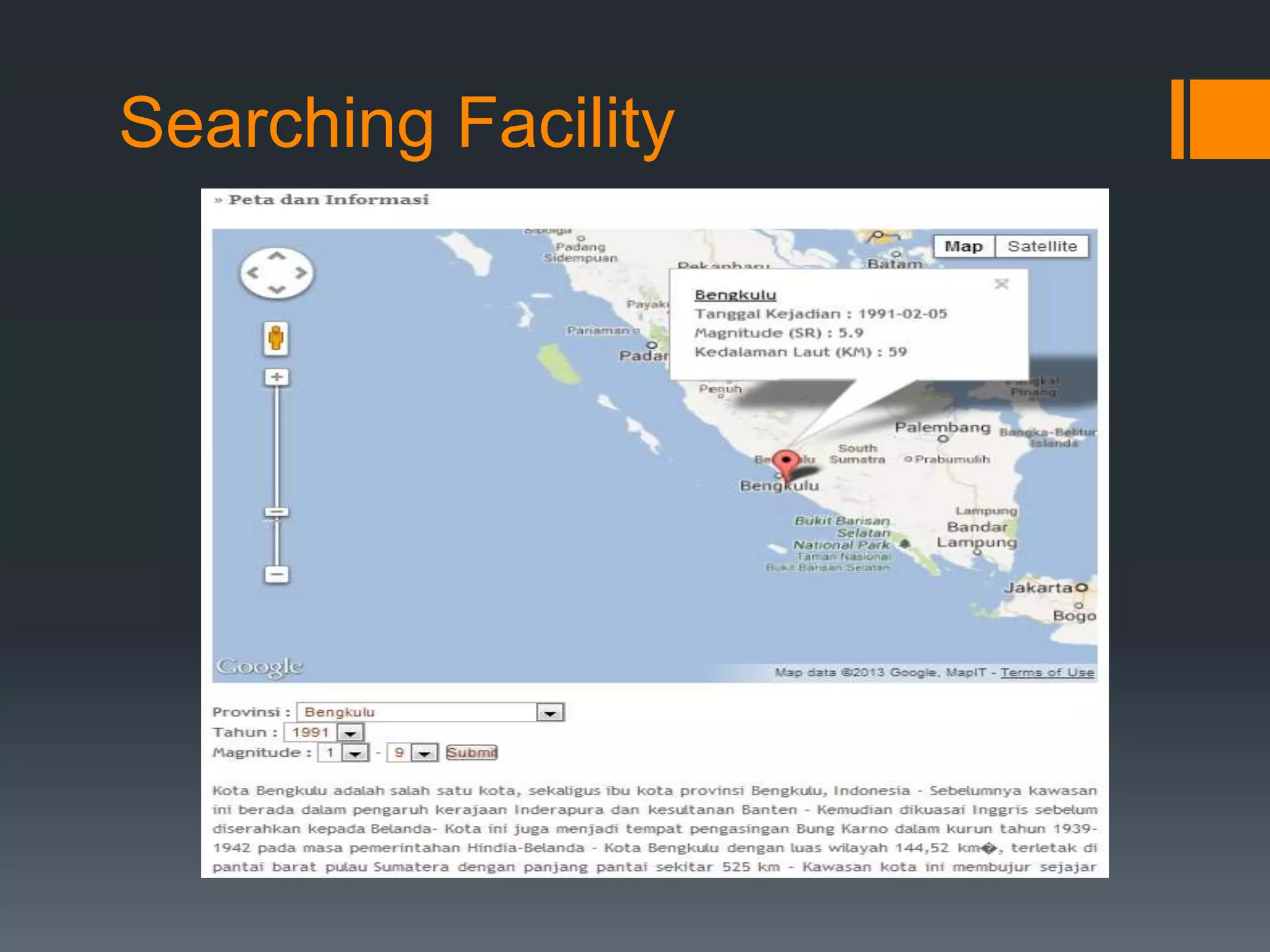
Searching Facility
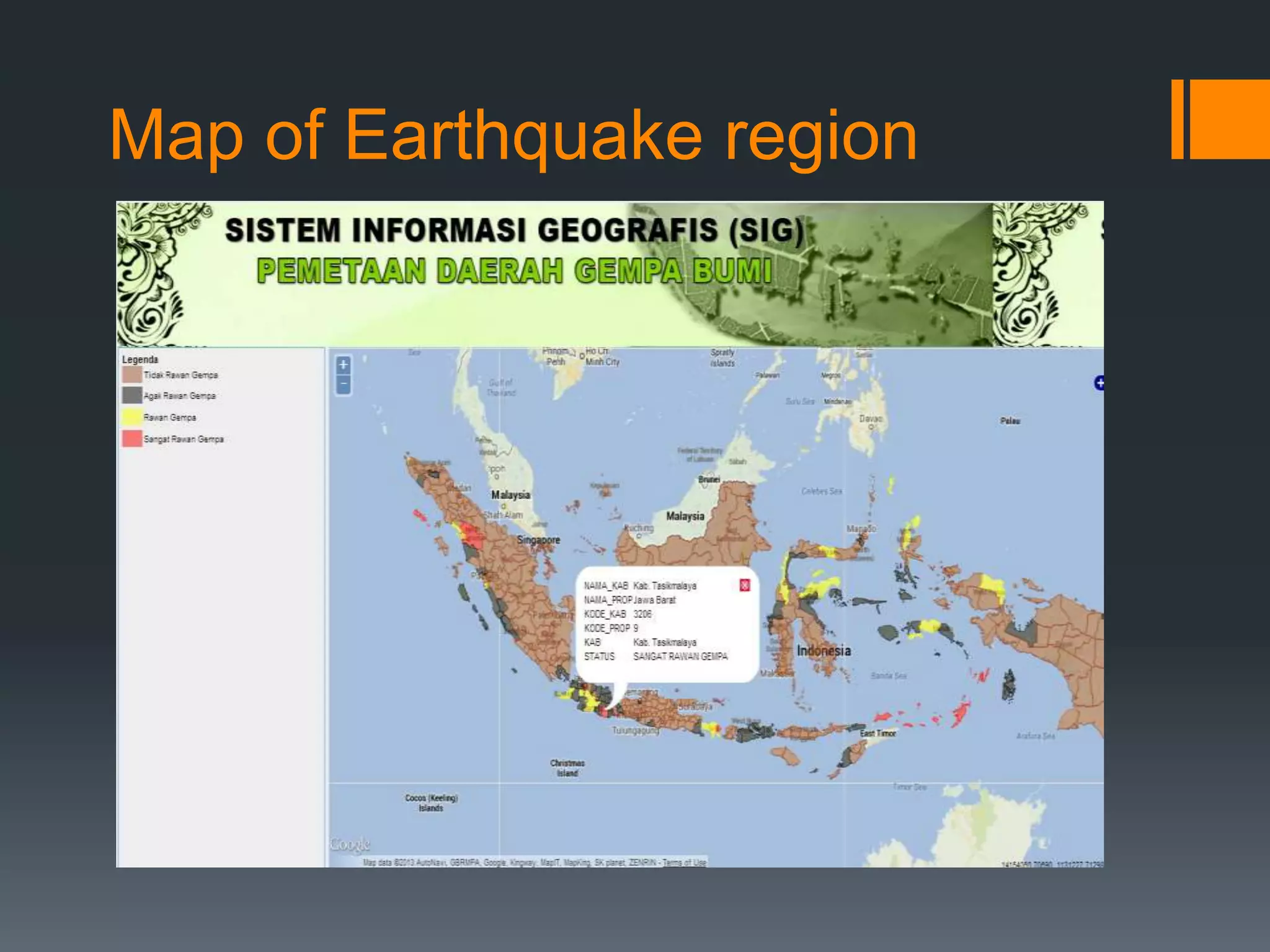
Map of Earthquake region
Conclusion
 We can make a Geographic Information Systems ( GIS ) Mapping
Earthquake Prone by using maps that have been digitized and
provide features which include the provincial earthquake, year and
magnitude , as well as showing seismic area with coloring based
on the amount of the number of earthquakes that have occurred in
the area.
 Digitizing the map is done using Quantum GIS to create, store and
process spatial data. The data then is stored in MySQL as textual
database and using Google Maps API as supported tools to
present the spatial data easily.
 The website can display the information about earthquake more
detail because it has news, video and has equipped with
searching facility and the earthquake event for each area which
categorized based on frequency. It expected to help the user to
know which area with high risk of earthquake.
Thank You

WWT1

  • 1.
  • 2.
    Indonesia  Ring offire  High risk of earthquake  Increasing the risk of some damaged disaster
  • 3.
    Earthquake Information System Was developed by PVMBG  Using GIS Technology  information provided is not complete
  • 4.
    Current Problem  Theexisting website of earthquake could not accommodate all the required information because there are many tools that could not executed.  Geospatial data that is not managed properly so that the news delivered incomplete, both in mapping and news content.  There is no content mapping in detail is shown with a particular coloration to indicate areas prone to earthquakes are grouped according to the districts in Indonesia.  Mapping the earthquake information for 300 years (1629 – present)
  • 5.
    Proposed Solution Build anew web GIS Based Earthquake Information System which can provide :  Breaking news, information about recent earthquake.  Maps and Information, information about the region in Indonesia that have experienced earthquakes since 1629-now in spatial format.  Each area that have experienced earthquakes is marked with a dot on a map, and the news is displayed bellow.  The area which has more frequent earthquake is marked with specific colors.  Using Content Management System approach
  • 6.
    The Tools  QuantumGIS (digitizing tools)  Google Maps API (display the map interactively)  MySQL (as the database)
  • 7.
    Data flow diagram 1.0 KelolaData Admin 2.0 Kelola Content 3.0 Kelola Shoutbox 4.0 Kelola Kategori Admin User data_admin username, password pesan_verifikasi info_content content_pilihan balasan_shoutbox data_user kategori_pilihan info_kategori data_user status_shoutbox balasan_shoutbox data_kategori data_content
  • 8.
  • 9.
  • 10.
  • 11.
  • 12.
    Conclusion  We canmake a Geographic Information Systems ( GIS ) Mapping Earthquake Prone by using maps that have been digitized and provide features which include the provincial earthquake, year and magnitude , as well as showing seismic area with coloring based on the amount of the number of earthquakes that have occurred in the area.  Digitizing the map is done using Quantum GIS to create, store and process spatial data. The data then is stored in MySQL as textual database and using Google Maps API as supported tools to present the spatial data easily.  The website can display the information about earthquake more detail because it has news, video and has equipped with searching facility and the earthquake event for each area which categorized based on frequency. It expected to help the user to know which area with high risk of earthquake.
  • 13.