Writing in the discipline Subsentential terminology
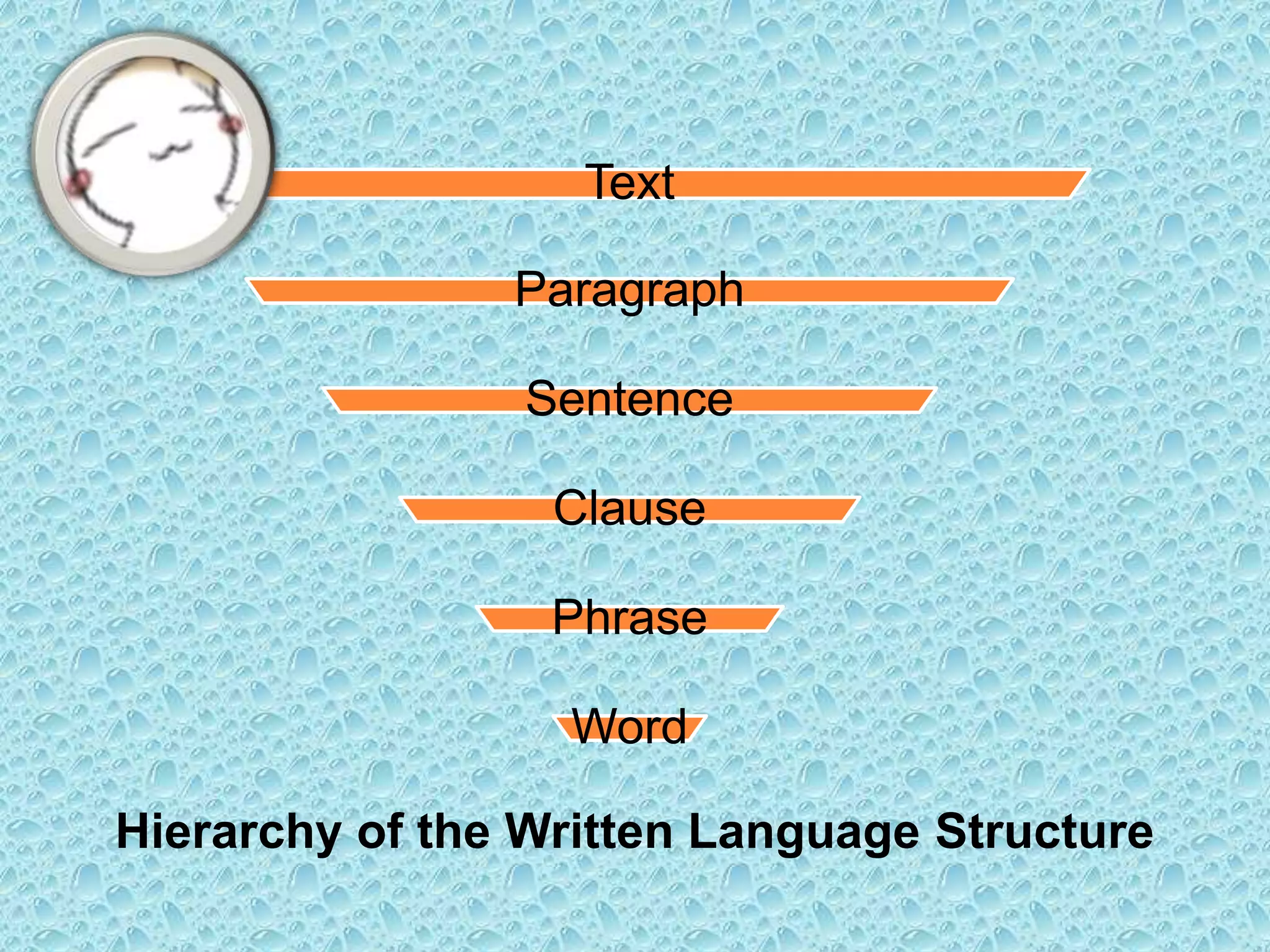
This document discusses writing in academic disciplines and the meaning of knowing a word. It defines the hierarchy of written language structure from subsentential terminology to individual words. It then examines the different aspects of truly knowing a word, including its phonetic representation, orthography, morphological irregularities, syntactic features, semantic features, pragmatic features, common derivations and collocations. The document also discusses word formation processes and achieving lexical accuracy. Finally, it provides tips for increasing one's vocabulary.
WHAT DOES ITMEAN TO KNOW A WORD?
What makes you
think that you
REALLY
ABSOLUTELY
PRECISELY
know this
WORD?
6.
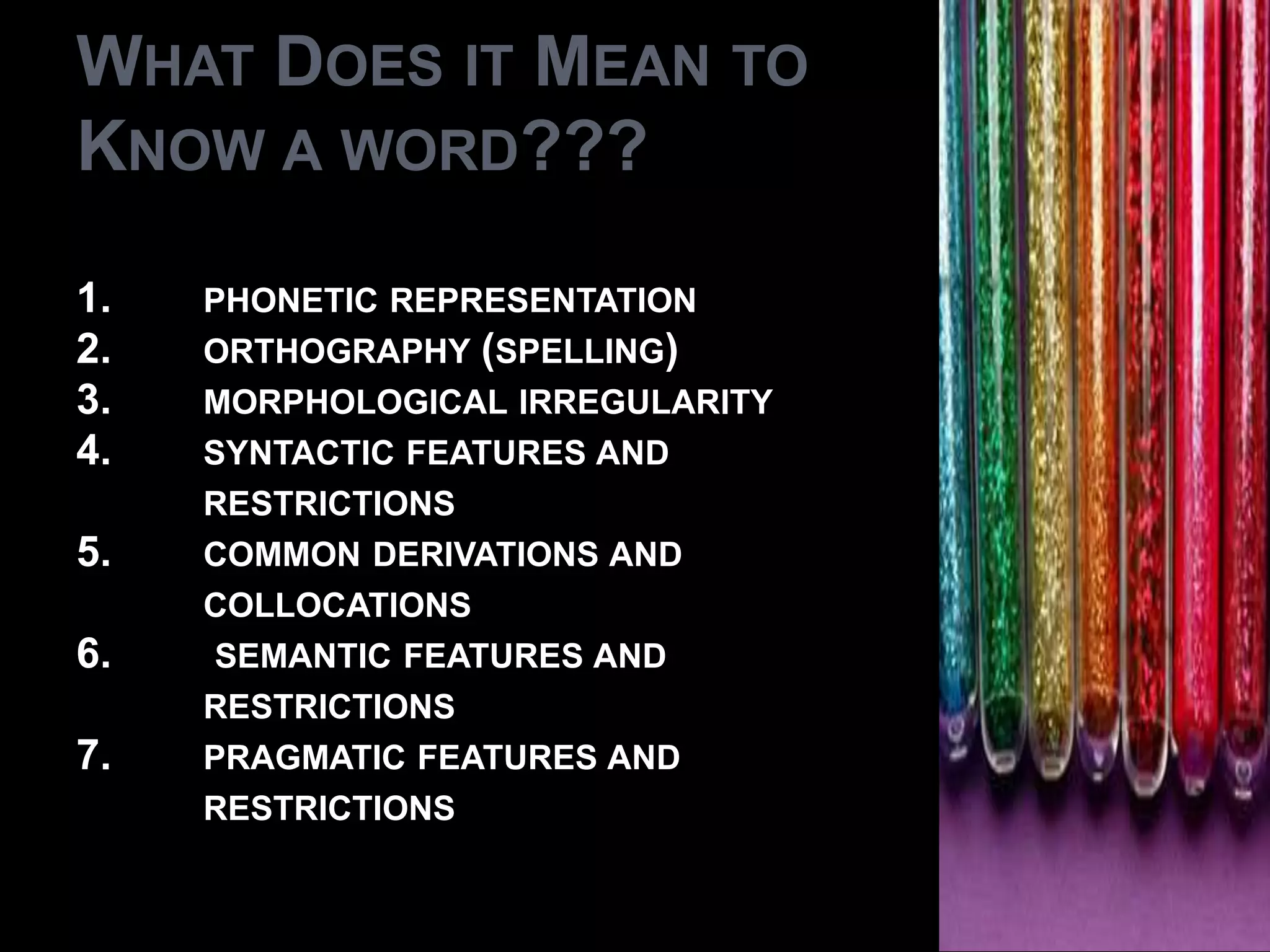
WHAT DOES ITMEAN TO
KNOW A WORD???
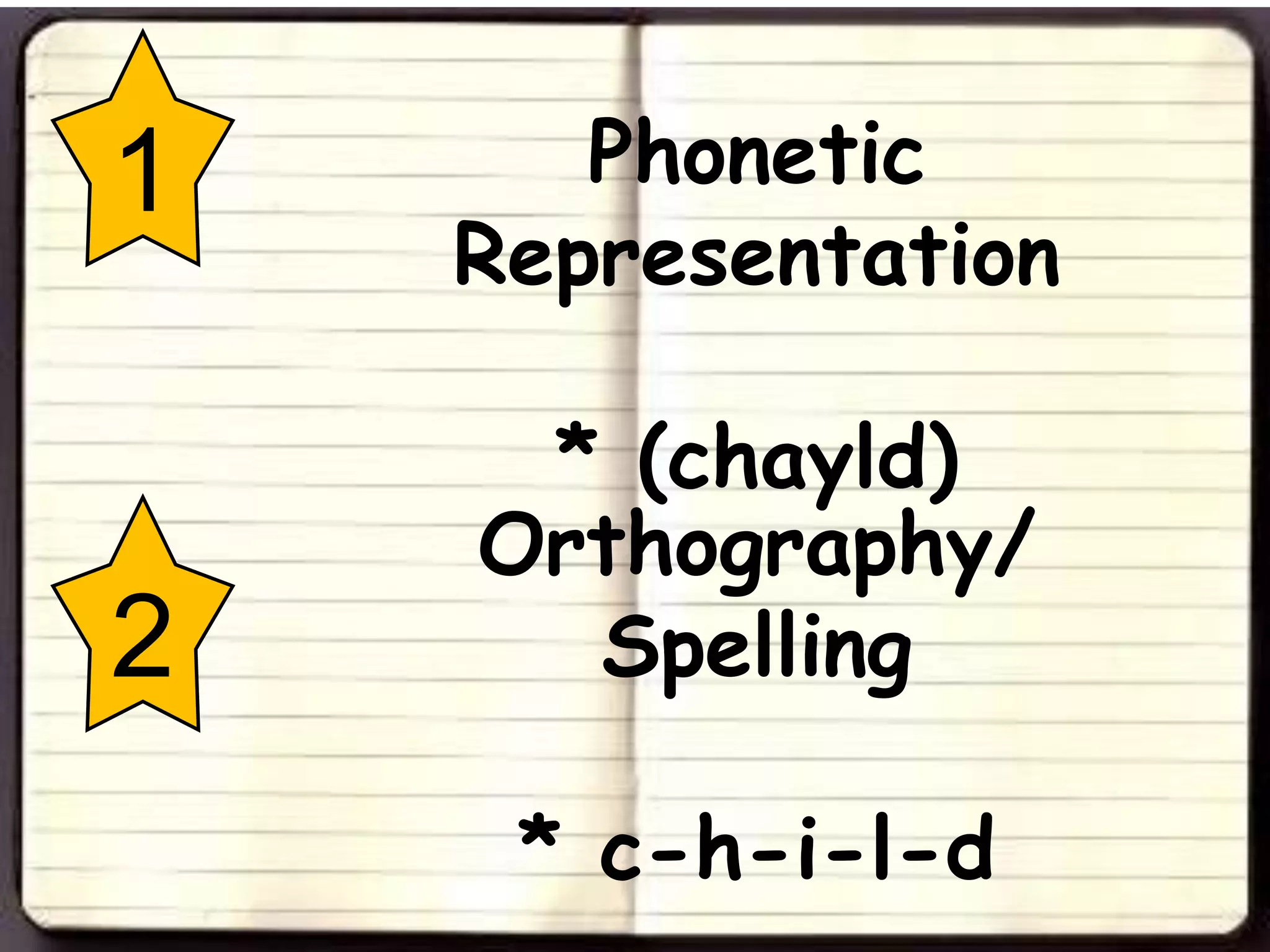
1. PHONETIC REPRESENTATION
2. ORTHOGRAPHY (SPELLING)
3. MORPHOLOGICAL IRREGULARITY
4. SYNTACTIC FEATURES AND
RESTRICTIONS
5. COMMON DERIVATIONS AND
COLLOCATIONS
6. SEMANTIC FEATURES AND
RESTRICTIONS
7. PRAGMATIC FEATURES AND
RESTRICTIONS
SOME FACTS ONSPELLING!
No correlation with
general intelligence
No correlation with
education
No correlation with desire
It is all about
Organizational Skills and
Exreme Attention to
Details!
9.
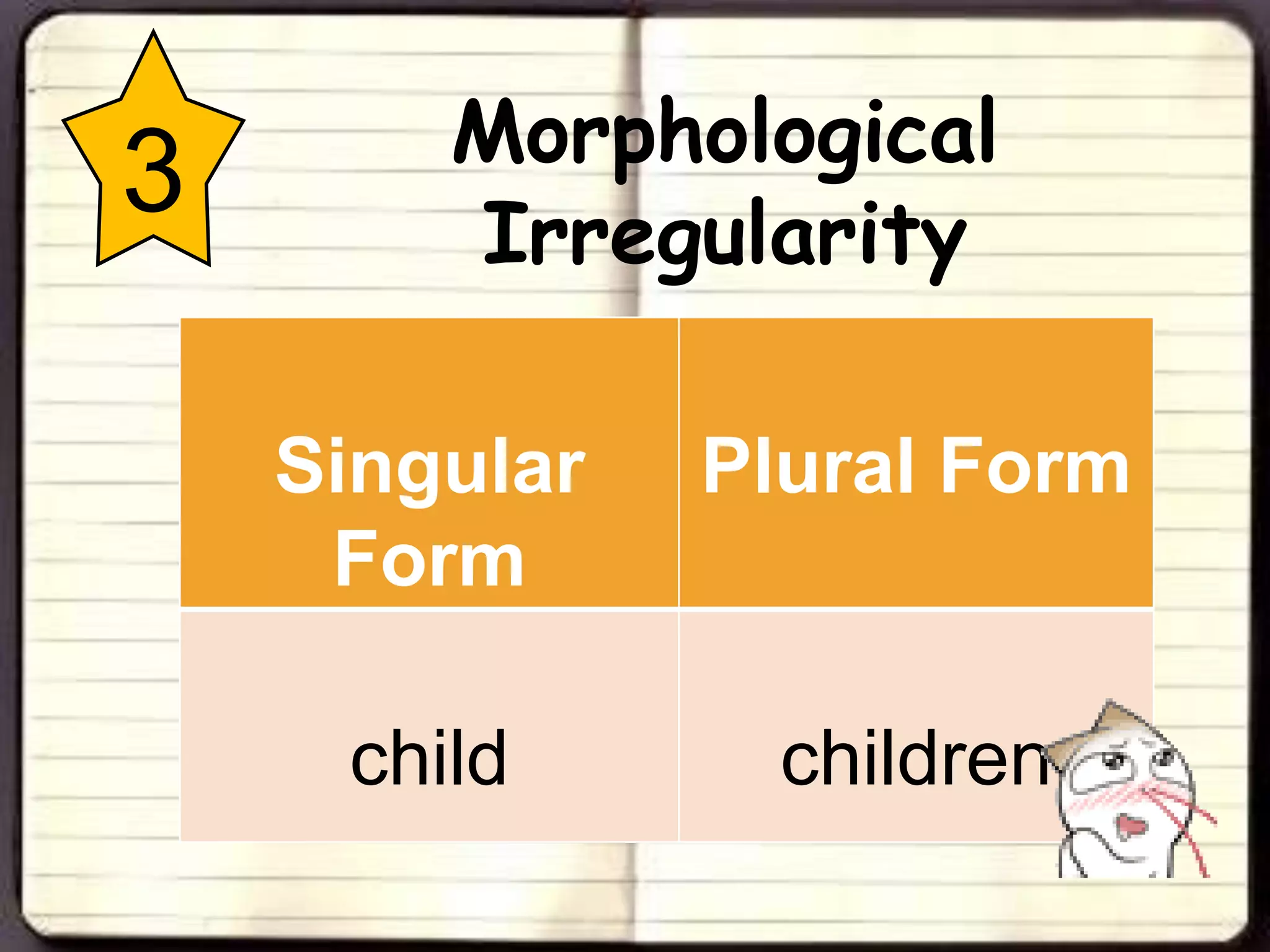
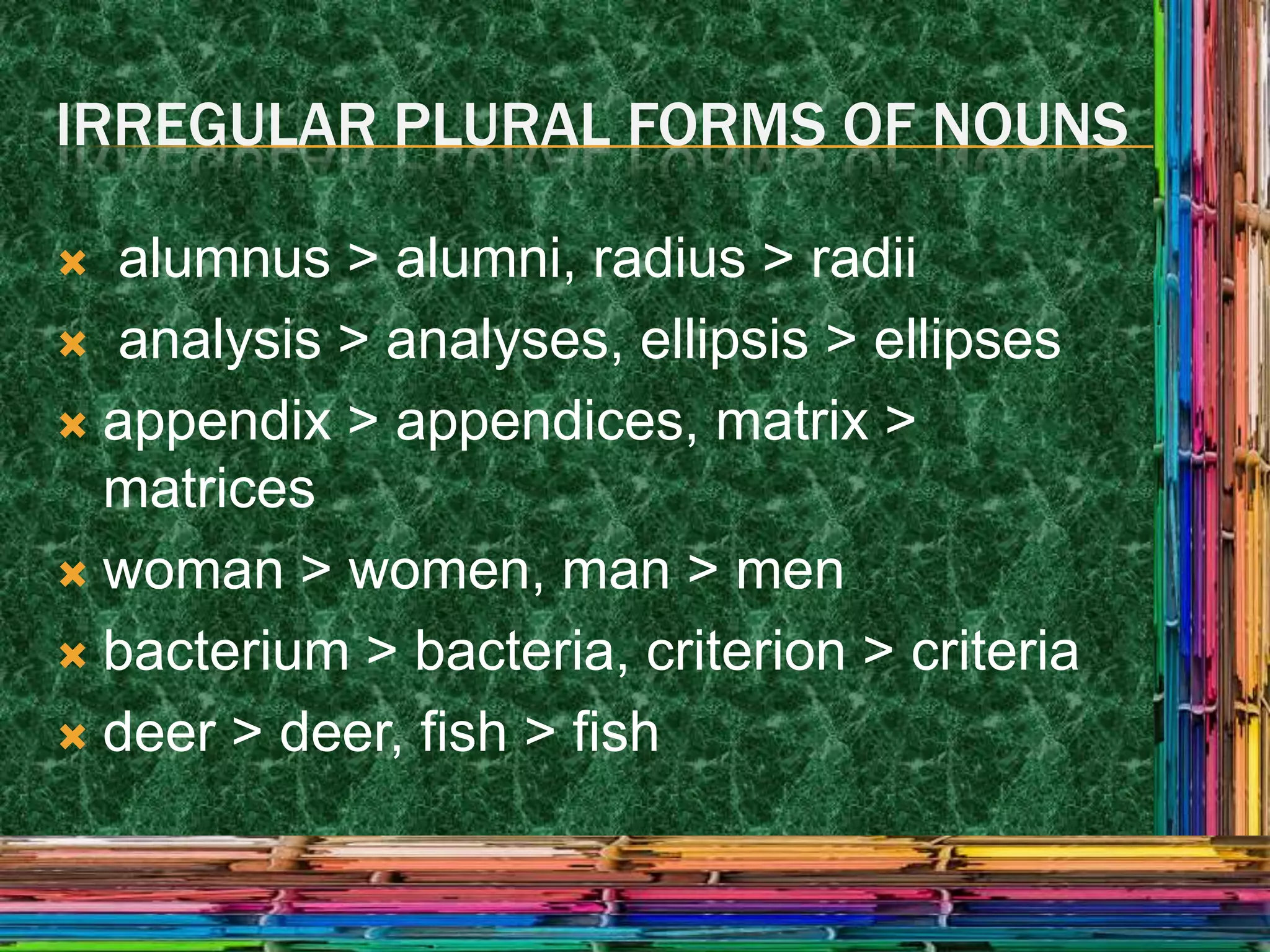
Morphological
3 Irregularity
Singular Plural Form
Form
child children
10.
Syntactic Features
4 and Restrictions
* Part of Speech
- NOUN (count noun)
Common Derivations and
5 Collocations
•Childike , childish , childhood
• Child labor & Child Psychology
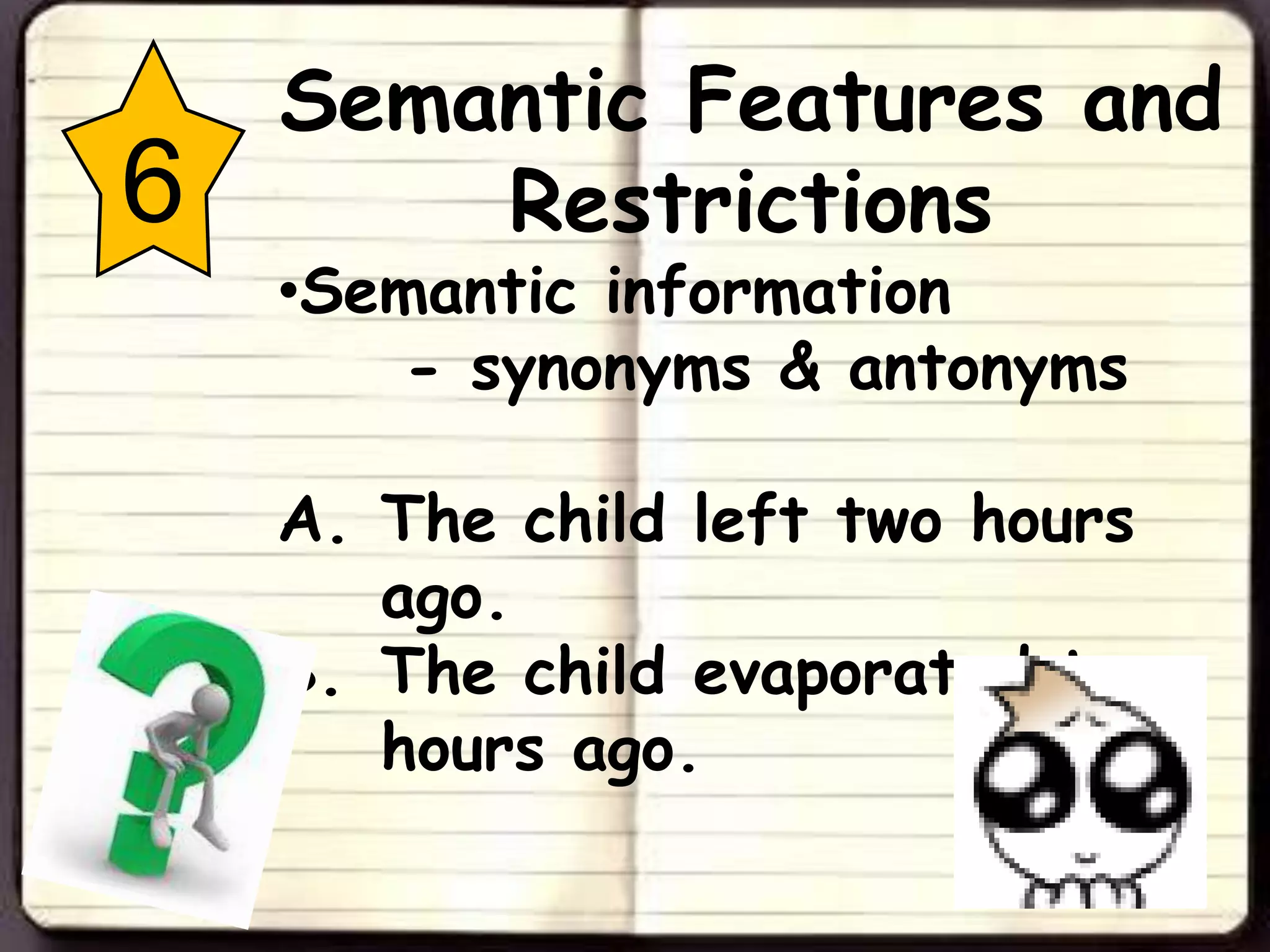
Semantic Features and
6 Restrictions
•Semantic information
- synonyms & antonyms
A. The child left two hours
ago.
B. The child evaporated two
hours ago.
13.
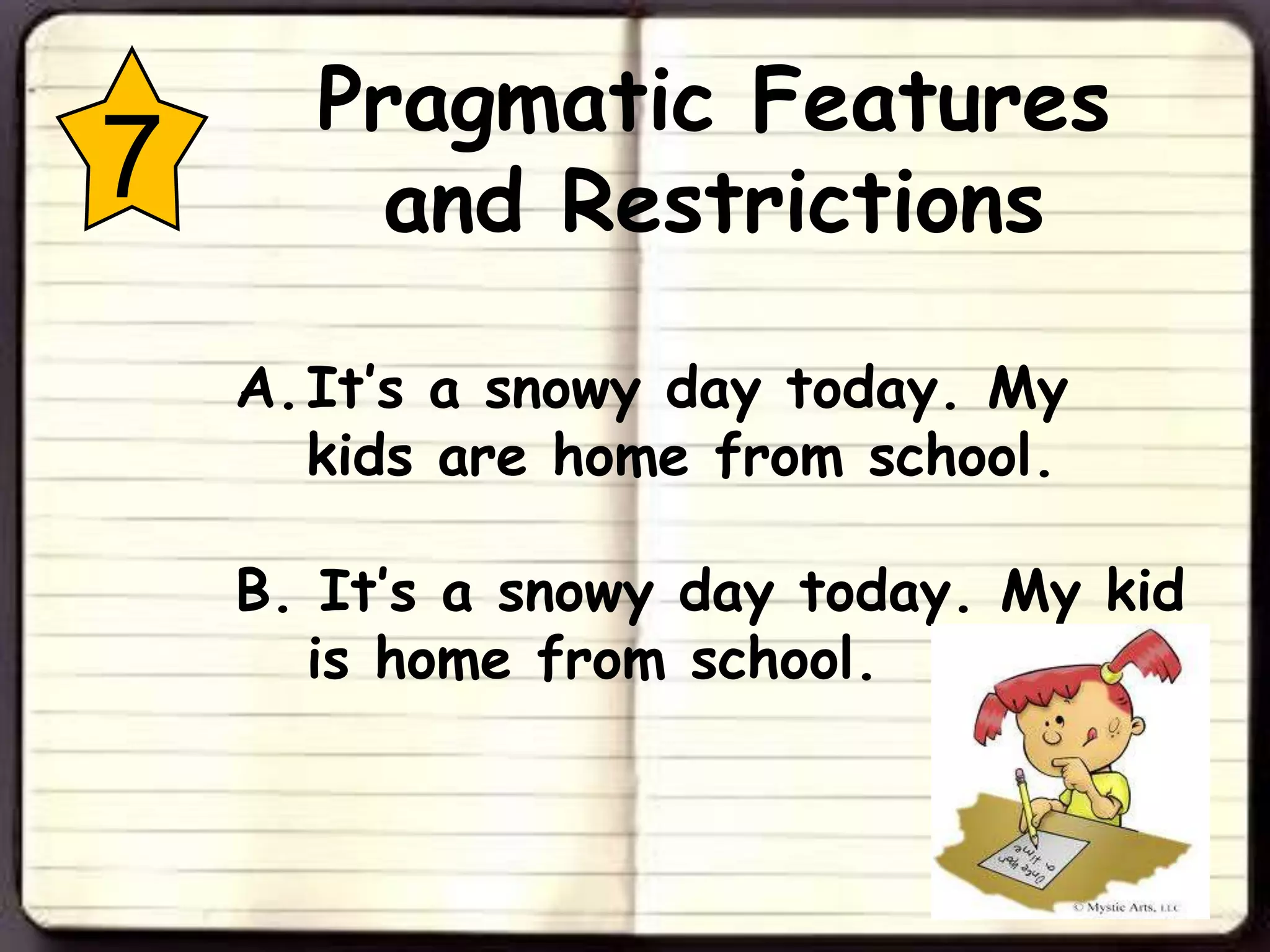
Pragmatic Features
7 and Restrictions
A. It’s a snowy day today. My
kids are home from school.
B. It’s a snowy day today. My kid
is home from school.
14.
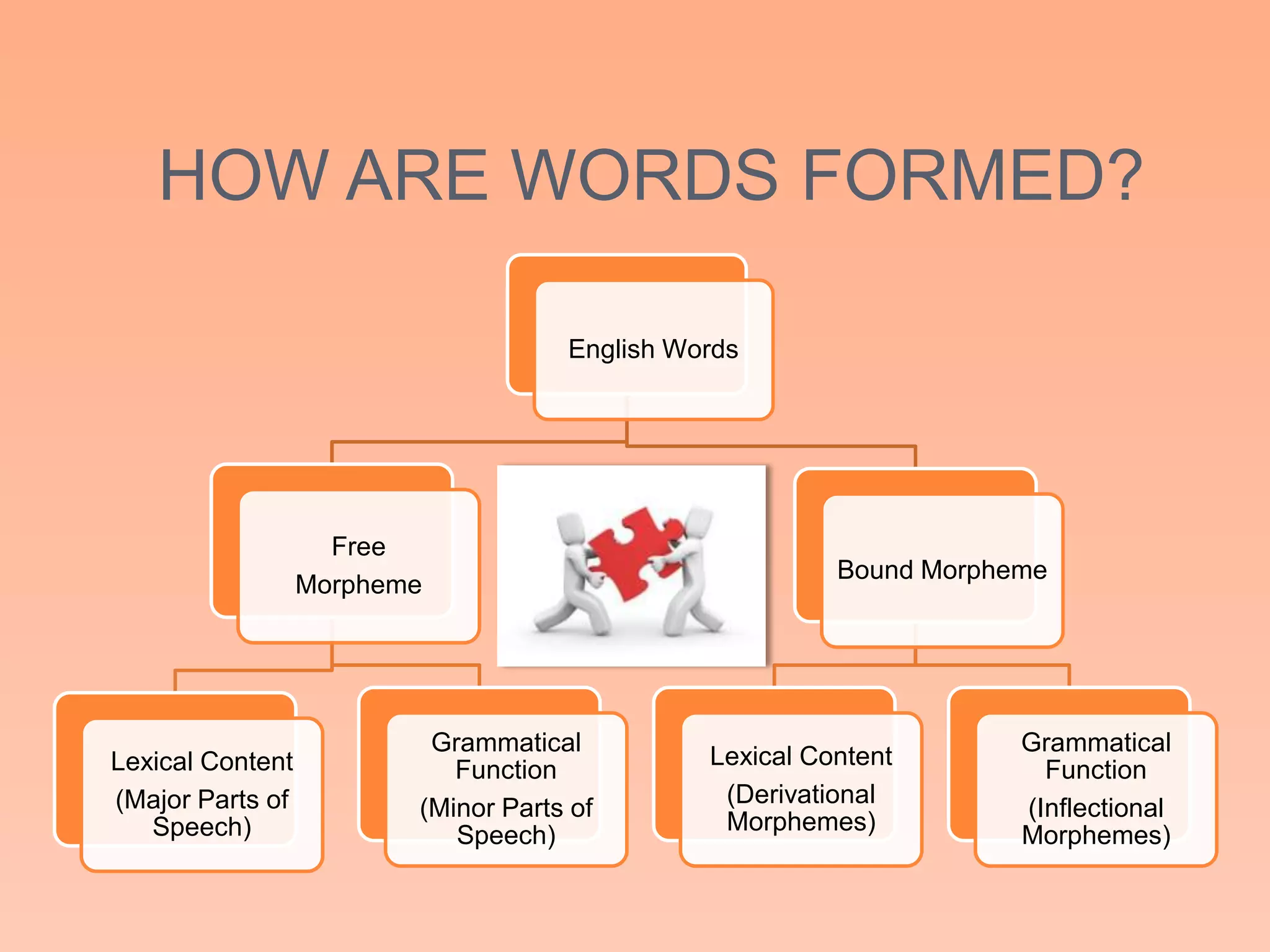
HOW ARE WORDSFORMED?
English Words
Free
Bound Morpheme
Morpheme
Grammatical Grammatical
Lexical Content Lexical Content
Function Function
(Major Parts of (Derivational
(Minor Parts of (Inflectional
Speech) Morphemes)
Speech) Morphemes)
15.
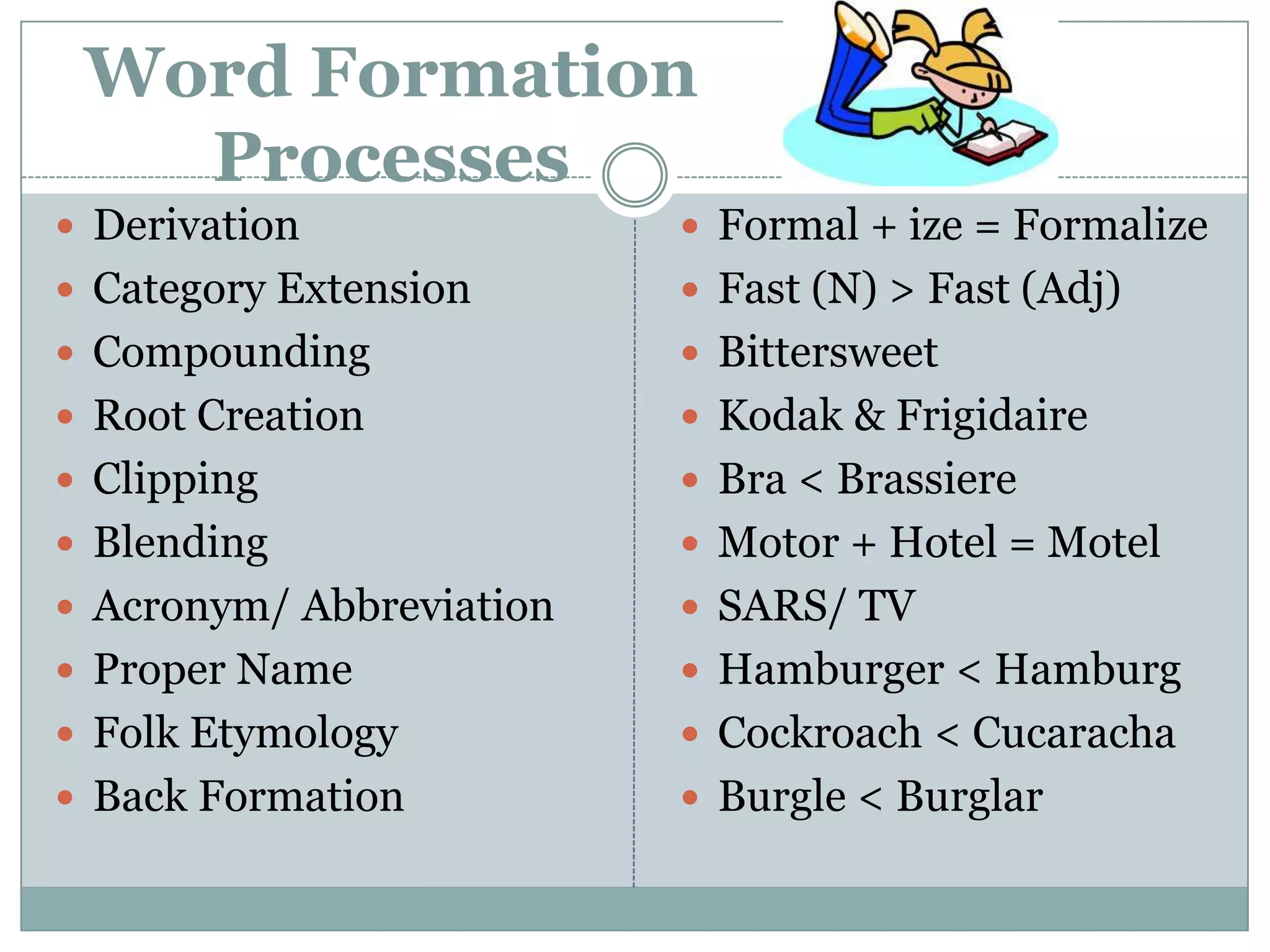
Word Formation
Processes
Derivation Formal + ize = Formalize
Category Extension Fast (N) > Fast (Adj)
Compounding Bittersweet
Root Creation Kodak & Frigidaire
Clipping Bra < Brassiere
Blending Motor + Hotel = Motel
Acronym/ Abbreviation SARS/ TV
Proper Name Hamburger < Hamburg
Folk Etymology Cockroach < Cucaracha
Back Formation Burgle < Burglar
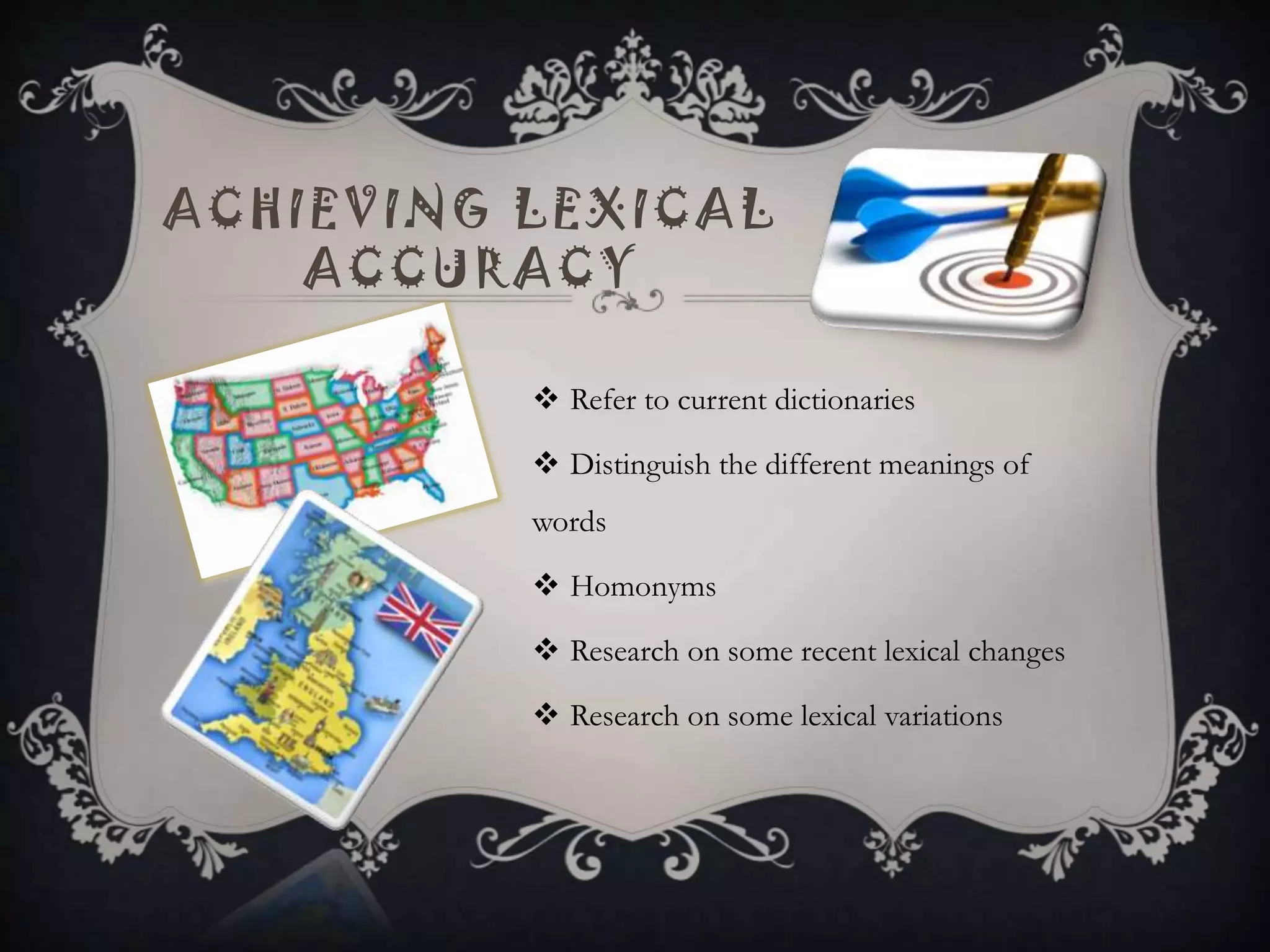
ACHIEVING LEXICAL
ACCURACY
Refer to current dictionaries
Distinguish the different meanings of
words
Homonyms
Research on some recent lexical changes
Research on some lexical variations
18.
Achieving Word Power
OA rich and dynamic VOCABULARY is
the shortest route to effective
COMMUNICATION.
O Effective communication is the key
element to LEADERSHIP.
O Persons with richer vocabulary do better
in school and are also more
SUCCESSFUL in their later careers.
19.
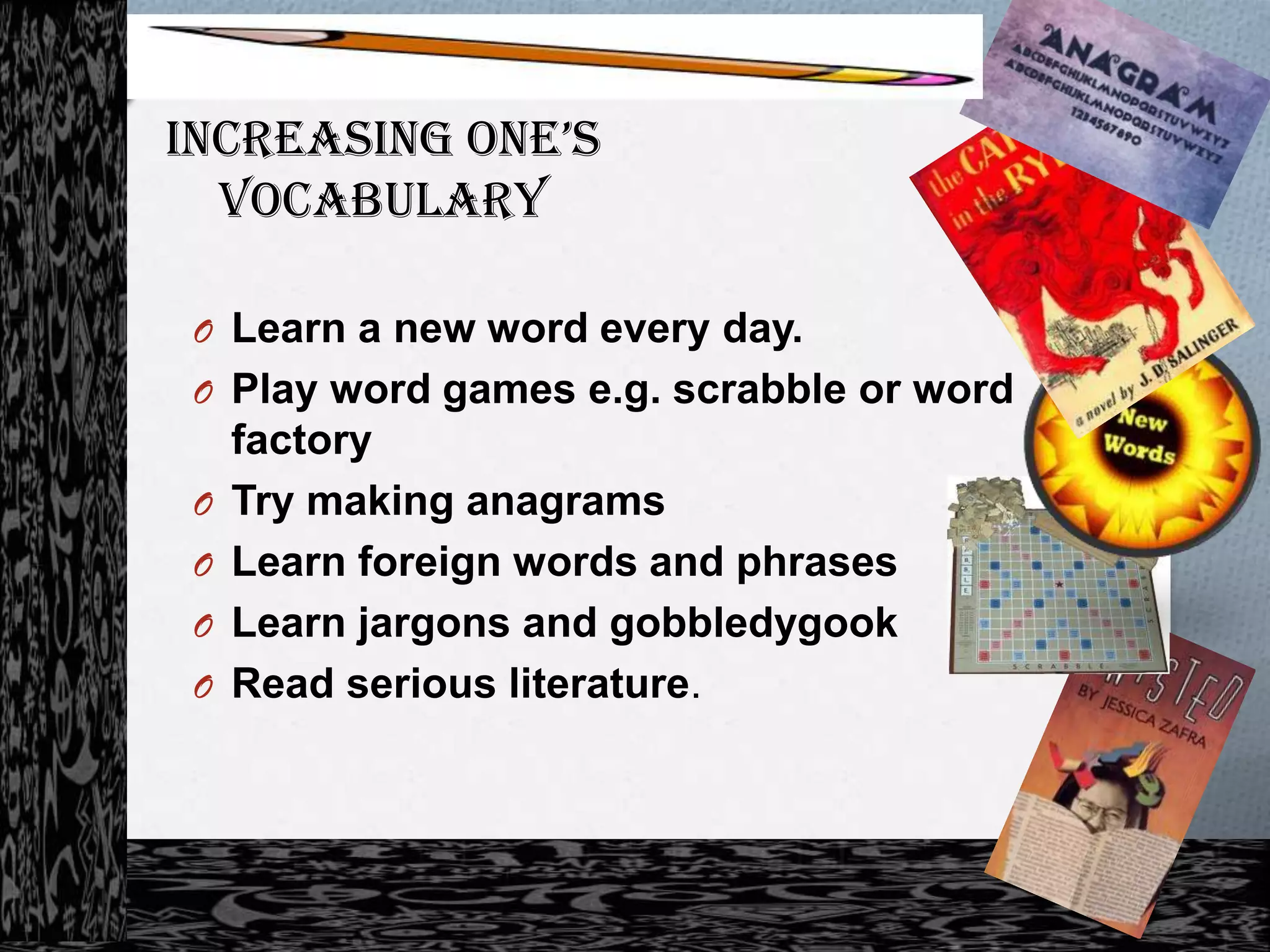
IncreasIng one’s
Vocabulary
O Learn a new word every day.
O Play word games e.g. scrabble or word
factory
O Try making anagrams
O Learn foreign words and phrases
O Learn jargons and gobbledygook
O Read serious literature.
20.
“It is notthe words that fail: it’s
the person that wields them that
does. And If you think about it,
words are all we really have. So
make good use of them”
- Jessica Zafra, Twisted 7