Writing Complex Sentences
#1: Simple Sentence
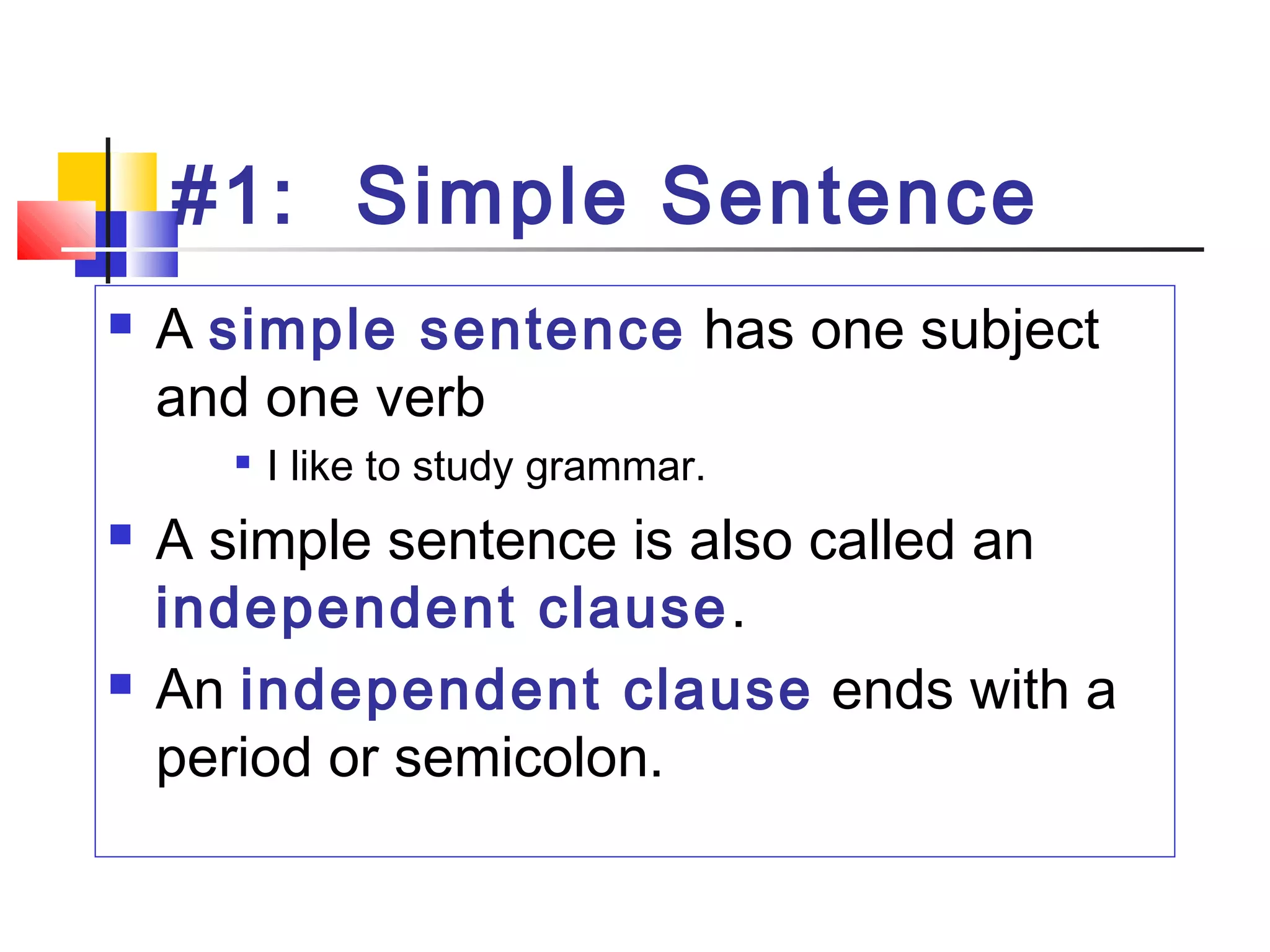
 A simple sentence has one subject
and one verb

I like to study grammar.
 A simple sentence is also called an
independent clause.
 An independent clause ends with a
period or semicolon.
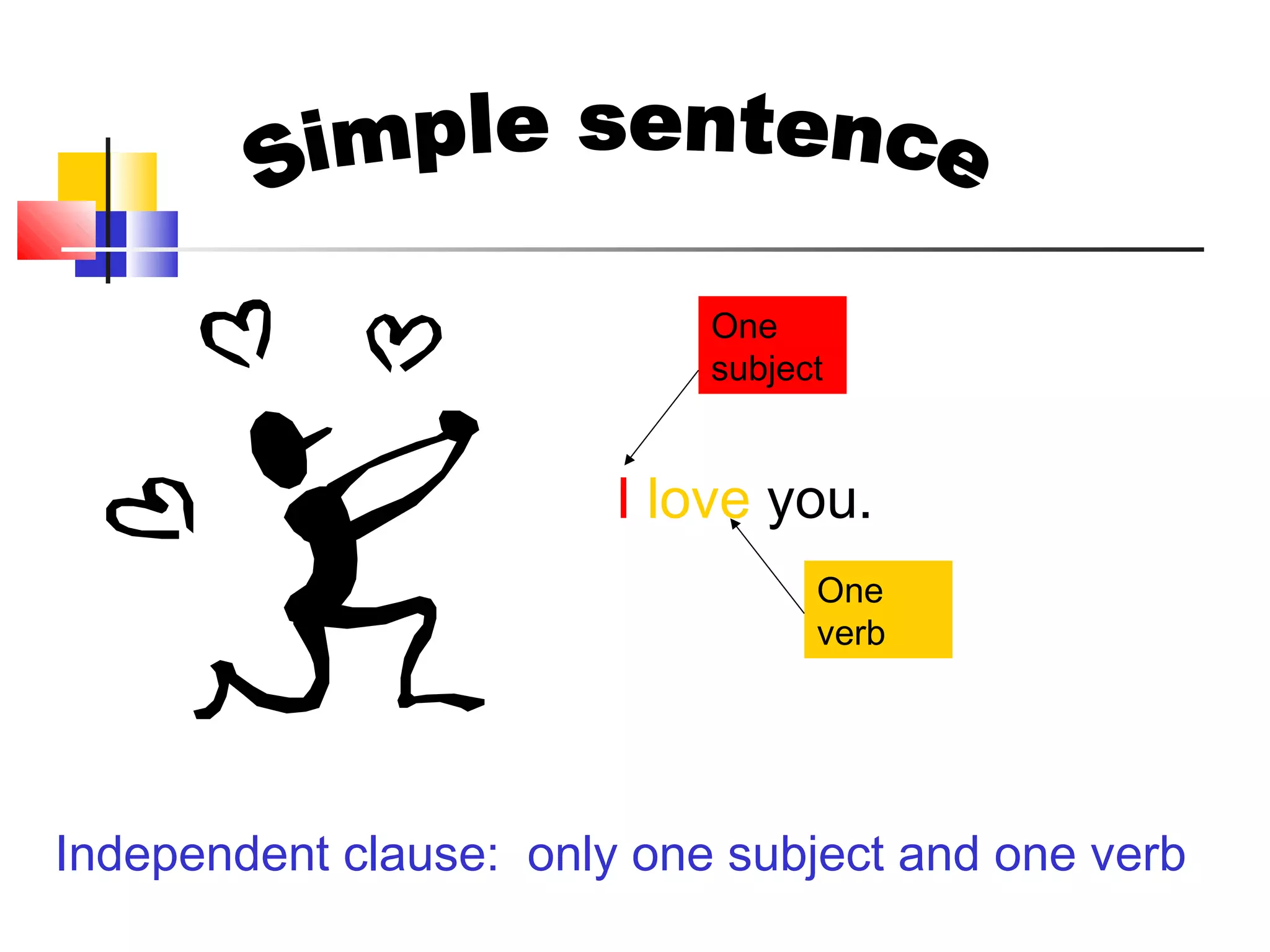
Independent clause: only one subject and one verb
I love you.
One
verb
One
subject
#2: Compound Sentence
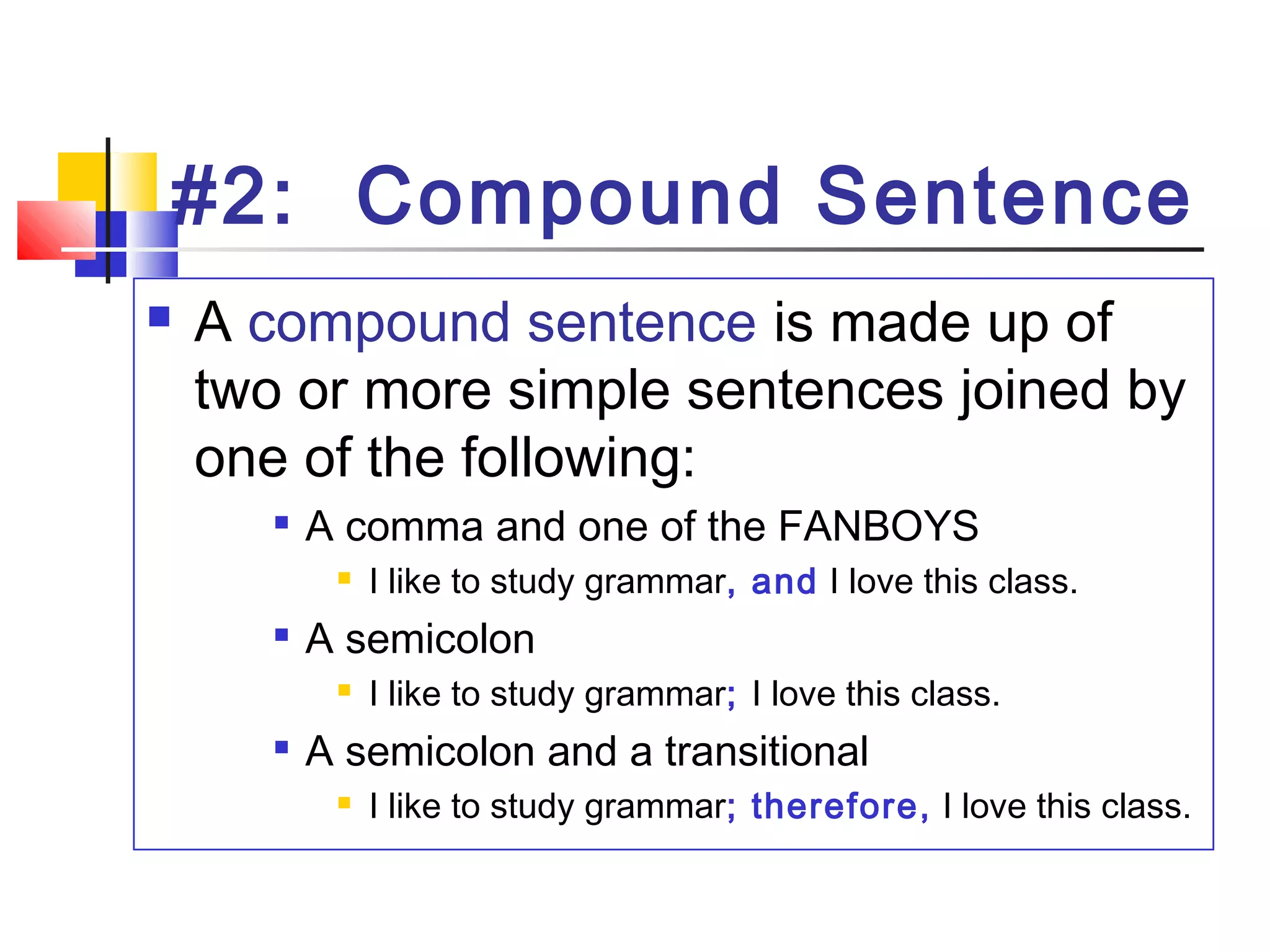
 A compound sentence is made up of
two or more simple sentences joined by
one of the following:

A comma and one of the FANBOYS
 I like to study grammar, and I love this class.

A semicolon
 I like to study grammar; I love this class.

A semicolon and a transitional
 I like to study grammar; therefore, I love this class.
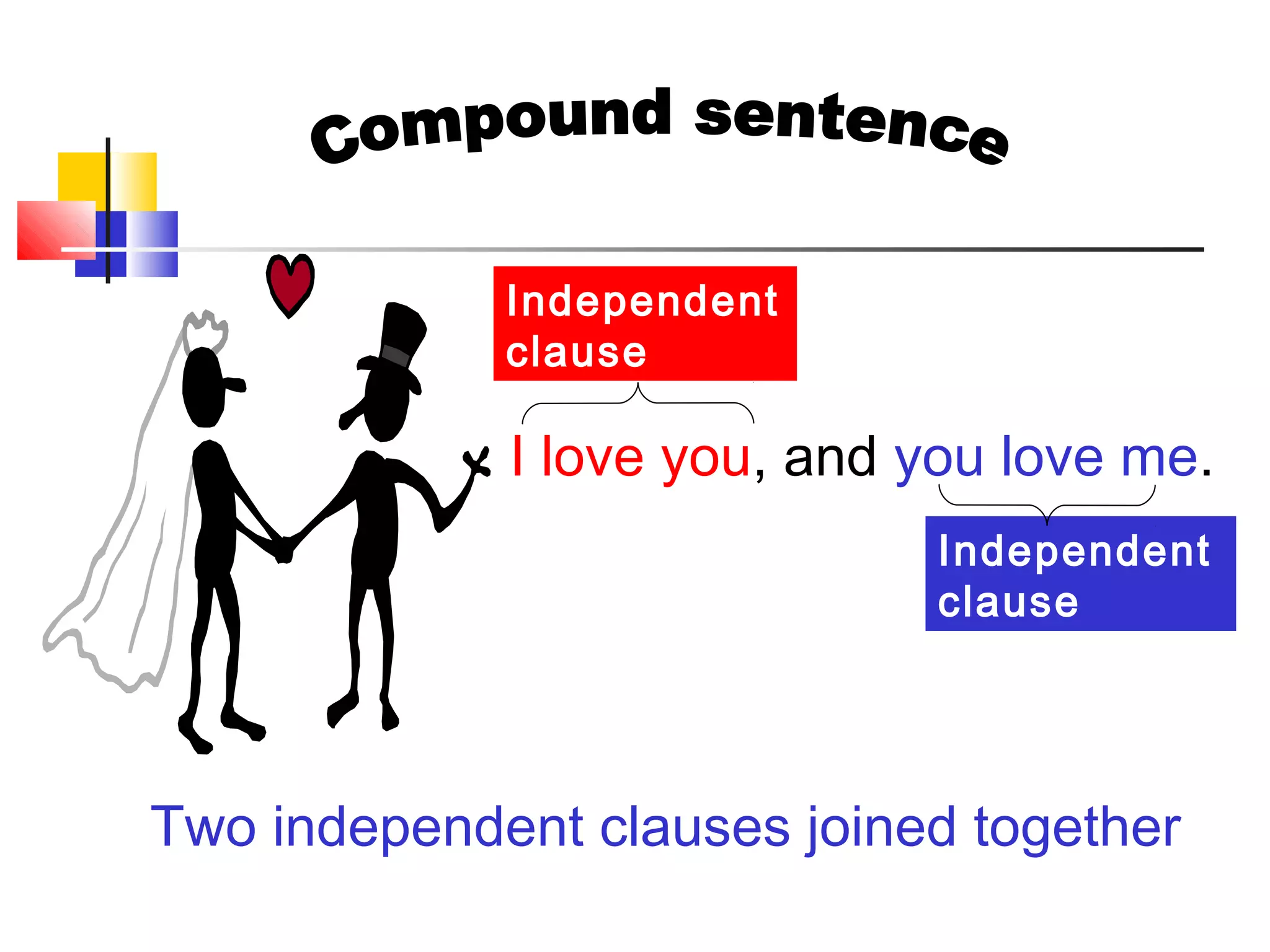
Two independent clauses joined together
I love you, and you love me.
Independent
clause
Independent
clause
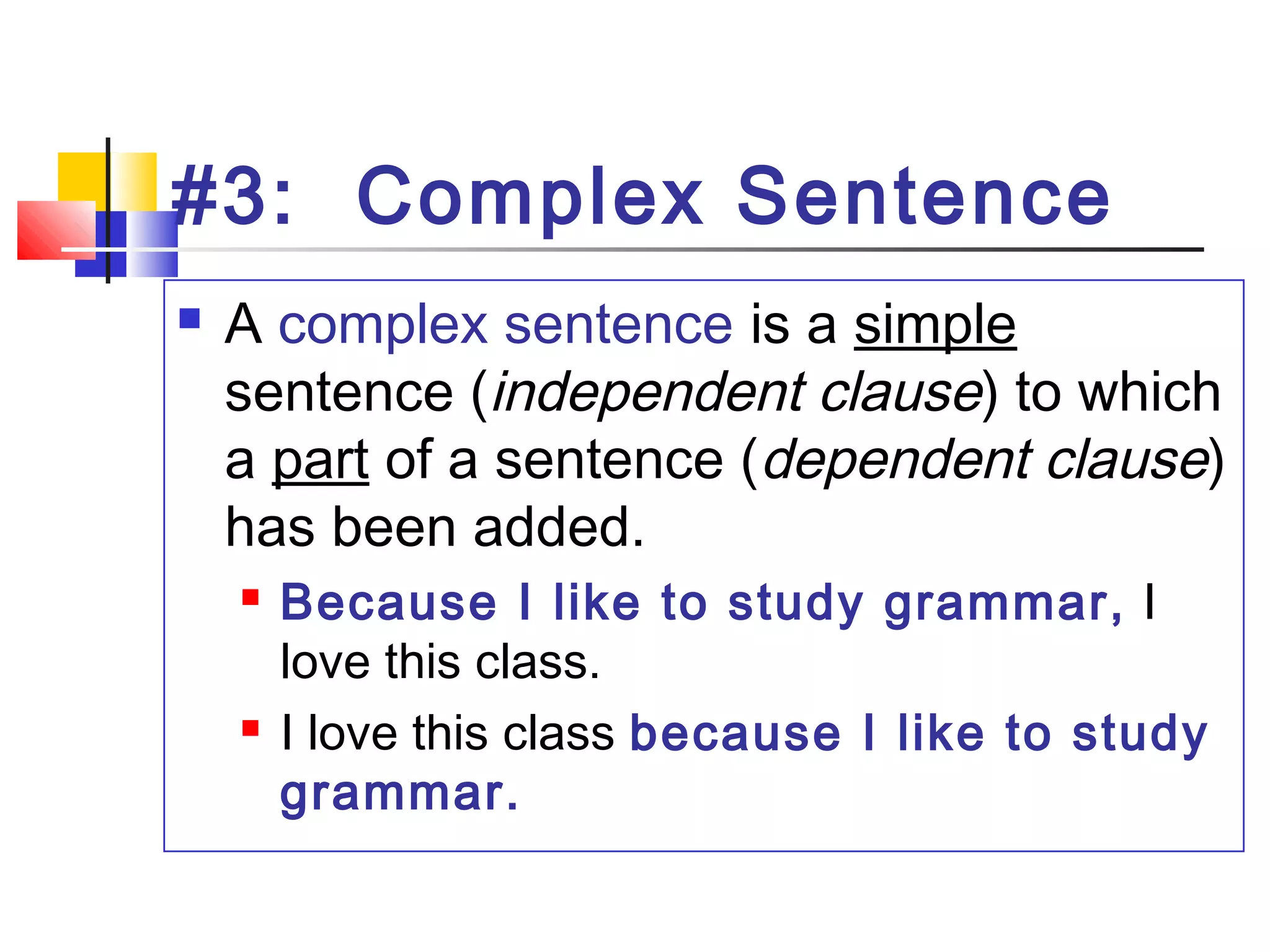
#3: Complex Sentence
 A complex sentence is a simple
sentence (independent clause) to which
a part of a sentence (dependent clause)
has been added.
 Because I like to study grammar, I
love this class.
 I love this class because I like to study
grammar.
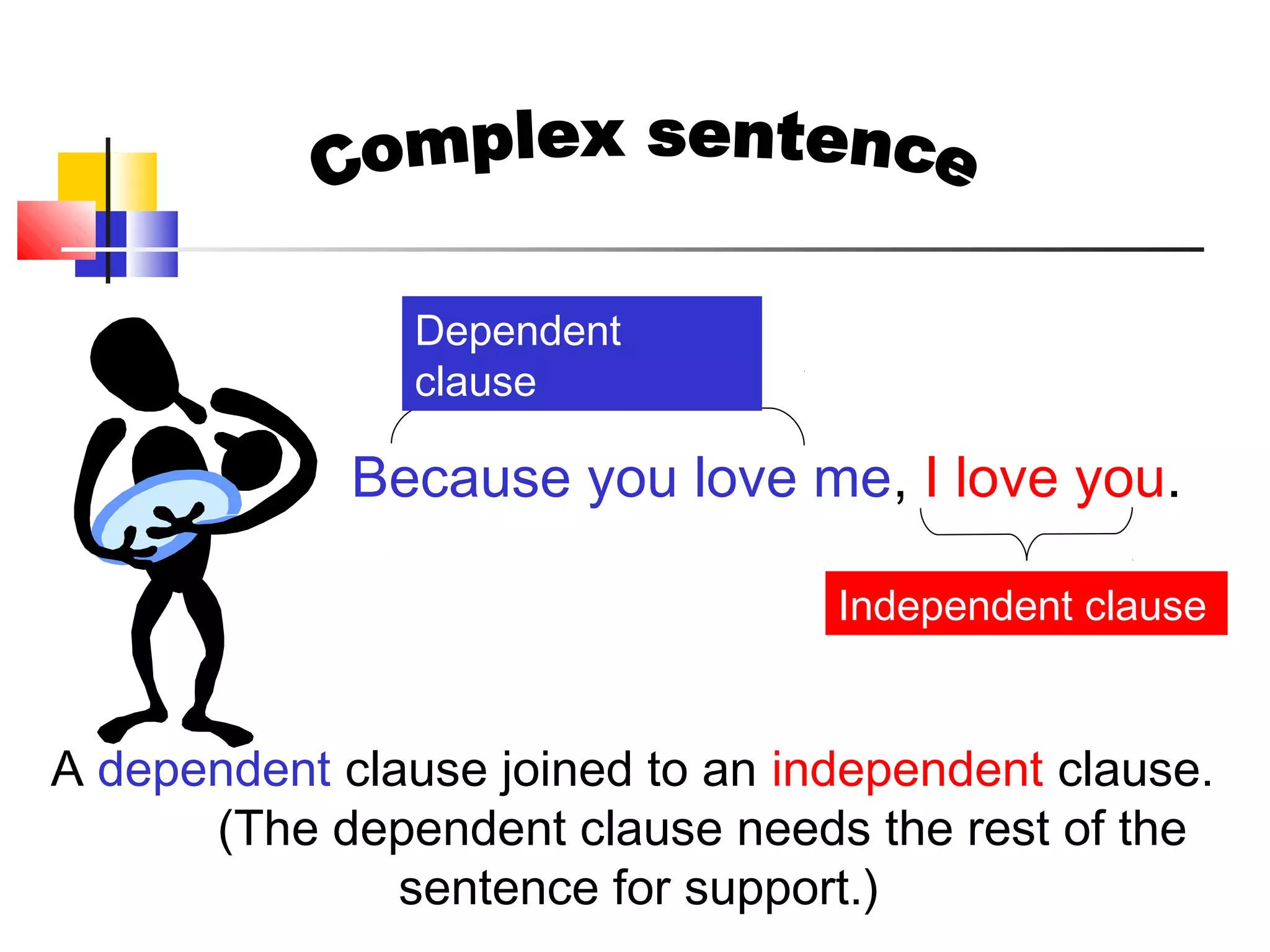
A dependent clause joined to an independent clause.
(The dependent clause needs the rest of the
sentence for support.)
Because you love me, I love you.
Dependent
clause
Independent clause
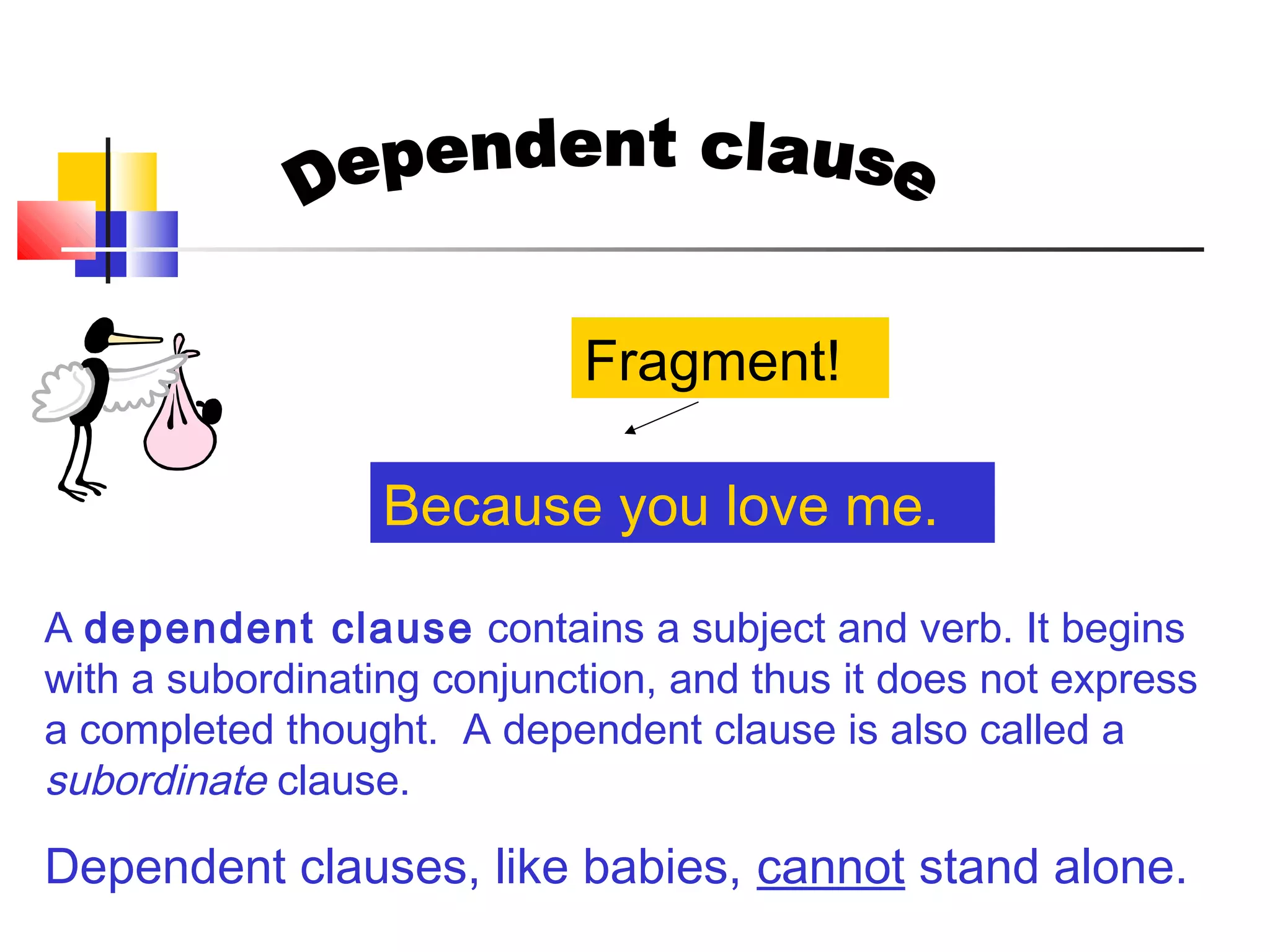
A dependent clause contains a subject and verb. It begins
with a subordinating conjunction, and thus it does not express
a completed thought. A dependent clause is also called a
subordinate clause.
Dependent clauses, like babies, cannot stand alone.
Because you love me.
Fragment!
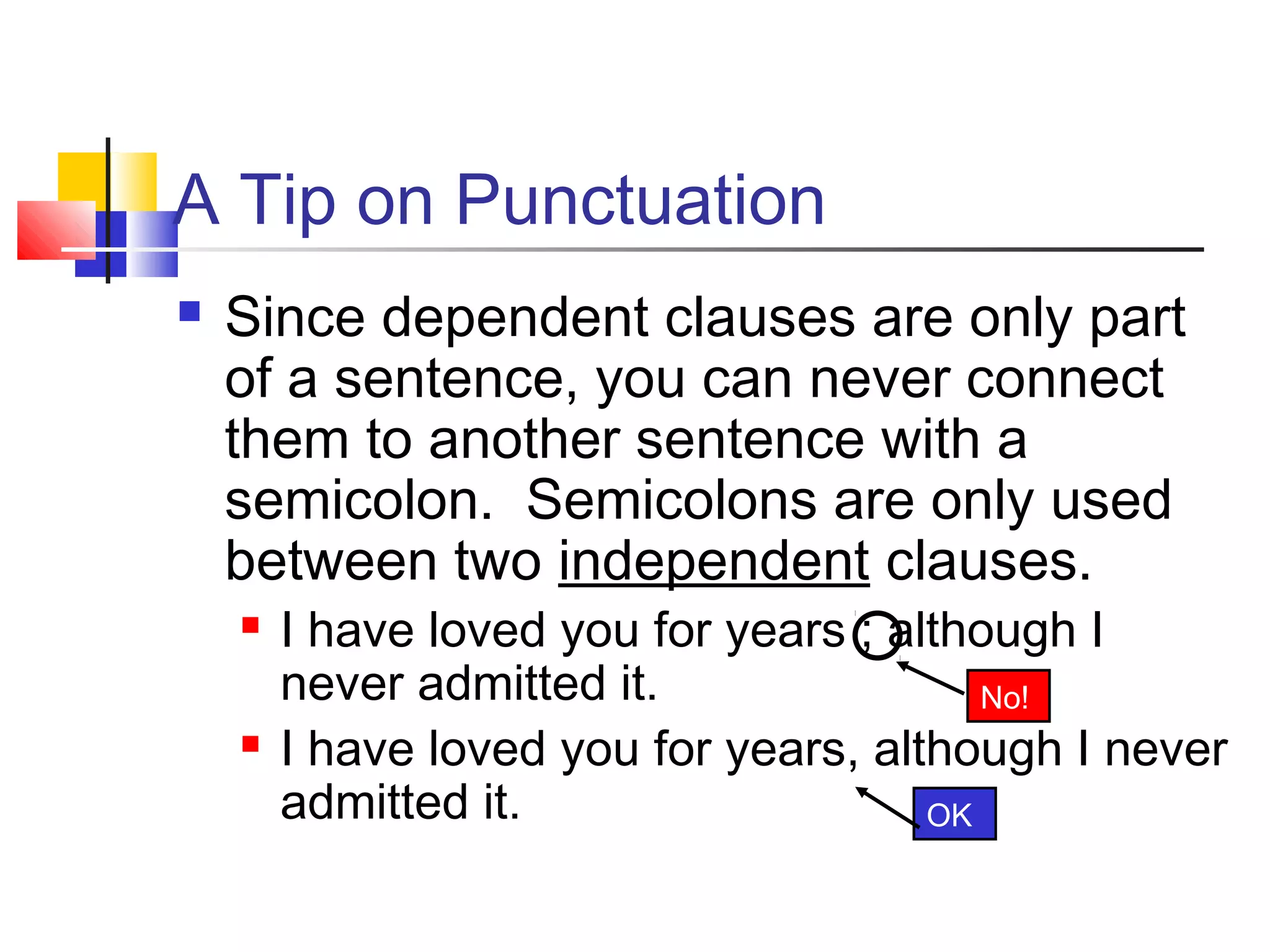
A Tip on Punctuation
 Since dependent clauses are only part
of a sentence, you can never connect
them to another sentence with a
semicolon. Semicolons are only used
between two independent clauses.
 I have loved you for years ; although I
never admitted it.
 I have loved you for years, although I never
admitted it. OK
No!
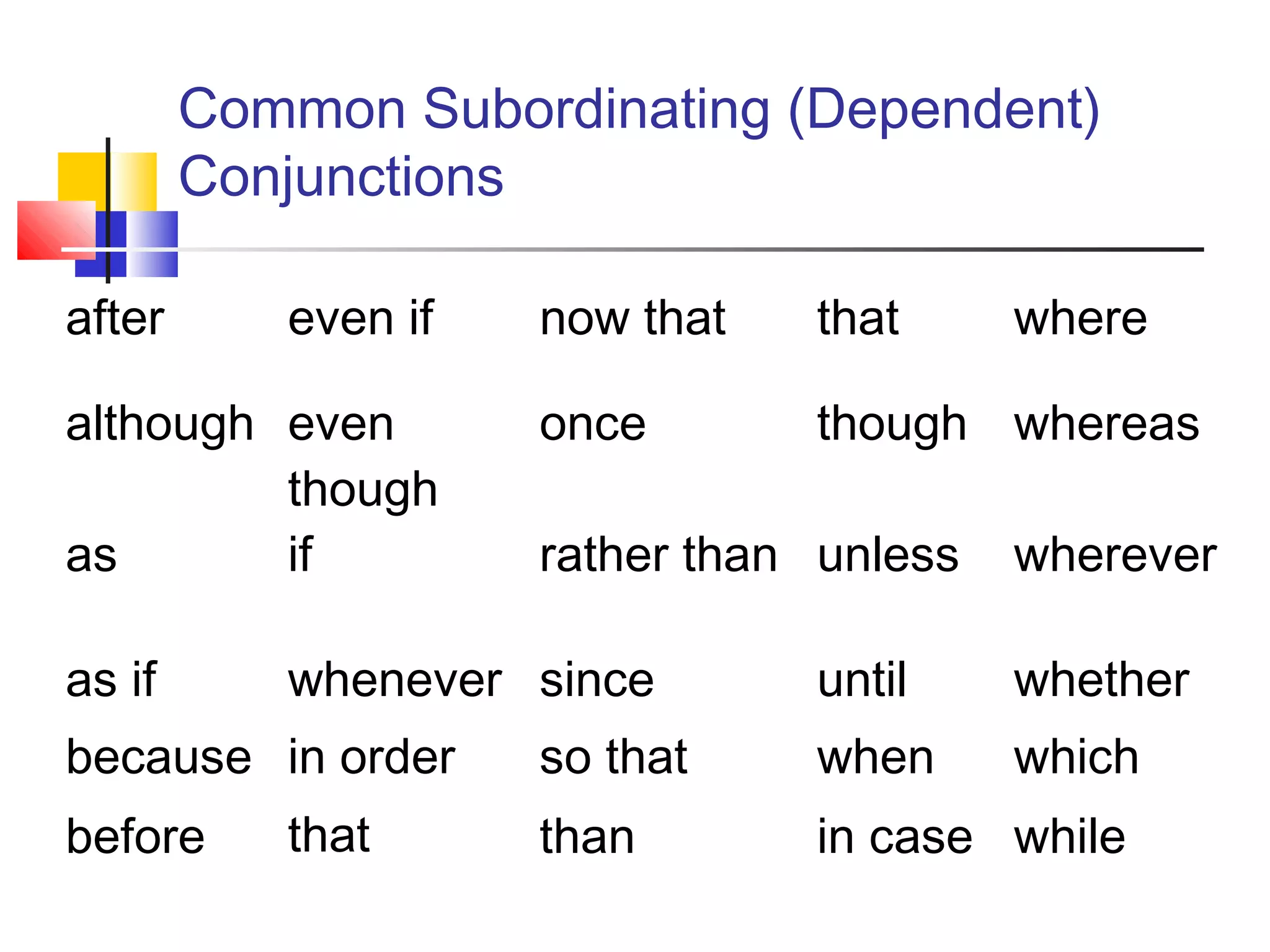
Common Subordinating (Dependent)
Conjunctions
after even if now that that where
although even
though
once though whereas
as if rather than unless wherever
as if whenever since until whether
because in order
that
so that when which
before than in case while
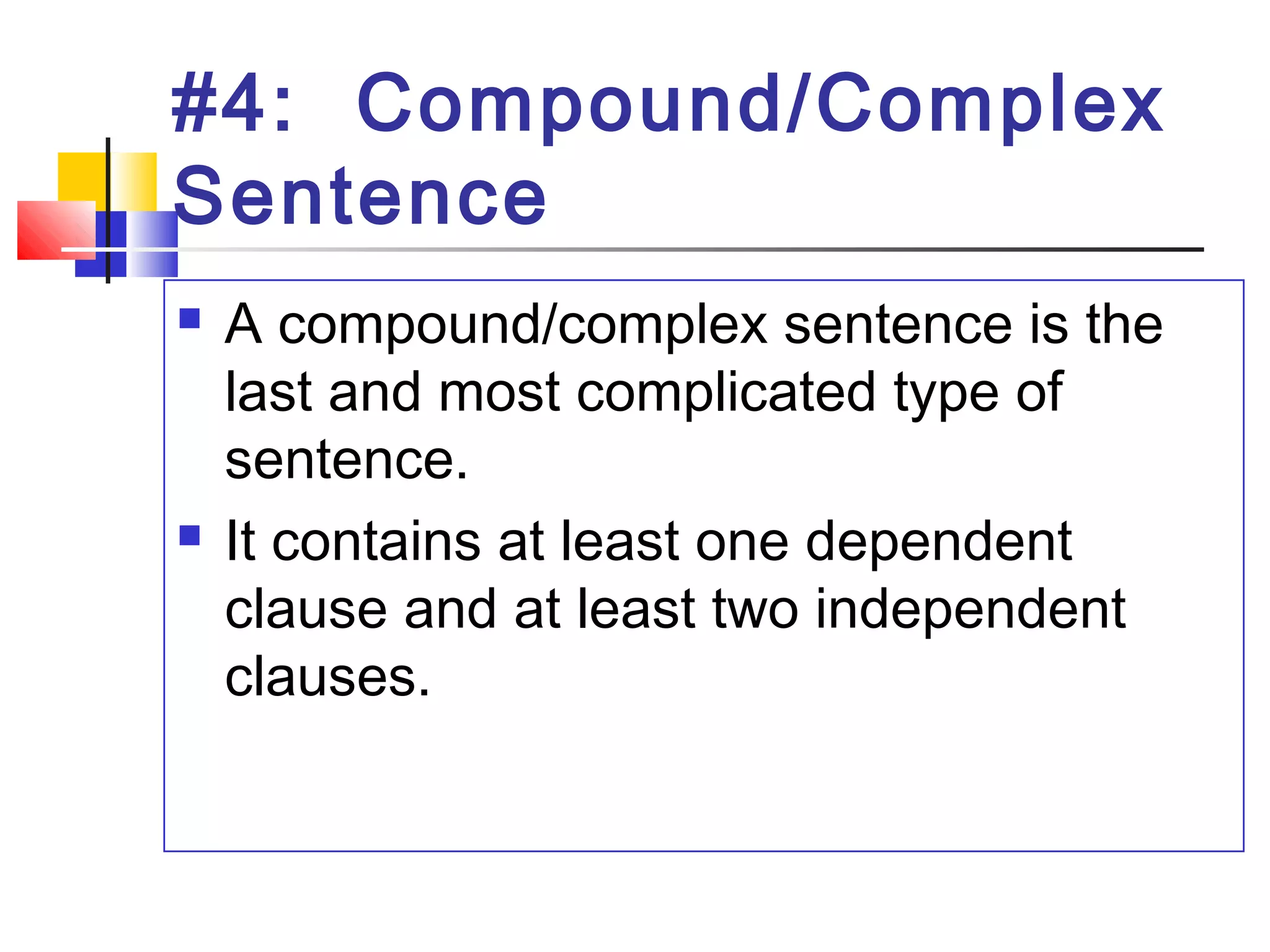
#4: Compound/Complex
Sentence
 A compound/complex sentence is the
last and most complicated type of
sentence.
 It contains at least one dependent
clause and at least two independent
clauses.
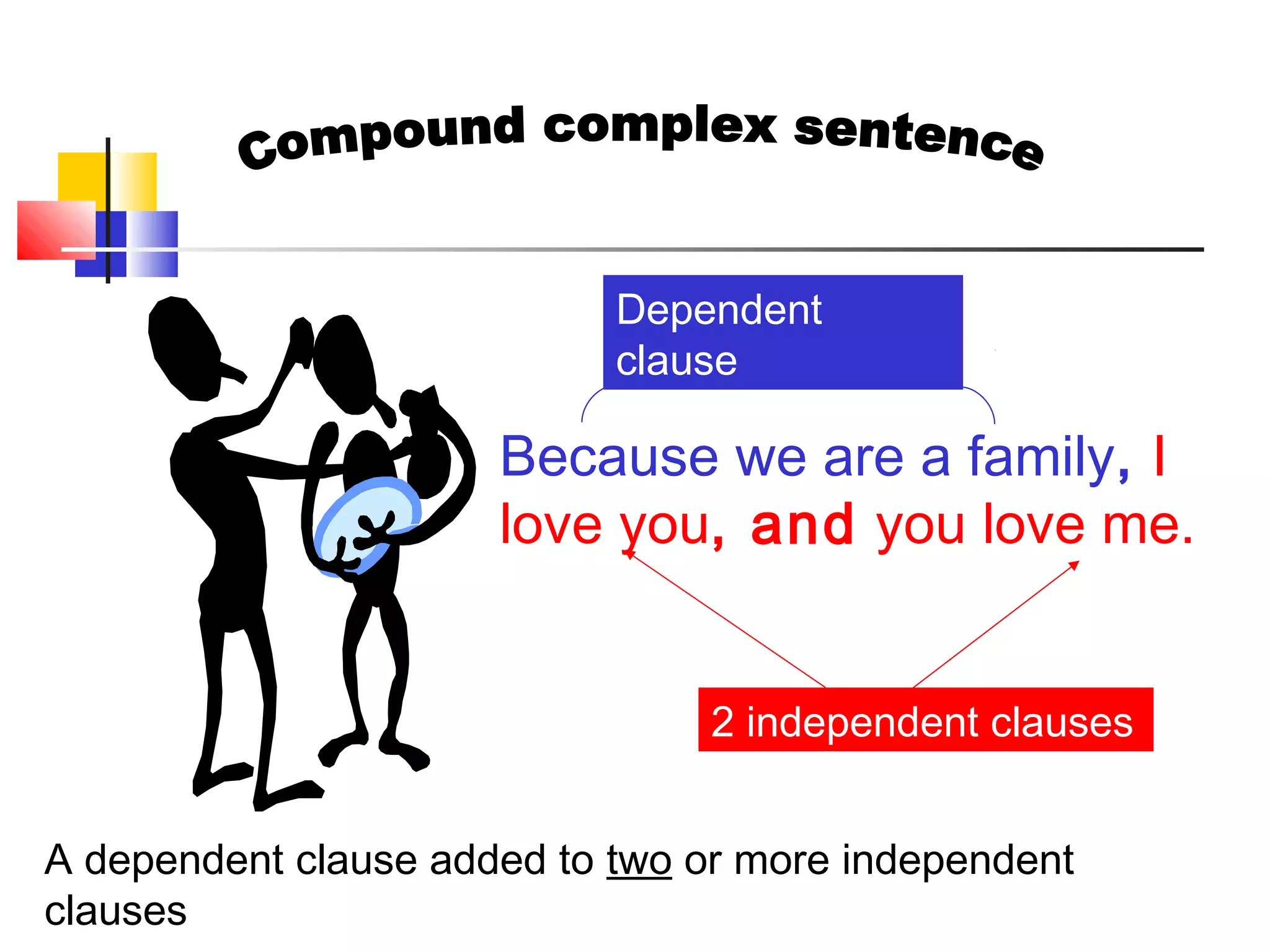
A dependent clause added to two or more independent
clauses
Because we are a family, I
love you, and you love me.
2 independent clauses
Dependent
clause
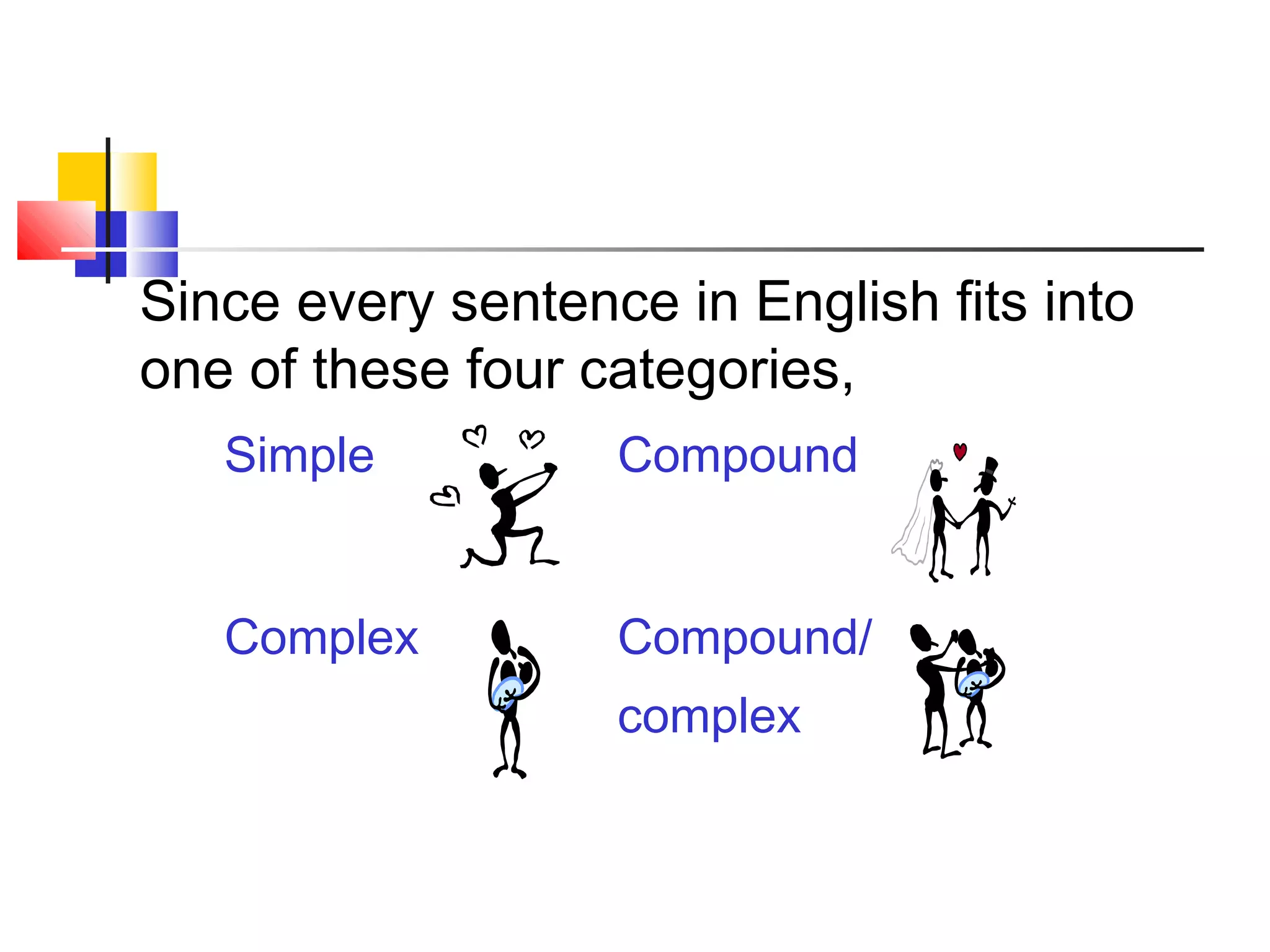
Simple Compound
Complex Compound/
complex
Since every sentence in English fits into
one of these four categories,
CONGRATULATION
S!
YOU NOW KNOW EVERYTHING
YOU NEED TO KNOW
• To write anything you want to
write
• Any way you want to write it
• And still get the punctuation right
each time!

Writing complex sentences

  • 1.
  • 2.
    #1: Simple Sentence A simple sentence has one subject and one verb  I like to study grammar.  A simple sentence is also called an independent clause.  An independent clause ends with a period or semicolon.
  • 3.
    Independent clause: onlyone subject and one verb I love you. One verb One subject
  • 4.
    #2: Compound Sentence A compound sentence is made up of two or more simple sentences joined by one of the following:  A comma and one of the FANBOYS  I like to study grammar, and I love this class.  A semicolon  I like to study grammar; I love this class.  A semicolon and a transitional  I like to study grammar; therefore, I love this class.
  • 5.
    Two independent clausesjoined together I love you, and you love me. Independent clause Independent clause
  • 6.
    #3: Complex Sentence A complex sentence is a simple sentence (independent clause) to which a part of a sentence (dependent clause) has been added.  Because I like to study grammar, I love this class.  I love this class because I like to study grammar.
  • 7.
    A dependent clausejoined to an independent clause. (The dependent clause needs the rest of the sentence for support.) Because you love me, I love you. Dependent clause Independent clause
  • 8.
    A dependent clausecontains a subject and verb. It begins with a subordinating conjunction, and thus it does not express a completed thought. A dependent clause is also called a subordinate clause. Dependent clauses, like babies, cannot stand alone. Because you love me. Fragment!
  • 9.
    A Tip onPunctuation  Since dependent clauses are only part of a sentence, you can never connect them to another sentence with a semicolon. Semicolons are only used between two independent clauses.  I have loved you for years ; although I never admitted it.  I have loved you for years, although I never admitted it. OK No!
  • 10.
    Common Subordinating (Dependent) Conjunctions aftereven if now that that where although even though once though whereas as if rather than unless wherever as if whenever since until whether because in order that so that when which before than in case while
  • 11.
    #4: Compound/Complex Sentence  Acompound/complex sentence is the last and most complicated type of sentence.  It contains at least one dependent clause and at least two independent clauses.
  • 12.
    A dependent clauseadded to two or more independent clauses Because we are a family, I love you, and you love me. 2 independent clauses Dependent clause
  • 13.
    Simple Compound Complex Compound/ complex Sinceevery sentence in English fits into one of these four categories,
  • 14.
    CONGRATULATION S! YOU NOW KNOWEVERYTHING YOU NEED TO KNOW • To write anything you want to write • Any way you want to write it • And still get the punctuation right each time!