Using Context
Clues

Karen Silvestri, Instructional Specialist

The Learning Center at Robeson Community
College
What do you do when
you come upon a
word you don’t
know?

I don’t know that word!
• Skip the word
• Quit reading
• Come back to it if I have to
• Look it up in the dictionary
• Ask someone


     SOME ANSWERS
Context clues can
 help you to figure
 out the meanings of
 unfamiliar words.
 Context Clues
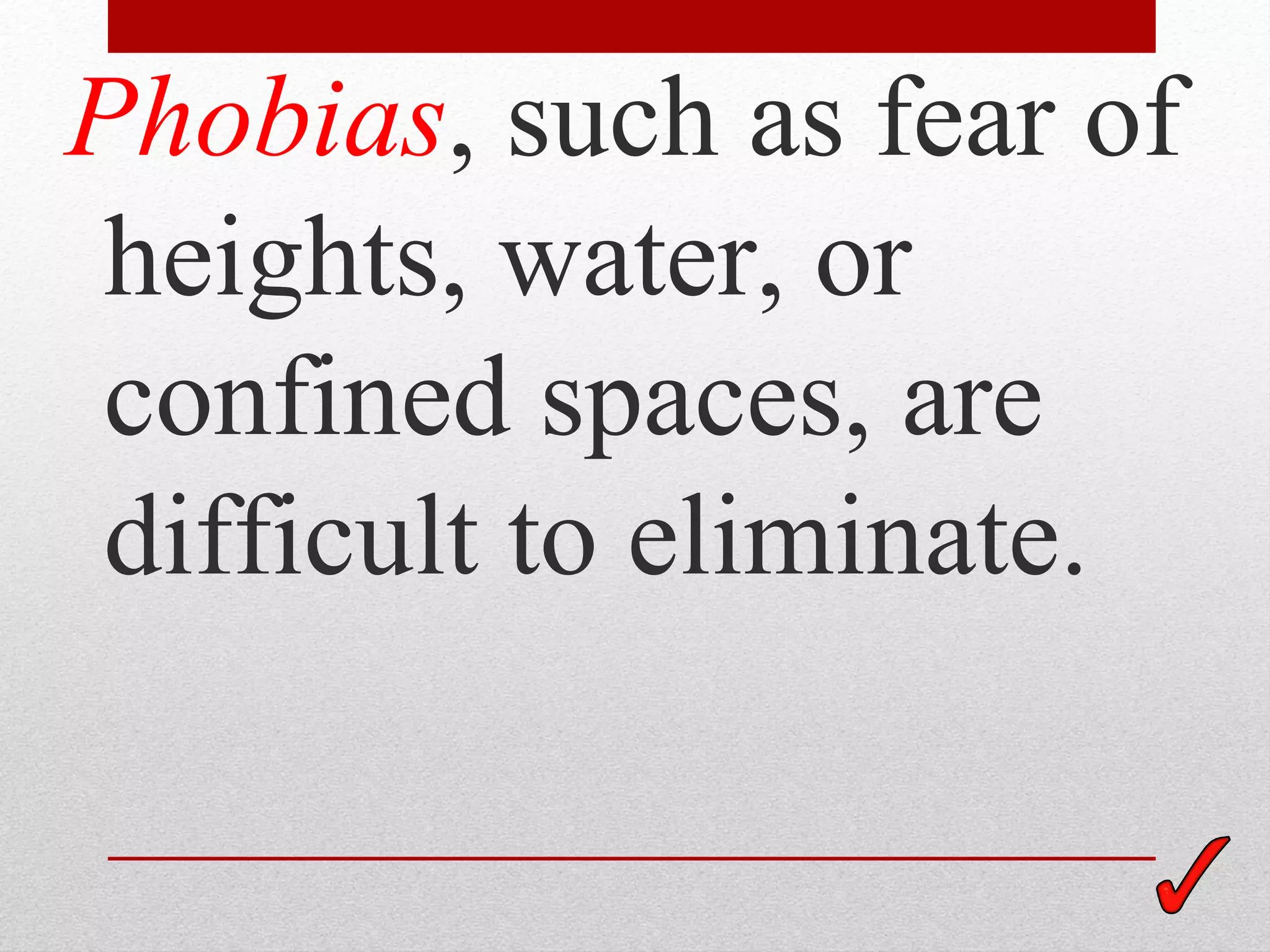
Phobias, such as fear of
 heights, water, or
 confined spaces, are
 difficult to eliminate.
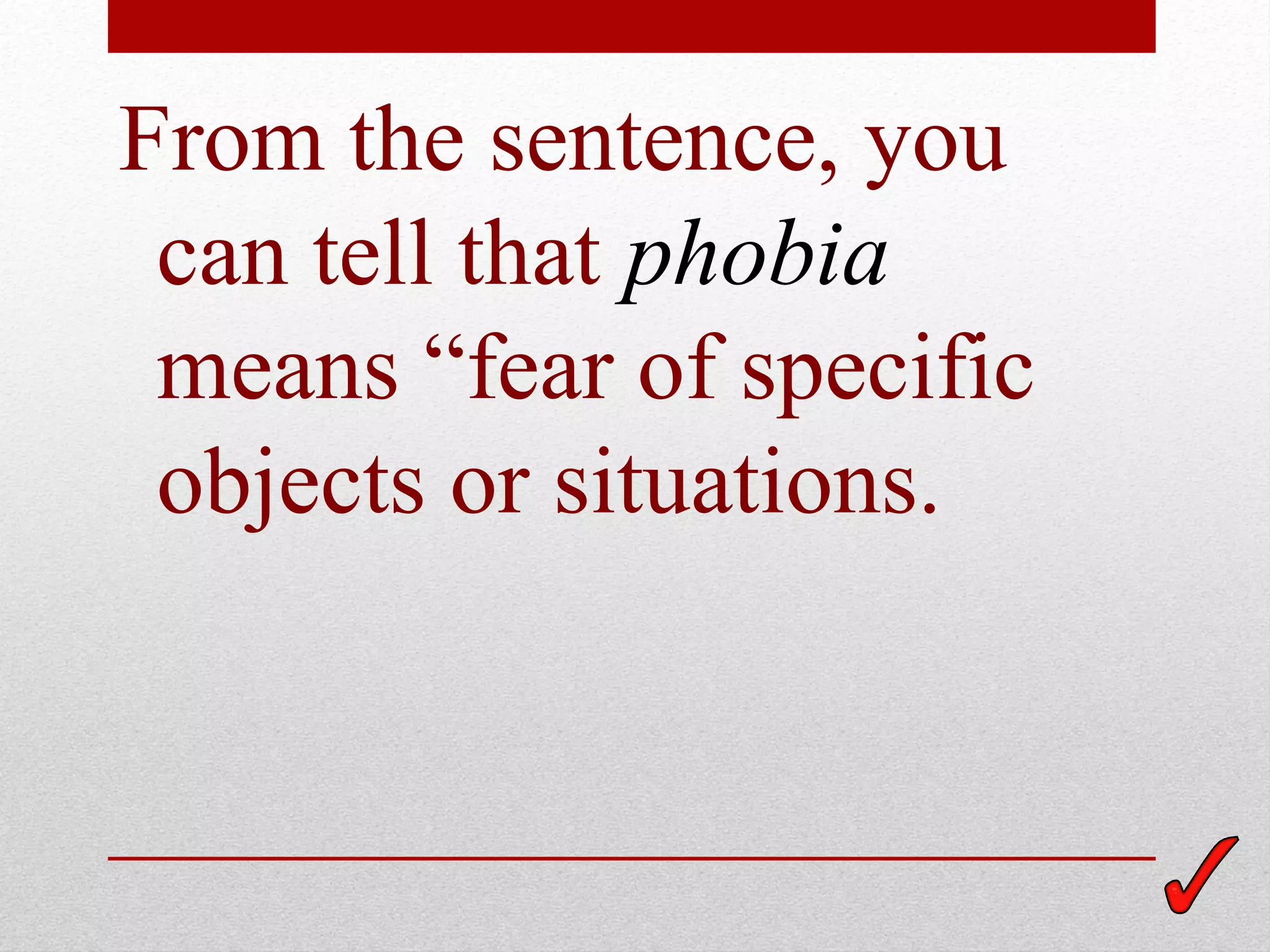
From the sentence, you
 can tell that phobia
 means “fear of specific
 objects or situations.
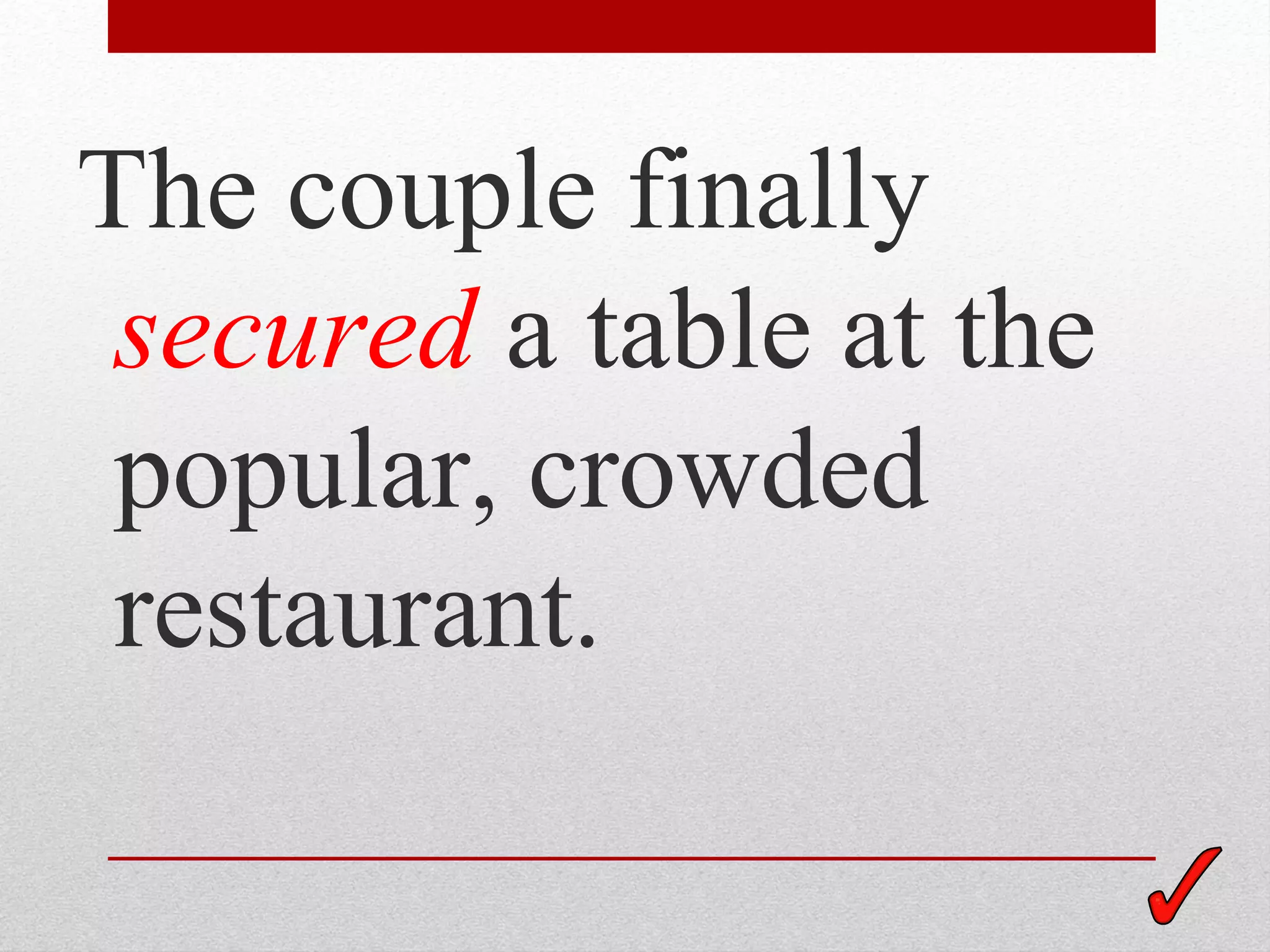
The couple finally
 secured a table at the
 popular, crowded
 restaurant.
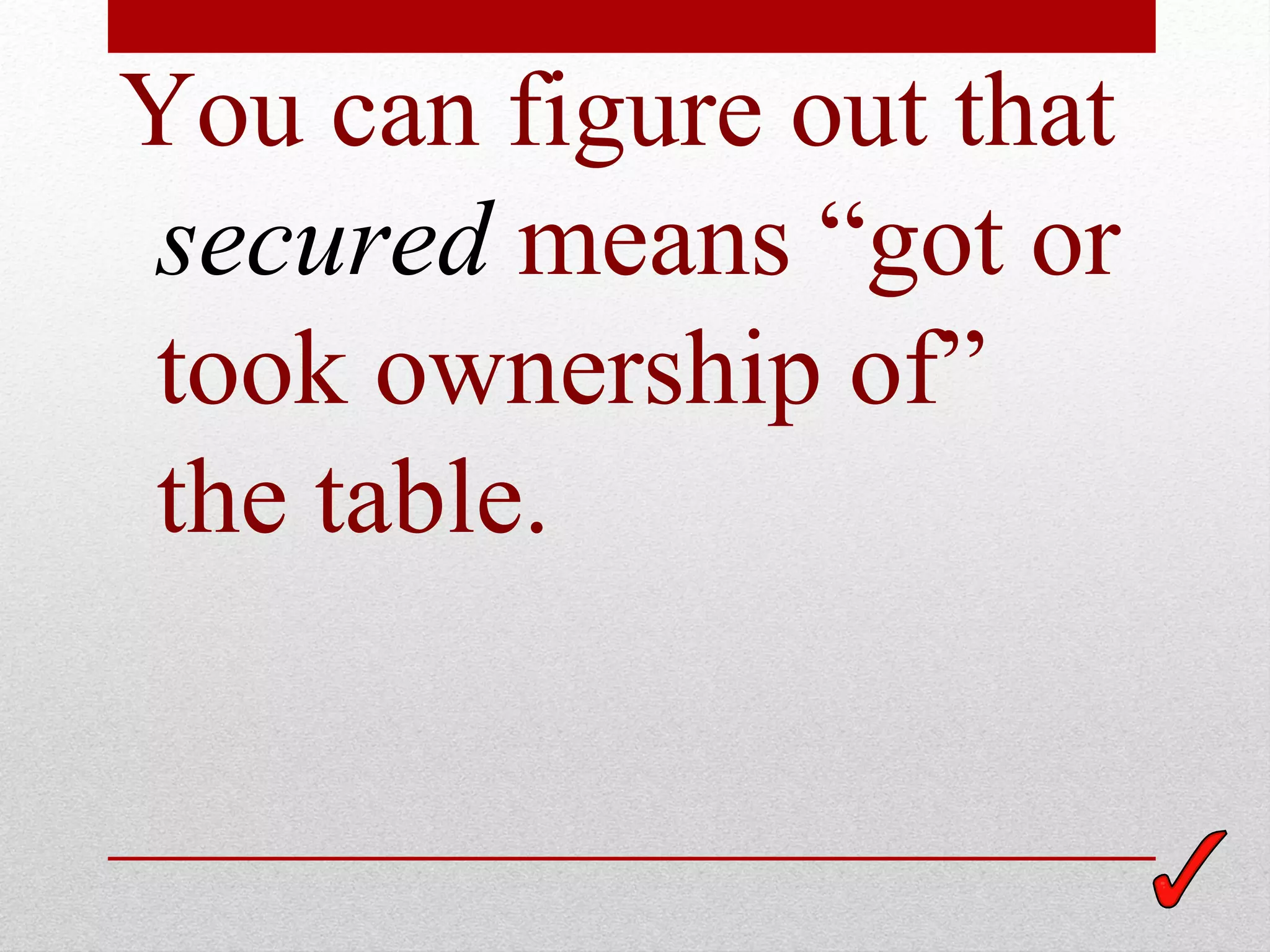
You can figure out that
secured means “got or
took ownership of”
the table.
•Definition
•Example
•Contrast
•Logic of Passage

Four types of Context Clues
• Many times a writer defines a word
  immediately following its use.
• The writer may directly define a word by
  giving a brief definition or a synonym (a
  word that has the same meaning).
• Some words and phrases as means, is,
  refers to, and can be defined as are often
  used.


Definition Clues
• Corona refers to the outermost
  part of the sun’s atmosphere.

• A soliloquy is a speech made by
  a character in a play that reveals
  his or her thoughts to the
  audience.


Example of Definition Clue
Writers may use punctuation to signal a
 definition clue is coming.
Punctuation separates the meaning clue
 from the rest of the sentence.
ď‚—Commas
ď‚—Parentheses
ď‚—Dashes


Other clues
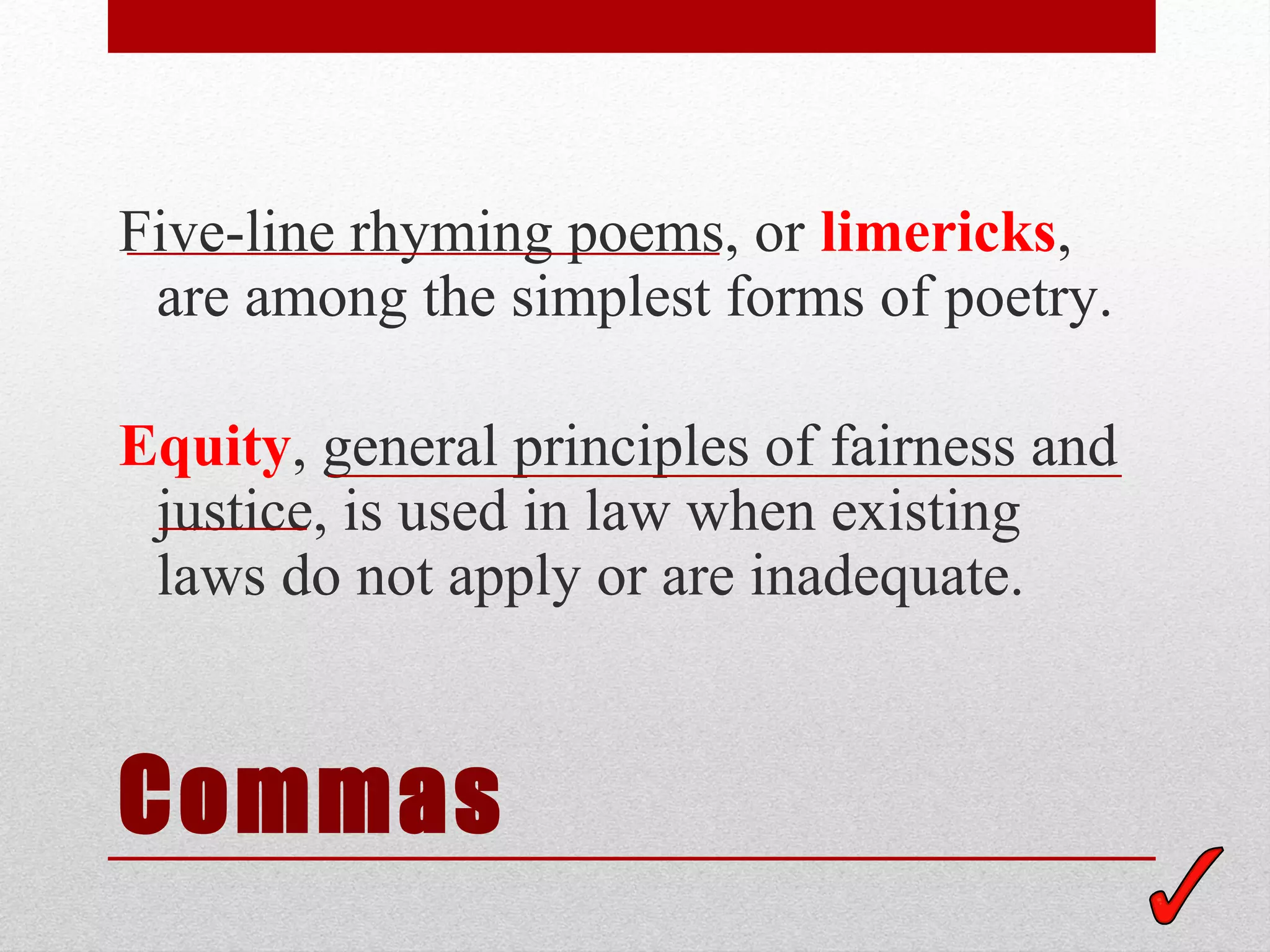
Five-line rhyming poems, or limericks,
 are among the simplest forms of poetry.

Equity, general principles of fairness and
 justice, is used in law when existing
 laws do not apply or are inadequate.


Commas
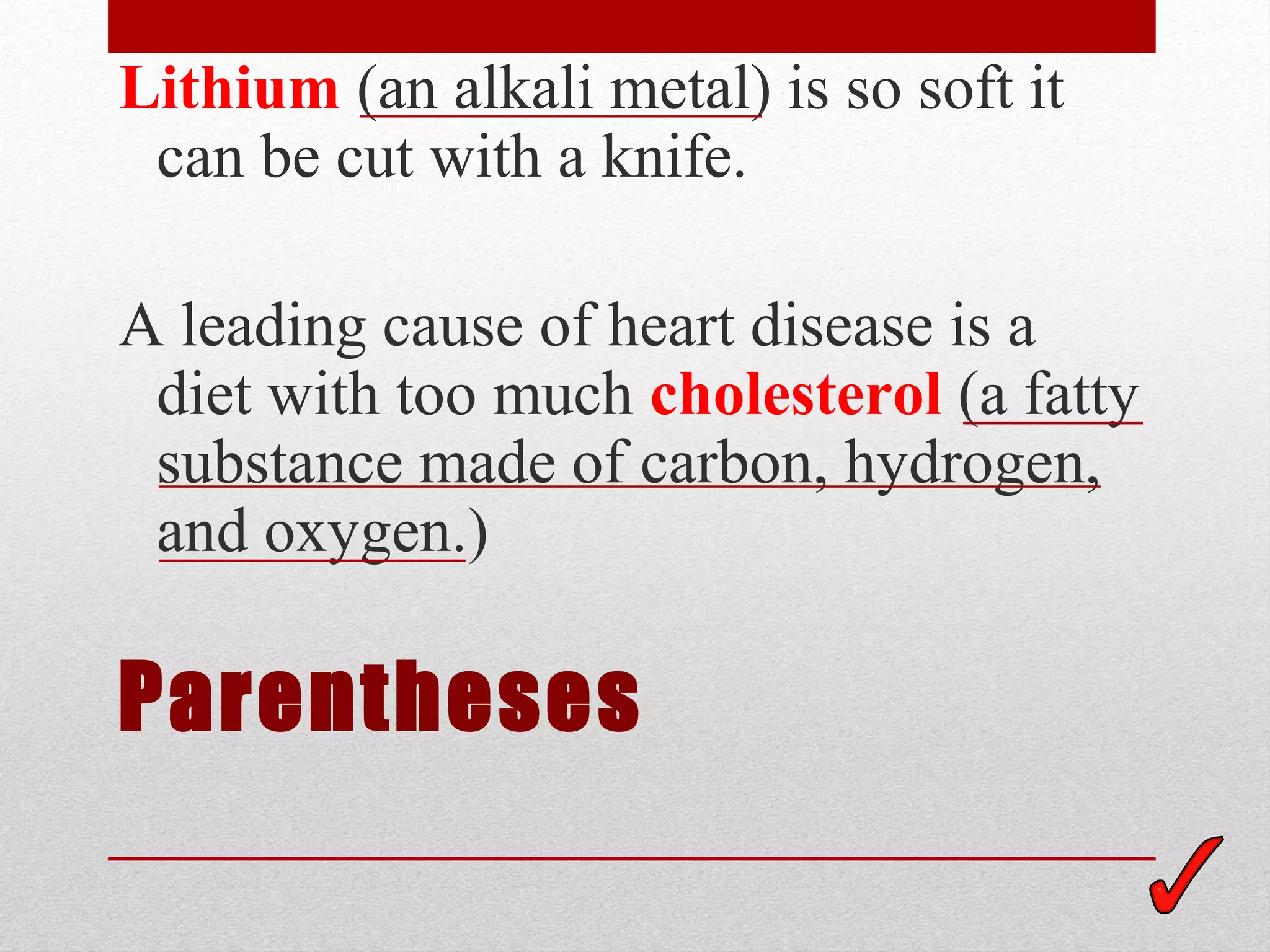
Lithium (an alkali metal) is so soft it
 can be cut with a knife.

A leading cause of heart disease is a
 diet with too much cholesterol (a fatty
 substance made of carbon, hydrogen,
 and oxygen.)

Parentheses
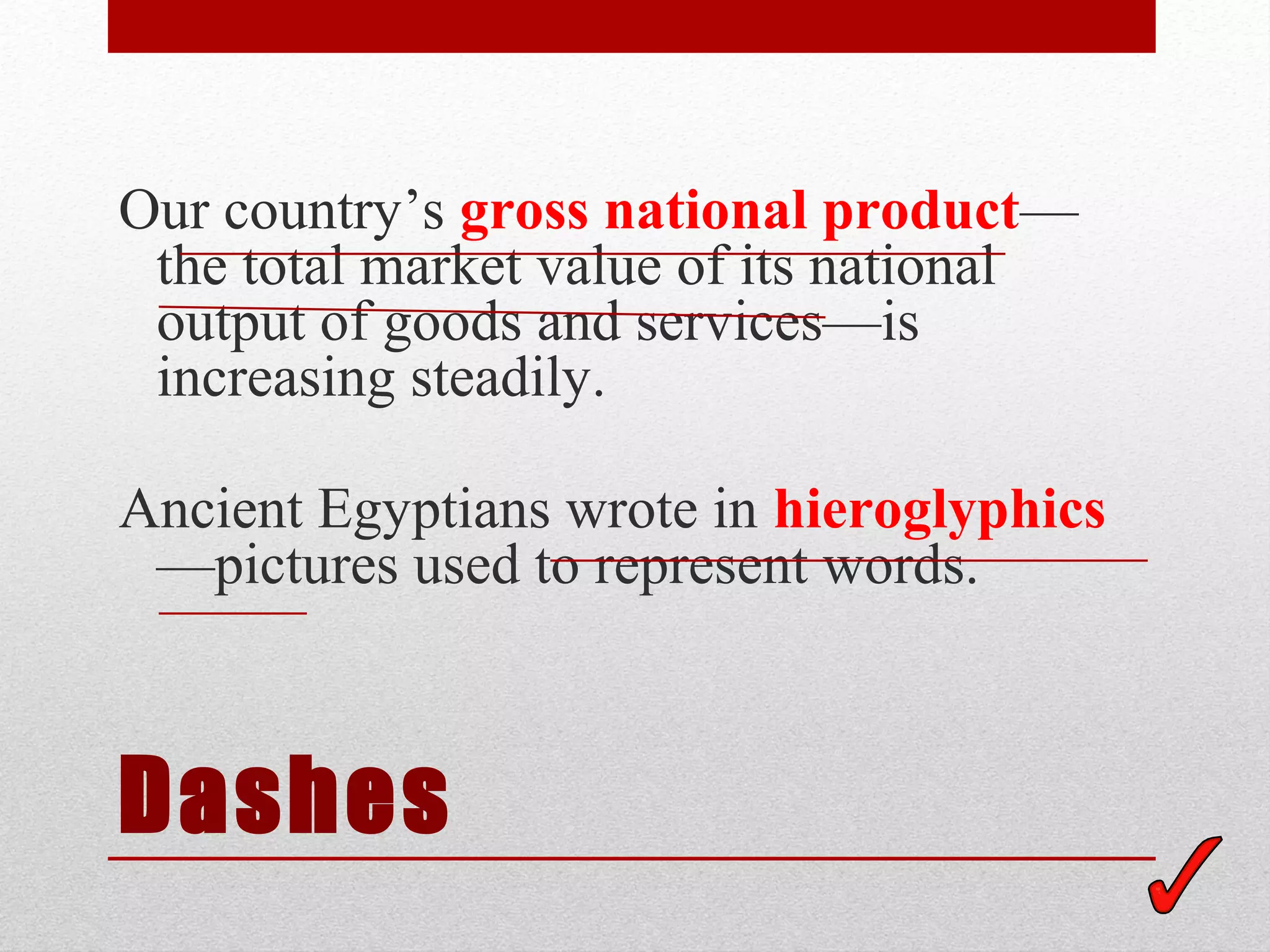
Our country’s gross national product—
 the total market value of its national
 output of goods and services—is
 increasing steadily.

Ancient Egyptians wrote in hieroglyphics
 —pictures used to represent words.


Dashes
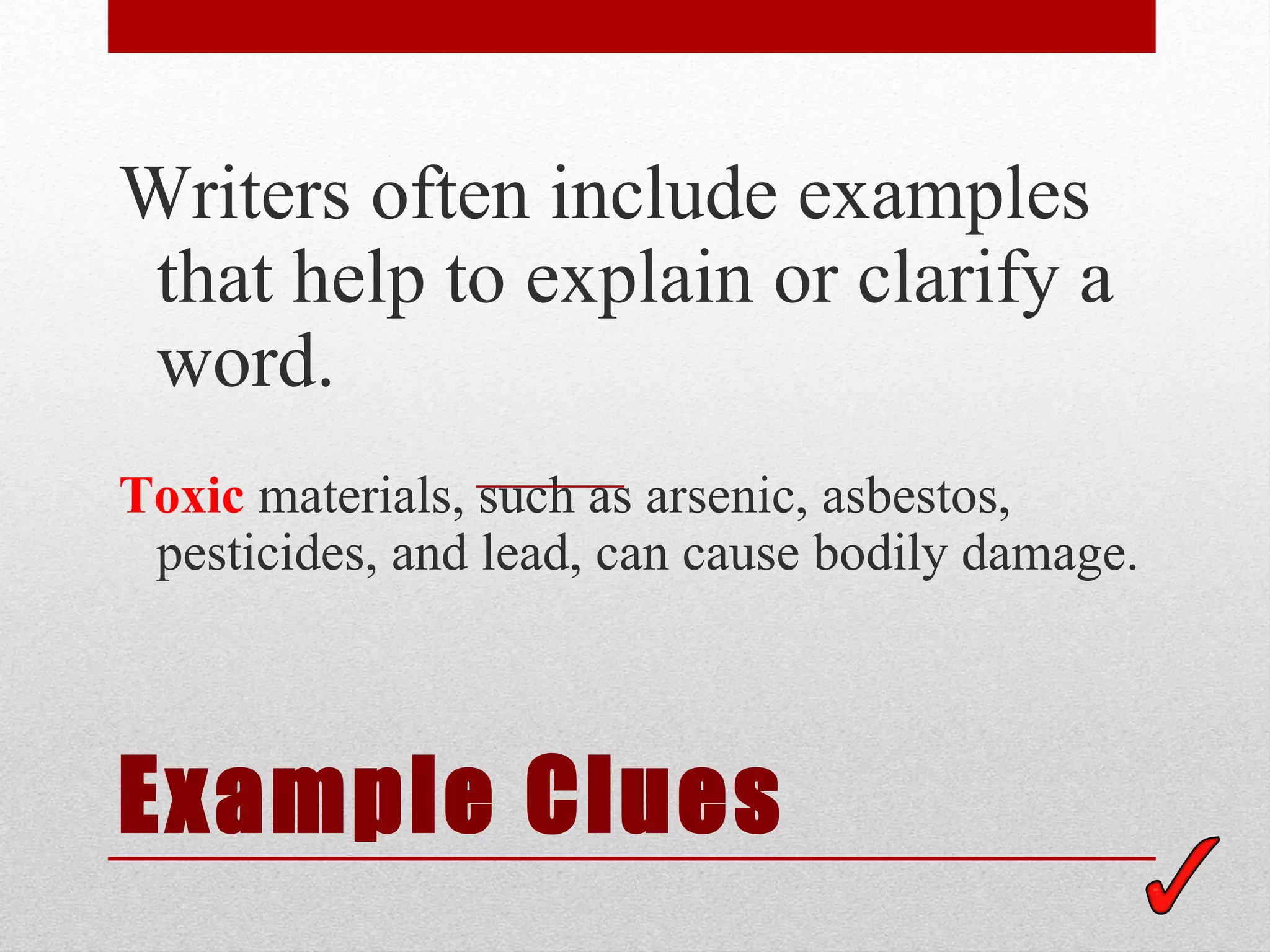
Writers often include examples
 that help to explain or clarify a
 word.
Toxic materials, such as arsenic, asbestos,
 pesticides, and lead, can cause bodily damage.


Example Clues
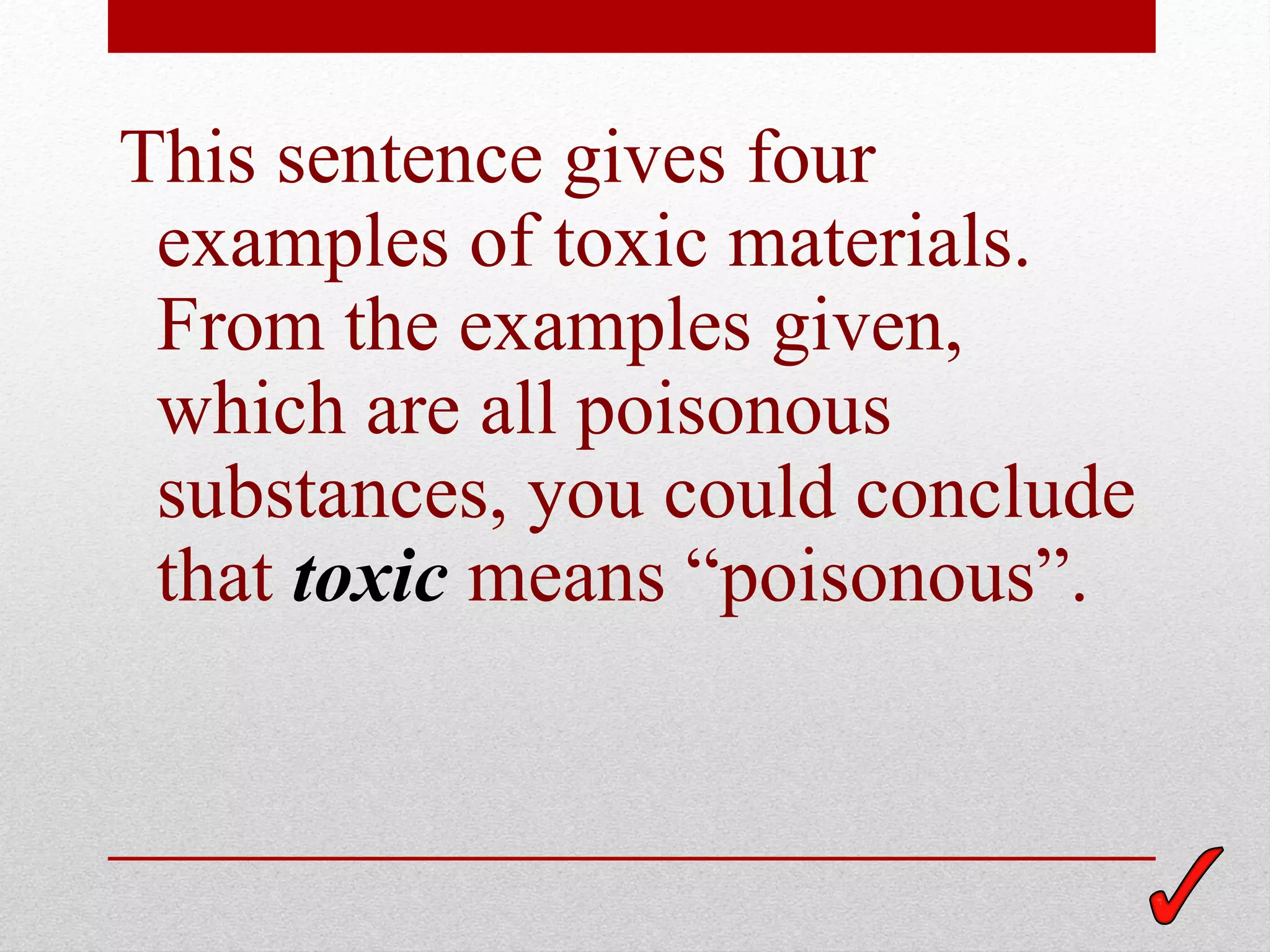
This sentence gives four
 examples of toxic materials.
 From the examples given,
 which are all poisonous
 substances, you could conclude
 that toxic means “poisonous”.
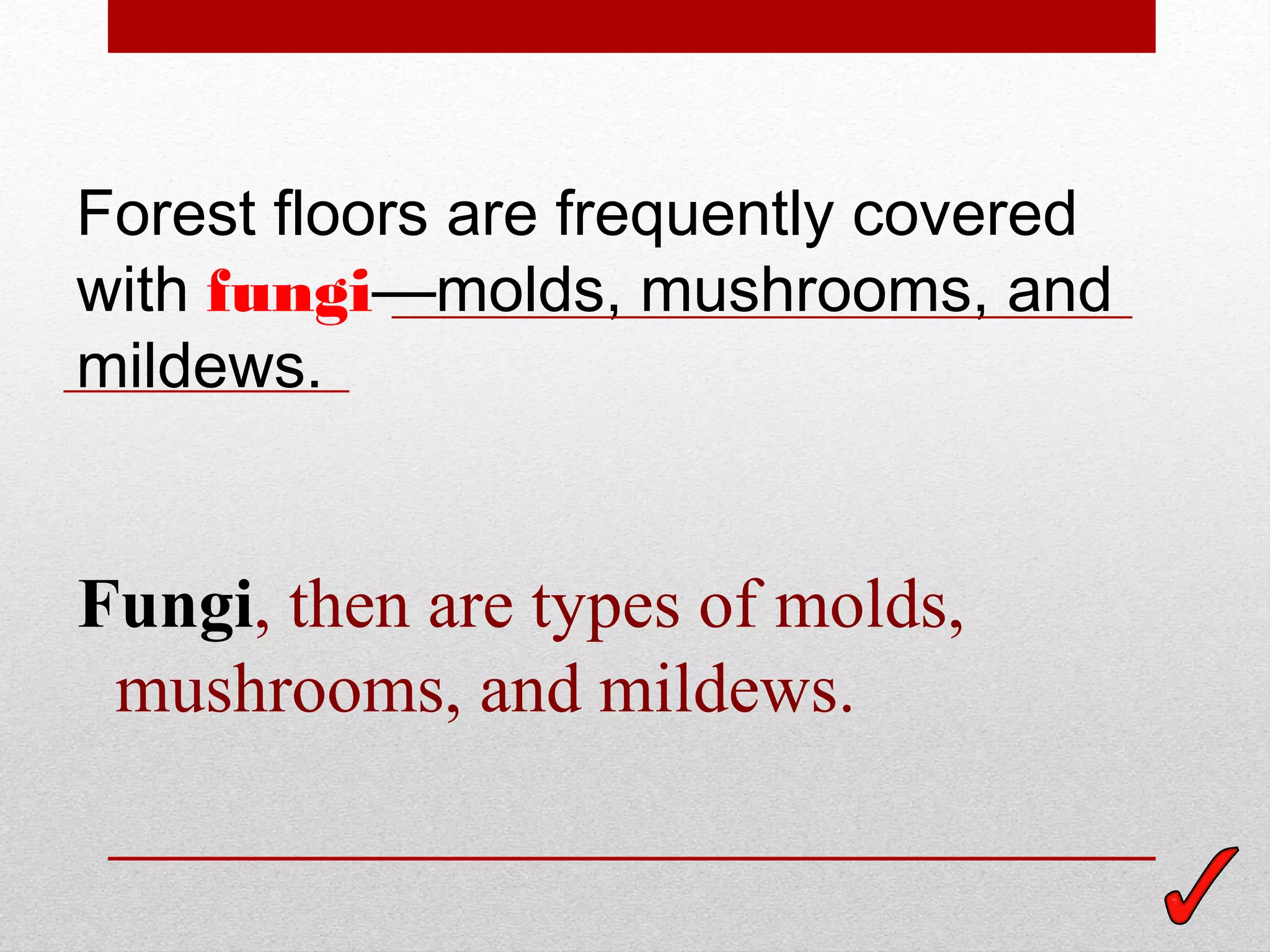
Forest floors are frequently covered
with fungi—molds, mushrooms, and
mildews.


Fungi, then are types of molds,
 mushrooms, and mildews.
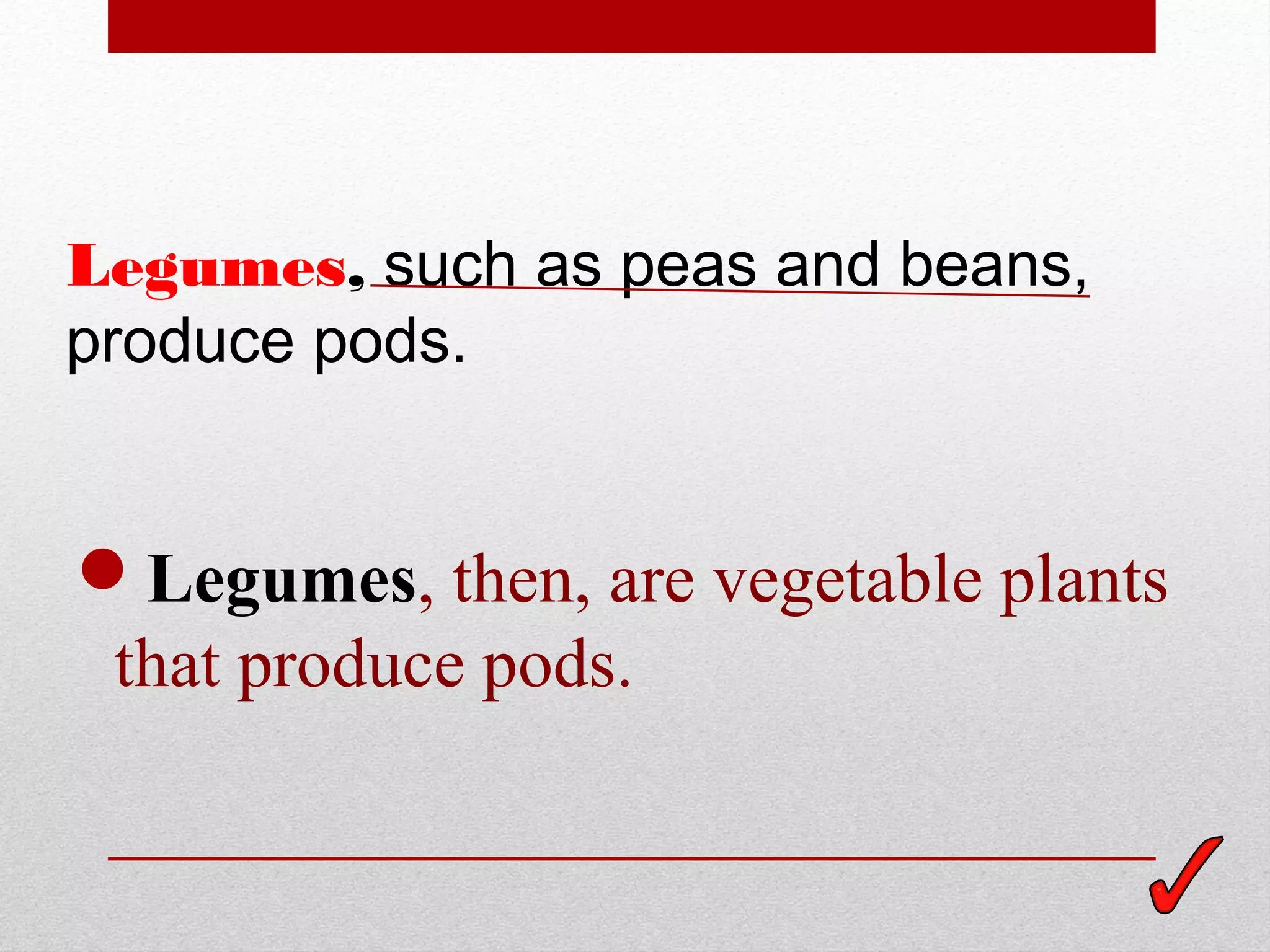
Legumes, such as peas and beans,
produce pods.


ď‚—Legumes, then, are vegetable plants
 that produce pods.
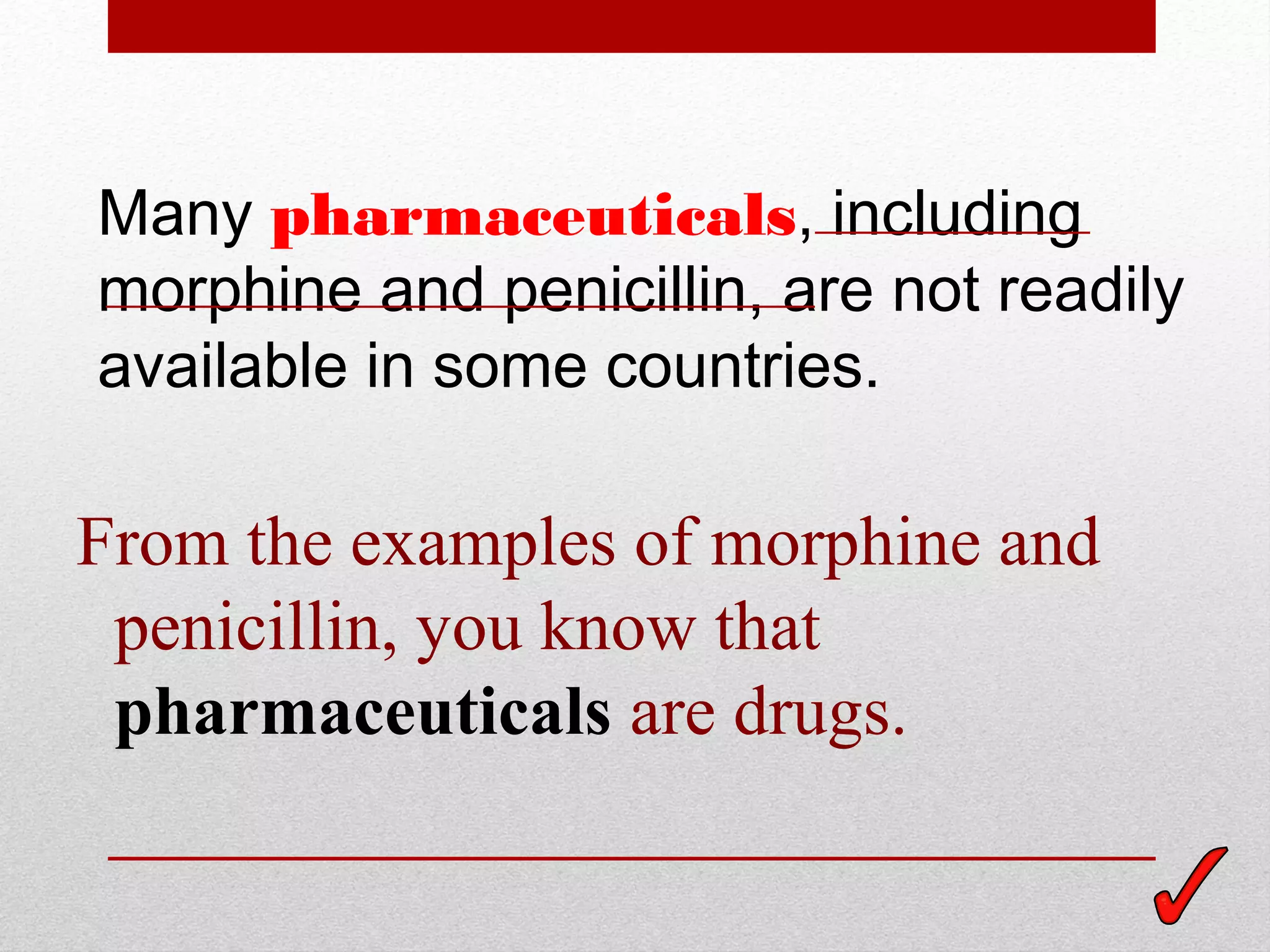
Many pharmaceuticals, including
morphine and penicillin, are not readily
available in some countries.

From the examples of morphine and
 penicillin, you know that
 pharmaceuticals are drugs.
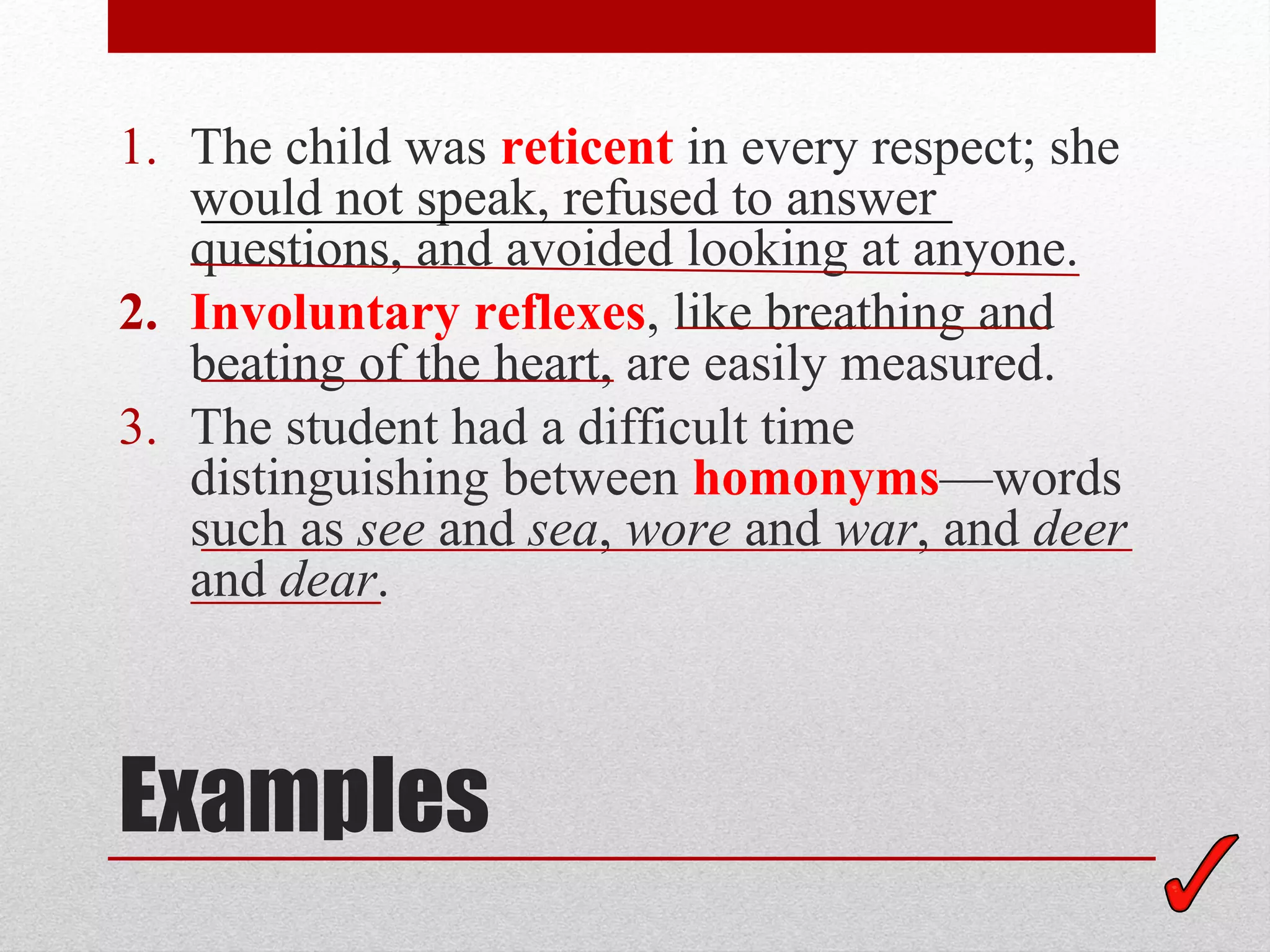
1. The child was reticent in every respect; she
   would not speak, refused to answer
   questions, and avoided looking at anyone.
2. Involuntary reflexes, like breathing and
   beating of the heart, are easily measured.
3. The student had a difficult time
   distinguishing between homonyms—words
   such as see and sea, wore and war, and deer
   and dear.


Examples
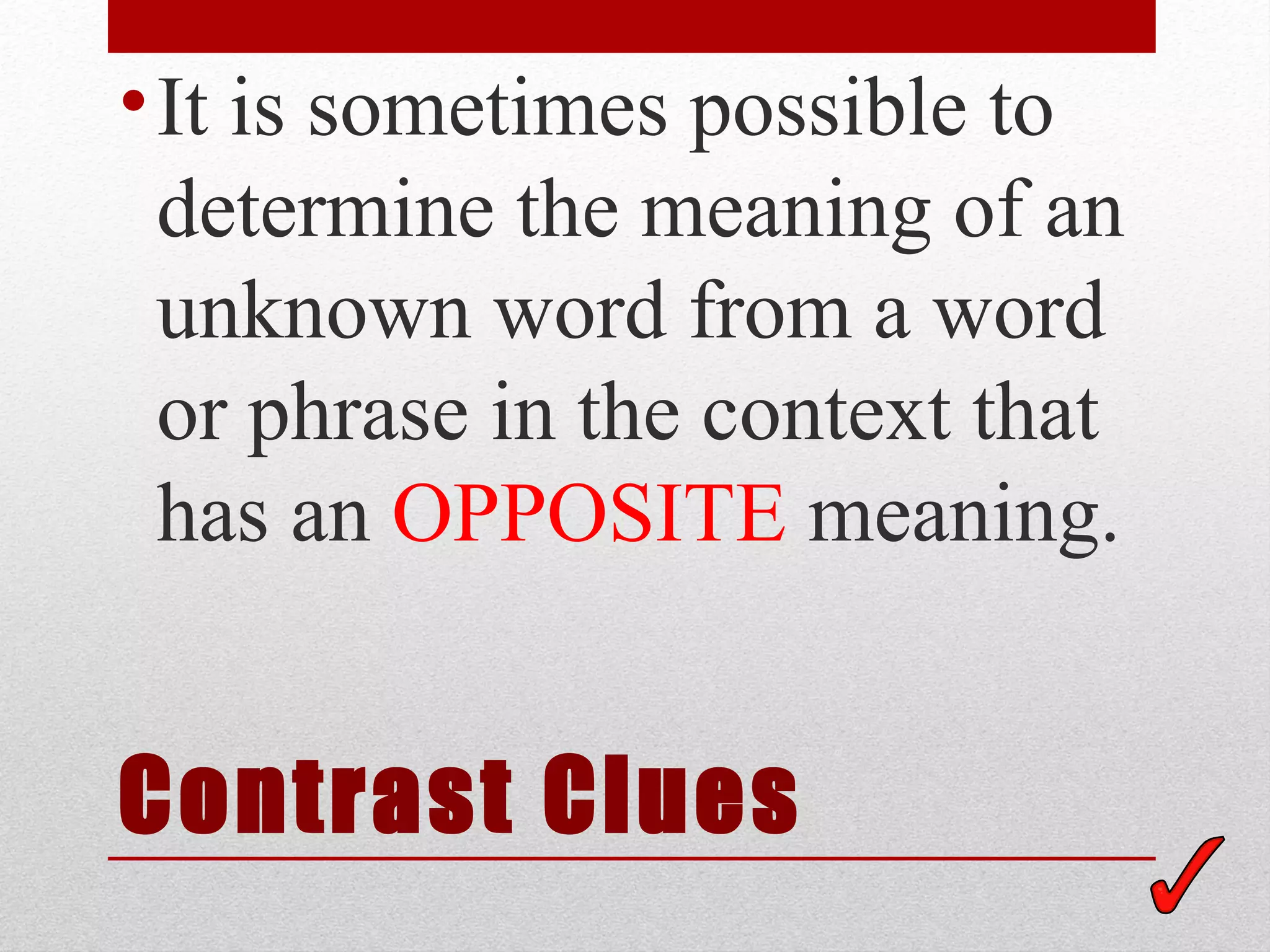
• It is sometimes possible to
  determine the meaning of an
  unknown word from a word
  or phrase in the context that
  has an OPPOSITE meaning.


Contrast Clues
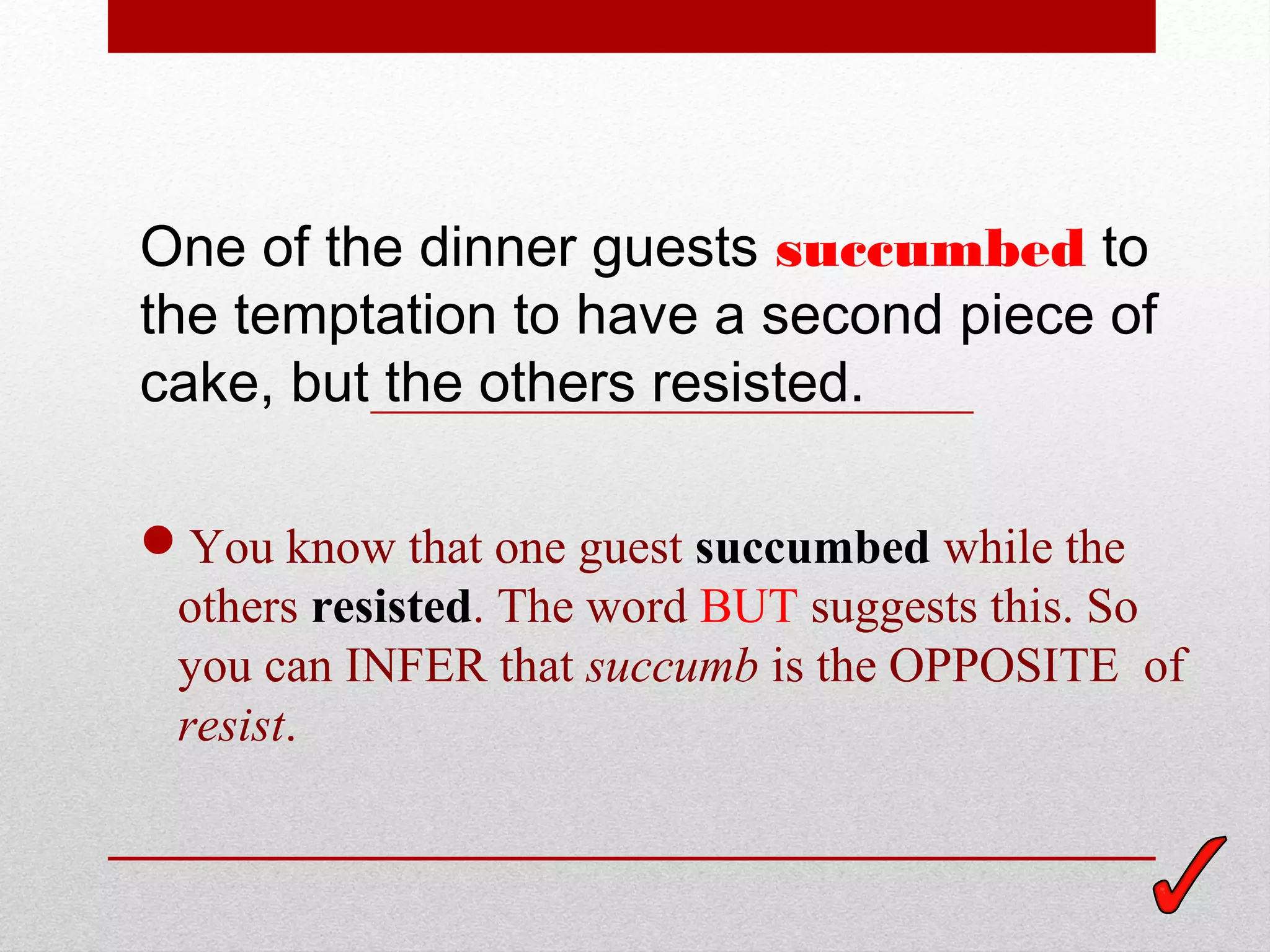
One of the dinner guests succumbed to
the temptation to have a second piece of
cake, but the others resisted.

ď‚—You know that one guest succumbed while the
 others resisted. The word BUT suggests this. So
 you can INFER that succumb is the OPPOSITE of
 resist.
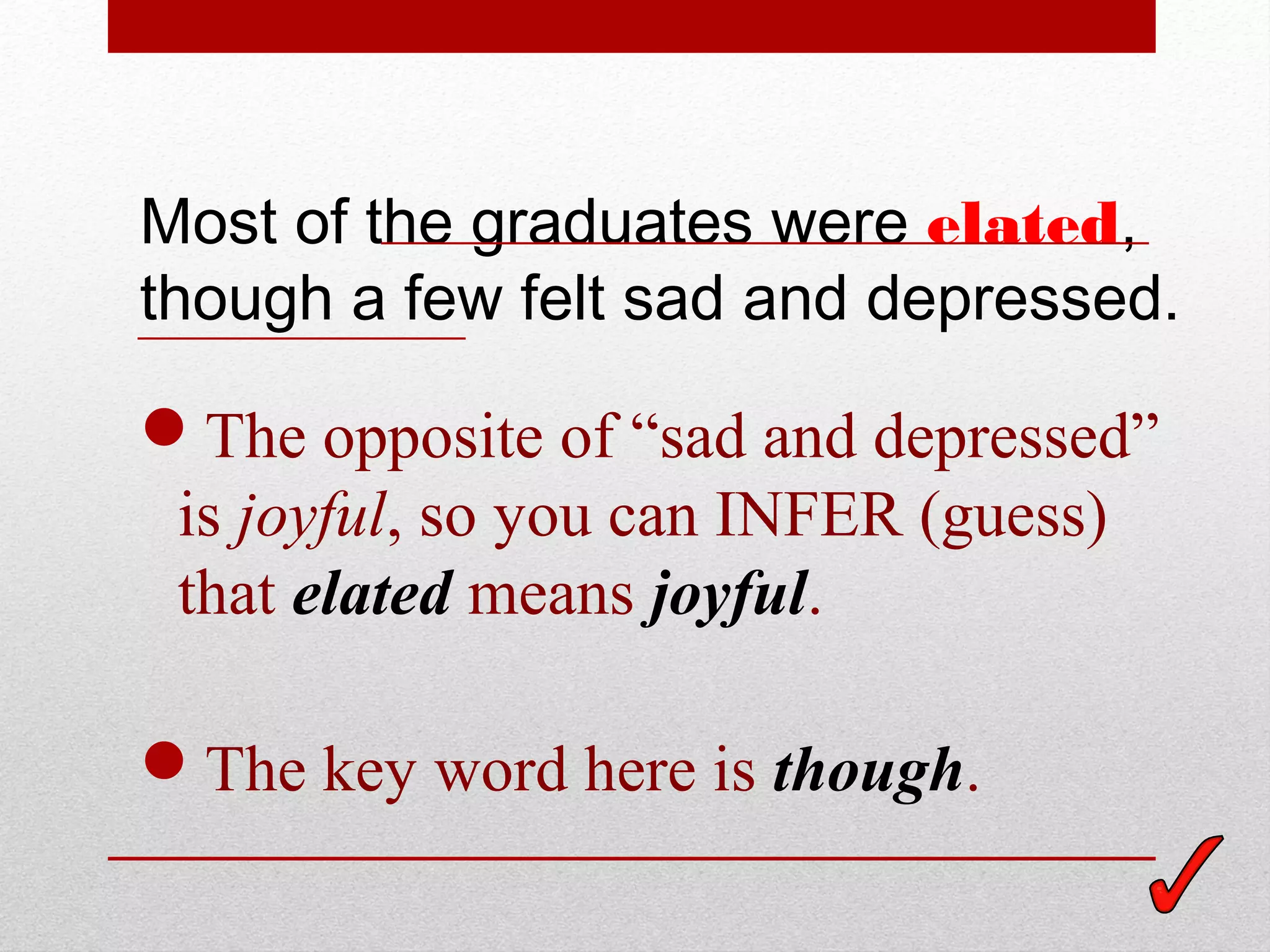
Most of the graduates were elated,
though a few felt sad and depressed.

The opposite of “sad and depressed”
 is joyful, so you can INFER (guess)
 that elated means joyful.

ď‚—The key word here is though.
The old man acted morosely,
whereas his grandson was very
lively.
The opposite of “lively” is quietly and
 sullenly, so you can INFER that
 morosely means not lively.

ď‚—The key word here is whereas.
The gentleman was quite portly, but
his wife was thin.

The opposite of “thin” is heavy or
 fat, so you can INFER that portly
 means not thin or fat.

ď‚—The key word here is but.
1.    Some city dwellers are affluent; others live in or near
      poverty.
2.    I am certain that the hotel will hold our reservation;
      however, if you are dubious, call to make sure.
3.    Although most experts concurred with the research findings,
      several strongly disagreed.
4.    The speaker denounced certain legal changes while praising
      other reforms.
5.    When the couple moved into their new home they
      revamped the kitchen and bathroom but did not change the
      rest of the rooms.


Practice                  (key words are in italics) write what you think
each word means on a piece of paper. Then, look up the word in the
dictionary to check if you guessed correctly. Write out the definition of the
each word. Turn in your assignment in class.
• Many times you can figure
  out the meaning of an
  unknown word by using
  logic and reasoning skills


Logic of the Passage Clues
Bob is quite versatile; he is a good
student, a top athlete, an excellent
car mechanic, and a gourmet cook.

ď‚—You can see that Bob is successful at
 many different types of activities, and
 you could reason that versatile mans
 “capable of doing many things
 competently.”
When the customer tried to pay with
Mexican pesos, the clerk explained
that the store accepted only U.S.
dollars.
ď‚—Logic tells you that customers
pay with money; pesos, then,
are a type of Mexican currency.
We had to leave the car and walk up
because the incline was too steep
to drive.

ď‚—Something that is too steep
must be slanted or have a slope;
incline means a slope.
Since Reginald was nervous, he
brought his rabbit’s foot talisman
with him to the exam.


A rabbit’s foot is often thought
to be a good luck charm;
talisman means a good luck
charm.
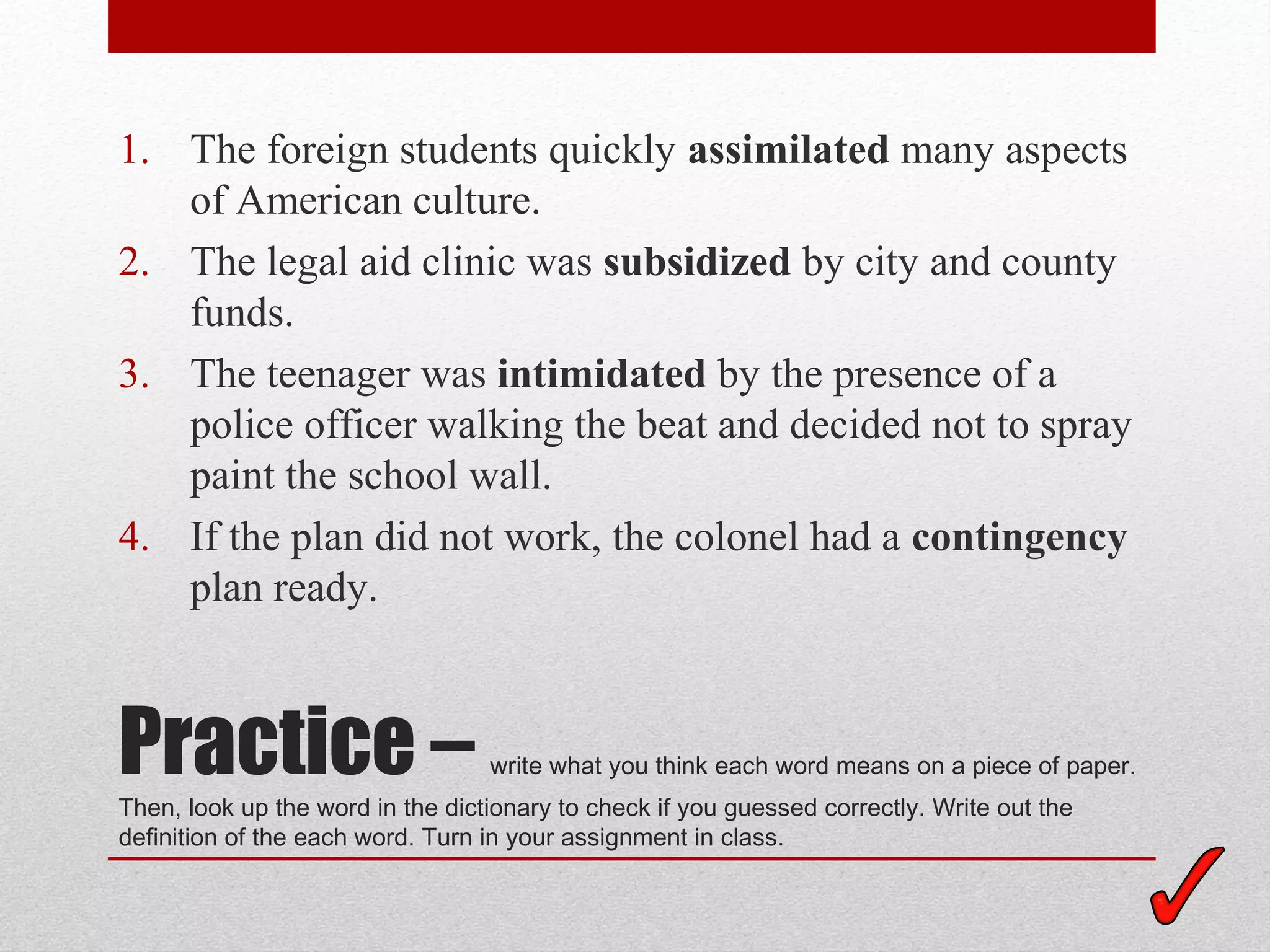
1. The foreign students quickly assimilated many aspects
   of American culture.
2. The legal aid clinic was subsidized by city and county
   funds.
3. The teenager was intimidated by the presence of a
   police officer walking the beat and decided not to spray
   paint the school wall.
4. If the plan did not work, the colonel had a contingency
   plan ready.


Practice –                        write what you think each word means on a piece of paper.
Then, look up the word in the dictionary to check if you guessed correctly. Write out the
definition of the each word. Turn in your assignment in class.
• Turn in the two practice assignments included in this
  video to your instructor during class.


Assignments

Using context clues

  • 1.
    Using Context Clues Karen Silvestri,Instructional Specialist The Learning Center at Robeson Community College
  • 2.
    What do youdo when you come upon a word you don’t know? I don’t know that word!
  • 3.
    • Skip theword • Quit reading • Come back to it if I have to • Look it up in the dictionary • Ask someone SOME ANSWERS
  • 4.
    Context clues can help you to figure out the meanings of unfamiliar words. Context Clues
  • 5.
    Phobias, such asfear of heights, water, or confined spaces, are difficult to eliminate.
  • 6.
    From the sentence,you can tell that phobia means “fear of specific objects or situations.
  • 7.
    The couple finally secured a table at the popular, crowded restaurant.
  • 8.
    You can figureout that secured means “got or took ownership of” the table.
  • 9.
  • 10.
    • Many timesa writer defines a word immediately following its use. • The writer may directly define a word by giving a brief definition or a synonym (a word that has the same meaning). • Some words and phrases as means, is, refers to, and can be defined as are often used. Definition Clues
  • 11.
    • Corona refersto the outermost part of the sun’s atmosphere. • A soliloquy is a speech made by a character in a play that reveals his or her thoughts to the audience. Example of Definition Clue
  • 12.
    Writers may usepunctuation to signal a definition clue is coming. Punctuation separates the meaning clue from the rest of the sentence. ď‚—Commas ď‚—Parentheses ď‚—Dashes Other clues
  • 13.
    Five-line rhyming poems,or limericks, are among the simplest forms of poetry. Equity, general principles of fairness and justice, is used in law when existing laws do not apply or are inadequate. Commas
  • 14.
    Lithium (an alkalimetal) is so soft it can be cut with a knife. A leading cause of heart disease is a diet with too much cholesterol (a fatty substance made of carbon, hydrogen, and oxygen.) Parentheses
  • 15.
    Our country’s grossnational product— the total market value of its national output of goods and services—is increasing steadily. Ancient Egyptians wrote in hieroglyphics —pictures used to represent words. Dashes
  • 16.
    Writers often includeexamples that help to explain or clarify a word. Toxic materials, such as arsenic, asbestos, pesticides, and lead, can cause bodily damage. Example Clues
  • 17.
    This sentence givesfour examples of toxic materials. From the examples given, which are all poisonous substances, you could conclude that toxic means “poisonous”.
  • 18.
    Forest floors arefrequently covered with fungi—molds, mushrooms, and mildews. Fungi, then are types of molds, mushrooms, and mildews.
  • 19.
    Legumes, such aspeas and beans, produce pods. ď‚—Legumes, then, are vegetable plants that produce pods.
  • 20.
    Many pharmaceuticals, including morphineand penicillin, are not readily available in some countries. From the examples of morphine and penicillin, you know that pharmaceuticals are drugs.
  • 21.
    1. The childwas reticent in every respect; she would not speak, refused to answer questions, and avoided looking at anyone. 2. Involuntary reflexes, like breathing and beating of the heart, are easily measured. 3. The student had a difficult time distinguishing between homonyms—words such as see and sea, wore and war, and deer and dear. Examples
  • 22.
    • It issometimes possible to determine the meaning of an unknown word from a word or phrase in the context that has an OPPOSITE meaning. Contrast Clues
  • 23.
    One of thedinner guests succumbed to the temptation to have a second piece of cake, but the others resisted. ď‚—You know that one guest succumbed while the others resisted. The word BUT suggests this. So you can INFER that succumb is the OPPOSITE of resist.
  • 24.
    Most of thegraduates were elated, though a few felt sad and depressed. The opposite of “sad and depressed” is joyful, so you can INFER (guess) that elated means joyful. The key word here is though.
  • 25.
    The old manacted morosely, whereas his grandson was very lively. The opposite of “lively” is quietly and sullenly, so you can INFER that morosely means not lively. The key word here is whereas.
  • 26.
    The gentleman wasquite portly, but his wife was thin. The opposite of “thin” is heavy or fat, so you can INFER that portly means not thin or fat. The key word here is but.
  • 27.
    1. Some city dwellers are affluent; others live in or near poverty. 2. I am certain that the hotel will hold our reservation; however, if you are dubious, call to make sure. 3. Although most experts concurred with the research findings, several strongly disagreed. 4. The speaker denounced certain legal changes while praising other reforms. 5. When the couple moved into their new home they revamped the kitchen and bathroom but did not change the rest of the rooms. Practice (key words are in italics) write what you think each word means on a piece of paper. Then, look up the word in the dictionary to check if you guessed correctly. Write out the definition of the each word. Turn in your assignment in class.
  • 28.
    • Many timesyou can figure out the meaning of an unknown word by using logic and reasoning skills Logic of the Passage Clues
  • 29.
    Bob is quiteversatile; he is a good student, a top athlete, an excellent car mechanic, and a gourmet cook. You can see that Bob is successful at many different types of activities, and you could reason that versatile mans “capable of doing many things competently.”
  • 30.
    When the customertried to pay with Mexican pesos, the clerk explained that the store accepted only U.S. dollars. ď‚—Logic tells you that customers pay with money; pesos, then, are a type of Mexican currency.
  • 31.
    We had toleave the car and walk up because the incline was too steep to drive. ď‚—Something that is too steep must be slanted or have a slope; incline means a slope.
  • 32.
    Since Reginald wasnervous, he brought his rabbit’s foot talisman with him to the exam. A rabbit’s foot is often thought to be a good luck charm; talisman means a good luck charm.
  • 33.
    1. The foreignstudents quickly assimilated many aspects of American culture. 2. The legal aid clinic was subsidized by city and county funds. 3. The teenager was intimidated by the presence of a police officer walking the beat and decided not to spray paint the school wall. 4. If the plan did not work, the colonel had a contingency plan ready. Practice – write what you think each word means on a piece of paper. Then, look up the word in the dictionary to check if you guessed correctly. Write out the definition of the each word. Turn in your assignment in class.
  • 34.
    • Turn inthe two practice assignments included in this video to your instructor during class. Assignments