Writing a story for Web

    By Anna Poludenko
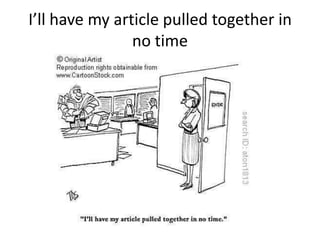
I’ll have my article pulled together in
                no time
The Seven Deadly Sins
•   1. Pride
•   2. Rush
•   3. Comprehensive search VS focus
•   4. Apathy
•   5. Don’t use the same source for every search
•   6. Don’t be narrow minded
•   7. Ignorance
Story-building Steps
1. Listen to find the story
(listen VS monitor?)
2. Where is it likely to be?
3. What search tool might
    provide it?
(search engines, subject
    directories)
4. Specify the field
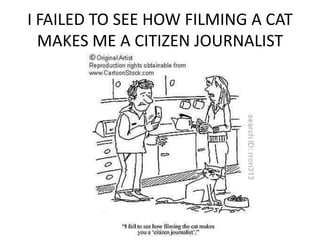
I FAILED TO SEE HOW FILMING A CAT
  MAKES ME A CITIZEN JOURNALIST
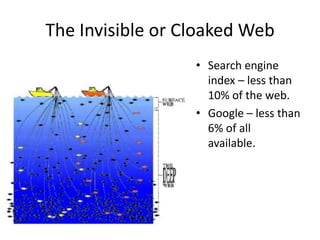
The Invisible or Cloaked Web
                  • Search engine
                    index – less than
                    10% of the web.
                  • Google – less than
                    6% of all
                    available.
Use primary search engines to locate
    the database (I want jobs in
             Honolulu)
      Search within those database.
Writing= story telling
• Hard news - event driven
• Profile – microcosmos
• Trend stories – light features, hard news, soft
  news – changes in demographics.
• Opinion – reviews, editorial, columns – people
  from the community who has something
  interesting.
Structure I
1. The Inverted Pyramid
• - most important
• - details later
• - critics
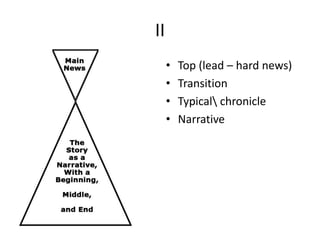
II
     •   Top (lead – hard news)
     •   Transition
     •   Typical chronicle
     •   Narrative
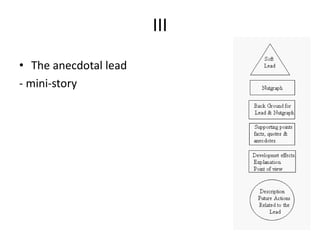
III
• The anecdotal lead
- mini-story
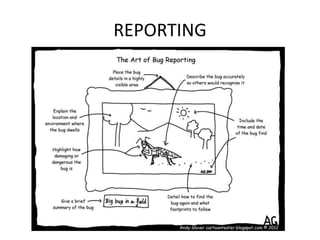
REPORTING
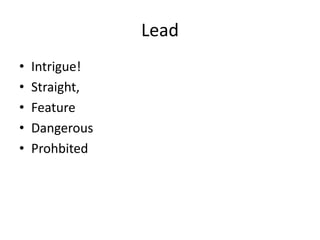
Lead
•   Intrigue!
•   Straight,
•   Feature
•   Dangerous
•   Prohbited
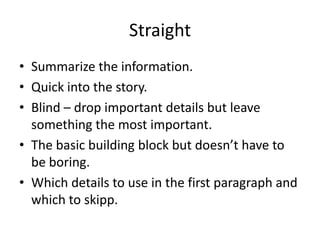
Straight
• Summarize the information.
• Quick into the story.
• Blind – drop important details but leave
  something the most important.
• The basic building block but doesn’t have to
  be boring.
• Which details to use in the first paragraph and
  which to skipp.
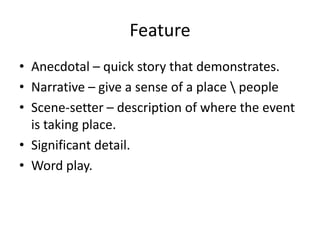
Feature
• Anecdotal – quick story that demonstrates.
• Narrative – give a sense of a place  people
• Scene-setter – description of where the event
  is taking place.
• Significant detail.
• Word play.
Dangerous
• The story is supposed to answer the questions
   not ask them.
- Mishandle the question
                  - the quote
                  - the topic
- Ineffective quotes to loose its power.
-General description
Prohibited Leads
•   They are heeeere
•   Its official
•   He leaned back in his chair
•   The dictionary definition.
Nut graph
• The main theme statement of the story
: here is what my story is about to get my
   information out straight forward.

Followed by paragraphs that answer key
  questions
Transition
• Signals that the story is moving from one
  point to another
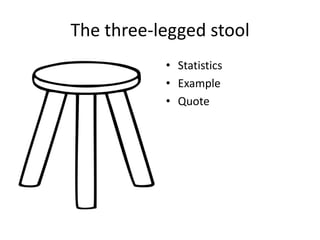
The three-legged stool
           • Statistics
           • Example
           • Quote
Ending
• Circling back
• Looking forward

Writing a story for web car

  • 1.
    Writing a storyfor Web By Anna Poludenko
  • 2.
    I’ll have myarticle pulled together in no time
  • 3.
    The Seven DeadlySins • 1. Pride • 2. Rush • 3. Comprehensive search VS focus • 4. Apathy • 5. Don’t use the same source for every search • 6. Don’t be narrow minded • 7. Ignorance
  • 4.
    Story-building Steps 1. Listento find the story (listen VS monitor?) 2. Where is it likely to be? 3. What search tool might provide it? (search engines, subject directories) 4. Specify the field
  • 5.
    I FAILED TOSEE HOW FILMING A CAT MAKES ME A CITIZEN JOURNALIST
  • 6.
    The Invisible orCloaked Web • Search engine index – less than 10% of the web. • Google – less than 6% of all available.
  • 7.
    Use primary searchengines to locate the database (I want jobs in Honolulu) Search within those database.
  • 8.
    Writing= story telling •Hard news - event driven • Profile – microcosmos • Trend stories – light features, hard news, soft news – changes in demographics. • Opinion – reviews, editorial, columns – people from the community who has something interesting.
  • 9.
    Structure I 1. TheInverted Pyramid • - most important • - details later • - critics
  • 10.
    II • Top (lead – hard news) • Transition • Typical chronicle • Narrative
  • 11.
    III • The anecdotallead - mini-story
  • 12.
  • 13.
    Lead • Intrigue! • Straight, • Feature • Dangerous • Prohbited
  • 14.
    Straight • Summarize theinformation. • Quick into the story. • Blind – drop important details but leave something the most important. • The basic building block but doesn’t have to be boring. • Which details to use in the first paragraph and which to skipp.
  • 15.
    Feature • Anecdotal –quick story that demonstrates. • Narrative – give a sense of a place people • Scene-setter – description of where the event is taking place. • Significant detail. • Word play.
  • 16.
    Dangerous • The storyis supposed to answer the questions not ask them. - Mishandle the question - the quote - the topic - Ineffective quotes to loose its power. -General description
  • 17.
    Prohibited Leads • They are heeeere • Its official • He leaned back in his chair • The dictionary definition.
  • 18.
    Nut graph • Themain theme statement of the story : here is what my story is about to get my information out straight forward. Followed by paragraphs that answer key questions
  • 19.
    Transition • Signals thatthe story is moving from one point to another
  • 20.
    The three-legged stool • Statistics • Example • Quote
  • 21.