Stasis Theory
in Rhetorical
Arguments
Prof Brian Malone
Writ 1301; UHCL; Fall ‘20
The Goal?
Persuasion
I
Don’t
Care
About
ONE
Side
I want
a deeper understanding
Arguing
As the process of
developing a
response
A template for
questioning…
…A framework
for organizing
Work through
the tension
Arrive at
stasis
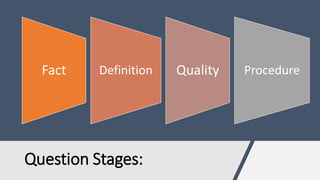
Question Stages:
Fact Definition Quality Procedure
Fact
•Does it exist?
•Did it happen?
•Empirical
Evidence.

Definition
What is it?
Evaluation
Judgement
Procedure
How do we respond?
Stasis…
Where is the
REAL tension?
Explore it.
This is your topic.
Stating your
position…
ANSWER:
Timeliness
Why is this
relevant?
Motives
Why are you entering this
conversation?
Purpose
What is your
goal?
Audience
Who is this for?
• What…
Is their perspective?
• What…
Do they know?
• How..
Will they react to your
argument?
On Audience
And how can you
prepare for their…
Reasonable
Objections?
Outcomes
What are the
goals of your
message?
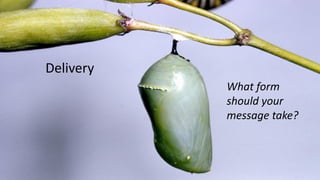
Delivery
What form
should your
message take?
Englishy Math
ARGUMENT = A CLAIM
+
REASONS
+
EVIDENCE
CLAIMS are
your basic message
CLAIMS are
an answer
to stasis
Claims of
Fact
Definition
Quality
Procedure
…can all be contested
REASONS
Why should I believe your claim?
Fact
Definition
Quality
Procedure
EVIDENCE
Will they ACCEPT
your claim?
Evidence:
Sufficient
1
Relevant
2
Accurate
3
Acknowledgement
These slides were designed by Prof. Brian
Malone based on the 2019 textbook
Becoming Rhetorical by Dr. Jodie Nicotra at
the University of Idaho. The information
and occasionally the language presented in
these slides follows chapter 7 of Dr.
Nicotra’s book.

Writ 1301 stasis theory